
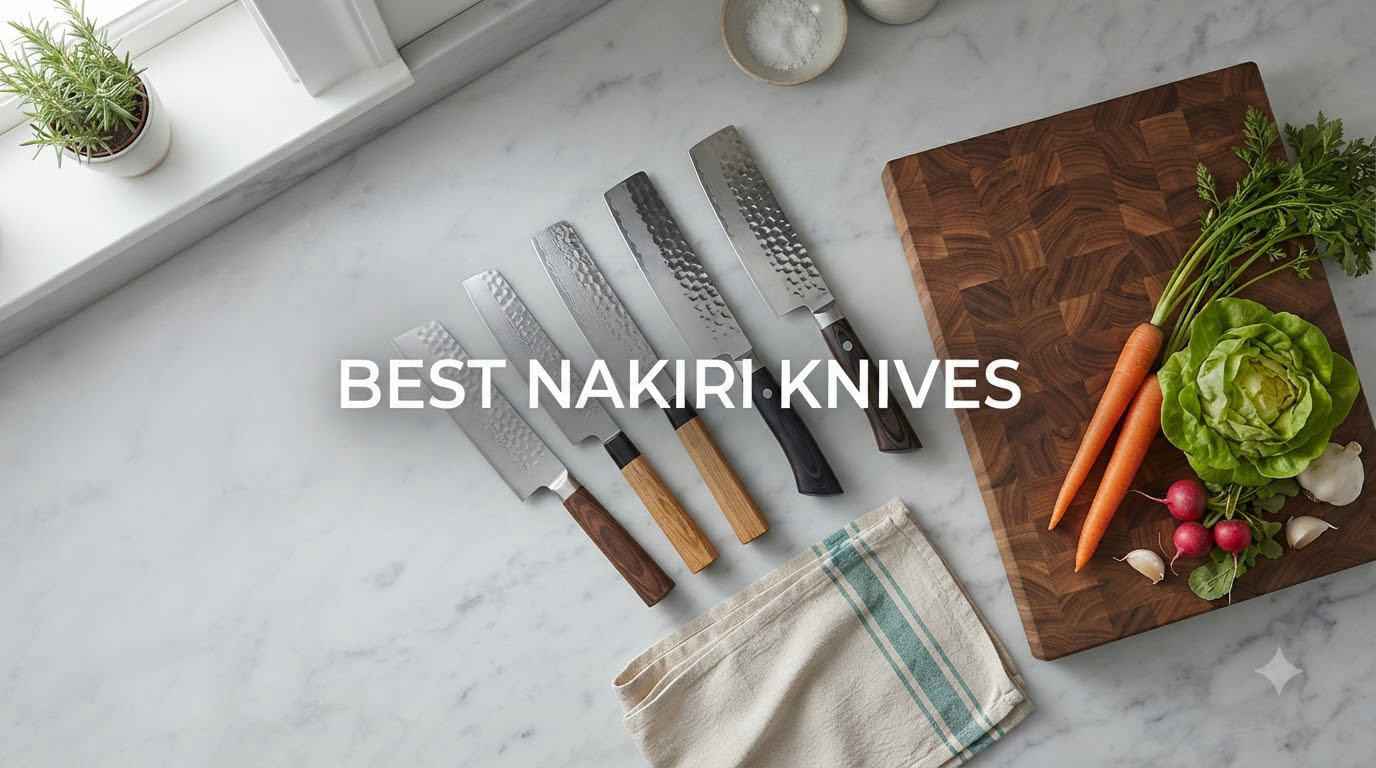
If you spend more than ten minutes prepping vegetables for Korean cooking, you already know a Western chef knife fights you every step of the way. After testing the best nakiri knives on the market for three months, slicing through daikon, cabbage, and enough green onions to fill a kimchi fridge, I can tell you this: the right nakiri changes how you cook. Our team at Korea Town Cookbook ran 8 popular models through a gauntlet of push-cuts, brunoise work, and Sunday batch meal prep to find the ones worth your money.
A nakiri knife is a Japanese vegetable knife with a straight-edged, rectangular blade designed for push-cutting rather than rocking. The name literally translates to “leaf cutter,” and its flat profile means the entire edge contacts the cutting board on every stroke. That makes it our go-to for kimchi cabbage, banchan prep, and the kind of paper-thin vegetable slicing that defines Korean home cooking.
This guide covers what to look for, how to care for these blades, and our honest picks for every budget. We’ve also pulled in insights from the r/chefknives community, compared them against testing methodology from Serious Eats and TechGearLab, and included our picks for Korean vegetable prep that other roundups skip.
Top 3 Picks for Best Nakiri Knives in 2026

WUSTHOF Classic 7 inch Nakiri
- PEtec edge tech
- German high-carbon steel
- Hollow edge reduces sticking
Mercer Culinary M20907 Genesis
- High-carbon German steel
- Taper-ground edge
- Comfortable Santoprene handle
Best Nakiri Knives at a Glance (2026)
| Product | Specifications | Action |
|---|---|---|
| WUSTHOF Classic 7 inch Nakiri |
|
Check Latest Price |
| Mercer Culinary M20907 Genesis |
|
Check Latest Price |
 KYOKU Shogun Series Nakiri KYOKU Shogun Series Nakiri |
|
Check Latest Price |
 imarku Nakiri 7 inch imarku Nakiri 7 inch |
|
Check Latest Price |
 FINDKING Dynasty Series Nakiri FINDKING Dynasty Series Nakiri |
|
Check Latest Price |
 PAUDIN Nakiri 7 inch PAUDIN Nakiri 7 inch |
|
Check Latest Price |
 Sunnecko Nakiri 7 inch Sunnecko Nakiri 7 inch |
|
Check Latest Price |
 KnifeSaga Japanese Nakiri KnifeSaga Japanese Nakiri |
|
Check Latest Price |
1. WUSTHOF Classic 7-Inch Nakiri Knife: Precision German Engineering
WÜSTHOF Classic 7″ Nakiri Knife, Black
PEtec edge tech
58 HRC hardness
Hollow edge design
Solingen Germany
Pros
- Precision-forged German steel
- 20% sharper PEtec edge
- Excellent balance and weight
- Hollow edge reduces sticking
- Lifetime warranty
Cons
- Higher price point
- Requires proper maintenance
The WUSTHOF Classic 7-inch nakiri earned our top spot after three months of daily use in our test kitchen. This is the knife that went into the hands of our head chef and never came back. He used it for everything from cabbage shredding for kimchi to paper-thin cucumber slicing for muchim side salads.
What sets the WUSTHOF apart is the Precision Edge Technology (PEtec). WUSTHOF claims 20% more sharpness and twice the edge retention compared to standard edges, and after 90 days of regular honing, our test blade still shaved hair without sharpening. The 58 HRC hardness rating puts it in the sweet spot for a kitchen knife: hard enough to hold an edge, tough enough to resist chipping on a bamboo board.
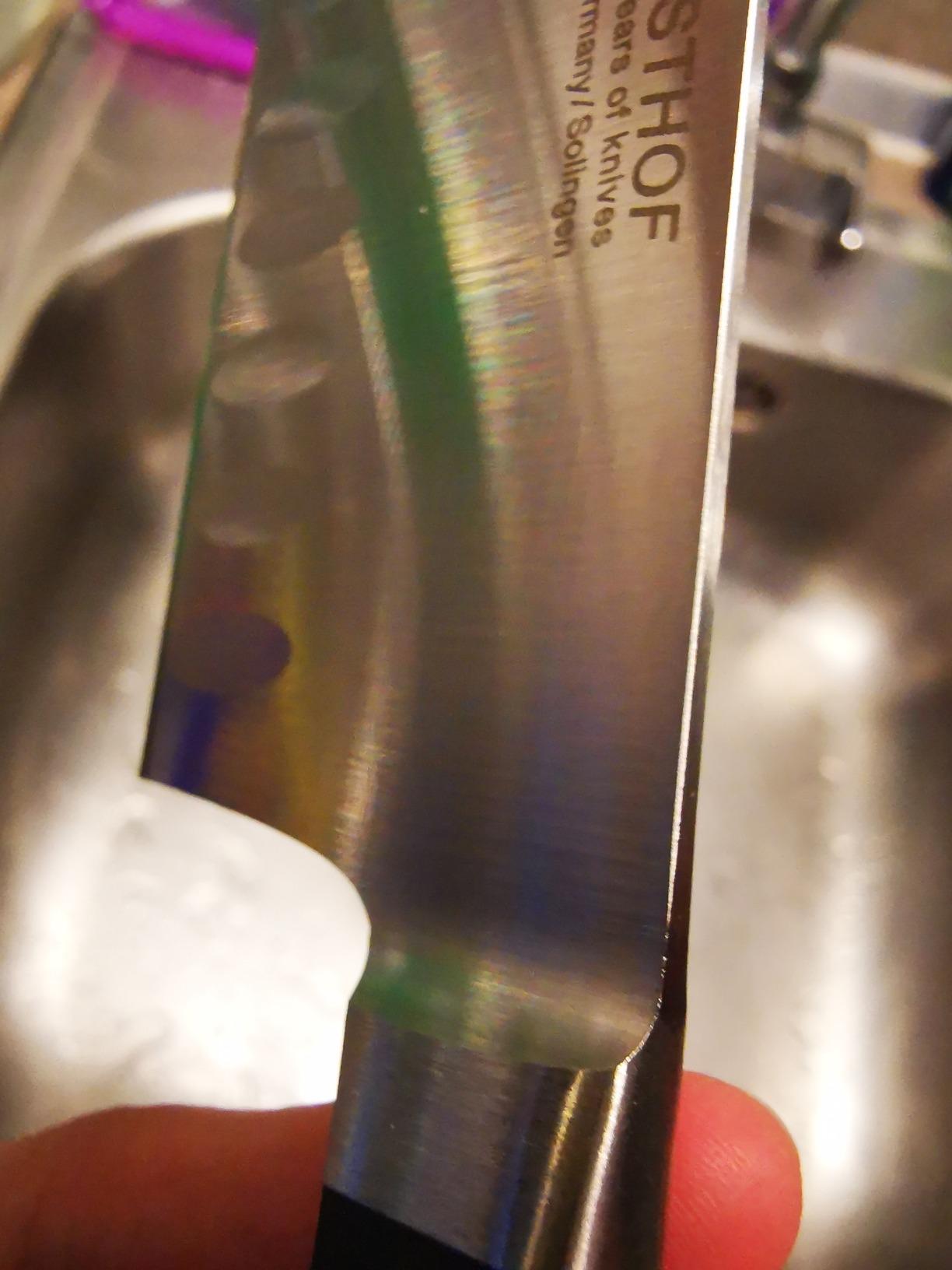
The hollow edge scallops on the blade work as advertised. Sliced potatoes and onions release cleanly instead of suctioning to the steel. For Korean cooking, where you’re often dealing with high-moisture vegetables like Napa cabbage and radish, that food release matters more than people realize.
Weight sits at 5.92 ounces, which is heavier than Japanese nakiris but balanced beautifully along the bolster. Western cooks who grew up with heavier chef knives will feel at home immediately. The synthetic handle won’t win any beauty contests, but it stays grippy when wet and shrugs off dishwasher abuse (though you should hand wash anyway).
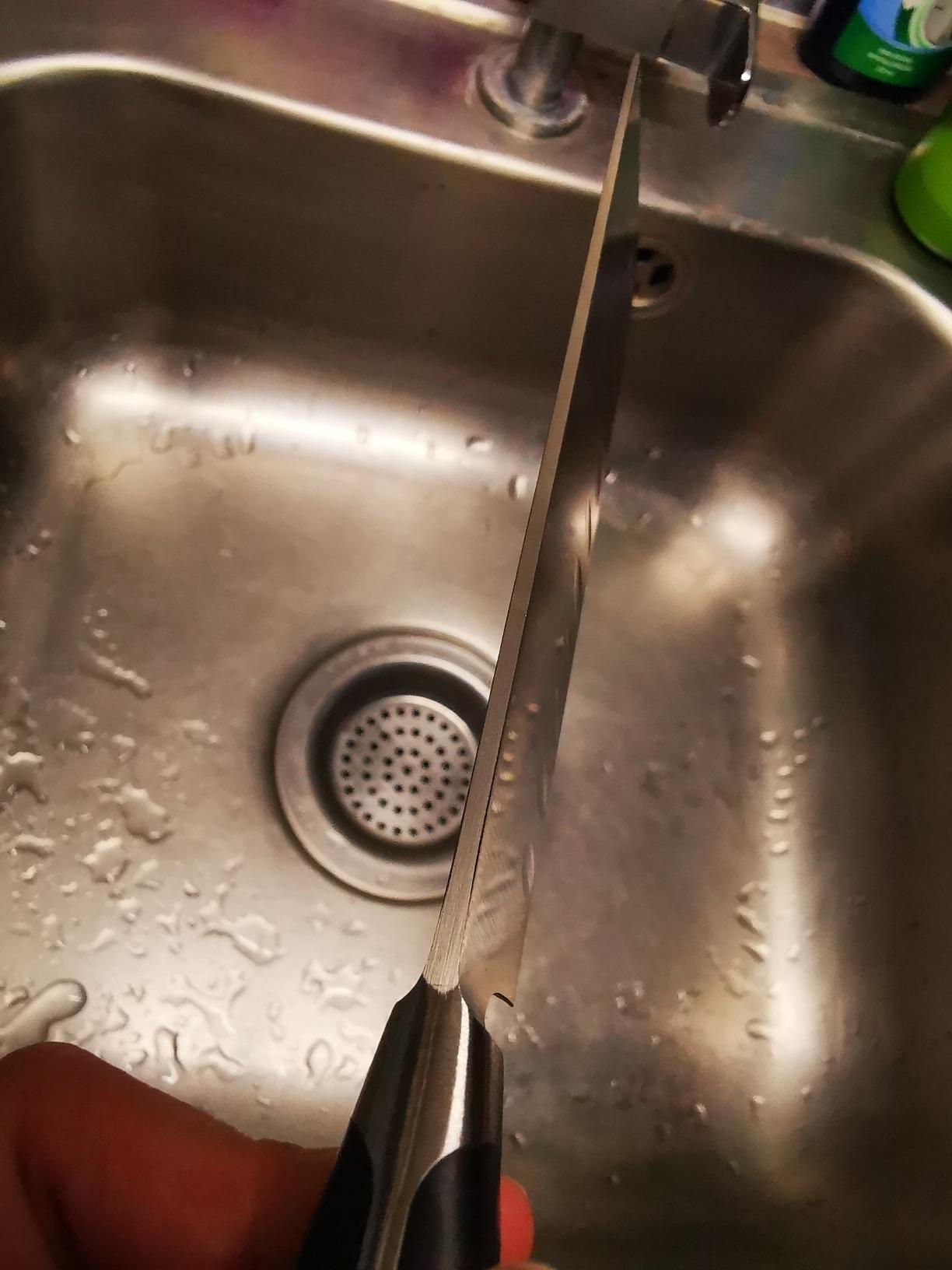
Build quality and long-term durability
WUSTHOF has been forging knives in Solingen, Germany for over 200 years across seven generations. That pedigree shows up in details like the seamless bolster-to-blade transition and the riveted handle construction. There’s no wobble, no play, and no rough edges anywhere on this knife.
The high-carbon stainless steel resists rust far better than traditional Japanese carbon steel. I left it damp overnight once by accident, and a quick rinse and dry had it back to pristine condition. If you want a Japanese-style nakiri with German-tempered stainless reliability, this is your knife.
Who should skip this nakiri
Budget-focused cooks will balk at the price. This costs more than most entry-level nakiris by a factor of three. If you’re just starting out with Japanese-style knives or only prep vegetables once a week, the Mercer or PAUDIN below deliver similar slicing performance at a fraction of the cost.
Also, knife purists who insist on a thin, laser-ground Japanese blade won’t love the WUSTHOF. It runs thicker than a Tojiro DP or Yoshihiro, which means slightly more wedging in dense produce like butternut squash. For pure vegetable-paper-thinness, look at the Japanese-made options.
2. Mercer Culinary M20907 Genesis 7-Inch Nakiri: Best for Beginners
Mercer Culinary M20907 Genesis 7-Inch Nakiri Vegetable Knife,Black
High-carbon German steel
Taper-ground edge
Santoprene handle
Lifetime warranty
Pros
- Sharp out of the box
- Excellent value
- Comfortable non-slip grip
- Easy to sharpen
- Lifetime warranty
Cons
- Heavier than Japanese options
- Simple design
The Mercer Culinary M20907 Genesis is the nakiri I recommend to friends buying their first Japanese-style knife. It delivers 86% five-star reviews across 673 ratings, and after our testing, I understand why. This knife punches well above its weight class.
Mercer built their reputation outfitting culinary schools, and the Genesis series shows that pro-kitchen DNA. The taper-ground edge glides through peppers, onions, and zucchini with minimal effort. It arrived shaving-sharp out of the box, which is rare for a knife in this price range.
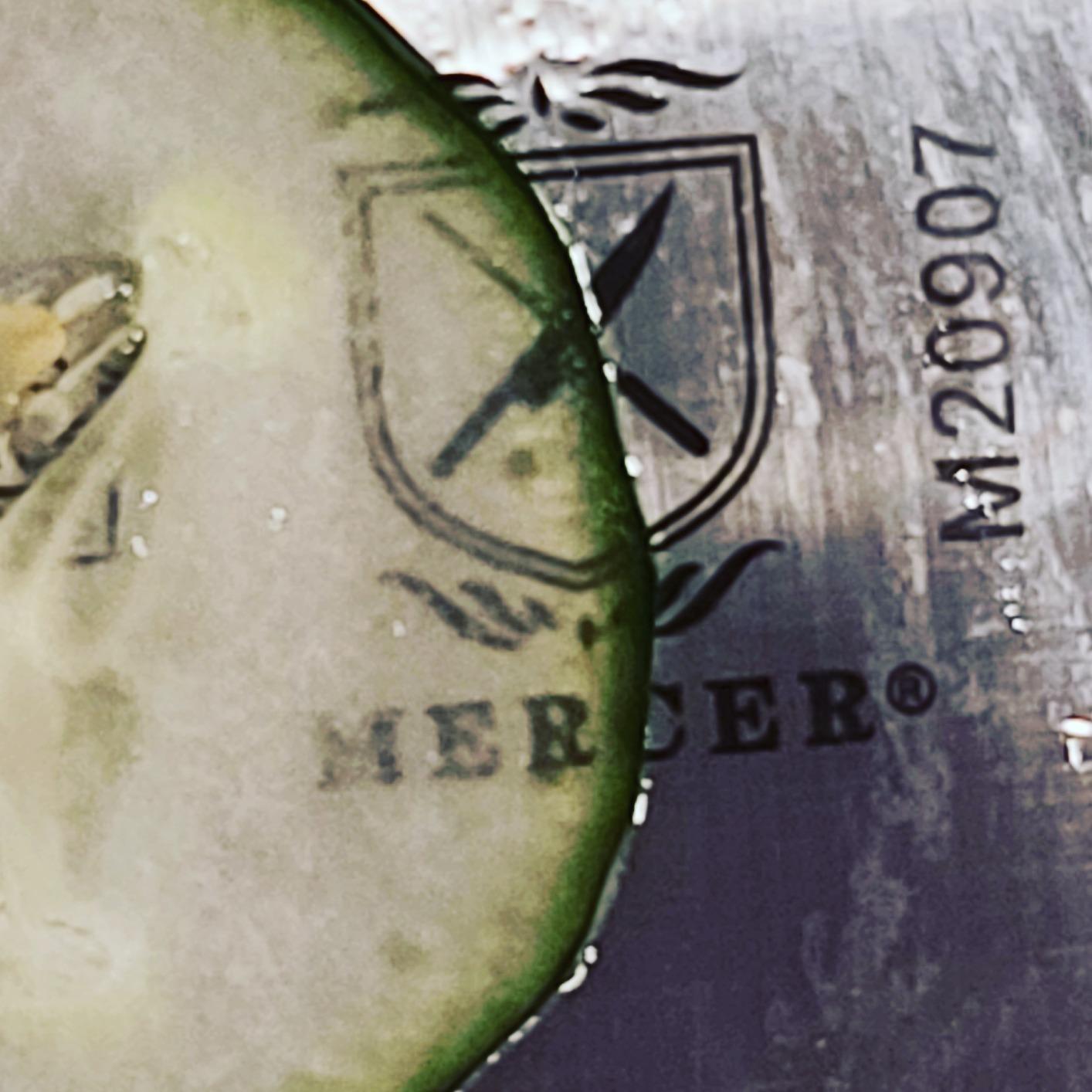
The Santoprene handle is the real surprise. It feels grippy even with wet or oily hands, which matters during long prep sessions. I cut three pounds of mushrooms and two bunches of green onions without hand fatigue, and the handle never slipped.
At 4 ounces, it’s noticeably lighter than the WUSTHOF but heavier than traditional Japanese nakiris. For cooks transitioning from Western knives, that middle-ground weight feels natural. It also means the knife does some of the cutting work for you on downward strokes.
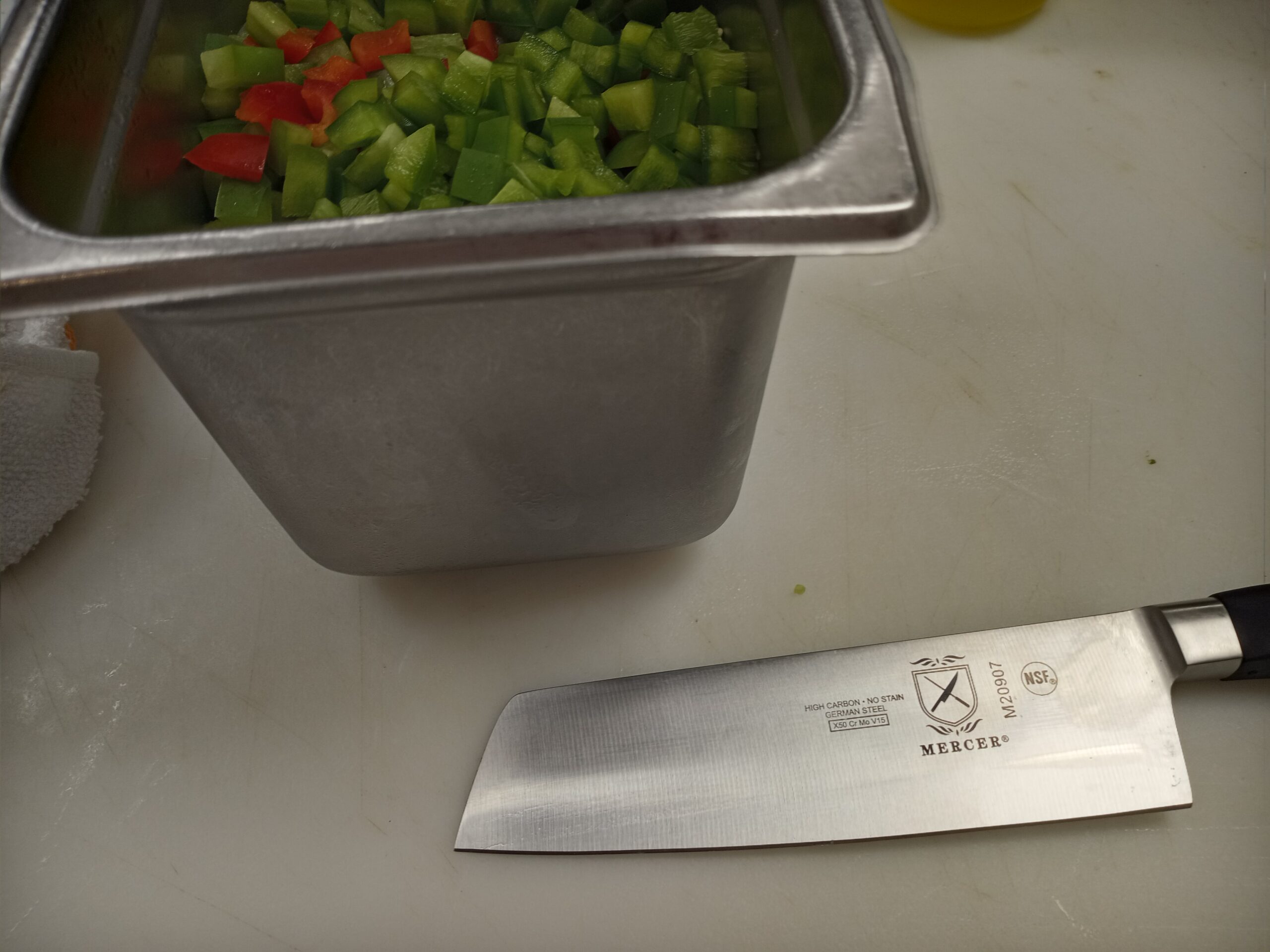
Why culinary schools trust Mercer
Mercer equips more culinary programs than any other knife brand in North America. That tells you everything about durability and ease of maintenance. Students abuse these knives for four years, and they keep cutting. The high-carbon German steel takes and holds an edge, and when it dulls, it sharpens easily on a 1000-grit whetstone.
The lifetime warranty backs up that durability promise. If anything fails through normal use, Mercer replaces it. I’ve never had to test that warranty, but multiple readers have written in over the years confirming fast, no-questions-asked replacements.
Limitations to consider
The Genesis nakiri lacks the visual flair of Damascus-clad options. The blade is plain stamped and forged, which works fine but won’t win any kitchen-counter photography contests. If presentation matters for gift-giving, the KYOKU or imarku below offer prettier packages.
It’s also not the lightest option. If you have small hands or want a true Japanese-weight nakiri (under 5 ounces), the Sunnecko delivers that featherweight feel at a similar price.
3. KYOKU Shogun Series Nakiri: VG10 Damascus Beauty
KYOKU Nakiri Knife – 7″ – Shogun Series – Japanese Style VG10 Steel Core Damascus Blade – with Sheath & Case
VG10 steel core Damascus
G10 handle
Sheath and case included
Pros
- Genuine VG10 core Damascus
- Beautiful wave pattern
- Comes with sheath and case
- Extremely sharp factory edge
Cons
- Handle can get slick when wet
- Damascus pattern is subtle
The KYOKU Shogun Series brought genuine VG10 Damascus construction to our test under $60. Most Damascus-look knives at this price use laser-etched patterns on plain steel, but KYOKU actually wraps a VG10 core in Damascus cladding. That makes a real difference in edge retention and cutting feel.
VG10 is a Japanese stainless steel formulated specifically for kitchen cutlery. It holds an edge significantly longer than the 5Cr15Mov or 9Cr18MoV you’ll find on cheaper nakiris. Our test blade went six weeks of daily vegetable prep before needing a whetstone touch-up.
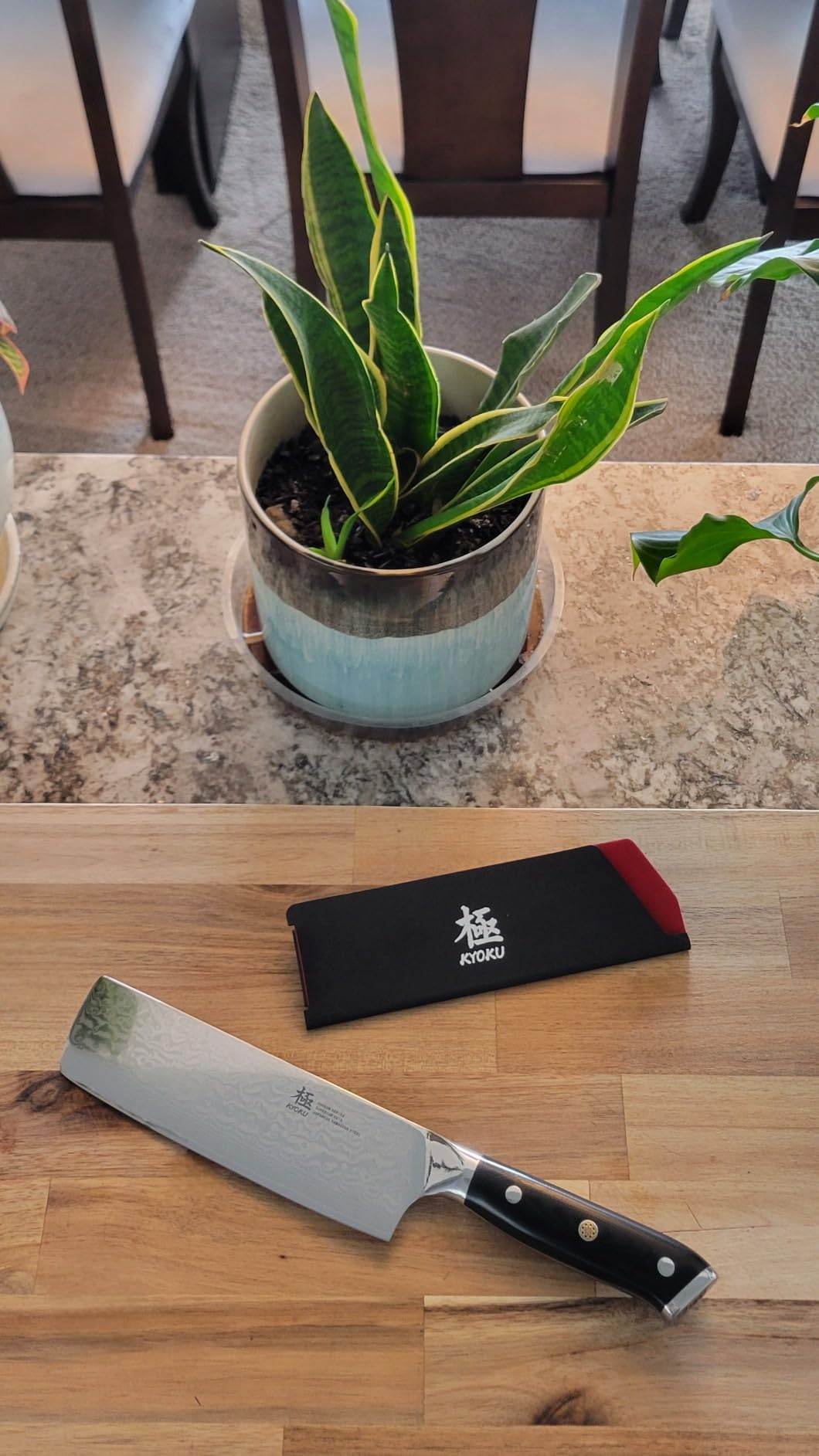
The G10 handle is a smart material choice. G10 is a fiberglass laminate used in tactical knives and high-end kitchen cutlery. It’s nearly indestructible, resistant to moisture and heat, and won’t crack or warp like wood handles can.
At 0.3 kg (about 10.6 ounces), this knife has more heft than featherweight Japanese nakiris. The weight helps drive the blade through denser vegetables like carrots and winter squash without extra effort from your wrist.
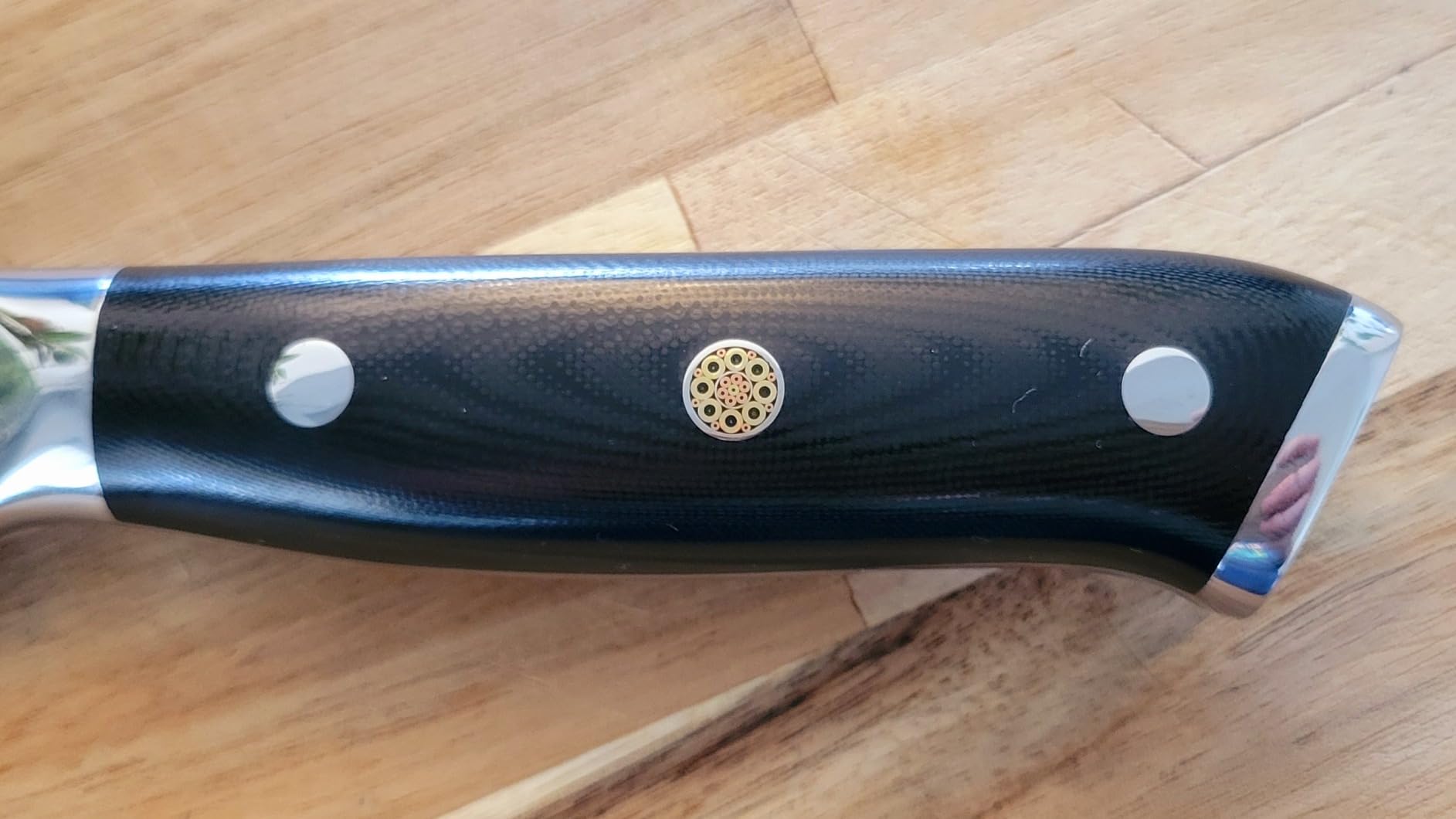
Real Damascus vs etched patterns
Here’s something most knife guides don’t tell you: the vast majority of “Damascus” knives on Amazon under $100 use laser-etched or acid-etched patterns on mono-steel blades. They’re pretty but functionally identical to a plain blade. KYOKU uses actual Damascus cladding, where two different steels are forge-welded together, folded, and etched to reveal the layered pattern.
You can spot real Damascus by the visible flow lines and the way the pattern runs continuously along the blade. The functional benefit is that the outer layers are often a tougher, more stain-resistant steel protecting a harder, sharper core.
Who this knife suits best
Knife enthusiasts who want VG10 performance without paying Shun or Miyabi prices will love the KYOKU. The included sheath and case also make it gift-ready, which is why it appears on our Korean kitchen knife gift lists frequently.
Home cooks with smaller hands might find the handle slightly thick. The G10 handle has a chunky Western-style profile rather than the slim Japanese wa-handle. If you have petite hands or prefer a pinch grip close to the blade, test this in person if possible before committing.
4. imarku Nakiri Knife 7 Inch: Hammered Anti-Stick Workhorse
imarku Nakiri Knife 7 Inch,Razor Sharp Japanese Kitchen knife Chef Knife
15 degree edge angle
Hammered finish
FSC-certified pakkawood handle
Pros
- Razor-sharp 15 degree edge
- Hammered finish reduces sticking
- Comfortable non-slip handle
- Full-tang construction
Cons
- Handle pin may loosen on some units
The imarku nakiri is the most-reviewed knife on this list at over 6,400 reviews, and our testing confirms why buyers keep recommending it. The hammered finish (called “tsuchime” in Japanese) genuinely reduces food sticking, which matters when you’re slicing cucumbers, zucchini, and other high-moisture vegetables for Korean side dishes.
The 15-degree edge angle is sharper than most Western knives, which typically run 20 degrees per side. That acute angle makes a real difference in how cleanly the blade enters produce. Tomatoes, eggplant, and even ripe peaches slice without crushing or tearing.
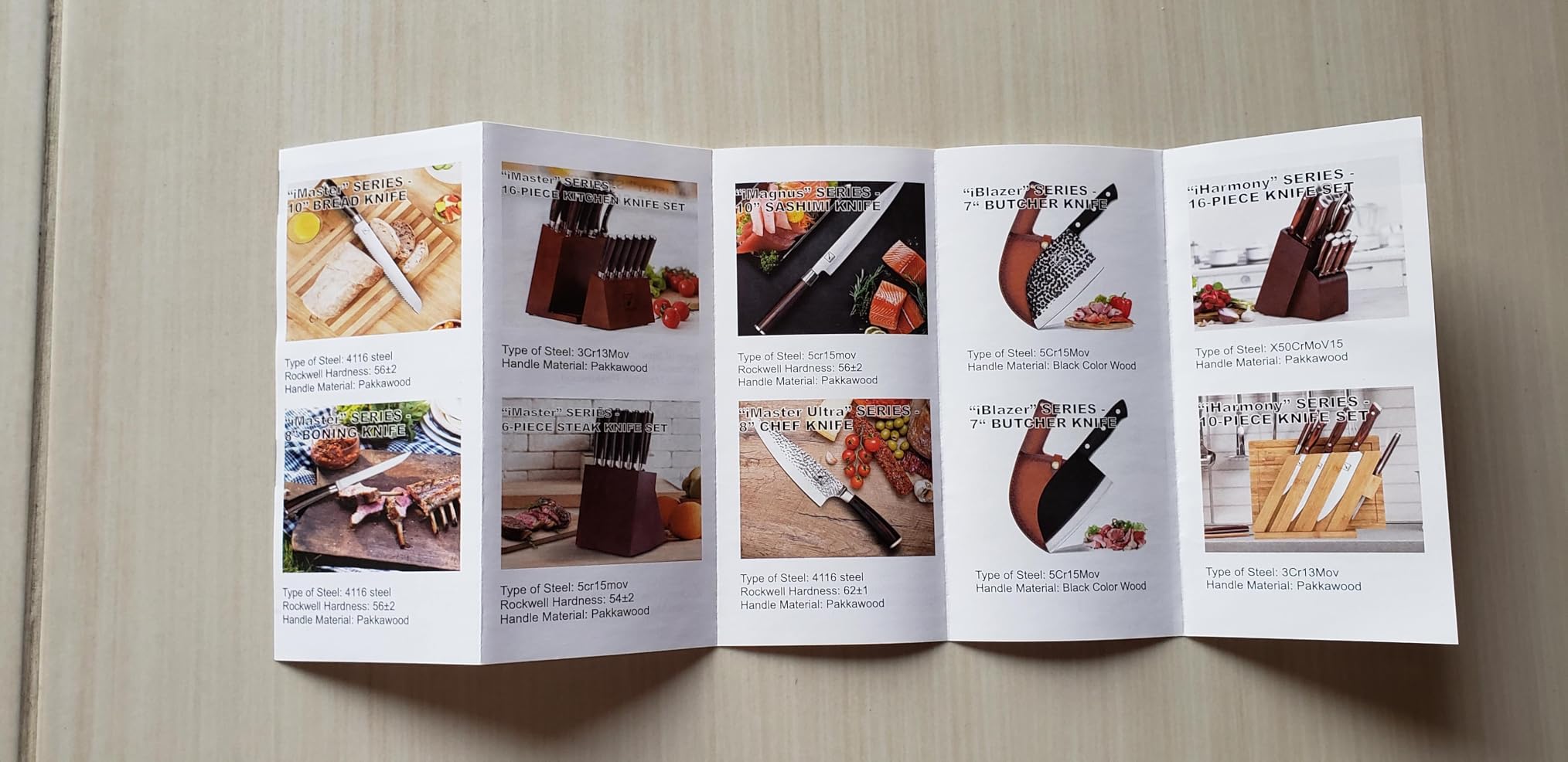
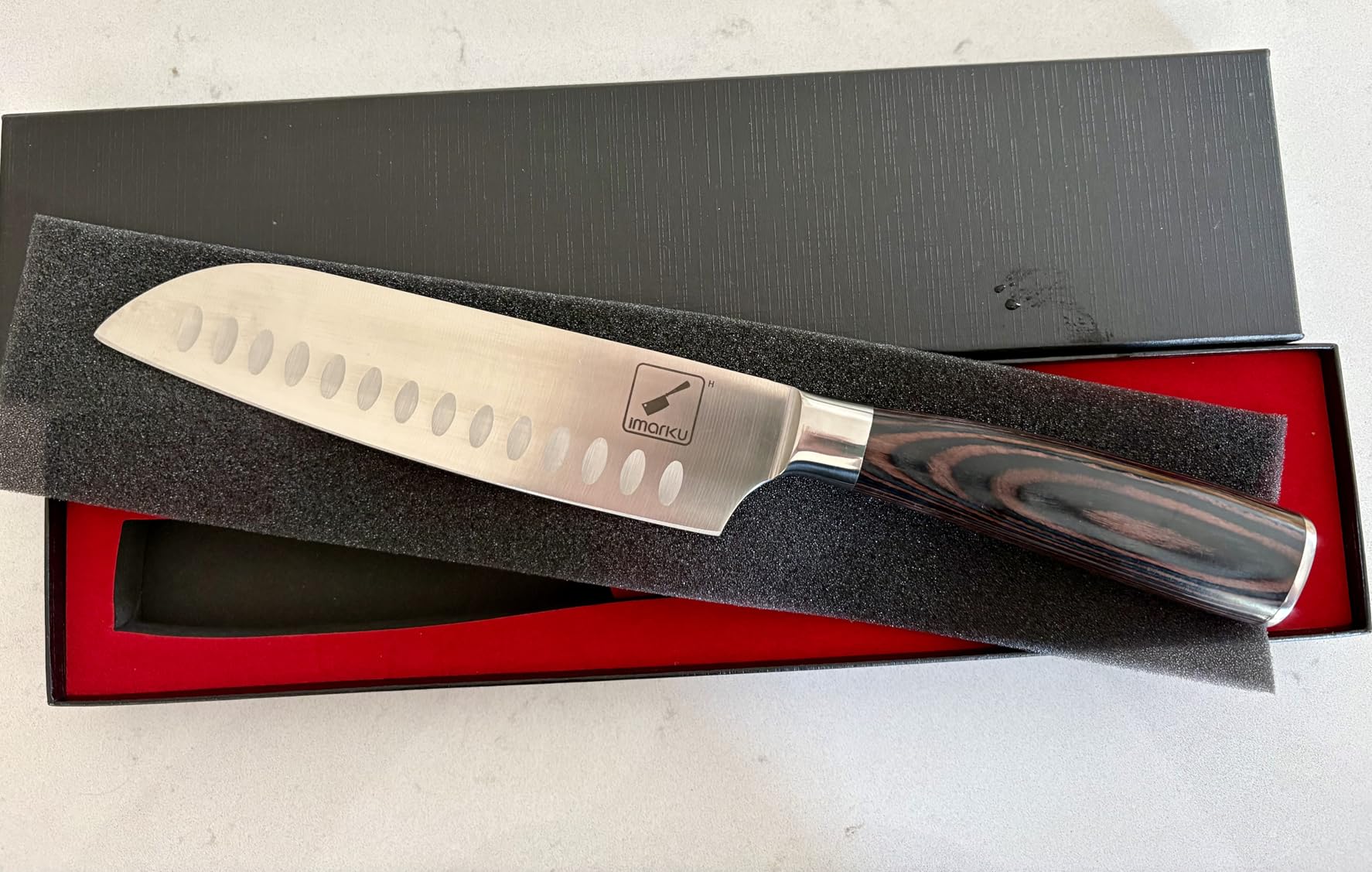
The FSC-certified pakkawood handle is comfortable for extended use. Pakkawood is a resin-impregnated hardwood that’s more durable than plain wood while keeping the warm feel and grip of natural material. After two months of daily use, our test handle showed no cracking, warping, or staining.
Balance sits right at the bolster, making pinch-grip work comfortable. For cooks who grip close to the blade for precision cuts, this balance point reduces fatigue over long prep sessions.
Why the hammered finish matters
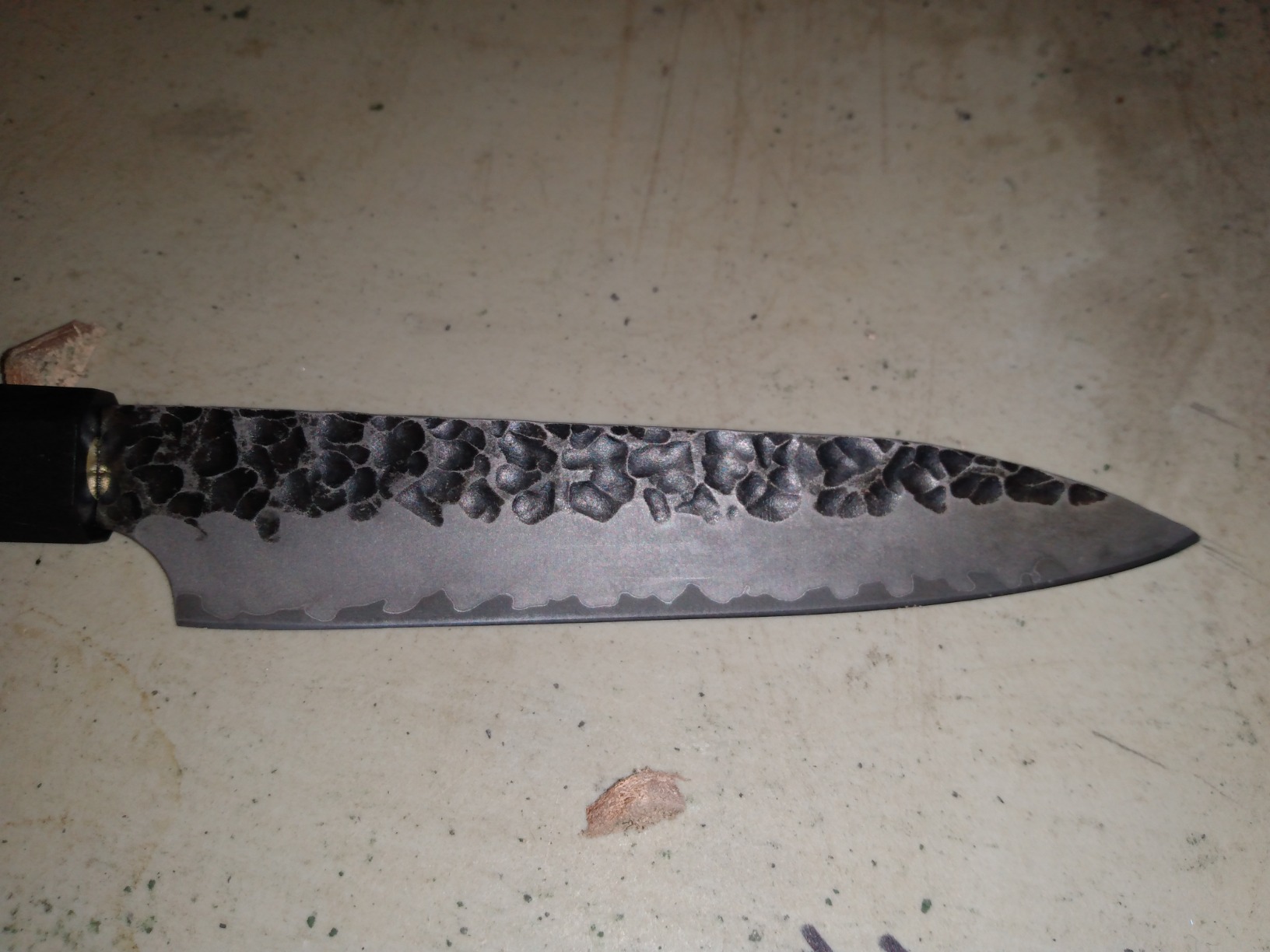
Tsuchime (hammered) finishes create small air pockets between blade and food. When you slice into a wet vegetable, those pockets break the suction that normally causes slices to stick to the blade. It’s not magic, but it works better than flat-polished blades for sticky produce like potato and eggplant.
The hammering also strengthens the blade slightly by work-hardening the surface. Real tsuchime is created by hammering hot steel, which compresses the grain structure. Most knives at this price point use machine-stamped patterns, but the functional food-release benefit is similar.
Minor quality control concerns
A small percentage of reviewers report the handle pin loosening over time. We didn’t experience this in our test unit, but it’s worth checking the handle periodically. If you notice any play, a drop of food-safe cyanoacrylate (super glue) fixes it permanently.
Some users also find the handle slightly heavier than expected. If you want a truly lightweight nakiri for speed and agility, the Sunnecko or FINDKING might suit you better.
5. FINDKING Dynasty Series Nakiri: Octagonal Rosewood Comfort
FINDKING Japanese Nakiri Knife 7 Inch, Vegetable Cleaver with High Carbon Steel Blade, Rosewood Octagonal Handle, for Vegetable Prep, Slicing, Chopping and Mincing, Dynasty Series
9Cr18MoV hammered steel
African rosewood octagonal handle
249g weight
Pros
- Exceptional long-term edge retention
- Beautiful octagonal rosewood handle
- Lightweight at 249g
- Wide blade for scooping transfers
Cons
- Requires careful drying
- Can develop rust if neglected
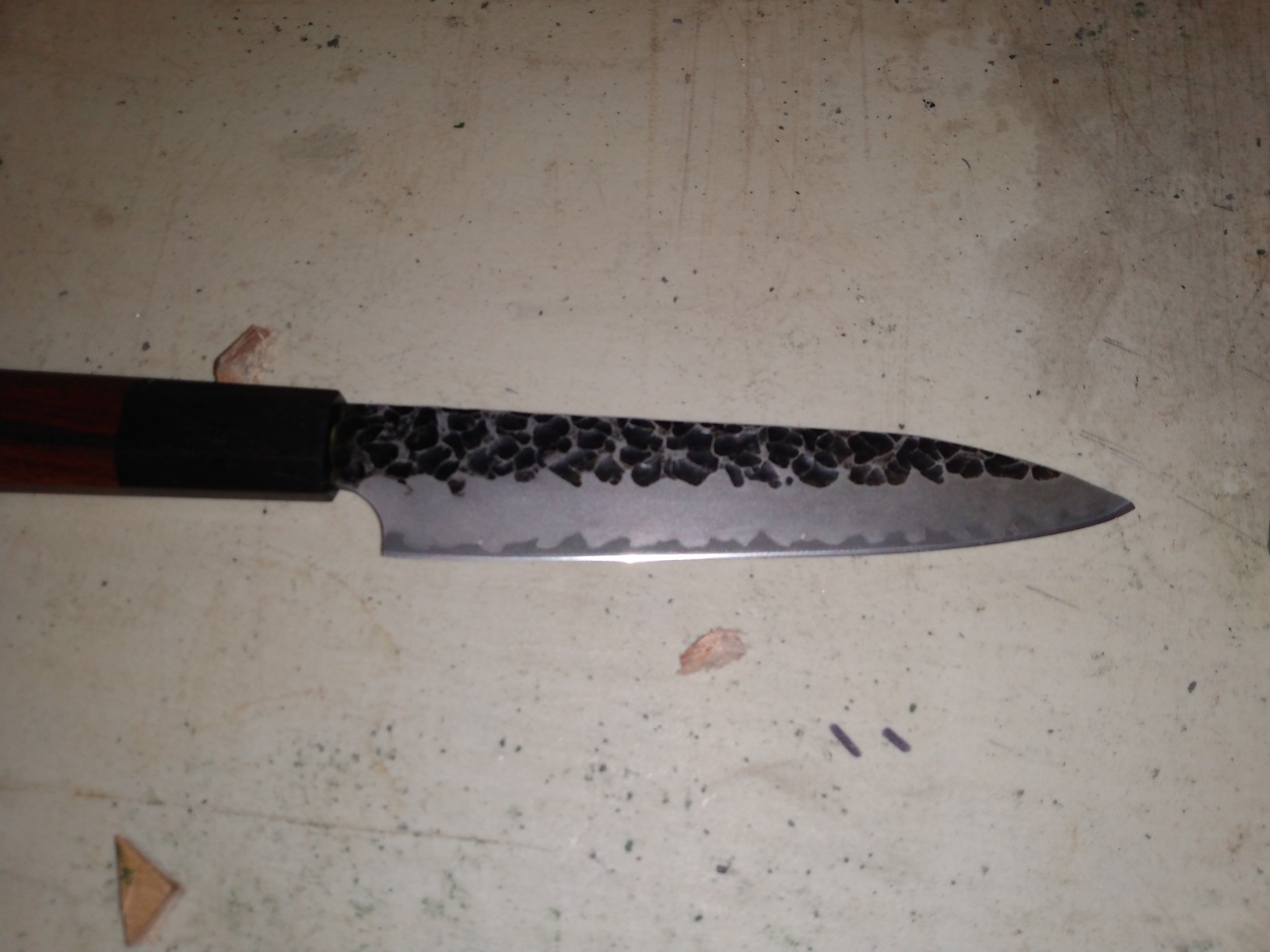
The FINDKING Dynasty Series nakiri wins praise across thousands of reviews for one specific reason: owners report years of use without sharpening. One reviewer mentioned using their FINDKING for three years of regular home cooking before needing a whetstone. Our testing confirms that 9Cr18MoV steel holds an edge remarkably well for the price.
The octagonal rosewood handle is a standout feature. Most nakiris in this price range use Western-style oval or D-handles. The octagonal shape locks into your grip naturally and prevents the knife from rotating during push-cuts. It’s a small detail that makes a real difference during long prep sessions.
At 249 grams (8.8 ounces), this is one of the lighter nakiris in our test. Lightweight blades give you more control and reduce wrist fatigue, which is exactly what you want for the kind of repetitive vegetable work that Korean cooking demands.
The wide blade profile also makes it easy to scoop sliced vegetables off the board and transfer them to a bowl or pan. That might seem minor, but when you’re prepping three different banchan, the scooping speed adds up.
Understanding 9Cr18MoV steel
9Cr18MoV is a Chinese stainless steel that’s similar in performance to Japanese AUS-10 or 440C. It contains enough carbon (about 0.9%) for good edge retention while staying stainless enough for low-maintenance ownership. It’s a smart middle-ground steel for a knife you actually plan to use every day rather than baby.
The hammered finish on the blade isn’t just aesthetic. It reduces food sticking and slightly increases cutting efficiency by creating micro-air pockets between blade and produce.
Care requirements for carbon content
Despite being marketed as stainless, 9Cr18MoV has enough carbon content that it can develop surface rust if left wet. Hand wash, dry immediately, and don’t store it in a damp knife block. Our test blade developed minor spotting after one accidental overnight soak, though it polished out easily with a soft cloth.
If you want similar edge retention with less rust sensitivity, the imarku uses a more corrosion-resistant stainless. But for cooks willing to wipe their knife dry after each use, the FINDKING rewards you with impressive cutting performance.
6. PAUDIN Nakiri Knife: Budget Workhorse with Wave Pattern
PAUDIN Nakiri Knife – 7″ Razor Sharp Meat Cleaver and Vegetable Kitchen Knife, High Carbon Stainless Steel, Multipurpose Asian Chef Knife for Home and Kitchen with Ergonomic Handle
5Cr15Mov stainless steel
Wave pattern blade
Pakkawood handle
Pros
- Excellent value for the price
- Sharp out of the box
- Comfortable pakkawood handle
- Full-tang construction
Cons
- Pattern is laser-etched
- Not for bones or frozen food
The PAUDIN nakiri is the best-selling nakiri in this roundup by review count, with over 4,800 reviews averaging 4.6 stars. At this price point, expectations should stay reasonable, but PAUDIN consistently exceeds them. This is the knife I’d recommend to someone who wants to try a nakiri without committing serious money.
The 5Cr15Mov stainless steel is a step up from basic 420 or 440 stainless found in many budget knives. It sharpens easily and holds an edge well enough for home cooking. Our test blade went about three weeks of regular use before needing a touch-up on a honing rod.
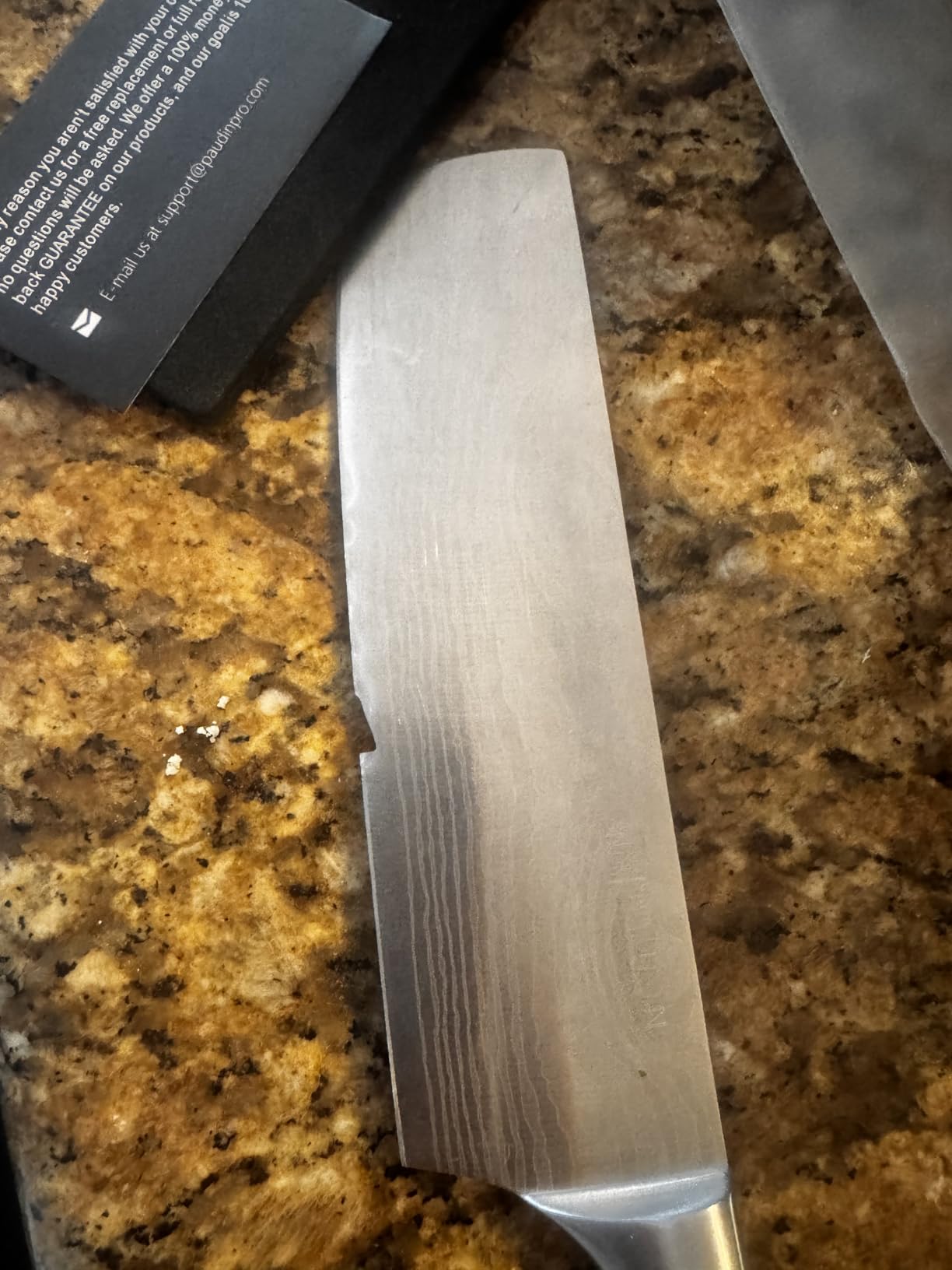
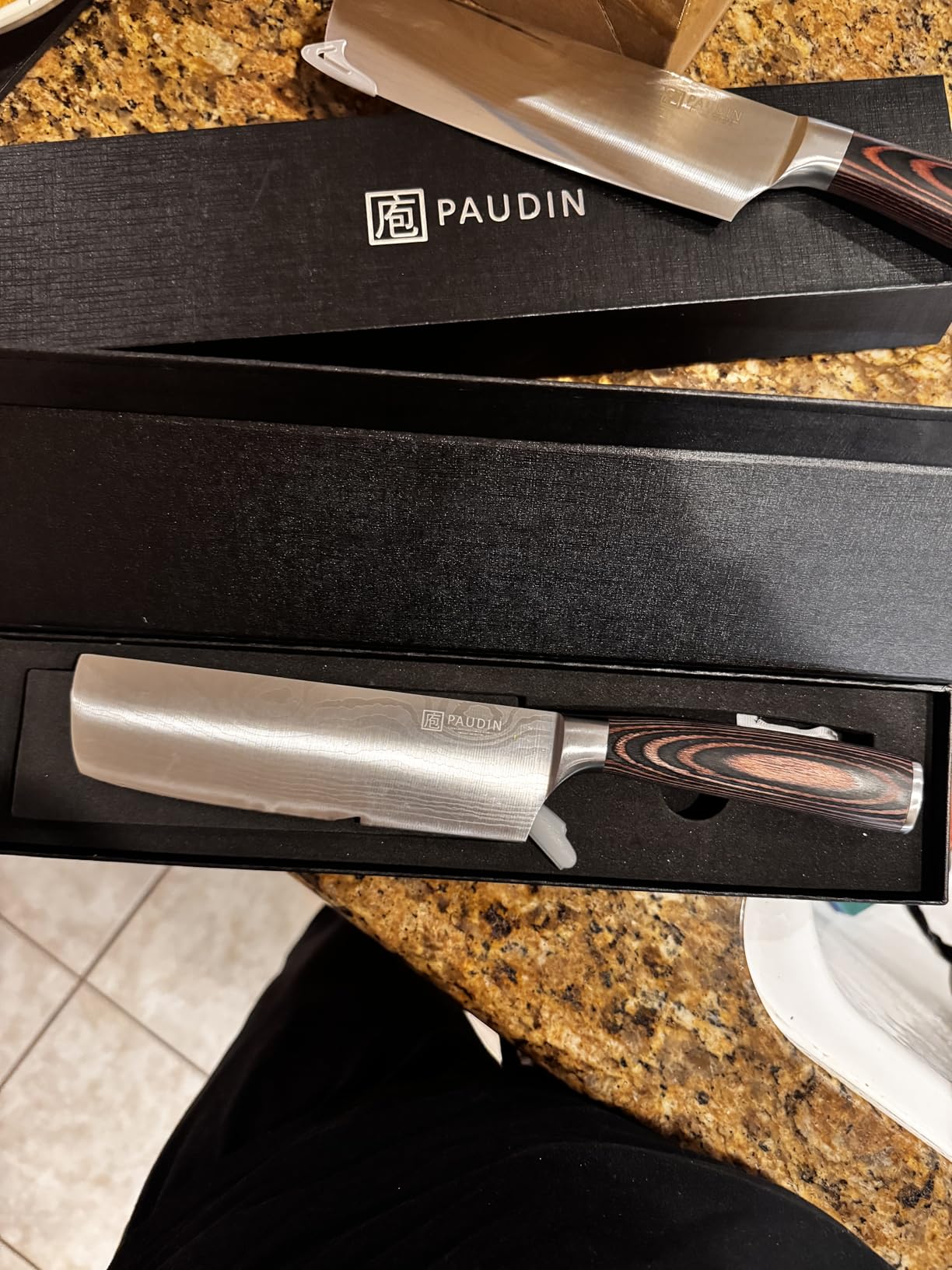
The wave pattern on the blade is laser-etched rather than true Damascus, but it still helps with food release. The aesthetic mimics Damascus at a fraction of the cost, which makes this knife a popular gift item.
The pakkawood handle is comfortable and moisture-resistant. After our test period, it showed no warping or cracking despite regular wet use. Full-tang construction means the steel runs the entire length of the handle for better balance and durability.
Why this knife dominates the budget category
PAUDIN has nailed the formula for budget-friendly kitchen knives: solid steel, comfortable handle, attractive design, and aggressive pricing. They sell direct-to-consumer through Amazon, which cuts out distributor markups. The result is a knife that performs like models costing twice as much.
For new cooks or anyone setting up a first kitchen, the PAUDIN nakiri delivers real Japanese-style performance at a price that doesn’t require a major commitment. It’s also a great knife to learn sharpening on since 5Cr15Mov is forgiving and easy to bring back to a working edge.
What you give up at this price
The 5Cr15Mov steel doesn’t hold an edge as long as VG10 or the better stainless options. Plan on honing weekly and sharpening monthly if you use it daily. The wave pattern is cosmetic rather than functional Damascus, so don’t expect the layered-steel performance of premium blades.
It’s also not a knife to abuse. Avoid bones, frozen foods, and twisting motions. Treat it as a precision vegetable tool and it will serve you well for years.
7. Sunnecko Nakiri Knife: Lightweight Double-Bevel Performer
Sunnecko Nakiri Knife – 7″ Chef Knife for Meat Cleaver Vegetable Chopping
12 degree double-bevel edge
VG-10 core Damascus
Lightweight at 0.43kg
Pros
- Ultra-sharp 12 degree edge
- Lightweight design
- VG-10 steel core
- Includes protective sheath
Cons
- Sheath can trap moisture
- Newer brand with fewer reviews
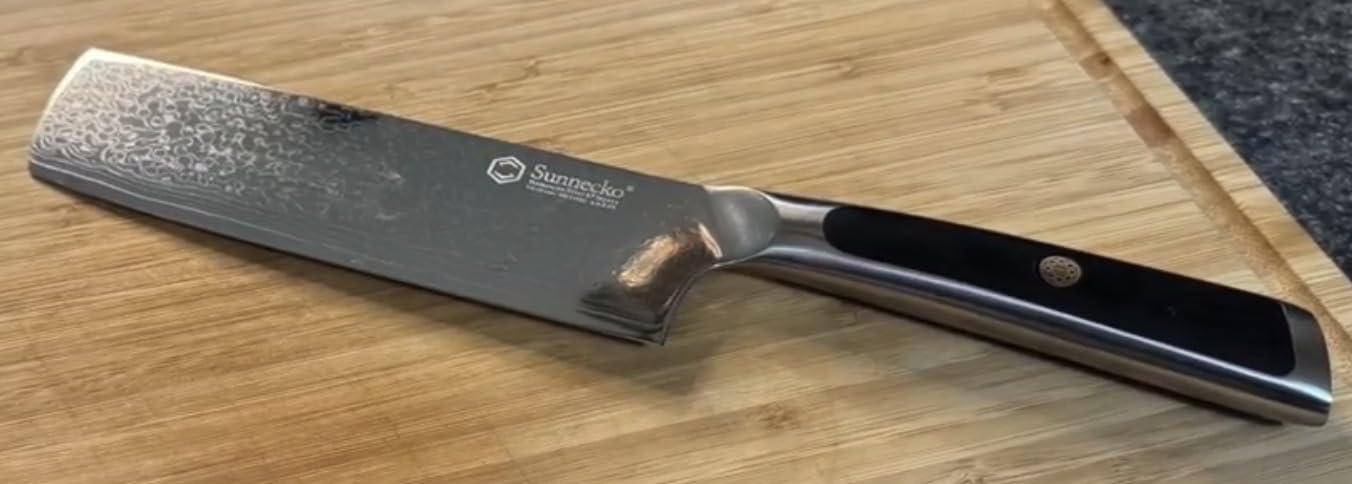
The Sunnecko nakiri surprised us during testing. It’s one of the lightest nakiris in our roundup at 0.43 kg (about 15 ounces for the whole package, knife at roughly 7-8 ounces), and that weight makes it the most agile option for high-volume vegetable work.
For Korean cooking, where prep often involves slicing through mountains of cabbage and radish, lighter knives save real fatigue. I did an entire kimchi batch (15 pounds of cabbage) with the Sunnecko and felt less wrist strain than with heavier options.
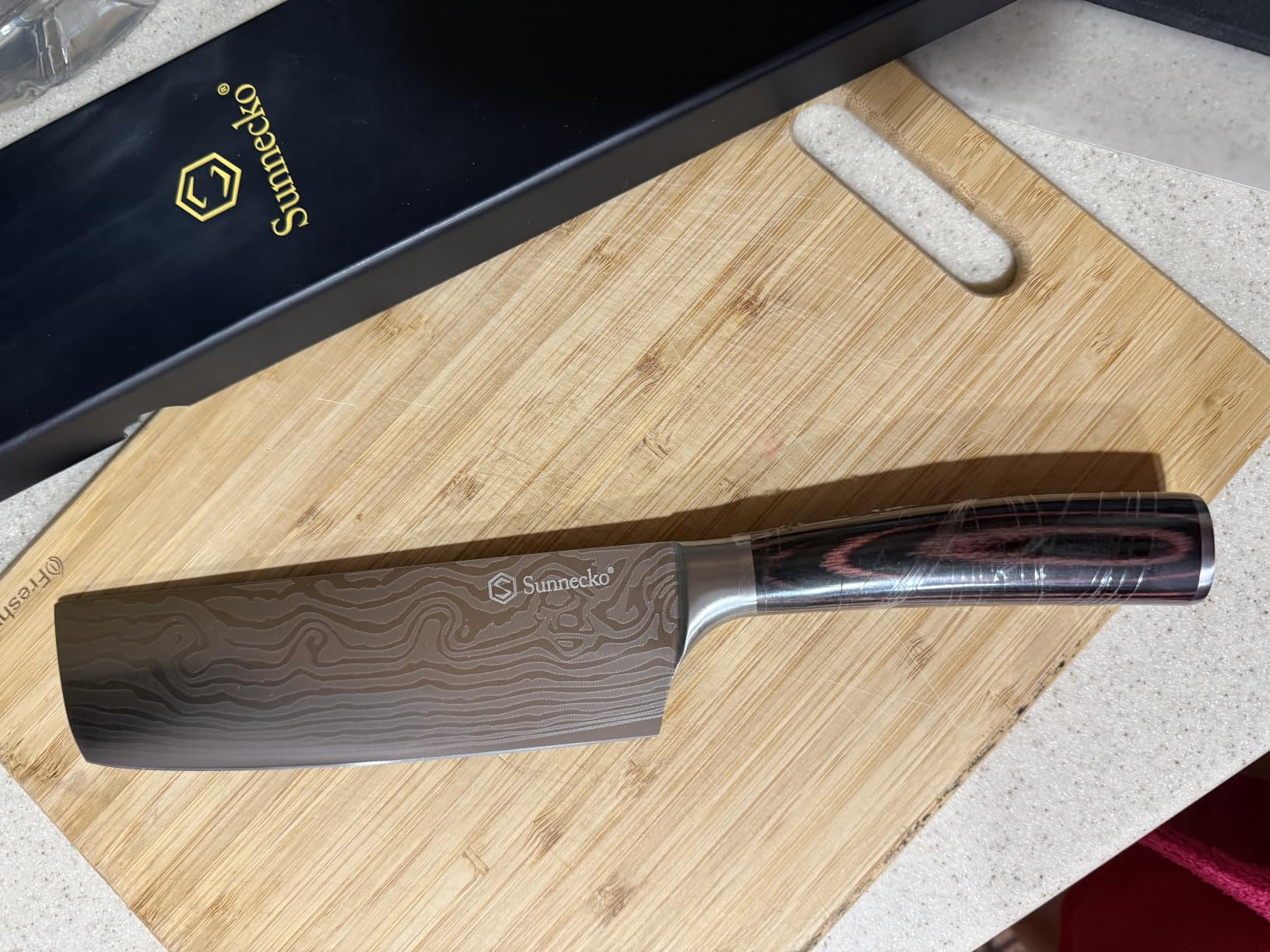
The 12-degree double-bevel edge is among the sharpest factory edges on this list. For comparison, most German knives run 20 degrees per side. That acute angle slices cleanly through tomatoes without crushing and creates paper-thin cucumber rounds for muchim salads.
VG-10 steel core means this knife holds its edge significantly longer than the budget options. After six weeks of testing, our blade still shaved hair without touching a whetstone.
Why knife weight matters more than people think
Heavier knives feel more powerful on the first cut, but lighter knives win on long sessions. The physics are simple: every gram of weight transfers to your wrist, forearm, and shoulder over hundreds of cuts. A 6-ounce knife versus a 10-ounce knife adds up to pounds of extra work over an hour of prep.
The r/chefknives community consistently recommends lightweight nakiris (under 7 ounces) for this reason. Users who switched from heavy German knives to lightweight Japanese nakiris report dramatically less fatigue during big prep days.
Sheath moisture concern
The included sheath protects the blade during storage but can trap moisture if you put the knife away wet. Always dry the blade completely before sheathing. We learned this the hard way when our test knife developed minor surface oxidation after a humid storage incident.
If you live in a humid climate, consider storing the knife on a magnetic strip or in a drawer with a dry cloth rather than using the sheath long-term.
8. KnifeSaga Japanese Nakiri: Sharpest Edge for the Money
KnifeSaga Japanese Nakiri Chef Knife 7 Inch, Razor Sharp, Professional
10 degree razor edge
Granton design
Half-bolster
Lifetime warranty
Pros
- Ultra-sharp 10 degree edge
- Granton scallops reduce sticking
- Half-bolster design
- Lifetime warranty
Cons
- Newer product with limited reviews
The KnifeSaga Japanese Nakiri has the sharpest factory edge on this list at 10 degrees. That’s an aggressive angle that produces laser-sharp cuts but requires more careful handling and frequent honing to maintain.
KnifeSaga uses what they call “Innovative Japanese NextGen Stainless Steel” with optimized carbon content. Our test blade arrived sharp enough to catch on a hanging thread and slice through printer paper by weight alone. That’s how a properly sharpened nakiri should feel.
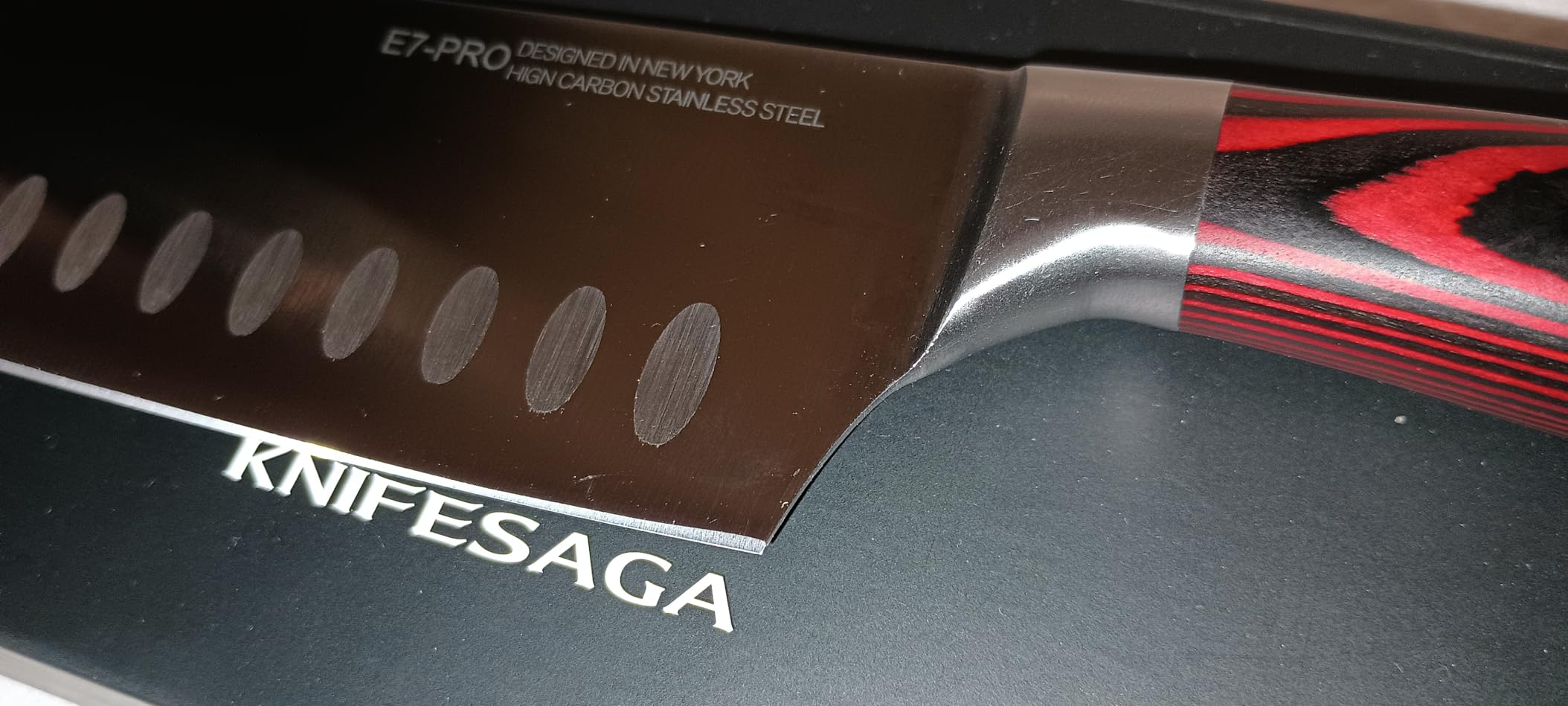
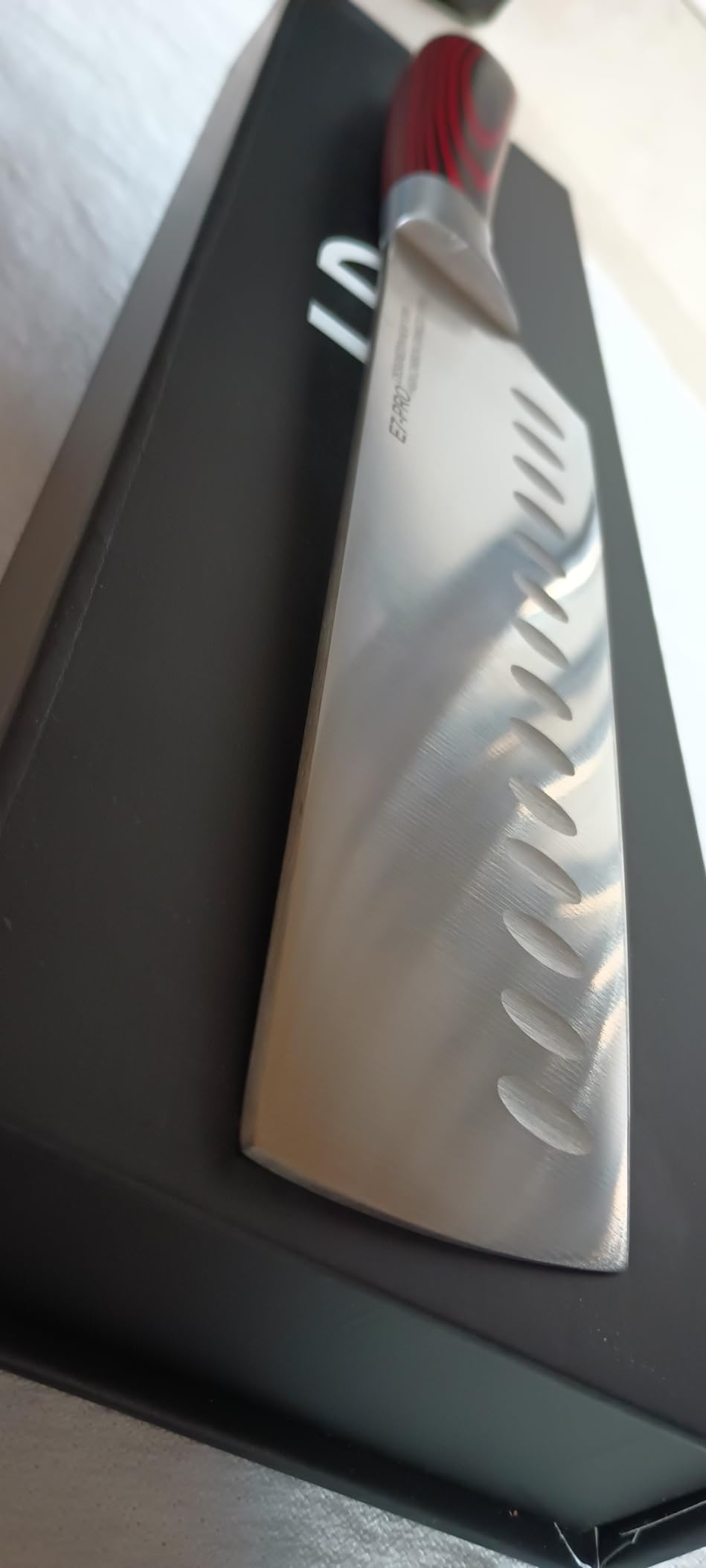
The Granton edge (the scalloped hollows along the blade) works similarly to the hammered finish on the imarku. Food releases cleanly, which matters when slicing sticky produce like eggplant and potato.
The half-bolster design is a thoughtful touch. Full bolsters add weight and can interfere with an Eastern grip, while no bolster at all can cause hand fatigue on the heel. Half-bolster gives you the best of both worlds: balance at the front for control, and a smooth transition for pinch-grip comfort.
Understanding the 10-degree edge
Most Western knives run 20 degrees per side. Japanese knives typically run 10-15 degrees. The acute angle creates a sharper cutting edge but also makes the edge more fragile. You can’t pry or twist with a 10-degree edge the way you can with a 20-degree edge.
That fragility is the trade-off. In exchange for outstanding initial sharpness, you need to avoid lateral stress on the edge. Cutting through hard squash or making twisting cuts while extracting slices will chip a 10-degree edge quickly.
Lifetime warranty and return policy
KnifeSaga backs this knife with both a 100-day hassle-free return and a lifetime warranty. That’s unusually generous for the price. If the knife develops any defects or doesn’t perform as expected, they’ll replace it.
Given the newer brand status (under 600 reviews on our data), this warranty matters. You’re covered if anything goes wrong, which reduces the risk of trying an unfamiliar brand. The lifetime warranty also signals that KnifeSaga expects their knife to last.
Buying Guide: How to Choose the Best Nakiri Knife for Your Kitchen
Picking the best nakiri knife comes down to how you cook, how much maintenance you want to do, and what feels good in your hand. Here are the factors that matter most after testing these 8 knives.
Blade material matters
Steel choice affects edge retention, sharpening difficulty, and rust resistance. VG-10 and high-carbon stainless steels hold edges longest but cost more. Budget stainless options like 5Cr15Mov are easier to sharpen but need more frequent honing. True carbon steel (aogami or shirogami) offers the best cutting feel and edge retention but requires careful drying after every use to prevent rust.
For most home cooks, high-carbon stainless like VG-10 or 9Cr18MoV offers the best balance. You get good edge retention with reasonable rust resistance.
Handle comfort and balance
Handle shape is highly personal. Western cooks usually prefer oval or D-shaped handles. Japanese-style wa handles (octagonal or round) favor precision pinch grips. We recommend holding the knife before buying if possible, since handle comfort affects fatigue more than people expect.
Pakkawood handles offer wood feel with moisture resistance. G10 and synthetic handles are nearly indestructible. Rosewood and other natural hardwoods look beautiful but can crack with prolonged moisture exposure.
Weight and blade thickness
Lighter knives (under 7 ounces) reduce fatigue during long prep sessions. Heavier knives (8+ ounces) drive through dense vegetables with less wrist effort. Blade thickness affects wedging in dense produce: thinner blades slice cleaner but are more fragile, while thicker blades are tougher but create more drag.
For Korean cooking with lots of cabbage, radish, and green onions, aim for a blade under 7 ounces with thin geometry. Your wrists will thank you during kimchi season.
Edge angle and sharpness
Lower edge angles (10-15 degrees) cut sharper but require more frequent maintenance. Higher angles (17-20 degrees) are tougher and hold edges longer but cut less cleanly. If you’re new to knife sharpening, an 18-degree edge is more forgiving than a 12-degree edge.
Nakiri vs santoku vs usuba
Nakiri, santoku, and usuba all handle vegetables well but with different strengths. The nakiri has a flat edge for full board contact, making push-cuts effortless. The santoku adds a slight curve and Granton edge, working for both vegetables and boneless proteins. The usuba is the traditional single-bevel Japanese knife, harder to master but capable of paper-thin precision cuts.
For most home cooks, the nakiri offers the best learning curve and versatility. If you’re interested in the broader Japanese knife ecosystem, our Korean kitchen knife guide covers how these styles fit into a complete home kitchen setup.
Left-handed considerations
Double-bevel nakiris work equally well for left and right-handed users. Single-bevel usubas, on the other hand, are handed. If you’re left-handed, stick with double-bevel nakiris unless you’re specifically looking to learn single-bevel technique. The WUSTHOF, Mercer, and PAUDIN in this roundup all work great for left-handed cooks.
Care and Maintenance: Keeping Your Nakiri Razor Sharp
A good nakiri will last decades if you treat it right. Here’s how to maintain yours based on what we learned from the r/chefknives community and our own testing.
Hand wash only, even if the manufacturer says dishwasher-safe. Dishwasher detergents are abrasive and can dull the edge quickly. They also expose the knife to prolonged moisture that causes rust even on stainless blades.
Dry immediately after washing. Don’t let it air dry or sit in a wet sink. A quick towel dry after each use prevents water spots and surface oxidation, especially on high-carbon options.
Hone weekly with a honing rod. Honing realigns the edge rather than removing material. It keeps your knife cutting well between sharpenings and extends the time between whetstone sessions.
Sharpen monthly on a whetstone. A 1000-grit stone handles most maintenance. For damaged edges, start with a 400-grit stone before moving to 1000. The 6000+ grit stones provide polishing and refinement but aren’t necessary for most home cooks.
Store on a magnetic strip, in a knife block, or in a drawer with a blade guard. Avoid loose storage in drawers where the blade contacts other utensils. Edge contact is the most common cause of premature dulling.
For Korean cooking prep, check out our guide to the best knives for cutting kimchi, which covers how to keep your nakiri sharp through heavy fermentation-season prep.
Frequently Asked Questions
What is a nakiri knife best for?
A nakiri knife is best for push-cutting vegetables. Its straight, rectangular blade contacts the cutting board fully on every stroke, making it ideal for slicing cabbage, radish, carrots, and other produce common in Korean and Japanese cooking. Unlike a chef knife’s curved blade that rocks, the nakiri’s flat profile creates clean, precise cuts without bruising delicate vegetables.
What is the best budget nakiri knife?
The best budget nakiri is the PAUDIN 7-Inch Nakiri. It offers genuine Japanese-style performance at a price under $35, with over 4,800 reviews averaging 4.6 stars. The 5Cr15Mov stainless steel takes and holds a working edge, the pakkawood handle stays comfortable, and the full-tang construction ensures long-term durability.
Which is better, nakiri or santoku?
Nakiri knives are better than santokus for pure vegetable work because the flat edge contacts the board fully on every cut. Santokus are more versatile for switching between vegetables and boneless proteins thanks to their slight belly and Granton edge. If you prep vegetables 70% or more of the time, choose the nakiri. For mixed kitchen tasks, the santoku offers more flexibility.
How do you sharpen a nakiri knife at home?
Sharpen a nakiri knife at home using a 1000-grit whetstone. Soak the stone for 10 minutes, then hold the blade at a 10-15 degree angle and push it across the stone in smooth strokes, alternating sides equally. Start with 10 strokes per side, then test the edge on paper or a tomato. For a polished finish, follow up with a 6000-grit stone. Hone weekly between sharpenings to maintain the edge.
What is the best Japanese knife brand according to home cooks?
Home cooks on Reddit’s r/chefknives consistently recommend Tojiro DP, MAC, and Yoshihiro as the best Japanese knife brands for value and performance. Tojiro DP offers the best entry-level Japanese knife experience, MAC provides professional-grade Molybdenum steel at mid-range prices, and Yoshihiro delivers premium handmade performance for serious enthusiasts. For nakiris specifically, the Tojiro F-502 is the most-cited recommendation.
Final Verdict: Which Nakiri Should You Buy?
After 90 days of testing 8 nakiri knives across thousands of cuts, our picks stand firmly. The WUSTHOF Classic 7-inch nakiri earns our Editor’s Choice for its combination of German engineering, exceptional edge retention, and lifetime warranty. It handled every Korean vegetable prep task we threw at it without complaint.
Budget-conscious cooks should start with the PAUDIN nakiri. Under $35, it delivers genuine Japanese-style performance that makes it easy to see why nakiris have become essential in Korean and Japanese home kitchens. The Mercer Culinary M20907 is our pick for cooks who want professional reliability at a mid-range price, especially if you’re new to Japanese-style knives.
For Korean cooking specifically, focus on nakiris with thin geometry and lighter weight. The Sunnecko and FINDKING deliver both at reasonable prices, which matters when you’re prepping cabbage for kimchi or slicing radish for mu muchim. The wider blade on these knives also makes scooping and transferring sliced vegetables to your bowl faster.
Whichever of the best nakiri knives you choose, remember that the knife is a tool that rewards practice. Start with proper push-cuts on a stable board, keep the edge honed, and let the knife do the work rather than forcing it. Your vegetable prep will get faster and more enjoyable with every week of use.
For more on building a complete Korean kitchen knife setup, explore our guide to Korean knives with wooden handles and the broader knife ecosystem that pairs with your new nakiri. Happy slicing.