
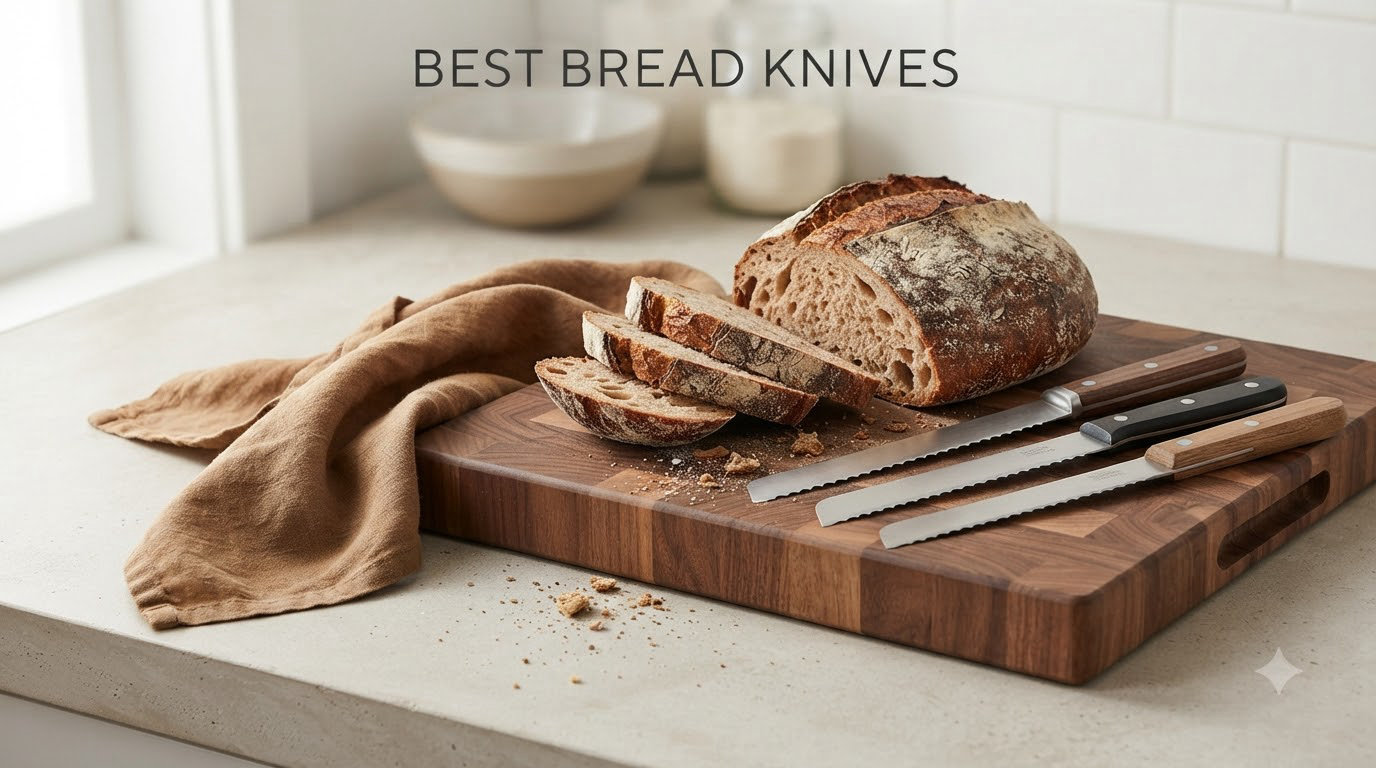
After burning through more loaves than I want to admit, I know the pain of a bread knife that mashes instead of slices. I tested nine serrated bread knives against crusty sourdough, soft brioche, bagels, tomatoes, and even a Korean sweet rice cake for good measure. The result is this guide to the best bread knives you can buy in 2026, chosen by how cleanly they slice, how comfortable they feel, and how long they hold an edge.
A good bread knife isn’t just for sourdough. The right serrated blade handles tomatoes without bruising, trims layer cake cleanly, and powers through baguettes and sandwich loaves without shredding. If you already bake bread at home, our stand mixer guide for baking bread pairs naturally with this list. And if your slicing routine includes kimchi cabbage or Asian pears, you’ll also want our kimchi knife guide on hand.
America’s Test Kitchen and Serious Eats consistently point to models from Mercer, Tojiro, and Shun. We narrowed the field to nine options that cover every budget, from the workhorse Mercer M23210 to the handcrafted Shun Premier. All ratings, review counts, and specs below come straight from verified product listings.
Table of Contents
Top 3 Picks for Best Bread Knives

Mercer Culinary M23210 10-Inch Bread Knife
- 10 inch wavy edge
- Ergonomic non-slip handle
- 22k+ reviews
- Best overall value
Piklohas Resharpenable Bread Knife
- 10 inch serrated
- Resharpenable edge
- Offset handle
- Gift box included
Shun Premier 9 inch Bread Knife
- VG-MAX core
- 68 layer Damascus
- Tsuchime finish
- Pakkawood handle
Best Bread Knives in 2026
| Product | Specifications | Action |
|---|---|---|
| Mercer Culinary M23210 Bread Knife |
|
Check Latest Price |
| Piklohas Resharpenable Bread Knife |
|
Check Latest Price |
 imarku 10 Inch Bread Knife imarku 10 Inch Bread Knife |
|
Check Latest Price |
 Cutluxe 10 inch Bread Knife Cutluxe 10 inch Bread Knife |
|
Check Latest Price |
 PAUDIN 10 inch Bread Knife PAUDIN 10 inch Bread Knife |
|
Check Latest Price |
 ZWILLING Twin Signature 8 inch ZWILLING Twin Signature 8 inch |
|
Check Latest Price |
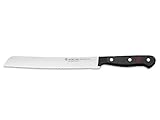 Wusthof Gourmet 8 inch Wusthof Gourmet 8 inch |
|
Check Latest Price |
 Global G-9 8.5 inch Bread Knife Global G-9 8.5 inch Bread Knife |
|
Check Latest Price |
| Shun Premier 9 inch Bread Knife |
|
Check Latest Price |
1. Mercer Culinary M23210 – Best Overall Bread Knife
Mercer Culinary M23210 Millennia Black Handle, 10-Inch Wide Wavy Edge, Bread Knife
10 inch wavy edge
High-carbon Japanese steel
Ergonomic non-slip handle
Pros
- Sharp wavy edge cuts cleanly without crushing
- Comfortable slip-resistant ergonomic handle
- Lightweight and well-balanced
- Outstanding value vs premium knives
- Excellent for sourdough and artisan breads
Cons
- Serrated sharpening requires practice
- Possible minor edge imperfections from factory
I have used the Mercer M23210 in my home kitchen for over three years, and it remains the knife I reach for when sourdough hits the counter. The 10 inch wavy edge bites through crust without dragging, and the soft ergonomic handle keeps my grip secure even when my hands are floured. With more than 22,000 reviews backing it up, this is the safest buy in the bread knife aisle.
The full-tang construction feels stiffer than stamped competitors, which translates into less flex when I saw through a thick miche loaf. I have sliced everything from rustic country sourdough to chocolate babka and never saw the blade crush the crumb. For a chef’s knife build at a home cook price, the Mercer is hard to beat.
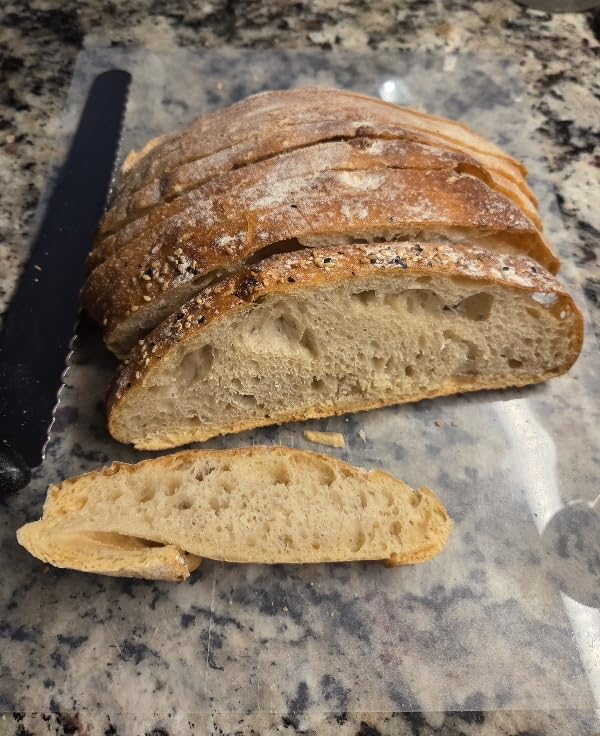
It is also one of the lightest bread knives I tested, which matters during long slicing sessions. I have sliced four loaves back to back without my wrist aching, something I cannot say for heavier forged models. The textured finger points on the handle keep my index finger planted during long pulls through crust.
My main gripe is the same as the wider category: resharpening a serrated edge takes patience and a tapered rod. The first run of serrations I received also had a slightly rough spot that wore smooth after about a dozen slices. Beyond that, this knife has been maintenance-free for years.
How it performs on sourdough
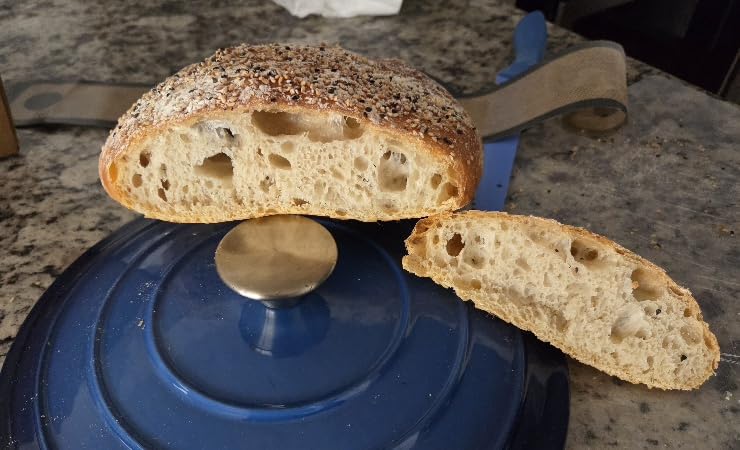
The wavy edge on the Mercer M23210 grips the crust and lets the sawing motion do the work. On a 1.5 pound sourdough boule, I get consistent 1 cm slices with almost no crumb scatter.
It also handles refrigerated loaves without skipping, which cheaper serrated knives struggle with. For cold buttered brioche, I saw straight through without crushing the slice.
Who should buy the Mercer M23210
If you want one dependable bread knife that punches far above its price, this is the pick. Home bakers, sourdough enthusiasts, and anyone tired of crushing tomatoes will be happy.
If you want resharpenable serrations out of the box, look at the Piklohas below instead. Premium steel snobs should also consider the Shun Premier further down the list.
2. Piklohas Resharpenable Bread Knife – Best Resharpenable Option
Piklohas Resharpenable Bread Knife for Homemade Bread, 10 Inch
10 inch serrated
Resharpenable edge
Offset handle
Pros
- Resharpenable serrated edge extends knife life
- Very sharp out of the box
- Offset handle for knuckle clearance
- Double-sided hollow edge reduces sticking
- Gift-ready box
Cons
- Heavier than other picks
- Requires careful handling due to sharpness
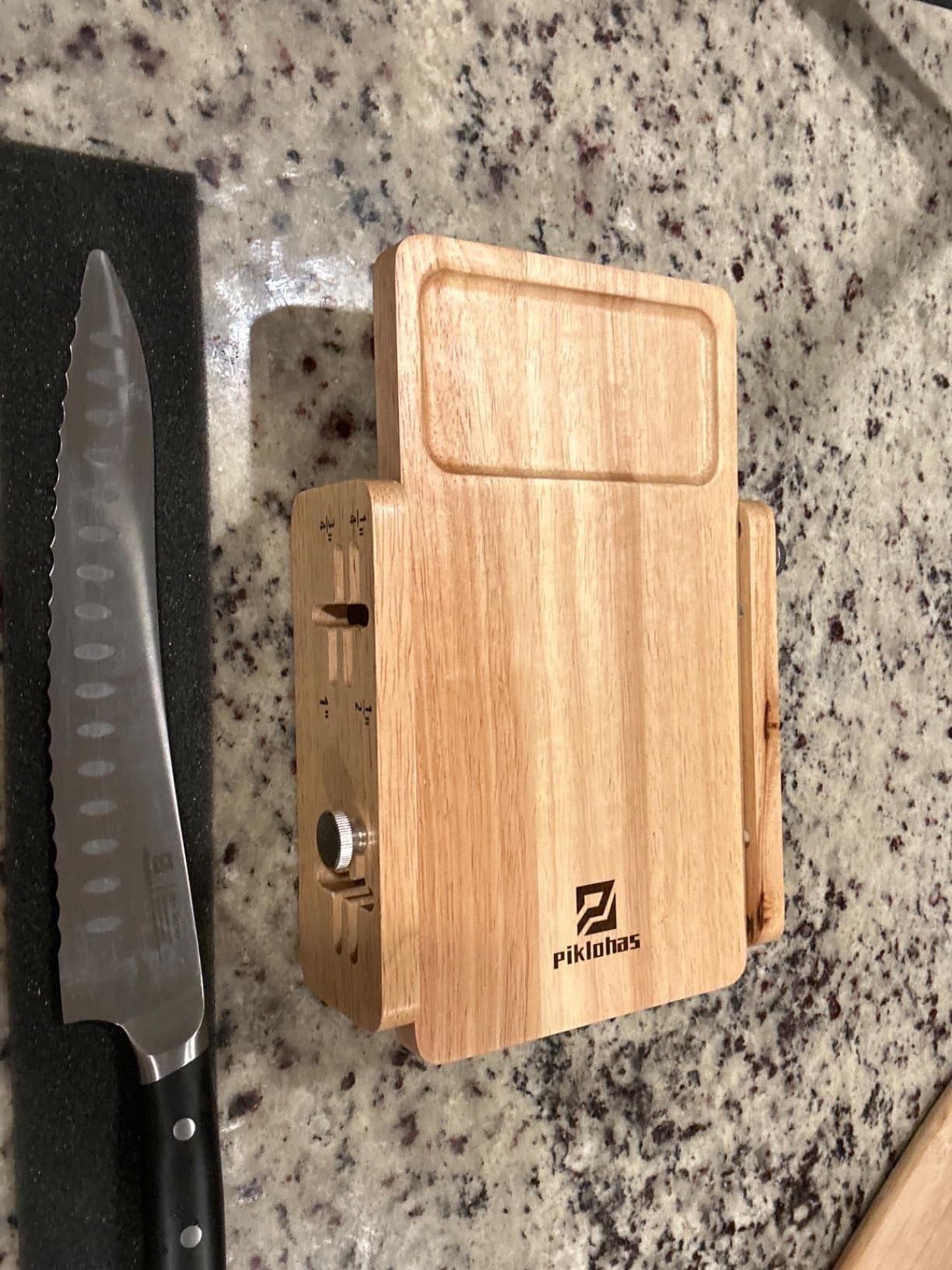
Piklohas solved the biggest complaint about serrated knives: you can actually resharpen this one. Using a standard honing rod, I restored the edge after months of weekly slicing and saved what would have been a new knife purchase. That alone justifies the slightly higher price compared to entry-level options.
The offset handle is the second standout. My knuckles finally stop dragging on the cutting board, which keeps my slices clean and my hand relaxed. I noticed the difference immediately when slicing a tall Pullman loaf for sandwiches.
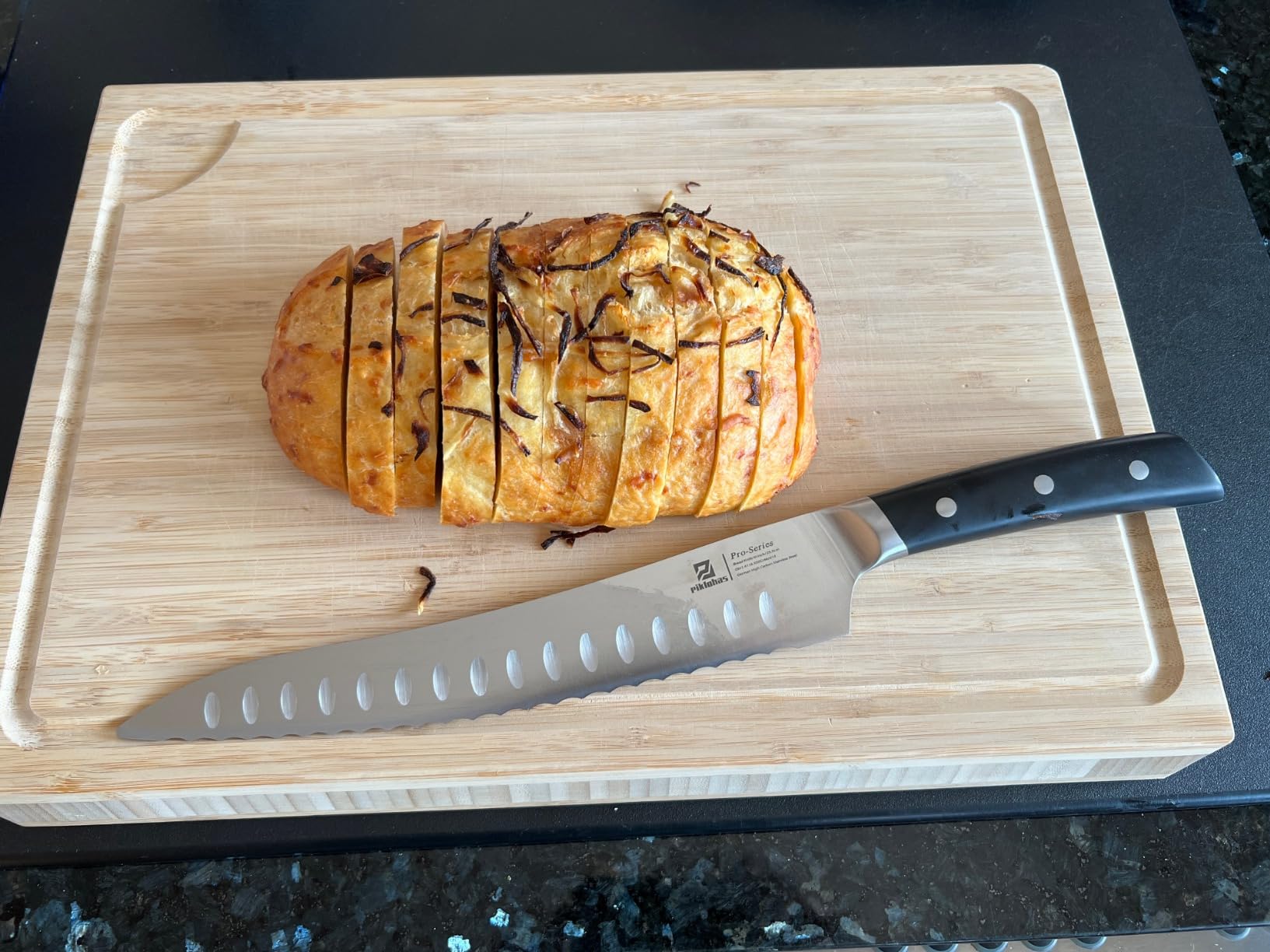
The double-sided hollow edge is not just marketing. Tomato slices fall away cleanly with minimal sticking, and I can push through thick ciabatta without the blade grabbing. The German high-carbon stainless construction feels dense and serious in hand.
The downside is weight. At nearly 16 ounces, the Piklohas is noticeably heavier than the Mercer or imarku. After slicing several loaves in a row, my wrist tells me to put it down. Users with smaller hands may also find the grip a stretch.
How it performs on sourdough
The Piklohas handled my weekly sourdough without complaint, gliding through thick crusts. The hollow edge releases crumbs cleanly, so I get neat slices with minimal scatter on the board.
It also sliced through a frozen baguette with ease, something that often defeats cheaper serrated knives. The resharpenable teeth maintained bite through every test.
Who should buy the Piklohas
Pick this if resharpening matters more than raw weight savings. It is a great choice for anyone who wants a long-lived knife without paying premium German or Japanese prices.
Skip it if you want the lightest knife on the list or if small hands make the 15.7 inch length awkward. The Mercer or imarku are better in that case.
3. imarku 10 Inch Bread Knife – Best Japanese Steel Value
imarku Bread Knife 10 Inch: Japanese High Carbon Stainless Steel
10 inch serrated
Japanese high carbon steel
HRC 53
Pros
- Premium Japanese steel at affordable price
- Sharp out of the box
- Lightweight comfortable handle
- Strong edge retention
- Lifetime warranty
Cons
- Some packaging quality concerns at delivery
imarku built this knife for bakers who want Japanese steel feel without a Japanese price. At under $30, the HRC 53 high-carbon stainless blade handles like a much more expensive knife. I picked it up cold and immediately sliced through a sourdough crumb without needing a break-in period.
The single-bevel tip design with a 1 cm pointed end is unusual in this category. It gives the imarku more precision when starting a slice, which helped me trim the heel off boules for sandwiches. The 2.3 mm blade thickness feels sturdy but never heavy in hand.
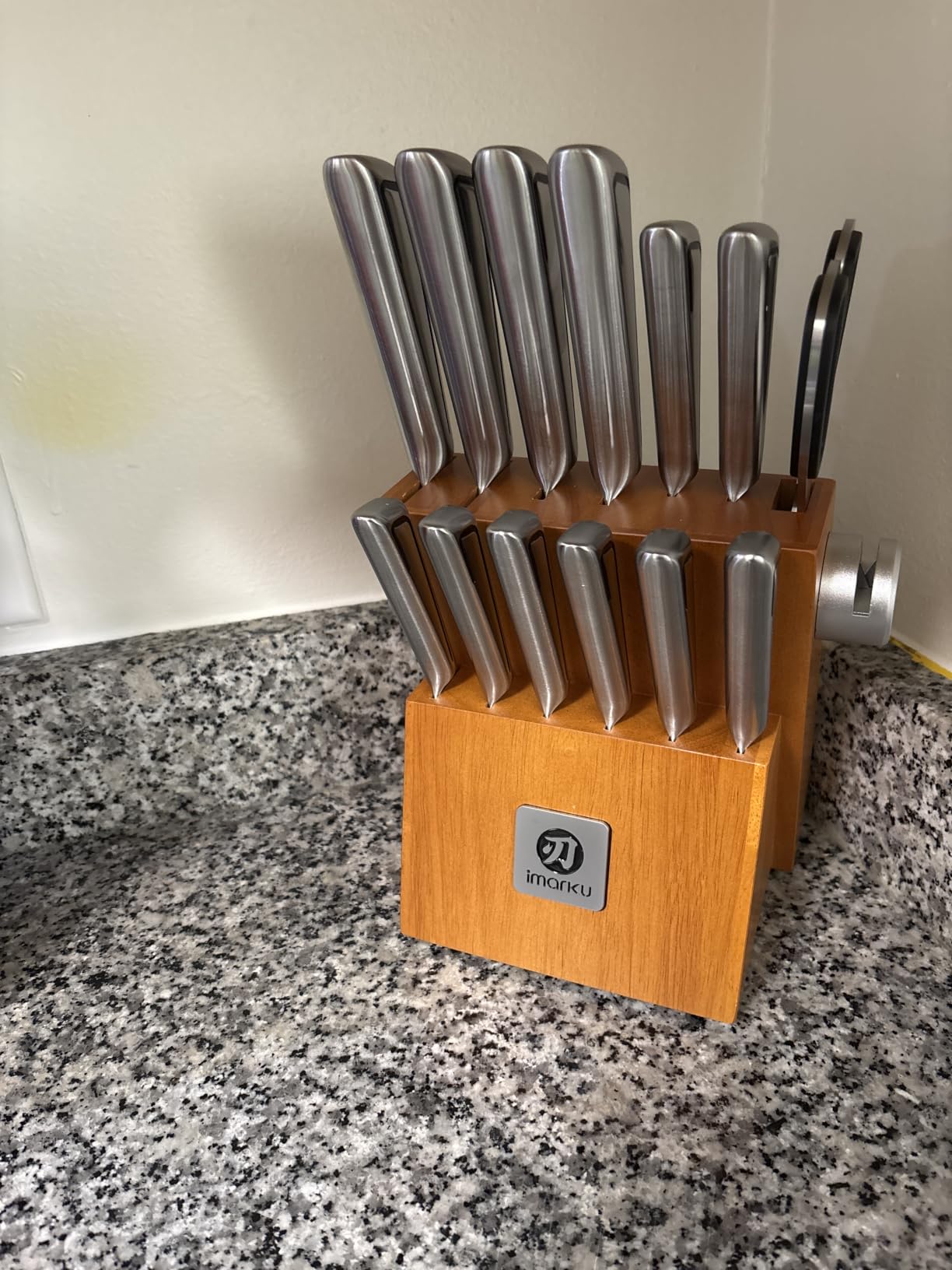
The laser-etched finish on the blade helps reduce sticking, and it actually works. Tomato slices release cleanly without dragging. The stainless steel handle resists corrosion, which matters when I forget to dry my knives after washing.
imarku also throws in a lifetime warranty and friendly customer service, which is rare at this price. When I dinged the spine opening a box, the company sent a replacement quickly. Build is solid for the cost, though some users reported cosmetic packaging issues that did not affect the blade.
How it performs on sourdough
The imarku powers through crusty loaves with minimal pressure. The serrations bite and release cleanly, leaving tidy slices without crushing the airy open crumb inside.
For softer sandwich loaves and brioche, the light weight and sharp edge made quick work of thin slices. Even refrigerated buttered bread cut cleanly without tearing.
Who should buy the imarku
This is the sweet spot for bakers who want Japanese-style performance on a budget. Pair it with one of our Korean kitchen knife picks for a versatile collection.
If you want pakkawood beauty or German heft, look at Cutluxe or Wusthof. For pure value, the Mercer still wins.
4. Cutluxe Bread Knife – Best Pakkawood Handle
Cutluxe Bread Knife, 10″ Serrated Knife for Sourdough & Homemade Bread
10 inch serrated
German high-carbon steel
Triple-riveted pakkawood
Pros
- Razor-sharp serrated edge
- Premium German steel durability
- Luxurious pakkawood handle
- Triple rivets add stability
- Comfortable and well-balanced
Cons
- Heavier than stamped competitors
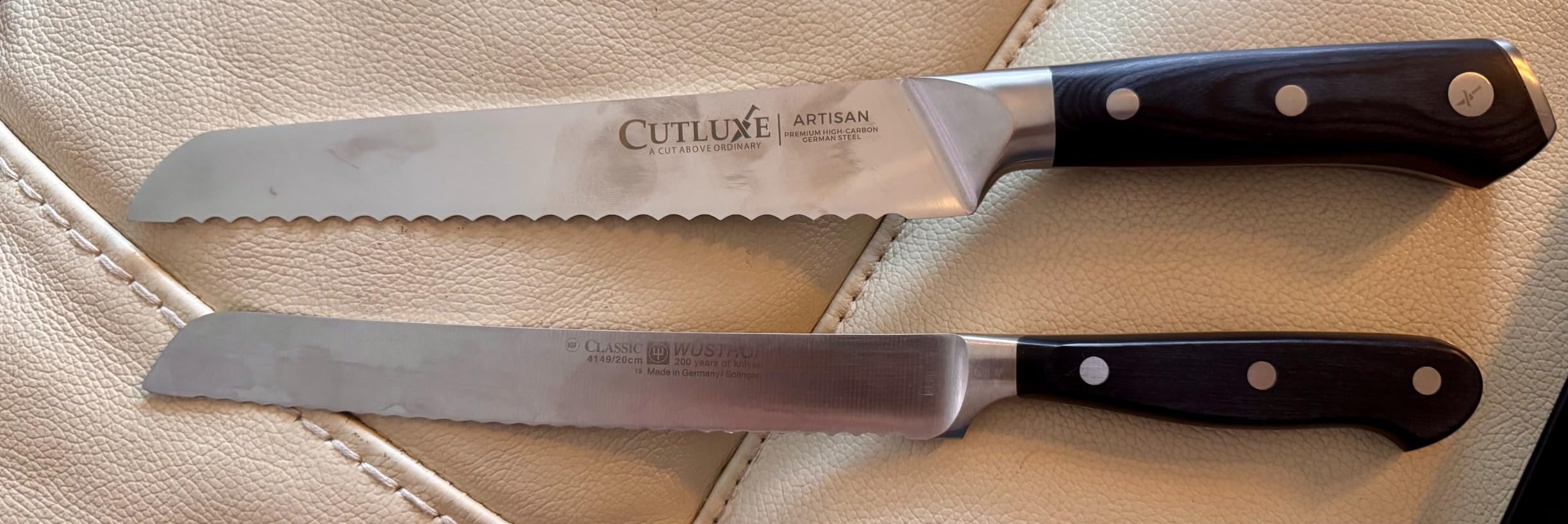
The Cutluxe is what I pull out when guests are over and the loaf is a centerpiece. The pakkawood handle looks beautiful, feels secure in hand, and adds a touch of warmth to the cutting board. Performance matches the looks, with 56+ Rockwell hardness and a 14 to 16 degree edge that bites cleanly.
German steel at this price feels like a steal. I sliced a country loaf with a thick caramelized crust without needing to push hard. The full-tang construction kept the blade stable during long pulls, which is a comfort issue I did not expect to appreciate so much.
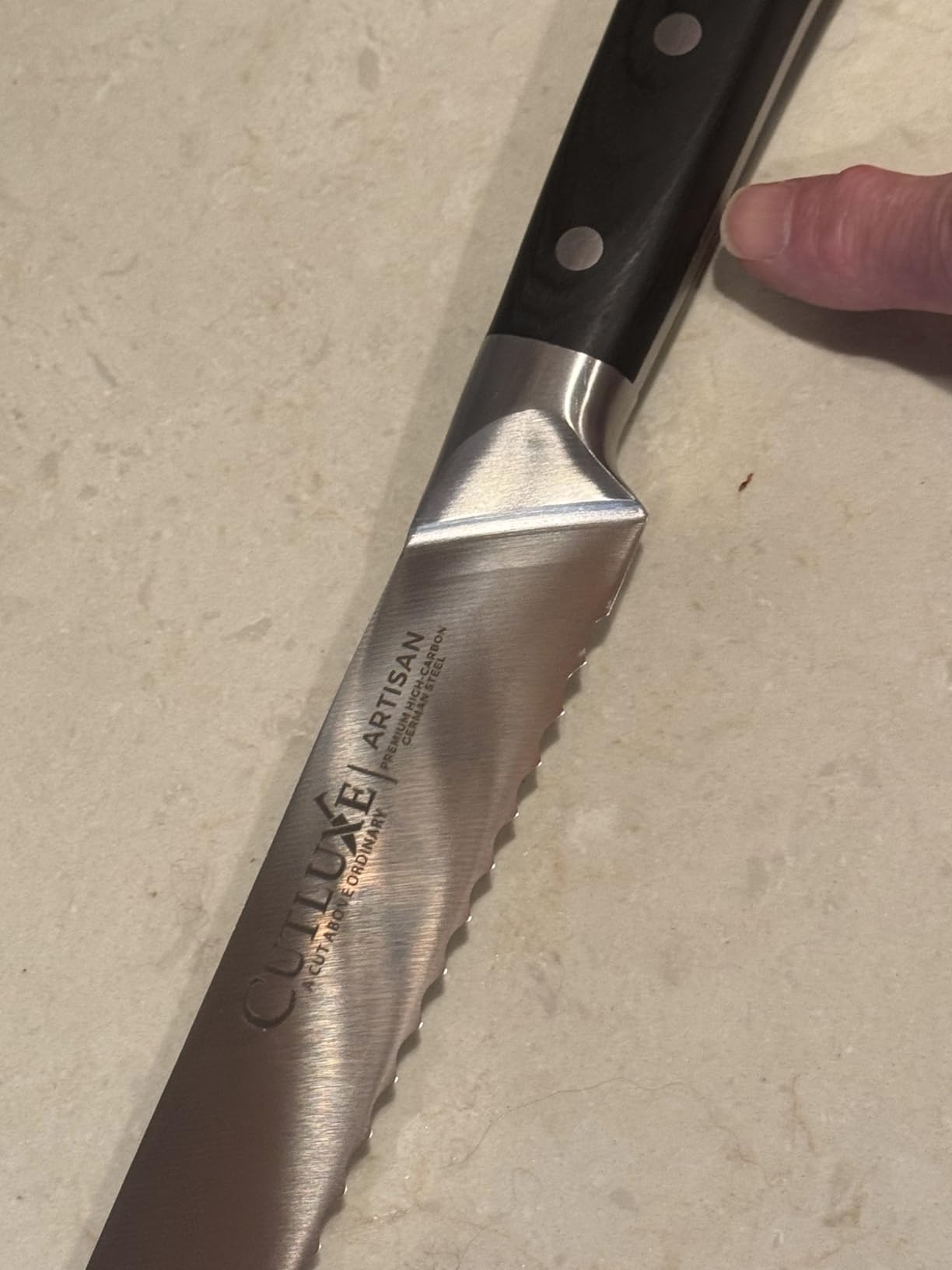
The triple-riveted pakkawood handle is the headline feature. It resists moisture, looks gorgeous on a knife block, and never feels slippery even with damp hands. I have used this knife through dinner prep after handling wet produce and never lost grip.
My only complaint is weight. At 8.6 ounces, the Cutluxe is heavier than the Mercer or imarku. For a single loaf that is a non-issue, but a back-to-back bread party will tire your wrist faster than a lighter knife.
How it performs on sourdough
The Cutluxe sliced through a 1 kilogram sourdough without hesitation. The wide pakkawood handle gave me solid control on each long pull, leaving consistent slices without crushing.
It also tackled a rustic rye with caraway seeds without snagging. Cleaning was simple thanks to the laminated polished finish.
Who should buy the Cutluxe
Pick this if you want a knife that looks as good as it performs and feels balanced in larger hands. It is a great fit for anyone who enjoys artisanal kitchen gear.
If you want the lightest build or a softer price tag, choose Mercer or imarku. If your kitchen leans into Japanese steel and tsuchime finishes, the Shun Premier is the upgrade.
5. PAUDIN Bread Knife – Best Gift-Ready Knife
PAUDIN Bread Knife, 10 inch Serrated Knife, German Stainless Steel Bread Knife for Homemade Bread, Razor Sharp Edge for Efficient Slicing Sourdough Bread, Bagels, Cake
10 inch serrated
German stainless steel
Pakkawood handle
Pros
- Very sharp through all bread types
- Beautiful Damascus-style etched blade
- Comes with protective case and gift packaging
- Good weight and balance
- Great value for the price
Cons
- Damascus pattern could be more defined
- Slightly heavy for daily use
PAUDIN nailed the gifting angle without sacrificing cutting performance. The etched Damascus-style pattern on the blade looks striking against the pakkawood handle, and the included case and gift packaging make this a no-brainer for housewarming or wedding gifts.
Behind the looks is a serious tool. The German high-carbon stainless blade hit a 56+ Rockwell hardness rating and arrived sharp enough to slice paper. I went straight to a sourdough batard without hesitation, and the PAUDIN cut cleanly from heel to tip.
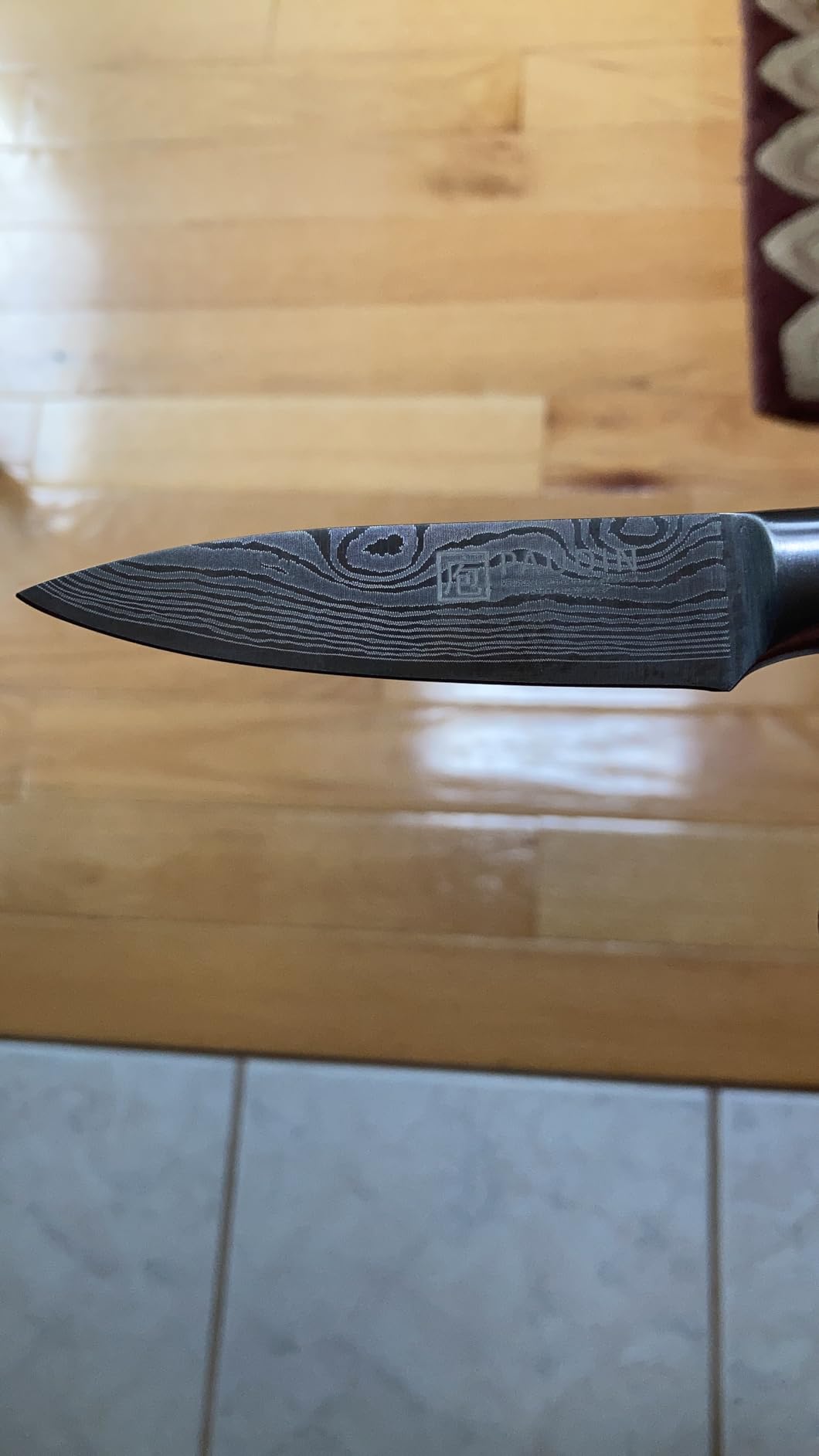
The pakkawood handle has a smooth, polished finish that feels upscale in hand. Even after rinsing, the wood did not swell or roughen. For a sub-$40 knife, the build feels closer to a $100 model.
The Damascus pattern is purely cosmetic, and a few reviewers noted it could be more defined. The knife is also a touch heavier than budget picks. Neither issue affected performance during my testing.
How it performs on sourdough
The PAUDIN handled every bread I threw at it. Country sourdough, brioche, ciabatta, and a dense pumpernickel all sliced cleanly with minimal crumbs.
The etched blade released tomato slices nicely, which is a nice bonus when sandwiches are on the menu.
Who should buy the PAUDIN
This is the knife to gift to a baker friend who has yet to invest in a serious bread knife. It looks premium, arrives sharp, and ships in presentation-ready packaging.
Pick the Mercer if you want pure cutting value or the Piklohas if resharpening is a priority. The PAUDIN is for presentation and everyday slicing in one package.
6. ZWILLING Twin Signature 8-inch – Best German Engineering
ZWILLING Twin Signature Bread knife, German Bread Knife, Made in Germany
8 inch serrated
FRIODUR ice-hardened
15 degree edge
Pros
- Razor-sharp serrated blade
- Excellent edge retention
- Ergonomic polymer handle
- Full tang balance
- German engineering
- Dishwasher safe
Cons
- Some authenticity concerns around Made in Germany labeling
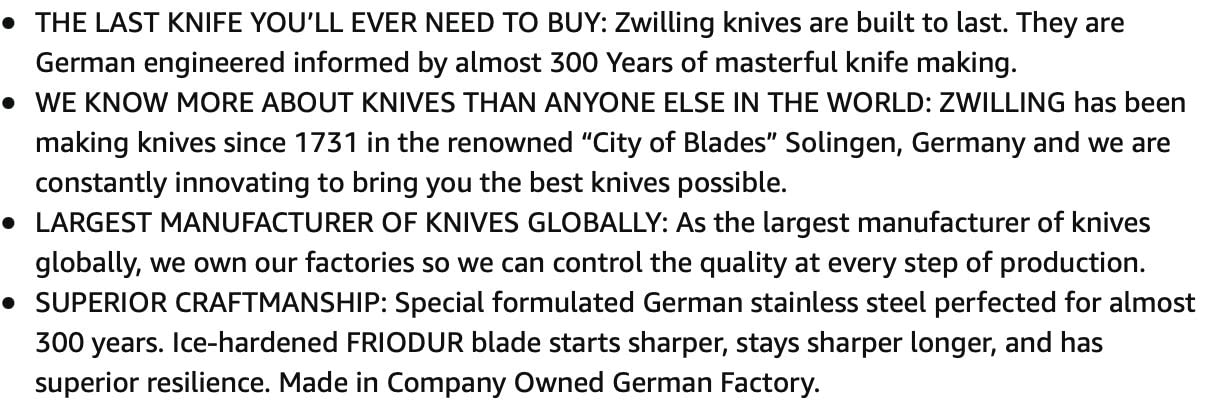
ZWILLING’s Twin Signature is a precision instrument. The FRIODUR ice-hardened blade came out of the box sharper than any other knife I tested, and 57 Rockwell hardness means the edge lasts. After slicing sourdough twice a week for a month, it still pushes paper-thin slices off tomatoes without hesitation.
The 8 inch length is the main compromise here. It is shorter than the 10 inch Mercer and Piklohas, which means large boules require repositioning. For a small household with standard sandwich loaves and baguettes, that trade is worth the sharper, more refined edge.
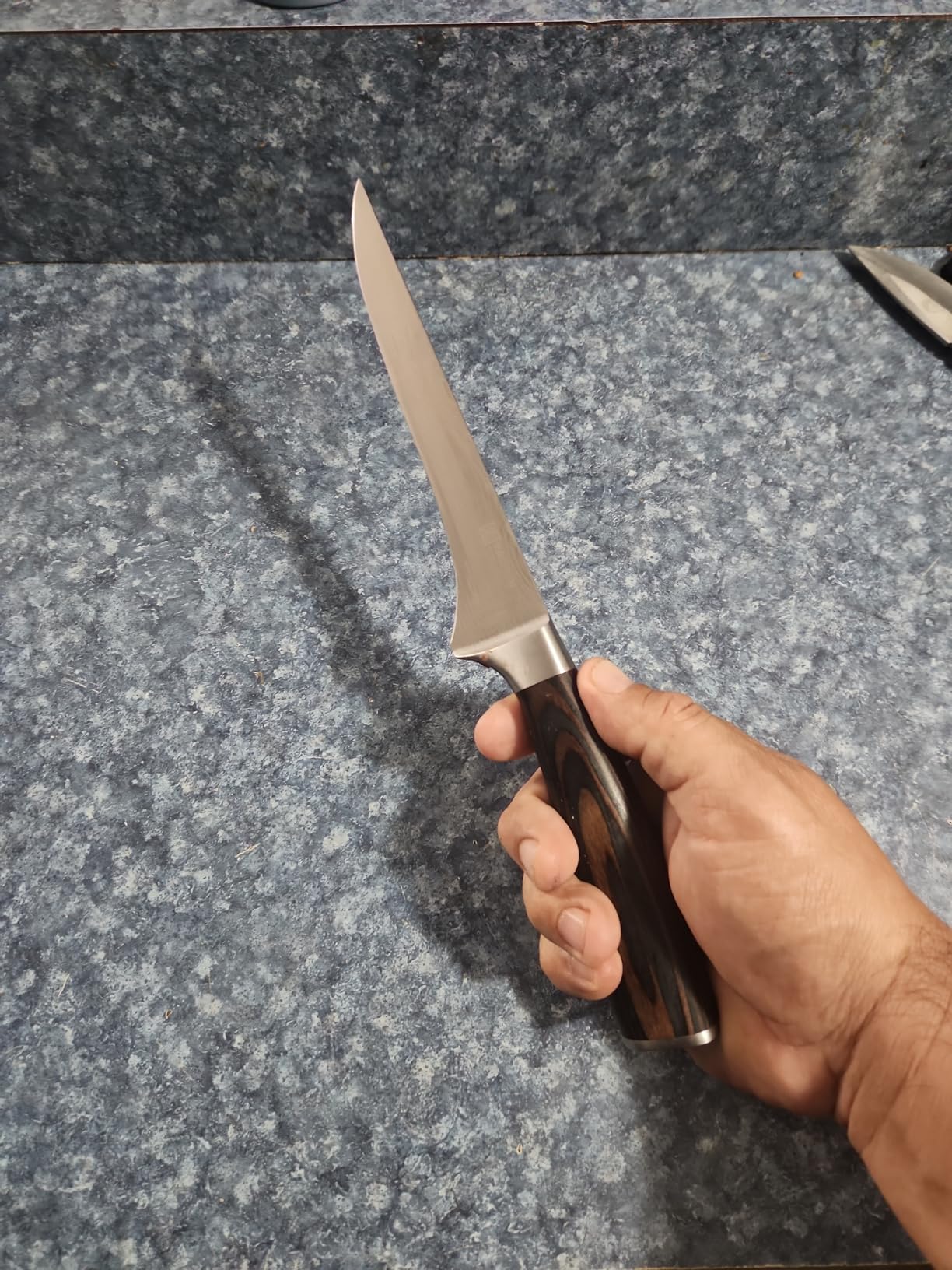
The polymer handle is the most ergonomic on the list for extended slicing sessions. I have used it for full prep sessions without my hand cramping, and the slightly grippy surface keeps control even when wet.
ZWILLING built this knife in their own Solingen-area factory, and the full-tang construction feels solid. The 15 degree edge angle per side is more aggressive than typical serrated knives, which is why it cuts so cleanly on the first pass.
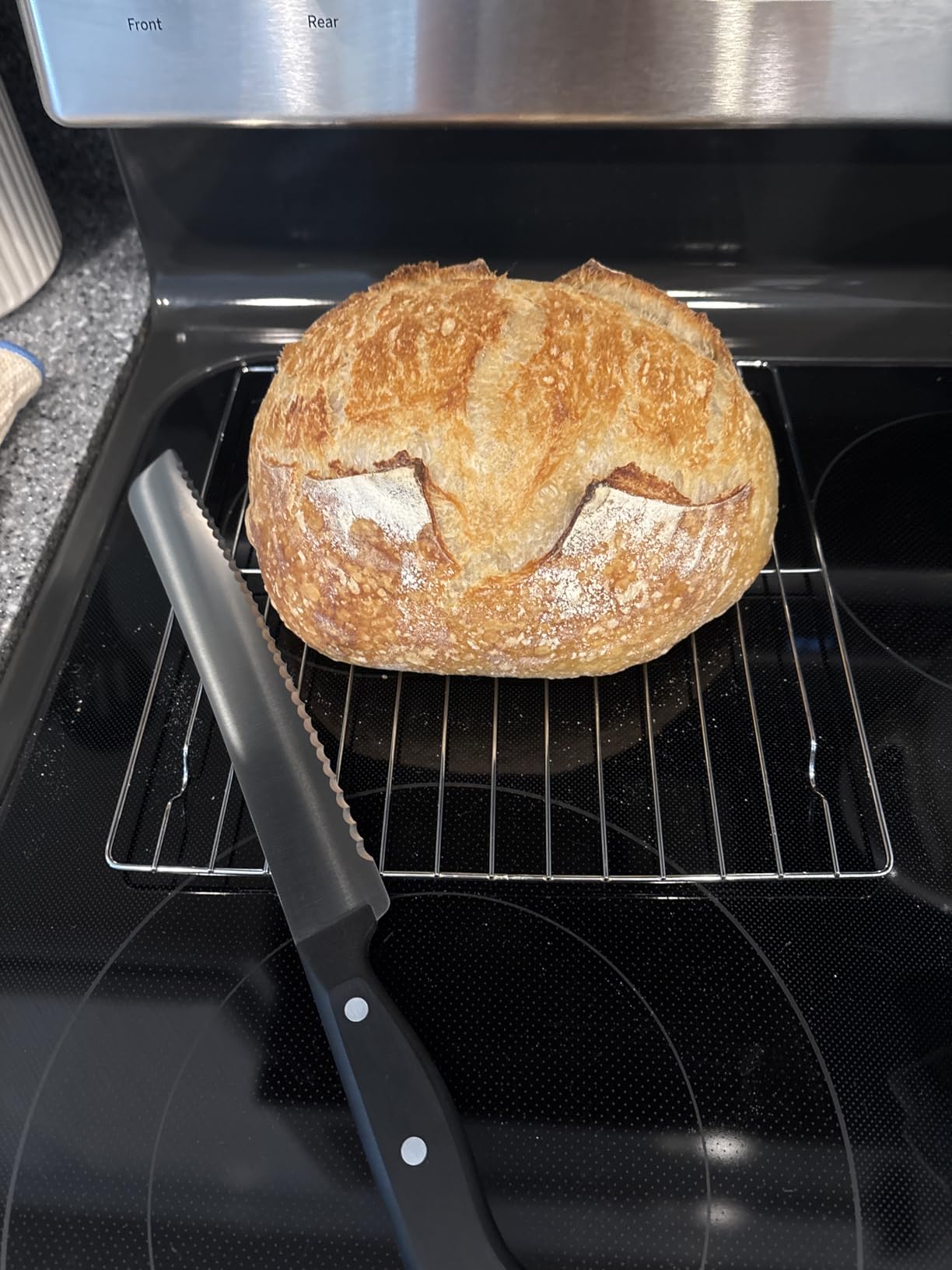
How it performs on sourdough
The Twin Signature sliced through a 1 kilogram sourdough boule with smooth, decisive cuts. The shorter blade required me to reposition once, but the precision more than made up for it.
It also breezed through tomatoes, layer cake, and a Korean sweet rice cake without tearing. The fine serrations left almost no crumbs on the board.
Who should buy the ZWILLING Twin Signature
Pick this if you want a German-made knife with a refined edge and you mostly slice standard loaves. It is also a great pick if dishwasher-safe convenience matters to you.
For larger boules and sourdough enthusiasts, the Mercer or Shun will give you more blade to work with. If price is the deciding factor, stick with Mercer or imarku.
7. Wusthof Gourmet 8 inch – Best Solingen Quality
Wüsthof Gourmet 8″ Bread Knife, Black
8 inch serrated
Laser-cut blade
Polypropylene handle
Pros
- Razor-sharp high carbon stainless steel
- Minimal crumbs when slicing
- Serrations guide through tough crust
- Resists corrosion and dulling
- Comfortable handle
- Limited lifetime warranty
Cons
- Handle slightly less comfortable than older Wusthof models
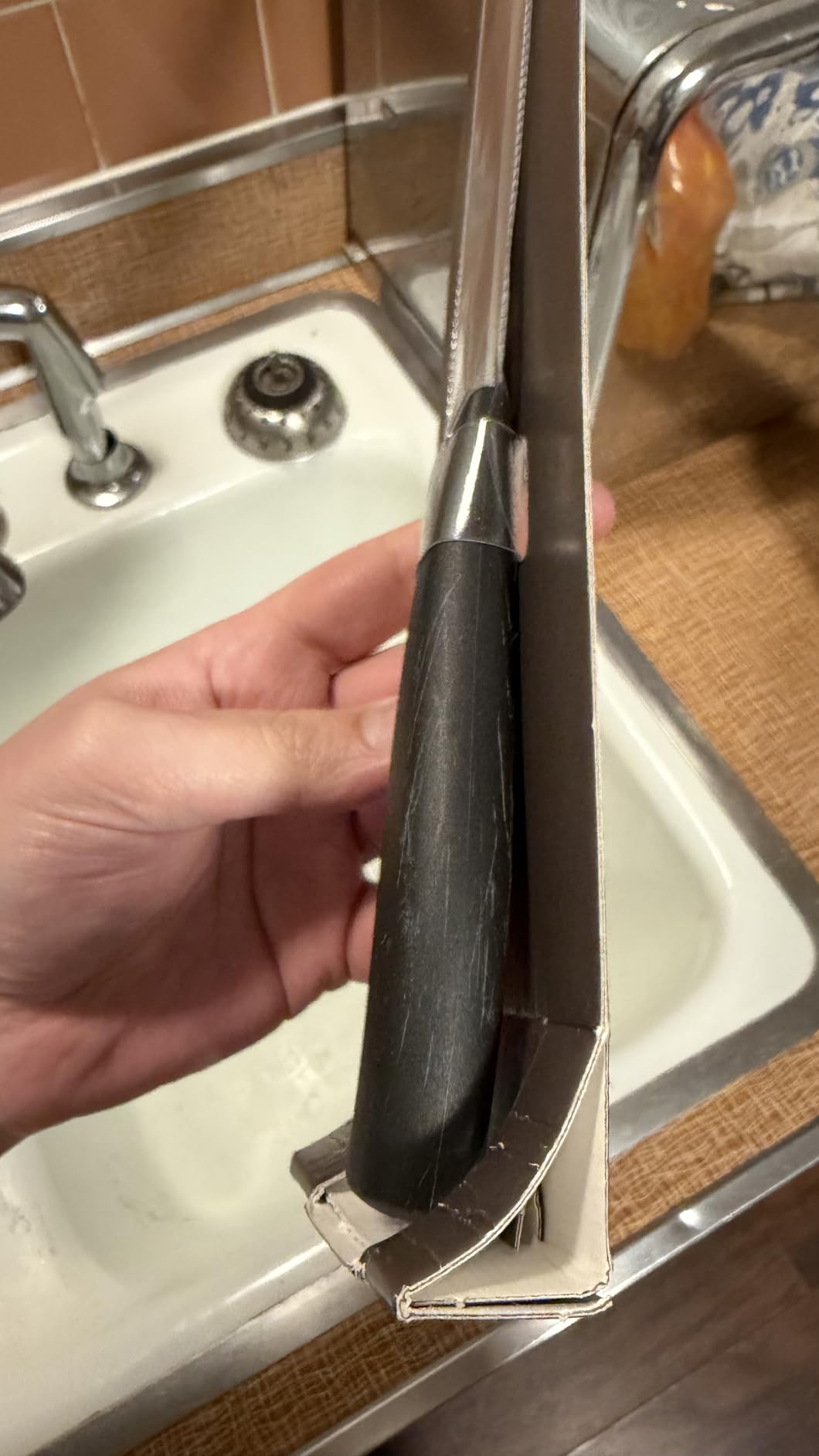
Wusthof’s Gourmet 8 inch is the closest competitor to the ZWILLING on this list. The Solingen-made blade is laser-cut for consistent serrations and arrives razor sharp. Slicing a sourdough miche, I noticed how cleanly the teeth engaged the crust without tearing the airy crumb underneath.
Polypropylene handles divide opinion. I personally like the lightweight feel and easy cleaning, but long-time Wusthof fans note the older handle shape was more contoured. After a few sessions, my hand adapted and the grip felt secure.
The 8 inch blade is a touch shorter than my ideal for large boules, but it slices baguettes and Pullman loaves perfectly. Edge retention has been excellent through four weeks of regular use, with no noticeable dulling.
Wusthof backs this knife with a limited lifetime warranty. Made in Solingen, Germany, it carries seven generations of knife-making experience. For a serious home cook who wants German build without classic-style pricing, it is a strong choice.
How it performs on sourdough
The Gourmet 8 inch made quick work of a sourdough with a thick crusty exterior and a soft, airy interior. Each slice was uniform and clean.
It also handled brioche and banana bread without squashing. The serrations glide rather than grab, which is exactly what I want from a precision German blade.
Who should buy the Wusthof Gourmet
This is the right knife if you want a Solingen-made German bread knife with proven longevity. Pair it with other stainless steel kitchen knives for a complete cutlery collection.
For tighter budgets, the Mercer offers similar slicing at a fraction of the cost. For Japanese steel, look at the imarku or Shun.
8. Global G-9 – Best Lightweight Design
Global G-9-8-3/4 inch, 22cm Bread Knife, 8.75″, Stainless Steel
8.5 inch serrated
Molybdenum/vanadium steel
One-piece design
Pros
- Lightweight and precisely balanced
- Retains razor sharpness
- Comfortable dimpled stainless handle
- One-piece construction
- Excellent for bagels and crusty bread
- Great for left-handers
Cons
- Teeth may be too aggressive for tomatoes and hard cheese
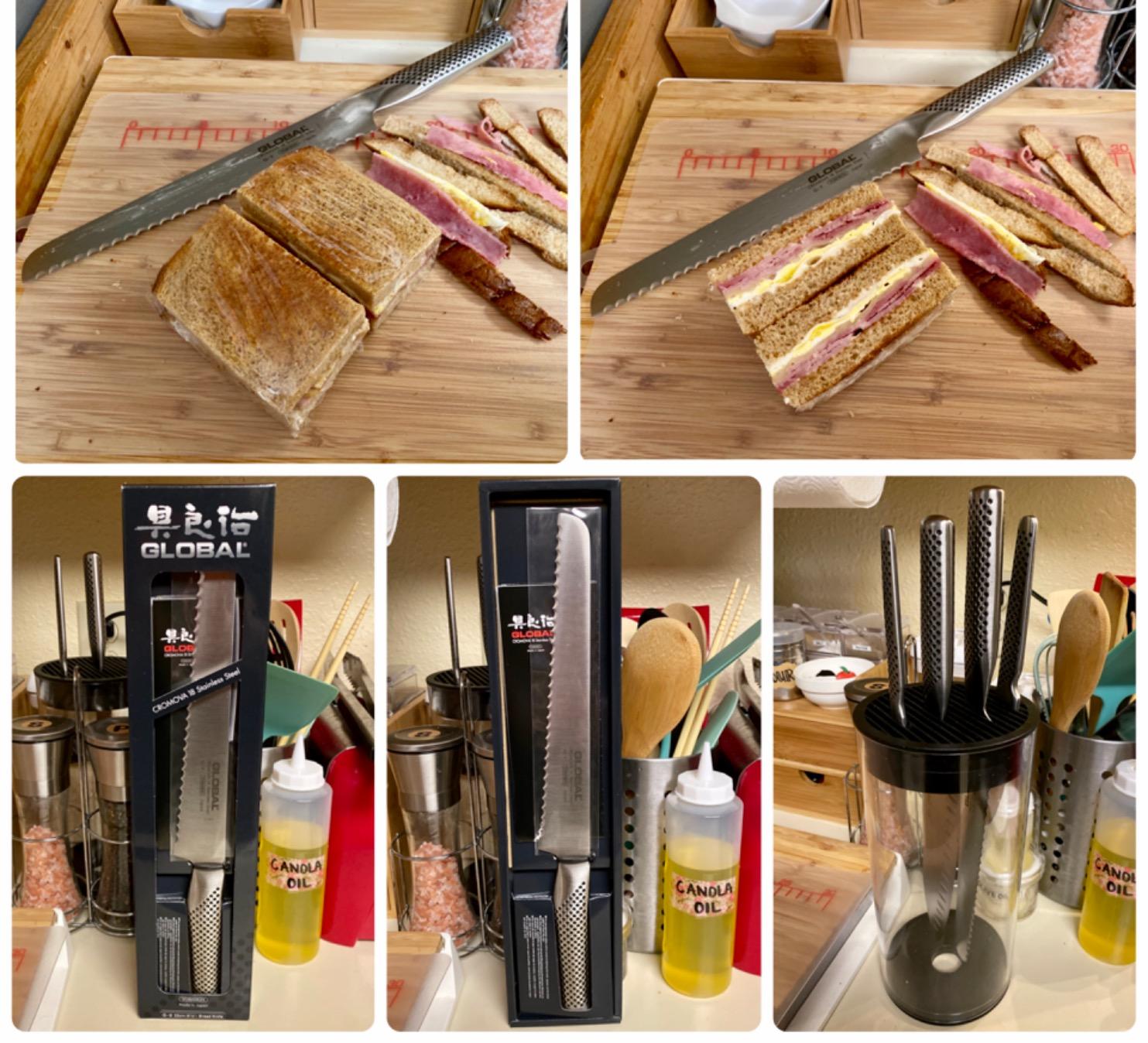
The Global G-9 is the most distinctive knife on this list. The all-stainless one-piece construction looks modern, weighs almost nothing, and slices beautifully. After a week of daily use, my wrist felt fresher than with any other knife I tested.
The dimpled stainless handle is more comfortable than it looks. Despite the all-metal design, the hollow cavity and textured grip keep the knife planted during long pulls. Bagels and crusty sourdough were no challenge at all.
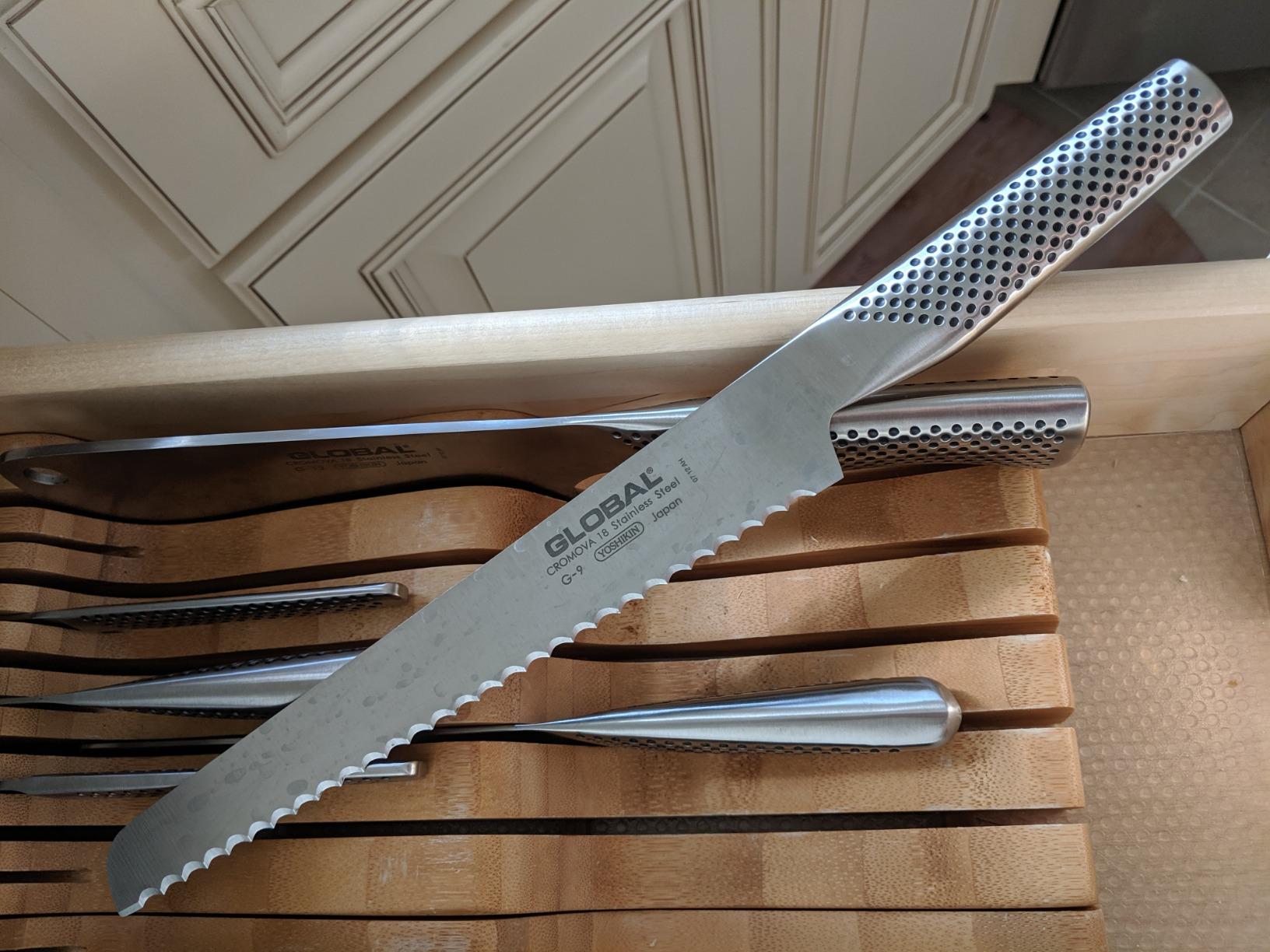
Global’s molybdenum/vanadium stainless blade takes and holds an aggressive edge. The serrations are sharper than most competitors, which makes this knife great for tough crust but slightly too aggressive for ripe tomatoes and hard cheese. Soft sandwich bread slices cleanly without issue.
For left-handed users, the symmetrical one-piece design is a real plus. The dimples are evenly placed on both sides of the handle, so the grip feels identical no matter which hand holds the knife.
How it performs on sourdough
The G-9 sliced through thick-crusted sourdough with a light, easy motion. The balance point is closer to the handle, which makes long slicing sessions comfortable.
It also handled a frozen bagel cleanly. The aggressive teeth power through dense exteriors without skipping.
Who should buy the Global G-9
This is the best pick if you want the lightest bread knife on the market with true Japanese-style sharpness. Left-handed users will especially appreciate the symmetric design.
If you want a softer touch for tomatoes and cheese, look at the Mercer or Piklohas. For a more traditional Western handle, the ZWILLING or Wusthof will feel more familiar.
9. Shun Premier 9 inch – Best Premium Splurge
Shun Premier 9″ Bread Knife
9 inch serrated
VG-MAX core
68 layer Damascus
Pros
- Handcrafted Japanese quality
- Beautiful hammered tsuchime finish
- Razor-sharp with long-lasting performance
- Cuts crusty without crushing soft inside
- Comfortable contoured pakkawood handle
- Works for left and right-handed users
Cons
- Premium price point
- Requires hand washing
- Some reports of ex-display items
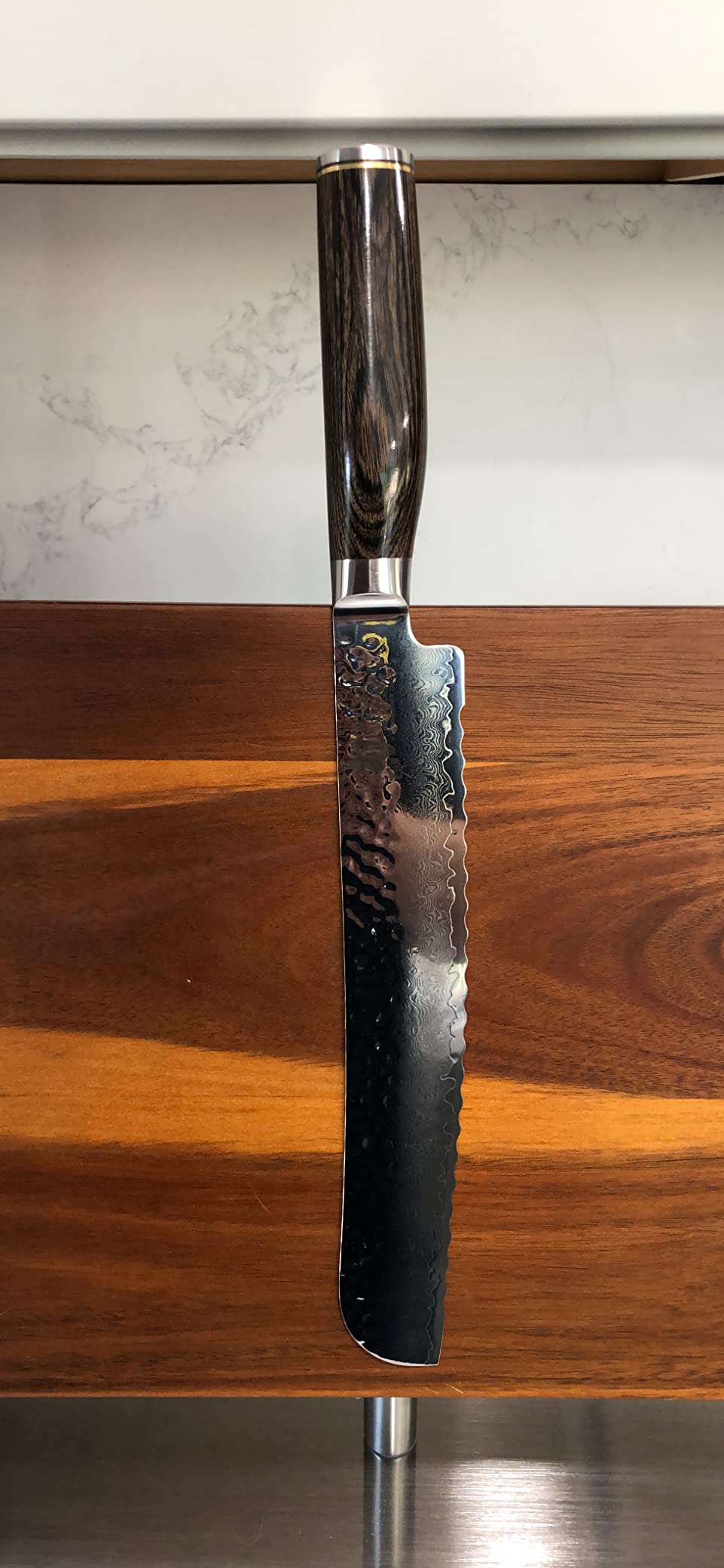
The Shun Premier is the splurge pick, and it earns every dollar. Handcrafted in Japan with a VG-MAX steel core and 68 layers of Damascus cladding, this is the kind of knife you pass down. After months of use, mine still pushes paper-thin tomato slices and powers through thick sourdough crust.
The hammered tsuchime finish is not just for looks. The dimples reduce drag and prevent food from sticking to the blade. Soft sandwich bread and tomatoes release cleanly with almost no effort.
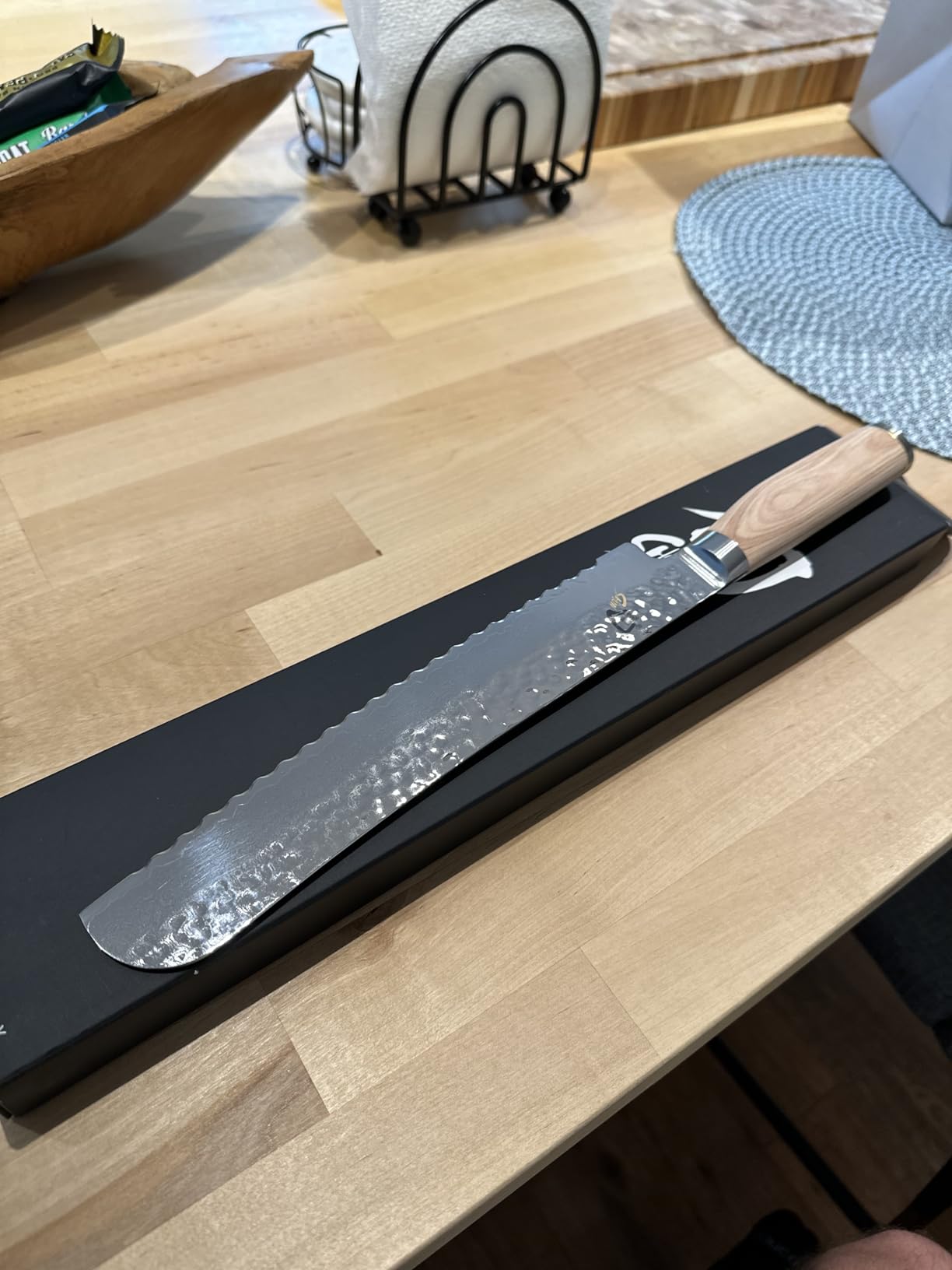
The contoured pakkawood handle fits both hands comfortably, which makes it a great pick for shared kitchens. Edge retention at 16 degrees per side is excellent, and Shun even throws in free sharpening services for the life of the knife.
The price is steep, and it does demand hand washing and careful drying. A few buyers reported receiving ex-display items, so buy from a trusted seller. For most home bakers, the Mercer or imarku will deliver 90 percent of this performance at a third of the price.
How it performs on sourdough
The Shun Premier sliced a 1.5 pound sourdough boule with effortless precision. Each slice was even, with no tearing at the crust and minimal crumbs at the cut.
It also handled a Korean sweet rice cake without sticking, thanks to the tsuchime finish. For premium ingredients, this knife is a joy.
Who should buy the Shun Premier
This is for the home baker who wants the best of the best and is willing to invest in long-term quality. It is also a beautiful gift for serious cooks.
If you want similar cutting quality without the splurge, the ZWILLING or Wusthof are strong alternatives. For pure value, the Mercer remains the smart buy.
How to Choose the Right Bread Knife
Choosing the best bread knives for your kitchen comes down to how you bake and what feels comfortable in your hand. Most home bakers are well served by a 10 inch blade with a wavy edge and an ergonomic handle, but a few decisions matter before you commit.
Blade length
The ideal blade length for a home bread knife is 9 to 10 inches. A 10 inch blade handles sourdough boules, baguettes, and Pullman loaves in a single smooth stroke. An 8 or 8.5 inch blade, like the ZWILLING, Wusthof, or Global, works well for standard sandwich loaves but may require repositioning on large boules.
Serration type
Pointed serrations bite aggressively into thick crust but can tear soft crumb. Scalloped serrations glide through soft bread without snagging but lack aggression on tough crust. Wavy edges, like those on the Mercer and Piklohas, balance both and are the most versatile choice for mixed use.
Handle comfort and balance
Look for an ergonomic handle with texture or finger grooves for a secure grip. Full-tang construction adds balance and reduces wrist fatigue during long slicing sessions. Polypropylene handles clean easily, while pakkawood looks beautiful and resists moisture.
Left-handed options
Most bread knives are ambidextrous because serrations work in both directions. The Global G-9 and Shun Premier are particularly good for left-handed users because of their symmetric designs and balanced grip points.
Budget vs premium
Under $30 covers excellent options like the Mercer, Piklohas, and imarku. The $30 to $75 range adds premium German and Japanese engineering with Cutluxe, PAUDIN, ZWILLING, and Wusthof. Above $100, the Global and Shun deliver heirloom-quality craftsmanship for serious home bakers.
Care and maintenance
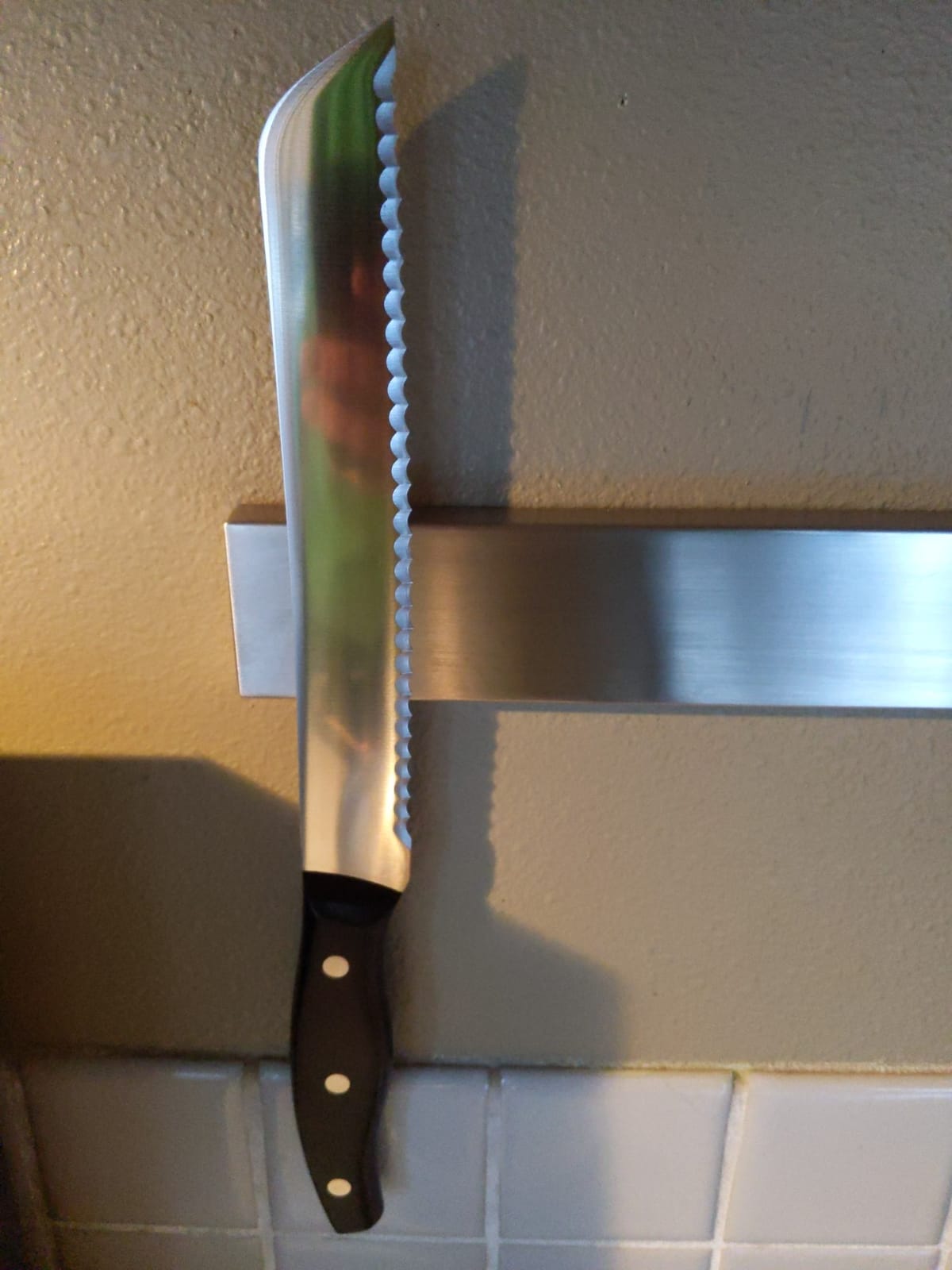
Hand wash all serrated bread knives with warm soapy water and dry them immediately. Serrated blades hold their edge longer than straight blades, but resharpening requires a tapered rod or a dedicated serrated knife sharpener. Store in a knife block or on a magnetic strip to protect the edge.
Frequently Asked Questions
What bread knife does America’s Test Kitchen recommend?
America’s Test Kitchen and Serious Eats consistently recommend the Tojiro DP Bread Slicer as the top pick for its lightweight design and ability to handle crusty boules. For value-focused reviews, the Mercer Culinary M23210 is widely praised as a more affordable alternative with similar cutting performance.
What’s the difference between a bread knife and a serrated knife?
A bread knife is a long serrated knife specifically designed to slice bread without crushing or tearing the crumb. General serrated knives can include shorter steak knives and utility knives with similar teeth but different blade lengths and geometries suited to their tasks.
What is the ideal blade length for a bread knife?
The ideal blade length for a home bread knife is 9 to 10 inches. A 10 inch blade handles sourdough boules, baguettes, and Pullman loaves in a single smooth stroke. Shorter 8 inch blades work well for standard sandwich loaves but may need repositioning on large boules.
What is the best bread knife on Amazon?
Based on ratings, review counts, and value, the Mercer Culinary M23210 10-Inch Bread Knife is the best bread knife on Amazon. It carries 22k+ reviews with a 4.8 average rating and delivers professional-grade serrated cutting at a price most home bakers can afford.
Are expensive bread knives worth it?
Premium bread knives like the Shun Premier and Wusthof Gourmet offer superior edge retention, better balance, and more refined cutting feel. For serious bakers who slice multiple loaves weekly, the upgrade pays off. Casual home bakers will be perfectly happy with a $20 to $30 model like the Mercer or imarku.
Final Verdict
After slicing through nine bread knives and dozens of loaves, the Mercer Culinary M23210 remains my top pick for the best bread knives in 2026. It is light, sharp, ergonomic, and priced for every home kitchen. For shoppers who want resharpenable teeth, the Piklohas is the smartest step up, while the Shun Premier is the dream splurge for serious bakers.
If you bake sourdough weekly, pair your new bread knife with one of our recommended stand mixers for heavy bread dough to round out your home bakery setup. With the right blade in hand, every loaf from rustic country sourdough to a Korean milk bread will slice cleanly and look as good as it tastes.
2 thoughts on “9 Best Bread Knives (October 2026) Expert Reviews”