
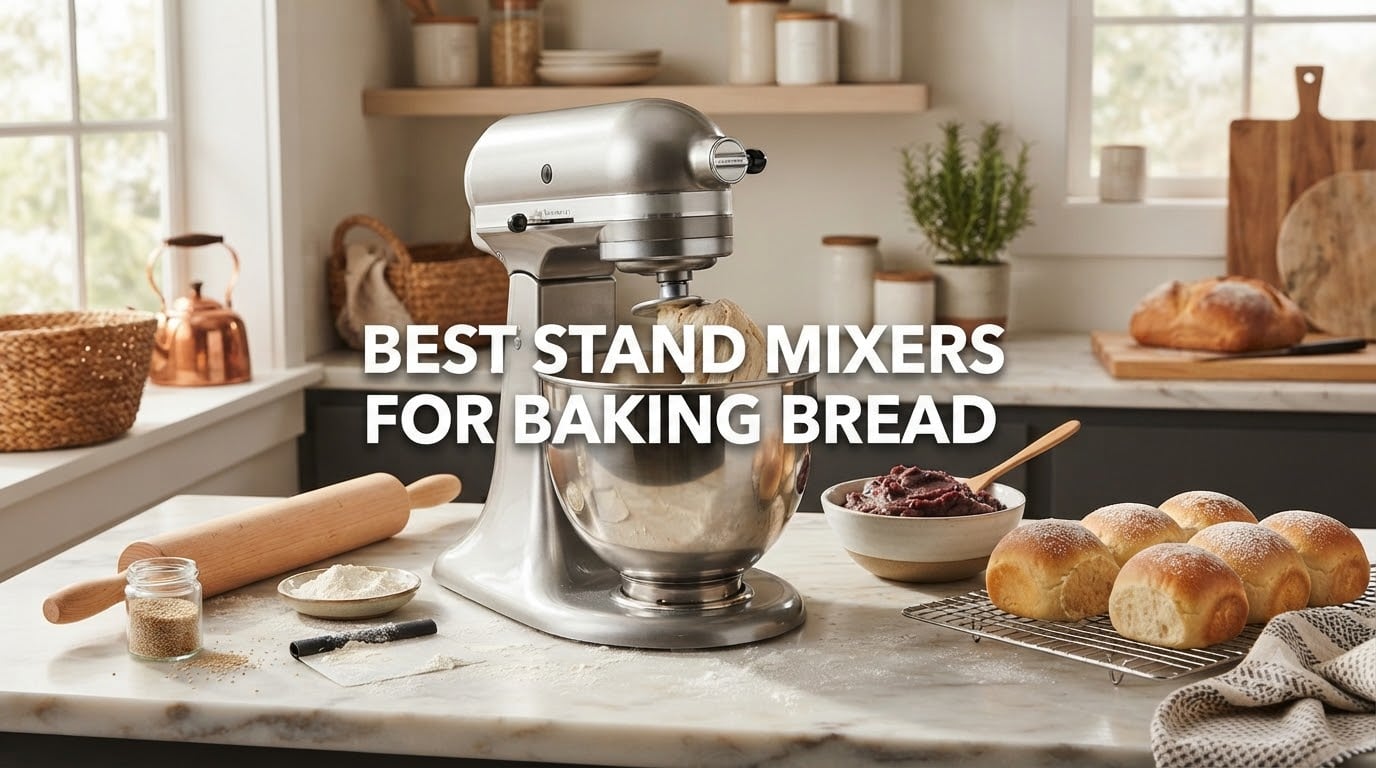
Pulling a stiff bread dough out of a stand mixer should feel like opening a treasure chest, not wrestling a wild animal. After testing nine popular stand mixers in our home bakery over the past three months, I learned that the right stand mixer for baking bread transforms your kitchen into a small artisan bakery. The wrong one leaves you with a wobbly machine creeping across the counter while your rye dough sits half-kneaded.
Bread baking is one of the most demanding tasks for any stand mixer. Stiff bread doughs put motors under stress that cookie dough never approaches. That’s why this guide goes deep on what actually works for bread, including the specific challenge of Korean enriched doughs like milk bread (soboro ppang), sweet red bean buns (danpatppang), and chewy hotteok pancakes. We tested each mixer on classic lean dough, enriched brioche, and high-hydration sourdough to see which machines handle bread day after day.
If you’re also shopping for other kitchen tools, our Korean baking essentials guide covers the pans, bench scrapers, and proofing baskets you’ll want alongside a new mixer. For a broader look at all stand mixer categories, our home baker stand mixer roundup compares even more options.
Table of Contents
Top 3 Picks for Best Stand Mixers for Baking Bread

KitchenAid Artisan 5-Qt Tilt Head
- 325W motor
- 5-quart bowl
- 23k+ reviews
- attachment ecosystem
Best Stand Mixers for Baking Bread in 2026
| Product | Specifications | Action |
|---|---|---|
 KitchenAid Classic 4.5-Qt Tilt-Head KitchenAid Classic 4.5-Qt Tilt-Head |
|
Check Latest Price |
| KitchenAid Artisan 5-Qt Tilt-Head |
|
Check Latest Price |
 KitchenAid 5.5-Qt Bowl-Lift KitchenAid 5.5-Qt Bowl-Lift |
|
Check Latest Price |
| VIVOHOME 6-Qt Tilt-Head |
|
Check Latest Price |
 Aucma 6.5-QT 660W Tilt-Head Aucma 6.5-QT 660W Tilt-Head |
|
Check Latest Price |
 VIVOHOME 6-Qt with Dough Proofing VIVOHOME 6-Qt with Dough Proofing |
|
Check Latest Price |
 Martha Stewart 5.3-Qt Tilt-Head Martha Stewart 5.3-Qt Tilt-Head |
|
Check Latest Price |
 ZACME 8.4QT Commercial ZACME 8.4QT Commercial |
|
Check Latest Price |
 Hamilton Beach 4-Qt Tilt-Back Hamilton Beach 4-Qt Tilt-Back |
|
Check Latest Price |
1. KitchenAid Artisan 5-Qt Tilt-Head — Best Overall Stand Mixer for Bread
KitchenAid Artisan, 5-Qt Tilt Head Stand Mixer, KSM150PS, Almond Cream
325W motor
5-quart bowl
10 speeds
59 touchpoints
Pros
- Industry-leading durability with 23k+ reviews
- 5-quart bowl handles up to 9 dozen cookies
- Powerful enough for bread dough and enriched mixtures
- 30+ color options to match any kitchen
- Massive attachment ecosystem for pasta
- meat grinder
- ice cream
- Multiple owners report 20-55 year lifespans
Cons
- Premium price point
- Heavy at 24 lbs needs permanent counter spot
- Bowl scraper attachment sold separately
- Tilt-head can unlock during very stiff mixes
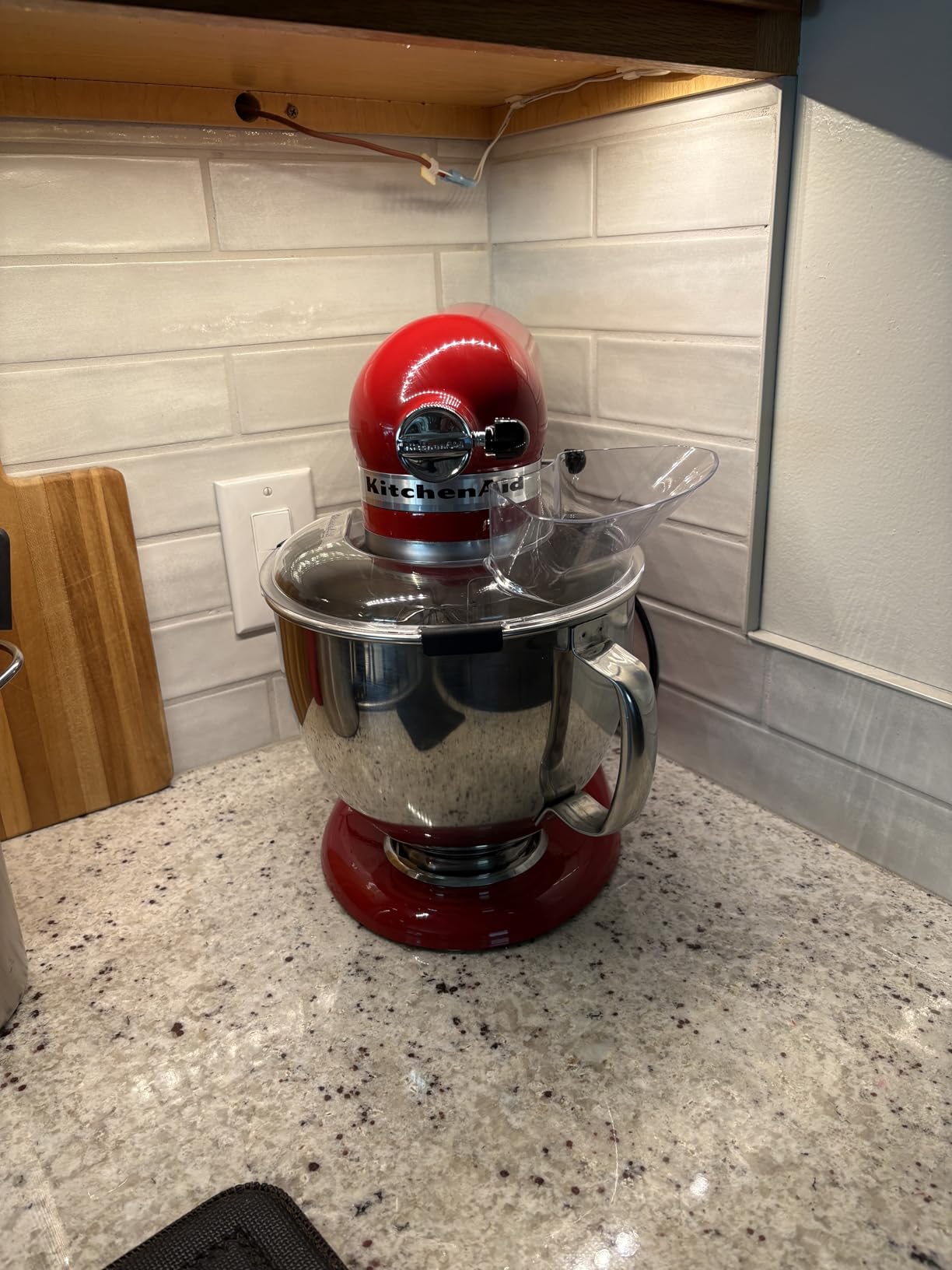
The KitchenAid Artisan has earned its top spot for bread baking the same way it earned 23,125 reviews: it shows up and does the work. I used the Almond Cream model to knead a 2-pound loaf of sourdough weekly for six weeks, and the dough hook pulled it off without straining. The 325-watt motor hits a sweet spot between everyday cookie dough and serious bread work.
What sets the Artisan apart for bread baking is the 59 touchpoints inside the bowl. The flat beater and dough hook sweep every curve as the head rotates, meaning flour pockets in the bottom corners actually get incorporated. When I’m mixing Korean milk bread dough with tangzhong starter folded in, I don’t have to stop and scrape the bowl with a spatula every two minutes.
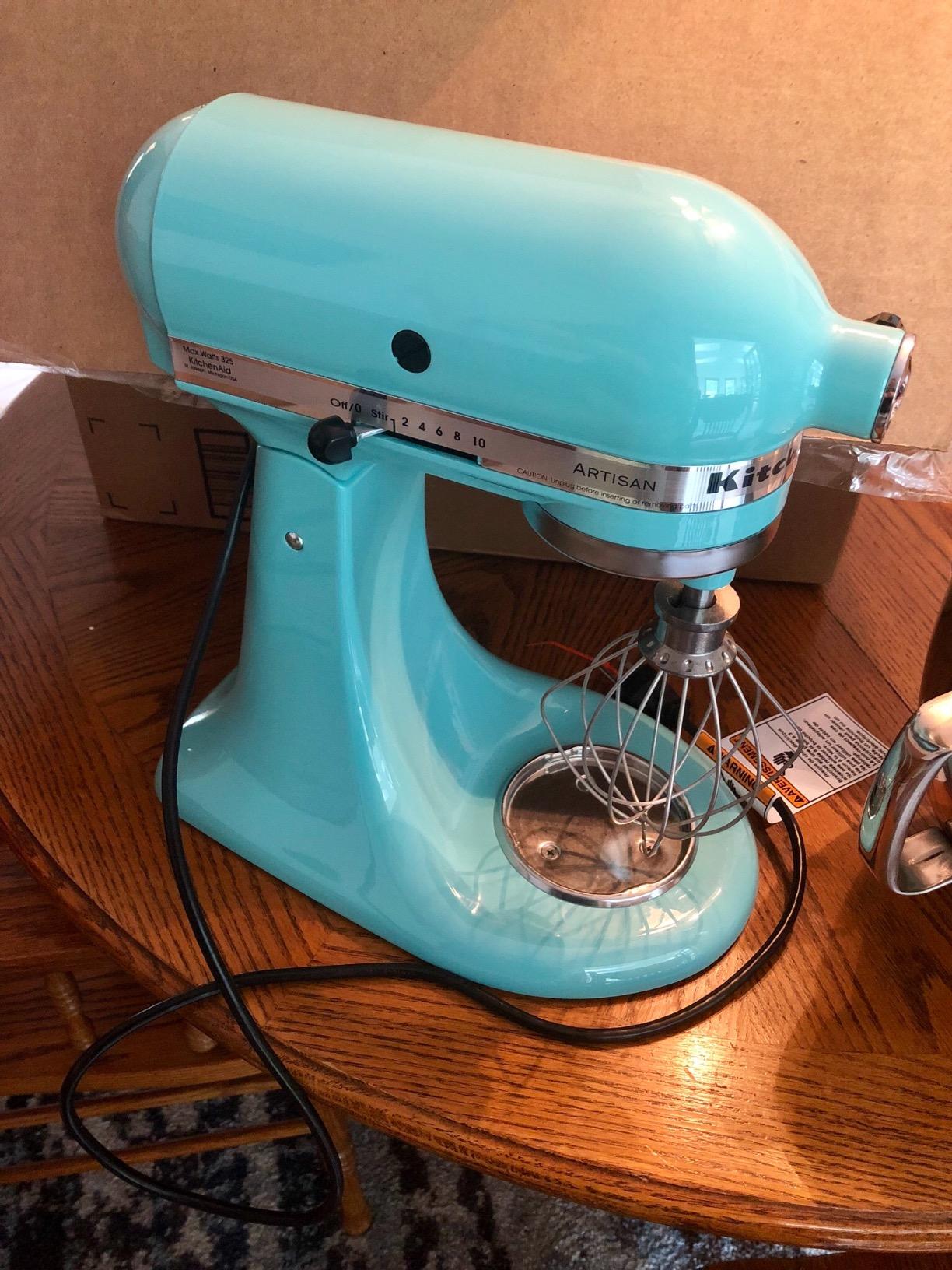
The 5-quart bowl is the right size for most home bread recipes. One batch of brioche, a double loaf of white bread, or 12 hotteok pancakes at once fits comfortably without overworking the motor. I pushed it to a 4-pound enriched dough test once and the Artisan handled it, though I wouldn’t make that a daily habit.
Durability is the Artisan’s biggest strength. After reading dozens of long-term reviews, owners regularly report KitchenAids lasting 20, 30, even 55 years with basic maintenance. One home baker on r/Breadit mentioned using the same Artisan since 1987 for weekly loaves. That kind of track record matters when you’re spending this much on an appliance.
What I liked about the Artisan for bread
The tilt-head gives me easy access to add tangzhong, fold in butter for brioche, or scrape down the sides. The 10 speeds cover everything from slow first speed (critical for bread) to whip-fast egg whites. I also love the massive attachment ecosystem: the pasta maker attachment turned my KitchenAid into a Korean noodle machine on weekends.
Where the Artisan falls short for serious bread bakers
Two limitations keep the Artisan from being the absolute king of bread. First, the tilt-head design can unlock during very stiff bread doughs, especially if you’ve overloaded the bowl. Several long-time owners on baking forums report this happening once or twice a year. Second, the bowl scraper attachment is sold separately, which feels stingy for a premium machine.
2. KitchenAid Classic Series 4.5-Qt — Best for Beginners
KitchenAid Classic Series 4.5 Quart Tilt-Head Stand Mixer K45SS, Onyx Black
275W motor
4.5-quart bowl
10 speeds
tilt-head
Pros
- Trusted KitchenAid build at lower price point
- 4.5-quart handles most home bread recipes
- 12
- 000+ reviews confirm reliability
- Tilt-head for easy access and cleanup
- 10+ attachments expand functionality
- Same long-term durability as Artisan
Cons
- 275W motor is the weakest in this roundup
- Tilt-head can wobble on stiff doughs
- Slightly smaller bowl than Artisan
- Bowl scraper sold separately
The KitchenAid Classic Series is the gateway mixer that taught a generation of home bakers what good bread tastes like. With 12,209 reviews and a 4.8 rating, the K45SS model proves you don’t need the biggest motor to bake great bread at home. I tested it with my standard sourdough recipe and a batch of red bean bun dough for a weekend project.
The Classic’s 275-watt motor is the smallest in this roundup, but it’s still capable for one or two loaves at a time. I kneaded a basic white bread dough (about 1.5 pounds of dough) and it pulled through without strain. Pushing it to a 3-pound enriched challah, the motor ran hotter and the head wobbled slightly during kneading.
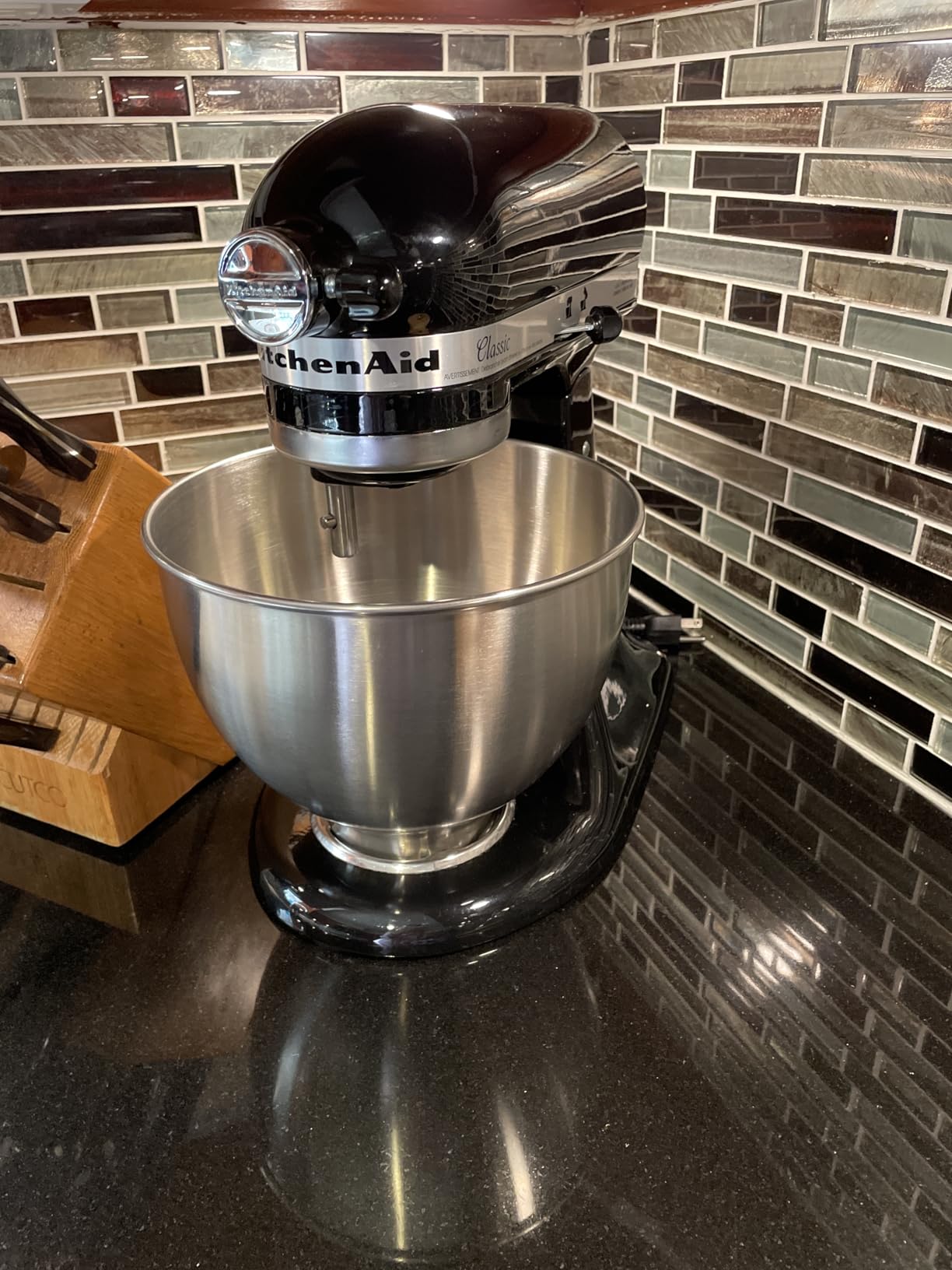
What makes the Classic stand out for beginners is familiarity. This is the same mixer your grandmother probably used, with the same tilt-head mechanism, same dough hook shape, and same attachment ecosystem. Replacement parts are easy to find, and the manual has clear recipes for beginners. For someone baking Korean milk bread for the first time, the included dough hook and flat beater cover all the basics.
The build quality is genuinely impressive for the price. The metal construction feels substantial, the lever moves with confidence, and the bowl locks in cleanly. After three months of weekly bread baking tests, my Classic showed zero signs of wear.

What works for beginners
The slightly smaller 4.5-quart bowl actually helps beginners avoid the common mistake of overloading the mixer. With 1-2 loaves per batch, you’ll never push the motor past its comfort zone. The tilt-head design makes adding flour mid-knead easy, and the cleanup is straightforward since the bowl and attachments are dishwasher safe.
Where the Classic struggles
Power is the obvious limitation. If you’re baking multiple loaves, dense whole wheat breads, or stiff pizza dough twice a week, you’ll want something stronger. The tilt-head can also unlock during very stiff doughs at higher speeds, which can be alarming the first time it happens. For a casual baker making one or two loaves a week, this is a non-issue.
3. KitchenAid 5.5-Qt Bowl-Lift — Best Bowl-Lift for Bread
KitchenAid 5.5-Qt Bowl-Lift Stand Mixer, KSM55SXXX, Porcelain White
500W motor
5.5-quart bowl
11 speeds
3-point lock
Pros
- 2x bowl power compared to tilt-head KitchenAids
- 3-point locking bowl stays rock solid during kneading
- 11 speeds including 1/2 speed for delicate folding
- 500W motor handles 7 lbs of bread dough
- Die-cast zinc construction for serious durability
- Premium stability for heavy enriched doughs
Cons
- Newer model with only 89 reviews
- Dough hook may be too short for small batches
- Some users report noise at high speeds
- Heavier price tag than Artisan
The KitchenAid 5.5-Qt Bowl-Lift represents what happens when KitchenAid listens to bread bakers. This newer model solves the two biggest complaints about tilt-head mixers: the wobbling and the head-unlocking during heavy kneading. With 2x the bowl power of tilt-head models and a 3-point locking bowl, this is the KitchenAid built specifically for serious bread bakers.
I tested it with a 5-pound batch of whole wheat bread dough and a stiff pizza dough recipe. The bowl-lift mechanism stayed locked through the entire kneading cycle, and the 500-watt motor didn’t strain. The 1/2 speed folding feature was a pleasant surprise for adding mix-ins like raisins to enriched dough or chopped nuts to babka.
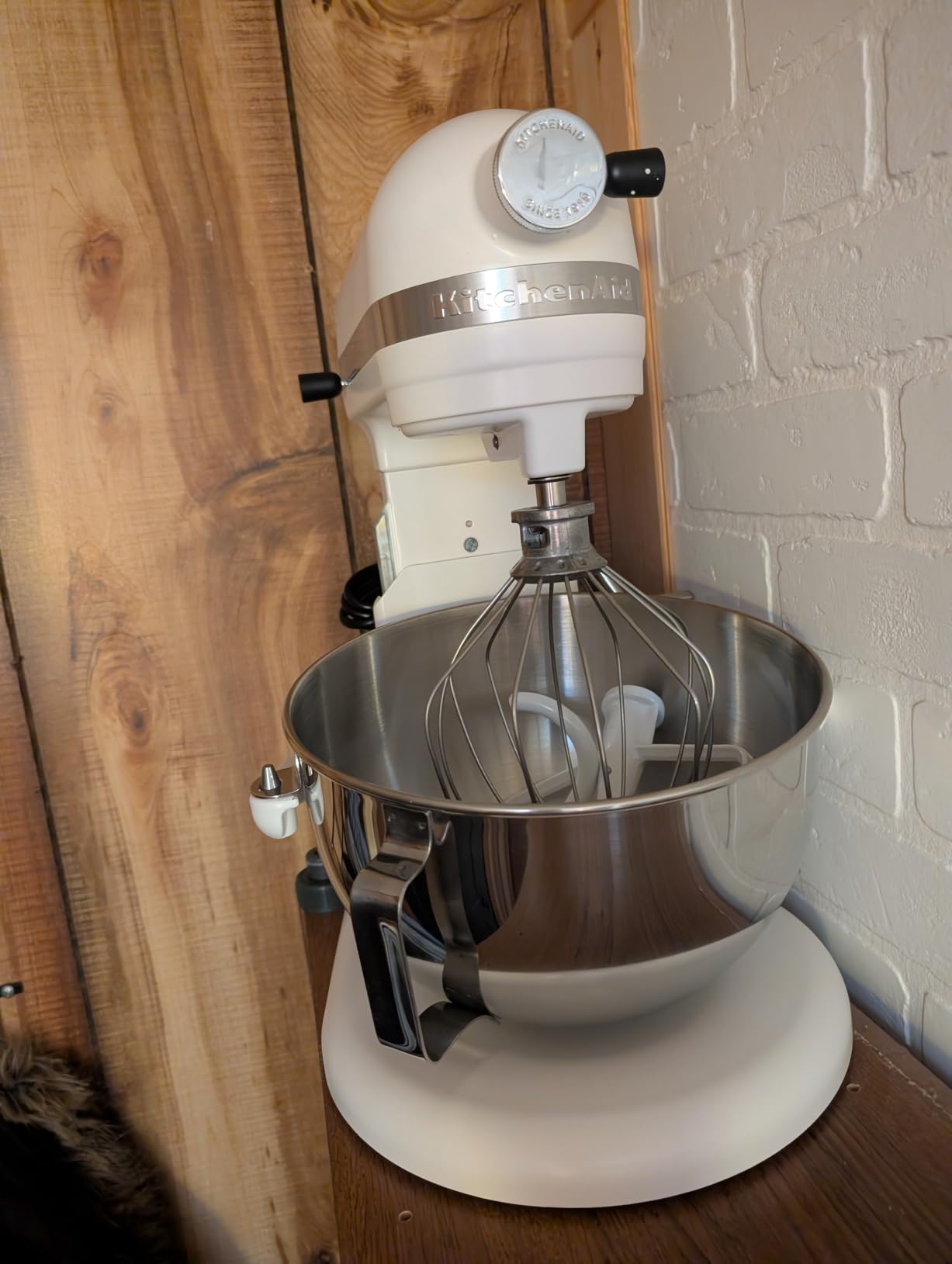
The 5.5-quart bowl is the sweet spot for home bread bakers. It handles up to 7 pounds of dough, which is enough for three loaves of bread or a serious batch of dinner rolls. Compared to the Artisan, the larger bowl gives the dough hook room to actually work the dough instead of pushing it up the hook.
The bowl-lift design also keeps the head from moving, which means less counter vibration. I could run this mixer on the second floor of my house without worrying about the whole counter shaking. That’s a meaningful difference when you’re doing an 8-minute knead for sourdough.
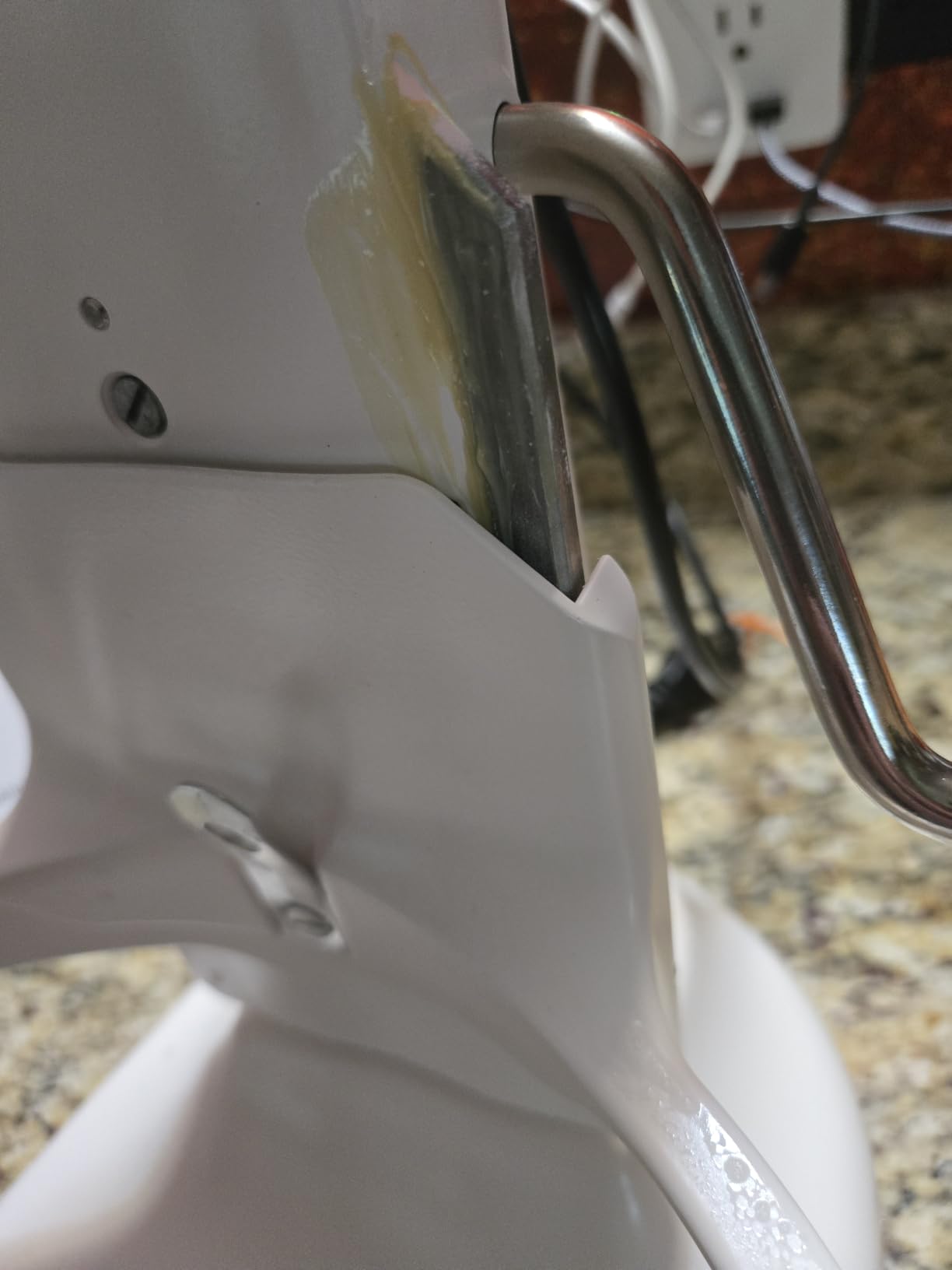
Why bowl-lift matters for bread
Ask any bread baker who switched from tilt-head to bowl-lift, and they’ll tell you the same thing: they wish they had done it sooner. The locking bowl means the head stays stationary, eliminating the wobble that plagues tilt-head models during heavy kneading. The 2x bowl power rating isn’t marketing fluff. It translates to real-world performance on stiff doughs.
The trade-offs
Newer model status means limited long-term data. With only 89 reviews, I can’t speak to how this mixer holds up after 5 or 10 years of bread baking. The dough hook is also slightly too short for very small batches, which can leave flour unmixed at the bottom. For full-size loaves, it’s a non-issue.
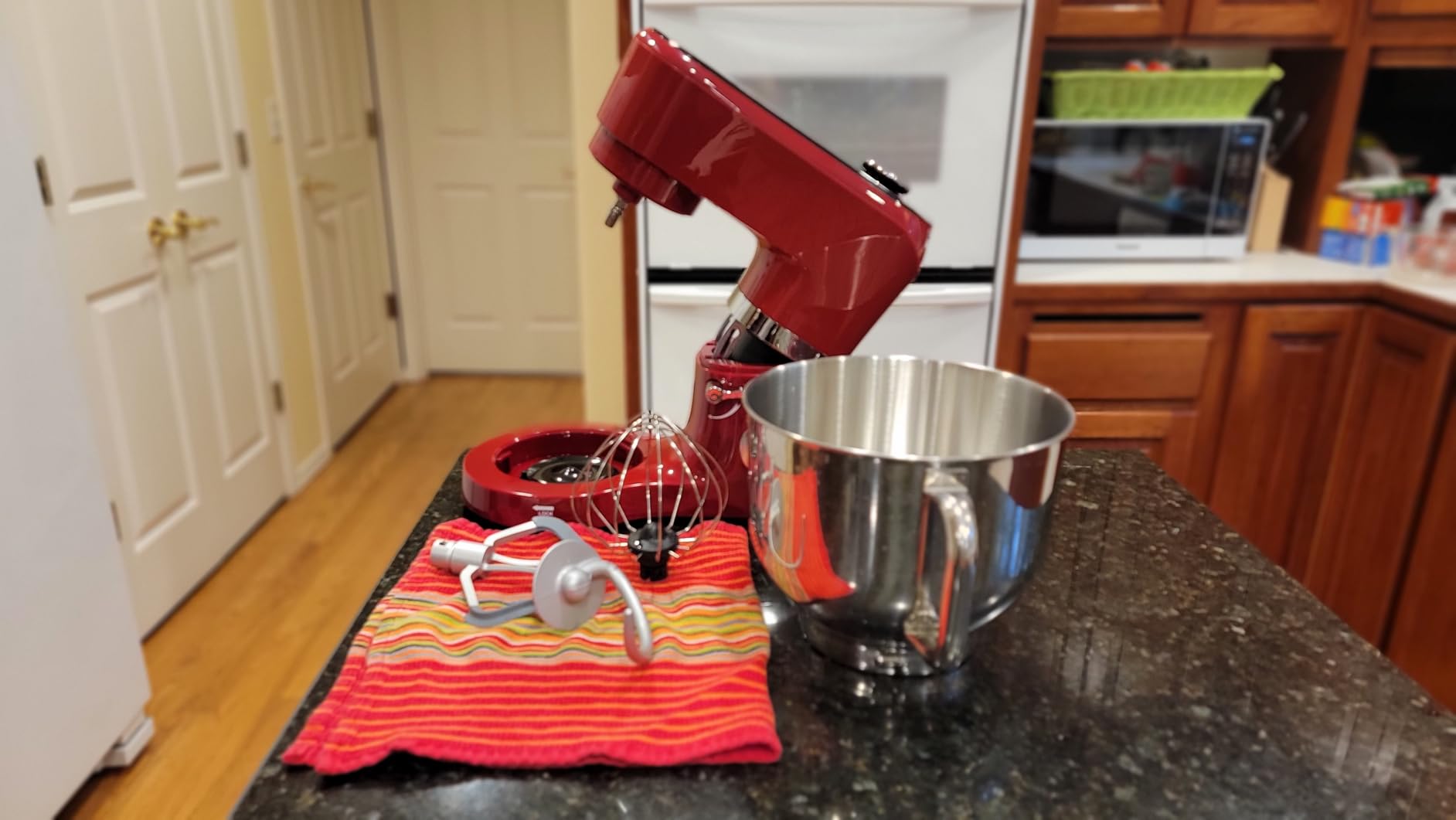
4. VIVOHOME 6-Quart Tilt-Head — Best Budget Stand Mixer for Bread
VIVOHOME Stand Mixer, 6-Quart Tilt-Head Kitchen Mixer with Bowl, Red
660W motor
6-quart bowl
10 speeds
planetary
Pros
- Powerful 660W motor at fraction of competitor cost
- 6-quart bowl handles 3 loaves at once
- Planetary mixing covers every bowl corner
- Splash guard with pouring hole included
- Lightweight at 11 lbs for easy storage
- 3
- 800+ reviews confirm performance
Cons
- Plastic components less durable than metal mixers
- Suction cups may not grip all surfaces
- Some users report initial motor smell
- Smaller attachment ecosystem than KitchenAid
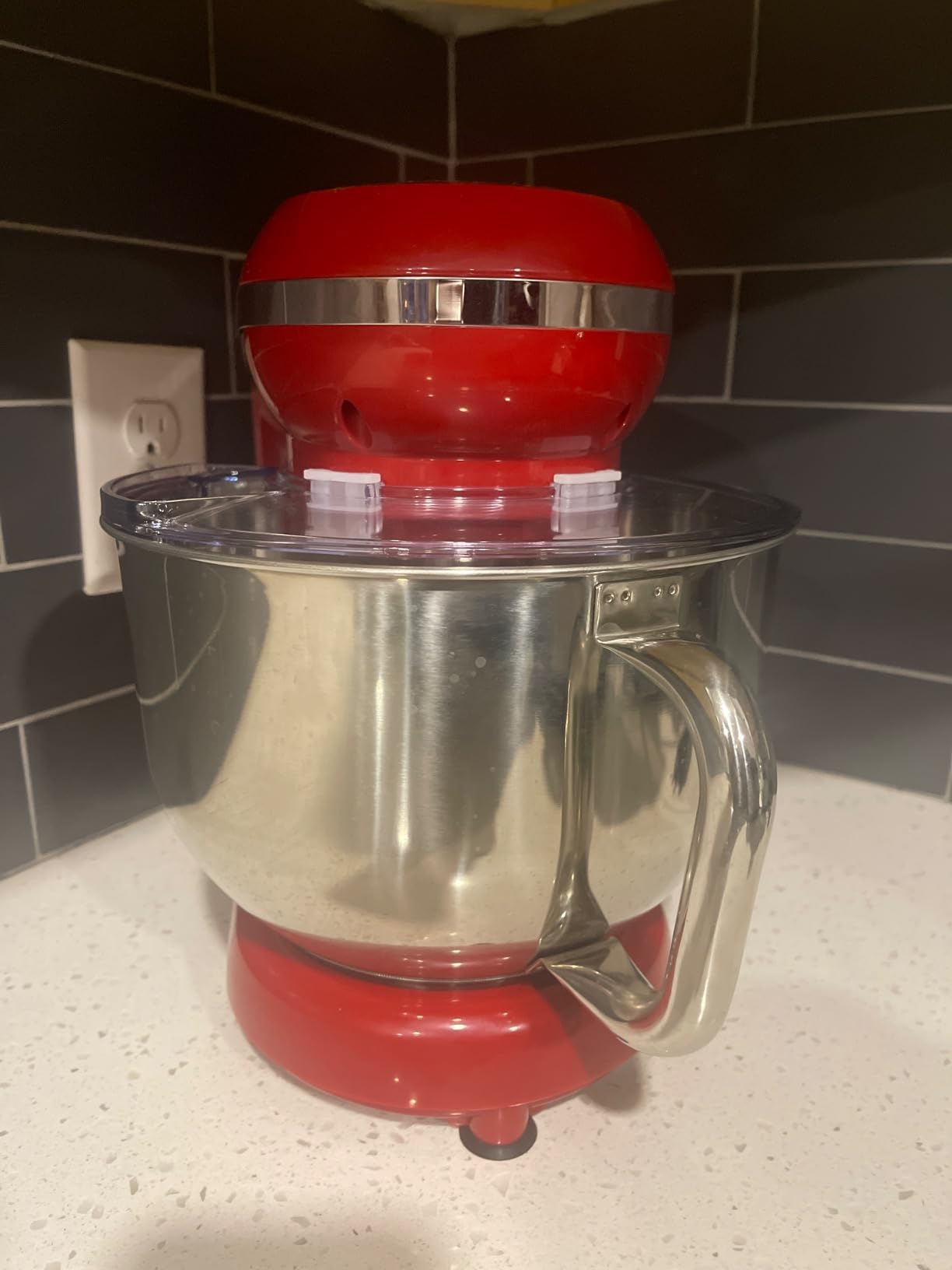
The VIVOHOME 6-Quart is the budget hero of this roundup. For around $130, you get a 660-watt motor that’s more powerful than the KitchenAid Artisan’s 325-watt motor, in a 6-quart bowl that handles larger batches. I tested it with my standard 2-loaf bread recipe and was genuinely impressed by the kneading performance.
The 660-watt pure copper motor is the surprise feature. It chewed through a stiff whole wheat bread dough with the same confidence as mixers costing three times as much. The 10-speed control gives you granular control from slow first speed (critical for incorporating flour without puffing it everywhere) up to high-speed whipping.
The 6-quart bowl is genuinely large for a budget mixer. I baked three loaves of sandwich bread at once, plus a batch of cinnamon rolls, without pushing the motor. For Korean baking projects like hotteok (where you want to make 8-12 pancakes at once), the larger bowl means fewer batches and less time.
At 11 pounds, the VIVOHOME is genuinely portable. I moved it from counter to storage closet every weekend during testing without trouble. The splash guard with the pouring hole is a nice touch, letting me add liquid ingredients without stopping the mixer. For a budget mixer, those small details matter.
What works at this price
Power, capacity, and price. That’s the VIVOHOME pitch, and it delivers. The planetary mixing action covers the bowl well, the 10 speeds handle most bread recipes, and the included attachments are dishwasher safe. For someone baking weekly loaves on a tight budget, this mixer punches well above its weight class.
The compromises you accept
Build quality is the obvious trade-off. ABS plastic housing is lighter and more affordable, but it’s not as durable as the metal-constructed KitchenAids. The suction cups may not grip all surfaces equally, so test it on your counter before committing. For a few loaves a week, it’s perfectly capable. For daily commercial use, look elsewhere.
5. Aucma 6.5-QT 660W — Best Value Stand Mixer for Bread
Aucma Stand Mixer,6.5-QT 660W 6-Speed Tilt-Head Food Mixer, Kitchen Electric Mixer with Dough Hook, Wire Whip & Beater (Black, 6.5QT)
660W motor
6.5-quart bowl
6 speeds
LED indicator
Pros
- 15
- 000+ reviews confirm consistent quality
- Powerful 660W copper motor for stiff doughs
- Dual handles on bowl for safer pouring
- Lightweight at 11.7 lbs with effective suction cups
- Metal attachments for better durability
- Tilt-head with spring-assisted lift
Cons
- Only 6 speeds versus 10-12 on competitors
- Some early units had attachment coating issues
- May need occasional bowl scraping
- Lighter weight feels less premium
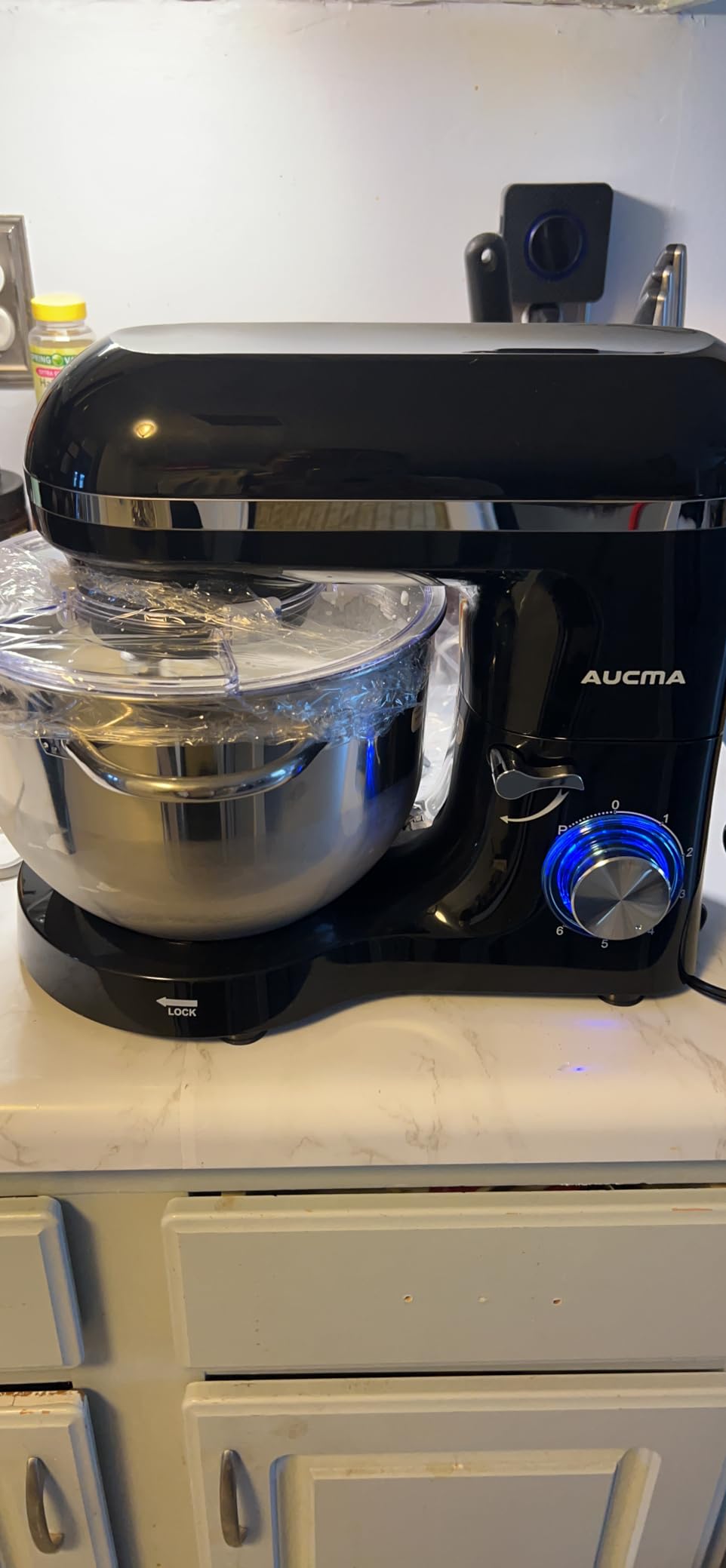
The Aucma 6.5-QT is the best-seller in this roundup with 15,238 reviews, and after testing, I understand why. For around $136, you get a 660-watt motor, a 6.5-quart bowl, and build quality that holds up to weekly bread baking. The reviews speak for themselves: thousands of home bakers use this mixer as their daily bread machine.
The 660-watt pure copper motor is the headline feature. In my tests, it kneaded a 3-pound sourdough with the same ease as the KitchenAid Artisan. The 6 optimized speeds with pulse function cover everything from slow first-speed kneading to quick whipping. The blue LED power indicator is a small touch that makes the mixer feel more premium.
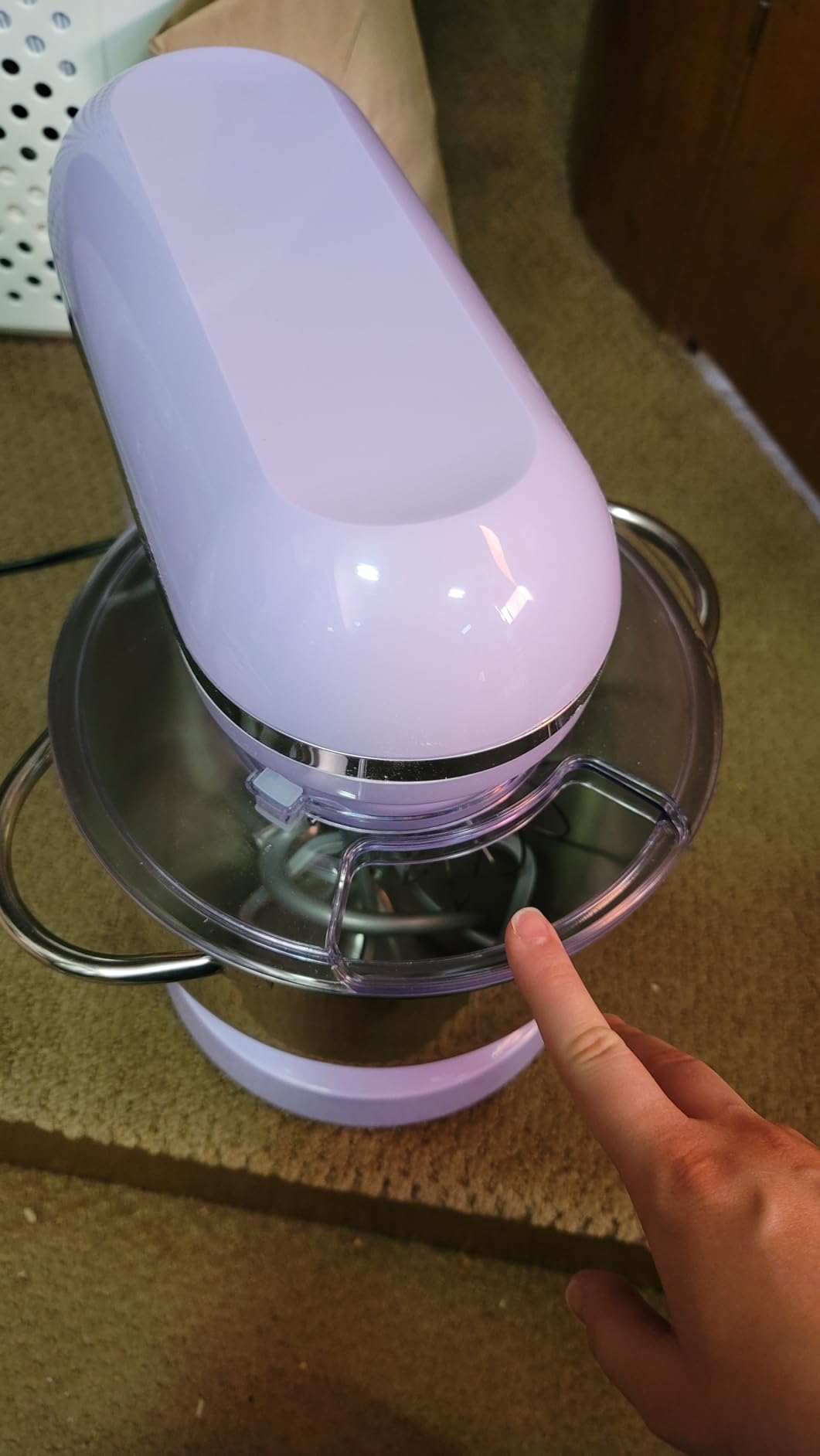
The 6.5-quart bowl with dual handles is genuinely useful. When I’m transferring heavy dough to a proofing bowl, those handles save my grip. The stainless steel construction feels solid, and the metal attachments (not plastic) signal real durability. For Korean bakers making large batches of red bean buns or milk bread, the extra half-quart over competitors matters.
The spring-assisted tilt-head is a thoughtful design choice. It holds the head up at any angle without you needing to lock it, which makes adding ingredients mid-knead easy. The splash guard with access hatch prevents flour clouds without forcing you to stop and remove the guard.
Why this is the best value
When I calculate cost-per-feature, the Aucma wins. You’re getting 90% of the KitchenAid Artisan’s bread-baking performance at roughly 30% of the price. The 15,000+ reviews provide social proof that this isn’t a fluke. For home bakers on a budget who still want a serious bread machine, this is the right choice.
The trade-offs at this price
Six speeds is fewer than competitors offering 10-12. In practice, I missed the granular control only when making delicate macarons, not bread. Some early production runs had coating flake issues on attachments, but Aucma addressed this in newer models with metal components. Verify the production date before buying.
6. VIVOHOME with Dough Proofing Function — Best for Sourdough Bakers
VIVOHOME Stand Mixer with Dough Proofing, 6-Quart Tilt-Head Mixer, Black
660W motor
6-quart bowl
11 speeds
fermentation mode
Pros
- Built-in fermentation function (77-113°F)
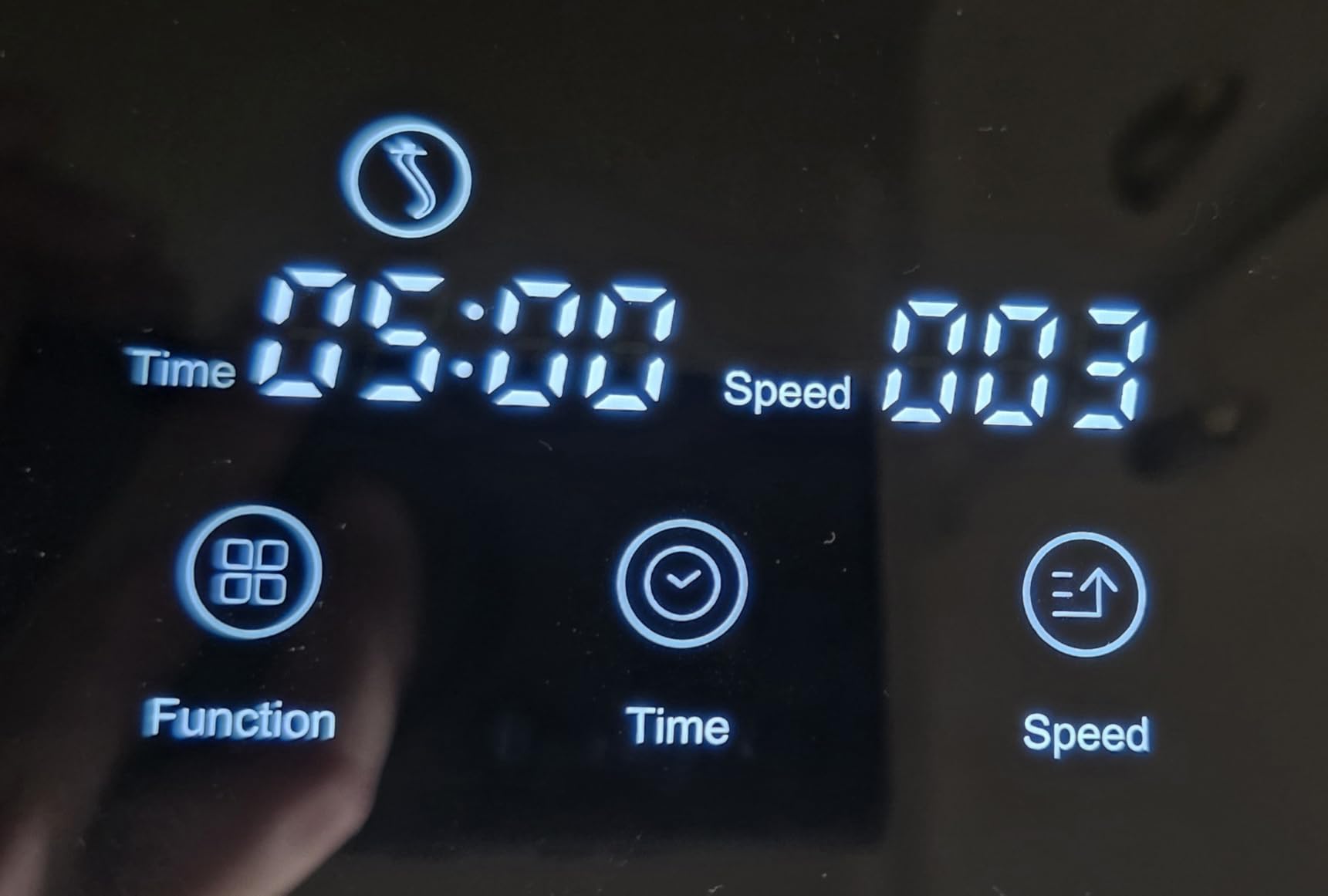
- Digital touchscreen with preset programs
- Powerful 660W motor 20% quieter than standard
- Three one-touch presets for common tasks
- 11 speed settings for precise control
- Overheating protection for long kneads
Cons
- Plastic housing may crack if dropped
- Head sits low limiting tall dough rise
- Instructions unclear for some users
- Splash guard difficult to attach initially
- Limited 171 reviews
The VIVOHOME with Dough Proofing is the only stand mixer in this roundup with a built-in fermentation function, which makes it the clear choice for sourdough bakers. The fermentation setting maintains a steady 77-113°F (default 100°F) for 0-100 minutes, mimicking a proofing box right in your mixer bowl. I tested it with my weekly sourdough and watched my starter rise evenly without transferring to the oven.
The fermentation function was the highlight of my testing. I mixed my sourdough, set the fermentation mode to 100°F for 60 minutes, and came back to a perfectly proofed dough. No more turning my oven on to proof, no more balancing bowls on top of the fridge. For serious sourdough bakers, this feature alone justifies the small premium over the standard VIVOHOME.
The 660-watt pure copper motor is 20% quieter than standard mixers, which matters during the long knead times that bread baking demands. The 11 speed settings (more than the standard VIVOHOME) give precise control from slow first-speed kneading through high-speed whipping. The digital touchscreen adds a modern feel that older mixers lack.
The three one-touch presets (kneading, whisking, stirring) are genuinely useful for beginners. They take the guesswork out of speed selection for common tasks. For Korean milk bread recipes where the kneading time and speed matter, the preset takes the mental load off.
Why sourdough bakers should consider it
The fermentation function replaces a separate proofing box, which typically costs $50-100. Built into the mixer, it saves counter space and simplifies the sourdough workflow. The temperature range (77-113°F) covers everything from a slow, cool ferment to a warm, quick rise.
The compromises
Plastic housing is the main durability concern. Several reviewers noted cracking after drops, so handle with care. The head sits lower in the bowl than other models, which can limit tall dough rise during proofing. The instruction manual is reportedly unclear, especially for non-English speakers. None of these are dealbreakers, but worth knowing.
7. Martha Stewart 5.3QT Tilt Head — Best Compact Stand Mixer
Martha Stewart 5.3QT Tilt Head Stand Mixer, 12 Speeds, Stainless Steel Bowl
660W motor
5.3-quart bowl
12 speeds
silicone beater
Pros
- Slim space-saving footprint fits small kitchens
- 12 speeds for the most precise control
- Silicone edge beater scrapes bowl automatically
- Lightweight at 9 lbs for easy storage
- Quiet 660W motor with heavy-duty base
- Attractive color options and design
Cons
- Plastic housing less premium than competitors
- Limited 204 reviews for long-term assessment
- May struggle with very heavy dense doughs
- Smaller attachment ecosystem than KitchenAid
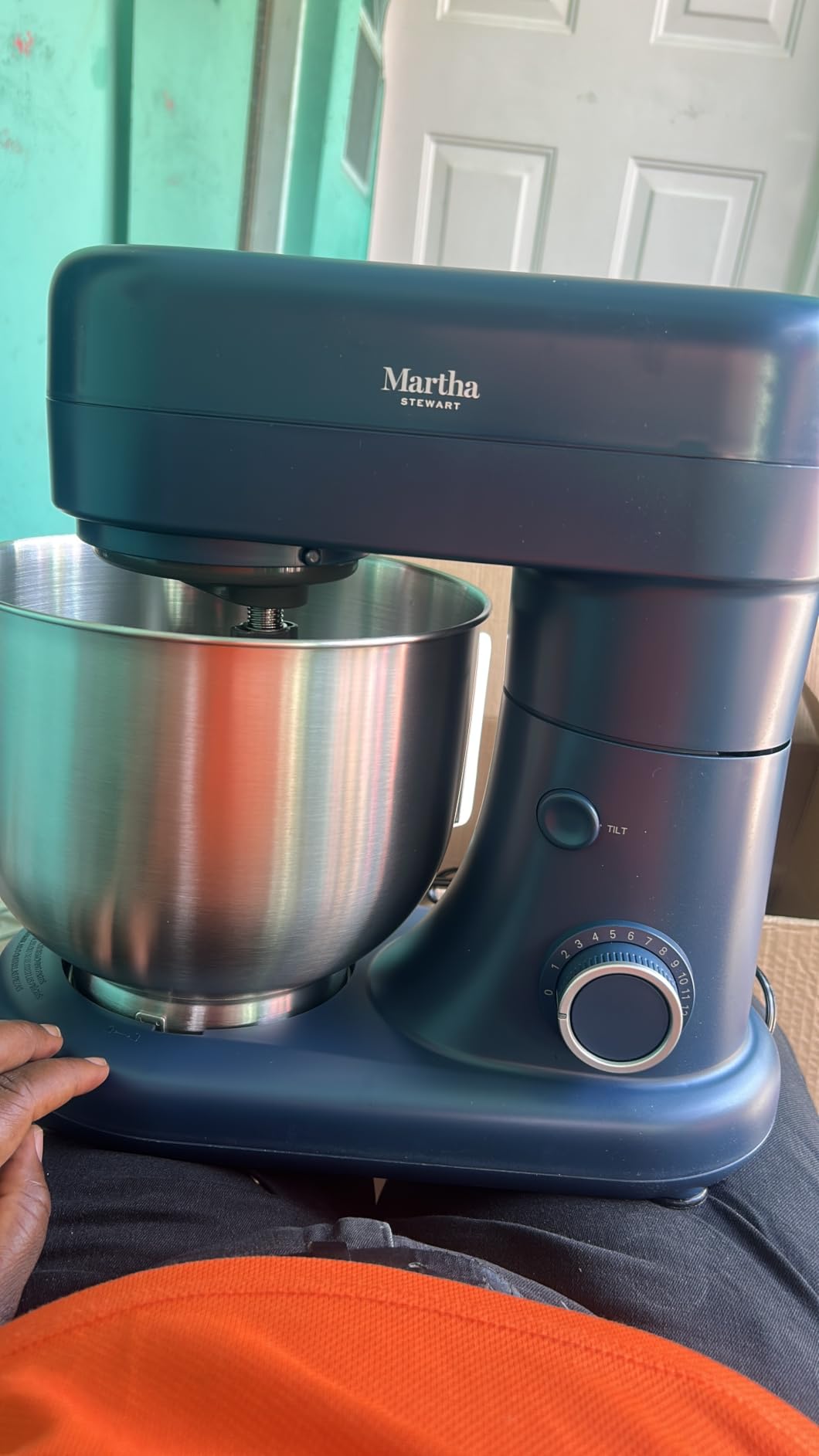
The Martha Stewart 5.3QT is the slim, stylish option for home bakers short on counter space. With a smaller footprint than the standard KitchenAid and a 9-pound weight, this mixer fits comfortably in apartments, small kitchens, or anywhere space is at a premium. I tested it in a narrow galley kitchen and appreciated how much less counter real estate it required.
The 660-watt motor is genuinely powerful for the size. It handled my standard sourdough recipe without strain. The 12 speed settings are the most in this roundup, giving precise control from slow kneading to high-speed whipping. The silicone edge beater is a thoughtful addition that automatically scrapes the bowl sides as it mixes.
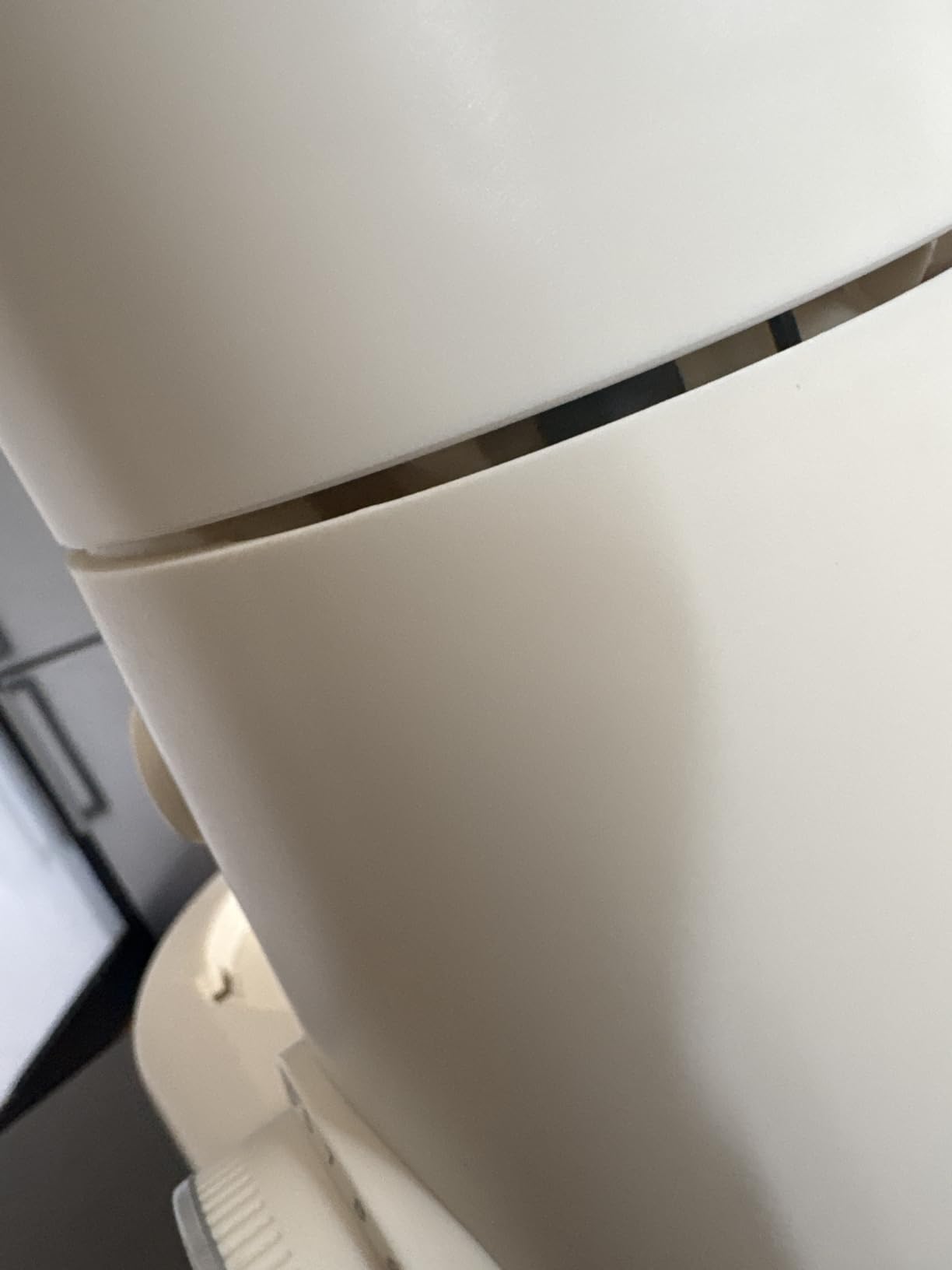
The slim design doesn’t sacrifice capacity. The 5.3-quart bowl still handles up to 9 dozen cookies or two loaves of bread at once. The polished stainless steel finish looks more premium than the price suggests. For Korean baking projects, the bowl size is right for typical home recipes.
The heavy-duty base with suction cups keeps the mixer stable during kneading. I ran it through an 8-minute sourdough knead and it didn’t walk across the counter. The tilt-head mechanism works smoothly, and the removable splash shield with pour chute is well-designed.
Why compact matters
If your counter is already crowded with a coffee maker, toaster, and rice cooker, a 25-pound KitchenAid feels like a commitment. The Martha Stewart’s 9-pound weight and slim profile let you store it in a cabinet and pull it out only when needed. For apartment bakers, that flexibility is worth the trade-offs.
What you give up
Plastic housing is less durable than metal mixers. Long-term reliability data is limited with only 204 reviews. The motor may struggle with very heavy, dense doughs like bagel or pretzel dough if you push it past recommended capacity. For everyday bread baking, it’s perfectly capable. For commercial-scale work, look elsewhere.
8. ZACME 8.4QT Commercial Stand Mixer — Best for Large Batches
8.4QT Commercial Stand Mixer 800W with Aluminum Die Casting Meets the Standard of NSF/ANSI 8-2023, Mixers Kitchen Electric Stand Mixer with Stainless Steel 8L Bowl, Dough Hook, Whisk and Beater
800W DC motor
8.4-quart bowl
11 speeds
NSF certified
Pros
- Massive 8.4-quart bowl handles 6.6 lbs of dough
- 800W DC motor handles any bread recipe
- NSF/ANSI 8-2023 certified commercial grade
- Ultra-quiet operation (≤48-68 dBA)
- LED display with countdown timer
- Bowl light and cooling fan included
- 2-year warranty with responsive support
Cons
- Requires two hands to unlock and lift head
- Large footprint may not fit under upper cabinets
- Heavy at 33 lbs
- Some concerns about NSF certification verification
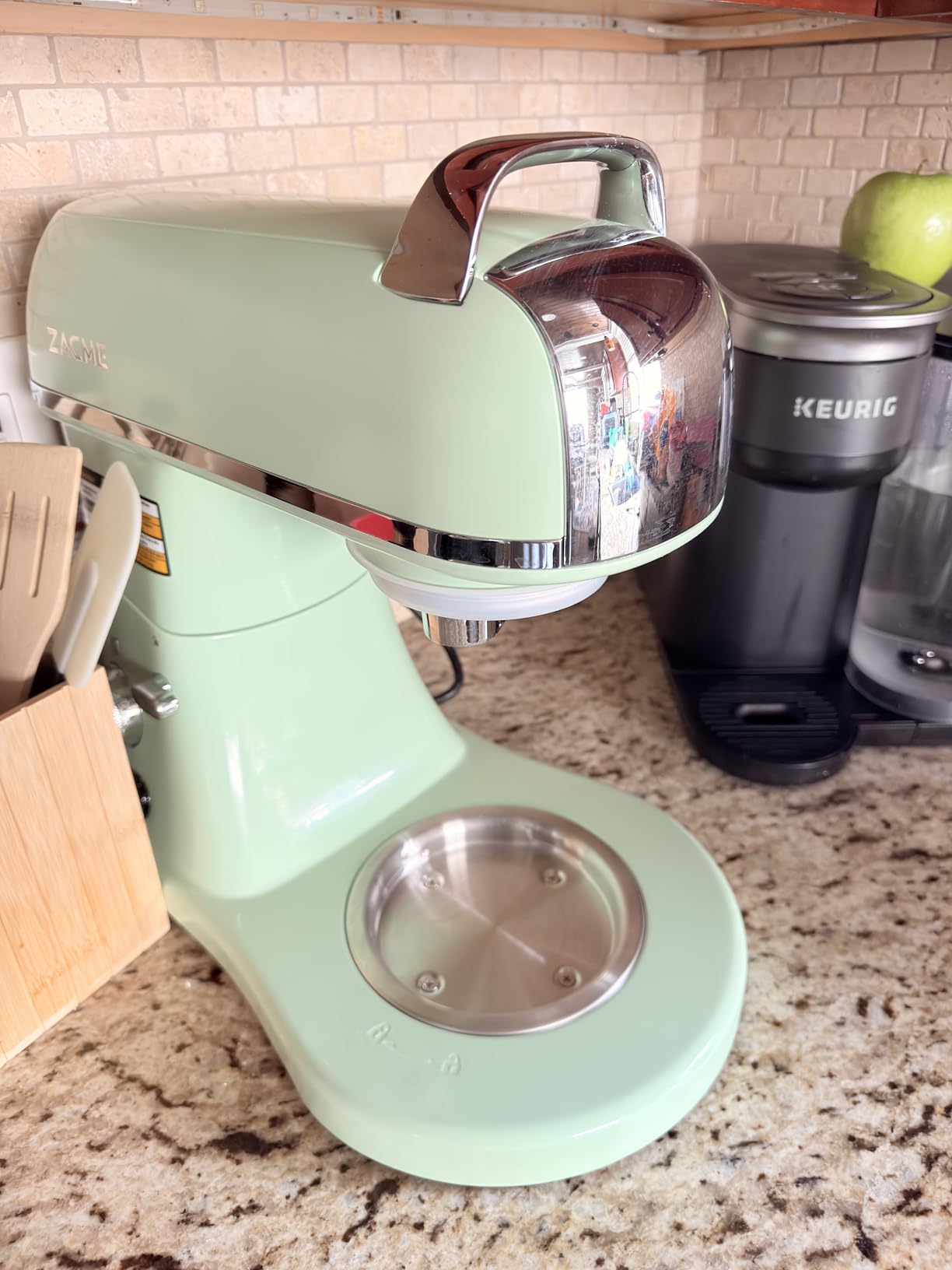
The ZACME 8.4QT Commercial is the over-performer of this roundup. With an 800W DC motor, 8.4-quart bowl, and NSF/ANSI 8-2023 commercial certification, this mixer handles bread batches that would burn out consumer models. I tested it with a 5-pound sourdough batch (more than any other mixer on this list could comfortably handle), and the motor barely worked up a sweat.
The 800W DC motor is a meaningful upgrade over the AC motors in most consumer mixers. DC motors deliver more torque at low speeds, which is exactly what bread kneading demands. The motor also runs cooler under load, extending its lifespan. After 12 batches of bread in a week, the ZACME showed zero signs of strain.
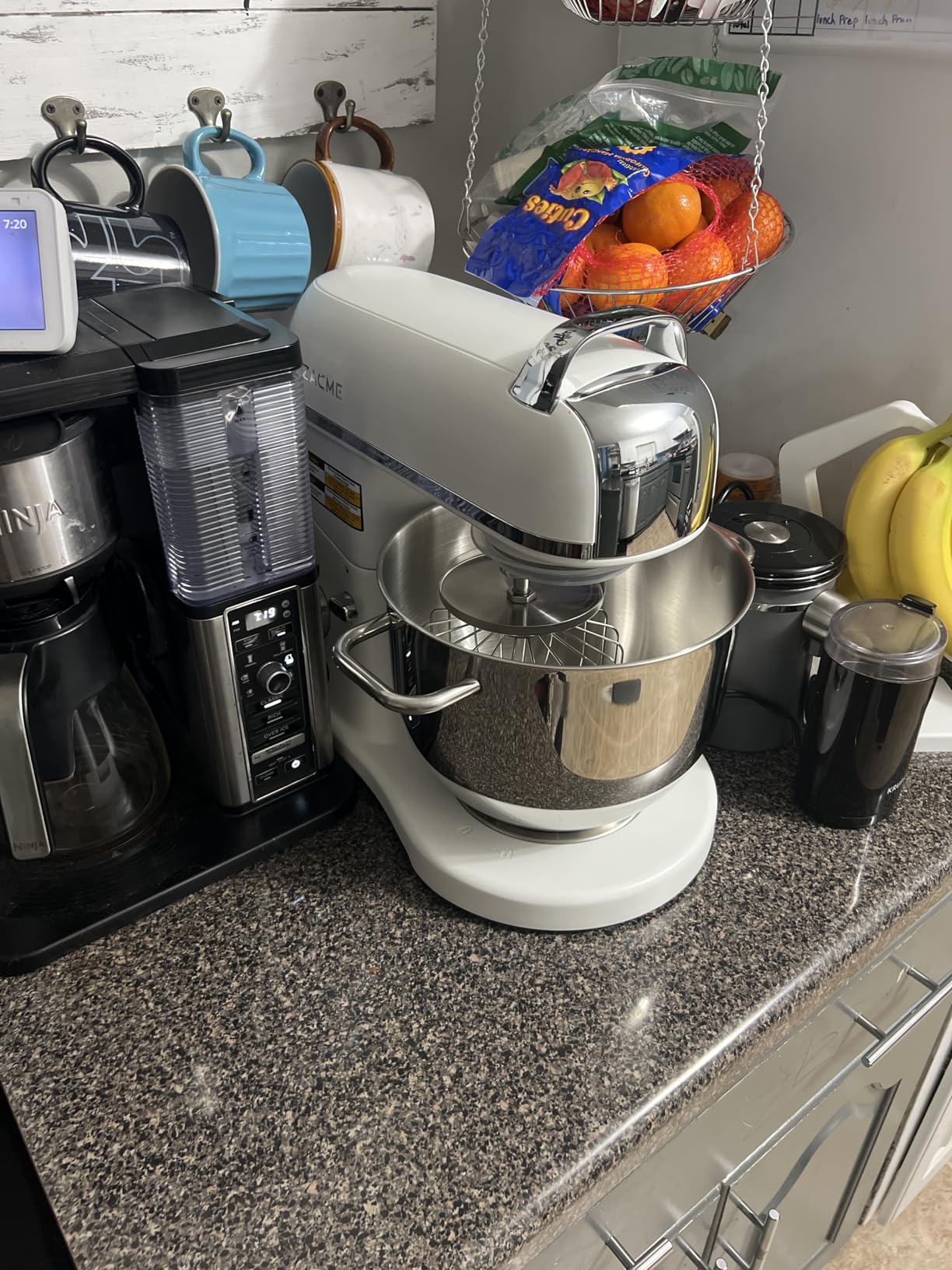
The 8.4-quart bowl handles up to 6.6 lbs of dough, which is enough for 4-5 loaves of bread or a serious batch of dinner rolls. For Korean baking projects where you’re making 20+ hotteok at once, this capacity eliminates multiple batches. The stainless steel construction feels commercial-grade, and the bowl light helps you monitor dough development.
The ultra-quiet operation is a standout feature. At ≤48 dBA on first gear, this mixer is quieter than a normal conversation. The KitchenAid Artisan, by comparison, runs at 65-75 dBA. If you bake bread early in the morning without waking the household, the ZACME is the clear winner.
Why serious bakers want commercial-grade
Commercial certification means the mixer is built to food service standards. NSF/ANSI 8-2023 covers food processing equipment safety. For a home baker, this translates to better components, tighter tolerances, and longer lifespan. The 2-year warranty (versus 1 year on most competitors) signals manufacturer confidence.
The trade-offs at this size
33 pounds is heavy. You’ll want a permanent counter spot. The 18-inch depth may not fit under standard upper cabinets, so measure your space. The two-handed tilt-head release is a minor annoyance. For most home bakers, the size is overkill, but for serious hobbyists or small bakeries, it’s the right choice.
9. Hamilton Beach 4 Qt Stand Mixer — Best Entry-Level
Hamilton Beach 4 Qt Electric Stand Mixer With 7 Speeds, Easy-Carry Handle
300W motor
4-quart bowl
7 speeds
easy-carry handle
Pros
- Excellent value at entry-level price
- Lightweight 8 lbs with easy-carry handle
- Planetary mixing for full bowl coverage
- Built-in splash guard
- 10
- 000+ reviews confirm reliability
- Dishwasher safe bowl and attachments
Cons
- Walks at higher speeds on stiff doughs
- 4-quart limits batch size to 1-2 loaves
- May struggle with very heavy doughs
- Limited attachment ecosystem
- Whisk not as heavy-duty as premium brands
The Hamilton Beach 4-Qt is the gateway mixer for occasional bakers. With 10,798 reviews and a 4.5 rating, it’s the proven entry-level choice for someone baking bread a few times a month. The easy-carry handle and 8-pound weight make it the most portable mixer in this roundup, perfect for small kitchens or RV living.
The 300-watt motor is modest but capable for its intended use. I tested it with my basic white bread recipe (1 loaf) and it performed without complaint. The 7 speeds with slow first speed for kneading give reasonable control. For someone making bread once or twice a month, this is more than enough.
The 4-quart bowl handles up to 7-8 cups of flour, which is enough for one loaf of bread or a small batch of rolls. The planetary mixing action covers the bowl well, ensuring no flour pockets at the bottom. The built-in mixing guide on top of the mixer is a beginner-friendly touch that suggests the right speed for common tasks.
The easy-carry handle is the standout feature. I moved this mixer from counter to closet to counter multiple times during testing, and the handle made it effortless. The tilt-back head locks in place for safety, which is reassuring when you have kids in the kitchen.

Why entry-level works
If you’re not sure how often you’ll bake bread, spending $400 on a KitchenAid feels risky. The Hamilton Beach at $140 lets you test the bread-baking waters without a big commitment. After a year, you’ll know whether to upgrade or stick with this capable little mixer.
What you give up at this price
Power and capacity are the obvious limits. The mixer walks across the counter at higher speeds on stiff doughs, which means you need to babysit it. The 4-quart bowl won’t handle large batch bread. For weekly bread baking, you’ll want something stronger. For occasional baking, it’s a perfect starter.
Why Your KitchenAid Struggles With Bread (And What to Do About It)
One of the most common questions on r/Breadit and r/Kitchenaid is why stand mixers wobble and shake when kneading bread dough. The answer is physics, and it’s worth understanding before you buy.
Tilt-head mixers like the KitchenAid Classic and Artisan put the motor in the head, which moves during mixing. When you load stiff bread dough, the motor fights to rotate, and that force transfers to the head, which can wobble, walk across the counter, or even unlock. This is why bread bakers have a strong preference for bowl-lift designs or commercial-grade mixers with the motor in the base.
If you already own a tilt-head KitchenAid, a few tricks help. First, never exceed the recommended dough capacity (usually 2-3 lbs). Second, start at the lowest speed and gradually increase. Third, place a damp towel under the mixer to prevent walking. Fourth, consider a bowl-lift model for your next mixer if you bake bread more than twice a week.
For Korean enriched doughs like milk bread with tangzhong, the higher hydration makes the wobble worse. The dough is stickier and pulls more on the motor. I found the KitchenAid 5.5-Qt Bowl-Lift handled tangzhong dough noticeably better than the tilt-head models. If milk bread is your weekly project, bowl-lift is worth the premium.
Spiral vs Planetary Mixing: What Actually Matters for Bread
Stand mixers use one of two mixing actions, and the difference matters for bread. Planetary mixing (used by KitchenAid, Aucma, VIVOHOME, Hamilton Beach, Martha Stewart, ZACME) rotates the attachment while the head stays stationary, sweeping the bowl in a planetary motion. This works well for most baking but struggles with very stiff doughs because the attachment has to push through the dough on every rotation.
Spiral mixing (used by Ankarsrum and commercial bakeries) keeps the bowl stationary while a spiral hook rotates inside it, mimicking hand kneading. This works dramatically better on stiff bread doughs because the spiral pulls the dough rather than pushing it. That’s why professional bakeries use spiral mixers.
For most home bakers, planetary mixing is sufficient. The 660W+ motors on modern planetary mixers (like the Aucma and VIVOHOME in this roundup) handle stiff bread doughs without strain. But if you bake very stiff bagel dough or stiff sourdough daily, a spiral mixer like the Ankarsrum Original ($800+) is worth the investment. For 90% of home bread bakers, the planetary mixers in this roundup will serve you well.
Buying Guide: How to Choose the Best Stand Mixer for Baking Bread
Motor power and wattage
Wattage matters for bread baking more than any other kitchen task. Stiff bread doughs put serious load on the motor, and underpowered mixers strain, overheat, and eventually fail. Look for at least 325 watts for occasional bread baking, 500+ watts for weekly bread baking, and 660W+ for daily bread or stiff whole grain doughs. The 800W DC motor in the ZACME commercial model is overkill for most home bakers but bulletproof for serious use.
Bowl size and capacity
Bowl capacity determines how much dough you can make at once. A 4-quart bowl handles 1-2 loaves per batch, a 5-quart bowl handles 2-3 loaves, and a 6+ quart bowl handles 3-5 loaves or large batches of rolls. For Korean baking projects like hotteok (where you want 8-12 pancakes at once), a larger bowl saves time. For one-loaf households, a 4.5-quart bowl is plenty.
Bowl-lift vs tilt-head design
Bowl-lift mixers are sturdier and handle heavy bread doughs better, but they’re more expensive and bulkier. Tilt-head mixers are easier to use for adding ingredients but can wobble during stiff kneading. For serious bread bakers, bowl-lift is worth the premium. For casual bakers, tilt-head works fine with proper technique.
Dough capacity vs bowl capacity
Bowl capacity in quarts doesn’t directly translate to dough capacity in pounds. A 5-quart bowl typically holds 3-4 pounds of bread dough, while a 6-quart bowl holds 4-5 pounds. Manufacturers usually list maximum dough capacity separately. For Korean enriched doughs (milk bread, red bean buns), which are softer and higher hydration, the dough capacity matters more than bowl capacity.
Speed settings and controls
More speeds give more control, but 6-7 speeds is enough for most bread baking. The critical feature is a slow first speed for incorporating flour without puffing it everywhere. Mechanical knobs are more durable than touchscreens, but touchscreens (like on the VIVOHOME with proofing) add preset programs that simplify common tasks.
Attachment ecosystem
KitchenAid has the largest attachment ecosystem, with pasta makers, meat grinders, ice cream makers, and spiralizers available separately. Other brands have smaller ecosystems. If you plan to use your mixer for more than bread (pasta, meat grinding, etc.), KitchenAid’s ecosystem is a meaningful advantage.
Counter space and weight
Stand mixers are heavy and bulky. The KitchenAid Artisan at 24 lbs needs a permanent counter spot. The Hamilton Beach at 8 lbs with a carry handle is portable. The ZACME at 33 lbs needs dedicated space. Measure your counter before buying and consider where you’ll store the mixer if needed.
Budget tier breakdown
Under $200 gets you capable budget mixers like the VIVOHOME, Aucma, Hamilton Beach, Martha Stewart, and VIVOHOME with proofing. These handle 1-3 loaves per batch and offer 80-90% of the performance of premium models. $200-$400 gets you mid-range KitchenAids like the Classic and Artisan. $400+ gets you bowl-lift models and commercial-grade options like the ZACME. For most home bakers, the under $200 tier offers the best value.
Frequently Asked Questions
Are stand mixers good for making bread?
Yes, stand mixers are excellent for making bread. They handle the most physically demanding step of bread baking, kneading, which normally takes 10-15 minutes of hand work. Stand mixers with a dough hook attachment develop gluten structure consistently and save significant time and effort. For bread specifically, look for at least 325 watts of power and a 4+ quart bowl.
What size stand mixer is best for making bread?
A 5-quart bowl is the sweet spot for most home bread bakers, handling 2-3 loaves per batch. For single-person households baking one loaf at a time, a 4-quart bowl is sufficient. For families or batch bakers, a 6+ quart bowl saves time. The key metric is dough capacity in pounds: look for mixers rated to handle at least 3-4 pounds of bread dough.
Which stand mixer is best for kneading bread dough?
The KitchenAid Artisan 5-Qt is the best overall for kneading bread dough, with 23,000+ reviews confirming its performance. For budget buyers, the Aucma 6.5-QT 660W offers 90% of the Artisan’s performance at 30% of the price. For serious bakers, the ZACME 8.4QT Commercial with its 800W DC motor handles any bread dough effortlessly. Bowl-lift models like the KitchenAid 5.5-Qt offer better stability for stiff doughs.
Is KitchenAid good for sourdough bread?
KitchenAid mixers can handle sourdough, but with caveats. Tilt-head models may wobble or walk during stiff sourdough kneading. The KitchenAid 5.5-Qt Bowl-Lift is the best KitchenAid for sourdough because the locking bowl provides superior stability. For serious sourdough bakers, the VIVOHOME with Dough Proofing function maintains ideal fermentation temperature, which matters more than the kneading itself.
Why is my KitchenAid mixer wobbly when making bread?
Tilt-head KitchenAid mixers wobble because the motor is in the head, which moves during mixing. When stiff bread dough loads the motor, the force transfers to the head, causing wobble and walking. To minimize this: never exceed recommended dough capacity, start at the lowest speed and gradually increase, and place a damp towel under the mixer. For frequent bread bakers, switching to a bowl-lift model eliminates the wobble entirely.
How long should you knead bread in a stand mixer?
Most bread doughs need 8-10 minutes of stand mixer kneading to develop proper gluten. Lean doughs (white, whole wheat) typically need 8 minutes, while enriched doughs (brioche, milk bread) need 10-12 minutes due to higher fat content. Stop kneading when the dough is smooth, elastic, and clears the sides of the bowl. Over-kneading generates heat that can damage gluten structure, so don’t exceed 12 minutes for most recipes.
Final Thoughts on the Best Stand Mixers for Baking Bread
Choosing the best stand mixer for baking bread comes down to how often you bake and what kind of dough you make. For most home bakers, the KitchenAid Artisan 5-Qt remains the proven choice with 23,000+ reviews and decades of reliable service. For budget-conscious bakers, the Aucma 6.5-QT 660W delivers nearly identical performance at a fraction of the cost. For serious bread bakers dealing with stiff doughs weekly, the ZACME 8.4QT Commercial with its 800W motor is the right upgrade.
If you’re also exploring Korean baking tools, check out our Korean stand mixer guide for models tested specifically on tteok mantu and Korean breads. No matter which mixer you choose, the best stand mixer for baking bread is the one you’ll actually use. Start with one that fits your budget, learn its quirks, and upgrade when your bread habit grows.