
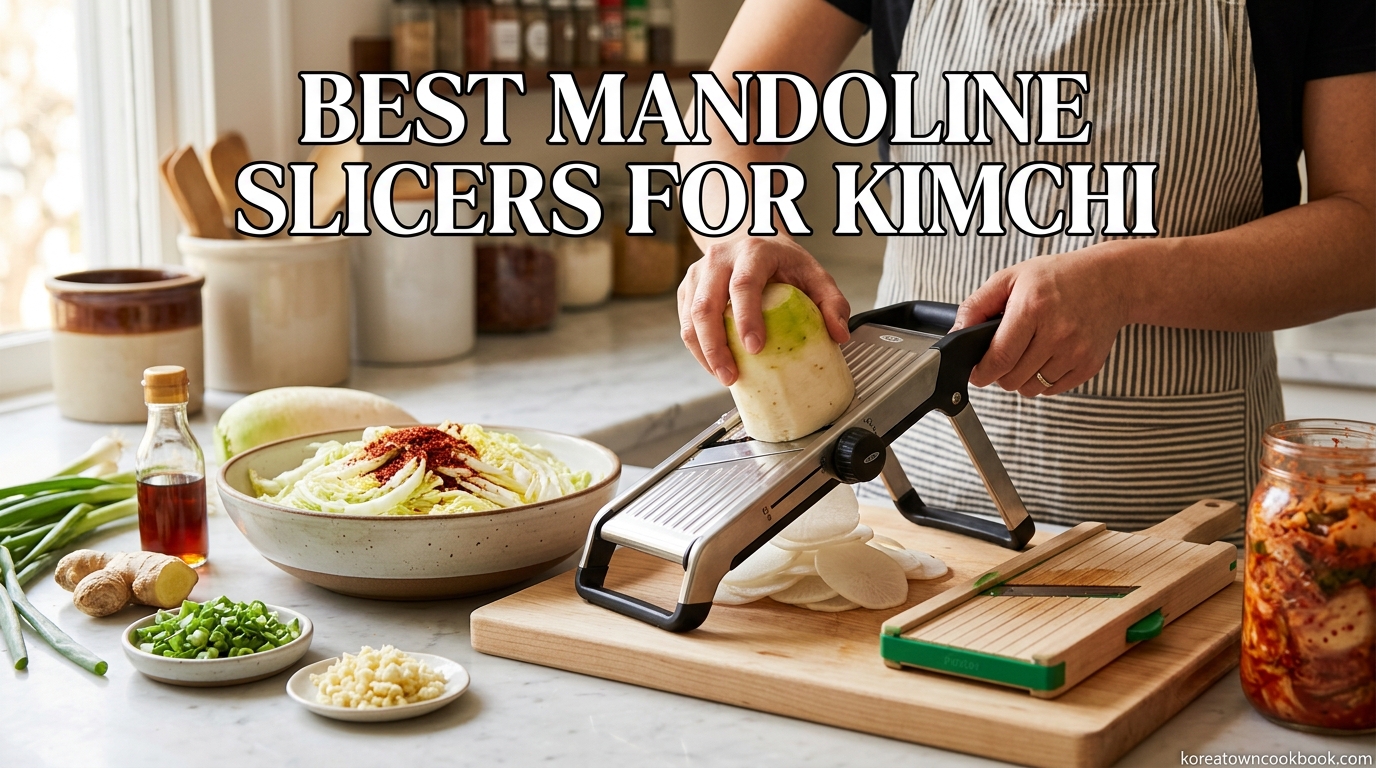
If you have ever tried slicing a whole napa cabbage by hand for baechu kimchi, you already know why the best mandoline slicers for kimchi have become a non-negotiable tool in my Korean kitchen. Knife work takes patience, and even tiny differences in slice thickness create uneven fermentation. The thick pieces stay crunchy while the thin ones turn mushy, and that ruins the whole batch.
I have been making kimchi at home for over a decade, and the single biggest upgrade to my process was adding a proper mandoline slicer. A sharp blade turns daikon radish into uniform matchsticks for kkakdugi in under two minutes. It shaves cucumber paper-thin for oi sobagi without crushing the flesh. And for baechu, it produces consistent ribbons that brine and ferment evenly every single time.
This guide covers eight mandoline slicers I have put through real kimchi prep, from a small weeknight batch of oi sobagi to a 10-head cabbage session for winter kimjang. I focused on three things that matter for Korean cooking: blade sharpness for clean cuts through fibrous daikon, adjustable thickness for different kimchi styles, and a surface wide enough to handle cabbage quarters without jamming.
Table of Contents
Top 3 Picks for Kimchi Prep

Benriner Jumbo Mandoline Slicer
- Wide 5-inch cutting surface
- Paper-thin to 10mm thickness
- Japanese stainless steel blade
- Hooks onto bowls

Benriner Japanese Mandolin Slicer
- Three interchangeable blades
- Adjustable thickness screws
- Ultra-sharp stainless steel
- Chef-favorite classic

Fullstar 2-in-1 Handheld Mandoline
- 4 thickness settings (1-4mm)
- Built-in julienne blade
- 420 stainless steel
- Lifetime warranty
Best Mandoline Slicers for Kimchi in 2026
| Product | Specifications | Action |
|---|---|---|
| Benriner Jumbo Mandoline Slicer |
|
Check Latest Price |
| Benriner Japanese Mandolin Slicer |
|
Check Latest Price |
| Fullstar 2-in-1 Handheld Mandoline |
|
Check Latest Price |
 OXO Good Grips Large Handheld Mandoline OXO Good Grips Large Handheld Mandoline |
|
Check Latest Price |
 Gramercy Adjustable Mandoline Slicer Gramercy Adjustable Mandoline Slicer |
|
Check Latest Price |
 ONCE FOR ALL 5-in-1 Safe Mandoline ONCE FOR ALL 5-in-1 Safe Mandoline |
|
Check Latest Price |
 PrepSolutions Adjust-A-Slice Mandoline PrepSolutions Adjust-A-Slice Mandoline |
|
Check Latest Price |
 Mueller Austria Mandoline Slicer Mueller Austria Mandoline Slicer |
|
Check Latest Price |
1. Benriner Jumbo Mandoline Slicer – Wide Surface for Whole Cabbage Quarters
Benriner Mandoline Jumbo Slicer, Japanese Stainless Steel Blade, Beige
5-inch wide blade
0.5-10mm thickness
Japanese steel
Hooks onto bowls
Pros
- Wide surface handles napa cabbage quarters
- Razor-sharp Japanese steel glides through daikon
- Easy-turn thickness dial
- Dishwasher safe top rack
Cons
- Stock fluctuates with limited availability
- Blade replacement is pricey
- Safety guard takes practice
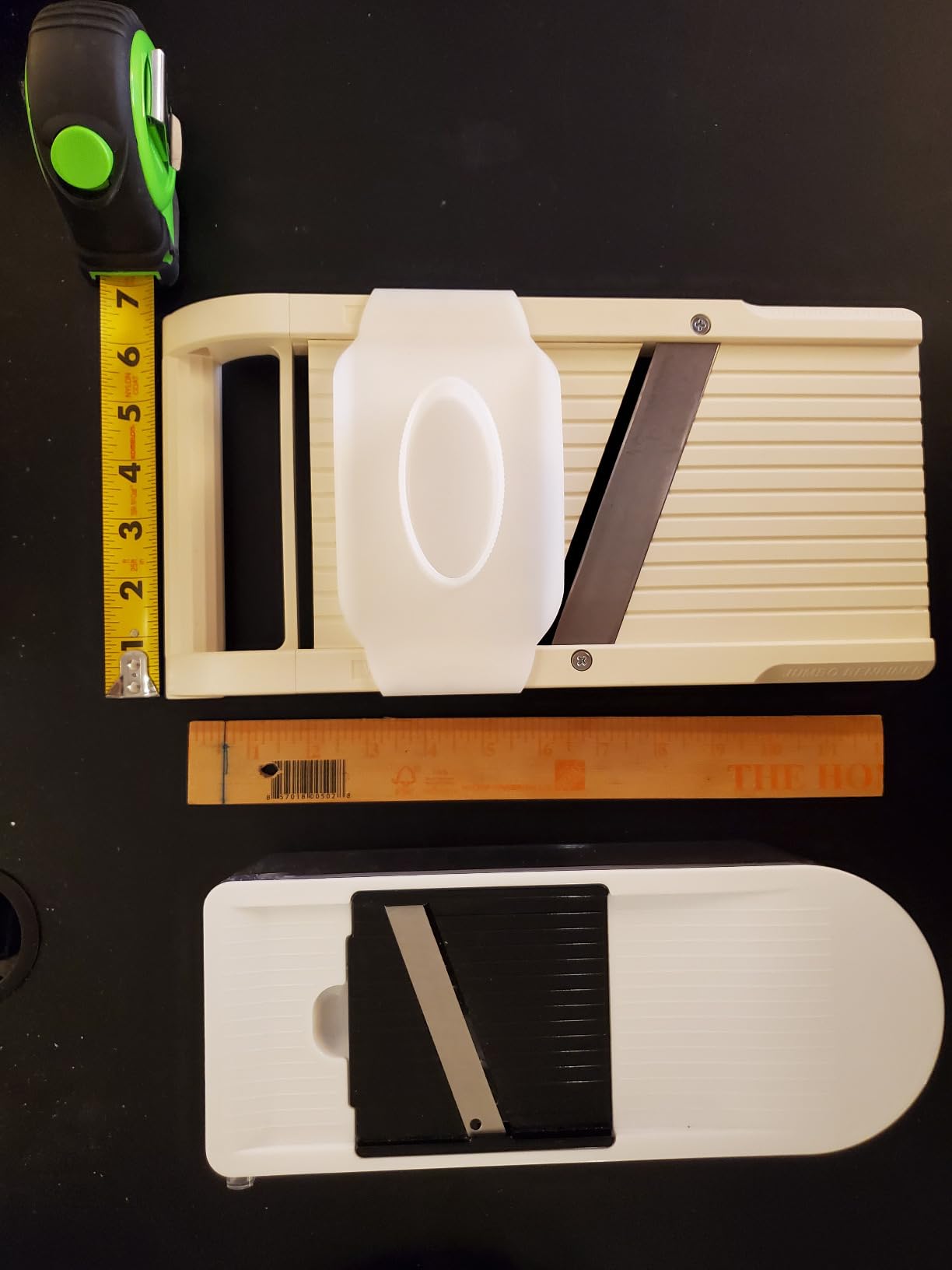
The Benriner Jumbo is the mandoline I reach for first when I am prepping for a serious batch of baechu kimchi. That 5-inch wide cutting surface is the difference between fighting cabbage and letting it slide through cleanly. With standard narrow mandolines I always had to trim cabbage quarters down first, which left awkward chunks. The Jumbo takes a full quarter head straight from the salt bath.
For kkakdugi, I set the dial to about 3mm and run daikon through in long steady strokes. The handcrafted Japanese stainless steel blade bites into the radish without catching or tearing, which is critical because torn daikon releases water unevenly during fermentation. I get matchstick-precise slabs in under a minute per root.
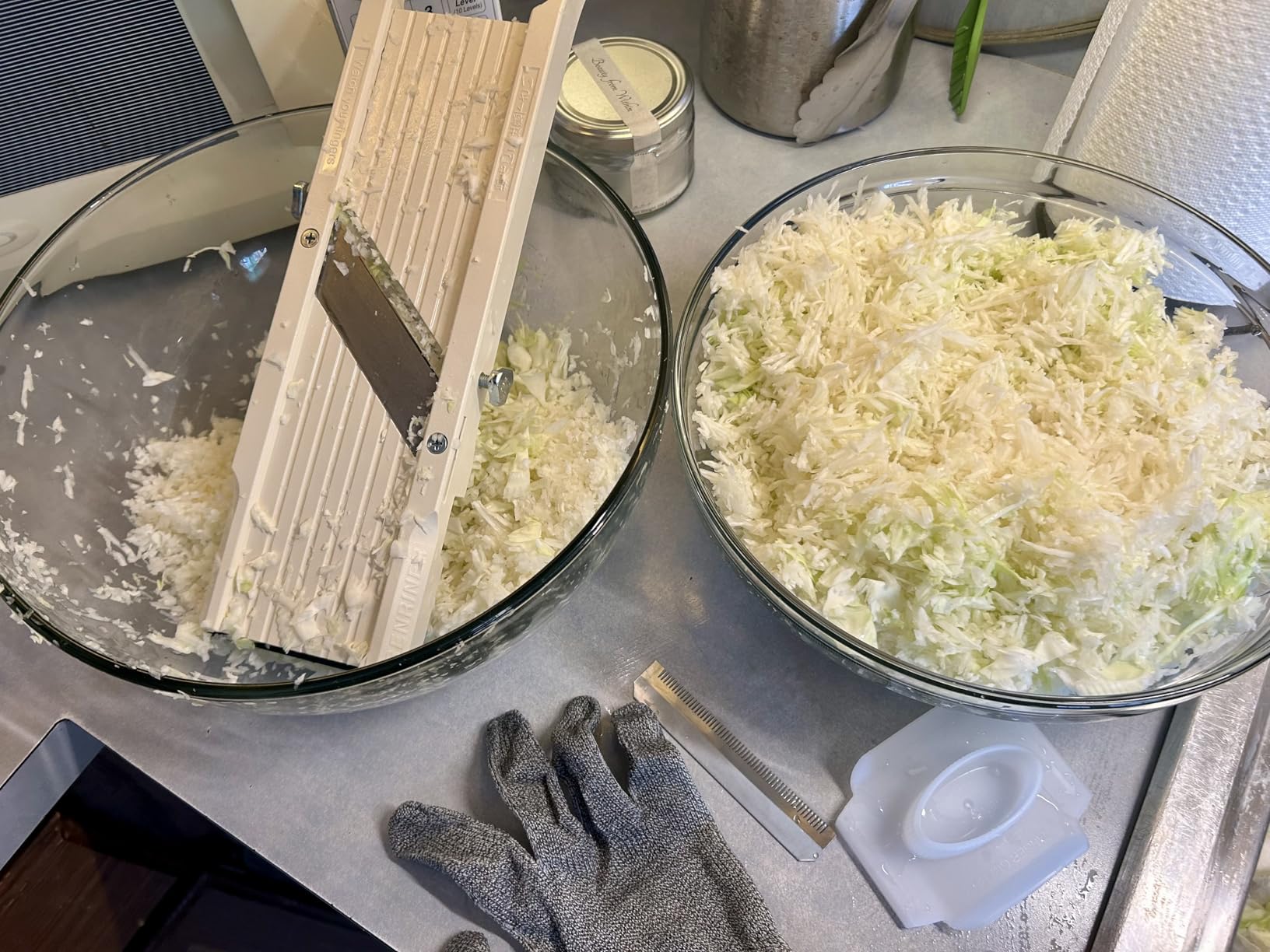
The easy-turn dial covers 0.5 to 10mm, which is the range you actually need for Korean cooking. Paper-thin at 0.5mm works for the delicate white kimchi (baek kimchi) where the cabbage should almost melt. Around 2mm is my sweet spot for standard baechu. And the thicker settings handle the chunkier cuts for radish water kimchi (nabak kimchi).
One detail I love: the Jumbo hooks directly onto the rim of a bowl. When you are processing 10 heads of cabbage for kimjang, that means slices drop straight into your brining vessel instead of piling up on the counter. It is a small thing that saves real time over a long session.
Best kimchi styles for this mandoline
The Jumbo shines for baechu kimchi, baek kimchi, and any cabbage-forward ferment where you need a wide blade path. It also handles large daikon for kkakdugi without pre-cutting. If you make big batches for a family or for kimjang season, this is the tool.
It is less ideal for small quick kimchis like oi sobagi (cucumber) because the wide surface is overkill for small produce.
What to watch out for
Stock for the Jumbo model fluctuates and sometimes shows only a handful left. The blade is replaceable but costs nearly half the price of the unit. The included safety guard works but has a learning curve, so I keep a cut-resistant glove nearby for the final few passes.
The toothed julienne blades can leave marks on the main blade if you force hard vegetables like raw sweet potato through them.
2. Benriner Japanese Mandolin Slicer – The Chef Classic
Benriner Japanese Mandolin Vegetable Slicer
3 interchangeable blades
Adjustable screws
Ultra-sharp steel
Plastic body
Pros
- Professional chef favorite for decades
- Ultra-sharp blades stay keen
- Three julienne options included
- Affordable for the quality
Cons
- Narrow surface struggles with full cabbage quarters
- Needs clamping to bowl during use
- Thickness screws stiffen over time
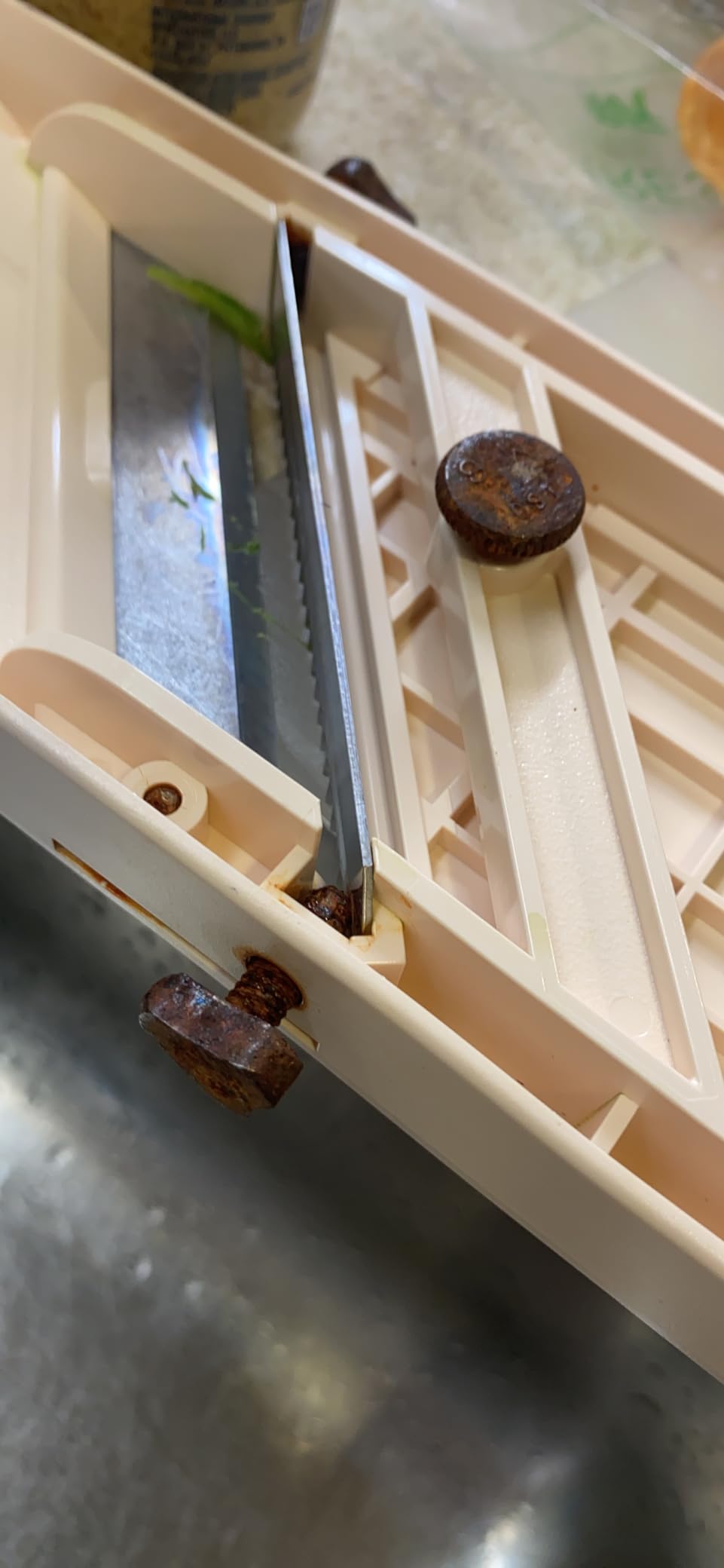
This is the original Benriner, the small off-white mandoline that has lived in Korean restaurant kitchens and Japanese home kitchens for decades. I keep one in my drawer as a backup because nothing beats its price-to-performance ratio. The three interchangeable blades give you fine, medium, and coarse julienne alongside the straight slicer.
For kimchi, this classic is my go-to for daikon julienne when I want the thin matchsticks used in kkakdugi. The fine julienne blade produces clean 1.5mm sticks that ferment quickly and evenly. The straight blade handles cucumber for oi sobagi at paper-thin settings.
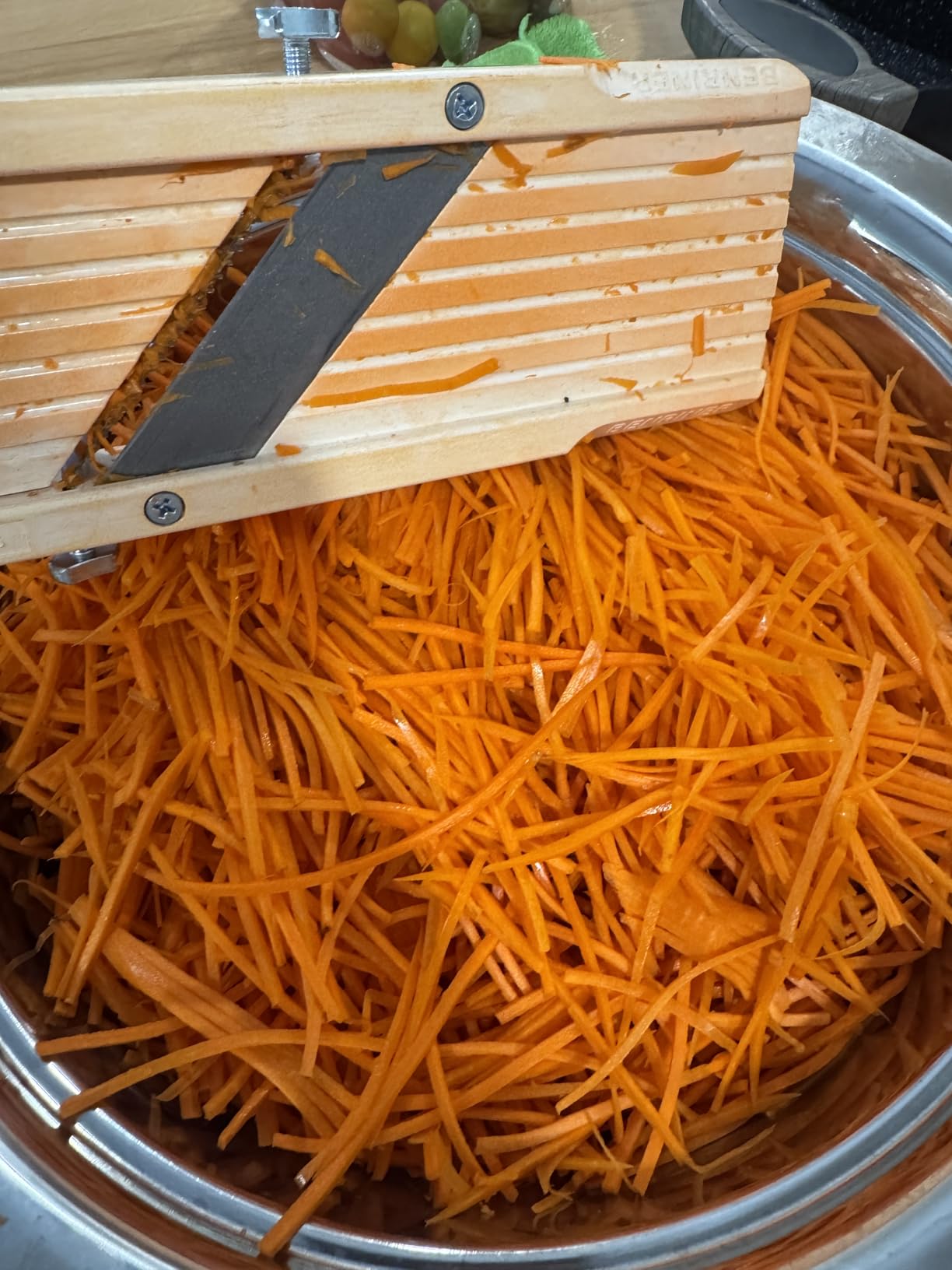
The narrow cutting surface is the trade-off. Where the Jumbo takes a full cabbage quarter, the classic forces you to halve or quarter the cabbage first. For weeknight kimchi that is fine. For kimjang scale prep, it slows you down.
Thickness adjustment uses small screws on either side of the blade rather than a dial. I find this gives more precise control once you learn the feel, but the screws do stiffen after a few years of washing. A drop of food-safe oil fixes that.
Best kimchi styles for this mandoline
The classic Benriner excels at smaller-batch kimchi where julienne is the priority. Kkakdugi daikon matchsticks, carrot julienne for garnish kimchi, and thin cucumber slices for oi sobagi are all in its wheelhouse.
It also shines for the filling mixture (sok) that goes between cabbage leaves, where you need julienned radish and carrot in small consistent pieces.
What to watch out for
There is no base or stand, so you either hold it over a bowl or rest it on the rim. The included guard is minimal, and most home cooks I know wrap a kitchen towel around the base for grip and stability.
Blades are extremely sharp from the factory, which is a feature, but treat that first unboxing with respect.
3. Fullstar 2-in-1 Handheld Mandoline Slicer – Budget Pick With Surprising Range
Fullstar – Handheld Mandoline Vegetable Slicer & Julienne Cutter
4 thickness settings 1-4mm
Built-in julienne
420 stainless steel
Lifetime warranty
Pros
- Four distinct thickness settings
- Built-in julienne in one tool
- Very affordable entry point
- Lifetime warranty
Cons
- Small surface limits large cabbage
- Catches on dense daikon if forced
- Compartment fills fast
The Fullstar 2-in-1 is the budget pick I recommend to anyone testing whether a mandoline belongs in their kimchi workflow. At well under the price of the Benriners, it gives you four actual thickness presets (1mm, 2mm, 3mm, 4mm) plus a built-in julienne blade, all in one compact handheld body.
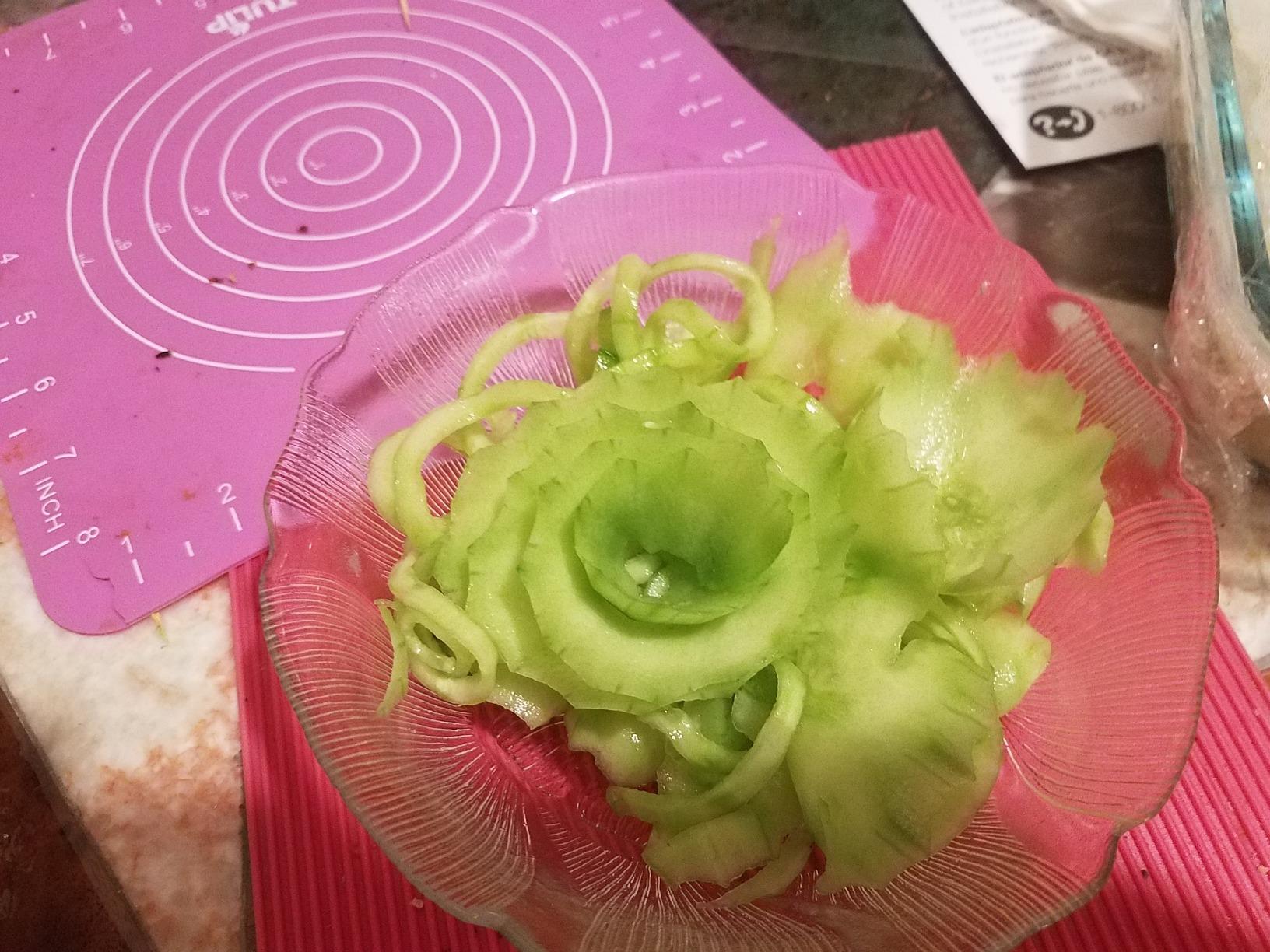
For a small weeknight batch of oi sobagi, the 1mm setting produces translucent cucumber slices that brine in minutes. For quick kkakdugi, the 3mm setting works through a medium daikon with steady pressure. The julienne blade handles the carrot strips that go into the cabbage filling mixture.
The 420 stainless steel blades are genuinely sharp, sharper than I expected at this price point. They cut cleanly through napa cabbage leaves, though the surface area is too small for full quarters. I halve the cabbage and work section by section.
The stainless steel-tipped hand guard is a real upgrade over the plastic guards on most budget mandolines. The tips grip the vegetable instead of sliding off, which matters when you are pushing the last inch of daikon through the blade.
Best kimchi styles for this mandoline
Best for small household batches of oi sobagi, quick cucumber kimchi, and modest kkakdugi portions. Also great for prepping the julienned radish and carrot that go into the cabbage leaf filling.
Not the right pick if your goal is full baechu kimchi from whole cabbage quarters.
What to watch out for
The compartment behind the blade fills quickly, so expect to empty it several times during a session. Dense daikon requires steady even pressure or the blade catches. The lifetime warranty is reassuring given the price.
The blades are extremely sharp and the included cleaning brush is necessary, not optional.
4. OXO Good Grips Large Handheld Mandoline Slicer – Trusted All-Rounder
OXO Good Grips Large Adjustable Handheld Mandoline Slicer
3 thickness settings 1-4mm
Non-slip handle knob and foot
Food holder
Blade lock for storage
Dishwasher safe
Pros
- Nearly 20
- 000 reviews from real users
- Solid non-slip grip design
- Blade lock covers blade for safety
- Three useful thickness presets
Cons
- Only 3 thickness presets not more
- Small food holder for large veg
- Plastic body polarizes some users
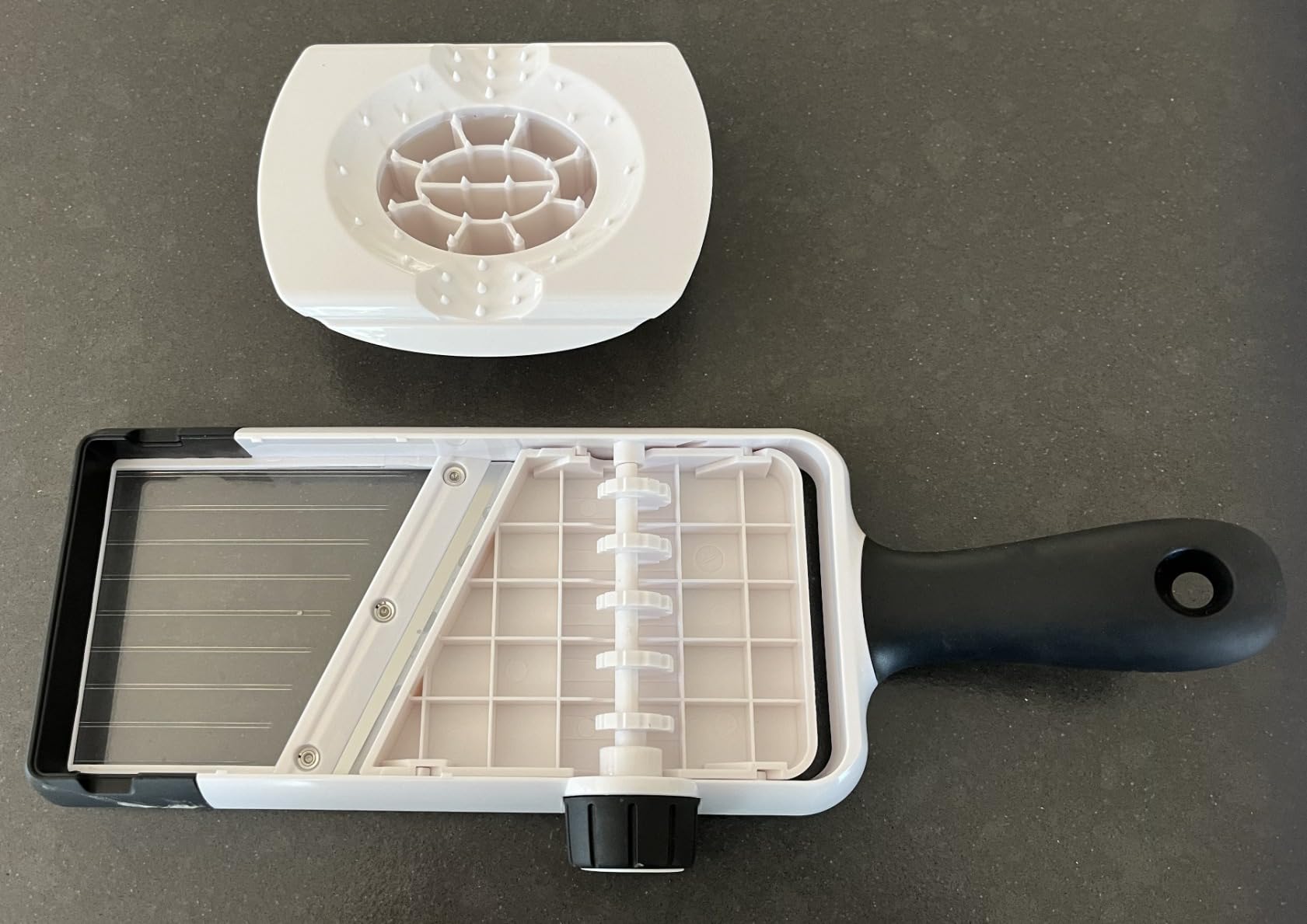
OXO’s Good Grips Large Handheld Mandoline is the safest pick for anyone new to mandoline slicing. The combination of a non-slip handle, non-slip foot, blade lock for storage, and a food holder that actually grips produce makes it forgiving in a way most mandolines are not.
For kimchi, the three presets (1mm, 2.5mm, 4mm) cover the practical range. The 1mm setting is my choice for oi sobagi cucumber and for the paper-thin daikon rounds used in some styles of nabak kimchi. The 2.5mm setting handles standard baechu cabbage prep. The 4mm setting works for thicker radish slabs.
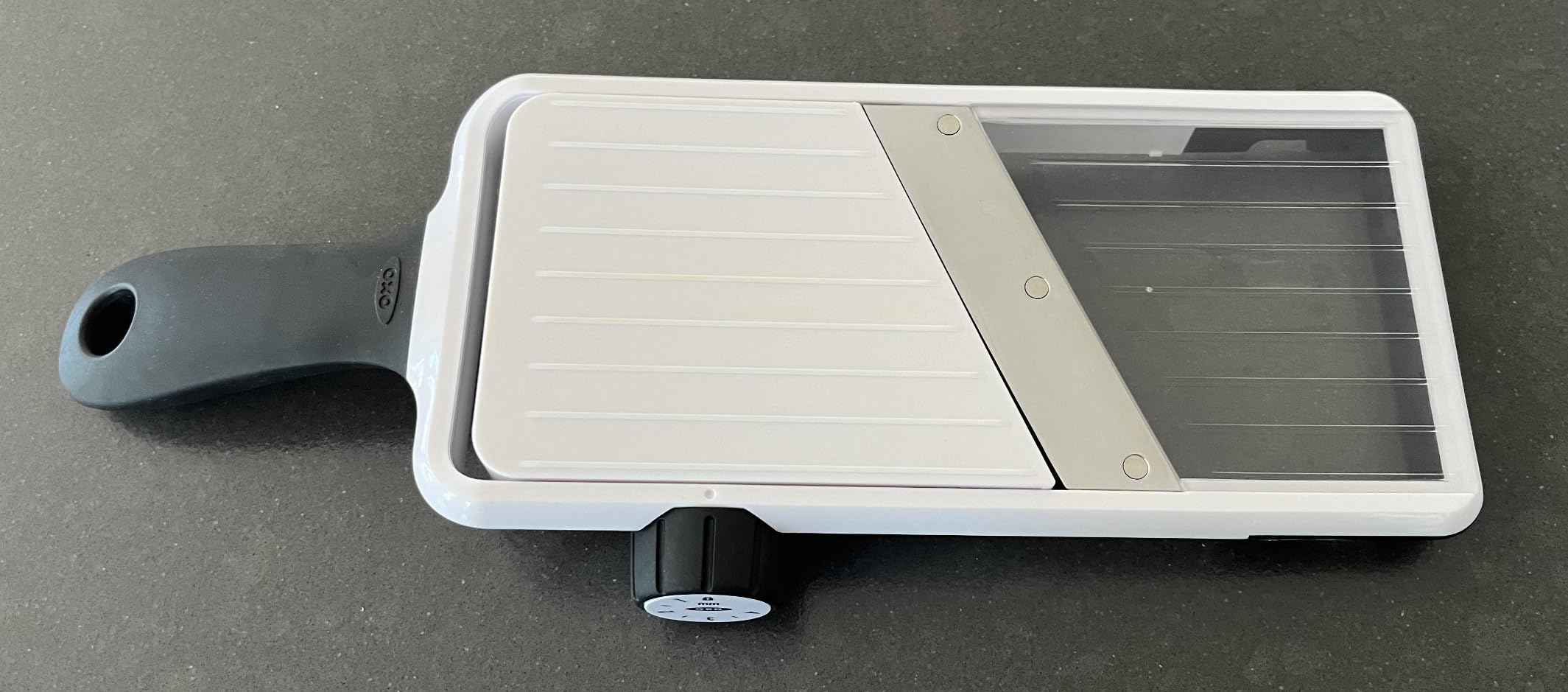
The window on the underside lets you watch slices fall through, which sounds gimmicky but actually helps you catch jams before they pile up. The foot lets you stand it on a cutting board or hook it over a bowl rim.
What makes this my recommendation for cautious cooks is the blade lock. When you finish a session, the blade rotates into a covered position. No exposed edge lurking in the drawer, which is exactly the kind of safety feature that matters if kids help in the kitchen.
Best kimchi styles for this mandoline
Ideal for small to medium batches of baechu, oi sobagi, and quick pickled radish. The three settings align with the thicknesses most home kimchi recipes call for.
For advanced styles needing julienne, you will want a separate tool or a different mandoline.
What to watch out for
The food holder is sized for medium vegetables. Large daikon needs to be quartered lengthwise first. The plastic body is stronger than it looks but some users assume it is flimsy based on appearance alone.
Three presets mean less fine control than a dial, but they are well-chosen for typical Korean recipes.
5. Gramercy Adjustable Mandoline Slicer – Built-In Safety Gloves
Gramercy Mandoline Slicer for Kitchen with 12 Slice Settings, Black Edition
Rotating blade cylinder 0-9mm
4CR15 stainless steel
Cut-resistant gloves
Non-slip feet
Pros
- No separate blades to store and lose
- Wide thickness range paper-thin to 9mm
- Cut-resistant gloves included
- Heavy professional build
Cons
- Heavier at 1.9 pounds
- Blade guard only covers flat blade
- Some waste at end of each vegetable
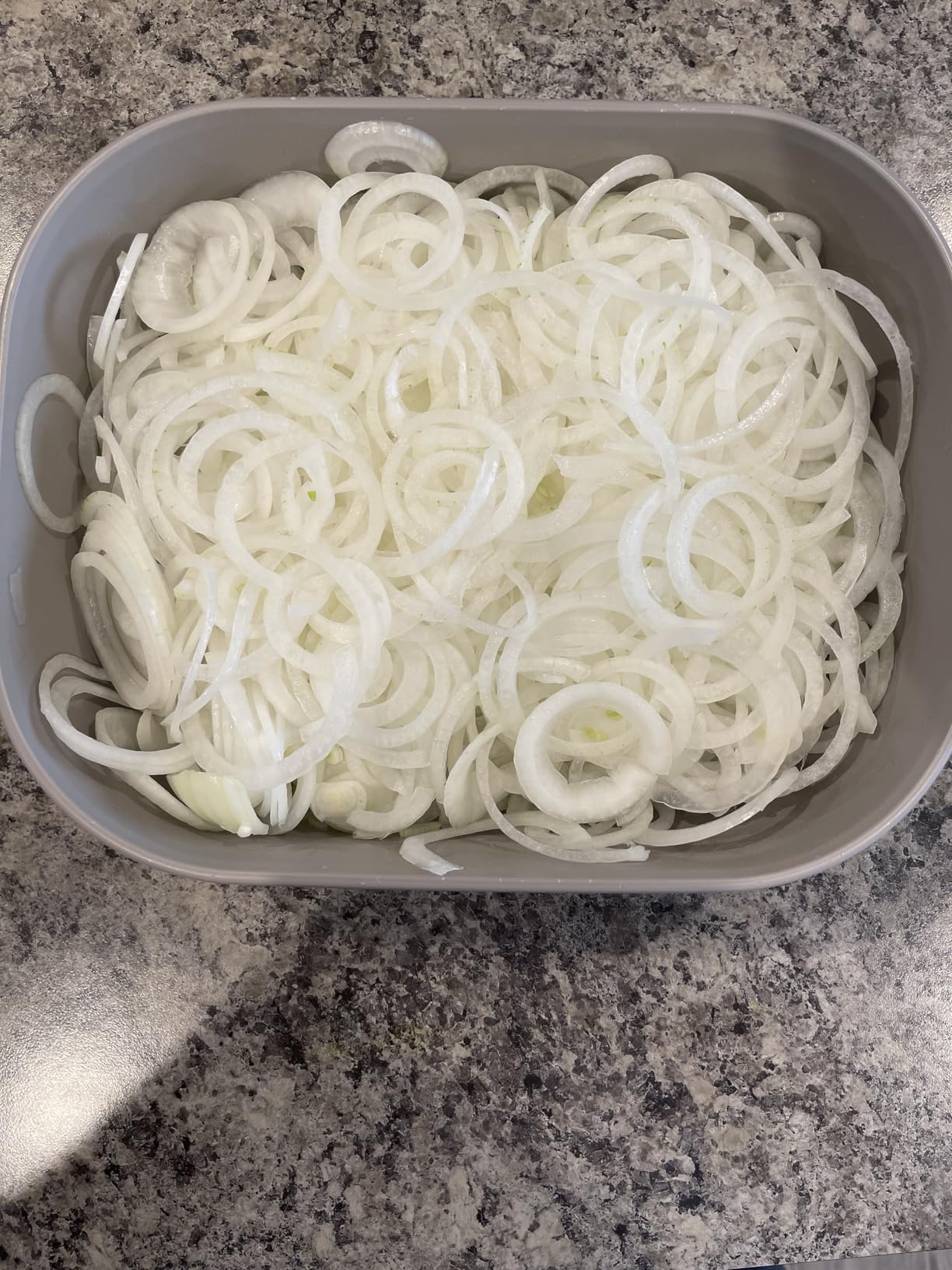
The Gramercy Adjustable Mandoline solves the biggest annoyance of multi-blade mandolines: storing and switching out loose blades. The rotating blade cylinder shifts between thickness settings with a dial, so the blades you need are always inside the unit, never in a drawer somewhere.
For kimchi prep, the paper-thin to 9mm range covers every style I make. The lowest setting produces translucent cabbage slices for baek kimchi. Mid settings handle standard baechu and the daikon for kkakdugi. The 9mm top end works for the thick radish batons in some regional kimchi styles.
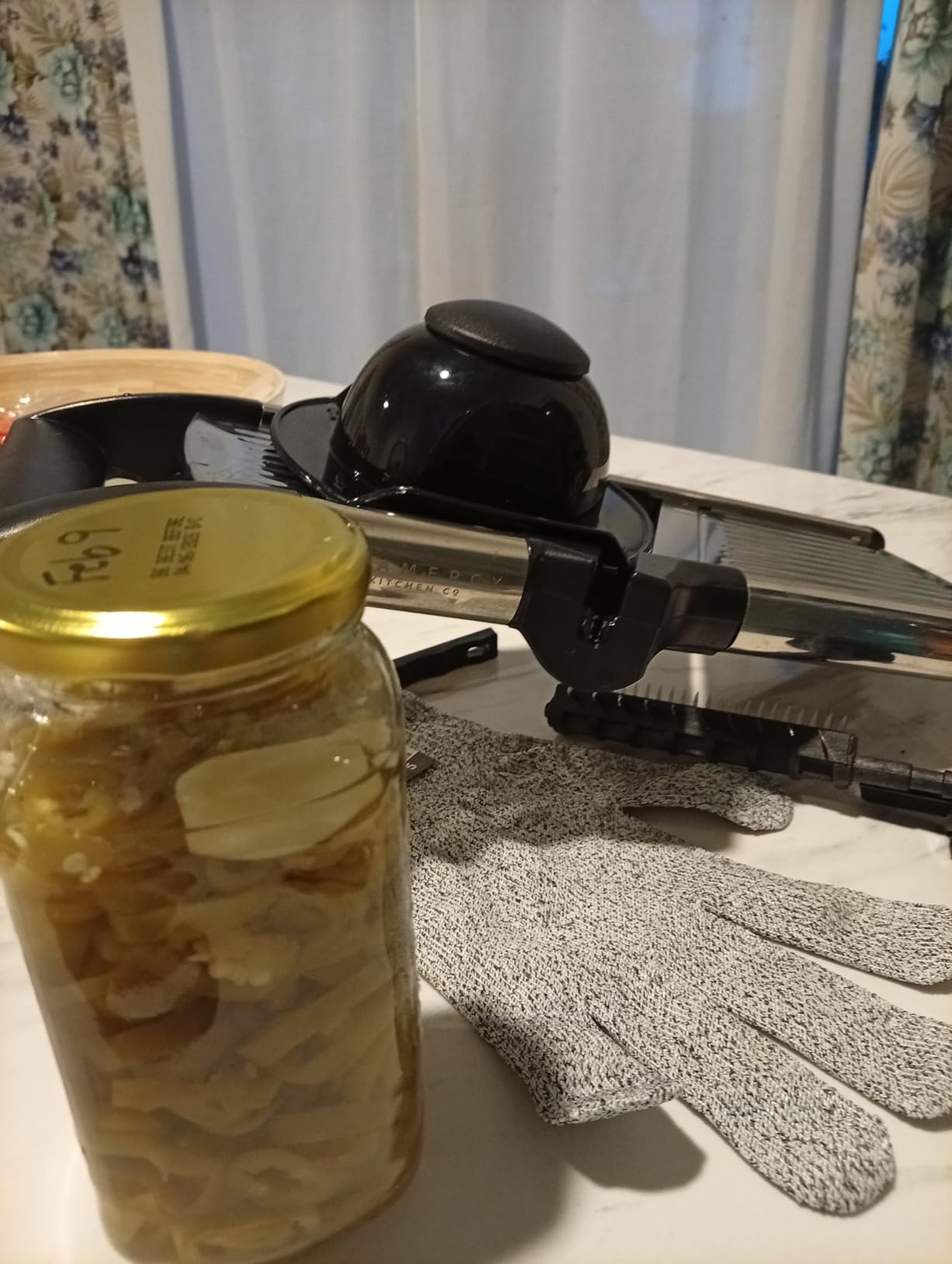
The included cut-resistant gloves are the headline safety feature and they genuinely change how the mandoline feels to use. With the gloves on, I can run vegetables down to the last half-inch without flinching. That means less waste and more even fermentation across the batch.
The professional 4CR15 stainless steel blade holds its edge through months of weekly kimchi prep. I have not needed to sharpen mine in over a year of regular use, which is more than I can say for cheaper blades.
Best kimchi styles for this mandoline
Best for serious home kimchi makers who want one tool that handles every style without swapping blades. Excellent for baechu, kkakdugi, and nabak kimchi in medium to large batches.
The non-slip feet keep it stable on the counter during longer sessions.
What to watch out for
At 1.9 pounds it is heavier than handheld options, which matters if you have wrist issues. The blade guard covers only the flat blade, leaving the wavy blade underneath exposed during storage.
There is a small amount of waste at the very end of each vegetable where the food holder cannot reach.
6. ONCE FOR ALL 5-in-1 Safe Mandoline Slicer – Hidden Blade Safety
ONCE FOR ALL Safe Mandoline Slicer Kitchen, All in 1 Vegetable Slicer, Gray
Hidden blade safety design
0.1-8mm thickness
4 cut modes julienne matchstick slice dice
Suction cup base
420 stainless steel
Pros
- Hidden blade eliminates most injury risk
- Four cut modes in one unit
- Suction cups hold firm on counter
- Adjustable thickness down to 0.1mm
Cons
- Cleaning around blade mechanism tricky
- Small container fills quickly
- Food can catch under moving parts
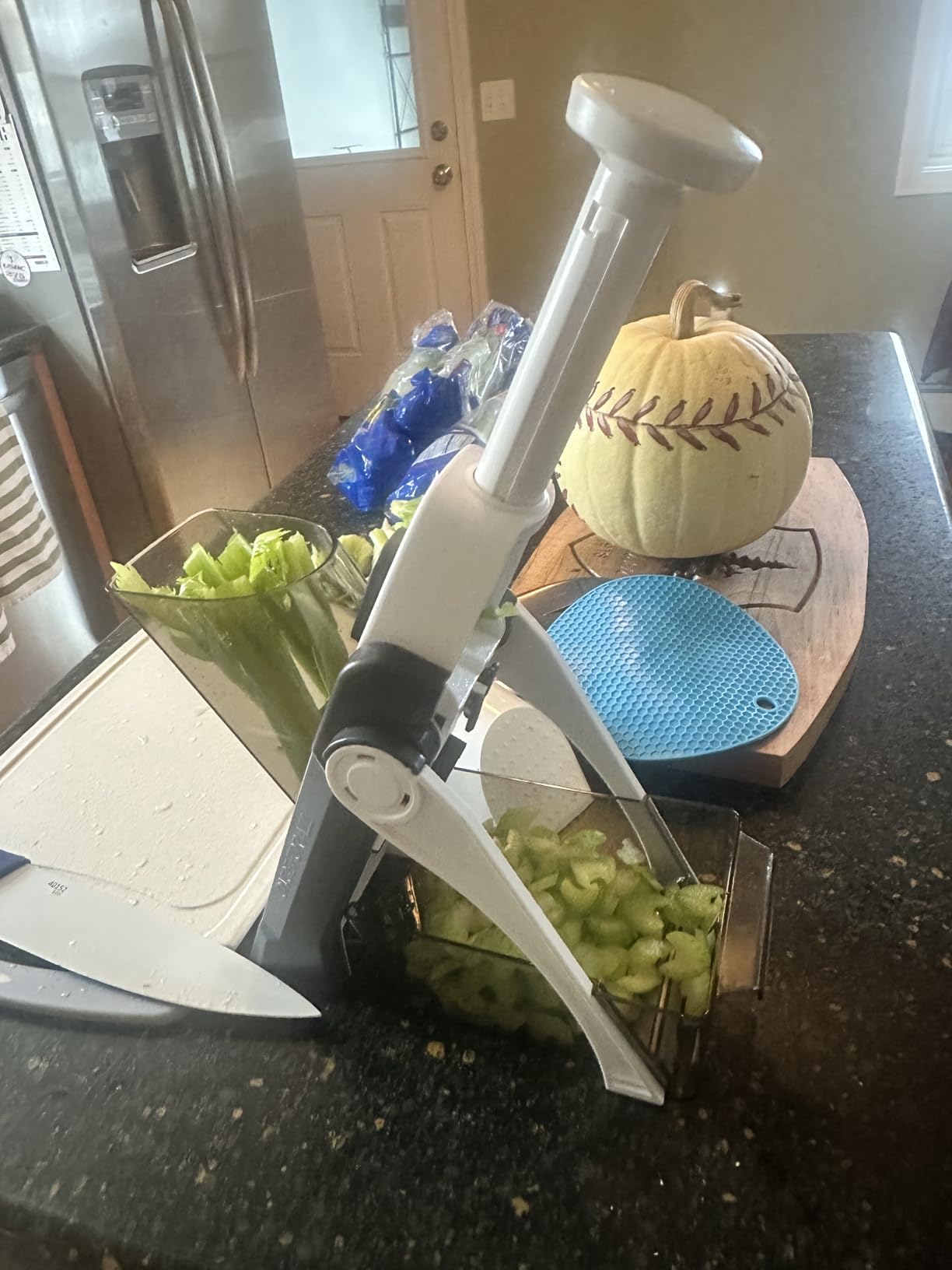
The ONCE FOR ALL 5-in-1 takes the opposite approach to safety from every other mandoline on this list. Instead of trusting you to use a guard or glove correctly, it hides the blade entirely behind a pusher mechanism. Your fingers never touch the cutting zone.
For kimchi, that safety design comes with real trade-offs. The 0.1 to 8mm thickness range is excellent on paper, and the lowest settings produce the paper-thin daikon I want for nabak kimchi. But the feed chute is small, so large napa cabbage quarters must be cut down significantly before they fit.

Where this mandoline shines is the julienne and matchstick modes for kkakdugi and the carrot garnish used in baechu filling. Four cut modes (slice, julienne, matchstick, dice) cover the range of cuts Korean recipes call for, all without changing blades manually.
The suction cup base holds the unit firmly on the counter during use, which matters when you are pushing dense daikon through a julienne blade. The container that catches slices is convenient but small, so plan to empty it often.
Best kimchi styles for this mandoline
Best for julienne-heavy kimchi like kkakdugi and for cooks who prioritize safety over blade control. The dice mode also works for the small radish cubes used in some regional water kimchis.
Less ideal for large baechu batches due to the small feed chute.
What to watch out for
Cleaning around the hidden blade mechanism is fiddly. Food can get stuck underneath the moving parts and requires the included brush plus patience. The container fills in roughly one medium daikon’s worth of slices.
Plastic parts show wear under heavy daily use, though the 24-month warranty covers failures.
7. PrepSolutions Adjust-A-Slice Mandoline Slicer – Compact Ceramic Blade
PrepSolutions Adjust-A-Slice Mandoline Slicer with Adjustable Thickness
Ceramic blade
Adjustable thickness dial
Non-slip base
Hand guard
Compact storage
Dishwasher safe
Pros
- Ceramic blade stays sharp longer than steel
- Compact and easy to store
- Simple dial thickness control
- Affordable price point
Cons
- No blade cover for storage
- Hand guard design could be better
- Less versatile than multi-blade units
The PrepSolutions Adjust-A-Slice is the compact pick for cooks with limited drawer space who still want adjustable thickness. The ceramic blade is the standout feature: ceramic holds an edge significantly longer than steel, which matters when you are slicing through fibrous daikon regularly.
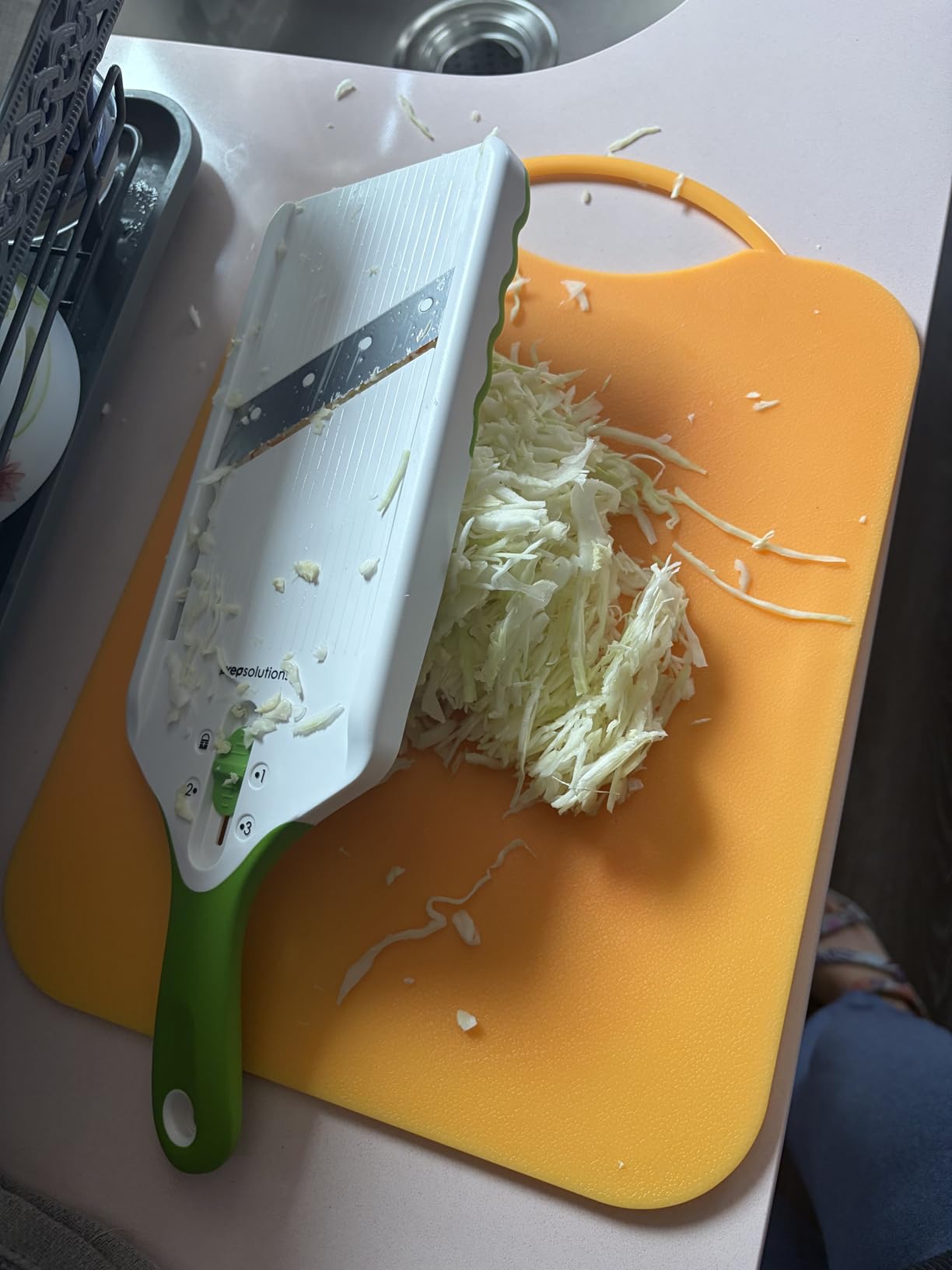
For kimchi, I use this one when I need a thin consistent slice for oi sobagi cucumber or for the daikon rounds in nabak kimchi. The dial adjusts between three thickness zones quickly, and the ceramic blade glides through firm vegetables without the slight tearing you get from a duller steel edge.
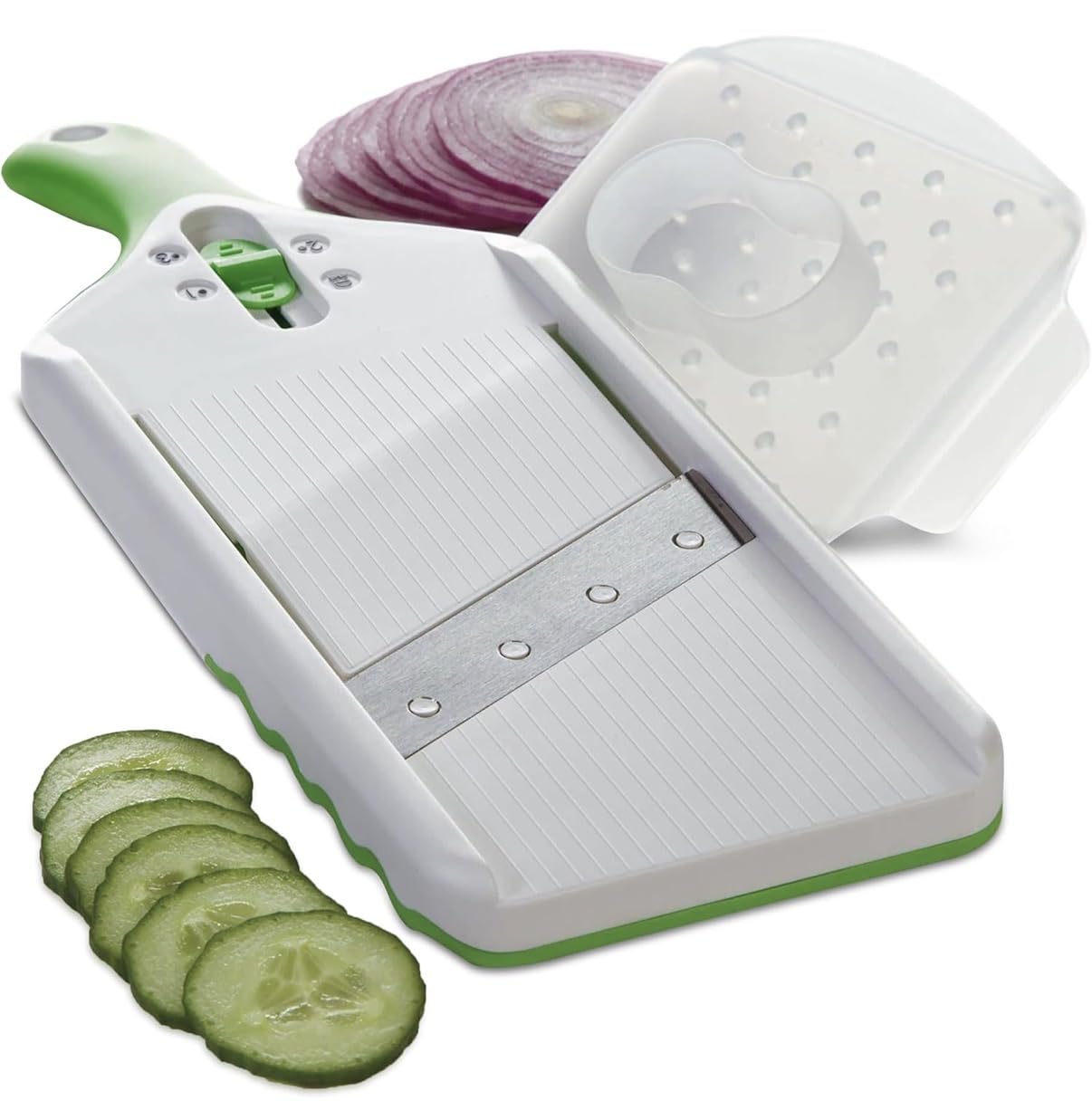
The non-slip base keeps the mandoline stable on the counter, and the compact footprint means it lives in a drawer instead of taking up counter real estate. For small kitchens this is a real advantage over the larger mandolines on this list.
At this price point, the build quality is genuinely impressive. The plastic body feels solid, the dial clicks firmly into each setting, and the blade has stayed sharp through months of weekly use in my kitchen.
Best kimchi styles for this mandoline
Best for small-batch oi sobagi, nabak kimchi radish rounds, and any kimchi where thin consistent slicing matters more than julienne capability. The ceramic blade is ideal for produce that dulls steel quickly.
Lacks julienne mode, so kkakdugi is out unless you slice then hand-cut.
What to watch out for
There is no blade cover for storage, which is a real safety gap. Some users report the hand guard did not arrive in their package, so check contents on delivery. The ceramic blade is brittle and will chip if dropped on a hard surface.
Not as versatile as multi-blade units but excels at its narrow purpose.
8. Mueller Austria Mandoline Slicer – Most Versatile With Five Blades
Mueller Austria Mandoline Slicer, Adjustable Vegetable Chopper, Grater
5 interchangeable blades
1-9mm thickness dial
Julienne 6-9mm
Foldable legs for bowl use
Top-rack dishwasher safe
Pros
- Five blades cover nearly every cut
- Thick 1-9mm range
- Dual mode stand or over bowl
- Massive 37
- 000+ reviews
Cons
- Plastic body feels less premium
- Julienne loses last slice
- Cleaning thin notches needs small brush
The Mueller Austria Mandoline is the versatility champion of this list. Five interchangeable blades, a 1-9mm thickness dial, julienne options, and a body that works either on its foldable legs or hooked over a bowl. With over 37,000 reviews, it is also the most-tested pick here.
For kimchi prep, the range is what makes this mandoline valuable. The straight blade handles baechu cabbage at 2-3mm. The julienne blades produce the daikon matchsticks for kkakdugi. The waffle cut blade is not traditional for Korean cooking but works well for the crosshatch cucumber pieces in some modern fusion kimchi recipes.
The foldable legs let you switch between standing it on the counter for stability and hooking it over a bowl for direct-to-vessel slicing. When I am doing a large kimjang batch, the over-bowl mode saves me from constantly transferring slices from cutting board to brining tub.
Build quality is where the Mueller shows its price point. The plastic body is functional but not premium, and the food pusher does not grip cylindrical vegetables like daikon as firmly as I would like. For the price and the number of blades included, these are acceptable trade-offs.
Best kimchi styles for this mandoline
Best for cooks who want one tool to handle every kimchi style. Baechu, kkakdugi, oi sobagi, and even garnish juliennes are all within its blade range. The thickness dial gives precise control across the 1-9mm spectrum.
The five-blade kit means you have the right cut for nearly any Korean pickle or ferment.
What to watch out for
The julienne blade design has a known flaw where the last slice gets lost inside the mechanism. Cleaning the thin notches around the blades requires the small brush and patience. The food pusher works best on flat-sided vegetables.
Long vegetables like whole zucchini are awkward to manage without pre-cutting.
Buying Guide: Choosing a Mandoline for Kimchi
Not every mandoline works equally well for Korean cooking. The demands of kimchi prep are specific, and the wrong tool will frustrate you or ruin a batch. Here is what I look for based on years of testing these against real kimchi recipes.
Blade material matters more than body material. Japanese stainless steel and ceramic blades hold their edge longest. Daikon radish is fibrous and dulls cheap steel quickly, which leads to torn slices and uneven fermentation. If a mandoline’s blade cannot be sharpened or replaced, treat it as disposable.
Cutting surface width determines which kimchi styles you can make. A narrow 2-inch surface forces you to pre-cut cabbage quarters, which is fine for weeknight batches. A wide 5-inch surface like the Benriner Jumbo takes full quarters straight from the salt bath, which is essential for kimjang scale prep.
Thickness range should start at paper-thin and go to at least 8mm. Baek kimchi wants translucent 0.5mm cabbage. Standard baechu sits around 2-3mm. Kkakdugi daikon can range from 3mm slabs to matchstick julienne. Nabak kimchi uses 1-2mm radish rounds. A mandoline that tops out at 4mm limits your Korean recipe options.
Julienne capability is non-negotiable if you make kkakdugi. The daikon matchsticks in cube radish kimchi need to be uniform or they ferment at different rates. Built-in julienne blades or interchangeable julienne attachments save you from hand-cutting.
Safety features protect more than your fingers. A slip during a long slicing session ruins the cut and risks injury. Non-slip feet, a firm food holder, cut-resistant gloves, or a hidden blade mechanism all reduce the chance of an accident during repetitive slicing work.
Cleaning design affects whether you will actually use it. Mandolines with hidden crevices around the blade are tedious to clean and tend to get retired to the back of the cabinet. Dishwasher-safe components and included cleaning brushes make weekly kimchi prep realistic.
FAQs
What is the best mandoline for slicing cabbage for kimchi?
The Benriner Jumbo Mandoline Slicer is the best choice for baechu cabbage kimchi because its 5-inch wide cutting surface accepts full cabbage quarters without pre-cutting. The handcrafted Japanese stainless steel blade produces consistent paper-thin slices at any thickness from 0.5 to 10mm, which ensures even fermentation across the batch.
How thin should I slice cabbage for kimchi?
For standard baechu kimchi, slice cabbage to about 2 to 3mm thickness. For delicate white kimchi (baek kimchi), go paper-thin at 0.5 to 1mm. Consistency matters more than the exact setting because uneven slices ferment at different rates and create mixed textures in the finished kimchi.
Can you slice daikon radish with a mandoline for kkakdugi?
Yes, a mandoline is the ideal tool for daikon in kkakdugi. Use the julienne blade to create uniform matchsticks, or slice at 3mm for slab-style cube radish kimchi. A sharp Japanese steel or ceramic blade cuts through fibrous daikon without tearing, which prevents uneven water release during fermentation.
How is a Japanese mandoline different from a French mandoline?
Japanese mandolines like the Benriner use a straight rectangular blade that produces cleaner cuts on soft vegetables, with interchangeable julienne blades and a lighter plastic body. French mandolines typically use a V-shaped blade in a heavier stainless steel frame and excel at harder produce. For kimchi prep, the Japanese style is generally preferred for its julienne versatility and lighter handling during long sessions.
Do I need a cut-resistant glove for mandoline slicing?
A cut-resistant glove is strongly recommended, especially for the final inch of any vegetable when the food holder cannot grip it. Mandoline blades are sharp enough to cause serious injury in a split-second slip. Some mandolines like the Gramercy include gloves, while others like the ONCE FOR ALL hide the blade entirely to remove the risk.
Final Thoughts on the Best Mandoline Slicers for Kimchi
After running these eight mandolines through real kimchi prep, the Benriner Jumbo remains my top pick for serious baechu sessions because nothing else matches its combination of wide cutting surface and Japanese steel sharpness. The classic Benriner and the budget Fullstar both earn their spots for smaller batches and julienne work.
If you are new to kimchi making, start with the OXO Good Grips for its forgiving safety design, then graduate to a wider mandoline once you are comfortable. For kkakdugi-focused cooks, the Mueller Austria’s five-blade kit covers every cut you will need in one purchase.
The best mandoline slicers for kimchi are the ones you will actually use weekly, so prioritize blade sharpness, thickness range, and cleaning ease over fancy features. A sharp blade and consistent thickness will improve your kimchi more than any other single upgrade in your kitchen.