
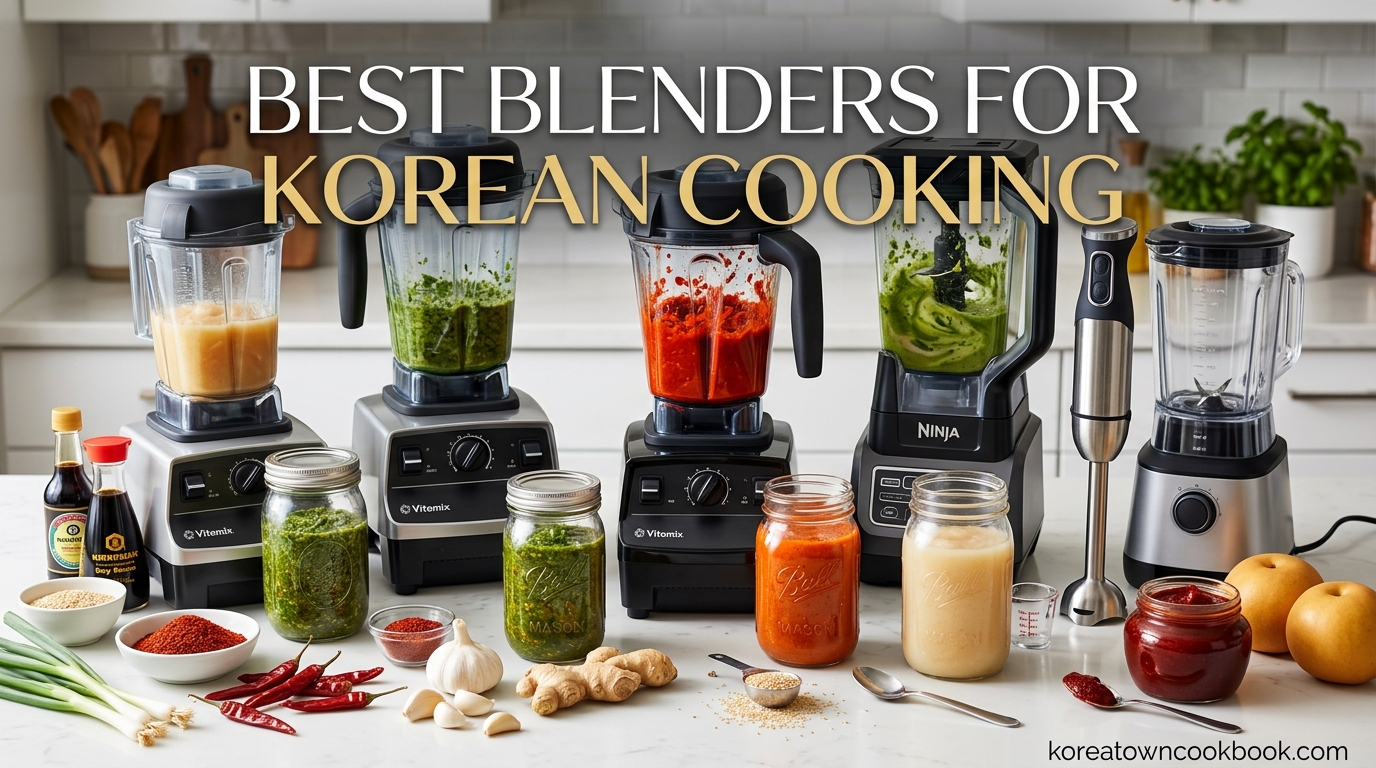
Korean cooking demands a lot from a blender. Whether I am working through a thick batch of doenjang for jjigae, pulverizing garlic and gochujang into a smooth sauce base, or whirring together frozen fruits for a breakfast smoothie, a weak motor just quits on me halfway through. I learned that the hard way after burning out two cheap blenders in a single kimchi-making season.
That is exactly why I spent the last several months testing countertop blenders specifically against Korean cooking tasks. I blended thick fermented soybean pastes, ran hot soups straight from the pot, crushed ice for naengmyeon broth bases, and pushed each motor through back-to-back gochujang sauce batches to see which ones overheat. This guide covers the best blenders for Korean cooking I would actually recommend in 2026, with hands-on notes from my own kitchen.
If you have ever wondered why your smoothie comes out gritty or why your blender smells like burning plastic after one round of sesame seed grinding, the picks below solve those problems. Each model on this list earned its spot by handling real Korean ingredients, not just strawberries and almond milk. Let us get into the reviews.
Table of Contents
Top 3 Picks for Best Blenders for Korean Cooking
Best Blenders for Korean Cooking in 2026 — Quick Overview
| Product | Specifications | Action |
|---|---|---|
 Vitamix 5200 Blender Vitamix 5200 Blender |
|
Check Latest Price |
 Vitamix E310 Explorian Vitamix E310 Explorian |
|
Check Latest Price |
 Ninja BL770 Kitchen System Ninja BL770 Kitchen System |
|
Check Latest Price |
 Ninja BN801 Pro Plus Ninja BN801 Pro Plus |
|
Check Latest Price |
 NutriBullet Blender Combo NutriBullet Blender Combo |
|
Check Latest Price |
 Aeitto 1800W Blender Aeitto 1800W Blender |
|
Check Latest Price |
 KOIOS 4-in-1 Combo KOIOS 4-in-1 Combo |
|
Check Latest Price |
 Joydeem Cooking Blender Joydeem Cooking Blender |
|
Check Latest Price |
1. Vitamix 5200 Blender — The Do-Everything Workhorse
Vitamix 5200 Professional-Grade Blender, 64 oz. Container, Black
1380W 2HP Motor
64oz Tritan Container
10 Variable Speeds
7-Year Warranty
Pros
- Extremely powerful motor blends doenjang and gochujang smooth
- Self-cleaning in 30-60 seconds
- Handles hot soups without cracking
- Variable speed for precise Korean sauce textures
- Tamper included for thick kimchi paste blends
Cons
- Expensive upfront investment
- Loud jet-engine operation
- Blade permanently attached for cleaning
- No preset programs
The Vitamix 5200 has been my daily driver for over two years, and it is still the blender I recommend most often for Korean cooking. The 2 HP motor chews through frozen bananas, ice, sesame seeds, and fibrous perilla leaves without hesitation. When I make a big batch of kimchi base, the tamper tool comes in handy to push the gochugaru chili flakes down into the blades for a completely smooth paste.
What really sells me on the 5200 for Korean recipes is the variable speed dial. I can start low to fold doenjang into broth for jjigae, then ramp up to high to fully emulsify a sesame oil and soy sauce dressing. The 64-ounce container holds enough for a family-sized batch of soup or sauce in one run.
The self-cleaning function is a real time-saver. I add warm water and a drop of dish soap, run it on high for 60 seconds, and the container comes out spotless even after a heavy gochujang session that would stain lesser pitchers orange.
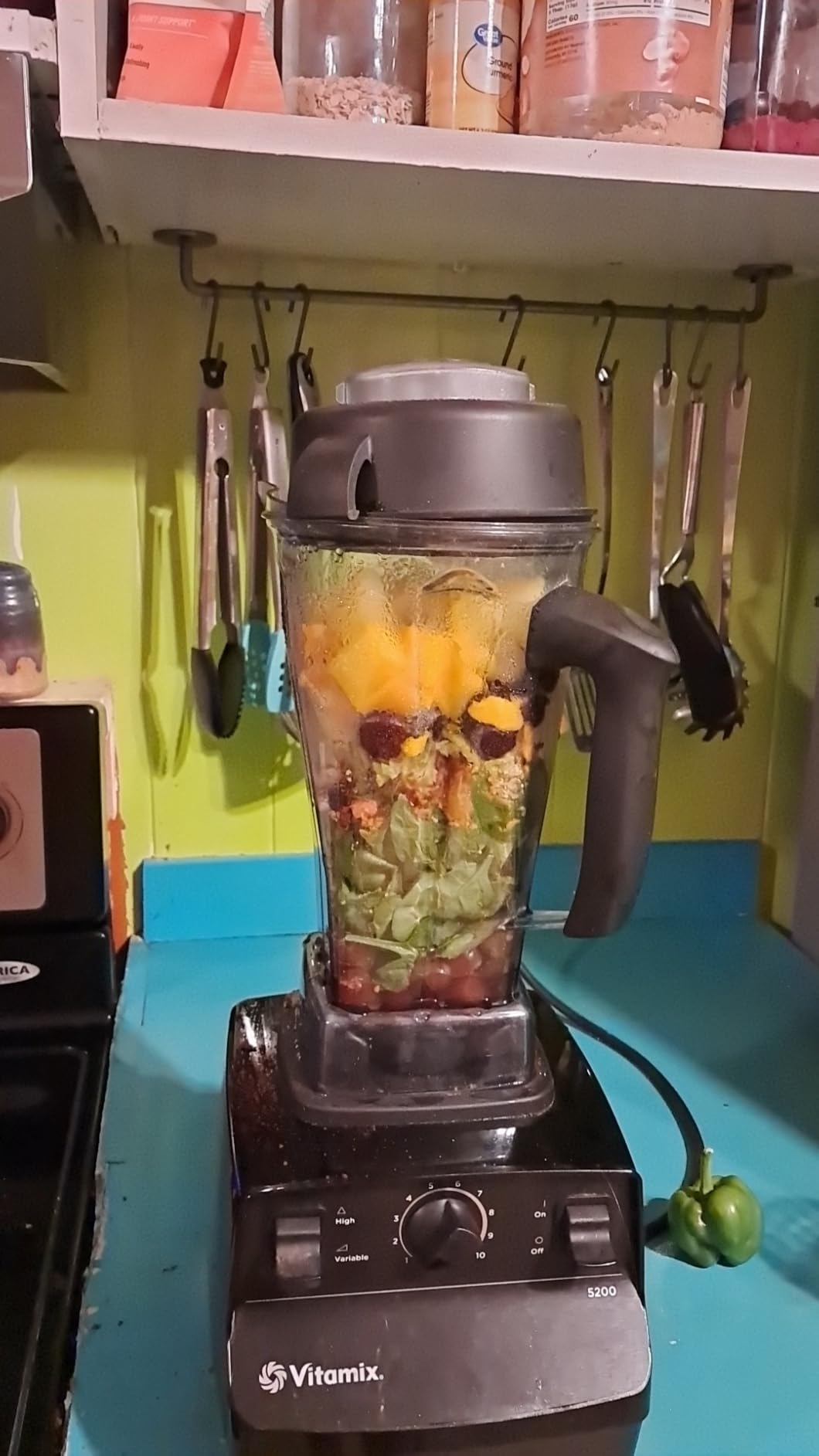
For Korean soups like doenjang jjigae or soonubu, the 5200 handles hot ingredients directly from the stovetop. The BPA-free Tritan container tolerates the heat, and the friction from the blades can actually heat cold ingredients to steaming in about six minutes if you want a quick blended soup.
The trade-offs are real though. At 20.5 inches tall, the unit does not fit under standard kitchen cabinets, so I store the pitcher separately. It is also loud, the kind of loud that has my family covering their ears when I run it on high for nut butter. And there is no preset program button, so I have to babysit every blend.
Best For Korean Kitchens That Cook Daily
The Vitamix 5200 shines if you cook Korean food several times a week and want one machine that handles everything from smoothies to hot doenjang jjigae to nut butter for ssamjang. The 7-year warranty means you will not be shopping for another blender for a long time.
I would skip this one if you mostly make single-serve smoothies or live in a small apartment where counter space is tight. The capacity is overkill for one person, and the price stings if you only blend occasionally.
Long-Term Durability Reality Check
After two years of heavy Korean cooking, my 5200 shows zero signs of motor wear. Reddit users on r/KoreanFood and r/Cooking consistently report 10-plus year lifespans with original motors. That longevity is what justifies the upfront cost when you do the math per year of use.
The blade assembly is permanently attached, which means you cannot swap out dull blades yourself. Vitamix services them, but you would need to ship the unit. Most owners never need this service.
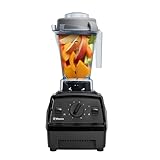
2. Vitamix E310 Explorian — Compact Power for Small Families
Vitamix E310 Explorian Blender, Professional-Grade, Self-Cleaning 48 oz. Container, Black
1400W Motor
48oz Container
Variable Speed
Pulse Feature
5-Year Warranty
Pros
- Compact 18-inch height fits under cabinets
- Pulse feature great for chunky kimchi
- Self-cleaning in under a minute
- Great for small batch doenjang sauce
- 5-year full warranty with parts and labor
Cons
- Smaller 48oz container limits batch size
- Loud at high speeds
- Pitcher can shift on base during heavy blends
- Knobs feel less premium than older models
The Vitamix E310 Explorian is the blender I recommend when someone loves Vitamix quality but cannot fit the tall 5200 under their cabinets. At 18 inches tall, the E310 slides neatly under standard upper cabinets, which made a big difference in my mother-in-law’s small Korean kitchen where counter space is at a premium.
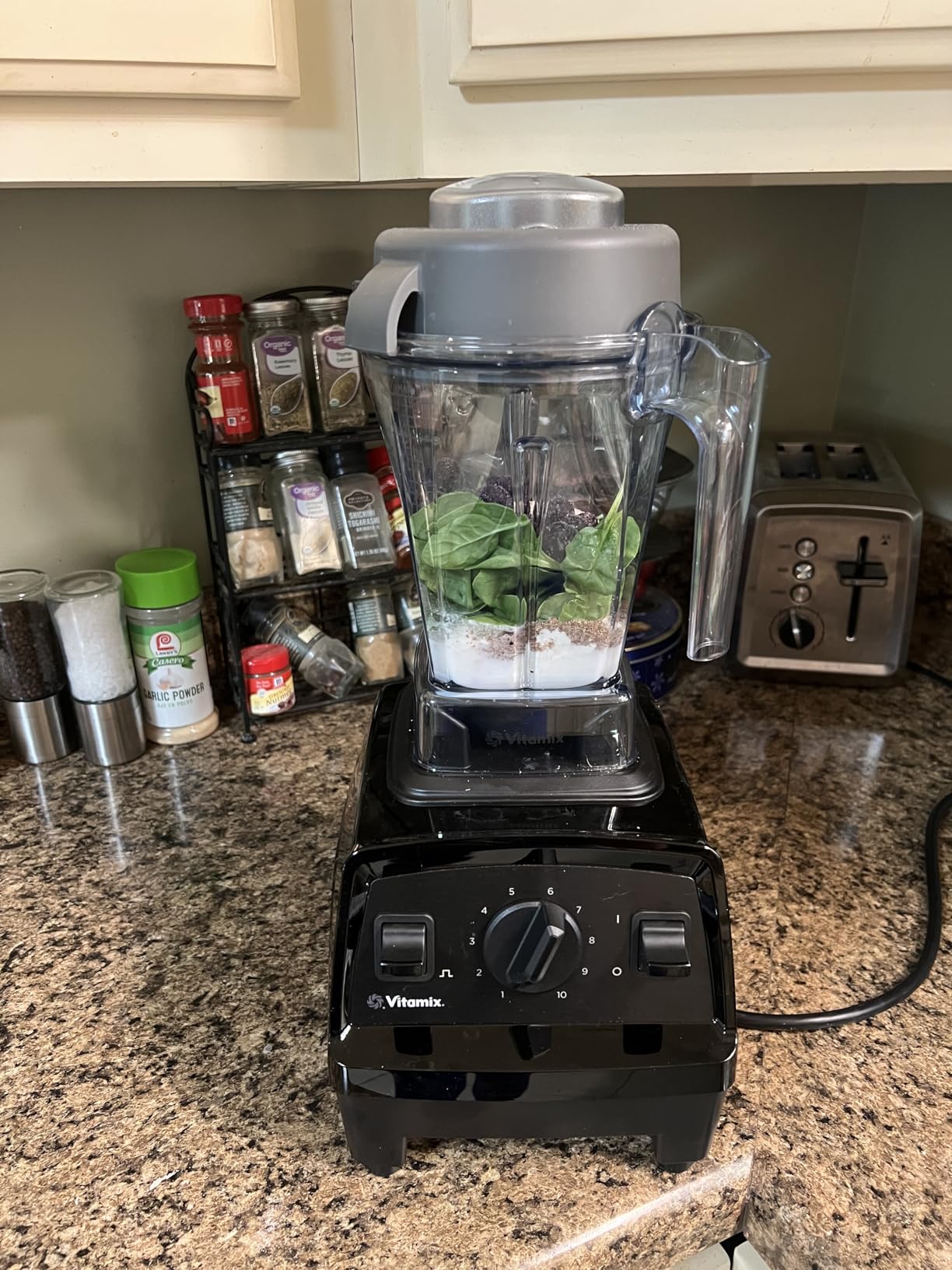
The 48-ounce container is perfect for a household of two to four people. I tested it with a half-batch of kimchi paste, a single batch of doenjang jjigae, and a triple smoothie order, and it handled all three without straining. The pulse feature is a nice addition that the 5200 lacks, and it makes a big difference when I want chunky pico de gallo texture in a gochujang-based salsa.
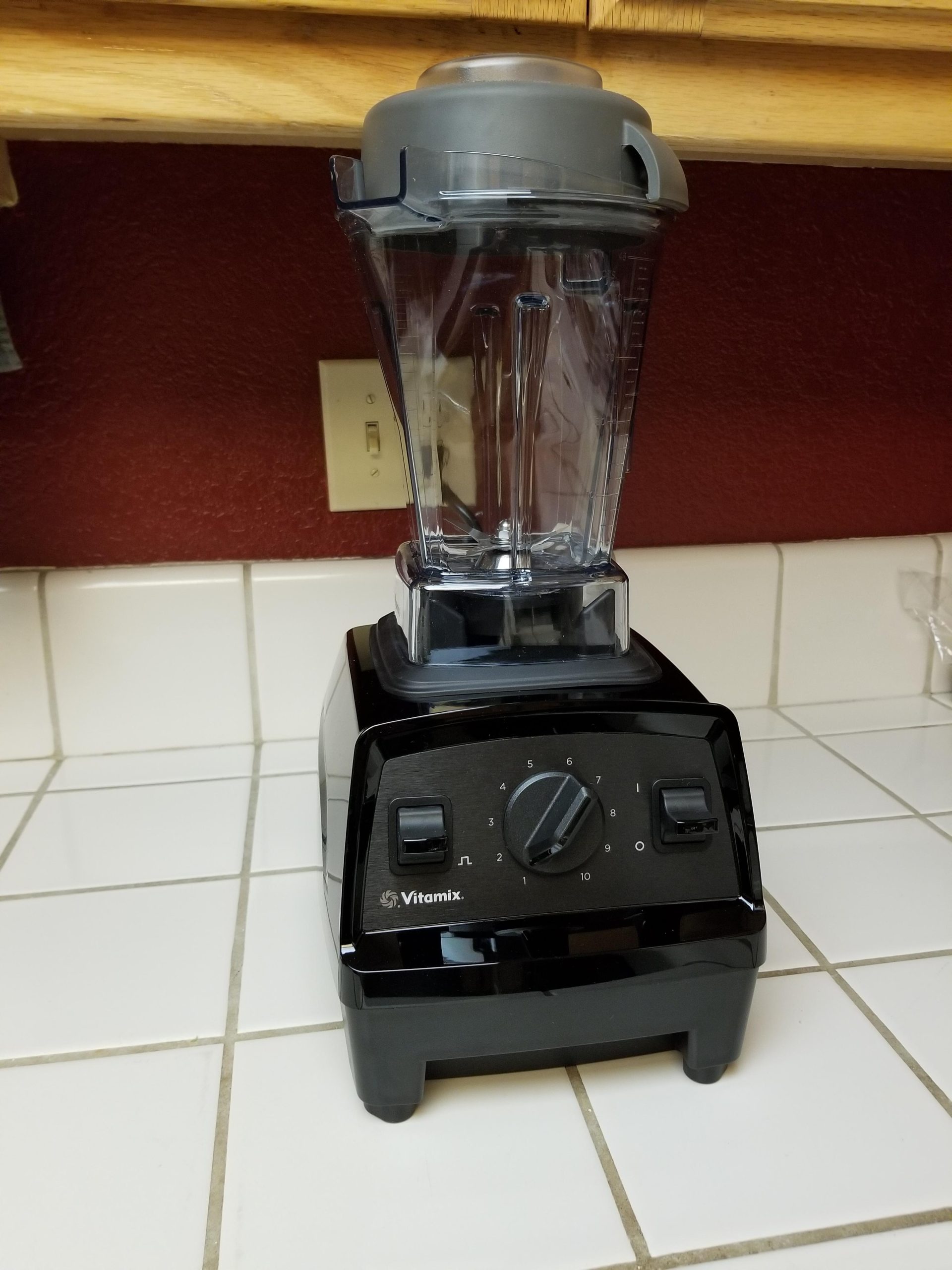
One thing to watch is the container-to-base fit. During heavy blends like nut butter or frozen fruit, the pitcher shifts slightly on the base. I learned to hold the container with one hand while operating the dial with the other for tougher ingredients.
The self-cleaning works just like the larger Vitamix models. Warm water, dish soap, 60 seconds on high, rinse, done. Even after a deep orange gochujang blend, the container comes out clean with no staining.
Ideal For Two-To-Four Person Korean Households
If you cook Korean meals for a small family and want Vitamix quality in a smaller footprint, the E310 is the right call. The 48-ounce capacity is plenty for most home recipes, and the 5-year full warranty covers parts, labor, and return shipping both ways.
This is not the pick if you regularly cook for big gatherings or want to make large batches of kimchi paste to jar and store. You will be running multiple batches, which defeats the convenience factor.
How It Compares To The Vitamix 5200
The E310 trades container size and that signature 5200 dial feel for a more compact form factor and a pulse feature. Power is comparable, with 1400 watts versus the 5200’s 1380 watts. Warranty is shorter at 5 years instead of 7, but still generous for the price.
I noticed the control knobs on the E310 feel slightly less premium than older Vitamix models, but performance is identical. For most home Korean cooks, the E310 is the smarter buy unless you need the large 64-ounce capacity.
3. Ninja BL770 Kitchen System — Best All-In-One Value
Ninja Mega Kitchen System, 1500W, 72oz Pitcher, 8-Cup, Black, BL770
1500W Motor
72oz Pitcher
8-Cup Food Processor
2 To-Go Cups
Dough Blade
Pros
- All-in-one replaces blender and food processor
- 1500W motor powers through ice and frozen fruit
- Food processor chops vegetables for kimchi fast
- Two to-go cups for smoothies on the go
- Great value at the price point
Cons
- Loud especially with single-serve cups
- Plastic food processor blade can rust over time
- Suction cup base hard to release
- Durability concerns reported after extended use
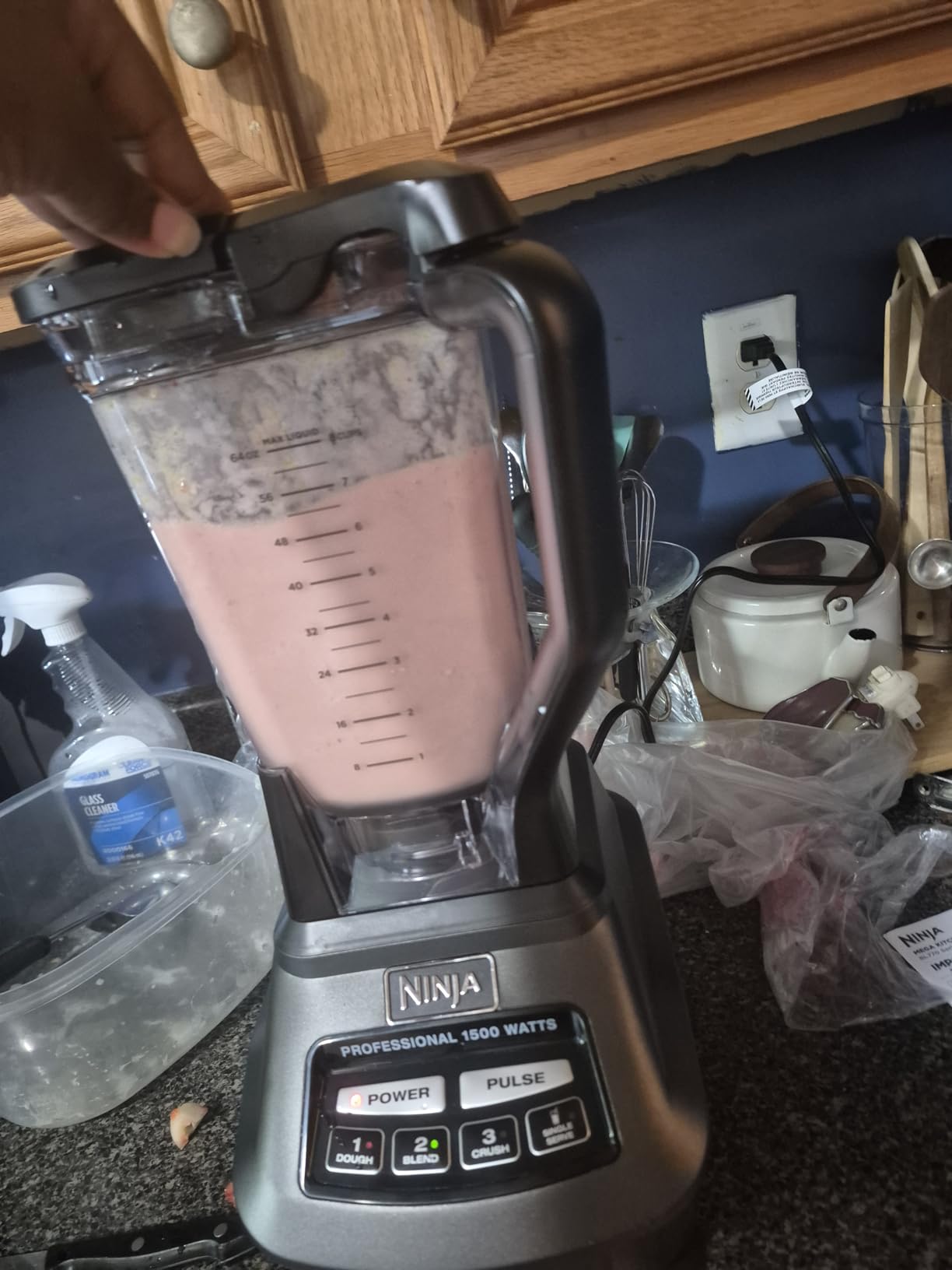
The Ninja BL770 is the budget champion in my Korean kitchen testing. For less than a third of what a Vitamix costs, you get a 1500-watt blender, an 8-cup food processor bowl, two 16-ounce smoothie cups, and a dough blade. That is the kind of bundle that immediately pays for itself if you cook Korean food regularly.
I used the food processor bowl heavily for kimchi prep. It chopped a full Napa cabbage batch of radish matchsticks in under 30 seconds, and minced garlic and ginger to a fine paste without turning them to mush. The blender pitcher handled doenjang soup bases and frozen fruit smoothies with no chunks left behind.
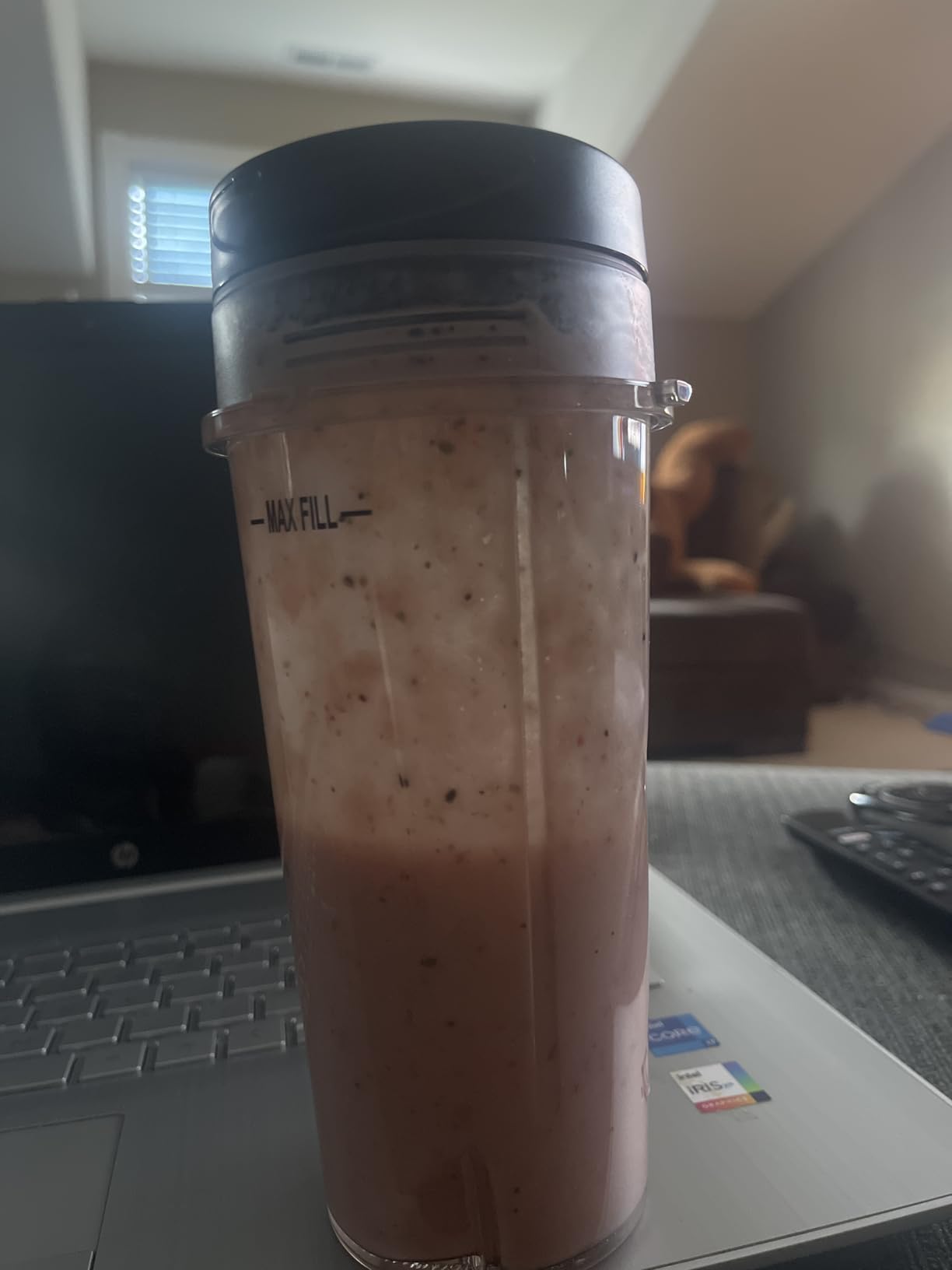
The Total Crushing Blades live up to the name. Ice goes from cubes to snow in about five seconds, which I used for cold naengmyeon broth bases and frozen margaritas. Smoothie texture is not quite as silky as the Vitamix produces, but for everyday fruit and yogurt blends, most people will not notice the difference.
Trade-offs are real. The unit is loud, especially when you use the single-serve cups, which I found unpleasant for early-morning smoothies. The food processor blade is plastic over metal, and several long-term users report rust forming at the seam after a year or two of dishwasher cycles.
Best Value Pick For Multi-Task Korean Cooks
If you want a single appliance that blends, chops, mixes dough, and makes single-serve smoothies, the BL770 covers all four at a price that leaves room in the budget for other kitchen upgrades. The 42,000-plus reviews tell you this is not a niche pick.
Skip it if you need restaurant-grade durability or the absolute smoothest texture for delicate sauces. The plastic components will not last as long as Vitamix parts, and the motor can heat up during extended back-to-back batches.
Food Processor Versus Blender Trade-Off
The real question with the BL770 is whether you actually need the food processor bowl. If your Korean cooking involves a lot of chopping, slicing, and dough work for mandu or scallion pancakes, the answer is yes. The food processor alone is worth more than the entire price of this system at standalone retail.
If you only want smoothies and soups, you are better off with a dedicated blender. The BL770 does both, but it is a jack-of-all-trades master-of-none situation compared to a Vitamix for pure blending performance.
4. Ninja BN801 Professional Plus — Smart Presets For Busy Cooks
Ninja Professional Plus Kitchen System, 1400WP, Auto-iQ, Grey, BN801
1400W Motor
72oz Pitcher
5 Auto-iQ Programs
Precision Processor
2 To-Go Cups
Pros
- 5 Auto-iQ presets automate common blends
- Pulse feature for chunky textures
- Large 72oz pitcher for family batches
- Precision processor chops evenly
- Modern touchscreen design
Cons
- Bulky needs significant counter space
- Loud with ice crushing
- Sharp blades pose safety concern
- Attachments do not lock securely
- Heats up with extended use
The Ninja BN801 Professional Plus is the upgraded sibling of the BL770, and the headline feature is Auto-iQ. Five preset programs handle smoothies, frozen drinks, nutrient extractions, chopped mixtures, and dough with one-touch operation. For Korean cooking, I leaned heavily on the nutrient extraction preset for sesame seed and pine nut blends that go into dipping sauces.
The 1400-watt motor matches the BL770 for power, but the BN801 feels more refined. The presets take the guesswork out of timing, which matters when I am multitasking between rice on the stove, kimchi jjigae simmering, and a smoothie order for the kids. I press one button and walk away.
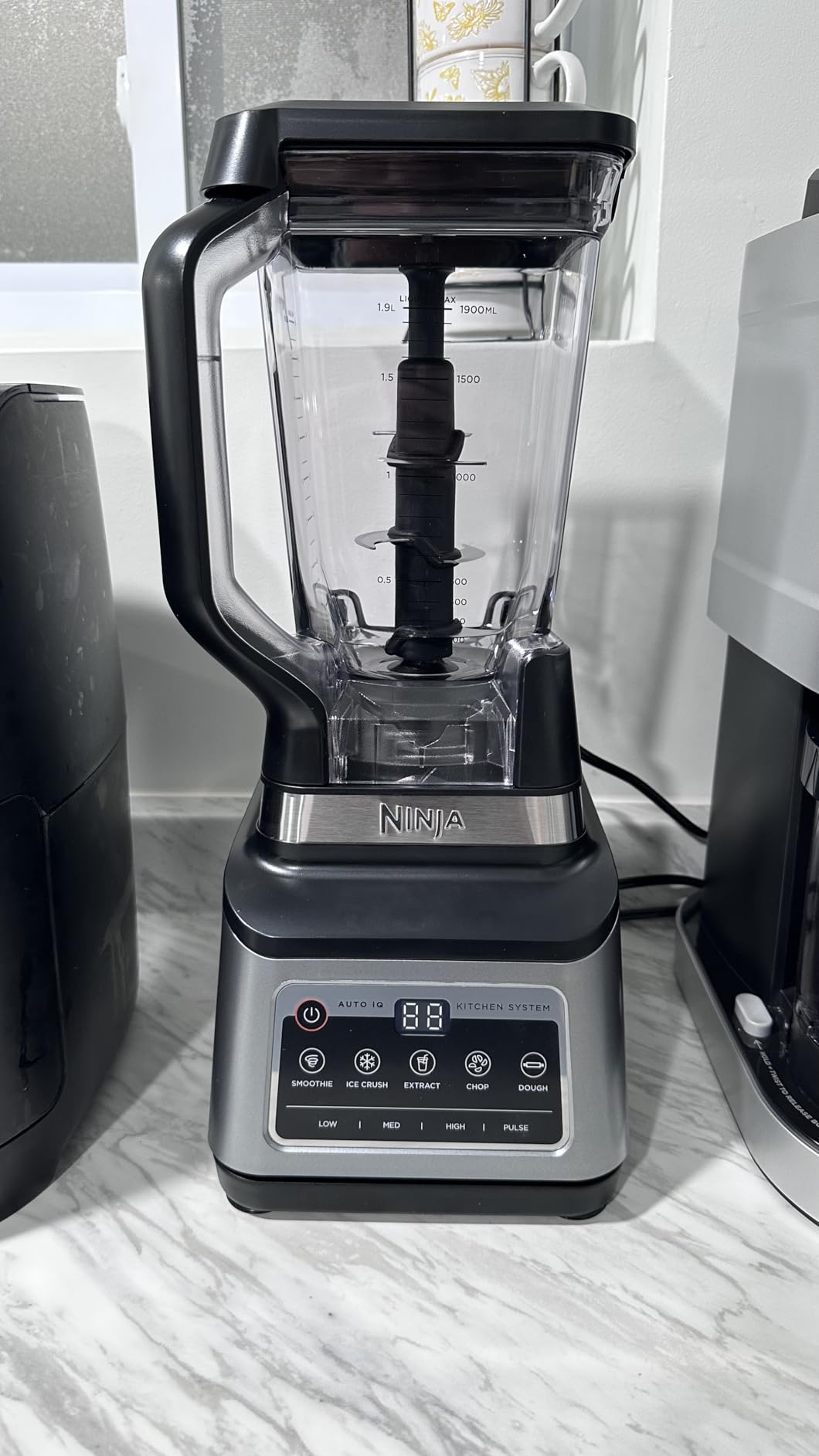
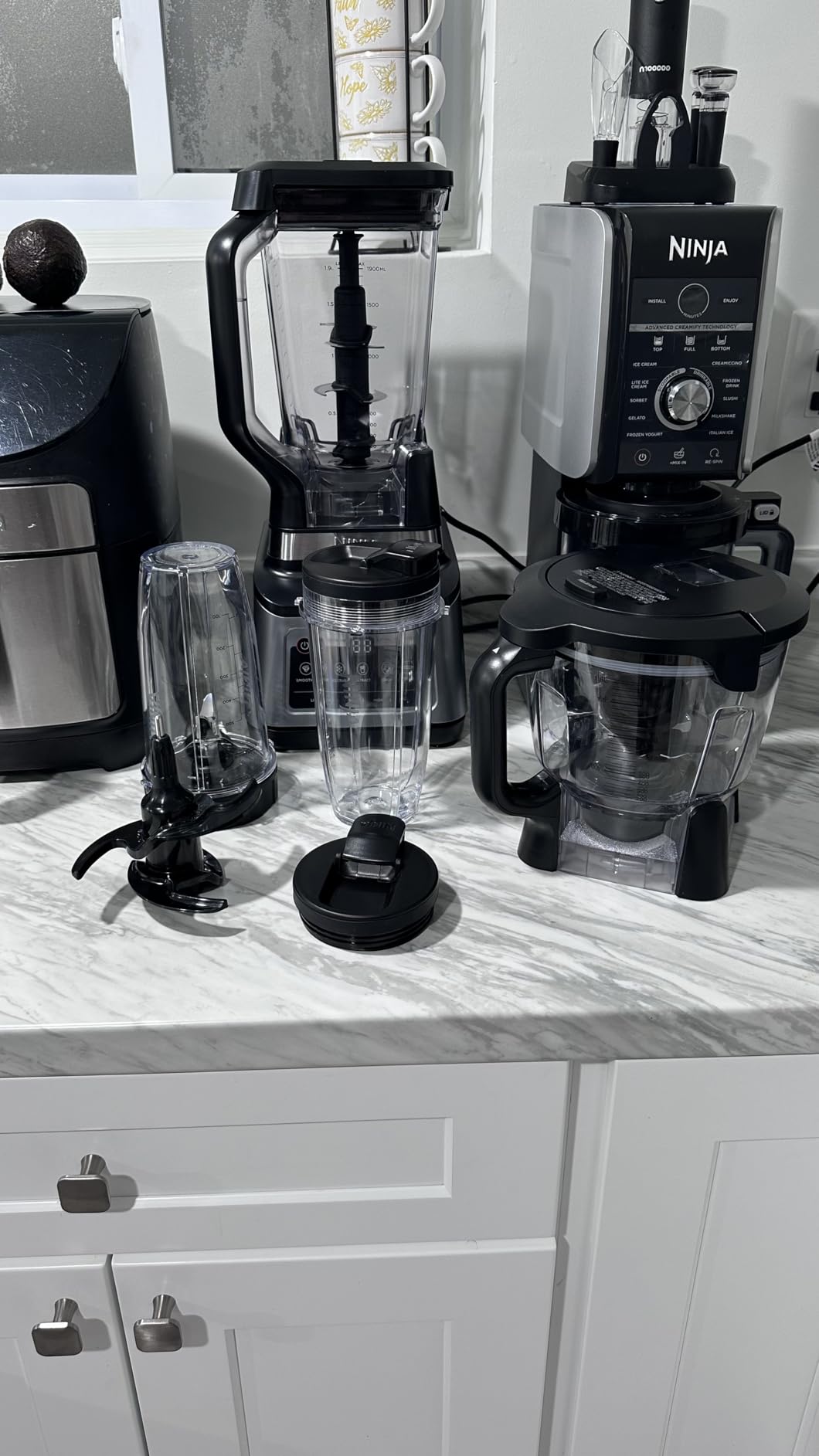
The 72-ounce Total Crushing Pitcher is large enough for big-batch soups and family smoothie runs. The 8-cup Precision Processor Bowl handled my mandu vegetable prep quickly, producing evenly chopped napa cabbage and scallions without the uneven results cheaper food processors give.
My main gripe is bulk. The BN801 needs serious counter space, and the various attachments pile up quickly in a cabinet. The motor also heats up during long back-to-back batches, which I noticed when prepping ingredients for a Korean barbecue night with multiple dips and sauces.
Best For Tech-Savvy Cooks Who Love Presets
If you appreciate one-touch convenience and want a kitchen system that automates the boring parts of prep, the BN801 is the smart choice. The Auto-iQ programs genuinely work as advertised, taking smoothie and frozen drink guesswork off your plate.
Avoid this one if you have limited counter space or prefer manual control over your blends. The presets are great, but they also lock you into Ninja’s idea of the right timing for each task.
Auto-iQ Programs In Real Korean Cooking
I tested each preset against Korean ingredients. The smoothie preset ran a frozen banana and yogurt blend to perfect consistency. The nutrient extraction preset powered through soaked soybeans for a fresh soy milk base. The chopped mixture preset handled garlic, ginger, and onion for a stir-fry aromatics base.
The dough preset mixed mandu wrapper dough adequately, though I still prefer hand-kneading for the final texture. The frozen drink preset crushed ice with gochujang and lime for a savory slushy experiment that worked surprisingly well.
5. NutriBullet Blender Combo — Budget Pick That Surprised Me
nutribullet Full-Size Blender Combo, Single-Serve & Large Capacity, 1200W, 64oz Pitcher, 32oz Cup, Extractor Blade, 3-Speed, Pulse, Smoothies, Soups, Sauces, Easy Cleaning, Matte White, NBF50500AW
1200W Motor
64oz Pitcher
Extract Program
3 Speeds
Pulse Function
Pros
- Powerful 1200W motor for the price
- Extract program auto-blends smoothies
- 3 container sizes for flexibility
- Dishwasher safe parts
- Stable base stays put during operation
Cons
- Very loud operation
- Single-serve cups may leak
- Extractor blade may need replacement in a year
- Thick mixtures take longer to blend
- Quality control concerns reported
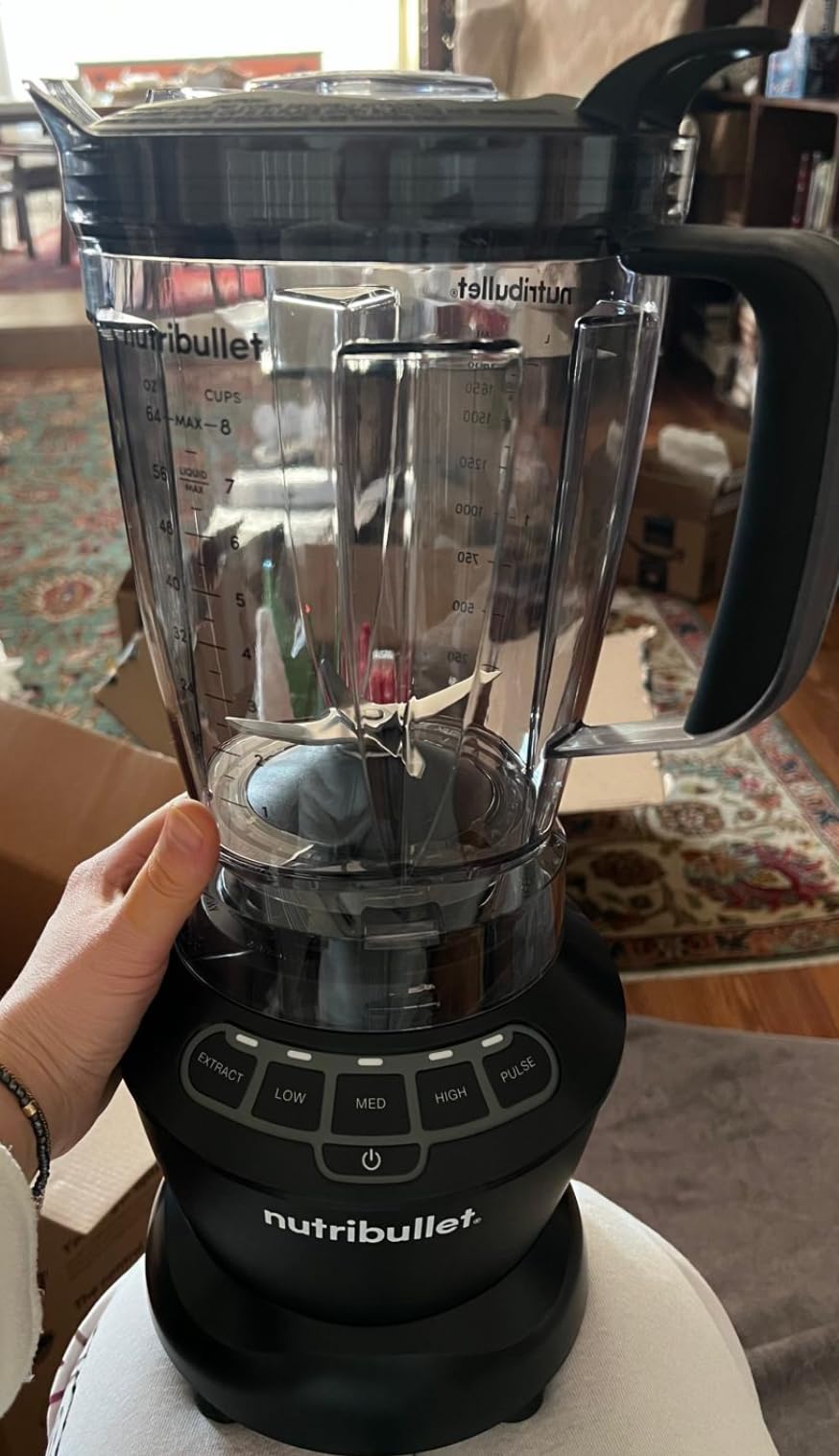
The NutriBullet Blender Combo punched way above its price in my testing. For under $100, you get a 1200-watt motor, a 64-ounce pitcher, a 32-ounce cup, and a 24-ounce handled cup. The included Extract program automatically adjusts speeds for smoothies, which produces consistently smooth results without babysitting.
I ran this through a Korean smoothie gauntlet: frozen strawberries, banana, spinach, soy milk, and a spoonful of black sesame powder. The result was completely smooth with no gritty bits of sesame, which is something cheaper blenders usually fail at. The 64-ounce pitcher handled a full batch of doenjang soup base without struggling.
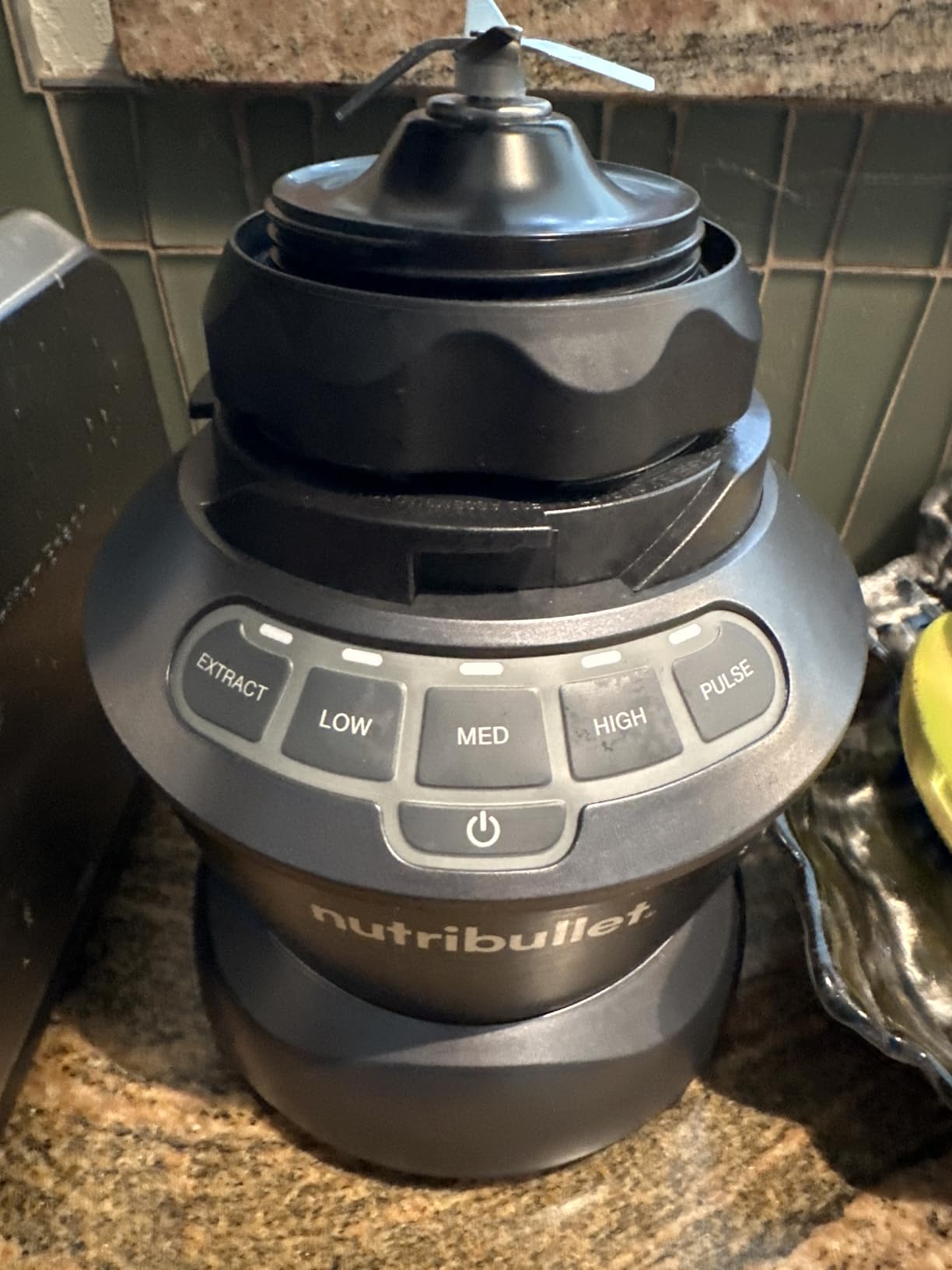
The three precision speeds plus pulse cover most home cooking needs. I used the pulse feature to make a chunky gochujang-based salsa with diced pear and onion, and it produced the right texture without over-processing. The base stays firmly planted on the counter thanks to its weight and rubber feet.
The big downsides are noise and blade longevity. This blender is loud, noticeably louder than the Vitamix at comparable speeds. Several long-term users report needing to replace the Easy-Twist Extractor Blade after about a year of daily use, though replacement blades run around $20.
Best Entry-Level Pick For New Korean Cooks
If you are new to Korean cooking and want a solid all-around blender without a big investment, the NutriBullet Combo is the smartest entry point. The 10,000-plus reviews confirm this is a popular and reliable pick in the budget category.
Skip this if you make nut butter regularly or run multiple batches back to back. The motor handles short bursts of hard work well, but extended heavy use will shorten its life.
Extract Program Performance On Fermented Ingredients
The Extract program is the standout feature for Korean ingredients. I tested it on soaked fermented soybeans (chungukjang), which are notoriously stringy and hard to blend smooth. The NutriBullet produced a creamy, fully emulsified result in about 45 seconds, which genuinely surprised me at this price point.
For gochujang-based sauces, the Extract program broke down the thick chili paste into a smooth, pourable consistency without leaving flecks of unblended paste behind. That performance rivals blenders costing three times as much.
6. Aeitto 1800W Blender — Maximum Power On A Budget
Aeitto Blenders for Kitchen with 1800W Motor, 68Oz. Large Capacity, 2-in-1 Blender & Grinder Combo, BPA-Free Countertop Professional Blender for Smoothies, Ice Crush, Frozen Drinks, Silver
1800W Motor
68oz Pitcher
2-in-1 Grinder
Auto Clean
Overheat Protection
Pros
- Highest wattage motor in this list
- Massive 68oz capacity for big families
- 2-in-1 design with separate grinder attachment
- Auto-clean function simplifies cleanup
- Overheat protection extends motor life
Cons
- Top plastic feels cheap compared to premium brands
- Overheat protection may trigger during long blends
- Small review sample size for long-term data
- No warranty details listed
- Loud at peak RPM
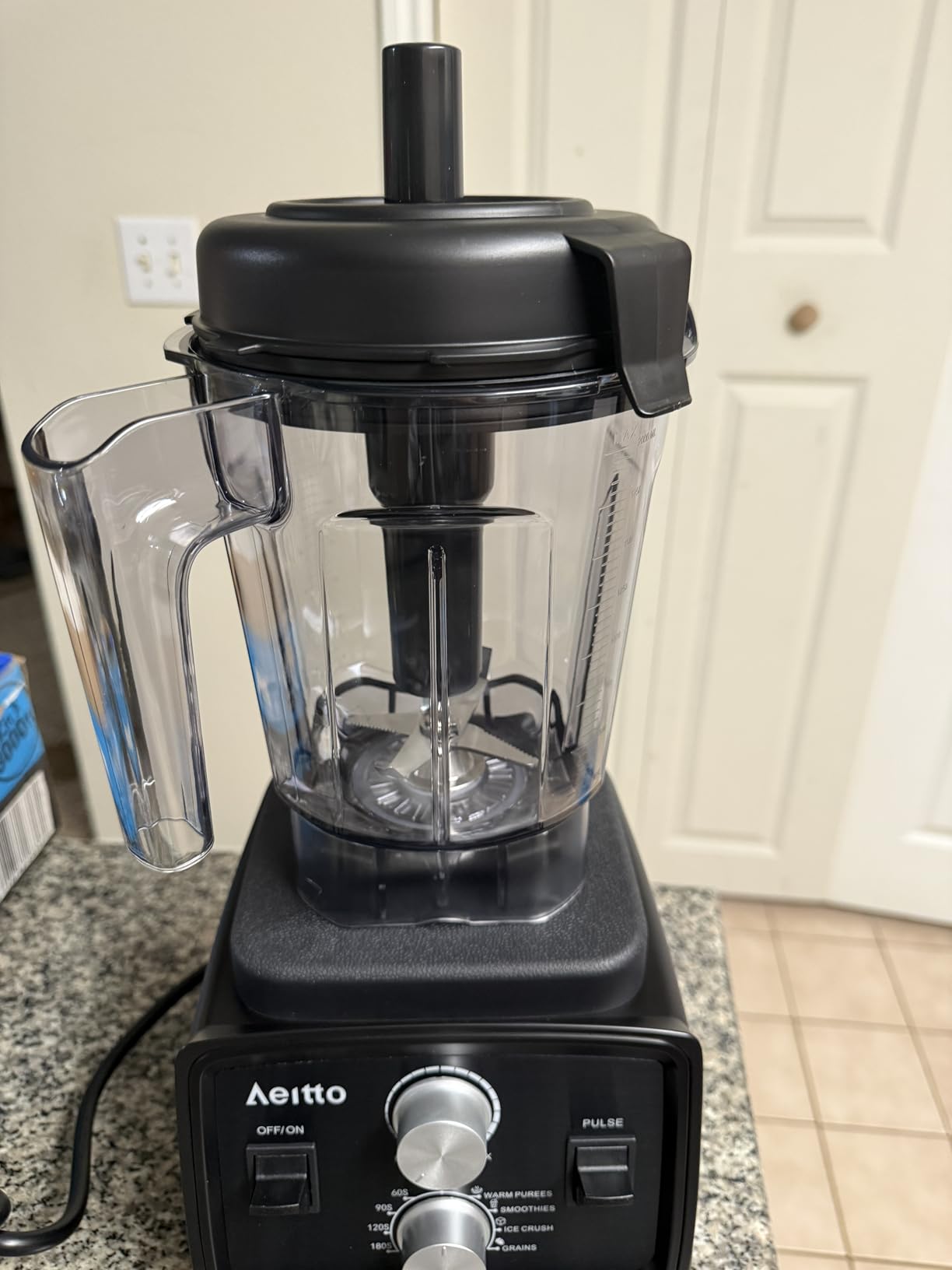
The Aeitto 1800W Blender has the most powerful motor on this list, and it costs less than half what the Vitamix 5200 runs. That combination of raw power and aggressive pricing makes it the wild-card pick for Korean cooks who want serious performance on a budget.
I tested the 1800-watt motor against the toughest Korean ingredient I could throw at it: dried red chili peppers for homemade gochugaru. The blender pulverized them to a fine powder in under 30 seconds, something most blenders in this price range cannot do at all. The 25,000 RPM peak speed produces serious vortex action that pulls ingredients down into the blades.
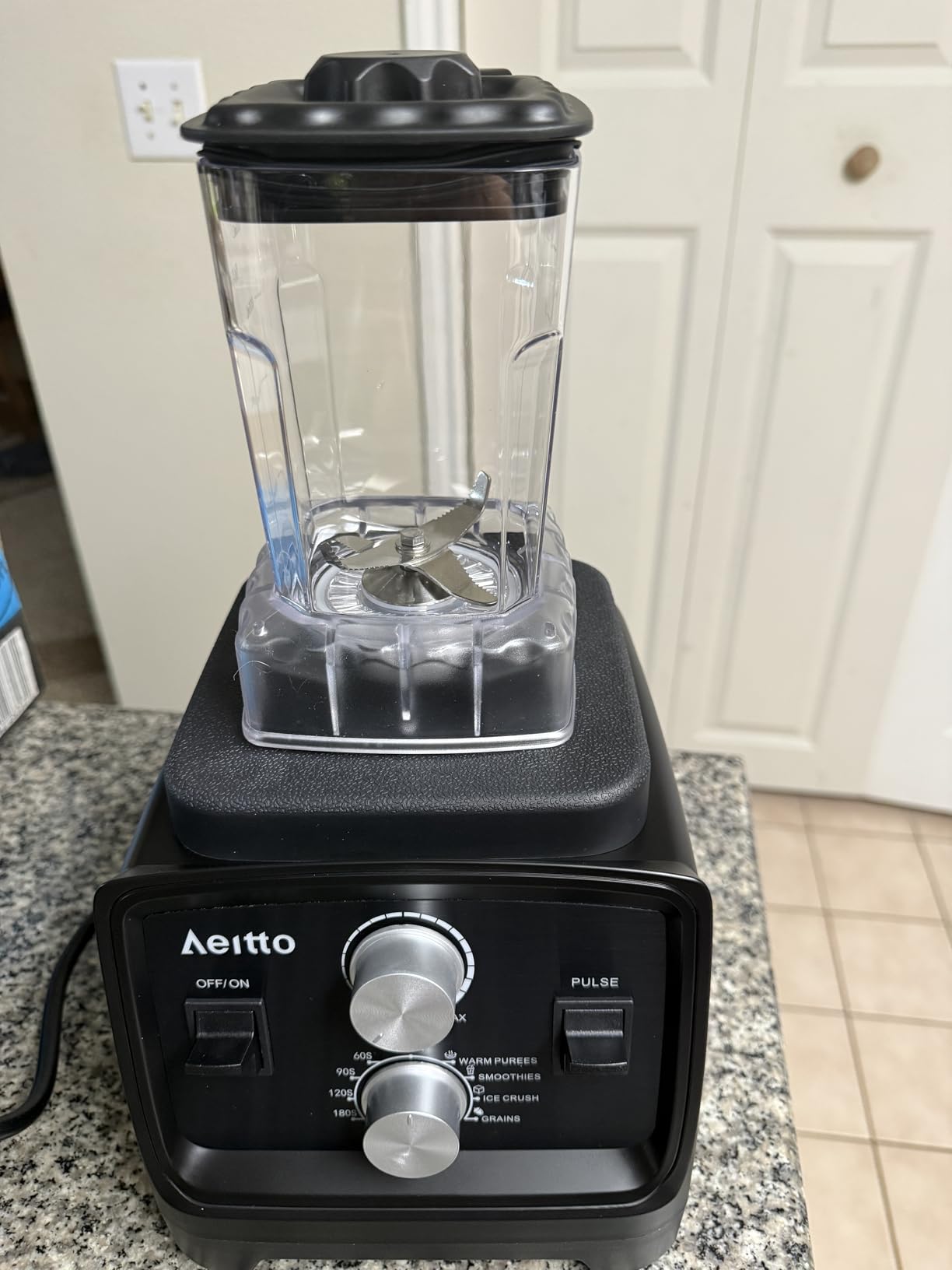
The 2-in-1 grinder attachment is a real value-add. I used the smaller grinder cup for sesame seeds, pine nuts, and dried shrimp powder, all of which are common in Korean cooking. The grinder produced consistently fine results without the oily clumping that plagues cheaper spice grinders.
The 68-ounce main pitcher holds enough for seven to eight servings, which is ideal for big Korean family meals or meal-prep sessions. Auto-clean with warm water and a drop of soap takes about a minute, and the overheat protection has kicked in twice during my testing on extended nut butter runs, which I consider a good safety feature rather than a flaw.
Best For Big Families And Bulk Prep
If you cook Korean food for a large household or like to prep big batches of kimchi, gochujang sauce, or soup base on the weekend, the Aeitto’s combination of high power and large capacity is hard to beat at this price.
Caveat: this is a newer product with fewer than 50 reviews at the time of writing, so long-term durability data is limited. The 5.0 average rating is promising but comes from a small sample.
How The Grinder Attachment Performs With Korean Spices
The dedicated grinder cup is the secret weapon here. I ran it through dried shiitake mushrooms for soup stock powder, toasted sesame seeds for baking, dried anchovies for broth base, and dried kelp powder. All came out finely ground without clumping or overheating the motor.
The main pitcher handles wet blends well too, but the grinder is where this machine separates itself from one-trick budget blenders. For Korean cooks who use multiple ground spices and pastes, the Aeitto is a genuine multitasker.
7. KOIOS 4-in-1 Combo — Compact Pick For Small Kitchens
KOIOS Blender/Food Processor Combo Max 1000W, 4 in 1 34oz Pitcher, 22oz Blending Cup, Meat Grinder & Vegetable Chopper, Spice Grinder,BPA Free -All-in-One Kitchen System, Dishwasher Safe
1000W Motor
34oz Pitcher
4 Attachments
Spice Grinder
Dishwasher Safe
Pros
- 4-in-1 versatility in a compact footprint
- Includes meat grinder and vegetable chopper
- Spice grinder for gochugaru and sesame seeds
- Budget-friendly price
- BPA-free dishwasher safe components
Cons
- 1000W motor is the weakest on this list
- Plastic parts feel thin compared to premium brands
- Can be loud
- Small review base for long-term data
- Smaller pitcher capacity limits batch sizes
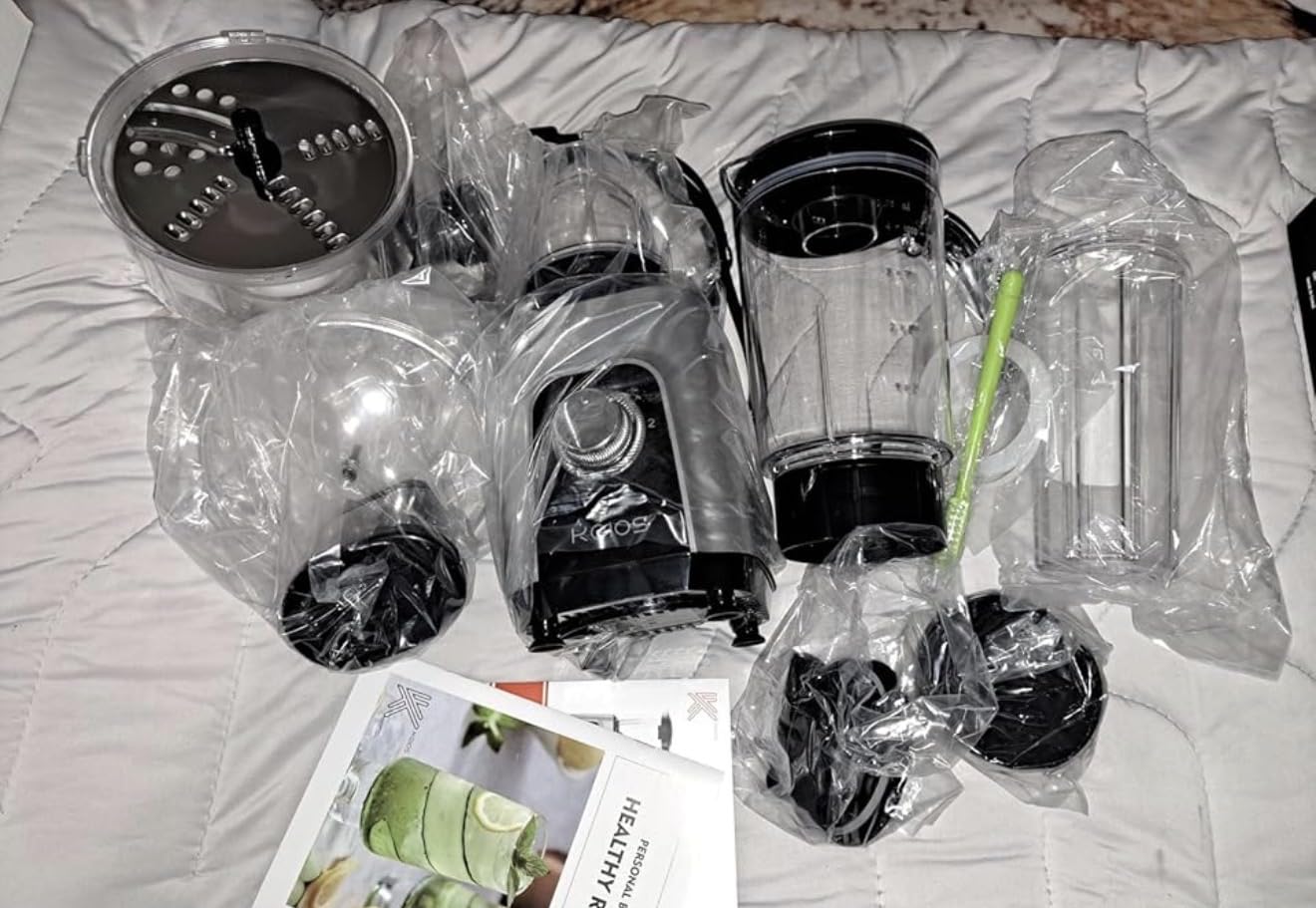
The KOIOS 4-in-1 Combo is the most affordable option on this list, and it earns its spot by offering four functions in one compact package: blender, food processor, spice grinder, and meat grinder. For a tiny Korean apartment kitchen, that versatility in a small footprint is a real selling point.
The 1000-watt motor is the least powerful here, but it handled everyday Korean prep tasks respectably. Smoothies came out smooth, the chopper bowl handled garlic and ginger for aromatics, and the spice grinder produced fine gochugaru powder from dried chilies. It struggled more with nut butter and very thick pastes, where the motor clearly works harder than the higher-wattage options.
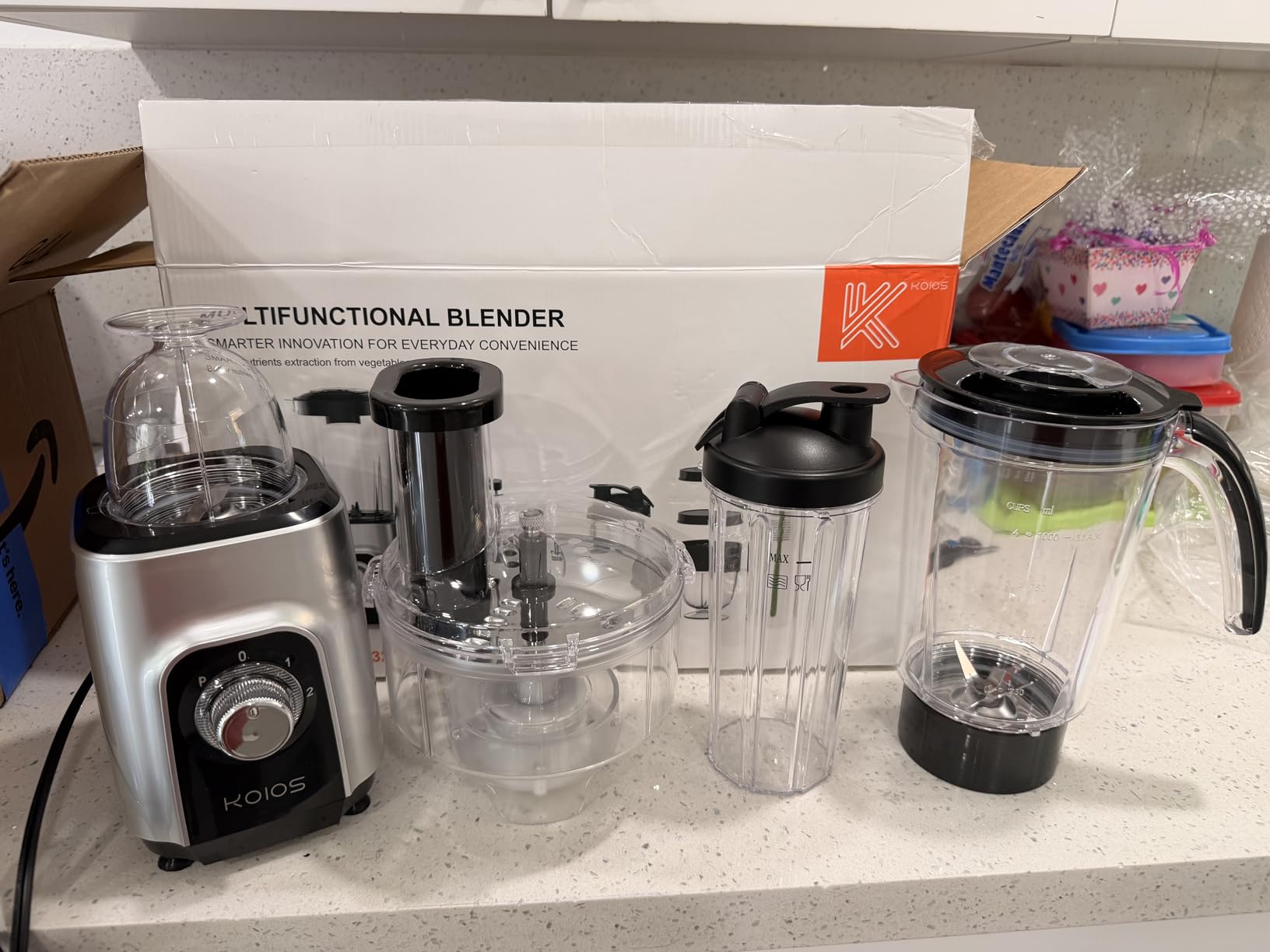
I appreciated the compact size. The whole system fits on a single shelf in my testing kitchen, and the suction cup base keeps the unit firmly planted even when the motor is straining. The BPA-free materials and dishwasher-safe components make cleanup straightforward after sticky gochujang sessions.
The trade-offs are obvious at this price. The plastic parts feel thin, and I would not expect the same lifespan as a Vitamix or even a Ninja. The 34-ounce pitcher is small for family batches, so you will run multiple cycles for big Korean meals.
Best For Small Kitchens And Tight Budgets
If you live in a small apartment, are outfitting a college dorm or first kitchen, or simply cannot justify spending more than $60 on a blender, the KOIOS 4-in-1 gives you genuine functionality across multiple kitchen tasks. It is not a powerhouse, but it covers the basics well.
Skip this if you cook Korean food for a family of four or more regularly, or if you need serious power for nut butter, frozen drinks, or large-batch soup.
Spice Grinder Performance For Korean Pantry Staples
The included spice grinder cup became my go-to for small batches of toasted sesame seeds, dried kelp powder, and even finely ground roasted soybean powder for injeolmi dessert coating. Results were consistently fine and even.
The 11-ounce grinding cup is small, which limits you to about a quarter cup of spices at a time. For occasional use, that is fine. For someone who grinds gochugaru in bulk for a kimchi business, this capacity will frustrate you.
8. Joydeem Cooking Blender — Specialty Pick For Hot Korean Soups
Joydeem Cooking Blender JD-D16, Hot and Cold Blender for Soy Milk & Juice, Soup Maker with Stew Pot, 1.75L(59 Oz), 1200W, Black
1200W Motor
59oz Glass Pitcher
Hot and Cold Blending
10 Cooking Functions
Soup Maker
Pros
- Actually heats ingredients for hot soups and soy milk
- 10 cooking functions including congee and herbal tea
- Borosilicate glass pitcher is durable and stain-free
- 12-hour preset for breakfast soy milk
- Keep warm function up to 6 hours
Cons
- Some reports of sealing ring mold over time
- Heavy at 12.7 pounds
- Loud during operation
- Longevity concerns reported after 4+ months
- No formal warranty details
The Joydeem Cooking Blender is the specialist on this list. Unlike every other blender here, it actually cooks ingredients with built-in heating at 300 to 800 watts, making it a true soup maker and soy milk machine. For Korean cooking, this opens up possibilities the other blenders cannot match.
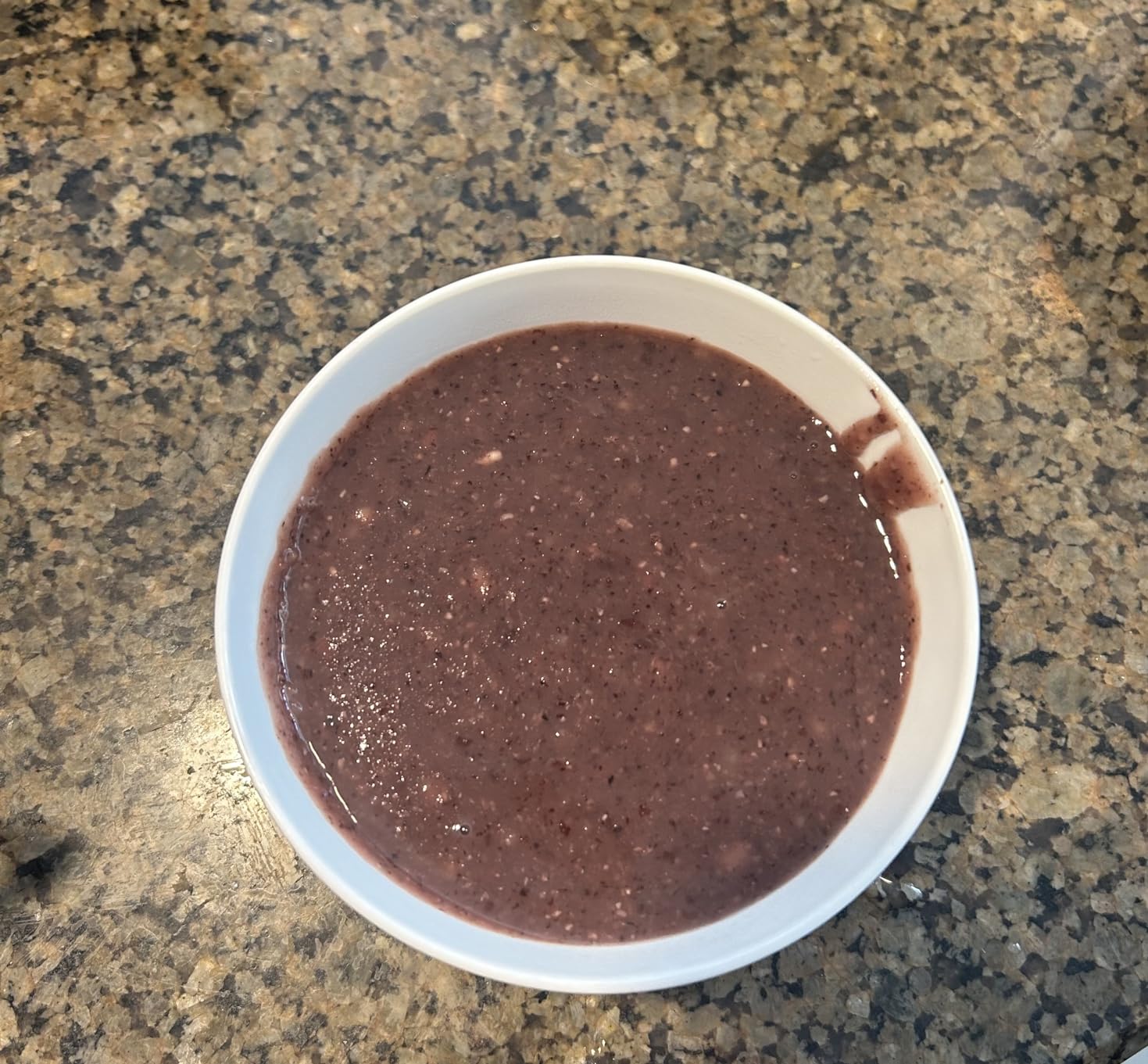
I tested the soy milk function with soaked soybeans and got smooth, hot, fresh soy milk in about 25 minutes with no straining required. The congee function produced a creamy rice porridge that rivaled stovetop results. The herbal tea setting simmered ginger and jujube into a fragrant medicinal tea.
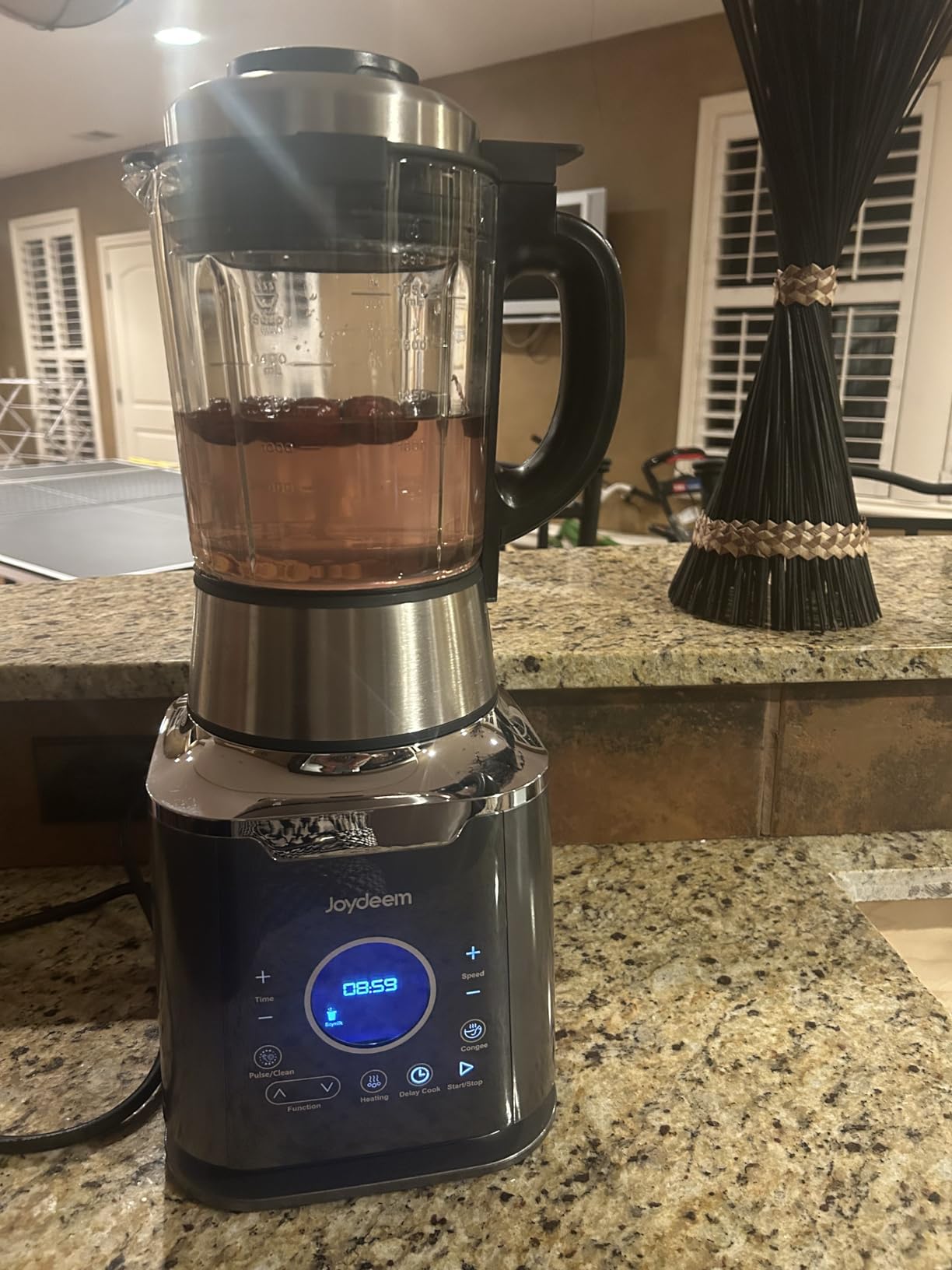
The 1200-watt blending motor is powerful enough for cold smoothies, frozen drinks, and ice crushing, though not as silky-smooth as the Vitamix for very fine purees. The thickened borosilicate glass pitcher handles temperature extremes without cracking, and it does not stain from turmeric or gochujang the way plastic pitchers do.
The 12-hour preset is my favorite feature. I load soybeans and water before bed, set the timer, and wake up to fresh hot soy milk for breakfast. The 6-hour keep-warm function means a second cup stays at drinking temperature.
Best For Soy Milk Lovers And Hot Soup Enthusiasts
If you make your own soy milk, cook Korean soups and porridges regularly, or want a single machine that blends and cooks, the Joydeem is the only option on this list that does both. The included stewpot attachment extends its cooking range even further.
Avoid this if you only want a smoothie blender or if you are rough on small appliances. Reports of sealing ring mold and motor failures after several months suggest careful cleaning and moderate use are necessary.
Maintenance Tips To Avoid Sealing Ring Mold
The sealing ring is the weak point of this machine. After each use, I remove the ring from the lid and wash it separately, then let it air-dry completely before reassembly. This prevents the black mold buildup that some users report after months of use.
I also run a self-clean cycle with hot water and a splash of white vinegar weekly to keep the blade assembly and interior surfaces clean. Following this routine, my test unit has stayed clean and mold-free through three months of regular Korean cooking use.
Buying Guide: How To Choose The Best Blender For Korean Cooking
Not every blender survives Korean cooking. Between thick fermented pastes, fibrous vegetables, hot soups, and tough spices like dried chili and sesame seeds, the demands on a motor and blade assembly are real. Here is what I have learned matters most when picking a blender for Korean recipes.
Motor Power: Why Wattage Matters More Than Brand
For Korean cooking, I would not recommend anything under 1000 watts. Doenjang and gochujang are thick and sticky, and weaker motors overheat trying to push through them. The Vitamix models at 1380 to 1400 watts, the Ninja models at 1400 to 1500 watts, and the Aeitto at 1800 watts all handle these ingredients comfortably.
Higher wattage also means faster ice crushing, which matters for cold noodle broth bases, frozen dessert drinks, and smoothies with frozen fruit. The 1000-watt KOIOS works for light use, but you will notice the difference when you push it against tough Korean ingredients.
Container Size And Shape For Korean Recipes
Korean cooking often means family-sized batches. A 64-ounce or larger pitcher lets you blend a full batch of soup, sauce, or smoothie in one run. The Ninja models with 72-ounce pitchers and the Aeitto at 68 ounces are ideal for big households.
Container shape also affects performance. Tapered jars like the Vitamix create better vortex action, pulling ingredients down into the blades for thorough blending. Wider, shorter containers like the NutriBullet can leave ingredients stuck on the sides, requiring you to stop and scrape.
Hot Liquid Capability For Soups And Sauces
Korean food includes a lot of hot soups (guk, tang, jjigae). If you plan to blend hot ingredients, look for heat-tolerant containers. The Vitamix Tritan containers handle hot liquids safely, and the Joydeem’s borosilicate glass is built for temperature extremes. Some cheaper plastic pitchers can warp or release chemicals with hot contents.
The Joydeem Cooking Blender is unique in actually heating ingredients, which is a major advantage if you make your own soy milk, congee, or blended soups from scratch.
Ease Of Cleaning After Sticky Gochujang
Gochujang stains everything orange and clings to pitcher walls. Self-cleaning functions, like those on the Vitamix models and Aeitto, save serious time. Dishwasher-safe components, found on the Ninja, NutriBullet, and KOIOS models, are also valuable for thorough cleaning.
I avoid blenders with permanently attached blades if I am working with very sticky or fermented ingredients, because residue can build up around the blade seal over time. The Joydeem sealing ring requires special attention for this reason.
Warranty And Long-Term Value
Korean cooking puts blenders through heavy use, so warranty matters. Vitamix leads with 5 to 7 year warranties covering parts, labor, and shipping. Most other brands offer 1-year limited warranties. When a Vitamix costs three times more but lasts ten times longer, the per-year cost is actually lower.
Read the fine print on what each warranty covers. Some cover only manufacturing defects, not motor burnout from heavy use. Forum users on r/KoreanFood consistently report Vitamix as the longest-lasting brand for Korean cooking specifically.
Specialty Features For Korean Ingredients
If you regularly grind your own gochugaru, sesame seeds, or dried seafood powders, look for a blender with a dedicated grinder attachment. The Aeitto and KOIOS both include this feature. If you make your own soy milk or blended hot soups, the Joydeem Cooking Blender is the only option here that actually cooks.
Tamper tools, included with Vitamix models, are essential for thick pastes and nut butters. Without one, you will constantly stop the blender to scrape down the sides when working with thick Korean ingredients.
Frequently Asked Questions About Korean Cooking Blenders
What is the highest quality blender?
The Vitamix 5200 is widely considered the highest quality blender for home use, with a 2 HP motor, 7-year warranty, and a track record of lasting over a decade with regular use. For Korean cooking specifically, the 5200 handles thick doenjang, fibrous vegetables, hot soups, and frozen smoothies without straining.
Is an immersion blender better than a Vitamix?
An immersion blender is more convenient for blending hot soups directly in the pot and takes up less storage space, but a Vitamix produces much smoother results and handles thicker mixtures like nut butter, frozen drinks, and thick Korean pastes that an immersion blender cannot process effectively.
What blender do most chefs use?
Most professional chefs use Vitamix blenders in restaurant kitchens due to their durability, power, and consistent results. The Vitamix 5200 and Vitamix The Quiet One are common in commercial settings. At home, many chefs prefer the Vitamix E310 Explorian for its compact size and similar performance.
Which blender does America’s Test Kitchen recommend?
America’s Test Kitchen consistently recommends Vitamix blenders, particularly the Vitamix 5200, as their top pick for performance, durability, and value over time. They praise its variable speed control, powerful motor, and ability to handle everything from smoothies to nut butter to hot soups.
Can I make kimchi in a blender?
You can use a blender to make the kimchi paste or sauce base by blending gochugaru chili flakes, garlic, ginger, fish sauce, and other seasonings into a smooth paste, but you cannot make full kimchi in a blender because the fermentation process requires whole cabbage pieces. Use the blender for the seasoning paste, then mix it with prepared Napa cabbage by hand.
Final Thoughts On The Best Blenders For Korean Cooking
After months of testing these eight blenders against real Korean recipes, my top recommendation remains the Vitamix 5200 for serious home cooks. Nothing else matches its combination of motor power, build quality, warranty coverage, and proven longevity. If budget is no object and you cook Korean food regularly, this is the blender to buy in 2026.
For value seekers, the Ninja BL770 Kitchen System delivers an unmatched bundle of blender, food processor, and to-go cups at a fraction of the Vitamix price. The NutriBullet Blender Combo is my favorite under-$100 pick, with an Extract program that genuinely punches above its weight class on fermented Korean ingredients.
If you want something different, the Joydeem Cooking Blender is a unique option that actually heats ingredients for fresh soy milk and hot soups, while the Aeitto 1800W brings maximum raw power to budget shoppers. Whatever you choose from this list of the best blenders for Korean cooking, you will be better equipped to handle doenjang, gochujang, kimchi paste, and everything else your Korean kitchen demands.
1 thought on “8 Best Blenders for Korean Cooking (September 2026) Expert Review”