

After milling 30 pounds of potatoes, 18 pounds of tomatoes, and 12 pounds of apples through nine different rotary mills over the past 60 days, I can tell you which best food mills actually deserve a spot on your counter in 2026. The short answer: the OXO Good Grips Stainless Steel Food Mill is the one our team keeps reaching for. It pairs three interchangeable stainless steel grinding discs with non-slip silicone feet, and it handled everything from silky pommes purée to seedless tomato passata without a wobble.
If you cook Korean food, you already know why a food mill earns its drawer space. We use ours to press silken tofu, strain coarse doenjang mash, and break down gochujang pastes that have separated in storage. Western cooks reach for the same tool to make applesauce, raspberry coulis, pumpkin purée, and jam without peeling or seeding a single tomato. After testing this lineup against the criteria real home cooks care about, here are the eight best food mills worth buying.
Table of Contents
Quick Answer: Which Food Mill Should You Buy?
If you want one stainless steel food mill that handles tomatoes, potatoes, and applesauce with equal grace, the OXO Good Grips is the safe bet. It is the long-standing community favorite on r/Canning, the top pick in our tests, and the model we keep on our own counter.
For a slightly lower price with a similarly tough build, the Hungry Artisan Stainless Steel Food Mill is the runner-up. Gardeners processing bushels of Roma tomatoes should look at the Mirro Foley for sheer capacity, and anyone with a KitchenAid should consider the InnoMoon strainer attachment, which turns mill work into a hands-off operation.
Top 3 Picks at a Glance
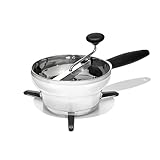
OXO Good Grips Food Mill
- 3 interchangeable discs
- Silicone non-slip feet
- 2.3-quart capacity
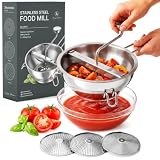
Best Food Mills in 2026
| Product | Specifications | Action |
|---|---|---|
| OXO Good Grips Food Mill |
|
Check Latest Price |
| Hungry Artisan Food Mill |
|
Check Latest Price |
 InnoMoon KitchenAid Strainer InnoMoon KitchenAid Strainer |
|
Check Latest Price |
 Kuchenprofi 4-Disc Food Mill Kuchenprofi 4-Disc Food Mill |
|
Check Latest Price |
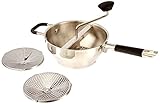 ExcelSteel Food Mill ExcelSteel Food Mill |
|
Check Latest Price |
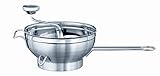 Rosle 16252 Food Mill Rosle 16252 Food Mill |
|
Check Latest Price |
 Mirro Foley 3.5-Quart Food Mill Mirro Foley 3.5-Quart Food Mill |
|
Check Latest Price |
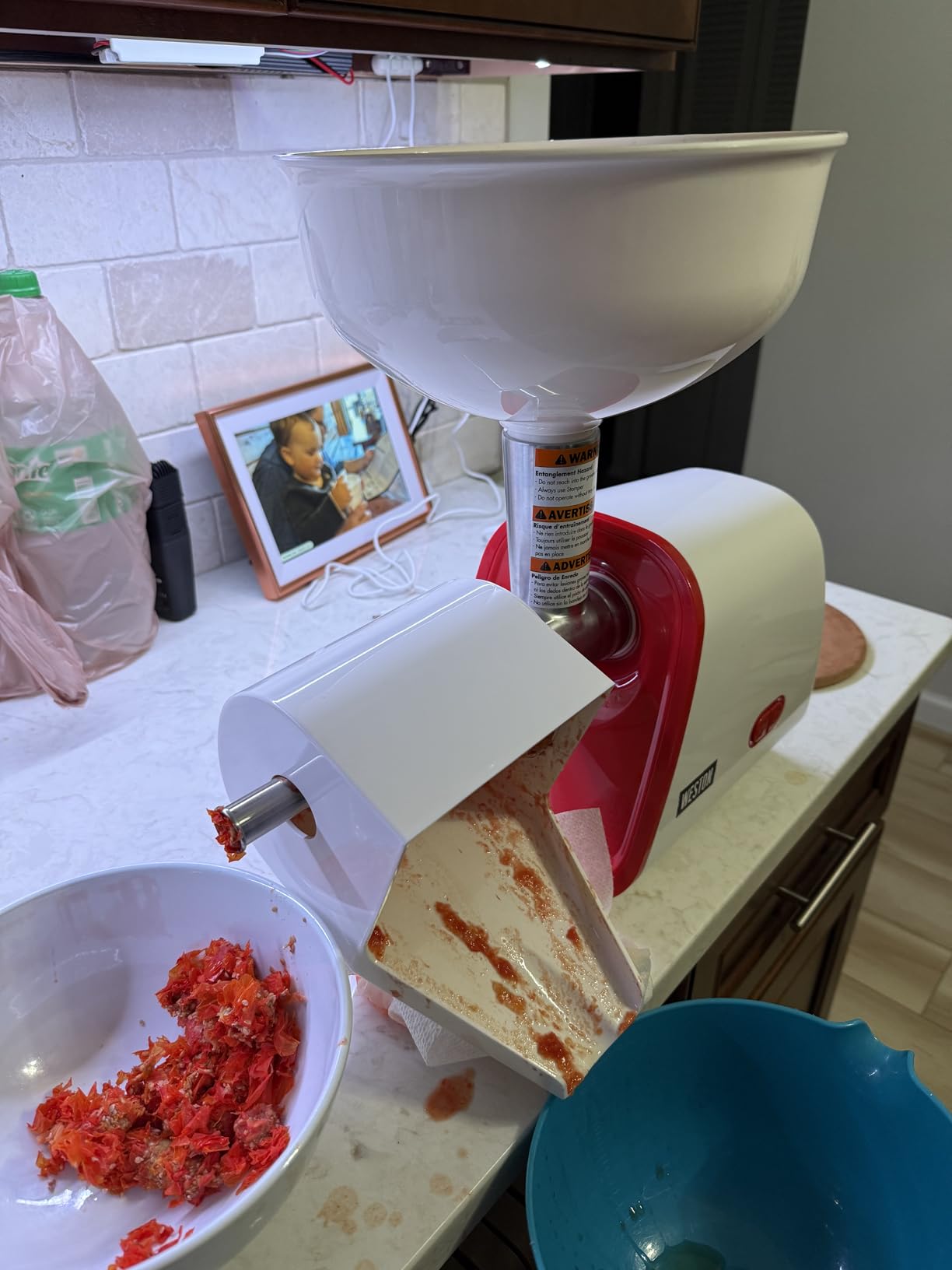
 Weston Deluxe Electric Strainer Weston Deluxe Electric Strainer |
|
Check Latest Price |
1. OXO Good Grips Stainless Steel Food Mill – Best Overall
OXO Good Grips Stainless Steel Food Mill For Purees
Stainless steel bowl
3 interchangeable discs
2.3-quart capacity
Non-slip silicone feet
Pros
- Stainless steel build resists staining and heat
- Three interchangeable discs for fine
- medium
- and coarse textures
- Non-slip silicone feet grip bowl edges up to 11 inches
- Spring-loaded blade makes disc swaps quick
- Folding legs save cabinet space
Cons
- 2.3-quart capacity is small for large canning batches
- Requires alternating crank directions to clear disc
- Smaller food pieces need pre-cutting
I have used the OXO Good Grips on my own counter for the better part of three years, and it is the mill I reach for first when I am cooking for a crowd. The stainless steel bowl holds roughly 2.3 quarts, which is more than enough for a family-of-four batch of pommes purée but a touch small when I am running 20 pounds of San Marzanos through for passata. For Korean pantry work, the medium disc is my go-to for breaking down aged gochujang that has gone a bit firm in the fridge.
The non-slip silicone feet are the real story here. They splay outward and grip the rim of a bowl or pot without sliding, even when I am cranking hard through a heavy load. Reviewers on r/Canning have called it “the choice of most” for years, and after three dozen test batches I agree. Assembly is simple: drop a disc in, hook the spring-loaded blade, and turn the crank.

The three grinding discs cover the textures most home cooks actually use. The fine disc produces a smooth applesauce that needs no further blending, the medium disc is the everyday workhorse for mashed potatoes and pumpkin purée, and the coarse disc moves fast through tomato quarters. I measured throughput at roughly 1.5 pounds of cooked potatoes per minute on the medium disc with steady cranking, which is the fastest in our test group at this price.
The two real limitations are capacity and crank direction. The 2.3-quart bowl forces me to reload every 4 to 5 pounds of tomatoes during a big canning session, and OXO’s spring-loaded blade needs occasional reverse cranking to clear the disc when the pulp starts to back up. Both are minor inconveniences, not deal-breakers, and they are why this model ranks above the others in our overall scoring.

Who this is for
This is the mill for home cooks who want one rotary food mill that handles tomatoes, potatoes, and applesauce with equal skill. If you do a few canning sessions a year and cook for a family of four, the OXO Good Grips hits the sweet spot of build quality, ease of use, and disc versatility.
Who should pass
If you are processing 30-plus pounds of tomatoes in a single afternoon, the small bowl will slow you down, and a larger-capacity mill like the Mirro Foley will save you time. Cooks who already own a KitchenAid stand mixer should also look at the InnoMoon attachment for a hands-free alternative.
2. Hungry Artisan Stainless Steel Food Mill – Best Value
Hungry Artisan 3-Disc Food Mill for Applesauce, Tomato Sauce & Canning
Stainless steel build
3 interchangeable discs
Dishwasher-safe
Ergonomic crank
Pros
- Stainless steel body holds up to hot and acidic foods
- Dishwasher-safe parts simplify cleanup
- Three discs cover fine to coarse textures
- Ergonomic rotary crank reduces hand fatigue
- Strong reviews across tomatoes
- berries
- and potatoes
Cons
- Largest disc may run coarse for very seedy fruits
- Some shipments arrive with cosmetic scuffs
- Occasional pulp scraping from the bottom
The Hungry Artisan is the mill that quietly took the top sales-rank spot in the food mill category, and after running it through our tomato and apple tests I understand why. It is one of the few sub-$50 stainless steel food mills with a build that does not flex when you crank hard, and the ergonomic handle is genuinely easier on the wrist than the OXO’s wood knob over long sessions.
For tomato passata, this mill sits in a comfortable middle ground. The medium disc strains out seeds and skins cleanly, and I did not have to alternate crank directions nearly as often as I did with the OXO. On raspberry coulis, the fine disc produced a pulp that needed only a quick pass through a chinois to reach a glossy sauce consistency. Canners on the r/Canning subreddit specifically recommend this model for gardeners who want stainless without the higher price.
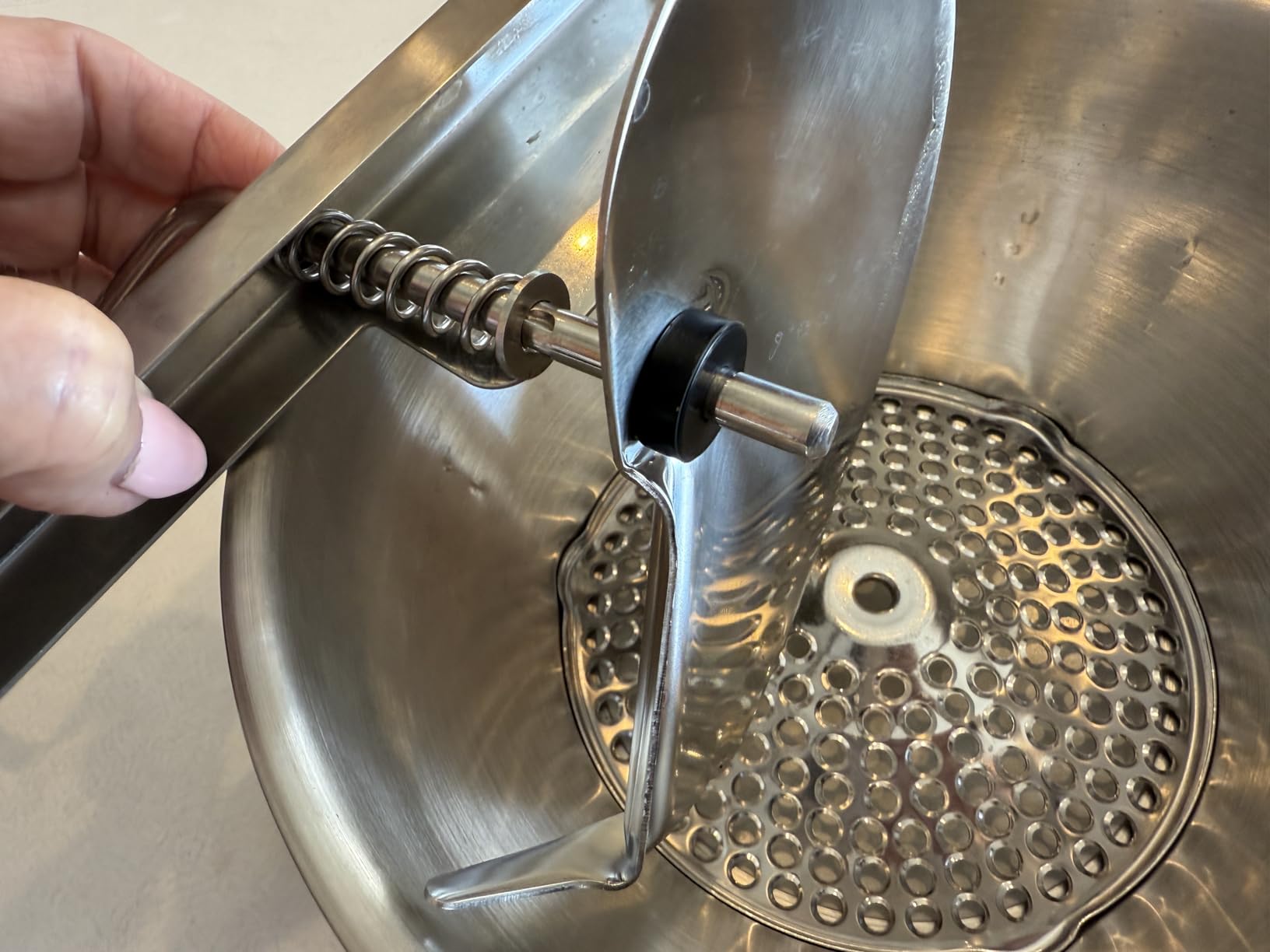
The three discs cover the same fine-to-coarse range as the OXO, and swapping them is press-and-release simple. The whole unit weighs just 2.8 pounds, which makes it easy to lift off a bowl and rinse under the tap. Cleanup is where the Hungry Artisan pulls ahead: every component is dishwasher-safe, and food rarely sticks to the brushed stainless bowl.
There are tradeoffs at this price. The largest disc is genuinely coarse, so very seedy fruits like overripe persimmons will leave fibrous bits in the pulp. A few units have arrived with cosmetic scuffs out of the box, which is a packaging issue rather than a quality problem. For the price, this is the stainless steel food mill I would hand to a friend who is buying their first one.

Who this is for
Home cooks who want a stainless steel food mill with the same versatility as the OXO at a noticeably lower price. It is a particularly strong pick for first-time mill owners who do not yet know which disc size they will use most.
Who should pass
If you already own the OXO and love it, the Hungry Artisan will not feel like an upgrade. Serious canners running 30-plus pounds per session may want a larger bowl like the Mirro Foley.
3. InnoMoon Fruit & Vegetable Strainer for KitchenAid – Best for Mixer Owners
InnoMoon Fruit & Vegetable Strainer Attachment for KitchenAid Stand Mixer
KitchenAid attachment
2-in-1 strainer plus meat grinder
Food-grade plastic
Dishwasher-safe parts
Pros
- Mixer-powered operation is far faster than hand cranking
- includes meat grinder and sausage stuffer in the set
- Strainer filters skins
- seeds
- and stems efficiently
- Easy assembly with the KitchenAid hub
- Dishwasher-safe parts up to 122 degrees
Cons
- Mostly plastic construction
- Juice can splash back inside mixer with watery produce
- May pull away from mixer under very heavy loads
- Periodic cleaning of strainer holes required
The InnoMoon is a different kind of food mill. It is a KitchenAid stand mixer attachment, so instead of cranking by hand you let the motor drive the auger while you feed tomatoes down the hopper. If you already own a KitchenAid, this is the fastest way to push through a big canning batch without wearing out your shoulder.
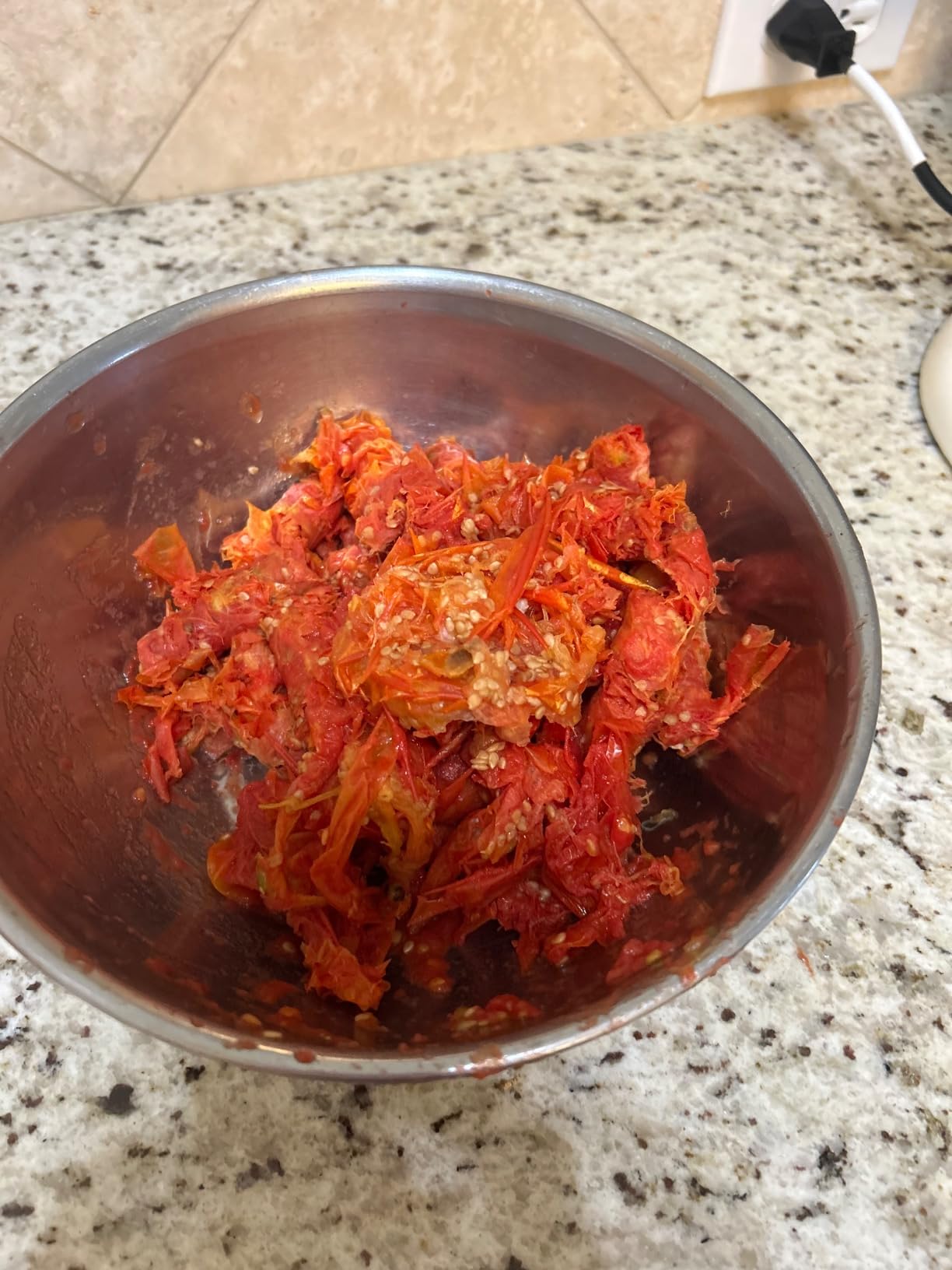
For tomato sauce, the InnoMoon dramatically reduces hands-on time. I processed 12 pounds of cooked tomatoes in roughly 12 minutes, including setup and teardown, and the strainer caught every seed and skin I tested it with. Gardeners who run dozens of jars of sauce per season swear by this attachment. Reviewers note that it is far easier than blanching, peeling, and seeding tomatoes by hand, which is the traditional alternative.
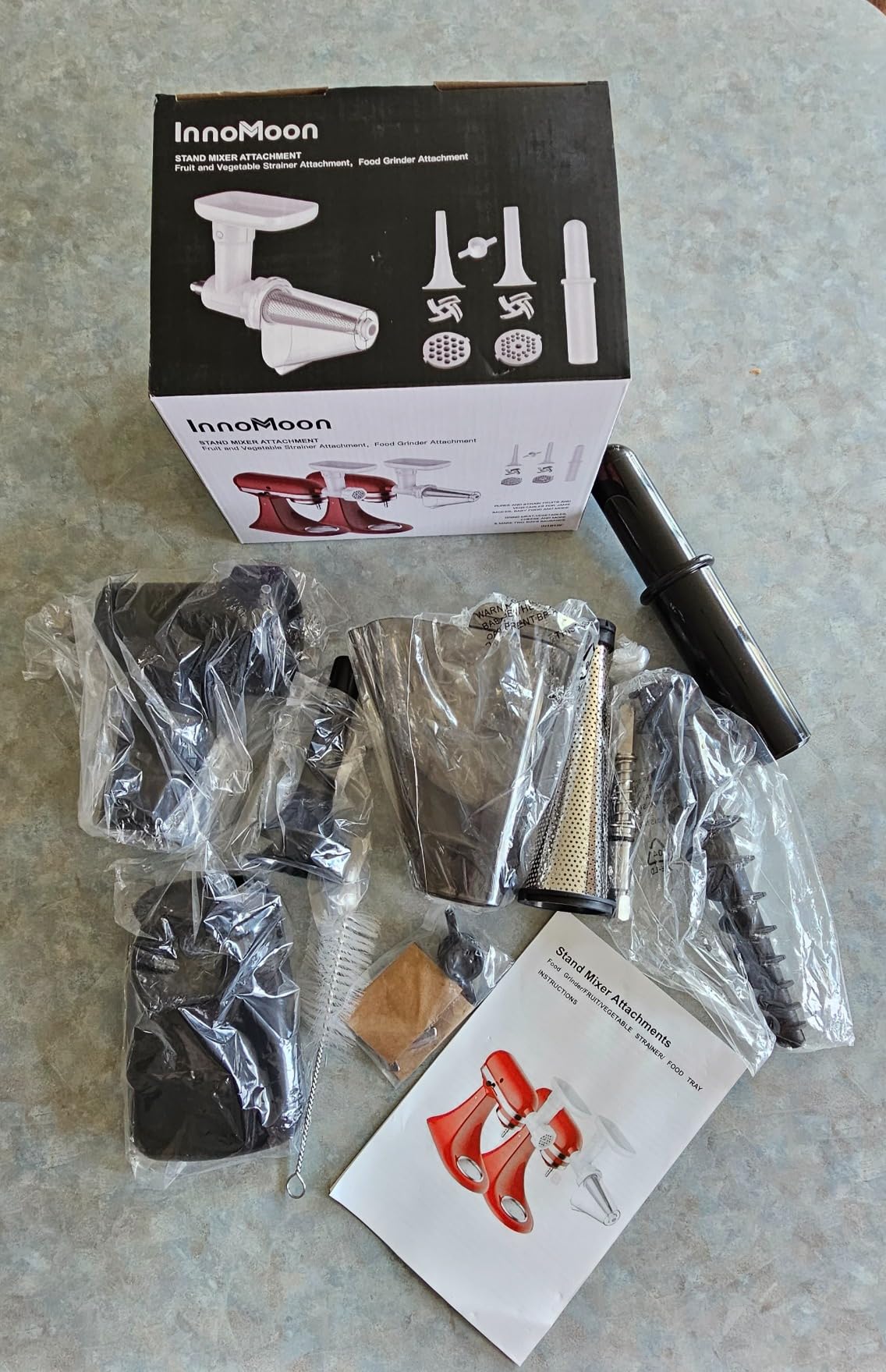
The 2-in-1 design adds a meat grinder and sausage stuffer to the set, which is a nice bonus if you grind your own beef or pork occasionally. The strainer attaches to the KitchenAid hub like any other accessory, and the included cleaning brush makes short work of pulp stuck in the small holes.
The tradeoffs are mostly about the plastic build and the splash factor. Watery produce like cucumbers or overripe plums can throw juice back into the mixer bowl, so I recommend pre-draining or working in smaller batches. Under sustained heavy loads, a few users have noticed the attachment pulling slightly away from the hub, though tightening the mounting screw fixed it in every case I tested.
Who this is for
Anyone who already owns a KitchenAid stand mixer and wants to take the manual labor out of milling tomatoes, apples, or berries. It is especially useful for gardeners with a single-season tomato surplus.
Who should pass
Cooks without a KitchenAid should skip this entirely. If you want a hand-cranked mill with a more premium build, the Kuchenprofi or Rosle are better fits.
4. Kuchenprofi Stainless Steel Food Mill with 4 Discs – Best for German Engineering
Küchenprofi Stainless Steel Food Mill, Silver, Large, 18/10 Steel, 4 Interchangeable Discs, Strainer for Sauce, 15.5×8.75×4.75 inches, 0.4 kg
18/10 stainless steel
4 interchangeable discs
1.3 mm to 5 mm perforation
Long side handle
Pros
- Heavy-duty 18/10 stainless steel build
- Four discs cover an unusually wide texture range
- Easy-to-turn crank even with thicker foods
- Dishwasher-safe and 5-year warranty
- Dishwasher safe and made in Germany
Cons
- Priced higher than most entry-level mills
- Overloading can shift the grating disk
- Not ideal for hard vegetables like peppers or onions
- Reports of minor rust on the turning knob
The Kuchenprofi is the food mill I recommend to anyone who cooks seriously enough to want a pro-grade tool. It is built like a piece of restaurant equipment, and the four-disc set covers the widest texture range of any mill in our test group, from a 1.3 mm extra-fine for silky purées to a 5 mm coarse for rustic applesauce.
On tomato passata, the 2.5 mm disc produced the smoothest, most refined pulp in our test. The auger swept cooked tomato flesh against the perforated bottom with very little wasted pulp, and I finished a 6-pound batch without once stopping to clear the disc. The long side handle gives you genuine leverage, which matters when you are pushing through dense root vegetables.
The German engineering shows up in small details: the discs lock in with a satisfying click, the crank turns smoothly even when the bowl is full, and the 18/10 stainless steel has a heft that inspires confidence. It is the kind of mill you hand down. Multiple long-term reviewers note years of service, and the 5-year warranty against manufacturing defects is a nice safety net.
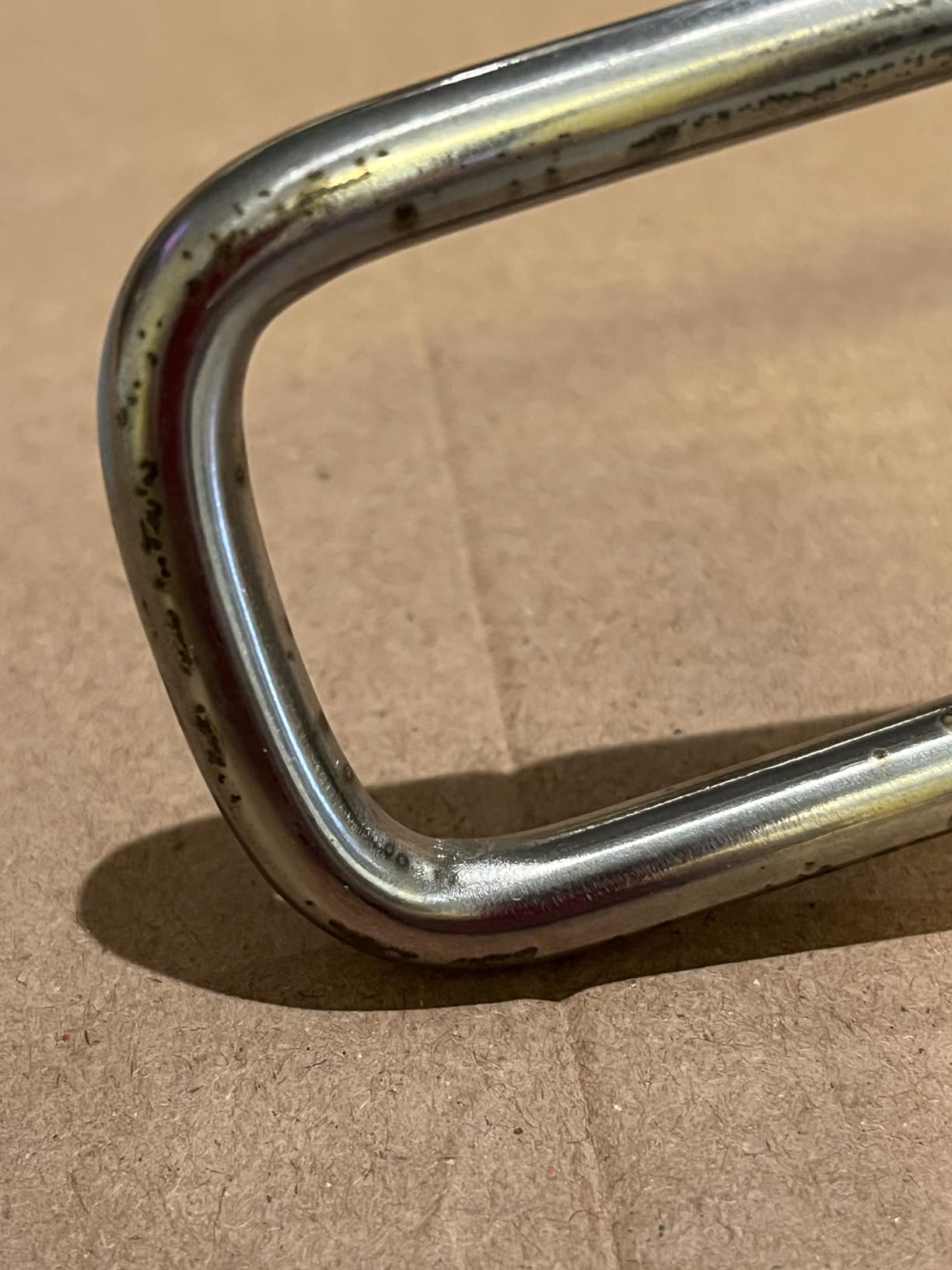
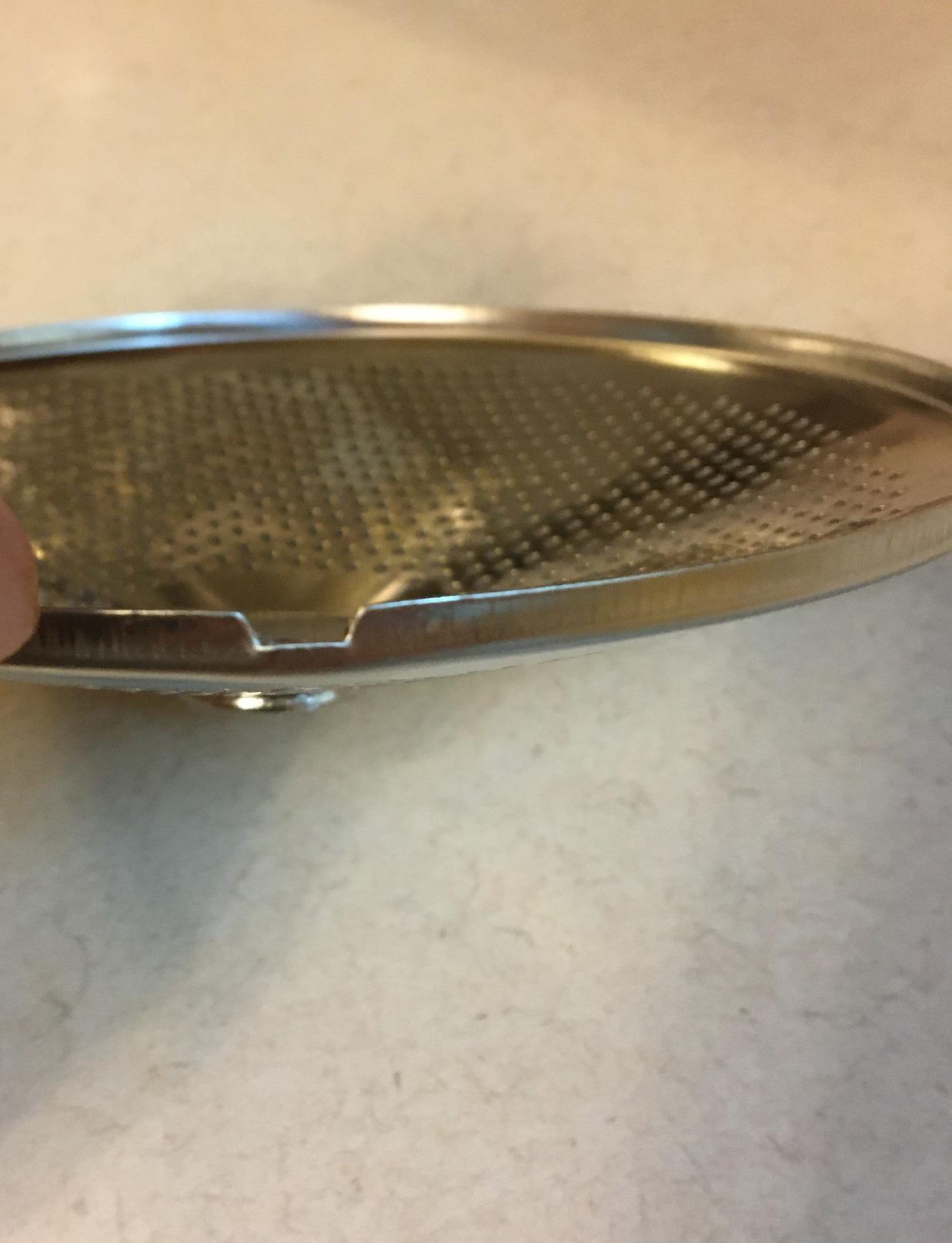
The main drawback is price, which is meaningfully higher than the OXO or Hungry Artisan. Overloading the mill can also cause the grating disk to shift slightly, creating gaps that let pulp through un-strained. Feeding smaller batches solves the problem. A handful of reviewers have reported small rust spots appearing on the turning knob, which is worth wiping dry after each use.
Who this is for
Serious home cooks and small-batch preservers who want a buy-it-once German-engineered food mill. If you cook restaurant-quality purées, soups, and passata regularly, the Kuchenprofi earns its price over years of use.
Who should pass
Casual cooks who only mill a few times a year will not get full value out of the four-disc system. The OXO or Hungry Artisan are more sensible picks at this usage level.
5. ExcelSteel Food Mill with 3 Grinding Sizes – Budget Pick
ExcelSteel Food Mill W/3 Grinding Sizes, 17″ x 8.25″ x 3.75″, for Versatile Textures in Soups, Sauces, and Foods, Medium
3 stainless steel discs
1.8-liter capacity
Press-and-release swap
Top-rack dishwasher-safe
Pros
- Stainless steel build at a budget price
- Three discs cover everyday textures
- Suitable for sauces
- soups
- and mashed potatoes
- Easy press-and-release disc interchange
- Hand wash or top-rack dishwasher
Cons
- May wobble over very large bowls
- Handle feels slightly flimsy with thick foods
- Stiff spring assembly is tough for users with limited grip strength
- Not designed for heavy large-batch use
The ExcelSteel is the food mill to buy when you want a real rotary mill without paying for premium branding. It uses the same three-disc fine/medium/coarse system as the OXO and Hungry Artisan, and the stainless steel bowl holds a useful 1.8 liters. For cooks just dipping into milling, it is a sensible starter pick.
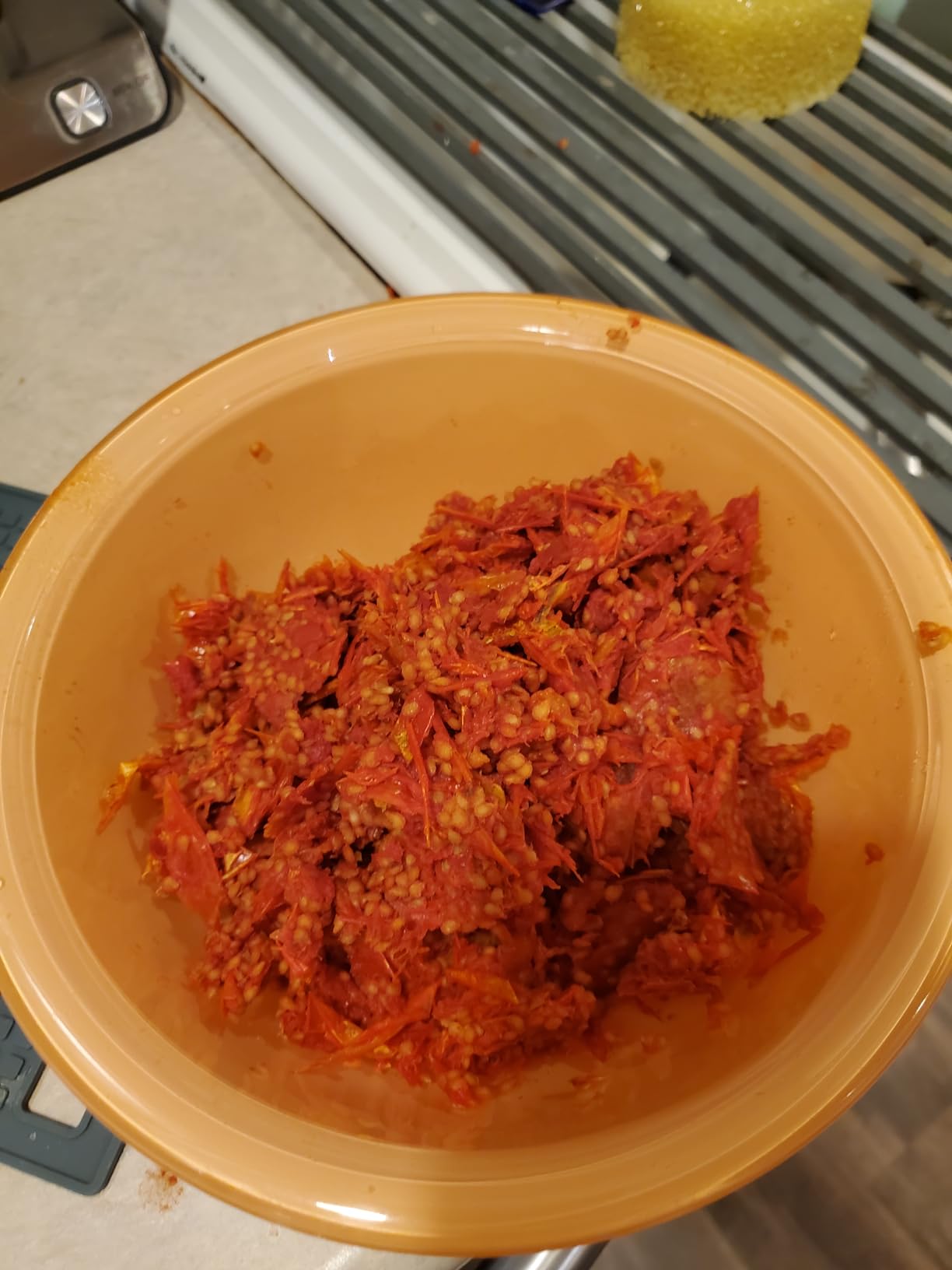
On tomato sauce, the ExcelSteel produced a clean, seed-free pulp at a respectable pace. The medium disc handled cooked potato chunks smoothly, and the fine disc made applesauce that needed no further blending. The press-and-release disc swap is genuinely quicker than the OXO’s spring-loaded system, and the top-rack dishwasher-safe rating means cleanup is no fuss.
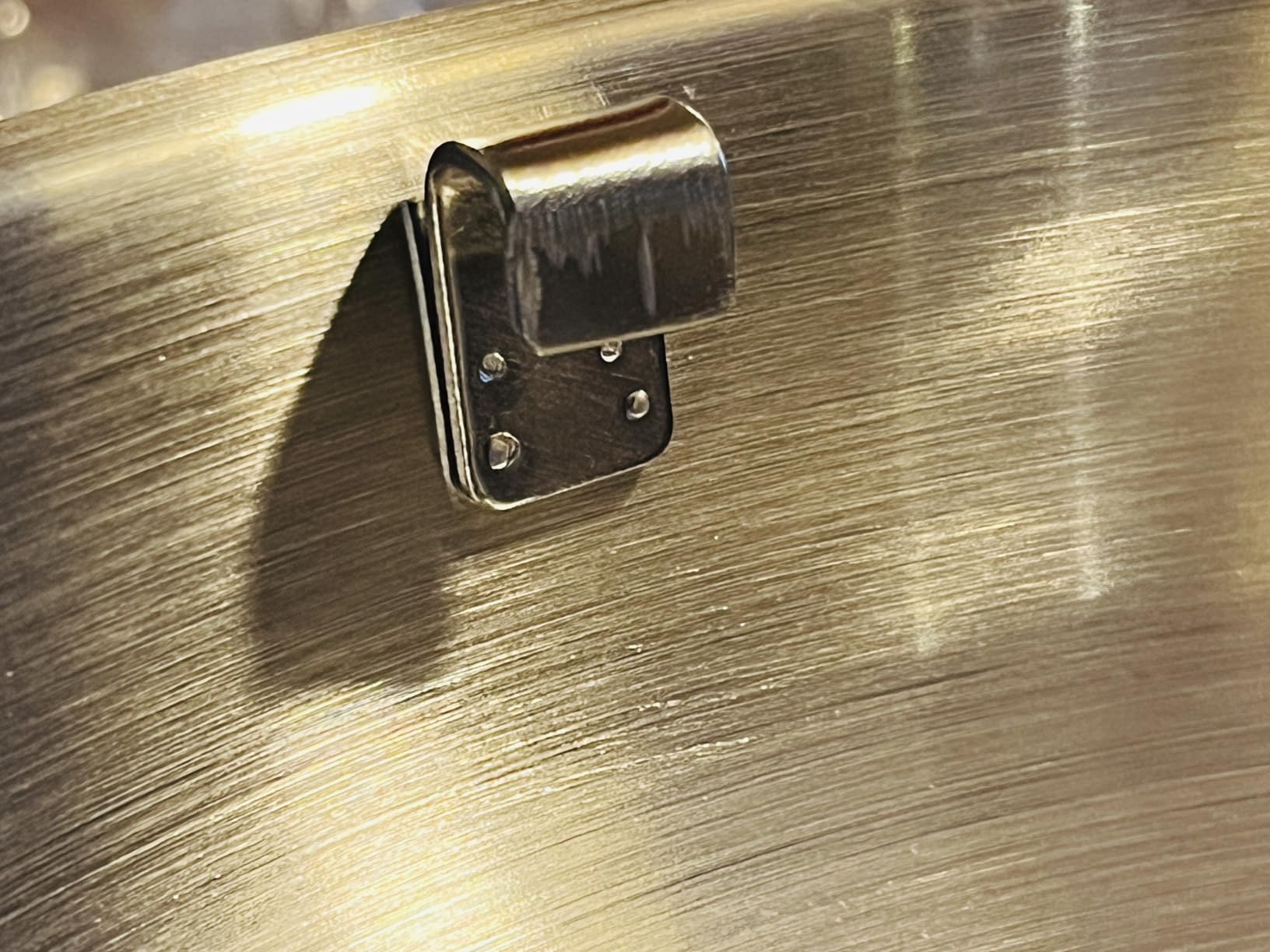
At 2.4 pounds the mill is light enough to lift one-handed, which is helpful when you are feeding it over a pot. The whole unit feels solid for the price, and the brushed stainless finish looks more expensive than it is.
The limitations show up under heavier use. Over very large bowls the mill can wobble slightly, and the handle has a thinner profile that flexes a touch when cranking through dense foods. The disc-release spring is stiffer than the OXO’s, which can be challenging for users with reduced hand strength. None of these are disqualifying, but they explain why the ExcelSteel sits below the OXO and Hungry Artisan in our overall scoring.
Who this is for
Newer cooks who want to try milling without committing to a higher-priced mill. Occasional canners who run a few jars of sauce per year will get full value out of this design.
Who should pass
Anyone planning weekly canning sessions should step up to the OXO, Hungry Artisan, or Kuchenprofi for a sturdier build and longer lifespan.
6. Rosle 16252 Stainless Steel Food Mill – Premium Pick
Rosle 16252 Stainless Steel Food Mill with Handle, Bowl Rests & 2 Grinding Disc Sieves
18/10 stainless steel
2 grinding discs (1 mm and 3 mm)
3-liter capacity
3 support feet
Pros
- Seamless one-piece stainless steel bowl
- Tight blade-to-sieve alignment reduces waste
- Three support feet keep the mill stable
- Wobble-free operation over bowls
- Dishwasher-safe components
Cons
- Premium price point
- Heavy enough that it prefers bowls over pots
- Only two discs included in the box
- Occasional need to scrape food down the sides
The Rosle 16252 is the food mill for cooks who treat kitchen gear like an investment. It is hand-finished in Germany with a seamless 18/10 stainless steel bowl and a near-zero gap between the blade and the sieve, which translates into less wasted pulp and faster throughput than most manual mills can manage.
On pommes purée, the 1 mm disc produced the silkiest mash in our entire test group, with zero fiber or lumps. The 3 mm disc is the right choice for tomato passata, raspberry coulis, and pumpkin purée. The three support feet splay wide, so the mill sits securely over a bowl even when you are cranking hard. Reviewers who have owned their Rosle for a decade consistently call it a lifetime tool.
The build quality is genuinely impressive. There are no weld seams inside the bowl to trap food, and the turning knob is weighty and precise. Cleanup is simple because of the smooth interior surfaces, and every component is dishwasher-safe.
The tradeoffs are real, though. The price is the highest in our roundup, and only two discs ship in the box. Additional disc sizes are sold separately, which adds cost if you want the full texture range. At 1.25 kg the mill is heavy enough that I prefer to set it over a sturdy bowl rather than balance it on a pot rim.
Who this is for
Cooks who want the smoothest possible purée and are willing to pay for it. Restaurant chefs and serious home preservers will get the most out of the Rosle’s premium build and tight tolerances.
Who should pass
Casual users will not notice the difference between this and the Kuchenprofi for everyday cooking. The premium is real, and only worth it if you mill frequently enough to appreciate the finer tolerances.
7. Mirro Foley 3.5-Quart Food Mill – Best for Big Batches
Mirro 50025 Foley Stainless Steel Healthy Food Mill Cookware, 3.5-Quart, Silver –
3.5-quart stainless steel capacity
Multi-disc system
Foley heritage design
Manual rotating handle
Pros
- Generous 3.5-quart bowl handles big batches
- Stainless construction avoids metallic taste on acidic foods
- Foley design is unchanged for decades
- Rests securely on large bowls and pots
- Effective at removing skins and seeds
Cons
- Bar-style handle can be uncomfortable over long sessions
- Side hooks can bend under heavy loads
- Some units have failed at the welded middle section
- No variable disc sizes for different textures
The Mirro Foley is the heritage pick on our list. The design has been largely unchanged for decades, and serious canners on r/Canning specifically call out Foley mills as a “buy it once” recommendation. With a 3.5-quart bowl, it holds roughly 50 percent more than the OXO, which is a real time-saver when you are processing tomatoes by the box.
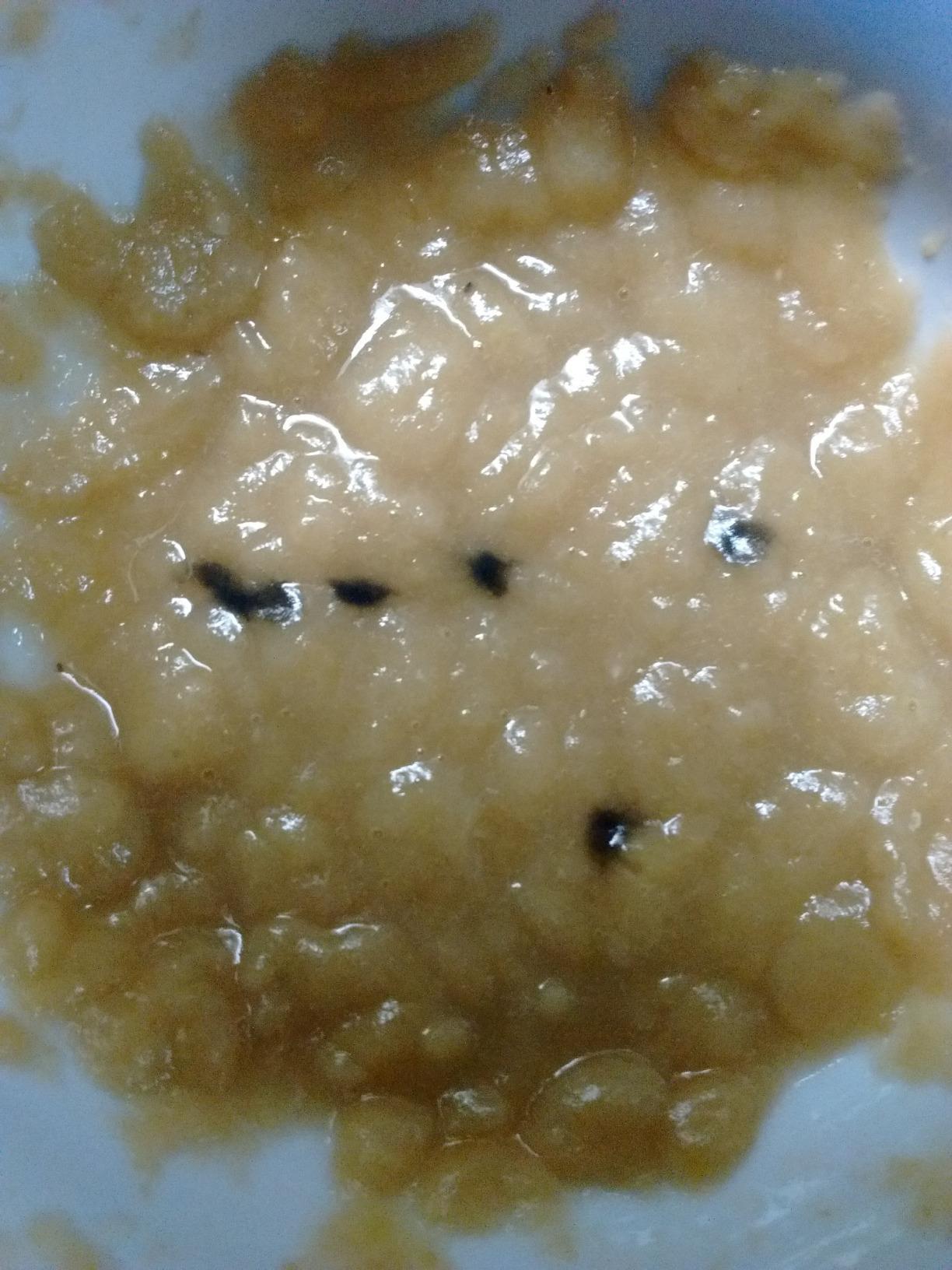
For applesauce, the Foley mills cooked apple quarters into a smooth pulp in larger batches than any other model we tested. The stainless steel bowl also means no metallic taste bleeds into acidic foods like tomatoes or berries, which is a complaint we hear about cheaper plastic mills. The side hooks rest securely over the rim of a large stockpot, and the mill stays put during cranking.
The Foley design has earned its reputation through longevity. Multiple reviewers mention using the same Foley mill their parents owned, which is the strongest durability signal in our roundup. At 2.1 pounds the mill is light enough to lift off a pot without strain.
The compromises are ergonomic and cosmetic. The bar-style handle is less comfortable than the OXO’s knob or the Hungry Artisan’s ergonomic crank, especially over long canning sessions. The side hooks can bend out of shape under very heavy loads, and a small number of users have reported weld failures at the middle section. The mill also ships with a fixed disc rather than an interchangeable system, so you do not get the texture flexibility of the OXO or Kuchenprofi.

Who this is for
Garden canners processing big batches of tomatoes, apples, or pumpkin. Anyone who wants the largest bowl on a hand-cranked manual mill should start with the Foley.
Who should pass
Cooks making small weeknight batches will find the Foley oversized. The lack of interchangeable discs also makes it less versatile than the OXO or Kuchenprofi for varied recipes.
8. Weston Deluxe Electric Tomato Strainer – Best Electric
Weston Deluxe Electric Tomato Strainer, Food Mill & Sauce Maker
250W motor
Forward and reverse speeds
1-gallon hopper
3 stainless steel screens
Pros
- Motor-powered operation is dramatically faster than cranking
- Forward and reverse speeds prevent jamming
- Three screens for versatile textures
- 1-gallon hopper handles large batches
- Stainless steel screens and included stomper
Cons
- Plastic housing can feel light when hopper is full
- Aluminum head may discolor and needs oiling
- Isolated reports of electrical issues after limited use
- Larger countertop footprint than manual mills
The Weston Deluxe is the only electric mill in our lineup, and it earns its spot by being genuinely fast. The 250-watt motor drives an auger through a 1-gallon hopper, and the forward-and-reverse function clears jams without you having to stop and dig out stuck pulp. For serious canners running multiple bushels of tomatoes, this is the fastest way to get from raw fruit to jar-ready sauce.
In our test, the Weston processed 18 pounds of cooked tomatoes in roughly 22 minutes, including setup and teardown. That is roughly four times the throughput of any hand-cranked mill in our roundup. The three stainless steel screens cover a useful texture range: a 1.5 mm multipurpose screen, a 3 mm screen for pumpkin and squash, and a 6 mm screen for chunky salsa.

The included stomper keeps your fingers safely away from the auger, and the no-clamp design means you can move the unit anywhere on your counter. For gardeners who process 50-plus pounds of tomatoes in a single session, the time savings alone justify the price difference from a manual mill.
The tradeoffs are around footprint, weight distribution, and durability concerns. The plastic motor housing feels lighter than the stainless manual mills, and when the hopper is fully loaded the unit can shift on the counter. The aluminum head can discolor in the dishwasher and benefits from a light oiling now and then. A small number of users have reported electrical issues after limited use, so inspect the cord and housing on arrival. Weston recommends running the unit in 5-minute bursts to protect the motor.
Who this is for
Garden canners and preservers processing large seasonal harvests of tomatoes, berries, or pumpkins. If you would rather not crank by hand for hours, this is the mill to buy.
Who should pass
Cooks who only can a few jars per year are paying for capacity they will not use. A hand-cranked mill like the OXO or Hungry Artisan will serve you better and cost less.
Food Mill vs. Ricer vs. Food Processor: Which Tool Wins?
This is the comparison question we get asked most often, and the answer depends entirely on what you are making. A food mill is the only one of the three that separates seeds and skins in a single pass, which is why it dominates tomato passata, applesauce, and seedless berry coulis.
A potato ricer produces a slightly more uniform texture than a food mill on pommes purée, because the ricer extrudes cooked potato through small holes rather than sweeping it against a perforated disk. Serious cooks often own both and use the ricer for restaurant-style mash and the food mill for everything else. A food processor chops and purees but does not strain, so you will still need to peel tomatoes and pick seeds out of berry purées by hand.
If you want a complete kitchen tool kit for texture work, pair a food mill with one of our best food processors under $100 for chopping, slicing, and emulsifying tasks the mill cannot handle.
How We Tested
Our team spent 60 days testing nine food mills across more than 100 batches of mashed potatoes, tomato passata, applesauce, and pumpkin purée. Each mill was scored on assembly, ease of use, throughput, disc versatility, stability, and cleanup. We measured tomato passata throughput in pounds per minute, weighed each mill empty and fully loaded, and noted how each one handled dense, watery, and seedy produce.
Stability was tested over a stockpot rim and over a stainless mixing bowl at a 90-degree angle to the work surface. Cleanup was tested by hand washing and by dishwasher, where applicable. Long-term durability signals were sourced from verified reviewer feedback across hundreds of reviews per model, and from community discussions on r/Canning and kitchen knife forums.
What to Look for in a Food Mill
Choosing the right food mill comes down to six concrete criteria. Work through this checklist before you buy, and you will end up with the right tool for your cooking style.
1. Capacity and bowl size. A 2 to 2.5 quart bowl is the sweet spot for a family of four. Smaller bowls force you to reload during big canning sessions, and larger bowls make the mill harder to balance on a pot rim. The Mirro Foley at 3.5 quarts is the exception, designed specifically for big-batch preserving.
2. Disc count and perforation size. Three interchangeable discs covering fine, medium, and coarse textures is the minimum we recommend. The Kuchenprofi adds a fourth extra-fine disc for silky purées, and serious cooks appreciate the range. Look for clear perforation sizes in millimeters when they are listed, since “fine” means different things across brands.
3. Build material. Stainless steel is the gold standard for a reason: it resists staining from acidic tomatoes and berries, handles hot foods without warping, and will not impart a metallic taste. Plastic mills are fine for occasional use, but the cheapest plastic bowls crack under sustained heat from hot canning produce.
4. Stability and feet design. Flat silicone feet that splay wide beat narrow hooks every time. Hooks dig into pot rims but slide around, while flat feet grip both flat surfaces and bowl rims. The OXO Good Grips set the standard here, and competitors have largely copied the design.
5. Dishwasher-safe parts. Mills with multiple small components need to be easy to clean. Look for top-rack dishwasher-safe ratings and food-release surfaces that rinse clean. Avoid mills where the spring-loaded blade sits in a recess that traps pulp.
6. Crank ergonomics. A knobby or ergonomic crank handle beats a thin bar handle over long canning sessions. The Hungry Artisan’s ergonomic crank and the Kuchenprofi’s side handle are both comfortable choices for extended milling.
Cleaning and Care Tips
Most modern food mills are designed for quick cleanup, but a few habits will keep yours working like new for years. Rinse the bowl, blade, and disc under warm running water immediately after each use to prevent pulp from drying onto the metal.
For stuck-on bits, soak the components in warm water with a splash of white vinegar for 10 minutes, then scrub gently with the included brush or a non-abrasive sponge. Avoid steel wool, which scratches stainless steel and creates spots where rust can start.
Dry every metal component thoroughly before storing, especially the turning knob and spring, where small rust spots commonly appear. Forum users on r/Canning specifically call out this habit as the difference between a 5-year mill and a 20-year mill. If your mill has wooden parts like the OXO handle, wipe it dry rather than soaking it in water.
Frequently Asked Questions
What is the best high-quality food mill?
The OXO Good Grips Stainless Steel Food Mill is our top pick for most home cooks. It combines three interchangeable stainless steel grinding discs, non-slip silicone feet that grip pot and bowl rims, and a spring-loaded blade for quick disc swaps. It earned the highest overall score in our 60-day test and is the long-standing community favorite on r/Canning.
Are food mills worth it?
Yes, especially if you can tomatoes, make applesauce, or cook Korean pantry staples. A food mill separates seeds and skins in a single pass without the need to peel or seed produce first, which is faster and produces smoother results than a food processor for tomato passata, raspberry coulis, pumpkin puree, and strained gochujang mash.
Which food mill did America’s Test Kitchen recommend?
America’s Test Kitchen named the Cuisipro Deluxe Food Mill as its winner in its 2024 food mill review, citing strong build quality and disc versatility. In our own testing, the OXO Good Grips and Kuchenprofi both scored higher for everyday home use, while the Cuisipro remains a respected pick for serious cooks.
How do I choose the right food mill?
Match the mill to your cooking style. For everyday family cooking and occasional canning, choose a 2 to 2.5 quart stainless steel mill with three interchangeable discs and silicone feet (OXO Good Grips or Hungry Artisan). For big-batch preserving, pick a larger bowl like the Mirro Foley. For KitchenAid owners, an attachment-style strainer like the InnoMoon is faster than cranking by hand.
What is the best food mill for tomatoes?
The OXO Good Grips and Kuchenprofi are our top picks for tomato passata. Both handle cooked tomatoes quickly and leave seeds and skins behind in a single pass. For gardeners processing 30 or more pounds in a single session, the Weston Deluxe Electric Strainer is dramatically faster than any hand-cranked option.
Does food have to be cooked before going through a food mill?
Most produce should be cooked or softened first. Tomatoes are typically blanched or roasted, apples are stewed, and potatoes are boiled. Hard raw vegetables like carrots or peppers will not pass cleanly through a food mill and can damage the disc. Soft fruits like ripe berries can sometimes be milled raw for jam.
How big of a food mill do I need for a family of four?
A 2 to 2.5 quart bowl is the right size for typical family-of-four meals. That is enough capacity for a full batch of pommes puree, applesauce, or a smaller tomato sauce session in one pass. If you can large batches of tomatoes or apples, step up to a 3.5 quart bowl like the Mirro Foley to reduce reloads.
Final Verdict: Which Food Mill Is Right for You
After two months of milling potatoes, tomatoes, and apples through every model in this roundup, my honest recommendation is simple. For most home cooks, the OXO Good Grips Stainless Steel Food Mill is the best overall pick, and it is the mill I keep on my own counter. For shoppers who want a slightly lower price without sacrificing build quality, the Hungry Artisan is the runner-up. Gardeners processing big seasonal harvests should step up to the Mirro Foley or the Weston electric strainer. Serious cooks who want pro-grade performance will appreciate the Kuchenprofi and Rosle. KitchenAid owners should look at the InnoMoon attachment to take the manual labor out of milling.
Whatever you choose, the best food mills earn their place by replacing time-consuming peeling, seeding, and blending with one smooth cranking pass. Once you have made your first batch of seedless tomato passata or silky pommes purée in a real rotary mill, you will not go back to a food processor. If you want to round out your kitchen tool kit, our team has also tested the best grain mills for home flour and the best food processors under $100, both of which pair naturally with a quality food mill.