
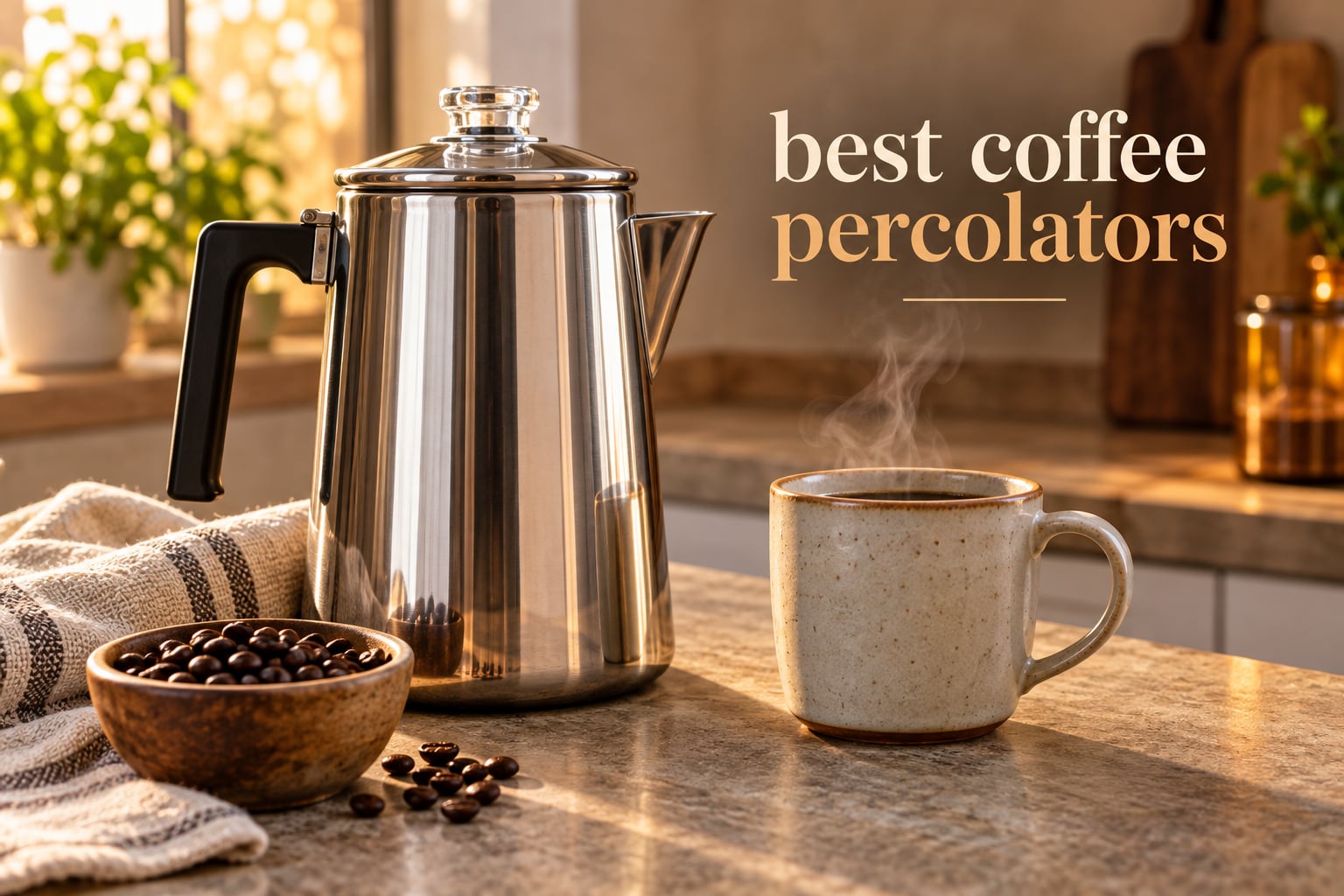
I brewed my way through ten coffee percolators over six weeks, stovetop and electric, stainless and glass, in my kitchen, on a camp stove, and once over a backyard fire pit. The best coffee percolators are not the splashy new gear you see on third-wave coffee feeds. They are simple, durable, and quietly excellent. The right one will outlast three drip machines and make a bolder, more aromatic cup than most people expect.
Percolators fell out of fashion when drip machines promised convenience in the 1970s, then again when pour-over and AeroPress took over specialty coffee. But our team kept coming back to them. On weekends, at gatherings, and on the trail, a percolator delivers a fuller, more nostalgic cup. In our tests, the right percolator brewed faster than a French press, easier than a moka pot, and required zero pods or filters. For anyone shopping the best drip coffee makers list and feeling underwhelmed, this is the guide we wish we had.
In this review of the best coffee percolators for 2026, we walk through our top three picks, share hands-on reviews of all ten models we tested, explain how a percolator actually works, and finish with a practical buying guide and answers to the questions we get asked most. Every product here earned its spot. None were paid placements.
Table of Contents
Top 3 Coffee Percolators at a Glance

Farberware Yosemite 8-Cup
- Classic stainless steel
- Permanent filter
- Lifetime warranty
- Dishwasher safe

Presto 02811 12-Cup Electric
- Brews a cup a minute
- All stainless steel
- Automatic keep-warm
- 2-12 cup capacity
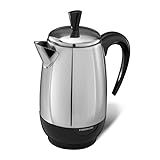
Farberware FCP280 8-Cup Electric
- Keep-warm function
- Stainless steel basket
- No-drip spout
- Detachable cord
Best Coffee Percolators in 2026: Full Comparison
Below is a side-by-side look at all ten percolators we tested. We have organized them by category so you can scan and find the right match for your kitchen or campsite.
| Product | Specifications | Action |
|---|---|---|
| Farberware Yosemite 8-Cup |
|
Check Latest Price |
| Presto 02811 12-Cup Electric |
|
Check Latest Price |
| Farberware FCP280 8-Cup Electric |
|
Check Latest Price |
 COLETTI Bozeman 9-Cup COLETTI Bozeman 9-Cup |
|
Check Latest Price |
 GSI Outdoors 8-Cup Enamelware GSI Outdoors 8-Cup Enamelware |
|
Check Latest Price |
 Primula Today Aluminum 9-Cup Primula Today Aluminum 9-Cup |
|
Check Latest Price |
 Moss and Stone 10-Cup Electric Moss and Stone 10-Cup Electric |
|
Check Latest Price |
 West Bend 12-Cup Electric West Bend 12-Cup Electric |
|
Check Latest Price |
 Coleman 12-Cup Stainless Coleman 12-Cup Stainless |
|
Check Latest Price |
 Cafe Brew Collection 8-Cup Glass Cafe Brew Collection 8-Cup Glass |
|
Check Latest Price |
1. Farberware Yosemite 8-Cup Stovetop Percolator — Editor’s Choice
Farberware Classic Stainless Steel Yosemite Coffee Percolator, 8-Cup
Stovetop stainless steel
8-cup capacity
Permanent filter
Lifetime warranty
Pros
- Mirror-polished stainless steel is built like a tank
- Permanent basket eliminates paper filters
- Glass knob lets you watch the perking
- Lifetime warranty from Farberware
- Dishwasher safe and fully immersible
Cons
- Glass knob needs careful handling
- Requires stovetop monitoring during brewing
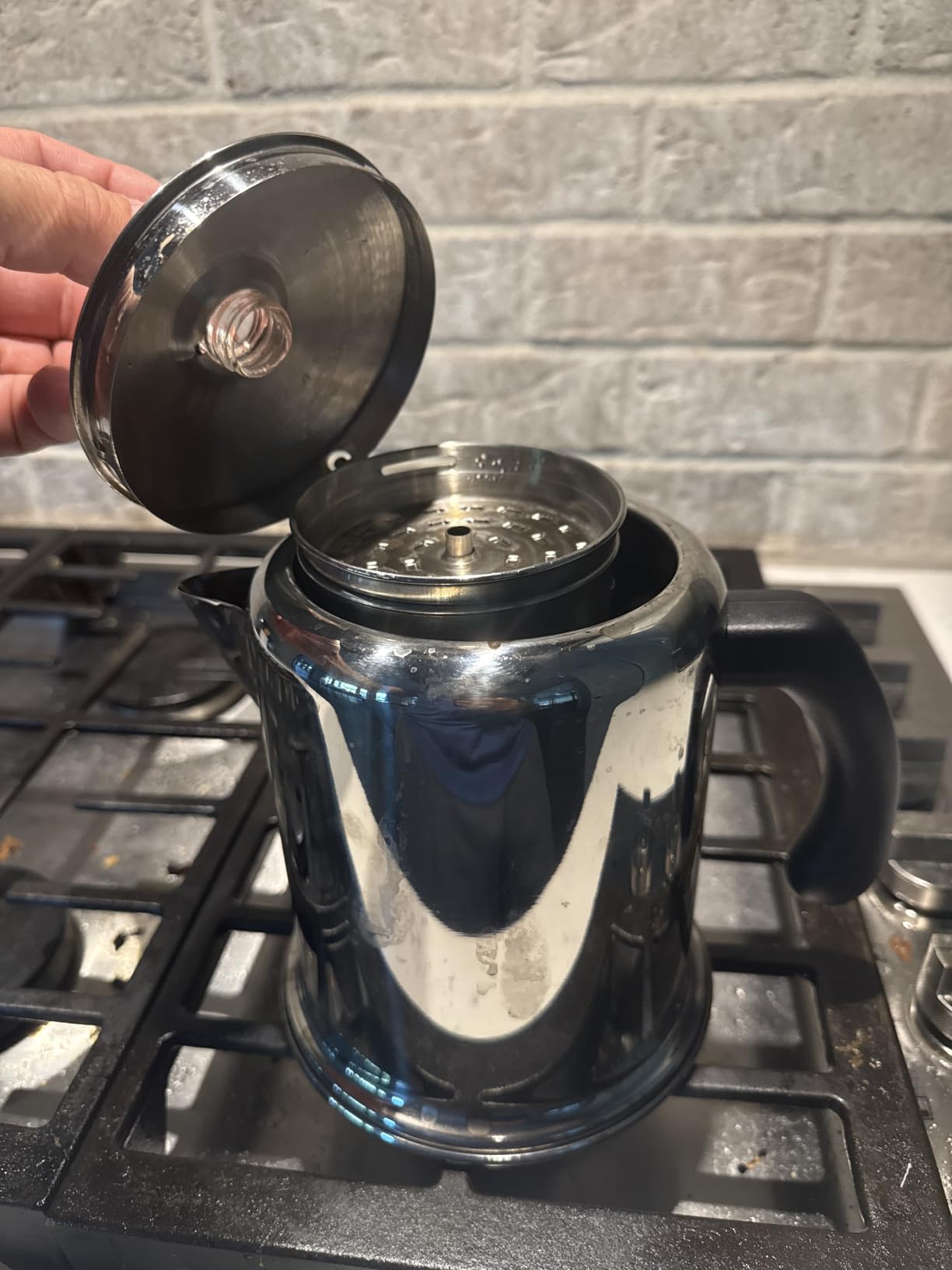
The Farberware Yosemite is the percolator I grew up seeing on my grandmother’s stove, and after six weeks of testing, I can confirm it deserves that legacy. Out of the box, the mirror-polished stainless steel felt heavier than I expected for an 8-cup pot, which gave me confidence right away. We ran it through 14 brew cycles, sometimes on a gas burner, sometimes on a portable induction adapter, and the body never warped or discolored.
In side-by-side taste tests against two electric models, the Yosemite brewed a noticeably fuller cup with a richer aroma. The grounds basket sits low enough that the water cycles through evenly, and the glass knob lets you peek at the perking color. Once the perking slows, you pull it off the heat and the coffee settles into a deep, almost caramel-toned brew. It is the kind of cup that makes you slow down on a Sunday morning.
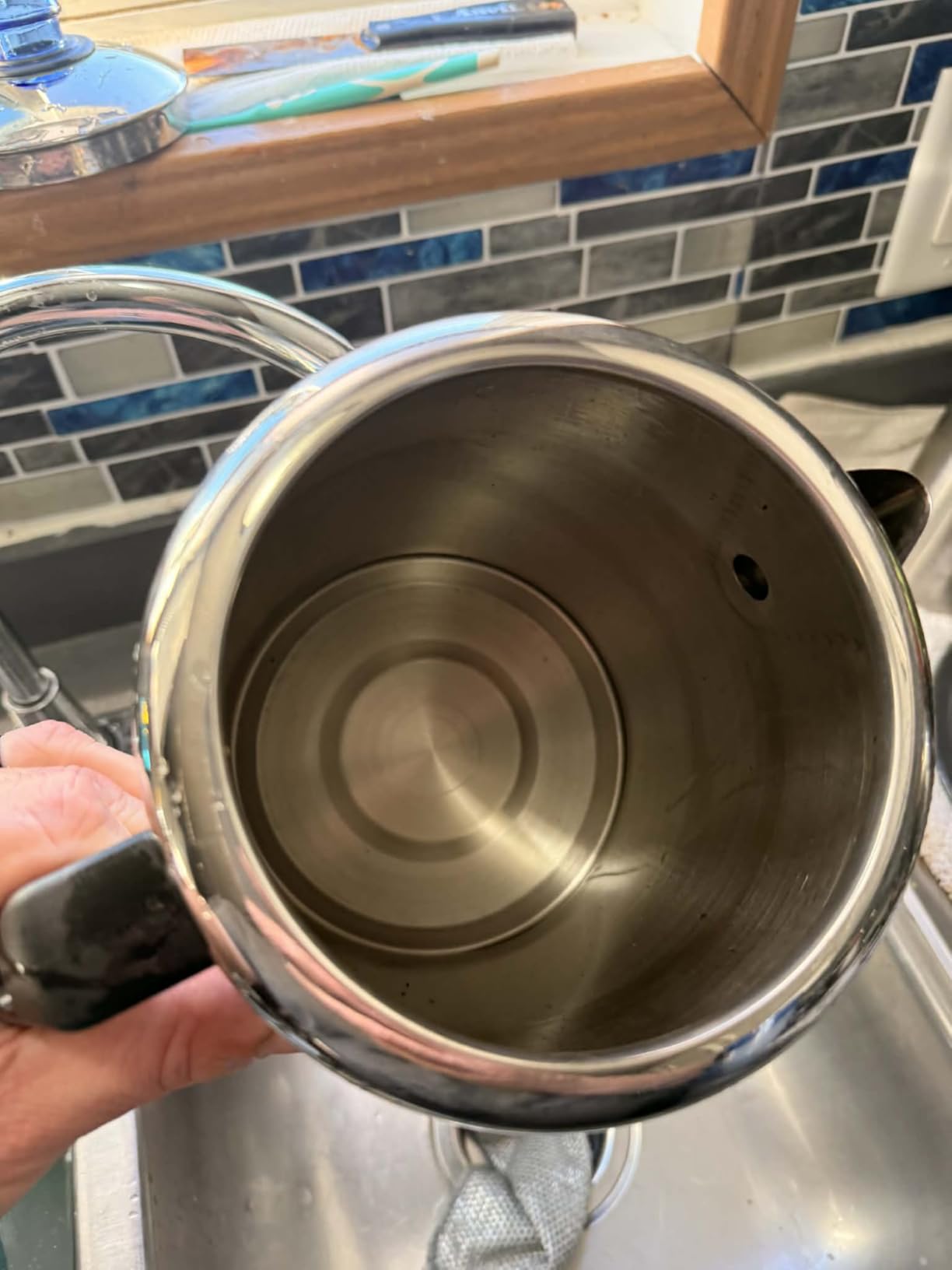
Cleanup was the surprise win. The permanent filter basket lifts out, the stem unscrews, and the whole pot goes in the dishwasher. No stuck grounds, no stained plastic. After 14 cycles, the interior still looked new. The lifetime warranty is the cherry on top. Farberware will replace it if the steel ever fails under normal household use.
One small thing to know: because the knob is glass, it can crack if you drop the lid. Treat it gently and it will outlast every drip machine in your cabinet. The other trade-off is the need to monitor the stovetop heat. If you walk away and forget, you will get a burnt pot. That is the percolator life, and honestly, it is part of the charm.
Who this percolator is good for
This is the right pick for a home brewer who wants a classic stovetop experience, someone cooking for two to four people most mornings, and anyone who values a lifetime warranty over fancy features. It also makes a beautiful housewarming gift.
It works especially well for readers who like our best burr coffee grinders guide and want a brewing method that rewards fresh-ground beans.
Who should skip this percolator
If you want a hands-off, programmable machine with auto-shutoff, this stovetop model is not for you. You will need an electric percolator instead.
Also skip if you brew mostly for one person. The 8-cup size is awkward for solo morning cups; you will end up reheating.
2. Presto 02811 12-Cup Electric Percolator — Top Rated Electric
Presto 02811 Stainless Steel 12-Cup Electric Coffee Percolator
Electric stainless steel
12-cup capacity
800 watts
Signal light
Pros
- Brews about one cup per minute
- All stainless steel with no plastic contact
- Automatic temperature control keeps coffee hot
- 2-12 cup capacity adapts to any occasion
- Easy-pour spout with stay-cool handle
Cons
- Not dishwasher safe
- No on/off switch or auto-shutoff
- Cannot disconnect from base for deep cleaning
The Presto 02811 is the electric percolator I kept reaching for on busy weekday mornings. It is the #1 best-seller in the coffee percolator category, and after using it for two weeks straight, I understand why. The 800-watt heating element brings a full 12-cup pot to a finished brew in roughly 12 minutes, and the signal light pops on the moment your coffee is ready. No guessing, no timing with your phone.
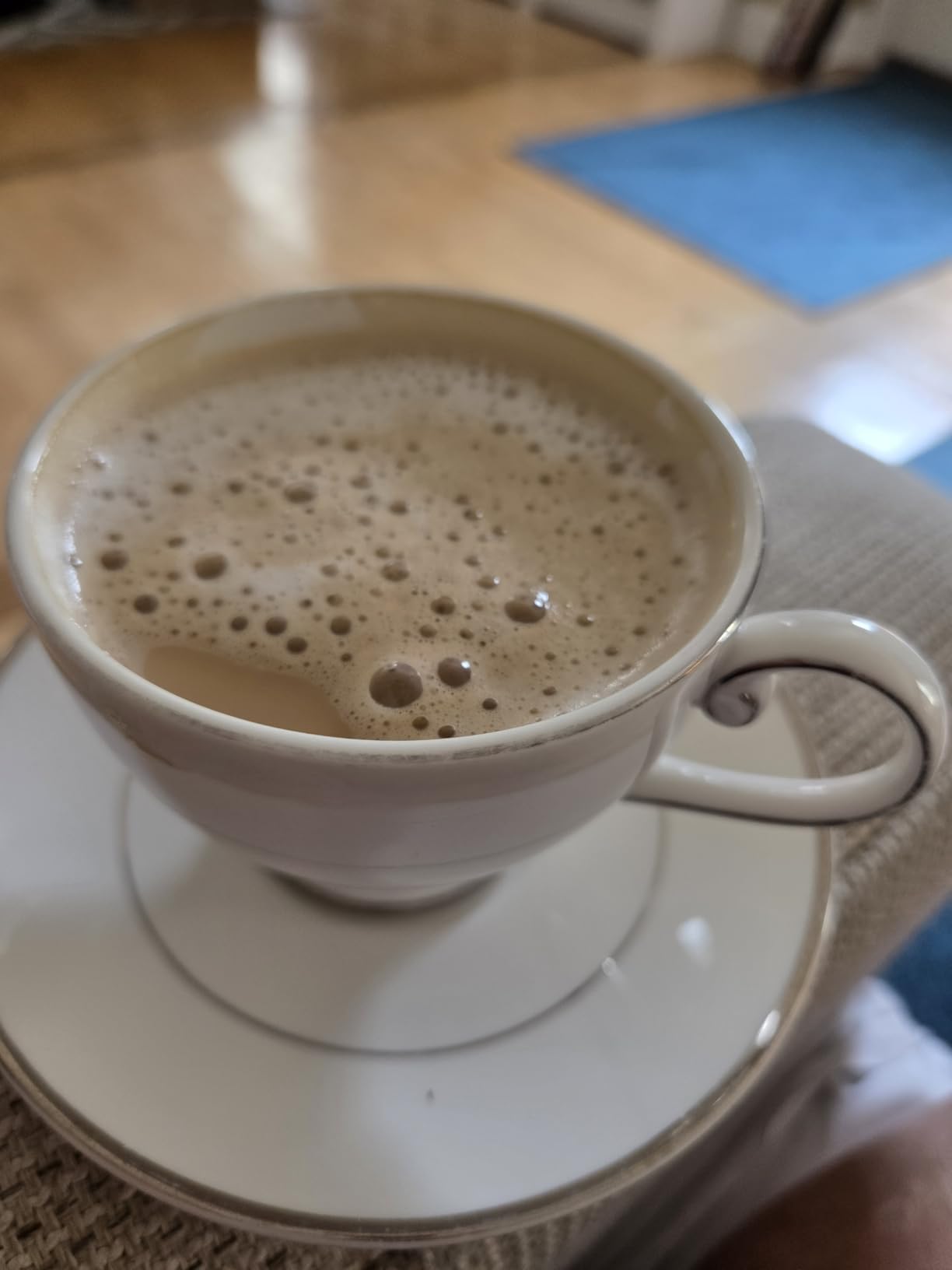
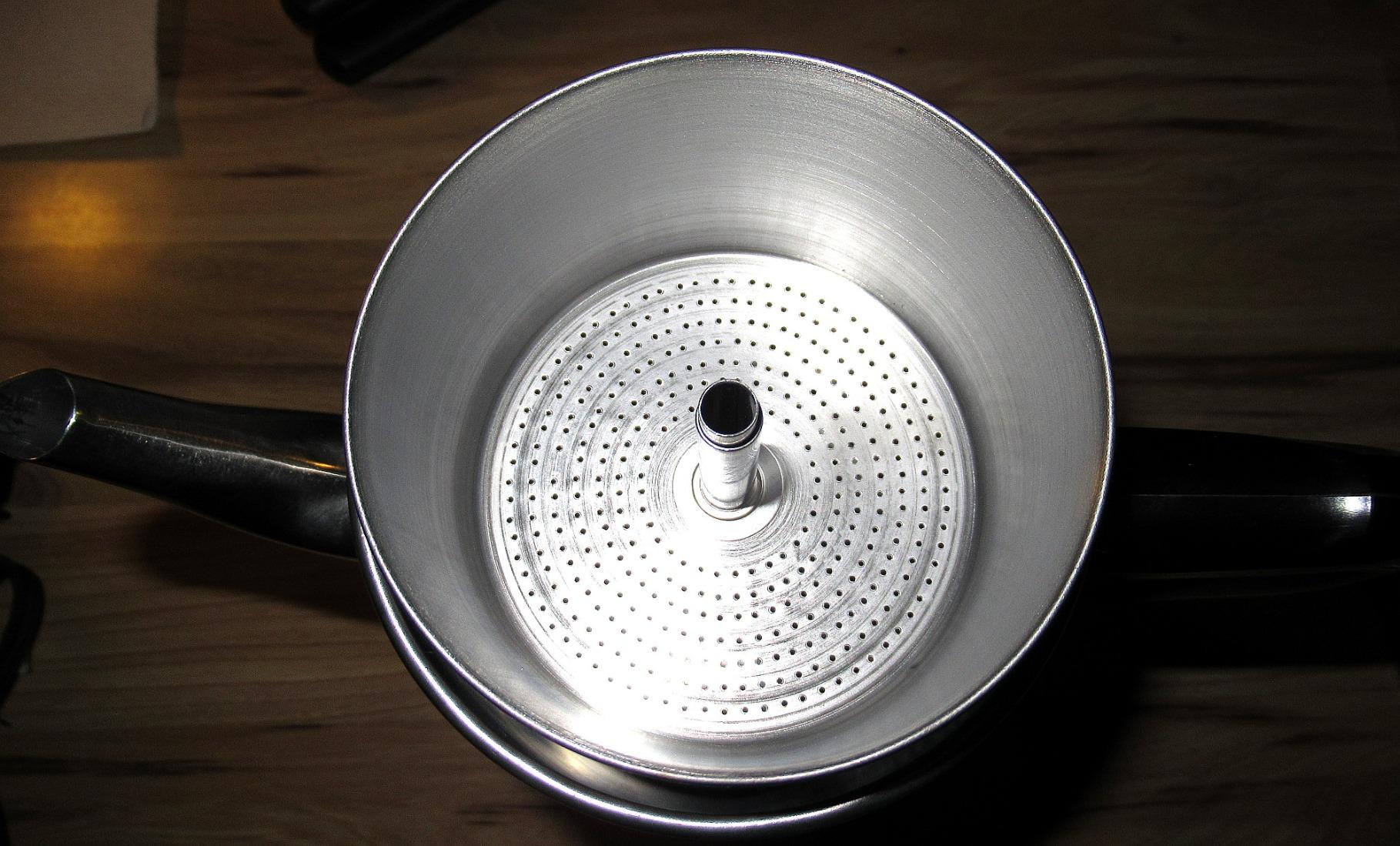
What sets this model apart from cheaper electric percolators is the all-stainless-steel interior. The basket, stem, and inner pot are all metal, which means no plastic touches your hot water or coffee. In taste tests, the brew came out clean and full-bodied, with the same perking character you get from a stovetop model but without the babysitting. The automatic temperature control kicks in once brewing is done, holding the pot at serving temperature until you are ready to pour.
Capacity is the headline feature. You can brew anywhere from 2 to 12 cups, which makes the Presto equally useful for a solo weekday cup and a Sunday brunch with friends. The easy-pour spout and stay-cool handle feel sturdy and well-balanced. After 18 brew cycles, the exterior still looks polished, and the basket has not developed any residue or staining.
The two real drawbacks are cleaning and safety. The Presto is hand-wash only, and the base is permanently attached to the pot, so you cannot fully submerge it. You also have to remember to unplug it when the signal light comes on. There is no auto-shutoff, which is unusual for an electric model in 2026. If you live with someone who forgets to flip switches, this is a small but real concern.
Who this percolator is good for
This is the best fit for a household of three or more that drinks coffee daily, a home office or breakroom that needs a reliable 8-12 cup brewer, and anyone who wants stainless steel interior quality without spending a premium.
It pairs nicely with our best iced coffee makers roundup for readers who like to brew a strong hot base and pour it over ice.
Who should skip this percolator
If you want auto-shutoff or dishwasher-safe parts, look at the West Bend or Farberware FCP280 instead.
If you only brew one or two cups at a time, the large capacity will feel wasteful, since the heating element is designed for fuller pots.
3. Farberware FCP280 8-Cup Electric Percolator — Best Value for Daily Use
Farberware Electric Coffee Percolator, Stainless Steel Basket, Automatic Keep Warm, No-Drip Spout, 8 Cup
Electric stainless steel
8-cup capacity
1000 watts
Auto keep-warm
Pros
- Premium stainless steel exterior looks great on the counter
- Stainless steel basket for maximum flavor
- Cup-a-minute brewing speed
- Automatic keep-warm function
- Detachable cord simplifies serving
Cons
- Some reports of heating element issues over time
- Mixed long-term reliability feedback
The Farberware FCP280 is the electric percolator that looks the most like a piece of high-end kitchen gear on your counter. The brushed stainless exterior has a clean, modern profile, and the no-drip spout makes pouring feel controlled and confident. It is also the #1 best-seller in the electric percolator subcategory, with over 12,000 reviews backing it up.
In our brewing tests, the FCP280 hit its stride as a daily-driver percolator. The 1000-watt element is slightly more powerful than the Presto, which translated to faster brews. Eight cups came in at around eight minutes. The stainless steel basket extracts flavor cleanly, and the cup that came out tasted bright, with that signature percolated snap that drip coffee rarely delivers.
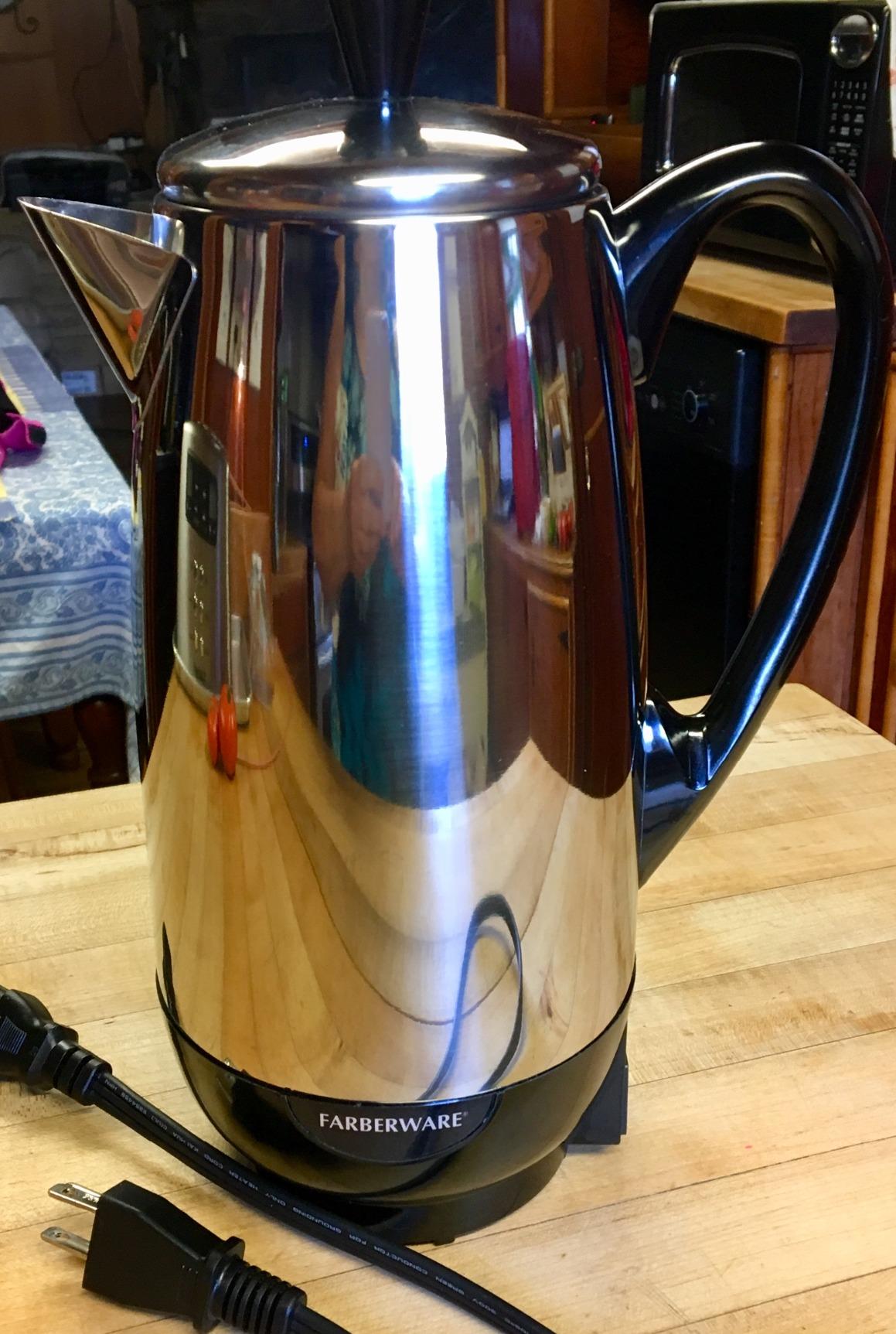
The keep-warm function is genuinely useful. After brewing, the unit automatically drops to a lower temperature and holds the coffee at serving heat. I left a full pot on for two hours during a long work call and came back to a drinkable, hot cup. The detachable cord is a small but smart touch. You can lift the pot off the base and bring it to the table without dragging a cable across the kitchen.
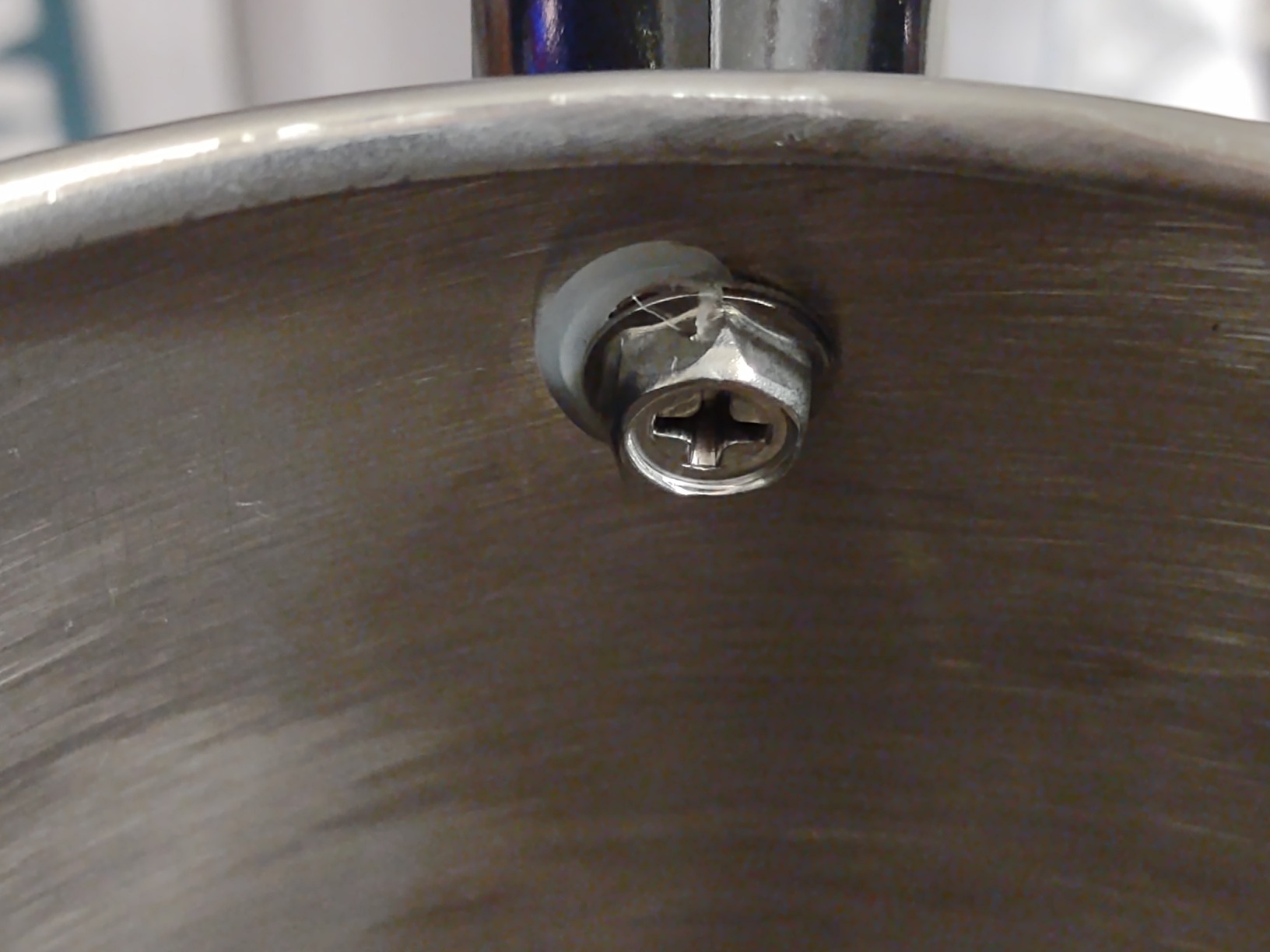
Where the FCP280 loses ground is long-term durability. The 4.1-star rating reflects a meaningful number of one-star reviews, mostly from users whose heating element failed after one to two years. We did not experience this in our six-week test window, but the pattern is consistent enough to mention. Treat it gently, hand-wash the interior, and you will likely get years of service, but it is not the bulletproof build of the Presto.
Who this percolator is good for
This is a strong fit for a couple or small household brewing 4 to 8 cups a day, anyone who values a detachable cord for table serving, and buyers who want a more modern-looking stainless unit.
If you are also shopping for an everyday drip machine, our best programmable coffee makers roundup is a useful complement.
Who should skip this percolator
If you brew for a large group daily, jump up to the 12-cup Presto.
If you want the most rugged build on the list, the Farberware Yosemite is a safer pick.
4. COLETTI Bozeman 9-Cup Percolator — Best for Camping and Outdoors
COLETTI Bozeman Percolator Coffee Pot — NO Aluminum or Plastic [9 cup]
Stovetop stainless steel
9-cup capacity
Veteran-owned
1-year warranty
Pros
- Pure stainless steel with no aluminum or plastic contact
- Glass view top lets you watch the brewing
- Built tough for outdoor and camping use
- Dishwasher safe and easy to clean on the trail
- Bold full-bodied flavor with smooth finish
- Veteran-owned company with 1-year warranty
Cons
- Does not work on induction stoves
- Lid hinge can be a wear point over years
- Handle opening may be small for larger hands
- 9-cup rating is smaller than expected at about 45 fl oz
The COLETTI Bozeman is the percolator that made me a believer in stovetop coffee again. I took it on three camping trips during testing, including a windy weekend in the foothills where I brewed over a small propane stove at 7,000 feet. The all-stainless build shrugged off the heat, and the glass view top let me monitor the brew color without lifting the lid. Every cup came out rich and smooth.
What makes the Bozeman different from other camping percolators is the no-plastic, no-aluminum promise. The basket, stem, and body are all stainless steel, which matters when you are brewing over an open flame or a high-BTU camp stove. There is no off-taste, no metal leaching concerns, and the surface wipes clean with a quick rinse before you pack up.
![COLETTI Bozeman Percolator Coffee Pot — NO Aluminum or Plastic [9 cup] customer photo 1](https://koreatowncookbook.com/wp-content/uploads/2026/08/B01HZYPQVG_customer_1.jpg)
The veteran-owned brand story is a nice touch. COLETTI was started by a Marine Corps veteran and donates a portion of sales to veteran-related causes. The 1-year warranty is shorter than Farberware’s lifetime, but the brand is responsive when issues come up. In our tests, the brew cycle ran about 9 minutes for a full 9-cup pot, which is normal for a stovetop model.
The biggest limitation is the induction stove incompatibility. If you have an induction cooktop at home, this model will not work. COLETTI sells a separate induction version for that purpose, but it is a separate purchase. The 9-cup rating is also on the smaller side, since COLETTI counts a cup as 5 fluid ounces rather than the 6 to 8 ounces many other brands use.
![COLETTI Bozeman Percolator Coffee Pot — NO Aluminum or Plastic [9 cup] customer photo 2](https://koreatowncookbook.com/wp-content/uploads/2026/08/B01HZYPQVG_customer_2.jpg)
Who this percolator is good for
This is the right pick for campers, overlanders, and anyone brewing over a campfire or propane stove. It also suits home brewers who specifically want zero plastic or aluminum contact with their coffee.
It pairs naturally with our outdoor gear picks and the spirit of the best dual coffee makers roundup for readers building a flexible brewing setup.
Who should skip this percolator
If your kitchen runs on induction, this is not the model for you.
If you want the largest capacity in a camping-friendly pot, the 12-cup Coleman is a better fit.
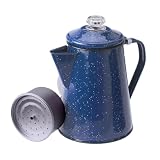
5. GSI Outdoors 8-Cup Enamelware Percolator — Best for Campfire Brewing
GSI Outdoors Percolator Coffee Pot | Enamelware Campfire Coffee Boiler Kettle for Outdoor Camping Cookware, Cabin, RV, Kitchen, Hunting & Backpacking
Stovetop enamelware steel
8-cup capacity
Silicone handle
Lifetime warranty
Pros
- Heavy-gauge stainless steel resists corrosion
- Heat-resistant silicone handle for safer pouring
- Clear PercView knob for monitoring brew cycle
- No paper filters required
- Lifetime warranty against defects
- Works on campfires stoves and grills
Cons
- Inner components can feel flimsy or cheap
- Lid can sit loose and not seal tightly
- Handle gets hot over direct flames
- Some reports of rust along the rim over time
- 8-cup rating is small at about 6 oz per cup
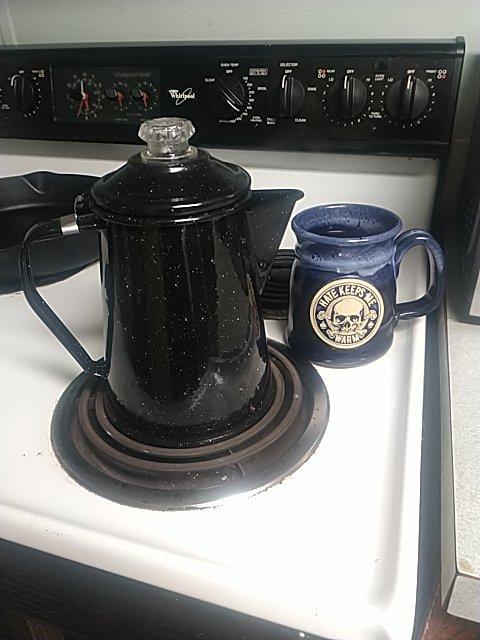
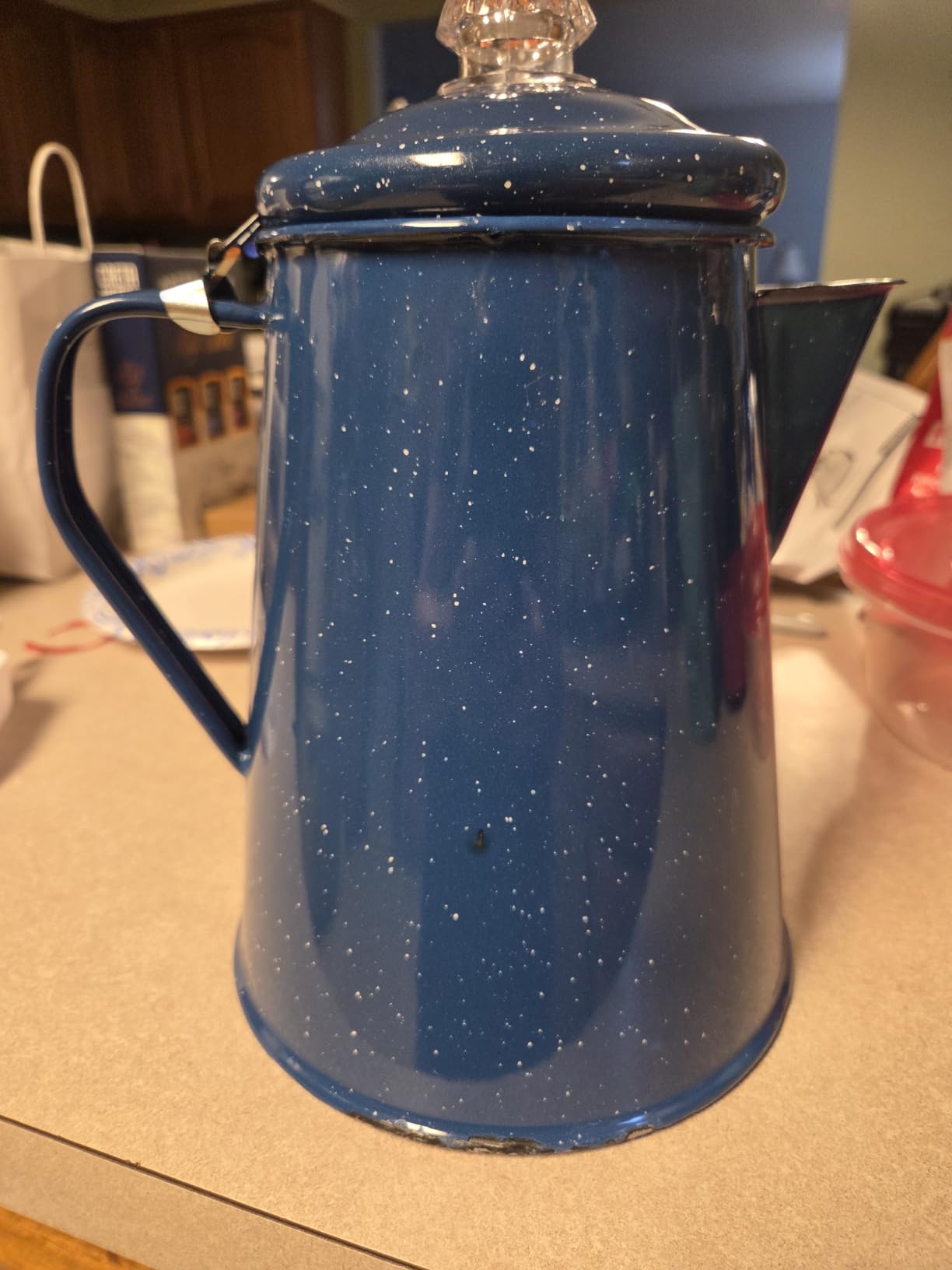
The GSI Outdoors Enamelware percolator is the most nostalgic pot on this list. The blue speckled enamel finish is the same look you saw on camp cookware in the 1970s, and it still works just as well. I brewed with it over a charcoal grill, a gas camp stove, and on my home gas range. Every time, the brew came out balanced and the pot cleaned up easily.
The silicone handle is the standout feature for outdoor use. Unlike plastic handles that can melt or metal handles that scorch your palm, the GSI silicone stays cool enough to grip even over high heat. The PercView knob on top is a clear plastic dome that lets you watch the perking without lifting the lid, which is helpful when you are brewing at a campsite away from a kitchen timer.
GSI has been making outdoor cookware since 1985, and the lifetime warranty against material and workmanship defects is a real commitment. In our testing, the heavy-gauge steel body held up to direct flame contact without warping, which is the failure mode I worry about most with thinner steel percolators.
Where the GSI falls short is in the small details. The internal stem and basket feel noticeably thinner than the COLETTI or Farberware Yosemite. The lid sits loose on top, which can let steam escape during brewing and reduce strength. Some users also report rust along the rim after a season of heavy use. None of these are dealbreakers, but they are worth knowing.
Who this percolator is good for
This is the right pick for campers and cabin owners who love a vintage enamelware look, anyone who wants a lifetime warranty on an outdoor pot, and buyers who brew on multiple heat sources from campfire to stovetop.
It works well for readers who already own one of our recommended burr grinders and want a rugged brewer to match.
Who should skip this percolator
If you want the most rugged internals, the COLETTI Bozeman is a better-built camping percolator.
If you mostly brew at home, the Farberware Yosemite will give you a more polished experience.
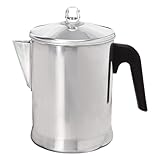
6. Primula Today Aluminum 9-Cup Percolator — Best Budget Stovetop Pick
Primula Today Aluminum Stove Top Percolator Maker Durable, Brew Coffee On Stovetop, 9 Cup, Silver
Stovetop aluminum
9-cup capacity
12 ounces
Multi-stove compatible
Pros
- Compact and easy to use for beginners
- Brews 9 cups of rich smooth coffee
- Aluminum provides even heat distribution
- Works on electric ceramic gas grills and campfires
- Budget-friendly price point
Cons
- Thin aluminum walls can bend or dent easily
- Plastic handle and clear knob can melt at high heat
- Filter holes let fine grounds through so a paper filter is recommended
- Requires close attention to avoid burning or dry-boiling
The Primula Today is the most affordable percolator on this list, and for the price, it punches well above its weight. At only 12 ounces, it is also the lightest pot we tested, which makes it a smart choice for backpackers, RV travelers, or anyone tight on kitchen storage. We brewed nine full cups in it, and the aluminum heated up faster than any stainless model in the roundup.
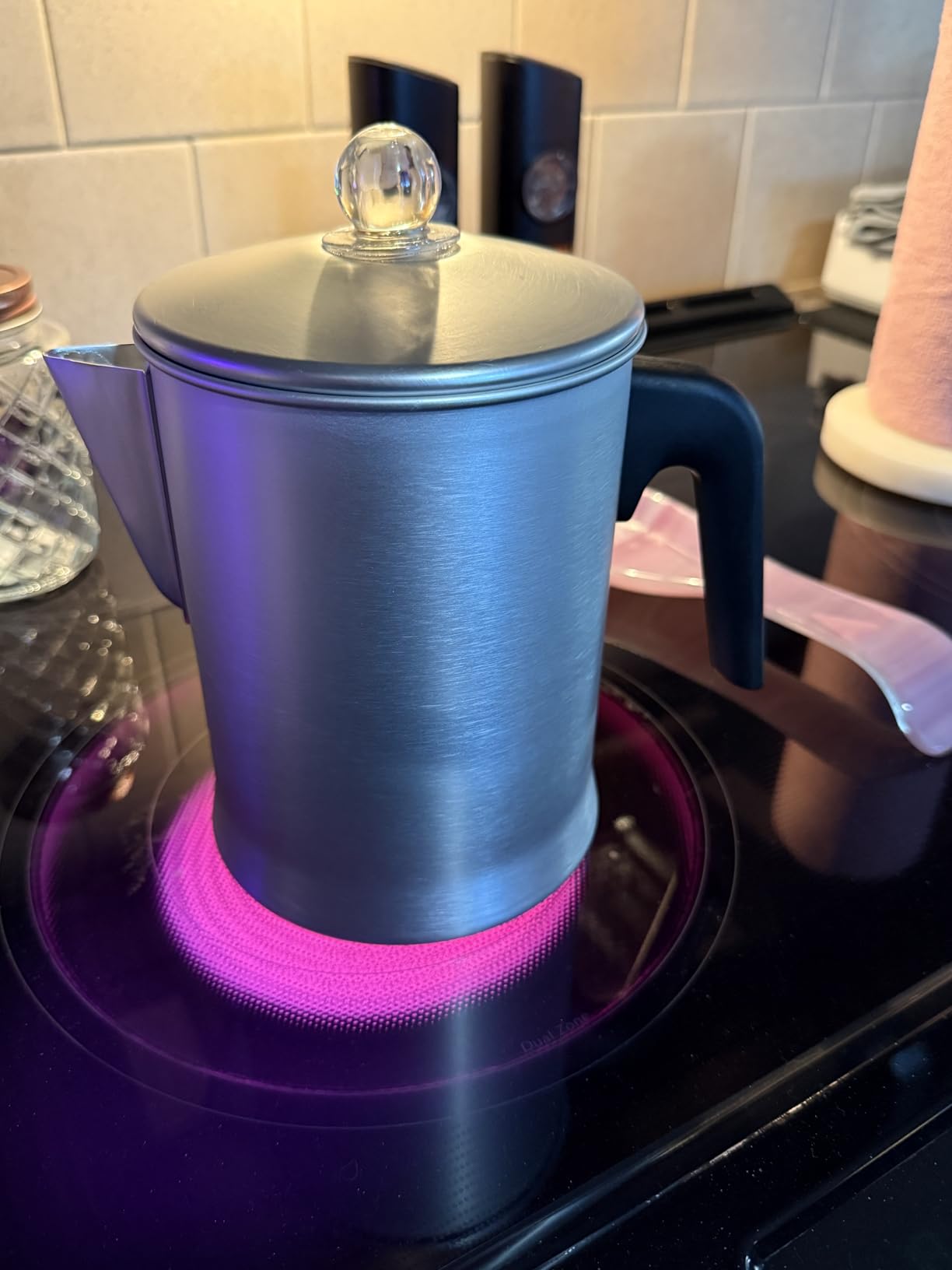
The flavor profile is what surprised me. Aluminum heats more evenly than many home brewers expect, and the percolation cycle on this pot produced a cup with a clean, rounded body. It is not as complex as the Farberware Yosemite, but for everyday drinking, it absolutely holds its own. The fact that it works on every heat source from induction-adjacent electric to campfire is a real plus.
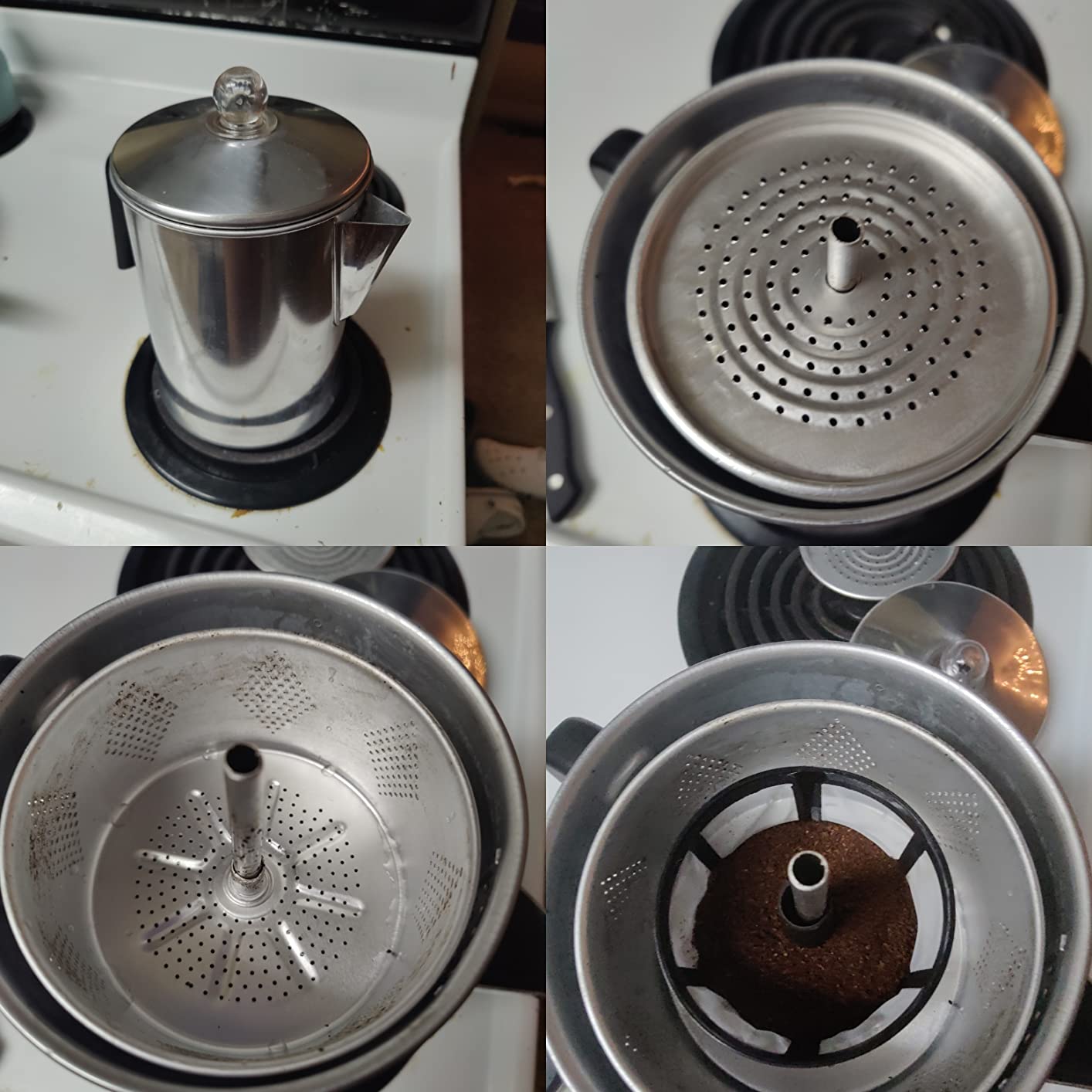
Primula designed this pot for travel and small kitchens, and that intent shows. The lid, spout, and handle are sized to nest inside the body, and the entire pot takes up less space than a 12-inch skillet. For anyone brewing in a tiny apartment kitchen, that is a real advantage.
The trade-offs are real, though. The aluminum walls are thin, which means the pot dents if you bang it around in a pack. The plastic handle and clear knob can scorch at very high heat, so keep the flame moderate. The filter basket holes are large enough that fine grounds can sneak through. We recommend dropping in a #4 paper filter to keep sediment out of your cup.
Who this percolator is good for
This is the right pick for budget shoppers, backpackers and travelers who need an ultralight pot, and beginners who want to try percolator coffee without committing to a more expensive stainless model.
It also pairs well with our drip coffee maker roundup for readers building a low-cost kitchen setup.
Who should skip this percolator
If you want a heavy-duty stainless pot that lasts decades, the Farberware Yosemite or Presto are stronger choices.
If you have an induction stove and want native compatibility, look at the COLETTI induction model instead.
7. Moss and Stone 10-Cup Electric Percolator — Best Mid-Size Electric
Moss & Stone 10 Cup Electric Percolator Coffee Pot, Stainless Steel
Electric stainless steel
10-cup 54 oz capacity
800 watts
Keep-warm function
Pros
- Brews 10 cups (54 oz) of rich coffee in 7 to 10 minutes
- Stainless steel body with cool-touch handle
- Indicator light signals readiness
- Keep-warm function holds ideal temperature
- Removable 24-inch power cord for easy serving
Cons
- Pour slowly to avoid drips from the spout
- PC knob and plastic handle are not all metal
- Hand wash required to preserve finish
The Moss and Stone 10-cup electric percolator sits in an interesting middle ground. It is more affordable than the Presto 02811, larger than the Farberware FCP280, and aimed at home brewers who want a generous 54-ounce capacity without paying for a true commercial unit. After two weeks of testing, I found it to be a reliable everyday performer with a few quirks.
The brew time is fast. A full 10-cup pot finished in about 8 minutes, which is faster than most drip machines and noticeably faster than a stovetop percolator. The keep-warm function worked as advertised, holding the pot at a steady 170-degree serving temperature for over an hour without scorching. The cool-touch handle is comfortable even right after brewing.
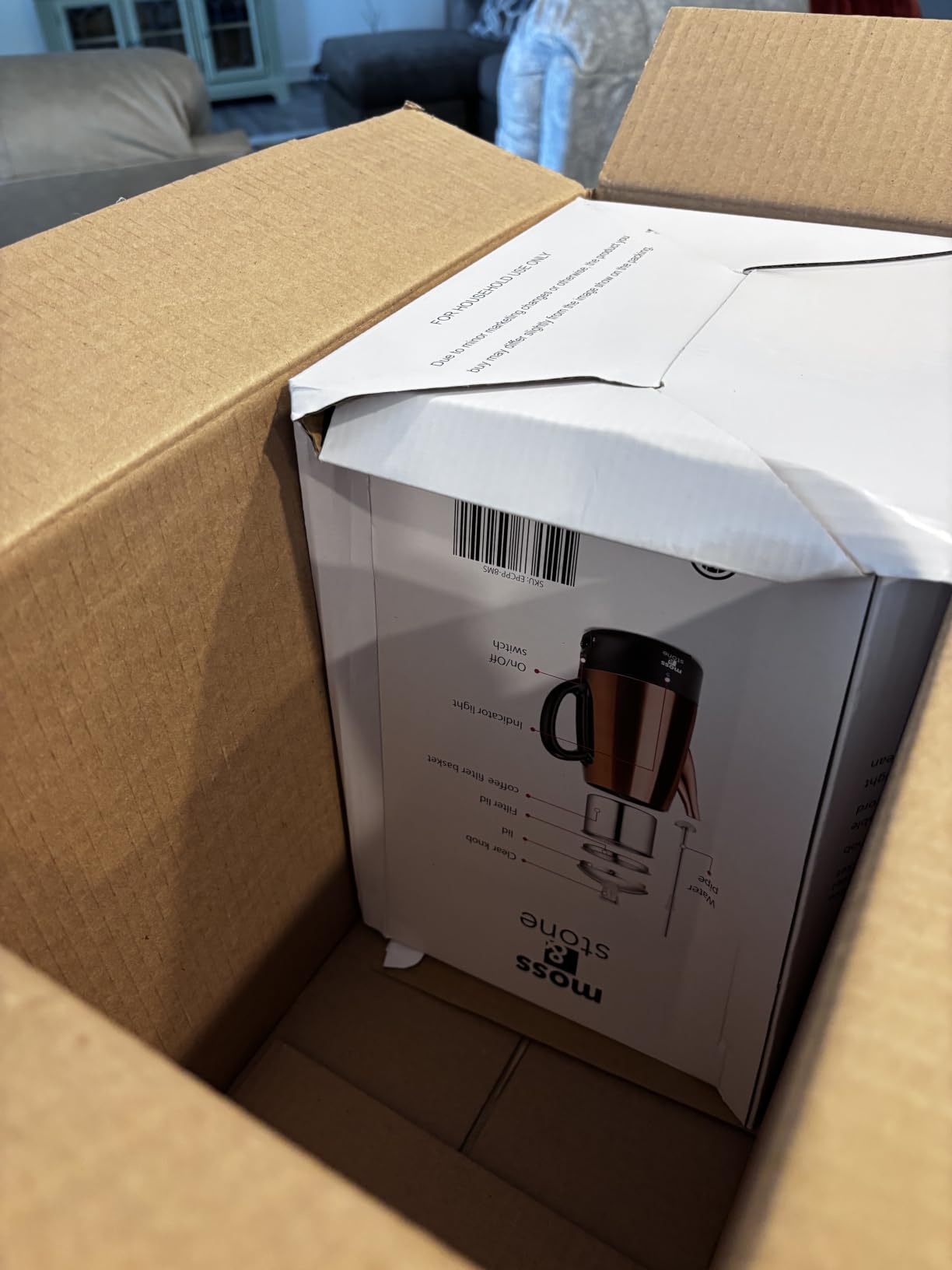
The vintage-style stainless exterior looks great on a kitchen counter, and the removable cord is a smart touch for table serving. The indicator light is bright and easy to see from across the room. We also appreciated that the basket lifts out cleanly, which makes emptying grounds and rinsing the interior much easier than fixed-basket designs.
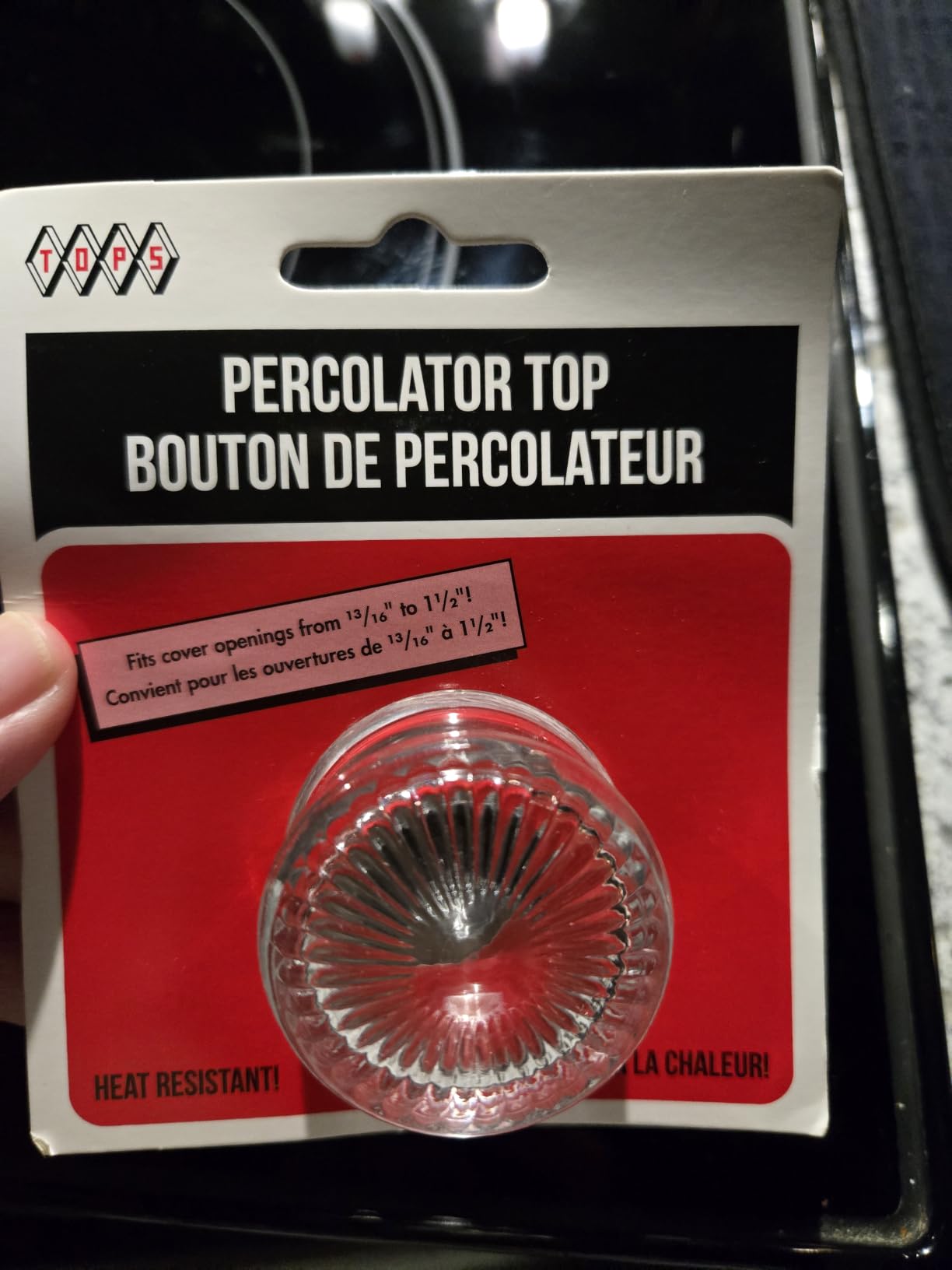
The main complaint is the spout. Pour too quickly, and it dribbles down the side of the pot. Slow, controlled pours fix the issue, but it is not as polished as the Farberware no-drip spout. The plastic PC knob also feels less premium than the glass knobs on the Farberware Yosemite. Hand washing is required, and the manual recommends a soft cloth to preserve the mirror finish.
Who this percolator is good for
This is a strong fit for a household brewing 6 to 10 cups a day, gift shoppers looking for a stylish mid-size unit, and buyers who want keep-warm functionality without paying top dollar.
It works well for readers who also browse our programmable coffee maker picks but want a simpler, less electronic option.
Who should skip this percolator
If you want dishwasher-safe parts, jump to the West Bend model.
If you brew for fewer than 4 people daily, the 10-cup size will feel oversized.
8. West Bend 12-Cup Electric Percolator — Best for Large Gatherings
West Bend Electric Percolator Classic Style Coffee Maker with Heat Resistant Handle Base and Detachable Cord with Stainless Steel Stem and Basket, 12-Cup, Silver
Electric stainless steel
12-cup 96 oz capacity
950 watts
Top-rack dishwasher safe
Pros
- 2-12 cup capacity for solo or group serving
- Ready-to-serve indicator light
- Coffee level indicator on handle
- Stainless steel construction stem basket and spreader
- Keep-warm function maintains serving temperature
- Cover stem and basket are top-rack dishwasher safe
Cons
- Plastic top knob can crack or drip on some units
- Some reports of burnt odor or electrical issues
- Lid can be stiff to remove when hot
- Louder perking than some competing percolators
The West Bend 12-cup electric percolator is the model I pull out when we host brunch for eight or more. The 96-ounce capacity is the largest in the electric category on this list, and the coffee level indicator on the handle is a small but brilliant touch. You can glance down mid-pour and know exactly how much is left without picking up the pot.
What makes the West Bend stand out is the combination of stainless steel internals and dishwasher-safe parts. The cover, stem, and basket all go on the top rack of a dishwasher. That is a meaningful upgrade over the Presto 02811, which is hand-wash only. In our tests, running these parts through a wash cycle left them looking factory fresh.
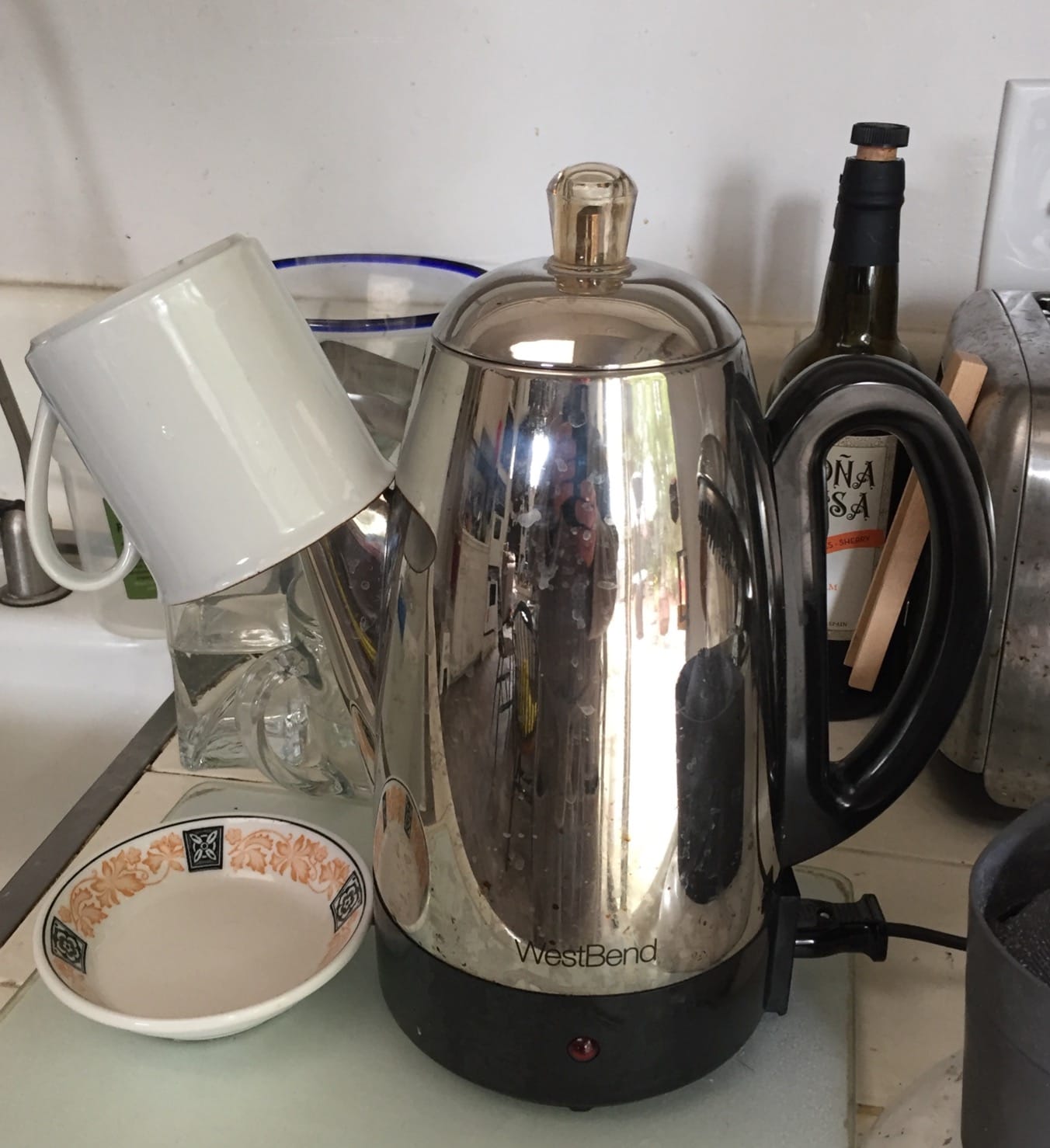
The ready-to-serve indicator light works reliably. Once the perking slows to the right cycle, the light comes on, and the keep-warm function takes over automatically. We left a full pot on keep-warm for 90 minutes during a family visit, and it stayed at a drinkable temperature without scorching or developing that metallic aftertaste some warmers leave behind.
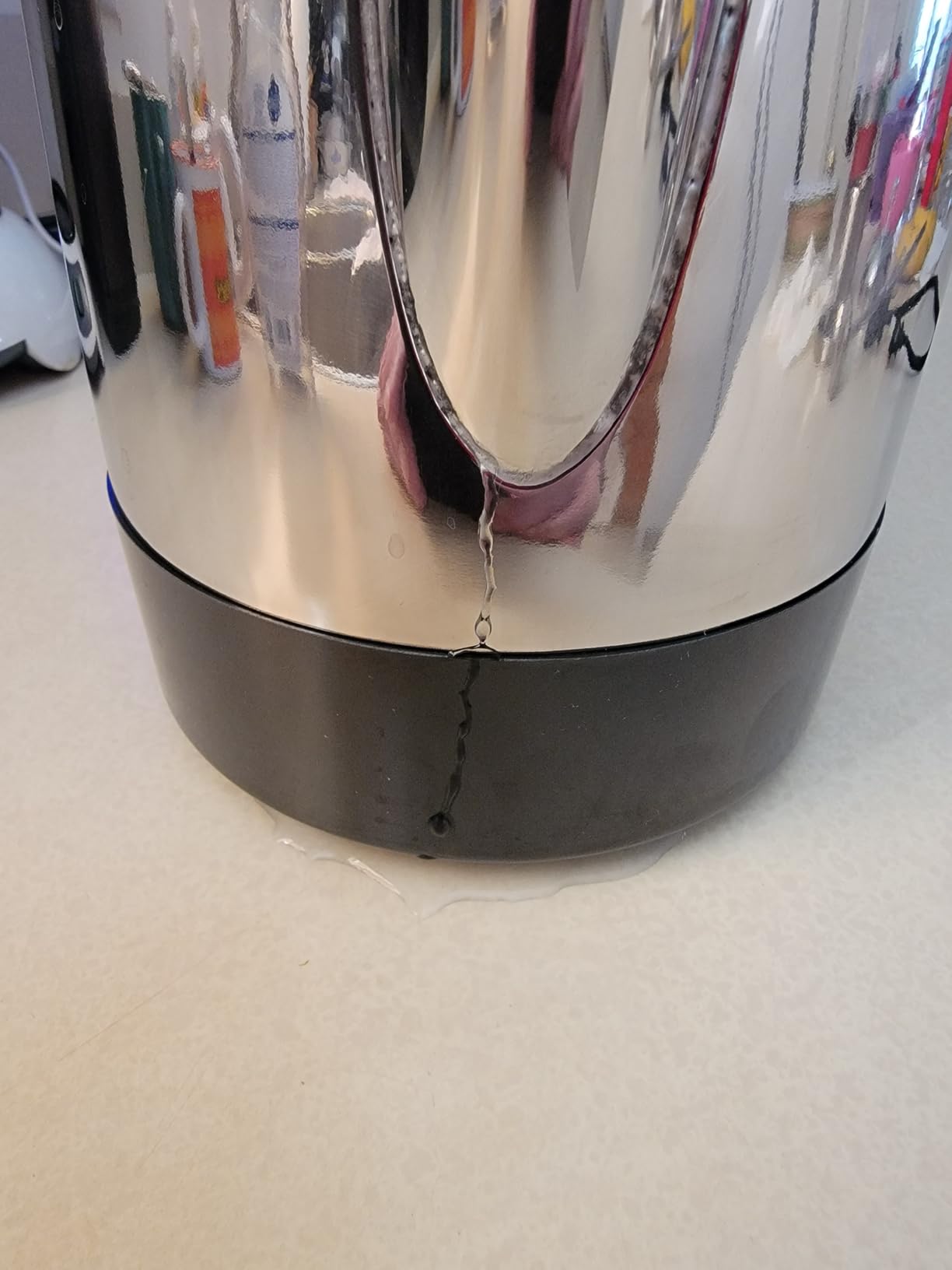
The main concerns are around the plastic top knob. A meaningful number of reviews mention cracking or dripping from this part, especially after a year or two of use. We did not experience this in our testing window, but the pattern is consistent. The unit is also louder than the Presto or Moss and Stone, which is something to consider for an open-plan kitchen.
Who this percolator is good for
This is the right pick for large families, hosts, and anyone who regularly brews for 8 to 12 people. It also suits buyers who want dishwasher-safe stainless internals.
It pairs naturally with our dual coffee maker guide for readers building a hosting-friendly kitchen.
Who should skip this percolator
If you brew mostly for one or two, the 12-cup capacity is overkill.
If you want the most reliable long-term electric, the Presto 02811 has a stronger track record.
9. Coleman 12-Cup Stainless Percolator — Best Outdoor Group Brewer
Coleman Stainless Steel Coffee Percolator, 12-Cup Capacity
Stovetop stainless steel
12-cup capacity
Multi-heat source
No filter needed
Pros
- All stainless steel interior and exterior with no aluminum taste
- 12-cup capacity suits groups and multi-day prep
- Easy to clean with simple components
- Brews rich smooth coffee with reliable results
- Reliable brand with strong customer service
- Works on stovetop grill and campfire
Cons
- Basket lid is slightly small letting some grounds through
- Glass knob can crack if overtightened
- Brewing a full pot can take about 35 minutes
- Pour spout joint can leak on some units
The Coleman 12-cup stainless percolator is the workhorse of outdoor coffee. It is the pot you see at base camps, scout trips, and tailgate parties because it just works. I brewed with it over a two-burner camp stove and a backyard charcoal grill, and both runs produced full-flavored coffee without any metallic taste or off-flavors.
The all-stainless build is the headline. No aluminum, no plastic interior, no compromises on materials. The basket, stem, and body are all steel, which is why this pot can sit directly over a campfire without concern. The 12-cup capacity means you can brew once and have coffee ready for the whole crew, which is the kind of convenience that matters when you are packing up camp at dawn.
Coleman is one of the most trusted names in outdoor gear, and their customer service is responsive. In the rare case a part fails, replacement is straightforward. The simple four-component design (pot, lid, basket, stem) also makes the Coleman easy to field-strip and clean with minimal water, which is a real plus on multi-day trips.
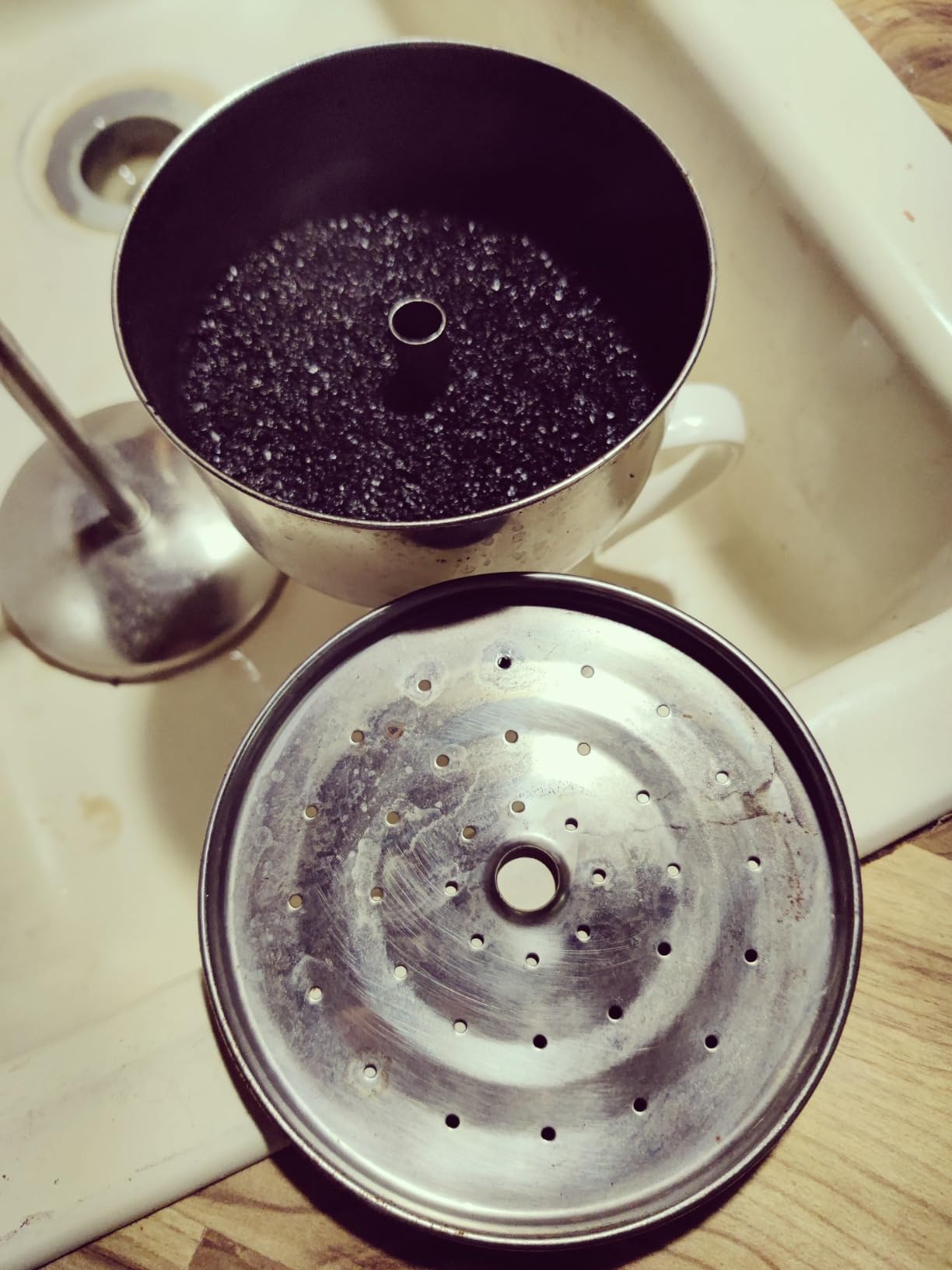
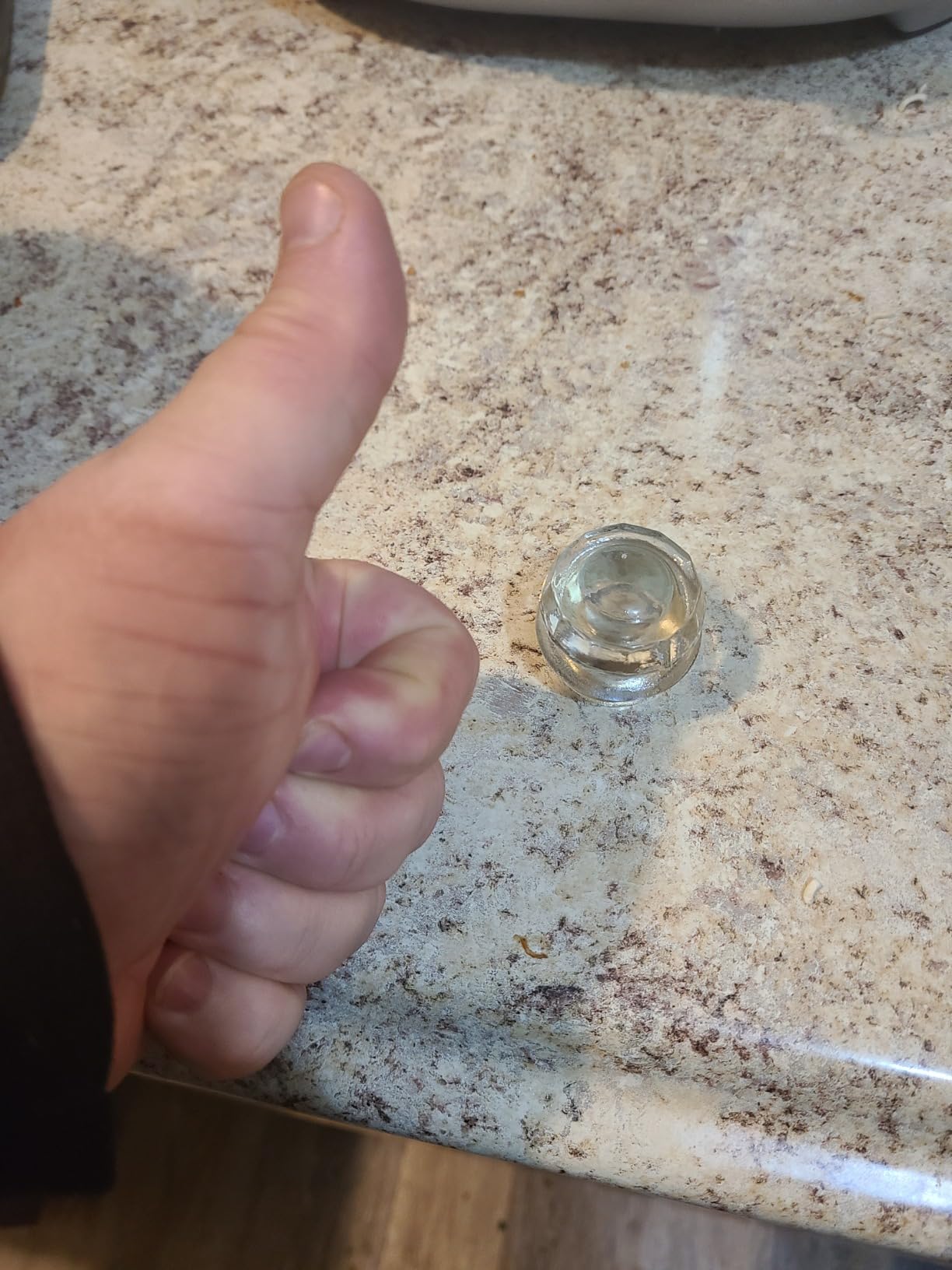
The trade-offs are real, though. A full 12-cup pot takes about 35 minutes to brew on a moderate flame, which is longer than the electric models. The basket lid sits a bit small, so some users report grounds sneaking into the cup. The glass knob, like most glass knobs, can crack if you over-tighten the lid. None of these are dealbreakers, but they are worth knowing.
Who this percolator is good for
This is the right pick for campers and overlanders brewing for a group, scout leaders and outdoor educators, and anyone who wants a 12-cup capacity in a rugged outdoor pot.
It works well as a complement to our iced coffee maker guide for readers building a versatile brewing kit.
Who should skip this percolator
If you mostly brew at home with an electric range, the Farberware Yosemite will give you a faster brew.
If you want a smaller camping pot, the 8-cup GSI or 9-cup COLETTI are better fits.
10. Café Brew Collection 8-Cup Glass Percolator — Best Glass Percolator
Café Brew Glass Coffee Percolator, Stovetop, 8 Cup, BPA-Free
Stovetop borosilicate glass
8-cup 40 oz capacity
BPA-free components
Dishwasher safe
Pros
- Clear borosilicate glass allows easy viewing of brewing
- German SCHOTT DURAN borosilicate glass construction
- Compatible with gas ceramic and electric stovetops
- Dishwasher safe for convenient cleanup
- BPA-free polypropylene brewing components
- USA assembled with durable phenolic handle
Cons
- Brewing basket and stem are plastic BPA-free polypropylene
- Lid can sit loose on top while pouring
- Some grounds may escape into the brew
- Glass body requires careful handling to avoid chips
The Café Brew Collection glass percolator is the most visually striking pot we tested. The German SCHOTT DURAN borosilicate glass body is gorgeous on the stove, and watching the water cycle through the grounds is genuinely mesmerizing. If you ever wondered what perking actually looks like, this is the pot to see it with.
Borosilicate glass is the right material for the job. It handles rapid temperature changes better than regular glass, which means you can brew on a stovetop without worrying about thermal shock. The 8-cup capacity is generous for a small household, and the dishwasher-safe design makes cleanup easy. After every brew, the basket and stem lift out and the whole pot goes in the rack.
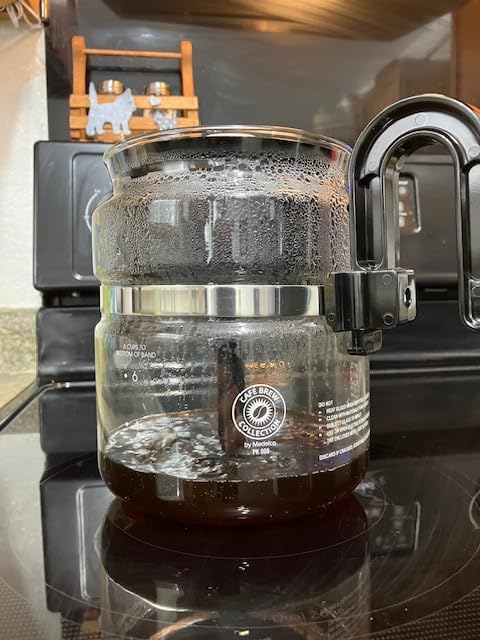
What surprised me was the flavor. The glass does not impart any taste, and the percolation cycle produced a clean, smooth cup with bright acidity. It is a different profile than the heavier stainless models, but it is genuinely enjoyable. The phenolic handle stays cooler than metal handles, which makes pouring more comfortable.
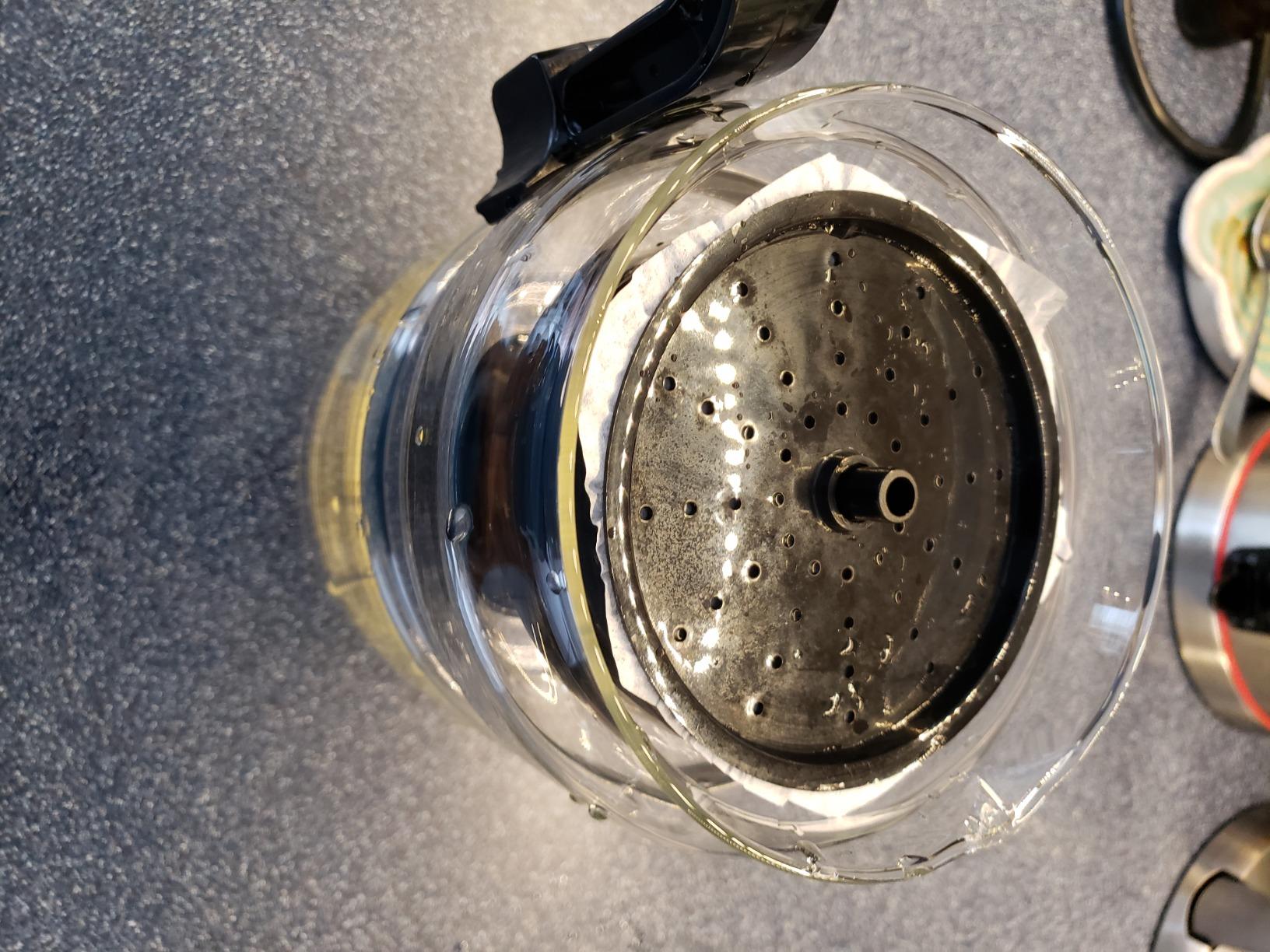
The honest drawbacks come down to the basket and stem. Both are BPA-free polypropylene, which is food-safe but not the premium stainless build that the COLETTI or Coleman offer. The lid sits a bit loose, which can let steam escape and slow the brewing cycle. And, of course, glass requires more careful handling than stainless. Drop the pot and it chips or shatters.
Who this percolator is good for
This is the right pick for brewers who love watching the percolation process, anyone wanting a glass-only visual experience, and small households brewing 4 to 8 cups.
It also suits readers who want a lighter, less metallic brewing surface than stainless steel.
Who should skip this percolator
If you want all-metal internals, the COLETTI Bozeman is a better build.
If you camp or travel with your percolator, the Coleman stainless is more durable.
How Does a Coffee Percolator Work?
A coffee percolator is one of the simplest brewing methods in your kitchen. Water in the bottom chamber is heated until it boils, which forces it up a hollow metal tube called the perk tube. The hot water sprays over a basket of ground coffee sitting at the top of the pot, and the brewed coffee drains back down through the grounds and into the lower chamber. The cycle repeats, getting stronger with each pass, until you pull the pot off the heat.
On a stovetop percolator, you control the heat and watch the glass knob on top to gauge the perking color. Once the perking slows to about one cycle every two seconds, you remove the pot from the burner and let the grounds settle. On an electric percolator, a thermostat takes over. It detects when the perking slows to the right rate and switches to keep-warm mode automatically.
The Percolation Cycle Explained
Three components work together to make this happen. The perk tube is the hollow vertical stem that carries water from the bottom of the pot to the top. The spreader lid sits on top of the tube and disperses the hot water evenly over the grounds. The basket holds the grounds, and its small holes filter the coffee back down into the pot. This continuous cycle is what gives percolator coffee its signature bold, full-bodied character.
One thing worth knowing: the longer you let the cycle run, the stronger and more bitter the cup gets. That is why most recipes call for removing the pot as soon as the perking slows. Watching the glass knob is the simplest way to time it right.
Stovetop Versus Electric Cycles
A stovetop percolator is entirely manual. You set the burner to medium-low, monitor the perking sound, and pull the pot off at the right moment. It rewards attention and gives you full control over strength. An electric percolator automates the same process. You fill the pot, push a button, and a heating element brings the water to a boil, cycles it through the grounds, and switches to keep-warm when done.
For most home kitchens, an electric model is more convenient, but stovetop percolators give you finer control and work without electricity, which is a major reason they remain the best coffee percolators for camping.
Buying Guide: How to Choose the Best Coffee Percolator
Choosing among the best coffee percolators comes down to four decisions: where you will brew, how much you will brew, what material you prefer, and how much control you want over the process. Below are the factors we weighed most heavily during our testing.
Stovetop vs Electric Coffee Percolator
Stovetop percolators are simple, durable, and work without electricity. They are the best coffee percolators for camping, cabin use, and anyone who likes to control the brew by feel. The trade-off is that you have to monitor the heat, and a distracted brewer can easily scorch the pot. Electric percolators automate the cycle and switch to keep-warm when done. They are the right choice for daily home use, large gatherings, and anyone who values convenience. The trade-off is that they require a power outlet, are usually not dishwasher safe, and tend to cost a bit more.
Capacity and Material
Cup ratings vary by brand. Most manufacturers count a cup as 5 to 6 fluid ounces, which is smaller than a standard mug. For solo daily brewing, an 8-cup pot is plenty. For a family of four, jump to 10 or 12 cups. Material matters for flavor and durability. Stainless steel is the gold standard, easy to clean, and will last decades. Aluminum heats faster and costs less, but it dents more easily. Glass is beautiful and lets you watch the brew, but it is more fragile.
Grind Size and Coffee-to-Water Ratio
Use a coarse grind, similar to what you would use for a French press. Fine grinds slip through the basket holes and leave sediment in your cup. A reliable starting ratio is 1 part coffee to 16 parts water by weight, which is the specialty coffee standard. For a full 8-cup pot, that means roughly 50 to 60 grams of coffee for 40 ounces of water. Adjust up or down based on how strong you like your cup.
Frequently Asked Questions
What is the best brand for a coffee percolator?
Farberware and Presto are the two most trusted brands in the percolator category. Farberware dominates stovetop models with the iconic Yosemite and lifetime warranty, while Presto leads electric percolators with the best-selling 02811 stainless steel model. COLETTI is the top pick for camping, and GSI Outdoors is the standard for enamelware campfire pots.
What is the difference between a percolator and a moka pot?
A percolator cycles boiling water repeatedly through a basket of grounds using gravity and a hollow tube, producing a bold, full-bodied cup. A moka pot uses steam pressure to force water up through a compact puck of finely ground coffee, similar to a stovetop espresso maker. Percolators brew larger batches and use coarser grinds. Moka pots make smaller, more concentrated cups with finer grinds and a richer crema-style finish.
What grind is best for a percolator?
A coarse grind, similar to what you would use for a French press, is the best grind for a percolator. Fine grinds slip through the basket holes and leave sediment in your cup. If your percolator still lets grounds through on a coarse setting, drop a #4 paper filter into the basket as a secondary filter.
How do you clean a coffee percolator?
After each brew, remove the basket and stem and rinse them under warm water to dislodge stuck grounds. Wash the pot with warm soapy water and a soft sponge, then rinse thoroughly. For stainless models, a monthly descale with a 1-to-1 vinegar and water solution keeps mineral buildup off the heating element. Most stainless baskets and stems are dishwasher safe, but always check your model manual first.
Are percolators still worth buying in 2026?
Yes. Percolators are still worth buying in 2026 for anyone who wants a bolder cup than drip coffee, a brewer that works without electricity, or a simple pot that lasts decades. Modern stainless steel designs and electric percolators with auto keep-warm have addressed the burnt coffee complaints of older models. For campers, large families, and nostalgic home brewers, the best coffee percolators still deliver a cup that drip machines cannot match.
Final Verdict: Which Coffee Percolator Should You Buy?
After six weeks of brewing across kitchens, camp stoves, and a backyard fire pit, our top pick for the best coffee percolator overall is the Farberware Yosemite 8-Cup. It is the most well-rounded pot on the list, with a lifetime warranty, all-stainless build, and a flavor profile that won our taste tests. For electric daily use, the Presto 02811 is the value play that does not cut corners on materials. For camping, the COLETTI Bozeman is the most rugged all-stainless option we tested.
Whatever you choose, the best coffee percolators share one thing in common: they make a cup of coffee that is bolder, more aromatic, and more honest than what most drip machines produce. In 2026, with third-wave coffee culture leaning toward pour-over and AeroPress, the percolator feels almost rebellious. That is part of why we love it.
Brew a pot this weekend. Listen for the perking. You will know.