
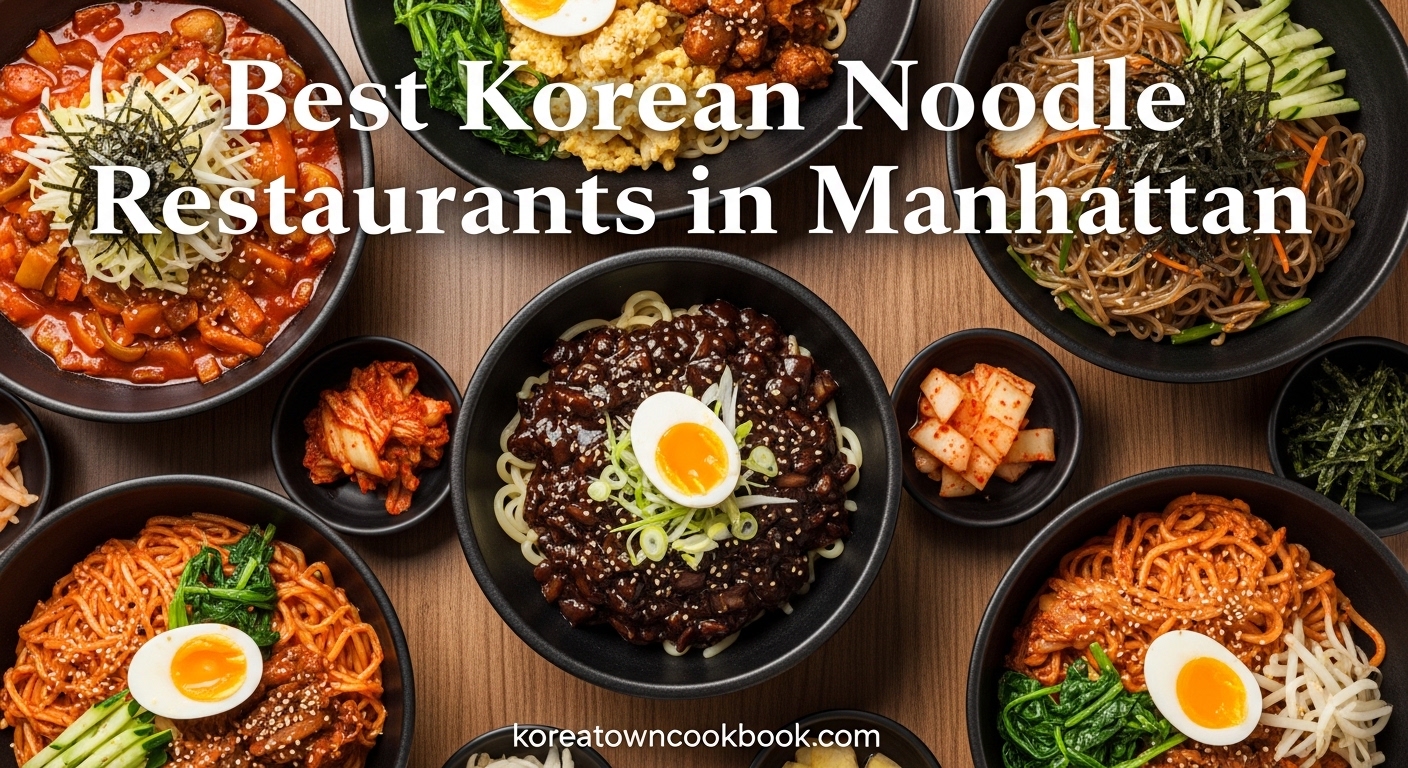
Manhattan’s Korean noodle scene is a treasure trove of comforting broths, handmade noodles, and authentic flavors that transport you straight to Seoul. Whether you are craving a steaming bowl of knife-cut kalguksu on a cold winter day or refreshing cold naengmyeon during summer, the island offers some of the best Korean noodle restaurants Manhattan has to offer. I have spent months exploring these spots, slurping my way through Koreatown and beyond to find the places that truly deliver.
What makes Korean noodles special is the care that goes into every component. The broths simmer for hours, extracting deep flavors from bones and aromatics. The noodles are often made fresh daily, either hand-cut or hand-pulled. And the accompaniments, those small dishes of banchan that arrive unbidden, add layers of texture and taste to every meal. In this guide, I will share the restaurants that consistently deliver excellence across every aspect of the Korean noodle experience.
Table of Contents
Quick Picks – Top 5 Korean Noodle Restaurants at a Glance
If you are short on time, here are my top five Korean noodle restaurants Manhattan has to offer, each with its own specialty and price point.
Cho Dang Gol (Koreatown) – The go-to spot for homestyle Korean cooking with handmade tofu and comforting noodle soups. Expect to spend $20-30 per person.
Jeju Noodle Bar (West Village) – Manhattan’s Michelin-starred destination for refined Korean seafood noodles. Prix fixe starts around $75.
Olle (Murray Hill) – Best for naengmyeon (cold buckwheat noodles) and traditional Korean comfort food. Budget-friendly at $15-25 per person.
Kisa (Lower East Side) – Affordable homestyle Korean with excellent kalguksu and jjigae options. Most dishes under $20.
Tosokchon NYC (Koreatown) – Famous for samgyetang (ginseng chicken soup) and satisfying noodle dishes. Mid-range at $20-35 per person.
Understanding Korean Noodle Types
Before diving into specific restaurants, it helps to understand the types of Korean noodles you will encounter. Each variety offers a distinct texture and flavor profile that pairs with specific broths and preparations.
Kalguksu – Hand-Cut Noodle Soup
Kalguksu translates to “knife noodles” because these wheat noodles are hand-cut into thin, flat ribbons. The texture is slightly chewy and substantial, perfect for soaking up rich broths. Traditional kalguksu features a hearty broth made from anchovies, clams, or chicken, often with zucchini and potatoes added. This is comfort food at its finest, especially during colder months when you need something warming and filling.
Soondubu – Soft Tofu Stew
While technically a stew, soondubu often comes with noodles or rice on the side, and many Korean noodle restaurants Manhattan include it as a specialty. The dish features silken tofu that barely holds its shape, simmered in a spicy broth with seafood or meat. The bubbling cauldron arrives at your table still cooking, the red oil shimmering on top. It is fiery, satisfying, and best eaten with a raw egg cracked in at the last moment.
Naengmyeon – Cold Buckwheat Noodles
Naengmyeon is the ultimate summer dish in Korean cuisine. These thin, chewy noodles made from buckwheat and sweet potato starch are served ice-cold in a tangy beef broth or with a spicy sauce. The mul naengmyeon (water version) is refreshing and mild, while bibim naengmyeon comes tossed in a gochujang-based sauce. Both versions typically include pickled radish, cucumber, and a hard-boiled egg. The contrast of cold noodles against hot weather is surprisingly satisfying.
Ramyun – Korean-Style Noodles
Ramyun elevates Korean instant noodles to restaurant quality. These are not your typical dorm room ramen. Restaurants prepare ramyun with fresh toppings like dumplings, vegetables, and proteins, transforming a humble packet into a satisfying meal. The broth is richer, spicier, and more complex than standard instant noodles, and the addition of fresh ingredients makes it a legitimate comfort food option.
Best Korean Noodle Restaurants in Manhattan
Here are the standout Korean noodle restaurants Manhattan residents and visitors should have on their dining radar. Each offers something unique, from Michelin-starred refinement to authentic homestyle cooking.
Cho Dang Gol – Koreatown’s Homestyle Champion
Cho Dang Gol has been a Koreatown staple for over two decades, and there is a reason locals keep coming back. The restaurant specializes in homestyle Korean cooking with a focus on handmade tofu and comforting noodle soups. Walking through the door feels like entering a Korean grandmother’s kitchen, warm and unpretentious.
Their kalguksu is exceptional. The noodles are made fresh throughout the day, hand-cut into perfect ribbons that swim in a rich, milky broth. The seafood kalguksu is the standout, loaded with clams, shrimp, and squid that add briny depth to every spoonful. The chicken kalguksu offers a milder option, the broth simmered until it turns cloudy with extracted collagen and flavor.
What sets Cho Dang Gol apart is their banchan game. The small plates that arrive before your main course rotate seasonally, but expect kimchi in various stages of fermentation, seasoned bean sprouts, and pickled radish. These accompaniments are unlimited, so do not hesitate to ask for refills.
The restaurant fills up quickly during lunch and dinner rushes, especially on weekends. Arrive before noon or after 2 PM for lunch to avoid waits. Dinner service starts at 5 PM, and reservations are recommended for groups larger than four. Prices are reasonable, with most noodle dishes between $16-22.
Jeju Noodle Bar – Michelin-Starred Excellence
Jeju Noodle Bar in the West Village represents Korean noodle cuisine at its most refined. Chef Douglas Kim earned a Michelin star for his interpretation of Korean seafood noodles, and the restaurant remains one of the few Korean establishments in Manhattan to hold this distinction. This is not casual dining, it is a destination experience.
The menu changes seasonally, but the signature Jeju ramyun remains a constant. This is ramyun elevated to art, featuring a deeply flavored broth made from kombu, dried anchovies, and various seafood. The noodles have perfect chew, and toppings might include lobster, razor clams, or seasonal fish depending on availability.
The dining room is intimate, with just 30 seats arranged around an open kitchen. Watching the chefs work adds to the experience, you will see the care that goes into every bowl. The tasting menu runs about $75-95 per person, while a la carte options start around $25 for noodle dishes. Reservations are essential and should be made weeks in advance, especially for weekend seating.
For those wondering about Michelin-starred Korean noodles, Jeju Noodle Bar is your answer. The recognition is well-deserved, and while it is pricier than Koreatown spots, the quality and creativity justify the cost for special occasions.
Olle – Murray Hill’s Hidden Gem
Olle sits on a quiet stretch of Murray Hill, away from the bustle of Koreatown but serving some of the most authentic Korean comfort food in Manhattan. The restaurant has gained a loyal following among Korean expats and locals alike for its consistent execution of homestyle classics.
The naengmyeon here is exceptional, particularly during summer months. The broth is properly icy, the noodles have that perfect chewy resistance, and the accompaniments are generous. The mul naengmyeon comes with thinly sliced beef and pickled radish floating in a refreshing beef broth with hints of mustard oil. The bibim version packs more heat, the gochujang sauce coating every strand of noodle.
Beyond noodles, Olle excels at galbi jjim, braised short ribs that fall off the bone. Many regulars order both, the rich, sweet meat providing contrast to the cold, tangy noodles. This combination represents Korean dining at its best, balancing temperatures and flavors across multiple dishes.
The space is modest but comfortable, with wooden tables and Korean pop music playing at reasonable volumes. Service is friendly and efficient, though English fluency varies among staff. Prices are reasonable, with most dishes under $20, making Olle one of the best value Korean noodle restaurants Manhattan offers.
Kisa – Lower East Side Value
Kisa brings affordable Korean homestyle cooking to the Lower East Side, and locals have taken notice. The restaurant focuses on simple preparations done well, with generous portions and prices that feel almost nostalgic in today’s Manhattan. This is where you come when you want comforting Korean noodles without the Koreatown crowds.
The kalguksu here rivals more expensive competitors. The broth has depth, clearly made from real ingredients rather than powder, and the noodles maintain their texture even as they absorb liquid. The kimchi kalguksu adds fermented cabbage for extra complexity, while the vegetable version keeps things light and fresh.
Kisa also serves excellent soondubu, the soft tofu stew bubbling furiously when it arrives. Order it with the seafood combination for shrimp, clams, and mussels that add sweetness to the spicy broth. The raw egg on top cooks slowly in the residual heat, creating silky ribbons of protein.
The restaurant is small, seating maybe 25 people, so waits are common during peak hours. They do not take reservations, so arrive early or late. Most dishes are $14-18, and the portions are generous enough to share or save for leftovers. Cash and card are both accepted.
Tosokchon NYC – Korean Comfort in Koreatown
Tosokchon NYC brings the famous Seoul restaurant to Manhattan, specializing in samgyetang (ginseng chicken soup) and Korean comfort food. While the chicken soup gets top billing, the noodle dishes deserve equal attention, offering some of the most satisfying bowls in Koreatown.
The kalguksu here benefits from the same careful preparation as their famous chicken soup. The broth is clean and clear, with subtle depth that comes from hours of simmering. The noodles are house-made, hand-cut into broad ribbons that carry the broth beautifully. The chicken kalguksu uses meat from their signature samgyetang, ensuring nothing goes to waste.
For something different, try the kimchi jjigae with noodles added. The fermented cabbage stew provides bold, funky flavors that contrast with the neutral wheat noodles. It is warming, filling, and perfect for cold evenings when you need something substantial.
The restaurant occupies a two-story space on West 35th Street, with traditional Korean seating available upstairs. The decor is simple, letting the food take center stage. Service is brisk and businesslike, typical of busy Koreatown establishments. Most noodle dishes run $16-24, while the signature samgyetang is around $28.
Neighborhood Guide – Where to Find Korean Noodles in Manhattan
Manhattan’s Korean restaurants cluster in specific neighborhoods, each offering a different dining experience. Understanding these areas helps you choose the right spot for your mood and budget.
Koreatown (Midtown West)
Centered around West 32nd Street between Fifth and Sixth Avenues, Koreatown represents the densest concentration of Korean restaurants in Manhattan. This is where you will find the classics, restaurants that have served the community for decades alongside newer arrivals. The energy here is electric, with neon signs in Korean and English competing for attention.
Koreatown excels at traditional preparations. Places like Cho Dang Gol and Tosokchon NYC serve the kind of food Korean grandmothers make, unapologetically authentic and deeply comforting. The competition keeps prices reasonable, though quality varies. Stick to restaurants with lines out the door, locals know where the good food is.
Murray Hill (Korea Way)
While technically part of Koreatown, the stretch between Fifth and Madison Avenues on 32nd and 35th Streets has earned the nickname “Korea Way.” This area feels slightly more residential and relaxed than the main Koreatown drag. Restaurants here cater more to neighborhood regulars than tourists.
Olle represents this neighborhood well, offering consistent quality in a quieter setting. The pace is slower, the service more personal. If you want to experience Korean noodles without the Midtown chaos, Murray Hill is your best bet.
West Village
The West Village offers Manhattan’s most refined Korean dining, led by Jeju Noodle Bar. This is where Korean cuisine meets fine dining, with prices and expectations to match. The experience here is closer to a tasting menu than a casual noodle shop, but the quality justifies the cost for special occasions.
Lower East Side
The Lower East Side has emerged as a destination for affordable, authentic Korean food. Kisa represents this trend, bringing homestyle cooking to a neighborhood better known for nightlife. The prices here are noticeably lower than Midtown, making it ideal for budget-conscious diners who refuse to compromise on quality.
Late-Night and Budget-Friendly Options
Finding Korean noodles after 10 PM in Manhattan can be challenging, as many restaurants close early. However, a few spots keep the stoves burning late for night owls and service industry workers.
Cho Dang Gol serves until 11 PM on weekdays and midnight on weekends, making it one of the later options in Koreatown. The post-10 PM crowd tends to be Korean locals and hospitality workers unwinding after shifts, which is always a good sign.
For budget dining, Kisa on the Lower East Side offers the best value, with most noodle dishes under $18. Olle in Murray Hill also keeps prices reasonable while maintaining quality. Both restaurants serve generous portions that often provide leftovers for a second meal.
If you are looking for Korean noodles under $20 in Manhattan, focus on these two neighborhoods. Midtown Koreatown tends to be pricier due to rent costs, while outer neighborhoods can offer better deals without sacrificing authenticity.
What to Order – Insider Tips
Having eaten at these restaurants multiple times, I have developed some go-to orders that showcase each spot at its best. Here is what to get when you visit.
At Cho Dang Gol: Order the seafood kalguksu with a side of their homemade tofu. The combination of rich noodle soup and silky tofu demonstrates everything this restaurant does well. Ask for extra banchan, the kimchi here is exceptional.
At Jeju Noodle Bar: Splurge on the tasting menu if you can, but if ordering a la carte, the Jeju ramyun with lobster is worth the price. The seafood broth here is unmatched in Manhattan.
At Olle: The mul naengmyeon in summer cannot be beaten. Pair it with galbi jjim for the classic hot-and-cold combination that Koreans love. In winter, switch to their kimchi jjigae.
At Kisa: The kimchi kalguksu offers the best balance of flavor and value. The stew here is also excellent if you want something heartier.
At Tosokchon: Come with a friend and split the samgyetang and chicken kalguksu. You will get the full experience of their chicken preparation in two different forms.
When ordering Korean noodles, remember that customization is expected. Want extra spice? Ask for more gochujang. Prefer milder flavors? Request “mak” (mild) when ordering. Most restaurants accommodate dietary restrictions, though vegetarian options can be limited since many broths use meat or seafood bases.
FAQ
Where to get Korean noodles in Manhattan?
The best Korean noodle restaurants Manhattan offers are concentrated in Koreatown (Midtown West) around 32nd Street, with additional excellent options in Murray Hill, the West Village, and the Lower East Side. Top spots include Cho Dang Gol for homestyle kalguksu, Jeju Noodle Bar for Michelin-starred seafood noodles, Olle for cold naengmyeon, Kisa for affordable options, and Tosokchon NYC for comforting chicken-based soups.
What is kalguksu?
Kalguksu is a traditional Korean noodle soup featuring hand-cut wheat noodles in a rich broth. The name literally translates to knife noodles, referring to how the noodles are cut by hand into flat ribbons. Common variations include seafood kalguksu with clams and shrimp, chicken kalguksu with tender meat, and kimchi kalguksu for added spice and tang. The broth is typically made from anchovies, clams, or chicken bones simmered for hours.
Does Jeju Noodle Bar have a Michelin star?
Yes, Jeju Noodle Bar in the West Village has held a Michelin star. Chef Douglas Kim earned the distinction for his refined interpretation of Korean seafood noodles, making it one of the few Korean restaurants in Manhattan to receive this recognition. The restaurant offers both a tasting menu and a la carte options.
Are there any Michelin-starred Korean restaurants in Manhattan?
Yes, Manhattan has Michelin-starred Korean restaurants. Jeju Noodle Bar in the West Village holds a Michelin star for its elevated Korean seafood noodle dishes. Atomix, also in Manhattan, holds two Michelin stars for its modern Korean tasting menu, though it focuses more on fine dining than traditional noodle dishes.
What is the most popular Korean noodle?
Ramyun (Korean instant noodles) is the most widely consumed Korean noodle globally, but in restaurants, kalguksu and naengmyeon are the most popular traditional choices. Kalguksu dominates in cold weather as a warming soup, while naengmyeon (cold buckwheat noodles) is the summer favorite. Soondubu jjigae with noodles added is also extremely popular for its spicy, comforting qualities.
What is the difference between Korean noodles and Japanese ramen?
Korean noodles like kalguksu and naengmyeon differ from Japanese ramen in several ways. Korean kalguksu uses flat, hand-cut wheat noodles in a lighter broth, while Japanese ramen uses curly wheat noodles in rich, fatty broths. Korean naengmyeon are made from buckwheat and sweet potato starch and served cold, unlike any Japanese noodle soup. Korean ramyun differs from Japanese instant ramen in seasoning, typically being spicier and often including kimchi flavors.
Conclusion
Manhattan’s Korean noodle scene offers something for every palate and budget. From the homestyle comfort of Cho Dang Gol to the Michelin-starred refinement of Jeju Noodle Bar, these Korean noodle restaurants Manhattan represent the best of what Korean cuisine has to offer. Whether you are seeking a quick lunch of kalguksu, a refreshing bowl of naengmyeon on a summer day, or a celebratory dinner of elevated seafood noodles, the restaurants in this guide deliver.
I have eaten at dozens of Korean restaurants across Manhattan over the past year, and these five stand out for their consistency, authenticity, and value. Start with Cho Dang Gol or Olle for your first Korean noodle experience, save Jeju Noodle Bar for a special occasion, and keep Kisa in mind when you need affordable comfort food. The world of Korean noodles is rich and varied, and these restaurants provide the perfect introduction.