
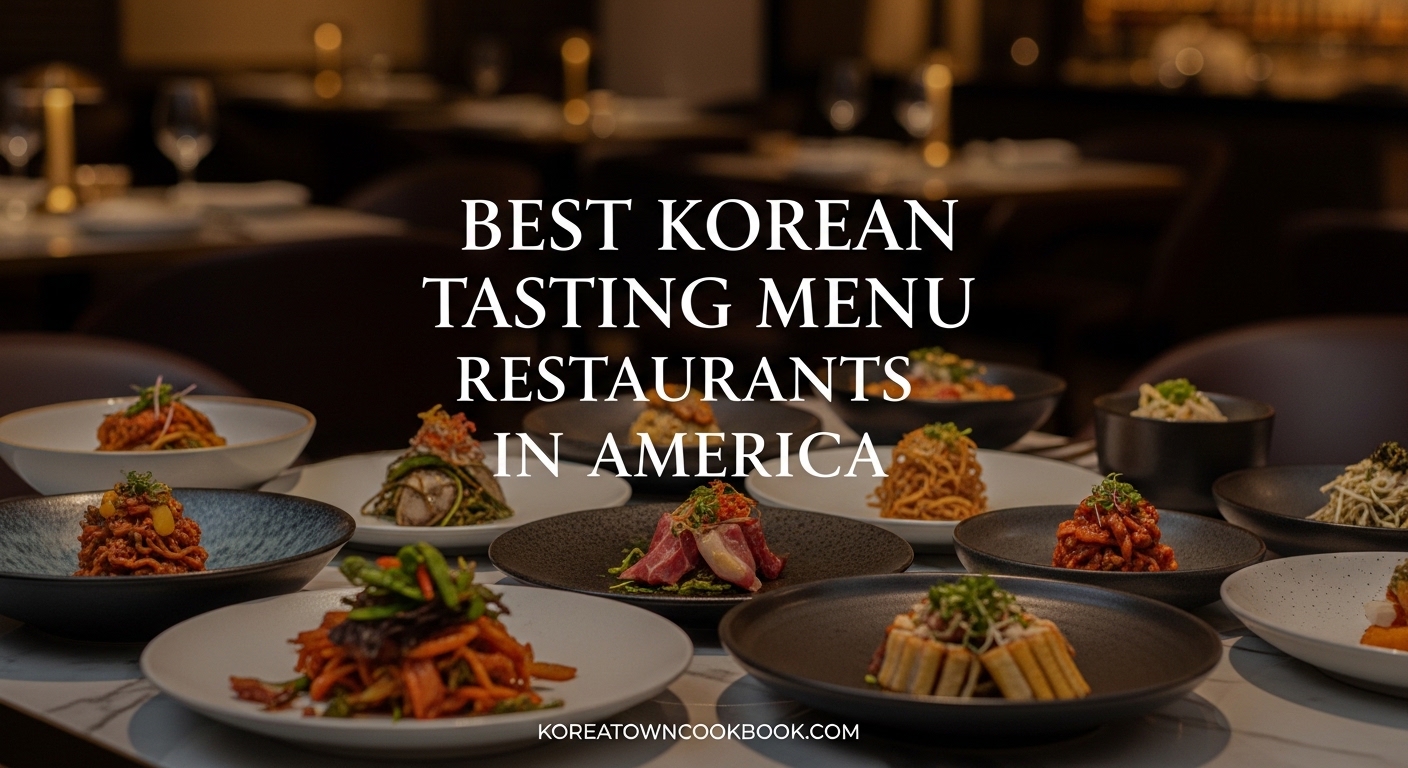
If you told me ten years ago that Korean tasting menu restaurants would dominate the Michelin rankings in America, I might have raised an eyebrow. But here we are in 2026, and Korean fine dining has firmly planted its flag in the highest tier of American gastronomy. From New York City’s record-setting cluster of Michelin-starred Korean restaurants to the quiet emergence of ambitious tasting menus in Los Angeles and Chicago, the Korean culinary wave is no longer a trend. It is a permanent reshaping of how America eats at the top.
This guide covers the best Korean tasting menu restaurants in America, from the iconic three-star Jungsik to rising stars you might not have heard of yet. I have dined at most of these restaurants, and I am drawing on those experiences along with insights from the broader dining community to give you a practical, opinionated look at what each one offers. Whether you are planning a special occasion dinner or simply curious about what makes Korean fine dining so compelling right now, this guide has you covered.
Our team has tracked the Korean fine dining scene for years, and the depth of talent working in these kitchens is remarkable. Chefs are drawing on centuries of fermentation knowledge, royal court cuisine traditions, and modern technique to create something genuinely new on the American dining landscape. Let me walk you through the restaurants that matter most.
Table of Contents
What Makes Korean Fine Dining Unique
Korean fine dining stands apart because of its deep roots in fermentation, preservation, and seasonal ingredients. While French cuisine built its reputation on sauce work and Japanese cuisine on precision and restraint, Korean fine dining brings an entirely different toolkit to the table. The foundation is jang — the family of fermented soy pastes and sauces that includes doenjang (soybean paste), gochujang (chili paste), and ganjang (soy sauce). These ingredients are not just condiments. They are the result of months or even years of patient fermentation that creates layers of umami you simply cannot replicate any other way.
Banchan is another defining feature. In a traditional Korean meal, banchan are the small side dishes served alongside rice and soup. In a fine dining context, banchan become a showcase of the chef’s skill and creativity. At the best Korean tasting menu restaurants, the banchan course alone might include eight to twelve small plates, each one demonstrating a different technique: pickled vegetables, fermented seafood, seasoned greens, marinated meats, and more. It is a symphony of small bites that sets the tone for everything that follows.
Korean grilling techniques also separate these restaurants from their French and Japanese peers. Korean chefs have been working with live fire for centuries, and that expertise translates into extraordinary preparations of premium proteins. Aged wagyu beef, marinated short ribs, and grilled abalone all benefit from the Korean approach to heat and timing. The result is food that has a smokiness and char that feels primal yet refined at the same time.
What really distinguishes Korean fine dining, though, is its relationship to time. Fermentation, dry-aging, pickling, and curing are all ways of letting time do the work. The best Korean tasting menu restaurants in America are not just cooking with Korean flavors. They are cooking with Korean philosophy — the idea that patience and care can transform humble ingredients into something extraordinary.
Best Korean Tasting Menu Restaurants in New York City
New York City is the undeniable center of Korean fine dining in America. With over a dozen Michelin-starred Korean restaurants, NYC offers more depth and variety in this category than any other city in the country. The concentration is remarkable: you could spend a week eating at Korean tasting menus in Manhattan alone and barely scratch the surface.
Jungsik New York
Jungsik holds the distinction of being the first and only Korean restaurant in the United States to earn three Michelin stars. Chef Yim Jungsik opened the New York outpost of his Seoul flagship in 2009, and it has been setting the standard for Korean fine dining ever since. The tasting menu is a masterful blend of Korean flavors and contemporary technique, with dishes that reference traditional Korean cuisine without being bound by it.
Standout courses include the wagyu preparations, which showcase the Korean approach to premium beef, and the sea urchin dishes that highlight the kitchen’s comfort with seafood. The wine pairing program is exceptional and worth the additional investment if you want the full experience. Service is polished and knowledgeable, with staff who can explain the Korean techniques and ingredients behind each course.
The space itself, located in Tribeca, is elegant and understated. It feels like a serious restaurant without being stuffy. Jungsik is the kind of place you go for a milestone celebration, and it delivers on that promise every time. If you want to experience Korean fine dining at its absolute peak in America, this is where you start.
Atomix
Atomix is the creation of Chef Junghyun Park and his wife Ellia Park, and it sits suspended above their more casual first restaurant, Atoboy. With two Michelin stars, Atomix has earned recognition for its meticulous approach to Korean tasting menus. The restaurant offers counter dining for a limited number of guests, creating an intimate experience where you can watch the kitchen at work.
What sets Atomix apart is the depth of its banchan program. The small dishes that begin the meal are technically accomplished and deeply flavorful, drawing on fermentation techniques that Chef Park has refined over years. Diners on forums consistently praise Atomix for its technique mastery and the sense of discovery that comes with each course.
The tasting menu at Atomix changes frequently with the seasons, but you can expect a progression that moves from light and delicate to rich and satisfying. The Korean-inflected desserts are a particular highlight, incorporating ingredients like perilla oil, black sesame, and fermented rice in ways that feel both familiar and surprising.
Cote
Cot takes a different approach to Korean fine dining by fusing it with the American steakhouse tradition. The result is a Korean steakhouse concept that has earned one Michelin star and the title of Best Steakhouse in America at the World Steakhouse Awards. If you are wondering what the best Korean steakhouse in America looks like, Cote is the answer.
The Butcher’s Feast is Cote’s signature tasting menu, and it is one of the most sought-after dining experiences in New York City. The format is Korean BBQ elevated to fine dining heights: premium meats are grilled tableside, accompanied by an array of banchan and Korean condiments. It is interactive, fun, and genuinely delicious.
Cote also offers a more traditional steakhouse experience with a Korean twist, including a dry-aging program for its beef and a wine list that pairs beautifully with grilled meats. The atmosphere is lively and convivial, making it a great choice for group dinners and celebrations where you want the food to be exceptional but the mood to stay energetic.
Kochi
Kochi draws its inspiration from Korean royal court cuisine, the elaborate culinary traditions that once served Korea’s Joseon Dynasty. Chef Sungchul Shim brings that historical foundation into a modern tasting menu format, and the result is playful yet technically proficient. One Michelin star confirms what diners already know: Kochi is doing something special.
The courses at Kochi tend to be more intricate and delicate than what you find at some of the other Korean fine dining restaurants on this list. There is an emphasis on presentation and storytelling, with dishes that reference specific Korean traditions or ingredients in creative ways. The chef’s counter is the best seat in the house if you want to see the precision that goes into each plate.
More Notable NYC Korean Tasting Menus
Beyond the headliners, New York City has a deep bench of Korean tasting menu restaurants worth exploring. bom offers contemporary Korean cuisine with a particular focus on wagyu preparations, earning praise for its refined cooking and elegant setting. Joo Ok is a Seoul transplant that brings its Michelin-starred tasting menu to New York, offering a direct connection to the Korean fine dining scene in Seoul.
Jua blends Western and Korean culinary traditions in a way that feels natural rather than forced. The tasting menu draws on both French and Korean technique, and the results are often surprising. Mari takes the concept of Korean hand rolls and elevates it into a tasting menu format, offering something genuinely different from the other restaurants on this list.
Meju is for the fermentation obsessives. This counter dining experience focuses on preserved and fermented ingredients, and it feels like a laboratory of Korean flavor. Oiji Mi serves modern Korean cuisine with a focus on seasonal ingredients and clean flavors. And Noksu rounds out the scene with contemporary design and a tasting menu that emphasizes visual presentation alongside bold Korean flavors.
Best Korean Tasting Menu Restaurants in Los Angeles
Los Angeles has the largest Korean community outside of Korea, so you would expect the Korean fine dining scene to be extraordinary. The reality is a bit more complicated. While LA has incredible Korean food at every level, the city has fewer dedicated tasting menu restaurants than New York when it comes to Korean fine dining. That said, what LA does offer is distinctive and worth seeking out.
Forum discussions consistently highlight the frustration of LA diners who want upscale Korean tasting menus comparable to what NYC offers. The sentiment is that LA’s Korean food scene is unmatched for casual and mid-range dining, but the fine dining tasting menu options are still developing. This is changing, however, as more chefs recognize the opportunity.
n/naka deserves mention here even though it is technically a Japanese-Korean fusion restaurant. Chef Niki Nakayama draws on her Japanese training and Korean heritage to create a tasting menu that is deeply personal and technically brilliant. The restaurant holds two Michelin stars and is one of the most acclaimed dining experiences in Los Angeles. The Korean influences are woven throughout the menu, from the banchan-inspired courses to the use of Korean fermentation techniques.
Baroo has been one of the most talked-about Korean tasting menu experiments in Los Angeles. The restaurant has evolved over the years, moving from a tiny strip mall location to a more permanent home, but its commitment to creative Korean cuisine has remained constant. The tasting menu format allows the kitchen to explore a wide range of Korean flavors and techniques, and the experience feels more experimental and personal than what you find at the more established NYC restaurants.
Keep an eye on the LA Korean fine dining scene. With the depth of Korean culinary talent in the city and a dining public that appreciates ambitious Korean cooking, it is only a matter of time before more dedicated tasting menu restaurants emerge.
Korean Tasting Menus in Chicago and Other Cities
The Korean fine dining movement is not limited to New York and Los Angeles. Cities like Chicago are developing their own Korean tasting menu scenes, and the results are promising. The expansion beyond the coasts is one of the most exciting developments in Korean fine dining in 2026, as talented chefs bring their visions to new audiences.
Jeong in Chicago has been mentioned repeatedly in dining forums as a thoughtful Korean-inspired tasting menu that deserves more attention. The restaurant brings a measured, deliberate approach to Korean flavors, integrating them into a fine dining format that feels appropriate for Chicago’s dining culture. It is the kind of restaurant that rewards repeat visits as the menu evolves.
Other cities are beginning to see Korean-inspired tasting menus pop up, often as pop-ups or smaller-scale operations within existing restaurants. If you are looking for Korean fine dining outside the major hubs, seek out restaurants where the chef has a genuine connection to Korean cuisine rather than ones that simply add gochujang to a standard tasting menu and call it Korean. The difference is immediately apparent in the depth and coherence of the flavors.
Washington DC, San Francisco, and Atlanta all have growing Korean food scenes, and it is reasonable to expect more dedicated tasting menu restaurants to emerge in these cities. The demand is there, and the talent pool of Korean-American chefs continues to grow.
How to Get Reservations at Top Korean Tasting Menu Restaurants
Getting a table at the best Korean tasting menu restaurants in America requires planning and sometimes a bit of luck. The demand far exceeds the supply at places like Jungsik and Atomix, and understanding the reservation landscape is essential if you want to dine at these restaurants.
Most of the top Korean tasting menu restaurants in New York use Resy or Tock for reservations. Jungsik uses Resy, and tables typically release at a specific time each month for the following month. Setting a calendar reminder for the release date is the single most effective strategy. Atomix also uses Resy, and its limited counter seating means tables disappear within minutes of release.
Cote is slightly easier to book than Jungsik or Atomix because it has a larger dining room, but it is still one of the most popular restaurants in New York City. Booking two to three weeks in advance is usually sufficient for Cote, though prime weekend slots fill up faster.
For restaurants like Meju and Mari, which have smaller dining rooms and fewer seatings, the key is flexibility. Consider dining on weeknights or at less popular times. Some restaurants also offer walk-in seating for their bar areas, which can be a way to experience the food without a formal reservation.
When it comes to cost, expect to invest significantly in these experiences. Korean tasting menus in America generally range from moderate to expensive, with the top-tier restaurants commanding premium prices. Wine and beverage pairings add to the total, but they are worth considering if you want the full experience. Some restaurants offer lunch tasting menus at a lower price point, which can be a smart way to experience the cooking without the full dinner investment.
Here are a few practical tips I have learned from booking these restaurants over the years:
- Set calendar alerts for reservation release dates and be ready to book the moment tables become available
- Check Resy and Tock regularly for last-minute cancellations, which do happen
- Consider weekday dining for better availability
- Follow the restaurants on social media for announcements about special menus and events
- Join waitlists — restaurants like Atomix and Jungsik often see cancellations in the days before service
- Look for lunch tasting menus if the dinner price is beyond your budget
What to Expect at a Korean Tasting Menu
If you have never experienced a Korean tasting menu, it helps to know what is coming. The structure varies from restaurant to restaurant, but most follow a similar progression. The meal typically begins with a series of banchan or small bites that introduce the flavors and techniques of the kitchen. These opening courses are often the most exciting part of the meal because they showcase the chef’s creativity and technical range.
After the banchan, the menu usually progresses through seafood courses, then meat courses, and finally dessert. Korean fine dining desserts are distinctive because they incorporate ingredients like perilla oil, black sesame, fermented rice, and Asian pear in ways that feel fresh and unexpected. If you are used to French-style dessert courses, the Korean approach will feel like a revelation.
Wine pairing programs at Korean tasting menu restaurants have become increasingly sophisticated. Many of these restaurants employ dedicated sommeliers who build pairings that complement the bold, complex flavors of Korean cuisine. Natural wines, in particular, have found a natural home alongside Korean food. Some restaurants also offer soju or makgeolli pairings, which provide a more traditional Korean beverage experience.
Dress codes vary, but most Korean fine dining restaurants in America lean toward smart casual. You do not need a jacket, but you should look put together. The atmosphere at most of these restaurants is warm and welcoming rather than stuffy. They want you to enjoy the food, not feel intimidated by the setting.
If you have dietary restrictions, call ahead. Korean cuisine relies heavily on seafood, soy, and sesame, so allergies to any of these ingredients can be challenging. Most restaurants will do their best to accommodate, but the more notice you give, the better the kitchen can prepare. Vegetarian tasting menus are available at some restaurants, though they are less common than in other fine dining traditions.
FAQ
Are there any Michelin-starred Korean restaurants?
Yes, there are over a dozen Michelin-starred Korean restaurants in the United States. New York City leads with 12 MICHELIN-starred Korean restaurants, including Jungsik (3 stars), Atomix (2 stars), and Cote, Kochi, Joo Ok, Jua, Mari, Meju, Nōksu, Oiji Mi, and bōm (1 star each). Los Angeles also has Michelin-recognized Korean fine dining options including n/naka (2 stars) which blends Japanese and Korean traditions.
Is Jungsik worth it?
Jungsik is widely considered worth the experience for anyone seeking Korean fine dining at its absolute highest level. As the first and only 3-Michelin-star Korean restaurant in the United States, it delivers a tasting menu that blends Korean flavors with modern technique. Diners consistently praise the wagyu preparations, sea urchin dishes, and the overall caliber of service and attention to detail. It is an investment, but one that delivers a genuinely memorable dining experience.
What is the only 3 Michelin star restaurant in Korea?
Mingles in Seoul, led by Chef Kang Mingoo, holds 3 Michelin stars and is widely regarded as one of the finest dining experiences in South Korea. In the United States, Jungsik New York is the only Korean restaurant to achieve 3 Michelin stars, earning that distinction for its exceptional tasting menu that elevates Korean cuisine to the highest level of fine dining.
What is the best steakhouse in America Korean?
Cote in New York City is widely recognized as the premier Korean steakhouse in America. It won the World Steakhouse Award and holds 1 Michelin star for its unique concept that combines Korean BBQ traditions with the American steakhouse format. The Butcher’s Feast tasting menu is one of the most sought-after dining experiences in NYC and showcases Korean grilling techniques applied to premium American beef.
Final Thoughts on Korean Tasting Menu Restaurants in America
Korean tasting menu restaurants in America have arrived at a remarkable moment. What started with a handful of ambitious chefs in New York City has grown into a national movement that is reshaping how Americans think about fine dining. The fact that a Korean restaurant now holds three Michelin stars in the United States is not just a milestone for Korean cuisine. It is a signal that the American fine dining establishment has fully embraced what Korean cooking has to offer.
New York City remains the epicenter, with an unmatched concentration of Michelin-starred Korean restaurants. But Los Angeles, Chicago, and other cities are building their own scenes, each with a distinct character. The growth outside NYC is one of the most exciting stories in American dining right now, and I expect it to accelerate in the coming years.
If you have not yet experienced a Korean tasting menu, make it a priority. Start with whatever restaurant is accessible to you, whether that is Jungsik for a milestone celebration or a local Korean-inspired tasting menu for a Thursday night adventure. The depth of flavor, the creativity of the cooking, and the warmth of the hospitality will surprise you. Korean fine dining is not just competing with French and Japanese cuisine at the highest level. In many cases, it is surpassing them.