
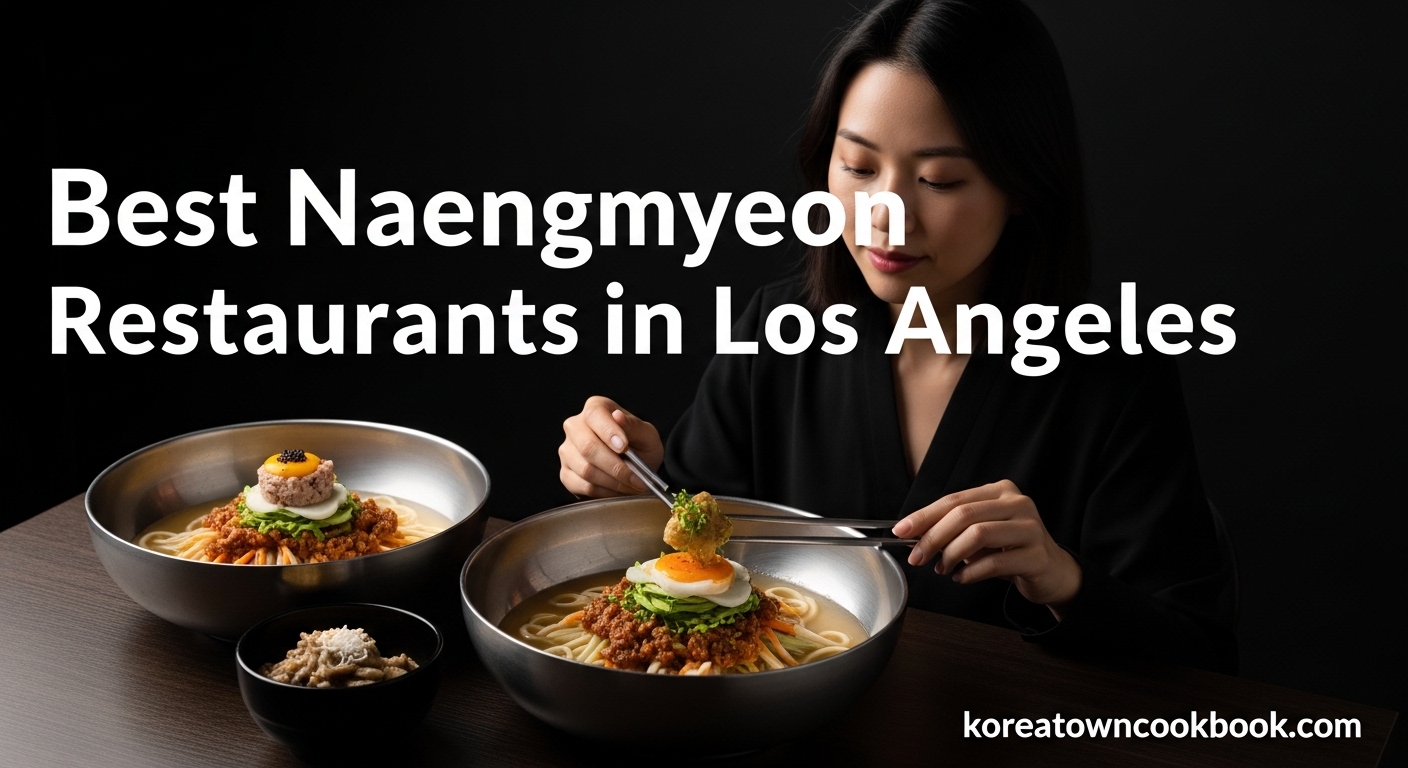
When summer heat settles over Los Angeles, my mind always drifts to one thing: naengmyeon. These ice-cold Korean buckwheat noodles have become my go-to escape from the California sun. After years of hunting down the best bowls across Koreatown, Gardena, and San Gabriel, I am sharing everything I have learned about finding exceptional naengmyeon in LA.
This guide covers seven restaurants that consistently deliver authentic, refreshing, and genuinely excellent naengmyeon. Whether you crave the deeply savory beef broth of mul naengmyeon or the tangy spice of bibim naengmyeon, LA has options that will satisfy. I tested these spots over multiple visits, talked to owners where possible, and paid attention to details like noodle texture, broth quality, and those final touches of sesame oil that make or break a great bowl.
Table of Contents
What Is Naengmyeon?
Naengmyeon originates from North Korea, specifically from the Pyongyang and Hamhung regions. Historical accounts trace these cold noodles back over 400 years, when they were first served to Korean royalty. The dish features long, chewy noodles served in an icy beef broth or mixed with spicy sauce, making it both refreshing and deeply satisfying.
The name literally translates to “cold noodles” in Korean, and the dish lives up to that description. Traditional naengmyeon uses broth made from beef shank and oxtail, simmered for hours then chilled until ice-cold. The contrast between the frigid soup and chewy noodles creates a textural experience unlike any other Korean dish.
In Korea, naengmyeon carries deep cultural significance. It was historically served at formal occasions and is still the tradition on冬至 (winter solstice) when Koreans eat cold foods to balance their body temperature according to traditional medicine beliefs. In LA, this North Korean import has found a passionate following among those who appreciate its unique combination of flavors, textures, and cooling properties.
Mul vs Bibim Naengmyeon: What’s the Difference?
The two main categories of naengmyeon are mul naengmyeon and bibim naengmyeon, and understanding the difference helps you order with confidence.
Mul Naengmyeon (Water Cold Noodles)
Mul naengmyeon features thin, chewy noodles submerged in a large bowl of icy beef broth. The broth is clear but intensely savory, made from beef shank and brisket that has been simmered for hours. You add condiments like mustard vinegar, sesame oil, and pickled radish to taste. The final step is drinking the remaining broth directly from the bowl after you finish the noodles, a ritual that Korean diners consider essential to the experience.
This version showcases the quality of the broth and the noodle texture. The best mul naengmyeon has a clean, deep beef flavor that is both refreshing and satisfying on hot days.
Bibim Naengmyeon (Mixed Cold Noodles)
Bibim naengmyeon arrives without broth, the noodles instead tossed in a spicy sauce made from gochujang, sesame oil, sugar, and vinegar. You mix everything together at the table, coating the noodles evenly with the crimson sauce. The dish includes thin slices of beef, cucumber, and a half-boiled egg, adding protein and freshness to contrast the heat of the sauce.
Bibim naengmyeon packs more heat and tang, making it ideal for those who enjoy bold, spicy flavors. The sweetness of the added sugar balances the fermented heat of gochujang, creating a complex taste that evolves as you eat.
Understanding Naengmyeon Noodle Types
Not all naengmyeon noodles are created equal, and understanding the different types helps you appreciate what makes each restaurant’s version unique.
Buckwheat Noodles (Memyeongja)
The traditional and most prized naengmyeon noodles are made from buckwheat flour. These noodles have a slightly nutty flavor, a distinctive grayish-brown color, and an elasticity that holds up beautifully in cold broth. High-quality buckwheat noodles should be chewy without being rubbery, with a texture that requires some effort to chew.
Fully buckwheat noodles are traditional in Pyongyang-style naengmyeon and represent the highest quality version of the dish. However, buckwheat is expensive and difficult to work with, so some restaurants cut costs by using blended flours.
Kuzu Noodles (Dashima)
Many restaurants use noodles made from kuzu starch (also called arrowroot or gordoncillo) combined with a smaller percentage of buckwheat. These noodles are clearer and more translucent than buckwheat-only noodles. They have an incredibly smooth, slightly slippery texture and are more affordable while still delivering authentic taste.
Kuzu noodles work well in both mul and bibim preparations and are particularly popular in Hamhung-style naengmyeon. The texture is slightly different from pure buckwheat, smoother and more yielding.
Sweet Potato Noodles (Dangmyeon)
While technically not traditional naengmyeon, sweet potato starch noodles appear in some variations. These are the same clear noodles used in japchae. They have a distinctly slippery texture and are chewier than buckwheat or kuzu varieties.
Most serious naengmyeon establishments use either buckwheat or kuzu-based noodles, but you may encounter sweet potato noodles at more casual or Americanized Korean restaurants.
Traditional Condiments and How to Eat Naengmyeon
Great naengmyeon arrives at your table ready to enjoy, but Korean restaurants always provide additional condiments that let you customize each bite to your taste. Understanding these elements elevates your dining experience.
Mustard Vinegar (Gyeoja)
A small dish of pale yellow liquid accompanies every bowl of mul naengmyeon. This is gyeoja, a mixture of Korean mustard powder and vinegar. Add a small amount to your broth to awaken the flavors and add a pleasant bite. Less is more with this potent seasoning.
Sesame Oil
Quality sesame oil is one of the most important indicators of a great naengmyeon restaurant. The best places keep a bottle at each table for you to drizzle directly into your broth. A generous amount of toasted sesame oil adds rich, nutty aroma that transforms the entire dish. Do not be shy about adding it generously, especially at establishments known for their sesame oil usage.
Pickled Radish (Mu)
Thin strips of pickled Korean radish come served on the side or on top of your noodles. These crunchy, slightly sweet and sour vegetables cut through the richness of the broth and provide textural contrast. Eat them between bites of noodles to refresh your palate.
The Noodle Cutting Ritual
At traditional Korean restaurants, your server may bring scissors or a knife to cut your noodles before serving. This is not because the noodles are too long to eat, but rather a traditional gesture showing care and hospitality. Some establishments leave the scissors at your table so you can trim the noodles yourself if you prefer shorter lengths.
Drinking the Broth
After finishing your noodles and toppings, pick up your bowl and drink the remaining broth directly. This finale is not only socially acceptable but expected. The broth at this point has collected all the sesame oil and seasonings you added, making it a concentrated burst of flavor.
Best Naengmyeon Restaurants in Los Angeles
Here are seven restaurants that represent the best of LA’s naengmyeon scene. I focused on places where the noodles are made in-house or sourced from quality suppliers, the broth has genuine depth, and the overall execution shows attention to tradition.
Yu Chun
Yu Chun is the name that comes up first when asking LA locals about naengmyeon, and for good reason. This Koreatown institution has set the standard for cold noodles in Los Angeles for decades. The restaurant uses thin, slightly translucent kuzu-based noodles with excellent chewiness, served in a clear beef broth that has been simmered until it achieves remarkable depth.
What sets Yu Chun apart is the balance of flavors in their broth. It is savory without being salty, with a natural sweetness from quality beef that shines through. Add their excellent sesame oil, and you have a near-perfect bowl. The service is efficient and experienced, reflecting years of perfecting their craft. Arrive before 7 PM on weekends to avoid the substantial crowds that gather nightly.
Yu Chun is located at 7182 Beach Boulevard in Buena Park, with additional locations in Koreatown. Expect to wait during peak hours, but the line moves quickly.
LEE GA
LEE GA is a newer arrival that has quickly earned a reputation for exceptional Pyongyang-style naengmyeon made completely from scratch. Where some restaurants cut corners, LEE GA makes their noodles fresh daily using traditional methods. The buckwheat content in their noodles is higher than most, giving them that traditional grayish color and more pronounced nutty flavor.
What I appreciate most about LEE GA is the attention to broth quality. Their mul naengmyeon broth has a cleaner, more refined flavor that lets the beef taste speak clearly without heaviness. Pair their naengmyeon with an order of seok galbi, and you have one of the most authentic Pyongyang dining experiences available in LA.
The restaurant opened to significant buzz and has maintained quality as demand grew. It is quickly becoming the new standard for serious naengmyeon enthusiasts in Los Angeles.
Mo Ran Gak
Mo Ran Gak in Garden Grove offers a different vibe from Koreatown establishments, with more space, family-style service, and generous portions that have earned a devoted following. Their naengmyeon uses quality kuzu noodles in a broth that runs slightly richer than some competitors, hitting a sweet spot that many diners find irresistible.
One notable practice at Mo Ran Gak: order a large bibim naengmyeon, and they bring a complimentary small mul naengmyeon to share. This generous offering lets you experience both styles in one visit. The restaurant can get extremely busy on weekends, with waits stretching past an hour even on weekday evenings. Come during off-peak hours for the best experience.
The space is casual and comfortable, making it excellent for families or groups looking to enjoy Korean cold noodles in a relaxed setting.
Myung Dong Kyoja (MDK Noodles)
Myung Dong Kyoja has earned Michelin recognition for their handmade noodles, and the acclaim is well-deserved. This Koreatown staple makes their noodles fresh each day using traditional techniques passed down through generations. The texture is exceptional, with that perfect combination of chewiness and smoothness that defines great naengmyeon.
Their broth runs deeper and more complex than most, with an intensity that reflects hours of careful simmering. Many regulars consider MDK Noodles the definitive spot for those who prioritize noodle quality above all else. The restaurant is cash-only, adding to its old-school authenticity.
Beyond naengmyeon, MDK Noodles serves excellent seolleongtang (ox bone soup), and many visitors order both to compare the depth of flavors in each. The combination makes for a memorable Korean meal that showcases the restaurant’s range.
O Jang Dong
O Jang Dong specializes in Seoul-style naengmyeon, distinguishing itself from the Pyongyang-style establishments that dominate LA’s scene. The difference matters: Seoul-style naengmyeon typically features a slightly sweeter broth and different noodle texture that reflects southern Korean preferences.
Their mul naengmyeon offers excellent beef brisket slices that are both tender and flavorful, a mark of quality in any version. The broth has subtle sweetness that differentiates it from the more austere Pyongyang style, appealing to those who prefer a gentler flavor profile.
O Jang Dong is an excellent choice for visitors wanting to understand the regional variations within Korean naengmyeon traditions. The restaurant provides an accessible introduction for those new to the dish while satisfying purists who appreciate Seoul’s approach.
Yuk Dae Jang
Yuk Dae Jang in San Gabriel stands out for its unique outdoor tent seating area, which creates an authentic Korean outdoor dining experience unusual in LA. When weather permits, eating naengmyeon under the tent with fresh air surrounding you enhances the refreshing qualities of the dish considerably.
Beyond the atmosphere, Yuk Dae Jang delivers solid naengmyeon with particular strength in their bibim version. Their sauce has excellent balance between sweet, spicy, and tangy elements. The restaurant also features quality samgyupsal (Korean BBQ), making it an excellent choice for groups with varied preferences.
The San Gabriel location draws visitors from across the LA area, appreciative of both the food and the distinctive dining environment. Parking is more accessible than Koreatown locations, a practical advantage for those driving from other parts of the city.
Evergreen
Evergreen in Van Nuys occupies a unique niche, combining quality naengmyeon with K-pop themed decor and proximity to Korean shopping destinations. The restaurant attracts a younger crowd and offers a more contemporary dining experience while maintaining respect for traditional recipes.
What makes Evergreen interesting is their willingness to experiment slightly with variations. Beyond standard mul and bibim, you might find jjajang naengmyeon or other creative interpretations. This adventurous spirit appeals to diners looking for something different while still respecting Korean culinary traditions.
The Van Nuys location serves the San Fernando Valley’s Korean community, providing access to quality naengmyeon without driving to Koreatown. The neighborhood atmosphere and K-pop adjacent setting make it a destination for culture as much as cuisine.
Vegetarian Naengmyeon Options in LA
Finding vegetarian naengmyeon in Los Angeles presents challenges, as traditional preparations rely heavily on beef broth. However, options exist for those avoiding meat while still wanting to experience Korean cold noodles.
Most restaurants will accommodate requests for broth-free bibim naengmyeon without the beef toppings, effectively making it a vegan dish (assuming their sauce does not contain hidden animal products). Discuss your dietary requirements with your server, as many establishments are willing to prepare a simplified version when requested.
Be aware that requesting modifications may affect the authenticity and quality of your meal, as the traditional recipes are designed around beef broth. Some restaurants may refuse or offer only limited options. Your best approach is calling ahead to confirm what accommodations can be made before visiting.
FAQ
Is Korean naengmyeon healthy?
Naengmyeon can be a relatively healthy choice. Buckwheat noodles are gluten-free and contain rutin, an antioxidant. The broth provides protein from beef, though it can be high in sodium. The dish is low in calories compared to many Korean BBQ options, making it popular for summer dining. However, nutritional content varies significantly based on portion size and specific restaurant preparations.
Do North Koreans eat naengmyeon?
Yes, naengmyeon originated in North Korea, particularly in Pyongyang and Hamhung. It is considered a traditional North Korean dish and remains popular there today. When North Korean defectors arrive in South Korea, they often note that naengmyeon is one of the dishes they most want to eat, showing its cultural significance to the region.
What meat goes with naengmyeon?
Traditional mul naengmyeon typically includes thin slices of beef brisket or beef shank in the broth. Bibim naengmyeon commonly features beef strips as well, along with a half-boiled egg and cucumber slices. Some higher-end establishments use premium seok galbi (grilled beef short ribs) as a topping.
How do you eat naengmyeon properly?
Use the spoon to add mustard vinegar and sesame oil to your broth (for mul naengmyeon) or sauce (for bibim naengmyeon). Cut your noodles with scissors if provided. Eat the noodles and toppings with your chopsticks, occasionally sipping broth or mixing sauce as needed. When finished, pick up the bowl and drink the remaining broth directly. This final step is considered the proper way to complete your meal.
What’s the difference between mul and bibim naengmyeon?
Mul naengmyeon features noodles in icy beef broth, while bibim naengmyeon has noodles mixed with spicy gochujang sauce without broth. Mul is more about experiencing pure broth flavor, while bibim offers bolder, spicier flavors. Mul naengmyeon is more traditional in Pyongyang, while bibim naengmyeon reflects Seoul preferences.
Conclusion
Los Angeles offers an exceptional selection of naengmyeon restaurants, from legendary Koreatown institutions to innovative newcomers. Whether you prioritize traditional Pyongyang-style broth like at Yu Chun, artisanal handmade noodles like at LEE GA, or the generous family-style experience at Mo Ran Gak, you will find a spot that satisfies your cravings.
My top recommendation for the best overall experience is Yu Chun, which has maintained consistent quality over decades and represents the gold standard against which other LA naengmyeon is measured. For those seeking the finest handmade noodles, LEE GA delivers exceptional craftsmanship in a newer, more modern setting.
The next time summer heat makes you want something cold and satisfying, skip the salad and head to one of these seven establishments. Your bowl of icy buckwheat noodles will remind you why Korean cuisine continues to captivate Los Angeles food lovers.