
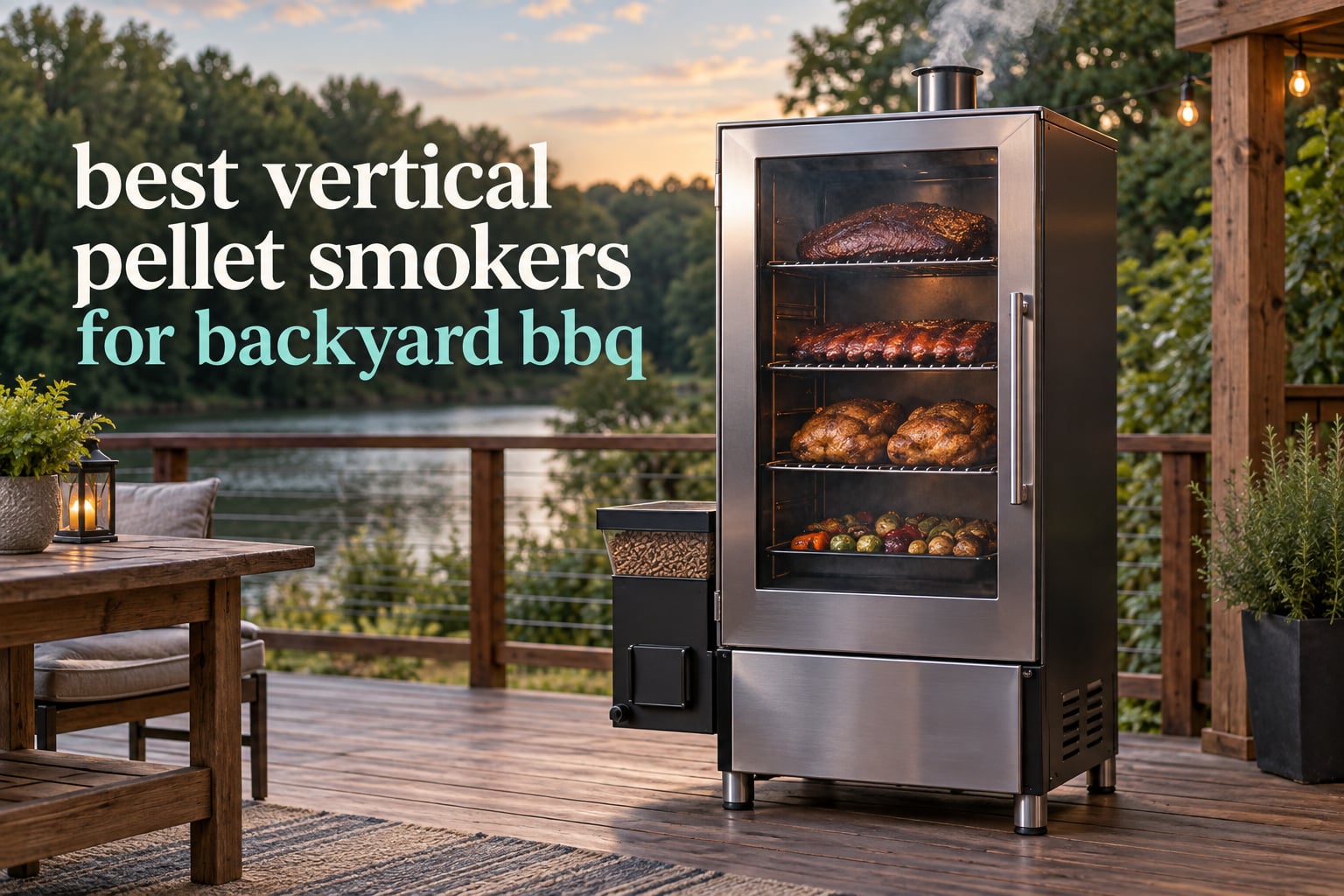
The Pit Boss PBV3P1 is the best vertical pellet smoker for backyard BBQ: it holds setpoint within about 5 to 10 degrees, packs 901 square inches onto four porcelain-coated grids, and carries a 40-plus pound hopper that covers a full overnight cook without a refill. Below I break down eight cabinets, from that workhorse to a double-wall commercial unit, with the failure modes owners actually hit.
A vertical pellet smoker is a cabinet with four to six racks stacked in an insulated column, so rising heat and smoke pass every shelf. That is the whole reason it exists, and it is why a 900-square-inch cabinet can hold six racks of ribs in the footprint of a mini-fridge while a horizontal pellet grill of similar price holds one rack and a row of sausages.
We assembled this roundup from manufacturer spec sheets plus the aggregated review records and owner threads that dominate the search results for this category. For a purchase this heavy, that matters, because the spec sheet tells you what a smoker is and owner reports tell you whether it still is three seasons later. Every cabinet below is scored on cook area, hopper autonomy, control, warranty and the reliability complaints that show up again and again.
We also weighed the format against the alternatives. If your cooking is mostly steaks and burgers, a horizontal pellet grill will serve you better, and our guide to the best pellet grills for backyard cooking covers that side. If you are chasing competition racks and whole hogs, the best offset smokers for competition BBQ roundup goes deeper on stick burners.
Table of Contents
Top 3 Vertical Pellet Smokers for Backyard BBQ
Pit Boss PBV3P1 Vertical Smoker
- 901 sq in cook area
- Four porcelain-coated grids
- 40+ lb hopper
- 24+ hours of use

Pit Boss Navigator 3-Series
- 1118 sq in cook area
- 50 lb pellet hopper
- WiFi and Bluetooth
- 5 year warranty

Grilla Grills Mammoth
- Over 1600 sq in cook area
- 10 racks or 24 S-hooks
- Double-wall insulation
- Alpha Connect 2.0 WiFi
Those three cover most buyers. The PBV3P1 is the one we would put on a patio with no caveats, the Navigator is the pick if your phone is your control panel, and the Mammoth is the only cabinet here that holds a real party load without bending rack spacing.
Best Vertical Pellet Smokers at a Glance in 2026
| Product | Specifications | Action |
|---|---|---|
| Pit Boss PBV3P1 Vertical Pellet Smoker |
|
Check Latest Price |
| Pit Boss Navigator 3-Series Vertical Smoker |
|
Check Latest Price |
| Grilla Grills Mammoth Vertical Smoker |
|
Check Latest Price |
 Pellet Pro 2300 Vertical Pellet Smoker Pellet Pro 2300 Vertical Pellet Smoker |
|
Check Latest Price |
 MAISON BACKYARDS 616 sq in Vertical Smoker MAISON BACKYARDS 616 sq in Vertical Smoker |
|
Check Latest Price |
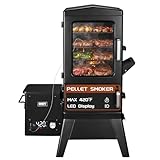 PIQUEBAR Vertical Pellet Smoker PIQUEBAR Vertical Pellet Smoker |
|
Check Latest Price |
 ATSENT 616 sq in Pellet Smoker ATSENT 616 sq in Pellet Smoker |
|
Check Latest Price |
 MAISON BACKYARDS Electric 616 sq in Smoker MAISON BACKYARDS Electric 616 sq in Smoker |
|
Check Latest Price |
One note on reading that table. Cook area figures describe usable rack surface, not the outside footprint of the cabinet, and the four 616-square-inch cabinets list the same number while differing sharply in build. Hopper size decides autonomy more than most buyers realise, and warranty length is the closest thing to a proxy for how the company expects the cabinet to age.
1. Pit Boss PBV3P1 Vertical Pellet Smoker – Best Overall
PIT BOSS PBV3P1 Vertical Pellet Smoker, Copper
901 sq in cooking area
40+ lb hopper
150-450F range
97 lb cabinet
Pros
- 901 sq in across four porcelain-coated grids
- 40+ lb hopper covers 24+ hour cooks
- Holds setpoint within about 5-10F
- Arrives nearly assembled
- Digital LED readout with meat probe
Cons
- Main probe sits near the heat source
- Pellet dust can block hopper feed
- Some cabinets shipped with a lower door seal gap
This is the cabinet we kept coming back to while putting this list together. It carries a 4.5 average across 362 ratings, and that combination of rating and volume is the reason it takes the top slot. Nothing else in the group has a review base that deep without the complaints turning spiky.
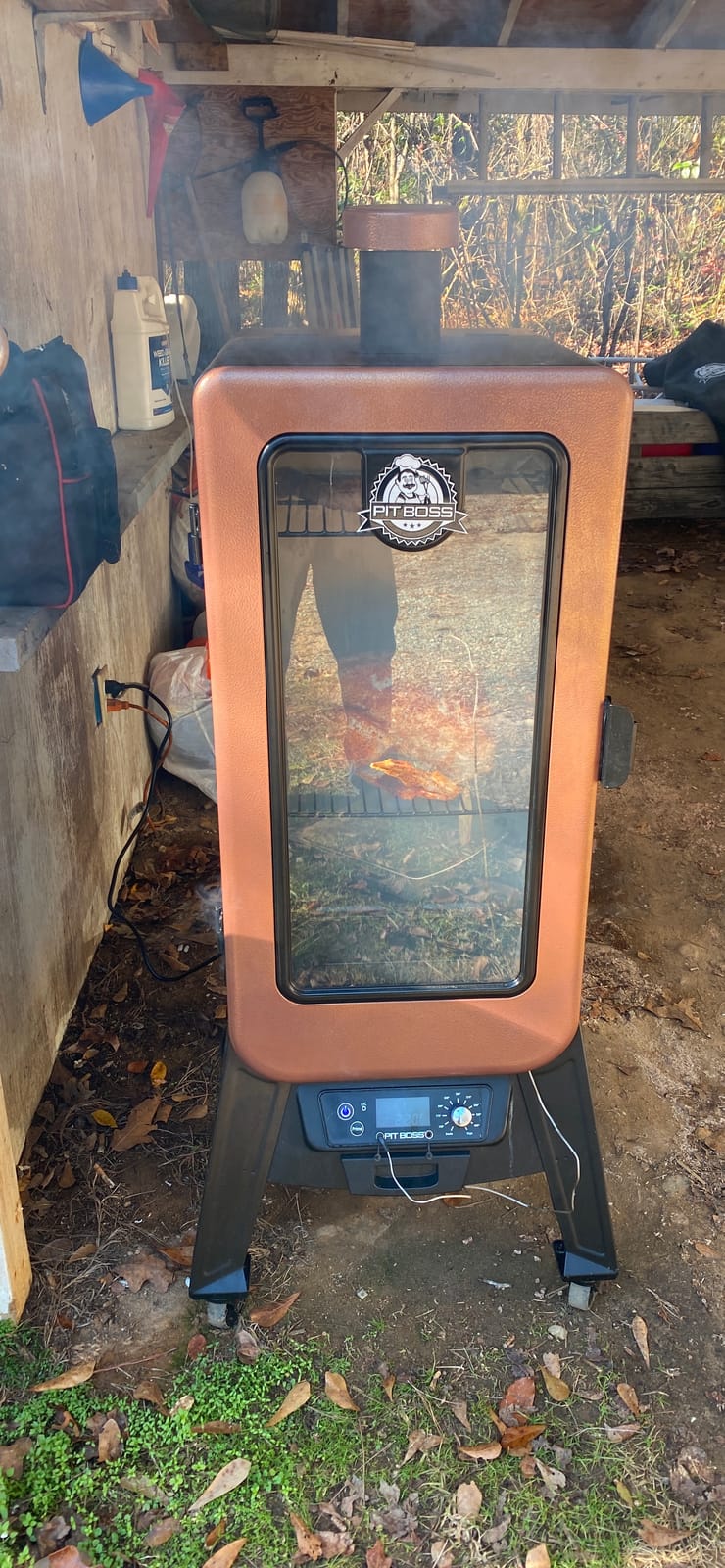
The 901 square inches spread across four porcelain-coated grids is genuinely useful in a backyard context. Owners report fitting multiple racks of ribs at once, which turns a Sunday smoke into the whole weekend of meal prep. A porcelain-coated water and heat deflector sits in the box, and it does more work than it gets credit for, holding the top racks closer to the firebox temperature instead of letting them drift cold.
Temperature stability is the headline. Multiple owners describe the cabinet holding setpoint within roughly 5 to 10 degrees, and several mention it working straight through winter. The 40-plus pound hopper with pellet purge is rated for 24-plus hours of use, which is the difference between sleeping through a brisket and getting up at 2 a.m. to top up the fire.
Assembly is the quiet advantage here. The cabinet arrives nearly assembled, with only the base legs and the door handle to attach, so you are not building a piece of furniture on a Saturday afternoon. A 300-watt auto-start igniter with auto shut-off handles the fire for you, and the fully programmable range runs 150 to 450 degrees.
What you should check before you commit
The most repeated complaint is about the probe, not the smoker. Owners say the main probe reads close to the firebox, so upper racks can sit 200 to 225 degrees when the dial is set to 250 or 275. Put a separate ambient thermometer on each level if you care about even cooking, which is a five-dollar fix for a real accuracy gap.
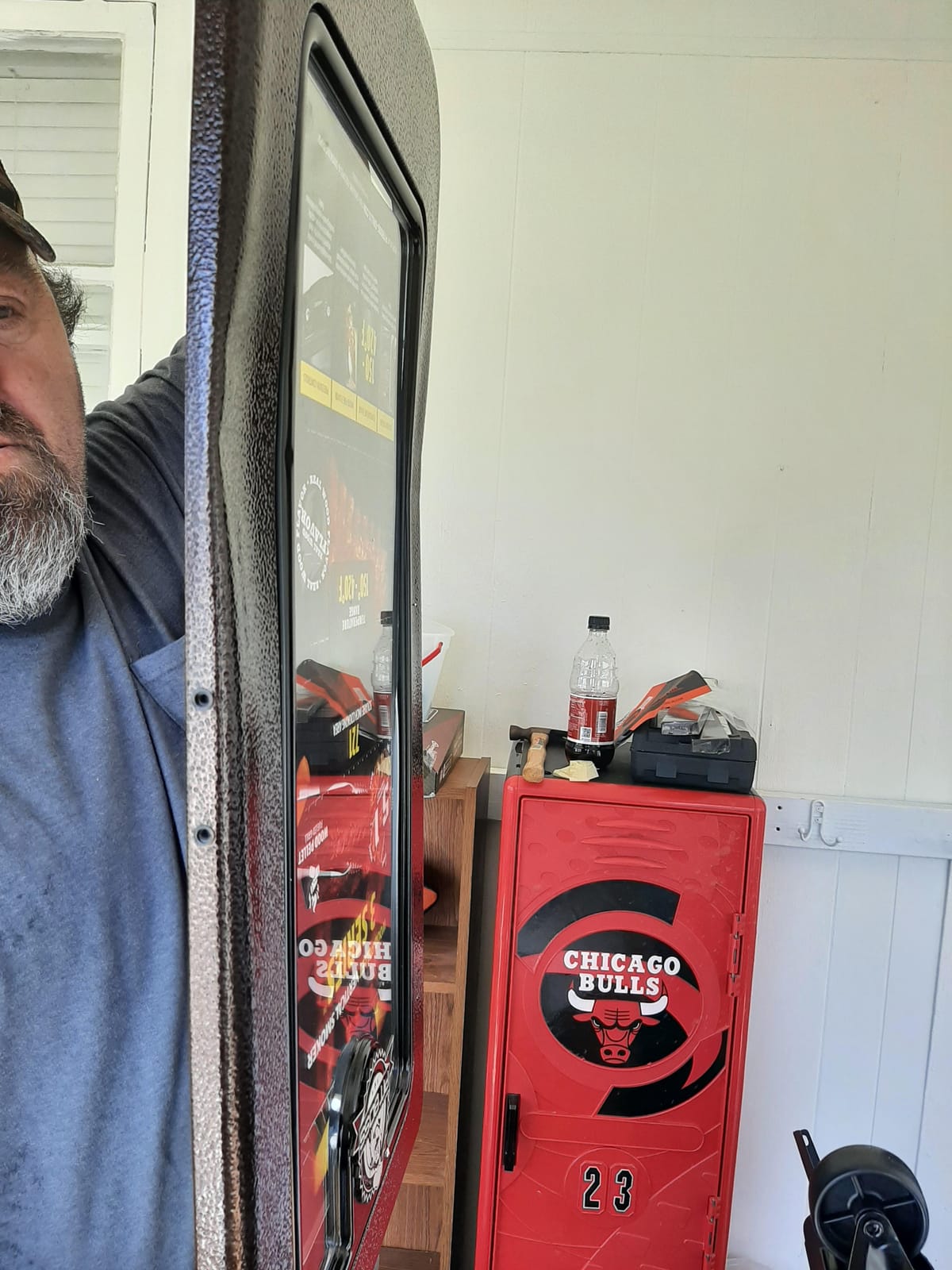
Two smaller issues worth knowing about: pellet dust accumulates in the hopper and can eventually block feed, and a small number of buyers report a gap in the door seal at the lower front on arrival. Check the seal before your first long cook. The cabinet also has limited horizontal clearance, so trim a full slab of ribs to fit.
Who buys the Pit Boss PBV3P1 and who should skip it
Buy it if you want a large batch of low-and-slow food in a backyard without learning stick burner craft. It is the easiest cabinet on this list to get running, and the hopper gives you the freedom to walk away from it overnight.
Skip it if you need phone control from work, since there is no app here, or if searing is part of your regular plan. A few buyers also report the internal temperature probe failing and replacement parts being awkward to source, so keep a spare probe on hand.
2. Pit Boss Navigator 3-Series Vertical Smoker – Best for App Control
Pit Boss Navigator 3-Series WiFi & Bluetooth Wood Pellet Vertical Smoker with LCD Digital Controller, 1,118-Sq. In. 5-Rack Cooking Space, 130°F to 420°F Temp Range, Meat Probe, 50 lb. Pellet Hopper
1,118 sq in
50 lb hopper
WiFi and Bluetooth
5 year warranty
Pros
- WiFi and Bluetooth app control
- 50 lb hopper is among the largest here
- 1118 sq in across five racks
- 130 to 420 degree digital range
- 5 year warranty
Cons
- Recurring auger jam reports on new pellet bags
- Ignition tied to the internal probe working
- Controller mounted on the back panel
The pitch here is autonomy from your phone. Built-in WiFi and Bluetooth connect to the PitBoss Grills app so you can change setpoint and watch probes without walking outside. For a smoker that runs overnight, that is not a gimmick, it is the difference between a good night of sleep and a trip down the driveway at midnight.
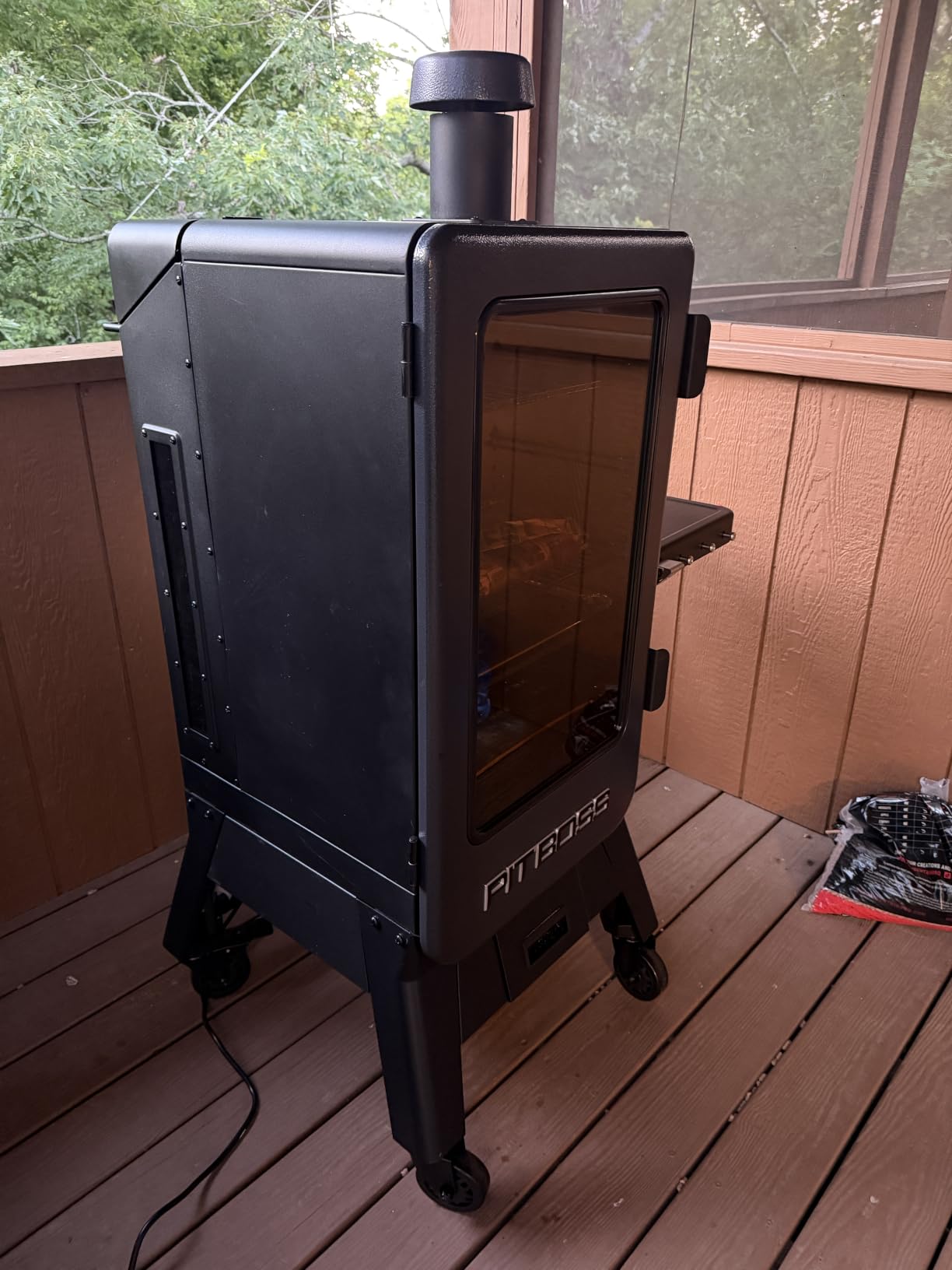
The physical cabinet is big in the right ways. You get 1,118 square inches across five porcelain-coated steel racks, a 50 pound hopper for extended sessions, and a 130 to 420 degree digital range. Three probe ports with one probe included means you can track multiple cuts at once, which is where cabinets start earning their footprint.
The chimney exhaust and convection airflow circulate heat and smoke through the cabinet, and the rear access grease drawer plus rapid igniter make cleanout faster than most. A five year warranty is the longest stated coverage in this group alongside the Navigator’s build, and it was recognised as Best Vertical Smoker by Men’s Journal.
The 3.3 average across 33 ratings is where the honesty matters. That rating is not a cook-quality score, it is a reliability and quality-control score. Owners who get a working cabinet praise the capacity and the app. Owners who do not, do not.
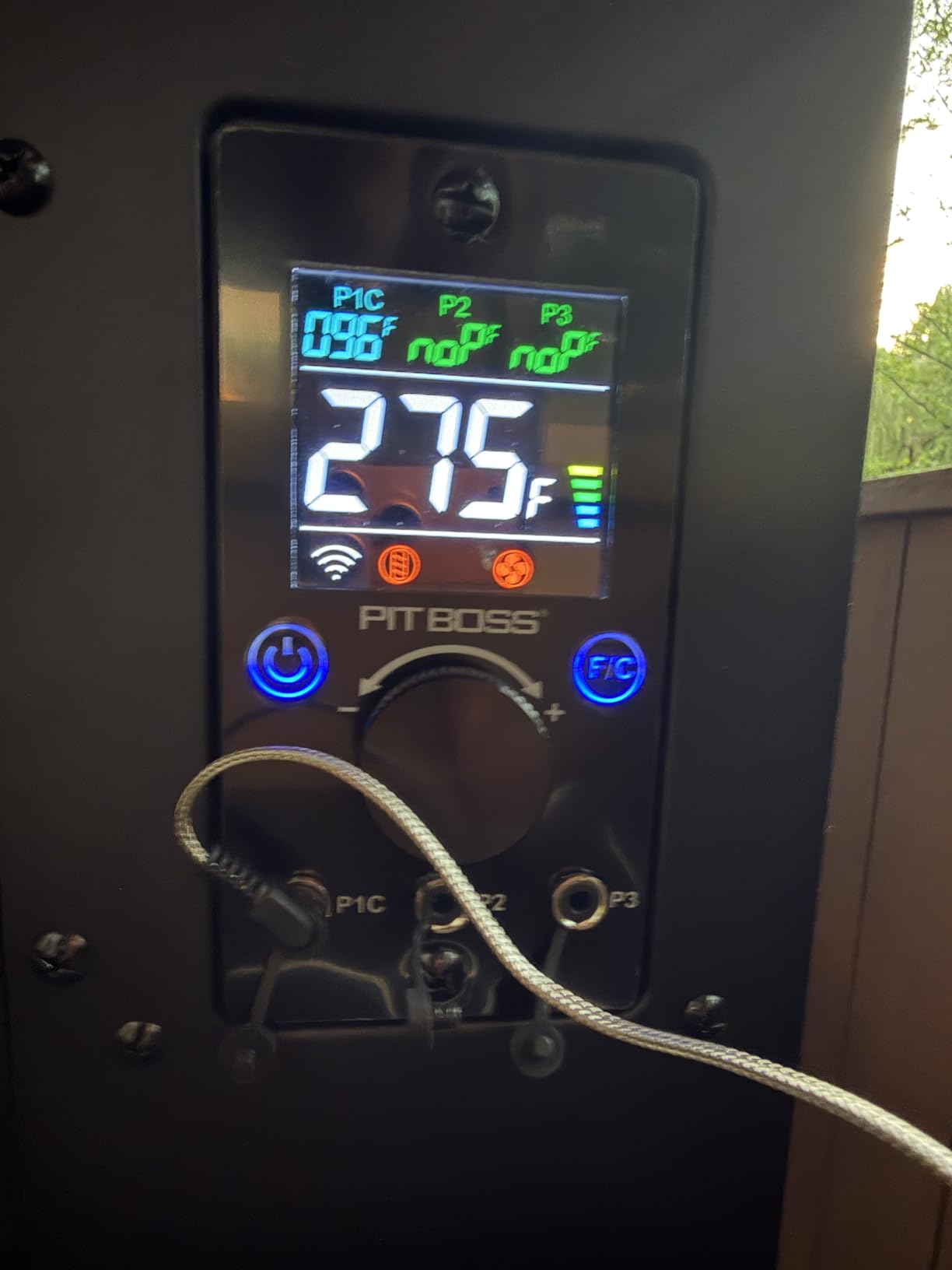
The auger jam problem is the one to understand
The single most common complaint is auger jamming on fresh bags of pellets, where feed stops until the unit is unplugged and the auger is freed. Pellets that have been stored warm or that break down into dust will bridge in the throat, and a cabinet with a large hopper draws that dust through faster than a smaller one.
Second is ignition. Several owners report the smoker will not ignite when the internal probe is not functioning, because the safety circuit reads the probe as a failed start. Third, temperature readings can take a while to stabilise and run inconsistent from rack to rack, so use a separate thermometer until you have mapped your cabinet’s hot spots.
Who buys the Navigator and who should skip it
Buy it if you want the largest hopper on this list and remote monitoring, and if you are willing to store your pellets properly so the auger stays clean. The 50 pound hopper means long sessions without refills, and 1,118 square inches handles ribs, brisket and poultry in the same load.
Skip it if reliability under warranty claims is your priority, or if you want certainty before the cook starts. Several cabinets also arrive with shipping damage such as a bent hopper or an unconnected blower wire, so inspect the box on arrival day. The controller sits on the back panel rather than the front, which is a small irritation when you are setting a cook in the rain.
3. Grilla Grills Mammoth Vertical Smoker – Best for Large Gatherings
GRILLA Mammoth Vertical Smoker with 5 Trays, High Smoke Production, Wifi Enabled Touchscreen Controller, For Smoking, Outdoor Cooking, and Grilling
Over 1,600 sq in
Double-wall insulation
15 lb hopper,50 hour burn
4 year warranty
Pros
- Over 1600 sq in of cooking space
- Fits 10 racks or 24 S-hooks
- Double-wall build holds heat in cold weather
- Up to 50 hours at 240F per fill
- Alpha Connect 2.0 WiFi touchscreen
Cons
- 130 lb cabinet is hard to move once loaded
- Wood chunks needed on the deflector for heavier smoke
When you need to cook for a crowd rather than a household, cook area stops being a preference and becomes the whole decision. The Mammoth brings over 1,600 square inches inside a double-wall cabinet that fits up to 10 steel racks or 24 S-hooks. That is the largest cavity we reviewed, and it is more than three times the usable area of the 616-square-inch cabinets at the entry end of this list.
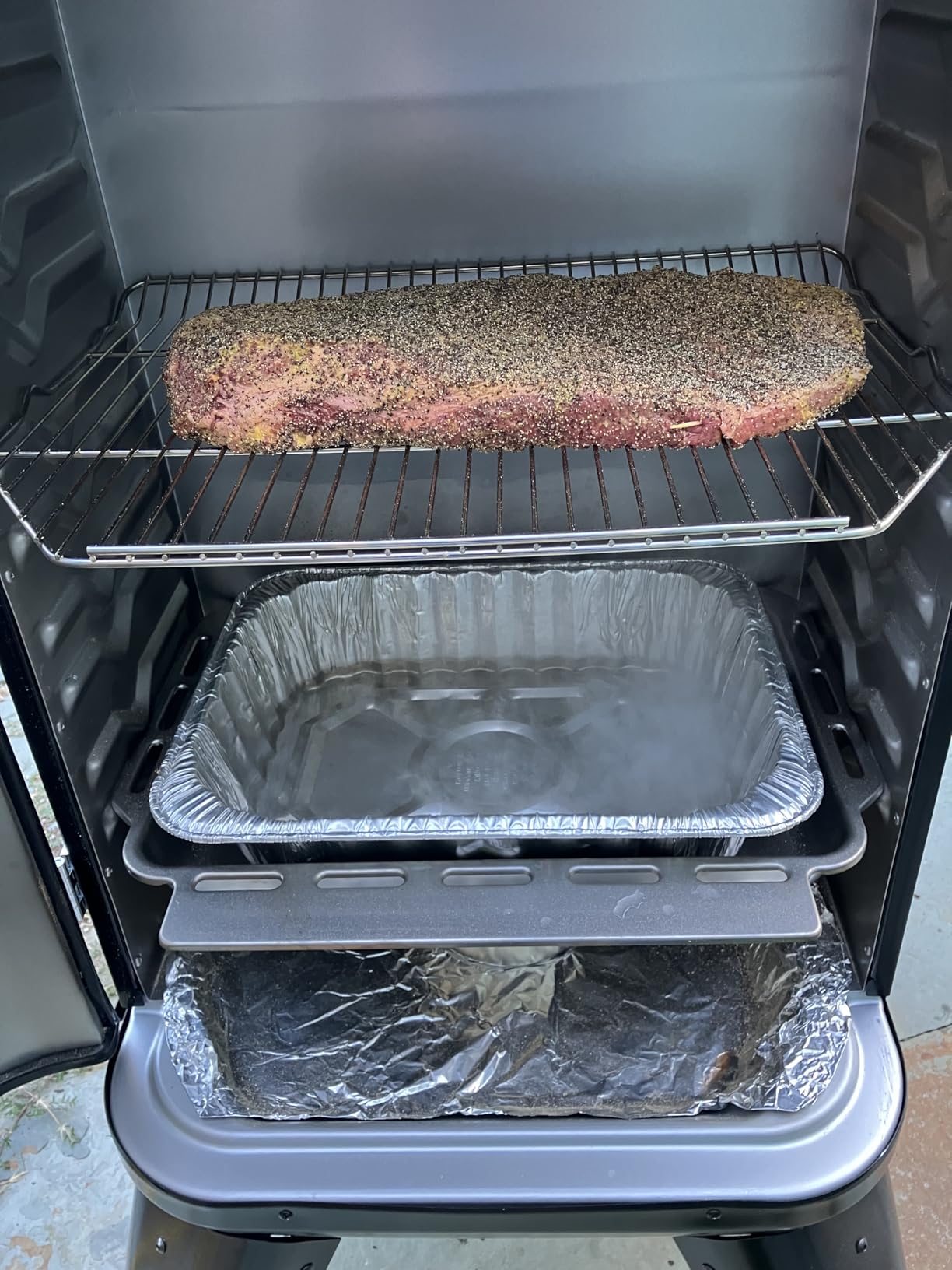
Double-wall insulation is the engineering story here, and it shows up in cold weather. Owners report steadier temperatures in winter conditions, which is exactly when a single-wall cabinet starts burning through pellets and drifting. The built-in water pan handles temperature regulation, grease management and moisture in one part, and the lipped deflector accepts extra wood chunks or chips when you want more smoke character.
Control comes from an Alpha Connect 2.0 WiFi touchscreen controller with a smartphone app and set-and-forget digital control. The 15 pound hopper burns up to 50 hours at 240 degrees per fill, which is an unusual endurance figure for a hopper that size.
A four year manufacturer warranty is stated on the unit. Review volume is thin at 16 ratings averaging 4.0, so treat the feedback as directional rather than statistical. What those reviews do agree on is capacity, insulation and app control working as advertised.
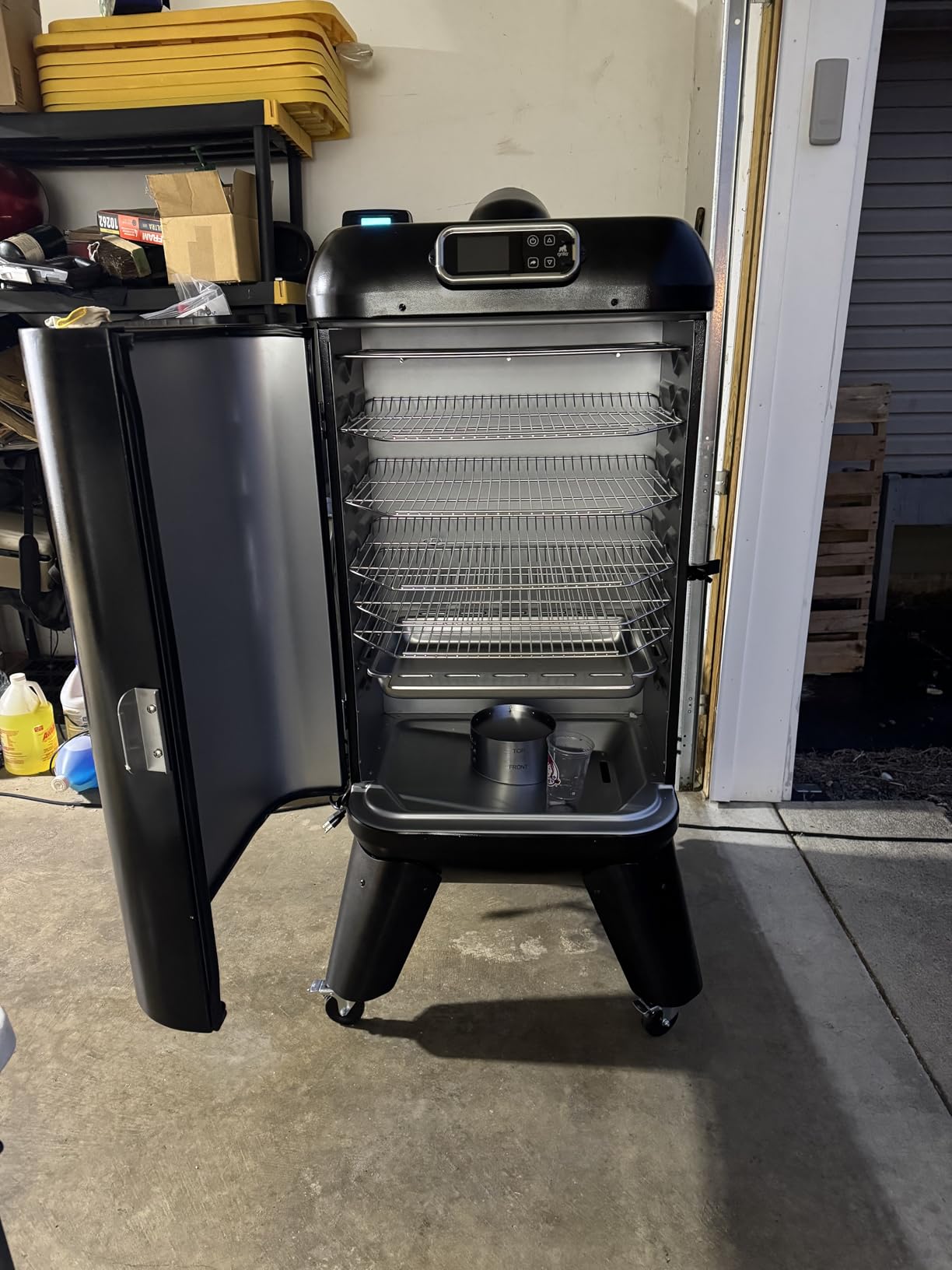
How to get more smoke out of a pellet cabinet
Pellet smoke is lighter than stick burner smoke, and that is physics rather than a defect. The fix that owners of this cabinet use is the lipped deflector, where you add wood chunks or chips alongside the pellets. Doing that converts a low-and-slow pellet cook into something that tastes closer to a traditional offset.
Plan the layout before you start. With 24 S-hooks, sausage and ribs can hang in the smoke path while racks handle brisket and butts, so a holiday load does not have to be cooked in two passes. The 28 by 28 inch footprint is wider than the average patio cabinet, so measure your space first.
Who buys the Mammoth and who should skip it
Buy it if you cook for large family gatherings, run a holiday smoke, or want to hold whole hogs and full racks of brisket at once. The 130 pound weight is manageable with two people but not a solo lift, so decide where it lives before delivery day.
Skip it if a 616-square-inch cabinet would meet your needs, because you would be paying for capacity you will not use. It is also the least forgiving choice for a first pellet smoker, since learning to load and airflow a 1,600-square-inch chamber takes practice.
4. Pellet Pro 2300 Vertical Pellet Smoker – Best for Build Quality
Pellet Pro® 2300 Vertical Pellet Smoker DOUBLE WALL Cabinet Free Cover and Convection Fan – Home Delivery
About 10 cu ft interior
PID controller
18-gauge double wall
200 lb cabinet
Pros
- About 10 cubic feet of interior space
- PID holds within 5-10F of setpoint
- Double-wall steel cuts pellet use
- Convection fan evens the gradient
- Cover and home delivery included
Cons
- Assembly instructions are vague and poorly illustrated
- Parts may need drilling and filing to fit
- Igniter failed out of the box for some
This is the closest thing to a commercial cabinet in the group. It weighs 200 pounds, measures 26 by 42 by 54 inches, and offers approximately 10 cubic feet of interior cooking space. Owners report smoking whole hogs and large batches of ribs and brisket in it, which puts it in a different class from the 900-square-inch workhorses.
The temperature control is the strongest spec on the page. A PID controller holds temperature within roughly 5 to 10 degrees of the setpoint once the cabinet is up to heat, and several owners narrow that to 5 to 7 degrees. Eighteen-gauge double-walled steel construction reduces swings and cuts pellet consumption, and a convection fan equalises what would otherwise be a wide top-to-bottom gradient.
The rack system is heavy duty, with three 21 by 20 inch stainless steel grates plus a seven-section rib rack. A protective smoker cover and home delivery are included in the box, which matters when the cabinet weighs this much.
Assembly is the real cost of entry
Buyers who get past assembly rate the smoking performance very highly, sometimes calling it the best smoker they have owned. The friction is the build. The instructions are vague and poorly illustrated with no genuine step-by-step manual, and some components require drilling, filing and grinding to fit the flue to pre-tapped holes.
That is a Saturday and a half for two people with a drill. Budget for it, or the cabinet will sit in the garage while you resent it.
Who buys the Pellet Pro 2300 and who should skip it
Buy it if you cook seriously, in volume, and want the tightest temperature control and heaviest construction available in a vertical pellet cabinet. The convection fan plus double walls also cut pellet use, which matters over years of use.
Skip it if assembly friction will end the project before it starts, or if your storage space cannot take a 200 pound cabinet that is 42 inches wide. A few buyers also report a heating element that failed out of the box and needed an external torch to light, and the pellet storage box is small enough that a full bag will not fit next to a cabinet this size. Check the grate frames for sharp edges before loading meat.
5. MAISON BACKYARDS 616 sq in Vertical Smoker – Budget Pick
Vertical Pellet Smoker with Cover & Meat Probe, 4-Rack Electric BBQ Smoker Grill, 616 sq in Cooking Space, Digital LED Temperature Control for Outdoor Smoking Ribs, Brisket, Chicken & Sausage
616 sq in cook space
Four chrome-coated racks
LED control
44 kg cabinet
Pros
- Smokes well for the price when it is running
- Automatic pellet feeding needs no babysitting
- Seller support sends replacement cabinets and parts
- Meat probe and waterproof cover included
Cons
- Several cabinets stopped working after a couple of uses
- Arriving dented and needing straightening
- Some arrived with damaged connectors
- Internal width is narrower than expected
Entry-level vertical pellet smokers live or die on two questions: does it cook good food, and does it survive past the first season. This one earns its place because the cooking results, when the cabinet works, are genuinely fine for the money. Owners report good pork butt, ribs and beef jerky.
The feature set is more generous than the tier suggests. You get 616 square inches across four chrome-coated racks, an LED control panel for setpoint and monitoring, a built-in meat probe, and a waterproof cover. Automatic pellet feeding means no babysitting, which is the entire value proposition at this level.
The support record is worth noting. Sellers have shipped replacement cabinets and parts quickly when problems appeared, and owners describe the response as helpful. That does not undo a failed cabinet, but it changes how painful the failure is.
Where the budget tier gives out
The 3.4 average across 32 ratings is dragged down by a real cluster of early failures. Several cabinets stopped working after only a couple of uses, and a separate group arrived dented and needed straightening before assembly. Others turned up with damaged connectors or did not run at all.
Assembly can take two hours and the instructions are not always clear, so set aside the time. The internal width is also narrower than most buyers expect, which means full racks of ribs have to be trimmed before they will go in.
Who buys this cabinet and who should skip it
Buy it if this is your first smoker, your budget is the binding constraint, and you mostly want ribs, chicken and sausage. At this tier you are buying an introduction to pellet smoking more than you are buying long-term durability.
Skip it if you are cooking for a group or planning to keep it past a couple of seasons. At that point the pellet grill alternatives in our backyard guide or a mid-tier cabinet will serve you better. Whichever you choose, inspect the cabinet on arrival and test it with a short cook before committing to an overnight brisket.
6. PIQUEBAR Vertical Pellet Smoker – Best for First Cooks
Electric Pellet Smoker with Rainproof Cover, Vertical Wood Pellet Smokers Grill With Hook Meat Probe LED Display Temperature Control
616 sq in cook space
Four adjustable racks
LED display to 420F
Hanging hooks included
Pros
- Entry-level pricing with good food results
- Holds temperature in cold Southeast Texas weather
- Four racks handle multiple cuts
- Built-in hooks add sausage and rib hanging
- Replacement parts shipped when components were damaged
Cons
- Water tray needs emptying after every cook
- Lowest setting is too warm for true cold smoking
- One report of the cabinet catching fire
- Probe failures can block ignition
This cabinet earns its spot on one specific strength: it holds temperature in bad weather. An owner in Southeast Texas reports steady results through cold conditions, which is a hard thing to do in a small insulated cabinet and a common failure point for the tier.
Cooking capacity is 616 square inches across four adjustable racks, with a vertical upright design that circulates heat and smoke evenly. The LED digital display with a control knob reaches 420 degrees, and the built-in precision meat probe takes the guesswork out of long cooks.
The hooks are the detail that separates it from a bare-bones budget cabinet. Built-in hanging hardware lets you run sausages and rib sections in the smoke path while the racks handle butts or brisket, which is how you get real volume out of a small footprint. A rainproof cover is included.
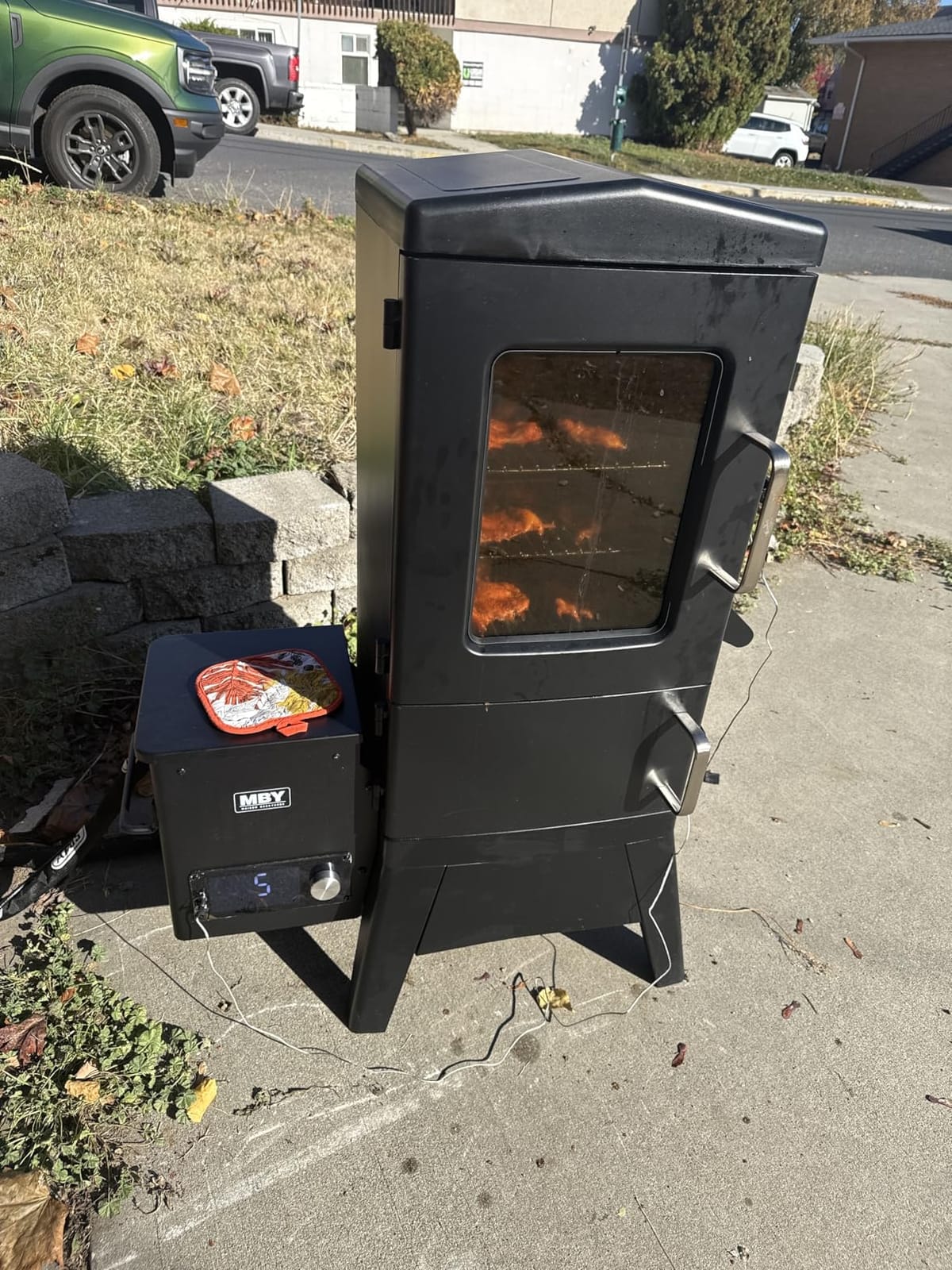
The maintenance habits this cabinet demands
The water tray must be emptied and cleaned after every cook, because grease solidifies on the water and re-heats into the cabinet. Build that habit from the first cook and it is a two-minute job. Skip it and you are asking for a grease fire.
The lowest temperature setting is still too warm for true cold smoking, so plan fish or bresaola elsewhere. Assembly is more involved than expected, and there is one report of the cabinet catching fire on a third use with the rubber melting, alongside repeat probe failures that can block ignition. Those are isolated but serious, so keep the cabinet on a non-combustible surface and away from anything that matters.
Who buys the PIQUEBAR and who should skip it
Buy it if you are a beginner who wants pellet convenience with hanging capacity and you cook in a climate where temperature recovery matters. The food results are good and the parts support has been responsive.
Skip it if you plan to cold smoke, if you will not empty the water tray after every use, or if you want the strongest possible safety record. For a family smoker on a patio where kids and pets pass, step up a tier.
7. ATSENT 616 sq in Pellet Smoker – Best for Small Patios
Pellet Smoker with Cover, Electric Wood Pellet Smoker Grill With Meat Probe and Hook, 616 Sq in Cooking Area LED Display Temperature Control, Outdoor Cooking, Patio, Garden Barbecue
616 sq in cook area
Four adjustable racks
Side hopper about 5 hours
Viewing window
Pros
- Perfect 5.0 average across all 11 ratings
- Assembly finished in about 45 minutes
- Bright LED display readable in sunlight
- Large viewing window cuts door openings
- Accurate probe readings when placed well
Cons
- Struggles to reach high temperatures on cold windy evenings
- Probe readings need careful placement away from fat
- 616 sq in suits light cooking loads
This is the only cabinet here with a perfect average, and we want to be straight about what that means. All 11 ratings are five stars. That is a small review set, so it tells you that nobody who bought one regretted it, not that it is proven over a decade.
What the reviews do describe is a smooth first experience. One owner finished assembly in about 45 minutes with all parts in the box, which is the fastest setup in this roundup. Temperature regulation is reported as excellent, and the LED display is bright enough to read in direct sunlight, a small thing that matters when you are checking a cook from a patio chair.
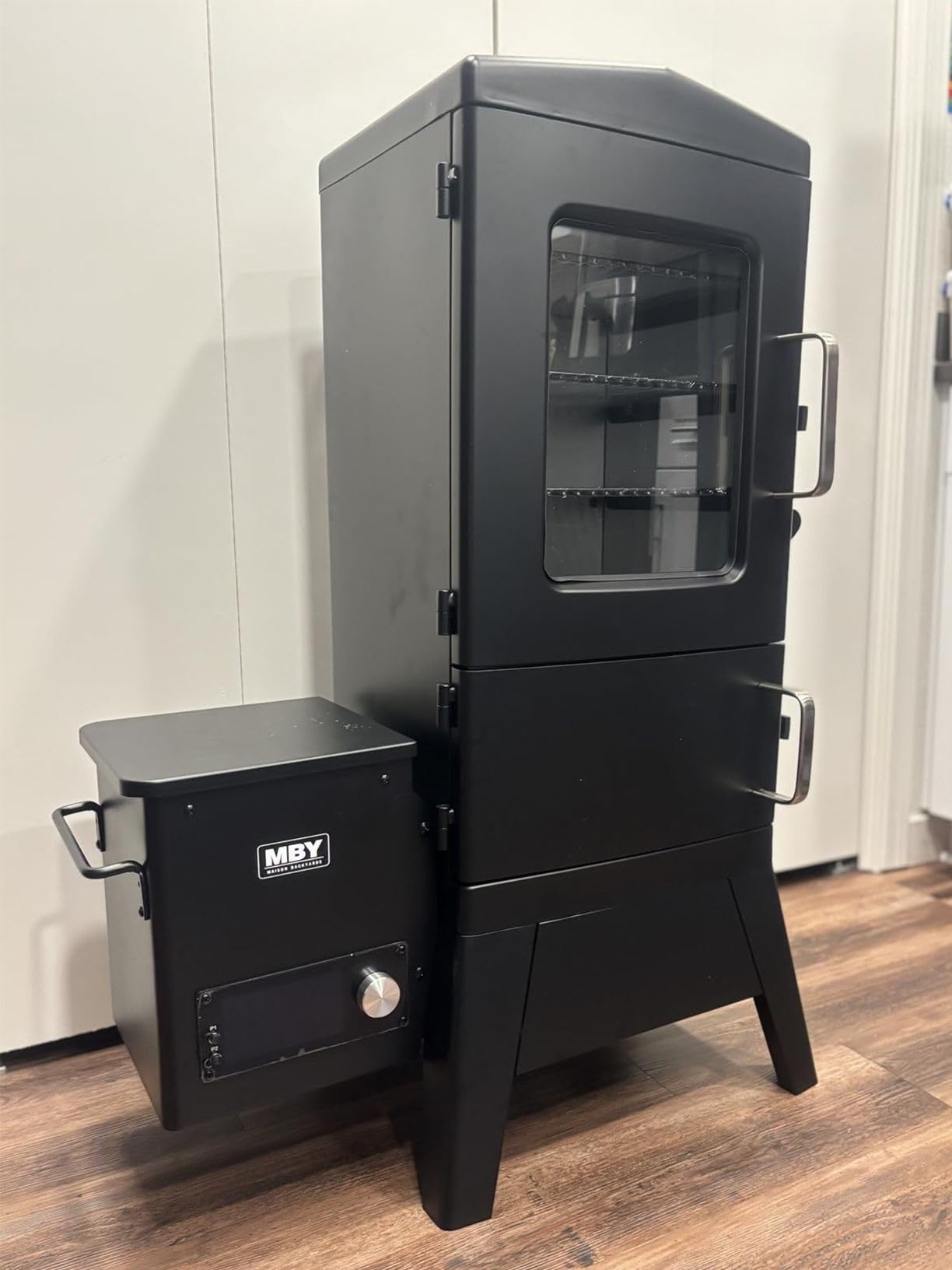
The side hopper held enough fuel for a roughly five hour cook without a refill, which is honest for the size. A large viewing window in the door reduces how often you open it, and since every door opening costs you temperature and smoke, that is a real efficiency gain rather than a cosmetic one. Built-in precision meat probe and hanging hooks for sausages and ribs round out the package, and a rain proof cover is included.
The honest limit on output
The recurring weakness is high-temperature output in cold, windy evenings. A small cabinet with a modest firebox simply cannot pull the heat back when the ambient temperature drops hard. If your winters are severe, plan cooks for shoulder seasons or step up to a double-wall cabinet.
Two practical notes. Probe readings need careful placement, avoiding fatty areas or the reading will run high and end your cook early. And 616 square inches is a light cooking load, suited to a couple of cooks a month rather than large gatherings.
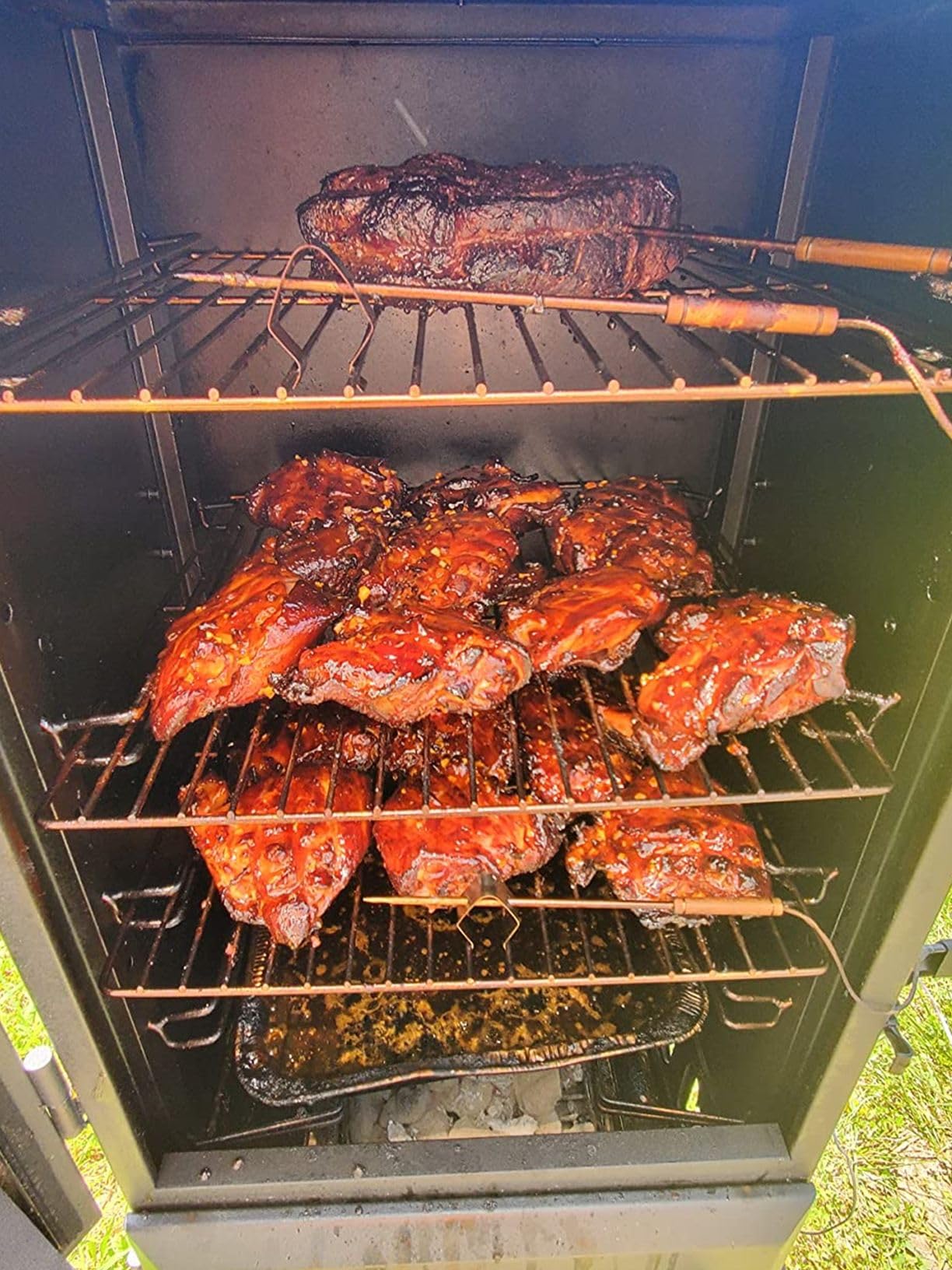
Who buys the ATSENT and who should skip it
Buy it if your patio is small, you cook moderate loads, and you want the least frustrating ownership experience at the entry level. The quick assembly and readable display matter more than most buyers expect on a first smoker.
Skip it if you need large-batch capacity, hard cold-weather recovery, or a deep review history behind the rating. Treat the 5.0 as encouraging rather than proven.
8. MAISON BACKYARDS Electric 616 sq in Vertical Smoker – Best for Apartments
Vertical Electric Pellet Smoker with Cover & Meat Probe, 4-Rack Digital BBQ Electric Smokers, 616 Sq.in, LED Temperature Control, Ribs, Brisket, Chicken
616 sq in cook area
4 racks plus 8 hooks
3L hopper,20 hours
90 lb cabinet
Pros
- Apartment-friendly electric design with no propane rules
- Hands-off pellet feeding removes constant monitoring
- Accurate setpoint holding and probe when working
- Sealing and insulation perform well once assembled
- Waterproof cover included
Cons
- Some arrive with a faulty control board or igniter
- Temperature regulation runs high on some cabinets
- Smoke leaks around the door seal
- 90 lb cabinet has no wheels
This cabinet is the reason to reconsider the vertical format if you rent. It is electric with pellet fuel and no propane or charcoal, so balcony and patio rules that block open flame are not an issue. Owners consistently describe it as a good-value apartment smoker once it is assembled and working.
Capacity is 616 square inches across four movable grill levels plus eight hooks, rated to fit 23 hamburgers or six whole chickens at once. The 3 litre pellet hopper runs up to 20 hours of smoking, which is the longest stated runtime of the 616-square-inch group, and an LED digital display handles automatic ignition and setpoint.
The built-in meat probe includes a temperature-reached alert, which is genuinely useful when the cabinet is on a balcony and you are indoors. The control panel and probe both perform accurately once the electronics are sound.
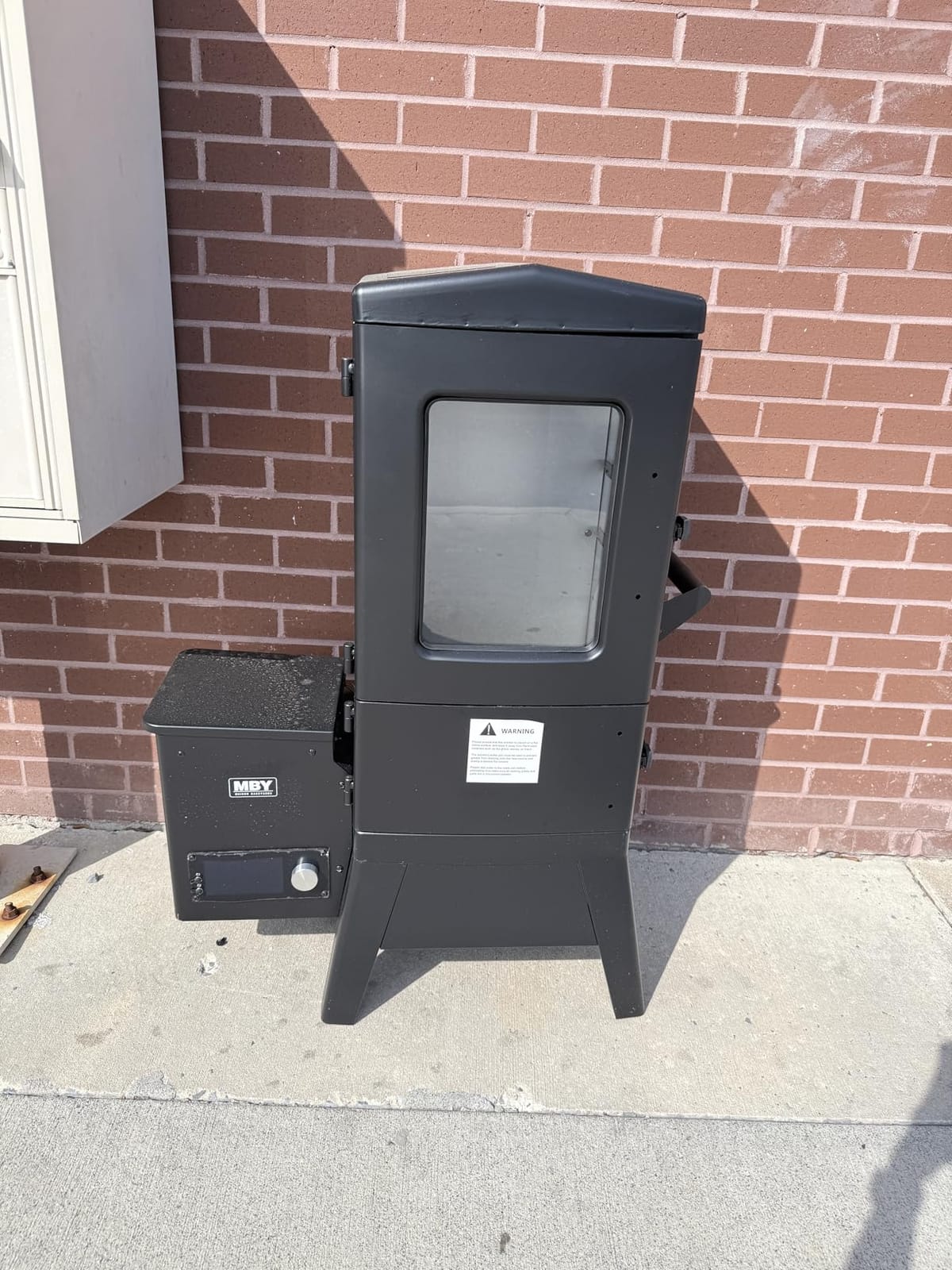
Seal and control issues are the real complaints
The 3.7 average across 28 ratings reflects two distinct problems. The first is quality control on arrival: some cabinets come with a faulty control board or an igniter that will not start, which stops you before cooking anything.
The second is temperature regulation. Some owners report the cabinet running well above setpoint once it is working, and separately report smoke leaking around the door seal and glass, which leaves you with little smoke flavor despite plenty of pellets going in. If smoke flavor is your priority, check the seal fit around the door in your first cook.
The internal width is narrower than expected, so full racks of baby back ribs must be cut. Instructions do not always match the parts, with no part numbering and an incorrect knob operation described in some reviews. Assembly is time-consuming and best done by two people, and the 90 pound cabinet has no wheels.
Who buys this cabinet and who should skip it
Buy it if you need a smoker that a landlord and a fire rule both permit, and you want more hooks and racks than a comparable electric cabinet offers. The waterproof cover helps with balcony storage.
Skip it if smoke flavor is the point of your cook, if you will not have help with assembly, or if you need to move the cabinet regularly. Check the control board and igniter on arrival day before you count on it.
What Owners Actually Report After a Few Seasons
Spec sheets describe a new smoker. Owner threads describe the one you will still have in five years, and for this category that gap is wide. Search results for vertical pellet smokers are dominated by forums rather than editorial roundups, so we read what buyers say after the honeymoon.
Auger reliability is the recurring theme across brands. Owners on r/pelletgrills report cabinets that worked well for years before an auger-related failure, and the leading theory in most threads is pellet quality rather than a hardware defect. Pellets stored warm, or dust that has broken down in the bag, will bridge in the auger throat and stop feed mid-cook.
The second theme is pellet dust in the hopper. Fine dust settles at the bottom of the hopper, gets carried into the auger, and over time reduces feed reliability. Several owners recommend emptying and screening old pellets rather than topping up a hopper that has been sitting.
The third theme is the smoke box seasoning curve. Owners note that after about a year of use the smoke box seasons in, and everything coming out of it tastes better after that point. That is a good reason to keep a cabinet in service rather than rotate models every season.
Finally, brand fatigue is visible in the threads. Most buyers open by naming the same default candidates, and the most useful advice tends to come from owners who mention a less obvious name in passing. Build quality perceptions also skew positive for one parent company over another in the same family, which tells you finish quality varies more by model line than by logo.
Grease Fires, Auger Jams and the Maintenance Routine
This is the question we see most often and the one almost no editorial roundup answers: what actually goes wrong with a vertical pellet smoker? In our view there are five recurring problems, and every one of them is preventable.
1. Grease fires from neglected deflectors. Vertical cabinets collect rendered fat on the water pan, the heat deflector and the drip tray. Heat that repeatedly hits a fatty tray can flare. Empty and wipe the grease tray after every cook, and wash the deflector on a schedule rather than when you see smoke.
2. Auger jams from degraded pellets. The cause is usually moisture or dust in the hopper, not a broken motor. Store pellets sealed and dry, never fill a hopper with pellets that have been open for months, and keep a soft brush and a vacuum near the cabinet so you can clear a jam without unplugging the smoker mid-cook if you can reach it.
3. Fire in the auger. Owners report the same failure across several brands, and the cause is usually back-feeding or over-feeding from a jammed auger combined with a firebox that keeps igniting. If you see a plume of thick white smoke from the hopper area, unplug the cabinet before opening anything, then let it cool fully.
4. Failed temperature probes blocking ignition. Multiple cabinets in this roundup tie ignition to the internal probe, so a dead probe can read as a smoker that will not light. Keep a spare probe, and test the probe before blaming the igniter.
5. Smoke backing out of the wrong vent. After a few seasons, owners notice smoke escaping from the wrong place, which usually means a cooling problem, a seal failure or a partially blocked chimney. Clean the grease channel, check the door gasket, and keep the exhaust path clear.
Two habits prevent most of the list. Season the cabinet properly on the first burn rather than skipping ahead to cooking, and use a separate ambient thermometer so you are not chasing a probe reading that has no relationship to the top racks.
Which Vertical Pellet Smoker Should You Buy?
Start with cook area, because it is the one number that dictates everything else. Under 700 square inches suits a couple of cooks a month. Between 900 and 1,200 square inches is the sweet spot for a family that smokes ribs and butts every weekend. Above 1,500 square inches is for holiday cooks, gatherings and whole hogs.
Next, decide how autonomous you need to be. A hopper in the 15 to 20 pound range covers most overnight cooks. A 40 to 50 pound hopper means you can run a long session without refilling, which is the difference between sleeping through the cook and getting up at 2 a.m.
App control is the third decision. WiFi and Bluetooth matter if you want to monitor and adjust from indoors or work. They are not a quality signal, and in this group the two cabinets with the best app features also carry the heaviest reliability complaints, so treat connectivity as a convenience, not a foundation.
Warranty length is the closest proxy for build quality you get without opening the cabinet. Longer stated coverage usually tracks heavier steel and double-wall construction, both of which show up in temperature stability during cold months.
Vertical pellet smoker versus horizontal pellet smoker. A horizontal grill wins on searing and direct heat, and you can use it year-round for burgers. A vertical cabinet wins on volume and smoke density, because heat and smoke pass every rack. Most serious backyard cooks end up owning both, which is worth knowing before you spend.
Vertical pellet smoker versus vertical electric smoker. A vertical electric smoker is cheaper per cook, needs no pellet storage, and is permitted where open flame is not. It cannot hit the same temperatures for crisping skin and it burns more electricity. If you already have a gas grill for searing, an electric vertical is a strong pairing.
Do you want smoke intensity? Add wood chunks or chips to a deflector box, or choose a cabinet built with a lipped deflector for that purpose. Pure pellet smoke is clean and mild, and a cabinet with no place to add wood will not change that.
How much meat do you actually need? As a rough guide, a 900-square-inch cabinet handles about four to six racks of ribs or a pair of butts plus sausage. A 1,600-square-inch cabinet triples that. Our backyard BBQ gear guide covers the sides you will need alongside either.
Lastly, buy from a seller you can reach. Several of the reliability complaints in this roundup are shipping and arrival problems rather than cooking problems, and responsive parts support is the difference between a week of inconvenience and a cabinet you stop using.
Backyard Fit: Footprint, Weight and Getting It Home
The topic says backyard, and the cabinet has to physically live there. Sizes here range from a 17.3 inch deep by 29.5 inch wide entry cabinet at 90 pounds, up to the Pellet Pro 2300 at 42 inches wide and 200 pounds. Measure the space before you order, including room to open the door and lift food in.
Weight matters more than people expect. Anything above 150 pounds is a two-person job on delivery day and permanently a two-person job if you ever want to move it. Decide the final position first, then get it delivered there.
Cabinets of this weight commonly arrive by freight rather than parcel, which means curbside delivery to the end of the driveway. Budget for the move from the curb yourself, and check whether a liftgate is included or needed.
On placement, a level non-combustible surface away from siding matters more than most buyers expect. Leave clearance for the chimney exhaust to draw properly, and keep a hose or extinguisher within reach on a patio. Once it is in position, run the manufacturer’s first burn with an empty cabinet before any real cook, and let it cool completely before touching it.
Frequently Asked Questions
Are vertical pellet smokers any good?
Yes, for low-and-slow cooking at volume. A vertical cabinet stacks racks in an insulated column so heat and smoke pass every shelf, which lets a 900-square-inch cabinet hold several racks of ribs in a small footprint. They are not designed for searing, and most top out near 420 degrees.
Are vertical or horizontal pellet smokers better?
It depends on what you cook. Horizontal pellet grills are better for searing and year-round burgers, and they give you direct heat access. Vertical cabinets are better for ribs, brisket, butts, sausage and jerky in volume, with more even heat from top to bottom. Many backyard cooks own both.
What are the disadvantages of using a vertical smoker?
Most cabinets cannot sear, since they top out around 420 degrees. Heavy cabinets weigh 90 to 200 pounds and move badly. Pellets burn cleanly, so smoke flavor is lighter than a stick burner unless you add wood chunks or chips. The auger can jam on degraded pellets, and grease needs clearing after every cook to avoid flare-ups.
How long does a hopper on a pellet smoker last?
It depends on hopper size and setpoint. A 15 pound hopper can burn up to 50 hours at 240 degrees, and 3 litre hoppers are rated around 20 hours. Larger 40 to 50 pound hoppers cover a full weekend of unattended cooking. Higher cooking temperatures burn pellets faster, so cold-and-low stretches the hopper longest.
Why are pellets catching fire in the auger on my smoker?
Usually the pellet is over-feeding or the auger has jammed, so the firebox keeps igniting pellets that should not be entering. Dusty, broken-down or moisture-exposed pellets are the common trigger, since they bridge in the throat and then release in a clump. Store pellets sealed and dry, screen out dust, and if you see thick white smoke from the hopper area, unplug the cabinet and let it cool fully before opening anything.
Final Verdict
The best vertical pellet smokers for backyard BBQ start with the Pit Boss PBV3P1, because 901 square inches, a 40-plus pound hopper and a 4.5 average across 362 ratings is a combination none of the others match. It arrives nearly assembled, holds temperature within about 5 to 10 degrees, and will still be running after an overnight cook.
Buy the Navigator 3-Series if phone control matters more to you than early-season reliability. Buy the Grilla Mammoth if you cook for a crowd. Buy the Pellet Pro 2300 if you want the tightest temperature control and can handle the build. The 616-square-inch cabinets at the bottom of the list are honest entry points for a first cook, provided you inspect them on arrival and test them before an overnight.
Whichever you choose, run the first burn empty, keep a separate thermometer in the cabinet, and empty the grease tray after every cook. Those three habits decide whether your smoker is still going in five years.