
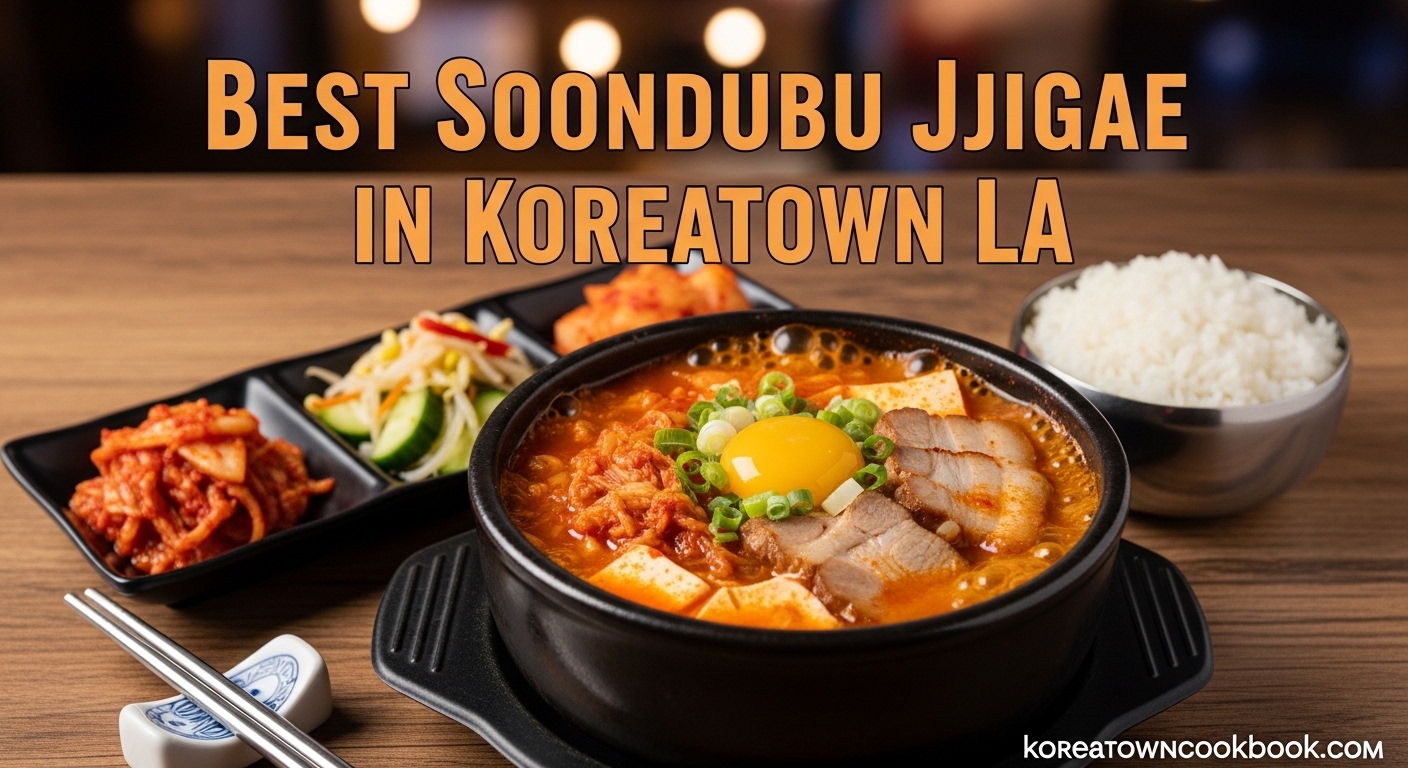
If there is one dish that captures the soul of Koreatown Los Angeles, it is soondubu jjigae. That aggressively bubbling cauldron of silken tofu, fiery gochugaru broth, and whatever protein you crave — seafood, pork, beef, or all three — arriving at your table still boiling in a stone pot is an experience that keeps locals and visitors coming back week after week. Our team has eaten our way through dozens of tofu houses across Ktown to find the best soondubu jjigae restaurants in Koreatown LA, and this guide shares everything we learned.
Koreatown in Los Angeles is home to the largest concentration of Korean restaurants outside of Korea itself. Within this neighborhood, tofu houses specializing in soft tofu stew have been a cornerstone of the dining scene since the early 1990s. The closure of Beverly Soon Tofu on Olympic Boulevard in 2020 left a hole in many hearts, but the truth is that Koreatown still has incredible soondubu — you just need to know where to look.
In this guide, we cover what soondubu jjigae actually is, walk you through the top seven spots to get it in Koreatown LA, explain how to choose the right restaurant for your situation, and share tips for first-timers who have never sat down in front of a bubbling stone pot. Whether you are a lifelong soondubu obsessive or someone who just saw a viral TikTok and wants to try it, we have you covered.
Table of Contents
What Is Soondubu Jjigae?
Soondubu jjigae (also spelled sundubu jjigae or soon dubu jjigae) is a Korean soft tofu stew made with freshly curdled silken tofu that has not been pressed or strained. The tofu has a custardy, delicate texture that absorbs the flavors of the broth it simmers in. Unlike firm tofu used in stir-fries or grills, soondubu breaks apart easily and creates a creamy, almost soupy consistency when combined with the stew liquid.
The broth base is typically seasoned with gochugaru — Korean chili flakes — which gives the stew its signature brick-red color and a heat level that can range from mild and warming to face-melting. Additional ingredients usually include some combination of seafood (shrimp, clams, oysters), pork, beef, kimchi, mushrooms, onions, and scallions. A raw egg is cracked into the bubbling pot tableside, cooking gently in the residual heat of the stone bowl.
What separates a great soondubu jjigae from an average one comes down to the tofu itself. Restaurants that make their own in-house tofu from organic soybeans produce a version with noticeably more depth, creaminess, and freshness than spots using commercially produced tofu. The difference is not subtle — you can taste it immediately.
Soondubu jjigae is traditionally served in a hot stone pot called a dolsot, which keeps the stew boiling for several minutes after it arrives at your table. You will also receive a bowl of white rice, an assortment of banchan (Korean side dishes like kimchi, pickled vegetables, and seasoned spinach), and sometimes a complementary fried fish or pancake. The combination of the bubbling stew, the cold banchan, and the plain rice creates a meal that is balanced, comforting, and deeply satisfying.
The Best Soondubu Jjigae Restaurants in Koreatown LA
Our team visited each of these restaurants multiple times over the past year, ordering their soondubu jjigae at different spice levels and with different protein options. We evaluated each spot on tofu quality, broth flavor, banchan spread, ambiance, value, and overall experience. Here are the seven best soondubu jjigae restaurants in Koreatown LA right now.
1. Tofu Chon LA
Tofu Chon LA currently holds the highest rating for soondubu in Koreatown, and after eating here on three separate visits, we understand why. This small, family-run spot focuses exclusively on tofu stew, and that singular dedication shows in every bowl. Their in-house tofu has an almost pudding-like softness that holds together just enough to scoop up with a spoon before melting into the spicy broth.
The signature seafood soondubu comes loaded with shrimp, clams, and a handful of mussels, all contributing briny depth to the gochugaru-based broth. The heat level at “medium” is genuinely medium — warm and tingly without overwhelming the delicate tofu flavor. If you want serious spice, order “hot” or “very hot,” but be warned that the broth’s complexity diminishes somewhat at the highest levels because the chili heat dominates everything else.
Tofu Chon’s banchan spread is modest but well-executed: crisp pickled radish, well-fermented kimchi, seasoned spinach, and a small piece of grilled mackerel that arrives warm. The restaurant is small, seating maybe 30 people, which creates an intimate atmosphere but also means there can be a wait during peak dinner hours. We recommend arriving before 6 PM on weekdays to avoid the line.
Location: Western Avenue, Koreatown, Los Angeles
Hours: 11 AM – 9:30 PM daily
What to order: Seafood soondubu (medium spice)
Price range: $$
2. Surawon Tofu House
Surawon Tofu House is the name that comes up again and again in Reddit threads, Yelp reviews, and food blog recommendations when someone asks about the best soondubu in LA. This Olympic Boulevard staple has been serving tofu stew for years, and their reputation is well-earned. The restaurant makes its tofu in-house daily from organic soybeans, and you can taste the difference in every spoonful.
The broth at Surawon has a deeper, more complex flavor than most competitors. It tastes like it has been simmering for hours, with layers of umami from dried seafood and anchovy stock underneath the gochugaru heat. The oyster soondubu is our favorite version — the plump, fresh oysters add a sweetness that plays beautifully against the spicy broth. Their mushroom soondubu is also outstanding and one of the best vegetarian soondubu options in Koreatown.
One thing that sets Surawon apart is the banchan. You get a generous spread that includes their excellent pickled cucumber, two types of kimchi, seasoned bean sprouts, and a small bowl of cold tofu with a soy-sesame dressing that is almost a mini appetizer on its own. The restaurant also offers combination deals that pair soondubu with galbi (marinated short ribs) or bulgogi, which is perfect if you are dining with someone who wants more than just stew.
The dining room is larger than Tofu Chon but still fills up during dinner rush. Service is quick and no-nonsense — this is a place where regulars know exactly what they want and the staff keeps things moving. Parking can be tricky during peak hours since the lot is small, so consider street parking on the side streets off Olympic.
Location: Olympic Boulevard, Koreatown, Los Angeles
Hours: 10:30 AM – 9:30 PM daily
What to order: Oyster soondubu or mushroom soondubu (medium-spicy)
Price range: $$
3. BCD Tofu House
BCD Tofu House is the most well-known tofu house chain in Koreatown, and for good reason. With over 6,300 Yelp reviews and counting, it is the spot that most newcomers to Koreatown try first. BCD popularized the soondubu restaurant model in Los Angeles, and while purists sometimes argue that smaller spots have better quality, BCD remains a solid and consistent choice.
The menu at BCD is extensive compared to smaller tofu houses. You will find at least ten varieties of soondubu jjigae, including the classic seafood, combination (seafood and meat), kimchi, dumpling, and even a Curry soondubu that is surprisingly enjoyable. Their broth leans slightly sweeter and less aggressively spicy than Surawon or Tofu Chon, which makes BCD a great entry point for people who are new to Korean food or sensitive to heat.
BCD’s biggest advantage is convenience. They are open late — often until midnight or later — which makes them one of the only spots in Koreatown where you can satisfy a soondubu craving at 11 PM on a weeknight. The combination deals are also generous, and the banchan includes their popular cold tofu starter with green onion and soy sauce. Multiple locations across Koreatown mean you are never far from one.
Is BCD the absolute best soondubu in Koreatown? Our team would say no — Tofu Chon and Surawon edge it out on tofu quality and broth complexity. But BCD gets points for consistency, accessibility, and those late-night hours. It is the Toyota Camry of soondubu: not the most exciting option, but it always does the job well.
Location: Multiple locations on Western Avenue and Wilshire Boulevard, Koreatown
Hours: 10 AM – 12 AM (varies by location)
What to order: Combination soondubu with galbi combo
Price range: $$
4. Seong Buk Dong
Seong Buk Dong is a Koreatown institution that has been serving traditional Korean food for decades. While they are not exclusively a tofu house — their menu covers a wide range of Korean classics — their soondubu jjigae is some of the best in the neighborhood. The restaurant is named after a district in Seoul, and the food here tastes like home cooking from someone’s Korean grandmother.
The soondubu at Seong Buk Dong has a distinctly homemade quality. The broth is less refined than Surawon’s but more deeply comforting, with a strong anchovy-and-kelp base that tastes like it was made by someone who has been cooking this dish for 40 years. The tofu is not made in-house, which is a drawback, but the quality of the commercial tofu they use is good enough that most diners will not notice unless they are comparing side-by-side with Tofu Chon.
What makes Seong Buk Dong worth visiting is the overall meal. The banchan here is among the best in Koreatown — you get a wide variety that rotates seasonally, and everything tastes freshly made rather than pulled from a commercial tub. Their grilled mackerel that comes with the meal is perfectly cooked with crispy skin and moist flesh. The restaurant also excels at other stews like kimchi jjigae and doenjang jjigae, so if you are dining with a group where not everyone wants soondubu, this is an excellent choice.
The atmosphere is cozy and old-school, with wooden tables and Korean calligraphy on the walls. It feels like a neighborhood spot that has been here forever, because it basically has been. Service is warm and attentive, especially if you become a regular.
Location: Olympic Boulevard, Koreatown, Los Angeles
Hours: 11 AM – 10 PM daily
What to order: Seafood soondubu with a side of kimchi pancake
Price range: $$
5. Soondol Tofu
Soondol Tofu is a smaller, less flashy spot that flies under the radar compared to BCD or Surawon, but locals who know about it will tell you it belongs in the top tier. The restaurant specializes in soondubu and not much else, and that focus pays off in the quality of every bowl that comes out of the kitchen.
The tofu at Soondol has a particularly custardy texture — softer and more delicate than most competitors. It practically dissolves on your tongue, blending with the broth in a way that creates a unified, creamy flavor rather than distinct tofu-and-broth layers. Their beef soondubu is the standout, with thinly sliced beef that cooks through in the bubbling broth and adds a rich, meaty savoriness.
Soondol’s spice levels run true to form. If you order “very spicy,” you will get something that is genuinely very spicy — not the watered-down version you find at some chain restaurants. We recommend starting at “medium” for your first visit and adjusting from there. The banchan is straightforward but fresh: good kimchi, seasoned spinach, pickled radish, and a small dried fish side dish.
The space is small and unassuming, with fluorescent lighting and simple tables. This is not a date-night restaurant. It is a come-as-you-are, eat-a-bowl-of-stew-and-feel-better kind of place, and that is exactly what makes it special. Prices are slightly lower than the bigger-name spots, making Soondol one of the best values on this list.
Location: 6th Street area, Koreatown, Los Angeles
Hours: 11 AM – 9 PM daily
What to order: Beef soondubu (medium spice)
Price range: $
6. Hangari Bajirak Kalguksu
Hangari Bajirak Kalguksu is primarily known for its knife-cut noodle soups and kalguksu, but their soondubu jjigae deserves serious attention. This restaurant has built a loyal following among Koreatown locals who appreciate its consistently high-quality soups and stews, and the soondubu here has a unique character that differentiates it from the dedicated tofu houses.
The broth at Hangari leans more toward a seafood-forward profile, thanks to the restaurant’s expertise with clam and ocean-based soups. You can taste the influence of their kalguksu stock in the soondubu broth — there is a cleaner, more oceanic quality to the base that pairs wonderfully with the soft tofu. The clam soondubu is the obvious choice here, and it arrives with a generous number of fresh clams still in their shells.
Where Hangari really shines is the banchan and complementary items. You get their famous crunchy pickled radish, excellent kimchi, and a small bowl of their signature broth as a starter. The restaurant also serves a mean pajeon (Korean pancake) that makes a great appetizer or side dish for sharing. The combination of high-quality soondubu with Hangari’s other specialties makes this a great pick for groups where everyone wants something slightly different.
The restaurant has a modern, clean interior with comfortable booth seating. It is brighter and more spacious than most of the older tofu houses on this list, which makes it a comfortable choice for families or larger parties. Service is friendly and English-friendly, which is helpful for first-time visitors to Koreatown.
Location: Western Avenue, Koreatown, Los Angeles
Hours: 10 AM – 10 PM daily
What to order: Clam soondubu with a shared pajeon
Price range: $$
7. Jinsol Gukbap
Jinsol Gukbap rounds out our list as a restaurant that is not a tofu specialist but serves a soondubu jjigae that is absolutely worth your time. The focus here is on gukbap — rice soup — and hearty Korean comfort food, but their soondubu has earned a devoted following among regulars who order it alongside the restaurant’s other offerings.
The soondubu at Jinsol has a heartier, more rustic quality than the refined versions at Tofu Chon or Surawon. The broth is thicker and more robust, with a stronger garlic presence and a deeper red color from extra gochugaru. It tastes like something you would eat on a cold rainy day when you need maximum comfort. The pork soondubu is the way to go here — the pork adds a richness that complements the heavier broth perfectly.
Jinsol is also one of the best late-night options on this list, staying open past 10 PM most nights. The restaurant has a lively, bustling atmosphere during dinner hours, with a mix of families, groups of friends, and solo diners hunched over steaming bowls. If you want a soondubu experience that feels less specialized and more like a neighborhood hangout, Jinsol delivers.
The banchan here leans toward the heavier, more savory side — think braised potatoes, spicy squid, and marinated bean sprouts rather than lighter pickled vegetables. It matches the restaurant’s overall vibe of hearty, filling, satisfying Korean comfort food. Jinsol is also very affordable, making it a great option for students or anyone eating on a budget.
Location: Olympic Boulevard, Koreatown, Los Angeles
Hours: 11 AM – 11 PM daily
What to order: Pork soondubu (spicy) with a side of braised potatoes
Price range: $
How to Choose the Right Soondubu Restaurant
With seven strong options, picking the right restaurant depends on what matters most to you. Here is our breakdown to help you decide based on your specific situation.
In-House Tofu vs. Commercial Tofu
The single biggest factor in soondubu quality is whether the restaurant makes its own tofu. In-house tofu is softer, fresher, and has a cleaner taste that absorbs broth flavors more effectively. Commercial tofu works fine, but the texture is slightly firmer and the flavor is more neutral. For the best in-house tofu, go to Tofu Chon LA or Surawon Tofu House. Both make their tofu daily on-site, and the difference is noticeable from the first bite.
Spice Level Guidance
Most soondubu restaurants offer four to five spice levels: mild, medium, medium-spicy, hot, and very hot. Our advice: if you are unsure, order medium. Medium gives you enough gochugaru warmth to taste the chili complexity without overwhelming the delicate tofu and seafood flavors. You can always go hotter on your next visit.
At “hot” and above, the heat starts to dominate the other flavors. Some people love this — there is something satisfying about sweating through a bowl of aggressively spicy stew — but if you want to appreciate the broth’s nuance, stay at medium or medium-spicy. BCD Tofu House is the most forgiving for spice-sensitive diners, while Soondol Tofu runs the hottest.
Late-Night Dining
Koreatown is famous for its late-night dining scene, and soondubu is one of those dishes that hits differently at 10 PM after a long day. BCD Tofu House is the most reliable late-night option, with most locations open until midnight or later. Jinsol Gukbap stays open until 11 PM and has a lively evening atmosphere. For the other spots on our list, plan to arrive before 9 PM to ensure you get served.
Solo vs. Group Dining
All seven restaurants on this list welcome solo diners — eating alone at a tofu house is completely normal in Korean culture. You order your bowl, get the same banchan as everyone else, and enjoy your meal in peace. For groups, BCD Tofu House and Hangari Bajirak Kalguksu have the most spacious seating. Seong Buk Dong is great for groups because the diverse menu means everyone can find something they want.
Vegetarian Options
Finding truly vegetarian soondubu in Koreatown is tricky because most traditional broths are made with anchovy or dried seafood stock, even when the visible ingredients are all vegetables. Surawon Tofu House offers a mushroom soondubu that comes closest to being vegetarian-friendly, though you should ask the staff about the broth base if this is important to you. BCD Tofu House also offers a vegetable soondubu on their menu. At smaller spots like Tofu Chon and Soondol, your options are more limited — the kimchi soondubu or mushroom soondubu may still use seafood-based broth.
Budget Considerations
Soondubu jjigae is one of the most affordable meals you can have in Koreatown, but prices do vary between restaurants. Soondol Tofu and Jinsol Gukbap are the most budget-friendly options on our list, with bowls typically coming in at the lower end of the price range. Surawon and Tofu Chon are moderately priced, and BCD sits in the middle depending on whether you add a combo. None of these restaurants will break the bank — even the priciest option is still one of the most affordable sit-down meals in Los Angeles.
Tips for First-Time Soondubu Diners
If you have never eaten soondubu jjigae at a Korean restaurant, the experience can feel a bit overwhelming. Here is what you need to know to order and eat with confidence.
How to Order
When you sit down, the server will usually ask what you want to drink and then take your food order. For soondubu, you need to make three choices: the type (seafood, beef, pork, oyster, mushroom, combination, kimchi, or dumpling), the spice level (mild to very hot), and whether you want a combo (which adds galbi, bulgogi, or another meat dish). If you are unsure, order the combination seafood soondubu at medium spice — it is the most popular choice for a reason.
The Egg Ritual
When your soondubu arrives at the table, it will still be bubbling in the stone pot. The server usually brings a raw egg in a small dish. Crack the egg into the stew immediately — the residual heat from the stone pot will cook the egg gently, creating silky ribbons of egg throughout the broth. If you prefer your egg more cooked, let it sit for a minute before stirring. Some people skip the egg entirely, and that is perfectly fine too.
Eating with Rice and Banchan
Your soondubu comes with a bowl of white rice and an array of banchan. The traditional way to eat is to take a spoonful of stew, maybe with a piece of tofu and some protein, followed by a bite of rice and a piece of banchan. You are not supposed to dump the rice into the stew — eat them separately, alternating bites. The rice provides a neutral base that tempers the heat of the broth, while the banchan adds contrasting textures and flavors.
At the end of the meal, some restaurants will pour hot water or barley tea into your stone pot to create nurungji — a scorched rice soup made from the crispy rice that sticks to the sides of the hot bowl. This is a traditional end to the meal and absolutely worth staying for if your restaurant offers it.
What to Do If It Is Too Spicy
If you accidentally ordered a spice level that is too hot, do not panic. Eat more rice between bites, drink water or barley tea, and focus on the banchan to cool your palate. The staff at all of these restaurants are used to people underestimating the spice levels and will usually bring you extra rice or water if you ask. For your next visit, simply order one level lower.
A Brief History of Soondubu in Koreatown LA
The story of soondubu jjigae in Los Angeles is intertwined with the history of Koreatown itself. Korean immigrants began settling in the area north of downtown LA in the late 1960s and 1970s, and by the 1980s, the neighborhood had developed into a vibrant hub of Korean commerce, culture, and food. Tofu houses began opening to serve the growing community, offering affordable, comforting meals that reminded people of home.
BCD Tofu House, founded by Hee Kyung Lee, was one of the first to popularize the specialized tofu house model in Koreatown. The chain’s success inspired dozens of other tofu-focused restaurants to open throughout the neighborhood. Beverly Soon Tofu, which operated on Olympic Boulevard for decades, became perhaps the most beloved soondubu spot in LA before its closure in 2020 — a loss that is still felt by the local food community.
Today, Koreatown’s tofu house scene is a mix of established institutions and newer spots pushing the quality envelope. Restaurants like Surawon and Tofu Chon have raised the bar by making tofu in-house from organic soybeans, bringing the craft closer to its Korean roots. The neighborhood continues to be the epicenter of soondubu culture in the United States, and every year brings new spots worth trying.
FAQ
What is the best soondubu jjigae in Los Angeles?
Based on our testing, Tofu Chon LA and Surawon Tofu House serve the best soondubu jjigae in Los Angeles. Tofu Chon has the highest ratings and the softest in-house tofu, while Surawon offers the most complex broth and outstanding oyster soondubu. Both make their tofu fresh daily on-site.
Where can I find authentic Korean tofu stew in Ktown LA?
The most authentic Korean tofu stew in Koreatown LA can be found at Surawon Tofu House on Olympic Boulevard, Tofu Chon LA on Western Avenue, and Seong Buk Dong on Olympic Boulevard. These restaurants use traditional recipes and techniques, including in-house tofu making at Surawon and Tofu Chon.
What are the top rated soondubu restaurants in Koreatown LA?
The top rated soondubu restaurants in Koreatown LA are Tofu Chon LA (4.9 rating), Surawon Tofu House (4.5 rating), BCD Tofu House (4.3 rating with 6,300+ reviews), Seong Buk Dong, and Soondol Tofu. Tofu Chon LA has the highest individual rating, while BCD has the most reviews by far.
Is soondubu jjigae spicy?
Soondubu jjigae can range from not spicy at all to extremely spicy depending on the restaurant and the spice level you order. Most tofu houses offer 4-5 spice levels from mild to very hot. If you are sensitive to spice, order mild or medium — the gochugaru flavor will still be present without overwhelming heat.
What is the difference between soondubu and regular tofu stew?
Soondubu uses uncurdled silken tofu that has a soft, custardy texture, while regular tofu stew (dubu jjigae) uses pressed firm tofu that holds its shape. Soondubu has a creamier, more delicate consistency and is served bubbling in a stone pot. The soft tofu absorbs broth flavors more readily than firm tofu.
Can vegetarians eat soondubu jjigae?
Vegetarian soondubu options exist but require caution. Most Korean tofu stew broths are made with anchovy or dried seafood stock even when the visible ingredients are vegetables. Surawon Tofu House offers a mushroom soondubu that is the most vegetarian-friendly option. Always ask the staff about the broth base if you are strictly vegetarian.
Why did Beverly Soon Tofu close?
Beverly Soon Tofu, a beloved Koreatown institution on Olympic Boulevard, closed in 2020. The closure was likely related to the pandemic’s impact on restaurant operations. Many longtime residents and food enthusiasts still consider it a significant loss to the Koreatown dining scene. Surawon Tofu House and Tofu Chon LA have become the primary replacements for those seeking that style of traditional soondubu.
What do you order at a soondubu restaurant for the first time?
For your first soondubu experience, order the combination seafood soondubu at medium spice. This gives you a mix of seafood proteins with a manageable heat level. Add the raw egg when the stew arrives at your table. Eat the stew with rice and banchan, alternating bites. If you want a heartier meal, get a combo that includes galbi (short ribs) or bulgogi alongside your stew.
Conclusion
Finding the best soondubu jjigae restaurants in Koreatown LA comes down to knowing what you value most. If you want the absolute highest quality tofu with a custardy, melt-in-your-mouth texture, Tofu Chon LA is our top pick. If you want the most complex, layered broth with outstanding banchan, Surawon Tofu House edges ahead. And if you need a reliable, late-night option or are introducing someone to soondubu for the first time, BCD Tofu House delivers consistently.
The beauty of Koreatown’s tofu house scene is that you cannot really make a wrong choice from this list. Every restaurant here serves a bowl of soondubu jjigae that would be considered excellent in any city. The differences between them are matters of degree and preference — which is exactly what makes eating your way through all seven such a rewarding project.
Our recommendation for visitors: start with Surawon or Tofu Chon for your first bowl, then work your way through the rest over the coming weeks. Each spot has its own personality, its own approach to the broth, and its own loyal following. The best soondubu jjigae in Koreatown LA is ultimately the one sitting in front of you, still bubbling, waiting for you to crack that egg and dig in.