
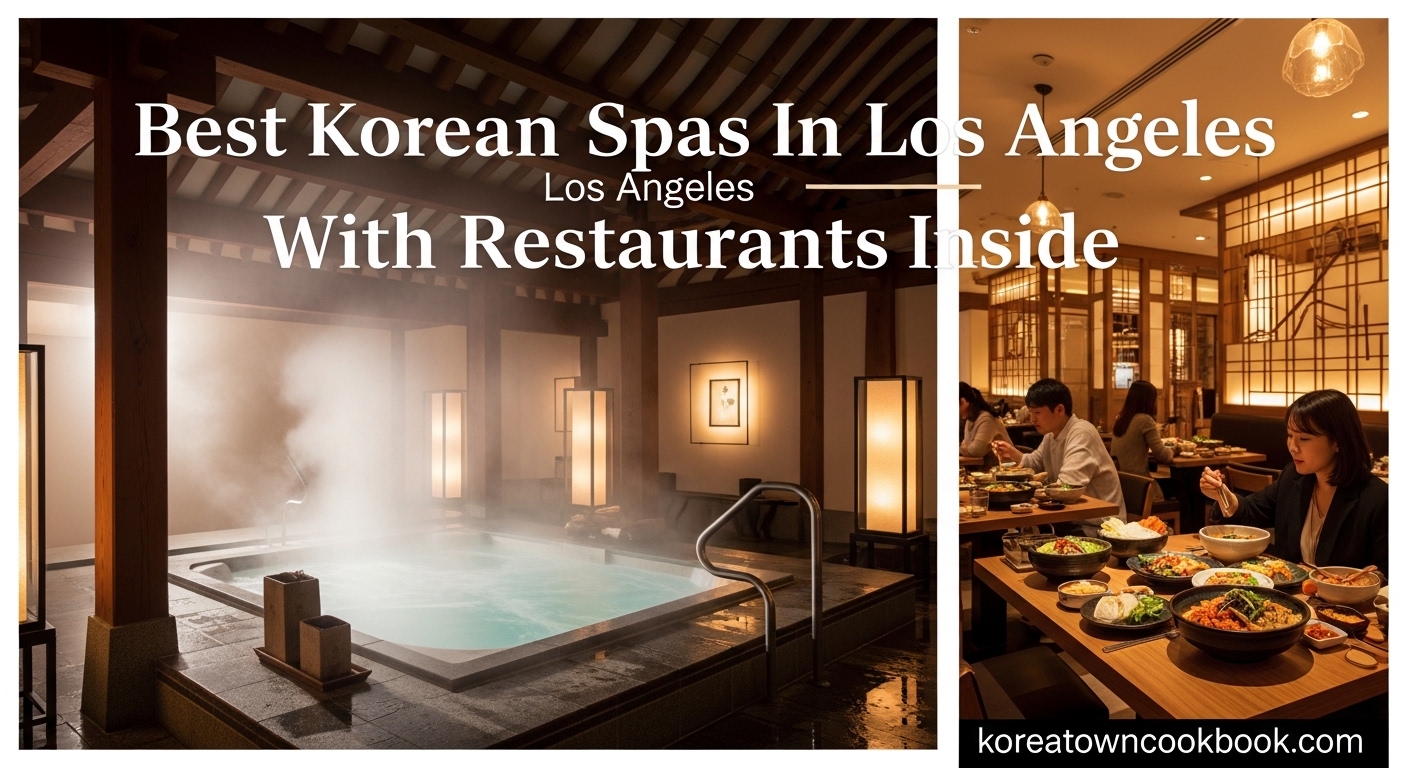
Los Angeles holds the distinction of having more Korean spas than any city outside of Korea itself. But here is what most guides miss: the best Korean spas in Los Angeles with restaurants inside offer something truly special. You get authentic jjimjilbang culture plus piping hot bibimbap, spicy ramen, and Korean comfort food without ever leaving the building.
I have spent hours sweating in saunas, braving body scrubs, and eating my way through the restaurant menus at LA’s top Korean spas. This guide focuses specifically on spas where the food is worth the visit, not just an afterthought. Whether you want late-night Korean BBQ after midnight soaking or a restorative bowl of soup between sauna sessions, these seven spas deliver.
By the end of this guide, you will know exactly which Korean spa has the best food, what to bring for your first visit, and how to plan a full day of relaxation and eating in Koreatown.
Table of Contents
What Is a Jjimjilbang and Why Does Food Matter?
A jjimjilbang is a traditional Korean bathhouse featuring hot and cold baths, various sauna rooms, body treatments, and communal relaxation areas. These facilities operate on an admission-fee model, typically $15 to $45, plus optional add-on treatments like the famous Korean body scrub.
Here is why the restaurant component matters: Korean spa culture revolves around spending hours, not minutes, at the facility. A proper jjimjilbang experience involves cycling between extreme heat and cold, which builds a serious appetite. Traditional Korean spas always included food service because guests needed sustenance during marathon relaxation sessions.
In Los Angeles, this tradition continues at several standout locations. The combination of detoxifying heat treatments followed by hearty Korean comfort food creates a uniquely satisfying experience that goes beyond typical spa visits.
Wi Spa – Koreatown’s 24/7 Korean Food Destination
Wi Spa dominates the conversation about Korean spas in Los Angeles for good reason. Located at 2700 Wilshire Boulevard in the heart of Koreatown, this 24-hour facility serves as both wellness center and late-night Korean food destination.
The restaurant at Wi Spa operates around the clock, which matters tremendously when you finish a 2 AM sauna session and need real food. Their menu spans traditional Korean dishes including bulgogi, bibimbap, spicy ramen, and Korean-style fried rice with kimchi. Regulars consistently praise the spicy ramen, priced at just $8, as surprisingly authentic and satisfying after hours of heat therapy.
The stir-fried rice with kimchi and bulgogi, running about $18, represents the higher end of their menu but delivers substantial protein and carbohydrates perfect for post-spa recovery. The rooftop terrace adds another dimension, allowing you to eat outdoors while overlooking Koreatown.
Admission runs approximately $30 on weekdays and $35 on weekends, with the restaurant operating independently. The facility spans multiple floors with gender-separated bathing areas, co-ed jjimjilbang floors featuring various heated rooms, and that crucial restaurant component that keeps people coming back.
With over 4,400 reviews averaging 4.2 stars, Wi Spa generates significant traffic. The food service helps justify longer stays, making the admission fee feel more reasonable when you can spend a full day cycling between treatments and meals.
Spa Palace – Co-Ed Jjimjilbang with Korean Comfort Food
Spa Palace at 620 South Union Avenue holds the distinction of being the first traditional co-ed jjimjilbang plus spa facility in Los Angeles operating 24 hours, seven days a week. This history matters because they have had time to perfect both their wellness offerings and their food service.
The restaurant here specializes in Korean comfort food, with bibimbap standing out as their signature dish. After sweating in their various heated rooms including the bulgama (Korean dry sauna), the clay room, and the salt room, a bowl of mixed rice with vegetables, egg, and gochujang hits exactly right.
Forum discussions reveal that Spa Palace develops a distinct atmosphere after 2 AM. The late-night crowd skews younger and more social, creating an almost club-like energy in the co-ed areas. Their food service adapts to this clientele, staying open and serving substantial meals rather than just snacks.
Admission typically costs less than Wi Spa, usually around $25 to $30. With 1,400 reviews averaging 4.0 stars, Spa Palace maintains a solid reputation. The food quality here exceeds expectations for spa dining, with Korean comfort dishes prepared with attention to traditional flavors rather than watered-down tourist versions.
The driving range and karaoke facilities add entertainment options that justify spending extra hours on-site. When combined with the restaurant, these amenities make Spa Palace a viable destination for groups wanting a full day of varied activities without leaving the building.
Olympic Spa – Women-Only Retreat with On-Site Dining
Olympic Spa at 3915 West Olympic Boulevard offers something increasingly rare: a women-only Korean spa environment with quality on-site food service. The 4.5-star average rating across 679 reviews reflects the calmer, more relaxing atmosphere that comes from gender separation.
The restaurant here serves traditional Korean dishes including several soup options that work perfectly with the spa experience. Korean spa culture emphasizes the restorative properties of specific foods after heat therapy, and Olympic Spa’s menu reflects this tradition. Their seaweed soup and rice combinations provide gentle sustenance without overwhelming the senses.
The women-only policy creates a fundamentally different experience from co-ed facilities like Wi Spa. Visitors consistently report feeling more comfortable and less self-conscious, which extends to the dining areas. The restaurant space feels more intimate and less crowded than the larger co-ed facilities.
Admission runs approximately $25, making Olympic Spa one of the more affordable options with quality food service. The facility emphasizes their body scrub treatments, which work particularly well when followed by a warm, comforting meal in their restaurant.
For women seeking privacy alongside authentic Korean food, Olympic Spa represents the ideal combination. The smaller scale means more personalized service both in treatments and dining.
Crystal Spa – Koreatown’s Accessible Spa with Restaurant
Crystal Spa at 3500 West 6th Street, Suite 321, positions itself as an accessible entry point to Korean spa culture with reasonable admission prices and solid food options. Their 4.1-star rating across 432 reviews indicates consistent quality without the overwhelming crowds of larger facilities.
The restaurant here focuses on Korean staples including various rice dishes, noodles, and soups. While not as extensive as Wi Spa’s menu, the food quality meets the standard for post-spa dining. Their extended hours mean you can eat even during off-peak times when other spas might limit service.
The smaller size creates a more manageable experience for first-timers who might find massive facilities like Wi Spa intimidating. You can navigate the entire space quickly, understand the layout, and access the restaurant without getting lost in a maze of floors and wings.
Admission typically costs around $20 to $25, positioning Crystal Spa as a budget-friendly option. The food service adds value, ensuring you do not need to leave the facility hungry or cut your visit short to find meals elsewhere in Koreatown.
For those testing whether Korean spa culture suits them, Crystal Spa offers a lower-commitment entry point with adequate food service to complete the experience.
Aroma Spa & Sports – Resort-Style with Multiple Food Options
Aroma Spa & Sports distinguishes itself through a resort-style approach that accommodates groups while maintaining quality food service. The facility caters to sports recovery needs alongside traditional spa treatments, creating a unique hybrid experience.
The food options here extend beyond single Korean restaurant service. The larger scale allows for multiple dining concepts including lighter fare for those wanting to maintain a wellness focus, and heartier options for groups treating the spa as a social destination.
The sports recovery angle matters for food service because athletes have specific nutritional needs after treatments. The menu includes protein-forward options and hydration-focused beverages that complement the spa experience rather than undermining it with heavy, greasy food.
This facility works particularly well for group outings where different members want different experiences. Some can focus on intense sports recovery while others pursue relaxation, and everyone meets at the dining areas with options satisfying various preferences.
Admission pricing varies based on time and package selections, but generally falls in the $25 to $40 range. The food service justifies the higher end of this range when you can spend a full day utilizing both the sports facilities and spa treatments without leaving for meals.
Beverly Hot Springs – Natural Springs Without Restaurant
Beverly Hot Springs deserves mention as a notable exception. This facility operates natural hot springs sourced from underground aquifers, creating an authentic mineral bath experience. However, they do not offer on-site restaurant service, and they impose a strict two-hour visit limit.
Forum discussions reveal that despite the authentic hot springs experience, the lack of food service and time restrictions disappoint some visitors. The facility also receives criticism for appearing run down even when clean, suggesting maintenance issues that detract from the experience.
For the purposes of this guide focusing on Korean spas with restaurants inside, Beverly Hot Springs does not qualify. However, understanding why it falls short helps clarify what makes the other facilities on this list valuable. The combination of extended hours, full spa amenities, and quality food service creates the complete jjimjilbang experience that Korean spa culture intended.
What to Bring to a Korean Spa
Preparation matters when visiting Korean spas, especially if you plan to stay for hours and utilize the restaurant service. Here is what you need:
- Valid ID – Required for admission at most facilities
- Cash or card – For admission, treatments, and restaurant purchases
- Water bottle – Staying hydrated between sauna sessions is essential
- Comfortable clothes – For co-ed areas; most spas provide uniforms but having your own loungewear helps
- Hair ties – If you have long hair, keeping it secured during treatments matters
- Reading material – The communal areas welcome those wanting to relax with books or magazines
- Phone charger – Long stays drain batteries
Most spas provide towels, basic toiletries, and lockers. However, if you have specific skincare needs or prefer particular products, bring those. The key consideration is that you will be spending significant time on-site, so prepare for a multi-hour experience.
Korean Spa Etiquette for First-Timers
Understanding basic etiquette ensures a smooth experience at any Korean spa with restaurant service:
- Shower before soaking – This is mandatory and non-negotiable. The baths require clean bodies
- No clothing in gender-separated bathing areas – These spaces operate nude; this is normal and expected
- Wear provided uniforms in co-ed areas – The jjimjilbang floors require the spa-provided clothing
- Keep conversations quiet – Many visitors come specifically for quiet relaxation
- Tipping for treatments – Body scrubs and massages typically warrant 15-20% gratuity
- Clean up after eating – Restaurant areas expect guests to bus their own tables
The nudity requirement in gender-separated areas surprises some first-time visitors. Remember that everyone shares this situation, and the atmosphere is clinical rather than social. After a few minutes, the initial awkwardness typically fades.
Best Times to Visit Korean Spas in LA
Timing significantly impacts your experience at Korean spas with restaurants inside. Consider these patterns:
Weekday mornings offer the calmest atmosphere with minimal crowds. Restaurant service runs smoothly without long waits, and you can move between sauna rooms without fighting for space. This timing works best for those seeking genuine relaxation.
Late night hours attract a different crowd. Facilities like Wi Spa and Spa Palace become social destinations after midnight, especially on weekends. The energy shifts toward communal gathering rather than quiet meditation. The restaurant service becomes crucial during these hours when external dining options in Koreatown become limited.
Weekend afternoons bring the heaviest crowds. Facilities feel packed, restaurant lines extend, and the overall experience becomes more chaotic. However, this timing works for groups wanting a lively social atmosphere.
For food-focused visits specifically, arriving before peak meal times ensures restaurant availability. Visiting at 11 AM allows a few hours of spa time before lunch, while arriving at 5 PM positions you for dinner service after treatments.
FAQ
What are the best Korean spas in Los Angeles?
The best Korean spas in Los Angeles include Wi Spa for 24/7 operation and extensive food service, Spa Palace for co-ed jjimjilbang with Korean comfort food, Olympic Spa for women-only with quality on-site dining, Crystal Spa for accessibility and extended hours, and Aroma Spa & Sports for resort-style facilities with multiple food options.
Do you wear clothes in a Korean sauna?
In gender-separated bathing areas, you do not wear clothes – nudity is required and expected. However, in co-ed jjimjilbang areas, you wear the spa-provided uniforms. The restaurant and communal relaxation areas require proper covering with these uniforms.
What do I bring to Wi-Spa?
Bring valid ID for admission, payment method for admission and purchases, water bottle for hydration, comfortable clothes for co-ed areas, hair ties if needed, and phone charger for long stays. The spa provides towels, basic toiletries, and lockers.
What is the dress code at Wi Spa?
Nude in gender-separated bathing areas and spa-provided uniforms in co-ed areas. The restaurant requires wearing the provided uniforms or proper street clothes if accessing from outside the bathing areas.
What age is appropriate for Wi Spa?
Wi Spa welcomes all ages, making it genuinely family-friendly. Children must remain with parents at all times. The women-only and men-only areas allow families to stay together by gender while utilizing the co-ed jjimjilbang floors together.
What is the difference between a sauna and a Jimjilbang?
A traditional sauna typically offers just hot rooms and steam. A jjimjilbang is a comprehensive Korean bathhouse featuring hot and cold baths, multiple sauna rooms with different therapeutic properties, body treatments, communal relaxation areas, and usually on-site restaurants. Jjimjilbangs operate as all-day destinations rather than brief treatment facilities.
Final Thoughts: Where to Eat and Relax in Koreatown
The best Korean spas in Los Angeles with restaurants inside offer something you cannot find elsewhere: authentic jjimjilbang culture combined with quality Korean food. Wi Spa leads for 24/7 dining options and sheer scale. Spa Palace excels for co-ed socializing and bibimbap. Olympic Spa provides the women-only experience with calmer dining. Crystal Spa offers accessibility for first-timers. Aroma Spa & Sports handles groups with diverse needs.
Your choice depends on priorities. Want late-night Korean BBQ at 3 AM? Wi Spa. Prefer a quieter, women-only environment with restorative soups? Olympic Spa. Planning a group day with varied activities? Aroma Spa & Sports.
The common thread across all recommended facilities is that the food service matters. These are not afterthoughts but integral parts of the Korean spa experience. Bring your appetite alongside your towel, and plan to spend enough time to enjoy both the heat therapy and the Korean comfort food waiting afterward.
For food lovers exploring Koreatown, these spas represent more than wellness destinations. They offer immersion in Korean culture where the dining experience carries equal weight to the treatments. That combination makes them worth seeking out whether you are a spa regular or a curious first-timer.