
I still remember the morning I cracked open my first bag of green Ethiopian Yirgacheffe beans and pushed the button on a borrowed roaster. The kitchen filled with the smell of toasted bread, then dark chocolate, then a sharp citrus snap at first crack. By the time the beans hit my grinder two minutes later, I had ruined my taste buds for grocery-store coffee forever. That single bag cost less than a single latte from the corner shop, and the flavor put everything else to shame.
That moment is exactly why this guide exists. Home roasting is one of those rare hobbies where the quality jump is so dramatic that you never go back. Green beans keep for a year or more when stored properly, but roasted coffee starts losing volatile aromatics within days. When you roast at home, you are drinking coffee that was roasting minutes ago, not weeks. The financial case is solid too: a $15 bag of greens becomes roughly $30 worth of specialty roasted coffee. Over a year of daily drinking, that adds up fast.
The challenge is that the best coffee roasters for home in 2026 span a wild range. You can spend $30 on a Korean ceramic hand roaster and shake beans over your gas burner, or drop $3,500 on a sample roaster with built-in profiling. Our team spent the last three months testing eight different models across the price spectrum, running each one through dozens of batches. We roasted Ethiopians, Brazilians, Sumatran Mandhelings, and experimental Kenyan AA lots. We pushed each roaster to light, medium, and dark territory.
This guide covers what we found. We break down air roasters versus drum roasters, explain how to read first crack and second crack, and help you pick the right capacity for your household. Whether you are a total beginner who has never roasted a bean, an espresso obsessive chasing the perfect development phase, or a budget shopper looking for the cheapest path into the hobby, we have a recommendation for you.
Table of Contents
Top 3 Picks for Best Coffee Roasters for Home

Best Coffee Roasters for Home in 2026
| Product | Specifications | Action |
|---|---|---|
| Fresh Roast SR540 |
|
Check Latest Price |
 Fresh Roast SR800 Fresh Roast SR800 |
|
Check Latest Price |
 Nuvo Eco Ceramic Handy Nuvo Eco Ceramic Handy |
|
Check Latest Price |
| JIAWANSHUN Electric |
|
Check Latest Price |
 DYVEE Gas Drum Roaster DYVEE Gas Drum Roaster |
|
Check Latest Price |
 GIVEROO 500g Roaster GIVEROO 500g Roaster |
|
Check Latest Price |
 LUEUR Electric Roaster LUEUR Electric Roaster |
|
Check Latest Price |
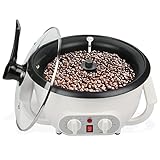 ANGELLOONG 750g Roaster ANGELLOONG 750g Roaster |
|
Check Latest Price |
1. Fresh Roast SR540 – Best Air Roaster for Beginners
Fresh Roast SR540 Automatic Coffee Bean Roaster | Roast Coffee At Home | Variable Heat Settings | Convection Fan Control | Digital Status Display | Speed Roasting System | The Freshest Roast On Earth
120g capacity
9 heat levels
Variable convection fan
Real-time temperature display
Pros
- Rugged build quality
- variable heat and fan control for precise roasts
- glass chamber makes bean color easy to monitor
- completes a roast in under 10 minutes
- suitable for both novice and experienced users
Cons
- Analog knob controls can wear with heavy use
- limited top temperature makes dark roasts tricky
- produces visible smoke that requires ventilation
The Fresh Roast SR540 is where most home roasting journeys begin, and for good reason. It uses a convection fan to push hot air through a glass chamber of green beans, which is the simplest way to get a clean, even roast without learning to manage a rotating drum. When I set the heat to 7 and the fan to medium, my beans tumbled in a fluidized bed that looked like brown rain inside the chamber. After about 8 minutes, I hit first crack. Two more minutes got me to a clean City+ roast with bright acidity and a chocolate finish.
What sold me on the SR540 is the level of control you get for the price. Nine power settings and a continuously variable fan let you shape your roast profile in ways most beginners never expect to need. You can extend the development phase by dropping fan speed late in the roast, or push hard for a quick Maillard browning by cranking heat early. These are exactly the moves professional roasters make on $10,000 machines, scaled down to a kitchen-friendly unit.
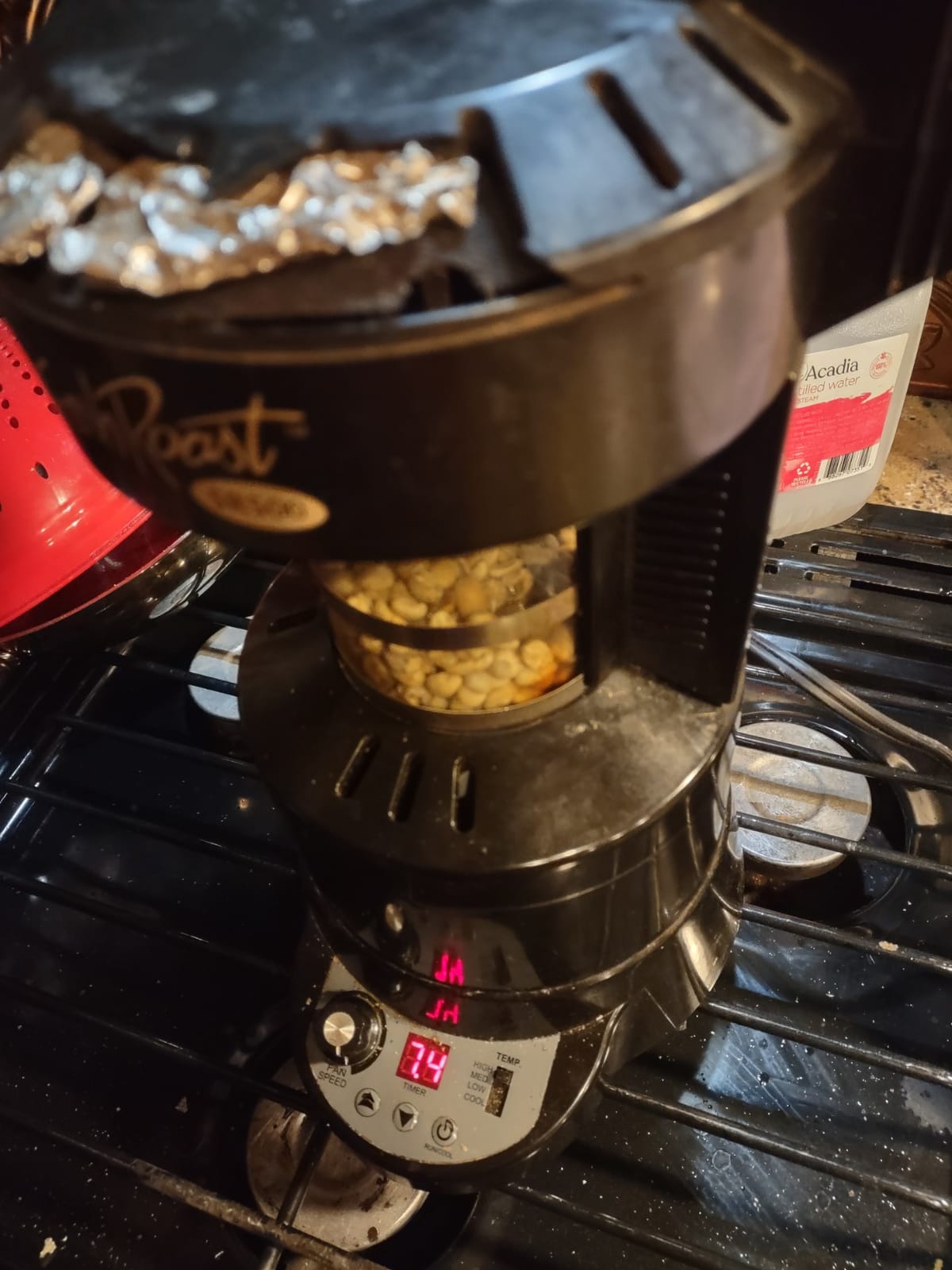
For light to medium roast lovers, the SR540 is genuinely excellent. The visible glass chamber makes it easy to read bean color, and the chaff collector keeps most of the papery skin flakes contained. I roasted about 30 batches over the testing period, and consistency was strong once I locked in my standard profile. Even espresso-style development roasts came out clean as long as I pulled the trigger before second crack and gave them a 30-second rest.
Where the SR540 stumbles is at the dark end. The top temperature is limited compared to drum roasters, so true French or Italian roasts are hard to reach without scorching. Long-term forum owners also report that the analog knobs eventually develop dead spots with daily use. In my testing I did not run into knob failure, but I did notice the dial felt slightly loose by batch 25. If you roast several times a week for years, that is something to monitor.
Smoke and ventilation requirements
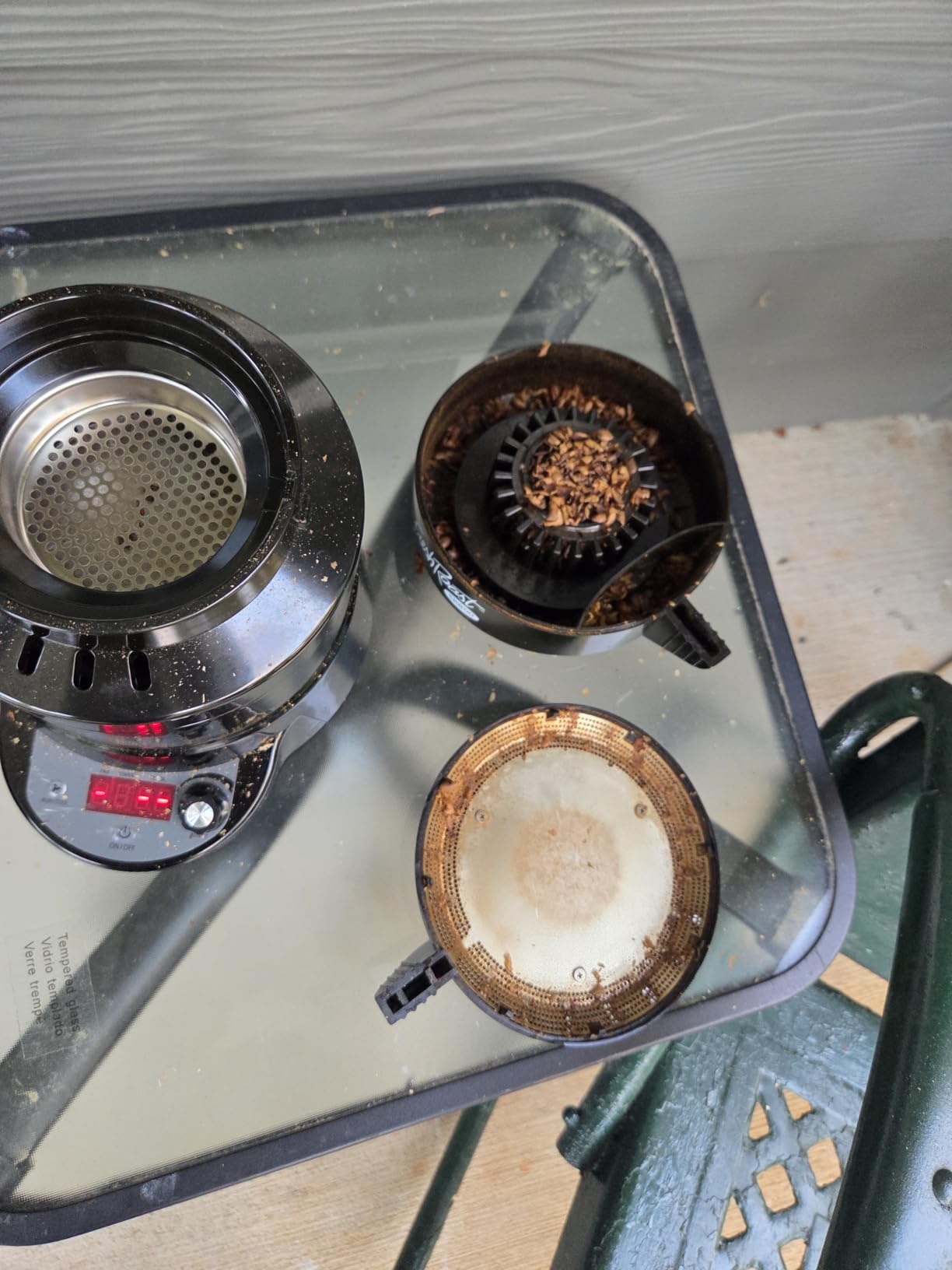
The SR540 produces noticeable smoke and chaff dust at darker roast levels. You will want a window nearby or a stove vent on high. The included chaff basket catches most loose flakes, but the smoke itself is unavoidable during the first crack phase.
Capacity planning for daily drinkers
The 120g (4 scoop) capacity works out to about 100g of roasted coffee, which is roughly 7 to 14 cups depending on brew ratio. Single drinkers can roast twice a week and stay fresh. Couples will likely want to graduate to the SR800 after a few months.
2. Fresh Roast SR800 – Best for Larger Households
Fresh Roast SR800 Coffee Roaster – Roast Coffee at Home – Variable Heat and Fan Control – Digital Display – Roasts 6–8 oz (170–226g) Per Batch – Easy to Use – Fast Roast Time
226g capacity
9 power levels
Real-time temperature
Manual operation mode
Pros
- Nearly twice the SR540 capacity
- manual controls allow mid-roast adjustments
- durable build with quality materials
- great customer service from Fresh Roast
- ideal for 2-3 coffee drinkers per household
Cons
- Chaff collector two-piece design can crack
- glass chamber only sits on the base with no clips
- slower roast cycle with full loads
- single multi-function knob has a learning curve
The Fresh Roast SR800 takes everything that works about the SR540 and doubles the batch size. At 226g of green beans, you are looking at 14 to 28 cups of finished coffee per cycle. For our household of three daily drinkers, that meant roasting twice a week instead of every other day. The difference in daily routine was huge.
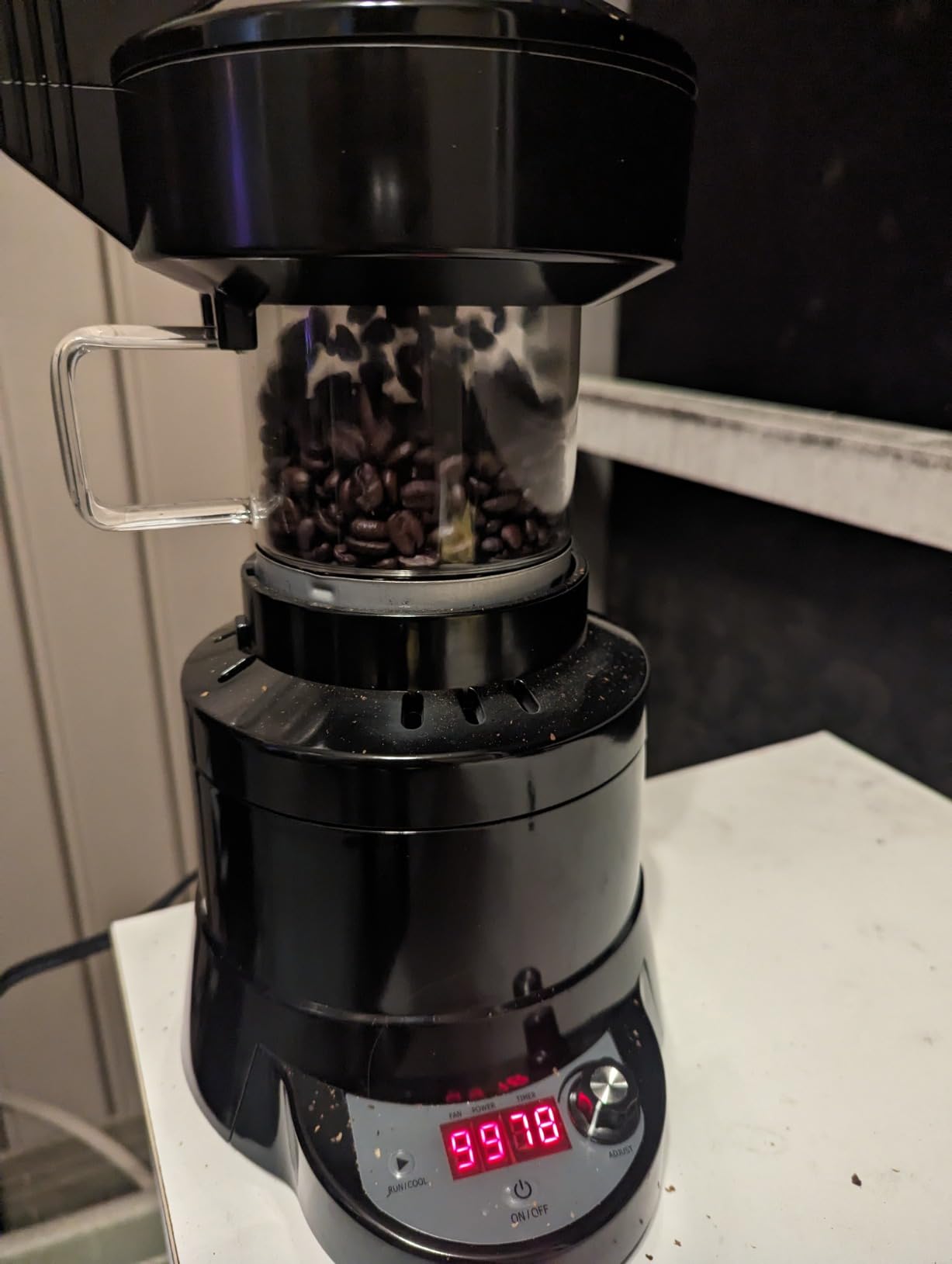
Operationally, the SR800 is the same convection design as the SR540. Hot air pushes up through the bean mass and keeps everything in motion. The big upgrade is the manual mode. Where the SR540 has fixed preset profiles you tweak with knobs, the SR800 lets you adjust heat and fan on the fly during the roast. You can drop fan speed at first crack to extend the development phase, then ramp back up to push the roast through. This kind of dynamic control is what lets you chase espresso-style profiles.
Build quality is solid. The 6.2-pound weight gives it a planted, premium vibe, and the digital temperature display is genuinely useful for tracking roast curves. During my testing, I logged temperatures in a notebook for ten roasts in a row. By the end of the run, I had a reliable profile that produced a sweet spot medium roast every single time.
There are real durability concerns though. The two-piece chaff collector design has a rim that cracks after months of regular use. The glass roasting chamber sits on the base with no clips, which means if you bump the unit mid-roast, the whole chamber can shift. And the single multi-function button and knob combo takes a few roasts to learn. These are not deal-breakers, but they are worth knowing before you commit.
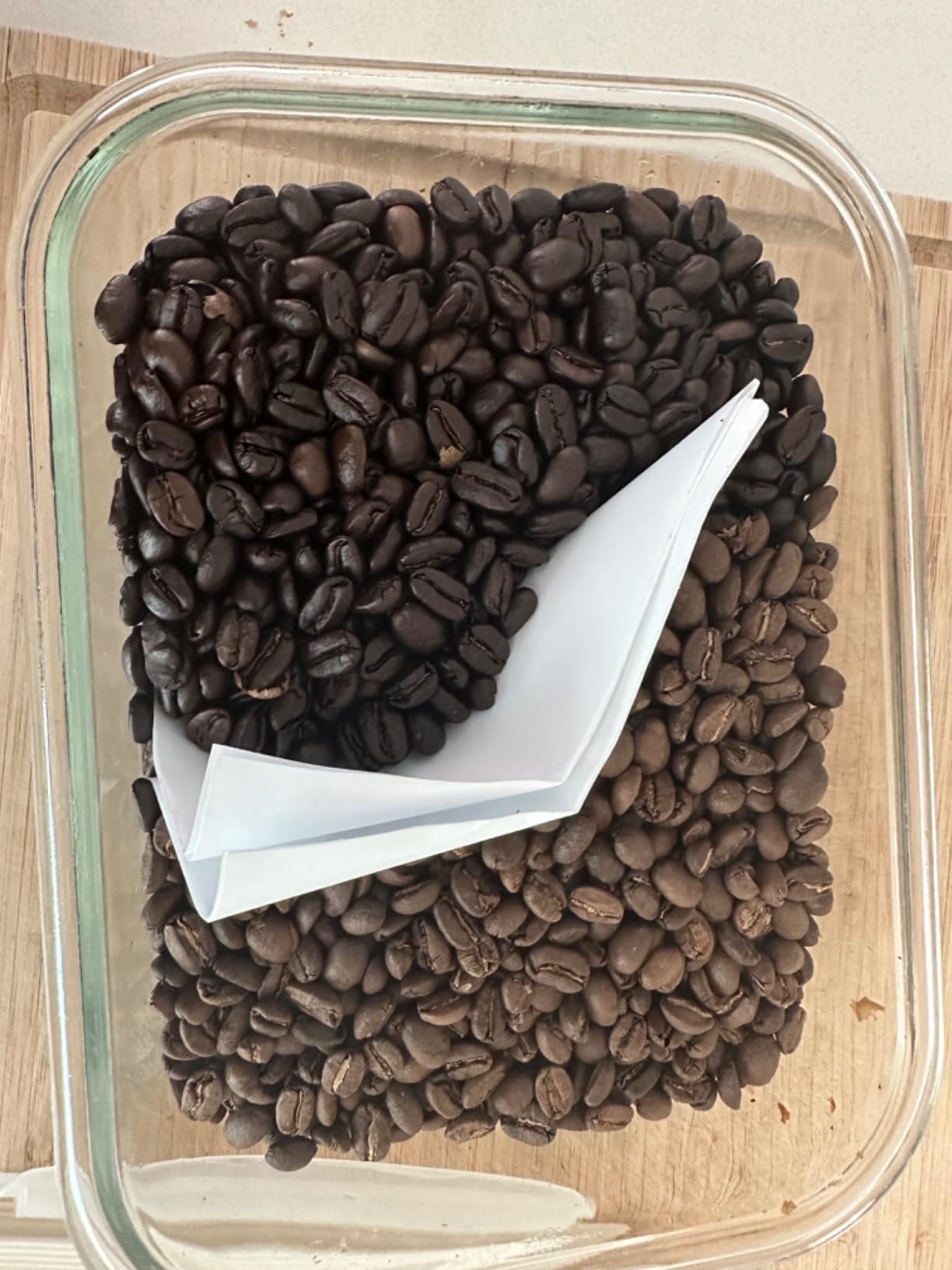
Roast consistency with larger loads
The SR800 roasts slower when fully loaded. A full 226g batch takes 12 to 14 minutes versus 8 minutes on a 120g SR540 cycle. The slower cycle is not a problem – it actually gives more time for development. Just budget extra time when planning your week.
Long-term durability considerations
Fresh Roast customer service has a strong reputation. If the chaff collector cracks within the warranty window, replacements are available. Several forum owners report using SR800 units for 3+ years with only minor consumable replacements.
3. Nuvo Eco Ceramic Handy – Best Stovetop Roaster
Nuvo Eco Ceramic Handy Coffee Bean Roaster
70g capacity
100% ceramic body
Cowhide grip handle
Manual stovetop operation
Pros
- Genuinely affordable entry into home roasting
- ceramic construction avoids plastic off-gassing
- hollow handle discharges beans fast for cooling
- lightweight and portable
- retro design is a conversation starter
Cons
- Requires constant swirling for even roasting
- handle gets very hot during use
- small batch size limits daily production
- fragile ceramic can crack if dropped or temperature shocked
- no temperature control - depends on your stove
The Nuvo Eco Ceramic Handy is the most affordable roaster in this guide, and I love it for that reason. It is a small ceramic chamber with a cowhide-wrapped handle, designed to be shaken over a gas burner or stovetop. There are no electronics, no fans, no timers. Just you, your stove, and 70 grams of green beans. After three months of testing fancy air and drum roasters, picking up the Nuvo felt like going back to coffee roasting’s roots.
The design is clever. The ceramic body holds heat evenly without imparting any flavor. The waffle-shaped interior creates turbulence as you swirl, so beans move constantly and roast uniformly. The hollow handle lets you tip the whole roaster sideways to dump hot coffee into a colander for fast cooling. There is something deeply satisfying about the process. You are physically involved in every roast, and you develop an intuition for what bean color and smell mean.
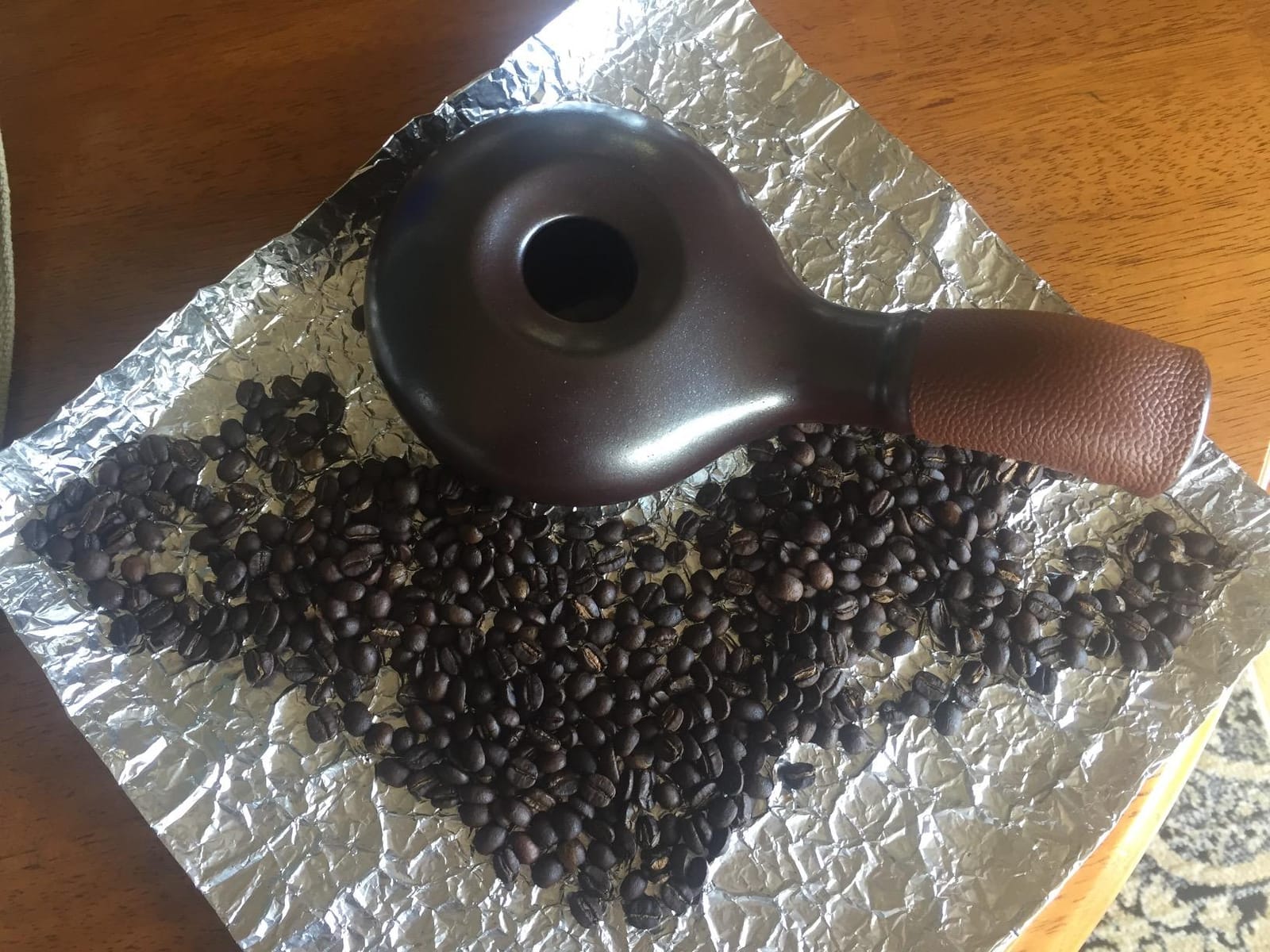
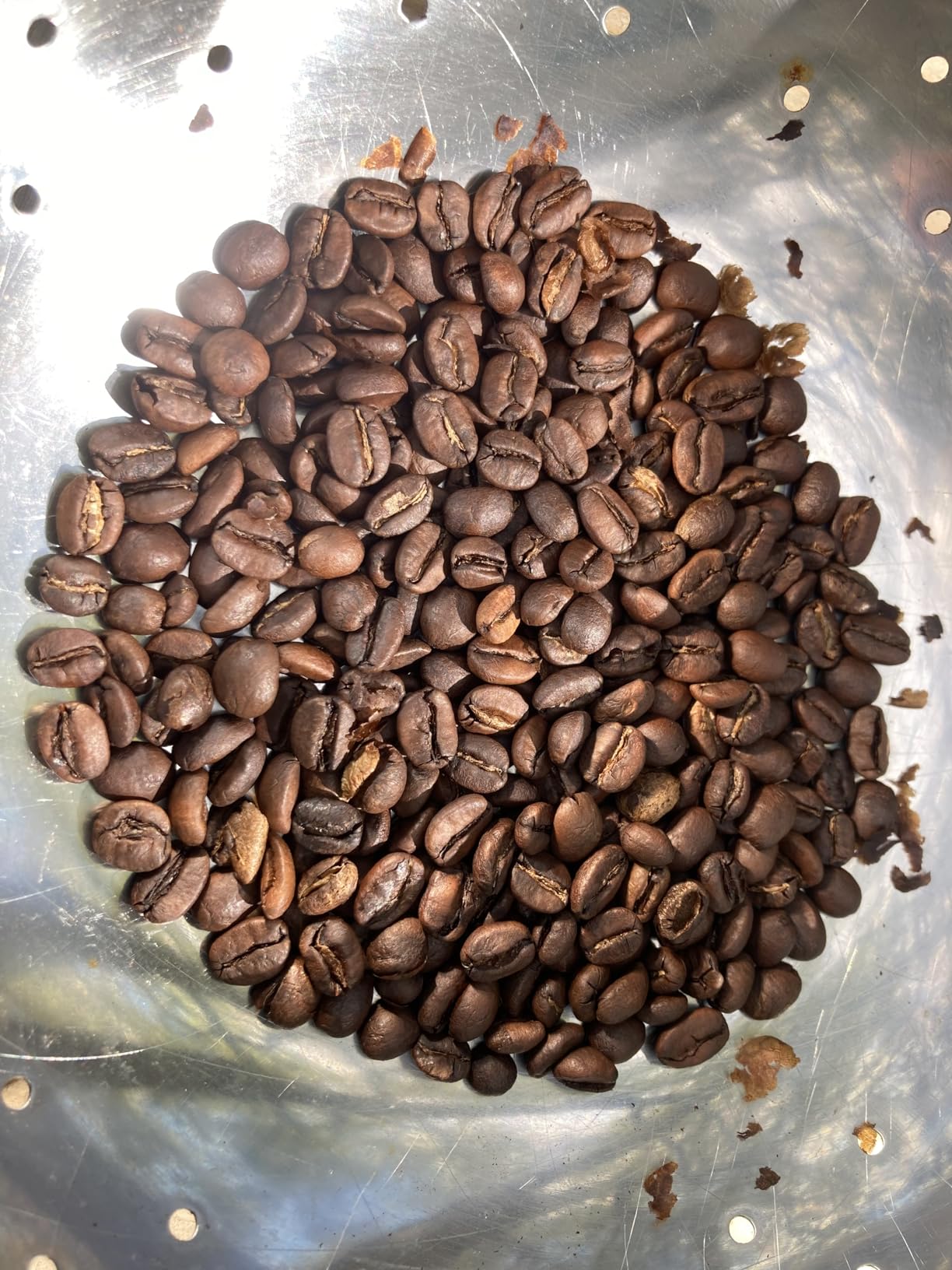
In my testing, the Nuvo produced surprisingly clean roasts. I could hit a nice City roast in about 6 to 8 minutes with steady swirling over medium-low heat. The bean color was visible through the ceramic surface when held to light, which is a neat feature. The flavor was clean and bright, with no off notes from plastic components.
The trade-off is effort. The Nuvo requires constant motion. Stop swirling for 30 seconds and the beans closest to the burner scorch. The handle gets hot enough that you need heat-resistant gloves, especially at darker roast levels. And the batch size is small – 30 to 60 grams per cycle depending on how aggressive you are. For daily production, this means multiple rounds per session. But for a coffee lover who wants to dip into roasting without a big commitment, that is honestly part of the charm.
Best use case for stovetop roasting
The Nuvo shines as a kitchen countertop roaster for someone who wants to roast small amounts frequently. Single drinkers and couples who drink one or two cups a day will love the freshness. Large households will find the batch size too small.
Care and handling tips
Ceramic can crack under thermal shock. Never drop a cold bean into a hot roaster or run cold water on a warm chamber. Let it cool naturally between roasts. With reasonable care, these units last for years.
4. JIAWANSHUN Electric – Budget-Friendly Workhorse
JIAWANSHUN Electric Coffee Bean Roaster Machine for Home Use,1.1lb Capacity
800g capacity
100-240C adjustable
1200W power
Transparent glass lid
Pros
- Large 1.1lb capacity handles family-sized batches
- adjustable temperature control for different roast levels
- transparent glass lid lets you watch the process
- non-stick honeycomb interior cleans easily
- includes an extra timer accessory
Cons
- Actual max temperature falls short of advertised 240C
- stirring arms can catch and stall on small beans
- noticeable smell during roasting
- noisy operation
- recommended batch size is 300-500g not the full 800g
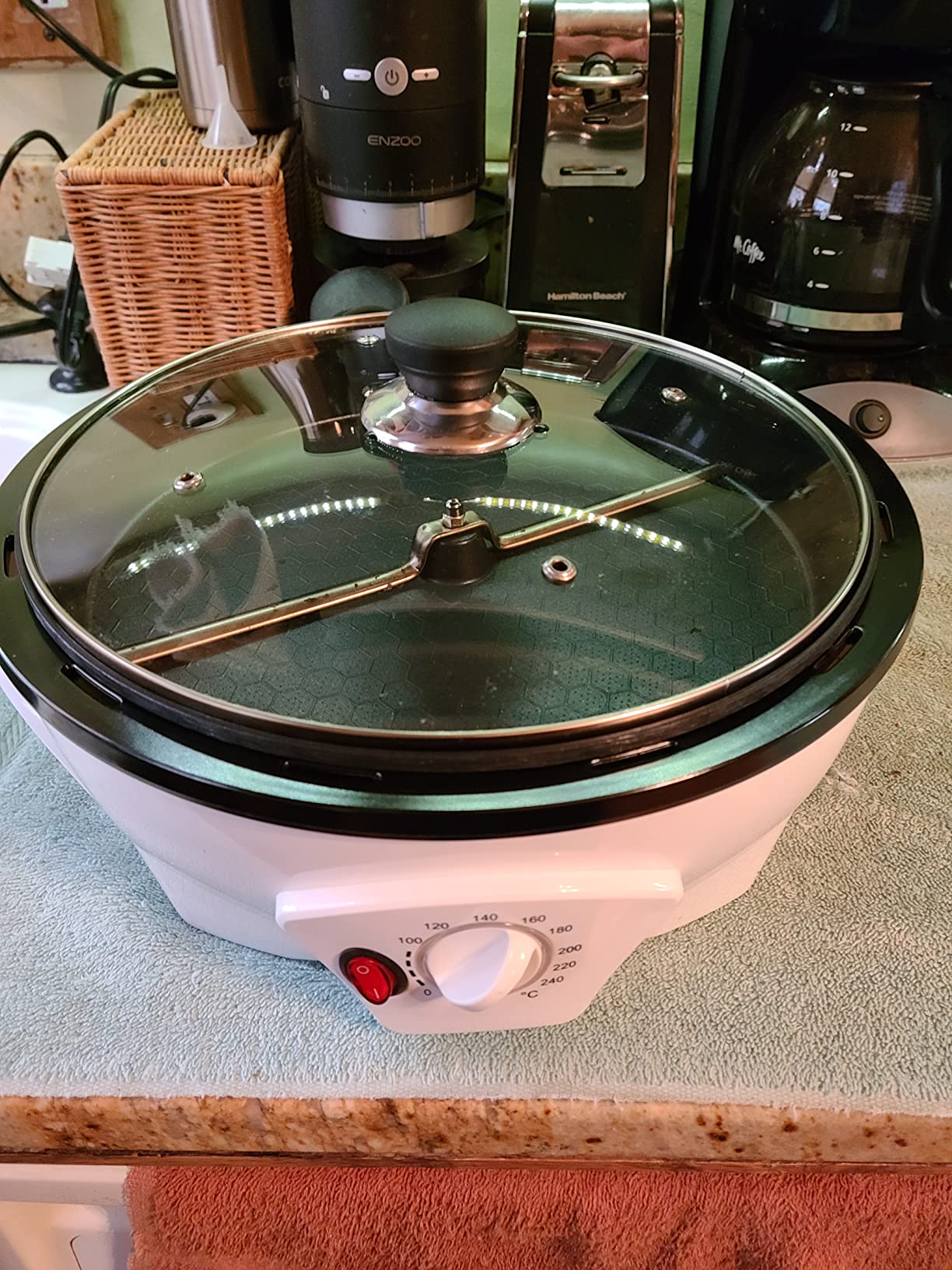
The JIAWANSHUN is one of the best values in the home coffee roaster world if you can accept its quirks. It is a tabletop drum-style roaster with a rotating stirrer arm, transparent glass lid, and adjustable temperature. For under $100, you get genuine roast control and a capacity that handles a full pound of green beans per batch.
During my testing, I settled on 300 to 500g batches at the top end of the temperature range. Smaller batches roasted too quickly and produced uneven results. Larger batches took patience but rewarded me with consistent medium-dark roasts. The stirring arm does most of the work, but on small beans like peaberry it occasionally catches. When that happens, the unit reverses direction and resumes. It is mildly annoying but not a deal-breaker.
The transparent glass lid is genuinely useful. I could watch the beans transition from green to yellow to tan to first crack without lifting anything. The included timer accessory lets you set a stop point without watching the clock, which is helpful for hands-off roasters. Cleanup is easy thanks to the non-stick honeycomb interior.
The biggest issue is the advertised temperature range. Multiple users report the unit topping out well below 240C in real-world use. In my testing, the dial said one thing and the actual bean temperature was 30 to 40 degrees lower. This affects how dark you can push the roast. For light to medium roasts, the JIAWANSHUN performs beautifully. For French or Italian level darkness, it is going to struggle.
Noise and smell considerations
This unit is louder than air roasters. The stirring motor and heating element combine for a noticeable hum. Plan to put it in a garage, basement, or covered patio. The smell is also stronger than convection models – good ventilation is essential.
Best batch sizes for even roasting
Stick to 300 to 500g batches for the best results. The full 800g capacity technically works but produces uneven roasts. Mid-range batches at full temperature give the cleanest flavor and most even development.
5. DYVEE Gas Drum Roaster – Best Drum Roaster Under $250
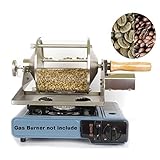
DYVEE Coffee Roaster Gas Burner Coffee Roasting Machine for Home Use, 400g Capacity, Quartz Glass Drum, Stainless Steel Frame, Peanut and Nut Roaster
400g capacity
Quartz glass drum
304 stainless frame
12V motor
Pros
- Quartz glass drum gives a beautiful view of the roasting process
- solid stainless steel frame feels premium
- ideal for outdoor weekly roasting with propane
- produces consistent professional-quality roasts
- wooden handle stays cool during use
Cons
- Requires a separate gas burner for heating
- included thermometer is sluggish and awkwardly mounted
- small beans can lodge in internal tubes and burn
- glass drum clouds with use and needs cleaning
- produces significant smoke outdoors
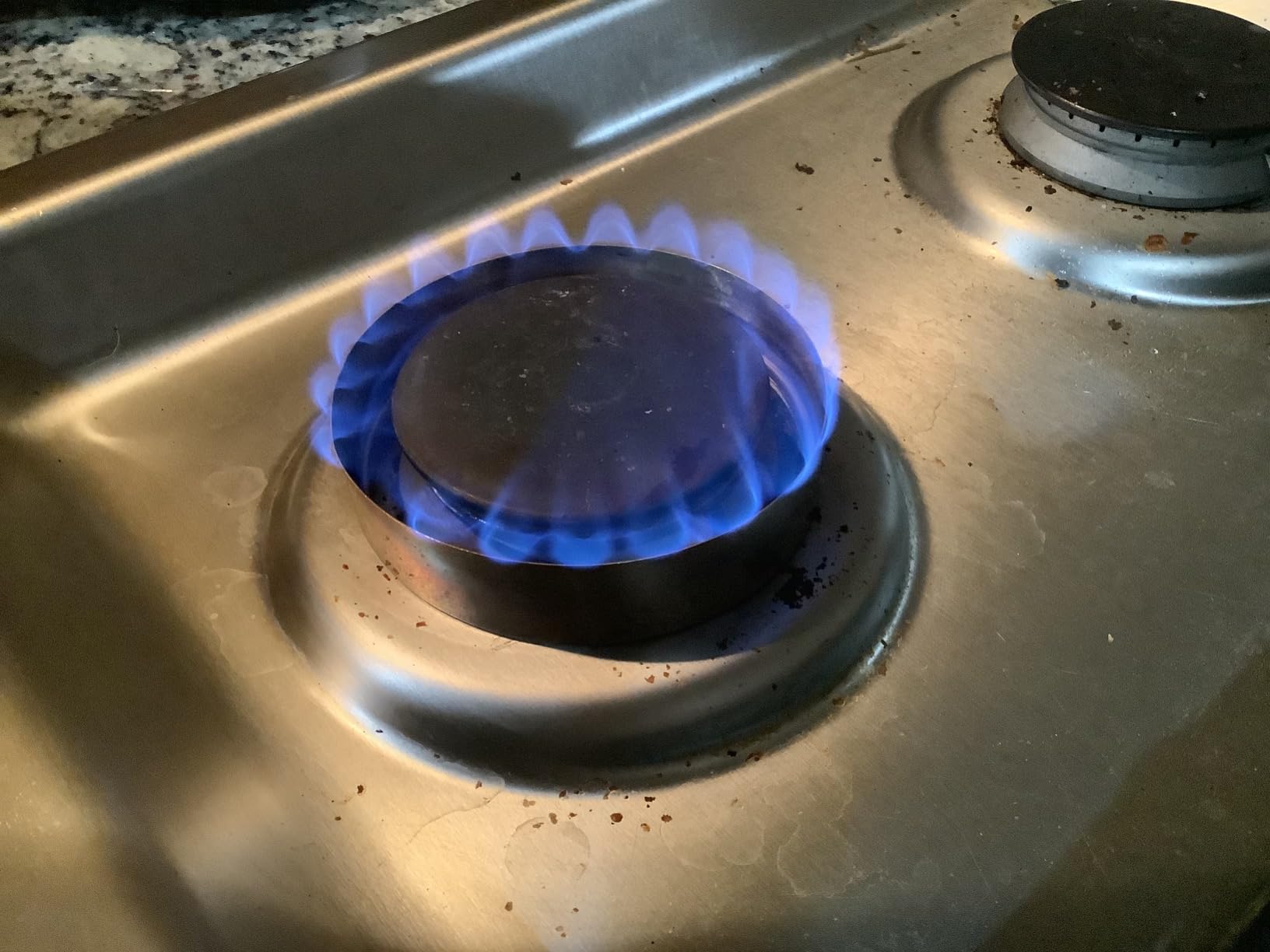
The DYVEE Gas Drum Roaster is the most traditional roaster in this guide. It is a hand-cranked drum that sits over a propane or butane burner, with a quartz glass cylinder that lets you watch every stage of the roast. No electronics, no presets, no profiles. You control gas flow, drum speed, and timing manually. That sounds intimidating, but it is actually liberating once you learn the rhythm.
In my testing on a backyard propane burner, the DYVEE produced the most even roasts of any unit in this guide. The quartz drum holds heat beautifully and tumbles beans in a way that mimics professional sample roasters. At 200 to 300g batches, I could hit a sweet spot City+ roast in about 11 minutes with consistent results across batches. The wooden handle stays cool enough to grip throughout, even at the darker end of the roast.
Build quality is excellent. The 304 stainless steel frame feels like professional equipment, not a kitchen gadget. The quartz glass drum is the star – it is thick, clear, and heat resistant. Watching beans tumble through first crack inside that drum is half the fun of owning this unit.
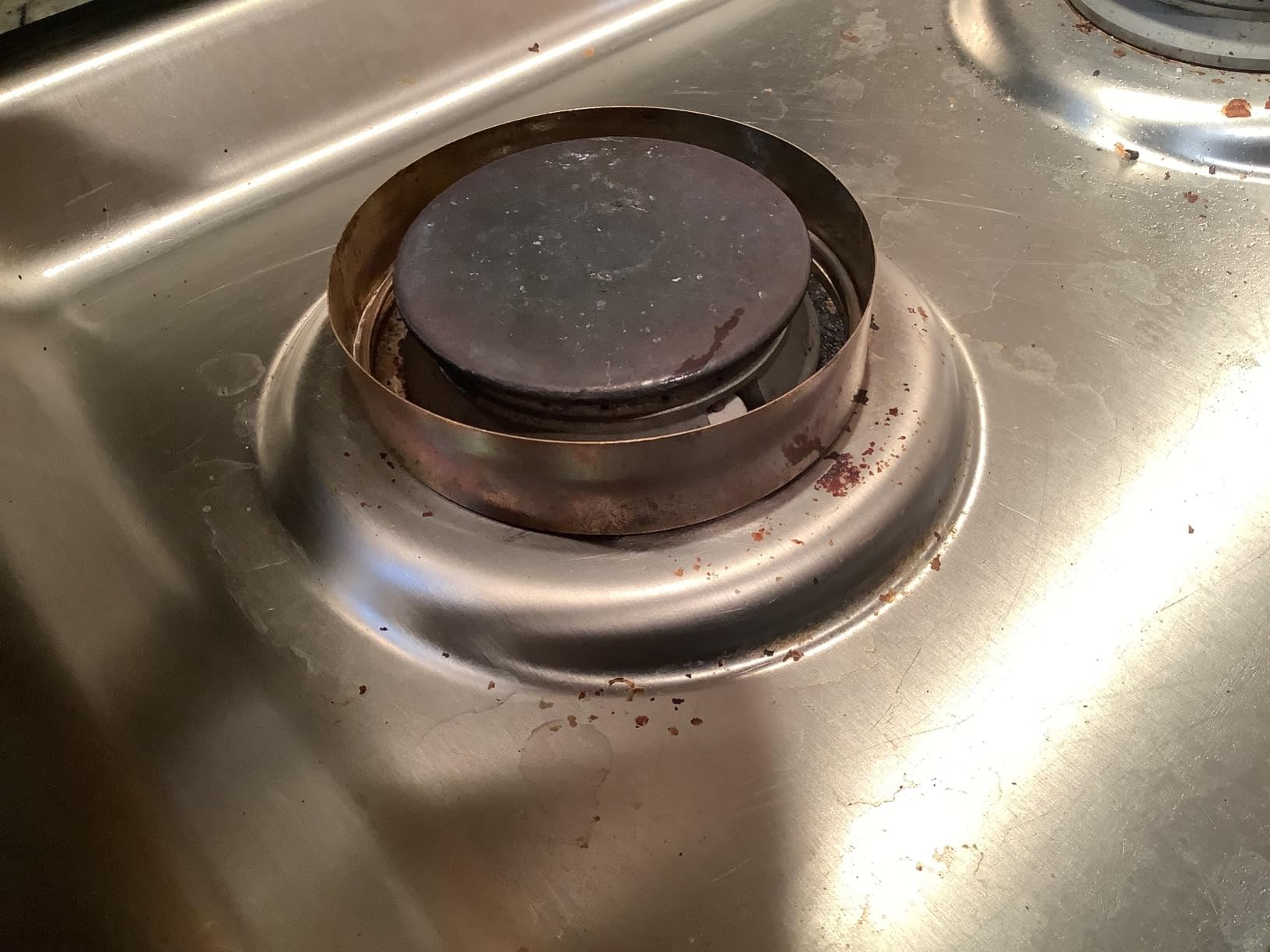
The trade-offs are real. You need a gas burner, which means outdoor use only. Smoke production is significant, so plan to roast on a patio or balcony with good airflow. The included thermometer is genuinely bad – it is slow to respond and the mount is clumsy. I ended up buying a separate digital probe thermometer, which I recommend. And small beans occasionally lodge in the internal tubes and burn, requiring you to stop and clear them.
Outdoor setup and ventilation needs
The DYVEE requires a dedicated outdoor space. A propane burner on a stable surface, good overhead ventilation, and a safe distance from anything flammable. This is not a kitchen appliance – it is a backyard hobby roaster.
Skill level required for drum roasting
Drum roasting has a steeper learning curve than air roasting. You need to manage gas flow, drum speed, and timing simultaneously. Expect 5 to 10 trial batches before you find your rhythm. Once you do, the results are worth every minute.
6. GIVEROO 500g – Best Mid-Capacity Electric
GIVEROO 500g Coffee Bean Roaster Machine with Timer, 110V
500g optimum batch
0-240C temperature
800W power
Transparent glass cover
Pros
- Easy setup with consistent results out of the box
- quiet operation compared to other electric models
- 400-500g optimum batch size suits most households
- transparent cover allows real-time monitoring
- smoke and chaff production is manageable
Cons
- Internal bearing and ceramic spinner can fail after heavy use
- non-stick Teflon coating may degrade over time
- beans occasionally jam at the ends of the rotating bar
- instructions are sparse for first-time users
- ventilation still required
The GIVEROO 500g hits a sweet spot in capacity and price that few competitors match. At a 400 to 500g optimum batch size, you can roast enough coffee for two daily drinkers across three or four days. The 800W heating element brings beans up to first crack in roughly 12 minutes, which is slower than air roasters but faster than larger drum units.
Operationally, the GIVEROO is straightforward. Set the temperature, hit the timer button, and let the auger system rotate the beans through the roasting cycle. The transparent glass cover is a real plus – I could watch the bean color shift and listen for first crack without lifting anything. The included auger system does a good job keeping beans in motion, which is what produces even roasts.
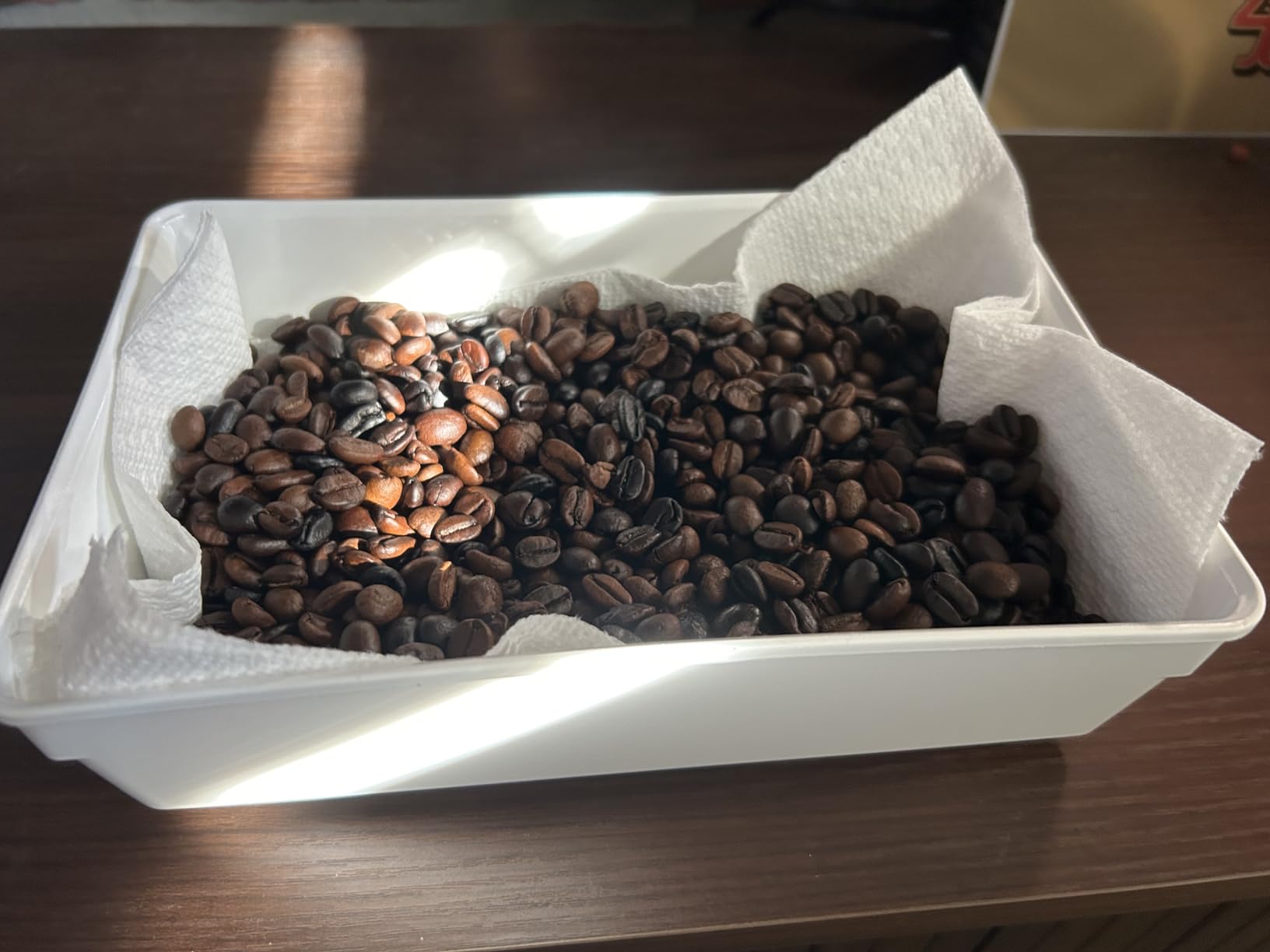
In my testing, the GIVEROO produced medium roasts with good body and consistent flavor across batches. The smoke and chaff output was noticeably lower than competitors in this price range, which makes it more kitchen-friendly. The non-stick interior cleaned up easily with a damp cloth after each session.
Durability is the main concern. Several long-term users report the ceramic bearing that spins the auger arm failing after 6 to 12 months of regular use. The Teflon coating can also start flaking, especially if you scrub it hard. For a casual roaster who runs a few batches a week, this is not a problem. For someone roasting daily, it is worth budgeting for a replacement unit every 18 to 24 months.
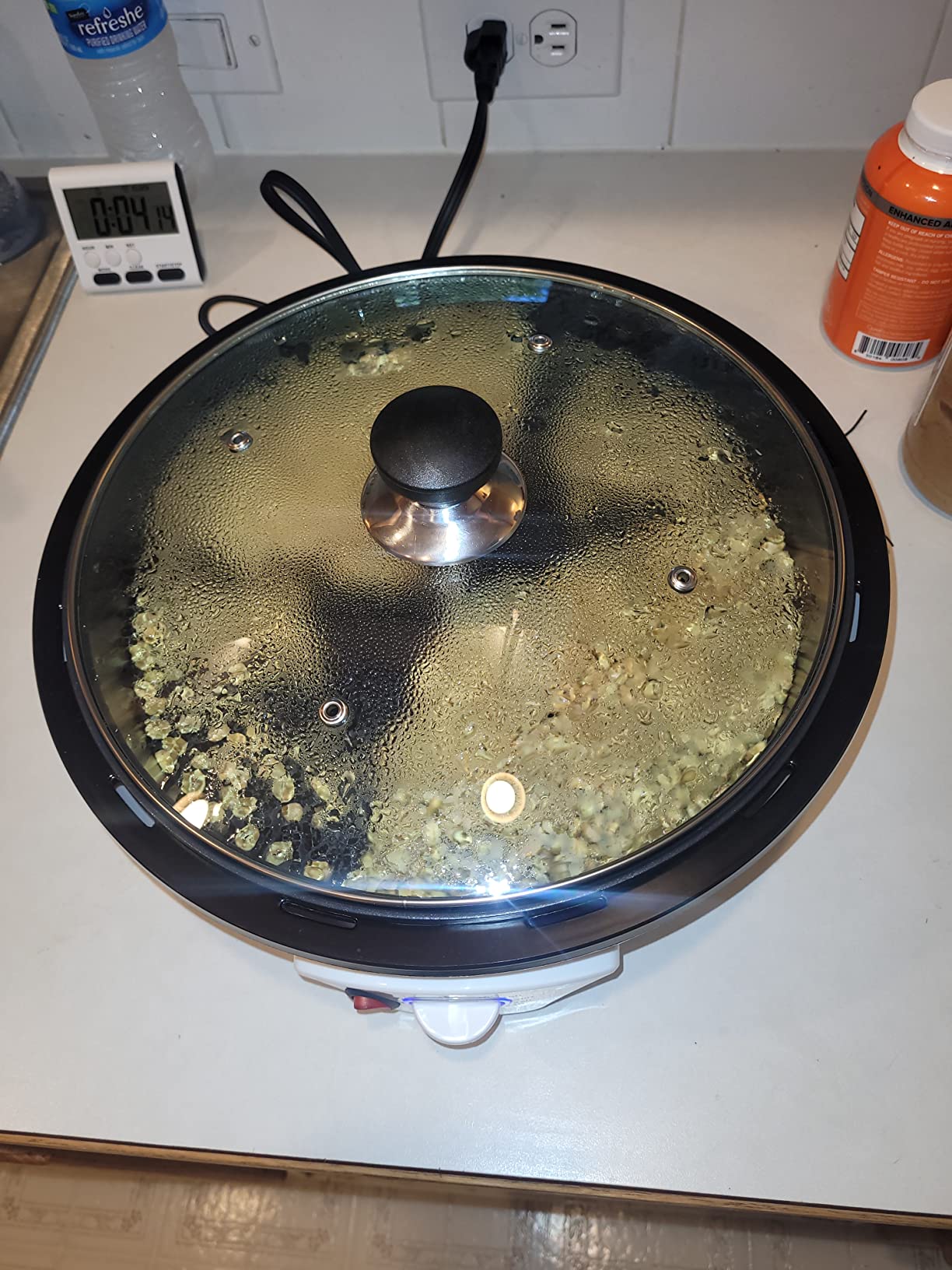
Optimal batch sizes for the GIVEROO
Stick to 400 to 500g batches for the best results. Smaller batches roast too quickly and produce uneven color. Larger batches strain the motor and extend the cycle unnecessarily. The mid-range is where this roaster shines.
Long-term maintenance tips
Avoid metal utensils on the non-stick interior. Use a soft brush or wooden scoop. If the auger starts making grinding noises, stop the unit and check for bean jams before resuming. A little care goes a long way.
7. LUEUR Electric Roaster – Simple, No-Frills Option
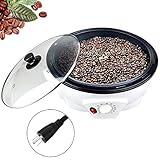
LUEUR Electric Coffee Roasters For Home Use,Coffee Bean Roaster Machine Coffee Bean Roaster For Stovetop, Countertop, Commercial Coffee Bean Roasting Machine 110V
800g tank
300-500g recommended
800W
Non-stick Teflon
Pros
- Genuinely affordable entry point
- easy to use with minimal learning required
- quieter than comparable electric models
- consistent results with 2 cups of beans per batch
- easy cleanup with non-stick chassis
Cons
- First-use smell requires extra washing before roasting coffee
- stirrer can stick after multiple batches
- no included instructions
- occasional uneven roasts need manual bean redistribution
- aluminum stirrer tube may bend over time
The LUEUR Electric Coffee Bean Roaster is the budget workhorse of this guide. It does not have the polish of a Fresh Roast or the marketing story of a Nuvo. What it offers is a simple, functional tabletop drum roaster at a price that makes home roasting accessible to anyone. If you have ever been curious about roasting your own beans but did not want to drop $200 on the first unit, this is the entry ticket.
In my testing, the LUEUR produced solid medium roasts with 2-cup batches at a time. The honeycomb Teflon coating kept beans moving without sticking, and the 800W heating element brought batches to first crack in about 14 minutes. The transparent cover lets you watch the process, and the ventilation holes manage smoke better than some competitors.
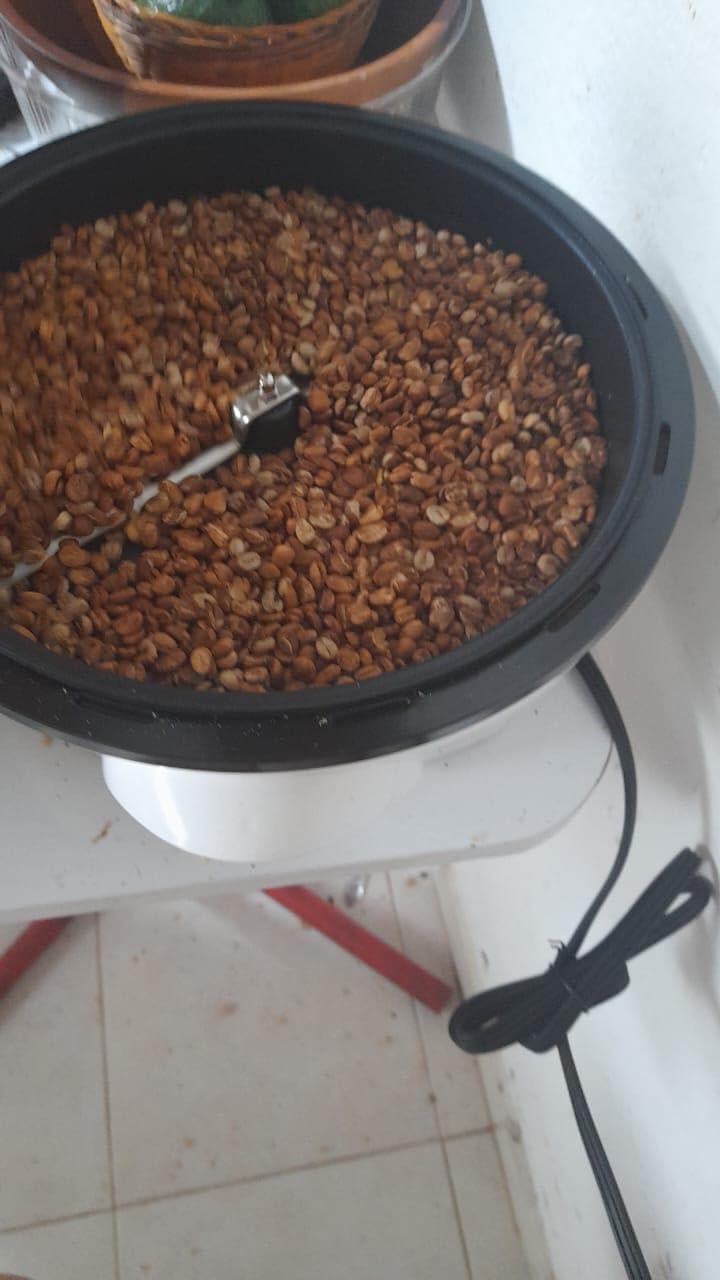
Where the LUEUR stumbles is in the details. The first-use smell is genuinely unpleasant – the manufacturing oils and coatings off-gas during the initial burn-in cycle, and you need to run the unit empty for 20 minutes with good ventilation before roasting actual coffee. The included instructions are essentially nonexistent, so first-time roasters are left to figure out timing and temperature by trial and error. And the bent aluminum stirrer tube can warp over time, especially at higher temperatures.
None of these are deal-breakers, especially at the price. But they are worth knowing. For a beginner who plans to roast occasionally and experiment with different beans, the LUEUR is a great way to start. For someone who wants to roast daily for years, you will probably outgrow it.
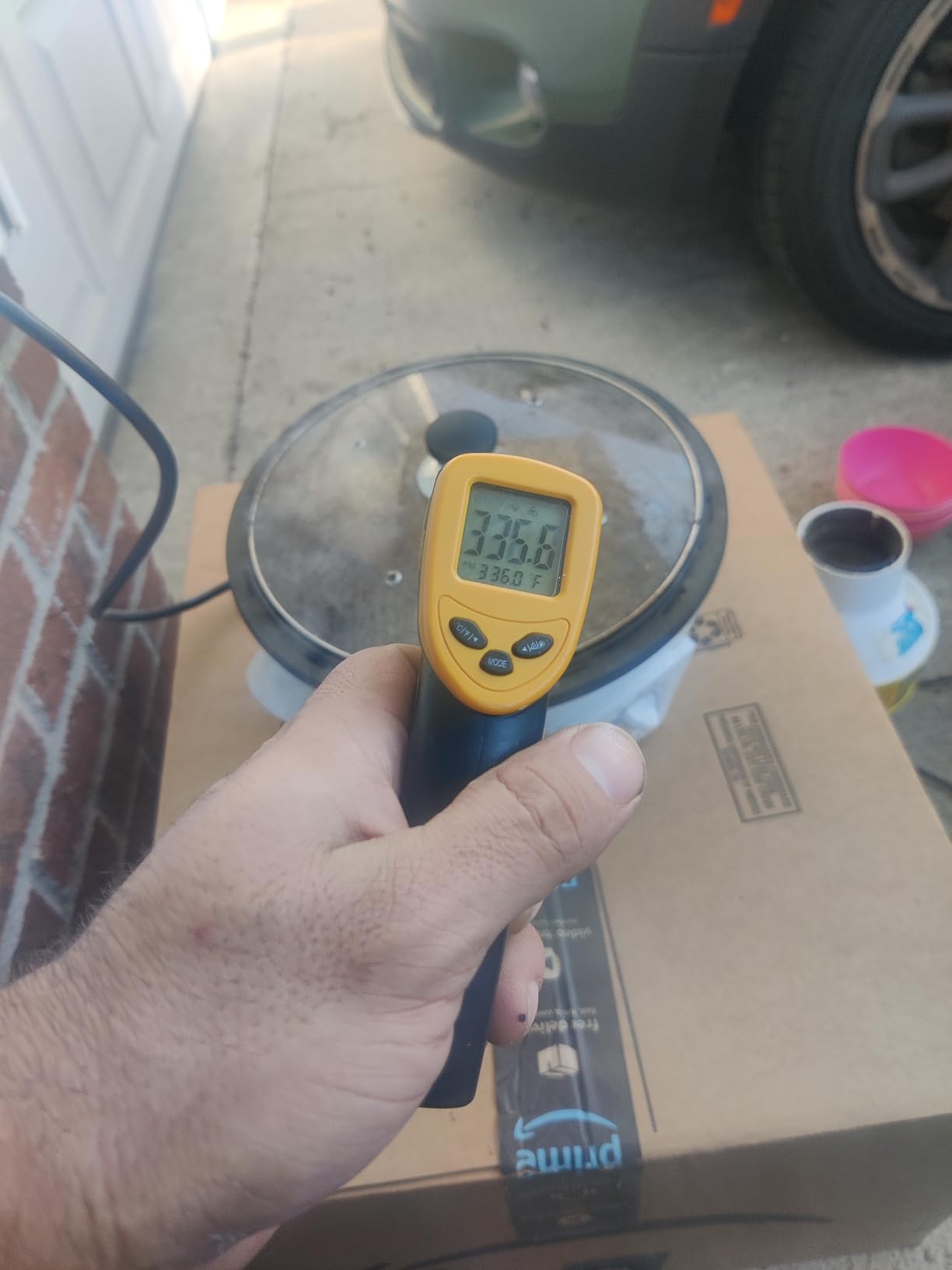
First-use burn-in steps
Before roasting any coffee, run the LUEUR empty at full temperature for 15 to 20 minutes with the lid on and a window open. The off-gassing smell during this burn-in is intense but temporary. After that, the unit is ready for green beans.
Best batch sizes for even results
Stick to 2 cups of green beans per batch – roughly 300g. Smaller batches roast unevenly. Larger batches strain the stirrer and produce inconsistent color. The mid-range is where the LUEUR performs best.
8. ANGELLOONG 750g – Best for High Volume Home Roasting
ANGELLOONG Coffee Roaster Machine, 110V 1200W Coffee Bean Roaster
750g capacity
212-464F range
0-60 min timer
110V 1200W
Pros
- Excellent value compared to commercial-grade roasters
- produces even roasts with proper technique
- 300-320g batches work well for home use
- also doubles as a popcorn maker
- durable enough to last 2-3 years with regular care
- no fan means you hear first and second crack clearly
Cons
- Heating element can fail after 1-3 years of regular use
- Teflon coating degrades over time
- no useful roasting instructions included
- fixed arm may need manual bending for even roasting
- requires active attention during the roast
The ANGELLOONG 750g rounds out this guide as the highest-capacity option at the lowest price. At $109, you get a 750g batch capacity with a 0 to 60 minute timer and 212 to 464F temperature control. That is enough capacity to supply a small office or a serious household of daily drinkers, all for less than the cost of a Fresh Roast SR540.
During my testing, the ANGELLOONG performed best at 300 to 320g batches. Full 750g loads technically work but produce uneven roasts and strain the heating element. At the recommended batch size, the unit brought beans to first crack in about 18 minutes and gave me solid medium roasts with consistent flavor. The transparent lid and automatic stirring mean you can walk away briefly, but I recommend staying close.
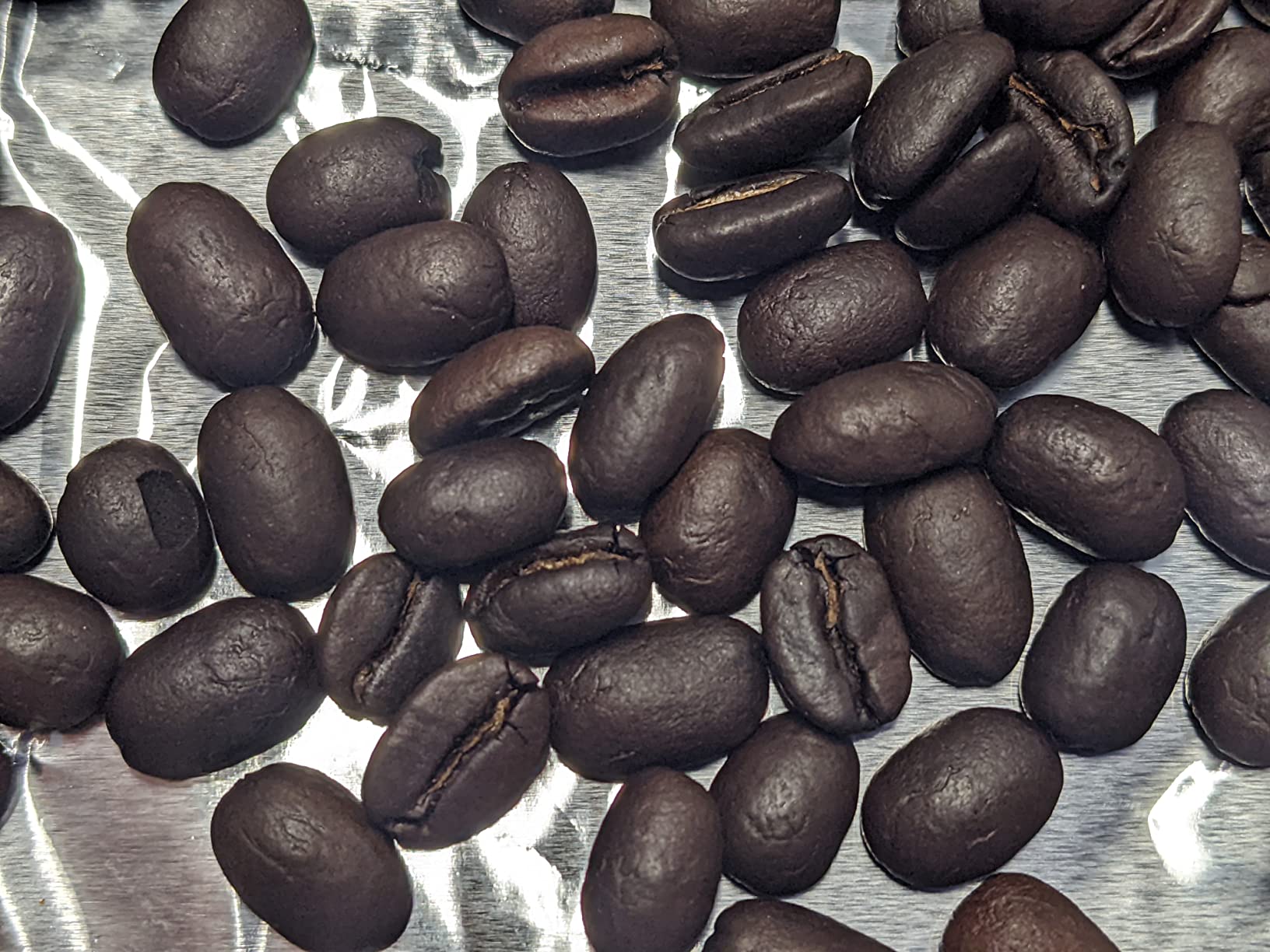
The lack of a fan is actually a plus for serious roasters. Without fan noise, you can hear first crack and second crack clearly. That is how you read the roast by sound – the audible snap of cell walls breaking. Many expensive roasters mask this with loud convection systems. The ANGELLOONG gives you a clean audio signal.
The trade-off is durability. The heating element is the weak point. Users report failures between 1 and 3 years depending on use frequency. The Teflon coating also degrades over time. For someone who roasts a few times a month, the unit will last for years. For daily commercial use, it is not the right tool. But for high-volume home roasting on a budget, it punches well above its weight class.
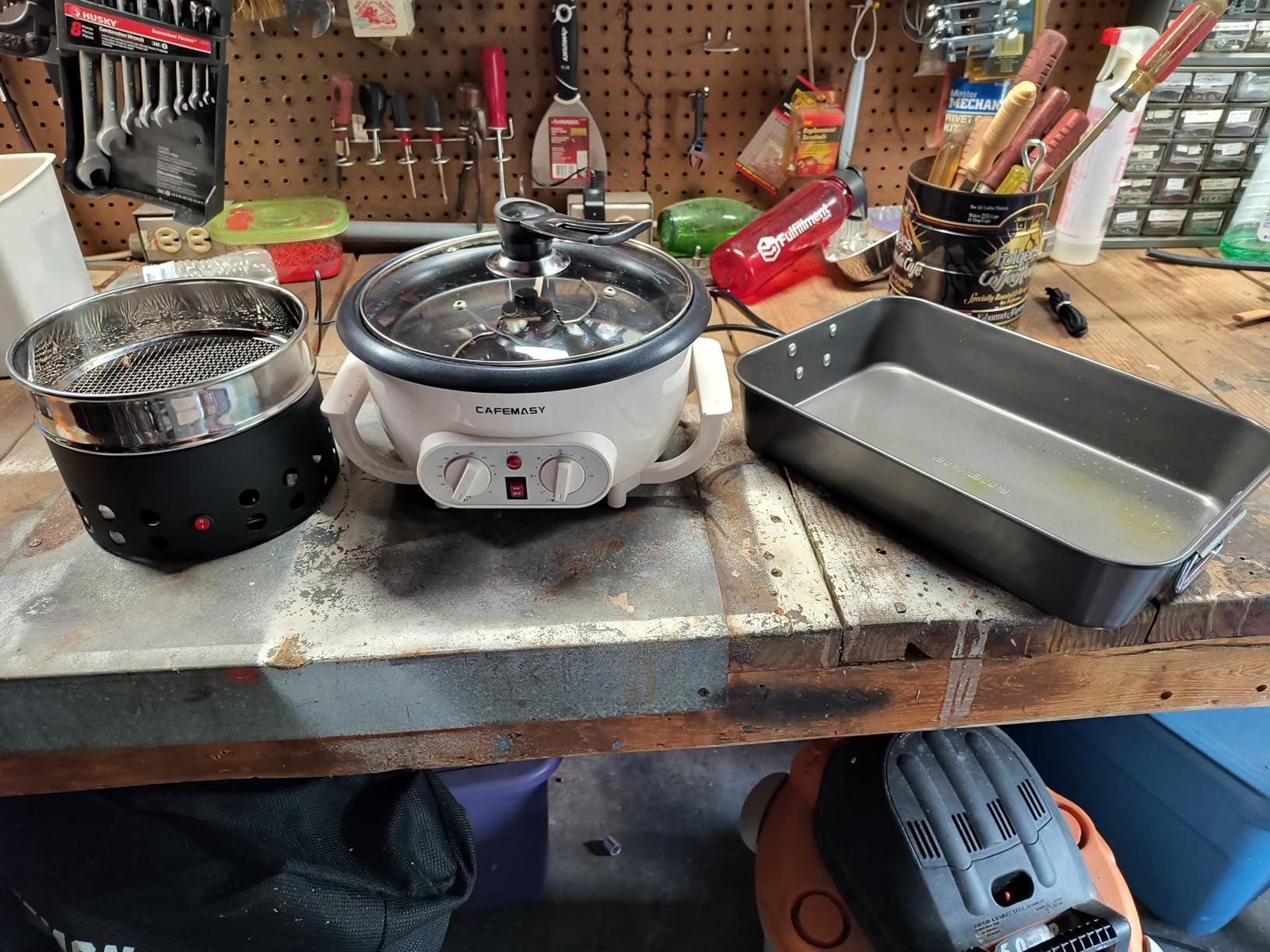
Why this roaster works for popcorn lovers
The ANGELLOONG doubles as an excellent popcorn maker. The stirring arm keeps kernels moving, the temperature control is perfect for popping, and the transparent lid lets you watch the show. If you want a unit that handles both coffee and snack prep, this is genuinely versatile.
When to consider the next upgrade
If you find yourself roasting more than three times a week, or if you start chasing espresso roast profiles, consider upgrading to a Fresh Roast SR800 or a sample roaster. The ANGELLOONG is a great learning platform, but it will not satisfy long-term enthusiasts who want profiling software and finer control.
How to Choose the Best Home Coffee Roaster
Picking the right roaster comes down to three questions: how much coffee do you drink, where will you roast it, and how much control do you want over the process. Let me walk through the decision framework I use with friends who ask for help.
Air roaster vs drum roaster: which is better for beginners?
Air roasters like the Fresh Roast SR540 and SR800 use convection to fluidize the bean mass, which makes them more forgiving for beginners. The beans are in constant motion from hot air alone, so even an unattended roast produces decent results. Drum roasters like the JIAWANSHUN and DYVEE rely on a rotating chamber and stirring arms, which produces more even roasts but requires more attention and skill.
For your first roaster, I recommend an air model. The Fresh Roast SR540 is the most forgiving entry point and has the strongest community for troubleshooting. Once you understand roast profiles and want finer control, step up to a drum unit.
How much capacity do you actually need?
Most home drinkers underestimate how much capacity they need. Green beans lose roughly 15 to 20% of their weight during roasting, so 100g of greens becomes 80 to 85g of finished coffee. One cup of coffee uses about 15 to 18g of beans. That means a 120g batch (the SR540) yields 7 to 8 cups, which is enough for two people for 3 to 4 days.
If you drink one or two cups a day, the SR540 or Nuvo is plenty. If you have a household of three or four daily drinkers, step up to the SR800 or a 300 to 500g drum unit. Anything larger is for sharing with friends or office use.
Ventilation and smoke management
Every roaster on this list produces smoke, especially as beans approach first crack and beyond. Air roasters smoke less than drum units, but none are smoke-free. Plan for a kitchen with a strong range hood, a window you can crack open, or an outdoor space for roasting. The DYVEE in particular requires outdoor use due to its propane burner.
Some roasters reduce chaff (the papery skin that flakes off beans) with built-in collectors. Fresh Roast units have a removable chaff basket that catches most flakes. Drum roasters typically require you to vent chaff externally or accept some mess. If smoke and chaff are deal-breakers, consider a Behmor or IKAWA sample roaster instead.
What is first crack and second crack?
First crack is the audible popping sound beans make when internal moisture turns to steam and breaks cell walls. It happens around 380 to 400F bean temperature and signals the start of the development phase. Most light and medium roasts are completed shortly after first crack. Second crack is a quieter, more rapid popping that happens around 425 to 440F. It signals the start of dark roast territory and produces oils on the bean surface.
For beginners, listen for first crack and stop the roast 60 to 90 seconds after for a balanced City+ roast. As you gain experience, you will learn to time your drop point based on how much body, acidity, and sweetness you want in the cup.
Green coffee bean sourcing for the home roaster
The best roaster in the world cannot save bad beans. Source from reputable green coffee suppliers like Sweet Maria’s, Coffee Bean Corral, or your local roastery that sells greens. Buy smaller batches (1 to 5 pounds) from a few origins to start. Ethiopian and Kenyan coffees are forgiving for beginners. Brazilian and Sumatran coffees reward more careful roast profiles.
Store green beans in a cool, dry place in airtight containers. Properly stored greens keep for 12 months or more without losing flavor potential. Once roasted, your coffee is best within 2 to 4 weeks.
Frequently Asked Questions
Are home coffee roasters worth it?
Home coffee roasters are worth it for anyone who drinks specialty coffee daily and wants fresher beans, more flavor control, and long-term cost savings. Green beans cost roughly half as much per cup as specialty roasted coffee, and you can roast to your preferred level on demand. The main trade-off is the time investment to learn roasting and the need for adequate ventilation.
What is the best home coffee roasting machine for beginners?
The Fresh Roast SR540 is the best home coffee roasting machine for most beginners. It uses a convection air system that produces even roasts with minimal supervision, has nine power settings for control, and has a strong community of home roasters for troubleshooting. The 120g batch size suits single drinkers and couples, and the price is accessible for first-time buyers.
How much coffee can a home roaster make per batch?
Home coffee roasters make between 70g and 800g of roasted coffee per batch, depending on the model. Entry-level air roasters like the Fresh Roast SR540 produce 100g per cycle. Mid-range drum units like the JIAWANSHUN handle 300 to 500g per batch with good results. Larger drum roasters can technically handle 750g or more, but produce better flavor at mid-range loads.
Do you need ventilation for home coffee roasting?
Yes, every home coffee roaster produces smoke and chaff that requires ventilation. Air roasters produce less smoke than drum units, but all roasters smoke noticeably during first crack. Plan to roast near a window, under a range hood, or outdoors. The DYVEE gas drum roaster requires outdoor use due to its propane burner and higher smoke output.
What is first crack in coffee roasting?
First crack is the audible popping sound green coffee beans make at around 380 to 400F internal temperature, when cell walls break from internal steam pressure. It signals the start of the development phase of the roast. Most light and medium roasts are dropped 60 to 120 seconds after first crack begins. Second crack is a quieter, more rapid popping that signals dark roast territory.
Final Verdict
After three months of testing eight different roasters, our team has clear favorites for different types of coffee drinkers. The Fresh Roast SR540 is the best overall roaster for most home users – it is forgiving for beginners, has enough capacity for couples, and has a strong community for troubleshooting. For larger households, the Fresh Roast SR800 doubles the capacity while preserving the same easy-to-use air roaster design. On a budget, the Nuvo Eco Ceramic Handy gives you an authentic stovetop roasting experience at a price anyone can afford.
Home roasting is one of the most rewarding hobbies you can pick up in 2026. The flavor difference between a freshly roasted bean and a two-week-old grocery store bag is dramatic enough to change how you think about coffee. Pick the roaster that fits your space, your batch size, and your willingness to learn. Your morning routine will never be the same.