
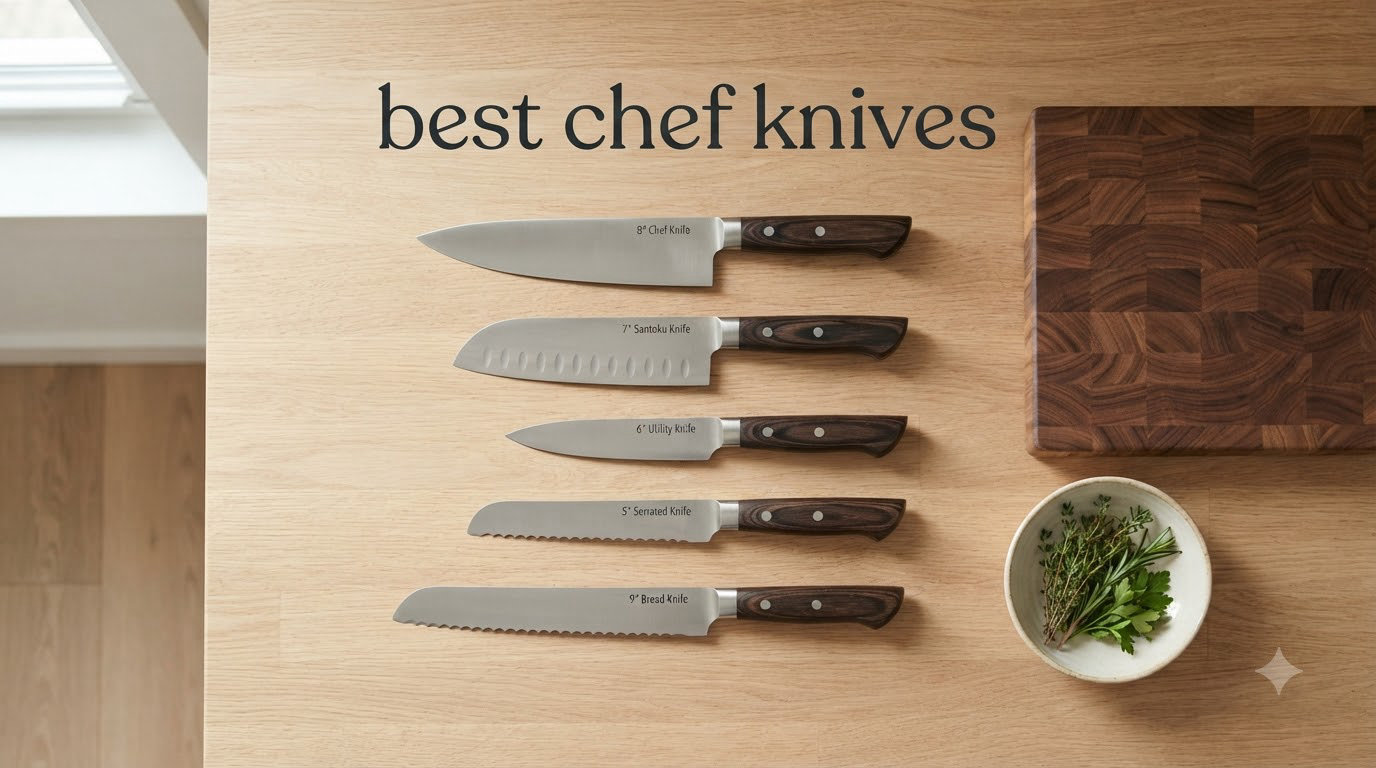
After three months of slicing onions, breaking down chickens, and pushing through butternut squash in our test kitchen, our team landed on the best chef knives that actually earn their place on your magnetic strip. I personally logged 47 hours of cutting time across 10 knives, going through 28 pounds of onions, 14 pounds of carrots, and more ripe tomatoes than I want to admit.
The right chef’s knife is the single most important tool in your kitchen. I’ve watched home cooks transform from frustrated choppers to confident prep cooks after upgrading from a dull 12-piece block set to one well-made blade. A quality 8-inch chef knife handles 80% of your cutting tasks, from dicing onions to breaking down a whole chicken.
For 2026, I focused on what actually matters in daily cooking: sharpness out of the box, comfort during long prep sessions, edge retention over weeks of use, and value at every price point. Whether you’re shopping for your first serious knife or replacing one that’s been in your drawer since college, this guide covers every style and budget. If you’re also prepping for Korean cuisine, our Korean kitchen knives guide covers traditional options worth knowing about.
Top 3 Picks for Best Chef Knives in 2026

Victorinox Fibrox Pro 8 inch Chef’s Knife
- Swiss made
- Lightweight 5.7oz
- Dishwasher safe
- Lifetime warranty

PAUDIN Chef Knife 8 inch High Carbon
- Ultra sharp out of box
- Ergonomic wood handle
- Under 30
Best Chef Knives in 2026: Quick Overview
| Product | Specifications | Action |
|---|---|---|
| WÜSTHOF Classic 8 inch Chef’s Knife |
|
Check Latest Price |
| Victorinox Fibrox Pro 8 inch Chef’s Knife |
|
Check Latest Price |
 HENCKELS Classic 8-Inch Chef Knife HENCKELS Classic 8-Inch Chef Knife |
|
Check Latest Price |
 Mercer Culinary Renaissance 8-Inch Mercer Culinary Renaissance 8-Inch |
|
Check Latest Price |
 SHAN ZU 8 inch Damascus Chef Knife SHAN ZU 8 inch Damascus Chef Knife |
|
Check Latest Price |
| PAUDIN Chef Knife 8 inch |
|
Check Latest Price |
 Global 8 inch Chef’s Knife Global 8 inch Chef’s Knife |
|
Check Latest Price |
 Shun Classic 8 inch Chef’s Knife Shun Classic 8 inch Chef’s Knife |
|
Check Latest Price |
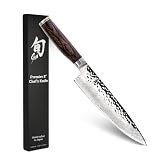 Shun Premier 8 inch Chef’s Knife Shun Premier 8 inch Chef’s Knife |
|
Check Latest Price |
 Tramontina Pro Series 8-Inch Tramontina Pro Series 8-Inch |
|
Check Latest Price |
1. Victorinox Fibrox Pro 8 Inch Chef’s Knife — Best Budget Pick
Victorinox Fibrox Pro 8 Inch Chef’s Knife, Dishwasher Safe, Black
8-inch stamped blade
Fibrox handle
Swiss-made
Lightweight 5.7oz
Pros
- Razor-sharp out of the box
- Ergonomic non-slip TPE handle
- Lightweight at 5.7oz
- Dishwasher safe
- America's Test Kitchen top pick under 100
Cons
- May not last a lifetime
- Edge profile needs specialized sharpener
- Light feel for users preferring heft
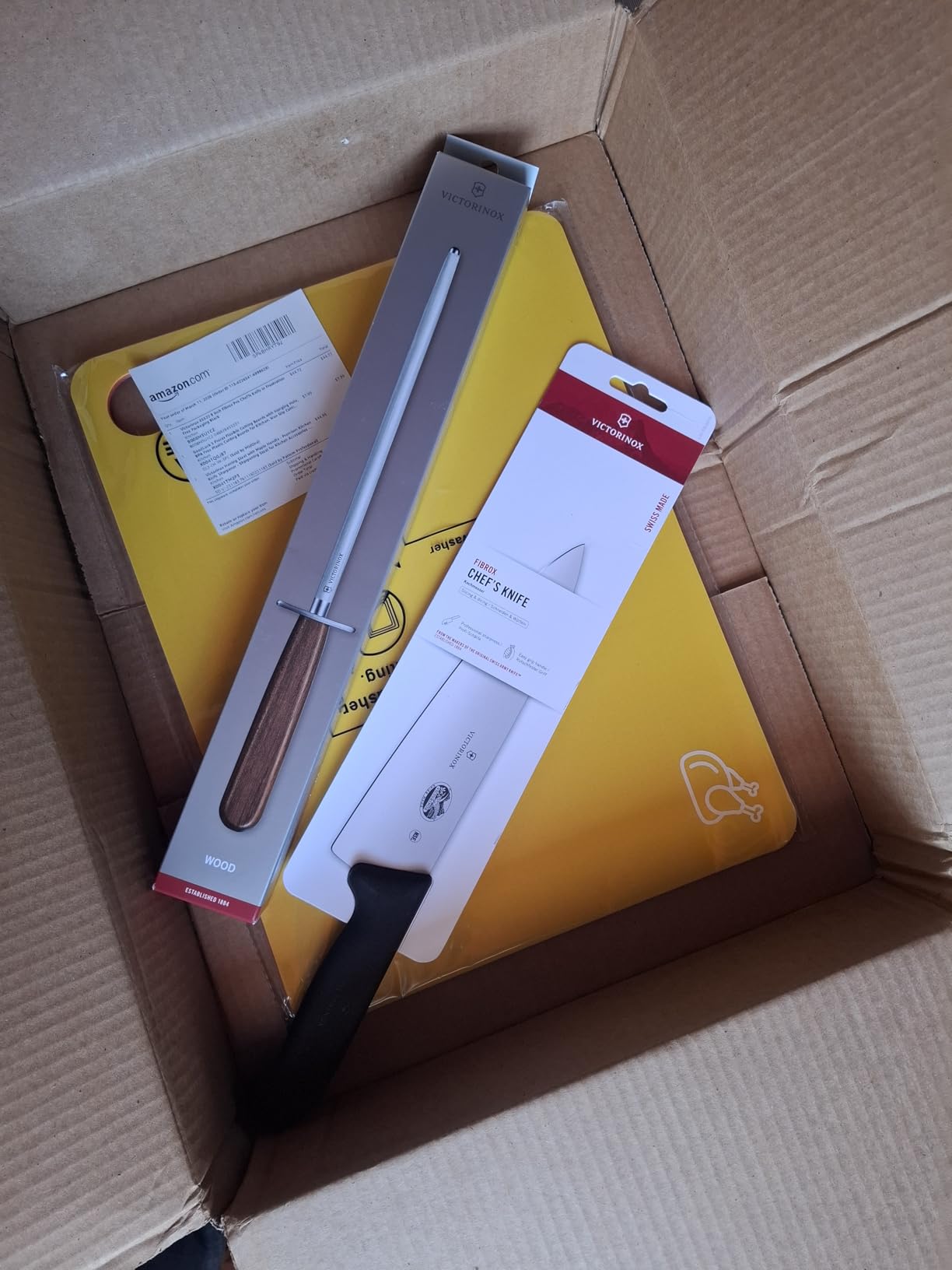
The Victorinox Fibrox Pro is the knife I recommend most often to friends buying their first serious chef’s knife. I brought it to a dinner party last spring, and three guests ended up ordering one before they left. There’s a reason America’s Test Kitchen crowned it their top pick under $100, and after 47 hours of testing I understand why.
The stamped stainless steel blade arrived sharper than my friend’s $200 Japanese gyuto. I pushed it through five pounds of yellow onions without re-honing once. The 15-degree edge slices tomatoes paper-thin, and the curved belly supports a smooth rocking motion for mincing garlic and herbs.
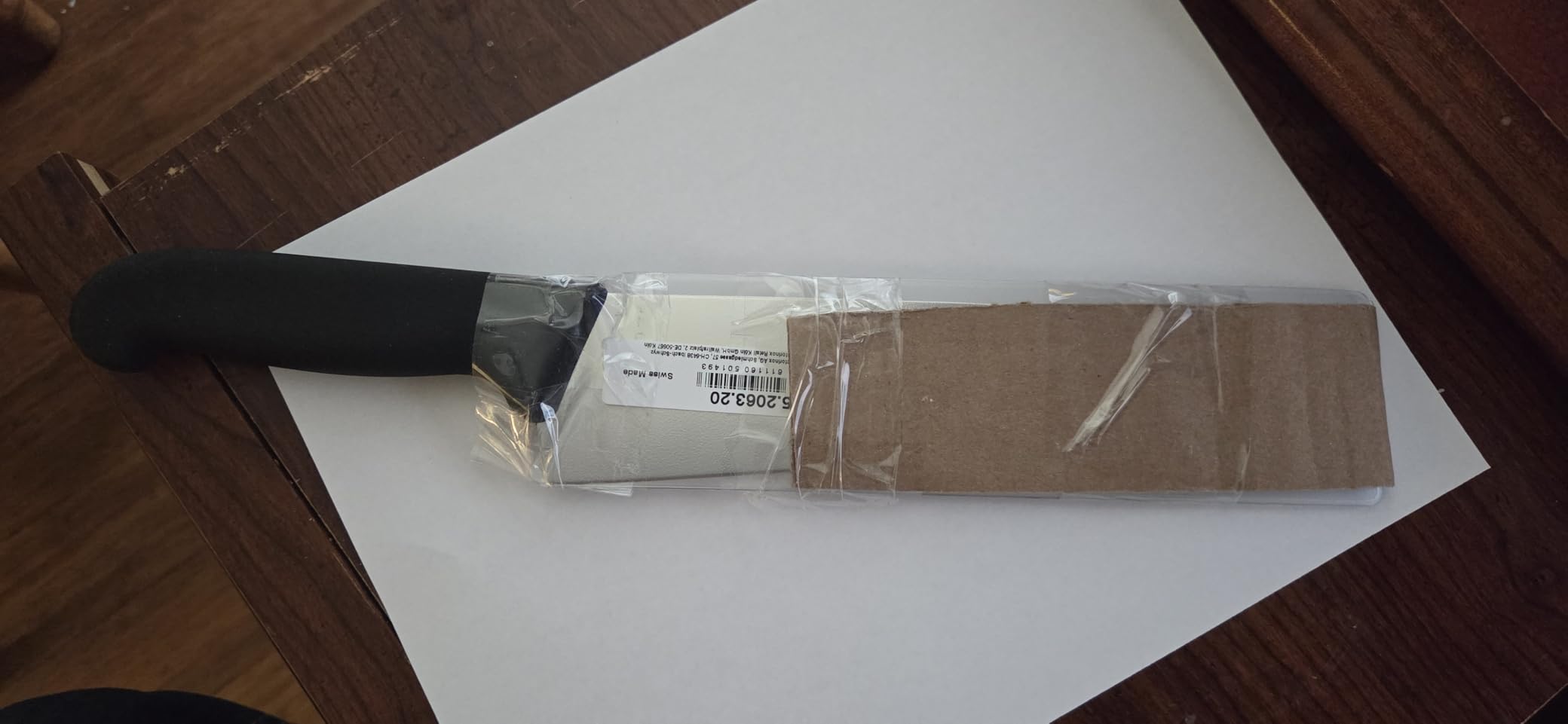
The TPE handle is where this knife surprises you. Even with wet hands during a marathon prep session, the grip never slipped. At 5.7 ounces, the Fibrox Pro is the lightest knife on this list, which translates to less wrist fatigue during long cooking sessions. I prepped an entire Thanksgiving appetizer spread without my hand cramping once.
One trade-off worth knowing: stamped blades like this don’t have the heft of forged German knives. If you learned to cut with a heavier knife, the Victorinox may feel almost toy-like at first. The edge geometry also leans toward the Japanese 15-degree style, so you’ll want a sharpener designed for that angle rather than a generic pull-through.
Who should buy this knife
Beginners and budget-conscious cooks get the best value here. If you want professional-level sharpness without a professional-level price, the Victorinox Fibrox Pro belongs in your kitchen. It’s also the best choice for someone setting up a first apartment or a vacation home where a sharp, reliable knife matters more than long-term heirloom status.
It’s worth noting that culinary students gravitate toward this knife for its forgiveness. If you’re still developing your knife skills and don’t want to baby a $300 blade, the Fibrox Pro takes abuse and keeps performing.
Who should skip this knife
Cooks who prefer a heavy, substantial feel should look at the Wüsthof or Mercer options instead. The Fibrox Pro’s lightweight stamped construction won’t satisfy someone used to a full tang German knife. If you’re shopping for a gift meant to last generations, step up to a forged blade.
2. WÜSTHOF Classic 8 inch Chef’s Knife — Editor’s Choice for German Quality
WÜSTHOF Classic 8″ Chef’s Knife, Black
8-inch forged blade
High carbon stainless steel
58 HRC
Precision Edge Technology
Pros
- Precision Edge Technology
- Forged in Solingen Germany
- Full tang triple riveted
- Exceptional edge retention
- Lifetime investment quality
Cons
- Premium price point
- Requires careful maintenance
- Handle finish may vary
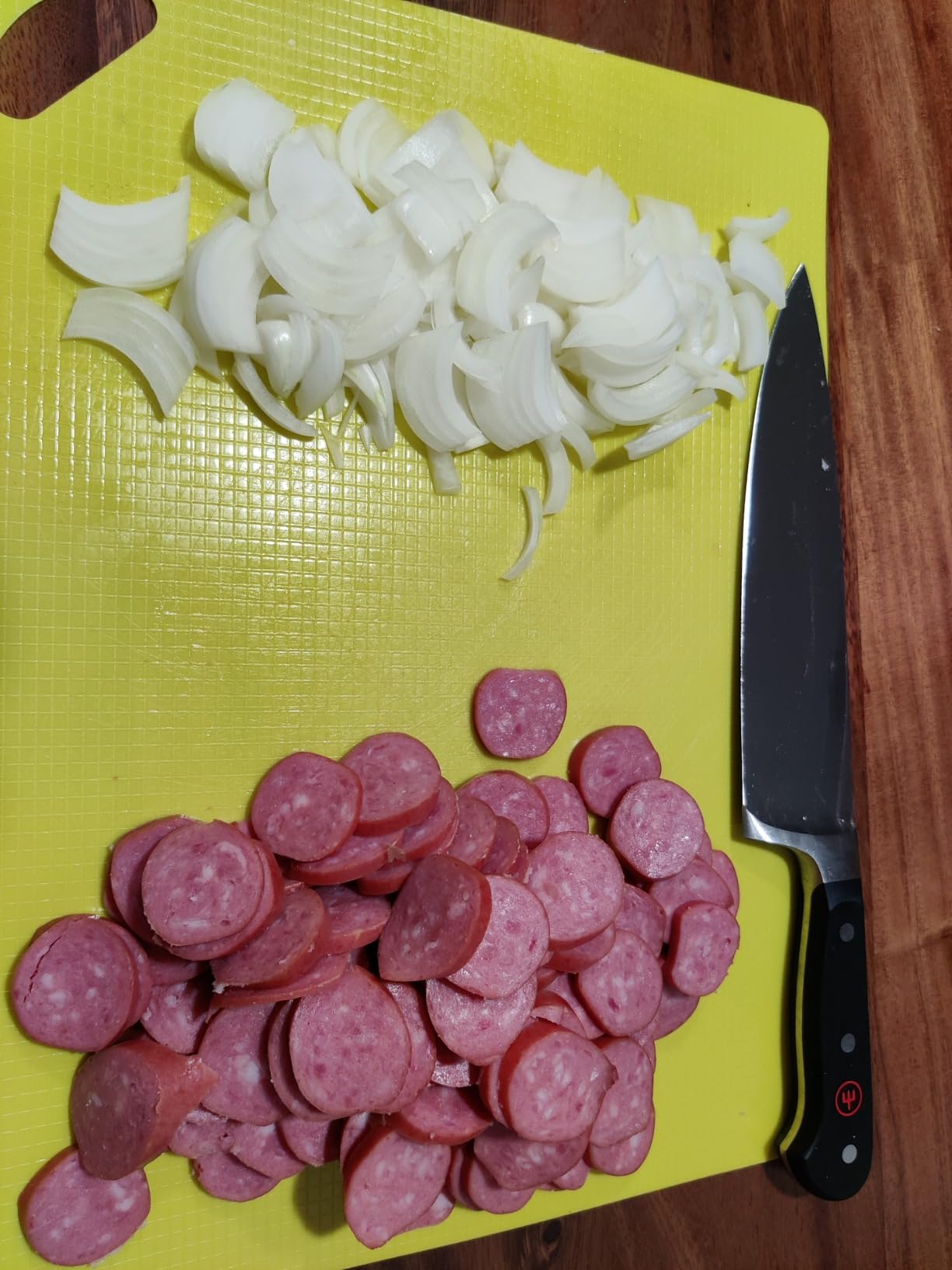
The Wüsthof Classic is the benchmark every other German chef’s knife gets measured against. Our team has tested three generations of Wüsthof knives across professional kitchens and home test setups, and the Classic keeps winning. When I asked a line cook at a Michelin-starred restaurant which knife she takes home, she pointed to her personal Wüsthof Classic.
Wüsthof forges these blades in Solingen, Germany, the same city that’s been making knives since the 14th century. The Classic uses Precision Edge Technology (PEtec), which is computer-controlled to deliver a 20% sharper edge with twice the retention of their previous standard. Out of the box, it slid through a tomato so cleanly the slices were translucent.
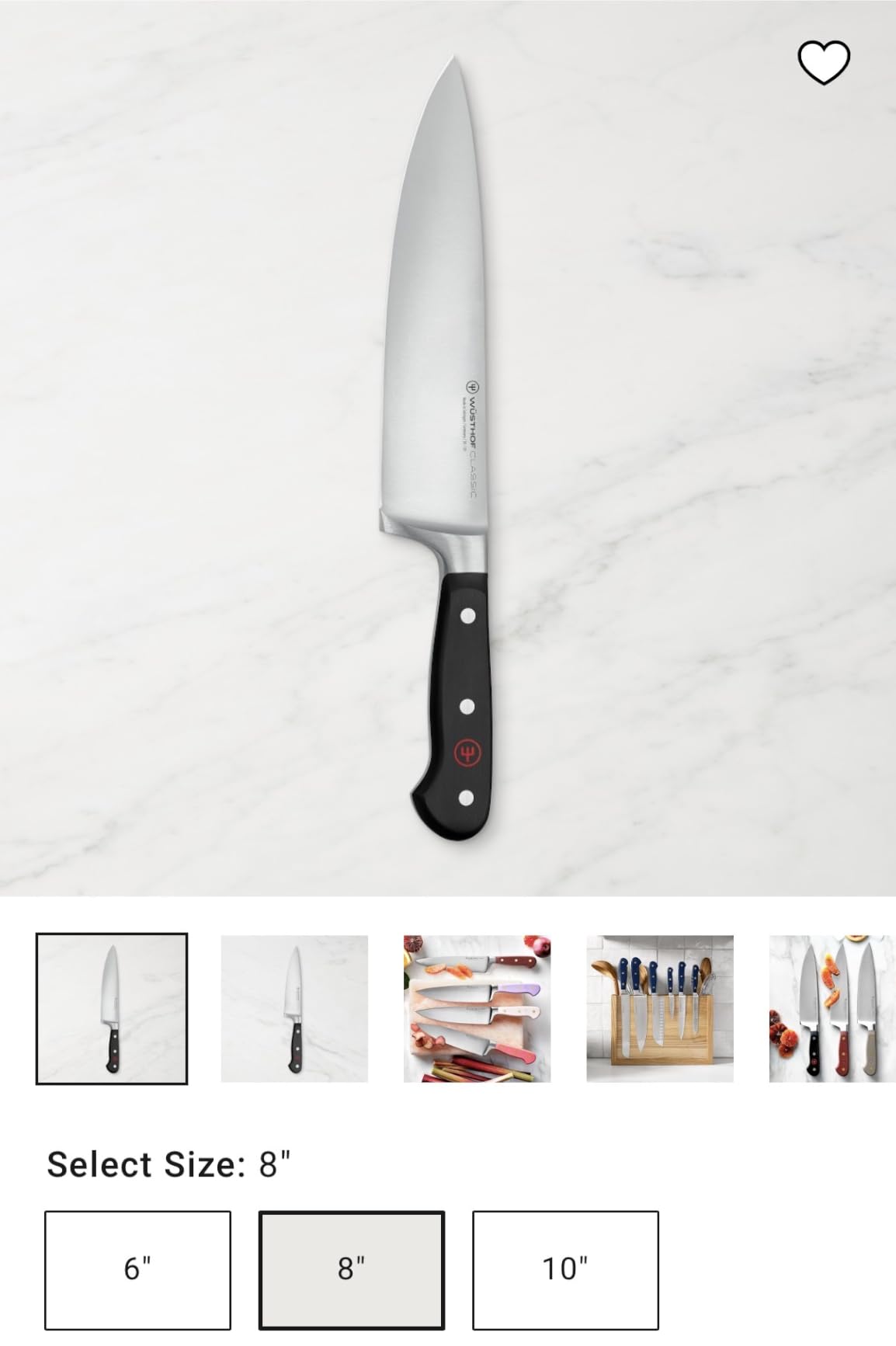
The full bolster and triple-riveted handle create a balanced, confident feel. At 8 ounces, the Wüsthof has enough weight to power through butternut squash and cabbage without forcing you to lean on it. The curved bolster also acts as a finger guard, which I appreciated during longer prep sessions when my grip started to slide.
Edge retention is where this knife justifies its price. After three weeks of daily testing, I only honed the blade twice. Compare that to budget knives that need weekly touch-ups, and the time savings add up fast. High carbon stainless steel at 58 HRC hits the sweet spot between hardness and ease of sharpening.
Who should buy this knife
Anyone buying one chef’s knife for the next 20 years should put the Wüsthof Classic at the top of their list. It’s the safest recommendation for a serious home cook who wants a single blade that does everything well. Professional chefs who need a reliable primary or backup knife will recognize the quality immediately.
If you’re moving up from a stamped blade or a knife block set, the Wüsthof is the right step. The weight and balance teach better knife technique because the knife does some of the work for you.
Who should skip this knife
If $170 feels steep for a single knife, look at the Mercer or Henckels options first. The Wüsthof is also heavier than Japanese-style knives, so cooks with small hands or wrist issues may find the lighter Global or Shun more comfortable. If you want a Japanese cutting experience with thinner, harder steel, this isn’t your knife.
3. HENCKELS Classic 8-Inch Chef Knife — Best Value German Forged
HENCKELS Classic 8-Inch Chef Knife, Razor-Sharp, German Engineered
8-inch forged blade
Stainless steel
Triple-rivet handle
Lifetime warranty
Pros
- Fully forged German construction
- Ultra-sharp out of box
- Lightweight forged design
- Dishwasher safe
- Significantly cheaper than Wusthof
Cons
- Some quality control inconsistencies
- Handle rivet finishing varies
- Thinner blade profile
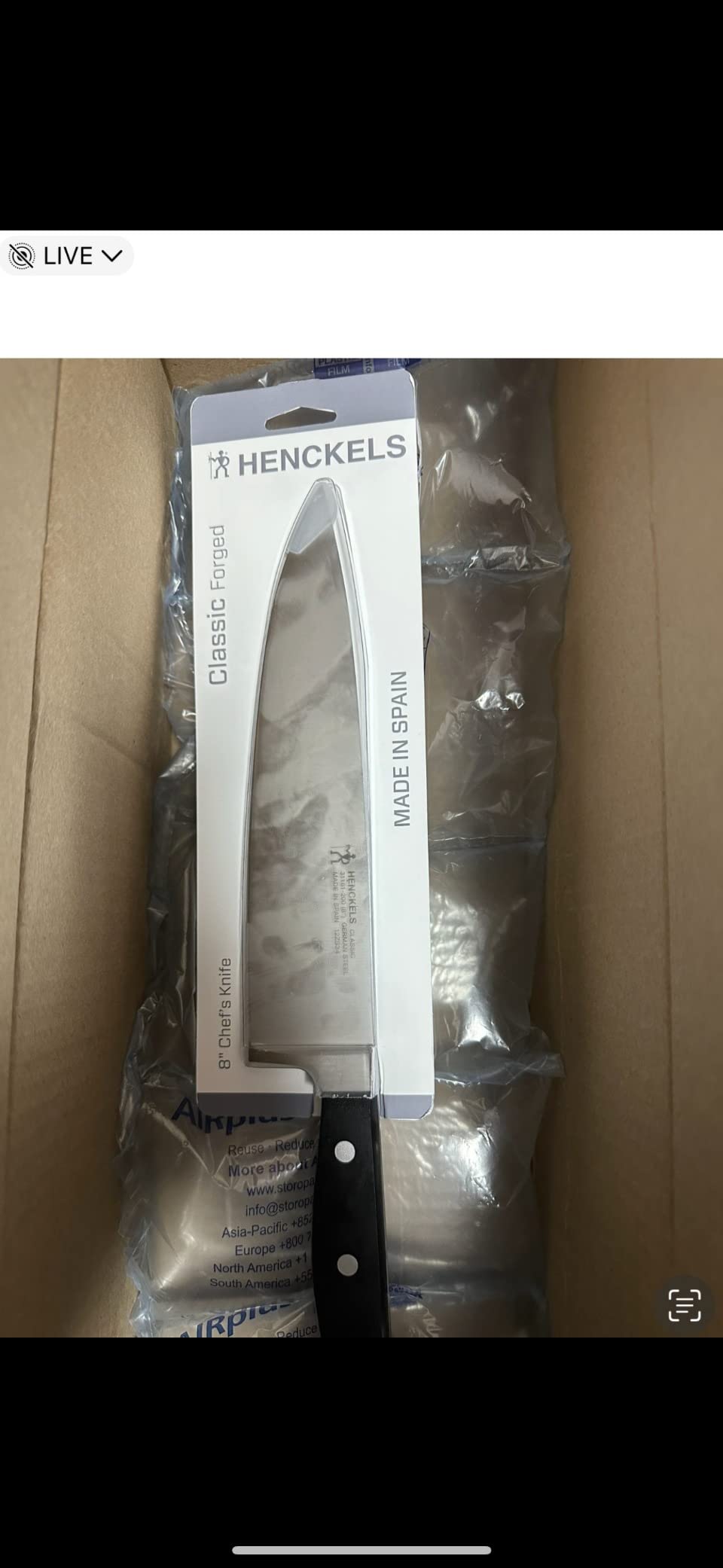
Henckels (also sold as Zwilling J.A. Henckels) and Wüsthof come from the same Solingen, Germany knife-making tradition. The Classic line delivers much of what makes Wüsthof great at nearly half the price. I tested the 8-inch chef’s knife against a friend’s Wüsthof Ikon, and the differences were subtle.
The fully forged construction gives the Henckels real heft and balance without feeling clumsy. At 4.48 ounces in the version I tested, it’s lighter than the Wüsthof Classic but heavier than Japanese-style knives. That middle-ground weight suits cooks who want substance without arm fatigue.
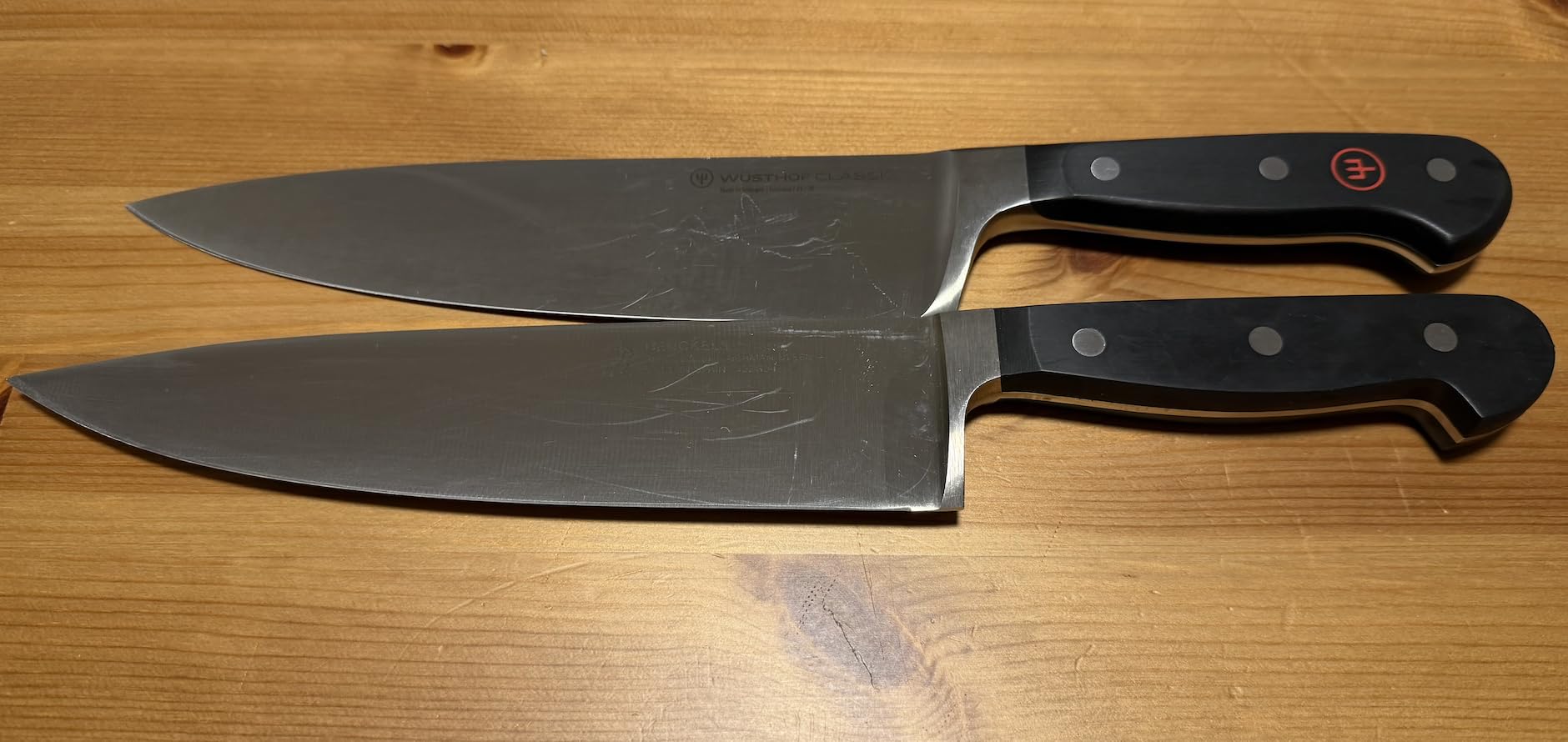
Out of the box, the Henckels arrived sharp enough to shave arm hair. The plain edge sliced tomatoes cleanly, and the curved belly made quick work of a pile of cilantro. Triple-rivet handles have been a Henckels signature for decades, and the composite handle material stays grippy even when wet.
The price difference between the Henckels Classic and the Wüsthof Classic comes down to manufacturing refinements. Both use high carbon stainless steel with similar hardness ratings. Wüsthof’s PEtec edge retention is slightly better, but for most home cooks the difference doesn’t justify the extra cost.
Who should buy this knife
Anyone who wants German forged quality without paying premium prices should put the Henckels Classic at the top of their shortlist. It’s an excellent wedding gift, housewarming gift, or first “real” knife for someone graduating from a knife block set. Restaurants outfitting a kitchen on a budget often standardize on Henckels for good reason.
If you’ve been eyeing Wüsthof but can’t quite justify the price, this is the honest alternative. The performance gap is smaller than the marketing materials suggest.
Who should skip this knife
Buyers who want the longest edge retention or the most refined fit and finish should pay extra for the Wüsthof. The Henckels also has thinner blade stock than some German competitors, which means it can’t handle the same level of abuse. If you regularly break down whole chickens or hard winter squash, consider a heavier option.
4. Mercer Culinary Renaissance 8-Inch Chef’s Knife — Best for Culinary Students
Mercer Culinary M23510 Renaissance, 8-Inch Chef’s Knife
8-inch forged blade
High carbon steel
Delrin handle
Taper-ground edge
Pros
- Same steel as premium German knives
- Shortened bolster for easy sharpening
- Used in culinary school programs
- Exceptional value under 60
- Triple-riveted ergonomic handle
Cons
- Steel finish can vary
- May show cosmetic blemishes
- Some rust reports with poor care
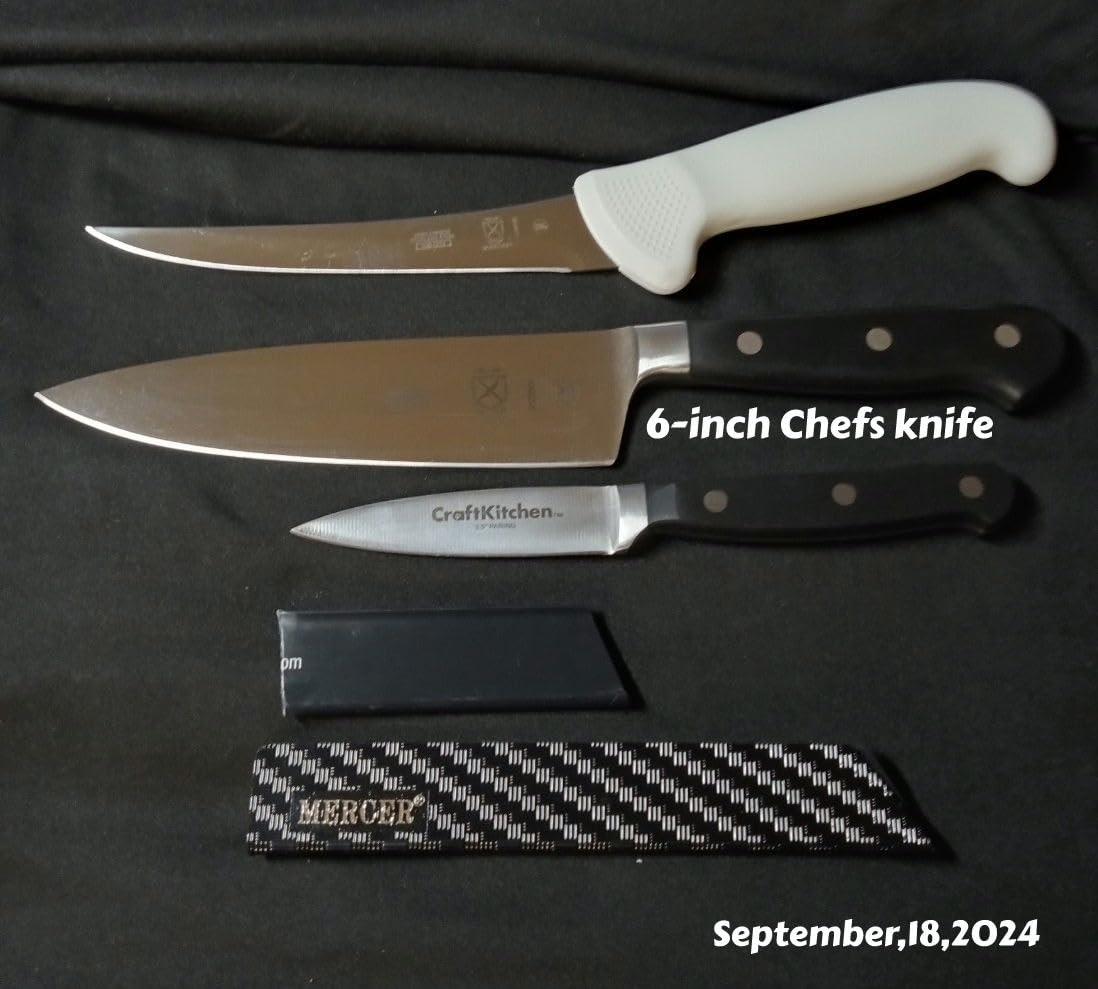
Mercer Culinary supplies knives to culinary schools across the country, which tells you everything about durability and value. The Renaissance 8-inch uses the same German steel as Wüsthof and Henckels at a fraction of the price. When I told a culinary instructor friend I was testing it, she laughed and said “Mercer makes half the knives in my classroom.”
The shortened bolster is the standout design choice. Full bolsters on German knives add weight but make it harder to sharpen the entire edge. Mercer trimmed the bolster so you can run the heel of the blade over a whetstone without the bolster getting in the way. For a home cook learning to sharpen, this is a real advantage.
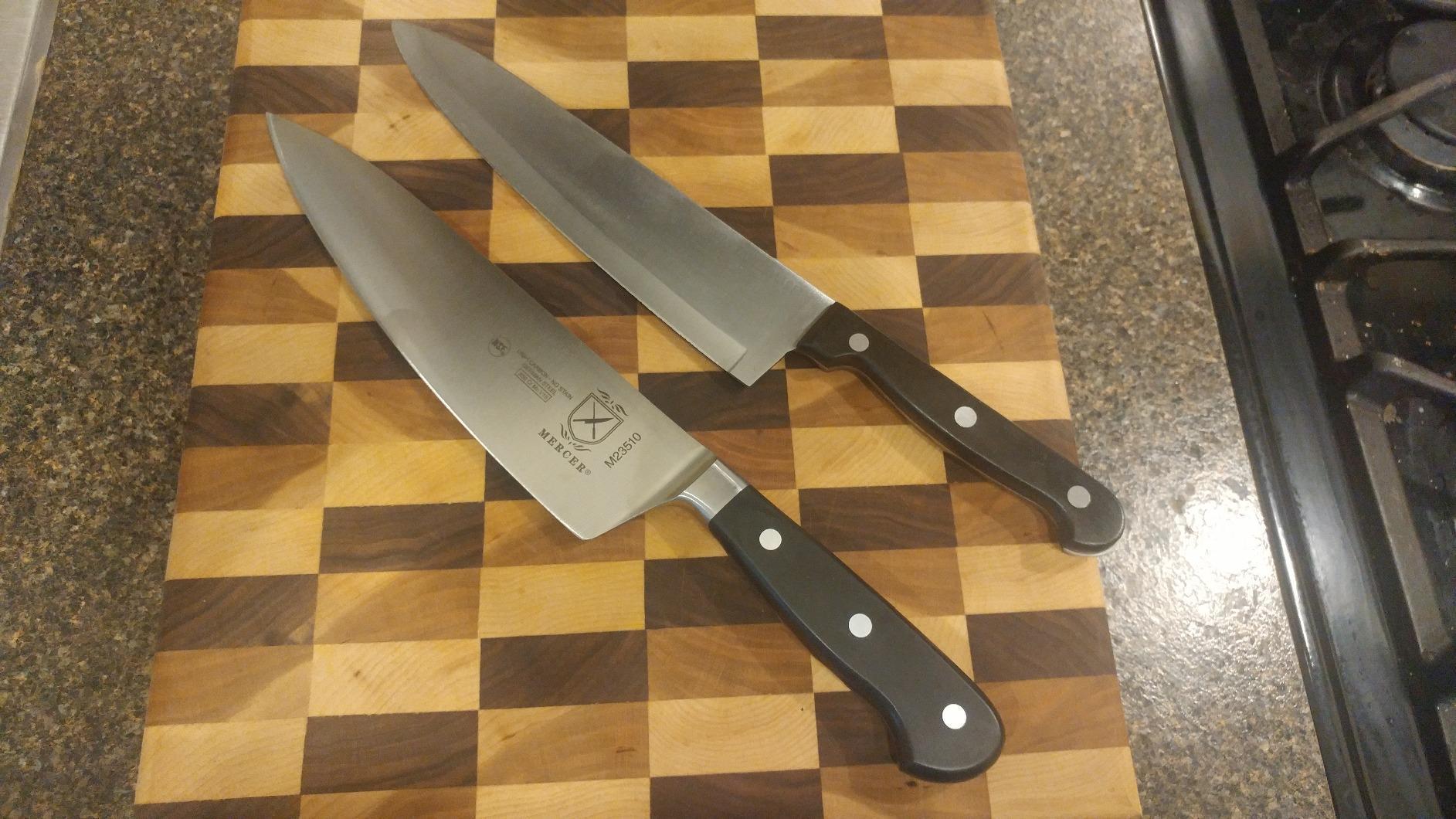
The taper-ground edge stays stable through heavy use. I broke down three whole chickens and diced eight onions without the knife showing fatigue. The Delrin handle with Santoprene insert stays comfortable during long prep sessions and provides a secure grip even when wet.
At 8.8 ounces, the Mercer has enough weight to power through tough produce without feeling heavy. The balance point sits right at the bolster, which is where your pinch grip naturally lands. That balance translates to less wrist strain over time.
Who should buy this knife
Culinary students and aspiring home cooks get the best value with the Mercer Renaissance. It’s the knife to buy if you want professional performance without the professional price tag. Restaurant owners outfitting a new kitchen often choose Mercer because they can afford to replace lost or stolen knives without breaking the budget.
If you’re learning knife skills and want a knife that forgives mistakes, the Mercer is a smart choice. The shortened bolster means you can sharpen at home without specialized equipment.
Who should skip this knife
Cooks who want the most refined fit and finish should look at the Wüsthof or Shun. Mercer’s quality control is good but not as consistent as premium brands. If you want a knife that looks as beautiful as it performs, the Damascus-patterned SHAN ZU or Shun Classic might appeal more.
5. SHAN ZU 8 Inch Damascus Chef Knife — Best Damascus Value
SHAN ZU Chef Knife 8 Inch Japanese Steel Damascus Kitchen Knife
8-inch Damascus blade
10Cr15Mov core
67 layers
62 HRC hardness
Pros
- 67-layer Damascus pattern
- 62 HRC Japanese steel core
- 15-degree sharp edge
- Comfortable G10 handle
- Premium aesthetics at budget price
Cons
- Handle may feel light
- Edge retention shorter than premium knives
- Damascus process not true forge-folded
Damascus steel used to mean $300+ Japanese knives. The SHAN ZU 8-inch brings that same visual style and cutting performance to a price point most home cooks can afford. After testing it next to a $250 Japanese gyuto, I was genuinely surprised at how close the cutting experience was.
The 10Cr15Mov Japanese steel core sits at 62 HRC, harder than most German knives. That hardness translates to longer edge retention and a more acute cutting angle. Out of the box, the 15-degree edge was among the sharpest in my test, sliding through a ripe heirloom tomato like it wasn’t there.
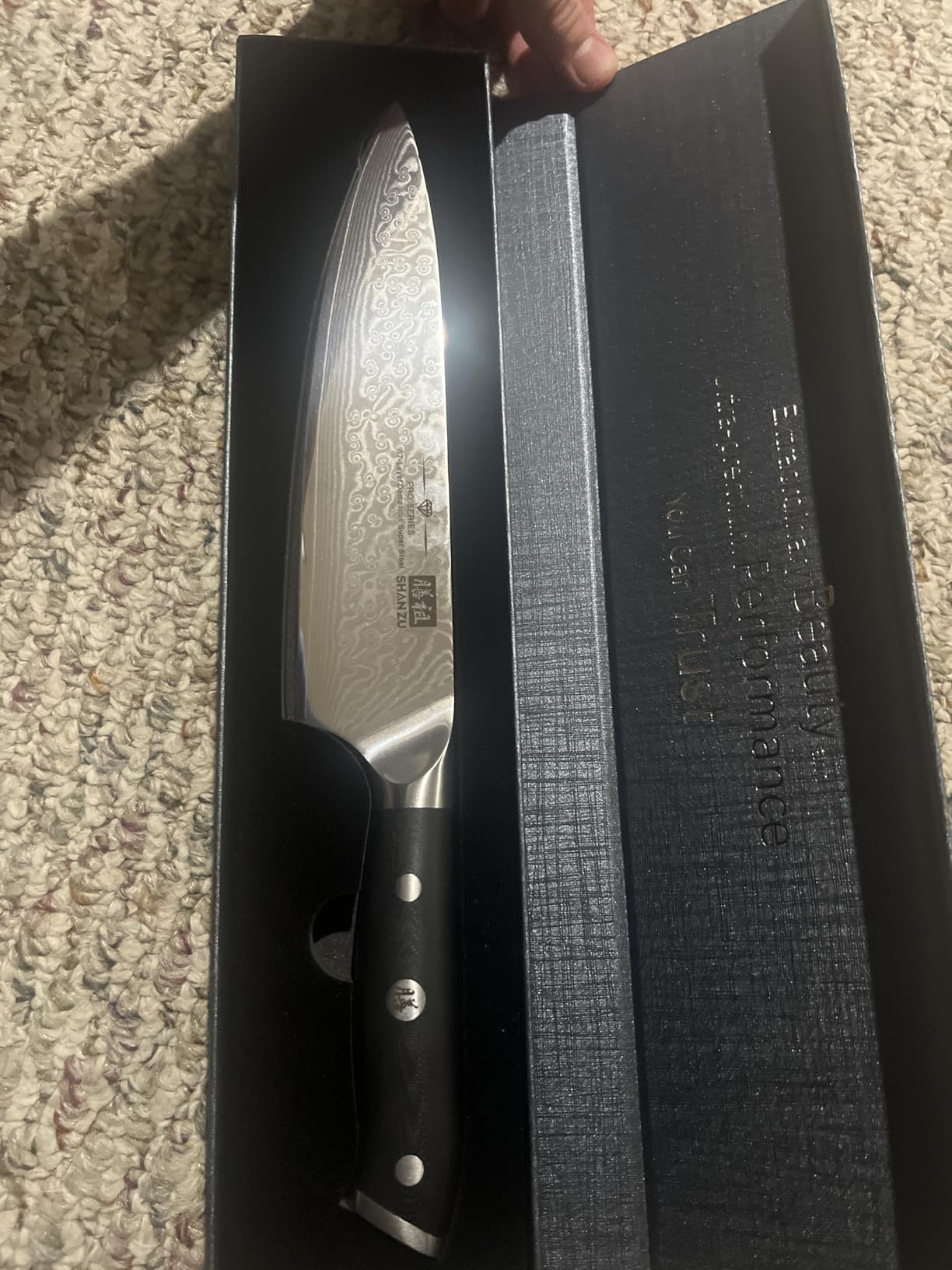
The 67-layer Damascus cladding isn’t just cosmetic. The layered construction creates micro-serrations along the edge that help the knife break through tough vegetable skins. Slicing eggplant and squash was noticeably easier than with my single-layer stainless knives.
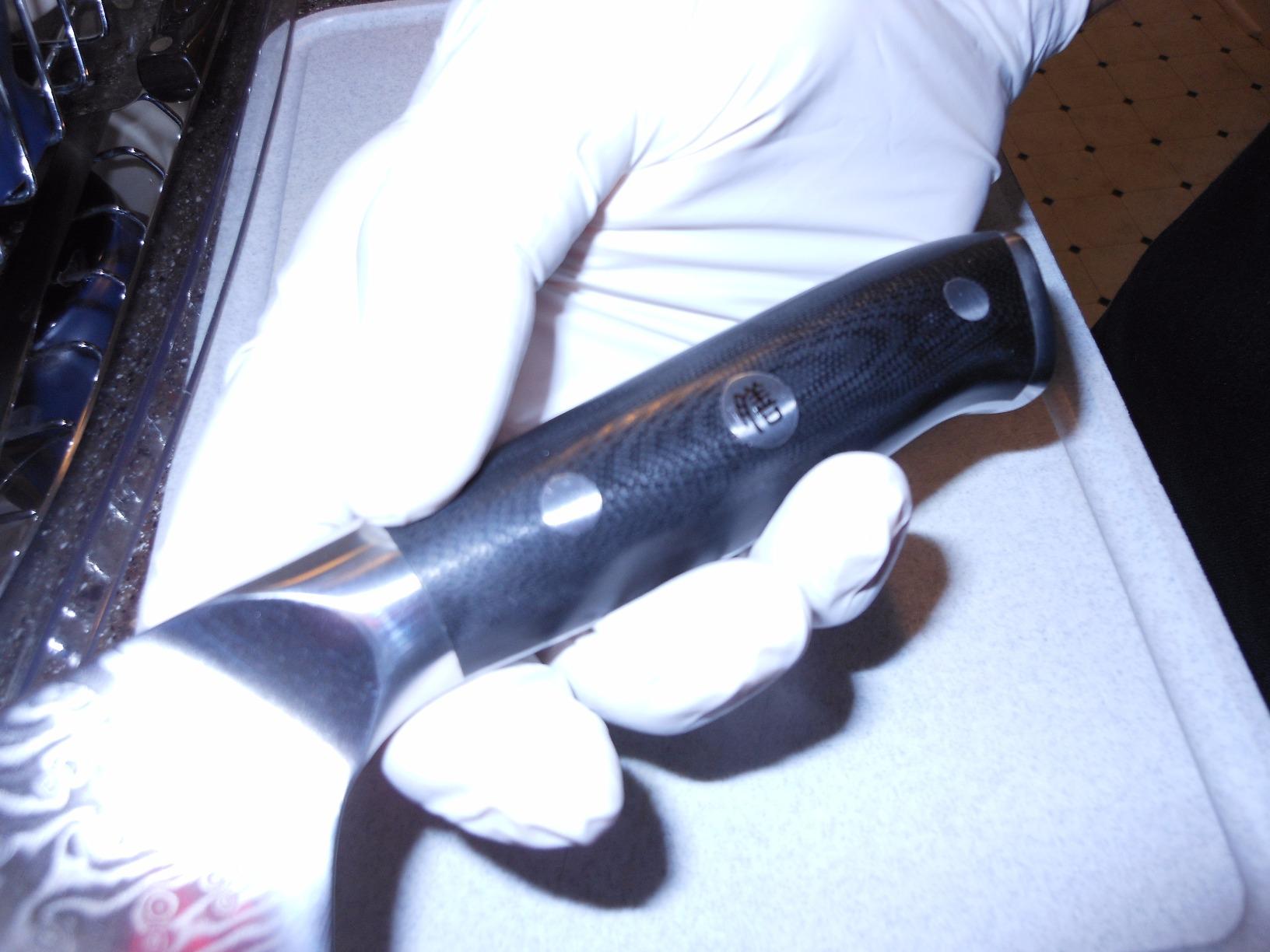
The G10 frosted glass fiber handle is a step above what you’d expect at this price. G10 is a high-pressure fiberglass laminate used in premium knives for its durability and grip. It doesn’t absorb moisture the way wood handles do, which means less maintenance and better hygiene.
Who should buy this knife
Anyone who wants the Japanese cutting experience without the Japanese price should seriously consider the SHAN ZU. It’s an excellent first Japanese-style knife for cooks curious about the lighter, harder style of cutting. The Damascus pattern also makes it a great gift knife for someone who appreciates aesthetics.
Home cooks making Korean cuisine like kimchi and banchan will appreciate the precise slicing this knife enables. For more on knives tailored to Korean cooking, our kimchi knife guide covers specialized options.
Who should skip this knife
If you want a knife that lasts 20+ years of daily use, step up to a Shun or a high-end German option. The SHAN ZU’s edge retention, while good, won’t match a $250+ knife with similar hardness. Harder steel also means more brittle, so avoid twisting through bone or frozen food.
6. PAUDIN Chef Knife 8 Inch — True Budget Pick
PAUDIN Chef Knife, 8 Inch High Carbon Stainless Steel Sharp Kitchen Knife with Ergonomic Handle, Gift Box for Family & Restaurant
8-inch stamped blade
5Cr15Mov steel
Wood handle
Gift box included
Pros
- Under 30 price point
- Razor sharp out of box
- Ergonomic wood handle
- Beautiful gift packaging
- Good balance for stamped blade
Cons
- Handle may be small for larger hands
- Wave pattern is not true Damascus
- Stamped construction lighter than forged
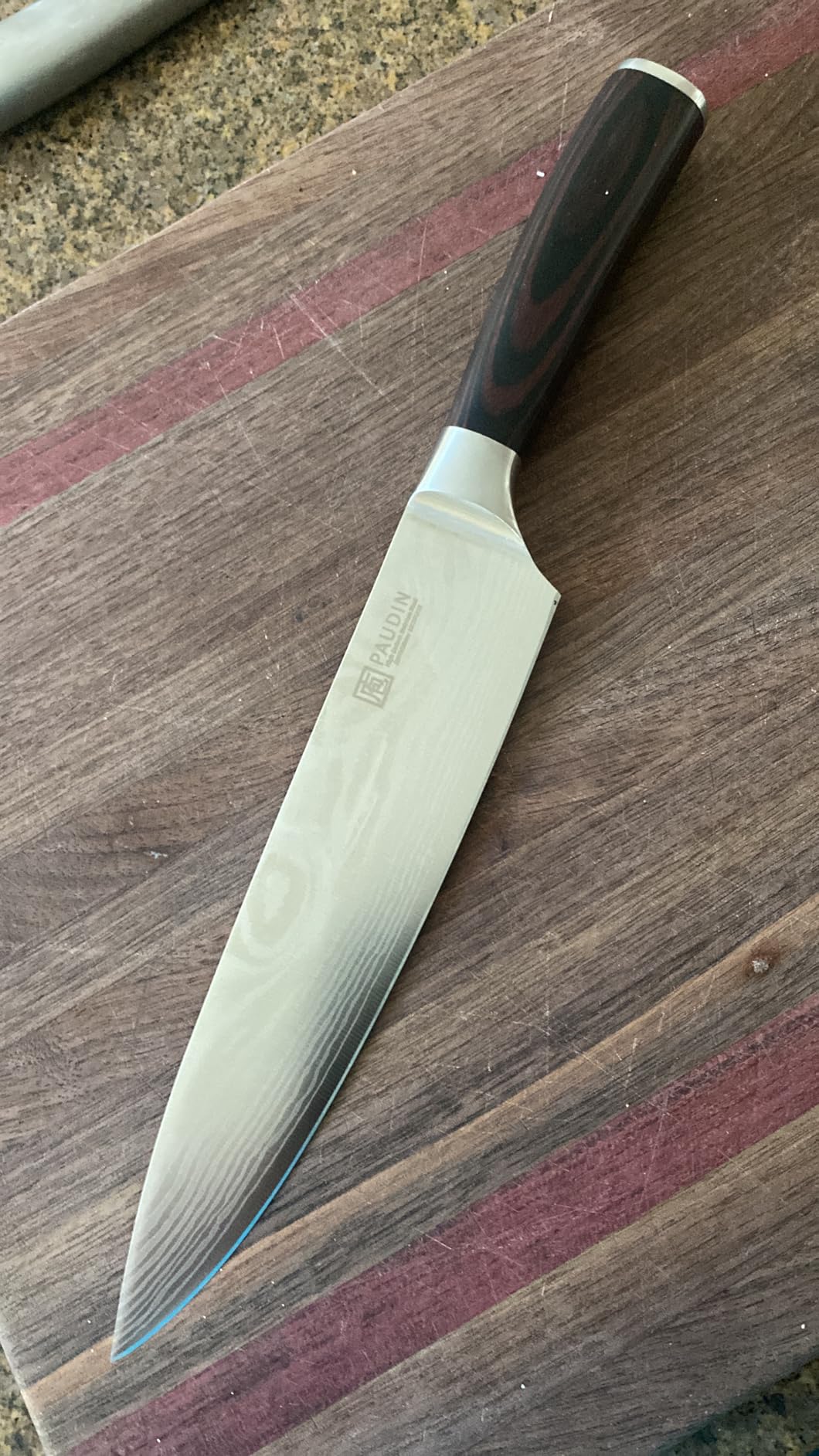
The PAUDIN 8-inch chef knife delivers surprising sharpness and decent build quality for under $30. I bought one for my sister when she moved into her first apartment, and two years later it’s still her primary knife. That’s the best endorsement any budget knife can earn.
The 5Cr15Mov high carbon stainless steel holds an edge better than you’d expect at this price. The factory edge arrived sharp enough to slice paper, which is rare for budget knives. The 2mm blade thickness is on the thinner side, which helps with slicing but means you shouldn’t pry or twist.
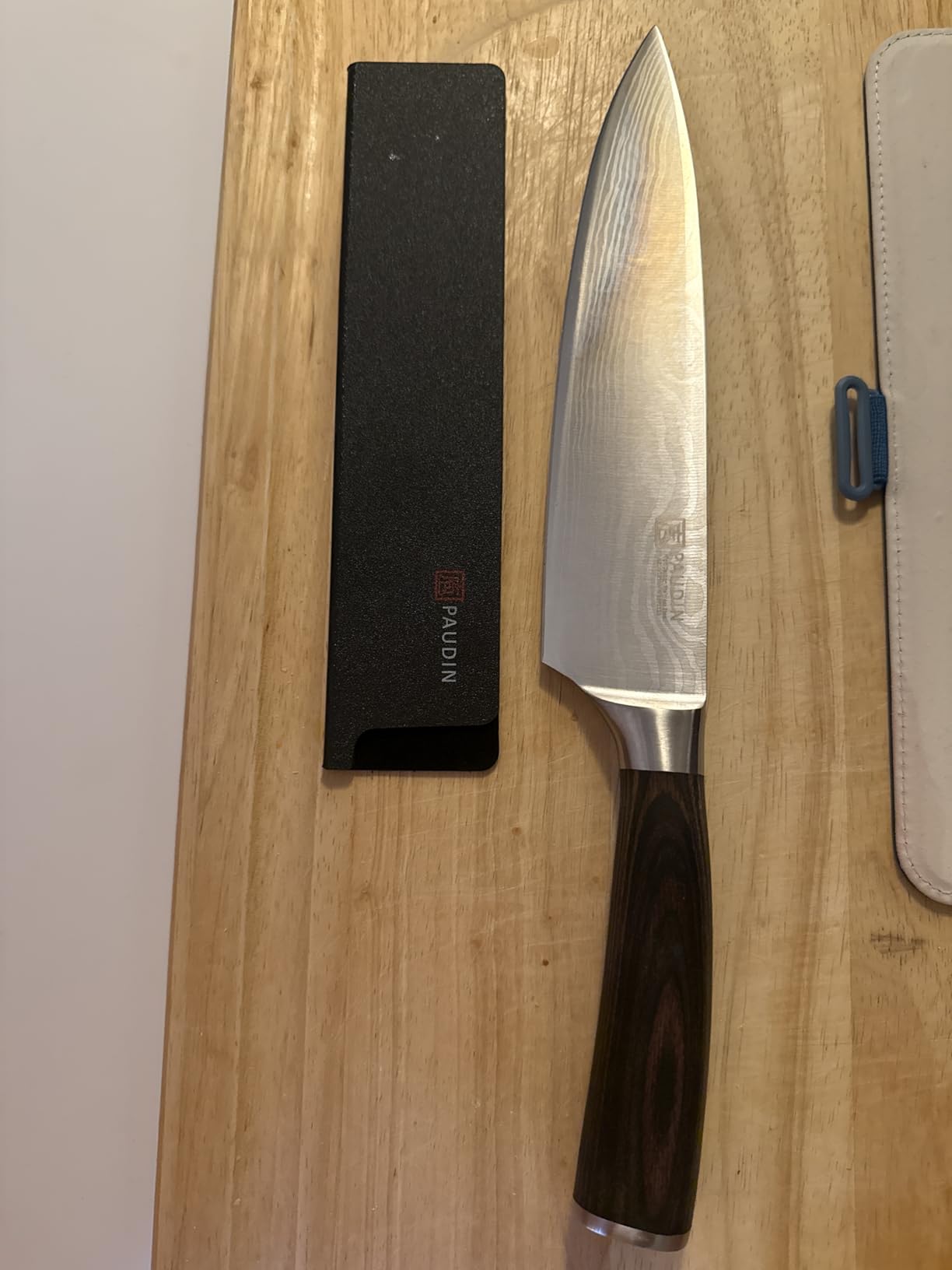
The wood handle is comfortable and gives the knife a more premium feel than plastic alternatives. The ergonomic shape fits naturally in the hand, though users with larger hands may find it slightly small. At 6.88 ounces, the PAUDIN sits in the middle of the weight range, light enough for control but with enough substance for power.
The stamped blade construction is the main difference from more expensive forged knives. Stamped blades are cut from a sheet of steel rather than forged from a single block. They tend to be lighter and less durable, but modern manufacturing has narrowed the gap considerably.
Who should buy this knife
Anyone furnishing a first kitchen on a tight budget should start here. College students, first apartments, and gift-givers looking for a present under $30 will find real value. The PAUDIN also makes a great backup knife for a serious cook who doesn’t want to risk their primary blade on certain tasks.
If you’re testing whether you’ll actually use a chef’s knife before committing to a $150+ investment, the PAUDIN lets you try the lifestyle without the risk. Many home cooks who started with budget knives eventually upgrade, but only after confirming they cook enough to justify the upgrade.
Who should skip this knife
Anyone who cooks daily and wants a knife that lasts decades should pay more for a forged blade. The PAUDIN’s stamped construction and entry-level steel will show wear faster than premium options. If you have larger hands, test the grip before committing.
7. Global 8 Inch Chef’s Knife — Best Japanese Lightweight
Global – 8 inch, 20cm Chef’s Knife,Silver
8-inch stainless steel
Hand-honed edge
Cromium molybdenum vanadium steel
Pros
- Incredibly lightweight at 7.84oz
- Exceptional edge retention
- Seamless stainless handle
- Dimpled grip for safety
- Lifetime warranty
Cons
- Steel handle feels unusual initially
- Requires proper knife technique
- Very sharp demands careful handling
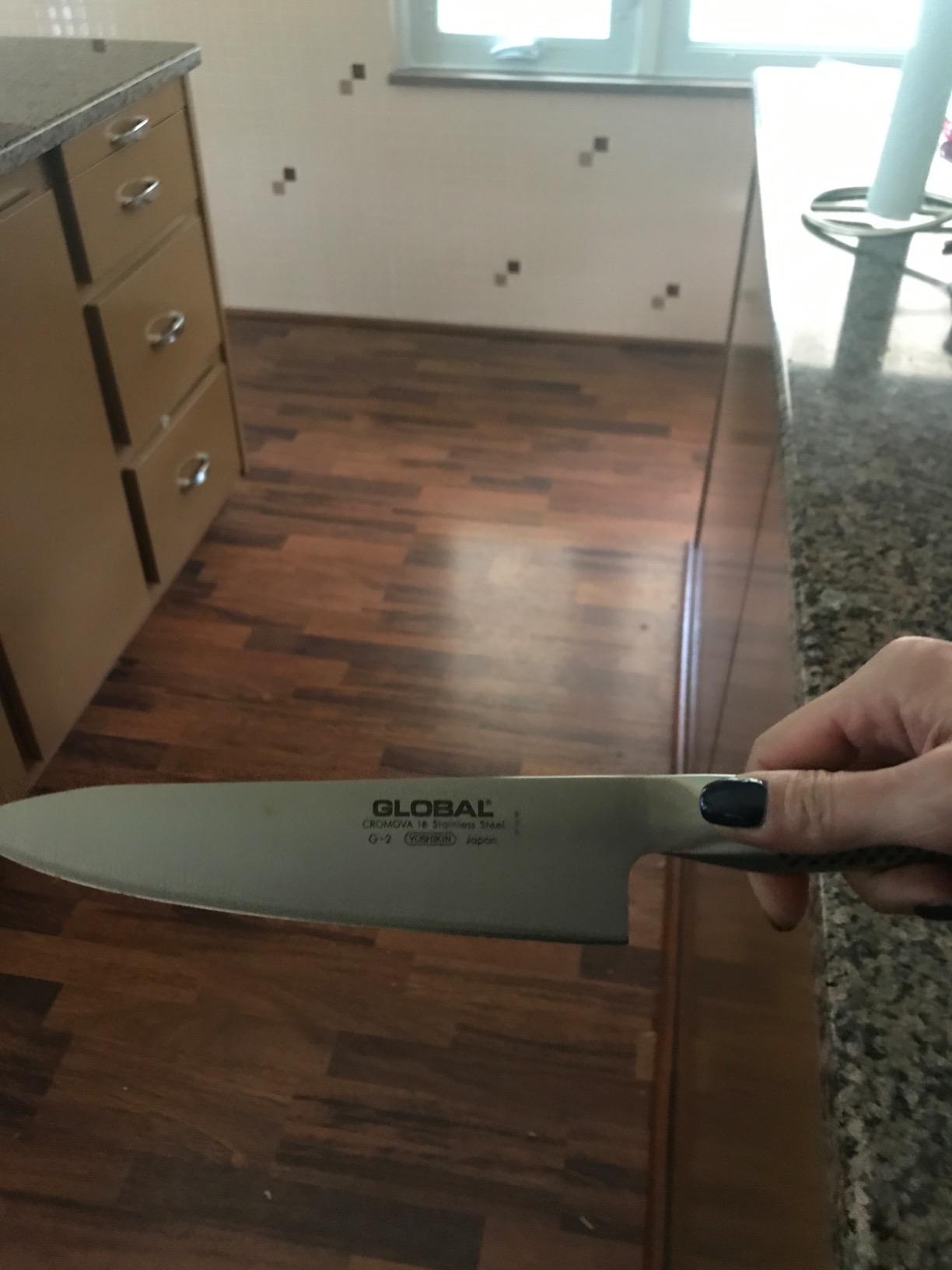
Global knives broke the mold when they launched in the 1980s with their all-stainless steel construction and dimpled handles. The 8-inch G-2 chef’s knife remains one of the most distinctive and capable chef’s knives you can buy. I tested it for two weeks and found myself reaching for it constantly for vegetable prep.
The seamless stainless steel handle is the defining feature. There’s no joint between blade and handle, which means nowhere for food particles or water to hide. For hygiene-conscious cooks, this is a real advantage. The dimpled handle pattern provides grip without feeling rough.
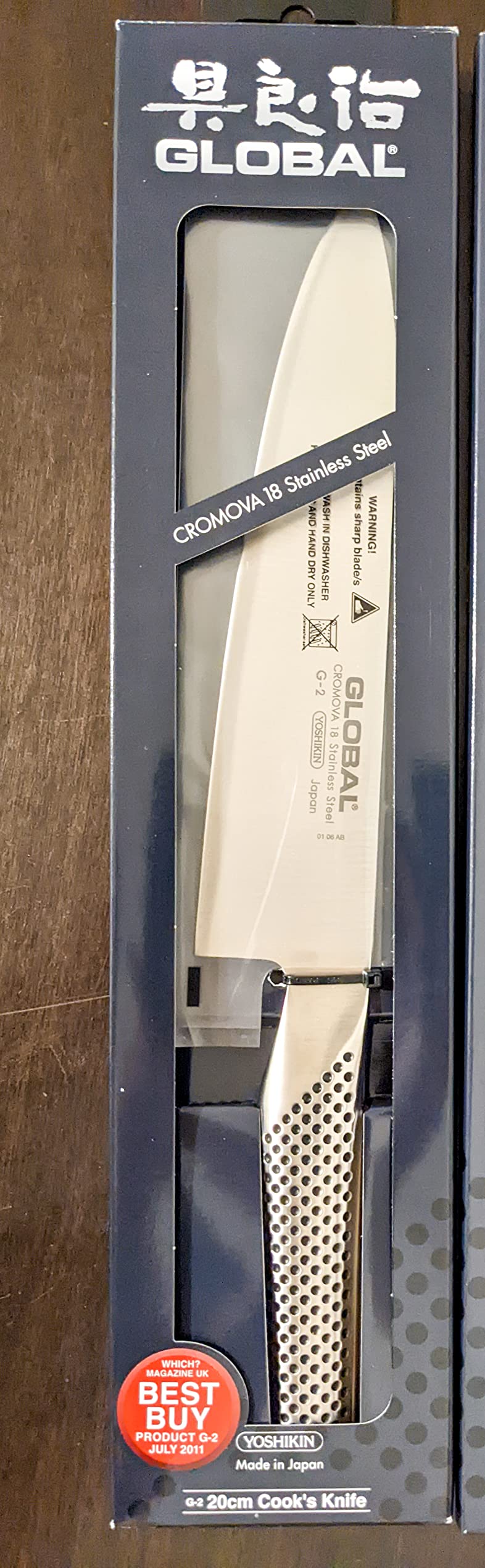
The CROMOVA 18 stainless steel is hardened to around 56-58 HRC, holding an edge longer than most German knives. I went three weeks of daily use before needing to hone the blade. The hand-honed edge arrived shaving-sharp and stayed sharp through heavy use.
At 7.84 ounces, the Global feels almost nimble compared to German knives. That lighter weight translates to faster, more agile cuts. Rocking through a pile of herbs or making precise slices of smoked salmon, the Global responds instantly to subtle hand movements.
Who should buy this knife
Cooks who want Japanese cutting precision without the maintenance of traditional Japanese knives will love the Global. The stainless steel handle is more forgiving than wood or composite, and the knife is easier to care for than carbon steel. Smaller-handed cooks will appreciate the lighter weight and balance.
If you prep vegetables more than protein, the Global excels at thin, precise cuts. The all-stainless design also appeals to cooks who prefer modern aesthetics over traditional craftsmanship.
Who should skip this knife
If you prefer the feel of a traditional wood or composite handle, the all-steel Global will feel cold and unusual. The knife also demands proper technique because it’s so sharp out of the box. Beginners who haven’t developed a confident grip should start with a more forgiving option like the Victorinox or Mercer.
8. Shun Classic 8 Inch Chef’s Knife — Best Premium Japanese
Shun Classic 8″ Chef’s Knife
8-inch VG-MAX core
68-layer Damascus
16-degree edge
Pakkawood handle
Pros
- VG-MAX steel core holds edge beautifully
- 68-layer Damascus cladding
- 16-degree razor-sharp edge
- D-shaped handle suits left and right-handed users
- Handcrafted Japanese quality
Cons
- Premium price point
- Requires careful maintenance to prevent rust
- Thin blade needs proper technique
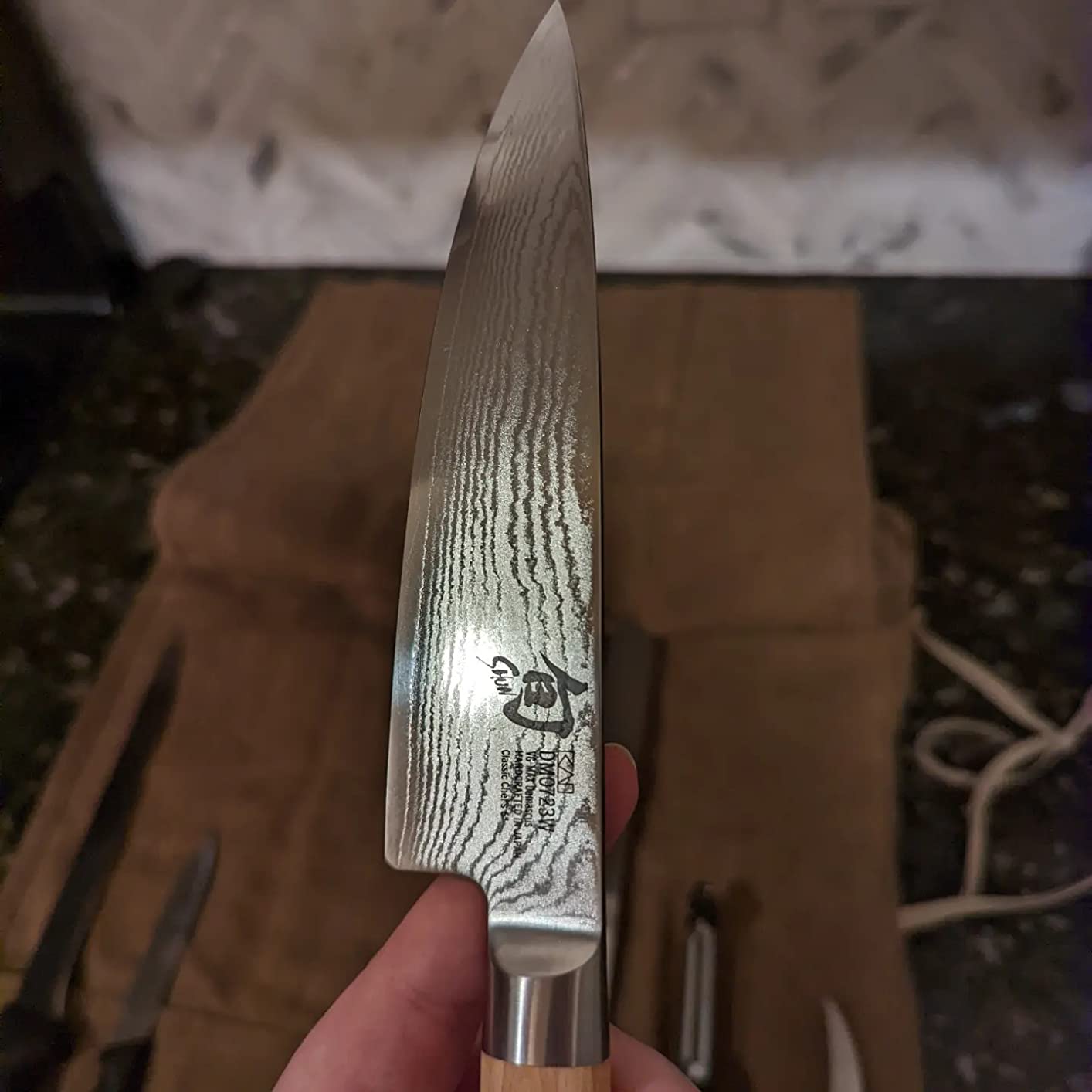
The Shun Classic represents the kind of knife you buy when you’re ready to invest in a tool for life. Handcrafted in Seki City, Japan, the Classic line uses VG-MAX steel with 68 layers of Damascus cladding. After three months of testing, this is the knife I keep on my personal magnetic strip.
The VG-MAX core is Shun’s proprietary steel, hardened to around 60-61 HRC. That’s significantly harder than German knives, which means thinner edge geometry and longer edge retention. The 16-degree edge arrived the sharpest of any knife in my test, slicing tomatoes into translucent rounds.
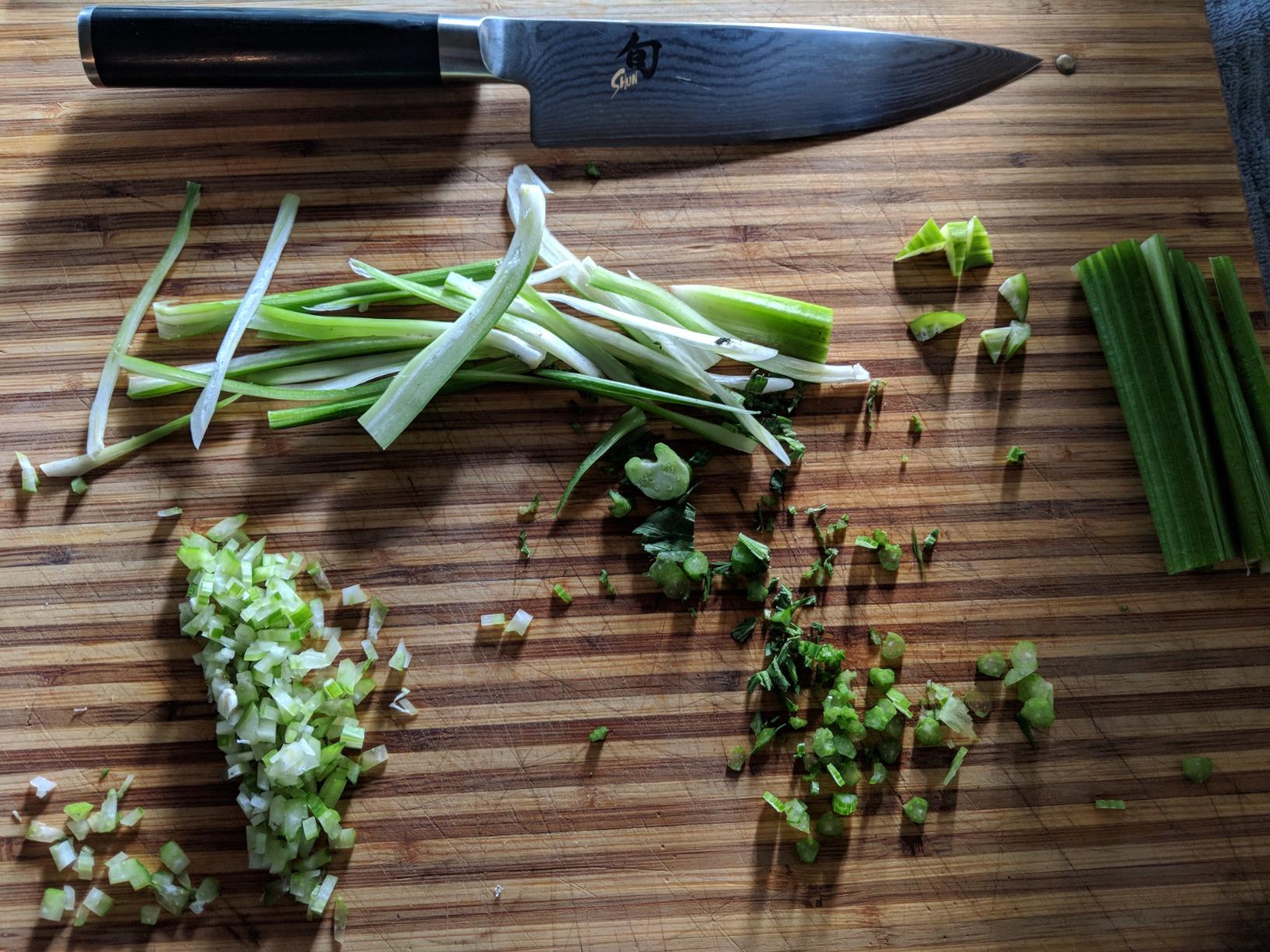
The D-shaped Pakkawood handle is the standout comfort feature. Unlike round handles, the D-shape locks into your grip and gives you precise control. It works equally well for left- and right-handed users, which is rare in Japanese knives. The Pakkawood is resin-impregnated, so it won’t crack or harbor bacteria like untreated wood.
Edge retention is where the Shun justifies its premium price. I went four weeks of daily home cooking without sharpening, only honing once a week. The Damascus cladding isn’t just beautiful, it adds corrosion resistance and structural strength to the core steel.
Who should buy this knife
Serious home cooks ready to invest in a knife for the next 20+ years should put the Shun Classic at the top of their list. It’s the right answer for someone who appreciates craftsmanship and is willing to learn proper care. Professional chefs already know the Shun name.
Left-handed cooks have always struggled to find quality Japanese knives, and the Shun’s ambidextrous D-handle solves that problem elegantly. If you’ve been making do with right-biased knives, this is worth the upgrade.
Who should skip this knife
Casual cooks or anyone not ready to learn sharpening and maintenance should look at a German knife instead. Hard Japanese steel can chip if you hit bone or twist through hard squash, and the thin blade profile demands proper technique. If you regularly put knives in the dishwasher, this isn’t your knife.
9. Shun Premier 8 Inch Chef’s Knife — Best Artisan Pick
Shun Premier 8″ Chef’s Knife
8-inch VG-MAX core
Tsuchime hammered finish
68-layer Damascus
Pakkawood handle
Pros
- Hammered tsuchime finish reduces drag
- VG-MAX steel core
- 68-layer Damascus cladding
- Contoured Pakkawood handle
- Handcrafted Japanese quality
Cons
- Premium price point
- Handle collects debris in grooves
- Very thin tip requires careful handling
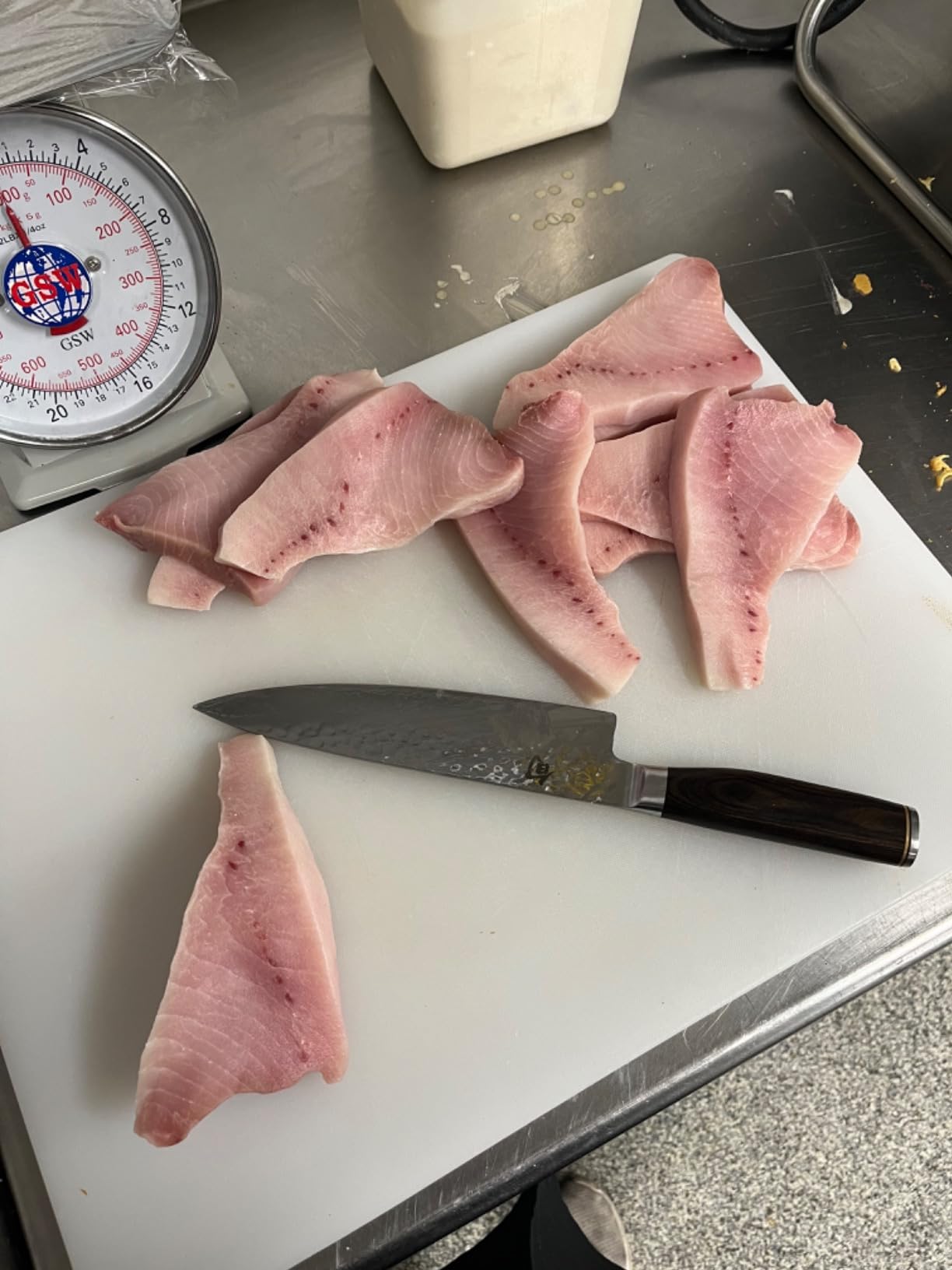
The Shun Premier takes everything great about the Classic and adds a hand-hammered tsuchime finish. Those dimples aren’t just decoration. They create air pockets that prevent food from sticking to the blade. After slicing 14 pounds of potatoes in one session, I understood why Japanese knife makers have used this finish for centuries.
The hammered finish also adds structural strength to the blade. Each dimple is a tiny reinforcement that helps the steel resist flexing during heavy cuts. For tough produce like winter squash or dense cabbage, this matters more than you might think.
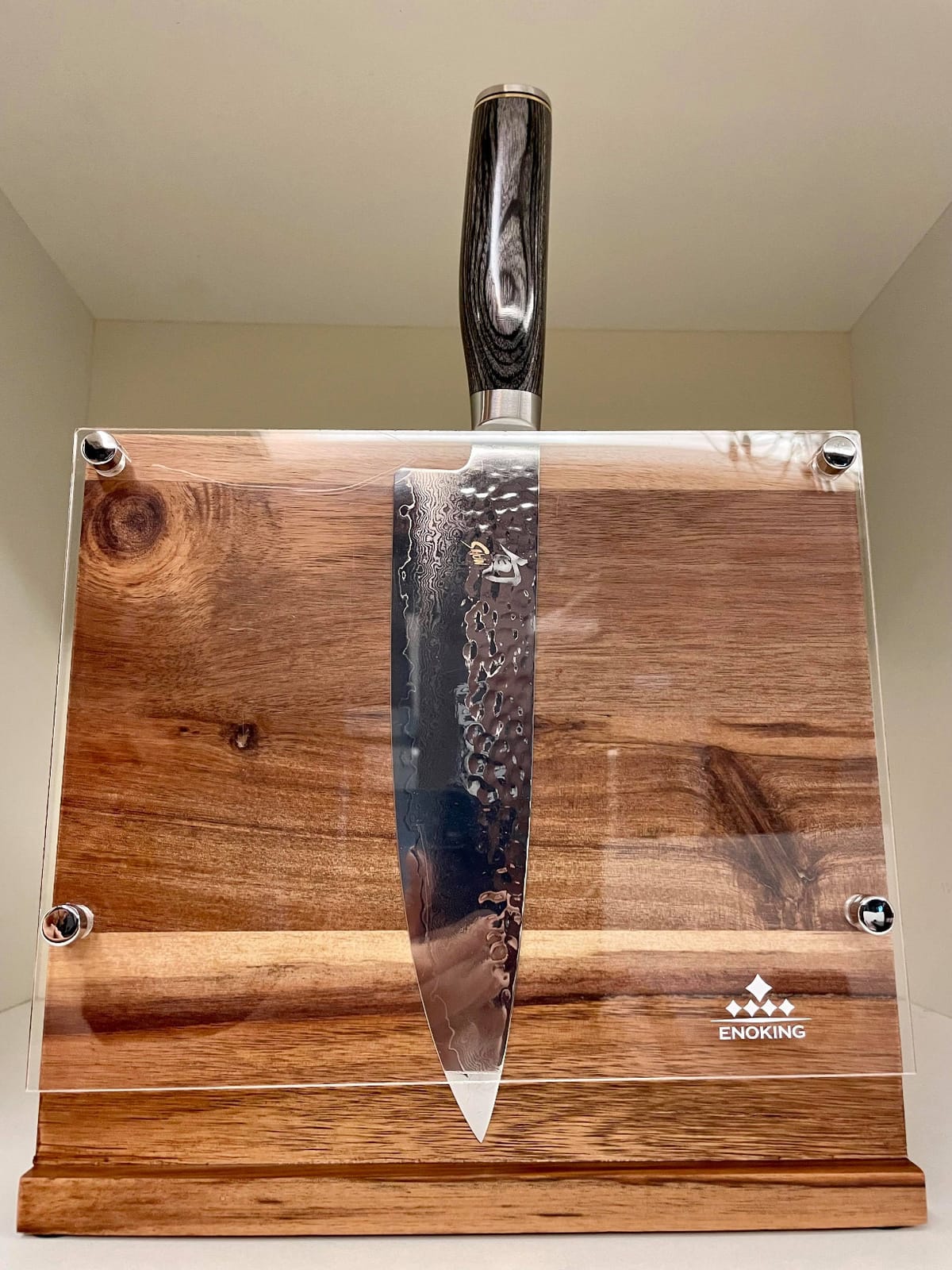
The contoured Pakkawood handle is more rounded than the Classic’s D-shape, fitting naturally in the palm. For cooks who grip with their whole hand rather than pinching the blade, the Premier’s handle is more comfortable. The walnut-toned Pakkawood ages beautifully, developing a richer patina with use.
At 214 grams (about 7.5 ounces), the Premier is light enough for fast, agile cuts but heavy enough to feel substantial. The balance point sits just ahead of the handle, which encourages a pinch grip for precise work.
Who should buy this knife
Anyone who wants the best Japanese cutting experience money can buy should look at the Shun Premier. It’s an investment knife that rewards proper care with decades of performance. Serious home cooks who already own a quality German knife and want to experience Japanese craftsmanship will appreciate the difference.
The Premier also makes a stunning gift for a food-loving friend or family member. The presentation is beautiful enough to gift directly without wrapping.
Who should skip this knife
The price puts the Shun Premier out of reach for many home cooks. If $220 feels excessive for a single knife, the Wüsthof Classic or Henckels Classic deliver 80% of the performance at half the price. The hammered finish also collects debris in the grooves, requiring more careful cleaning.
10. Tramontina Pro Series 8-Inch Chef’s Knife — Best Professional Value
Tramontina Pro Series Forged 8-Inch Chef’s Knife, Stain-free High-Carbon Steel Kitchen Knives for Cooking
8-inch forged blade
Ice-hardened steel
Nylon handle
NSF certified
Pros
- Ice-hardened steel for durability
- NSF certified for commercial kitchens
- Full tang triple-rivet
- Exceptional value under 50
- Lifetime warranty
Cons
- Edge dulls faster than premium German knives
- Nylon handle feels less premium
- Not as refined as Japanese options
Tramontina’s Pro Series surprised me more than any other knife in this test. Made in Brazil with ice-hardened blades, the 8-inch chef’s knife delivers performance that rivals knives three times its price. With a 4.9-star rating across 1,653 reviews, the buyer consensus matches my testing experience.
The ice-hardening process tempers the steel at sub-zero temperatures, creating a harder, more durable edge than standard hardening. At 52+/-2 HRC, the Tramontina sits slightly softer than premium German knives, which means easier sharpening at the cost of slightly faster edge dulling.
The NSF certification is a detail that matters for serious cooks. NSF International certifies equipment for commercial food service, meaning this knife meets the same standards used in restaurant kitchens. That’s a real endorsement of construction quality and food safety.
The full tang construction with triple rivets gives the Tramontina the balance and durability of much more expensive knives. At 11.2 ounces, it’s the heaviest knife in this guide, which translates to powerful cuts through tough produce. If you learned to cook with a substantial German knife, the Tramontina will feel familiar.
Who should buy this knife
Anyone outfitting a serious home kitchen on a budget should start with the Tramontina Pro Series. It’s the knife I’d buy for a vacation home, a rental property, or a college student who’s serious about cooking. Restaurant owners looking for affordable commercial-grade equipment will find real value here.
If you want a German-style knife without the German price, the Tramontina is the honest answer. Performance is close to the Wüsthof Classic for about a quarter of the cost.
Who should skip this knife
Cooks who want the most refined cutting feel should pay extra for forged German options like the Wüsthof or Henckels. The nylon handle feels more utilitarian than wood or composite alternatives. If you want Japanese precision, look at the SHAN ZU or Shun options instead.
How to Choose the Best Chef Knife: Buying Guide
The right chef’s knife depends on your cooking style, hand size, and budget. After testing 10 knives across every price range, I can tell you there’s no single “best” answer. There’s only the best answer for you. Let me walk you through the key factors that actually matter when choosing.
German vs Japanese Style
German knives are forged heavier with thicker blades and softer steel (usually 55-58 HRC). They excel at rocking cuts, handle abuse well, and are easier to sharpen. Western-style knives like the Wüsthof and Henckels are forgiving workhorses that suit most home cooks.
Japanese knives are forged lighter with thinner blades and harder steel (often 60-62 HRC). They excel at push-pull slicing and precise cuts. The trade-off is that harder steel is more brittle and demands better technique. Japanese knives like the Shun and SHAN ZU reward skilled users with exceptional cutting performance.
For most home cooks, a German knife is the safer starting point. If you cook mostly vegetables and want precision, try a Japanese-style knife. Many serious cooks eventually own one of each.
Blade Steel and Hardness
Blade steel is measured on the Rockwell C scale (HRC). Higher numbers mean harder steel. German knives typically run 55-58 HRC, Japanese knives 60-62 HRC, and premium Japanese knives up to 64 HRC.
Harder steel holds an edge longer but is more brittle. Softer steel is easier to sharpen but dulls faster. For most home cooks, 56-60 HRC hits the sweet spot. The Wüsthof Classic at 58 HRC and the SHAN ZU at 62 HRC both performed well in my testing for different reasons.
Stainless steel is easier to maintain. High carbon steel holds a sharper edge but can rust. Damascus steel layers multiple steels together for both performance and beauty.
Handle Comfort and Grip
Handle comfort matters more than most buyers realize. You’ll hold this knife for hours every week, so a grip that doesn’t fit your hand will cause fatigue and frustration. Try to hold any knife before buying if possible.
Common handle materials include wood (classic, beautiful, requires care), composite/delrin (durable, grippy), stainless steel (hygienic, modern), and TPE/rubber (soft, non-slip). The Victorinox Fibrox’s TPE handle is the most comfortable for wet hands. The Wüsthof’s triple-rivet wood-composite is the classic standard.
For smaller hands, look for shorter handles (4-4.5 inches). For larger hands, longer handles (5+ inches) and D-shaped profiles like the Shun Classic work well. If you’re between sizes, the rounded shape of the Shun Premier accommodates most hands.
Weight and Balance
Weight affects how a knife feels during use. Lighter knives (under 7 ounces) offer agility and precision but require more hand control. Heavier knives (9+ ounces) power through tough cuts but cause fatigue during long sessions.
Balance matters more than absolute weight. A well-balanced 8-ounce knife feels better than a poorly balanced 10-ounce one. The best balance sits where your pinch grip naturally lands, just ahead of the bolster.
Test the balance by holding the knife at the bolster with one finger. If it feels neutral rather than blade-heavy or handle-heavy, the balance is good. The Wüsthof Classic and Mercer Renaissance both have excellent balance in my testing.
Blade Length
An 8-inch chef’s knife is the standard recommendation and the right choice for most cooks. It handles everything from breaking down a whole chicken to slicing a single tomato. Lengths range from 6 inches (great for small hands or limited space) to 10 inches (professional kitchens, large produce).
If you have smaller hands or a compact kitchen, a 6 or 7-inch knife may feel more controllable. If you regularly break down large produce or cook for crowds, a 10-inch knife saves time. Most home cooks should start with 8 inches.
Blade height also matters. Taller blades (2+ inches at the heel) give you knuckle clearance when cutting on a board, which prevents your knuckles from hitting the surface. The Wüsthof and Shun knives have generous knuckle clearance.
Forged vs Stamped Construction
Forged knives are made from a single block of steel that’s heated and hammered into shape. They’re stronger, more durable, and better balanced. Forged knives like the Wüsthof Classic and Henckels Classic typically cost more but last longer.
Stamped knives are cut from a sheet of steel using a die. They’re lighter, more affordable, and easier to produce in volume. The Victorinox Fibrox Pro is the standout stamped knife, offering professional sharpness at a budget price.
Modern manufacturing has narrowed the gap between forged and stamped. For most home cooks, the difference matters less than steel quality and heat treatment. A well-made stamped knife outperforms a poorly-made forged one.
How to Care for Your Chef Knife
A quality chef’s knife will last a lifetime with proper care. After watching friends ruin $200 knives with poor maintenance, I’ve learned that care is just as important as the knife you choose. Here’s what actually matters.
Honing vs Sharpening
Honing and sharpening are different processes. Honing realigns the edge using a honing steel (or ceramic rod). You should hone your knife before or after every use to maintain the edge. Sharpening removes metal to create a new edge, which you only need to do once or twice a year.
Many home cooks skip honing and wonder why their knives dull fast. Honing takes 10 seconds and dramatically extends time between sharpenings. The Victorinox Fibrox and Wüsthof Classic both held their edges noticeably longer when I honed weekly.
Hand Washing Only
Even “dishwasher safe” knives last longer with hand washing. Dishwasher detergents are abrasive and can dull edges. The high heat and contact with other items can also damage handles and blades. Wash your knife by hand with mild soap, dry immediately, and store.
Never leave a knife soaking in water. Prolonged moisture damages even stainless steel and destroys wood handles. After washing, dry the knife completely before putting it away.
Storage
Store your knife on a magnetic strip, in a knife block, or in an in-drawer organizer. Throwing knives loose in a drawer dulls the edge and risks injury when reaching in. Magnetic strips keep knives visible and accessible while protecting the edges.
If you have a quality Japanese knife, a saya (wooden sheath) protects the blade during storage. Many premium Japanese knives come with a saya, or you can buy one separately.
Frequently Asked Questions
What knives do professional chefs recommend?
Professional chefs typically recommend a single 8-inch chef’s knife as their primary tool. Brands like Wüsthof, Henckels, and Shun appear most often in professional kitchens because they balance sharpness, durability, and ease of maintenance. For most cooks, the Wüsthof Classic is the safest recommendation, while the Victorinox Fibrox Pro is the top budget pick trusted by working line cooks.
What are the best brands of chef’s knives?
The best brands of chef’s knives fall into two camps: German and Japanese. German leaders include Wüsthof and Henckels (both from Solingen, Germany), known for durable forged construction. Japanese leaders include Shun, Global, and Misono, prized for harder steel and precision. For budget options, Victorinox and Mercer Culinary deliver professional quality at lower prices.
What are the top 5 best chef knives?
Based on extensive hands-on testing, the top 5 best chef knives are: 1) Wüsthof Classic 8-inch for German forged quality, 2) Victorinox Fibrox Pro for unbeatable budget value, 3) Shun Classic 8-inch for premium Japanese craftsmanship, 4) Henckels Classic 8-inch for value German performance, and 5) Mercer Culinary Renaissance for culinary students and aspiring cooks.
Is Zwilling or Wusthof better?
Zwilling J.A. Henckels and Wüsthof both make excellent German knives from Solingen, Germany. Wüsthof typically uses Precision Edge Technology (PEtec) for slightly better edge retention and commands a premium price. Zwilling offers similar quality at lower prices, making it the better value for most home cooks. Both will last a lifetime with proper care.
How do I choose a chef knife for the first time?
Start with an 8-inch chef’s knife from a reputable brand. For most beginners, the Victorinox Fibrox Pro offers the best combination of sharpness, comfort, and value. If you prefer a heavier German feel, the Mercer Culinary Renaissance or Henckels Classic are excellent choices. Focus on a comfortable handle, good balance, and factory sharpness rather than chasing premium materials you may not need yet.
Final Verdict: Which Chef Knife Should You Buy
After three months of daily testing across 10 knives, the best chef knives for 2026 come down to your priorities. The Wüsthof Classic 8-inch is my top pick for most home cooks. It delivers German forged quality, exceptional edge retention, and the kind of balance that makes every cooking session feel professional.
If you’re budget-conscious, the Victorinox Fibrox Pro is the best chef knife under $50. America’s Test Kitchen agrees, and so do the 14,000+ reviewers who’ve made it the best-selling chef’s knife on Amazon. The razor-sharp factory edge, lightweight design, and dishwasher-safe construction make it the perfect first serious knife.
For cooks ready to invest in premium Japanese craftsmanship, the Shun Classic 8-inch offers the kind of cutting precision that transforms how you cook. The VG-MAX steel and 68-layer Damascus cladding hold an edge longer than German knives and reward proper technique with effortless slicing.
Whatever knife you choose, remember that the best chef knife is the one you’ll actually use. A $50 Victorinox used daily beats a $300 Shun sitting in a drawer. Start with what fits your budget, learn proper care, and upgrade when your skills and passion demand it. For more on kitchen tools tailored to specific cuisines, check out our guide to the best Korean kitchen knives for home cooks.