
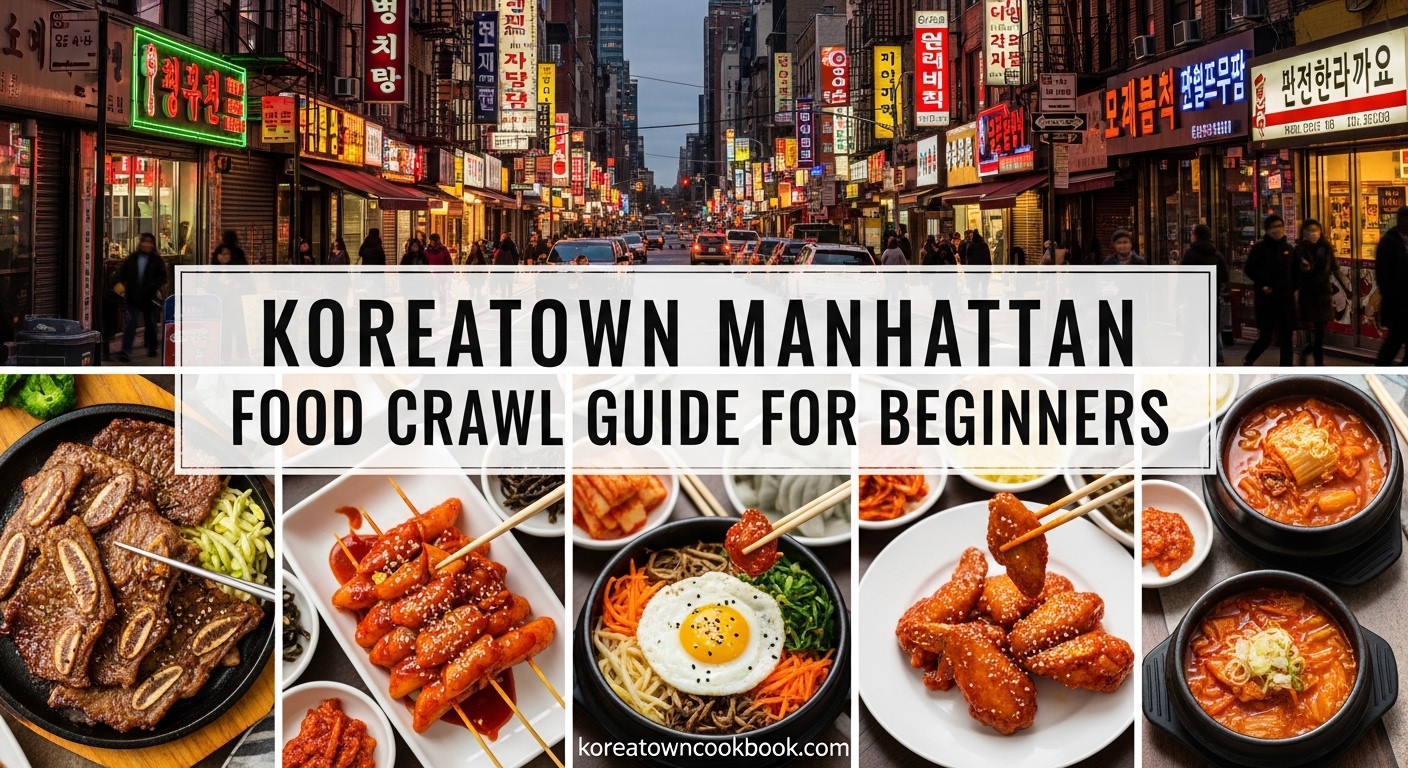
Walking into Manhattan’s Koreatown for the first time can feel overwhelming. The neon signs glow in Korean and English. The smells of sizzling meat, fermented kimchi, and sweet rice cakes hit you all at once. I remember my first visit to K-town — I stood on 32nd Street paralyzed by choice, not knowing which restaurant would welcome a beginner.
This Koreatown Manhattan food crawl guide for beginners solves that problem. I have mapped out a five-stop walking route that takes you from a light breakfast to a sweet dessert finish. Each stop builds your confidence with approachable dishes. You will taste the classics without committing to a full meal at any one spot.
By the end of this crawl, you will understand why K-town locals keep coming back. You will know which dishes to order, how to eat them properly, and how much to budget. Let us start with what makes this neighborhood special.
Table of Contents
What is Koreatown Manhattan
New York City’s Koreatown centers on 32nd Street between Fifth and Sixth Avenue. Unlike Los Angeles sprawling Koreatown, Manhattan’s version is compact — just two blocks packed with over 100 restaurants, bakeries, and cafes. This density works in your favor as a beginner. You can walk the entire food crawl in under 30 minutes.
The neighborhood emerged in the 1980s when Korean immigrants opened businesses along this stretch. Today it serves as a cultural hub for the Korean-American community and a culinary destination for food lovers. The mix of old-school joints and trendy newcomers means you get authentic flavors with modern comforts.
Most restaurants here understand they serve tourists and first-timers. Staff at beginner-friendly spots speak English and will guide you through the menu. Many places offer picture menus or English translations. You will not need to speak Korean to eat well in K-town.
Koreatown Manhattan Food Crawl Guide for Beginners: The Perfect Itinerary
This itinerary moves from south to north along 32nd Street. Each stop includes one signature dish that introduces you to a different aspect of Korean cuisine. Plan for 3 to 4 hours total. Bring cash for smaller establishments, though most accept cards.
Start at 11:00 AM to catch lunch specials. The restaurants get crowded by 12:30 PM, so beginning early gives you better service and shorter waits. Wear comfortable shoes — you will be walking and standing between courses.
Stop 1: Light Breakfast at Woorijip
Woorijip sits at 12 West 32nd Street, your starting point. This grab-and-go eatery operates cafeteria-style. You pick up a tray, select from hot and cold cases, and pay at the register. It is the perfect low-stakes introduction to Korean food.
Order the kimbap — Korea’s answer to sushi rolls. Unlike Japanese maki, kimbap uses cooked ingredients like pickled vegetables, egg, and ham. No raw fish means no intimidation factor. The rolls come pre-cut into bite-sized pieces.
Add a side of tteokbokki if you want to try something spicy. These chewy rice cakes swim in a bright red gochujang sauce. The heat builds slowly. Have a cup of barley tea nearby to cool your palate.
Expect to spend $8 to $12 here. Woorijip opens early and stays open late, making it flexible for any schedule. The casual atmosphere means no one judges you for not knowing the etiquette yet.
Stop 2: Comfort Food at Cho Dang Gol
Walk three blocks north to 55 West 35th Street. Cho Dang Gol specializes in soondubu jjigae, a bubbling tofu stew that converted me into a Korean food enthusiast. The restaurant has operated since 1997, serving consistently excellent tofu dishes.
Order the soondubu with seafood or kimchi. The stew arrives in a stone bowl still boiling at your table. A raw egg sits on top — crack it in and stir to create silky ribbons throughout the spicy broth.
The tofu here is handmade daily. It has a custard-like texture unlike anything from a supermarket container. The stew comes with a bowl of purple rice and banchan — small side dishes that rotate daily. Try the bean sprouts and pickled radish.
Lunch specials run $15 to $18 including the stew, rice, and banchan. Dinner prices jump higher, which is why I recommend this stop for your midday break. The staff will explain the banchan if you ask.
Stop 3: Iconic Korean BBQ at New Wonjo
Head back to 32nd Street and walk west to 23 West 32nd Street. New Wonjo represents classic K-town Korean barbecue. The restaurant opened in the 1980s and maintains old-school charm with tabletop grills and bustling energy.
Order the bulgogi — thinly sliced marinated beef. The server brings a metal grill to your table and cooks the meat right in front of you. Watch how they arrange the meat, flip it at the right moment, and tell you when to eat.
Each bite gets dipped in sesame oil with salt and pepper, then wrapped in lettuce with garlic and ssamjang sauce. This wrap-it-yourself approach feels interactive and fun. Do not worry about doing it perfectly — just enjoy the combination of flavors.
Share the BBQ with your crawl companion to save room for later stops. A small order of bulgogi costs around $25 and feeds two people when combined with the free banchan and rice. The experience lasts about 45 minutes.
Stop 4: Korean Fried Chicken at Turntable Chicken Jazz
Continue west to 314 Fifth Avenue, entrance on 32nd Street. Turntable Chicken Jazz combines two Korean obsessions: fried chicken and music. The restaurant decor features vintage turntables and album covers. Korean pop music plays at conversation-friendly volumes.
Order the half-and-half chicken to taste both soy-garlic and spicy glaze. Korean fried chicken gets fried twice, creating shatteringly crisp skin that stays crunchy even under sauce. The meat inside stays juicy.
The soy-garlic version suits beginners better than the spicy. It has a subtle sweetness that balances the savory fried coating. Pickles come on the side to cut through the richness.
A half-order runs $18 to $22 and easily feeds two. Add a Korean beer like Hite or Cass for the authentic experience. Korean fried chicken exists to accompany drinking — locals call it anju, food eaten with alcohol. You do not need to drink, but the pairing makes sense.
Stop 5: Dessert at Grace Street Coffee & Desserts
End your crawl at 17 West 32nd Street, on the second floor above the street level. Grace Street specializes in bingsu, Korean shaved ice dessert that towers in bowls big enough to share.
Order the injeolmi bingsu topped with roasted soybean powder and sliced almonds. The shaved ice here is impossibly fine — more like fresh snow than crunchy ice. Sweetened condensed milk pools at the bottom. Mix everything together as you eat.
The injeolmi flavor introduces mochi-like rice cakes that chew pleasantly against the cold ice. It is familiar enough for dessert novices but distinctly Korean in execution. One bowl costs $12 to $15 and satisfies two people.
Grab a seat by the window overlooking 32nd Street. Watch the crowd below as you digest your five-stop journey. You have now eaten your way through the essential Korean food categories: rice dishes, stews, grilled meat, fried chicken, and dessert.
Korean Dining Etiquette for Beginners
Eating Korean food involves some customs that might surprise first-timers. Understanding these basics prevents awkward moments and shows respect to the culture.
Banchan etiquette: Those small side dishes refilling automatically? They are free and unlimited. Do not feel obligated to finish everything — the server will clear and refill as needed. Eat them with your rice, not as appetizers.
Drink pouring: Never pour your own drink. Pour for others at your table, and they will pour for you. Use two hands when receiving a drink from an elder or pouring for someone senior. Hold your glass with one hand and support your pouring arm with the other.
BBQ scissors: Korean restaurants provide scissors at BBQ spots. Use them to cut meat into bite-sized pieces right on the grill. It feels strange at first but works better than knives for chewy cuts.
Slurping is okay: Unlike Western dining, slurping noodles and soup shows appreciation. The sounds indicate you are enjoying hot food before it cools. No one will judge loud eating here.
Chopstick rules: Never stick chopsticks upright in rice — this resembles funeral rituals. Lay them flat across your bowl or on the chopstick rest when not using them.
Budget Tips for Your Food Crawl
Koreatown offers options for every budget. This crawl lands in the moderate range, but you can adjust up or down.
Lunch vs dinner: Many restaurants offer lunch specials until 3:00 PM with prices 30% lower than dinner. Cho Dang Gol and Korean BBQ spots particularly benefit from lunch timing.
Sharing strategy: Korean food culture revolves around communal eating. Order fewer dishes than people and share everything. A $25 BBQ order feeds two. A $15 bingsu satisfies two for dessert.
Food court alternatives: If any stop feels too expensive, substitute with The Gochujang food court on 32nd Street. Multiple vendors offer $10 to $12 meals with full Korean flavors.
Total crawl cost: Following this exact itinerary costs approximately $50 to $65 per person including tax and tip. Splitting dishes at each stop brings it closer to $40 per person. This represents excellent value for the variety and quality you experience.
FAQ
Which Korean food should a beginner eat first?
Start with bulgogi or bibimbap. Bulgogi is marinated grilled beef with a sweet-savory flavor profile that appeals to most Western palates. Bibimbap is a rice bowl with mixed vegetables and a fried egg — you control the spice level by adding gochujang sauce to taste. Both dishes appear at nearly every Korean restaurant.
What is the etiquette for eating Korean food?
Key rules include never pouring your own drink, using both hands when giving or receiving from elders, and not sticking chopsticks upright in rice. At Korean BBQ, let the server cook the meat unless you are confident. Eat banchan side dishes throughout the meal, not as appetizers. Slurping noodles and soup is acceptable and shows enjoyment.
How do I do a food crawl in Koreatown NYC?
Start at Woorijip on 32nd Street for kimbap, walk north to Cho Dang Gol for soondubu stew, return to 32nd Street for Korean BBQ at New Wonjo, continue west for fried chicken at Turntable, and finish with bingsu at Grace Street. Allow 3 to 4 hours total. Begin at 11:00 AM to catch lunch specials and avoid crowds.
What should I expect at Koreatown Manhattan restaurants?
Expect busy, energetic atmospheres with Korean and English spoken. Most restaurants on 32nd Street cater to tourists and offer picture menus or English translations. Service tends to be efficient rather than leisurely. Many spots use tabletop grills for BBQ. Banchan side dishes arrive automatically and refill as needed.
What are the best budget-friendly options in K-town?
Woorijip offers cafeteria-style meals for $8 to $12. Food courts like The Gochujang serve full meals under $12. Cho Dang Gol and many BBQ spots offer lunch specials until 3:00 PM at 30% off dinner prices. Sharing dishes is expected and reduces costs significantly.
Conclusion
This Koreatown Manhattan food crawl guide for beginners gives you a structured way to explore one of New York’s most exciting food neighborhoods. Each stop teaches you something new about Korean cuisine while keeping the experience approachable.
Remember that K-town rewards curiosity. The servers want you to enjoy yourself. Ask questions about dishes. Request mild spice levels if you are sensitive to heat. Take photos of your sizzling stone bowls and towering bingsu.
After completing this crawl, you will have tasted the essential building blocks of Korean food. You will know what to order on return visits. You might even find yourself craving that bubbling soondubu on cold days or that crackling fried chicken late at night. That is when you know K-town has hooked you — just like it hooked me.