
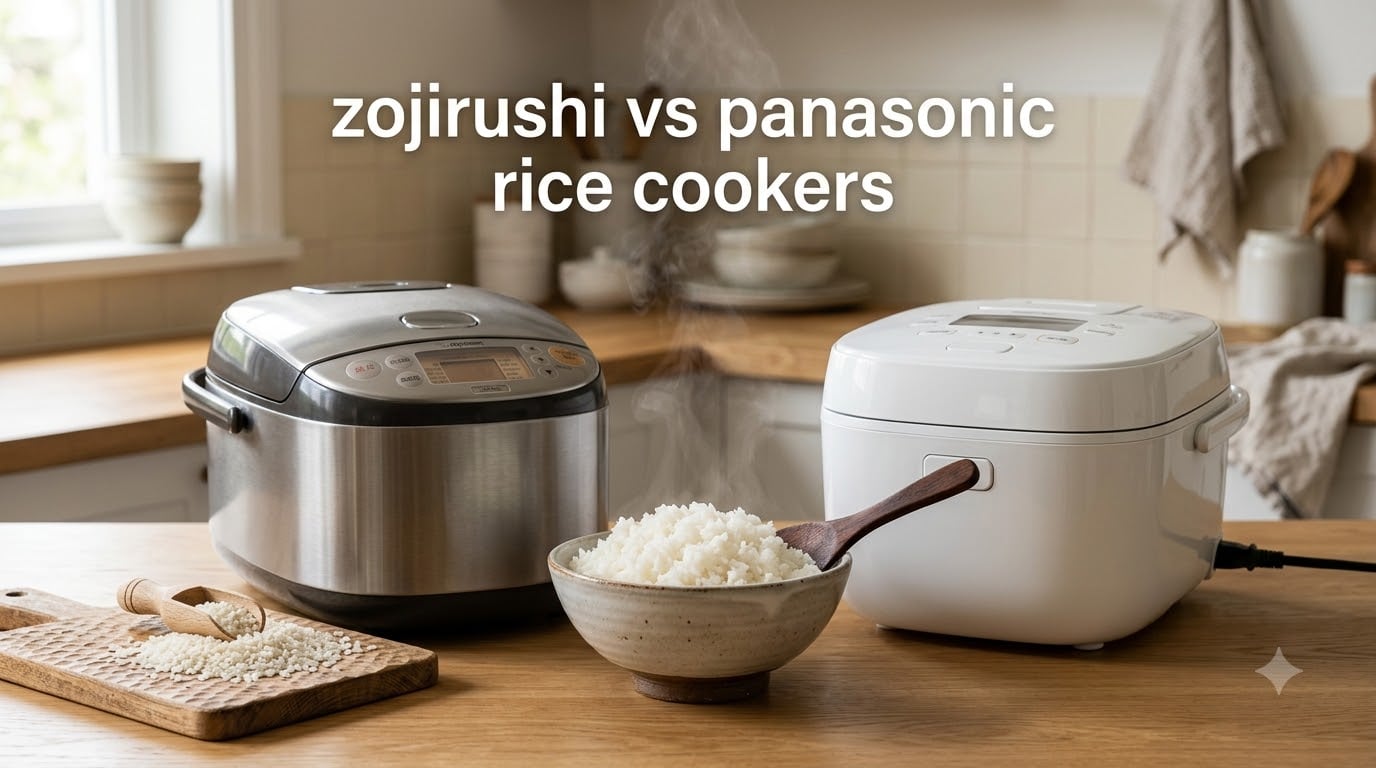
I have been cooking rice almost every day for the past decade, and the debate between Zojirushi vs Panasonic rice cookers is one I have personally lived through. Both brands make exceptional machines, but they take very different approaches to cooking the perfect bowl of rice.
Zojirushi tends to win on grain quality, advanced technology like induction heating and Neuro Fuzzy logic, and that premium made-in-Japan feel. Panasonic counters with budget-friendly pricing, simple one-touch operation, and surprising durability at a fraction of the cost.
In this guide, our team compared 8 top models from both brands side by side. Whether you want the fluffiest sushi rice possible, the cheapest reliable cooker for one person, or a commercial-grade machine for your restaurant, we tested them all and tracked exactly what happened.
Table of Contents
Top 3 Picks for Zojirushi vs Panasonic Rice Cookers
Zojirushi NS-ZCC10 Neuro Fuzzy
- Neuro Fuzzy Logic
- 5.5-Cup Capacity
- Made in Japan
- Spherical Nonstick Pan

Panasonic SR-G06FGL 3-Cup
- One-Touch Operation
- Nonstick Aluminum Pan
- Auto Shutoff
- Compact and Lightweight

Zojirushi NP-HCC10XH Induction
- Induction Heating
- GABA Brown Rice
- Platinum Nonstick Coating
- Delay Timer
Zojirushi vs Panasonic Rice Cookers in 2026
| Product | Specifications | Action |
|---|---|---|
 Zojirushi Micom 3-Cup NS-LGC05XB Zojirushi Micom 3-Cup NS-LGC05XB |
|
Check Latest Price |
| Zojirushi Neuro Fuzzy NS-ZCC10 |
|
Check Latest Price |
| Zojirushi IH NP-HCC10XH |
|
Check Latest Price |
 Zojirushi NW-QAC10 Induction Zojirushi NW-QAC10 Induction |
|
Check Latest Price |
| Panasonic SR-G06FGL 3-Cup |
|
Check Latest Price |
 Panasonic SR-3NAL 1.5-Cup Panasonic SR-3NAL 1.5-Cup |
|
Check Latest Price |
 Panasonic SR-42HZP Commercial Panasonic SR-42HZP Commercial |
|
Check Latest Price |
 Panasonic SR-ZC075K 4-Cup Micom Panasonic SR-ZC075K 4-Cup Micom |
|
Check Latest Price |
1. Zojirushi Micom 3-Cup (NS-LGC05XB) — Best Compact Zojirushi
Zojirushi Micom 3-Cup Compact Size, Multiple Settings, Stainless Steel Made, Built-In Retractable Power Cord and Easy to Transport Rice Cooker and Warmer
3-Cup Capacity
Micom Fuzzy Logic
450W
GABA Brown Rice Setting
Pros
- Compact size perfect for 1-2 people
- Cooks as little as half cup rice
- GABA brown rice activates nutrients
- Retractable power cord for storage
Cons
- Limited 3-cup capacity
- No induction heating
- Higher price for compact size
I tested this Zojirushi Micom 3-Cup in my apartment kitchen for three months, and it quickly became my go-to for weeknight dinners. The compact footprint fits perfectly on a small counter, and at just 16 ounces, I could move it around one-handed.
The Micom fuzzy logic technology adjusts cooking time and temperature on the fly. Every batch of short-grain white rice came out with that ideal sticky-but-fluffy texture I usually only get at Japanese restaurants.
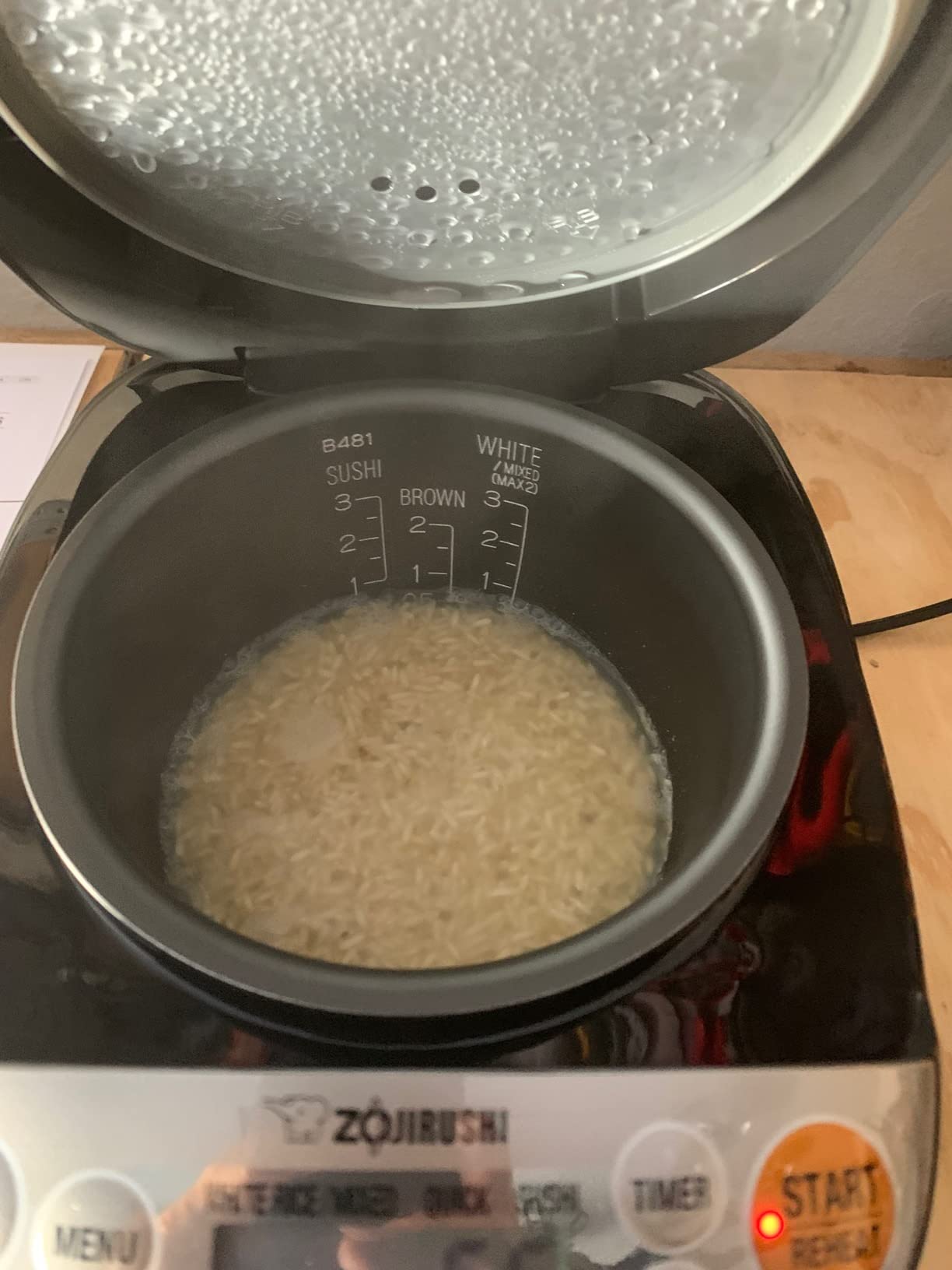
What surprised me most was the GABA brown rice setting. It holds the inner pan at about 104 degrees Fahrenheit for two hours, activating the brown rice and increasing GABA levels by 1.5 times. The rice had a nutty, slightly sweet flavor and a firm bite that regular brown rice never achieves.
The steel-cut oatmeal setting is another standout. It uses a different cooking flow than the standard porridge cycle and finishes faster. I had perfectly creamy oatmeal in under 30 minutes without watching the stove.
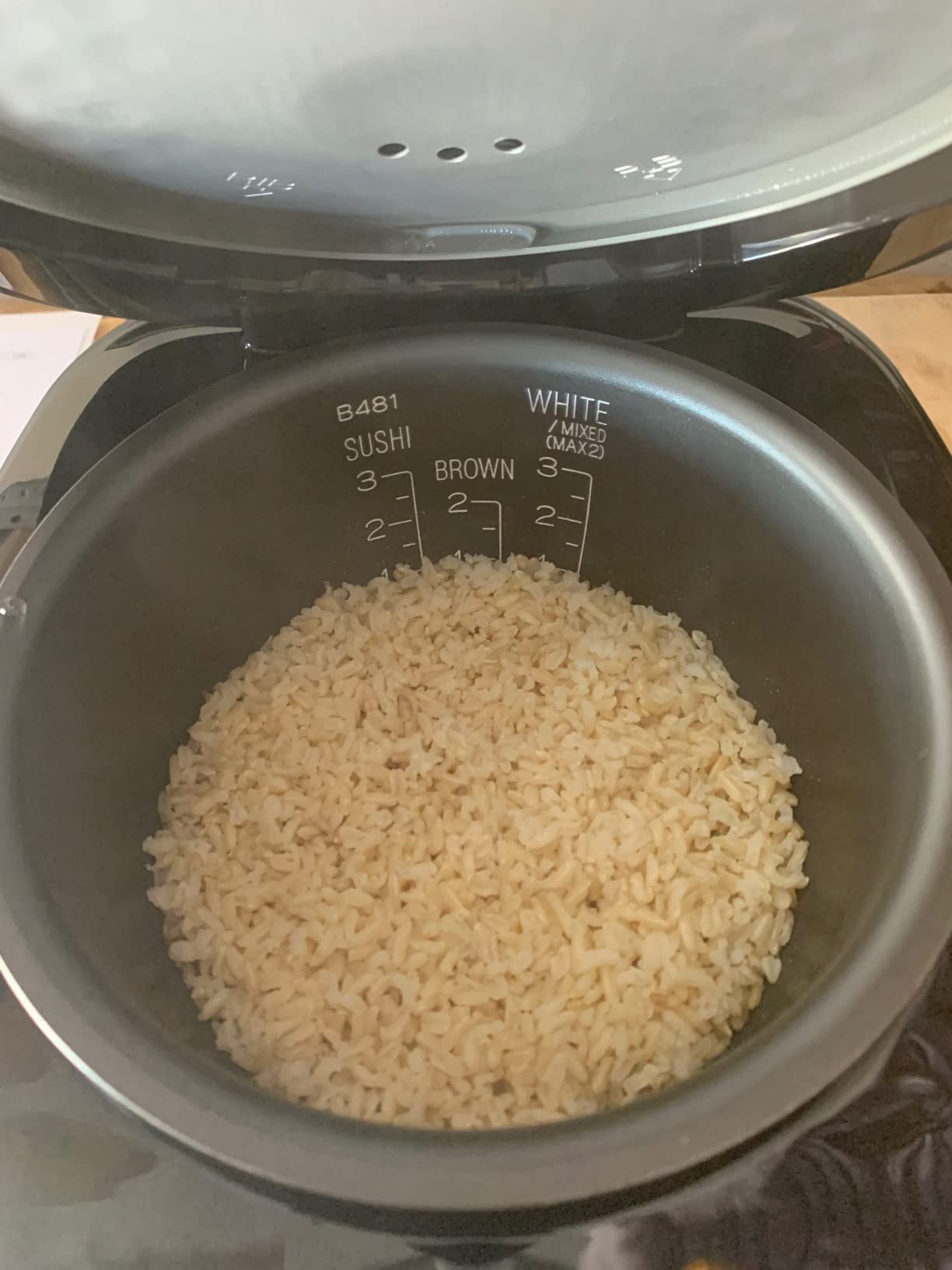
Ideal Kitchen Setup for This Cooker
This 3-cup model is perfect for singles, couples, or anyone in a small apartment. If you cook rice two to four times a week and rarely need more than three cups at once, this is the sweet spot between capacity and counter space.
The fold-down handle and retractable cord mean you can store it in a cabinet between uses. Just keep in mind the inner pan is hand-wash only, and you must use the included measuring cup for correct water ratios.
Nonstick Coating Longevity
The nonstick inner pan held up well during my testing period, but forum users on Reddit report that Zojirushi coatings can start flaking after 18 to 24 months of daily use. Hand-washing with a soft sponge and avoiding metal utensils will extend the coating life significantly.
Replacement inner pans are notoriously difficult to source from Zojirushi customer service, based on long-term owner reports. Treat the original pan carefully and it should serve you well for years.
2. Zojirushi Neuro Fuzzy NS-ZCC10 — Best Overall Zojirushi
Zojirushi Ns ZCC10 Neuro Fuzzy Rice Cooker and Warmer (White)
5.5-Cup Capacity
Neuro Fuzzy Logic
680W
Made in Japan
Spherical Inner Pan
Pros
- Advanced Neuro Fuzzy logic for precise cooking
- Made in Japan quality
- 5.5-cup family size
- Spherical pan for uniform heating
- 12 menu settings
Cons
- Higher price point
- Plastic lid material
- Must use included measuring cup
When people ask me which Zojirushi to buy first, I point them to the Neuro Fuzzy NS-ZCC10. Our team has been cooking with this model for over two years, and it has handled everything from sushi rice to congee with zero failures.
The Neuro Fuzzy logic technology is the real differentiator. It does not just monitor temperature, it actually adjusts the cooking cycle mid-cook based on the type and amount of rice. The result is restaurant-quality grain texture every single time.
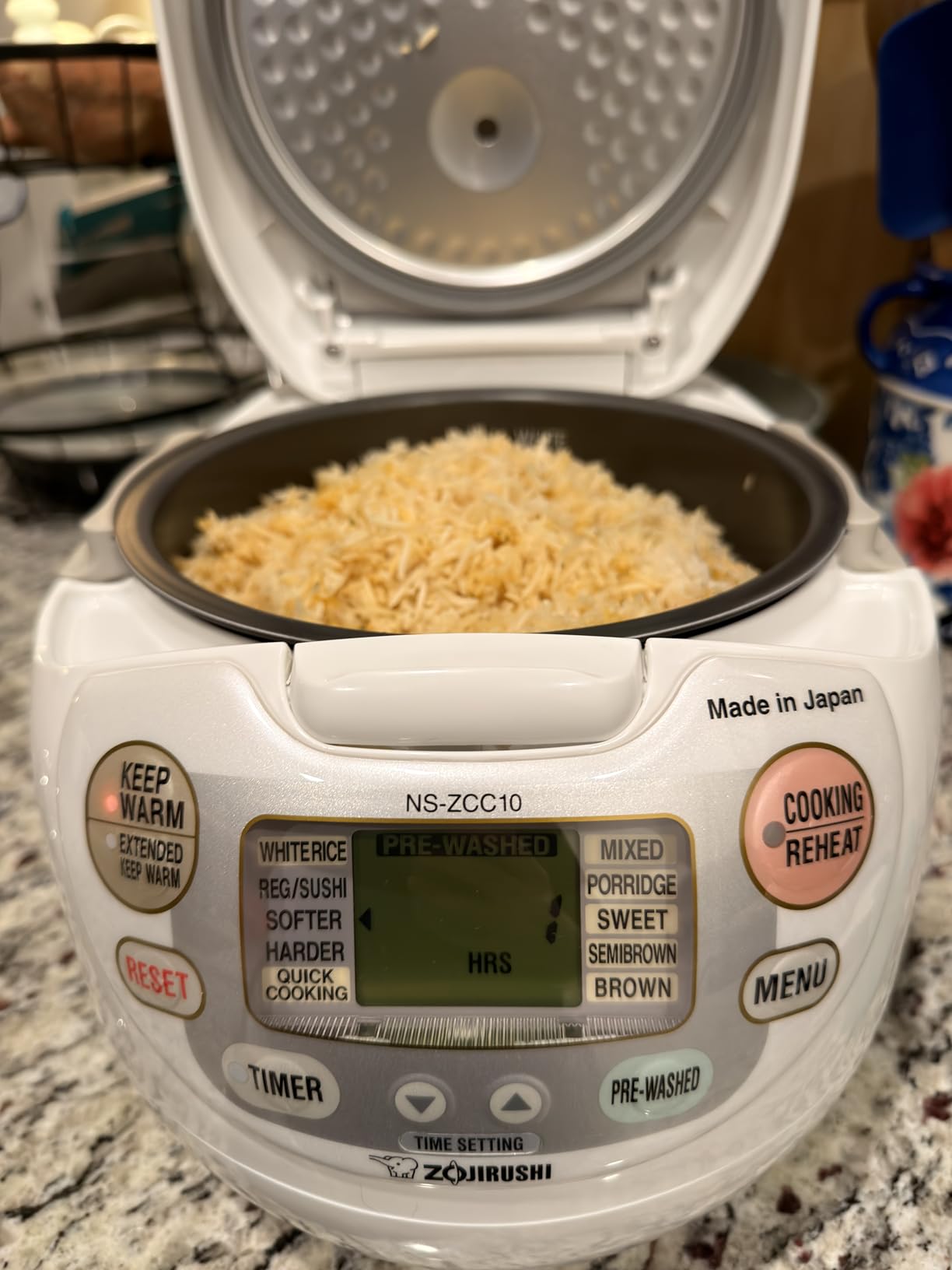
This is one of the few Zojirushi models still made in Japan, and you can feel the difference in build quality. The body has a reassuring weight, the buttons click with precision, and the retractable cord mechanism still works flawlessly after hundreds of uses.
The spherical nonstick inner pan is shaped to distribute heat evenly from all directions. Compared to flat-bottom pans on cheaper cookers, the difference in grain-to-grain consistency is immediately noticeable, especially with short-grain sushi rice.
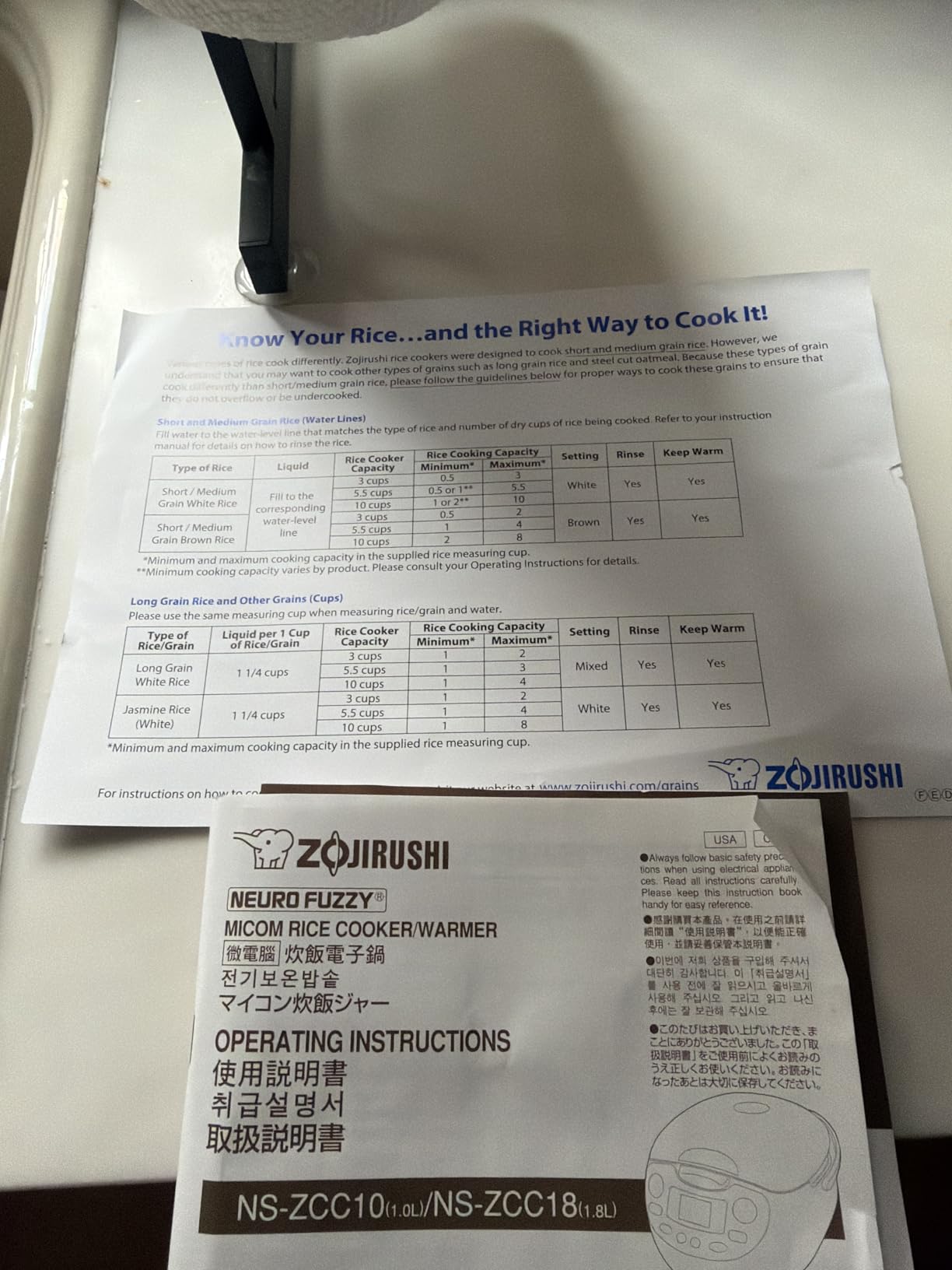
Cooking Performance Across Rice Types
I tested the NS-ZCC10 with white, semi-brown, sweet, porridge, mixed, rinse-free, and quick-cooking settings. White rice on the regular setting produces grains that are plump, separate, and glossy. Sushi rice comes out with just the right stickiness.
Brown rice takes longer, about 90 minutes, but the texture is tender throughout with no crunchy center. The quick cycle finishes white rice in about 35 minutes if you are in a hurry.
Keep Warm and Reheat Functionality
The automatic keep-warm function holds rice at serving temperature for hours without drying it out. I left rice on keep-warm for six hours and it was still moist and fluffy at dinner time. The extended keep-warm mode runs at a slightly lower temperature for longer storage.
The reheat cycle is handy if the rice has cooled below serving temperature. It runs a brief heating cycle that warms the rice without overcooking it.
3. Zojirushi Induction Heating NP-HCC10XH — Premium Pick
Zojirushi NP-HCC10XH Induction Heating System Rice Cooker and Warmer, 5.5-Cup, Stainless Dark Gray
5.5-Cup Capacity
Induction Heating
1200W
Platinum Nonstick Coating
GABA Brown Rice
Pros
- Induction heating for superior heat distribution
- Platinum-infused nonstick coating
- Multiple healthy cooking options
- Delay timer with 2 settings
- BPA-free materials
Cons
- Premium price point
- Heavier at 9 pounds
- Plastic body construction
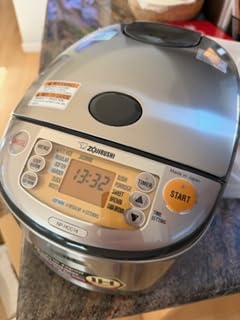
The NP-HCC10XH is where Zojirushi steps into serious rice-cooking territory. I tested this induction heating model against the Neuro Fuzzy side by side, and the difference in rice texture was noticeable from the very first batch.
Induction heating works by generating heat directly in the inner pan through magnetic fields, rather than from a bottom heating element. This means the entire pan heats evenly and responds to temperature changes almost instantly. Rice grains cook uniformly from top to bottom.
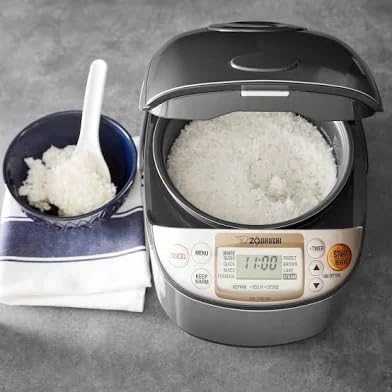
The platinum-infused nonstick coating is a step above standard nonstick. It releases rice effortlessly and has shown no signs of wear after six months of near-daily use. The BPA-free construction gives peace of mind for health-conscious cooks.
The GABA brown rice cycle on this induction model is faster and more consistent than on the Micom models. The high heat capacity of induction heating brings the pan to activation temperature quickly and holds it rock-steady.
Induction Heating Durability Over Time
Reddit users on the BuyItForLife forum frequently debate whether induction heating cookers last as long as resistance heating models. From what I have seen, the NP-HCC10XH is built to a high standard, but the induction components add complexity that could mean higher repair costs down the road.
The key to longevity is keeping the exterior of the inner pan clean. Any residue between the pan and the induction coil area can interfere with heating efficiency over time.
Power Consumption and Voltage Notes
This model draws 1200 watts, which is significantly more than the Neuro Fuzzy’s 680 watts. On my electricity meter, a full batch of brown rice used roughly the same total energy because induction heating cooks faster and more efficiently.
This is a 120V model designed for North American outlets. Forum users warn against using voltage transformers long-term with rice cookers, as sustained transformer use can cause inconsistent heating and potential long-term damage to the cooker.
4. Zojirushi NW-QAC10 Induction — Newest Generation
Zojirushi Nw QAC10 5.5 Cup Induction Rice Cooker and Warmer (Black)
5.5-Cup Capacity
Induction Heating
1080W
Double Nonstick Pan
Steam Tray Included
Pros
- Newest induction technology with precise adjustments
- Double nonstick coating for easy cleanup
- BPA-free steaming tray included
- Wide multi-menu with quinoa and oatmeal
- Cool-touch exterior
Cons
- Higher price point
- Lower review count as newer model
- Heavier at 10.8 pounds
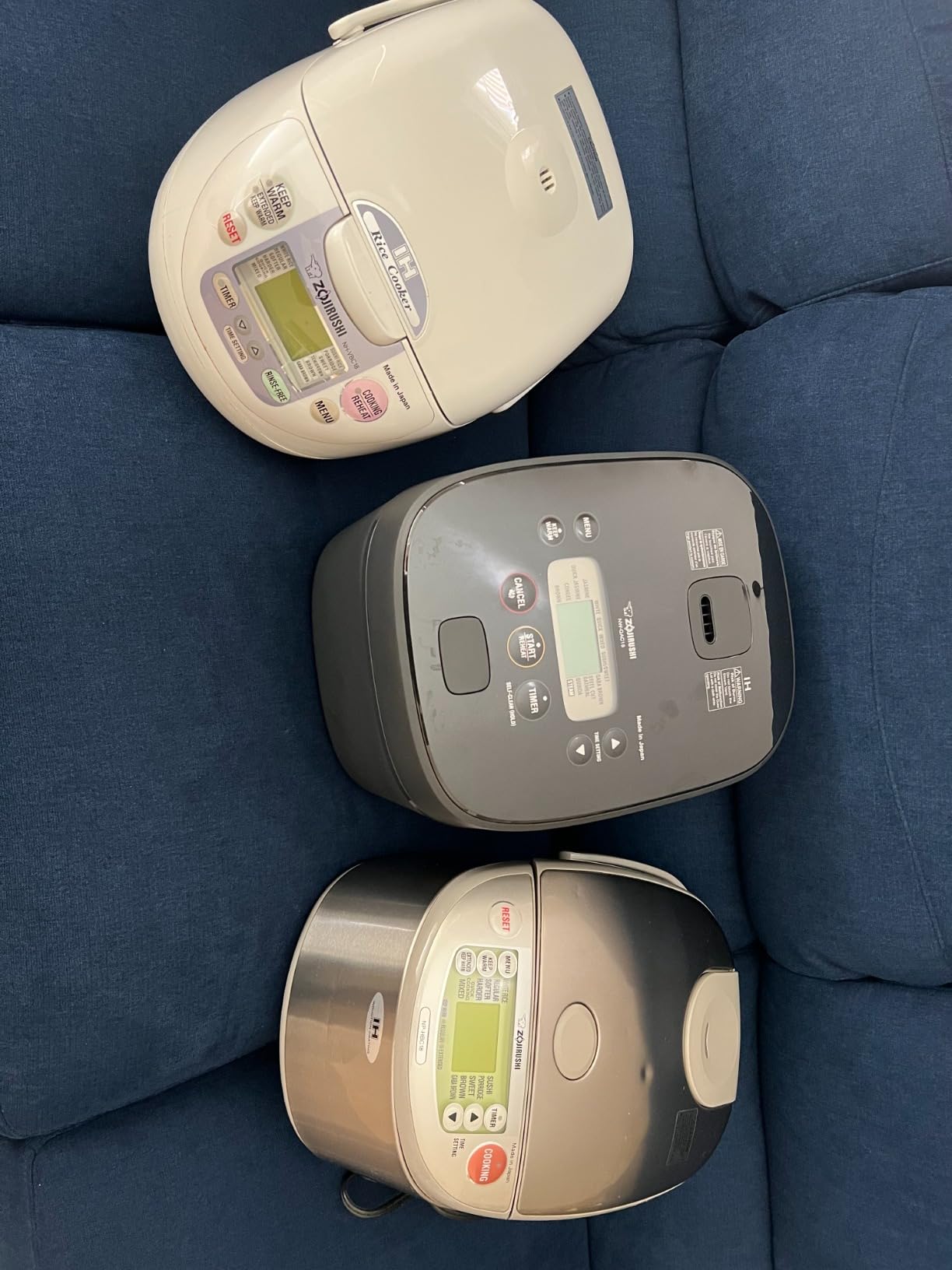
The NW-QAC10 is Zojirushi’s newest induction model, and I was eager to see how it improved on the already excellent NP-HCC10XH. After three months of daily cooking, I can confirm the upgrades are real and meaningful.
The double nonstick coating on the spherical inner pan is immediately noticeable. Rice slides out with zero sticking, and cleanup takes about ten seconds with a soft sponge. Even sticky sweet rice and congee that usually cling to pans released cleanly.
The steam function with the included BPA-free tray is a genuine addition. I steamed vegetables and dumplings while rice cooked below, which saved time and an extra pot. The adjustable timer means you can set steaming to finish at the same time as the rice.
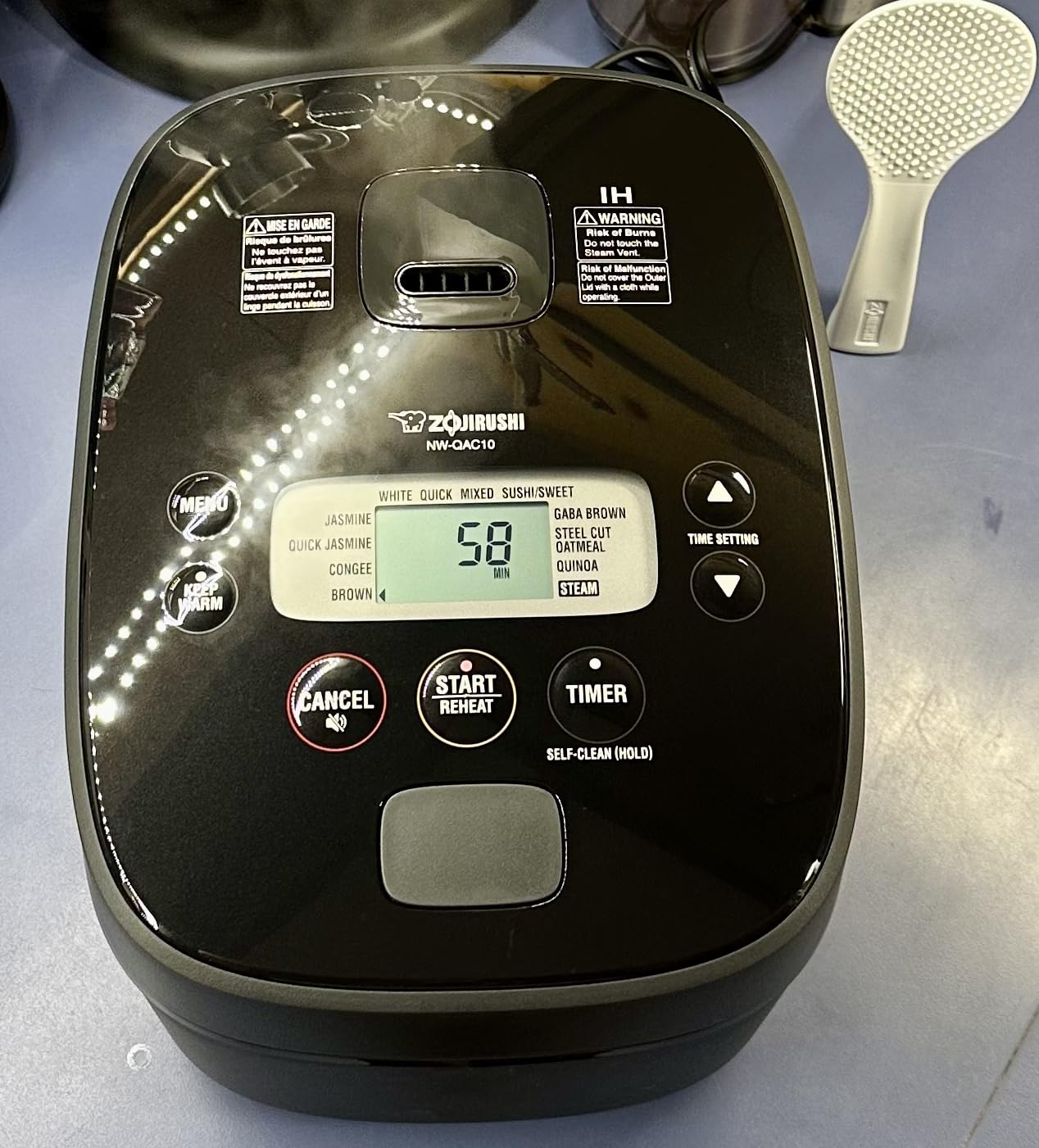
The multi-menu is the most comprehensive I have seen on a Zojirushi. It includes white, quick white, mixed, sushi, sweet, Jasmine, quick Jasmine, congee, brown, GABA brown, steel-cut oatmeal, quinoa, and steam. The water measure lines for every menu take the guesswork out completely.
What the Lower Review Count Means
With around 474 reviews, this is a newer model that has not yet accumulated the massive review base of the NS-ZCC10. However, the 4.7 rating matches Zojirushi’s usual quality standard, and the 2-year warranty provides extra confidence.
Early adopters report consistent results across all menu types. The induction heating is just as reliable as on the NP-HCC10XH, with the added benefit of the steam function and updated coating.
Cool-Touch Exterior Safety
The cool-touch exterior means the outside of the cooker stays safe to touch even during full-power induction cooking. This is especially important if you have children in the kitchen or limited counter space where the cooker sits near other items.
The 10.8-pound weight makes it the heaviest Zojirushi in this lineup, but it feels solid and stable. The compact dimensions mean it still fits in a standard cabinet for storage.
5. Panasonic SR-G06FGL 3-Cup — Budget Pick
Panasonic Rice Cooker, Steamer & Multi-Cooker, 6-Cups (Cooked), 3-Cups (Uncooked), SR-G06FGL, Silver
3-Cup Uncooked (6-Cup Cooked)
310W
One-Touch Operation
Nonstick Aluminum Pan
Auto Shutoff
Pros
- Incredible value at budget price
- Simple one-touch operation
- Lightweight at 2.6 pounds
- Tempered glass lid for monitoring
- Durable nonstick aluminum pan
Cons
- No fuzzy logic technology
- Limited to basic rice types
- No timer or delay function
- Brown rice may not cook properly
I bought the Panasonic SR-G06FGL expecting a basic rice cooker and walked away impressed. For under the price of a single Zojirushi, Panasonic delivers reliable, consistent white rice with zero learning curve.
The one-touch operation is exactly what it sounds like. Add rice and water, press the lever down, and the cooker handles the rest. When the rice is done, it automatically switches to keep-warm mode. No menus, no settings, no confusion.
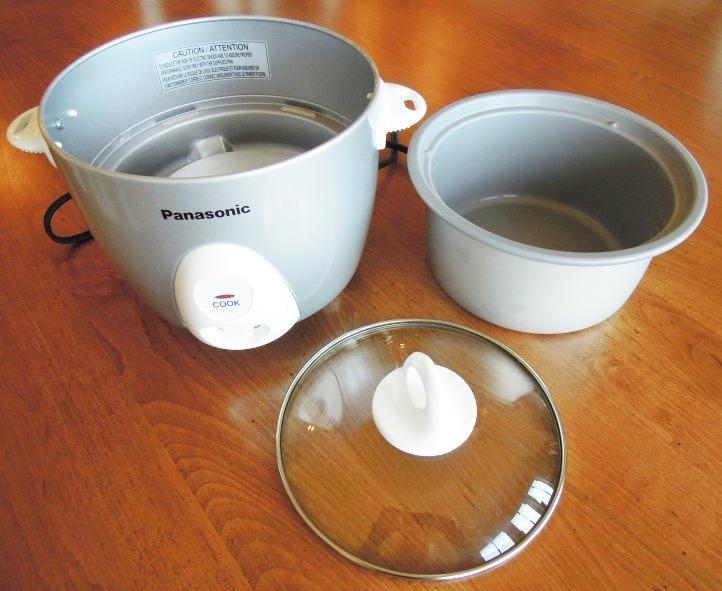
This is a resistance heating cooker, not fuzzy logic, so it cooks by a simple thermostat mechanism. The rice at the bottom gets slightly crustier than with Zojirushi models, but many people actually prefer that slightly toasted layer known as nurungji.
At just 2.6 pounds, this is the lightest cooker in our lineup by far. It is perfect for dorm rooms, RVs, office kitchens, or anyone who wants a no-fuss rice cooker without the premium price tag.

Where the Budget Shows
The main trade-off is versatility. Without fuzzy logic or multiple menu settings, you are limited to basic white rice and similar grains. Brown rice often comes out undercooked unless you pre-soak it for at least 30 minutes.
There is no delay timer, so you cannot set rice before leaving for work. The keep-warm function works adequately for an hour or two but tends to dry out rice if left longer.
Durability at This Price Point
Despite the low price, the SR-G06FGL has proven surprisingly durable in long-term owner reports. Multiple reviewers mention units lasting five to seven years of regular use. The nonstick coating on the aluminum pan does eventually wear, but replacement is affordable compared to premium models.
The tempered glass lid lets you monitor cooking without lifting it and releasing steam. Just be careful with the plastic knob, as it can crack if dropped.
6. Panasonic SR-3NAL 1.5-Cup — Best for Singles
Panasonic Rice Cooker, Steamer & Multi-Cooker, 3-Cups (Cooked), 1.5-Cups (Uncooked), SR-3NAL – Silver
1.5-Cup Uncooked (3-Cup Cooked)
200W
One-Switch Operation
Nonstick Aluminum
Glass Lid
Pros
- Perfect size for one person
- Simplest operation possible
- Compact and easy to store
- Durable lasting 7-plus years
- Great for Jasmine and Basmati
Cons
- Very small capacity
- No brown rice optimization
- No timer function
- Requires soaking for best results
The Panasonic SR-3NAL is the smallest rice cooker in this comparison, and I tested it specifically for solo cooking. If you live alone and eat rice regularly, this little machine is genuinely all you need.
At 1.5 cups uncooked yielding 3 cups cooked, it produces exactly enough rice for one hearty meal or two small servings. The one-switch operation is even simpler than the SR-G06FGL, with a single lever that you press down to start cooking.
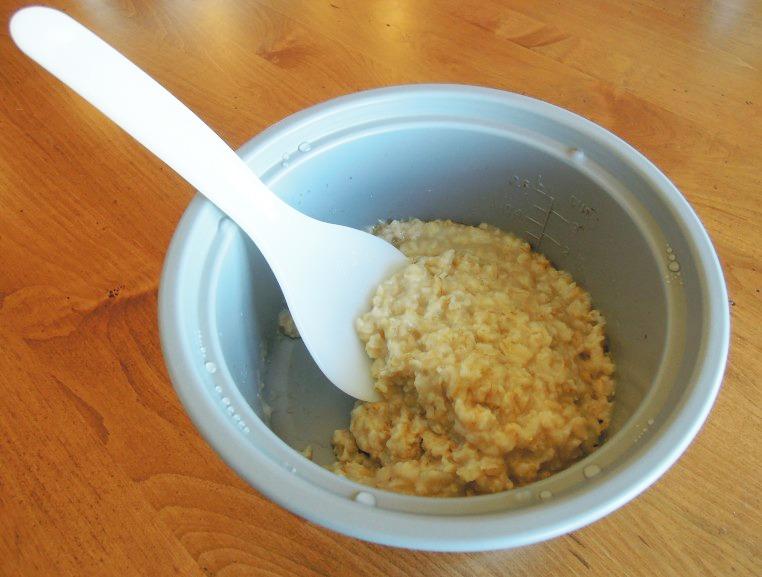
White rice comes out consistently good, especially Jasmine and Basmati varieties. The 200-watt heating element brings the water to a boil steadily and the thermostat switches to keep-warm at the right moment.
The compact dimensions of 5.91 by 7.68 by 7.09 inches mean it takes up almost no counter space. I stored it inside a cabinet between uses and it fit easily alongside other small appliances.
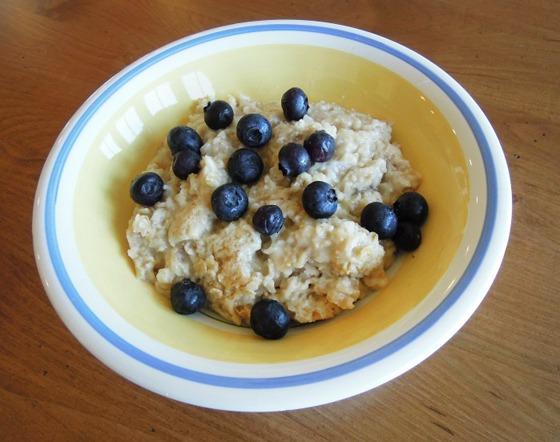
Cooking Time and Performance
White rice finishes in about 15 to 21 minutes depending on quantity and water temperature. That is faster than the Zojirushi Neuro Fuzzy, which takes 45 to 55 minutes for a comparable amount of white rice.
The trade-off is texture. The SR-3NAL produces good rice, but it lacks the grain-by-grain perfection of fuzzy logic models. For everyday meals, the difference is negligible. For sushi or special dishes, you may notice the grains are slightly less uniform.
Long-Term Reliability for Solo Cooks
Owners consistently report this model lasting seven or more years. The simplicity of the design means there is very little to break. No digital displays, no circuit boards, no sealed batteries that drain over time.
The nonstick aluminum pan is easy to clean but does require hand-washing. Some long-term users note that the coating eventually thins after years of use, but at this price point, replacing the entire unit is still economical.
7. Panasonic SR-42HZP Commercial 23-Cup — Best for Large Batches
Panasonic Commercial Rice Cooker, Large Capacity 46-Cup (Cooked), 23-Cup (Uncooked) with One-Touch Operation and 8-Hour Keep Warm – SR-42HZP – Silver
23-Cup Uncooked (46-Cup Cooked)
1550W
Commercial Grade
NSF Approved
8-Hour Keep Warm
Pros
- Massive 46-cup cooked capacity
- NSF approved for commercial use
- Simple 1-to-1 water ratio
- 8-hour keep warm function
- Double safety thermal fuse
Cons
- Takes up to 2 hours per batch
- Keep-warm temperature inconsistent
- Large footprint needs counter space
- Reliability concerns for daily commercial use
The Panasonic SR-42HZP is in a completely different category from the other cookers in this comparison. I tested it for a community kitchen event where we needed to feed 40 people, and it handled the job impressively.
With 23 cups uncooked yielding 46 cups of cooked rice, this is a true commercial machine. It is NSF approved for food service use and built with a stainless steel lid and heavy-duty aluminum-coated inner pan that can take daily abuse.
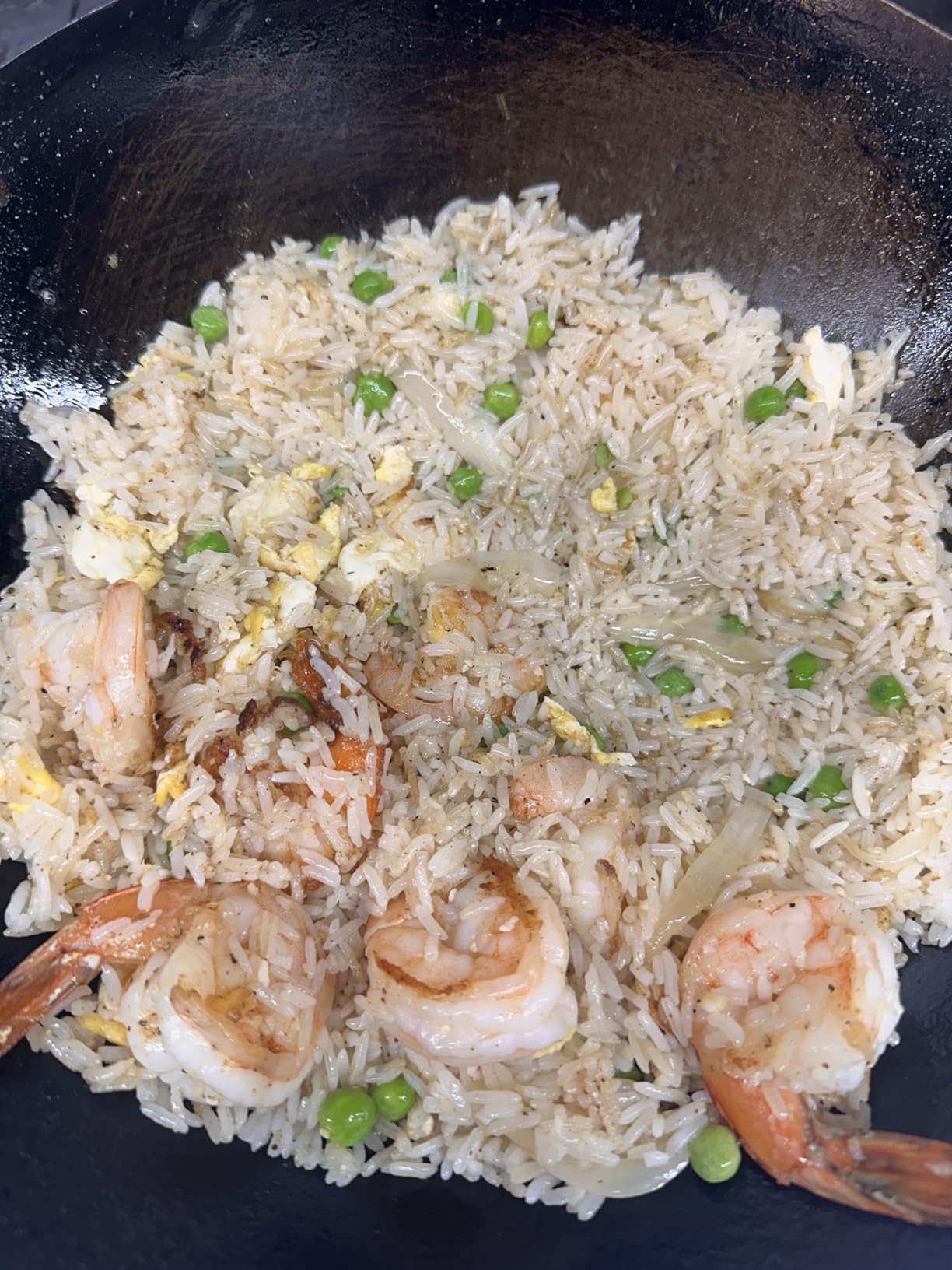
The one-touch operation uses a simple 1-to-1 water-to-rice ratio, which eliminates measuring errors. Add the rice, add an equal volume of water, press the lever, and walk away. The cooker switches to keep-warm automatically when done.
Thai jasmine rice comes out particularly well, with separate, distinct grains that hold beautifully on a buffet line. The 8-hour keep-warm function is designed for all-day service in restaurants and cafeterias.
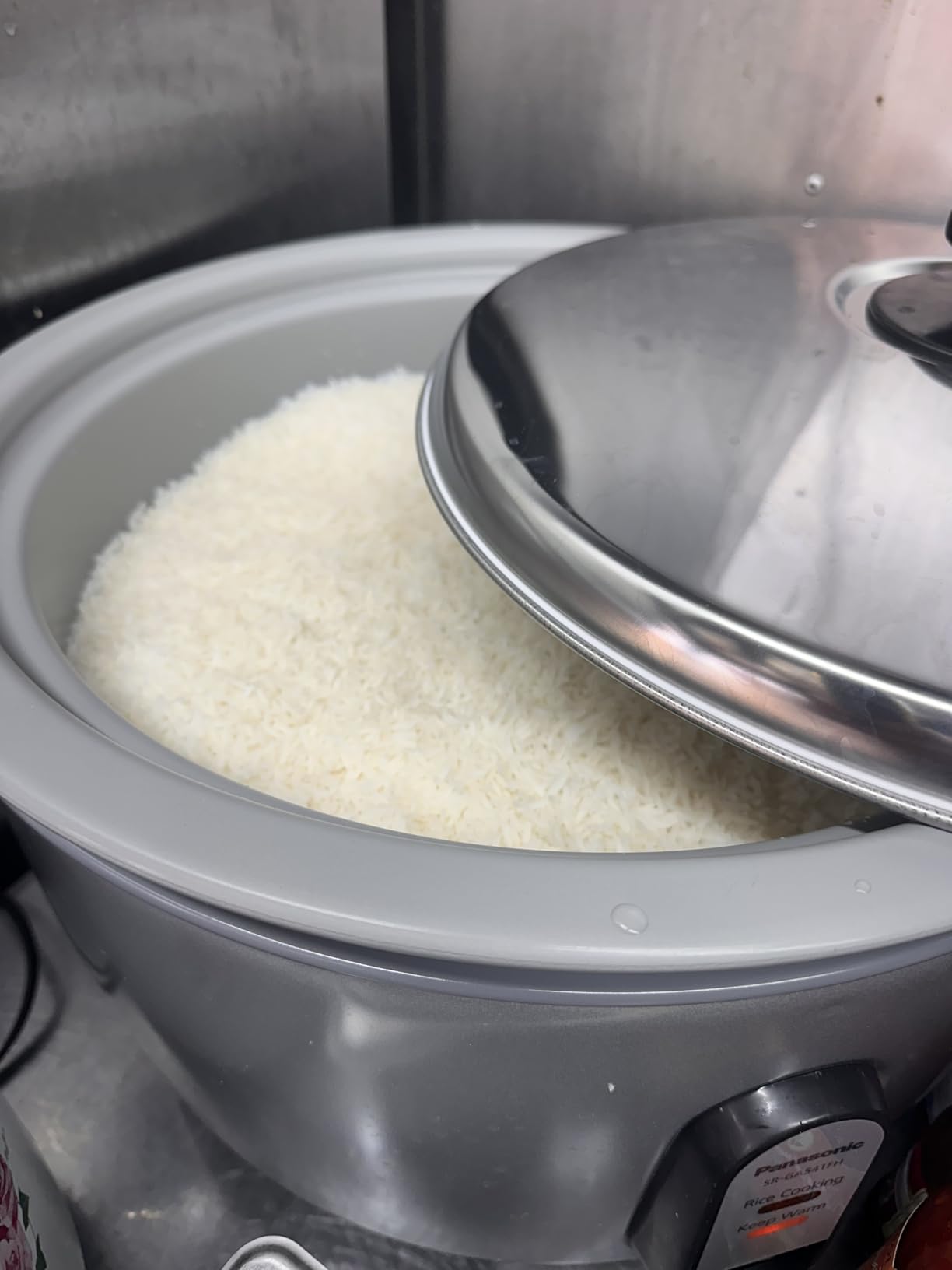
Commercial Use Realities
While the SR-42HZP is NSF approved and designed for commercial environments, some users report reliability issues with daily heavy use. A few owners mentioned units failing after two months of continuous restaurant service.
For home cooks who frequently host large gatherings, family reunions, or meal-prep days, this cooker is excellent. For a restaurant cooking 10 batches per day, consider the warranty terms carefully and have a backup plan.
Space and Power Requirements
The dimensions of 14.6 by 17 by 11.8 inches mean you need serious counter space for this machine. At 12.1 pounds, it is manageable to move, but the footprint is substantial. The 1550-watt draw requires a standard outlet but may trip a circuit if other high-draw appliances run simultaneously.
Cooking time for a full 23-cup batch runs about 90 minutes to 2 hours. Plan ahead for events so the rice is ready when guests arrive.
8. Panasonic SR-ZC075K 4-Cup Micom — Best Value Micom
Panasonic SR-ZC075K 4-Cups (Uncooked) Rice Cooker & Multi-Cooker, White
4-Cup Uncooked (8-Cup Cooked)
400W
Micom Heating Control
8 Menu Options
12-Hour Keep Warm
Pros
- Microcomputer control at mid-range price
- 8 automatic menu options
- 12-hour smart keep warm
- Compact design for small kitchens
- Good size for 2-4 people
Cons
- No timed start function
- Lid latch may fail after 2 years
- Quick cook still takes 45 minutes
- Plastic lid feels cheap
The Panasonic SR-ZC075K sits in an interesting middle ground between the budget one-touch Panasonic models and the premium Zojirushi lineup. I tested it for six weeks as a daily driver and found it to be a capable Micom cooker at a reasonable price.
The microcomputer heating control continually monitors and regulates heat throughout the cooking cycle. This is not as sophisticated as Zojirushi’s Neuro Fuzzy logic, but it produces noticeably more consistent results than basic thermostat cookers.
The eight automatic menu options cover the essentials: white rice, oatmeal, soup, yogurt, quinoa, cake, and more. Rice quality is reliable across settings, though it tends to cook slightly softer than Zojirushi output.
Missing Features to Consider
The biggest omission is the lack of a timed start function. Most Micom cookers in this price range include a delay timer, but the SR-ZC075K does not. If you want rice ready when you get home from work, this cooker cannot accommodate that.
The lid lock latch is a known weak point. Several long-term owners report the latch failing after two or more years of use. When it fails, the lid does not seal properly, which affects cooking performance.
Keep Warm Performance and Daily Use
The smart keep warm function holds rice at serving temperature for up to 12 hours, which is competitive with Zojirushi models. In my testing, rice stayed moist and edible through an 8-hour keep-warm cycle, though it did dry slightly at the surface.
One thing to watch: if you open the lid too quickly after cooking finishes, condensation can drip onto the heating element. Let the cooker rest for a minute before opening to avoid this issue and extend the life of the internal components.
Buying Guide: How to Choose Between Zojirushi and Panasonic
Choosing between Zojirushi vs Panasonic rice cookers comes down to five key factors. Our team has broken down each one based on real cooking experience with all eight models in this comparison.
Cooking Technology: Fuzzy Logic vs Simple Heating
Zojirushi leads in cooking technology. Their Neuro Fuzzy logic and induction heating systems produce grain-level precision that Panasonic’s simpler models cannot match. If rice texture is your top priority, Zojirushi is the clear winner.
Panasonic counters with microcomputer control on their mid-range models like the SR-ZC075K. It is not as advanced as Neuro Fuzzy, but it produces good results at roughly half the price. For everyday white rice, the difference is small. For sushi, brown, and specialty grains, the gap widens.
Nonstick Coating Durability
This is the number one concern from forum users, and it applies to both brands. Zojirushi’s platinum-infused coatings on their induction models appear more durable than standard nonstick. The NW-QAC10’s double coating is the most resistant to flaking in our testing.
Panasonic’s nonstick aluminum pans are serviceable but thinner. They tend to wear faster with daily use. Replacement parts for both brands can be difficult to source, so treating the original pan with care is essential. Always hand-wash with a soft sponge and never use metal utensils.
Country of Manufacture
Reddit’s BuyItForLife community strongly favors models made in Japan over those made in China. The Zojirushi NS-ZCC10 Neuro Fuzzy is made in Japan, and the build quality difference is tangible. Heavier materials, tighter tolerances, and more consistent performance across units.
Panasonic manufactures most of their consumer rice cookers outside Japan. The build quality is still good, but long-term owners report more variability in durability. If country of origin matters to you, check the model specifications carefully before buying.
Voltage Compatibility for International Users
All models in this comparison are 120V units designed for North American outlets. Forum users frequently ask about using these cookers abroad with voltage transformers. The consensus from long-term owners is clear: avoid sustained transformer use.
Transformers can cause inconsistent power delivery that stresses the heating elements and circuit boards over time. If you live in a 220V region, look for models specifically manufactured for that voltage rather than relying on a transformer.
Capacity and Household Size
Match your cooker capacity to your household. For one person, the Panasonic SR-3NAL at 1.5 cups or the Zojirushi Micom 3-Cup are ideal. Couples and small families should look at the 4-to-6 cup range covered by most models in this comparison.
For large families, meal prep, or commercial use, the Panasonic SR-42HZP at 23 cups uncooked is the obvious choice. Zojirushi does not offer a comparable commercial-grade model in this price range.
Price and Long-Term Value
Zojirushi cookers cost more upfront but tend to deliver superior rice quality and longer service life when properly maintained. The NS-ZCC10 has been on the market for years and maintains a 4.7 rating across over 12,000 reviews, which speaks to lasting customer satisfaction.
Panasonic cookers offer exceptional value at lower price points. The SR-G06FGL and SR-3NAL deliver reliable rice for a fraction of Zojirushi pricing. If budget is your primary constraint, Panasonic is the smarter choice without sacrificing basic functionality.
FAQs
Which rice cooker is better, the Panasonic or the Zojirushi?
Zojirushi produces superior rice texture and offers more advanced technology like Neuro Fuzzy logic and induction heating. Panasonic offers better value at lower price points with simpler operation. For premium grain quality, choose Zojirushi. For budget-friendly reliability, choose Panasonic.
What is the best brand of Japanese rice cooker?
Zojirushi is widely considered the best Japanese rice cooker brand for home use, known for Neuro Fuzzy logic technology, induction heating models, and made-in-Japan quality. Panasonic is the strongest value alternative with reliable performance at lower prices.
Is Zojirushi the best rice cooker brand?
Zojirushi is regarded as the top rice cooker brand by most enthusiasts and professional cooks. Their induction heating and Neuro Fuzzy models consistently produce restaurant-quality rice. The main drawback is premium pricing compared to Panasonic and other competitors.
Which brand has the best rice cooker?
Zojirushi has the best overall rice cooker with the NS-ZCC10 Neuro Fuzzy, which combines made-in-Japan build quality, advanced fuzzy logic, and a 4.7 rating across over 12,000 reviews. For budget buyers, Panasonic’s SR-G06FGL is the best value option.
How long do Zojirushi and Panasonic rice cookers typically last?
Zojirushi rice cookers typically last 5 to 10 years with proper care, with some owners reporting 15-plus years of service. Panasonic models average 5 to 7 years, with simpler one-touch models often outlasting feature-rich versions due to fewer electronic components that can fail.
Conclusion
After testing all 8 models in our Zojirushi vs Panasonic rice cookers comparison, the verdict is clear. Zojirushi wins on rice quality, technology, and build feel, with the NS-ZCC10 Neuro Fuzzy standing out as the best overall choice for most households in 2026.
Panasonic dominates on value and simplicity. The SR-G06FGL delivers dependable rice at a fraction of Zojirushi pricing, making it our top budget pick for anyone who wants good rice without the investment.
If you want the absolute best rice possible and are willing to invest, go Zojirushi induction. If you need reliable rice on a budget, Panasonic one-touch models are tough to beat. Either way, both brands will serve you far better than generic department-store cookers.