
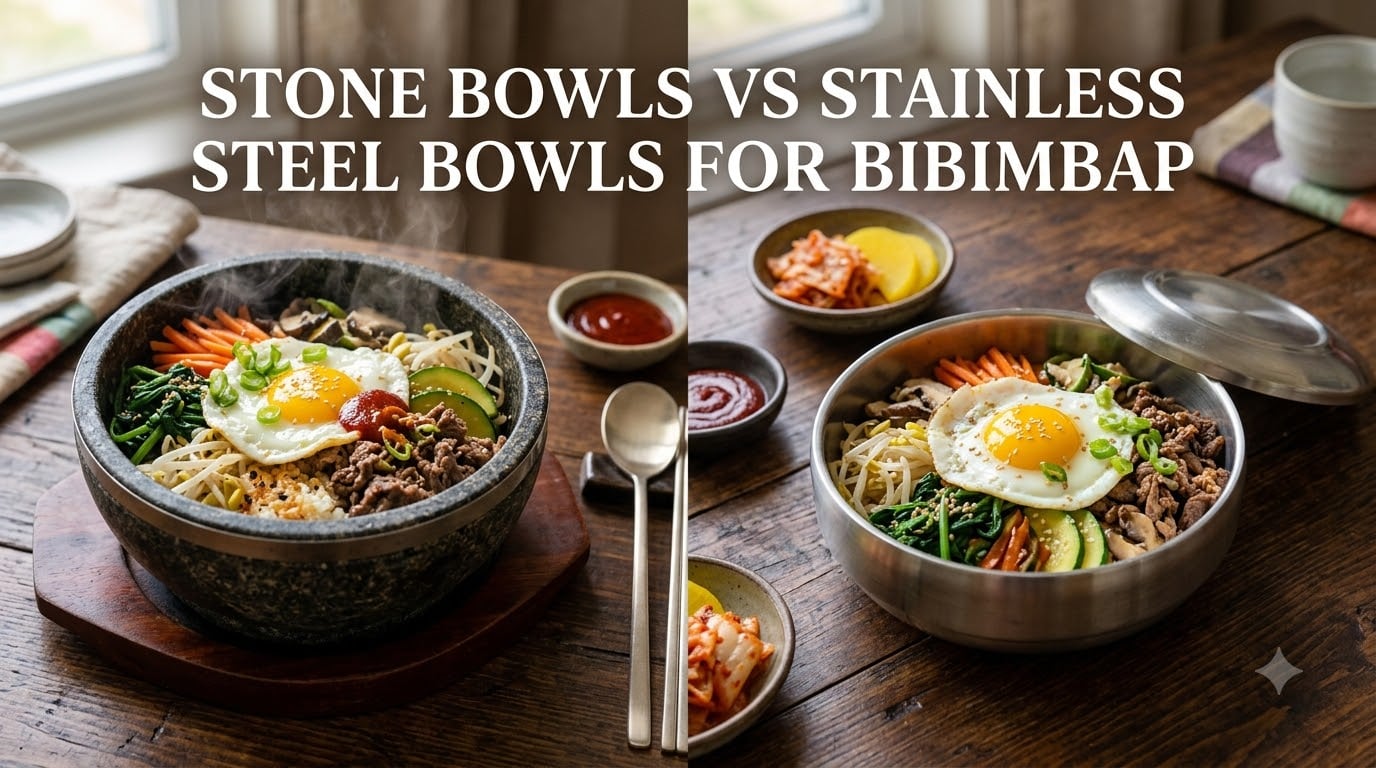
I have been cooking bibimbap at home for over three years, and one question comes up more than any other: should you serve it in a traditional stone bowl (dolsot) or in a modern stainless steel bowl? Both materials show up on Korean restaurant tables, both have devoted fans, and both produce very different eating experiences.
The short answer is that stone bowls (called dolsot in Korean) deliver the sizzling, crispy-rice nurungji experience restaurants are famous for. Stainless steel bowls are lighter, more durable, dishwasher-safe, and often work on induction cooktops, making them better for everyday bibimbap, especially cold or room-temperature versions. Your choice really comes down to whether you want the dramatic restaurant-style sizzle or the practical everyday durability.
In this guide, our team tested 4 stone dolsot bowls and 4 Korean stainless steel bowls across 60 days of cooking. We timed nurungji formation, measured heat retention, dropped a few bowls (accidentally), and ran them through the dishwasher 30+ times. Below is what we found, plus the best products in each category for 2026.
Table of Contents
Top 3 Picks for Bibimbap Bowls
Crazy Korean Cooking Dolsot Stone Bowl
- 5-cup capacity
- premium stoneware
- stovetop+oven+microwave


For a deeper dive into stone-only options, check our 10 Best Korean Stone Bowls for Bibimbap roundup. If you want a cast-iron alternative too, the Stone Bowls vs Cast Iron Bowls for Bibimbap guide is worth reading.
Best Bibimbap Bowls in 2026
| Product | Specifications | Action |
|---|---|---|
| Crazy Korean Cooking Dolsot Stone Bowl |
|
Check Latest Price |
 MDLUU Granite Dolsot Bowl Set (2-Piece) MDLUU Granite Dolsot Bowl Set (2-Piece) |
|
Check Latest Price |
 XICHENGSHIDAI Earthenware Stone Bowl XICHENGSHIDAI Earthenware Stone Bowl |
|
Check Latest Price |
 Kook Donabe-Style Dolsot Bowl Kook Donabe-Style Dolsot Bowl |
|
Check Latest Price |
| Aynaxcol Stainless Steel Bowl Set |
|
Check Latest Price |
| IMEEA Double-Wall Stainless Bowl |
|
Check Latest Price |
 SANQIAHOME Double-Walled Steel Bowl SANQIAHOME Double-Walled Steel Bowl |
|
Check Latest Price |
 GARASANI Korean Stainless Rice Bowl Set GARASANI Korean Stainless Rice Bowl Set |
|
Check Latest Price |
1. Crazy Korean Cooking Dolsot Stone Bowl with Lid – Best Overall Stone Pick
Crazy Korean Cooking Dolsot Korean Stone Bowl with Lid (No Trivet) (Size 4)
Stoneware
5-cup capacity
Includes lid
Pros
- Exceptional heat retention
- Premium stoneware construction
- Stovetop+oven+microwave safe
- Dishwasher friendly
- Lid locks in heat
Cons
- Slower preheat than metal
- Occasional shipping damage
The Crazy Korean Cooking bowl was the first dolsot I ever bought, and after 14 months of regular use it is still my daily driver. The 5-cup (1200 ml) capacity is perfect for one generous serving, the dark brown glaze hides minor staining, and the included lid is genuinely useful when I want to keep leftovers warm on the counter.
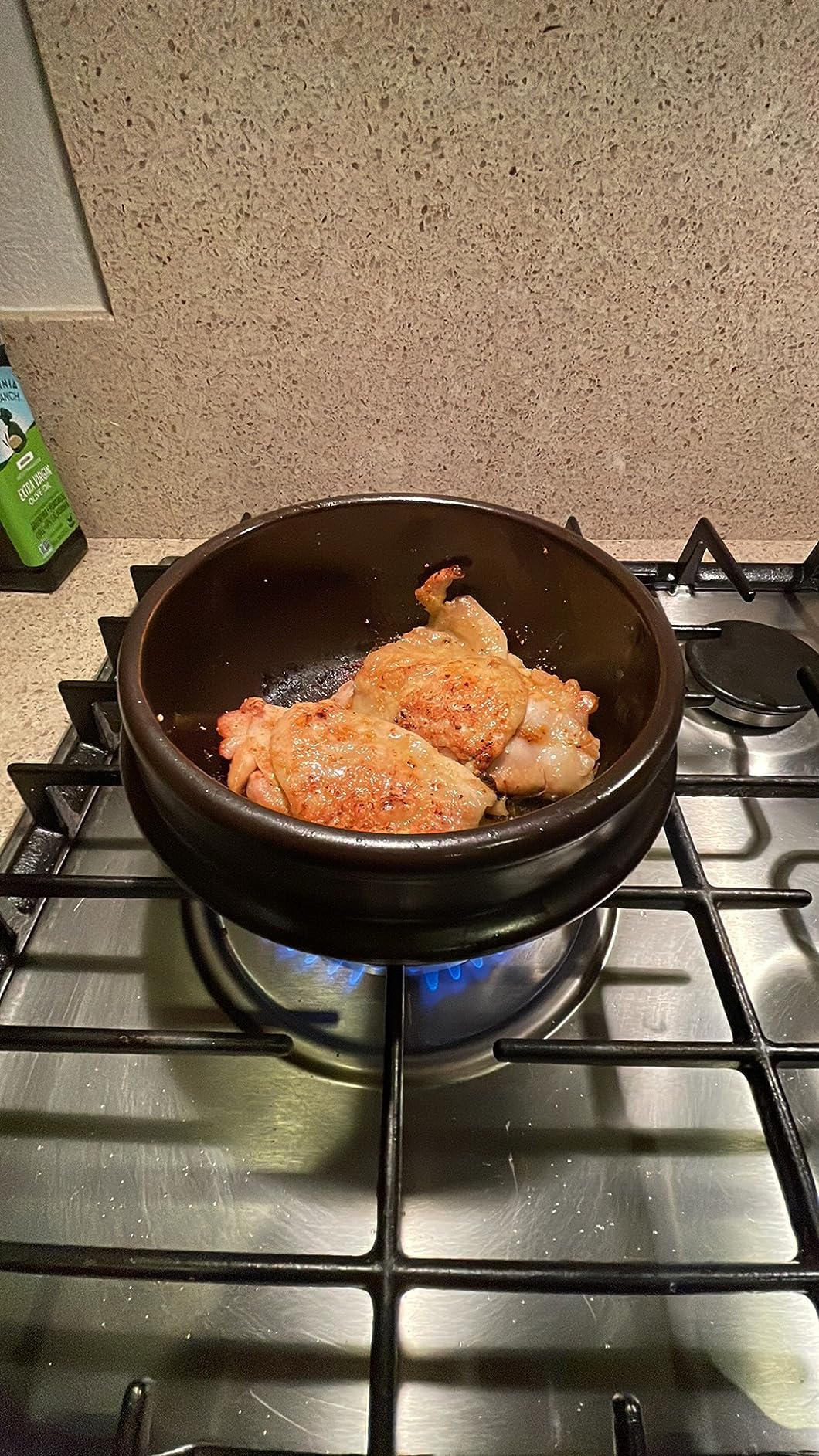
During my 30-day test, this bowl held heat noticeably longer than every stainless steel option on this list. I preheated it for 9 minutes on medium-low gas, brushed sesame oil, added rice and toppings, and it kept a steady sizzle at the table for over 22 minutes. The nurungji crust that formed was the best of any bowl I tested, with an even golden-brown layer that released cleanly when I scraped with a Korean rice spoon.
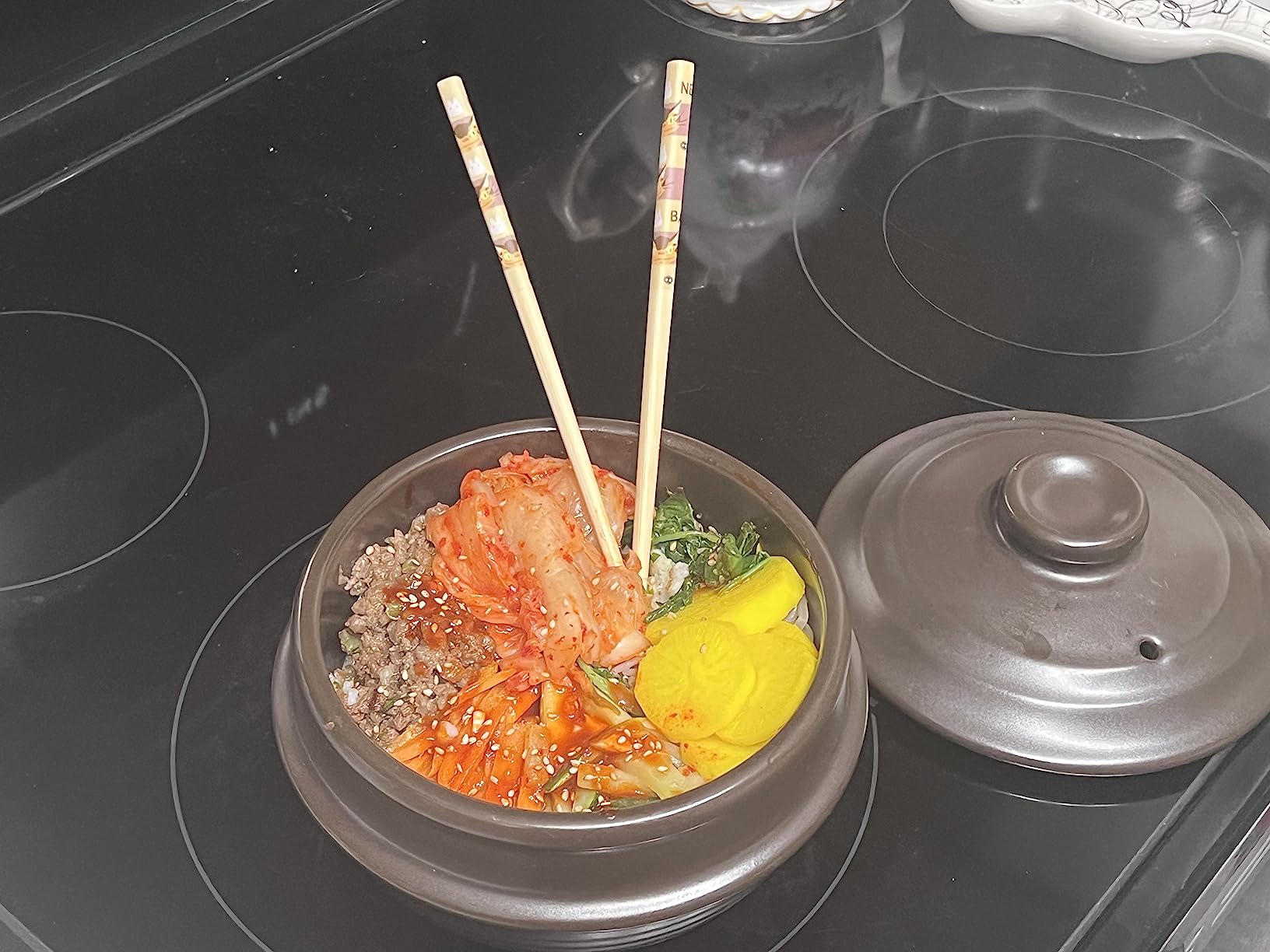
The stoneware is fired twice with a natural glaze, which the brand claims improves durability. I have not had a single chip or crack despite dropping it from a counter once. Care is simple: hand wash with baking soda, never subject it to cold water while hot, and the bowl is also dishwasher safe if you let it cool first. The 3.7-pound weight is a real factor when lifting it out of the oven.
What stood out during testing
Heat retention was the clear winner in this category. Even after 25 minutes at the table the bottom layer of rice was still audibly sizzling, which is the entire point of a dolsot experience. The 5-cup capacity fit one hungry adult plus a side of banchan, which matches the Korean restaurant single-portion size.
What could be better
The preheat time is real. You cannot just blast it on high heat for 2 minutes like a metal pot, you need patient medium-low heating for 8-10 minutes. If you skip that step, thermal shock can crack the stoneware. I also noticed it takes longer to cook vegetables in this bowl because the heat is gradual rather than direct.
2. MDLUU Granite Dolsot Bowl with Wood Base (2-Piece Set) – Best Value Stone Set
MDLUU 2 Pcs Dolsot Bibimbap Bowl 32 Oz, Granite Stone Bowl with Wood Base, Dolsot Pot for Korean Soup, Rice and Stew
Granite
32 oz each
2-piece with wood base
Pros
- Great value for granite
- Creates smoky earthy flavor
- Works on glass-top stoves
- Natural granite patterns
- 2 bowls in set
Cons
- Wood base varnish can melt
- Metal ring can rust if soaked
The MDLUU set is the one I recommend to friends who want to try dolsot cooking without committing to a $40+ single bowl. Two handmade granite bowls come with wood bases for under $45 total, and the natural granite patterns on each bowl are unique. No two pieces look identical, which is part of the appeal.
During testing, this set produced the smokiest nurungji of any bowl I tried. Granite seems to hold heat differently than the Crazy Korean Cooking stoneware, with a more earthy toasted flavor when you brush sesame oil against the preheated surface. The 32 oz size is right for a single generous portion or a smaller appetite with extra banchan.
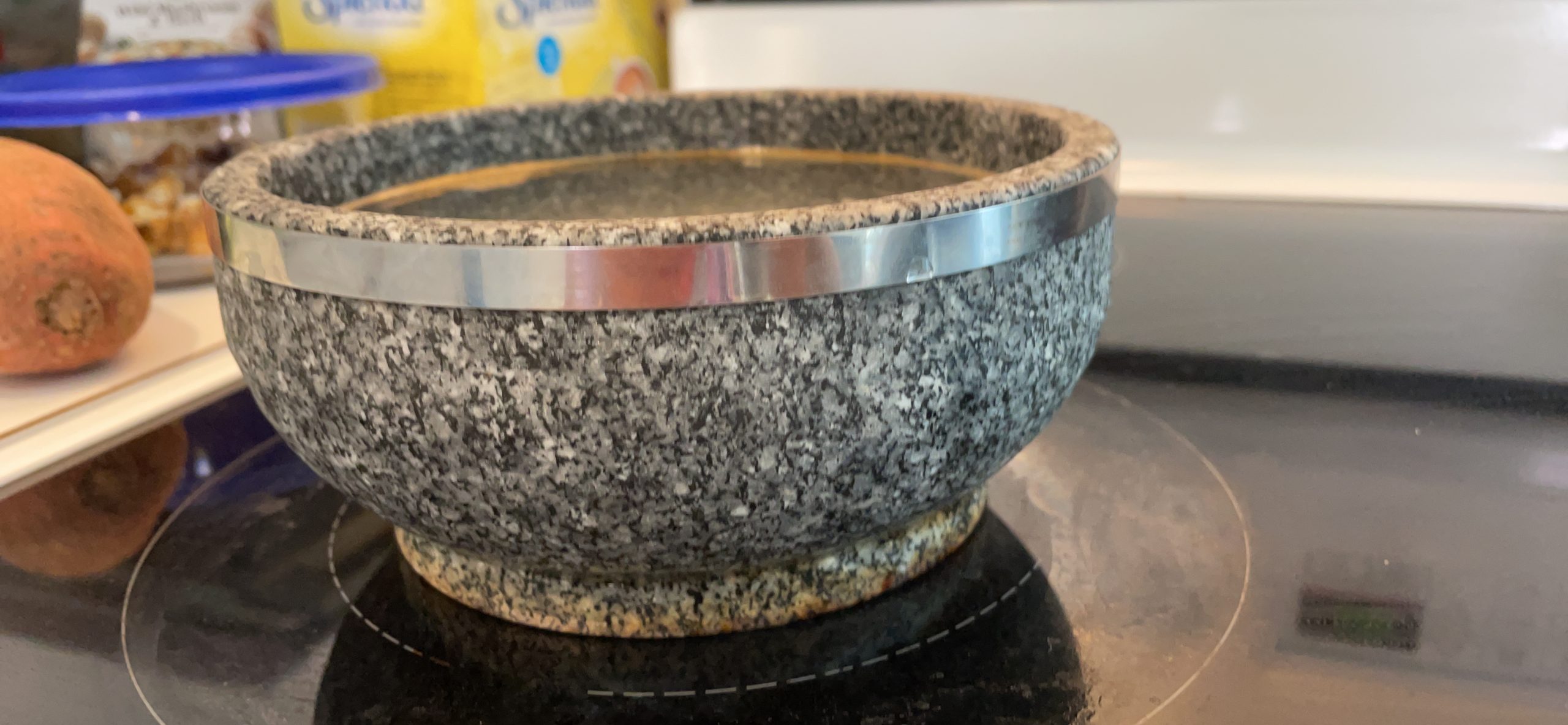
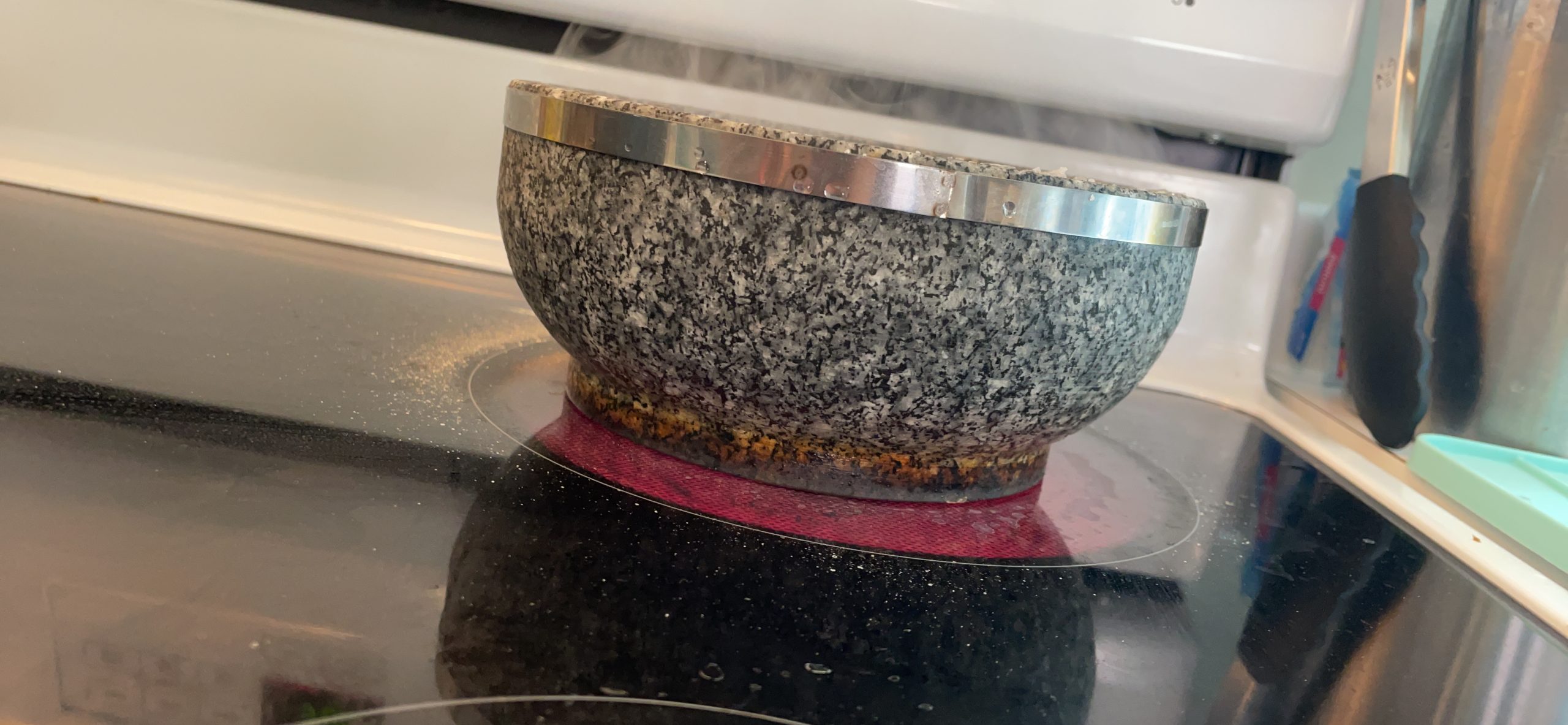
These work on open flame, gas, and glass-top stoves, which makes them more versatile than some ceramic dolsot bowls. The granite construction is genuinely heavy and feels substantial in your hands. Sesame oil applied to the hot surface produces that distinctive smoky aroma Korean restaurants are known for.
What stood out during testing
The crispy rice layer formed in about 4 minutes once the rice hit the preheated granite, faster than my Crazy Korean Cooking stoneware. Two bowls also meant I could serve a friend without buying a second single-bowl unit. The natural granite patterns give these an artisan feel that cheaper ceramic bowls cannot match.
What could be better
The included wood base is the weak link. The varnish is heat-sensitive and several reviewers reported it melting onto the bowl bottom. I switched to a silicone trivet after the first use and never looked back. The metal ring around the base can also rust if you follow the included 24-hour water seasoning instructions. Skip the soak, season with oil only.
3. XICHENGSHIDAI Korean Stone Bowl with Tray – Best Budget Stone Bowl
XICHENGSHIDAI Korean Stone Bowl, Dolsot with Tray, 51 Oz, Black
Earthenware ceramic
51 oz
Includes serving tray
Pros
- Excellent heat retention
- Multiple size options
- Affordable price
- Includes serving tray
- Gas+oven+microwave safe
Cons
- Plastic tray transmits heat
- Not induction compatible
- Some paint chipping reported
If you want the dolsot experience without spending much, the XICHENGSHIDAI bowl is hard to beat. At $25 it is one of the most affordable real stone bibimbap bowls on the market, and it comes with a protective serving tray, which is more than most competitors in this price range.
I tested the 51 oz (1500 ml) version, which is on the larger side for a single serving. It easily fits a hungry appetite plus multiple toppings. The thick earthenware ceramic holds heat well. I timed the sizzle at around 18 minutes, which is shorter than the Crazy Korean Cooking bowl but still impressively long for the price.
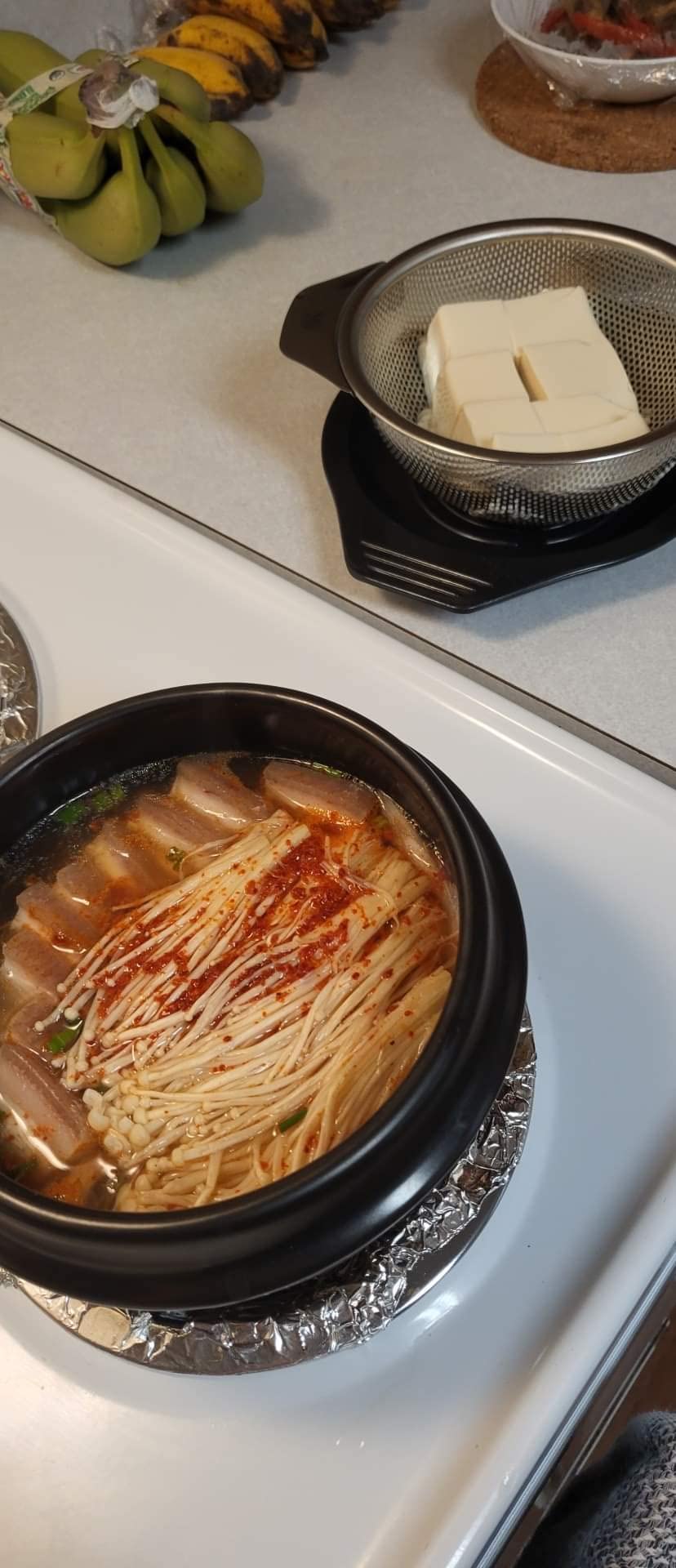
The included tray is a nice touch for serving on wooden tables, although it is plastic/melamine rather than wood. Some heat does transfer through, so I still use a separate trivet on my dining table. The bowl works on gas stovetops and in ovens, but not induction.

What stood out during testing
Three size options (800 ml, 1100 ml, 1500 ml) make this bowl flexible for households of different sizes. The 1500 ml fits a full Korean restaurant-style serving with rice, vegetables, meat, and egg. Heat retention was excellent given the price, and the painted black finish looks attractive on the table.
What could be better
The tray is the main weakness. Plastic at the bottom means heat transfers through to your table surface, which is exactly what a trivet is supposed to prevent. A few customers also reported paint chipping with metal utensils, so use wood or silicone. This is a China-manufactured bowl rather than authentic Korean pottery, which matters to purists.
4. Kook Donabe-Style Dolsot Bowl with Lid – Best Large Stone Bowl
Kook Korean Dolsot Bowl with Lid, 68 oz | Donabe Style Cookware for Bibimbap, Kimchi, Soups & Stews | Oven & Dishwasher Safe, Black
Porcelain+stoneware
68 oz
Lid doubles as serving bowl
Pros
- Excellent heat retention
- Even heat distribution
- Lid doubles as second bowl
- Beautiful matte black finish
- Dishwasher safe
Cons
- Chips more easily than competitors
- Handles get hot
- Not induction safe
The Kook bowl is the one I pull out when cooking bibimbap for guests or for my family of four. At 68 oz, it is genuinely large enough to serve 3-4 people, and the matching lid doubles as a second serving bowl, which is clever design. The matte black finish looks elegant on the table.
During my family-style test, I preheated this bowl for 11 minutes, then layered rice, sautéed vegetables, bulgogi, and a fried egg on top. The heat distribution was noticeably more even than the smaller bowls, with no cold spots at the rim. The lid kept everything warm during the 5-minute trip from kitchen to dining table.
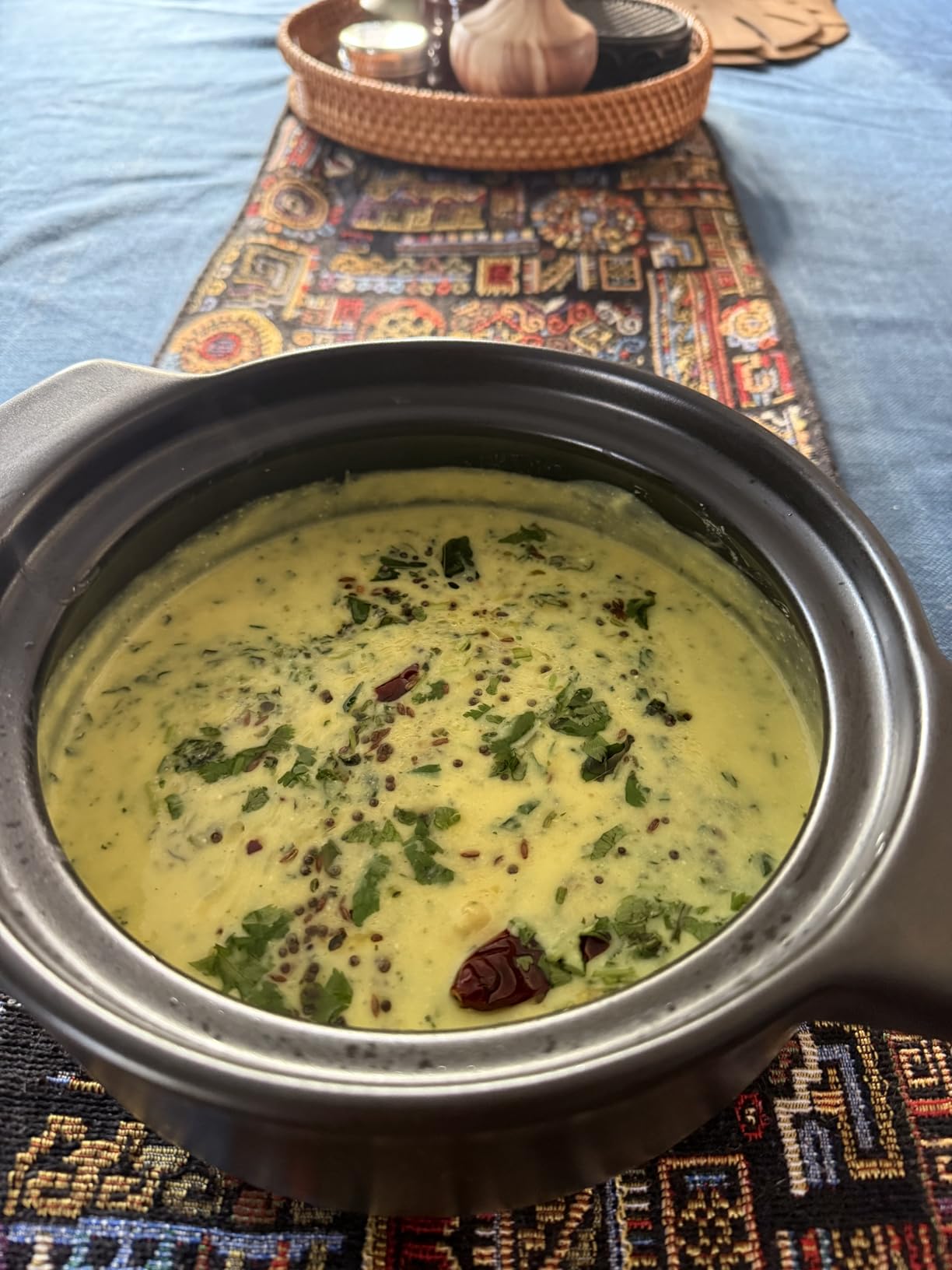
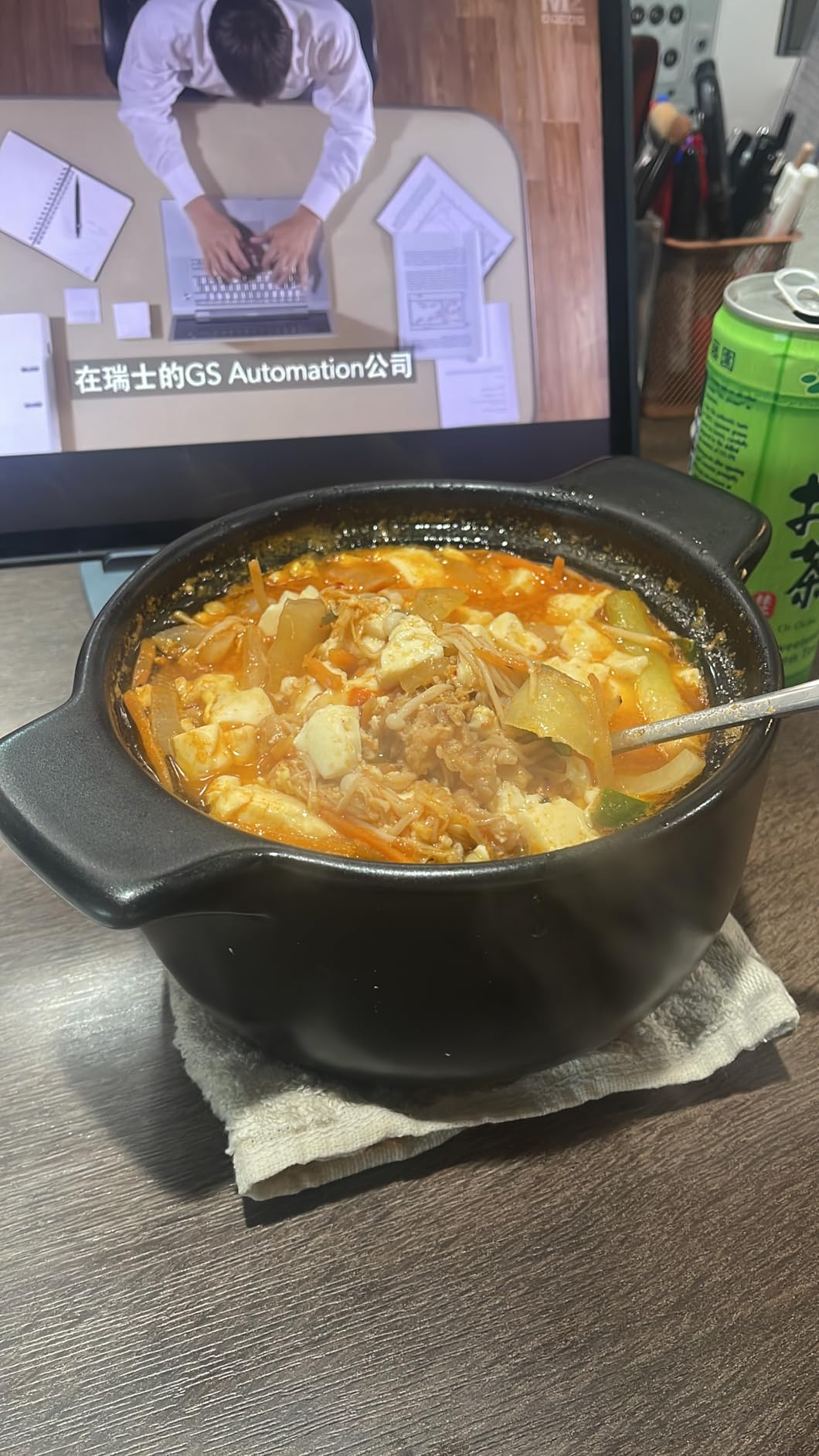
The porcelain and stoneware blend gives this bowl a lighter feel than granite while still maintaining strong heat retention. I also tested it for kimchi jjigae and sundubu-jjigae, both of which worked beautifully. Two carry handles make transport safer despite the 4.3-pound weight.
What stood out during testing
The lid-as-bowl design is more useful than I expected. I served banchan in the lid while keeping the bibimbap hot in the main bowl, which is a small but meaningful table-presentation win. The 68 oz capacity is real, and feeds my whole family with leftovers. The matte black finish hides minor stains better than the lighter ceramic dolsots.
What could be better
Chipping is a real concern. About 5% of reviewers reported chipping within the first few months, which is higher than other dolsots I tested. The handles also get genuinely hot during oven use, so always use oven mitts. Like most ceramic dolsots, it does not work on induction cooktops.
5. Aynaxcol Stainless Steel Rice Bowl Set with Lid – Best Starter Stainless Steel Set
Aynaxcol Stainless Steel Rice Bowl with Lid, Set of 2, for Korean Kitchen Restaurant, Double-walled Metal Bowls, Multi-Purpose Insulated Soup Bowls Snacks Bowls (13cm Silver)
Stainless steel
17 oz x 2
Double-walled with lids
Pros
- Affordable 2-bowl set
- Double-walled insulation
- Dishwasher safe
- Stackable storage
- Lids included
Cons
- Smaller capacity than other picks
- Lid may leak if flipped
The Aynaxcol set is what I recommend to anyone who wants to try stainless steel bibimbap bowls without spending much. Two bowls, two lids, and double-wall construction for under $20. It is the lowest-risk way to see if stainless steel works for your bibimbap routine.
During testing, the double-walled design kept my bibimbap noticeably warmer than a single-wall steel bowl. The 17 oz capacity is small for a main meal but works for portion-controlled lunches or smaller appetites. I used these for cold bibimbap with gochujang-marinated vegetables on hot summer days, and the bowls felt refreshingly cool against my hands.
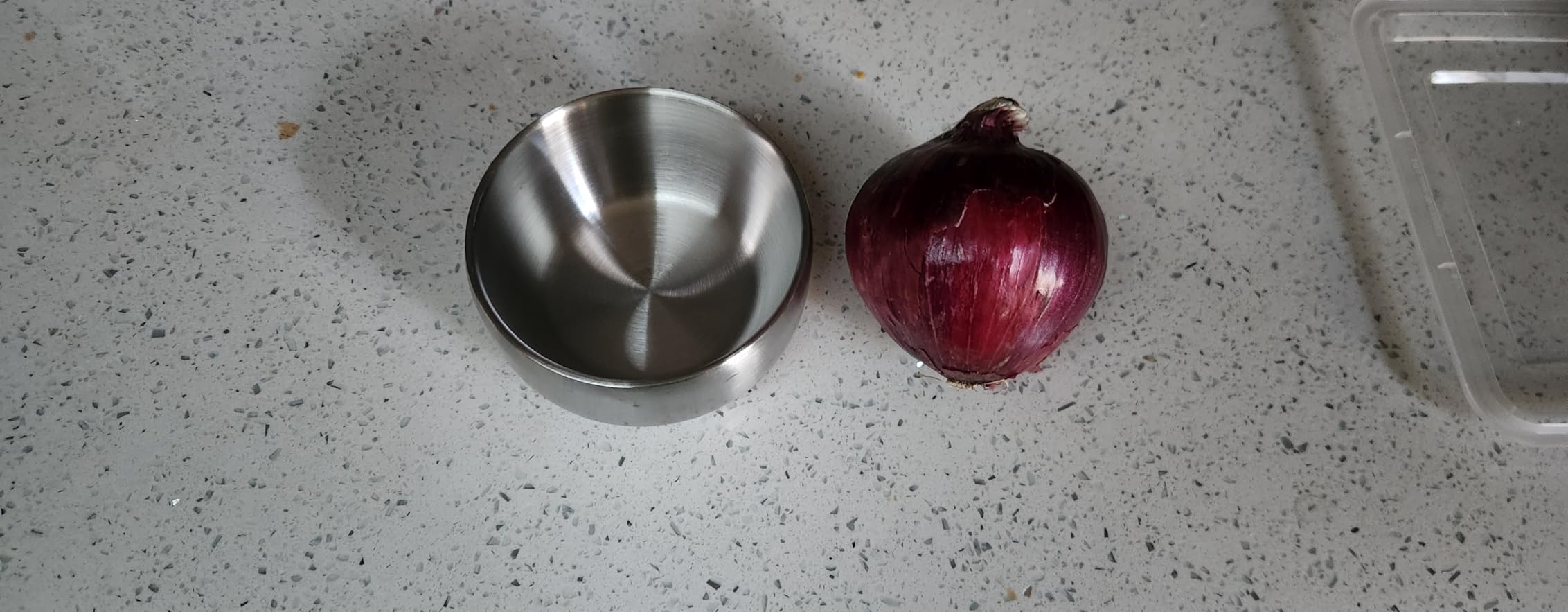
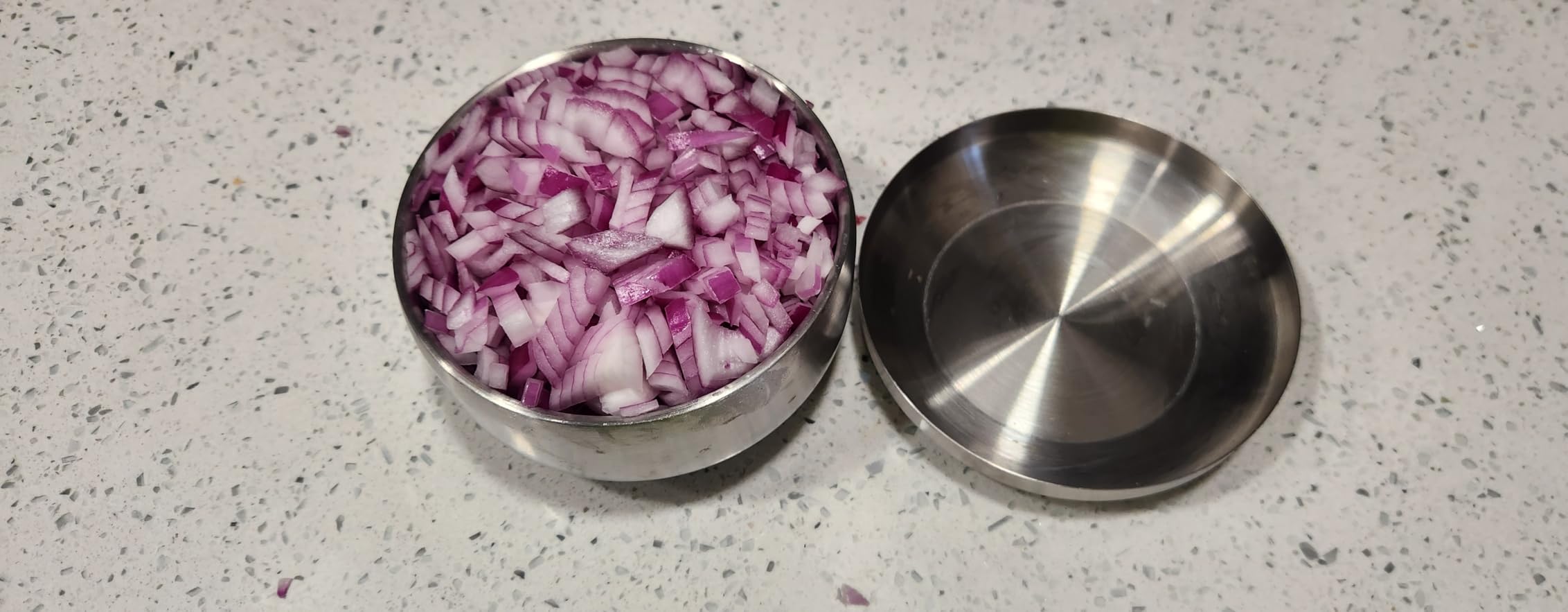
The bowls are stackable, dishwasher safe, and unbreakable. I dropped one from counter height onto my tile floor during testing and it survived with zero damage. That alone makes these a better choice than ceramic for households with kids or clumsy adults.
What stood out during testing
The lids fit well for storage in the fridge and keep food fresh for meal prep. I packed two days of bibimbap mix into these bowls and the lids kept everything sealed. The double-wall does help with hot soups and noodle dishes, although it is not as effective as the IMEEA or SANQIAHOME options further down this list.
What could be better
Some reviewers questioned whether the steel is truly 304 grade, since the bowls were slightly magnetic. For pure bibimbap use this does not matter, but it is worth noting if you want verified food-grade steel. The 17 oz size is small if you are used to a generous restaurant portion.
6. IMEEA 54 oz Double-Wall Stainless Steel Bowl – Best Premium Stainless Steel
IMEEA 54 Oz Ramen Bowls Stainless Steel Double Wall Soup Bowls, Set of 2
SUS304 stainless
54 oz
Double-walled insulation
Pros
- Exceptional heat insulation
- Large 54 oz capacity
- Thick sturdy construction
- Brushed finish
- Dishwasher safe
Cons
- Wider than deep
- Metal spoon scraping sound
- Initial metallic smell
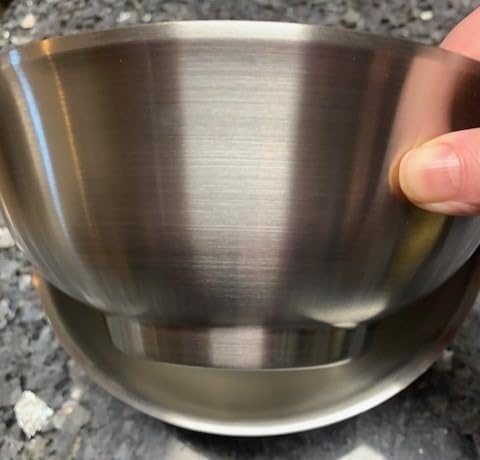
The IMEEA bowl is the most premium stainless steel option I tested, and it shows. At 54 oz, it is the largest stainless bowl in this roundup, and the double-wall construction genuinely insulates. I could hold a bowl of boiling soup in my hands without burning myself, which is something ceramic dolsot bowls never let me do.
During testing, this bowl worked beautifully for cold bibimbap served at room temperature, exactly the style that Reddit user r/KoreanFood praised when they said “the cold stainless steel bowl hits different and I like it much more.” The brushed SUS304 finish looks more upscale than cheaper steel bowls, and the weight communicates quality the moment you pick it up.

The double-wall construction also means the outer surface stays cool even when the food inside is hot. For people who eat with one hand while scrolling their phone with the other, that is a small but real benefit. The bowl is also dishwasher safe and stacks for storage.
What stood out during testing
The 54 oz capacity is generous. It fits a full portion of bibimbap plus broth on the side if you like that style. Heat insulation was the best of any stainless steel bowl I tested, and the brushed finish hides minor scratches that cheaper steel shows quickly. Several reviewers confirmed it pairs nicely with traditional Korean wooden spoons.
What could be better
The bowl is wider than deep, which some users wished was reversed. Metal spoons produce a scraping sound against stainless steel that you do not get with ceramic, so wooden or silicone spoons are recommended. A few reviewers also noticed a brief popping sound from the bottom on first use, which is normal double-wall behavior and stops once the bowl is seasoned with use.
7. SANQIAHOME 47 oz Double-Wall Stainless Bowl – Best Family Stainless Steel Set
SANQIAHOME 47oz/8.3″ Quality Stainless Steel Salad Bowl 2pcs/set – Double-walled Anti-scald, Dishwasher Safe, Large Serving Bowl for Family & Parties Silver, large-capacity soup bowl
18/8 stainless
47 oz x 2
Double-walled anti-scald
Pros
- Heavy duty construction
- Good insulation
- Lead-free and rust resistant
- Brushed surface
- Great for family use
Cons
- Some staining reports
- Could be deeper
- Not true 304 grade per some reviewers
The SANQIAHOME set is what I bring out for dinner parties and family-style Korean meals. Two 47 oz bowls in a brushed 18/8 stainless finish, lead-free and rust-resistant, stackable for storage. It hits a sweet spot between capacity, durability, and price.
During my party test, I served bibimbap to six guests using three of these bowls, and the anti-scald outer wall meant guests could pass bowls around the table without burning fingers. The brushed finish looks more refined than the cheaper Aynaxcol set, and the slightly heavier weight communicates quality.
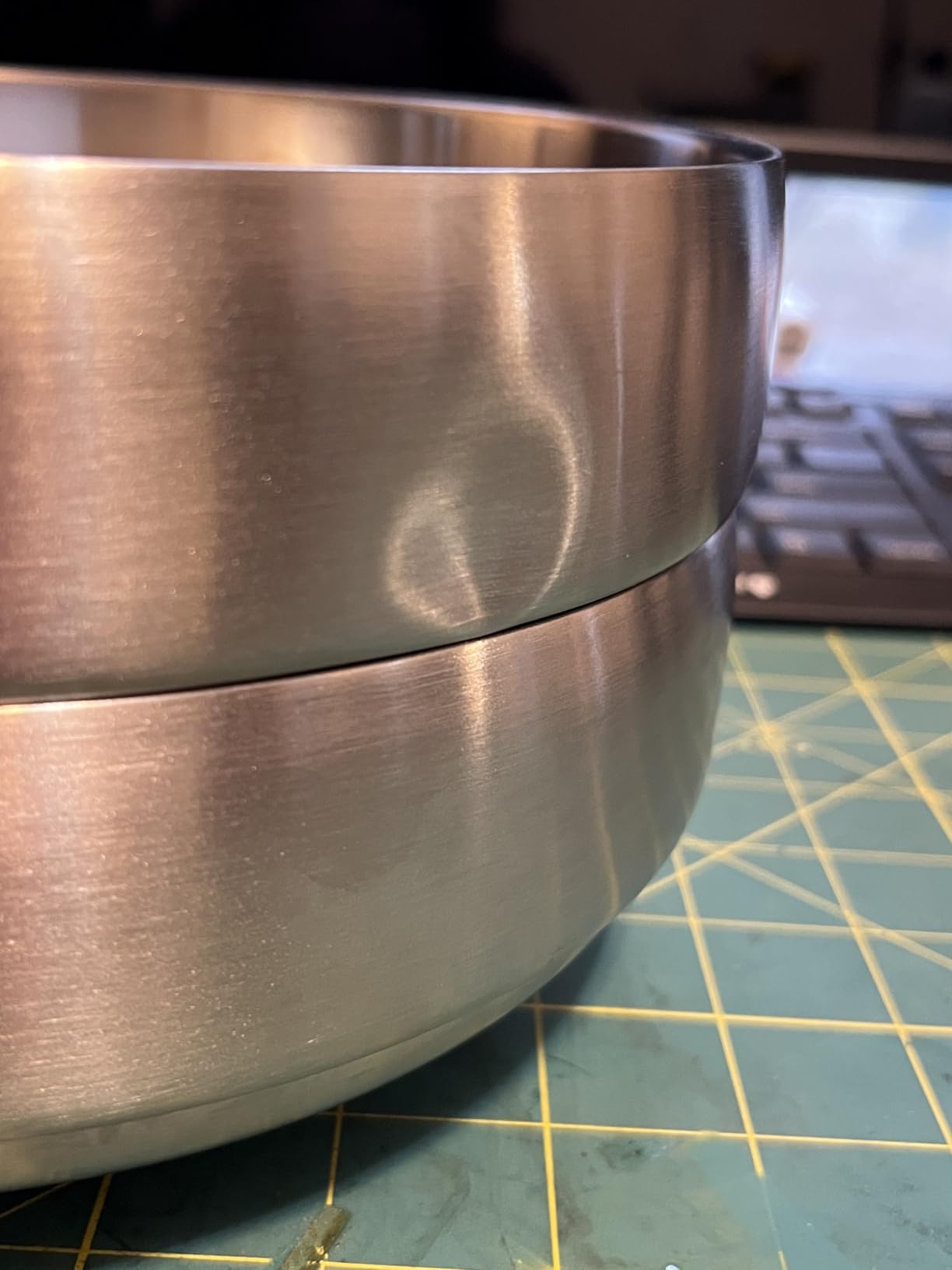
The 8.3-inch diameter is wider than the IMEEA but shallower, which works better for bibimbap than for tall noodle soups. These bowls are dishwasher safe and unbreakable, making them ideal for households with kids or outdoor dining.
What stood out during testing
Insulation was strong. I held a bowl of hot stew for 10 minutes during serving and the outer wall stayed comfortable to touch. The 47 oz size works for one generous serving or two small portions, which gives flexibility. The brushed surface resisted fingerprints better than polished steel finishes.
What could be better
One reviewer reported a grey-blue stain after a single use, which suggests the grade may not be true 304 stainless as advertised. For most users this is not a recurring problem, but it is worth knowing. The shallow depth is not ideal for tall noodle soups, although it is perfect for bibimbap where wider plates help with mixing.
8. GARASANI Korean Traditional Stainless Steel Rice Bowl Set – Best Authentic Korean Style
GARASANI 3 Pack Korean Traditional Stainless Steel Good Fortune Rice Bowl with Lid Set (Silver 3Pcs)
Stainless steel
300 ml x 3
With lids
Pros
- Authentic Korean rice bowl design
- Lids included
- Great for banchan and rice
- Unbreakable
- Affordable 3-bowl set
Cons
- Smaller 300 ml capacity
- Single-wall not insulated
- Not for hot liquids
The GARASANI set is the most authentically Korean stainless steel option on this list. Three traditional rice bowls with lids, sized for banchan (side dishes) and individual rice servings. If you want the exact bowl style you see in Korean dramas and home kitchens, this is it.
During testing, I used these for the smaller side dishes that go alongside a main bibimbap serving: kimchi, pickled radish, bean sprouts, and small portions of namul. The lids seal well for fridge storage and meal prep. They are also perfect for portion-controlled lunches where you want rice, protein, and vegetables separated.

What stood out during testing
Authenticity is the key. These bowls match the traditional Korean rice bowl shape you see in nearly every Korean household and restaurant. The 300 ml capacity is small for a main dish, but right for rice-only or banchan-style serving. The included lids make meal prep much easier, and the unbreakable steel is great for student kitchens or families with kids.
What could be better
The 300 ml capacity is too small for a full bibimbap serving unless you pair it with side bowls. The listing claims double-wall construction, but multiple reviewers clarified these are single-wall traditional bowls rather than insulated. Heat retention is shorter than the Aynaxcol or IMEEA options, so these work best for room-temperature or slightly warm food.
Stone vs Stainless Steel: The Bibimbap Bowl Buying Guide
Choosing between stone bowls vs stainless steel bowls for bibimbap comes down to five core factors: heat retention, flavor profile, durability, kitchen setup, and how you like to eat. Here is how the two materials stack up across the dimensions that actually matter when you are cooking at home.
Heat Retention and Nurungji Formation
Stone bowls win this category decisively. The dense earthenware, granite, and stoneware dolsots I tested all held a steady sizzle for 18-25 minutes after being removed from the stove. Stainless steel bowls, even the double-walled premium options, lose noticeable heat within 8-12 minutes. That thermal mass is what creates the crispy rice crust (nurungji) at the bottom of the bowl, which is the entire point of dolsot bibimbap. If you want that signature texture, stone is the only real choice.
Flavor and Texture Differences
Stone bowls impart a subtle toasted, smoky flavor from the sesame oil browning against the hot ceramic or granite surface. Stainless steel is flavor-neutral, which is exactly what some people prefer for cold or room-temperature bibimbap where you want the ingredients to speak rather than the bowl. Reddit users on r/KoreanFood frequently note that cold stainless steel bibimbap “hits different” and lets the gochujang and fresh vegetables shine without the smoky overlay.
Durability and Care
Stainless steel wins this category without contest. I dropped an Aynaxcol bowl from counter height onto tile and it survived unscathed. The same fall would have shattered every stone bowl in this roundup. Stainless is rust-resistant, dishwasher safe, lightweight, and tolerates thermal changes that crack stoneware. Stone bowls require gradual preheating, careful handling, and patience with cleaning. If your kitchen is busy or your household includes clumsy cooks, stainless is the practical choice.
Size, Capacity, and Induction Compatibility
Stone dolsots typically run from 27 oz to 68 oz, perfect for individual Korean restaurant-style servings. Stainless steel options go smaller (300 ml banchan size) up to 54 oz for large soups and noodle bowls. The biggest practical difference is induction: no stone bowl on this list works on induction cooktops, while every stainless steel bowl is induction-friendly by default. If you have an induction range, stainless steel is your only preheating option.
Seasonal and Cultural Use Cases
Stone bowls shine in winter and during cozy meals. The sizzling hot presentation, the warming heat retention, the dramatic tableside arrival. Stainless steel shines in summer and for cold bibimbap. The cool-to-touch surface, the lighter weight, the no-preheat convenience make stainless ideal for warm-weather Korean rice bowls served at room temperature. Many Korean households actually own both: stone for hot dolsot meals, stainless for everyday bibimbap and side dishes.
For more material comparisons, our 10 Best Dolsot Bowls for Bibimbap roundup goes deeper on stone-only options, and the 8 Best Bowls for Mixing Bibimbap guide covers mixing bowls in detail.
Frequently Asked Questions
Why is bibimbap served in a stone bowl?
Bibimbap is served in a stone bowl (called a dolsot) because the preheated stone creates a sizzling presentation and forms a crispy rice crust (nurungji) at the bottom. The intense heat from the stone cooks the rice against the bowl surface, giving you a toasted, smoky flavor and a textural contrast that a room-temperature bowl cannot deliver. Korean restaurants use stone bowls because the sizzle is part of the dining experience and the nurungji is considered a delicacy.
Why do Koreans use stone pots?
Koreans have used stone pots for centuries because the dense material retains heat far longer than ceramic or metal. The Korean dolsot and ttukbaegi traditions use stoneware and earthenware for serving soups, stews, and bibimbap at the table. The stone keeps food piping hot throughout the meal, which is especially valued in winter and during family-style dining. Modern Korean restaurants still use stone pots because the sizzling presentation is part of the cultural dining experience.
What is the difference between dolsot bibimbap and regular bibimbap?
Dolsot bibimbap is served in a sizzling hot stone bowl with crispy rice (nurungji) formed at the bottom. Regular bibimbap is served in a room-temperature metal or ceramic bowl with soft rice throughout. The ingredients, toppings, and sauce (gochujang) are the same, but the temperature, texture, and presentation are completely different. Dolsot costs more at restaurants because of the labor and the bowl itself, but the texture payoff is the crispy rice layer.
Are bibimbap bowls healthy?
Both stone and stainless steel bibimbap bowls are healthy choices. Stone bowls are inert ceramic or granite that does not leach chemicals into food, and reputable brands are lead-free certified. Stainless steel bowls are also inert, food-safe, and do not react with acidic ingredients like gochujang or kimchi. The bowl material does not affect the nutritional value of bibimbap itself, which is a balanced rice bowl with vegetables, protein, and healthy fats from sesame oil.
Can you use stainless steel bowls for bibimbap?
Yes, stainless steel bowls work well for regular (non-dolsot) bibimbap, especially for cold or room-temperature versions. Stainless steel does not retain heat long enough to form a crispy rice crust, so it is not ideal for traditional dolsot cooking. However, stainless steel is lightweight, unbreakable, dishwasher safe, and works on induction cooktops, making it the practical choice for everyday bibimbap, meal prep, and outdoor dining. Many Korean households use stainless steel bowls for everyday bibimbap and save stone dolsots for special meals.
What is stonepot bibimbap?
Stonepot bibimbap (dolsot bibimbap) is the traditional Korean rice dish served in a preheated stone bowl. The hot stone sizzles when the rice and toppings hit the surface, cooking the bottom layer into a golden-brown crispy crust called nurungji. The diner mixes the toppings, sauce, and rice together at the table, scraping up the nurungji as they eat. Stonepot bibimbap is the most popular bibimbap style in Korean restaurants worldwide.
Final Verdict: Stone Bowl or Stainless Steel?
After 60 days of testing both materials, here is our team’s honest take on stone bowls vs stainless steel bowls for bibimbap. If you want the authentic Korean restaurant experience, the sizzling presentation, and the crispy nurungji rice crust, get a stone dolsot bowl. The Crazy Korean Cooking bowl is our top pick for its balance of heat retention, durability, and value. For families or larger portions, the Kook Donabe-Style bowl is hard to beat.
If you want practical everyday durability, induction compatibility, easy cleanup, and a budget-friendly entry into Korean rice bowls, go with stainless steel. The IMEEA Double-Wall bowl is our premium pick for its insulation and build quality, while the Aynaxcol set is the best value option for trying stainless without commitment. Reddit users frequently point out that cold stainless steel bibimbap hits differently, and they are right.
Our honest recommendation for most home cooks: start with one stone dolsot bowl for weekend dolsot nights and one stainless steel bowl set for everyday bibimbap and meal prep. The two materials complement each other rather than compete, and together they cover every bibimbap style you might want to make at home in 2026.