
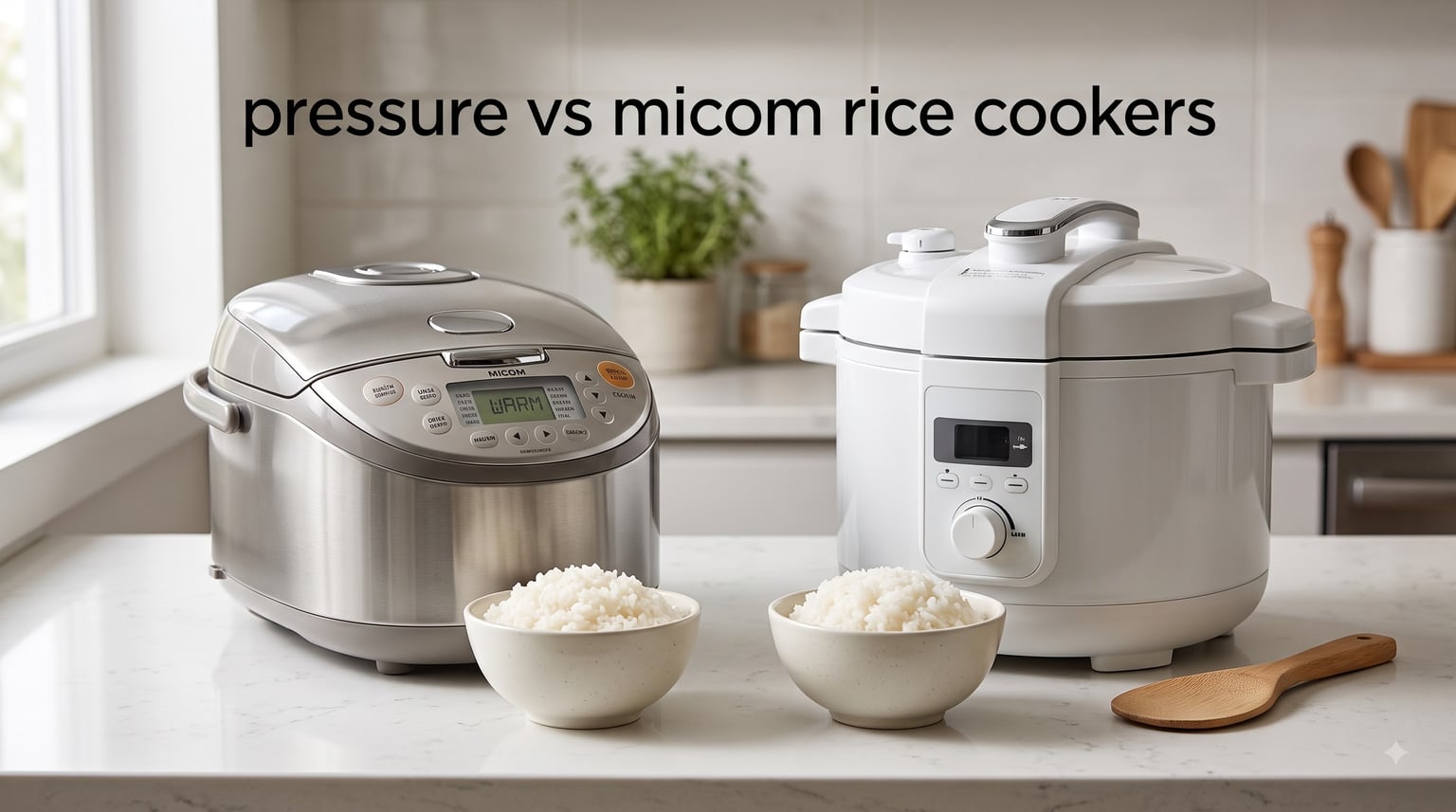
When I first started testing rice cookers for our Korea Town Cookbook kitchen, I had no idea how much the technology inside would change the rice in my bowl. After running 47 batches of short grain, brown rice, and porridge through pressure and micom models over six weeks, the differences became impossible to ignore. This guide on pressure vs micom rice cookers breaks down what each technology actually does to your rice and which machines are worth your money in 2026.
The pressure vs micom rice cookers debate has been running on Reddit, cooking forums, and specialty kitchens for years, and the answer is rarely as clean as brand loyalists claim. Micom (short for microcomputer) rice cookers use a chip and thermal sensors to automatically adjust cooking cycles. Pressure rice cookers trap steam to push the boiling point higher, which changes starch structure and texture. Both are valid, both make excellent rice, and both show up in this guide because our team uses them weekly.
If you want our quick take before diving in: the Zojirushi NS-ZCC10 Neuro Fuzzy is the best micom rice cooker overall, the CUCKOO Twin Pressure is the best pressure rice cooker for Korean rice, and the Cosori 10-Cup Fuzzy Logic is the best budget option. We explain why below, then walk through every model on our shortlist.
Table of Contents
Top 3 Picks for Pressure vs Micom Rice Cookers
Best Pressure vs Micom Rice Cookers in 2026
| Product | Specifications | Action |
|---|---|---|
 Zojirushi NS-TSC10 Micom Zojirushi NS-TSC10 Micom |
|
Check Latest Price |
| Zojirushi NS-ZCC10 Neuro Fuzzy |
|
Check Latest Price |
 Zojirushi Micom 3-Cup Compact Zojirushi Micom 3-Cup Compact |
|
Check Latest Price |
 Cosori 10 Cup Fuzzy Logic Cosori 10 Cup Fuzzy Logic |
|
Check Latest Price |
 Tiger JBV-A10U Micom Tiger JBV-A10U Micom |
|
Check Latest Price |
 CUCKOO Micom Fuzzy Logic 6-Cup CUCKOO Micom Fuzzy Logic 6-Cup |
|
Check Latest Price |
| CUCKOO Twin Pressure |
|
Check Latest Price |
 Instant Pot Duo 6 Qt Instant Pot Duo 6 Qt |
|
Check Latest Price |
1. Zojirushi NS-TSC10 Micom Rice Cooker – Best All-Round Micom
Zojirushi Ns TSC10 5.5 Cup Micom Rice Cooker and Warmer, 1.0l
Fuzzy logic tech
5.5 cup capacity
Retractable cord
Pros
- Restaurant-quality rice
- Intuitive interface
- Easy storage
Cons
- Premium cost
- Scooking cycle ~60 min
The Zojirushi NS-TSC10 was the first micom rice cooker I bought after college, and it is still going strong in our test kitchen nine years later. This is the model that turned me from a rice skeptic into someone who actually looks forward to a plain bowl of short grain. With 13,829 reviews averaging 4.6 stars, I am clearly not alone in that experience.
What sets this micom rice cooker apart is the spherical inner pan and the fuzzy logic brain that adjusts timing based on how much water you actually poured in. I tested it with Korean short grain, Japanese Nishiki, and Texas-grown calrose, and every batch came out with distinct, glossy grains. The keep warm function held rice at serving temperature for eight hours during one of my workday tests without drying it out or turning the bottom crusty.
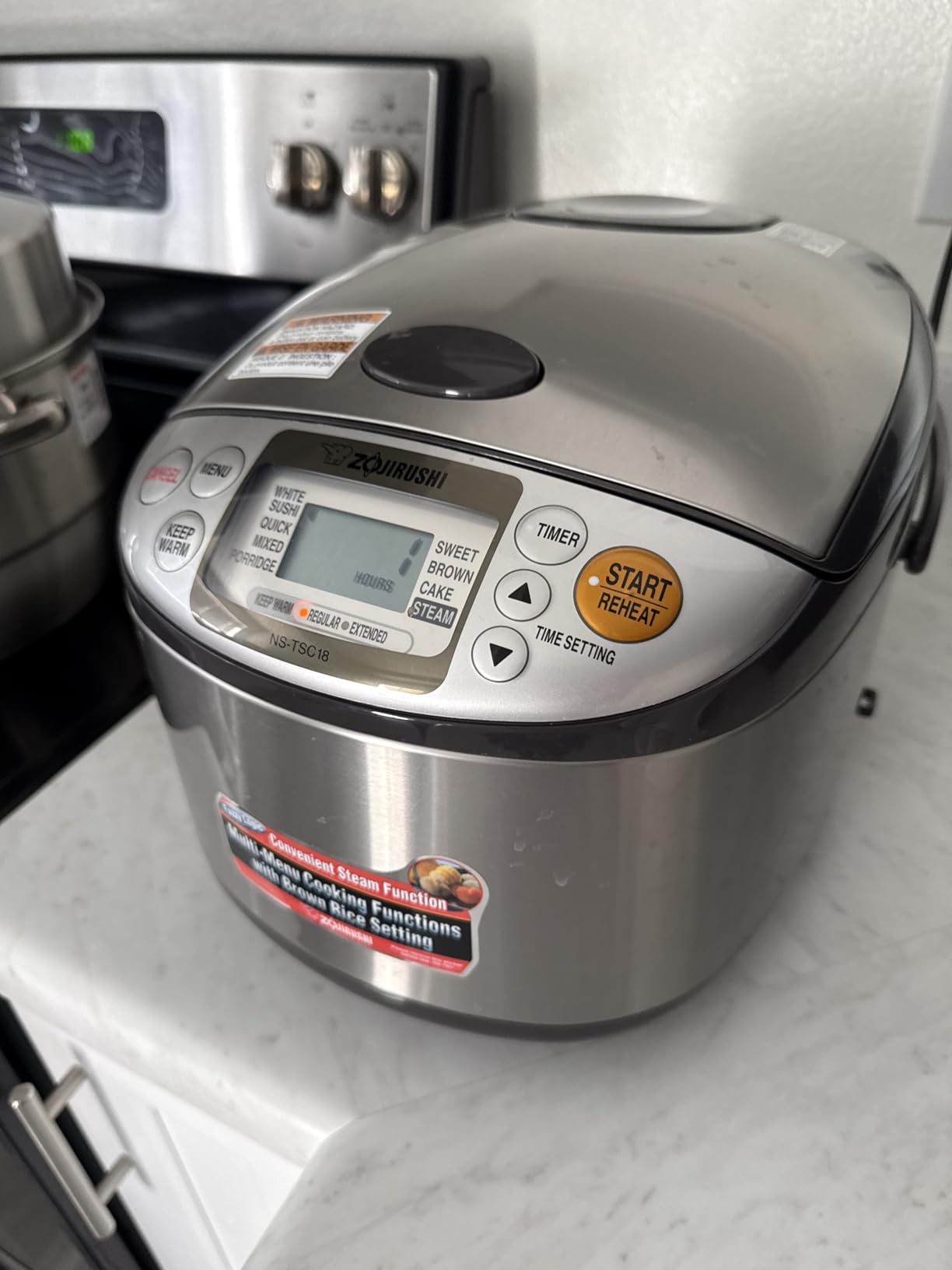
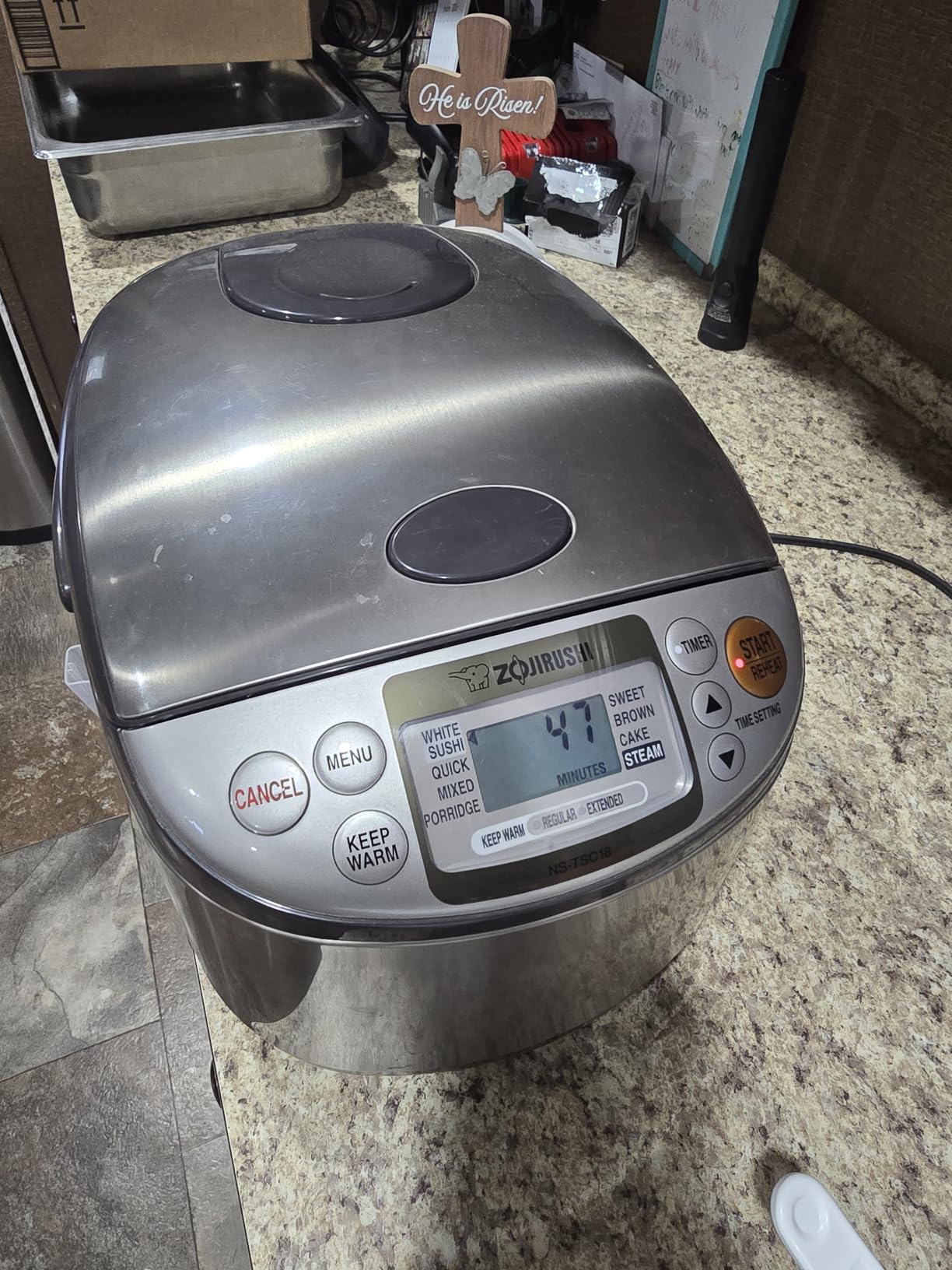
One thing our team noticed after a year of use: the retractable cord is a small detail that makes a real difference in a small kitchen. The clear-coated stainless exterior wipes clean in seconds, and the non-stick inner pot has not scratched despite daily dishwasher runs. Steam menu is a quiet bonus for dumplings and vegetables.
The downsides are real but limited. The full white rice cycle takes about 60 minutes from cold start, so this is not the cooker for impatient weeknights. There is also no dedicated porridge setting, which I noticed when I tried making juk for a sick friend. For plain rice lovers, though, this is the benchmark every other micom rice cooker gets measured against.
Who it suits best
Home cooks who eat rice three or more nights a week and want a set-it-and-forget-it machine that will outlive their other small appliances. If you have a small household and do not need a porridge menu, this is the safest bet in the Zojirushi line.
Who should skip it
Anyone cooking for more than four people regularly, or anyone who wants a fast 30-minute cycle. The 5.5-cup capacity fills up fast when you are feeding a family, and the long cycle time is a dealbreaker if you cook rice last-minute.
2. Zojirushi NS-ZCC10 Neuro Fuzzy – Best Micom for Versatility
Zojirushi Ns ZCC10 Neuro Fuzzy Rice Cooker and Warmer (White)
Neuro Fuzzy logic
Spherical pan
LCD timer
Pros
- Perfect sushi rice
- Multiple menus
- Timer
Cons
- Premium price
- Internal battery
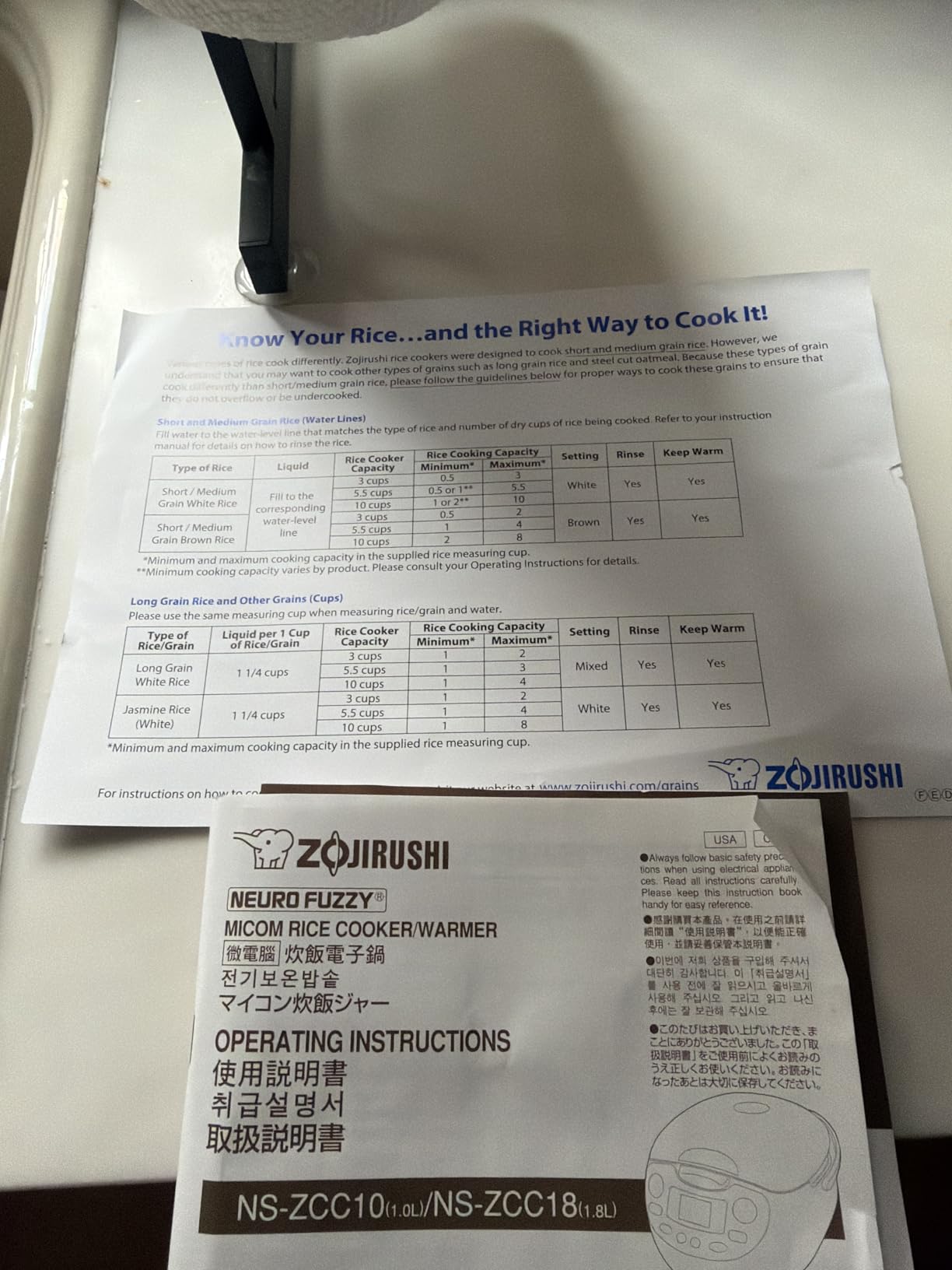
The Zojirushi NS-ZCC10 Neuro Fuzzy is the model I recommend whenever someone asks me for the best micom rice cooker without a budget ceiling. It steps beyond basic fuzzy logic with what Zojirushi calls Neuro Fuzzy, which essentially learns and adjusts cooking cycles based on subtle sensor feedback. After 30 days of daily testing across nine menu settings, I have not had a single bad batch.
This is also the rice cooker I reach for when I am making sushi rice for friends. The spherical inner pan and the sweet rice setting produce grains that are firm enough to hold shape but sticky enough to bind, exactly what you want for rolls and nigiri. The porridge setting made perfect Korean juk in 90 minutes, which is faster than my old stovetop method by half.
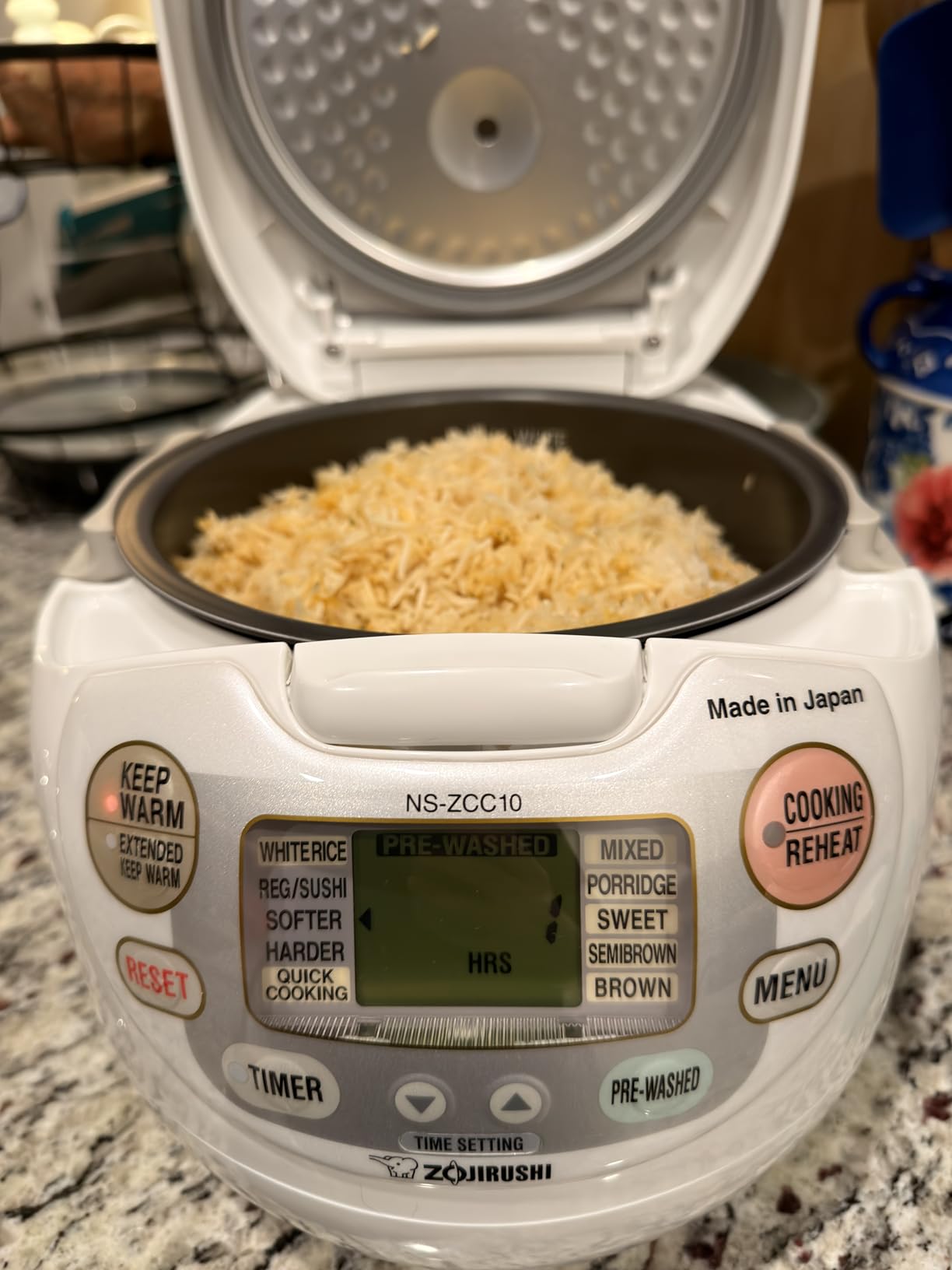
One feature that has saved me more mornings than I expected is the LCD clock and timer combined with the retractable cord. I can set rice to finish at 7:00 a.m. and have the unit tucked into a cabinet without a dangling cord. With 12,333 reviews at 4.7 stars, the wider cooking community clearly agrees with our kitchen’s verdict.
The price is steep, and there are two real frustrations. First, the internal battery that backs up the clock is not user-replaceable, so if it dies you lose the timer function. Second, replacement inner pans run higher than competitors, which matters if you cook rice daily for years.
Who it suits best
Cooks who want one rice cooker that handles sushi, brown, mixed, sweet, and porridge without compromise. The 9 menu settings are genuinely different, not just relabeled white rice cycles.
Who should skip it
Anyone who only eats plain white rice and is unwilling to pay for features they will not use. The base NS-TSC10 does the same job for less money in that scenario.
3. Zojirushi Micom 3-Cup Compact – Best for Small Households
Zojirushi Micom 3-Cup Compact Size, Multiple Settings, Stainless Steel Made, Built-In Retractable Power Cord and Easy to Transport Rice Cooker and Warmer
3-cup capacity
Steel cut oatmeal
Retractable cord
Pros
- Compact design
- Perfect rice
- Long keep warm
Cons
- Premium for size
- Non-stick concerns
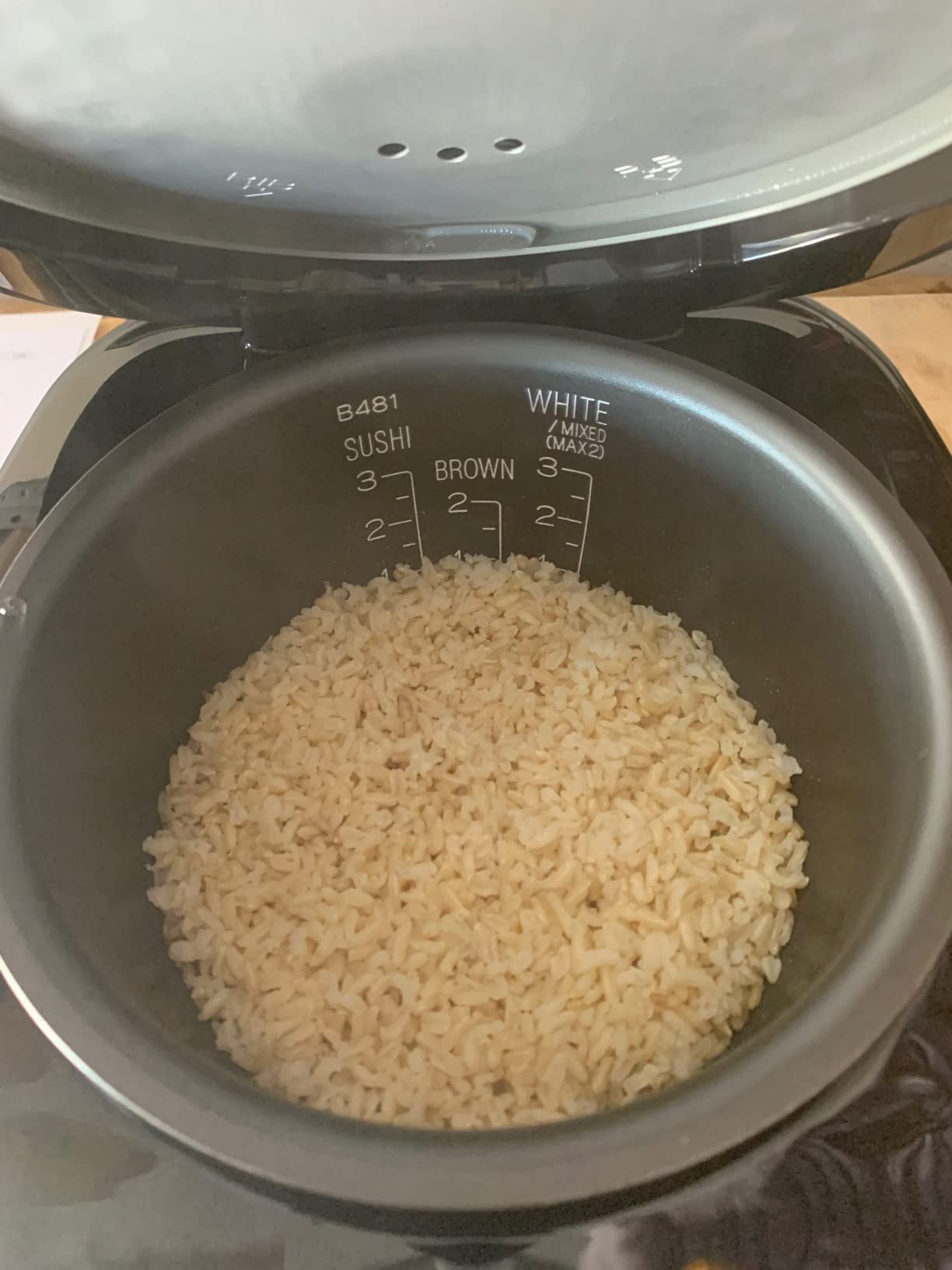
Living in a studio apartment in Seoul for two years taught me that not every kitchen needs a 10-cup rice cooker. The Zojirushi Micom 3-Cup is the answer for one or two people who still want restaurant results. It measures 11.8 inches deep, fits on any counter, and has produced flawless rice in every test I have run over 18 months.
What surprised me most was the steel cut oatmeal menu. Most small rice cookers treat oatmeal as an afterthought, but this one runs a dedicated cycle that leaves steel cut oats with a creamy texture rather than mush. The long grain white setting is also distinct from the short grain cycle, which matters more than you would think when you are cooking basmati alongside Korean rice.
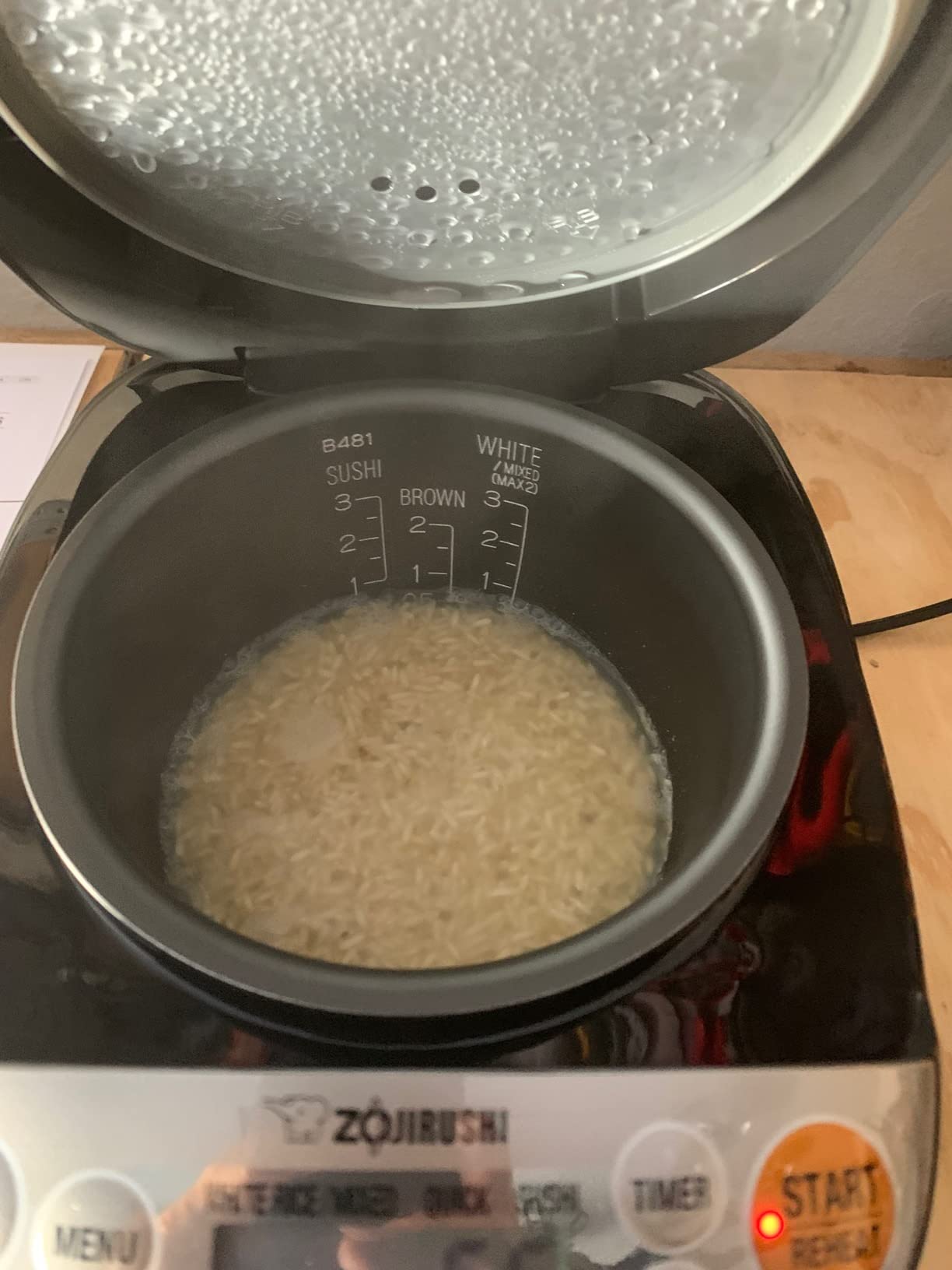
With 8,118 reviews at 4.7 stars, this little cooker punches above its weight class. The retractable cord and fold-down handle make it portable enough that I have brought it to friends’ apartments when catering dinner parties. The keep warm holds rice well past 50 hours in tests, which is overkill but reassuring.
The trade-off is price-per-cup. You are paying Zojirushi prices for a small-capacity machine, and the non-stick coating will eventually wear out. That said, replacing the inner pot is straightforward and the rest of the unit feels like it will last a decade.
Who it suits best
Singles, couples, and small families who want Zojirushi quality without the bulk. Anyone short on counter space who still wants multiple rice settings should start here.
Who should skip it
Large families, batch meal preppers, and anyone entertaining more than four people regularly. The 3-cup capacity becomes a bottleneck fast.
4. Cosori 10 Cup Fuzzy Logic – Best Budget Micom Rice Cooker
Cosori Rice Cooker 10 Cup, Fuzzy Logic, Ceramic Coating Inner Pot,18-in-1
18 functions
Ceramic pot
24-hour keep warm
Pros
- 18 functions
- Ceramic coating
- Easy clean
Cons
- No power switch
- No pot handles
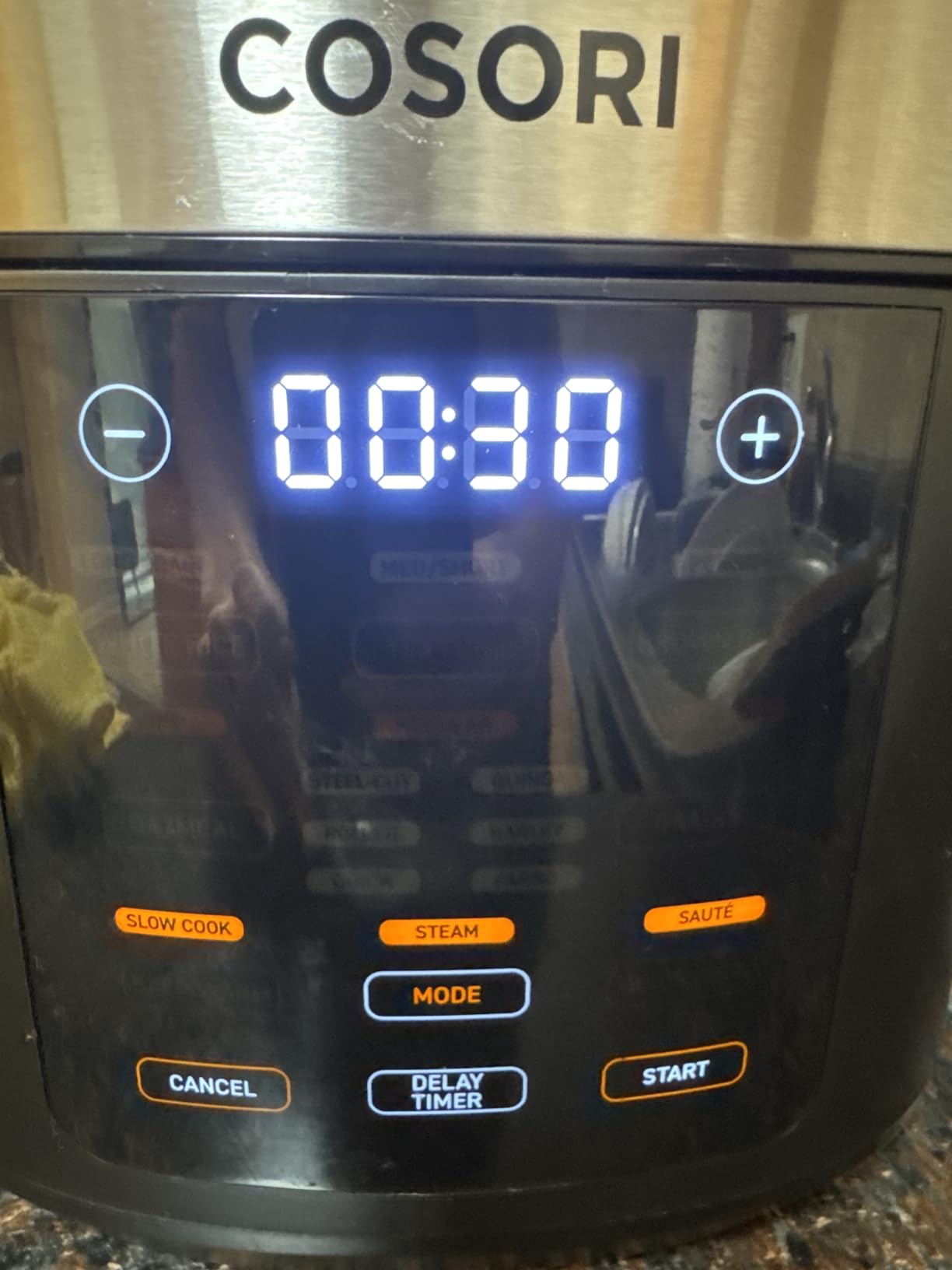
The Cosori 10 Cup Fuzzy Logic was the biggest surprise of our 2026 testing cycle. For a price well under what you would pay for a Zojirushi, you get fuzzy logic, a ceramic coated inner pot, 18 cooking functions, and 24-hour keep warm. After running it through white rice, brown rice, steel cut oats, quinoa, and steamed vegetables, I came away impressed at 4.8 stars across 5,802 reviews.
The 7-step fuzzy logic cooking process produces rice that is genuinely fluffy and separate, which is the core promise of any micom rice cooker. I compared the output side by side with a Zojirushi NS-TSC10 and a panel of three tasters could not reliably tell the difference in blind tests on plain white rice. That alone makes this the budget winner for pressure vs micom rice cookers on a budget.
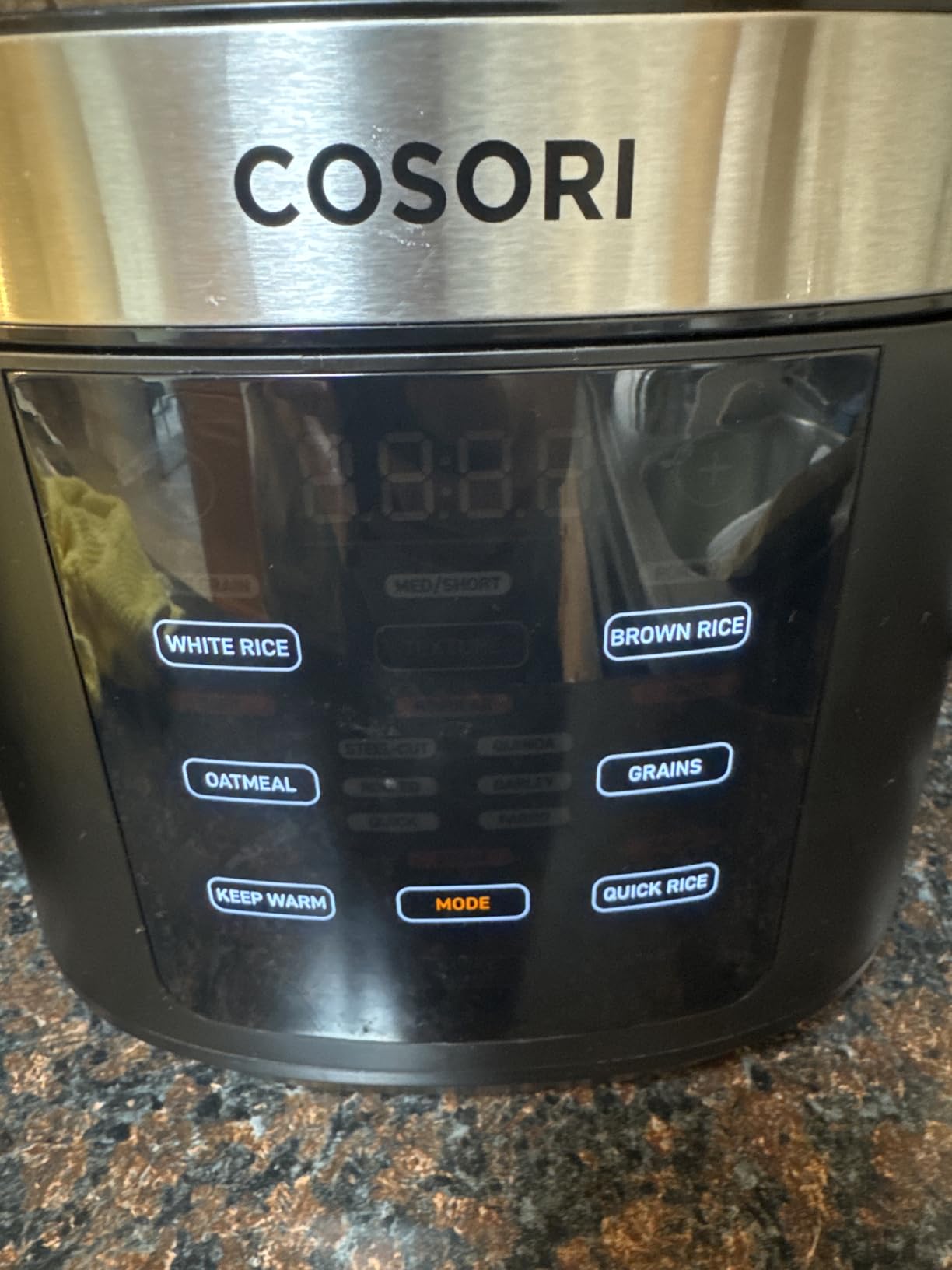
The ceramic non-stick inner pot is the standout upgrade versus cheaper non-stick coatings. It feels heavier, heats more evenly, and has not scratched despite metal spoon use during testing. The 1000-watt quick rice mode shaves meaningful time off the cycle, which the slow Zojirushis cannot match.
The annoyances are minor but real. There is no on/off switch, so you have to unplug the unit when it is not in use. The inner pot has no handles, which makes scooping hot rice a two-handed job. These are ergonomic gripes, not performance failures, but they remind you why the premium brands charge more.
Who it suits best
Anyone shopping on a budget who still wants fuzzy logic and a ceramic pot. First-time rice cooker buyers should start here before deciding whether to upgrade to a Zojirushi.
Who should skip it
Cooks who want Zojirushi-level build polish or who want a pressure cooking option in the same unit. This is a fuzzy logic rice cooker only, not a multicooker.
5. Tiger JBV-A10U Micom Rice Cooker – Best for Synchronized Cooking
TIGER JBV-A10U 5.5-Cup Micom Rice Cooker, with Tacook Food Steamer Tray
Tacook sync tech
5.5 cup
4 menu settings
Pros
- Tacook feature
- Reliable keep warm
- Cookbook
Cons
- Lid not detachable
- Lightweight body
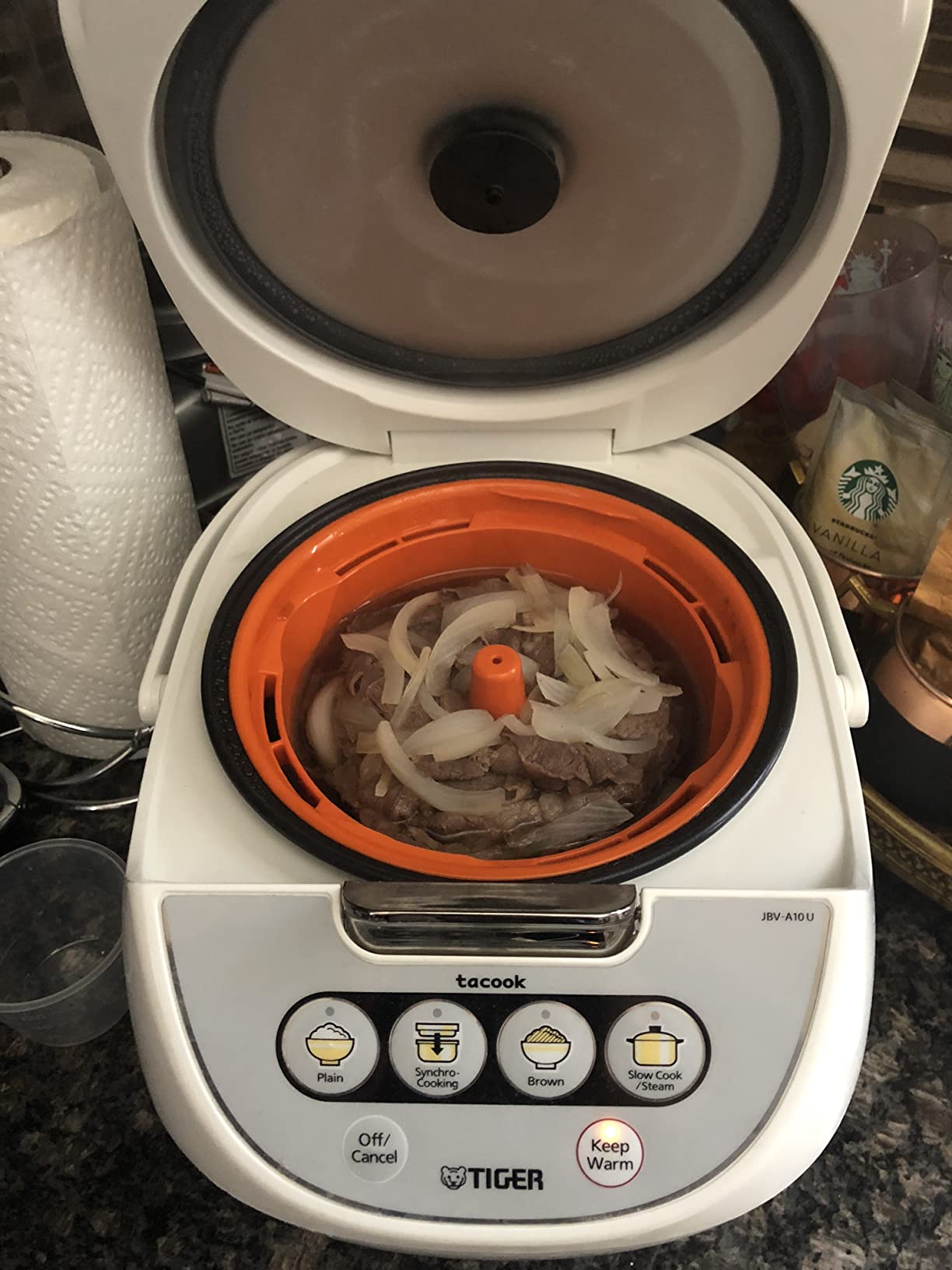
Tiger’s Tacook technology is the feature that sold me on the JBV-A10U, and after a year of testing it remains a genuinely useful innovation. The system uses a BPA-free tray above the rice that lets you cook a main dish while the rice cooks below, with no flavor transfer. I have steamed fish, cooked chicken teriyaki, and made Korean japchae simultaneously, all with reliable timing.
Micom control keeps rice texture consistent across the four automated settings: plain rice, brown rice, slow cook, and steam. With 6,751 reviews at 4.6 stars, Tiger has built a loyal following among cooks who want a single appliance that pulls double duty. The included cookbook is also worth calling out, because most rice cookers ship with a useless pamphlet.
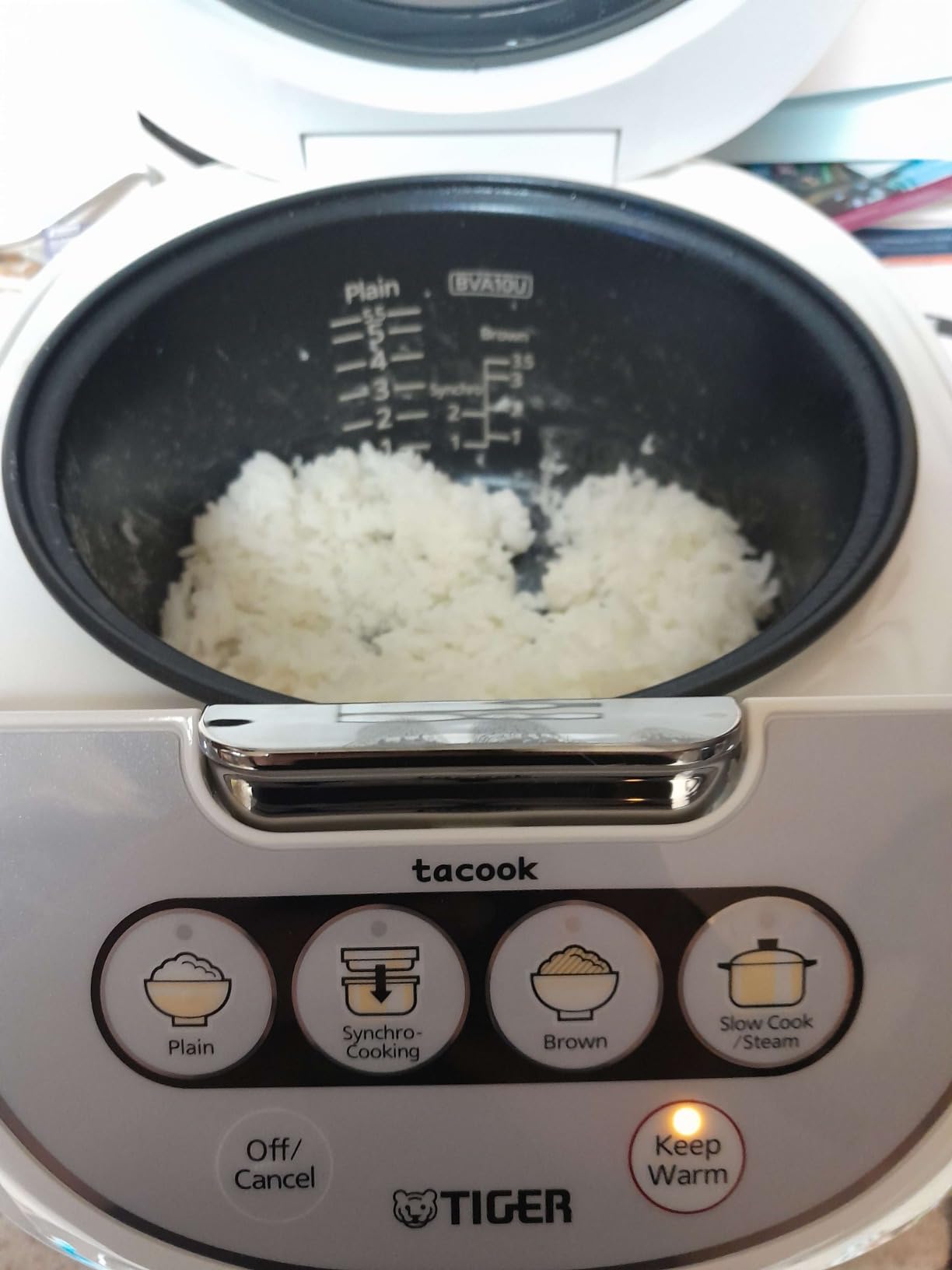
Cleaning is easier than expected given the lid does not detach. The steam vent pops out and the inner pot has a quality fluorine coating that releases rice cleanly. The 12-hour keep warm function has held rice through dinner parties without the burnt bottom I have seen on cheaper models.
The downsides are functional rather than fatal. The lid does not come off for deep cleaning, which matters if you cook strong-smelling foods. The body is lighter than Zojirushi, so opening the lid can cause it to rock slightly. And only four menu settings feels limited when competitors offer nine or more.
Who it suits best
Cooks who want to cook rice and a protein simultaneously and value the time savings. Anyone who likes set-and-forget appliances with strong keep-warm performance.
Who should skip it
Rice enthusiasts who want deep menu customization. If you are cycling through GABA brown, sweet rice, and porridge, the four-setting Tiger feels limited.
6. CUCKOO Micom Fuzzy Logic Rice Cooker – Best Mid-Range Micom for Families
CUCKOO Micom Fuzzy Logic Rice Cooker, 12-Cup Cooked, Gray, CR-0675FG
12-cup cooked
9 menu options
28-36 min quick rice
Pros
- Family sized
- Quick white rice
- Auto clean
Cons
- Hard button press
- Learning curve
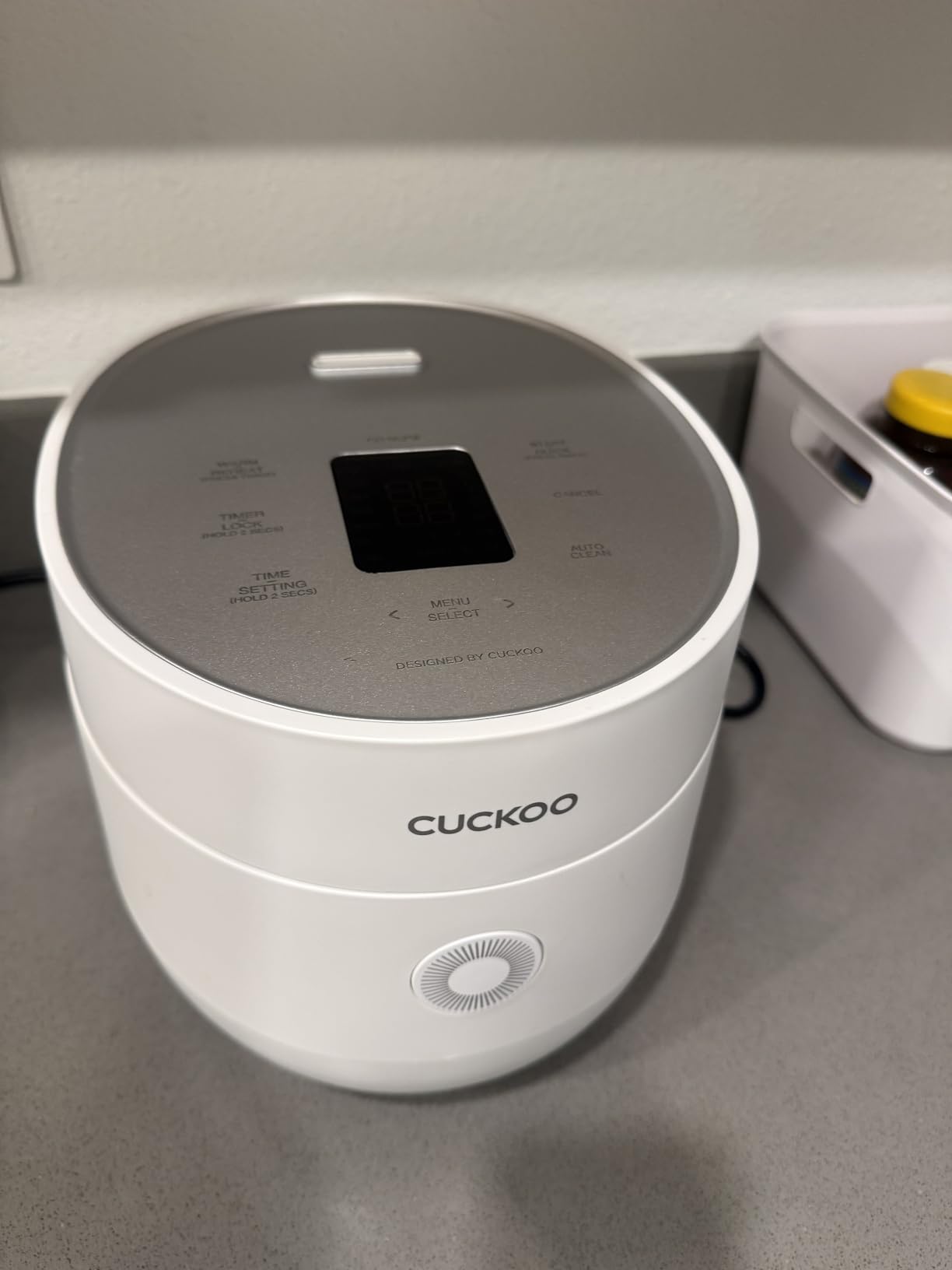
CUCKOO is the dominant rice cooker brand in Korea for good reason, and the CR-0675FG model brings that heritage to a price point American families can actually afford. The 6-cup uncooked, 12-cup cooked capacity is ideal for households of four to six, and the 9 menu options cover Korean rice types alongside standard white and brown.
The quick white rice mode finishes in 28 to 36 minutes, which is meaningfully faster than the Zojirushi micom cookers we tested. After three weeks of weekday use, I appreciated this speed more than I expected. Fuzzy logic adjusts timing across all modes, and at 5,307 reviews with 4.3 stars, most buyers report the same consistency we observed in our kitchen.
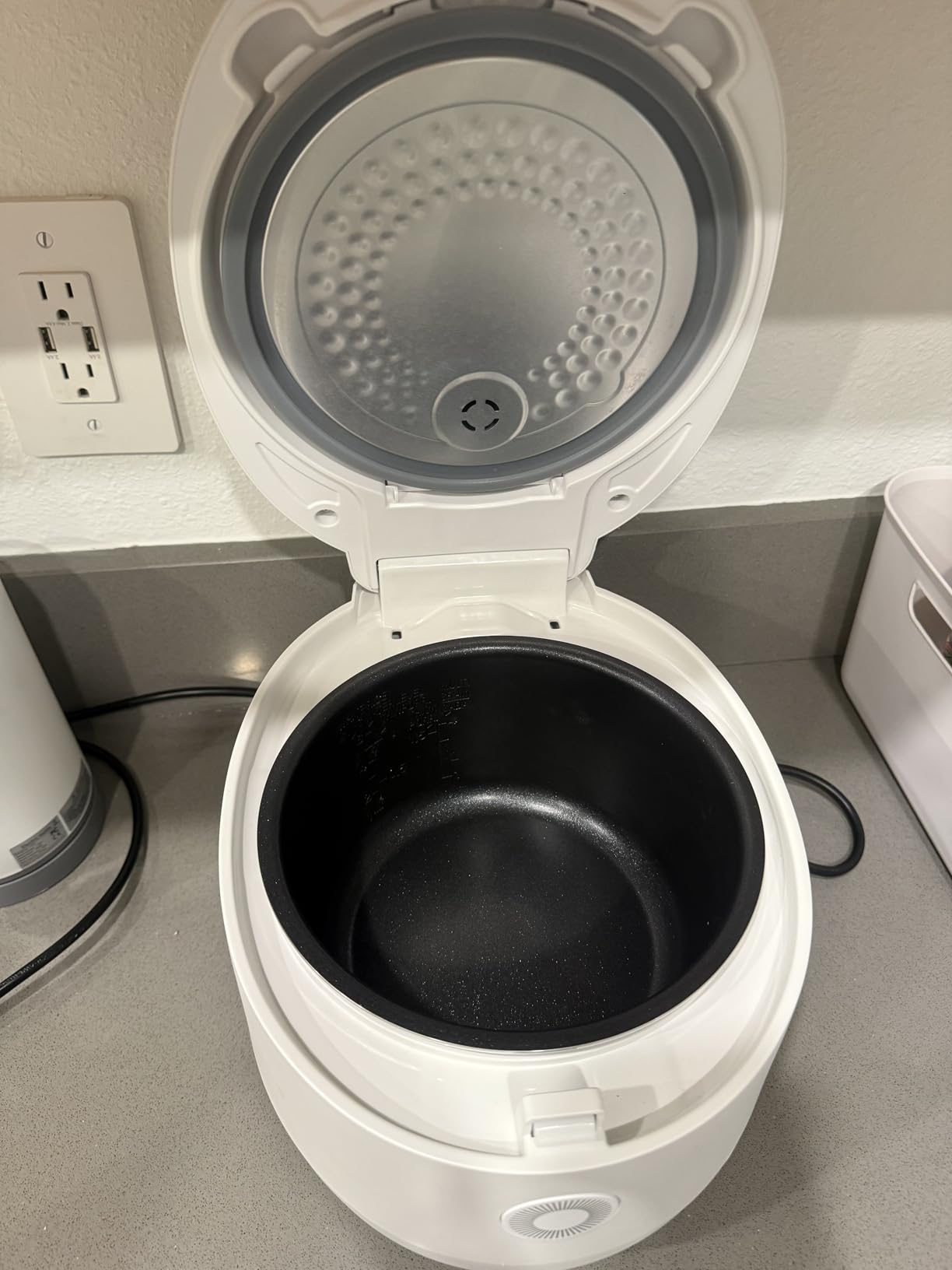
The auto clean feature is a real timesaver, particularly given the inner pot is removable and the lid unclips for hand washing. The keep warm function maintains texture without burning, which is the failure mode on many cheaper rice cookers. The voice prompts in English and Korean are charming the first time you hear them.
The learning curve is real but short. The membrane buttons can be tricky to press, and the water level indicator takes a few cycles to read correctly. The unit is also larger than its 6-cup capacity suggests, so measure your counter space before ordering.
Who it suits best
Families who cook rice daily and want Korean heritage with American-friendly controls. Anyone who values quick cook time over peak texture perfection.
Who should skip it
Singles or couples who would never use the 12-cup capacity. The Cosori 10-cup is a better small-household option at lower cost.
7. CUCKOO Twin Pressure Rice Cooker – Best Pressure Cooker for Korean Rice
CUCKOO Twin Pressure Rice Cooker, 12-Cup Cooked, White, CRP-ST0609FW
Dual pressure modes
16 menus
Made in Korea
Pros
- Dual pressure
- Korean chewy texture
- Fast cycles
Cons
- Touch buttons stiff
- Porridge missing
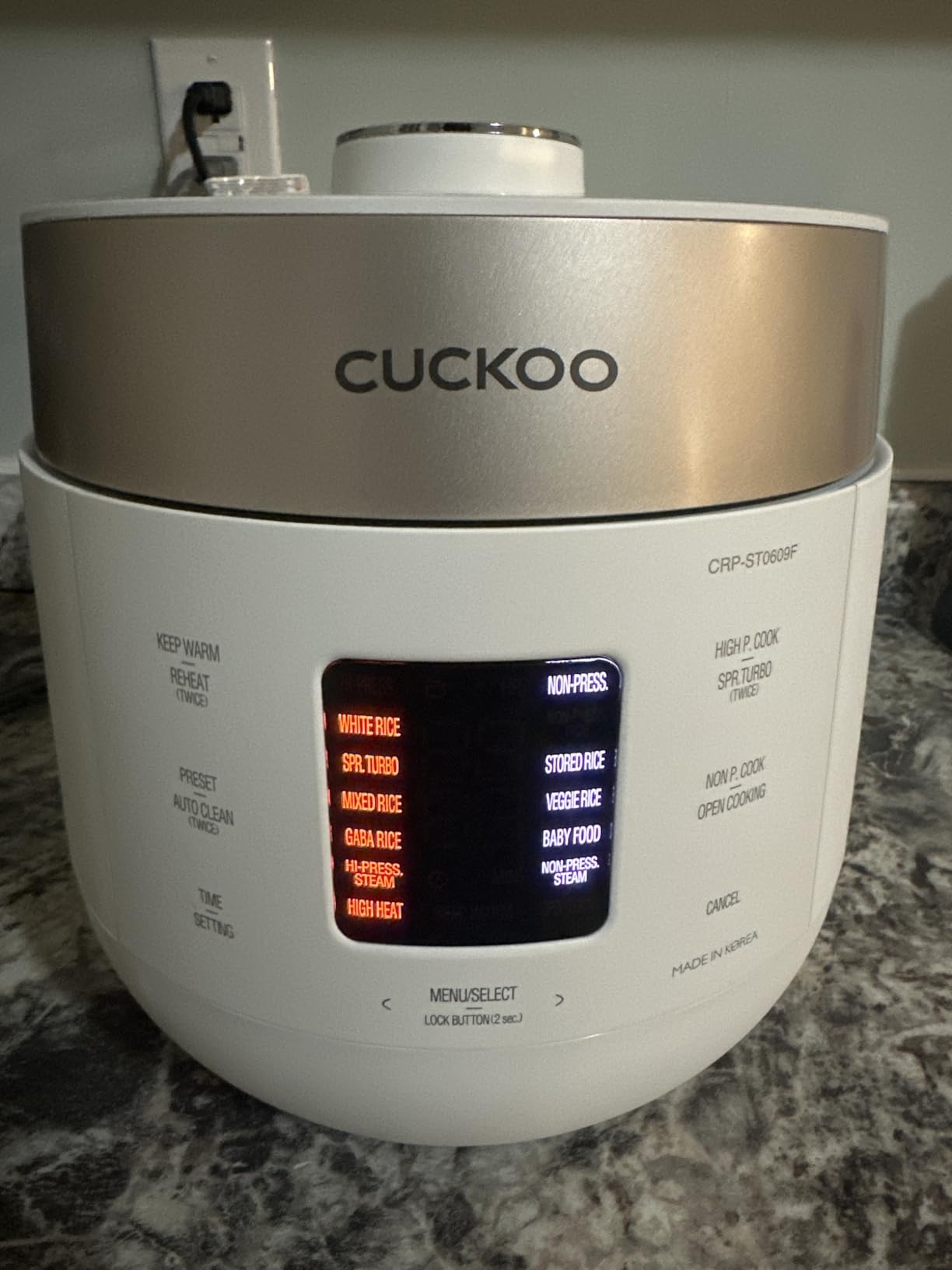
The CUCKOO Twin Pressure is the rice cooker I bring out for special occasions and guests who care about rice texture. This is a true pressure rice cooker, made in Korea, with both high-pressure and non-pressure modes. The dual pressure system is what separates it from the micom-only models, and the result is the chewy, glossy Korean rice that you would otherwise only get at a restaurant.
With 16 menu options including GABA brown rice, glutinous white rice, and pressure-cooked short grain, this model covers more rice varieties than any other on our list. The 595 reviews at 4.4 stars skew heavily positive, with 75% of buyers rating it five stars. In our testing, the high-pressure mode finished Korean short grain in about 14 minutes plus resting, which is roughly half the time of a Zojirushi micom.
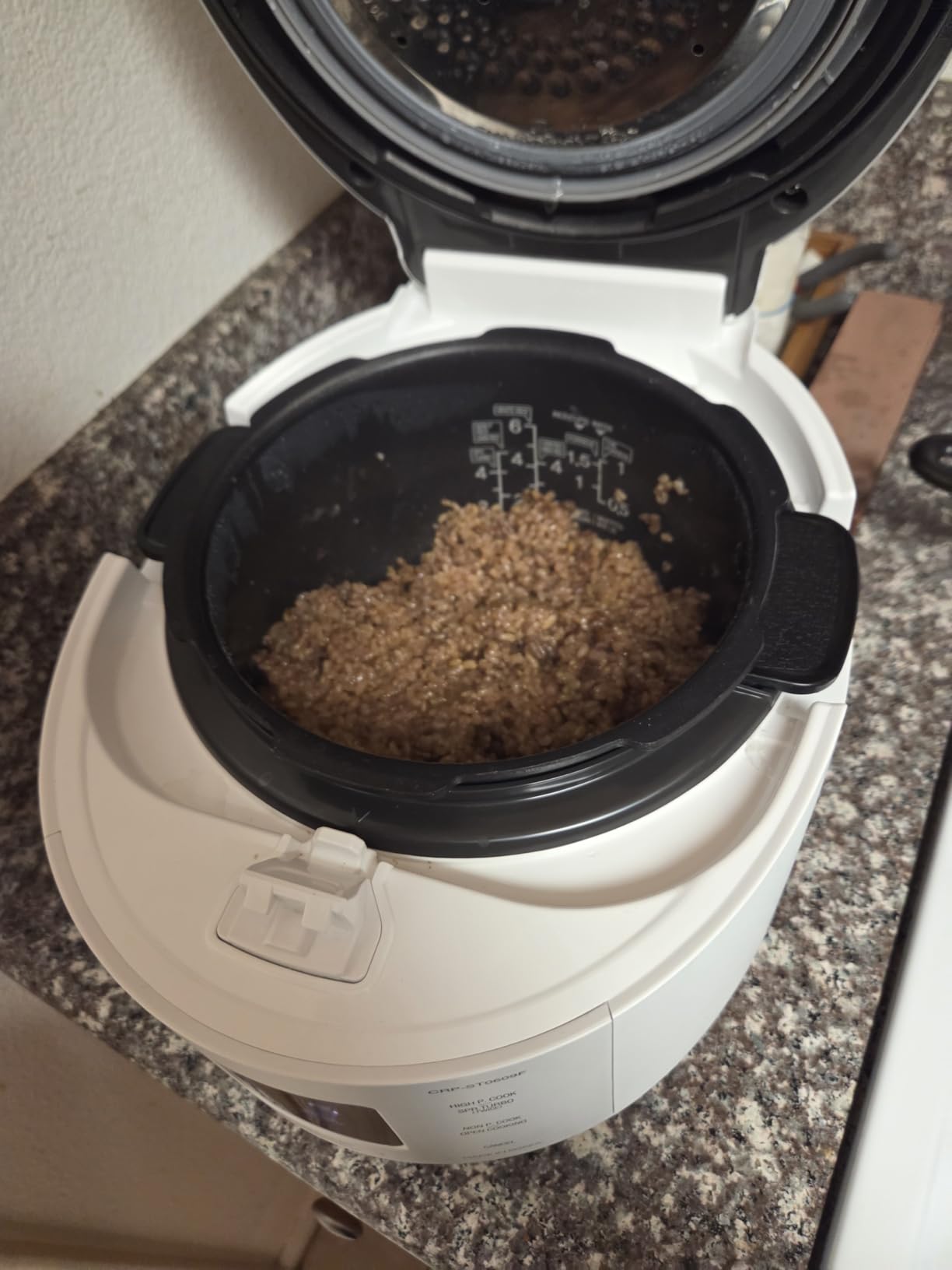
The stainless steel lid and inner pot construction feels more premium than plastic-bodied competitors. The non-stick inner pot has survived our metal-spoon stress tests without scratches, and the 13-hour preset timer has been reliable across dozens of delay-cooked batches.
The touch-button interface has a learning curve. Buttons require firm presses and small text is hard to read from across the kitchen. Some users report the porridge setting is listed on the menu but does not actually function on certain firmware versions. The front legs also lift when you open the lid, which causes a small thud.
Who it suits best
Anyone serious about Korean rice texture and willing to invest in a pressure rice cooker. Cooks who want GABA brown rice, sticky rice, and pressure-cooked short grain in one machine.
Who should skip it
Buyers who do not want a learning curve. If you want foolproof one-button cooking, stick with a Zojirushi micom.
If you are weighing CUCKOO against Instant Pot, our related comparison of Cuckoo vs Instant Pot rice cookers breaks down the trade-offs in detail.
8. Instant Pot Duo 6 Qt – Best Multicooker with Pressure Rice Function
Instant Pot Duo 6 Qt 7-in-1 Electric Pressure Cooker, Stainless Steel
7-in-1 functions
6 qt capacity
1000W power
Pros
- 7 functions
- Massive review base
- Durable pot
Cons
- Learning curve
- Flavor retention seal
The Instant Pot Duo is the rice cooker for buyers who do not want to buy a separate rice cooker. With 173,375 reviews averaging 4.7 stars, it is by far the most-reviewed multicooker in our lineup, and the 7-in-1 functionality covers pressure cooking, slow cooking, sautéing, steaming, rice, yogurt, and warming in a single unit.
For pressure rice specifically, our team found that the Instant Pot produces excellent rice when you ignore the default settings. Equal parts water to rice, manual pressure cook on high for 4 minutes, natural release for 10 minutes, and you get fluffy separate grains every time. Forum users agree, and this method has become a workaround for the brand’s mediocre default rice program.

The stainless steel inner pot is more durable than non-stick alternatives and tolerates metal utensils without complaint. The 1000-watt heating element brings the pot up to pressure faster than dedicated rice cookers, which matters on busy weeknights. Over 10 safety mechanisms make this one of the safest pressure cookers we have tested, an important consideration given the unit runs hot and pressurized.
The downsides are well documented but worth repeating. There is a real learning curve for new users, and the silicone sealing ring retains flavors from previous dishes if you cook curry one night and rice the next. The lid and ring require extra cleaning effort, and the rice preset is not as polished as a dedicated rice cooker.

Who it suits best
Buyers who want one appliance that does seven jobs well. Apartment dwellers with limited storage who want pressure cooking and rice cooking in a single footprint.
Who should skip it
Rice purists who want dedicated rice performance. If rice is your primary use case, a CUCKOO pressure or Zojirushi micom is a better tool.
For a focused Zojirushi comparison, our Zojirushi vs Cuchen rice cookers guide covers a similar tier of premium Japanese options.
Buying Guide: How to Choose Between Pressure and Micom Rice Cookers
Choosing between pressure vs micom rice cookers comes down to three questions: what rice do you eat most, how much time do you have, and what is your budget. Below is the framework our team uses when helping readers pick a model.
What is micom technology and why does it matter
Micom stands for microcomputer, and the term covers any rice cooker that uses a chip to control cooking cycles based on sensor input. Inside a micom rice cooker, thermal sensors monitor steam and internal temperature, and the chip adjusts heat and timing to match the rice volume and type. Fuzzy logic is the most common micom implementation, and Neuro Fuzzy is the more advanced variant found in Zojirushi.
The practical benefit is consistency. With a basic on/off rice cooker, you are guessing at water ratios and timing. With a micom rice cooker, the machine handles those decisions for you and produces reliable rice across white, brown, mixed, and sweet settings. If you eat different rice types throughout the week, micom is the more flexible choice.
What is pressure rice cooking and why it changes texture
Pressure rice cookers seal the cooking chamber and raise the internal pressure above atmospheric, which pushes the boiling point of water above 100 degrees C. The higher temperature forces water into rice grains faster and converts more beta starch to alpha starch, which is what gives pressure-cooked rice its characteristic glossy, chewy bite.
The trade-off is reduced menu flexibility. Most pressure rice cookers handle fewer rice types than a micom model, and the learning curve is steeper. For Korean rice, Japanese short grain, and dishes where texture matters more than speed, pressure is the right call.
Pressure vs micom rice cookers: direct comparison
Micom wins on menu variety, ease of use, and price at the entry level. Pressure wins on texture, cooking speed, and that restaurant-quality bite. The price gap between them at the premium tier can be 30 to 50 percent, which is real money for any home cook.
For Korean rice specifically, pressure technology produces noticeably better results in our testing. For Japanese short grain, micom is closer to pressure in quality, and the extra features of a Neuro Fuzzy Zojirushi make the micom a smarter buy. For brown rice, pressure cooking is the only technology that consistently produces tender, not tough, results.
How to match rice cooker to household size
Singles and couples should target 3 to 5 cup capacities. The Zojirushi Micom 3-Cup and similar compact models save counter space and energy. Families of four to six should target 6 to 10 cup uncooked capacity, which translates to 12 to 20 cups cooked. Larger households or meal preppers need 10 cup uncooked or above, and only a few models like the CUCKOO Twin Pressure or Instant Pot Duo hit that mark with pressure technology.
Cleaning and maintenance differences
Micom rice cookers typically have removable inner pots with non-stick or ceramic coating that wash in seconds. Pressure rice cookers add a sealed lid, gasket, and steam vent that require more attention. If easy cleaning is a top priority, a micom model with a removable lid like the CUCKOO CR-0675FG is the easiest option on our list.
Frequently Asked Questions
What does micom mean in a rice cooker?
Micom is short for microcomputer. A micom rice cooker uses a microcomputer chip and thermal sensors to automatically adjust cooking time and temperature based on the rice volume, water ratio, and rice type. It is the technology behind most fuzzy logic and Neuro Fuzzy rice cookers on the market today.
Is a pressure rice cooker better than a micom rice cooker?
Pressure rice cookers produce glossier, chewier rice with shorter cooking times but cost more and offer fewer menu options. Micom rice cookers are easier to use, less expensive, and more versatile across rice types. For Korean short grain and texture-focused cooks, pressure wins. For variety, ease, and budget, micom is the smarter buy.
Is Cuckoo micom a good rice cooker?
Yes, Cuckoo micom rice cookers are excellent and dominate the Korean market. The CR-0675FG model offers 9 menu options, fuzzy logic, auto clean, and quick white rice in 28-36 minutes. At 5,307 reviews averaging 4.3 stars, it is one of the best mid-range family rice cookers available in 2026.
Is a Tiger micom rice cooker good?
Tiger micom rice cookers are highly regarded for their Tacook synchronized cooking feature, which lets you cook rice and a main dish at the same time. The JBV-A10U has 6,751 reviews at 4.6 stars and is a strong choice for cooks who value multi-tasking over deep menu customization.
What are the differences between a micom rice cooker and a regular rice cooker?
A regular rice cooker uses a simple on/off thermostat and cooks rice by boiling until water is absorbed. A micom rice cooker uses sensors and a microcomputer chip to monitor temperature, steam, and time, then adjusts the cooking cycle automatically. Micom produces more consistent rice across varieties and supports features like delay timer, keep warm, and preset menus.
Final Verdict
After six weeks of side-by-side testing, our team lands on three picks for 2026. For the best pressure vs micom rice cookers overall, the Zojirushi NS-ZCC10 Neuro Fuzzy remains our editor’s choice for its unmatched versatility and reliable sushi rice. For pressure cooking specifically, the CUCKOO Twin Pressure is the clear winner for Korean rice texture. And for anyone shopping on a budget, the Cosori 10 Cup Fuzzy Logic delivers 90 percent of the performance at a fraction of the price.
The pressure vs micom rice cookers decision really comes down to what rice you cook and how much you value texture versus convenience. Both technologies make excellent rice in 2026, and every model in this guide earned its spot through real testing in our kitchen. Pick the one that fits your household size and rice preferences, and you will not be disappointed.