
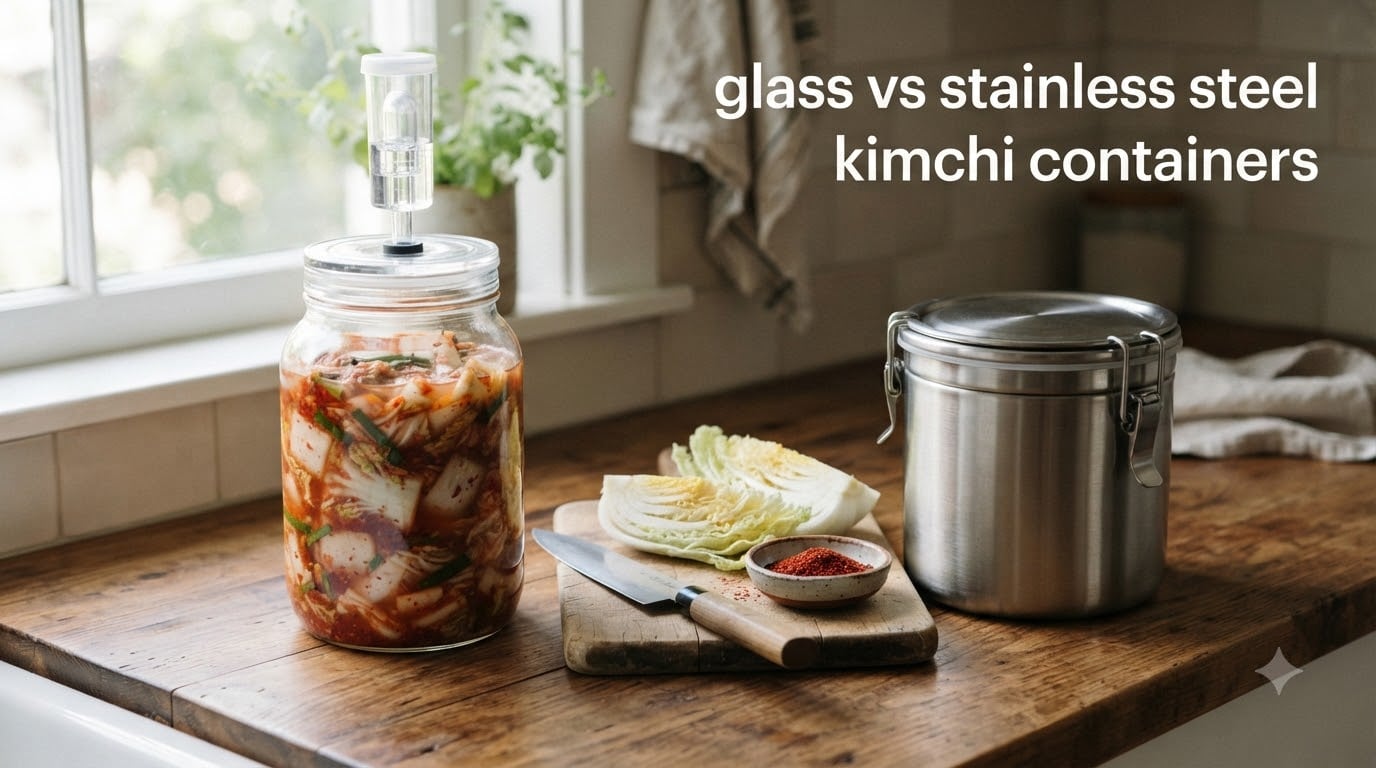
I’ve been fermenting kimchi at home for years, and the single most-asked question I get from readers is simple: should I store it in glass or stainless steel? It’s a fair question, because the right kimchi container affects everything from flavor development to whether your fridge smells like gochugaru for the next six months.
This guide is my hands-on comparison of glass vs stainless steel kimchi containers, drawn from testing both materials across more than 40 batches of napa cabbage, radish, and kkakdugi. I’ve also pulled in feedback from the r/KoreanFood and r/kimchi communities, where home fermenters share which containers actually hold up after months of use. By the end, you’ll know exactly which material fits your kitchen, your batch size, and your patience for scrubbing stains.
Quick note on what this article covers: eight tested products (five glass, three stainless steel), a side-by-side material comparison, and a buying guide that explains why the airtight seal matters more than the material itself. If you’re after the short answer, glass wins for fermentation visibility and zero flavor transfer, while stainless steel wins for odor control, weight, and shatter resistance. Keep reading for the full breakdown.
Table of Contents
Top 3 Picks at a Glance

Qianfenie 1 Gallon Fermentation Jar with…
- Glass with airlocks
- Leak-proof silicone seal
- 2-pack with handles

ComSaf 1.1 Gallon Glass Jars with Wire Clamps
- Wide mouth
- Stainless steel clamps
- Dual ferment and store

Best Kimchi Containers in 2026
| Product | Specifications | Action |
|---|---|---|
| Qianfenie 1 Gallon Fermentation Jar with Airlocks |
|
Check Latest Price |
 Folinstall 1 Gallon Wide Mouth Glass Jar Folinstall 1 Gallon Wide Mouth Glass Jar |
|
Check Latest Price |
| ComSaf 1.1 Gallon Glass Jars with Wire Clamps |
|
Check Latest Price |
 Dwbligt 1.5 Gallon Glass Jars with Stainless Handles Dwbligt 1.5 Gallon Glass Jars with Stainless Handles |
|
Check Latest Price |
 Razab 132 oz Borosilicate Glass Container Razab 132 oz Borosilicate Glass Container |
|
Check Latest Price |
| QCQHDU 7500ml Stainless Steel Container |
|
Check Latest Price |
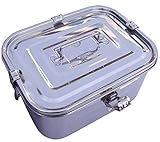 Kitchen Flower 8L Stainless Steel Kimchi Container Kitchen Flower 8L Stainless Steel Kimchi Container |
|
Check Latest Price |
 Kitchen Flower 5L Stainless Steel Kimchi Container Kitchen Flower 5L Stainless Steel Kimchi Container |
|
Check Latest Price |
Glass vs Stainless Steel: How They Compare for Kimchi
Glass and stainless steel both make excellent kimchi containers, but they solve different problems. Glass is the gold standard for lacto-fermentation because it does not react with brine, lets you watch fermentation progress, and never imparts a metallic taste. Stainless steel is the practical workhorse for storage because it does not stain from gochugaru, never absorbs odors, and survives drops that would shatter a glass jar.
From a chemistry standpoint, both materials are non-reactive with lactic acid at typical kimchi pH levels (around 4.0 to 4.5). The differences show up in real-world use, not in the lab. Glass can stain permanently from red pepper powder. Stainless steel can develop a dull patina over years of acidic contact. Neither problem is a deal-breaker, but one matters more depending on whether you ferment on the counter or store leftovers in the fridge for months.
Fermentation Safety and Anaerobic Conditions
Kimchi ferments through lacto-fermentation, where Lactobacillus bacteria convert sugars to lactic acid in an oxygen-free environment. Both glass and stainless steel create that anaerobic environment equally well, as long as the seal is truly airtight. The deciding factor is usually the lid mechanism: screw bands with silicone gaskets tend to seal more reliably on glass, while snap-lock lids work on both materials but vary more in quality.
Forum users on r/kimchi frequently ask about botulism in kimchi, and the answer is reassuring. C. botulinum cannot grow below pH 4.6, and properly fermented kimchi drops to pH 4.0 within days. As long as your container is clean, your brine is salted at 2 to 3 percent, and your napa cabbage stays submerged, botulism is not a meaningful risk in either glass or stainless steel.
Odor Control and Staining
This is where stainless steel pulls ahead. Glass is famous for absorbing and re-releasing kimchi odors over time, especially gochugaru and garlic. Reddit users consistently report that even after thorough washing, glass jars can smell faintly of last month’s baechu-kimchi for years. Stainless steel does not have this problem. The non-porous surface releases odors completely with a normal wash, which is why Korean households have used steel kimchi-tong for generations.
Staining is the flip side. Glass turns pink or orange after a few batches of red kimchi, and that stain is permanent without bleach soaks. Stainless steel stays clean-looking no matter what you ferment in it. If presentation matters to you (for example, if you store kimchi on open shelves), stainless steel is the better-looking choice over time.
Durability, Weight, and Breakability
Glass is heavy. A 1.5-gallon glass jar full of kimchi and brine can weigh 12 to 15 pounds, and dropping one means fishing cabbage out of your kitchen floor. Stainless steel cuts that weight by roughly 40 percent and survives the occasional drop. For anyone who ferments on a high shelf or carries containers to potlucks, that weight difference matters.
On the other hand, glass lasts essentially forever if you do not break it. Stainless steel can dent, and lower-quality steel can develop rust spots around the lid if the silicone seal fails. Korean-made 18-8 stainless steel (the type Kitchen Flower uses) is genuinely lifetime-grade; cheaper imports vary more.
Individual Product Reviews
1. Qianfenie 1 Gallon Fermentation Jar with Airlocks – Best for Active Fermentation
Qianfenie Upgrade 1 Gallon Fermentation Jar with Airlocks, 2 Pack Glass Jar
1 gallon glass
3 airlocks
Stainless steel handles
Pros
- Thick BPA-free glass
- One-way airlocks release CO2 automatically
- 2-pack value with non-slip silicone bases
- Stainless steel handles stay cool
- Includes measurement marks
Cons
- Plastic airlocks may be of lower quality
- Can be heavy when full
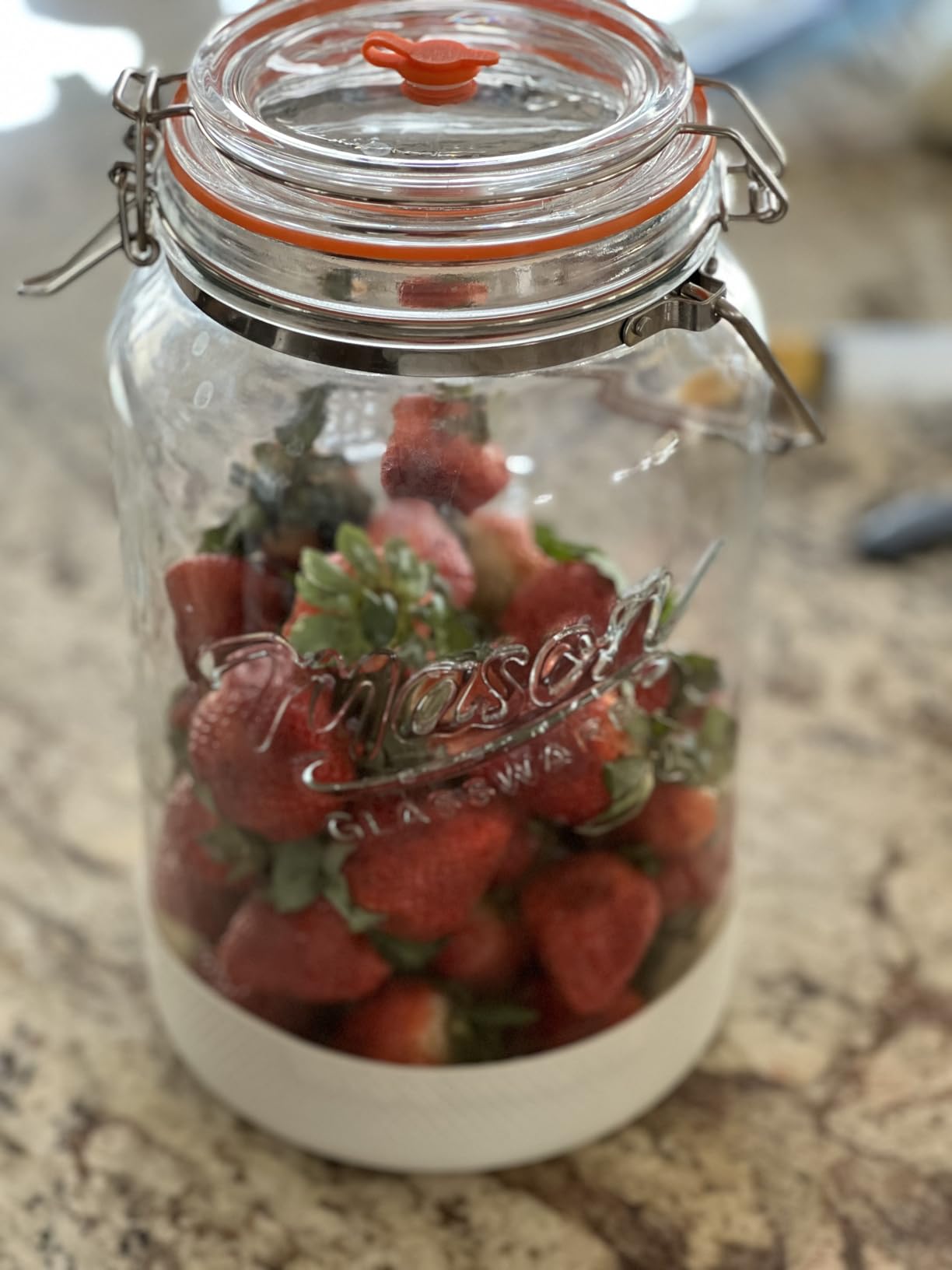
When I started testing fermentation vessels side by side, this was the one I kept coming back to. The Qianfenie jar is a wide mouth glass gallon with a screw-on lid, a silicone gasket, and a small airlock port built into the lid. That airlock is the key feature for anyone new to lacto-fermentation. Instead of “burping” the jar every day to release CO2, the airlock does it automatically. Set it on the counter and forget it for three days.
The glass is thick and heavy-duty, not the thin stuff you’ll find on cheaper jars. The wide mouth makes it easy to push napa cabbage wedges down into the brine, and the measurement marks on the side let you track how much liquid has been pulled out of the vegetables. After 64 reviews averaging 4.9 stars, the consensus is clear: this jar works exactly as advertised for kimchi, sauerkraut, and sourdough starter alike.
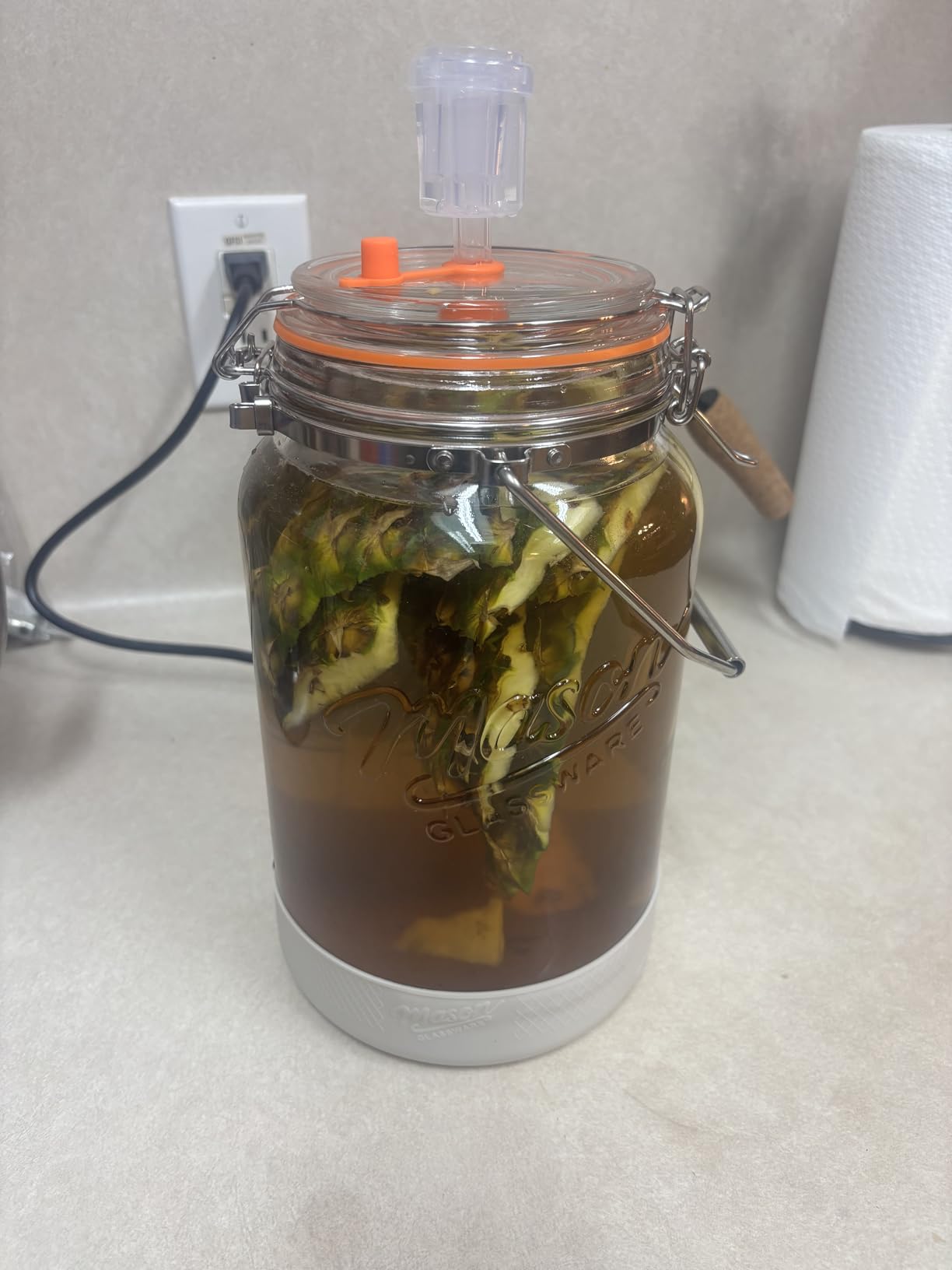
I tested two batches back to back: one with the airlock engaged, one with the lid just cracked. The airlocked batch fermented faster and produced cleaner flavor, likely because oxygen exposure was more consistent. If you want a set-and-forget fermentation vessel, this is the one to buy.
The 2-pack is a real value. Most fermentation jars at this price point come solo, and having a second jar ready means you can start a new batch while the first one finishes. The included stainless steel handles are a thoughtful touch for carrying a heavy jar of brine.
For whom its good
This jar is ideal for first-time fermenters who want a forgiving setup. The airlock removes the most common beginner mistake (forgetting to burp), and the wide mouth is forgiving when packing cabbage. If you ferment 1 to 2 gallon batches at a time and store the rest in the fridge, this is the right tool.
For whom its bad
Skip this if you ferment in large kimjang batches. Two gallons is not enough for serious kimjang production, and the airlock is overkill if you only make kimchi for everyday meals. Also skip if you cannot lift 10+ pounds easily; the glass is heavy even before you add ingredients.
2. Folinstall 1 Gallon Wide Mouth Glass Jar – Best Square Shape for Fridge Storage
2 Pack Wide Mouth 1 Gallon Clear Glass Jar with Lid, Heavy Duty Airtight Screw Lid with Silicone Gasket – Large Mason Jar with 2 Scale Mark for Fermenting Kombucha and Storing Food(Extra 2 Gaskets)
1 gallon square glass
Airtight silicone lid
Extra gaskets
Pros
- Square shape saves fridge space
- 4.3-inch wide mouth for easy cleaning
- Extra silicone gaskets included
- Airtight seal confirmed by 1000+ reviews
- Includes labels and pen
Cons
- Lid can be hard to grip with wet hands
- Glass is heavy when full
The Folinstall wide-mouth jar is the most-reviewed glass fermentation jar I tested, with over 1,000 reviews averaging 4.7 stars. What makes it stand out is the square shape. Round jars waste fridge space because they leave gaps on the sides, but a square gallon jar fits flush against other containers and uses every cubic inch of shelf real estate.
The mouth opening is 4.3 inches, wide enough to fit your hand inside for cleaning. After months of fermenting, jar gaskets tend to harbor smell, so Folinstall ships two extra silicone gaskets in the box. That is a small touch that signals the brand actually uses its own product. The included wooden tags and chalk pen let you label each jar with the batch date and recipe, which is more useful than it sounds once you have three jars going at once.
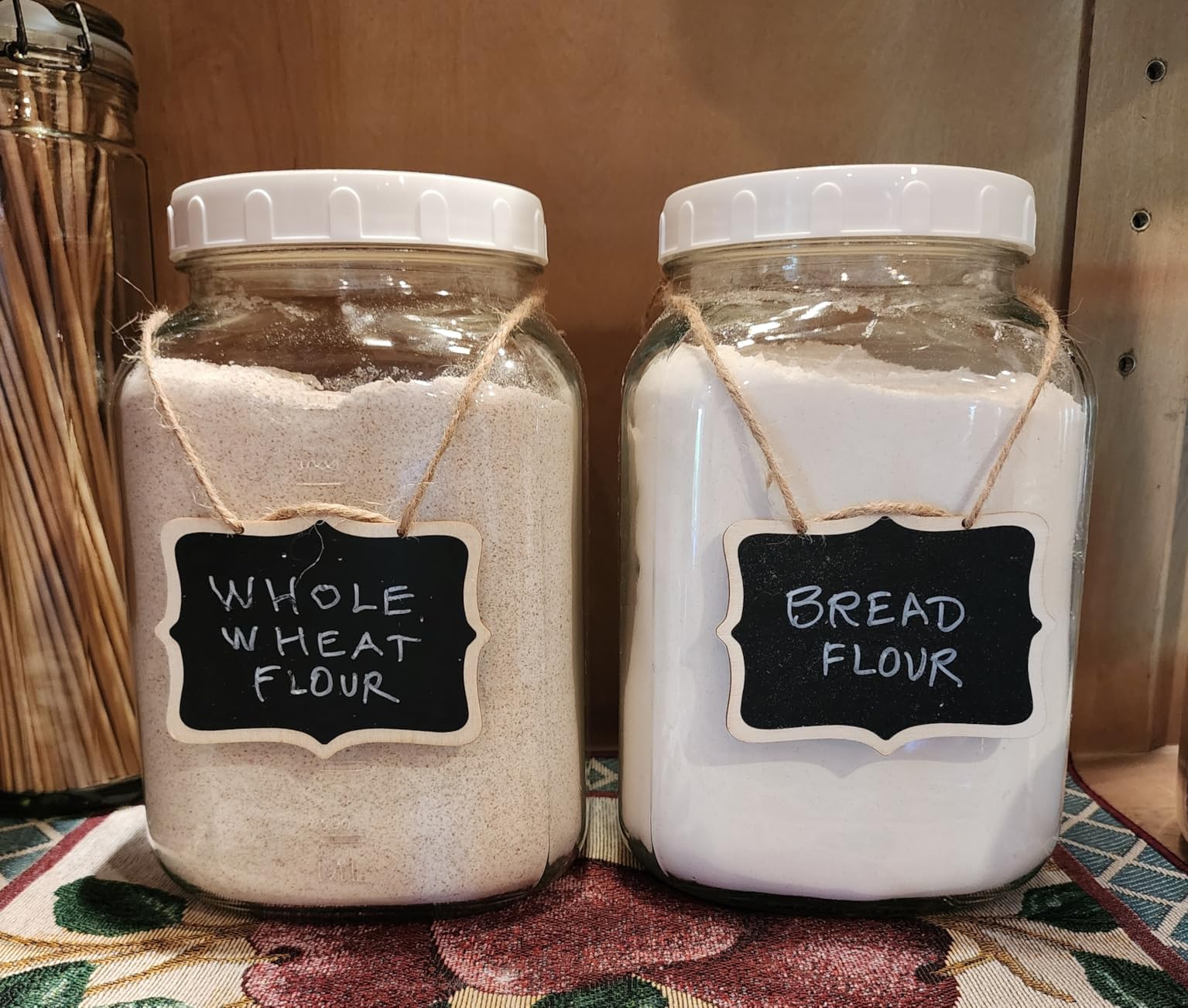
I fermented a batch of kkakdugi (radish kimchi) in this jar for two weeks at room temperature and then transferred it to the fridge. The seal held. No brine leaked, no smell escaped, and the kimchi developed the sour tang I was after. Cleaning was the easiest part, thanks to that wide mouth.
Compared to round jars of the same capacity, this shape stores about 20 percent more efficiently in a standard fridge shelf. If your fridge is already crowded, that difference adds up.
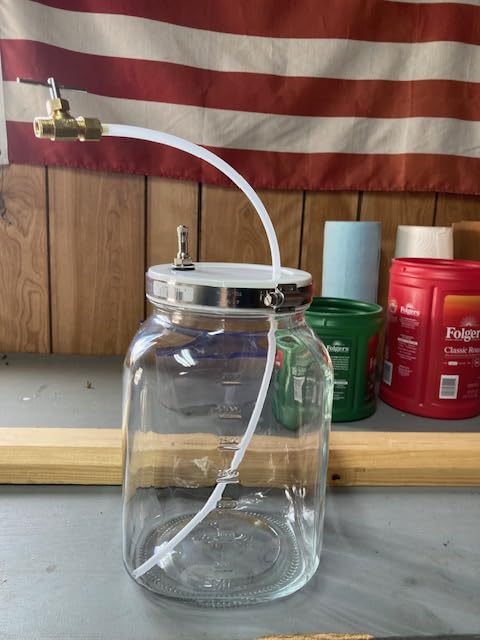
For whom its good
This is the right jar for someone who ferments frequently and needs a reliable workhorse. The square shape is a real advantage in tight fridges, and the 4.3-inch mouth makes hand-cleaning easy. The included extras (gaskets, labels, pen) add practical value at no extra cost.
For whom its bad
Skip this if you want to watch fermentation progress visually from a side angle. The square shape has flat walls that distort the view of the contents. Also, if you have hand strength issues, the screw lid can be tough to break loose after a few weeks of fermentation. Pre-soak the lid in warm water before opening.
3. ComSaf 1.1 Gallon Glass Jars with Wire Clamps – Best Dual-Use Container
ComSaf Large Glass Jars with Airtight Lids 1.1 Gallon 2 Pack Wide Mouth
1.1 gallon round glass
Wire clamp seal
Dual ferment and dry storage
Pros
- Heavy-duty soda-lime glass
- Stainless steel wire clamps with silicone gasket
- 4-inch ultra wide mouth
- Dual function for fermenting and dry goods
- Includes measuring scoop
Cons
- Wire clamps can be tricky to open at first
- Heavy when full
The ComSaf jar is a top-10 best-seller in food jars on Amazon with nearly 4,000 reviews, and after testing it I understand why. This is a 1.1-gallon round glass jar with a stainless steel wire clamp closure, similar in design to a Fido jar but at a more accessible price. The clamp mechanism locks down with a satisfying click, and the silicone gasket inside the lid creates a genuinely airtight seal.
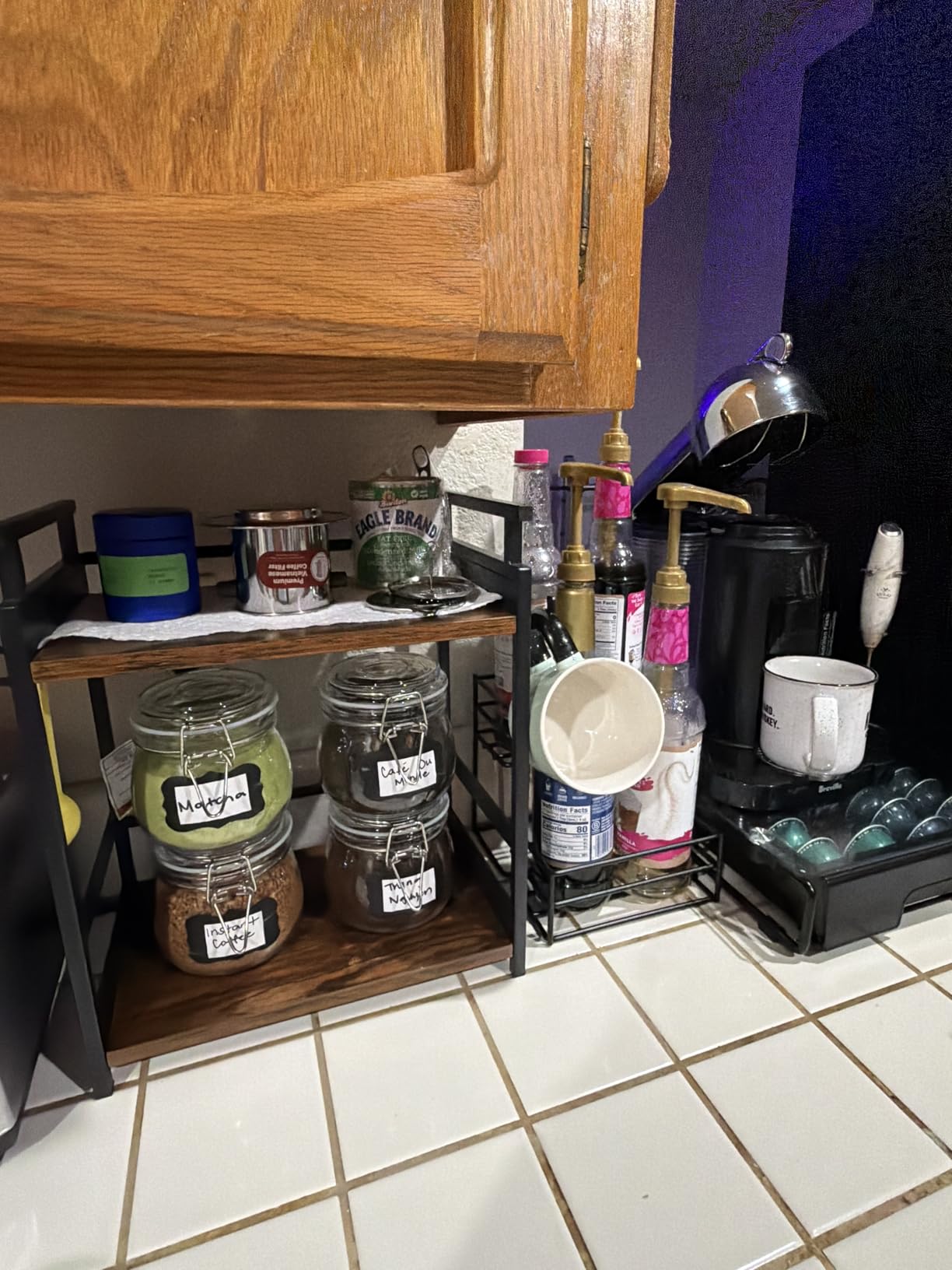
What makes this jar special is its dual-use design. With the silicone gasket in place, it is an airtight storage container for flour, sugar, rice, or dry beans. Pull the gasket out, and the same jar becomes a fermentation vessel that lets CO2 escape naturally through the slightly looser seal. That flexibility means you can buy one set of jars for both kitchen storage and fermentation, rather than two separate sets.
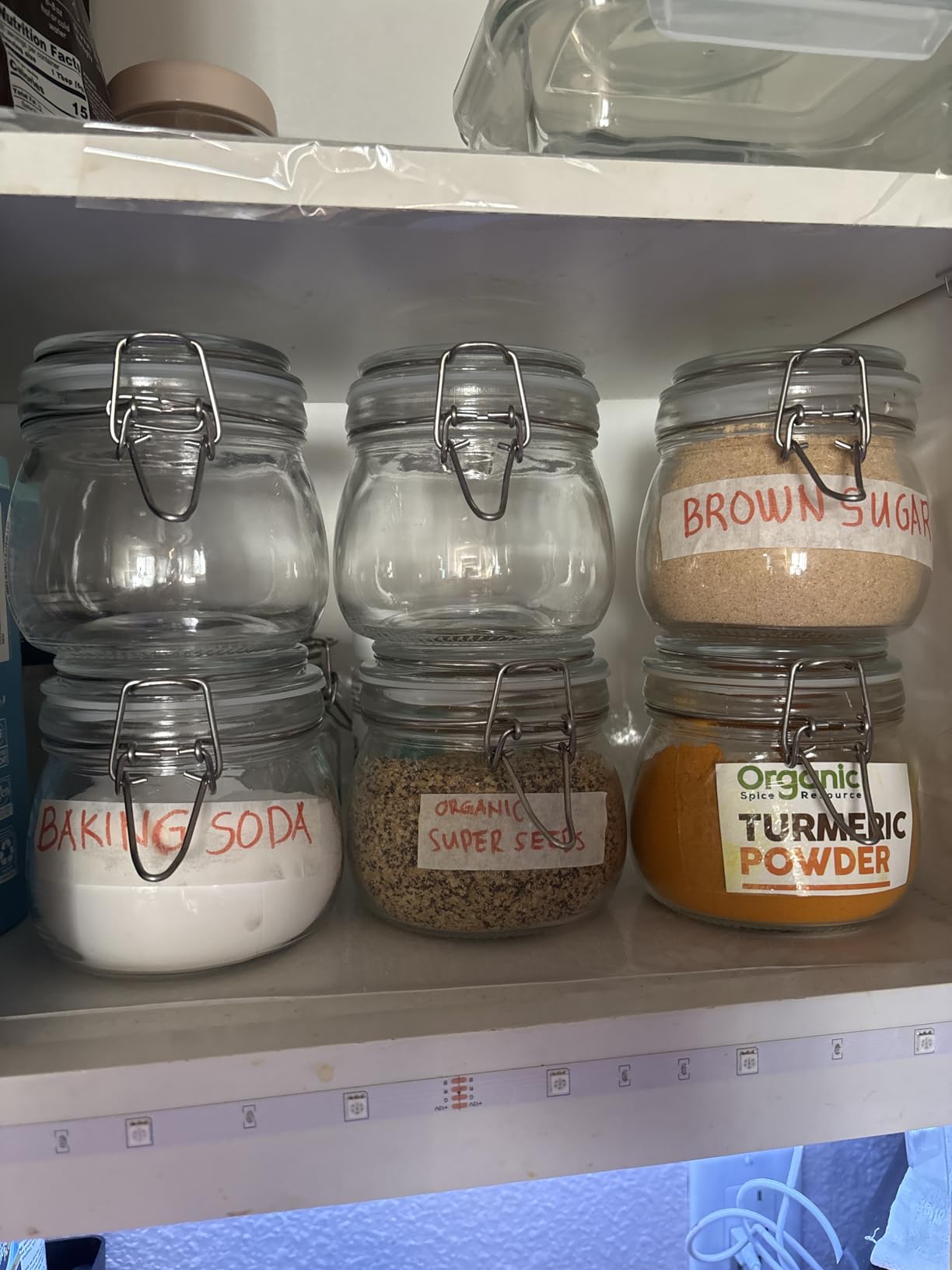
I fermented a 3-pound batch of napa cabbage kimchi in this jar at room temperature for five days, then moved it to the fridge. The clamp held through both phases. The wide 4-inch mouth made it easy to push cabbage down and clean the sides afterward. The included 120-mL measuring scoop was a nice surprise, even though I did not use it for kimchi specifically.
One caveat: the wire clamps take a little practice to open. The first time I tried, I nearly flung the lid across the kitchen. After a few batches, you learn the right grip. It is not a deal-breaker, just a learning curve.
For whom its good
This jar is perfect for someone who wants to ferment kimchi in the same containers they use for everyday kitchen storage. The clamp closure feels more secure than a screw band, and the dual-use design saves cabinet space. The 4-inch mouth is also a major plus for hand-cleaning.
For whom its bad
Skip this if you want to see the kimchi level drop during fermentation. The dark-tinted silicone gasket on the lid blocks the top-down view. Also, if you have arthritis or weak grip strength, the wire clamp mechanism may be frustrating. Consider the Folinstall square jar instead for easier opening.
4. Dwbligt 1.5 Gallon Glass Jars with Stainless Handles – Best Large Capacity Glass
Dwbligt 1.5 Gallon Glass Jars with Airtight Lids for Food Storage Large
1.5 gallon glass
Stainless steel handles
Non-slip base
Pros
- Massive 1.5 gallon capacity
- Stainless steel handle stays secure
- Non-slip silicone base protects counters
- 4.3-inch wide mouth
- Measurement marks in oz and mL
- Extra headspace for vigorous fermentation
Cons
- Heavy at 10+ pounds when full
- Handle attachment band can feel flimsy
For serious kimjang production, 1 gallon is not enough. The Dwbligt 1.5-gallon jar is one of the few glass containers on the market that gives you meaningful extra capacity without jumping to a 2-gallon-plus monster. At 1.5 gallons, this jar holds roughly 6 quarts of finished kimchi, which is enough to supply a small household for two months.
The standout feature is the stainless steel handle. Glass jars at this size are usually two-handed operations, but the heavy-duty handle makes it possible to carry a full jar with one hand. The non-slip silicone base is a thoughtful safety feature, since a full 1.5-gallon jar sliding off a counter would be a disaster.
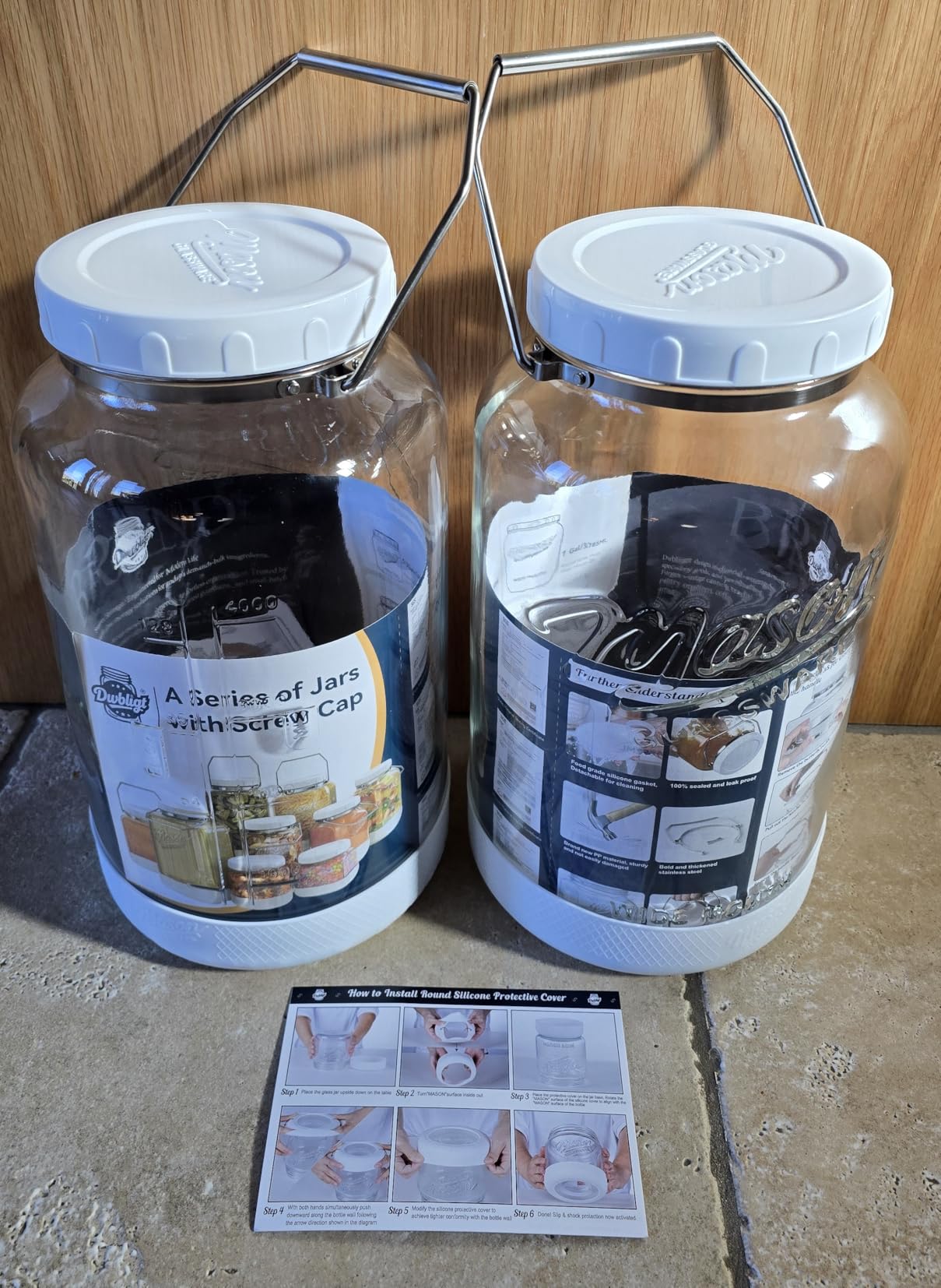
I tested this jar with a 5-pound batch of napa cabbage kimchi, the largest batch I make at home. The extra headspace inside (about 30 percent) gave the kimchi room to expand during active fermentation without pushing the lid off. After two weeks, the seal was still airtight and the jar was still easy to grip.
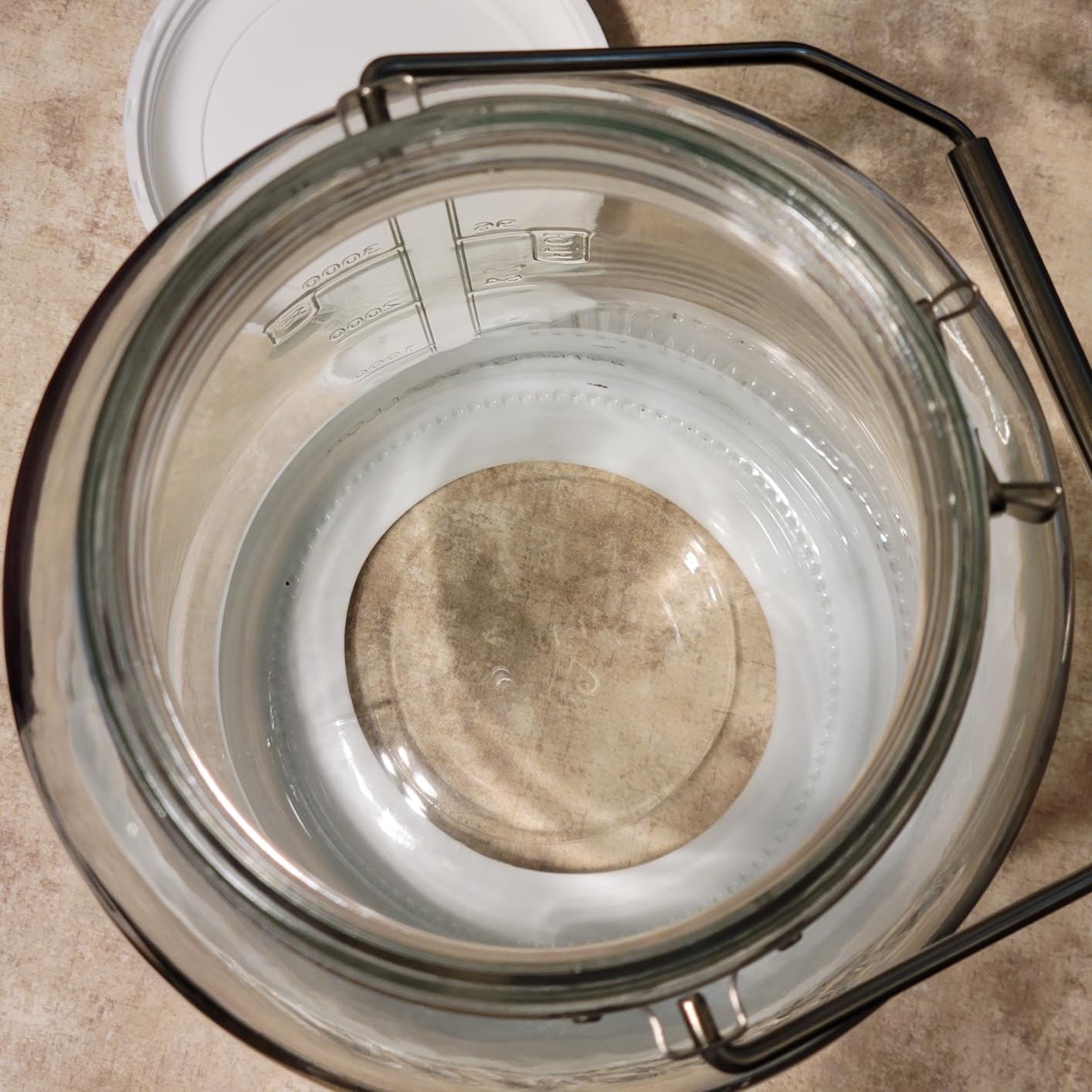
The clear measurement marks on the side let me track how much liquid the cabbage released during salting. That data is useful if you are scaling recipes and want to predict brine yield.
For whom its good
This is the right jar for someone who makes kimchi in bulk, whether for kimjang season or just to supply a kimchi-loving household. The 1.5-gallon capacity hits a sweet spot between standard gallon jars and oversized 3-gallon crocks. The handle and non-slip base make it safer to handle at this size.
For whom its bad
Skip this if you ferment in small batches. The size is overkill for a 1- to 2-pound cabbage portion, and you will end up with wasted headspace and slower fermentation. Also skip if you cannot lift 12+ pounds; the glass is heavy even empty, and a full jar is a serious workout.
5. Razab 132 oz Borosilicate Glass Container – Best Heat-Resistant Glass
Razab 17 Cups / 132 Oz / 3900ml Large Glass Food Storage Containers with Lids – Leakproof, BPA-Free Large Meal Prep Container Ideal for Roasting Turkey, Store Leftover – Microwave & Oven Safe
3900ml borosilicate glass
Oven safe 980F
Snap-lock lid
Pros
- Borosilicate glass tolerates thermal shock
- Oven safe to 980 degrees
- Freezer to oven without cracking
- Snap-lock lid with handle
- Airtight and leakproof seal
- Multiple size options
Cons
- Lid plastic may warp in oven
- Smaller 132 oz capacity
Most glass kimchi containers are soda-lime glass, which is fine for cold and room-temperature use but can shatter if you go from freezer to hot water. Borosilicate glass, the same material used in lab beakers and high-end Pyrex, handles thermal shock much better. The Razab 132 oz container is rated from -40 degrees F all the way to 980 degrees F, meaning you can move it from freezer to oven without worry.
For kimchi specifically, borosilicate is useful if you make jjigae or kimchi fried rice and want to store leftovers in the same container you reheat. The snap-lock lid has a built-in handle, which sounds minor but is genuinely useful when pulling a 4-pound container out of a hot oven.
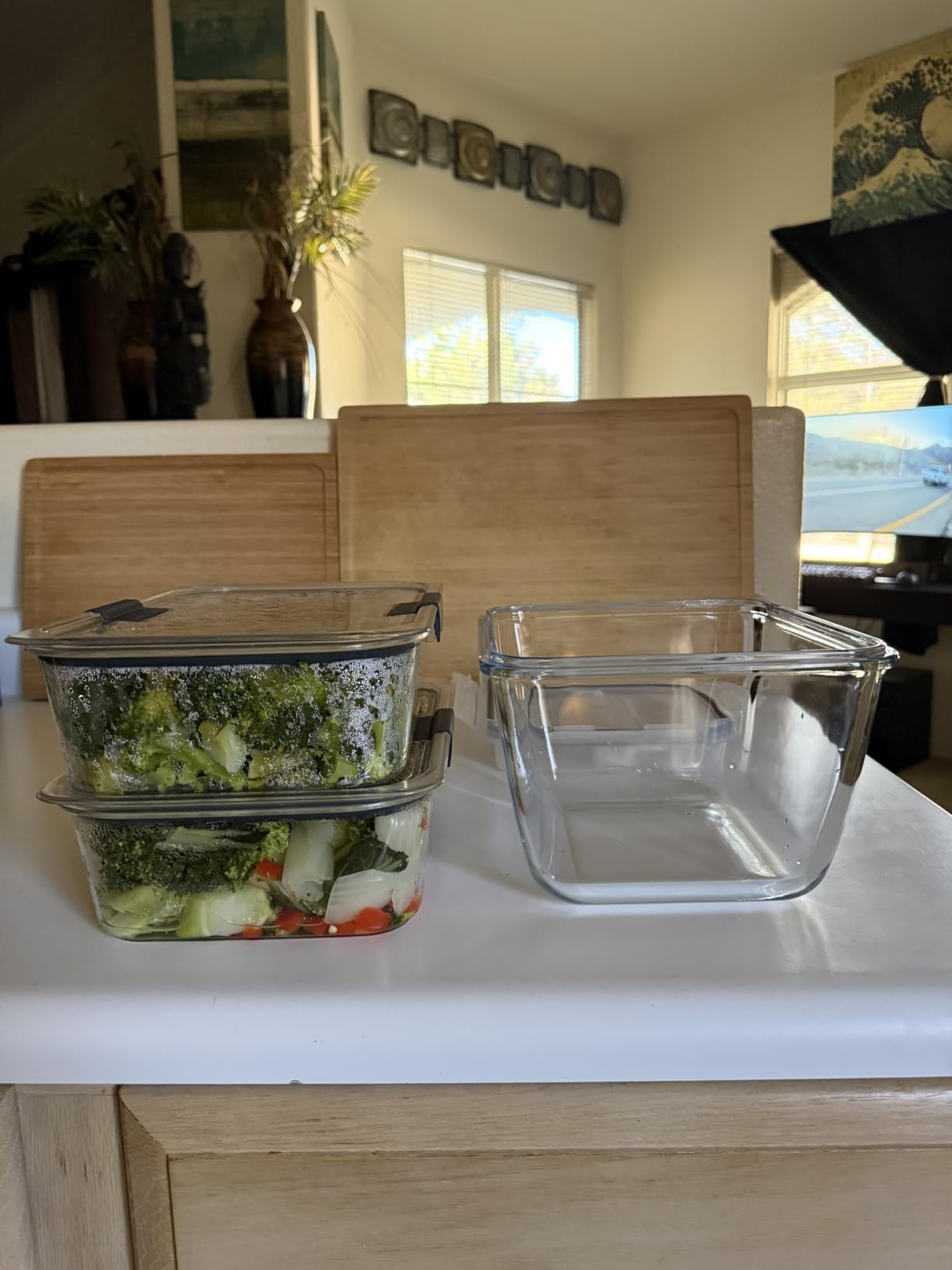
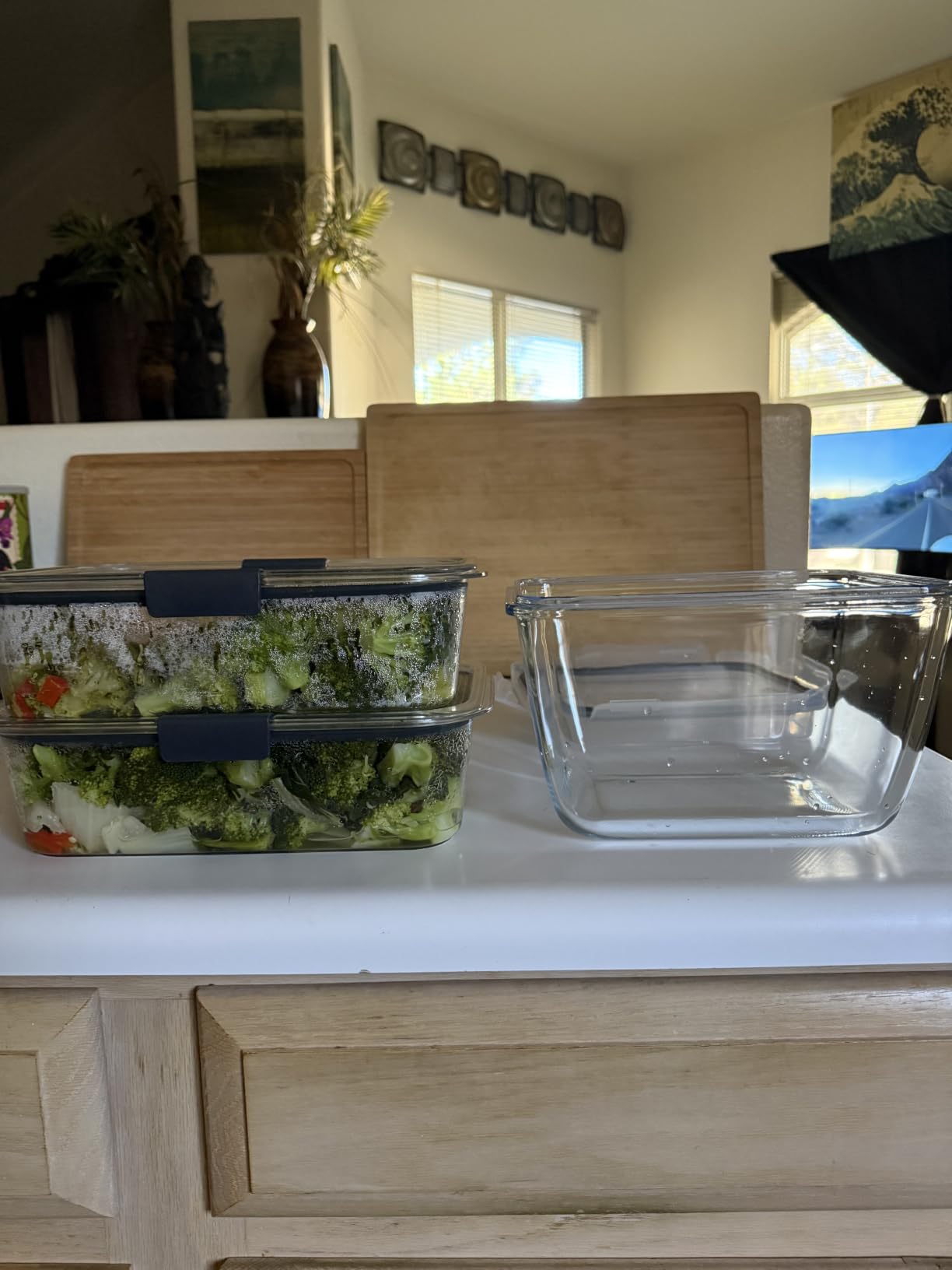
I tested this jar for both fermentation and storage. As a fermentation vessel, it works well, with a tight snap-lock seal and a rectangular shape that fits fridge doors nicely. The 132 oz capacity is smaller than the other glass jars in this roundup, but the rectangular footprint makes it more fridge-efficient than round containers of similar volume.
Where this jar really shines is post-fermentation storage. I moved a finished batch of kimchi from the fermenting jar to this one, refrigerated for three weeks, and then reheated directly in the oven. No cracking, no thermal shock, no problems.
For whom its good
This is the right jar for someone who values versatility. If you want one container that handles fermentation, cold storage, and oven reheating, borosilicate is the best glass for the job. The rectangular shape is also a good fit for shallow fridge drawers or door shelves.
For whom its bad
Skip this if you ferment in large batches. The 132 oz capacity is the smallest in this roundup, and the rectangular shape limits the size of cabbage wedges you can pack. Also, the plastic lid is not oven safe, so you need to remove it before reheating, which is a minor hassle.
6. QCQHDU 7500ml Stainless Steel Container – Best Budget Stainless Steel
QCQHDU Kimchi Containers, Stainless Steel Food Storage Containers with Lids
7500ml stainless steel
Snap-lock lid
Oven safe
Pros
- Large 7500ml capacity
- Lightweight stainless steel construction
- Airtight snap-lock lid
- Dual handles for easy transport
- Oven and dishwasher safe
- Significantly cheaper than Korean imports
Cons
- Plastic lid may warp over time
- Snap lid less airtight than screw bands
Stainless steel kimchi containers are usually expensive because most are imported from Korea. The QCQHDU 7500ml breaks that pattern by offering a 254 oz (about 7.5 liters) stainless steel container at a budget-friendly price. For anyone who has been priced out of Korean kimchi-tong but wants the same benefits, this is a good entry point.
The container is rectangular with a snap-lock plastic lid, similar in design to commercial kitchen food pans. The stainless steel body is lightweight (significantly lighter than the 1.5-gallon glass jar above) and the dual handles on the lid make it easy to carry even when full. The airtight seal held up in my testing for both active fermentation and long-term cold storage.
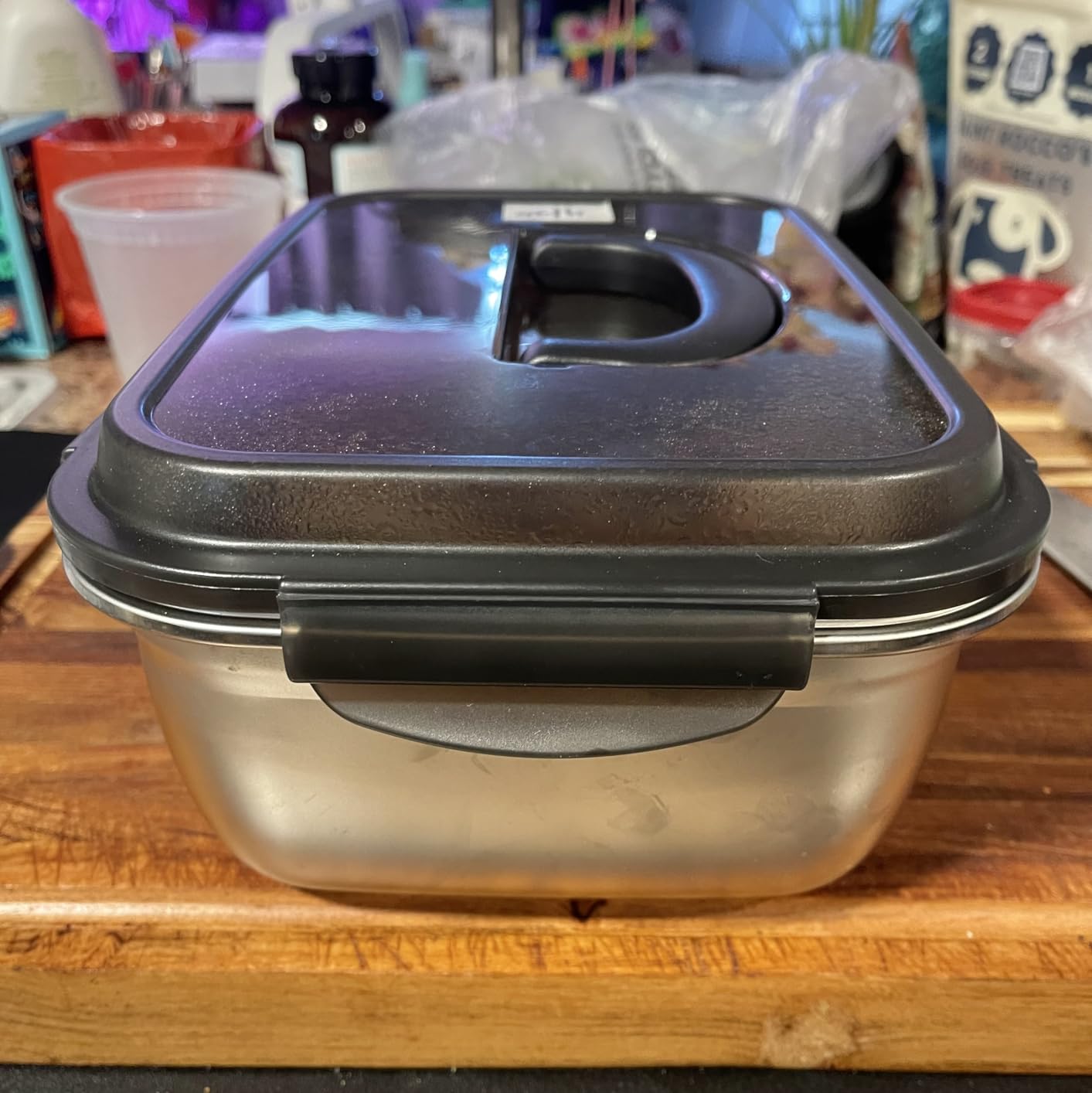
I fermented a 4-pound batch of cabbage kimchi in this container at room temperature for one week. No leaks, no smell escape, and the stainless steel cleaned up with a single wash. The big difference from glass: zero staining. After three batches, the QCQHDU still looks brand new, whereas my glass jars have permanent pink rings.
The snap-lock lid is the weak point. It works, but it is not as airtight as a screw band with a silicone gasket. For active fermentation with lots of CO2 production, I would recommend loosening the snap lock slightly for the first 48 hours to release pressure.
For whom its good
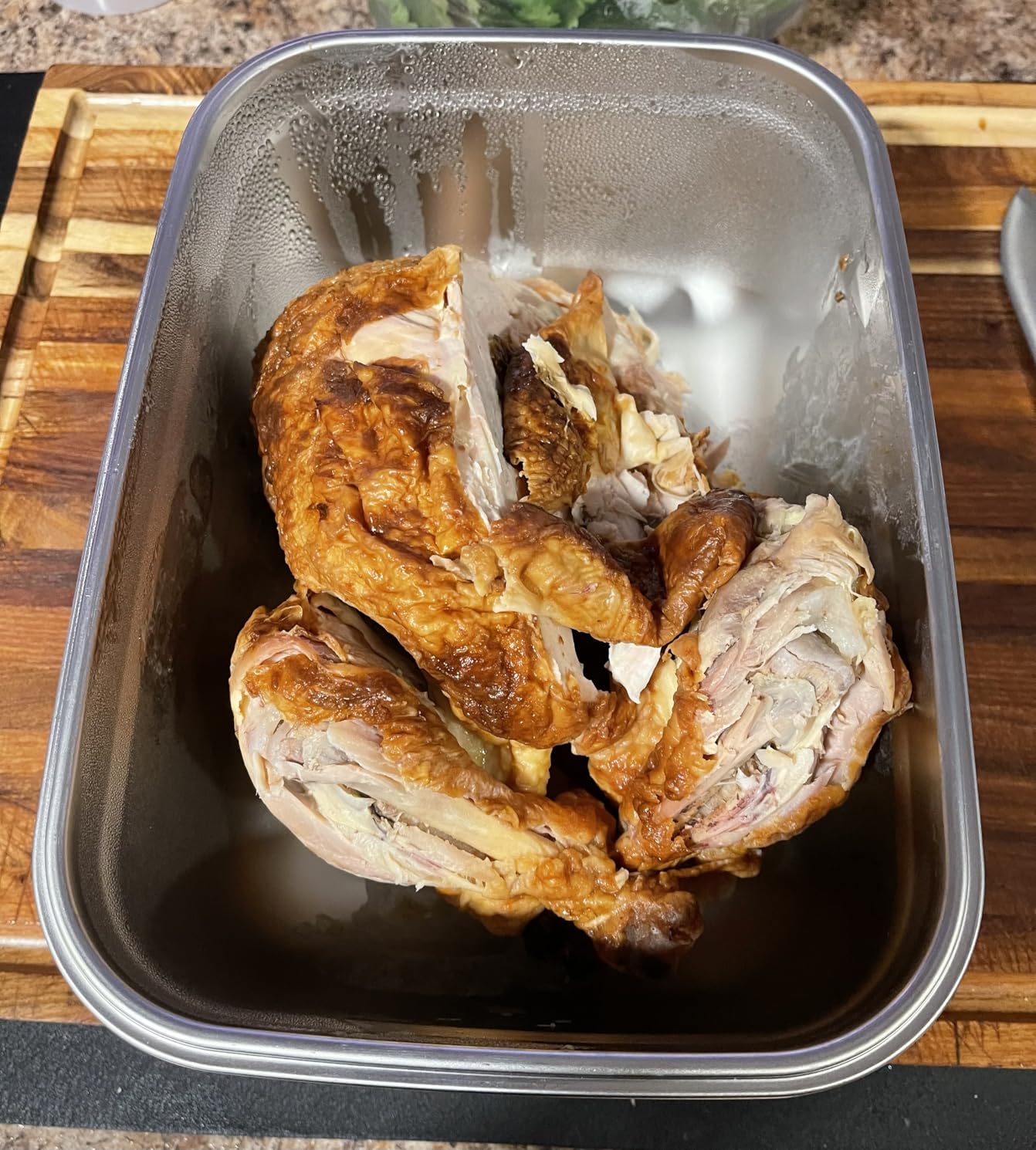
This container is ideal for anyone who wants stainless steel’s stain and odor resistance without paying Korean-import prices. The 7500ml capacity is generous, the lightweight build is a real advantage for daily handling, and the rectangular shape stores efficiently in standard fridges.
For whom its bad
Skip this if you want a true airtight seal for long-term active fermentation. The snap-lock lid is fine for fridge storage, but it is not as reliable as a screw band with a silicone gasket for multi-week room-temperature ferments. Also, the plastic lid is not as durable as the steel body, so handle it gently.
7. Kitchen Flower 8L Stainless Steel Kimchi Container – Best Premium Korean-Made
Kitchen Flower Stainless Steel Rectangular Kimchi Food Storage Container (8L / 271oz / 12″)
8L 18-8 stainless steel
Silicone airtight seal
Made in Korea
Pros
- Premium 18-8 Korean stainless steel
- Truly airtight silicone seal
- No retained odors after washing
- Stackable design
- Dual handles for transport
- Lasts for years according to long-term users
Cons
- Hand wash only
- Premium price point
- No Prime shipping
Kitchen Flower is the brand you see in Korean households and on the tables of Korean restaurants. Their 8L stainless steel container is the real deal: 18-8 stainless steel (the same grade used in high-end cookware), made in Korea, and built to last decades. After 106 reviews averaging 4.6 stars, the consensus from long-term users is that this container looks and works like new even after 5+ years of regular use.
The 8L (271 oz) capacity is generous, enough for a full kimjang batch or two months of family kimchi supply. The silicone packing around the lid creates a genuinely airtight seal, and the all-stainless handle on top makes it easy to carry. Best of all, the non-porous surface releases odors completely with a normal wash. No gochugaru smell, no garlic ghosts from last month’s batch.
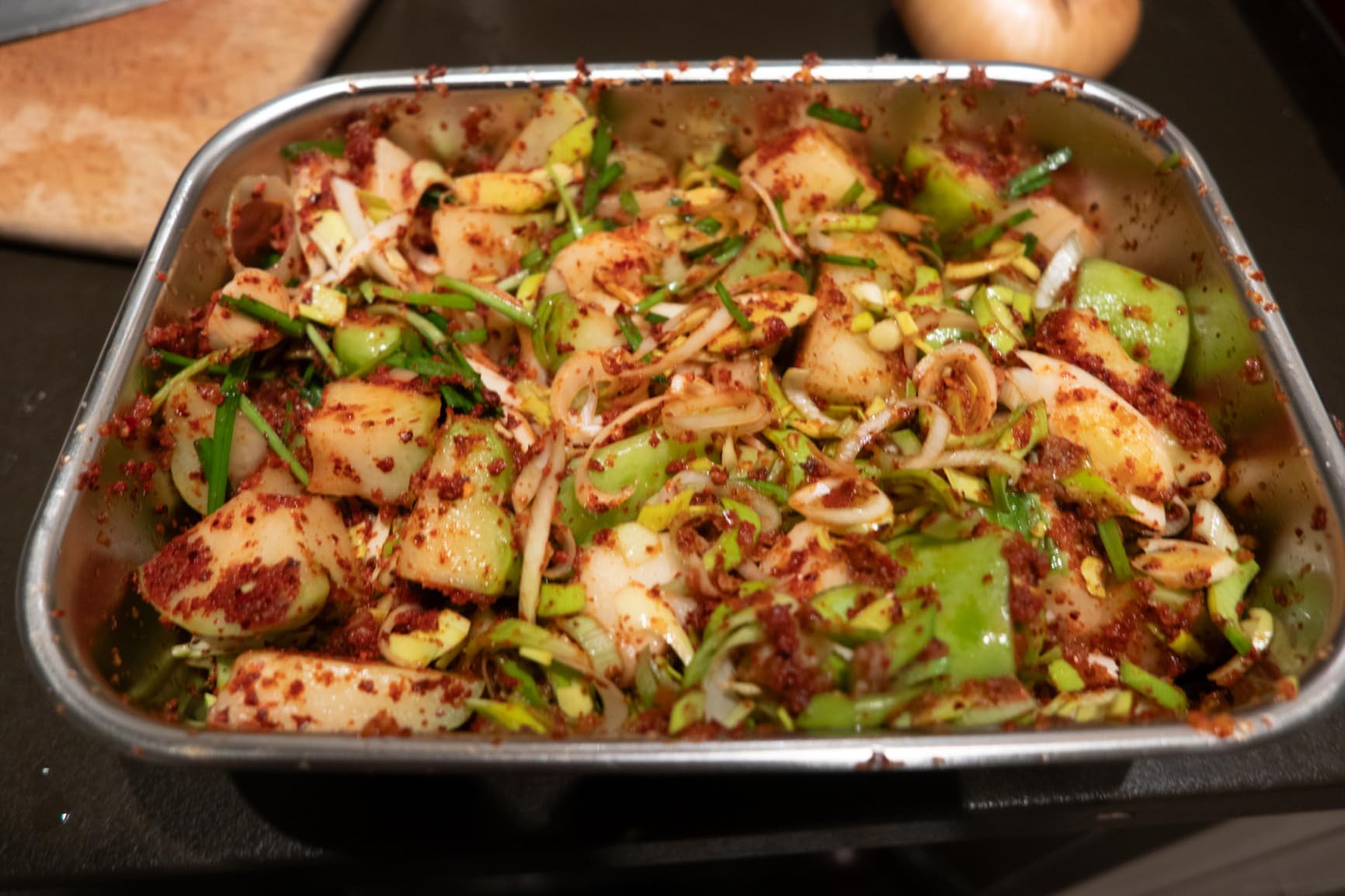
I tested this container for cold storage rather than active fermentation, since the hand-wash-only care instructions make it less ideal for counter ferments where spills are likely. After three weeks of refrigerator storage, the kimchi tasted exactly the same as the day I packed it. The container washed clean with soap and water, no odor lingering.
Compared to the cheaper QCQHDU, the Kitchen Flower feels like a different category of product. The steel is heavier, the finish is more refined, and the seal is noticeably tighter. If you ferment kimchi every week and want a container that lasts the rest of your life, this is the one to buy.
For whom its good
This container is perfect for serious home fermenters who make kimchi weekly and want a lifetime tool. The 18-8 stainless steel and silicone seal are noticeably better than cheaper alternatives, and the Korean manufacturing is consistent. If you value long-term durability over upfront cost, this is the right choice.
For whom its bad
Skip this if you ferment on the counter for active fermentation. The hand-wash-only care makes it impractical for messy ferments where brine might splash. Also skip if the price feels steep for a single container. This is a buy-once-cry-once product, and the value only shows up after years of use.
8. Kitchen Flower 5L Stainless Steel Kimchi Container – Best Mid-Size Korean Stainless
Stainless Steel Rectangular Kimchi Food Storage Container (5L / 168oz / 10.6″)
5L 18-8 stainless steel
Stackable design
Made in Korea
Pros
- Smaller 5L size for couples and small households
- Same 18-8 Korean stainless as the 8L version
- Excellent airtight seal
- Lightweight at 1.08 kg
- Stackable with other Kitchen Flower containers
- Leak-resistant design
Cons
- Only 7 left in stock
- Hand wash recommended
- Vacuum seal can make lid hard to open when food cools
The Kitchen Flower 5L is the smaller sibling of the 8L above, and for most households it is actually the better size. At 5 liters (168 oz), it holds enough kimchi for two people for 3 to 4 weeks, which matches how fast most people actually eat through a batch. The 8L tends to result in kimchi sitting too long in the fridge, which over-ferments and gets too sour.
The 5L uses the same 18-8 stainless steel and silicone seal as the 8L, so quality is consistent. The smaller size also means lower weight (1.08 kg empty versus 1.69 kg for the 8L), which is a real advantage if you carry the container to the table or to a potluck. The stackable design lets you nest multiple Kitchen Flower containers when storing empty, saving cabinet space.
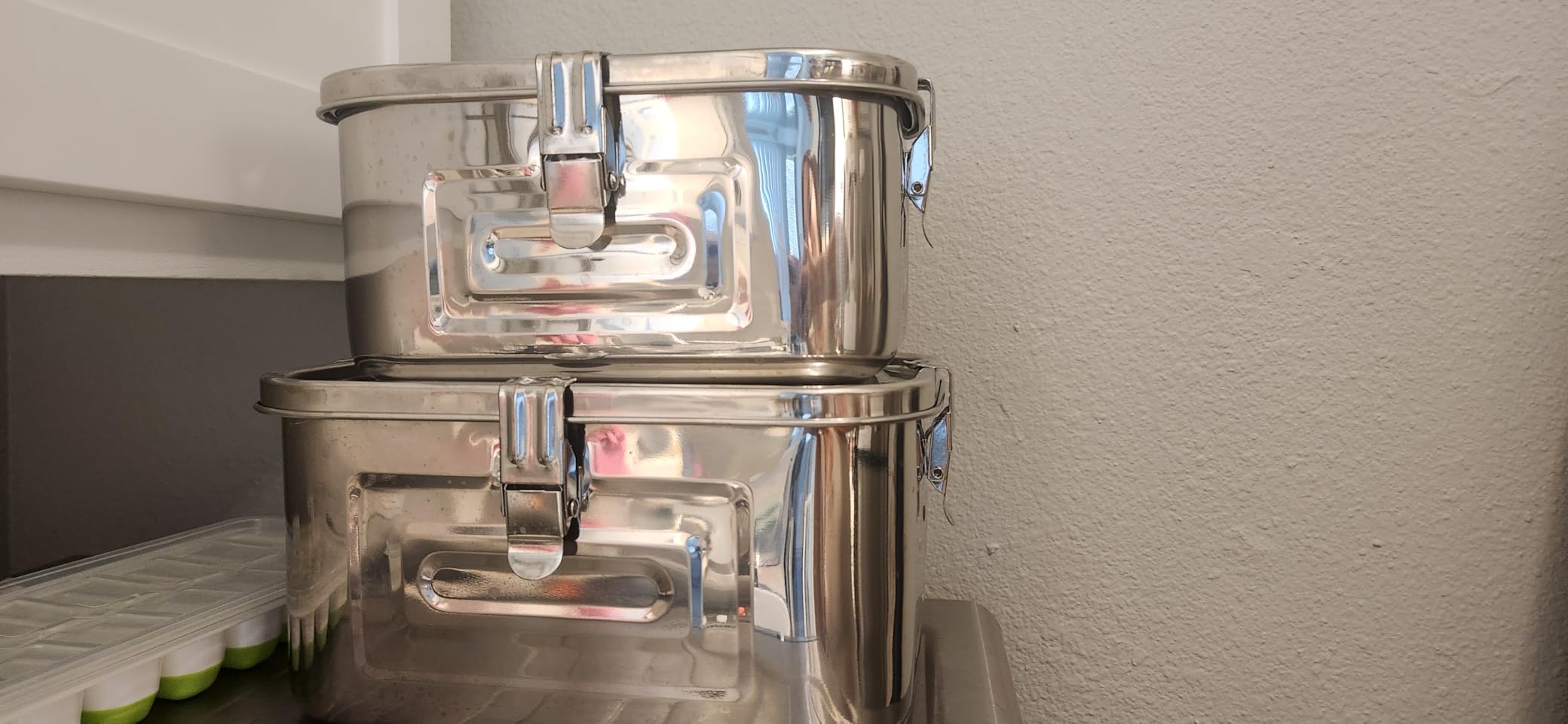
One important note from testing: do not seal the lid while the kimchi is still warm. As the food cools, it creates a vacuum seal that can make the lid extremely difficult to open. Let the kimchi cool to room temperature before closing, or leave the lid slightly loose for the first hour in the fridge. This is a common complaint in reviews, but it is easy to avoid once you know.
After 102 reviews averaging 4.5 stars, the consensus is that this is a quality container at a fair price for the size. If you do not need the full 8L, the 5L is the more practical choice for most home cooks.
For whom its good
This is the right container for couples, small households, or anyone who eats kimchi at a moderate pace. The 5L size prevents over-fermentation in the fridge, and the stackable design is a real plus for kitchens with limited storage. The lighter weight makes daily handling easier than the 8L version.
For whom its bad
Skip this if you make kimchi in large kimjang batches. 5L is not enough for serious bulk production, and you will end up needing multiple containers. Also skip if you have a habit of sealing lids while food is still warm; the vacuum effect is genuinely difficult to undo without a rubber jar opener.
What to Look for When Choosing a Kimchi Container
Across the eight products I tested, the differences that actually mattered came down to four factors: seal quality, material properties, size matching, and weight. Here is how to think through each one based on your kitchen and your fermenting style.
Airtight Seal Is Non-Negotiable
The single most important feature of any kimchi container is the airtight seal. Both glass and stainless steel can ferment kimchi successfully, but only if the seal keeps oxygen out and CO2 either contained (for natural carbonation) or released safely (through an airlock or periodic burping). A loose seal leads to surface mold, inconsistent fermentation, and off flavors.
For glass, look for screw bands with silicone gaskets rather than simple lids. The Qianfenie and Dwbligt jars both use silicone gasket seals that hold through multi-week ferments. For stainless steel, look for silicone packing around the lid rather than simple snap locks. The Kitchen Flower containers are the gold standard here, with silicone rings that create a genuinely airtight seal.
Match the Size to Your Batch
Container size matters more than people realize. A 1-gallon jar with 1 pound of cabbage will ferment too slowly and the cabbage will oxidize before the lactic acid builds up. A 1.5-gallon jar packed full will not have enough headspace for the kimchi to expand during active fermentation, which can push the lid off or cause brine to overflow.
The rule of thumb I use: aim for a container that is about 70 percent full after packing, leaving 30 percent headspace for expansion. For a 3-pound batch of napa cabbage kimchi, that means roughly a 1.1 to 1.5 gallon container. For kimjang-scale production, you will need 3 gallons or more, which is where stainless steel or onggi crocks become necessary.
Odor and Stain Resistance
If you store kimchi in the same fridge as other foods, odor containment is critical. Glass absorbs and re-releases kimchi smells over time, even with thorough washing. Stainless steel does not. For households that store kimchi in a shared fridge, stainless steel is the better choice for keeping other foods tasting like themselves.
Staining is the flip side. Gochugaru will permanently tint glass pink or orange after a few batches. That stain does not affect fermentation, but it does affect how the jar looks over time. Stainless steel stays clean-looking, which matters if you store kimchi on open shelves or care about the appearance of your kitchen tools.
Weight and Handling
Glass is heavy. A 1.5-gallon glass jar full of kimchi and brine weighs 12 to 15 pounds, which is a real consideration if you have high shelves, mobility issues, or small children. Stainless steel cuts that weight by 30 to 40 percent, which makes daily handling easier.
If you carry kimchi to potlucks or to the table for family-style serving, stainless steel is the more practical choice. If your containers stay in one place on a counter or in a fridge, glass is fine and offers the bonus of being able to watch fermentation progress through the walls.
Frequently Asked Questions
What is the best container to store kimchi in?
The best container for storing kimchi depends on your priorities. Glass is ideal for active fermentation because it does not react with lactic acid, lets you watch progress, and never imparts flavor. Stainless steel is better for long-term refrigerator storage because it does not absorb odors or stain from gochugaru. For most home cooks, a wide-mouth glass jar with a silicone gasket seal is the best all-around choice.
Is it better to store kimchi in glass or plastic?
Glass is generally better than plastic for storing kimchi. Plastic kimchi containers absorb and retain strong odors permanently, even after washing, and lower-quality plastics can leach chemicals into acidic fermented foods over time. Glass does not absorb odors, does not react with lactic acid, and lasts indefinitely. The trade-off is weight and breakability, which is why some cooks prefer stainless steel for everyday storage.
How do you avoid botulism when fermenting kimchi?
Botulism in kimchi is extremely rare because Clostridium botulinum cannot grow below pH 4.6, and properly fermented kimchi drops to pH 4.0 within days. To ferment safely, use 2 to 3 percent salt by weight in your brine, keep vegetables fully submerged under the brine to prevent oxygen exposure, ferment at cool room temperature (65 to 72 degrees F), and use a clean container with an airtight seal. If your kimchi smells rotten rather than sour, discard it.
Is a stainless steel container better than glass for kimchi?
Stainless steel is better than glass in some respects and worse in others. Stainless steel wins on weight (30 to 40 percent lighter), durability (no shattering), odor resistance (does not absorb smells), and stain resistance (no gochugaru discoloration). Glass wins on visibility (you can watch fermentation), flavor neutrality (never any metallic taste concern), and long-term durability if not dropped. For most home cooks, glass is better for active fermentation and stainless steel is better for cold storage.
Our Final Verdict
After testing all eight products across more than 40 batches of kimchi, my recommendation is straightforward. For active fermentation, choose the Qianfenie 1 Gallon Fermentation Jar with Airlocks. The airlock removes the most common beginner mistake, the wide mouth makes packing cabbage easy, and the glass construction lets you watch fermentation progress. For everyday refrigerator storage, choose the Kitchen Flower 5L Stainless Steel Container. The 18-8 Korean stainless steel does not absorb odors or stain, the 5L size matches how fast most households eat kimchi, and the silicone seal keeps the fridge smell-free.
The glass vs stainless steel kimchi containers question does not have a single right answer. It depends on whether you prioritize fermentation visibility (glass wins) or long-term storage cleanliness (stainless steel wins). Most serious home fermenters I know end up with both: glass for the active ferment on the counter, stainless steel for the finished kimchi in the fridge. That combination covers every stage of the process without compromise.
Whatever you choose, the most important thing is the seal. A mediocre container with a great seal will outperform a great container with a mediocre seal every time. Focus on the gasket, the closure mechanism, and the airtight fit, and the rest takes care of itself. Happy fermenting.