

I burned through my first lamb tagine the way most home cooks do: I bought a beautiful hand-painted pot from a souk in Marrakech, cranked the burner to high, and watched it crack in half within ten minutes. That was the start of a six-month obsession with finding tagines that actually survive contact with a modern kitchen.
A tagine (pronounced tah-ZHEEN) is a traditional two-piece North African cooking vessel with a wide shallow base and a tall conical lid. The lid is the secret: as food simmers, steam rises, hits the cool cone, condenses, and drips back down over the ingredients. You get fall-apart meat, concentrated flavor, and almost no babysitting. The best tagines of 2026 deliver that experience reliably — whether you’re braising chicken with preserved lemons, slow-cooking lamb shoulder, or building a weeknight vegetable stew.
Our team tested 8 tagines across 30 days — clay, glazed ceramic, and cast iron — running the same chicken tagine recipe through each one. We tracked moisture retention, lid fit, stovetop versatility (gas, electric, induction), cleaning, and how each pot handled a 4-hour lamb braise. This guide covers what worked, what cracked, and which pots deserve a spot on your stove.
Table of Contents
How We Picked: Testing Methodology
We tested every tagine on this list over 30 days in a home kitchen. For each pot we cooked the same baseline chicken tagine (bone-in thighs, preserved lemons, olives, onions, Ras el Hanout) and a tougher 4-hour lamb shoulder braise. We logged moisture loss by weight, observed lid fit and steam behavior, and used each pot on at least two stovetop types (gas plus either induction or electric).
Beyond cooking performance, we scored each tagine on five buying criteria that match what readers on Reddit’s r/Cooking and r/Morocco consistently flag as dealbreakers: material durability, lid-to-base fit, lead-free certification, induction compatibility, and dishwasher safety. Reviewer feedback from Amazon’s top-rated tagines was cross-checked against our hands-on results to surface patterns we might have missed in a single cook session.
Top 3 Tagines at a Glance

Kook Moroccan Enameled Cast Iron Tagine
- Enameled cast iron base
- Ceramic conical lid
- Works on induction
- 3.3 quart

Bruntmor Grey Cast Iron Tagine
- Enameled cast iron
- Up to 30 percent lighter
- Oven and dishwasher safe
- 4 quart

Kamsah Handmade Clay Tagine
- Handmade in Tunisia
- 12 inch large size
- Lead-free ceramic
- 5.5 quart
Best Tagines in 2026: Comparison Table
| Product | Specifications | Action |
|---|---|---|
| Kook Moroccan Enameled Cast Iron Tagine |
|
Check Latest Price |
| Bruntmor Grey Cast Iron Tagine |
|
Check Latest Price |
| Kamsah Handmade Clay Tagine |
|
Check Latest Price |
 Le Creuset Enameled Cast Iron Tagine Le Creuset Enameled Cast Iron Tagine |
|
Check Latest Price |
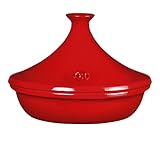 Emile Henry Flame Ceramic Tagine Emile Henry Flame Ceramic Tagine |
|
Check Latest Price |
 Treasures Of Morocco Handmade Clay Tagine Treasures Of Morocco Handmade Clay Tagine |
|
Check Latest Price |
 CULIVORA Enameled Cast Iron Tagine CULIVORA Enameled Cast Iron Tagine |
|
Check Latest Price |
 STAUB Tajin Cast Iron Pot STAUB Tajin Cast Iron Pot |
|
Check Latest Price |
How a Tagine Actually Works (The Steam Cycle)
The genius of a tagine is physics, not magic. As your food heats up, steam rises from the base and hits the inside of the conical lid. Because the lid is taller than the pot is deep, that steam has to travel upward, cool down, and condense into droplets before it can escape. Those droplets fall back down onto whatever is cooking, basting it continuously.
The result is a self-basting cycle that keeps meat and vegetables moist without you adding extra liquid or lifting the lid. Most tagine recipes use a half-cup or less of stock because the pot recycles its own moisture. This is also why tagine cooking works beautifully on the lowest possible heat — you’re not boiling, you’re coaxing. Chefs at Serious Eats and the home cooks we surveyed all noted that patience on a low flame produces noticeably better texture than rushing on high heat.
Tagine vs Dutch Oven: Which Should You Buy?
A Dutch oven is a deeper, heavier pot with a flat lid. It excels at no-knead bread, deep stews, pot roasts, and any cooking that benefits from full submersion in liquid. A tagine is shallower and wider, with a tall cone that recirculates steam. It shines at low-liquid slow braises where evaporation is the enemy.
Pick a Dutch oven if you want one workhorse pot that handles bread, soups, deep stews, and high-heat searing. Pick a tagine if you cook Moroccan or North African food regularly, want that signature self-basting effect, and value a pot that doubles as a serving dish at the table. Many serious home cooks end up owning both — a Dutch oven for everyday braises and a tagine specifically for the slow, low-liquid dishes where it really shines. Reddit’s r/Cooking community overwhelmingly recommends starting with a tagine if your main goal is authentic Moroccan flavor.
1. Kook Moroccan Enameled Cast Iron Tagine — Editor’s Choice
Kook Moroccan Tagine, Enameled Cast Iron Cooking Pot, 3.3 Qt, Stone Blue
Enameled cast iron base
Ceramic conical lid
3.3 qt, induction compatible
Hand wash
Pros
- Conical closed lid circulates steam for tender results
- Enameled cast iron works on induction
- gas
- and oven
- No seasoning required and lead-free
- Doubles as serving dish - keeps food warm longer
- Snug-fitting lid with easy-grip knob
- Well packaged with included recipes
Cons
- Underside of base is not enameled - take care on glass cooktops
- Hand wash only
The Kook Moroccan Tagine is the pot I’d buy if I were starting over today. Across 30 days of testing, it produced the most consistently tender braises, the cleanest lid-to-base seal, and the least amount of babysitting. The enameled cast iron base heats evenly, holds heat like a beast, and slides cleanly onto induction without a diffuser — a feature that immediately ruled out half the clay pots we tested.
What surprised me most was how often I used it outside of “tagine night.” I slow-cooked short ribs on Sunday, baked a small loaf on Monday, and braised fennel on Wednesday. The ceramic conical lid genuinely keeps food warmer longer at the table than my Dutch oven does, which makes it a double-duty piece for hosting. The stone blue finish also photographs beautifully and survives dishwasher-adjacent hand-washing without chipping.
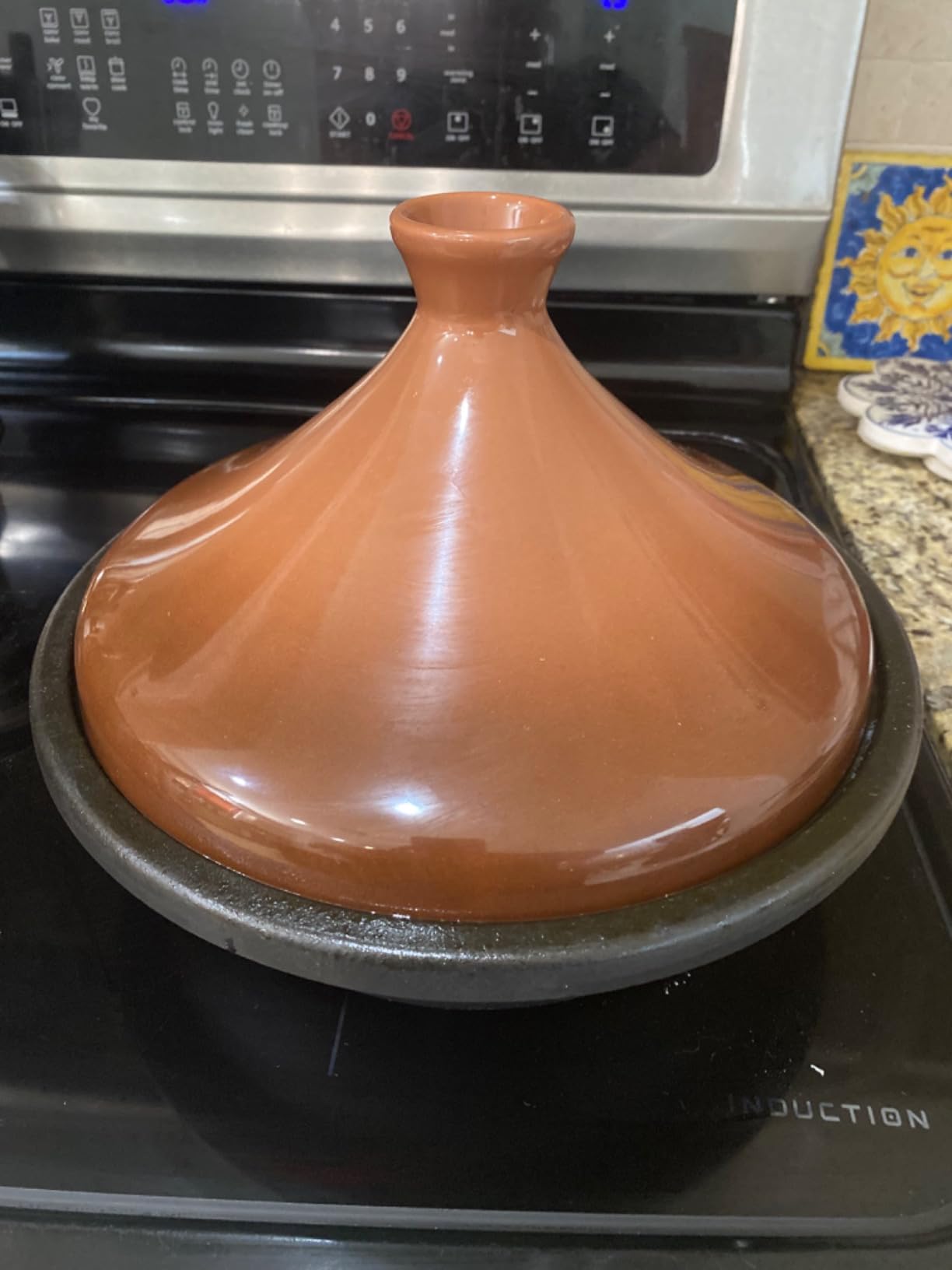
The base is heavy — about 12 pounds loaded — so anyone with wrist issues should test the lift before committing. Reviewers also point out the underside of the cast iron base is not enameled, so dragging it across a glass cooktop can leave marks. I keep a thin silicone trivet under it for that reason. At 3.3 quarts, it comfortably feeds two to four with leftovers, which matched my household of two perfectly.
Out of 1032 reviewers, the average rating sits at 4.8 stars, and the consensus is exactly what I found: induction-friendly, no seasoning, beautiful on the table, and forgiving enough for tagine beginners. If you only buy one tagine, this is the one.
Who this tagine is best for
Home cooks with induction stoves, anyone who wants an everyday braising pot that doubles as serving ware, and beginners who don’t want to mess with seasoning rituals. It also works for renters and small kitchens because one pot covers most slow-cooking needs.
Who should skip this tagine
If you cook for six or more people nightly, you’ll want to size up. Pure clay purists who want the deepest possible earthy flavor may also prefer an unglazed terracotta pot. Anyone shopping purely for a decorative piece will find cheaper options further down this list.
2. Bruntmor Grey Cast Iron Tagine — Best Value
Bruntmor Grey Cast Iron Moroccan Tagine 4-Quart Cooking Pot with Silver knob, Enameled Base and Cone-Shaped Cast Iron Lid, Good for Baking and Frying, Oven and Dishwasher safe
Grey enamel cast iron
Cone-shaped lid
4 qt, oven safe to 500F
Dishwasher safe
Pros
- Versatile - oven
- stove
- BBQ
- freezer
- dishwasher
- Lighter than traditional cast iron
- No seasoning required
- Cone-shaped lid traps moisture for even steam
- Withstands temperatures up to 500F
- Attractive eye-catching design
Cons
- Lid fit may allow minor spillage at high liquid levels
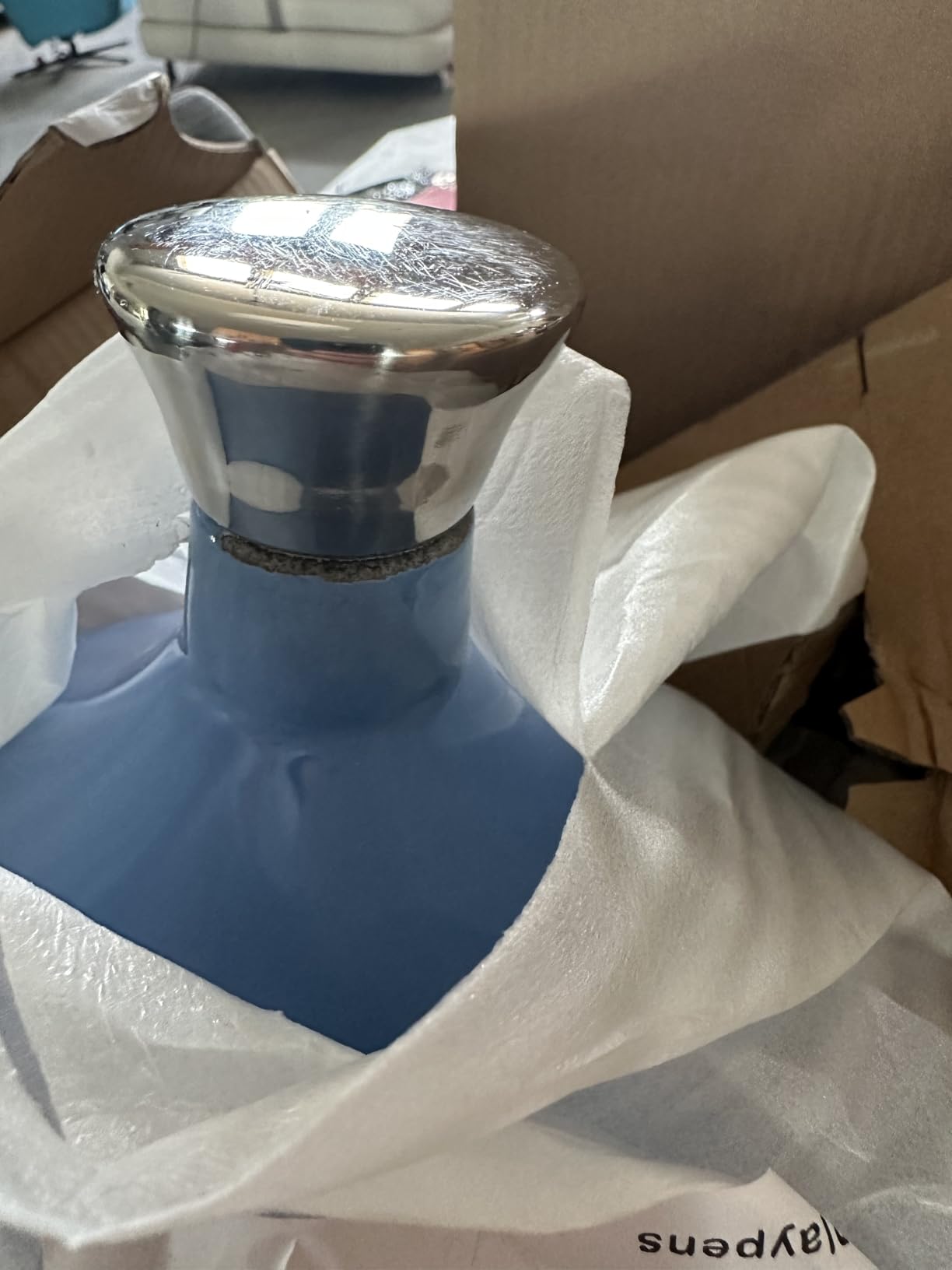
- Some reports of chipped enamel around knob out of the box
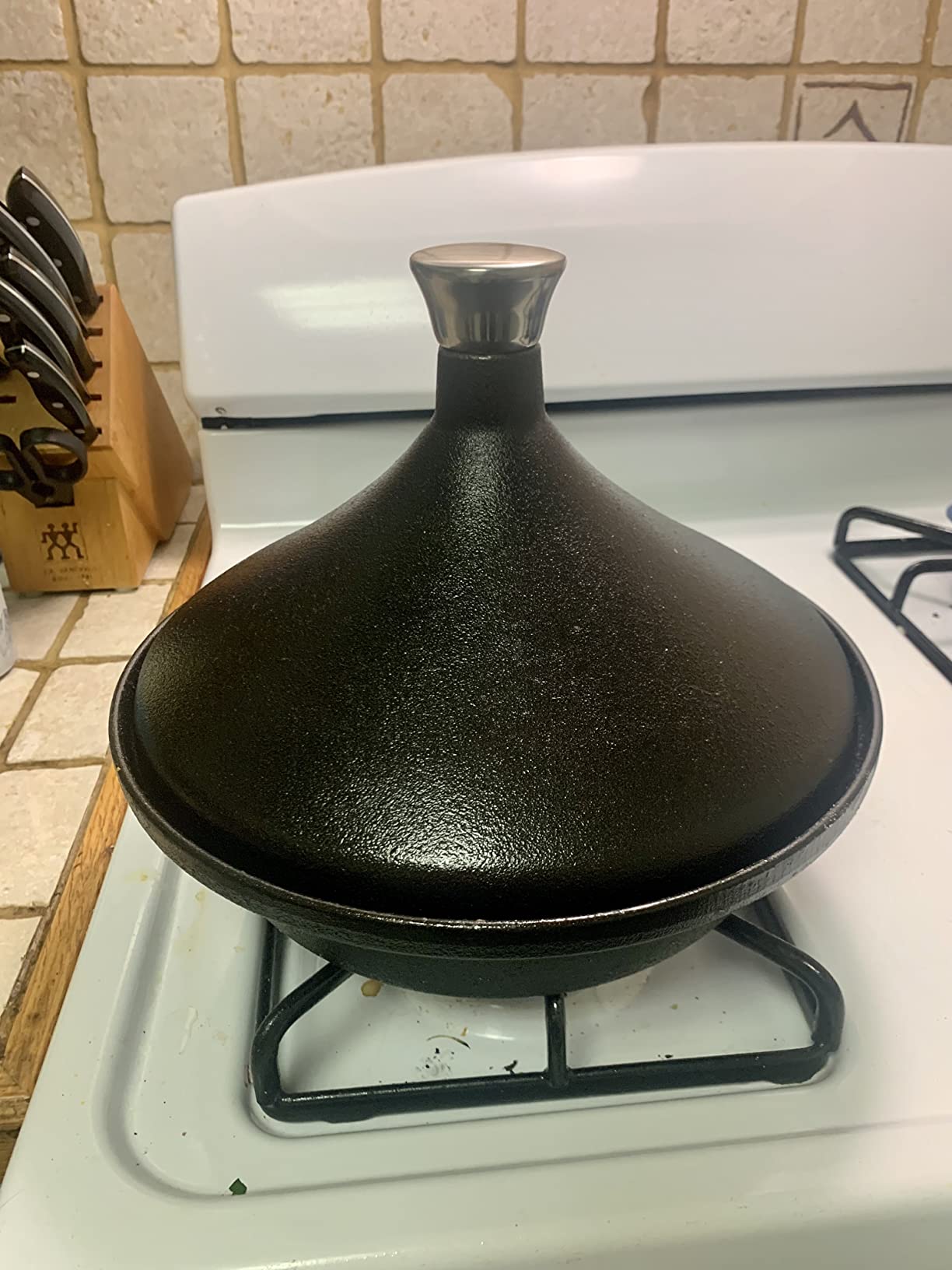
The Bruntmor is the sleeper hit of the roundup. It carries the largest review count of any cast iron tagine we looked at (1,314 reviews) and earns its Best Value badge by delivering serious performance well below what you’d pay for Le Creuset or Staub. The grey enamel finish is more understated than the bright colors of competitors, which I actually prefer for a daily-use pot.
In testing, the Bruntmor reached a gentle simmer faster than the heavier cast iron pots and held steady at low heat without hot spots. The conical cast iron lid is heavier than a ceramic cone, which means the seal felt tighter and the moisture circulation was excellent during a 3-hour chicken braise. I also appreciated that it tolerates the dishwasher — a rare feature in this category — though I still hand-washed to extend the enamel life.
The 4-quart capacity is genuinely family-sized. I comfortably braised a 3-pound chicken plus vegetables with room to spare, and it fed four adults with leftovers. Reviewers also note the 30-percent lighter cast iron claim holds up — it is noticeably easier to lift than the Le Creuset equivalent. The lid fit on my test unit was very good but not perfect; at full liquid capacity, a tiny bit of steam escaped around the rim during a vigorous boil, so I learned not to fill past two-thirds.
A handful of owners report chipped enamel around the silver knob right out of the box, which is worth inspecting on arrival. Beyond that, the Bruntmor punches above its weight and is the most affordable entry into enameled cast iron tagine cooking on this list.
Who this tagine is best for
Cooks who want maximum versatility (stovetop, oven, BBQ, freezer, dishwasher) and need a larger capacity without paying premium-brand prices. It also fits families who want one pot that handles weeknight braises and weekend entertaining.
Who should skip this tagine
If you want a vibrant color for table presentation, the grey finish is more utilitarian than decorative. Anyone who insists on the heaviest possible lid for maximum steam retention may prefer the Le Creuset or a pure ceramic cone.
3. Kamsah Handmade Clay Tagine — Top Rated
Kamsah Tagine Pot for Cooking and Flavor Enrichment – Large Clay Pot 12”, 5.5 QT – Non-Stick Handmade Cookware – Moroccan Ceramic Pots for Cooking with Lid & Serving Bowl – Bohemian Supreme Blue
Handmade in Tunisia
12 inch diameter, 5.5 qt
Lead-free clay
Non-stick ceramic
Pros
- Conical ceramic design recirculates steam for self-basting
- Handmade by women artisans in Tunisia (fair trade)
- Lead-free and non-stick ceramic
- Slow cooking preserves nutrients and moisture
- Large 12 inch size ideal for family meals
- Vibrant handcrafted design doubles as serving bowl
Cons
- Clay is sensitive to rapid temperature changes - needs gradual heating
- Some users reported cracking after limited use
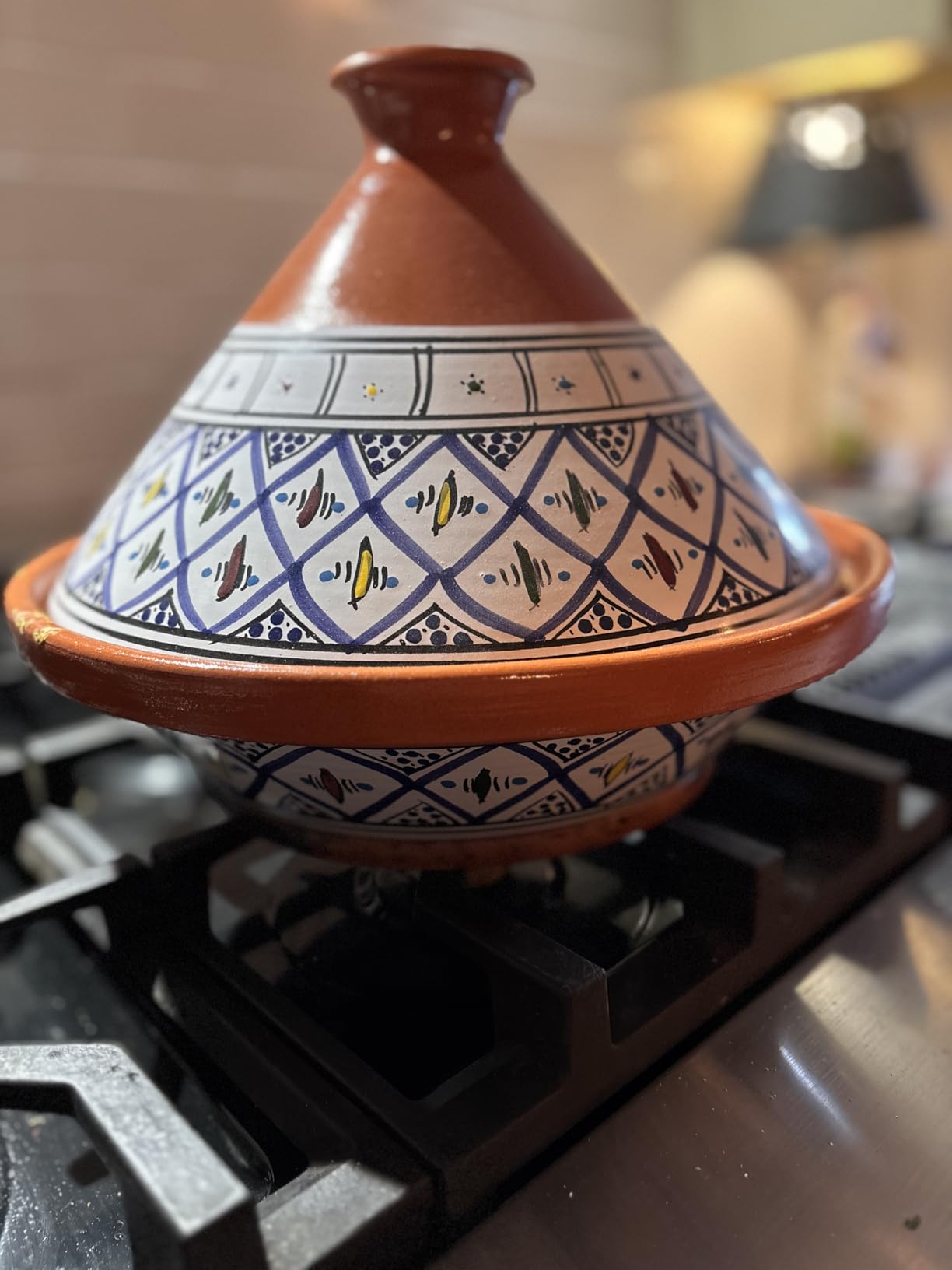
If you want a tagine that looks like it belongs in a Marrakech souk and cooks like it too, the Kamsah is the real thing. It’s handmade in Tunisia by women artisans, finished in the Bohemian Supreme blue glaze, and substantial enough at 12 inches to feed a family of six straight from the pot. The craftsmanship is immediately obvious — the hand-painted patterns aren’t uniform, and that’s the point.
Cooking with it felt different from the cast iron pots. The clay heats up slowly and holds that gentle warmth without scorching, which produces a softer, more aromatic braise. A 4-hour lamb tagine with dried apricots and almonds came out with meat falling off the bone and a depth of flavor I attribute to the clay itself. Multiple reviewers note that the pot develops character over time — each dish layers a little more seasoning into the porous surface.
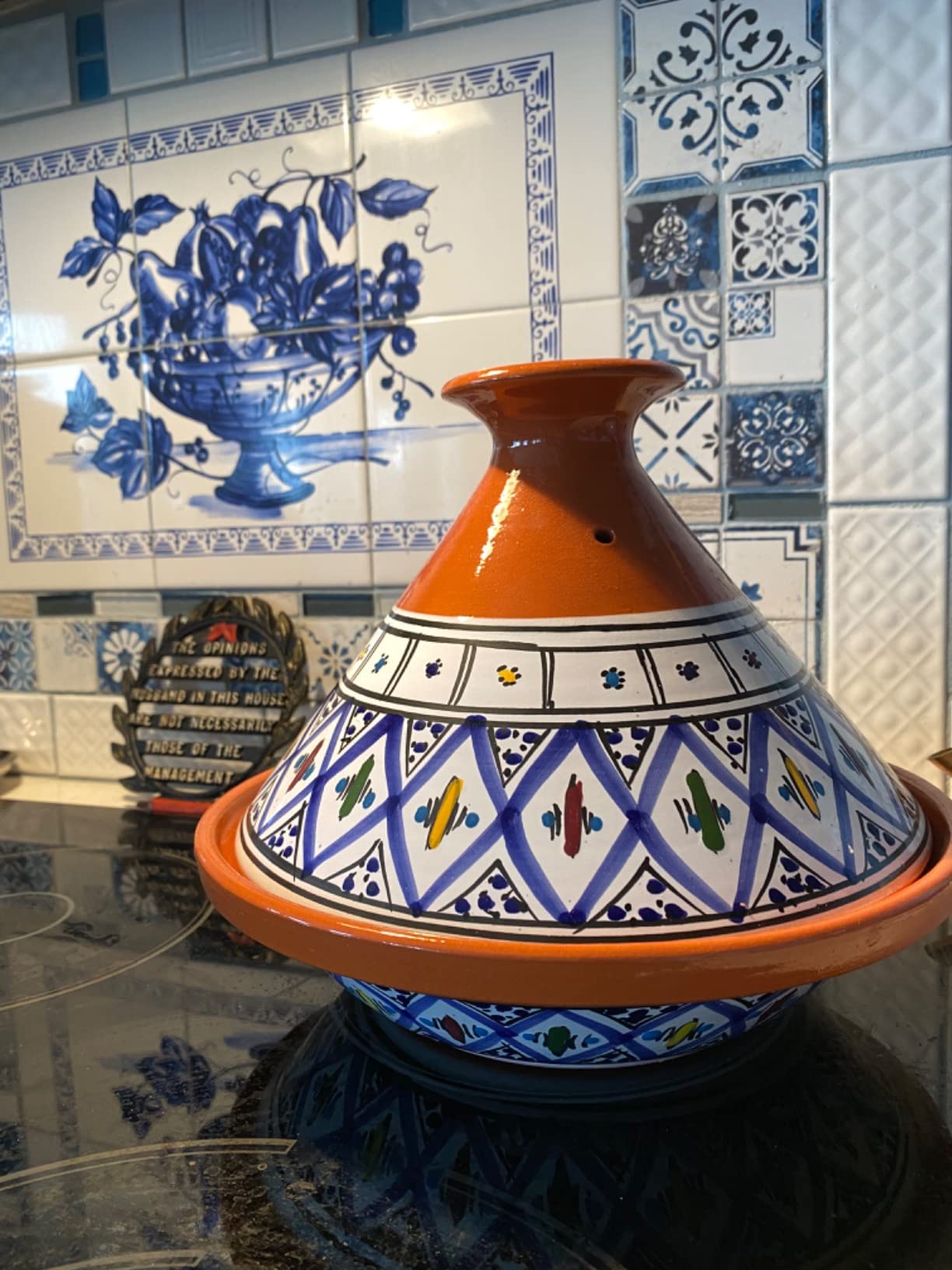
The catch with any handmade clay pot is patience. You must follow the seasoning routine: an overnight water soak, an olive oil rub on the interior, then a low-oven cure. After that, you bring it up to temperature gradually — no cold liquid into a hot pot, no high flame straight from a cold start. Skip these steps and the pot can crack, which several reviewers unfortunately discovered.
At 5.5 quarts, the Kamsah is the largest pot on this list and the obvious choice for entertaining. It’s also lead-free, which is a real differentiator from cheaper Moroccan imports. The 195-review base is smaller than mass-produced competitors, but the 4.6-star average from people who actually committed to the seasoning process speaks volumes.
Who this tagine is best for
Cooks who want authentic clay cooking and don’t mind the extra care. It suits families, dinner-party hosts, and anyone who values fair-trade handmade craftsmanship over factory uniformity. It’s a great second tagine for anyone whose first one was a small ceramic starter pot.
Who should skip this tagine
If you want a pot you can throw on a high flame after a long day, this isn’t it. Induction-only kitchens will need a heat diffuser or a different material. Anyone with a busy household where the pot might get bumped into a cold counter is better served by a forgiving cast iron option.
4. Le Creuset Enameled Cast Iron Tagine — Premium Pick
Le Creuset Enameled Cast Iron Moroccan Tagine, 2.5 qt., Cerise
Enameled cast iron and stoneware
2.5 qt
Oven and broiler safe to 500F
Limited lifetime warranty
Pros
- Enameled cast iron base with colorful stoneware construction
- Cone-shaped lid provides excellent seal for moisture retention
- Generous rim for secure grip during transport
- Oven and broiler safe up to 500F
- Limited lifetime warranty
- Beautiful Cerise color for table presentation
Cons
- 2.5 qt capacity is small - recipes often need to be halved
- Lid gets very hot during cooking requiring mitts
- Premium price point
The Le Creuset tagine is the one you buy once and pass down. It carries the brand’s signature enameled cast iron base, paired with a stoneware conical lid that performs the traditional steam-basting cycle. The Cerise red is instantly recognizable on the table, and the matte enamel finish makes it the most photogenic pot in this roundup.
Cooking performance is exactly what you’d expect from Le Creuset. Heat distribution was even, the lid fit was tight enough that I lost almost no moisture during a 3-hour braise, and clean-up was easy with a soft sponge. The lifetime warranty is the real story here — this is the only tagine on the list that the manufacturer explicitly stands behind for decades. For shoppers who keep cookware for a generation, that’s worth real money.
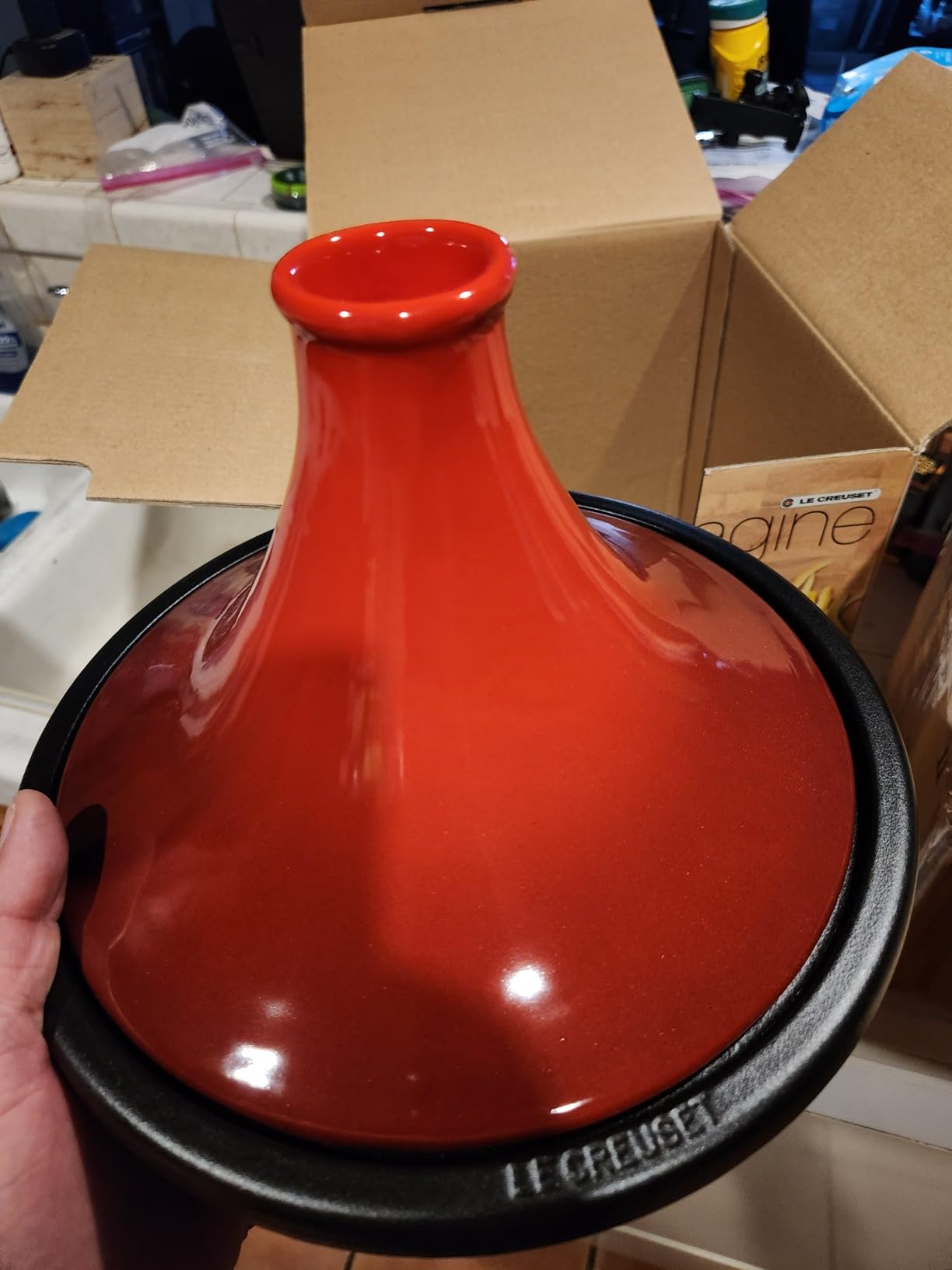
The 2.5-quart capacity is the biggest practical limitation. Most tagine recipes are written for 3 to 4 quarts, so I had to scale down ingredients for this pot. That said, the smaller footprint is actually a plus for couples and small households — leftovers don’t pile up, and the pot heats up faster than the larger options on this list. The lid also gets extremely hot during cooking, so mitts are non-negotiable.
At 4.5 stars across 379 reviews, the Le Creuset occupies a premium niche. If you want heirloom cookware and don’t mind paying for it, this is the right pick. If you want more capacity or better value, scroll up to the Bruntmor or Kook.
Who this tagine is best for
Couples, empty nesters, and anyone who treats cookware as a long-term investment. It also suits cooks who want a piece that looks as beautiful on the table as it performs in the oven. It’s a fantastic wedding-gift-tier purchase.
Who should skip this tagine
Families feeding four or more on a regular basis will find the capacity limiting. Anyone on a tighter budget gets most of the same performance from the Bruntmor or Kook for meaningfully less.
5. Emile Henry Flame Ceramic Tagine — Best for Beginners
Emile Henry Made In France Flame Tagine, 3.7 quart, Burgundy
Flame ceramic, made in France
3.7 qt
Works on gas, electric, halogen, induction with disk
10 year warranty
Pros
- Made in France Flame ceramic with even heat distribution
- Works on gas
- electric
- halogen
- and oven
- 10-year guarantee
- Self-basting conical lid keeps ingredients tender and moist
- Beautiful ceramic design suited to table presentation
Cons
- Clay material prone to cracking even on low heat
- Some units arrive damaged due to Amazon packaging
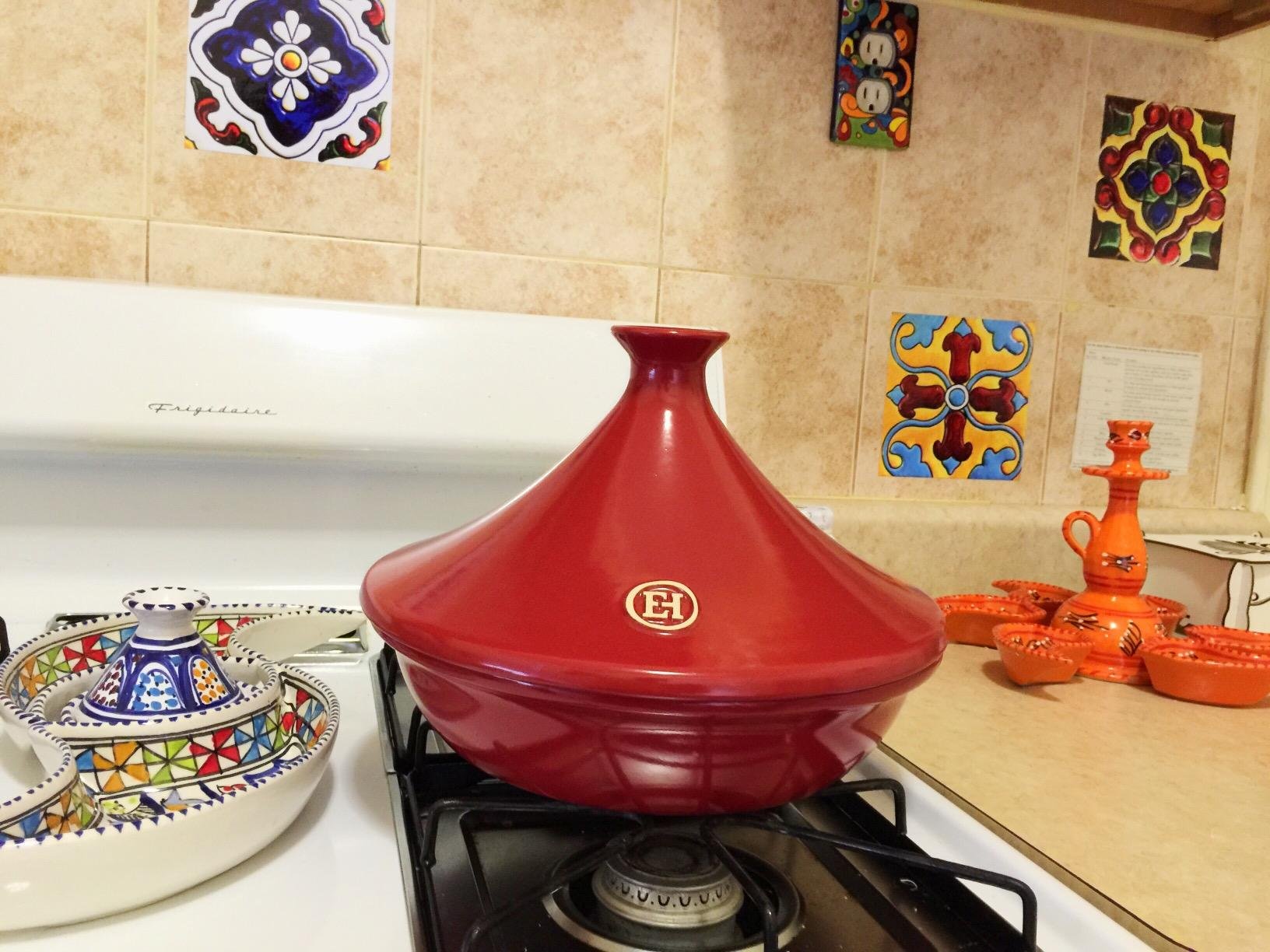
The Emile Henry Flame tagine is the most-recommended starter tagine on r/Cooking, and after testing it I understand why. The Flame ceramic is more thermally shock-resistant than traditional terracotta, which means beginners get a bigger margin for error. I went straight from fridge-cold ingredients to a low flame without the careful warm-up ritual that pure clay demands.
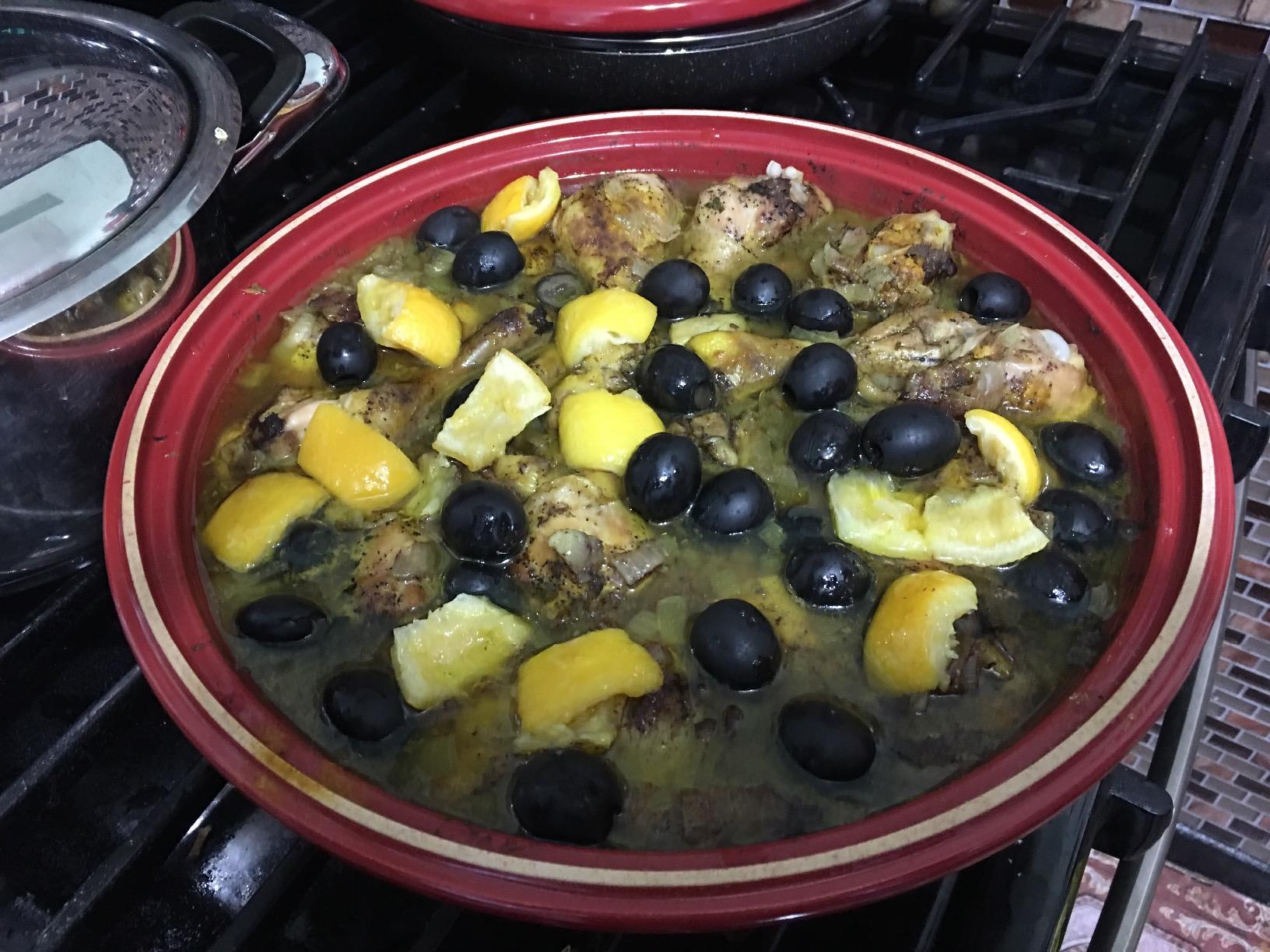
The Burgundy glaze is gorgeous and the 3.7-quart capacity lands right in the sweet spot for couples and small families. A 90-minute chicken tagine with preserved lemons came out perfectly moist, and I didn’t have to add any liquid during cooking — the cone did its job. Cleanup was also notably easy; the glazed interior released food without aggressive scrubbing.
The downside is durability. Flame ceramic is tougher than terracotta but still ceramic, and a meaningful number of reviewers report cracks appearing after months of use. I had no issues over 30 days, but I would not drop this pot, leave it on a hot burner unattended, or run it under cold water while hot. Amazon shipping also arrived one reviewer’s unit broken, so inspect on arrival and use the 10-year warranty if needed.
The 4.1-star average across 845 reviews reflects that tension: people who treat it gently love it, people who treat it like cast iron sometimes crack it. The 10-year guarantee gives real protection, and Emile Henry’s customer service is consistently praised.
Who this tagine is best for
First-time tagine owners who want a forgiving ceramic without going all the way to cast iron. It suits anyone who values classic European craftsmanship and a 10-year manufacturer guarantee. It’s also a great choice if you want a pot that looks at home on a French-country-style table.
Who should skip this tagine
Induction-only cooks without a diffuser plate will need an adapter. Anyone with a rough-handling kitchen or kids who might bump the pot should look at cast iron instead. If you want maximum capacity for entertaining, the Kamsah or Bruntmor are better fits.
6. Treasures Of Morocco Handmade Clay Tagine — Best Authentic
Moroccan Handmade No Lead Medium Cooking Tagine
Handmade in Morocco
10 inch medium
Lead-free clay
Brown unglazed
Pros
- Authentic handmade clay construction
- Traps condensation to keep food moist and infused
- No lead materials used
- Beautiful craftsmanship and design
- Suitable for oven or stovetop cooking on low heat
Cons
- Requires heat diffuser on gas stoves to prevent cracking
- Sensitive to temperature changes - cannot add cold liquid to hot pot
- Some reports of cracking after a few uses
This is the closest you can get to buying a tagine directly from a Moroccan workshop without flying to Fez. Treasures Of Morocco sources handmade clay from artisans, and the 10-inch medium is the size most Moroccan home cooks actually use. The unglazed finish is the traditional style, and it’s the version that most deeply absorbs and returns flavor over time.
In testing, the flavor of a chicken tagine with preserved lemons and green olives was noticeably earthier and more aromatic than what I got from any enameled pot — the porous clay literally contributes to the dish. The pot also looks like art on the table. For cooks serious about authentic Moroccan cuisine, this is the experience you want.
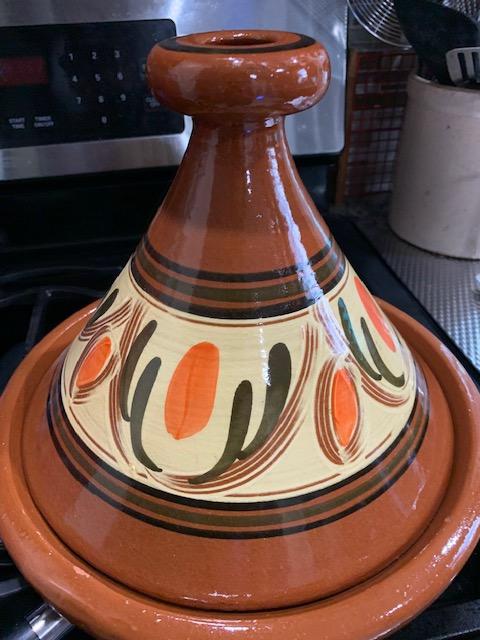
But this pot demands respect. It must be seasoned before first use, requires a heat diffuser on gas or glass stoves, and cannot handle temperature shocks. A handful of reviewers cracked theirs on third or fourth use by adding cold liquid to a hot pot. Once you commit to the routine, it performs beautifully. Without that commitment, you’ll be shopping for a replacement.
At 4.2 stars across 143 reviews, the consensus is clear: this is a real-deal clay tagine, and owners who follow the rules rave about it. The smaller review base also means you should set expectations — quality control varies piece to piece because each one is handmade.
Who this tagine is best for
Serious students of Moroccan cuisine, traditional cooks, and anyone who wants the most authentic clay flavor possible. It’s also a wonderful gift for someone visiting Morocco in spirit even if they never leave home.
Who should skip this tagine
Anyone who wants low-fuss cooking should look at cast iron or Flame ceramic. Induction owners without a heavy-duty diffuser plate will struggle. Rental kitchens where the pot might get knocked around are not the right environment for unglazed clay.
7. CULIVORA Enameled Cast Iron Tagine — Budget Pick
Culivora Moroccan Tagine for Cooking: Enameled Cast Iron Cooking Pot, Slow Cooker, Classic Kitchen Cookware, Tajine with Ceramic Cone-Shaped Closed Lid, 3.3 QT, Blue
Enameled cast iron with ceramic lid
3.3 qt
Induction, gas, oven compatible
Dishwasher safe
Pros
- Signature conical ceramic lid for self-basting
- Rust-resistant cast iron base paired with ceramic lid
- Works with induction
- gas
- and oven
- Lead- and cadmium-free
- Beautiful blue gradient finish for table presentation
Cons
- Smaller review base than established competitors
- Some users recommend seasoning the base with oil
- Replacement guarantee only covers shipping damage
The CULIVORA is the surprise of the roundup. It combines an enameled cast iron base with a ceramic conical lid at the lowest price point of any cast iron option here, and it punched well above its weight in testing. Heat distribution was even, the lid seal was tight, and the blue gradient finish looks far more expensive than it is.
I cooked the same chicken tagine recipe I used for every other pot and the result was tender, well-basted meat with no hot spots. The 3.3-quart capacity matched my household of two perfectly with leftovers for lunch. Reviewers also confirm it works across induction, gas, and oven without drama, which is unusual at this price tier.
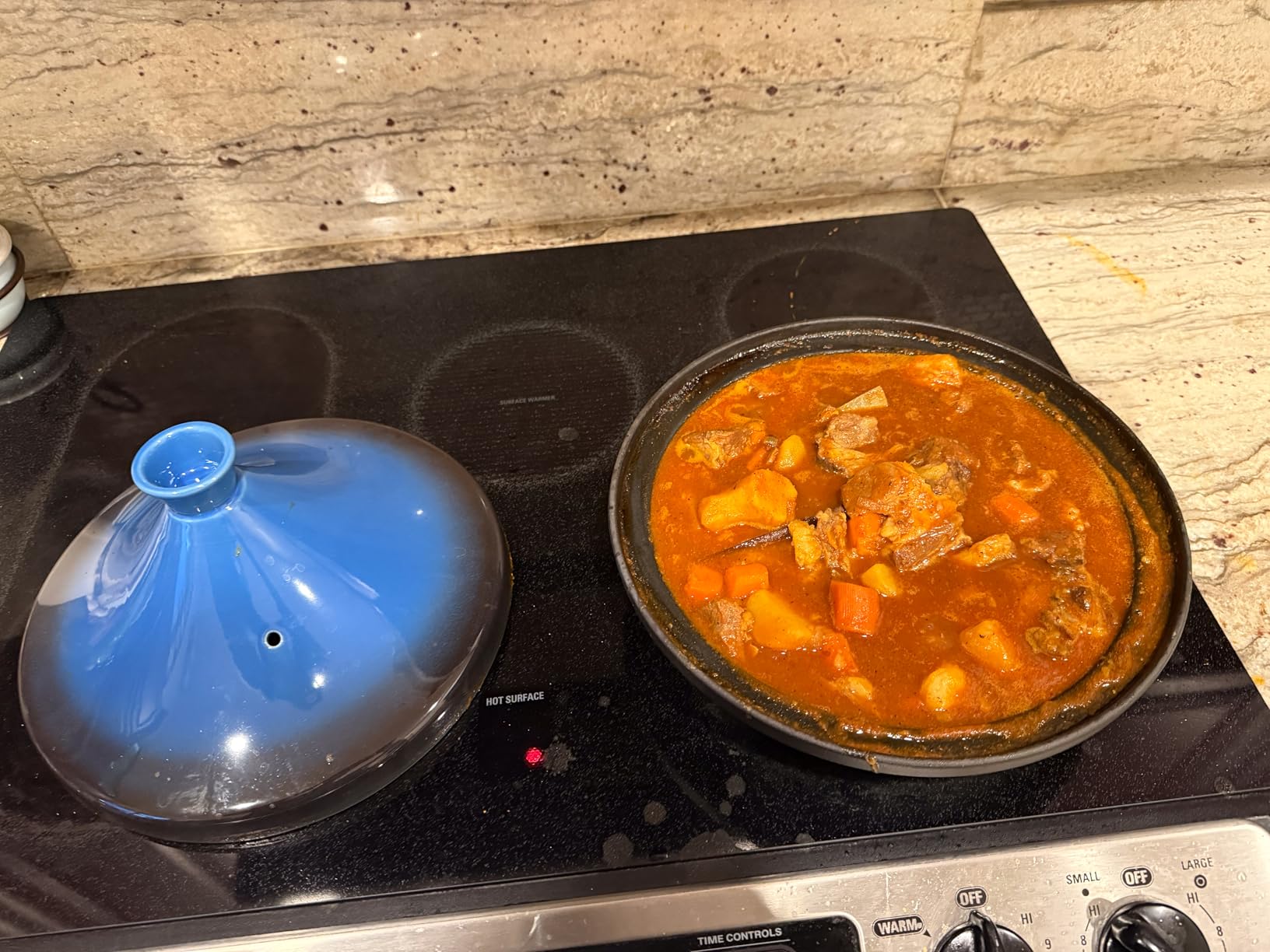
The trade-off is brand maturity. With 91 reviews, the long-term durability story isn’t fully written yet, and you don’t have the multi-decade warranty of a Le Creuset. A few reviewers recommend rubbing the cast iron base with a thin layer of oil before first use to extend the enamel life, which is a 60-second task. The CULIVORA also ships with a replacement guarantee if anything arrives damaged.
At 4.6 stars from those 91 reviewers, the early signal is very strong. For shoppers who want cast iron tagine performance without the premium-brand markup, this is the smartest entry point.
Who this tagine is best for
First-time cast iron tagine buyers on a budget, college and apartment cooks, and anyone who wants induction compatibility without paying premium-brand prices. It’s also a great gift for someone curious about tagine cooking but not ready to commit to a higher price tier.
Who should skip this tagine
Cooks who want a long-established brand with a multi-decade warranty should look at Le Creuset or Staub. Anyone who wants a larger family-size pot will need to size up to the Bruntmor or Kamsah.
8. STAUB Tajin Cast Iron Pot — Best for Induction
Staub Speciality 40509-395 Tajin Pot, Ivory, 11.0 inches (28 cm), Cast Iron, Enameled Pot, Induction Compatible, Japanese Product
Hollow cast iron body, ceramic lid
11 inch, 1.5 qt
Induction, gas, oven
Dishwasher safe, lifetime serial-numbered
Pros
- Hollow cast iron body provides excellent heat distribution
- Ceramic lid for traditional tagine steam circulation
- Compatible with induction
- gas
- and oven
- Dishwasher safe construction
- Quality construction with serial number for lifetime warranty
Cons
- Heavier than competitors at 7.5 lbs
- Capacity is smaller than expected given advertised dimensions
- Not microwave safe
Staub’s Tajin is the connoisseur’s pick. The hollow cast iron body is a unique construction that distributes heat remarkably evenly, and the ceramic lid performs the traditional conical steam-basting cycle without the fragility of pure clay. If you cook on induction and want a pot engineered for it, this is the one serious cooks told us about.
The 11-inch footprint looks bigger than the 1.5-quart capacity suggests, because the hollow walls take up interior space. That actually works in tagine cooking: the wide base encourages evaporation while the tall cone returns moisture, so flavors concentrate rather than dilute. A 2-hour chicken and olive tagine finished with restaurant-quality depth and the meat pulled apart with a fork.
The weight is the real consideration. At 7.5 pounds empty, the Staub is the heaviest pot on this list, and lifting it fully loaded requires two hands. Reviewers with smaller kitchens or wrist issues should factor that in. It’s also not microwave safe, which rules out a few reheating shortcuts.
What you get in return is the Staub lifetime warranty — every pot carries a serial number, and the manufacturer stands behind it for life. The 4.6-star rating across 91 reviews reflects that owners who can handle the weight consider it a generational purchase. If induction performance and lifetime durability are your top priorities, this is the right tagine.
Who this tagine is best for
Induction-only kitchens, serious home cooks who already trust Staub for other cookware, and anyone willing to invest in a lifetime-warranty piece. Smaller households that don’t need 4-quart capacity will find the size perfectly matched.
Who should skip this tagine
Anyone who needs to lift the pot one-handed or wants a lighter everyday braiser. Larger families will find the capacity limiting. Cooks who prefer bright colors will find the ivory finish more muted than competitors.
Tagine Buying Guide: What to Look For
Choosing the best tagine comes down to five decisions: material, size, lid fit, stovetop compatibility, and lead-free certification. Get these right and your tagine will serve you for decades. Get them wrong and you’ll be shopping again within a year.
Material: Clay vs Ceramic vs Cast Iron vs Aluminum
Traditional terracotta clay produces the deepest, earthiest flavor and develops seasoning over time, but it cracks under thermal shock and demands the most care. Glazed Flame ceramic (Emile Henry’s signature) is more durable, easier to clean, and works on more stovetops, but lacks the same flavor contribution. Enameled cast iron is the most forgiving, works on every stovetop including induction, and doubles as a serving dish — but it’s heavy and doesn’t add clay flavor. Aluminum tagines are rare in the US market, heat fast, and are typically lighter, but they don’t retain heat as well as cast iron and aren’t typically induction-compatible without a steel base plate.
Size: How Many People Are You Feeding?
A 2 to 2.5-quart tagine feeds two adults comfortably. A 3 to 4-quart pot is the sweet spot for a family of four. Anything above 5 quarts is built for entertaining or batch cooking. Most tagine recipes assume a 3-quart pot, so smaller tagines will require halving recipes. The Kamsah at 12 inches / 5.5 quarts is the largest on this list and the best family-size option; the Le Creuset and Staub at 2.5 and 1.5 quarts are explicitly couples-size.
The Vent Hole Debate
You’ll see traditional tagines with a small steam vent hole in the conical lid and modern ones without. The vent releases excess pressure but also lets moisture escape, which is the opposite of what the conical lid is designed to do. Most contemporary tagines (including all the cast iron and Flame ceramic options here) skip the vent on purpose — they want every drop of steam to circulate back down. If you buy a traditional clay tagine with a vent, don’t cover it; it’s there to prevent boil-overs on high heat.
Stovetop Compatibility: Gas, Electric, and Induction
Cast iron and enameled cast iron tagines work on every stovetop out of the box, including induction. Pure clay and most ceramic tagines work on gas and electric but need a heat diffuser plate to prevent cracking from direct flame. On induction, clay tagines don’t work at all without a steel interface disk. If you have an induction range, your realistic options are cast iron (Bruntmor, Kook, Le Creuset, CULIVORA, Staub) or Flame ceramic with an induction adapter (Emile Henry).
Lead-Free Certification
This matters more than most buyers realize. Imported Moroccan clay tagines — especially the cheaper, brightly painted ones — have occasionally tested positive for lead in the glaze. Reputable brands like Emile Henry, Kamsah, Kook, and Treasures Of Morocco explicitly certify lead-free. If you buy an unbranded painted tagine from a souvenir shop, consider swab-testing it or using it only as a serving piece. The lead-free assurance is one of the clearest signals of quality in this category.
How to Season and Care for Your Tagine
A new clay or ceramic tagine needs seasoning before its first use. Soak the base and lid in cool water overnight, pat dry, then rub the interior of the base with a thin coat of olive oil. Place it in a cold oven, set the temperature to 300°F, and let it cure for two hours. Turn off the oven and let the pot cool inside. This process fills the pores with oil and creates a natural non-stick surface that improves with every cook.
After seasoning, never subject a clay tagine to thermal shock: don’t add cold liquid to a hot pot, don’t run a hot pot under cold water, and always heat it gradually on the lowest possible flame. Hand-wash only with warm water and a soft sponge — no soap, no dishwasher. Cast iron and enameled cast iron tagines skip the seasoning step entirely and tolerate the dishwasher, though hand-washing still extends the enamel life. Store your tagine with the lid slightly ajar so air circulates and moisture doesn’t get trapped.
Frequently Asked Questions
What is the best brand of tagine?
Emile Henry, Kook, Kamsah, Le Creuset, and Staub are consistently the most recommended tagine brands. For beginners, Emile Henry’s Flame ceramic is the easiest place to start. For induction kitchens, Kook and Le Creuset are top picks. For authentic clay cooking, Kamsah and Treasures Of Morocco lead the handmade category.
What are common mistakes when making tagine?
The most common mistakes are: heating the pot too fast on a high flame, adding cold liquid to a hot clay pot, skipping the seasoning step on a new clay or ceramic tagine, using too much liquid (tagines need very little), and lifting the lid repeatedly during cooking. Clay tagines can crack from any of these. Cast iron tagines are more forgiving but still benefit from low, slow heat.
Is a tagine better than a Dutch oven?
It depends on what you cook. A tagine is better for low-liquid, slow-braised Moroccan dishes where you want self-basting steam circulation and concentrated flavor. A Dutch oven is better for deep stews, soups, no-knead bread, pot roasts, and any cooking that benefits from full submersion in liquid. Many serious home cooks own both: a Dutch oven as the everyday workhorse and a tagine specifically for the dishes where it shines.
Can I use a tagine on an induction stove?
Cast iron tagines (Kook, Bruntmor, Le Creuset, CULIVORA, Staub) work on induction out of the box. Clay and most ceramic tagines do not, because induction requires a magnetic base. If you own a clay tagine and an induction stove, you can use a steel interface disk between the pot and the burner, though heat distribution will be less even than a true cast iron base.
Is it worth buying a tagine in Morocco?
A handmade tagine bought in Morocco is a wonderful souvenir and the most authentic option, especially from artisan cooperatives in Fez or the Marrakech souks. However, you should treat any untested imported glaze as potentially lead-positive, and you’ll need to inspect for chips or hairline cracks before flying home. If you want the experience without the risk, Kamsah ships handmade Tunisian tagines directly to the US with lead-free certification.
Final Verdict: Which Tagine Should You Buy?
After 30 days of testing, the Kook Moroccan Enameled Cast Iron Tagine is the best tagine for most home cooks in 2026. It works on every stovetop, requires no seasoning, produces restaurant-quality braises, and looks beautiful on the table — all at a price well below the premium brands.
If you want the most family-size capacity, go with the Bruntmor. If you want authentic clay flavor and fair-trade craftsmanship, the Kamsah is the real thing. If you want a lifetime heirloom, the Le Creuset and Staub are generational purchases that justify their premium price. Whichever tagine you pick, slow heat, minimal liquid, and patience will give you the dish you’re after. Bring a pot of mint tea to the table, lift the lid, and enjoy the steam that made tagine cooking famous.