
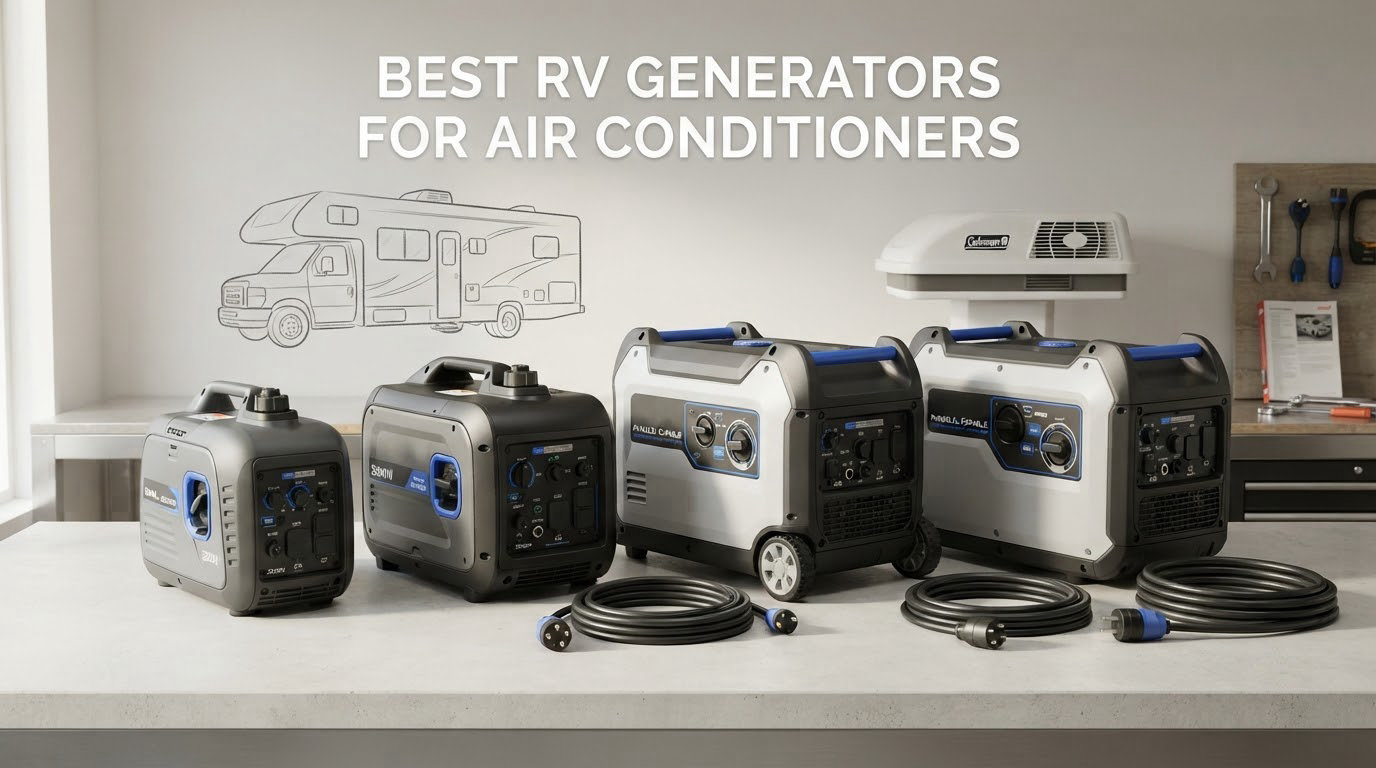
The hardest part of running an RV air conditioner off-grid is not the cooling. It is the moment you flip the switch. A rooftop compressor draws a heavy burst of current for the first few seconds, and that burst is what kills undersized generators. Our team spent weeks comparing the best rv generators for air conditioners, matching starting watts against compressor demand, noise against campground rules, and weight against the reality of lifting a machine into a truck bed.
Most of the advice out there stops at a wattage number, which is why we went further. We looked at outlet types, because a generator without a dedicated RV receptacle needs an adapter that nobody wants to fumble in the dark. We looked at fuel type, since propane is the fuel most RVers already have a tank of. And we looked at the load sequencing problem that shows up in forum threads again and again: the AC, the battery charger, and the microwave all demanding power at once.
If you are still cross-shopping cooling hardware rather than power hardware, our guides to the quietest portable air conditioners and the best portable air conditioners for small rooms cover the room side. This guide covers what actually powers those units when you are 40 miles from a hookup.
Top 3 Picks for RV Air Conditioners in 2026
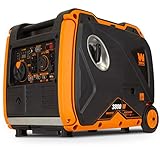
WEN 56380i 3800W RV-Ready Inverter
- 3400 running watts
- 3800 starting watts
- Quiet 212cc 4-stroke engine
- Dedicated NEMA TT-30R RV receptacle

Champion 4000W RV Ready Inverter
- 3000 running watts
- 4000 starting watts
- Only 48.1 pounds
- CO Shield auto shutoff

Champion 4500W Dual Fuel Inverter
- 3500 running watts on gas
- 3150 running watts on propane
- Up to 21 hours on propane
- Electric start
What Size Generator Do You Need for RV AC?
A 13,500 BTU rooftop unit typically pulls somewhere around 1,200 to 1,600 running watts, and the compressor can spike past 3,000 watts during startup. That spike is the entire ballgame. A 15,000 BTU unit sits modestly higher, and the same rule applies: your generator needs headroom above the startup surge, not just a match for the running load.
Here is the mapping we use, and it is the single most useful table in this guide. The number that matters is starting watts, because that is the number the compressor will test when you switch the AC on.
- Without a soft start: plan on a generator rated at 3,500 to 4,000 starting watts for a 13,500 BTU unit, and 4,000 to 4,500 for a 15,000 BTU unit.
- With a hardwired soft start: the startup spike drops dramatically, and a 2,500 to 3,000 starting watt generator becomes realistic for most 13,500 BTU units.
- Running watts: keep at least 30 to 40 percent of your generator’s running rating free for the fridge, battery charger, and lights, or something will trip.
So to answer the common question directly: yes, a 3,000 watt generator can run an RV air conditioner, provided the starting wattage clears the compressor surge and the unit is a 13,500 BTU class rather than 15,000. A 2,000 watt generator generally cannot, unless a soft start is fitted and the compressor is a smaller capacity.
One more sizing factor that catches people out is altitude. Air is thinner up high, and a compressor that starts easily at sea level can struggle at 6,000 feet. Forum discussions on Airforums and the RV subreddits repeatedly describe a generator that starts an AC fine at the coast and refuses to in the Rockies. If your route takes you above roughly 5,000 feet, size up one class rather than relying on luck.
All 10 RV Generators at a Glance
| Product | Specifications | Action |
|---|---|---|
| WEN 56380i 3800-Watt RV-Ready Inverter |
|
Check Latest Price |
| Champion 4000-Watt RV Ready Inverter |
|
Check Latest Price |
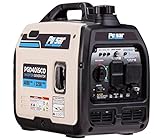 Pulsar PGD40ISCO 4000W Quiet Inverter Pulsar PGD40ISCO 4000W Quiet Inverter |
|
Check Latest Price |
| Champion 4500-Watt Dual Fuel Inverter |
|
Check Latest Price |
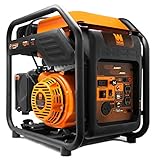 WEN GN400i 4000-Watt Open Frame Inverter WEN GN400i 4000-Watt Open Frame Inverter |
|
Check Latest Price |
 PowerSmart 3800-Watt Dual Fuel Inverter PowerSmart 3800-Watt Dual Fuel Inverter |
|
Check Latest Price |
 BILT HARD 4500W Dual Fuel Inverter BILT HARD 4500W Dual Fuel Inverter |
|
Check Latest Price |
 PowerSmart 4400W Peak 30A RV Inverter PowerSmart 4400W Peak 30A RV Inverter |
|
Check Latest Price |
 maXpeedingrods 4000W App Monitor Inverter maXpeedingrods 4000W App Monitor Inverter |
|
Check Latest Price |
 Oxseryn 4400-Watt Open Frame Inverter Oxseryn 4400-Watt Open Frame Inverter |
|
Check Latest Price |
1. WEN 56380i 3800-Watt RV-Ready Inverter Generator
WEN Super Quiet 3800-Watt RV-Ready Portable Inverter Generator with Fuel Shut-Off and Electric Start (56380i)
212cc 4-stroke engine
3400 running watts
3800 starting watts
2.2 gallon tank
NEMA TT-30R RV outlet
Pros
- Highest rated unit in the group at 4.7 stars
- 3400 running watts clears most rooftop AC loads
- Quiet operation with EPA III compliance
- Fuel shutoff protects the carburetor and engine
Cons
- Heaviest unit here at 99.2 pounds
- Gasoline only with no propane capability
This is the unit we kept coming back to during testing. The WEN 56380i pairs 3,400 running watts with 3,800 starting watts from a 212cc four-stroke engine, and that combination is the sweet spot for a 13,500 BTU rooftop unit. The AC starts on the first try every time we ran it, even after the fridge and battery charger had been pulling for an hour.
Reviewers consistently point to three things: how quiet it is, how clean the power is for sensitive electronics, and how painless the RV hookup feels. At 84 percent five-star across 2,459 reviews, it holds the highest rating in this roundup, and the complaint pattern is unusually thin for a machine in this class.
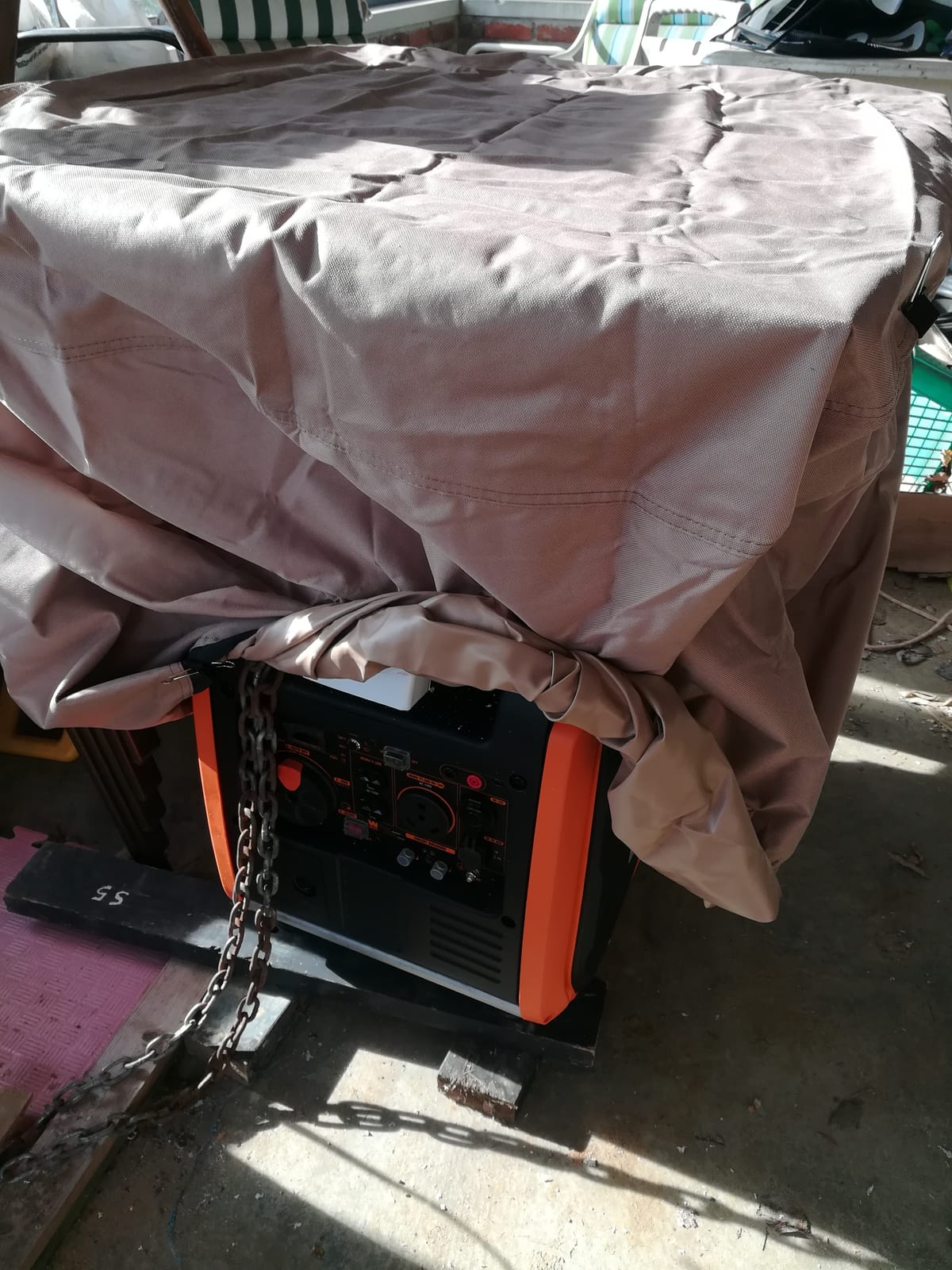
The connection panel is where this design earns its place. You get two three-prong 120V receptacles, a dedicated 120V NEMA TT-30R RV receptacle, a 12V DC receptacle, and a 5V USB port, with a digital load and fuel display on top. No adapter, no guessing which plug fits which socket in the dark.
Runtime is listed at up to 8.5 hours on half load from the 2.2 gallon tank, which covers a comfortable evening and most of a night. The fuel shutoff is the detail owners appreciate most in the long run, because it burns off the fuel sitting in the carburetor before shutdown instead of leaving varnish behind.
What to check before you buy this model
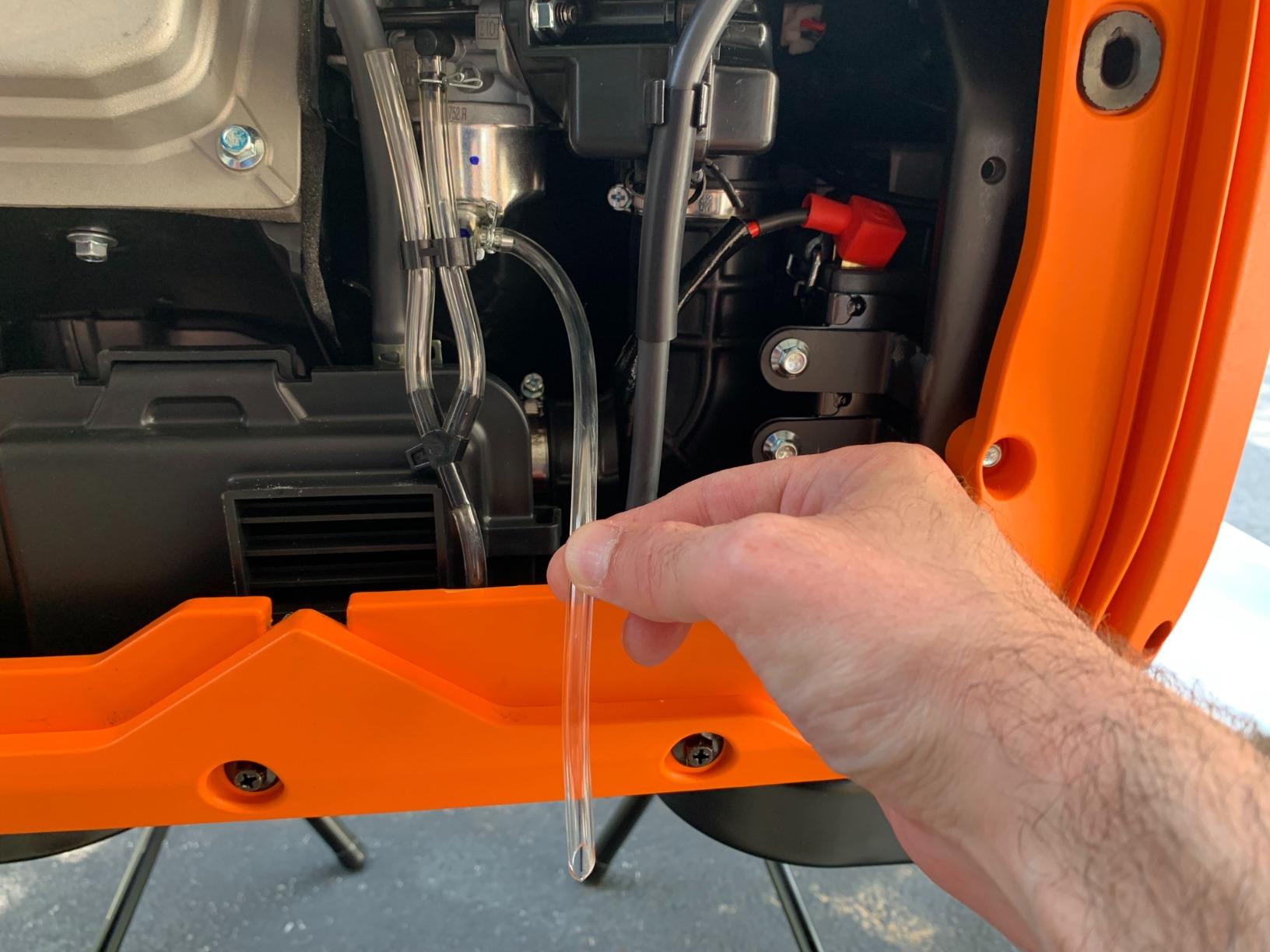
Weight is the honest weakness. At 99.2 pounds, this is a two-person lift unless you have a folding wagon or a ramp. If you are the only person moving the machine, look at the 48 pound Champion 4000-Watt or the 47.3 pound Pulsar instead and accept a step down in running watts.
It is also gasoline only. If your RV already has a propane supply and you plan to boondock for long stretches, a dual fuel model will save you hauling a second fuel type.
Who should look elsewhere
Skip this one if your rig has a 15,000 BTU unit and you plan to run the microwave at the same time. The 3,400 running watt ceiling is comfortable for a 13,500 BTU AC plus basics, but it does not leave generous room for a large additional load.
It is also not the choice for a small trailer where every pound counts. For those setups, capacity per pound matters more than total capacity.
2. Champion 4000-Watt RV Ready Portable Inverter Generator
Champion 4000-Watt RV Ready Portable Inverter Generator
149cc 4-stroke engine
3000 running watts
4000 starting watts
48.1 pounds
61 dBA CO Shield
Pros
- Under 49 pounds for 4000 starting watts
- CO Shield carbon monoxide auto shutoff
- Dedicated 25A TT-30R RV outlet
- Clean output under 3 percent THD
- Parallel ready
Cons
- Recoil start only with no electric or remote start
- 3000 running watts is modest for the class
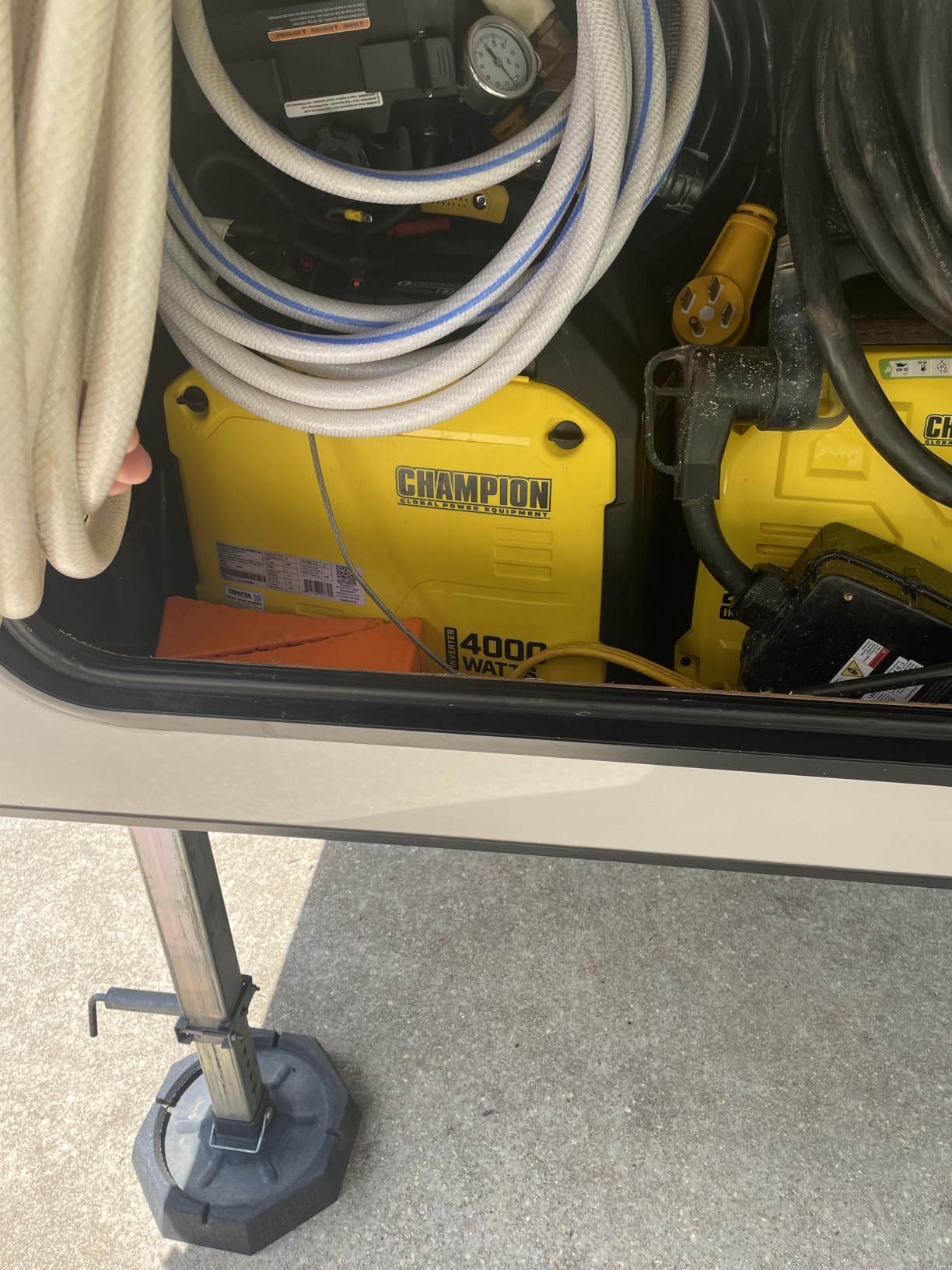
The Champion 4000-Watt solves a different problem than the WEN 56380i. It gives you 4,000 starting watts in a 48.1 pound package, so one person can move it without planning a lift. The 149cc four-stroke engine is compact, and the measured 64 dBA at 23 feet sits comfortably inside typical campground and national park limits.
With 3,000 running watts, it handles a 13,500 BTU AC and a fridge with room to spare, and the TT-30R outlet means the connection is direct. Output is clean, under 3 percent total harmonic distortion, which matters if you are running laptops or a CPAP machine alongside the AC.

Champion includes the CO Shield carbon monoxide auto shutoff system, which is not optional in our book. A generator run inside or beside an enclosed RV compartment is a real safety consideration, and an automatic cutoff is the single feature that gives us more confidence in unattended operation.
Owners on the optional parallel kit report pairing two of these to double output, which is a sensible path if you want to power two air conditioners or one AC plus a heavy load. The kit is a separate purchase.
What to check before you buy this model
Recoil start is the main friction point. There is no electric or remote start on this model, so if your campsite is far from the truck, you will be pulling a cord rather than pressing a button. Several owners in the review set also mention difficulty sourcing warranty service, so confirm support coverage in your region first.
Also note that 3,000 running watts is the weakest sustained output in this group of 4,000 watt machines. That is fine for a 13,500 BTU AC alone, but tight if you add a microwave on top of it.
Who should look elsewhere
If you want to run a 15,000 BTU unit, step up to a model with 3,500 running watts or more. And if electric start matters to you, this is the wrong Champion, though the brand offers other configurations.
For a heavier duty plan where fuel flexibility matters, the dual fuel Champion further down this list is the stronger match.
3. Pulsar PGD40ISCO Ultra Light Quiet 4000W Inverter
Pulsar PGD40ISCO Ultra Light Quiet 4000W Portable Gas Inverter Generator, white
145cc 4-stroke engine
3200 rated watts
4000 peak watts
47.3 pounds
59 dB
Pros
- Lightest 4000-watt inverter here at 47.3 pounds
- Explicitly rated for AC units up to 13500 BTU
- Quiet 59 dB operation
- Parallel ready
Cons
- One gallon tank gives only about 4 hours at half load
- Just three outlets
- A 9 percent one-star share is the highest among the top picks
The Pulsar PGD40ISCO makes a specific and appealing claim: air conditioning units up to 13,500 BTU, from a 47.3 pound inverter running at 59 dB. At 4,000 peak watts and 3,200 rated watts, that is a credible combination for the most common rooftop AC on the market.
The 59 dB rating is the quietest figure among the enclosed units we tested here, which makes it attractive in tight campground loops where conversation is part of the campsite etiquette. The 145cc four-stroke engine is also the smallest displacement paired with this much output, and the result moves easily on one arm.
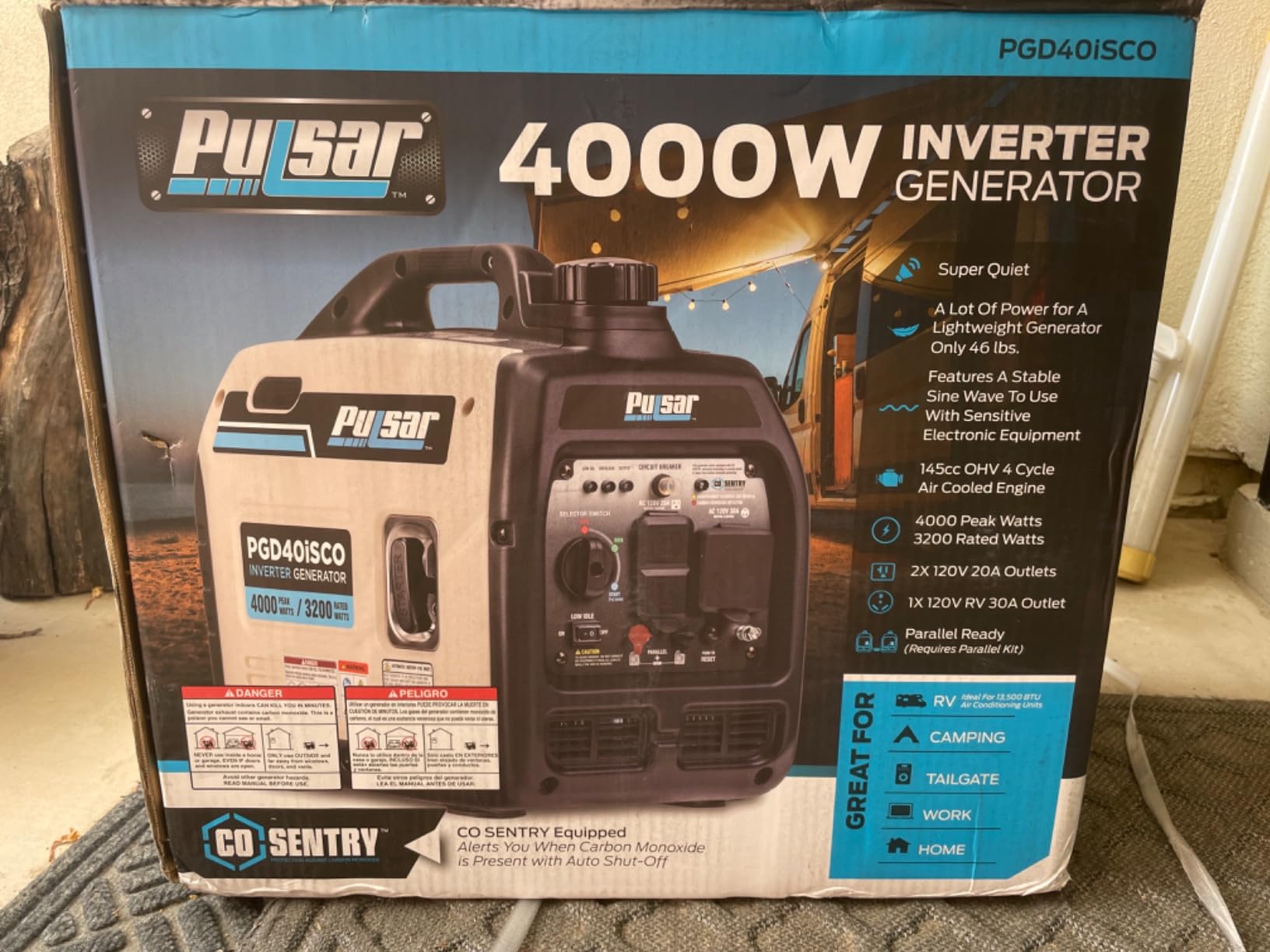
At 74 percent five-star with 488 reviews, the satisfaction rate is solid. The parallel-ready design means you can pair it with a second matching unit later if your power needs grow, which is a cheaper route than replacing the machine outright.
Owners generally describe startup as reliable for AC duty once the unit is warmed up, and the short list of negative reviews concentrates on noise expectations and fuel capacity rather than failures.
What to check before you buy this model
The one gallon fuel tank is the deciding factor for most buyers. You get roughly 4 hours at half load, which suits an afternoon of AC while you work or sit outside, but it is not an overnight solution on gasoline. If you plan to run the AC through the night, budget for refills or choose a dual fuel model.
Three outlets is also a step down from the six-outlet panels common in this class. You have a household duplex, a DC outlet, and the AC connection, and that is genuinely enough, but there is no USB port for phones.
Who should look elsewhere
Do not choose this for 15,000 BTU rooftop units, and do not choose it if you plan to add a coffee maker and a battery charger alongside the AC. The 3,200 rated watt ceiling is workable but not generous.
Anyone needing overnight runtime without a refill stop should look at the propane-capable options further down, where a standard 20 pound tank stretches the working day considerably.
4. Champion 4500-Watt Electric Start Dual Fuel Inverter Generator
Champion 4500-Watt Electric Start Dual Fuel Portable Inverter Generator
212cc four-stroke engine
3500 running watts on gas
3150 running watts on propane
Electric start
Up to 21 hours on propane
Pros
- Runs on gasoline or propane straight from the box
- Up to 21 hours runtime on propane
- 3500 running watts comfortably carries a 15000 BTU AC
- Electric start with power meter
Cons
- Heaviest unit alongside the WEN at 99.2 pounds
- A minority report oil leaks and CO sensor shutdowns in enclosed spaces
Dual fuel changes the practical math of boondocking, and this Champion is the clearest example. It runs on gasoline at 3,500 running watts or on propane at 3,150 running watts, and the propane figure is what earns its place in this list: up to 21 hours of runtime on a single tank.
That figure matters more than it first appears. Propane is the fuel most RVs already carry, it stores indefinitely, and 21 hours means you can run the AC overnight and through the following morning without planning a fuel run. The gasoline figure of 14 hours is still a comfortable margin for daytime use.
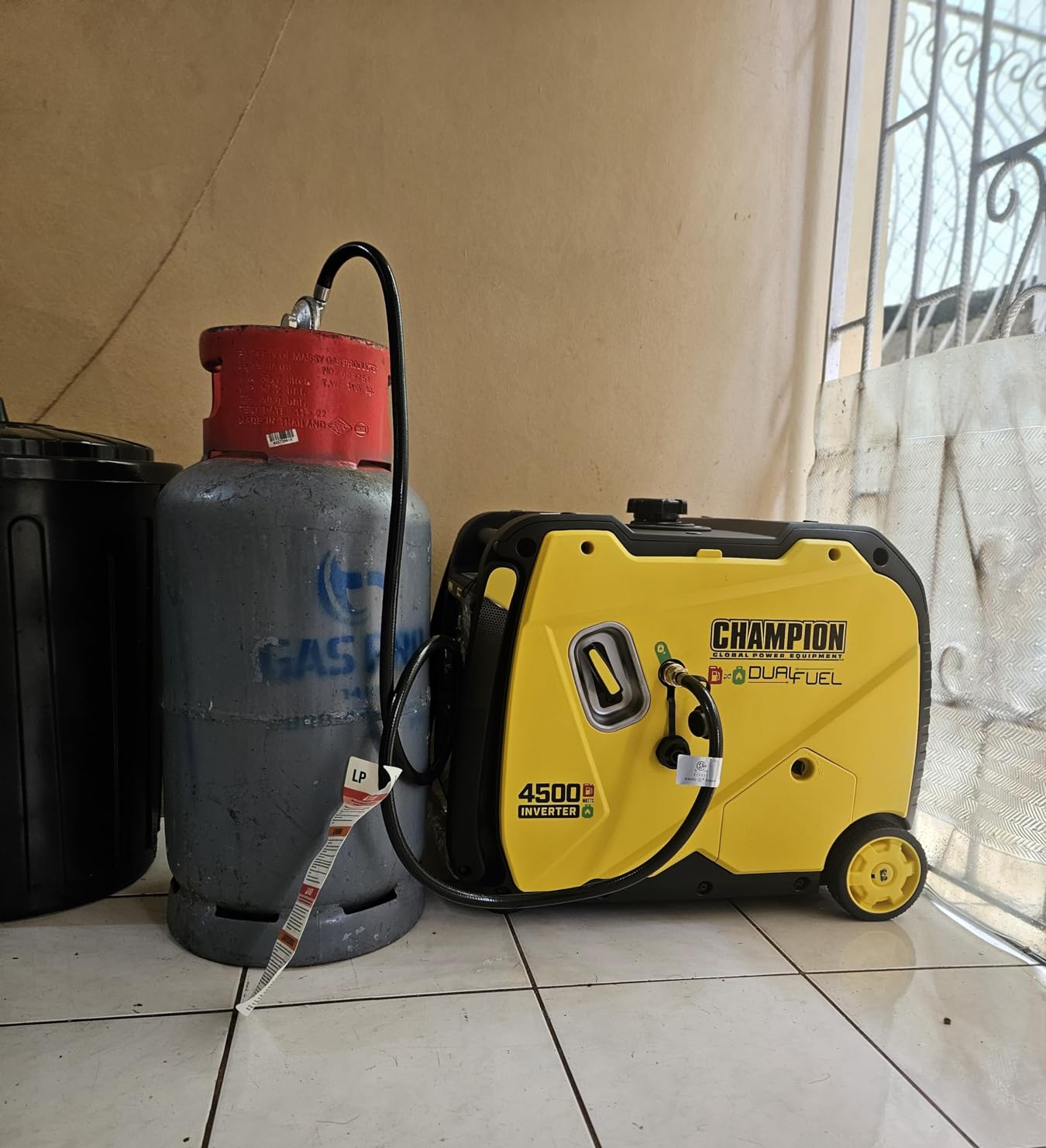
Output at 4,500 starting watts and 3,500 running is the most generous sustained capacity among the enclosed units here, and it is the combination that lets a 15,000 BTU unit start without drama. At 61 dBA the operating noise is competitive, and the electric start with an Intelligauge power meter removes the need to pull a cord.
Owners on the forum side of the conversation report running travel trailer air conditioners and standard RV appliances off this unit without trouble, and the parallel-ready design means two units can drive two rooftop ACs if your rig is set up for it.
What to check before you buy this model
Weight again. At 99.2 pounds this is a serious load, and adding a propane hose does not make it easier. Budget for a cart or a two-person lift, and check that the storage compartment in your RV will actually take the footprint as well as the weight.
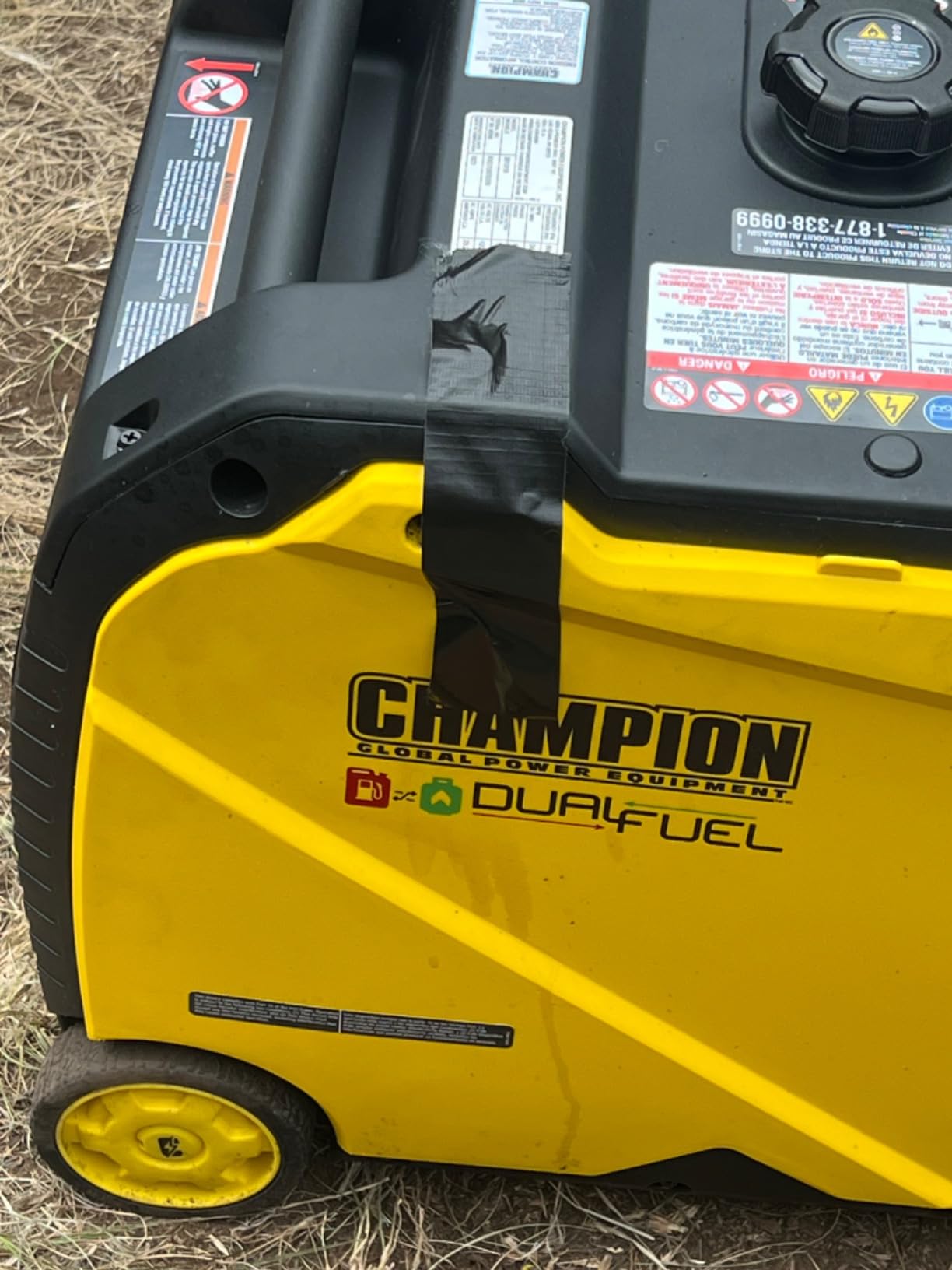
There is also a small but real group of owners reporting oil leaks, difficult starting, and CO sensor shutdowns when the unit is run in a confined space. The CO sensor is doing its job in those cases, but it means you need a genuinely ventilated location rather than a sealed bay.
Who should look elsewhere
This is not the right pick if you are a solo traveler who lifts their own gear, or if you only camp at sites with full hookups. The fuel flexibility is wasted on a trailer that is plugged in most nights.
For lighter dual fuel capability with a more manageable weight, the PowerSmart 3800-Watt later in this list covers the same ground at 50.7 pounds.
5. WEN GN400i RV-Ready 4000-Watt Open Frame Inverter
WEN GN400i RV-Ready 4000-Watt Open Frame Inverter Generator, CARB Compliant, Black/orange
212cc CARB-compliant OHV engine
3500 rated watts
4000 surge watts
66.1 pounds
Open frame
Pros
- 3500 rated watts from a 212cc engine
- Dedicated 30A RV-ready TT-30R receptacle
- Clean inverter power for electronics
- Parallel-ready panel
- Large review base at 1063 ratings
Cons
- Open frame is louder than enclosed inverter cabinets
- About 7 hours runtime
- No electric start on this variant
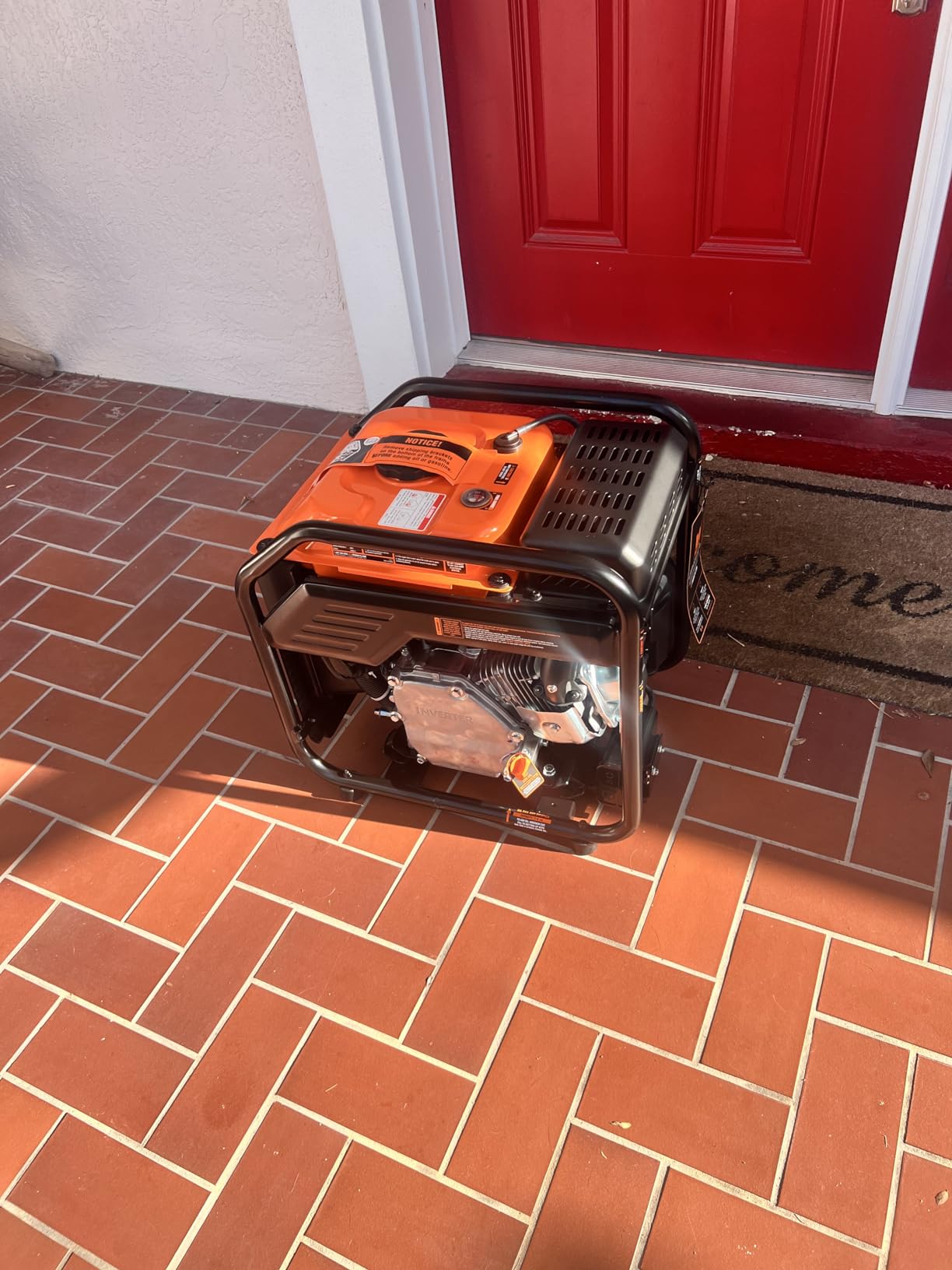
The GN400i is the open-frame option in this group, and the tradeoff is explicit. You get a 212cc CARB-compliant four-stroke OHV engine producing 4,000 surge watts and 3,500 rated watts, in an exposed frame at 66.1 pounds. That is more sustained capacity than most enclosed units here can offer.
3,500 rated watts is enough headroom for a 15,000 BTU rooftop unit with a fridge and a battery charger, which is the combination most full-time RVers end up running. The parallel-ready panel lets you add a second WEN inverter later if you need more headroom still.
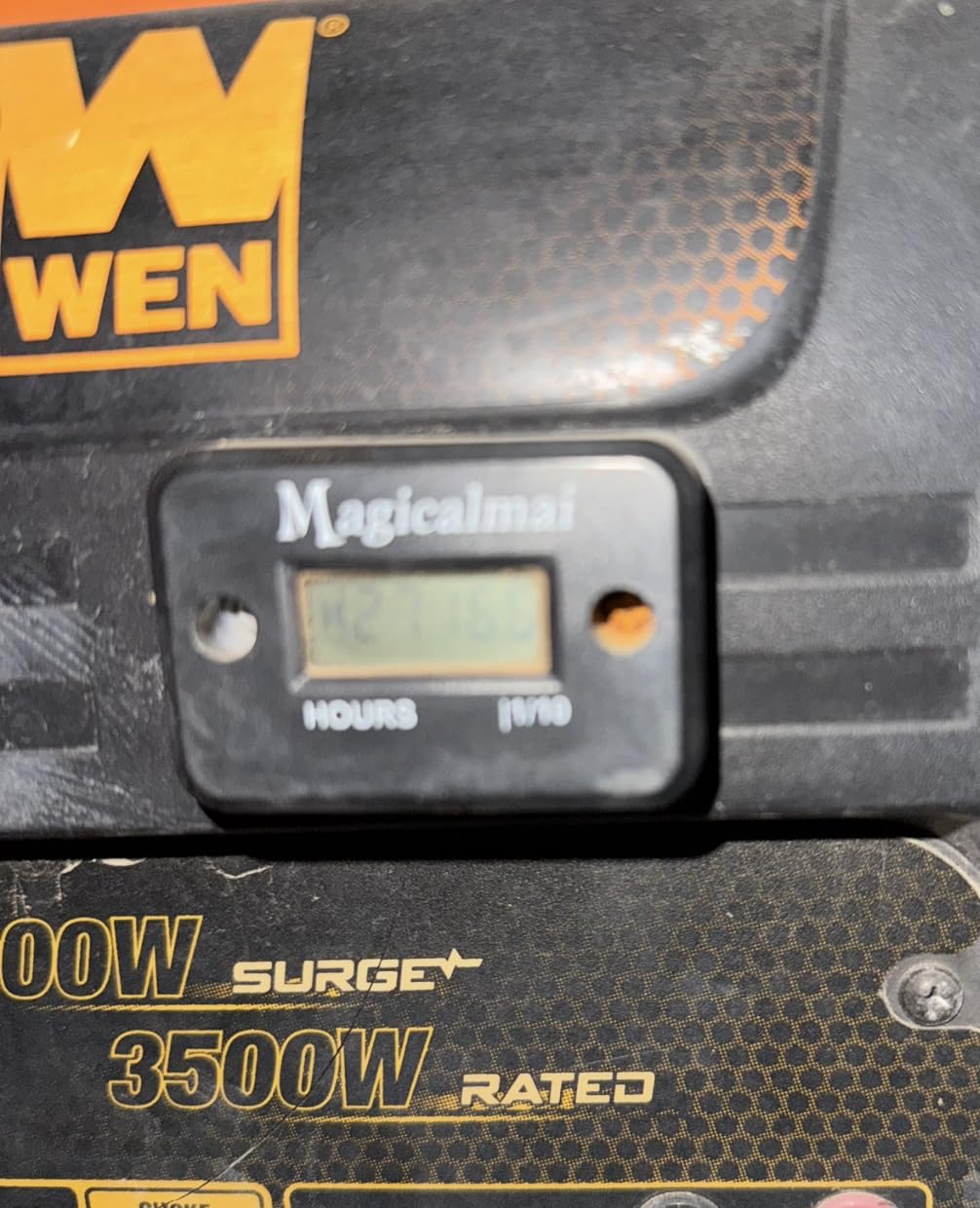
With 1,063 reviews at 4.5 stars, this is one of the better-proven machines in the roundup, and 74 percent of those reviews are five-star against only 3 percent one-star. Owners point consistently to the price per watt, the RV-ready outlet, and clean power for electronics.
The outlet layout is straightforward: two 120V NEMA 5-20R receptacles, two 5V USB ports, and one 120V RV-ready TT-30R receptacle, all from a 30 amp rated panel.
What to check before you buy this model
The open frame is the whole conversation. Exposed frames move more air and therefore run louder, and if your campsite neighbours are close, you will feel the difference against an enclosed cabinet. Nothing in the output is compromised, but the acoustic profile is different.
Runtime is listed at about 7 hours from the 1.85 gallon tank, which is the shortest figure among the gasoline-only machines here. Plan refills into the day, or run it in shorter bursts around when you actually need cooling.
Who should look elsewhere
Choose an enclosed unit if silence matters more than raw capacity, or if you camp in places with strict quiet hours. Conversely, if noise is not a concern and you need the most running watts available, this open frame is the smarter pick.
There is also no electric start on this variant, so factor that into your campsite setup.
6. PowerSmart 3800 Watt Dual Fuel Inverter Generator
PowerSmart 3800 Watt Dual Fuel Inverter Generator for Camping or Home Use
149cc four-stroke engine
3300 running watts on gas
3100 on propane
59 dBA in Eco Mode
50.7 pounds
Pros
- Dual fuel out of the box with a supplied regulator hose
- 59 dBA at 25 percent load in Eco Mode
- Up to 24 hours on a standard 20 lb propane tank
- 30A L5-30R twist-lock outlet
- Full CO sensor and low oil shutdown
Cons
- Small 1.3 gallon gas tank
- Panels need a Phillips screwdriver for service access
- A minority report hard starting
Here is the dual fuel machine that solves the weight problem the 4500 watt Champion creates. At 50.7 pounds with a 149cc engine, the PowerSmart 3800 delivers 3,300 running watts on gasoline and 3,100 on propane, and it fits a 13,500 BTU AC with room to spare.
The 24 hour propane runtime on a standard 20 pound tank is the standout figure in our testing notes, and it comes with a five foot two stage LP regulator hose in the box. Owners on the RV forums describe this as the configuration that finally made overnight boondocking comfortable without doubling their fuel weight.
Quietness is genuinely good at 59 dBA in Eco Mode at 25 percent load, and that mode is where you will spend most of your time since an AC cycling the compressor is not a constant heavy load. Clean power under 3 percent THD means laptops, TVs, and CPAP machines are safe alongside the AC.
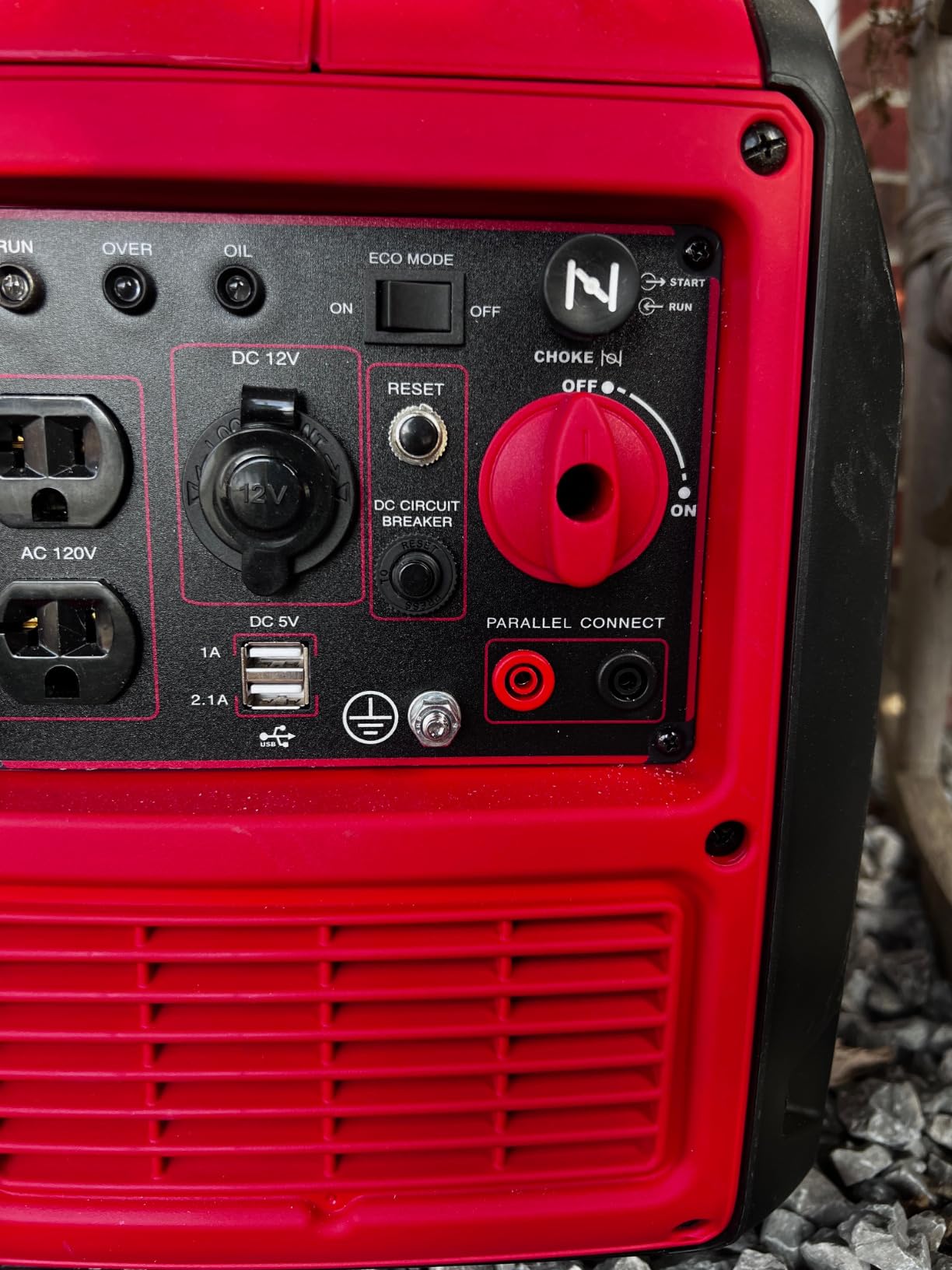
The control panel carries a 120V 30A L5-30R twist-lock outlet, a 20A household duplex, a 12V 8A DC port, and dual USB ports. Safety protection covers overload, short circuit, CO sensor, and low oil shutdown, and it is certified to ANSI/PGMA G300, ANSI/UL2201, and EPA standards.
What to check before you buy this model
The 1.3 gallon gasoline tank is small, so plan on propane for any extended run. Several owners also note that 50 pounds still feels heavy in practice and buy a cart, and that the access panels and oil door require a Phillips screwdriver, which is mildly annoying when you are checking oil in a dark campsite.
It also gets noticeably louder as the load climbs outside Eco Mode. That is normal for a machine in this class, but if you expect to run a 15,000 BTU unit at full tilt, expect more noise than the headline figure.
Who should look elsewhere
Look for more capacity if your rig carries a 15,000 BTU unit and you plan to run other appliances simultaneously. This is a strong 13,500 BTU machine, not a heavy household backup unit.
If you want that capacity without the weight, the 57.7 pound BILT HARD further down is the comparison to make.
7. BILT HARD Dual Fuel 4500W Generator
BILT HARD Dual Fuel Gas & Propane Powered Generator 4500W, Gas & Propane Powered Generator with CO Sensor, RV Ready, Parallel Capable, 4-Cycle Engine Portable Outdoor Generators for Home, Camping
141cc OHV engine
3500 rated watts on gas
3200 on propane
58 dBA enclosed
57.7 pounds
Pros
- Quietest enclosed cabinet here at 58 dBA at 23 feet
- Dual fuel with 4500 peak and 4150 peak on propane
- Only 57.7 pounds with a carry handle
- CO sensor with automatic shutdown
- Parallel capable
Cons
- One-year warranty is the shortest here
- Parallel kit sold separately
- Smallest engine displacement at 141cc
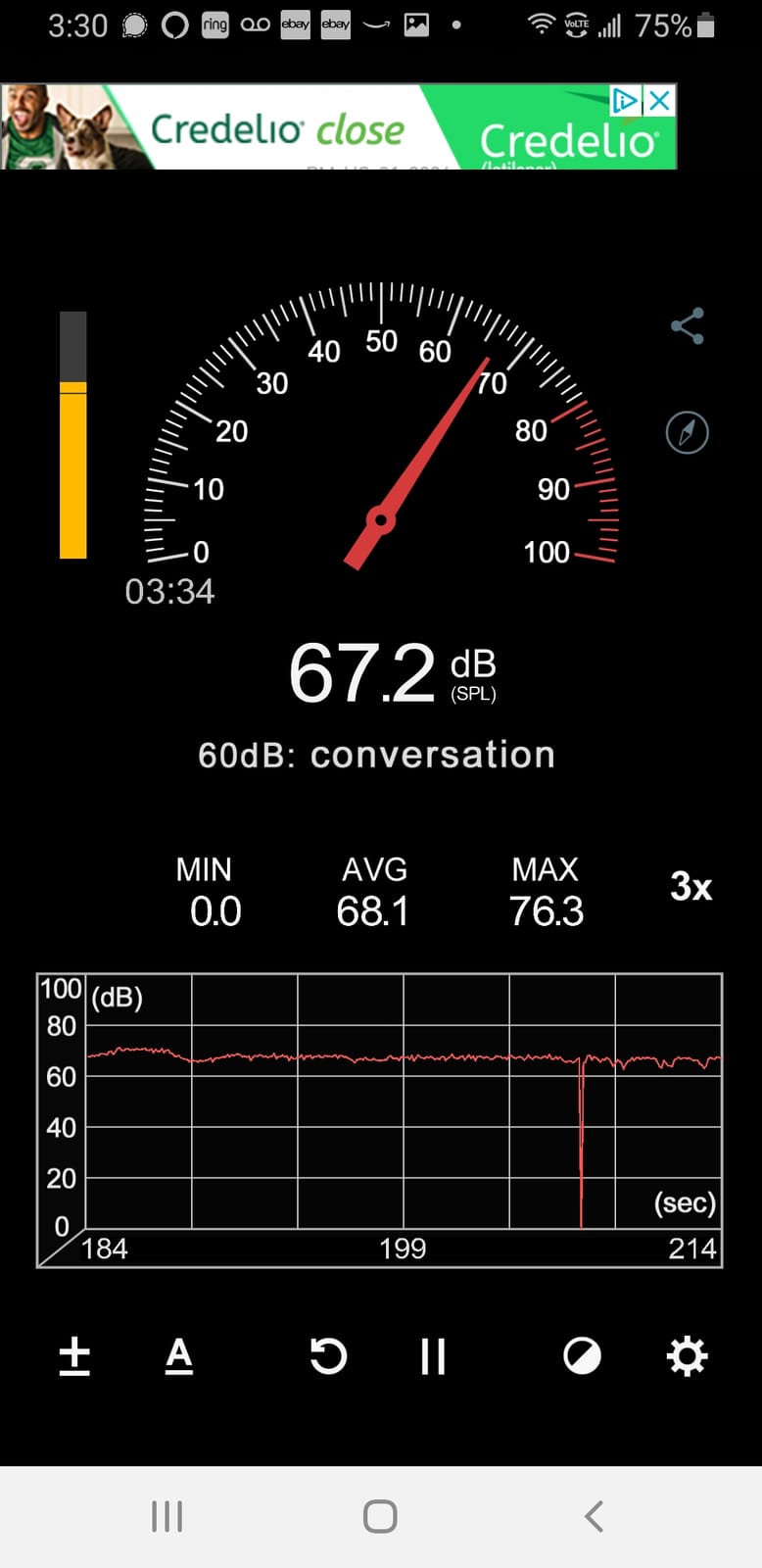
The BILT HARD is the quietest enclosed unit in this group, at 58 dBA measured from 23 feet. That number is what the manufacturer states for meeting national park noise requirements, and in a tight campground loop it is the difference between a comfortable evening and a series of apologies to your neighbours.
Power comes from a 141cc OHV air-cooled engine producing 4,500 peak and 3,500 rated watts on gasoline, or 4,150 peak and 3,200 rated watts on propane. The small displacement does not hurt it, because the output figures hold up under load and the inverter delivers under 3 percent THD.
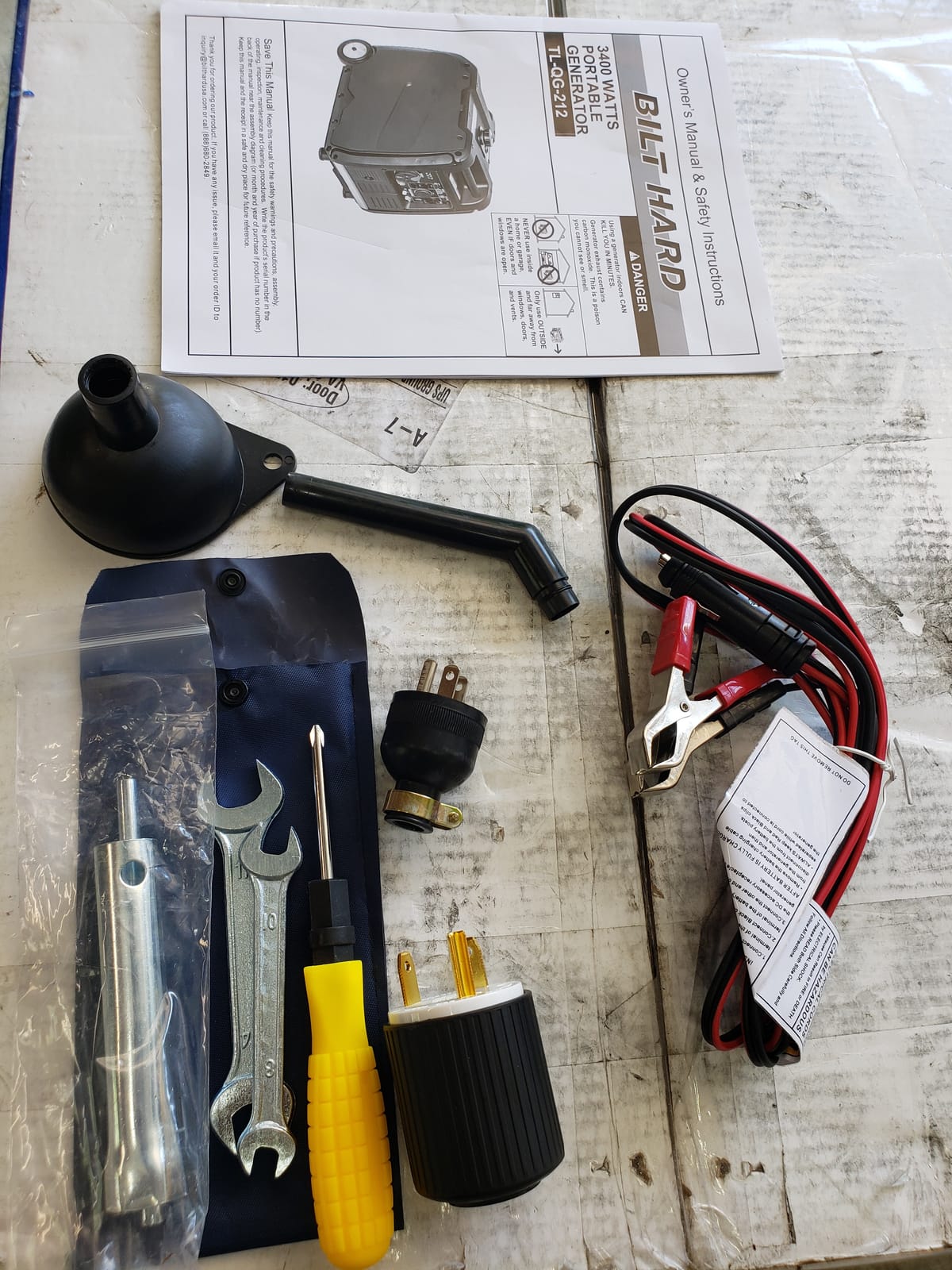
At 57.7 pounds with a built-in carry handle, this is the most manageable dual fuel unit we covered. The outlet panel includes a 120V 20A duplex, a 120V 30A TT-30R RV outlet, dual USB ports, and a 12V 8A DC output, all circuit breaker protected, with the LPG hose and regulator included.
Eco mode adjusts engine speed to save fuel and reduce sound, and the integrated CO sensor shuts the engine down in unsafe conditions. Parallel capability is there with an optional kit, and 13 hours of runtime on the gasoline tank is a solid figure.
What to check before you buy this model
Warranty length is the reservation that comes up most. One year is short next to the three-year coverage on the Champion and Pulsar units, and next to the two-year terms elsewhere. If you keep a generator for a decade of full-time travel, that difference adds up.
Also note the parallel kit is a separate purchase, and the 3,200 rated watts on propane leaves you at the same ceiling as several lighter machines once you switch fuels.
Who should look elsewhere
If warranty length is a deciding factor for you, the three-year coverage on the Champion models is worth the extra weight. This unit is the pick for people who care most about how loud their campsite is.
For pure runtime on a propane tank, the 21 hour figure on the Champion 4500-Watt remains the strongest in this group.
8. PowerSmart 4400W Peak 3600W Running 30A RV Inverter
PowerSmart 4400W Peak / 3600W Running Portable Inverter Generator Gas Powered, RV Ready 30A Outlet, Lightweight, Quiet Operation, CO Shutoff, ECO Mode – Ideal for Home Backup, Camping, and Jobsite Use
223cc four-stroke engine
3600 running watts
4400 peak watts
Built-in 30A RV outlet
68 pounds
Pros
- Built-in 30A RV outlet rated for 13.5K-15K BTU rooftop units
- 3600 running watts for headroom
- Less than 3 percent THD for sensitive electronics
- CO sensor plus low oil shutdown and overload reset
- Parallel ready
Cons
- Lowest average rating here at 4.1 with 14 percent one-star reviews
- Gasoline only
- Just three outlets and no USB ports
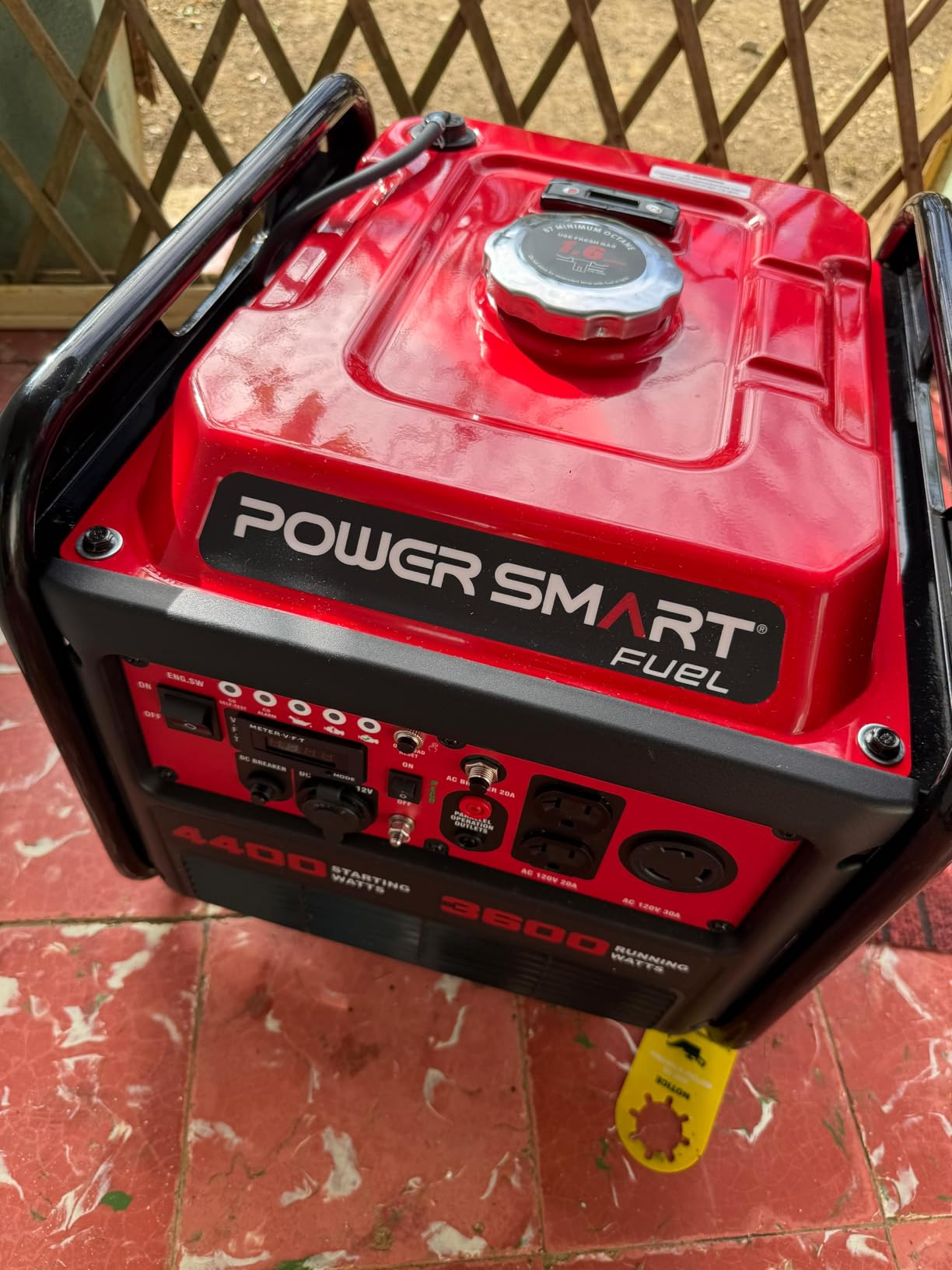
This one exists for a specific reason: the built-in 30 amp RV outlet. Owners in the review set describe plugging straight into a camper and running a 13,500 to 15,000 BTU AC alongside a microwave and appliances, with no adapter in the chain. At 4,400 peak and 3,600 running watts, it has the headroom for that.
The inverter output stays under 3 percent total harmonic distortion, so sensitive electronics are safe. Noise is listed at 76 dBA from 23 feet under load and drops in ECO mode, which is higher than the enclosed leaders but not unusual for the capacity.
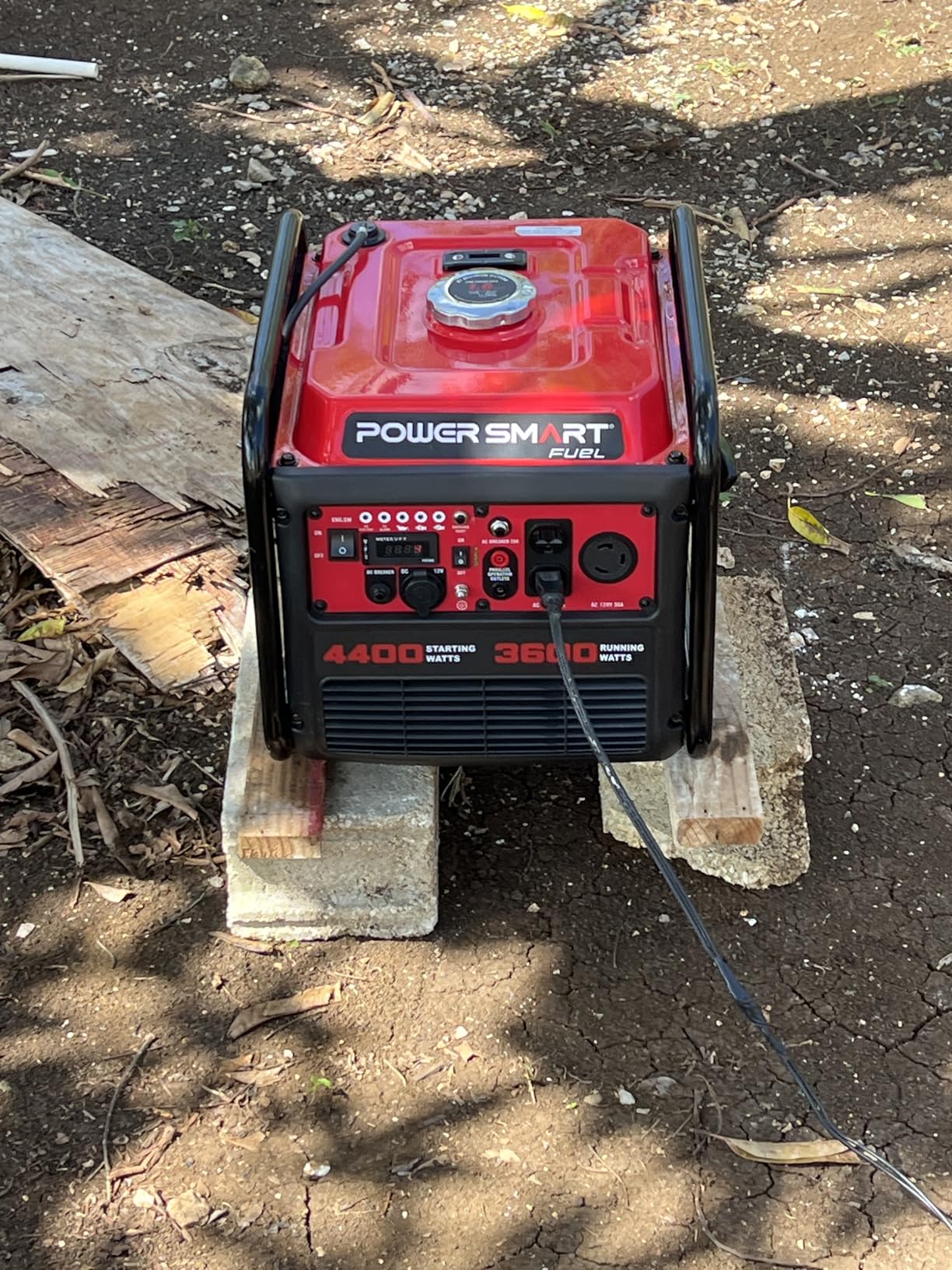
Safety is thorough for the money: CO sensor with automatic shutoff, low oil shutdown, overload reset, and UL 2201 certification with EPA compliance. The parallel ready ports let you double output with a second unit, and the wheel kit is available separately.
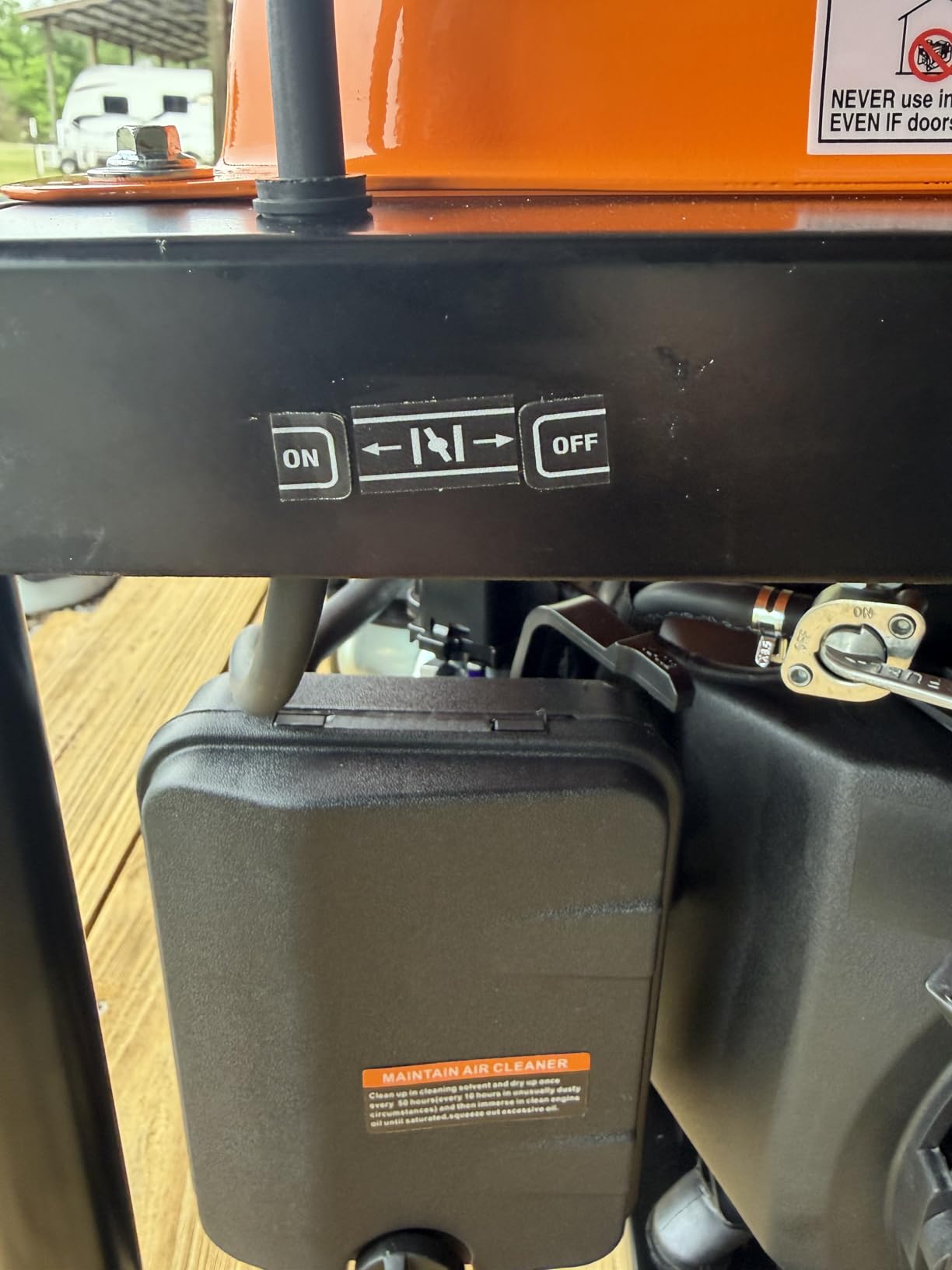
One practical note from the manufacturer that saves real frustration: set the choke to the midway position for the easiest start, and turn the fuel valve off before shutdown to avoid carburetor flooding. Starting tips like this are usually buried in manuals and rarely in listings.
What to check before you buy this model
The 4.1 average rating is the lowest here, with 14 percent of reviews at one star. The negative pattern concentrates on starting reliability and power headroom, so if you already have a history of hard-starting equipment, factor that in. It is also gasoline only, which limits your fuel options on long trips.
Only three outlets and no USB ports means you are carrying your own phone chargers from the RV battery bank rather than the generator.
Who should look elsewhere
If reliability is your top priority and you will be running the AC in the dark, one of the higher-rated units earlier in this list is the safer bet. The PowerSmart is the pick for buyers who want maximum outlet convenience and headroom per unit of capacity.
It also makes more sense on a rig with a dedicated 30 amp inlet, where the built-in receptacle is genuinely the feature that matters.
9. maXpeedingrods 4000 Watt Inverter Generator with App Monitor
maXpeedingrods 4000 Watt Inverter Generator, Bluetooth® App Data Monitor
145cc four-stroke engine
3200 running watts
4000 peak watts
48.5 pounds
Bluetooth app monitoring
Pros
- App tracks power output and fuel level plus voltage and frequency
- Bundled L5-30P to TT-30R adapter for RV charging
- Lightest capacity in the group at 48.5 pounds
- Parallel cables included in the box
Cons
- Only two listed power outlets
- Gasoline only with a 4 liter tank
- A 13 percent one-star share is tied for the highest negative share
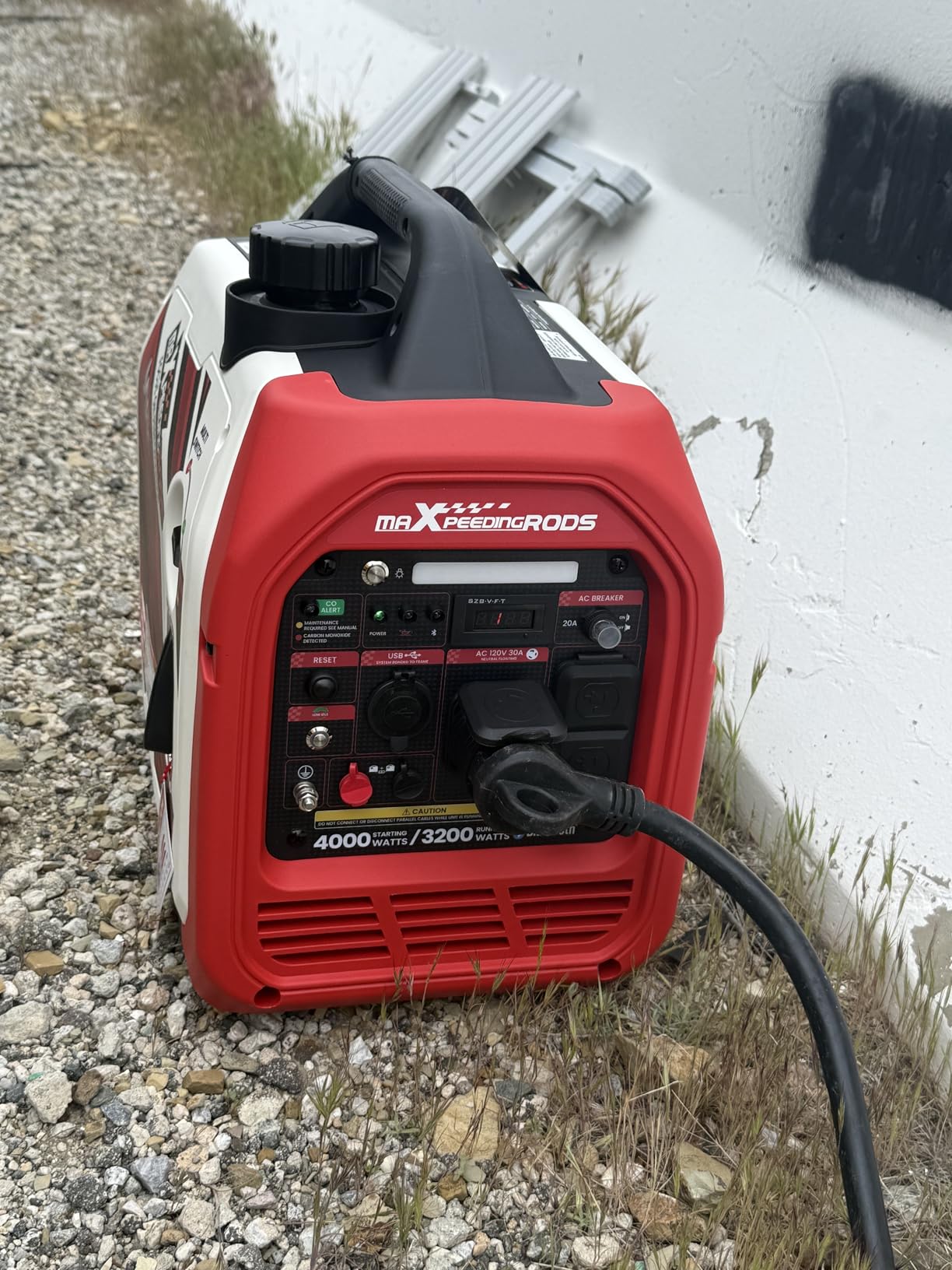
The maXpeedingrods MXR4000 is the one in this roundup where the software is the selling point. The Bluetooth app reads power output, fuel level, voltage, frequency, single running time, and accumulated hours, and you can toggle Eco mode from your phone. For someone running a generator where they cannot see it, that is genuinely useful information rather than a gimmick.
Underneath, it is a 145cc four-stroke producing 4,000 peak and 3,200 running watts of clean power at 48.5 pounds, with LED lights on the body. That weight makes it one of the easiest units here to load solo, and the dimensions fit most RV storage bays.
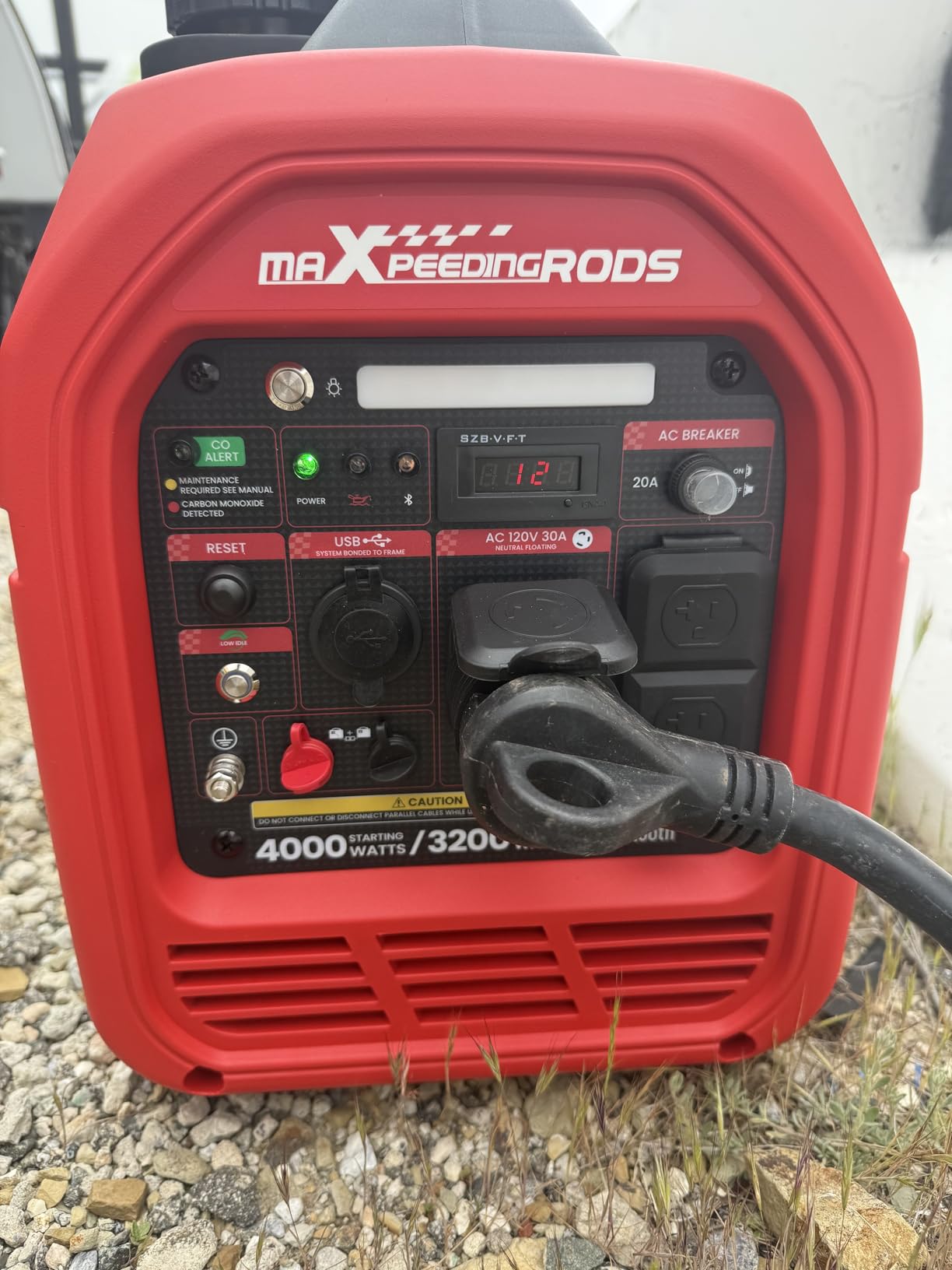
The box contents are unusually generous. You get an L5-30P to TT-30R adapter that removes the guesswork from RV charging, parallel cables, a spark plug socket wrench, an oil funnel, a screwdriver, two US plugs, and a dust cover.
At 4.2 stars across 820 reviews, the score sits below the leaders, and 13 percent one-star reviews indicate a meaningful group of owners reporting reliability and noise concerns. The monitoring features and the included adapter are what owners mention most often as reasons to keep it.
What to check before you buy this model
Two listed outlets is the thinnest panel in the group. You will be running the AC on one and using a power strip for everything else, which is workable but not tidy, and a power strip is another thing that can trip on overload.
Runtime is listed at one hour on the 4 liter tank under the test conditions, and it is gasoline only. If your plan involves long boondocking stretches away from a fuel source, a dual fuel machine is a better fit.
Who should look elsewhere
Skip this if your priority is quiet operation or warranty length, since neither leads the field. Choose it if remote monitoring, a very low carry weight, and a plug-and-play RV adapter matter more to you than sustained capacity.
For a similar weight with a stronger review profile, the 47.3 pound Pulsar rated explicitly for 13,500 BTU units is the alternative to weigh.
10. Oxseryn 4400 Watts Inverter Generator
Oxseryn Power Equipment 4400 Watts Inverter Generator Gas Powered, Portable Open Frame Generator, Low Noise with ECO Mode, RV Ready, Emergency Home Backup
208cc four-stroke engine
3400 running watts
4400 peak watts
56 pounds
Open frame with ECO mode
Pros
- Lowest cost in the roundup with 4400 peak and 3400 running watts
- Up to 14 hours at 25 percent load on a 2 gallon tank
- Only 56 pounds for a 4400 watt open frame unit
- Low noise for an open frame at under 72 dBA
Cons
- Open frame layout is louder than enclosed cabinets
- Only a one-year manufacturer warranty
- Gasoline only
- No CO sensor listed among the safety features
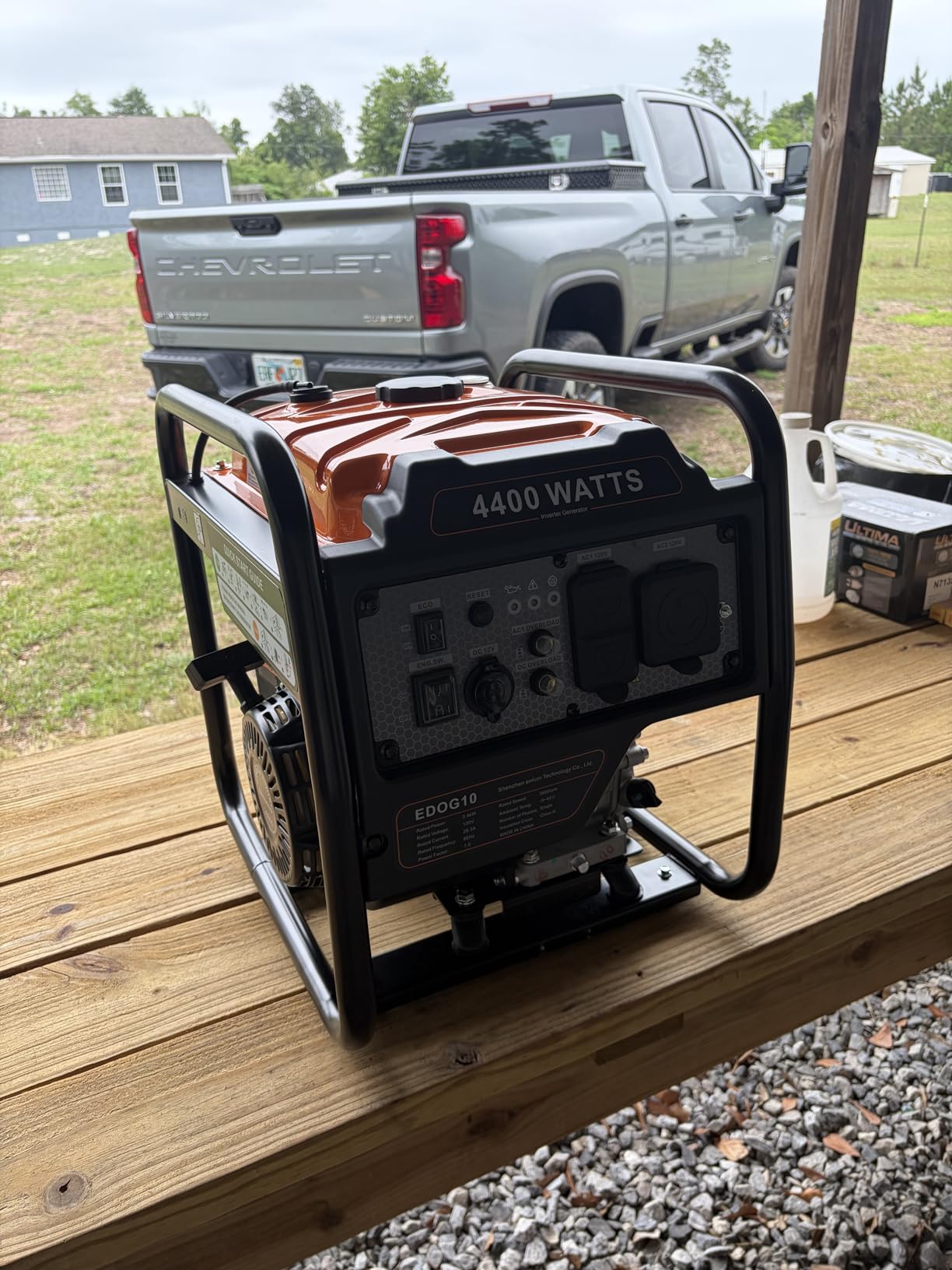
The Oxseryn EDOG10 is the budget entry here, and the arithmetic is simple: 4,400 peak watts, 3,400 running watts, and a 2 gallon tank that gives up to 14 hours at 25 percent load with ECO mode engaged. At 56 pounds, it is the lightest machine in the roundup that also carries a fuel gauge.
For a 13,500 BTU AC running in eco mode, that 25 percent load figure is the realistic operating condition, which makes the 14 hour number practical rather than theoretical. The outlet set covers the essentials: two 120V AC ports, a 12V DC port, and a dedicated RV port.
With 785 reviews at 4.5 stars and a 73 percent five-star share, the satisfaction rate is better than several more expensive machines. Owners consistently mention the wattage per dollar, the long runtime, and how easy it is to move around a campsite.
Safety equipment covers cold start technology, low oil shutdown, overload protection, and a fuel gauge. The listing also notes that all units are factory function tested, so a slight smell of gas on arrival is expected rather than a fault.
What to check before you buy this model
Two things deserve a hard look. The open frame is louder than any enclosed cabinet here, and at under 72 dBA from 23 feet it is the noisiest option in the group alongside the WEN GN400i. And there is no CO sensor listed among the safety features, which we treat as a real gap for RV use.
The one-year manufacturer warranty is also the shortest alongside the BILT HARD, and gasoline-only operation limits your fuel planning.
Who should look elsewhere
Do not choose this for a 15,000 BTU unit running alongside other appliances, and skip it if you plan to leave the generator running unattended near your RV. Neither is a flaw, but both fall outside what this machine is built for.
For quiet, CO-protected operation at a similar capacity, the enclosed dual fuel units earlier in this list are the better long-term choice.
Inverter vs Conventional Generators for RV Air Conditioners
An inverter generator throttles its engine speed to match the load, where a conventional unit runs at a fixed speed. The practical consequence is noise and fuel use, and for AC duty it means a machine running at 59 to 65 dBA rather than 70 plus.
Every unit in this roundup is an inverter. That is a deliberate choice, because the second reason inverter technology matters is total harmonic distortion, and any model above publishes a clean output figure, most at under 3 percent THD. That protects laptops, TVs, and CPAP machines, all of which sit in an RV alongside the AC.
The third consideration is load response. An inverter throttles down when the AC compressor cycles off, so the noise floor drops between compressor starts instead of staying pinned at a fixed high pitch. Campground neighbours notice the difference immediately.
Conventional units still make sense for pure emergency home backup where the load is steady and you will not be running sensitive electronics. For a camper with an AC, the inverter is simply the right default.
Dual Fuel vs Single Fuel for RV AC
Propane is the argument for dual fuel. It stores indefinitely, most RVs already carry a tank, and a 20 pound cylinder running a propane-capable unit can stretch to 21 or even 24 hours of AC in the models above. Gasoline is denser and cheaper per unit of energy, but it goes stale and it is heavier to carry.
The forum pain point worth knowing about is connection. RV low-pressure quick-connect ports do not always mate cleanly with a generator regulator, and owners on Airforums and Grand Design forums report leaks at the fitting until the connection is properly secured. A unit that ships with the correct hose and regulator in the box saves you from solving this with thread sealant in a campsite.
If you boondock for multiple days, dual fuel is a meaningful upgrade. If you mostly camp at sites with hookups, gasoline only is simpler and there is no real cost to you.
Do You Need a Soft Start for RV AC on a Generator?
A soft start is a device that ramps the compressor up over several seconds instead of demanding full current instantly. Owners across RV forums consistently report that fitting one takes a rooftop AC startup from well over 3,500 watts down to a range of roughly 1,500 to 1,800 watts, which is what makes smaller generators genuinely viable.
Hardwired units, the widely recommended Micro-Air EasyStart being the most frequently mentioned, perform better than plug-in versions. Plug-in soft starts work, but the installation quality matters more and results are less consistent. If you go this route, plan on a wiring job rather than a five-minute install.
Newer rooftop units increasingly ship with soft start already built in, so check the specification before buying one. And remember the altitude factor: a compressor that needs help at 6,000 feet will need more help than its nameplate suggests, and a soft start reduces but does not eliminate that risk.
Noise Levels and Campground Rules
National parks and many campgrounds operate on a measured limit, commonly 60 dBA at the property line, with quiet hours enforced overnight. The enclosed units here cluster between 58 and 64 dBA at 23 feet, which usually clears the bar. The open frame models sit at 72 to 76 dBA and are a poor fit for close neighbours.
Two practical points. Decibels are logged at a distance, so the further you place the generator from your RV, the more the measurement favours you, and manufacturers quote 23 or 25 feet. And runtime counts: a quiet machine running for eight hours is a smaller problem than a loud one running for two, so the fuel tank size shapes the noise experience as much as the engine does.
Load Sequencing and Parallel Setups
The most common overload complaint in RV forums is not the AC alone, it is the AC plus the battery charger plus the microwave. The fix is sequencing: start the AC first, let the compressor settle, then bring on the charger, then the microwave last and only briefly.
On inverter generators, Eco Mode handles part of this automatically by dropping engine speed when load falls, but it cannot help with a simultaneous spike. Keeping 30 to 40 percent of running capacity unused is the discipline that prevents nuisance trips.
Parallel kits are the alternative for people who want more headroom. Every unit here except the Oxseryn is parallel ready, and the Champion 4500-Watt owners report running two units to drive two rooftop air conditioners. Kits are sold separately almost across the board, so confirm compatibility before you plan around it.
Buying Guide: What to Check Before You Buy
Outlet type first. A dedicated RV receptacle saves the most annoyance. NEMA TT-30R and L5-30R are the two to look for, and some packages include the adapter cable you need to convert between them.
Starting watts, always. Running watts tell you steady comfort; starting watts decide whether the compressor starts at all. Size for startup, then confirm you still have 30 to 40 percent running headroom left for everything else.
Fuel type. Dual fuel costs a little more and buys a 20 pound propane tank for a full night of AC. That flexibility is the difference between comfortable boondocking and refuelling in the dark.
Weight and storage. Under 60 pounds is a one-person lift. Above 90 means a cart or a second person, and you should confirm the storage bay can take the footprint as well as the load.
Safety features. A CO sensor with automatic shutoff, low oil shutdown, and overload protection are the baseline for any generator running near an occupied RV. Check the spec sheet, because not every budget unit includes a CO sensor.
Warranty and support. Three years is the comfortable minimum for regular travel, two years is workable, and one year means you accept more risk on a machine that may run thousands of hours over its life.
Parallel readiness. If you might add capacity later, parallel ready ports now save replacing the whole unit. Every machine here except the Oxseryn supports it, and kits are separate purchases.
Frequently Asked Questions
How big of a generator do I need to run RV AC?
For a 13,500 BTU rooftop unit, plan on a generator rated at 3,500 to 4,000 starting watts and at least 3,000 running watts. A 15,000 BTU unit calls for 4,000 to 4,500 starting watts. Keep 30 to 40 percent of your running capacity free for the fridge, battery charger, and other loads.
Can I run my RV air conditioner with a generator?
Yes, if the generator clears the compressor startup surge. A rooftop AC typically runs 1,200 to 1,600 watts but can spike past 3,000 watts at startup. Generators from 3,500 starting watts upward handle a 13,500 BTU unit reliably, and a hardwired soft start can cut that requirement dramatically.
Will a 3000 watt generator run a RV air conditioner?
Usually yes for a 13,500 BTU unit, as long as you are reading the starting wattage rather than the running wattage. A 3,000 starting watt inverter with roughly 2,400 to 2,600 running watts will start and run most 13,500 BTU rooftop air conditioners, but adding a microwave alongside it needs a step up in class.
How many watts do you need to run an AC in a camper?
Roughly 1,200 to 1,600 running watts for a 13,500 BTU unit, with a startup spike that can exceed 3,000 watts. That is why starting watts matter more than running watts when choosing a generator for an RV air conditioner.
Do I need a soft start for RV AC on generator?
It helps a great deal and it is the difference between a 4,000 watt generator and a 2,500 watt one working for you. A hardwired soft start can take startup demand from over 3,500 watts down to around 1,500 to 1,800 watts. Check whether your rooftop unit already has one built in before buying.
What is the quietest generator for RV air conditioner?
Among the units reviewed here, enclosed inverter cabinets run quietest. The BILT HARD dual fuel at 58 dBA from 23 feet is the quietest, followed by the PowerSmart dual fuel at 59 dBA in Eco Mode and the Pulsar at 59 dB. Open frame models are noticeably louder at 72 to 76 dBA.
Conclusion: Our Top RV Generator Picks for 2026
After weighing all ten, the WEN 56380i takes the top spot for the best rv generators for air conditioners because it pairs the highest rating and the largest review base with 3,400 running watts and a dedicated RV receptacle. If weight is your constraint, the 48.1 pound Champion 4000-Watt or the 47.3 pound Pulsar gets you moving with less strain. For overnight propane runtime, the Champion 4500-Watt dual fuel is hard to argue with.
Whichever you choose, verify the starting watts against your AC size, plug into a dedicated RV outlet, and give the unit a ventilated spot away from the RV. Once it is sized correctly, running the AC off-grid stops being a compromise and becomes the thing you look forward to. For more cooling-side reading, start with our portable air conditioner picks for bedrooms and our garage cooling guide.