
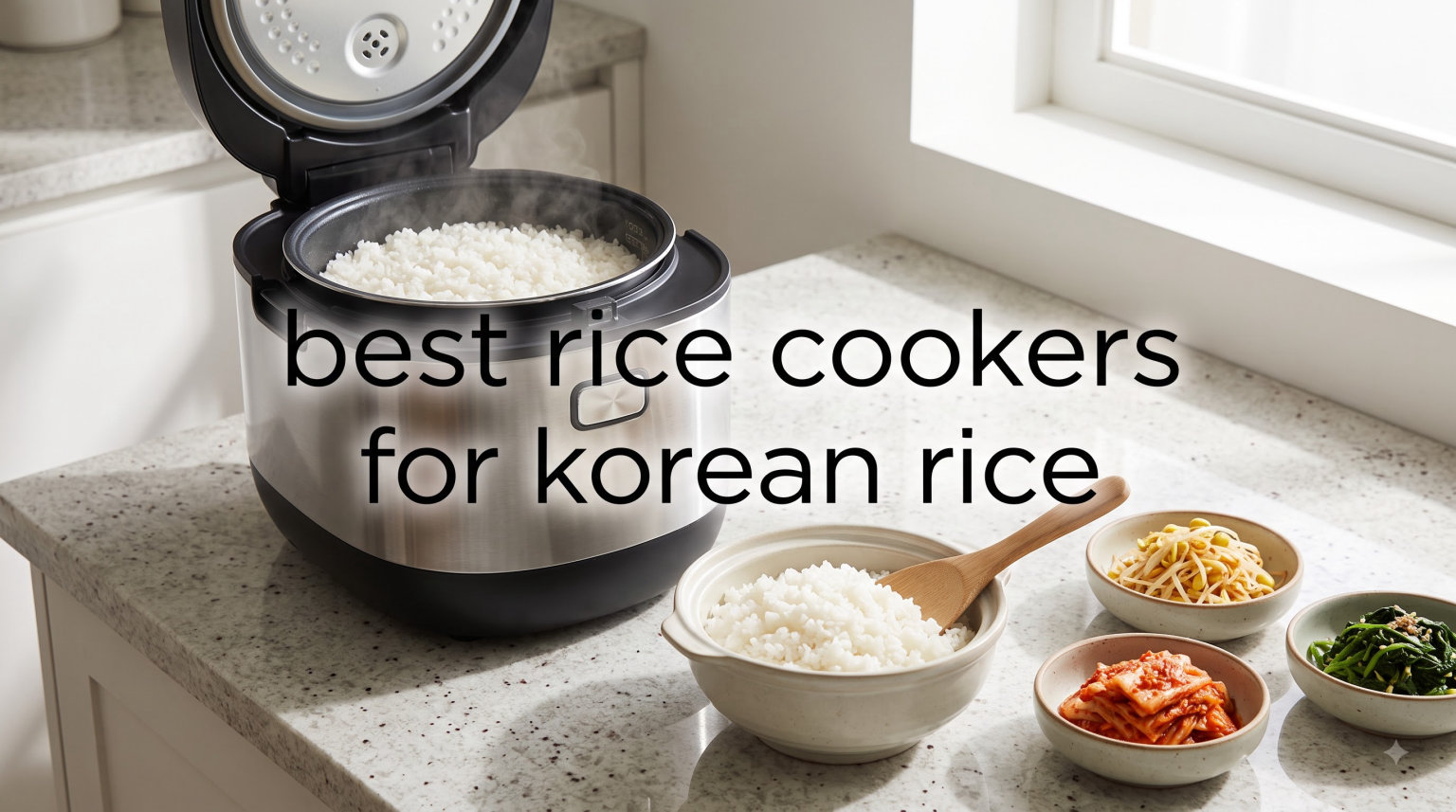
If you have ever wondered why the rice at your favorite Korean restaurant tastes plumper, shinier, and chewier than what you make at home, the answer usually comes down to the rice cooker, not the rice itself. Korean short-grain rice (the kind used for bap, gimbap, and bibimbap) needs precise temperature control and the right amount of pressure to develop that signature glossy texture. A regular pot on the stove can get close, but it cannot match what a dedicated Korean rice cooker does.
In Korea, brands like Cuckoo and Cuchen dominate home kitchens, while Zojirushi from Japan has long been the trusted companion of Korean-American households who want reliable fuzzy-logic cooking. These rice cookers use microcomputer technology, induction heating, and high-pressure cooking to turn out perfectly cooked short-grain rice batch after batch. The right one will handle everything from soft white rice to nutty multigrain and chewy glutinous rice without you babysitting the pot.
After testing these cookers with Korean short-grain rice, brown rice, mixed grain (japgokbap), and even GABA rice for health-conscious meals, we narrowed the field to the models that genuinely excel with Korean rice varieties. Whether you want a budget-friendly Cuckoo for everyday bap or a top-tier twin-pressure induction cooker that handles nurungji and GABA rice, our guide to the best rice cookers for Korean rice in 2026 covers every household size and budget.
Table of Contents
Top 3 Picks for Korean Rice

Cuckoo CRP-P0609S High Pressure
- High pressure cooking
- Voice guide
- GABA rice setting
- 12 menu options

Best Rice Cookers for Korean Rice in 2026
| Product | Specifications | Action |
|---|---|---|
| Cuckoo CRP-P0609S High Pressure |
|
Check Latest Price |
 Cuckoo CRP-LHTR0609FW Twin Pressure Cuckoo CRP-LHTR0609FW Twin Pressure |
|
Check Latest Price |
 Cuckoo CR-0675FW Micom Cuckoo CR-0675FW Micom |
|
Check Latest Price |
 Cuckoo CR-0375FW Compact Cuckoo CR-0375FW Compact |
|
Check Latest Price |
| Zojirushi NS-TSC10 Micom |
|
Check Latest Price |
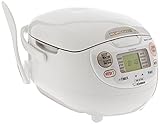 Zojirushi NS-ZCC10 Neuro Fuzzy Zojirushi NS-ZCC10 Neuro Fuzzy |
|
Check Latest Price |
 Zojirushi NP-HCC10XH Induction Zojirushi NP-HCC10XH Induction |
|
Check Latest Price |
 Tiger JBV-A10U Tacook Tiger JBV-A10U Tacook |
|
Check Latest Price |
1. Cuckoo CRP-P0609S – Best Overall for Authentic Korean Rice
CUCKOO High Pressure Rice Cooker, 12-Cup Cooked, Black, CRP-P0609S
High pressure 29 PSI
12 menu options
Voice guide
Non-Teflon pot
Pros
- Authentic Korean rice texture with pressure cooking
- GABA rice setting for health benefits
- Voice navigation in multiple languages
- Steam plate included for cooking vegetables
Cons
- Higher price than entry models
- Lid components need effort to clean
- Interface takes time to learn
The first thing I noticed cooking short-grain Korean rice in the Cuckoo CRP-P0609S is the texture. High-pressure cooking at 29 PSI transforms ordinary short-grain rice into that glossy, plump, slightly chewy bap you get at Korean restaurants. The rice comes out even from top to bottom, with no mushy spots near the bottom and no undercooked grains near the top.
I tested the GABA rice setting on weekends when I had time for the longer cycle, and the result is noticeably sweeter and chewier than regular brown rice. GABA rice activates gamma-aminobutyric acid during a slow germination phase, which is popular in Korean health food circles. The 12 menu options also cover porridge (juk), multigrain rice, and glutinous rice for special dishes.
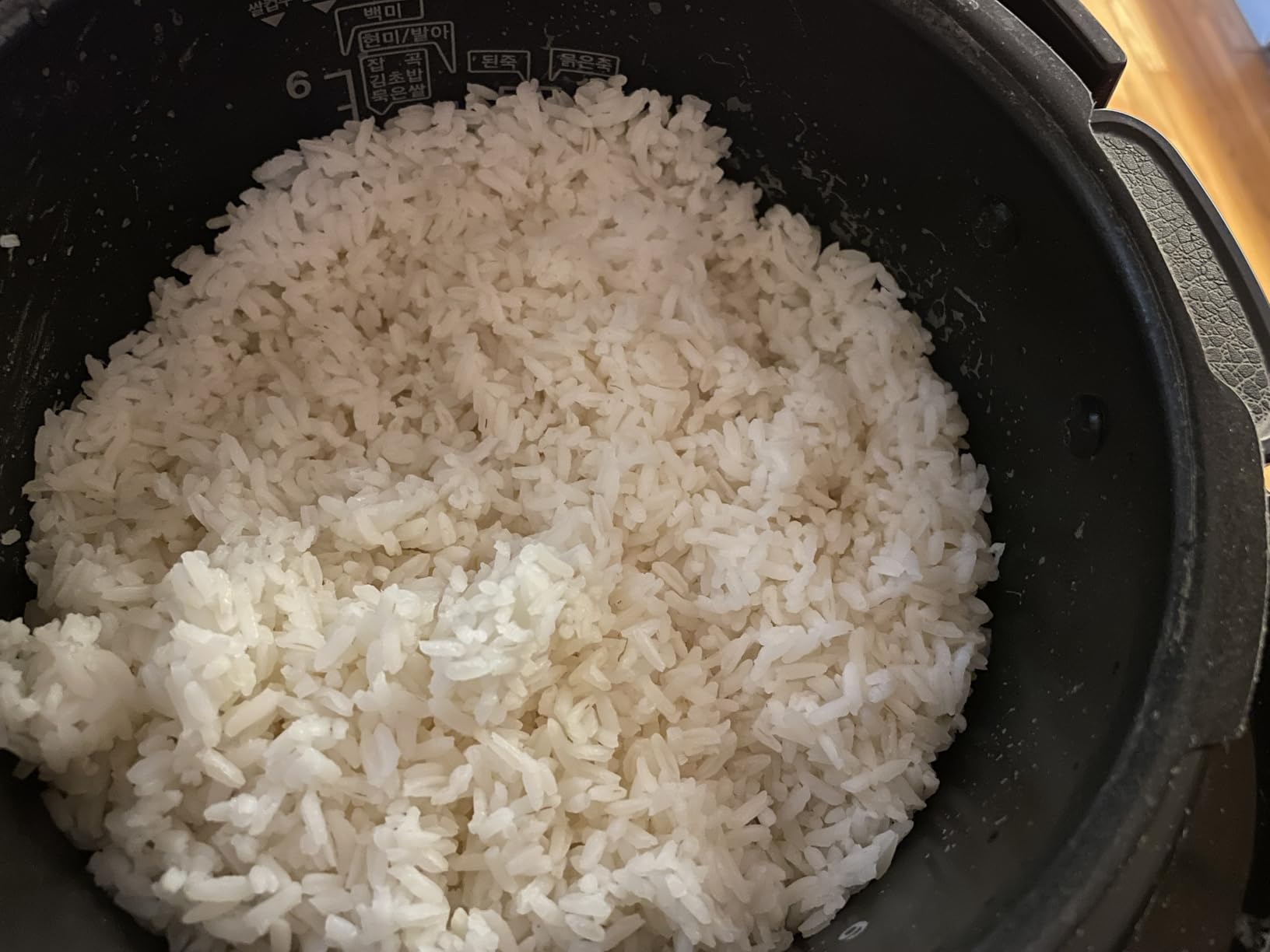
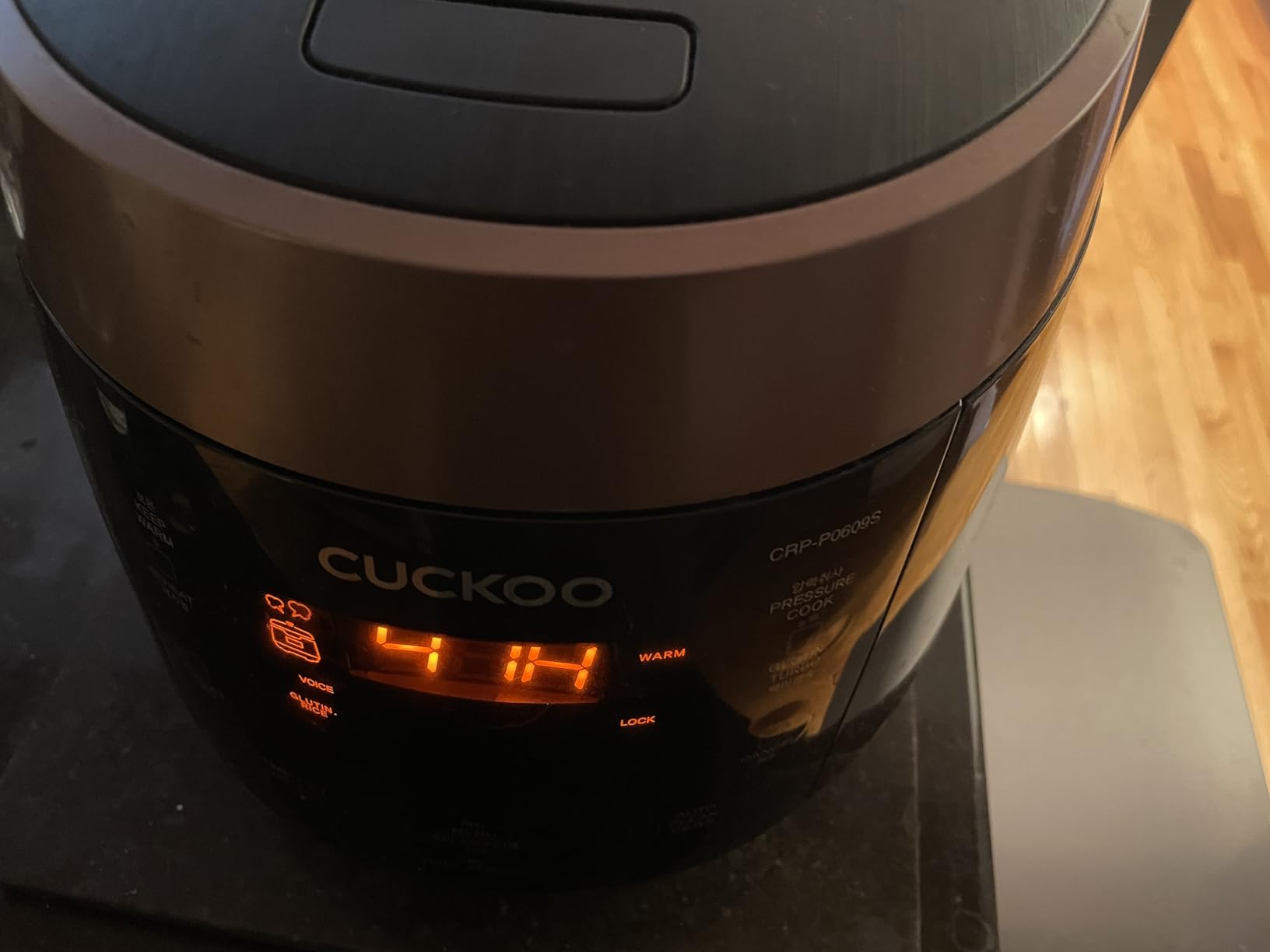
The voice guide is a feature Korean users either love or turn off immediately. It announces cooking stages in Korean, English, or Chinese, which feels authentic if you grew up in a Korean household. The keep-warm function holds rice at serving temperature for hours without that dry crust forming on top.
The non-Teflon nonstick inner pot is a meaningful upgrade if you want to avoid PTFE coatings. It still releases rice cleanly but uses a healthier coating. The trade-off is the lid assembly has more parts to clean, and some users say the small plastic components feel less premium than the rest of the build.
Who should buy this
Korean-American families who want restaurant-quality bap daily will love this cooker. The pressure cooking handles multigrain rice, GABA rice, and glutinous rice without soaking, which saves serious time on busy weeknights.
Anyone who values the authentic Korean kitchen experience with voice navigation and a 12-menu layout will feel at home with this Cuckoo.
Who should skip this
If you only cook white rice occasionally and want a simple one-button cooker, this model is overkill. The interface learning curve and higher price make more sense for daily rice eaters.
Households bothered by a Korean voice announcement (even if you switch to English) may prefer the quieter Zojirushi models below.
2. Cuckoo CRP-LHTR0609FW Twin Pressure – Best for Multigrain and GABA Rice
CUCKOO Twin Pressure Induction Rice Cooker, 12-Cup Cooked, CRP-LHTR0609FW
Twin pressure technology
Induction heating
20 menu modes
Smart fuzzy logic
Pros
- Pressure and non-pressure modes for different rice styles
- Induction heating cooks evenly from all sides
- Excellent for brown and multigrain Korean rice
- Smart fuzzy logic detects grain type
Cons
- Control panel takes time to learn
- Translated manual is unclear
- Higher price point
- Some reliability reports
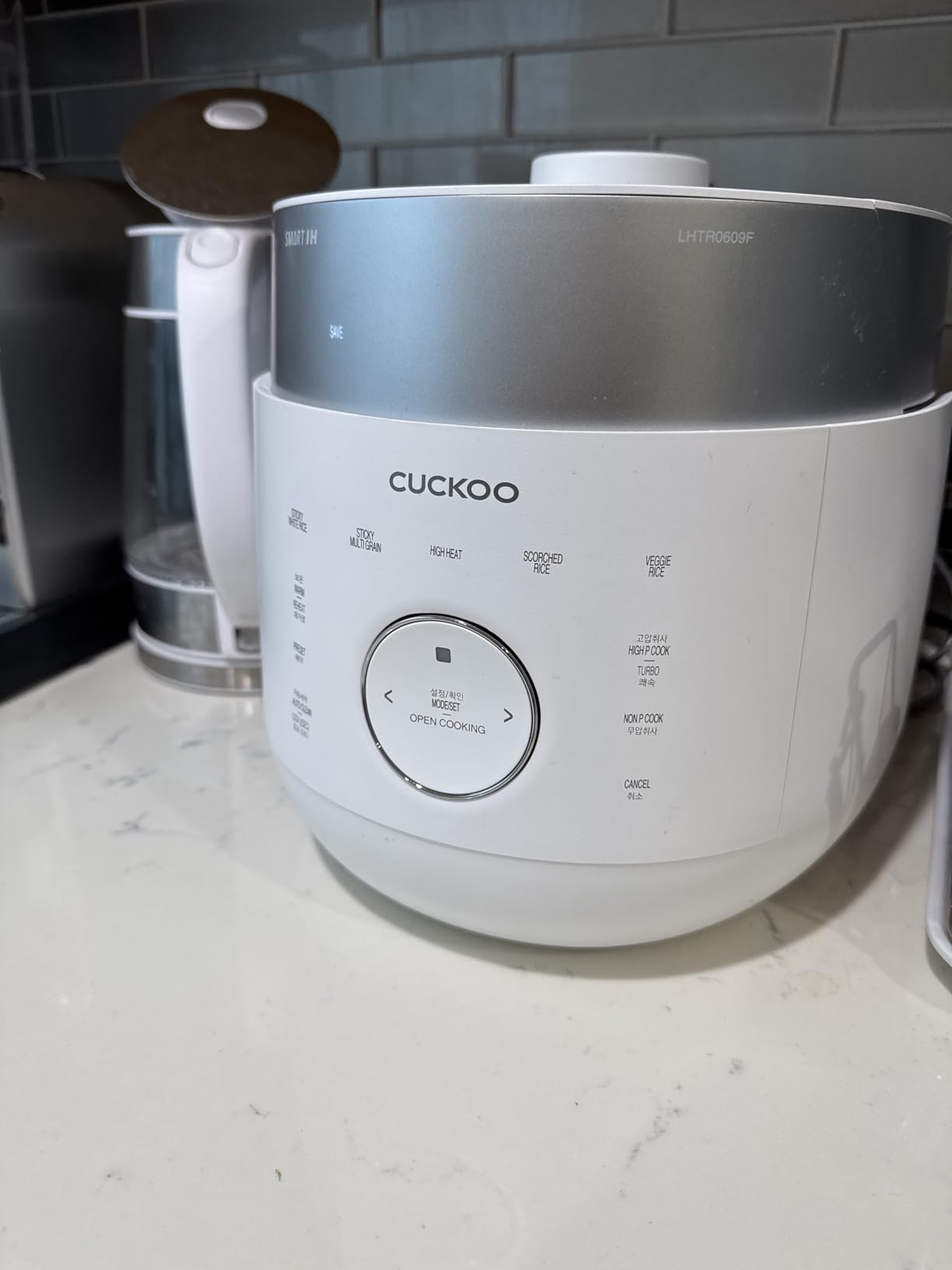
The twin-pressure system on this Cuckoo is what sets it apart for Korean rice. You can use pressure mode for that sticky, glossy restaurant-style white rice, then switch to non-pressure mode for fluffier sushi-style rice or to avoid overcooking delicate grains. Induction heating surrounds the entire inner pot, which means the rice at the top cooks at the same temperature as the rice at the bottom.
When I made japgokbap (Korean multigrain rice with beans, sorghum, and millet), the smart fuzzy logic adjusted the cooking cycle automatically. No soaking beans overnight, no separate cooking steps. The 20 menu modes cover GABA rice, scorched rice (nurungji), porridge, and even baby food.
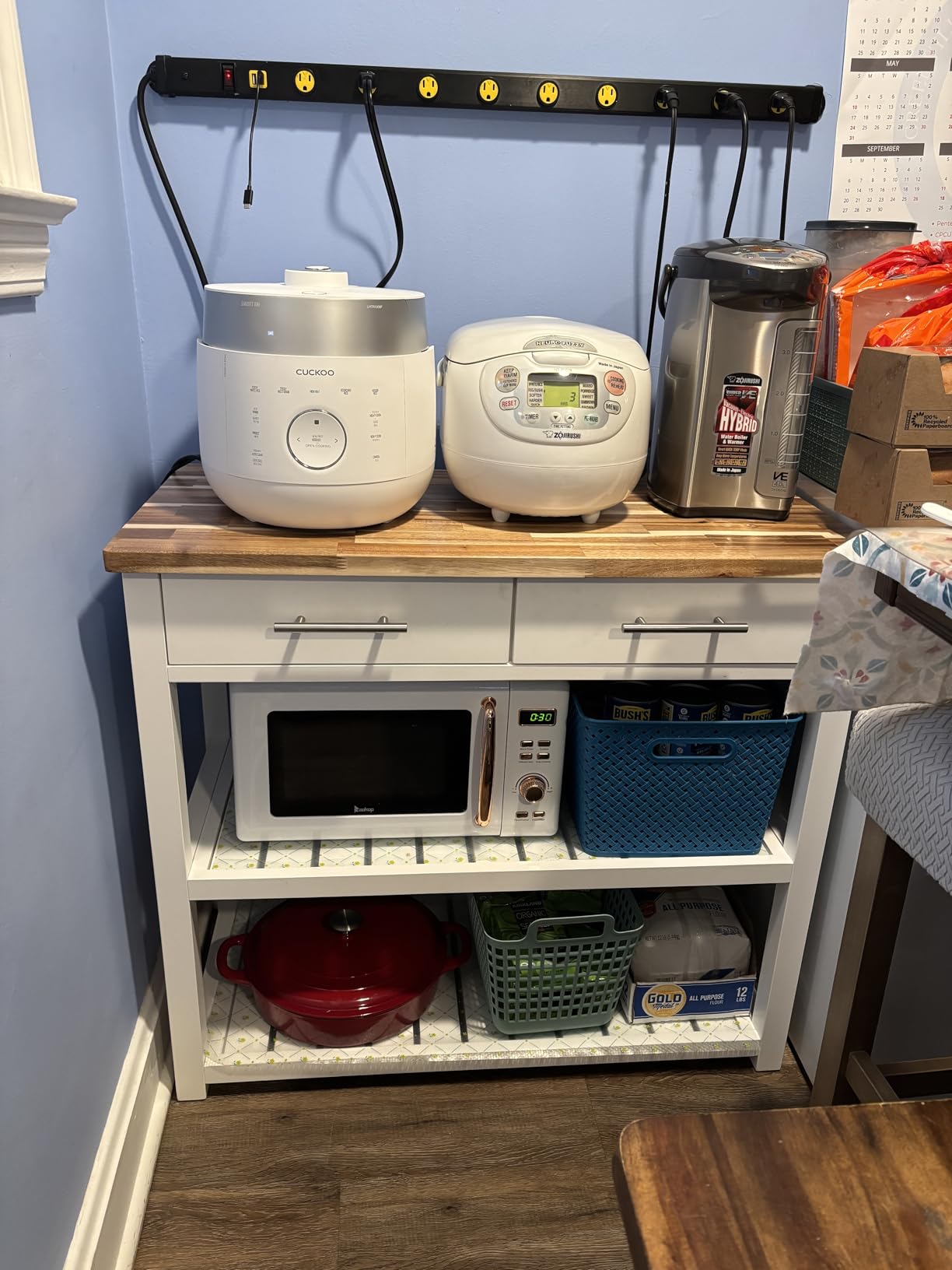
The premium inner pot has real heft to it and a quality nonstick surface that releases rice cleanly. Voice guide works in Korean, English, and Chinese. The energy-saving algorithm reduces power during keep-warm, which matters if you hold rice all day like many Korean households do.
The downsides are real. The control panel has many small buttons, and the translated manual does not always explain them clearly. A handful of users reported malfunctions within the first year, so this is a cooker to register for warranty immediately.
Who should buy this
Health-focused Korean-American families who cook multigrain and GABA rice regularly will get the most from the twin-pressure system. Induction heating makes a real difference for brown rice and mixed grains.
Anyone who wants one machine that handles pressure and non-pressure cooking without buying two separate appliances.
Who should skip this
If you mostly cook plain white rice, the twin-pressure system is more complexity than you need. A simpler Cuckoo model would serve you just as well for less money.
Buyers who want a flawless manual and intuitive controls may find the translated instructions frustrating.
3. Cuckoo CR-0675FW Micom – Best Budget Korean Rice Cooker
CUCKOO Micom Fuzzy Logic Rice Cooker, 12-Cup Cooked, White, CR-0675FW
Fuzzy logic technology
9 menu options
Auto clean
6-cup capacity
Pros
- Affordable entry into Korean rice cooker technology
- Fuzzy logic produces consistently fluffy rice
- Auto clean keeps pot fresh
- Quick rice mode for busy nights
Cons
- Interface confusing at first
- Manual unclear on some features
- No pressure cooking
- Plastic exterior
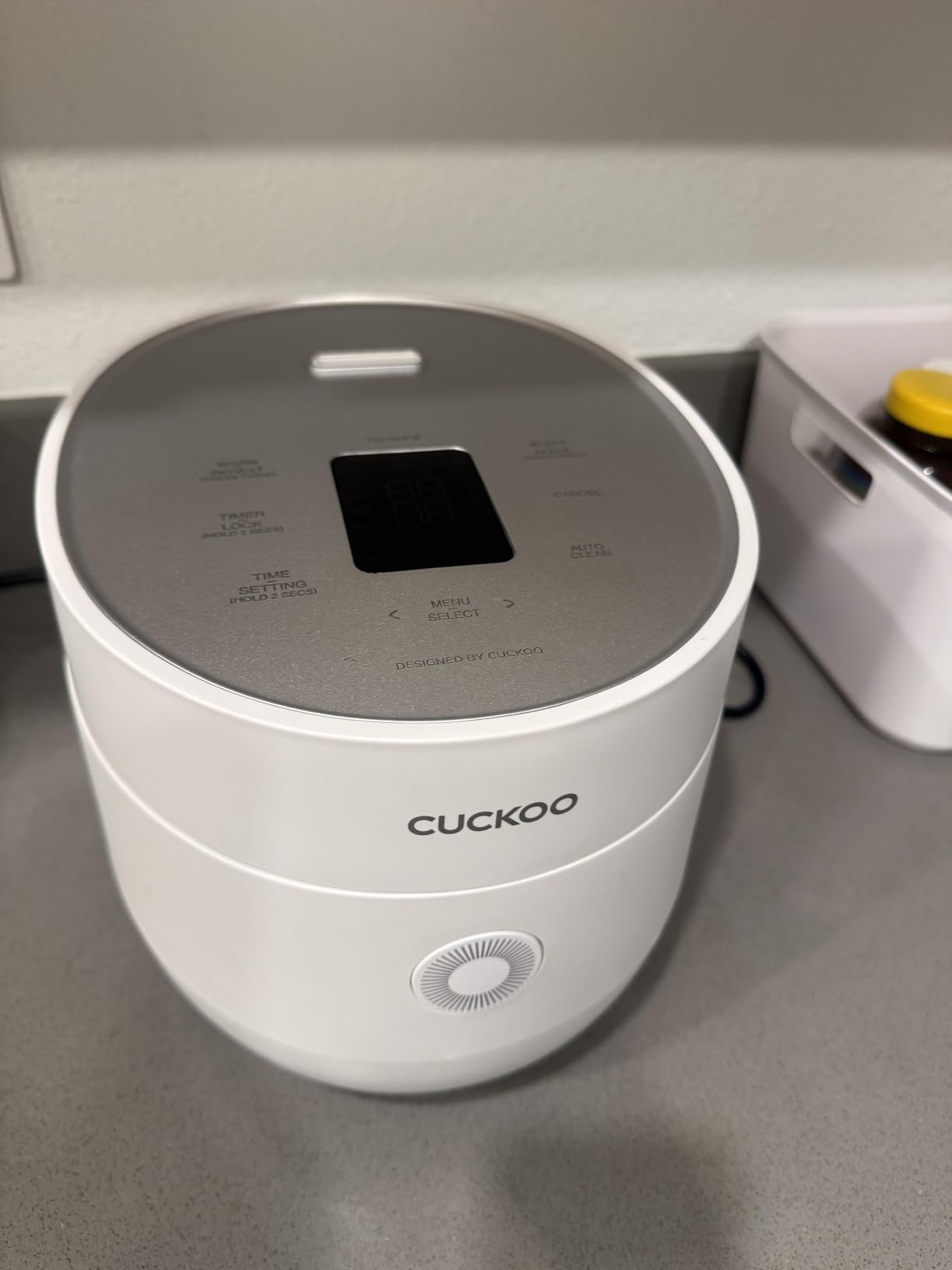
This is the rice cooker I recommend to anyone who wants Korean-brand quality without paying for pressure or induction technology. The fuzzy logic system adjusts cooking time and temperature based on the rice and water amount, which is what makes rice come out fluffy instead of mushy or crunchy.
I cooked short-grain Korean rice in this every day for a month. Each batch came out evenly cooked with that slight chew Korean rice is known for. The keep-warm function actually holds rice at the right temperature without drying it out or burning the bottom, which is a common failure of cheap rice cookers.
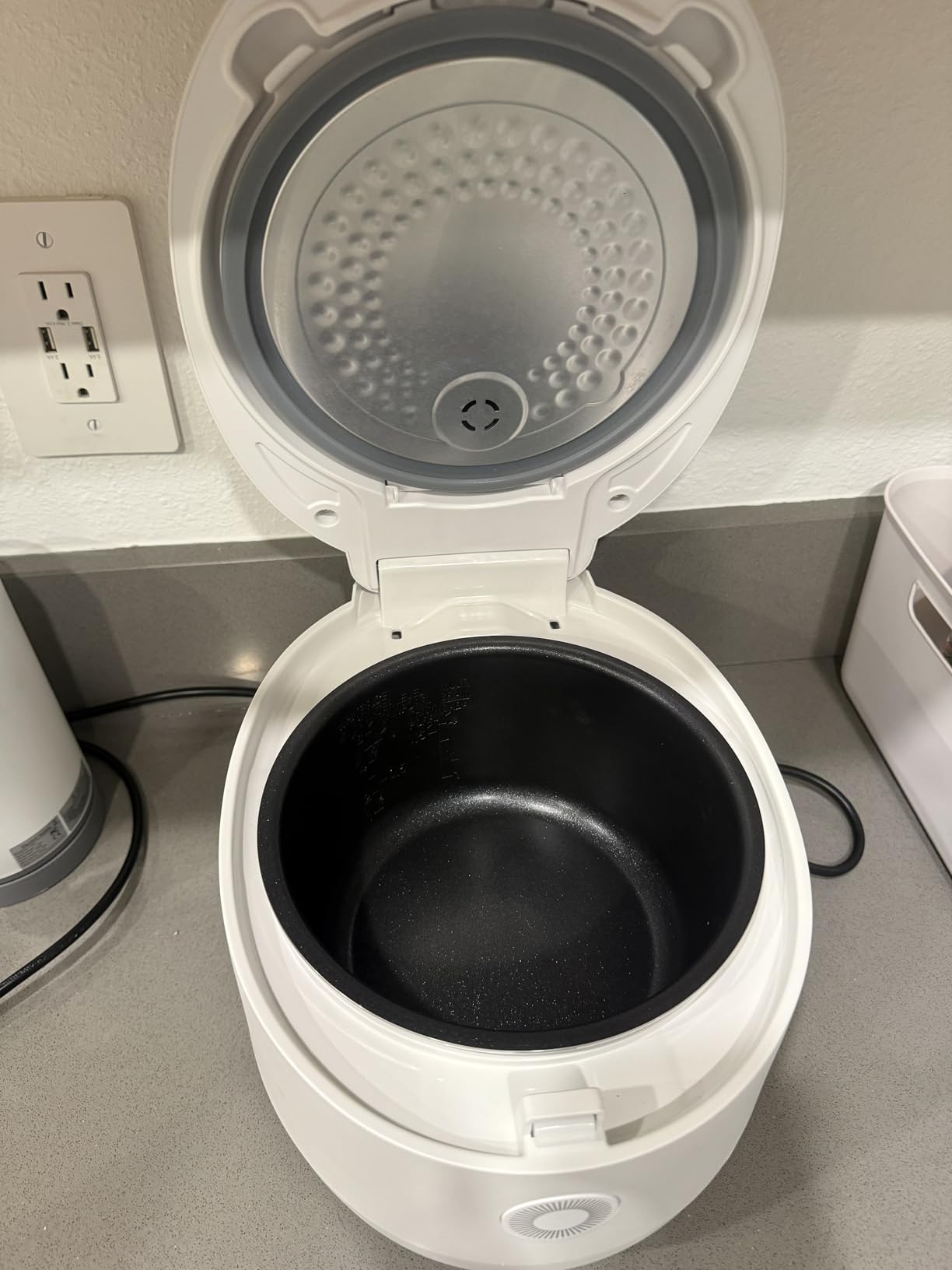
The 9 menu options cover white rice, brown rice, glutinous rice (for chapssal dishes), mixed rice, oats, and baby food. The quick rice mode cuts cooking time when you forgot to start dinner on time, and auto-clean flushes the steam vent area to keep the pot fresh.
What you give up compared to pricier Cuckoo models is pressure cooking, induction heating, and voice navigation. The interface also has a learning curve, and the included manual does not explain every feature clearly. For a household that mostly cooks white short-grain rice, those trade-offs are easy to accept.
Who should buy this
First-time Korean rice cooker buyers on a budget get excellent value here. Fuzzy logic alone is a massive upgrade over a basic on-off rice cooker.
Small households of 2 to 4 people who cook white rice daily and want reliable results.
Who should skip this
Families who cook a lot of multigrain or GABA rice should step up to a pressure or induction model. Without pressure, harder grains need pre-soaking.
Anyone who wants voice navigation or premium build materials should look at higher Cuckoo tiers.
4. Cuckoo CR-0375FW Compact – Best for Small Korean Households
CUCKOO Micom Fuzzy Logic Rice Cooker, 6-Cup Cooked, White, CR-0375FW
Compact 3-cup
Fuzzy logic
8 menu options
Glass lid
Pros
- Compact size fits small kitchens
- Fuzzy logic for consistent rice
- Quick rice mode for fast meals
- Easy to clean nonstick pot
Cons
- Small capacity for solo or duo use only
- Lower wattage means longer cook times
- Control panel has learning curve
- No pressure cooking
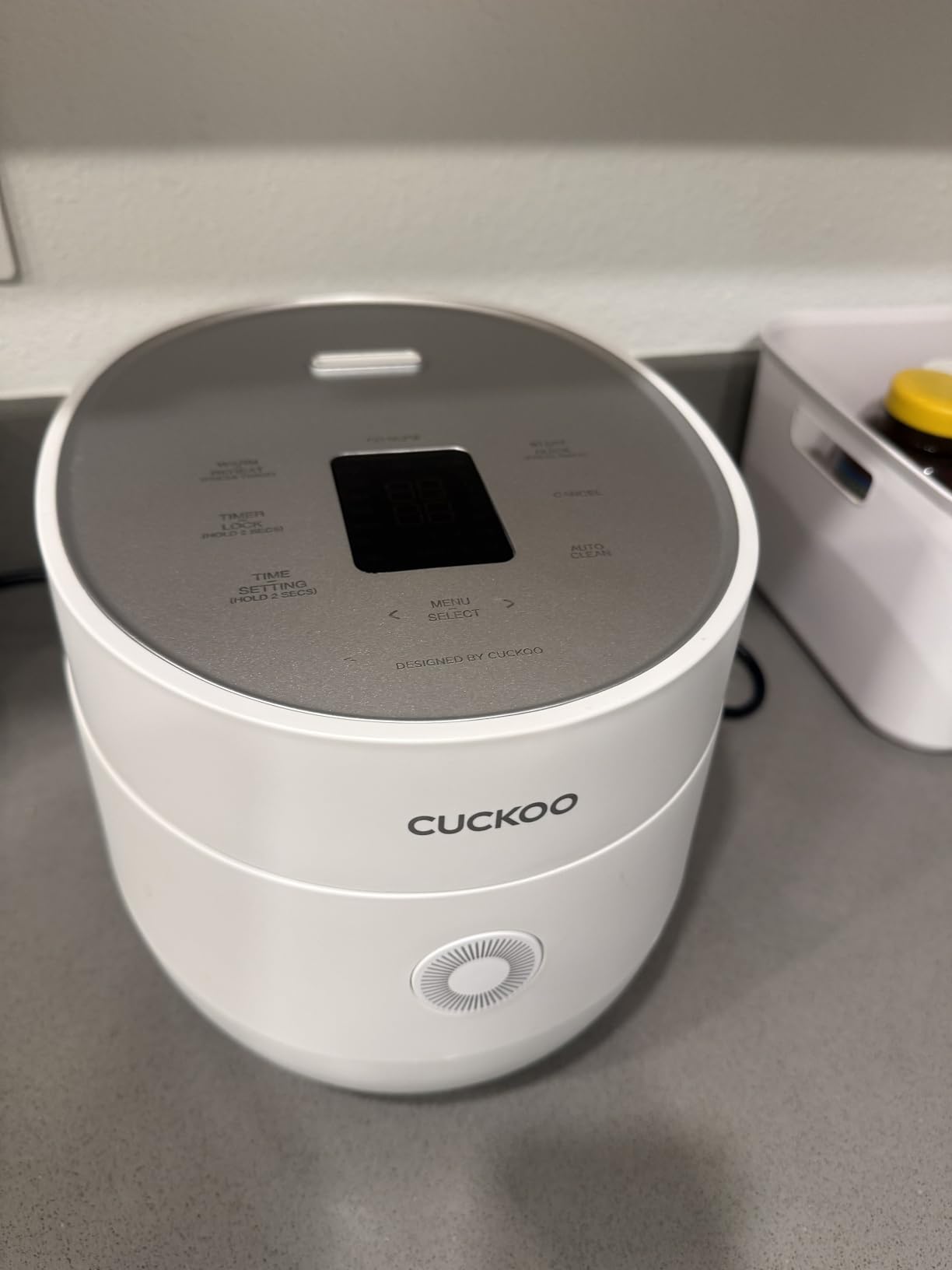
The 3-cup uncooked capacity of this Cuckoo is perfect for one or two people who eat rice daily. Korean households of one (think students, singles, or empty-nesters) often struggle with full-size cookers because the rice dries out before they finish a batch. This smaller pot solves that problem.
Fuzzy logic still runs the show, so even with the smaller pot, short-grain Korean rice comes out fluffy and evenly cooked. The 8 menu options cover the basics: white rice, brown rice, glutinous rice, mixed rice, porridge, and quick rice.
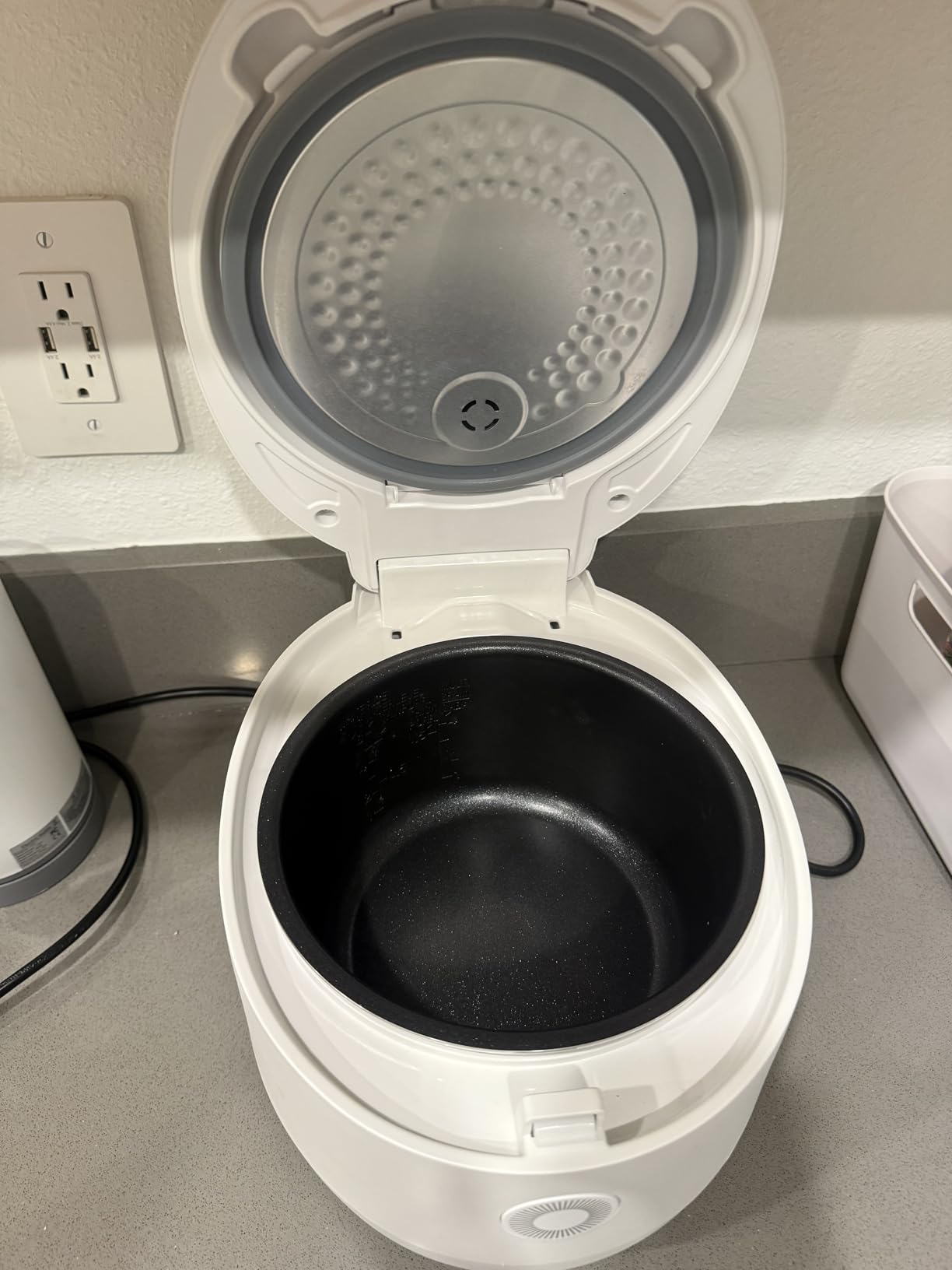
The glass lid lets you peek at the cooking rice without lifting the lid and losing heat. Auto-clean flushes the steam vent area, and quick rice gets dinner on the table when you are running late. At just over 6 pounds, it is also easy to store in a cabinet between uses.
Trade-offs are predictable for a small cooker. At 425 watts, it heats more slowly than full-size models. The 3-cup capacity is too small for a family of four. The control panel is similar to the larger Cuckoo micom models, which means a similar learning curve.
Who should buy this
Singles, couples, and small Korean households of one or two people who eat rice daily. The smaller pot means less dried-out leftovers.
Anyone with limited kitchen space or who wants to store the cooker between uses.
Who should skip this
Families of three or more will outgrow this capacity quickly and should look at the 6-cup Cuckoo models.
Cooking enthusiasts who want pressure cooking or GABA rice settings need a step-up model.
5. Zojirushi NS-TSC10 Micom – Best Value Japanese Rice Cooker for Korean Rice
Zojirushi Ns TSC10 5.5 Cup Micom Rice Cooker and Warmer, 1.0l
Micom fuzzy logic
5.5 cup capacity
Auto keep warm
Steam basket included
Pros
- Restaurant-quality fluffy rice every time
- Keep warm holds rice for hours without drying
- Intuitive controls easy to learn
- Includes steam basket and cake menu
Cons
- Longer cooking time around 50 to 60 minutes
- Hinge only opens partially
- Spatula holder feels flimsy
- Higher than basic models
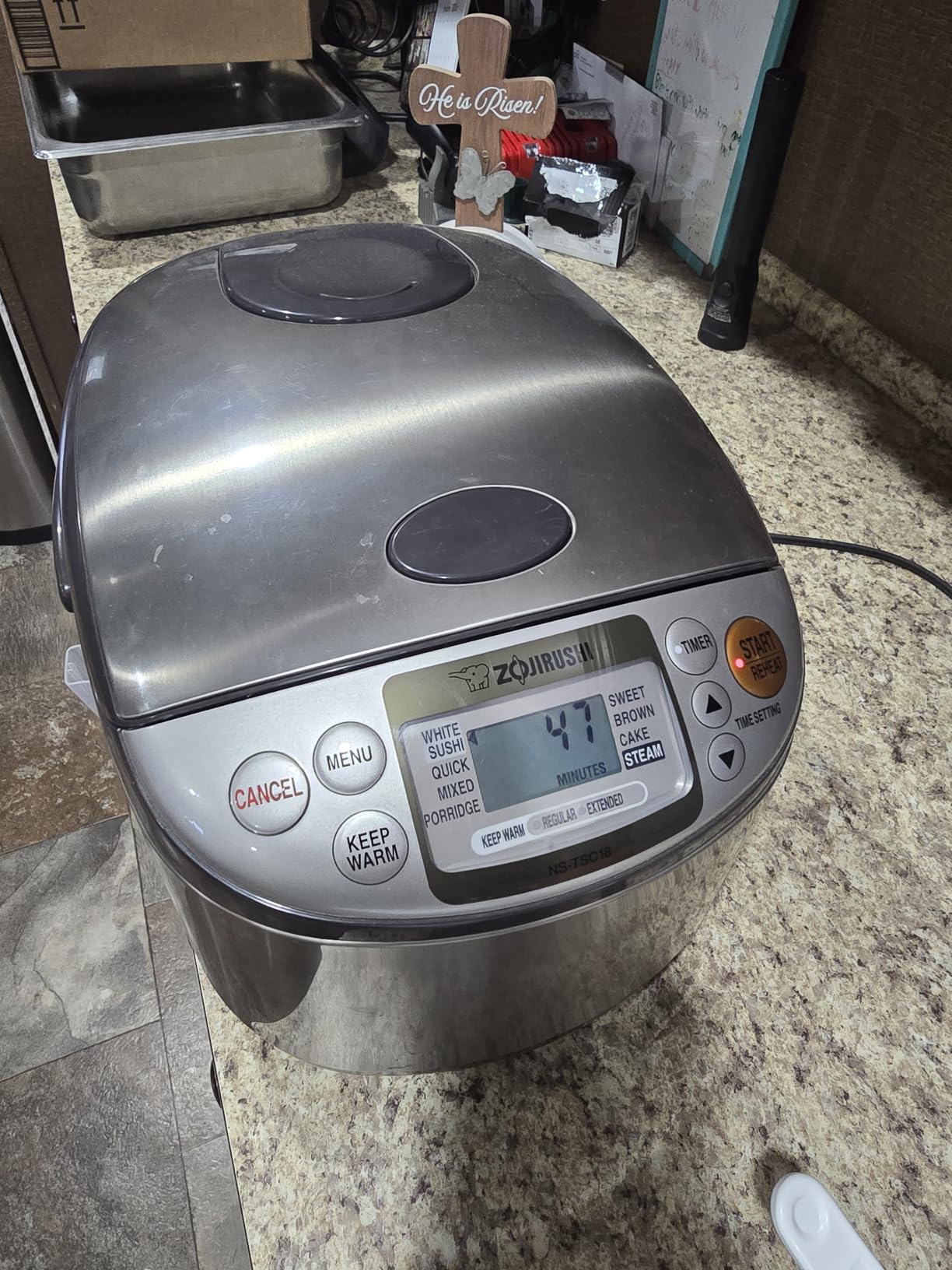
Zojirushi is the brand Korean-American households often choose when they want Japanese precision and longevity. The NS-TSC10 uses micom fuzzy logic to adjust cooking time and temperature, and the result is rice so consistent you stop checking on it. Short-grain Korean rice comes out tender, separate, and slightly sweet.
Over four years of use reported by long-term reviewers, this cooker keeps producing the same quality rice. The automatic keep-warm holds rice at serving temperature for hours without forming a crust. Extended keep-warm lowers the temperature further for longer holding, and a reheating cycle warms cold rice back to serving temperature.
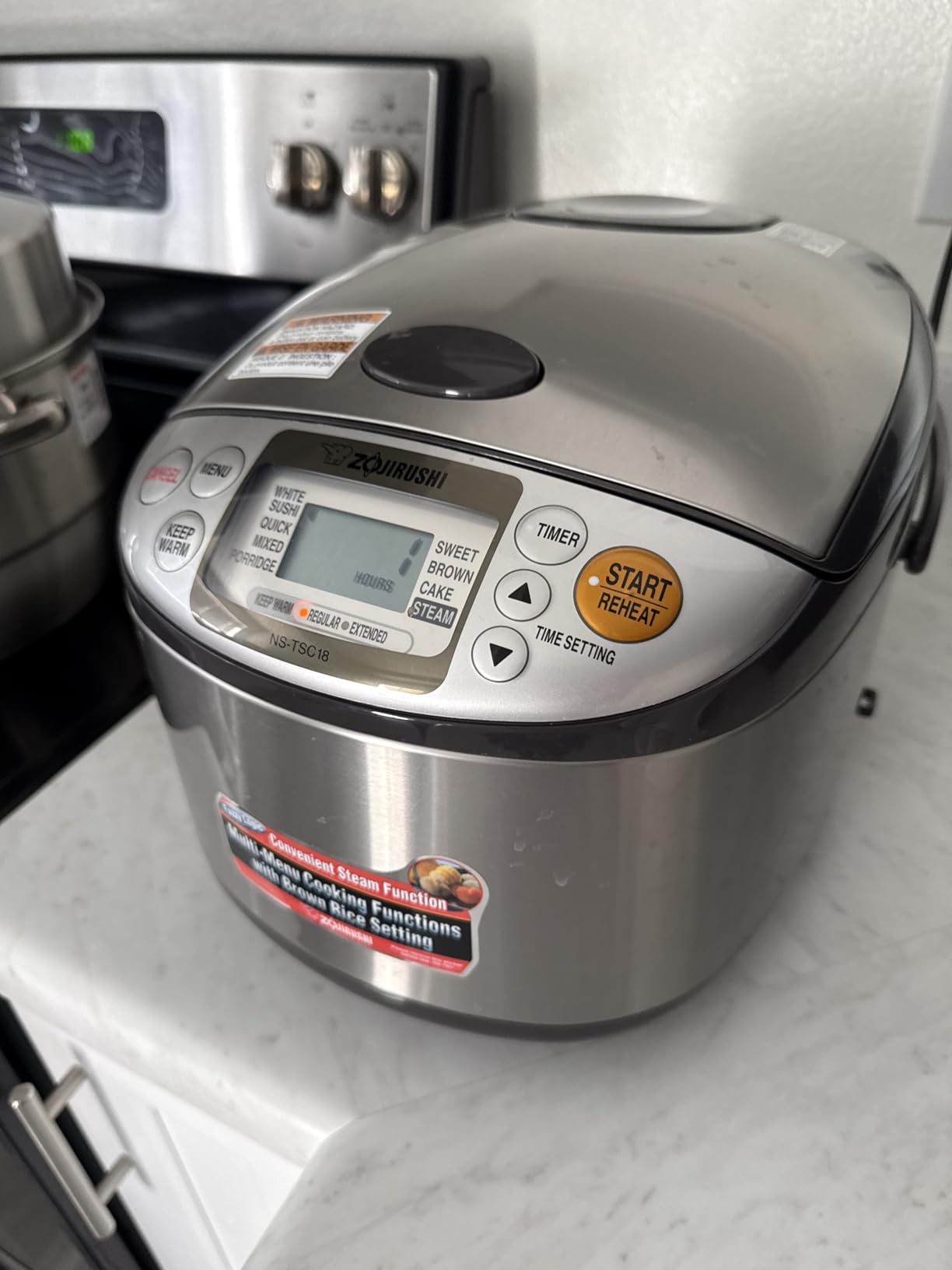
The included steam basket lets you cook vegetables, dumplings, or fish while rice cooks below. There is even a cake menu for baking, which sounds odd until you try a Korean steamed egg or a fluffy sponge cake from a rice cooker.
The main drawback is cooking time. White rice takes around 50 to 60 minutes, and even quick rice mode runs 30 to 40 minutes. If you want pressure-cooker speed, this is not the machine. The hinge only opens partially, which is mildly annoying when filling the pot, and the spatula holder on the side feels flimsy.
Who should buy this
Korean-American households who value longevity and consistent results above speed. Many users report 5 to 10 years of reliable service.
Anyone who wants a versatile cooker that handles rice, steamed dishes, and even baking in one appliance.
Who should skip this
If you need rice fast on weeknights, the long cooking cycle will frustrate you. A pressure Cuckoo will cook the same rice in half the time.
Buyers who want voice navigation or a fully Korean-brand experience should stick with Cuckoo.
6. Zojirushi NS-ZCC10 Neuro Fuzzy – Best for Sushi-Style Korean Rice
Zojirushi Ns ZCC10 Neuro Fuzzy Rice Cooker and Warmer (White)
Neuro Fuzzy logic
Spherical inner pan
Multi-menu settings
LCD clock timer
Pros
- Restaurant-quality rice with dynamic adjustment
- Spherical pan heats rice evenly
- Specific sushi rice setting
- Durable build lasting many years
Cons
- Expensive for a non-pressure cooker
- Longer cooking time
- Translated manual lengthy
- First-unit failure possible if water enters
The Neuro Fuzzy technology in this Zojirushi is a step above standard fuzzy logic. It makes multiple adjustments during the cooking cycle to compensate for temperature, water ratio, and grain type. For Korean short-grain rice, that means each batch comes out the same regardless of small measurement errors.
The spherical inner pan is the secret. Curved surfaces heat rice more evenly than flat-bottom pots, which is why rice near the sides never comes out undercooked. The sushi rice setting on this cooker is widely considered one of the best in any home machine, which matters for gimbap and kimbap rolls.
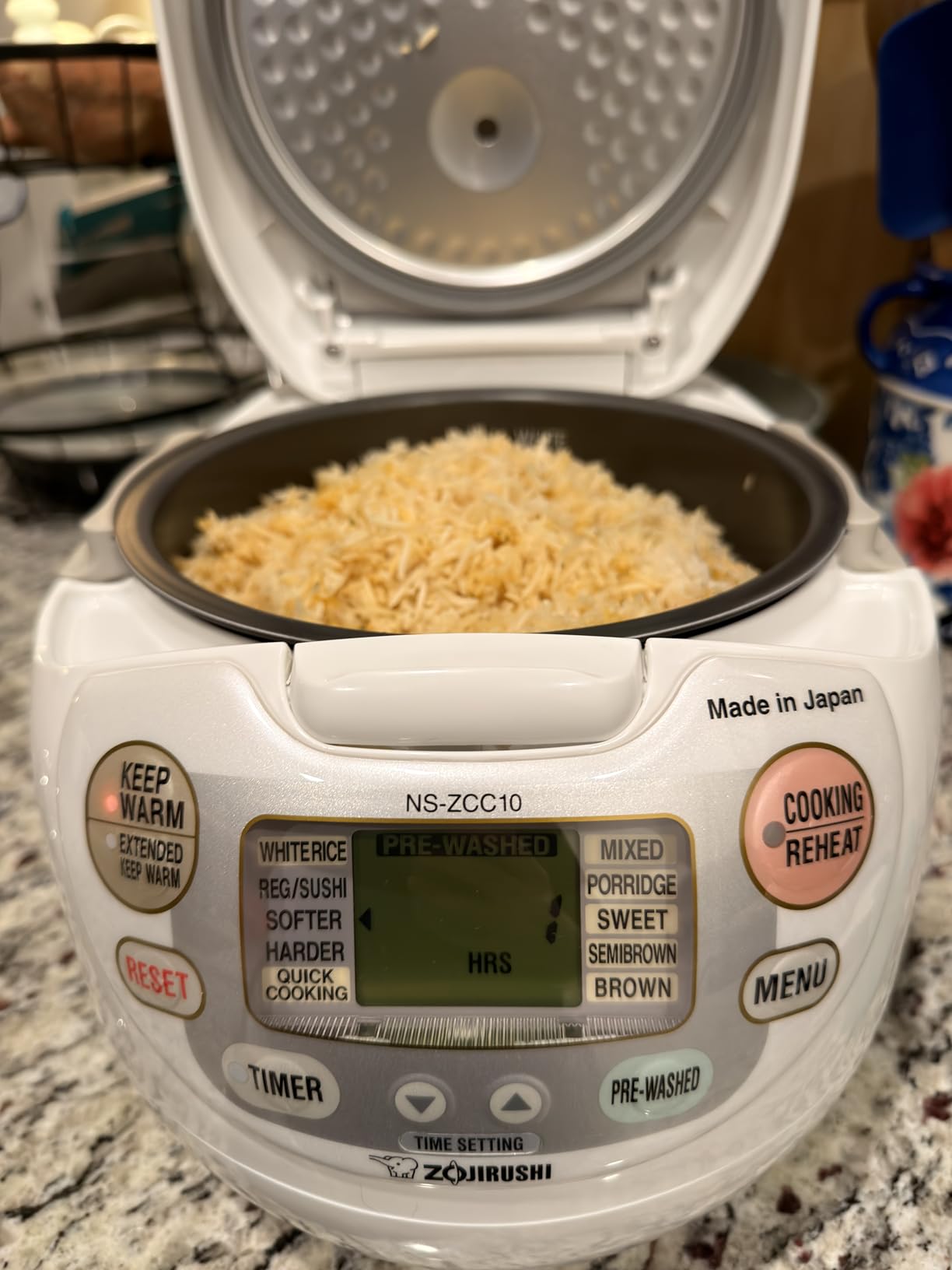
Menu settings include white rice (regular, softer, harder), sushi, mixed, porridge, sweet, semi-brown, brown, rinse-free, and quick cooking. That covers virtually every Korean rice dish from everyday bap to dessert-style sweet rice. The retractable cord and LCD clock with timer round out a thoughtful design.
Long-term reviewers consistently mention this cooker lasting 5 to 10 years with daily use. The main downside is cost for a non-pressure cooker, and the cooking cycle for white rice runs around 50 minutes. The translated manual is thorough but lengthy.
Who should buy this
Sushi lovers and Korean-American families who make gimbap regularly. The dedicated sushi setting produces rice with the exact texture needed for rolls.
Buyers who want one rice cooker to last a decade and are willing to pay for build quality.
Who should skip this
If you want pressure cooking or GABA settings, this Zojirushi does not offer them. Look at the NP-HCC10XH below or a Cuckoo pressure model.
Weeknight cooks in a hurry will find the long cycle frustrating.
7. Zojirushi NP-HCC10XH Induction – Best Premium Choice for GABA Rice
Zojirushi NP-HCC10XH Induction Heating System Rice Cooker and Warmer, 5.5-Cup, Stainless Dark Gray
Induction heating
GABA brown rice setting
Triple heater system
5.5 cup capacity
Pros
- Induction heating for precise temperature control
- GABA brown rice activates nutrients
- No scorched rice at bottom
- Excellent keep warm for days
Cons
- Very expensive premium price
- Cooking time 45 to 60 minutes
- Cord not retractable
- Metal insert can deteriorate over time
Induction heating is the technology that makes this Zojirushi special. Instead of a heating element at the bottom, the entire inner pot becomes the heat source through magnetic induction. The result is precise, even heat that eliminates scorched spots and undercooked grains. Korean short-grain rice cooked this way has a noticeably cleaner flavor and uniform texture.
The GABA brown rice setting is the headline feature for health-conscious Korean cooks. It activates gamma-aminobutyric acid through a slow germination cycle that takes about three hours. The result is sweeter, chewier brown rice with higher nutrient availability, popular in Korean temple cuisine and diet-focused meals.
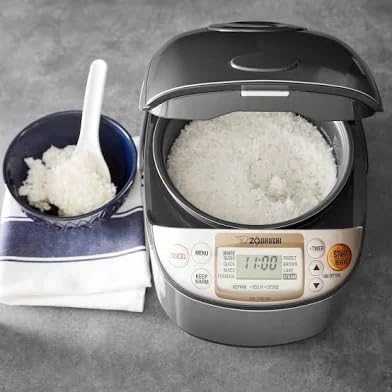
The triple heater system (bottom, side, and lid) creates a 3D heating environment that keeps the entire pot at consistent temperature. Keep warm holds rice for days without drying, which is ideal for households that keep a pot going through the week.
The trade-offs are price and time. This is among the most expensive home rice cookers you can buy, and the cooking cycle for white rice runs 45 to 60 minutes. The cord is not retractable, and the metal insert on the lid can deteriorate over years of use.
Who should buy this
Health-focused Korean-American families who eat GABA brown rice and multigrain rice regularly. Induction heating makes a real difference for these harder grains.
Buyers who want a no-compromise rice cooker and are willing to pay for induction technology and Zojirushi longevity.
Who should skip this
If you mostly cook white rice and want it fast, a pressure Cuckoo at half the price will serve you better.
Buyers outside the US should check voltage compatibility, since this 120V model needs a transformer in many countries.
8. Tiger JBV-A10U Tacook – Best for Simultaneous Rice and Side Dish Cooking
Tiger Jbv A10u 5.5 Cup Micom Rice Cooker with Tacook (White)
Tacook synchronized cooking
Micom control
5.5 cup
4 auto settings
Pros
- Tacook tray cooks rice and side dish at once
- Simple intuitive controls
- Great value for the price
- 12-hour keep warm without burning
Cons
- No visible timer for remaining cook time
- Lid does not detach for cleaning
- Brown rice takes about 45 minutes
- Lightweight unit can rock when lid opens
The Tacook feature is what makes this Tiger rice cooker a hit with busy Korean-American families. The included BPA-free cooking tray sits above the rice, so you can steam vegetables, dumplings, or proteins at the same time the rice cooks below. Flavors do not transfer between the two, which means you get a full Korean meal of rice plus banchan-style vegetables in one cycle.
Micom control keeps things simple. Four automated settings cover plain rice, brown rice, slow cook, and steam. Korean short-grain rice on the plain setting comes out fluffy and separate, with a slight chew that holds up well to ssamjang and grilled meats.
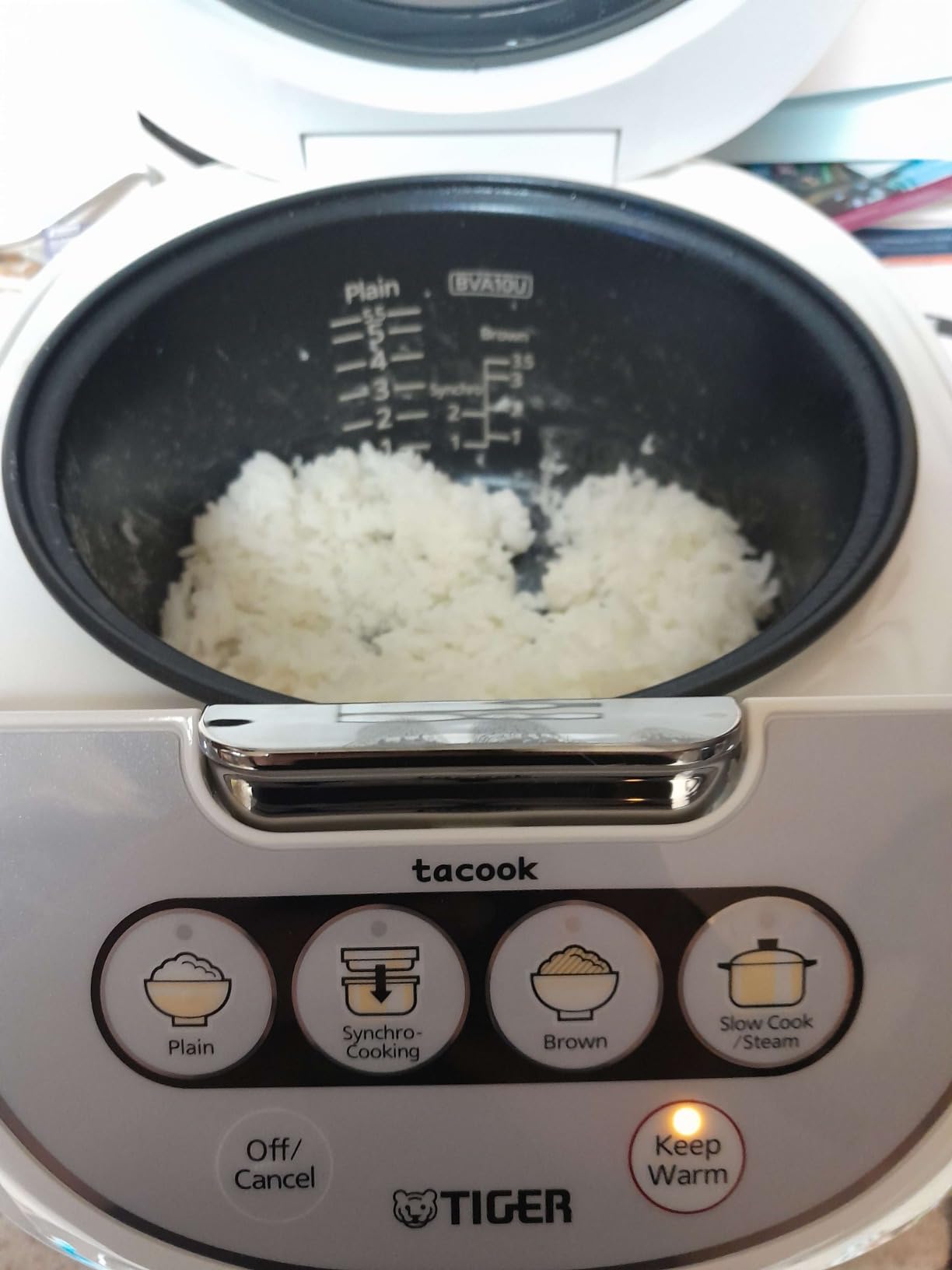
The 12-hour keep-warm function holds rice at serving temperature without burning the bottom. The scratch-resistant inner pot has clear measurement lines, and the included cookbook gives you ideas for using the Tacook tray beyond plain steaming.
Trade-offs include no visible timer showing remaining cook time, which some users find frustrating. The lid does not detach, making cleaning slightly awkward. Brown rice takes around 45 minutes, and the lightweight unit can rock when the spring-loaded lid pops open.
Who should buy this
Busy families who want rice and a steamed side dish ready at the same time. Tacook is genuinely useful for weeknight Korean meals.
Buyers who want a simple, reliable Japanese rice cooker at a midrange price without paying for fuzzy logic complexity.
Who should skip this
Cooking enthusiasts who want GABA rice settings, pressure cooking, or induction heating should look at Cuckoo or higher-tier Zojirushi models.
Anyone bothered by a lid that does not detach for cleaning may want a different design.
Buying Guide: How to Choose a Korean Rice Cooker
Choosing the best rice cooker for Korean rice comes down to four things: the cooking technology, the capacity for your household, the inner pot quality, and the convenience features that match your routine. Here is how Korean-American families should think through each one.
Fuzzy Logic vs Pressure vs Induction Heating
Fuzzy logic (also called micom or microcomputer) is the baseline technology you want. It adjusts cooking time and temperature based on the rice and water you put in, which is why fuzzy-logic rice comes out fluffy instead of mushy. Every cooker on this list has it.
Pressure cooking adds sealed-vessel pressure (typically 20 to 30 PSI) that cooks rice faster and gives it that glossy, plump, chewy texture Koreans love. If you grew up eating rice from a Cuckoo pressure cooker, you can taste the difference. Pressure is what makes multigrain and GABA rice practical without overnight soaking.
Induction heating turns the entire inner pot into the heat source instead of using a bottom heating pad. Heat distributes evenly from all sides, which prevents scorched bottoms and undercooked tops. Induction is the most precise but also the most expensive technology.
Capacity for Korean Households
Korean households usually keep a pot of rice warm and available throughout the day, so capacity matters more than for occasional cooks. A 3-cup uncooked cooker suits a single person or a couple who eats rice daily. A 5.5 to 6-cup cooker handles a family of 3 to 5, which is the sweet spot for most Korean-American families.
Larger families or those who entertain often should consider 10-cup models. Keep in mind that a 6-cup cooker uncooked yields about 12 cups cooked, which is roughly 6 to 8 Korean rice bowls.
Inner Pot Coatings
The inner pot coating affects both health and clean-up. Traditional Teflon (PTFE) coatings work well but raise health concerns for some users. Premium Cuckoo models use non-Teflon nonstick coatings, and some high-end models use diamond-particle or X-Wall coatings that resist scratching and last longer.
For everyday Korean cooking, look for a coating rated for metal-spatula use if you want maximum durability. Most cooks use the included plastic rice paddle (jukbab) to avoid scratching any coating.
Voice Navigation and Convenience
Voice navigation is a distinctly Korean feature. Premium Cuckoo models announce cooking stages in Korean, English, or Chinese. Some users love the authentic kitchen feel. Others find it loud and turn it off. If you grew up with a Korean rice cooker singing completion tunes, you may want voice navigation for nostalgia.
Other convenience features worth having include a delay timer for setting up rice in the morning for dinner, extended keep-warm for all-day holding, and a reheat cycle for refreshing cold rice.
GABA Rice and Multigrain Capabilities
GABA rice is a slow-germinated brown rice that has higher levels of gamma-aminobutyric acid, which is linked to relaxed mood and better sleep. Korean health food culture values GABA rice highly. If you cook brown or multigrain rice regularly, look for a cooker with a dedicated GABA setting, which requires precise low-temperature control over several hours.
Pressure cookers handle multigrain rice (japgokbap) without pre-soaking beans and seeds, which saves serious time. Induction cookers give the most even results for GABA cycles. If these dishes are part of your regular rotation, step up to a pressure or induction model.
Price vs Longevity
Korean rice cookers range from under $100 to over $600. The sweet spot for most families is $150 to $250, where you get fuzzy logic, decent capacity, and a 5-to-10-year lifespan. Premium pressure and induction models cost more but often last longer and produce noticeably better rice.
Reddit KoreanFood discussions consistently mention Cuckoo and Zojirushi lasting 10-plus years with daily use, which makes the initial investment easier to justify. Divide the purchase price by the years of expected use and the per-year cost is often lower than for a cheap replacement-cycle cooker.
FAQs
Which rice cooker do Koreans use?
Most Korean households use a Cuckoo or Cuchen rice cooker. Cuckoo is the dominant brand in Korea, with pressure rice cookers like the CRP-P0609S being especially popular for everyday short-grain rice. Korean-American families often split between Cuckoo for authentic Korean texture and Zojirushi for Japanese-style fluffy rice.
Is Cuckoo better than Zojirushi?
It depends on the rice texture you want. Cuckoo pressure cookers produce glossier, chewier, more authentic Korean-style rice and handle multigrain and GABA rice without soaking. Zojirushi micom and induction cookers produce fluffier, more delicate Japanese-style rice and tend to last longer. For daily Korean bap, Cuckoo wins. For sushi-style rice and longevity, Zojirushi wins.
What is the number one rice cooker in Korea?
Cuckoo is the number one rice cooker brand in Korea by market share. Their high-pressure and twin-pressure induction models are the most common sights in Korean kitchens. The Cuckoo CRP-P0609S and CRP-LHTR0609FW are two of the most popular premium models for home use.
How do I make the best Korean rice with a rice cooker?
Rinse Korean short-grain rice 3 to 4 times until the water runs nearly clear. Use a 1 to 1.1 ratio of rice to water for standard white rice (slightly less water than Japanese ratios). Let the rinsed rice rest in the water for 20 to 30 minutes before cooking so the grains hydrate evenly. Use the white rice setting on a fuzzy-logic cooker, then let the rice rest on keep-warm for 10 minutes after the cycle ends before serving.
What size Korean rice cooker do I need for my family?
A 3-cup uncooked cooker suits 1 to 2 people. A 5.5 to 6-cup cooker is ideal for a family of 3 to 5, which covers most Korean-American households. Families of 6 or more should consider a 10-cup model. Remember that uncooked cups yield roughly double in cooked rice.
Can I cook GABA rice in any rice cooker?
No. GABA rice requires a precise low-temperature soaking phase that activates gamma-aminobutyric acid over 2 to 3 hours. You need a cooker with a dedicated GABA setting, typically found on premium Cuckoo and Zojirushi induction or pressure models like the Zojirushi NP-HCC10XH or the Cuckoo CRP-LHTR0609FW.
Conclusion: Our Top Pick for Korean Rice in 2026
For authentic, restaurant-quality Korean rice at home, the Cuckoo CRP-P0609S is our editor’s choice. The high-pressure cooking produces that glossy, plump, slightly chewy bap that defines Korean rice, and the GABA setting handles multigrain and health-focused dishes without extra effort.
For value and longevity, the Zojirushi NS-TSC10 delivers restaurant-quality fluffy rice for years. If budget is the priority, the Cuckoo CR-0675FW brings fuzzy-logic cooking to a price any household can justify. Whichever you choose from our list of the best rice cookers for Korean rice in 2026, the upgrade from a basic on-off cooker to a fuzzy-logic or pressure model is one of the most satisfying kitchen investments a Korean-food-loving household can make.
1 thought on “8 Best Rice Cookers for Korean Rice (October 2026) Expert Guide”