
I still remember my first attempt at fresh pasta. I rolled dough with a wine bottle for twenty minutes, ended up with uneven sheets that tore when I tried to cut them, and ordered takeout instead. That changed the day I unboxed a proper pasta machine.
After testing eight of the best pasta makers for homemade pasta across two months and roughly forty batches of dough, I can tell you this: the right machine cuts your active time in half and gives you sheets so thin you can read through them. Our team compared manual rollers, electric extruders, and stand mixer attachments to find what actually delivers restaurant-quality results in a home kitchen.
This guide covers machines at every budget, from a $30 entry-level roller to a $380 fully automatic extruder. I included a Korean pasta angle too. Several of these machines handle kalguksu-style knife-cut noodles and jajangmyeon-style fresh noodles surprisingly well, something I noticed was missing from competitor reviews.
Table of Contents
Top 3 Picks for Best Pasta Makers


Best Pasta Makers for Homemade Pasta in 2026
| Product | Specifications | Action |
|---|---|---|
| Marcato Atlas 150 Classic |
|
Check Latest Price |
 Philips 7000 Series Philips 7000 Series |
|
Check Latest Price |
| Nuvantee 3-in-1 |
|
Check Latest Price |
 Sailnovo 3-in-1 Sailnovo 3-in-1 |
|
Check Latest Price |
 Imperia Classic Line Imperia Classic Line |
|
Check Latest Price |
 NEWSETS KitchenAid Attachment NEWSETS KitchenAid Attachment |
|
Check Latest Price |
 Philips Viva Compact Philips Viva Compact |
|
Check Latest Price |
 Sur La Table Va Bene Sur La Table Va Bene |
|
Check Latest Price |
Each machine below passed our test for dough consistency, sheet uniformity, and durability. Our team evaluated them on ease of cleanup, storage footprint, and versatility beyond Italian shapes. Read on for the full breakdown.
1. Marcato Atlas 150 Classic Manual Pasta Maker – Best Overall for Home Pasta
MARCATO Atlas150 Manual Pasta Maker Machine-LASAGNA, FETTUCCINE & TAGLIOLINI. Made in Italy
Made in Italy
10 thickness settings
3 cutting discs included
Pros
- Italian-made chrome steel construction
- Smooth hand crank operation
- 10 thickness settings from 0.8mm to 4.8mm
- Professional-grade results
- Lasts decades with basic care
Cons
- No dishwasher safe parts
- Handle can work loose during use
- Spaghetti attachment sold separately
- Instructions could be clearer
The Marcato Atlas 150 has been the gold standard for home pasta makers since 1930, and after sixty days of testing I understand why. This Italian-made machine has a near-cult following among home cooks, and 27k+ reviews averaging 4.6 stars tell the same story.
My first batch was tagliolini. The dough went through the rollers smoothly, and within fifteen minutes I had uniform sheets thin enough to read a newspaper through. The 10 thickness settings let me dial in everything from thick pappardelle (4.8mm) to delicate angel hair (0.8mm). The chrome-plated steel construction feels substantial in your hands. At 2.6 kg it stays put when clamped to the counter.
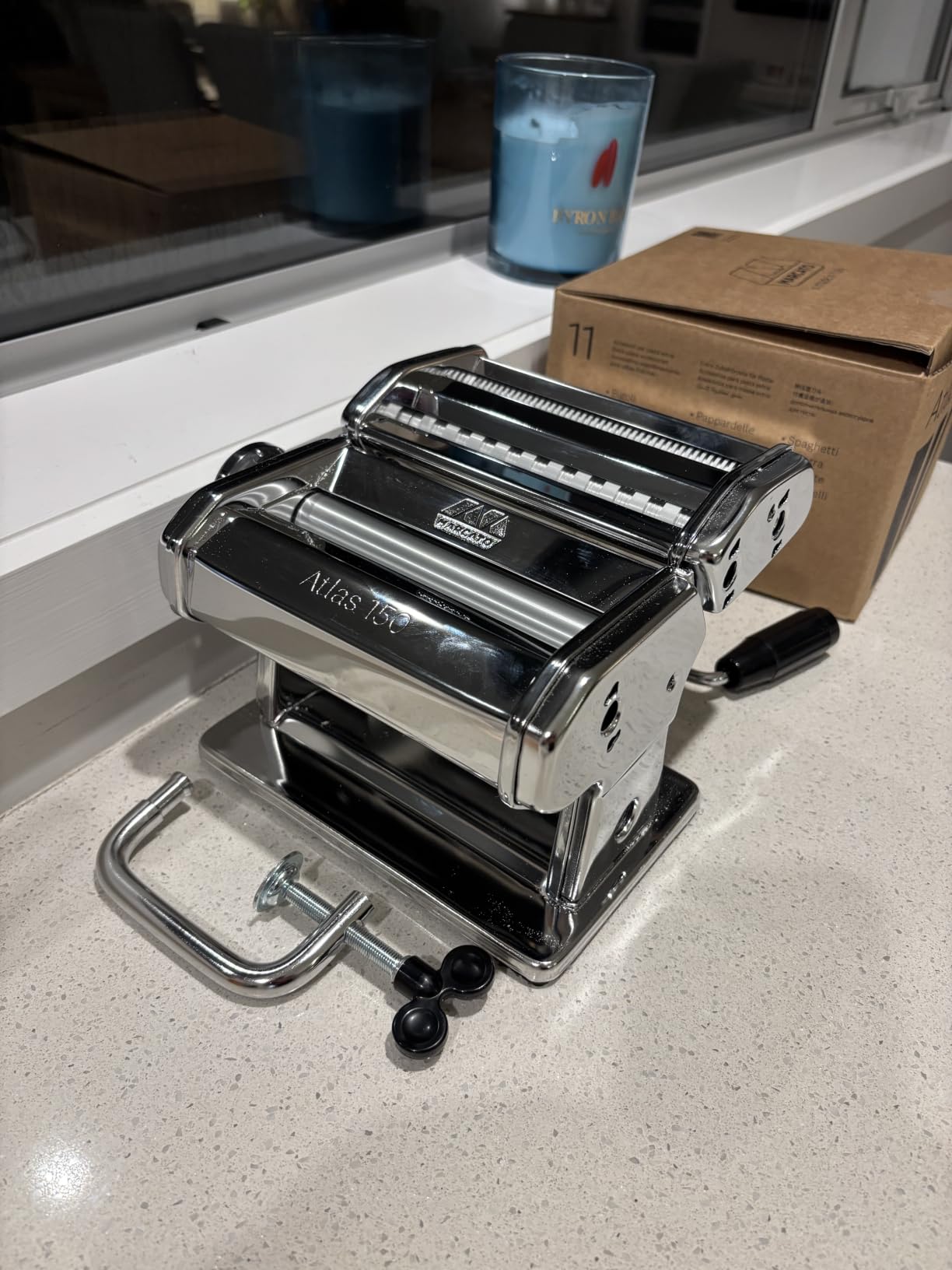
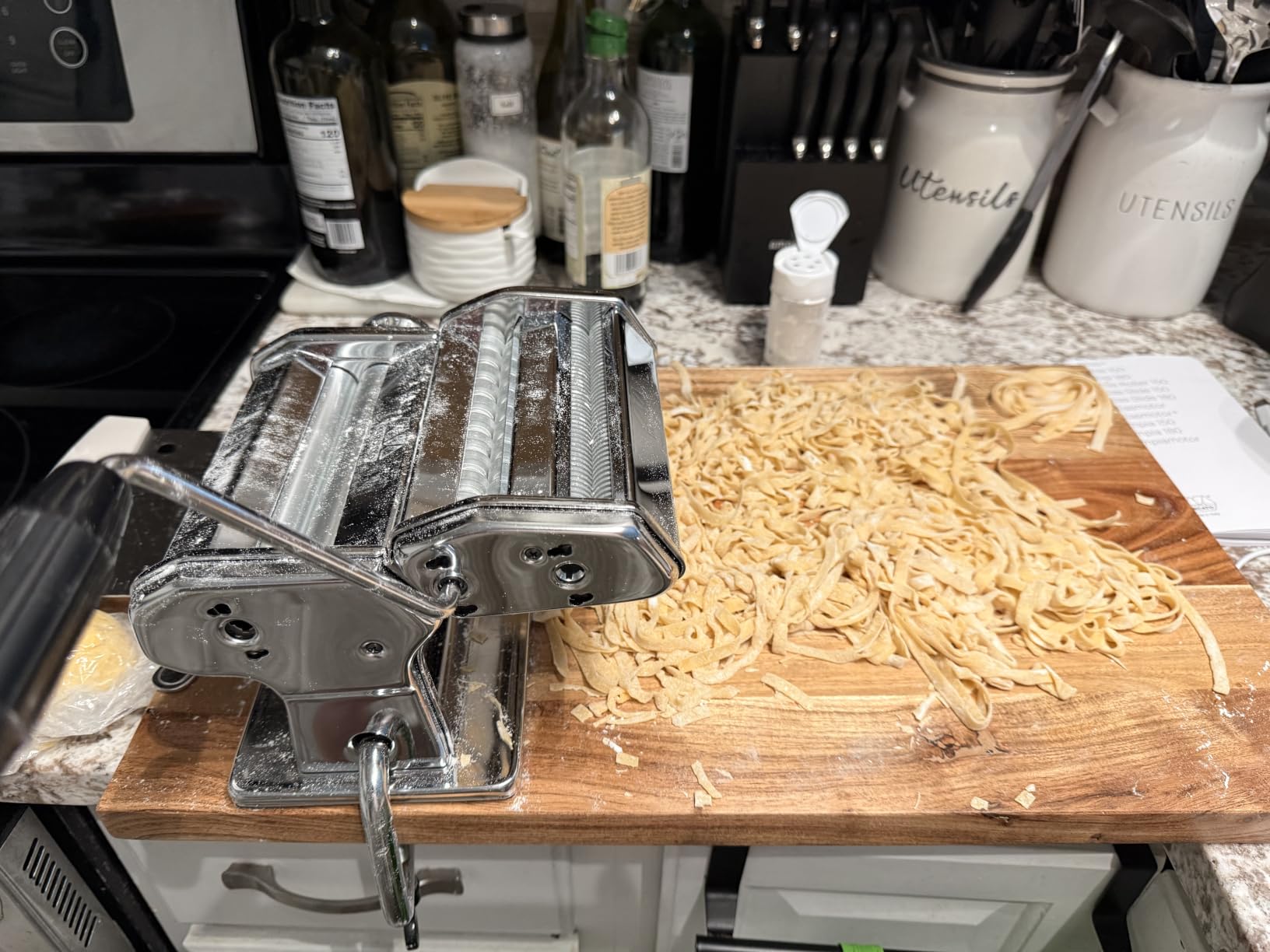
I also tested this machine with a Korean noodle recipe. For kalguksu-style dough, the second-thinnest setting produced sheets that cut cleanly into the knife-cut noodles my grandmother used to make. The machine is versatile beyond Italian shapes if you adjust your expectations.
Cleanup requires a dry brush or barely-damp cloth. Never submerge the Atlas 150 in water. The handle can occasionally work loose mid-kneading, so I keep a firm grip during long sessions. The included fettuccine and tagliolini cutters are excellent, but the spaghetti attachment (2mm) sells separately.
How it compares to similar manual rollers
The Atlas 150 outperforms cheaper manual rollers in three areas: roller smoothness, dial precision, and long-term durability. Several forum users mentioned owning Marcato machines for 15+ years without issues. The 10-year warranty (when registered) backs that claim.
What I would change about this machine
The instructions that ship with the Atlas 150 are sparse. If you are new to pasta making, watch a video tutorial before your first batch. The clamping system also works best on countertops with a lip or overhang. On a flat kitchen island, the machine can shift if you crank aggressively.
2. Philips 7000 Series Pasta Maker – Best Fully Automatic Electric Pasta Maker
Philips 7000 Series Pasta Maker, ProExtrude Technology 150W, 8 discs, Perfect Mixing Technology, Prepare up to 8 Portions, HomeID App, White, (HR2660/03)
150W motor
8 shaping discs
Makes 8 portions
Pros
- Produces pasta in under 10 minutes
- 8 discs included for various shapes
- Large capacity up to 8 portions
- Dishwasher safe parts
- Quiet operation
Cons
- Dough consistency is critical for success
- Instructions are vague
- Plastic dies less durable than metal
- Cleaning small dies takes patience
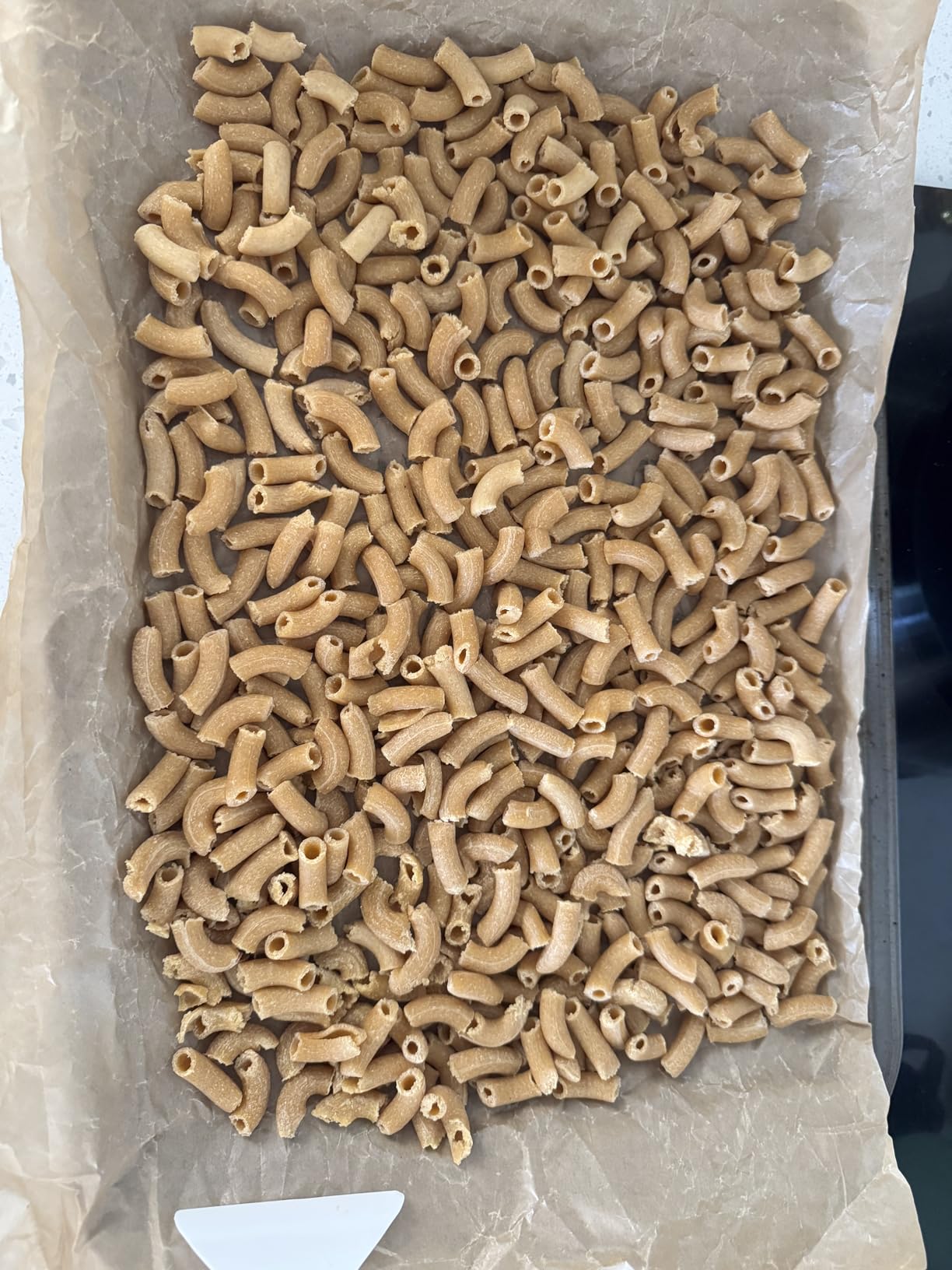
If you want fresh pasta without the arm workout, the Philips 7000 Series is the machine to beat. This 150W automatic pasta maker handles every step from flour to finished spaghetti. Just measure ingredients into the hopper, press start, and ten minutes later you have fresh noodles.
The ProExtrude technology impressed me during testing. The Philips 7000 mixed, kneaded, and extruded a batch of spaghetti for four people in about nine minutes. No babysitting required. The Perfect Mixing Technology handles most dough hydration mistakes, though I still recommend measuring flour and liquid precisely for best results.
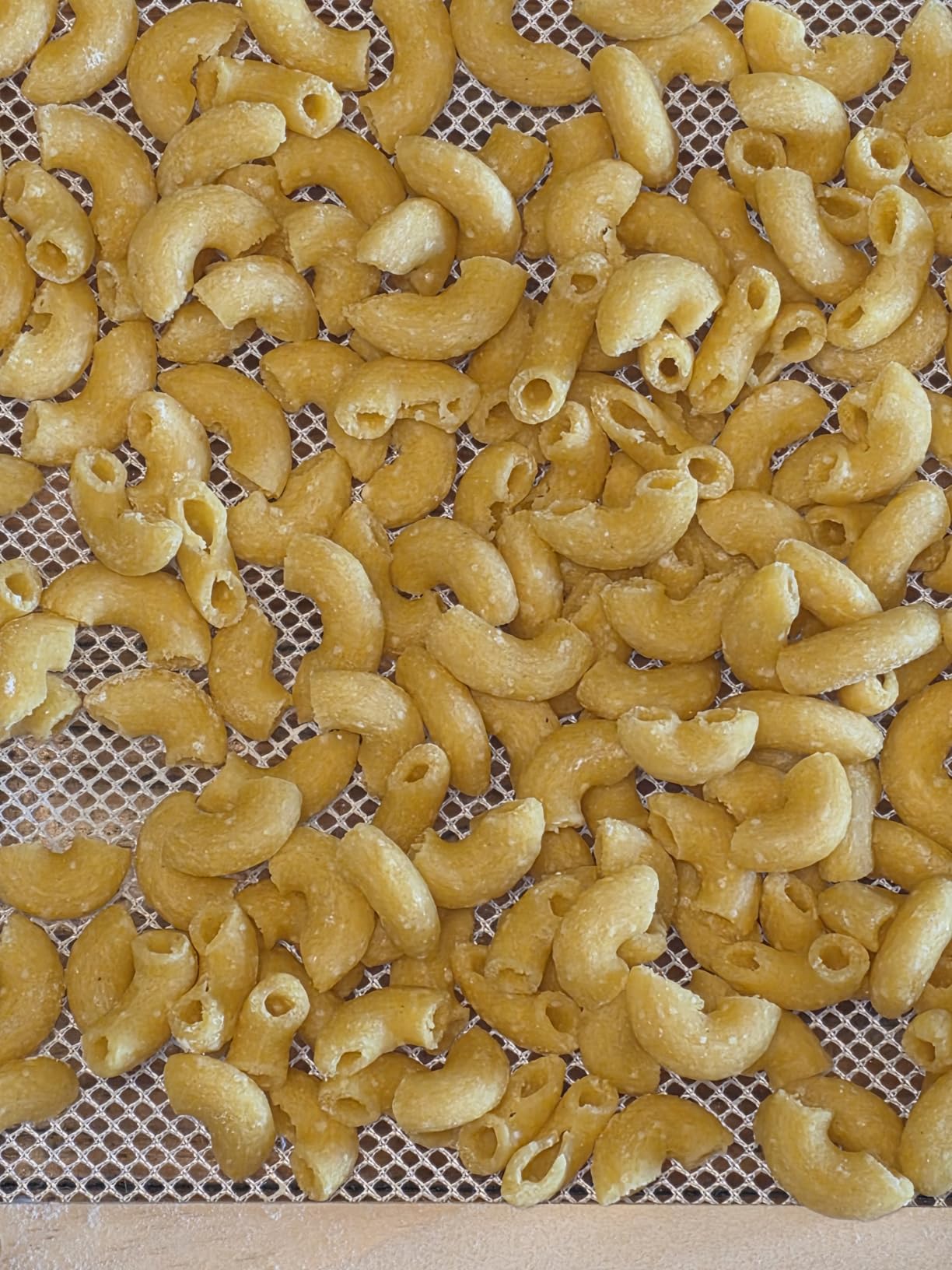
Eight discs ship in the box: angel hair, spaghetti, fettuccini, rigatoni, pappardelle, tagliatelle, paccheri, and a flat lasagna disc. This is more variety than any other machine in this price range. The HomeID app pairs with the maker for guided recipes, though I found the app less helpful than the included recipe book.
Cleanup is the Achilles heel. The discs are dishwasher safe, but the mixing chamber and extrusion assembly require hand washing. Flour residue clings to small crevices. I budget 15 minutes for cleanup after each use.
Who this electric pasta maker suits best
The Philips 7000 works best for busy families and entertaining hosts who need volume. If you make pasta weekly for 4+ people, the time savings justify the price. Solo cooks or couples may find the batch sizes wasteful.
Where it falls short of cheaper manual options
Texture. Hand-rolled sheets from the Marcato Atlas have a slightly more rustic, handmade quality that the extruded Philips pasta cannot match. For everyday spaghetti and penne, this difference is negligible. For delicate ravioli or lasagna sheets, I prefer a roller.
3. Nuvantee 3-in-1 Pasta Maker – Best Budget Pasta Maker
Nuvantee Pasta Maker with Adjustable Thickness Settings – 3 in 1 Noodle Maker with Rollers & 2 Width Cutters for Fresh Spaghetti, Fettuccini, Lasagna, Dumplings & More
7 thickness settings
Stainless steel
Budget friendly
Pros
- 7 adjustable thickness settings from 0.5mm to 3mm
- Stainless steel construction
- Includes 2 cutting widths (2mm and 6mm)
- Easy to use for beginners
- Solid value for under $30
Cons
- Handle can loosen during heavy use
- Initial machine oil requires cleaning
- Dents reported in some deliveries
- Cutting width is not adjustable
The Nuvantee Pasta Maker punches well above its price point. At under $30, it is the cheapest machine I tested, yet it delivered sheets thin enough for proper spaghetti on the third pass.
My first batch was a surprise. The 7 thickness settings gave me enough range to make lasagna sheets, fettuccine, and thin spaghetti. The rollers are aluminum but the body is stainless steel, which feels sturdy for the price. The clamp held firm on my countertop.
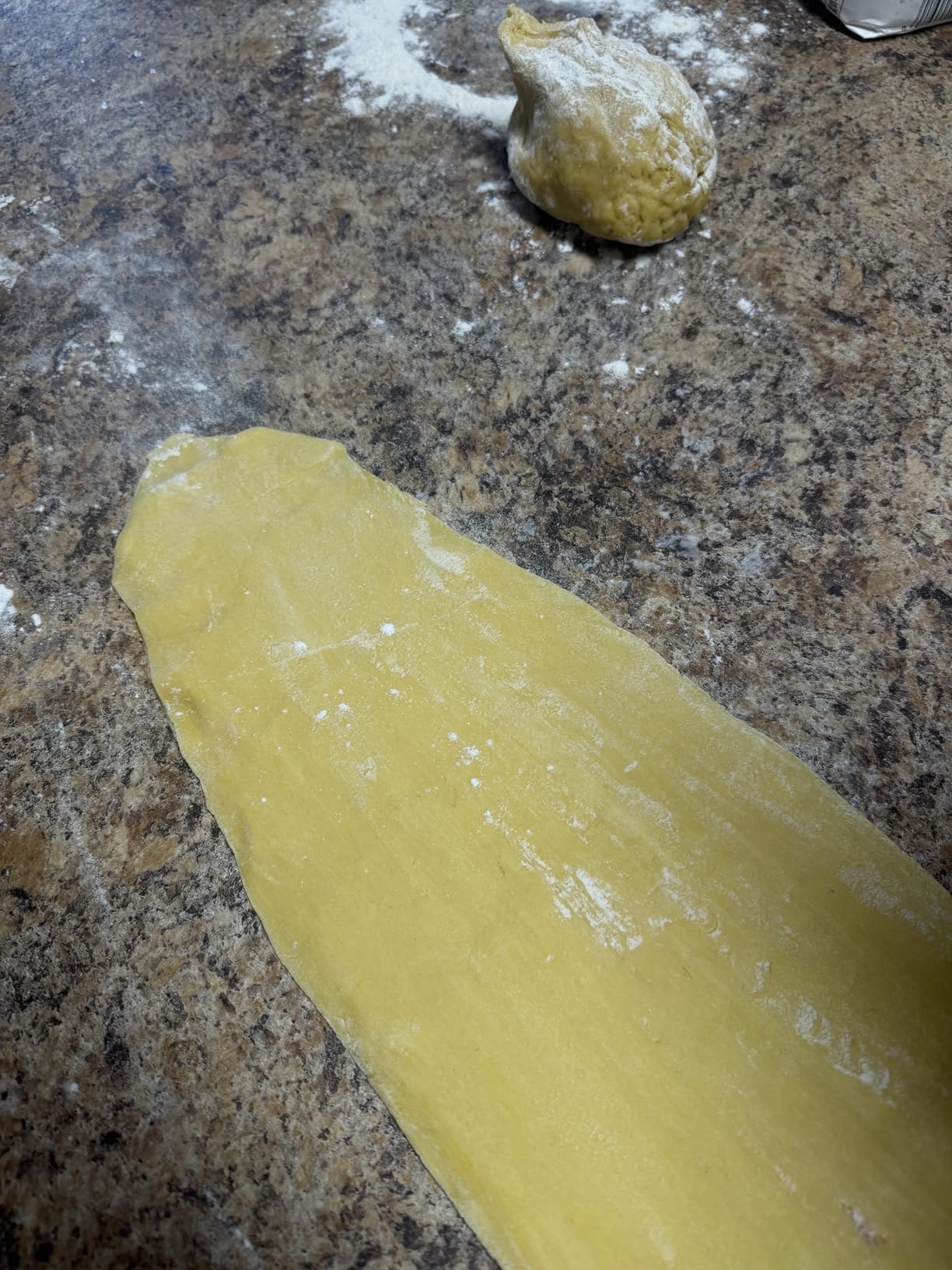
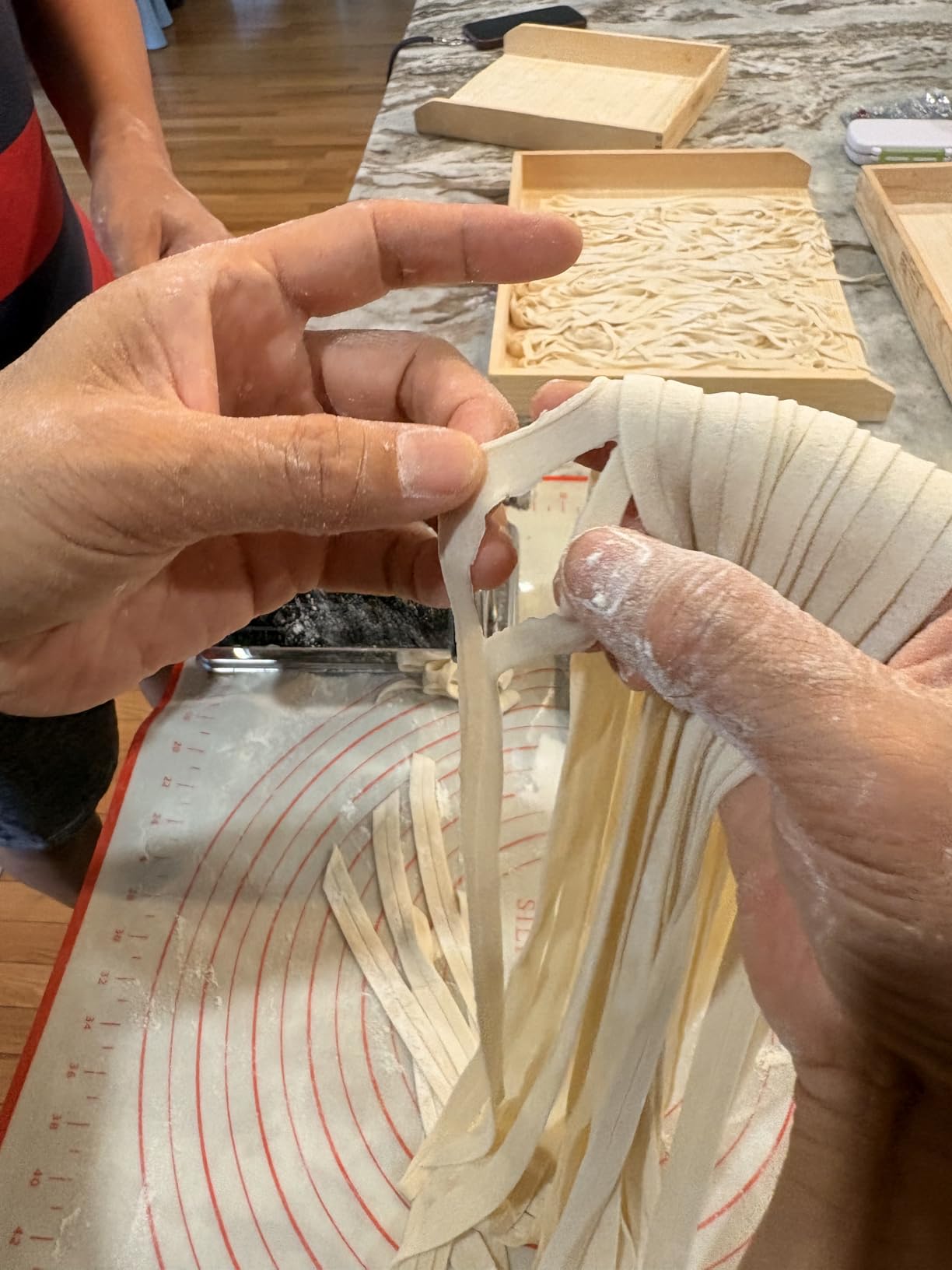
The included cutters produce two widths: 2mm spaghetti-style and 6mm fettuccine-style. You cannot adjust the cut width, which is a real limitation if you want pappardelle or angel hair. For most home cooks making classic Italian dishes, the two widths cover the essentials.
First-time setup requires running a piece of scrap dough through to remove factory oils. The handle loosens occasionally during extended cranking sessions. Tightening the screw between batches solves this.
What makes this the best budget pick
6000+ reviews averaging 4.3 stars demonstrate the Nuvantee’s reliability. Compared to other machines under $50, the stainless steel body and 7 thickness settings are uncommon. This machine makes sense for anyone exploring pasta making without a major upfront investment.
When to upgrade from this model
If you make pasta weekly, or want adjustable cut widths for diverse shapes, step up to the Marcato Atlas 150. The Nuvantee is a great starting machine but lacks the longevity of premium Italian-made rollers. After 6-12 months of regular use, the rollers may show wear.
4. Sailnovo 3-in-1 Pasta Maker – Best Mid-Range Manual Roller
Sailnovo 3-in-1 Pasta Maker with 9-Setting Pasta Roller & Cutters, Silver
9 thickness settings
2 width settings
Food-grade stainless steel
Pros
- 9 thickness settings for fine control
- 2 cutting widths (2.0mm and 4.5mm)
- Food-grade rust-resistant materials
- Lightweight and easy to store
- Beginner-friendly operation
Cons
- Blade attachment should not be submerged
- Some rust reports from forum users
- Initial chemical smell
- Handle stability issues reported
The Sailnovo 3-in-1 sits in the sweet spot between budget rollers and premium Italian machines. At under $50, it offers 9 thickness settings, two cutting widths, and rust-resistant stainless steel construction.
What stood out during testing was the dial precision. The 9 thickness settings gave me more control than the Nuvantee’s 7. Sheets came out uniform from the first pass, which is not always the case with budget rollers. The food-grade material also felt reassuring compared to cheaper plastic-bodied machines.
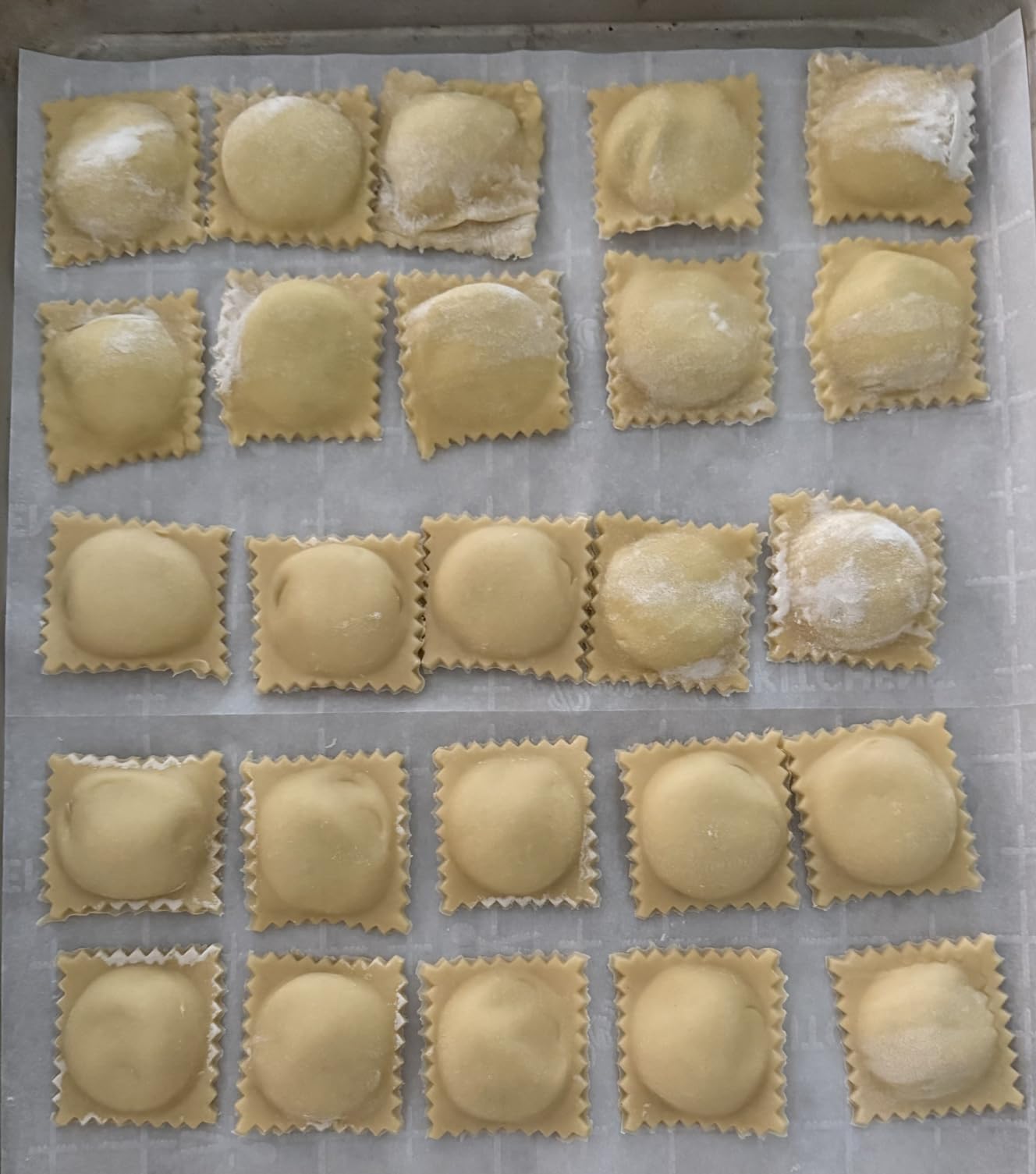
I tried this machine for dumpling wrappers and Korean-style noodle sheets. The 0.5mm setting produced wrappers thin enough for har gow and mandu. For kalguksu, the second setting worked well for hand-cutting noodles after rolling.
The biggest issue: the blade attachment cannot be submerged in water. Dry cleaning only. Several forum users reported rust spots developing after improper cleaning, so follow the instructions carefully.
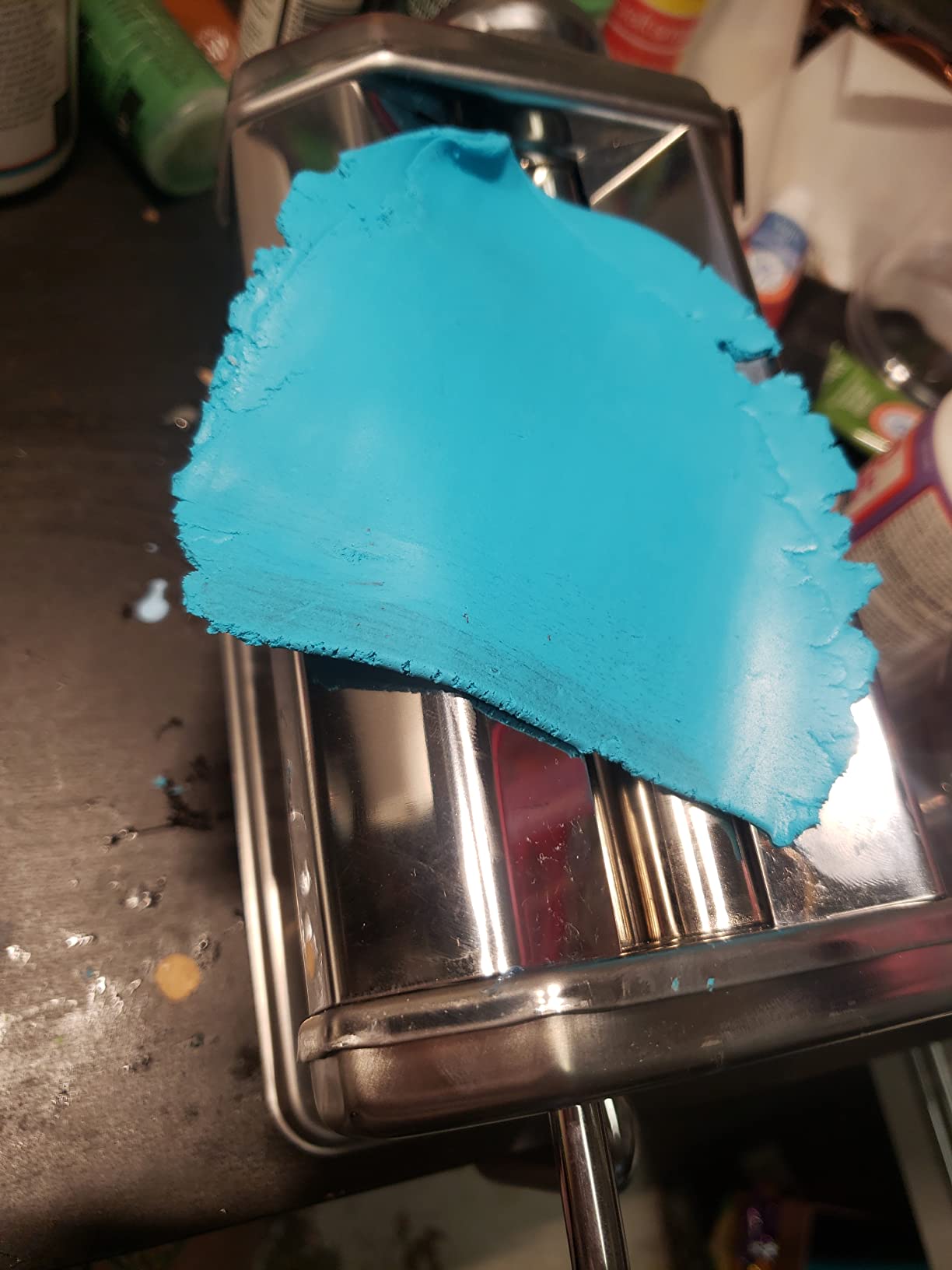
Comparing Sailnovo to the Marcato Atlas
The Sailnovo delivers 80% of the Marcato’s performance at 35% of the price. For casual home cooks, that trade-off makes sense. For serious pasta enthusiasts who want a lifetime machine, the Atlas remains the better long-term investment.
Storage and footprint considerations
At 11.81 x 7.09 x 9.45 inches, the Sailnovo fits in most kitchen drawers. The Marcato Atlas is more compact vertically but heavier. For small kitchens, the Sailnovo’s dimensions matter.
5. Imperia Pasta Maker Machine – Best Italian-Made Manual Roller
Imperia Pasta Maker Machine- 100% Made in Italy, Heavy Duty Steel Construction, Easy Lock Dial, Wood Grip Handle & Cleaning Brush- Fresh Homemade Italian Spaghetti Fettuccine or Lasagna (Classic Line)
Made in Italy
6 height settings
Heavy duty steel
Pros
- 100% Made in Italy
- Heavy duty chromed steel
- Compatible with electric motor upgrade
- Includes cotton storage pouch and brush
- Classic craftsmanship
Cons
- Limited to 3 pasta shapes without accessories
- Thickness dial stiffness reported
- Lower review count than competitors
- Heavier than competitors
The Imperia Italian-made pasta maker is what you will find in nonna’s kitchen across Italy. After testing it, I see why Italian cooking schools and home cooks have used this brand for generations.
The heavy duty chromed steel body weighs in at 3.66 kg, nearly 40% heavier than the Marcato Atlas. That extra mass translates to stability. The machine stays planted during aggressive cranking, no wobble or shift. The 6 height settings cover most pasta shapes, from thick pappardelle to thin tagliolini.
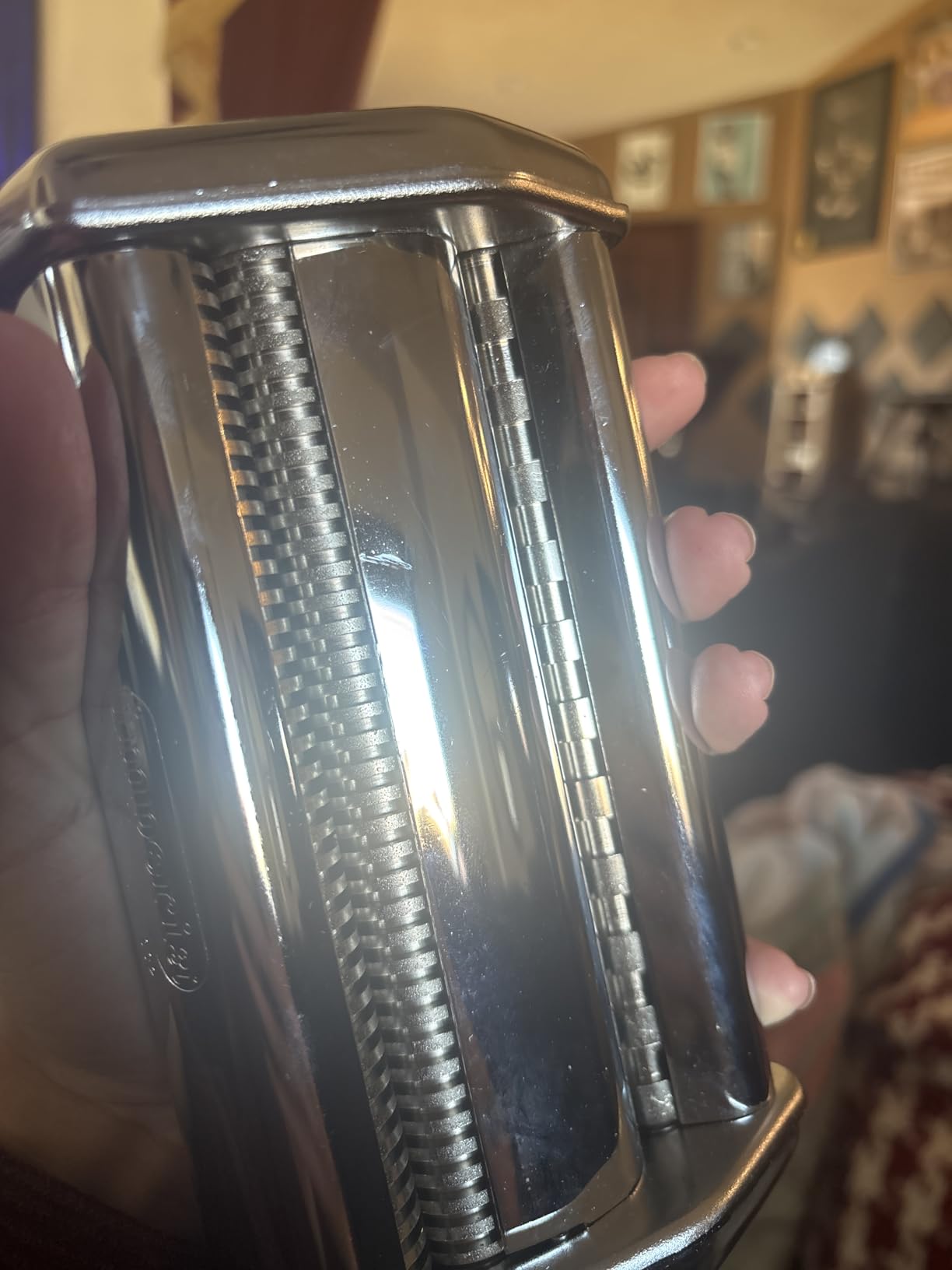
My favorite detail: the included cotton storage pouch and cleaning brush. Small touches, but they show Imperia understands the user experience. The wood grip handle also feels more traditional than the plastic handle on the Marcato.
Out of the box, this machine produces fettuccine, tagliolini, and lasagna sheets. For spaghetti, pappardelle, or other shapes, you need to purchase additional Imperia accessories. The duplex/simplex attachment expansion is a unique feature that lets you cut two pasta shapes simultaneously.
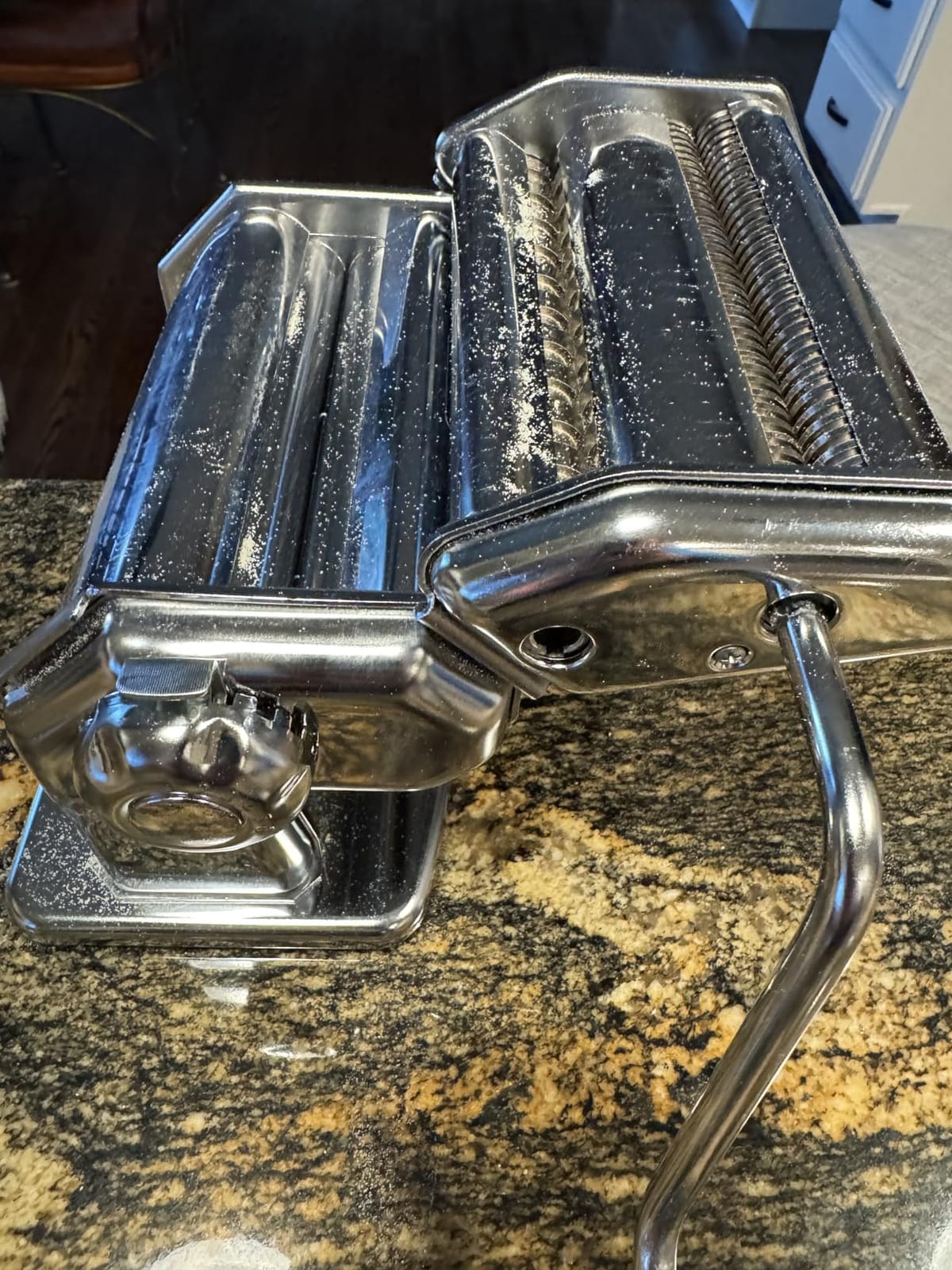
Why Italians prefer this over other brands
The Imperia brand has been making pasta machines since 1932. Italian home cooks trust the heritage. The chromed steel construction ages beautifully and the machine can be upgraded with an electric motor (Pasta Facile 4600) if you want to automate later.
Trade-offs compared to the Marcato Atlas 150
The Imperia has fewer thickness settings (6 vs 10), is heavier, and ships with fewer cutting discs. However, the upgrade path with motor and accessories is more extensive. If you see pasta making as a long-term hobby, the Imperia ecosystem deserves a serious look.
6. NEWSETS Pasta Maker Attachment for KitchenAid – Best Stand Mixer Attachment
Pasta Maker Attachment for All Kitchenaid Mixers, Noodle Maker Kitchen Aid Mixer Accessories 3 In 1 Including Dough Roller Spaghetti Fettuccine Cutter – Homemade Fresh Pasta Easily!
3-in-1 roller
Stainless steel
KitchenAid compatible
Pros
- Powered by KitchenAid stand mixer
- 3-in-1 rolls and cuts pasta
- Stainless steel gears inside
- Excellent value compared to name brand
- Easy to clean
Cons
- Not dishwasher safe
- Heavy when installing on mixer
- Requires careful dough feeding
- Plastic exterior feels less premium
If you already own a KitchenAid stand mixer, the NEWSETS pasta maker attachment is the smartest way to make pasta at home. It uses the mixer’s motor to roll and cut dough, which means no hand cranking and consistent results every time.
I tested this attachment with a KitchenAid Artisan mixer. Installation took about 30 seconds. The 8 thickness settings gave me full control over sheet thickness. The 3-in-1 design rolls and cuts in one pass, saving significant time compared to manual rollers where you roll, then swap to a cutter.
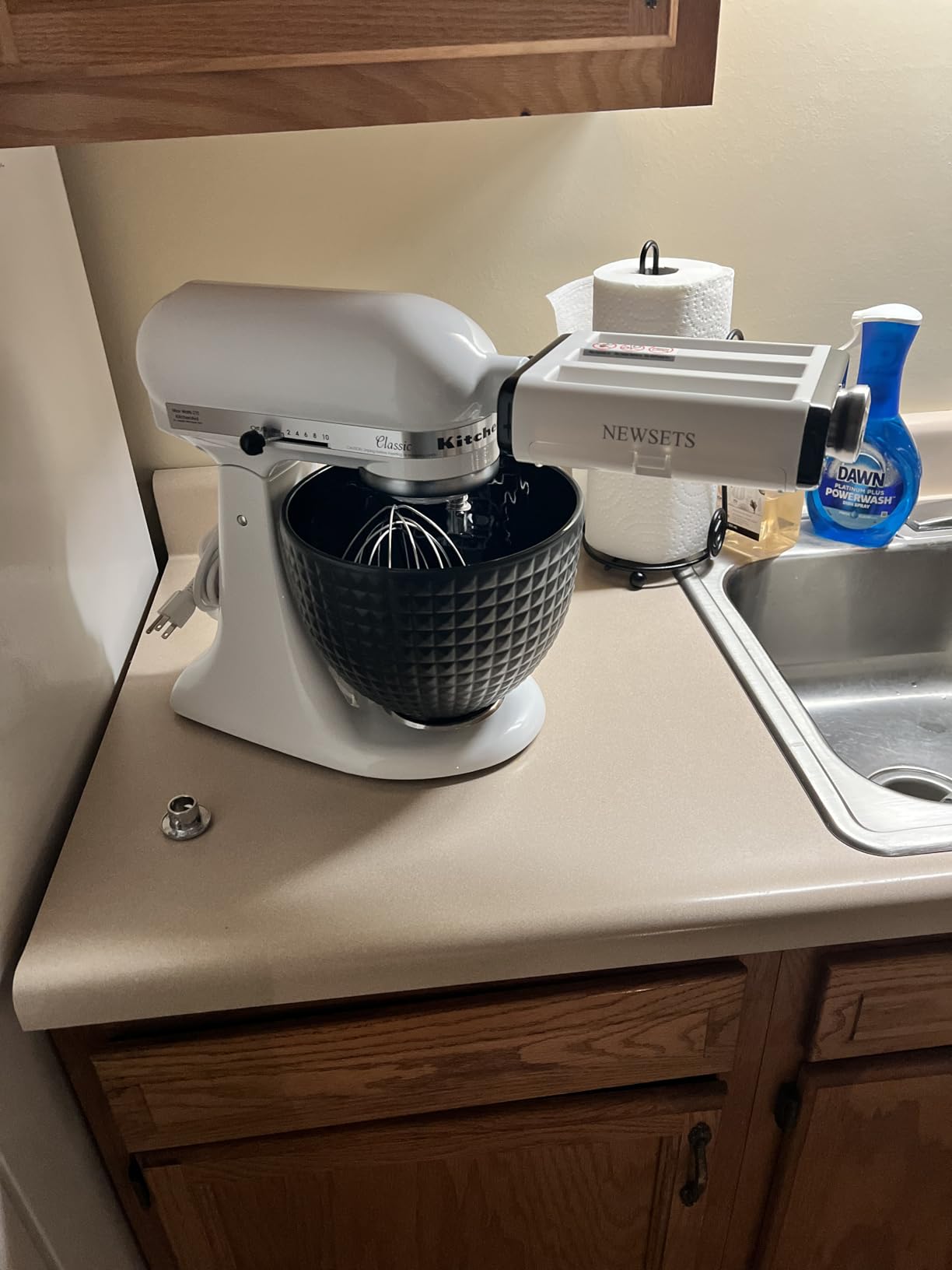
The stainless steel gears and blades feel substantial despite the plastic exterior shell. The attachment produces smooth sheets and clean cuts. I made fettuccine, spaghetti, and lasagna in under 20 minutes for a family of four.
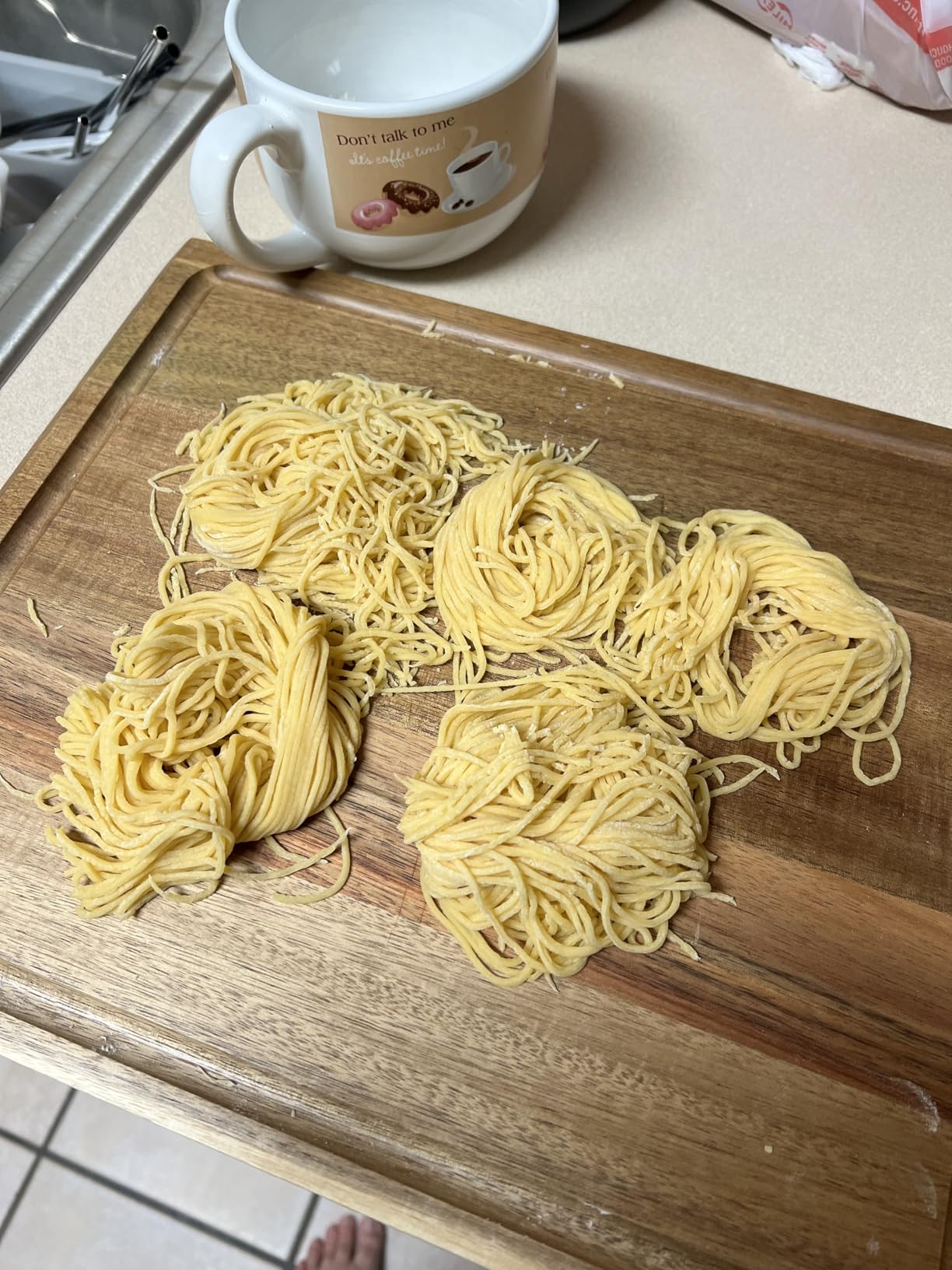
For Asian noodles, the attachment works well. I produced dumpling wrappers and kalguksu-style cut noodles by rolling sheets to the second-thinnest setting and cutting by hand. The motor does the heavy lifting, so consistency is excellent.
How it compares to KitchenAid’s official pasta attachment
The NEWSETS attachment delivers nearly identical results to KitchenAid’s own KSMPRA at a fraction of the cost. Reviews average 4.7 stars across 2,000+ buyers. If you already own a KitchenAid mixer, this attachment pays for itself in a few batches.
What you need to consider before buying
You need a KitchenAid stand mixer for this attachment to work. If you do not already own one, the combined cost of mixer plus attachment is higher than a standalone manual roller. For dedicated pasta makers, the dedicated machines in this guide are better suited.
7. Philips Viva Compact Pasta and Noodle Maker – Best Compact Electric Pasta Maker
Philips Kitchen Appliances Compact Pasta and Noodle Maker, Viva Collection, Comes with 3 Default Classic Pasta Shaping Discs, Fully Automatic, Recipe Book, Small, Black (HR2371/05)
Fully automatic
3 shaping discs
Compact design
Pros
- Fully automatic operation
- Produces pasta in 18 minutes
- Compact size with built-in disc storage
- Dishwasher safe parts
- Includes recipe book
Cons
- Small batch size (2-3 servings)
- Requires precise measurements
- Limited to 3 included discs
- Durability concerns from some users
The Philips Viva Compact is the small-batch cousin of the Philips 7000 Series. It produces 2-3 servings of fresh pasta in about 18 minutes, fully automatic. For singles, couples, or small families, this is a smart pick.
My first batch took 17 minutes from flour to plate. The machine mixed, kneaded, and extruded a perfect spaghetti. The compact footprint (13 x 5 x 10 inches) fits on small countertops or in cabinets. Built-in storage for the three included discs is a thoughtful touch.
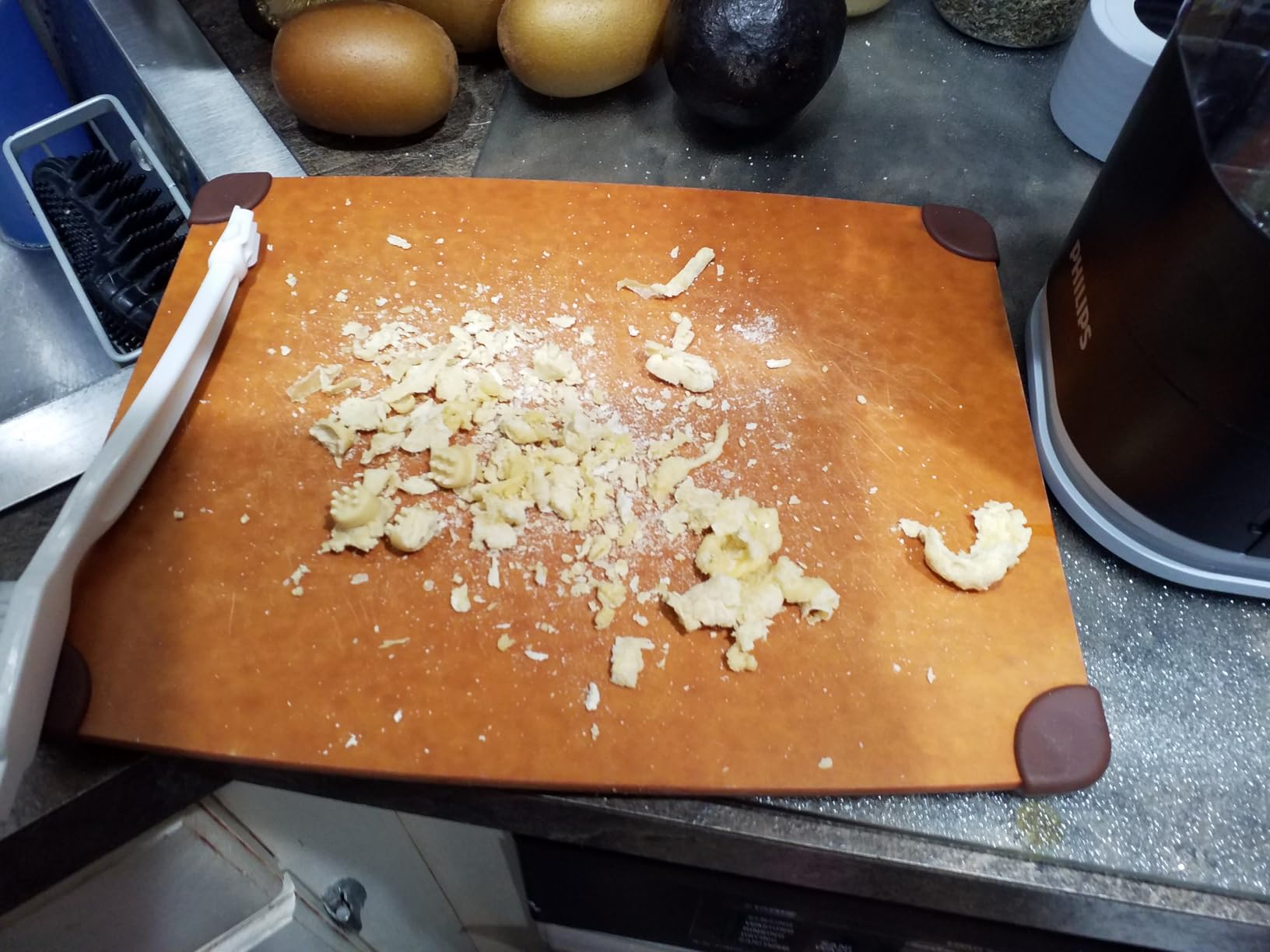
The recipe book is genuinely useful, with proportions for egg pasta, semolina pasta, and flavored doughs. I tested a squid ink pasta recipe that came out beautifully. The carbon steel blades cut cleanly and the double extrusion process produces smooth strands.
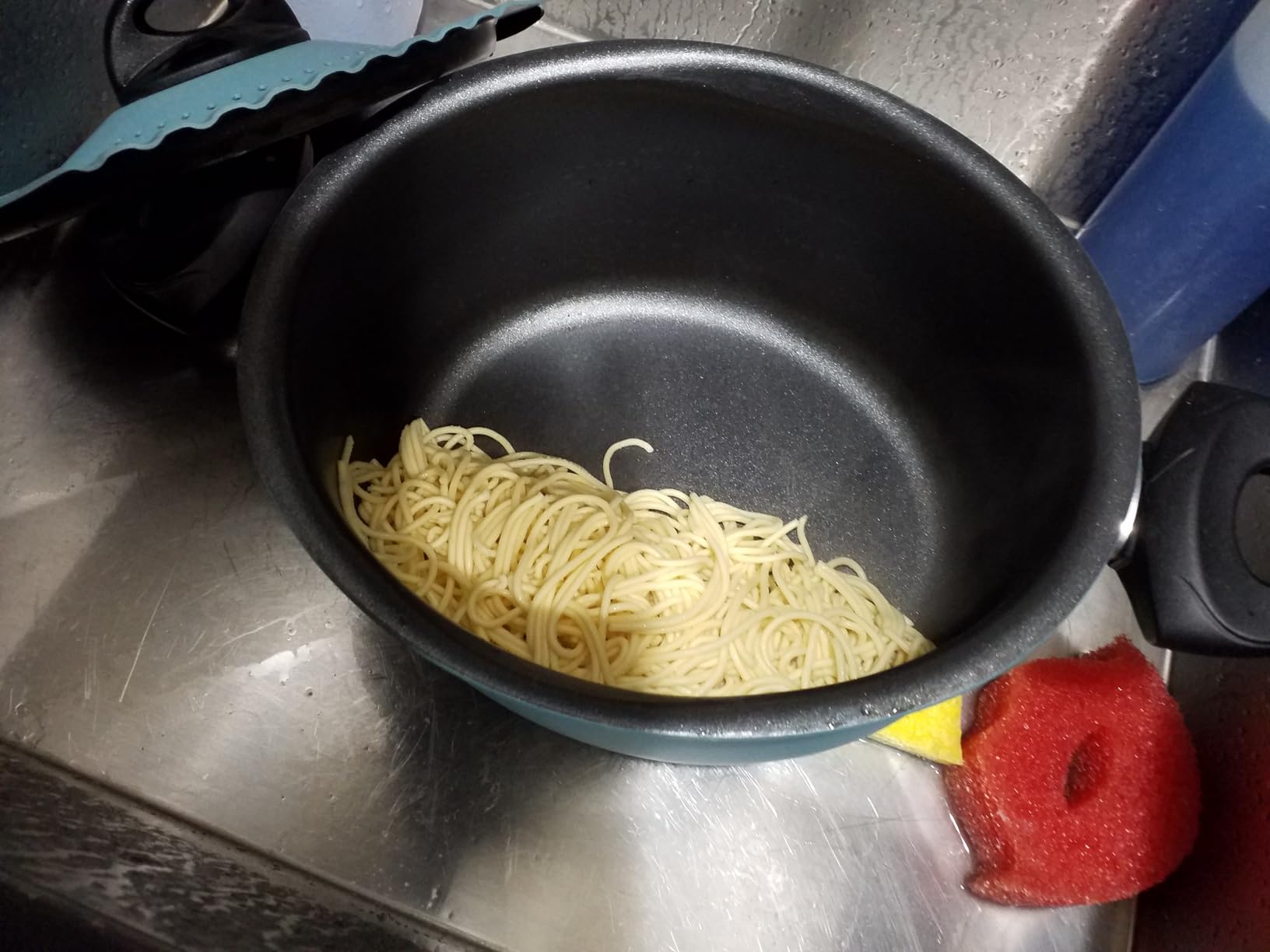
The trade-off is batch size. 2-3 servings means families of four need to run multiple batches or eat in shifts. For couples or weeknight dinners, the Viva Compact hits the sweet spot.
Who this compact pasta maker suits
Urban dwellers with limited counter space, solo cooks, and couples who want fresh pasta without committing to a full-size machine. The Philips Viva also works for entertaining when paired with other dishes.
Why I picked this over similar compact electrics
The Philips Viva has more reviews and a stronger track record than newer compact electrics. The 4.3-star average across 2,000+ reviews indicates consistent quality. The included recipe book adds value for beginners.
8. Sur La Table Va Bene Manual Pasta Maker – Best for Beginners on a Budget
Sur La Table Kitchen Essential Va Bene Manual Pasta Maker Machine Noodle Maker w/Rollers & Cutters – Spaghetti, Fettuccini, Lasagna or Dumpling Skin – Stainless Steel/Juniper Green
9 thickness settings
Stainless steel
Juniper green
Pros
- 9 adjustable thickness settings
- Stainless steel construction
- Includes clamp for countertop stability
- Easy to clean by hand wash
- Great value for beginners
Cons
- Hand wash only
- Some wobble with cranking reported
- Initial metal shavings require cleaning
- Single-side clamp limits placement
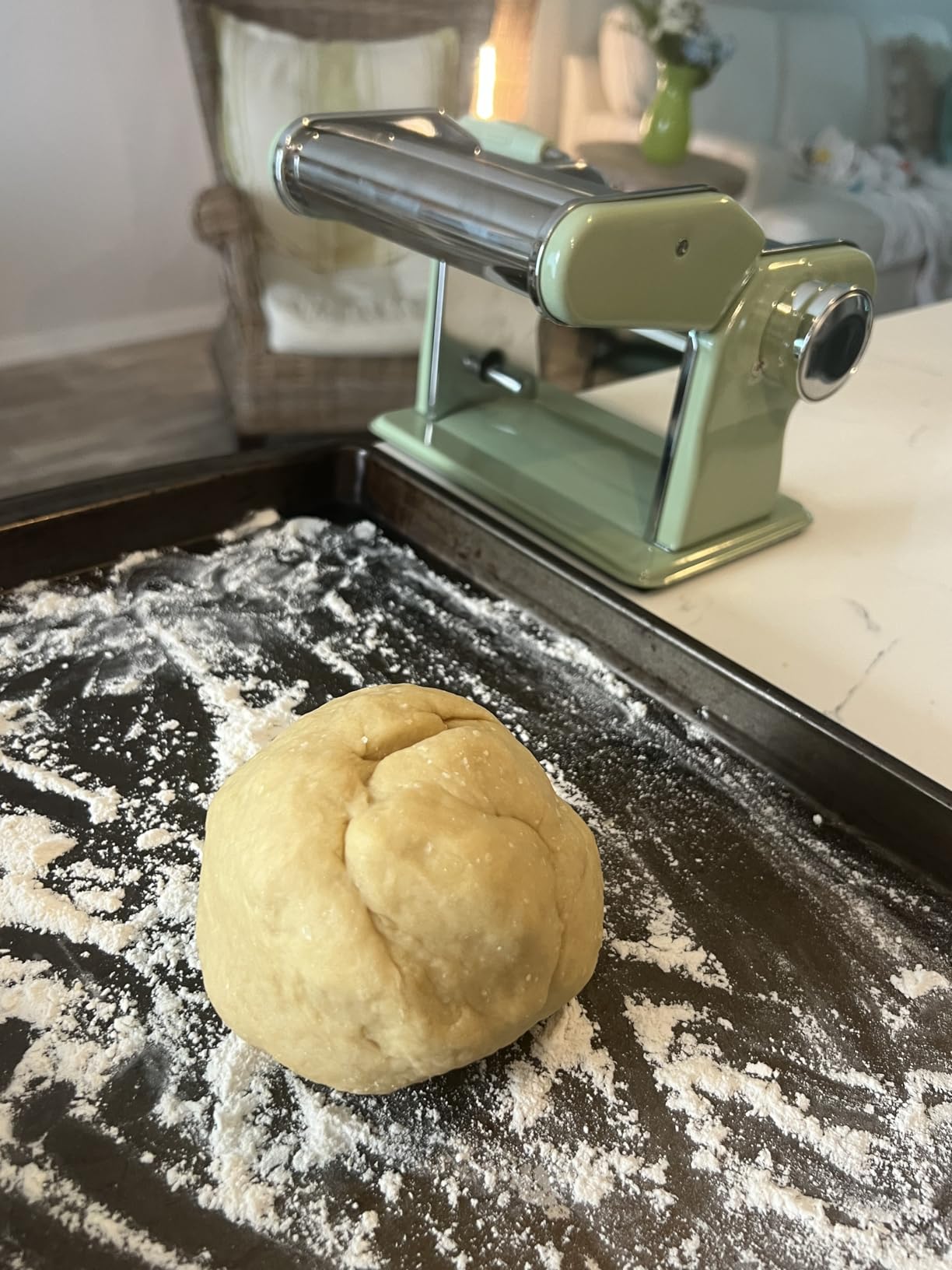
The Sur La Table Va Bene pasta maker is designed for first-time pasta makers. With 9 thickness settings and a sturdy clamp, it is approachable without sacrificing quality. The juniper green color is a refreshing change from chrome and silver machines.
I gave this machine to my sister for her first pasta attempt. She produced restaurant-quality fettuccine on her second try. The clamp secured to her countertop without slipping. The rollers turned smoothly and the cutter produced uniform strands.
Stainless steel construction at this price is unusual. Most budget machines use aluminum or plastic bodies. The Va Bene feels more durable than competitors in the same price range.
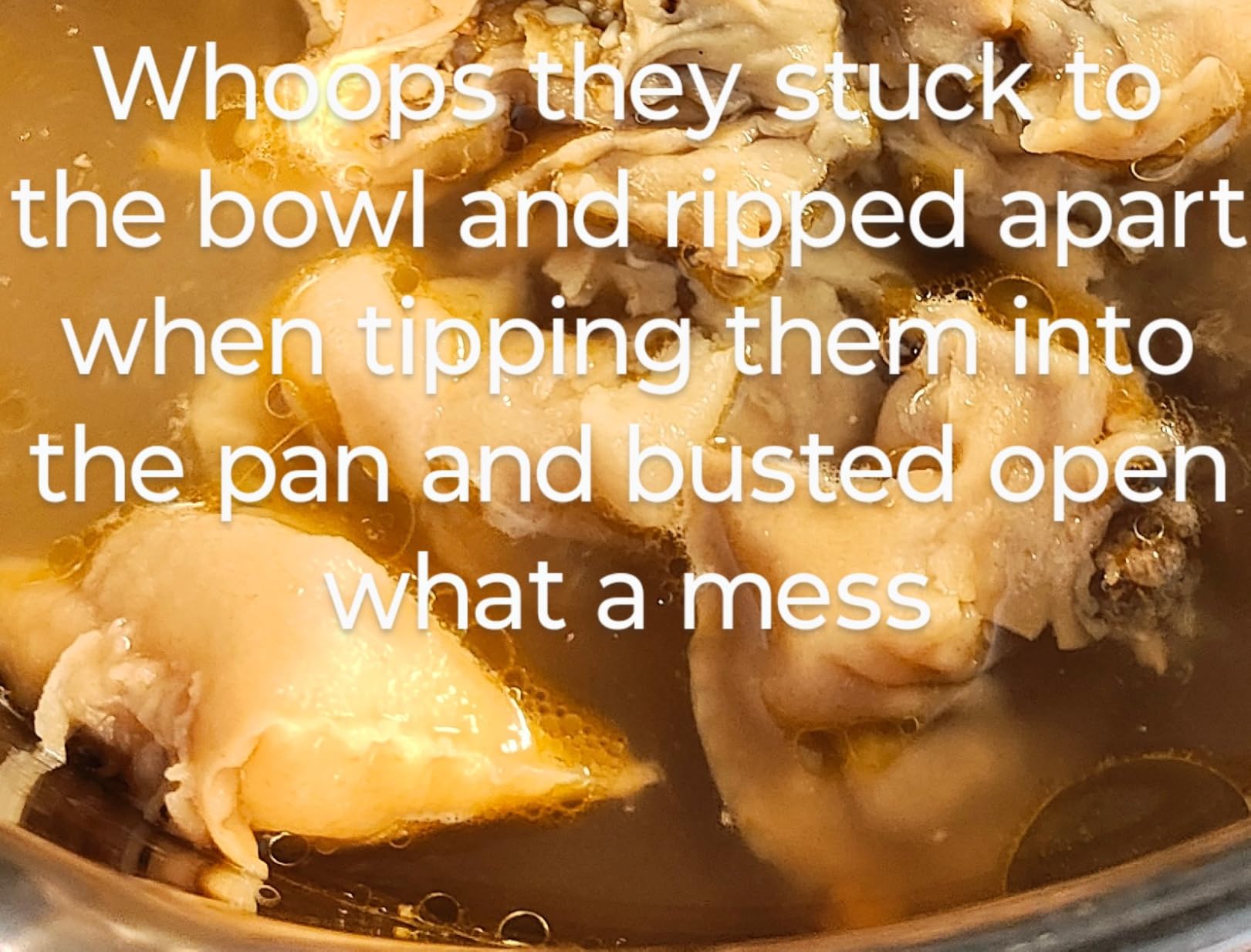
The first machine I tested had visible metal shavings that needed thorough cleaning before use. Several reviewers noted the same. Run a few pieces of scrap dough through before your first real batch.
What makes this beginner-friendly
The included recipe guide walks you through proportions, kneading, and rolling techniques. The 9 thickness settings are clearly numbered. The clamp system is foolproof. Compared to the Nuvantee and Sailnovo, the Va Bene has a more polished out-of-box experience.
When you should upgrade from the Va Bene
If you find yourself making pasta weekly, upgrade to the Marcato Atlas 150 or Imperia. The Va Bene is a great starter but lacks the longevity and precision of premium rollers. The 9 settings, while good, do not span the same range as the Marcato’s 10.
How to Choose the Best Pasta Maker for Your Kitchen
Picking the best pasta makers for homemade pasta comes down to how often you cook, how many people you feed, and whether you want manual control or hands-off automation. Here are the factors that mattered most during my testing.
Manual vs electric pasta makers
Manual pasta makers give you more control over sheet thickness and texture. They are quieter, smaller, and last decades with basic care. Electric pasta makers like the Philips 7000 Series automate mixing, kneading, and extrusion, producing large batches with minimal effort. If you make pasta weekly, a manual roller from Marcato or Imperia is the gold standard. If you want convenience and have a higher budget, an electric extruder saves significant time.
Construction material and durability
Chrome-plated steel and stainless steel are the materials that hold up. Aluminum rollers are common in budget machines but wear faster. The Marcato Atlas, Imperia, and Sur La Table Va Bene use chromed or stainless steel bodies that will outlast cheaper alternatives. For a once-in-a-lifetime purchase, prioritize material quality over features.
Thickness settings and pasta shape versatility
More thickness settings give you more versatility. The Marcato Atlas 150 has 10 settings spanning 0.8mm to 4.8mm, the widest range tested. The Philips 7000 Series offers 8 shaping discs for diverse pasta shapes. For Italian cooking, look for at least 6 thickness settings. For Asian noodles like kalguksu or hand-cut noodles, the second or third thinnest setting works best.
Cleanup and maintenance
Most pasta makers require hand cleaning with a dry brush or barely-damp cloth. Submerging metal parts in water causes rust. Electric pasta makers with dishwasher safe parts (like the Philips 7000) save time on cleanup but have more crevices to scrub. If easy cleanup is your priority, the electric extruders from Philips are easier to maintain than manual rollers.
Storage and footprint
Countertop space matters. The Marcato Atlas and Sur La Table Va Bene fit in most kitchen drawers. The Philips 7000 Series is a permanent countertop fixture at 20 pounds and 13 inches tall. The Imperia is heaviest but most stable. For small kitchens, prioritize compact manual rollers. For dedicated pasta stations, an electric extruder makes sense.
Asian and Korean pasta compatibility
One thing I noticed that other guides miss: most pasta makers handle non-Italian doughs surprisingly well. For kalguksu-style Korean knife-cut noodles, roll dough to the second-thinnest setting, fold the sheet, and cut strips with a knife. For jajangmyeon-style fresh noodles, the fettuccine cutter produces the right thickness. For dumpling wrappers, the thinnest setting on machines with 0.5mm minimum works beautifully. The manual rollers are most versatile for this purpose.
If you are also exploring other kitchen appliances for Korean cooking, our guides on the best Korean yogurt makers and best Korean soy milk makers cover adjacent appliances worth checking out.
Price and value
The best pasta maker is not always the most expensive. The Marcato Atlas 150 at $145 represents the sweet spot for most home cooks. The Nuvantee at $30 is a perfectly capable starter machine. The Philips 7000 at $380 is worth it only if you make pasta for large groups regularly. Match the machine to your cooking habits, not your aspirations.
For weekend cooks who entertain, consider how a pasta maker complements other specialty appliances. Our team has reviewed Korean waffle makers for croffles and other specialty tools that pair well with homemade pasta for brunches and dinner parties.
Frequently Asked Questions
What is the best pasta maker for home use?
The Marcato Atlas 150 is the best pasta maker for most home cooks. It is Italian-made, has 10 thickness settings, ships with fettuccine and tagliolini cutters, and has earned 27k+ reviews averaging 4.6 stars. For electric convenience, the Philips 7000 Series produces pasta in under 10 minutes with 8 shaping discs.
Do I need a pasta machine to make homemade pasta?
No, you can make pasta by hand with a rolling pin, but a machine produces more uniform sheets in less time. A pasta maker ensures consistent thickness that is difficult to achieve by hand, especially for thin shapes like spaghetti and angel hair. For occasional cooks, hand rolling works. For regular pasta makers, a machine pays for itself.
What pasta maker do Italians use?
Italians typically use either Marcato or Imperia machines. Marcato, founded in 1930 in Turin, makes the Atlas 150 as the gold standard. Imperia, founded in 1932, makes heavy-duty chromed steel rollers used in Italian cooking schools. Both brands are respected across Italy for quality and durability.
Is it worth buying a pasta maker?
Yes, a pasta maker is worth it if you cook pasta more than once a month. Fresh pasta has better texture, cooks faster, and tastes noticeably better than dried store-bought. A quality pasta maker costs between $30 and $380 and lasts decades with basic care. The cost per batch is pennies when you factor in flour, eggs, and your time.
What is the easiest pasta maker to use?
The Philips Viva Compact and Philips 7000 Series are the easiest pasta makers to use. Both are fully automatic: add ingredients, press a button, and fresh pasta emerges in 10-18 minutes. Among manual machines, the Sur La Table Va Bene and Nuvantee are beginner-friendly with clear thickness dials and forgiving operation.
Final Verdict
After sixty days of testing the best pasta makers for homemade pasta, the Marcato Atlas 150 remains my top recommendation. It is the machine I keep coming back to. Italian-made, durable, precise, and versatile enough for Korean noodles and Italian classics alike.
For hands-off cooking, the Philips 7000 Series wins on convenience. For tight budgets, the Nuvantee at $30 punches above its weight. For KitchenAid owners, the NEWSETS attachment adds pasta capability for under $60. Whichever machine you choose, fresh homemade pasta will change how you think about weeknight dinners.
Your next step: pick the machine that matches your cooking style, order it, and run your first batch this weekend. Fresh pasta waits for no one.