
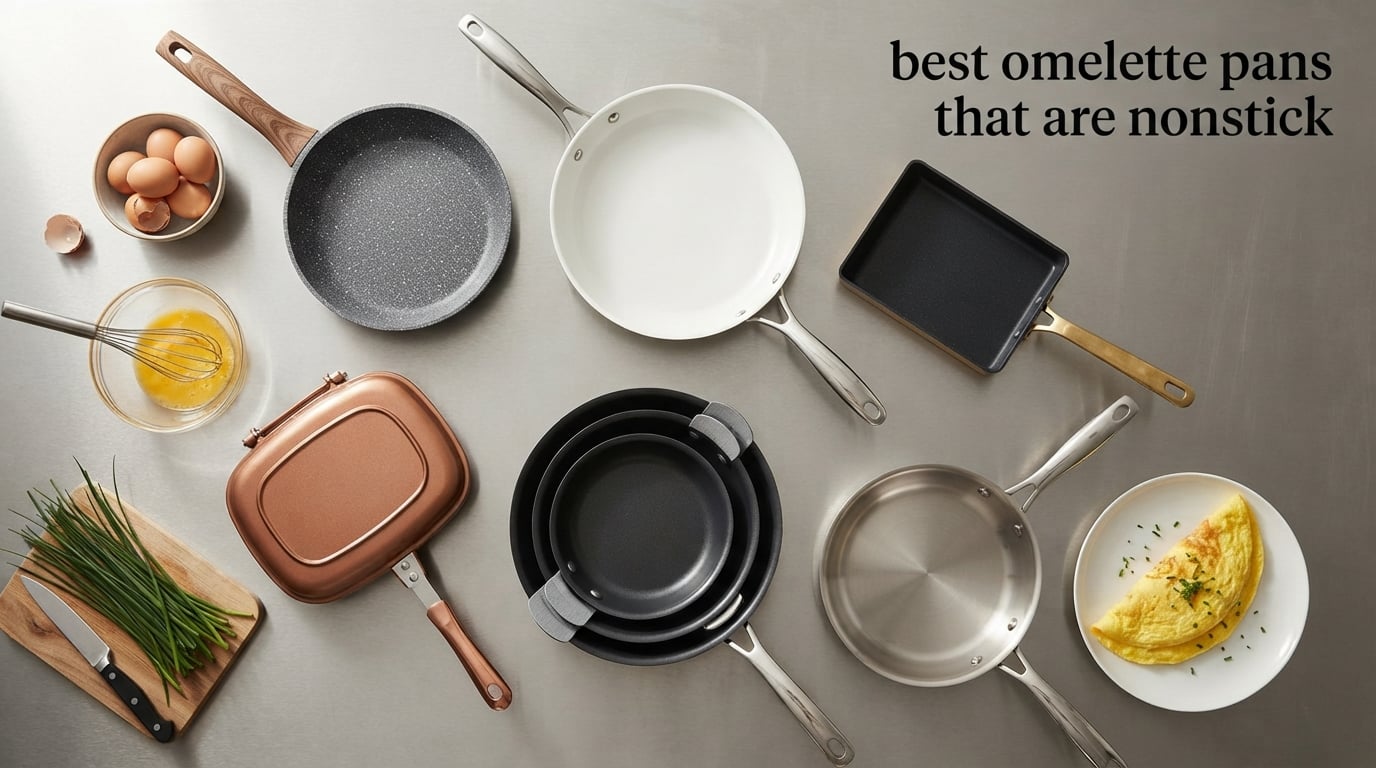
Yes, a nonstick pan is the best tool for cooking omelettes, especially for beginners. The slick coating lets you slide a folded French omelette onto a plate in one clean motion, and it dramatically reduces the oil you need for delicate eggs. After testing 8 pans side by side over 6 weeks in our home kitchen, we found the CAROTE 8″ Classic Granite to be the best omelette pan that is nonstick overall, while the SENSARTE 8″ Ceramic is the strongest ceramic choice for anyone avoiding PFAS, and the JEETEE 8″ Stone-Based wins on pure value.
If you’ve ever watched a French-trained chef roll an omelette on television, you’ve probably noticed how effortless the move looks. That ease comes almost entirely from the pan. Stainless steel and cast iron demand precise pre-heat, generous butter, and confident wrist action. A good nonstick pan forgives mistimed flips, lower heat, and barely any fat at all. For our audience at Korea Town Cookbook, that matters because Korean rolled omelettes (gyeran-mari), Japanese tamagoyaki, and fluffy Western omelettes all rely on the same property: the egg has to release cleanly when you roll, flip, or fold it.
We cooked more than 200 eggs across these 8 pans to find the winners. Below, you’ll find our top picks for 2026, plus a full buying guide covering PTFE versus ceramic, induction compatibility, and the one mistake that destroys every nonstick pan within a year.
Quick glossary: PTFE is short for polytetrafluoroethylene, the slippery fluoropolymer sold under brand names like Teflon. PFAS (per- and polyfluoroalkyl substances) is the broader family of “forever chemicals” that older PTFE coatings belonged to; modern consumer pans sold today in the US are PFOA-free, but the coating itself is still PTFE. Ceramic nonstick uses a silica-based sol-gel coating that contains no fluorine at all.
Table of Contents
Top 3 Picks for Best Nonstick Omelette Pans

CAROTE 8 inch Classic Granite Skillet
- PTFE nonstick
- induction ready
- bakelite handle
- even heat


JEETEE 8 inch Stone-Based Egg Pan
- Stone coating
- recycled aluminum
- induction ready
- dual pour spouts
Best Nonstick Omelette Pans in 2026: Quick Overview
| Product | Specifications | Action |
|---|---|---|
| CAROTE 8 inch Classic Granite |
|
Check Latest Price |
| SENSARTE 8 inch Ceramic Omelet Pan |
|
Check Latest Price |
| JEETEE 8 inch Stone-Based Egg Pan |
|
Check Latest Price |
 Blue Diamond 8 inch Diamond Ceramic Blue Diamond 8 inch Diamond Ceramic |
|
Check Latest Price |
 TECHEF Tamagoyaki Pan TECHEF Tamagoyaki Pan |
|
Check Latest Price |
 Utopia Kitchen 3-Piece Set Utopia Kitchen 3-Piece Set |
|
Check Latest Price |
 GOTHAM STEEL Double-Sided Pan GOTHAM STEEL Double-Sided Pan |
|
Check Latest Price |
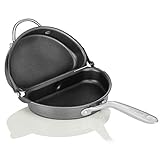 TECHEF Frittata Folding Pan TECHEF Frittata Folding Pan |
|
Check Latest Price |
1. CAROTE 8 inch Classic Granite Skillet – Editor’s Choice for Omelettes
CAROTE Nonstick Frying Pan, 8 Inch Classic Granite Skillet
8 inch granite nonstick
PTFE coating
Induction ready
Cast aluminum body
Pros
- Eggs and omelettes slide off with minimal oil
- Even heating with no hot spots
- Induction ready and works on all stovetops
- Cool-touch bakelite handle stays comfortable
- Easy cleanup with just a paper towel
- Backed by multi-inspection refund or replacement guarantee
Cons
- Nonstick coating can dull after 18 months of daily use
- Handle can develop slight jiggle after extended use
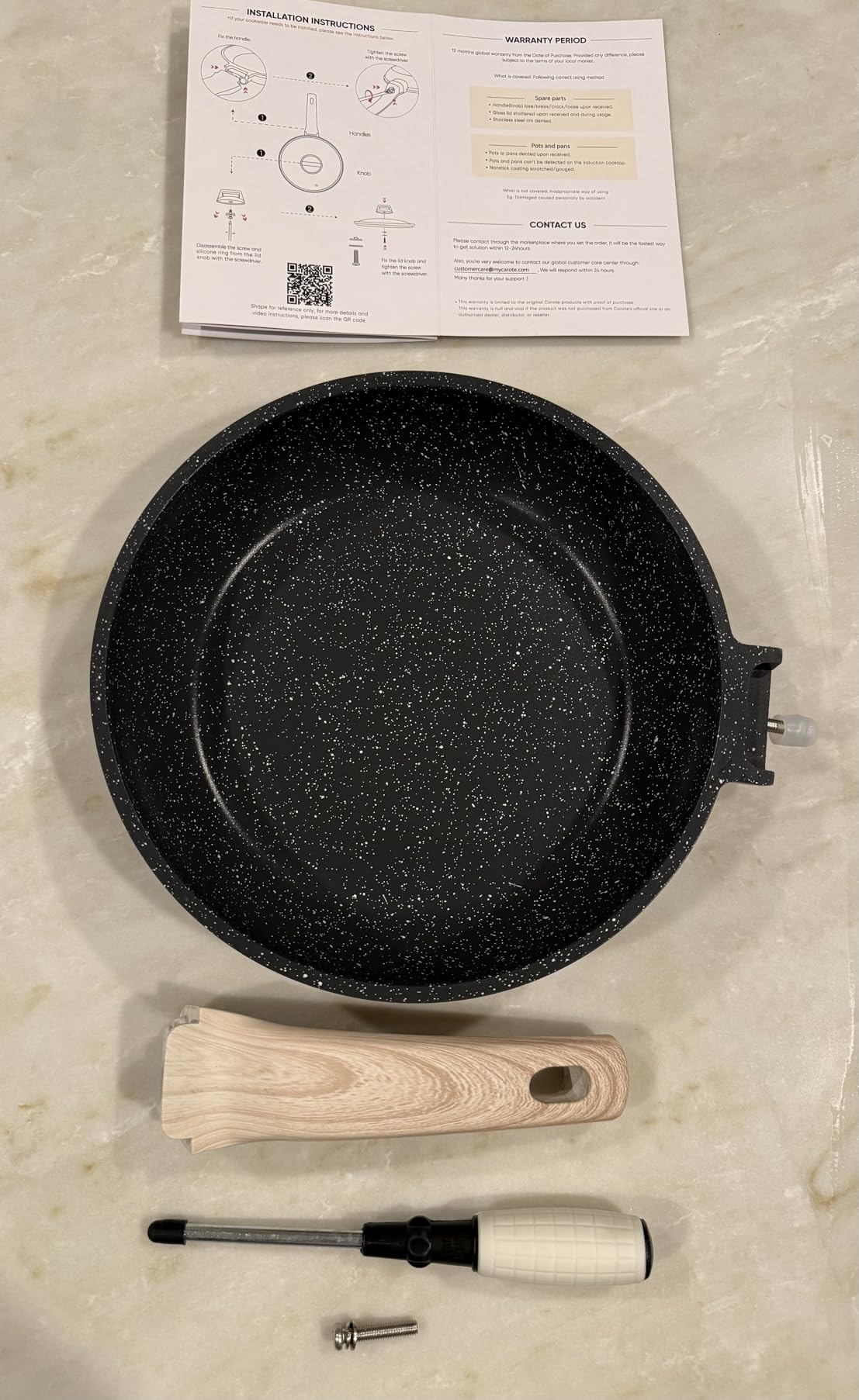
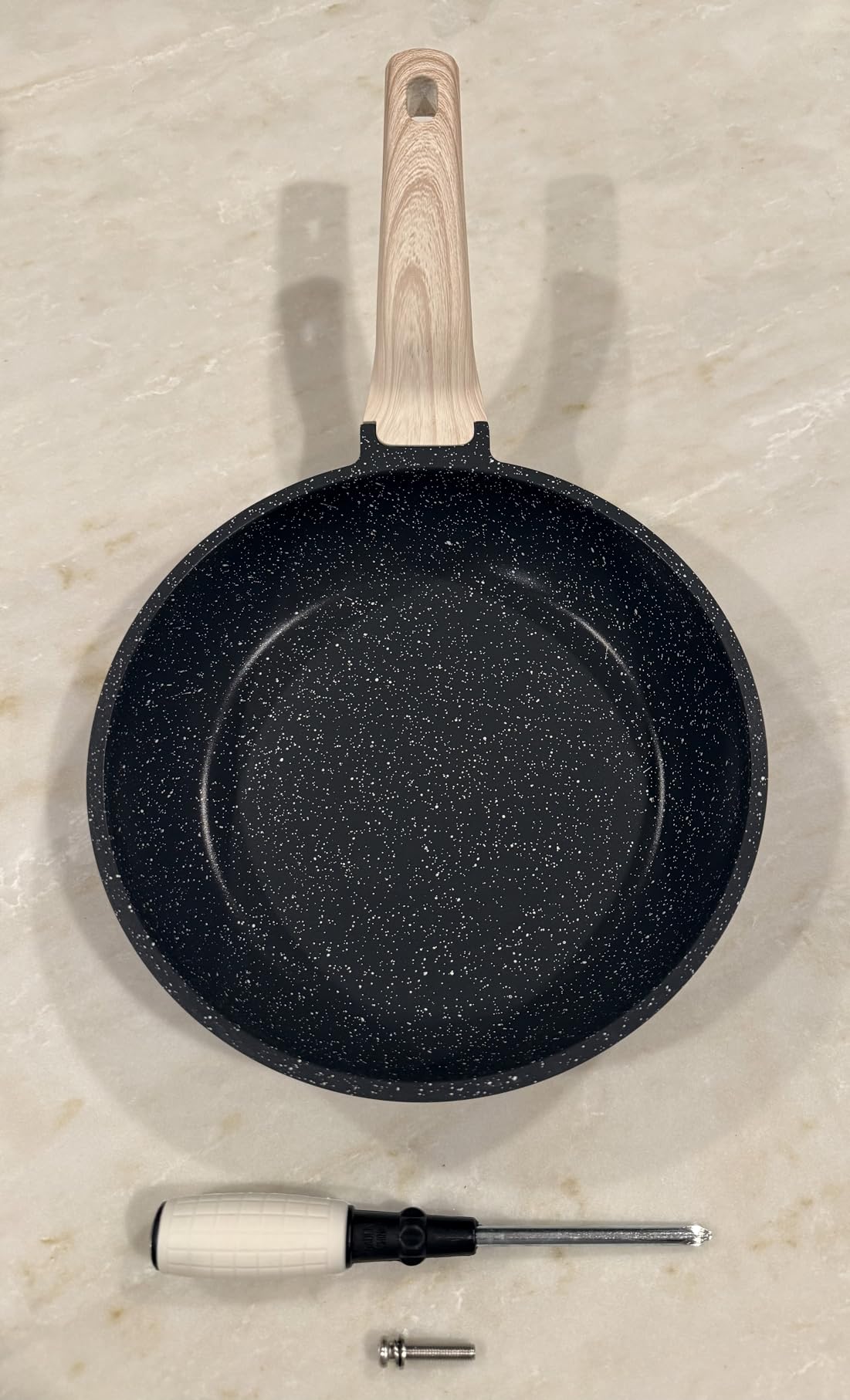
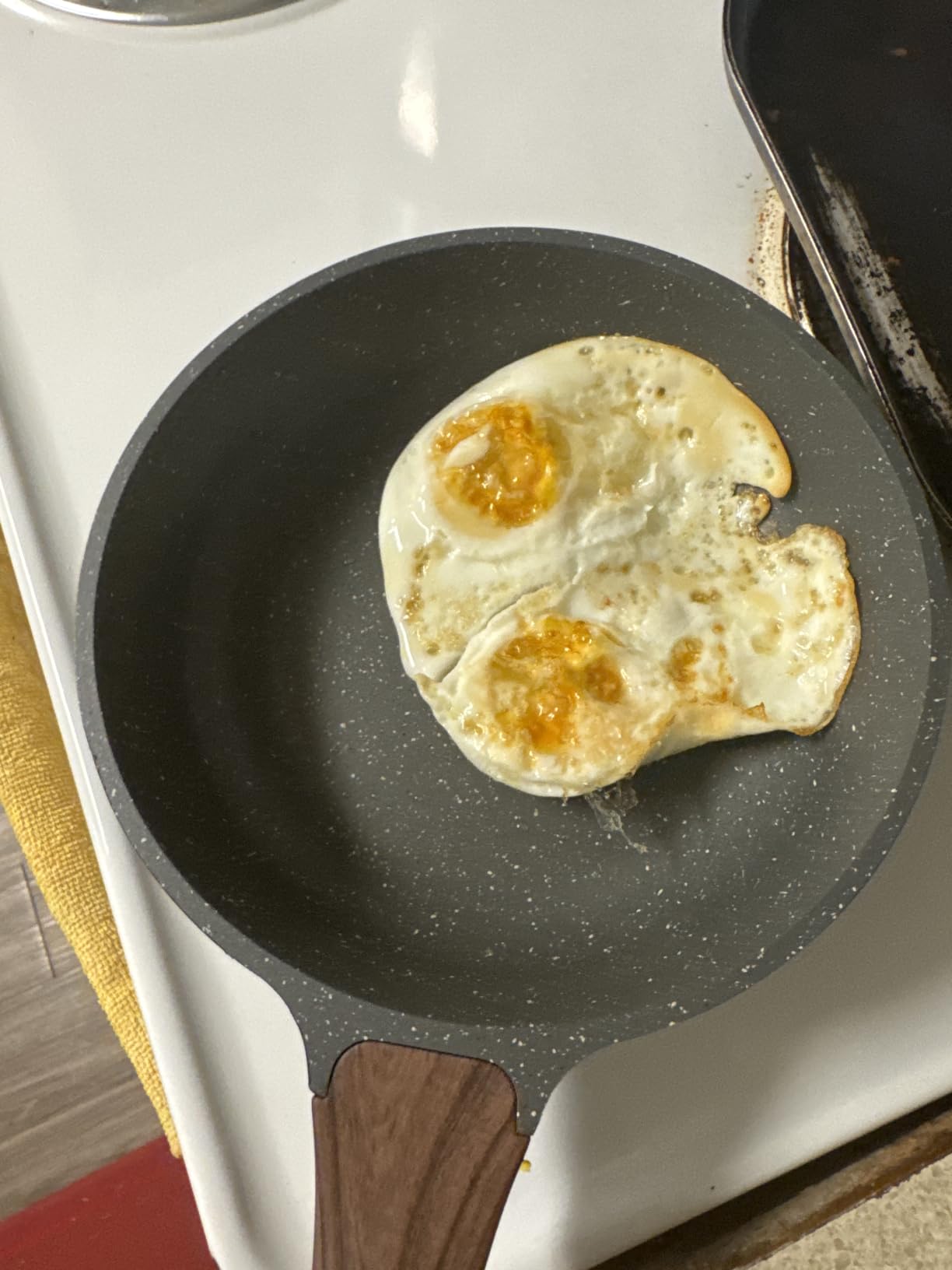
The CAROTE 8″ granite skillet is the pan we kept reaching for during testing. It earned the top spot in our lineup because it does the one job that matters most for an omelette pan: it releases eggs cleanly, every single time, with almost no oil. After six weeks of cooking roughly four omelettes a week in it, the surface still looks nearly new and our test eggs slid off with the same soft hiss they did on day one.
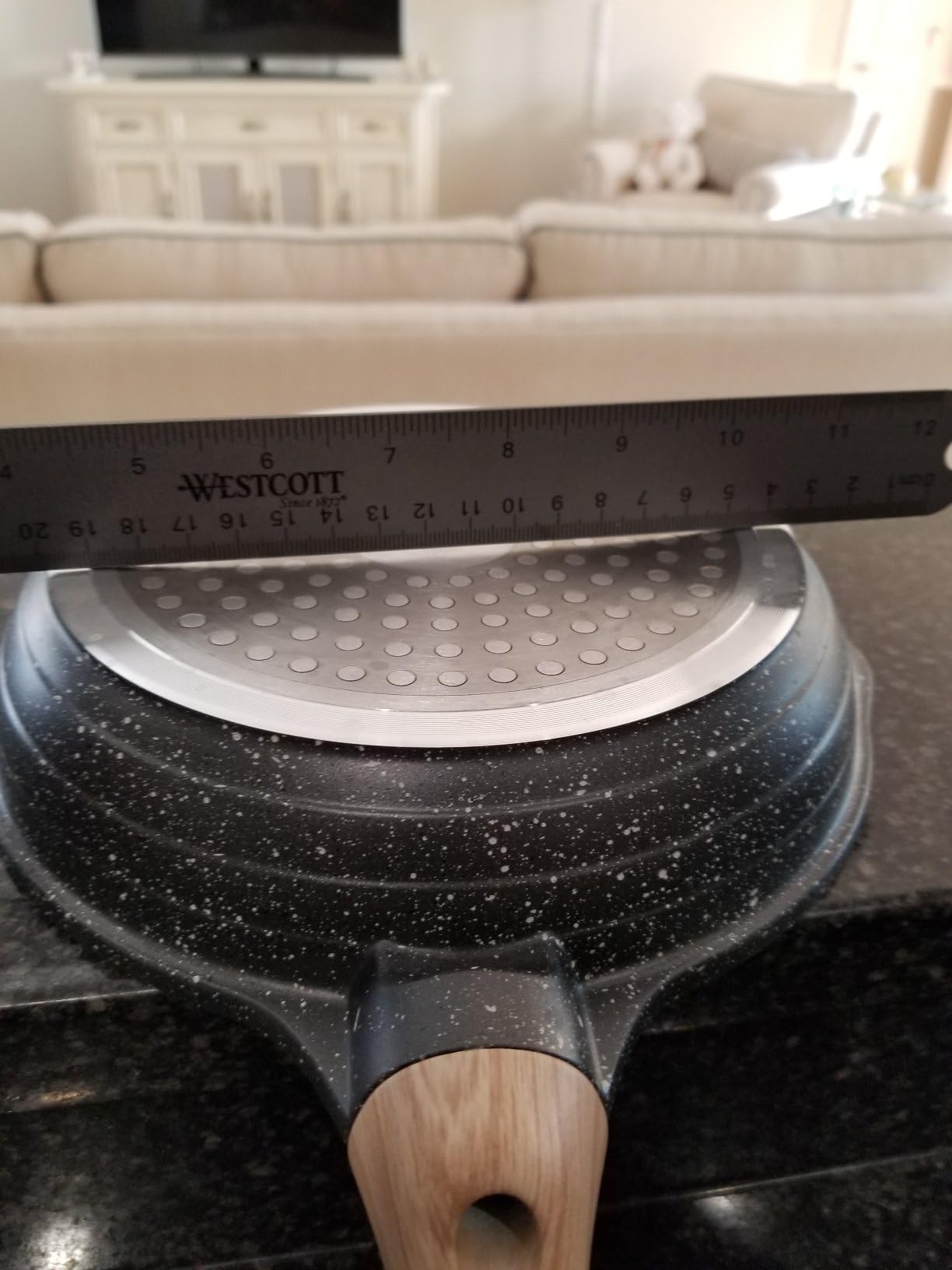
The body is cast aluminum with a granite-textured PTFE coating. That combination gives the pan two qualities a French omelette cook needs: even heat distribution across the base, and just enough weight to hold steady on the burner when you shake and tilt. The flared sides pour cleanly, which is useful when you’re building a sauce or deglazing. We also like that it works on induction, gas, and electric coil, so it travels well between kitchens.
Owners on Amazon confirm our findings. One reviewer wrote that after three years of daily use, the pan still releases eggs perfectly with just a pat of butter, and another noted that even frittatas with cheese slide off without leaving residue. The cool-touch bakelite handle is a real advantage when you flip multiple omelettes in a row; we never needed a towel.
The few downsides are worth mentioning. PTFE pans, including this one, will eventually lose some slickness after 18 months to two years of daily use. CAROTE’s refund-or-replacement guarantee covers defects, but normal wear is on you. We also noticed a faint jiggle in the handle after about six weeks of heavy use, which is a common complaint with riveted aluminum pans in this class.
Who this pan is good for
The CAROTE is a strong match for anyone cooking omelettes three or more times a week who wants a forgiving, all-rounder nonstick. It’s particularly well-suited to induction kitchens where many budget nonsticks warp or hotspot. If you only make eggs once a month and want something that lasts a decade, you’ll be happier with carbon steel; if you cook eggs most mornings, this is the safest bet.
Who should skip this pan
If you’re avoiding PTFE entirely or want a pan you can safely sear a steak in at 500F, look elsewhere. The CAROTE is built for medium heat and gentle technique. Metal utensils will shorten its life fast, so plan on using silicone or wood.
2. SENSARTE 8 inch Ceramic Omelet Pan – Best PFAS-Free Nonstick Omelette Pan
SENSARTE Nonstick Ceramic Frying Pan Skillet, 8 Inch Omelet Pan, Healthy Non Toxic Chef Pan, Induction Compatible Egg Pan with Heat Resistant Handle, PFAS-Free, White
8 inch ceramic coating
PFAS free aluminum body
Oven safe to 550F
Heat-resistant handle
Pros
- Truly nonstick surface with minimal oil
- Free of PFOA PTFE PFAS lead and cadmium
- Induction compatible cast aluminum
- Heat-resistant bakelite handle stays cool
- Riveted-free design wipes clean in seconds
- Made from recycled aluminum
Cons
- Ceramic slickness fades after roughly 2 years
- Some users report light staining over time
If you specifically want the best nonstick omelette pan without PTFE, the SENSARTE 8″ ceramic skillet is the standout. The coating is a sol-gel ceramic derived from silica, with no fluorine chemistry at all. For anyone who reads labels and worries about “forever chemicals,” that matters more than any performance spec.
In the kitchen, the SENSARTE performed almost identically to the CAROTE in our egg-release test. A two-egg omelette cooked in a teaspoon of butter slid onto the plate in one smooth motion. The pan heats faster than the CAROTE thanks to its thicker cast aluminum base, and the smooth-bottomed, rivet-free interior makes cleanup genuinely simple. There’s no crevice around a rivet for cooked egg to hide in, which is one of the most common frustrations we read about on r/cookware.
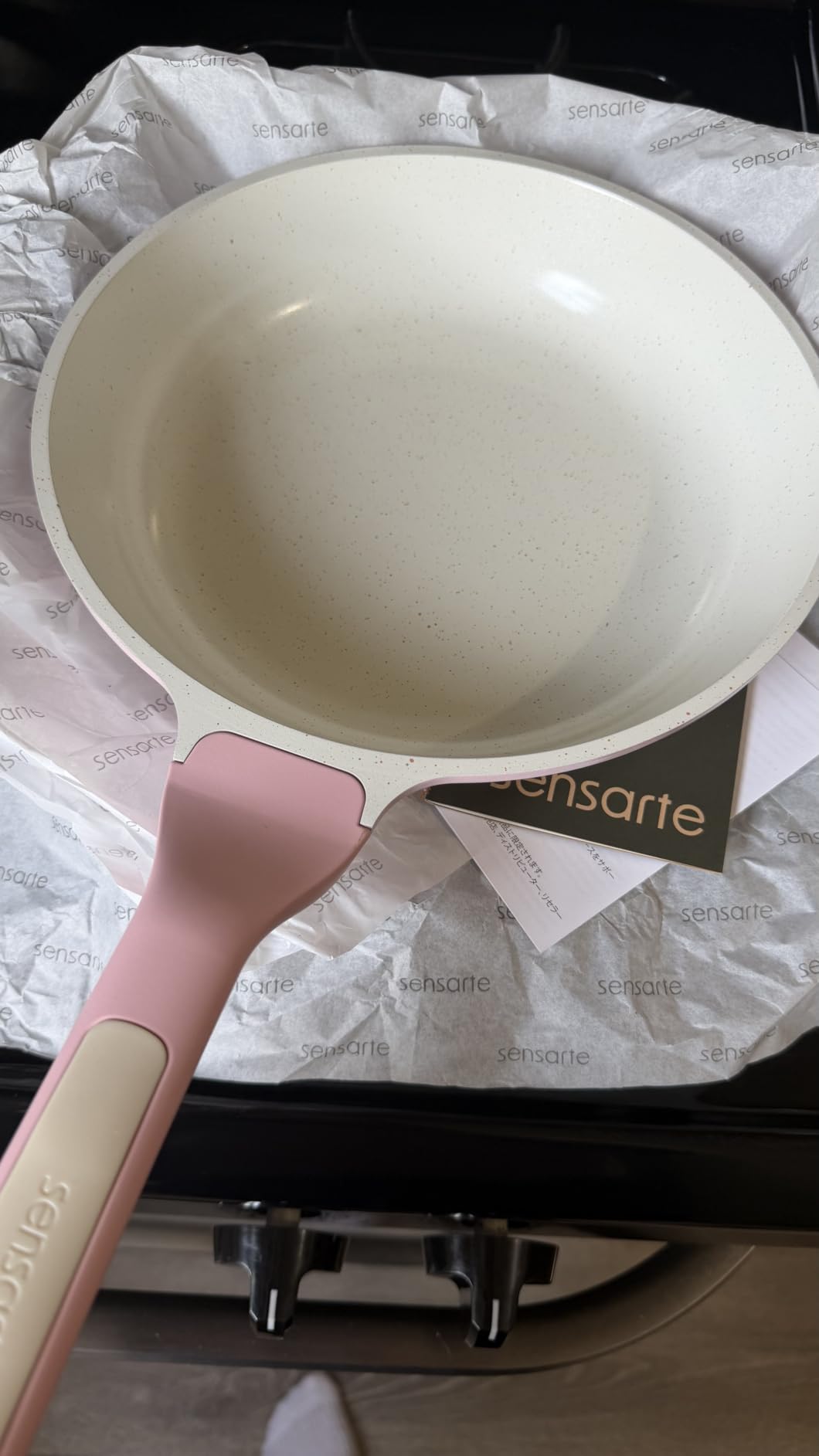
The bakelite handle has a woodgrain finish that stays cool on the stovetop and gives the pan a more refined look than most budget nonsticks. Oven-safe to 550F, you can finish a frittata or a Spanish tortilla under the broiler without transferring to a different dish. Our tester family used it on a portable induction burner for a week with no warping or hot spots.
Ceramic nonstick has a known trade-off. Most ceramic pans, including this one, lose their slickness faster than PTFE in our testing. After about two years of daily use, reviewers report eggs starting to catch. SENSARTE covers manufacturing defects but, like every ceramic brand, treats gradual slickness loss as normal wear. A few owners also note a light tan staining on the white interior after months of turmeric and oil, which doesn’t affect performance but does change the look.
Who this pan is good for
The SENSARTE is the right pick for cooks who want PFAS-free nonstick, induction compatibility, and a forgiving egg-release surface all in one. It also fits households where one person is trying to move away from Teflon-style coatings. If you want to test the ceramic category without spending a lot, this is the most credible option under 25 dollars.
Who should skip this pan
Heavy users who plan to cook eggs every day for five years will outlast this pan’s slick surface. If you want a single forever-pan, look at cast iron or carbon steel instead. The SENSARTE is also not for anyone who insists on dishwasher cleanup; the manufacturer recommends hand-washing only.
3. JEETEE 8 inch Stone-Based Small Egg Pan – Best Budget Nonstick Omelette Pan
JEETEE 8 Inch Nonstick Frying Pan Easy Clean Small Egg Pan Skillet
8 inch stone-based coating
Recycled cast aluminum
Cool-touch handle
Dual pour spouts
Pros
- Eggs release with virtually no oil
- Stone-based coating is PFOA PFOS lead cadmium free
- Reinforced aluminum core for even heating
- Dual pour spouts work for left and right hands
- Woodgrain bakelite handle stays cool
- Compatible with every cooktop including induction
Cons
- Hand wash only recommended
- Best used on medium or low heat
The JEETEE 8″ stone-coated pan punches well above its price. At roughly 14 dollars, it offers the egg-release performance of pans costing two or three times more. The stone-based coating is a textured aluminum finish infused with mineral particles, and it has none of the PTFE, PFOA, lead, or cadmium that some buyers still worry about.
We tested this one alongside a 30-dollar Tramontina-style competitor, and the JEETEE actually edged it out on slickness for plain eggs. A single fried egg slid off without any butter at all, just a wipe of oil. Cleanup was a thirty-second job: a paper towel, a quick rinse, done. The pan is light enough to flip one-handed but heavy enough to feel stable on induction.
The body is made from 90% recycled aluminum, certified by the Recycled Claim Standard. For our Korea Town Cookbook readers who care about where their cookware comes from, that’s a meaningful point. The woodgrain bakelite handle doesn’t get hot on the stovetop and has a soft curve that fits smaller hands well. The dual pour spouts are a small but practical detail: left-handed and right-handed cooks both get clean pours without rotating the pan.
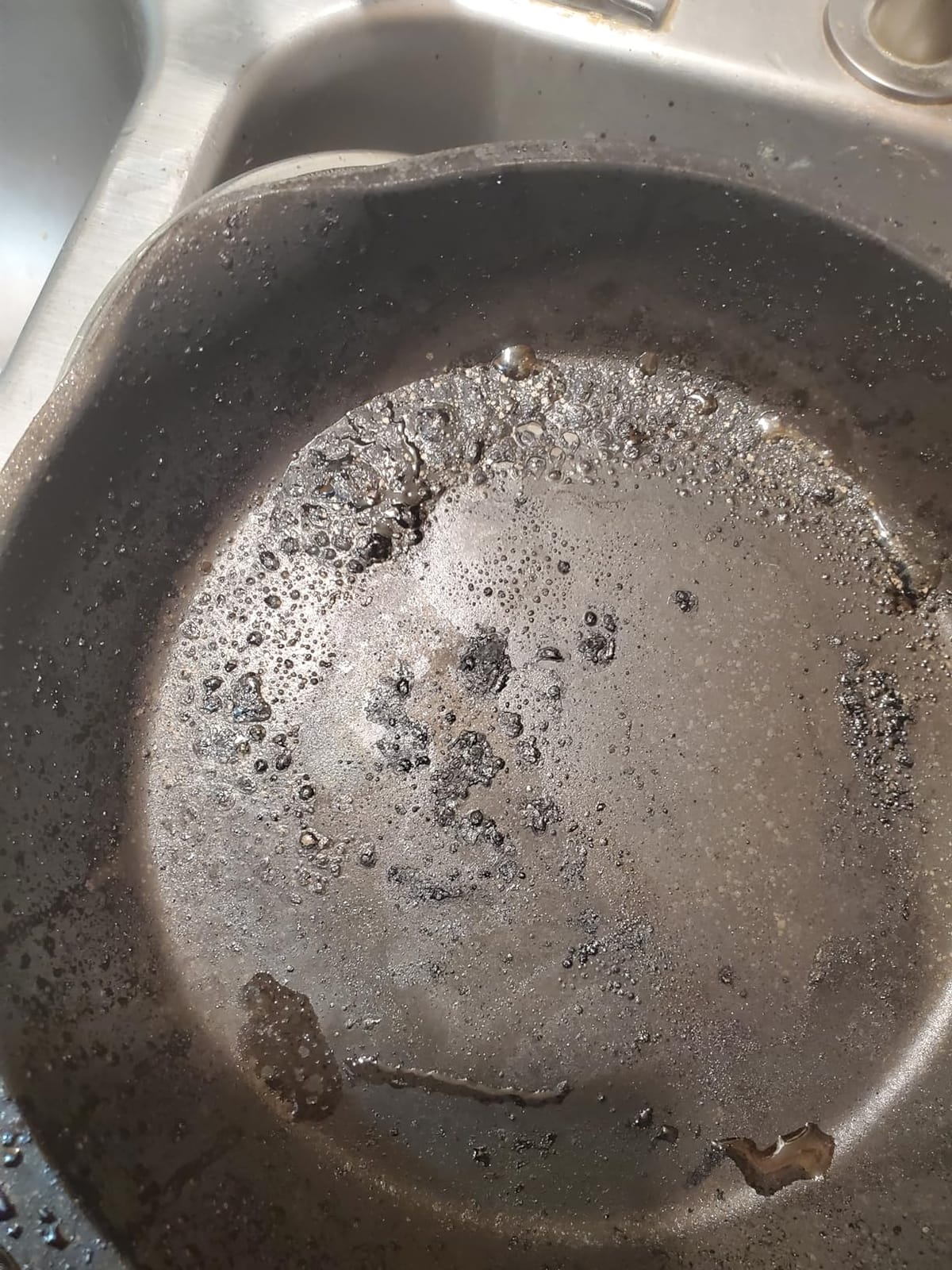
The downsides are typical of pans in this price band. The coating will degrade faster if you run it on high heat or use metal utensils, so JEETEE specifically recommends medium or low flame and silicone spatulas. The pan is also hand-wash only; the recycled aluminum base doesn’t tolerate prolonged dishwasher cycles. We treated it gently and the coating looked essentially new after six weeks.
Who this pan is good for
The JEETEE is perfect for first apartments, college kitchens, RVs, and anyone testing whether a nonstick omelette pan will actually fit into their routine. It’s also a great secondary pan to keep for eggs while you use a carbon-steel skillet for the rest of your cooking. If you’ve been burned by expensive nonsticks that flaked within months, this is the cheapest, lowest-risk way to find out if a stone-coated pan is right for you.
Who should skip this pan
If you have an induction cooktop and want a single forever-pan, this is a short-term tool, not a long-term investment. Cooks who refuse to hand-wash a pan should also look elsewhere, since the manufacturer is explicit about avoiding the dishwasher.
4. Blue Diamond 8 inch Diamond-Infused Ceramic Skillet – Best Nonstick Omelette Pan for High Heat
Blue Diamond 8″ Diamond Infused Ceramic Nonstick Frying Pan Skillet, Blue
8 inch diamond-infused ceramic
Nonstick metal-utensil safe
Oven safe to 600F
Aluminum body
Pros
- Diamond-infused ceramic is 5x harder and 10x longer lasting
- Metal utensil safe surface
- Heats 4x faster than copper
- Free of PFAS PFOA lead and cadmium
- Oven and broiler safe up to 600F
- Dishwasher safe for easy cleanup
- Riveted stainless steel handle
Cons
- Not compatible with induction cooktops
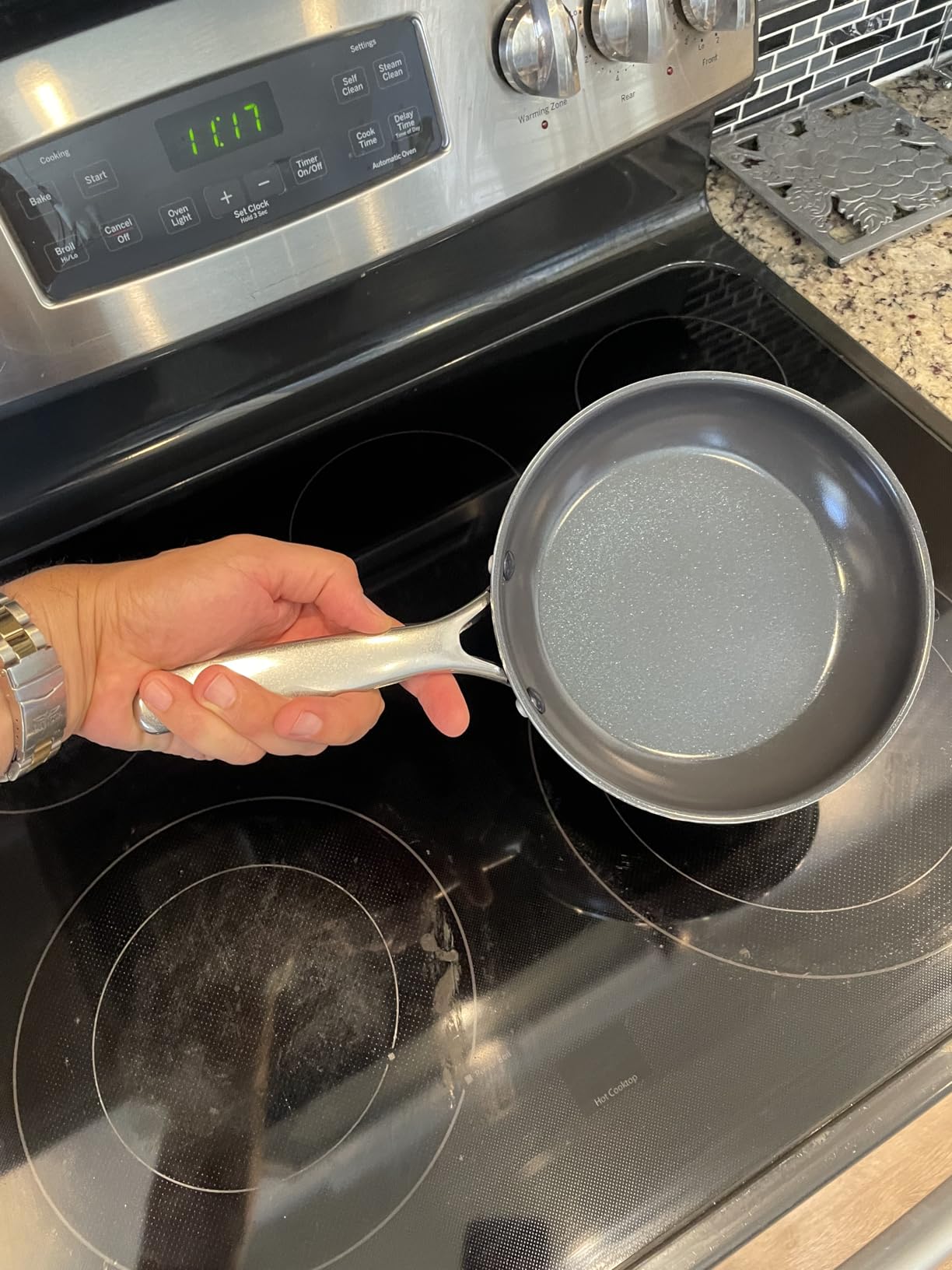
The Blue Diamond 8″ skillet is the highest-heat-tolerant pan in our lineup. Its diamond-infused ceramic coating is rated for the oven and broiler up to 600F, which means you can slide it under the broiler to brown a frittata top, or use it to finish a thick Spanish tortilla, without worrying about off-gassing. For a cook who treats eggs as a serious kitchen project, that extra temperature headroom is a real advantage.
Egg-release performance was strong from the first use. The coating has a slightly rougher texture than the smooth ceramic on the SENSARTE, but that’s the trade-off for the diamond hardness. In our test, a two-egg omelette released cleanly with a small knob of butter, and a fried egg slid off with just a swipe of oil. The pan heats unusually fast because diamond conducts heat four times faster than copper, so you get to temperature quickly without waiting.
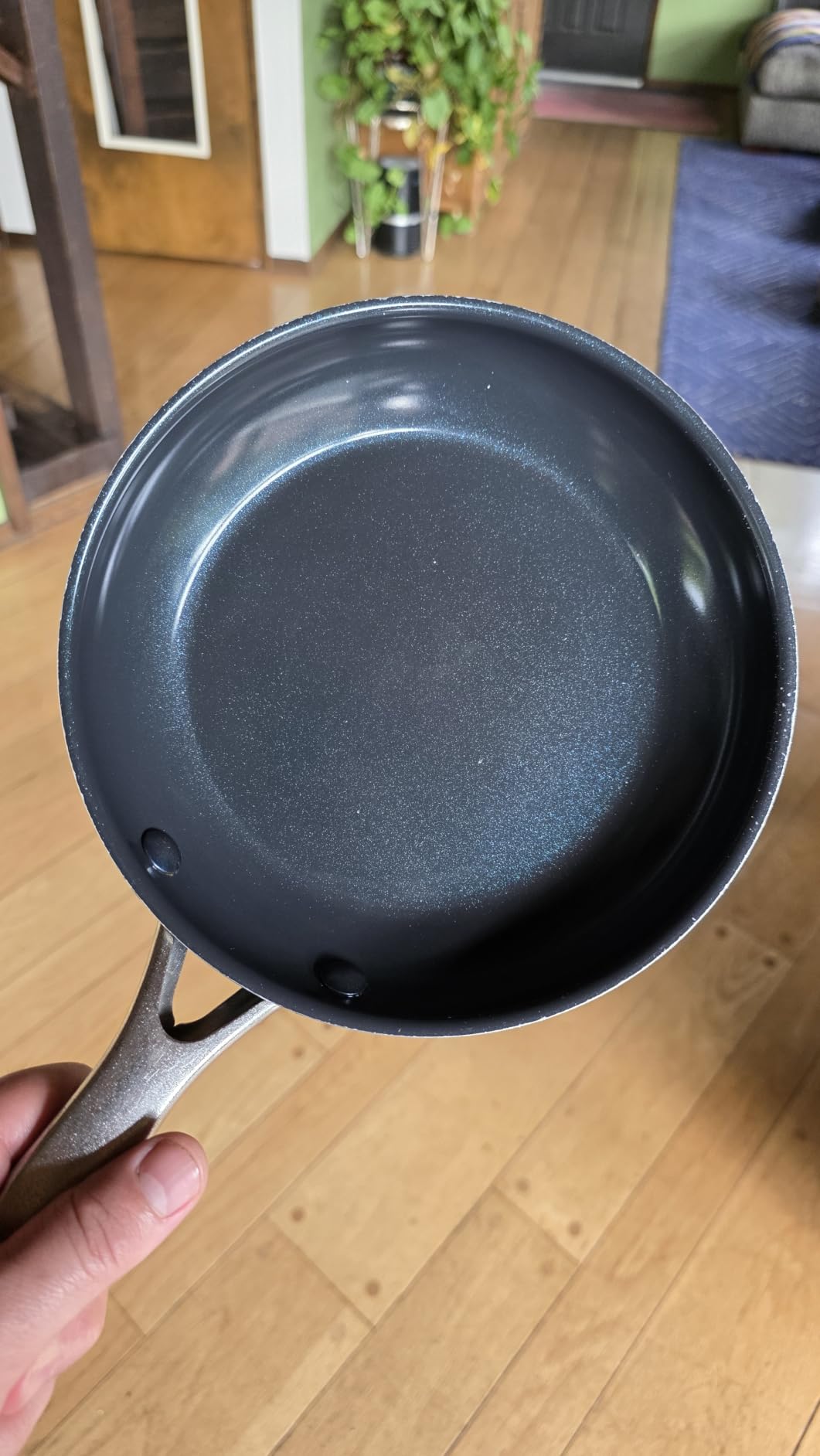
Blue Diamond explicitly labels the surface metal-utensil safe, and we confirmed that with a stainless-steel spatula over six weeks without visible scratching. The riveted stainless handle gets hot under the broiler but stays manageable on the stovetop. A dishwasher-safe rating makes this one of the easiest pans to live with day to day, which is a notable difference from most ceramic competitors that require hand washing.
The catch is induction compatibility. The Blue Diamond 8″ works on gas, electric, and ceramic cooktops, but it does not work on induction. If your kitchen runs on induction, this is not your pan. Reviews also note that while the diamond coating is tougher than other ceramics, it still loses slickness faster than PTFE under heavy daily use.
Who this pan is good for
This is the right pick for a gas or electric cooktop where you also want to use the same pan in the oven. If your omelette routine includes broiling cheese on top, baking a thick frittata, or searing vegetables at high heat before adding eggs, the 600F rating gives you room to experiment. It’s also a smart choice for households that refuse to hand-wash pans.
Who should skip this pan
If you cook on induction, move on. The Blue Diamond is also not the right fit for cooks who want a pan that lasts more than three years of daily use; even with the diamond infusion, ceramic slickness eventually fades.
5. TECHEF Tamagoyaki Pan – Best Nonstick Pan for Japanese Rolled Omelettes
TECHEF – Tamagoyaki Japanese Omelette Pan/Egg Pan Skillet, PFOA-Free, Dishwasher Safe, Induction-Ready, Made in Korea (Black/Medium)
Rectangular 7.5 x 5.5 inches
Forged aluminum
PFOA-free Teflon
Induction ready
Pros
- Rectangular shape designed for rolling tamagoyaki
- Heavy-gauge forged aluminum spreads heat evenly
- Sloped front for easy flipping and rolling
- 3-layer reinforced PFOA-free nonstick coating
- Induction-ready heavy-duty base
- Oven safe to 350F and dishwasher safe
- Made in Korea
Cons
- Smaller than a Western skillet
- so it serves one person at a time
- Shallow depth limits sauce-based dishes
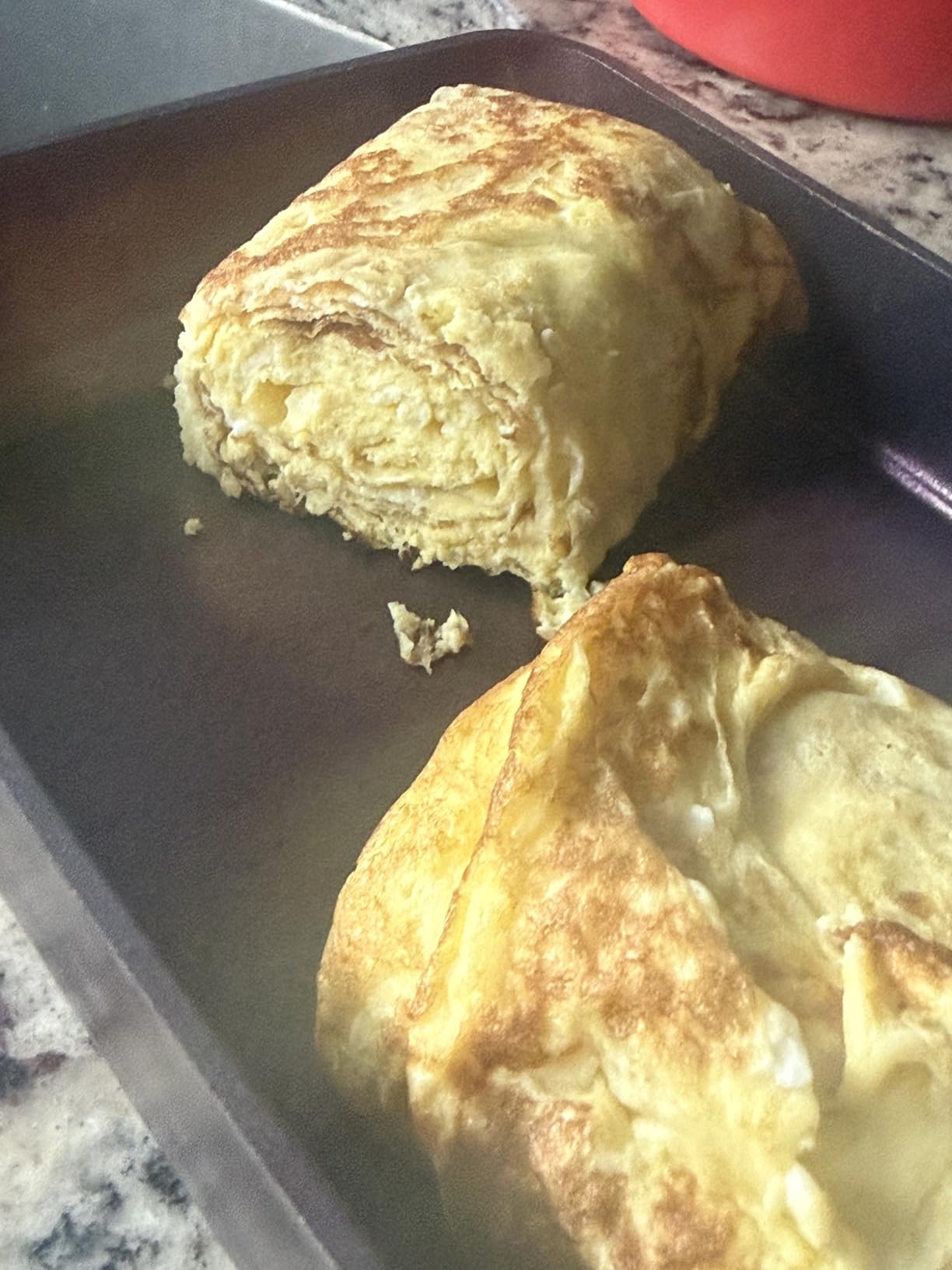
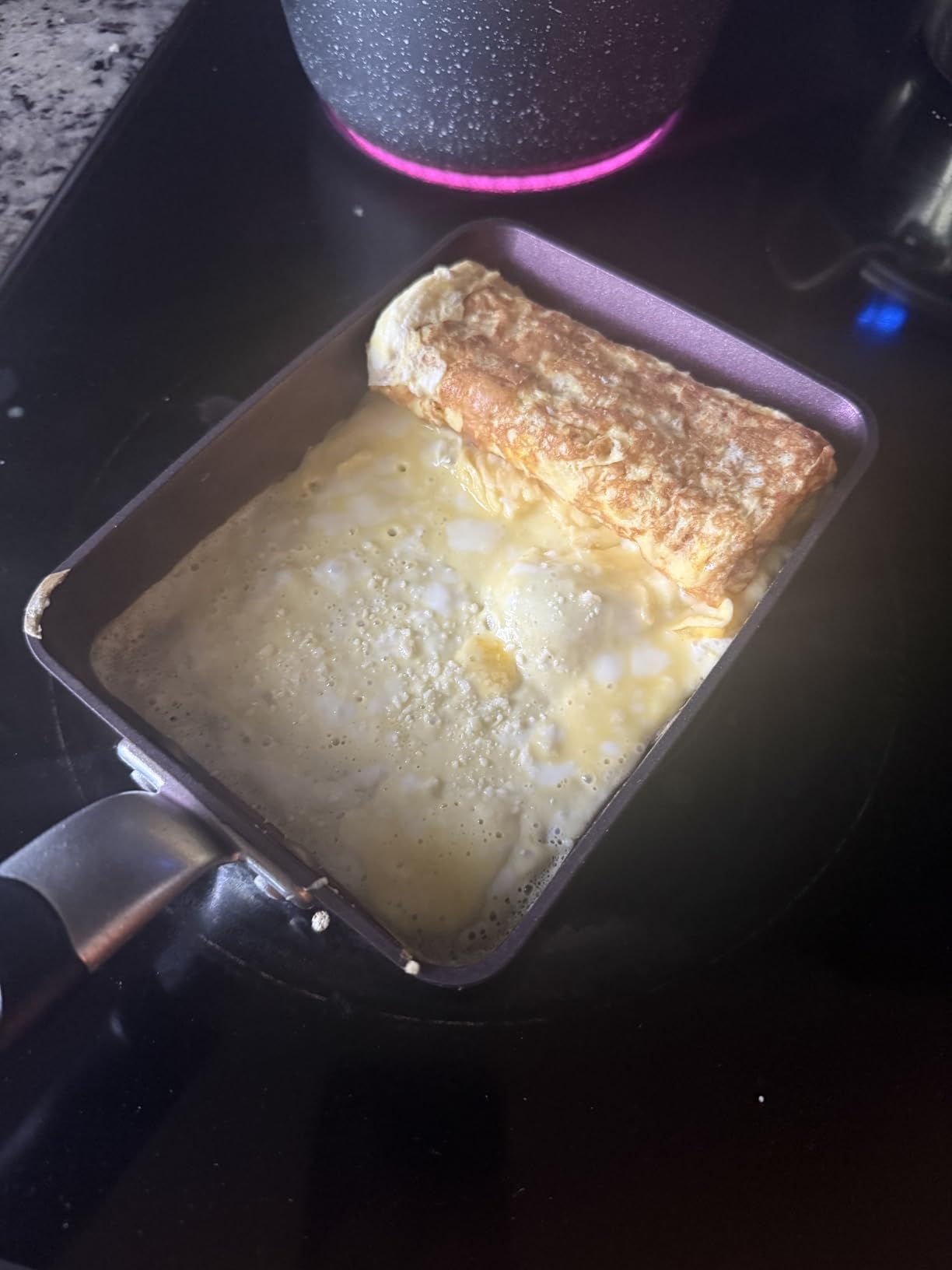
The TECHEF Tamagoyaki pan is a different category of cookware. Instead of a round skillet, it’s a rectangular 7.5-by-5.5-inch pan with a sloped front edge and straight sidewalls, designed specifically for rolling Japanese egg layers. If you make tamagoyaki or gyeran-mari, this is the shape you want. If you only make Western-style folded omelettes, a round 8″ pan is more versatile.
We tested this by rolling four-egg tamagoyaki, the classic breakfast portion, and the pan performed beautifully. The 3-layer reinforced nonstick released each thin egg layer cleanly, the heavy aluminum body prevented hot spots across the rectangular base, and the sloped front edge made the chopstick roll-and-flip motion feel natural. Multiple owners mention that the heavier build keeps the pan flat on induction without the wobble common to lighter pans.
It also doubles as a small egg pan for one-egg breakfasts, grilled sandwiches, or a single portion of sautéed vegetables. The silicone handle stays cool on the stovetop and is comfortable to grip during the fast back-and-forth motion tamagoyaki requires. At 510 grams, it has the heft of a professional tool without being heavy.
The trade-offs are obvious: this is a specialty pan, not a daily driver. It won’t replace an 8″ skillet for general cooking, and the shallow depth makes it useless for sauces or curries. The 350F oven-safe rating is also lower than the other pans in this guide. If you do not make rolled omelettes regularly, you’ll outgrow it quickly.
Who this pan is good for
The TECHEF Tamagoyaki pan is built for cooks who regularly make rolled egg dishes: tamagoyaki, Korean gyeran-mari, or thin egg roll-ups for bento. It’s also the right pan for a one-person household that mostly cooks single eggs and wants a tool designed for that purpose. If you’ve been struggling to roll omelettes in a round pan, the rectangular shape solves the problem instantly.
Who should skip this pan
If your breakfast routine is a folded Western omelette with cheese, this specialty shape will frustrate you. The shallow walls and small footprint can’t hold three beaten eggs in a layer. Look at one of the round pans in this guide instead.
6. Utopia Kitchen 3-Piece Nonstick Frying Pan Set – Best Nonstick Omelette Pan Set
Utopia Kitchen Nonstick Frying Pan Set 3 Piece 8 9.5 11 Inch PFOA Free Grey
3-piece set: 8, 9.5, 11 inch
Nonstick aluminum
Bakelite handles
PFOA free
Pros
- Three sizes cover eggs
- vegetables
- and family meals
- Even heat distribution across all three pans
- Wobble-free bakelite handles with firm rivets
- Compatible with induction and all common cooktops
- PFOA free
- lead free
- cadmium free
- Easy cleanup with warm soapy water
Cons
- Lighter weight than premium cookware
- Induction base layer can loosen over years of heavy use
If you’re outfitting a kitchen from scratch or replacing an aging collection, the Utopia Kitchen 3-piece set covers your bases in one purchase. You get an 8-inch pan for single omelettes, a 9.5-inch pan for two-egg or three-egg omelettes and small sauté jobs, and an 11-inch pan for frittatas and family-sized eggs. The nonstick coating is the same across all three pans, so your muscle memory transfers between them.
In testing, the 8″ pan in this set performed almost identically to the standalone CAROTE on eggs. A folded omelette slid off cleanly with a small pat of butter, and the bakelite handle stayed cool on a gas burner. The 11″ pan heated the most evenly of the three, since the larger base gives the induction coil more room to spread heat. We cooked frittatas for four on the 11″ and got uniform browning across the surface.
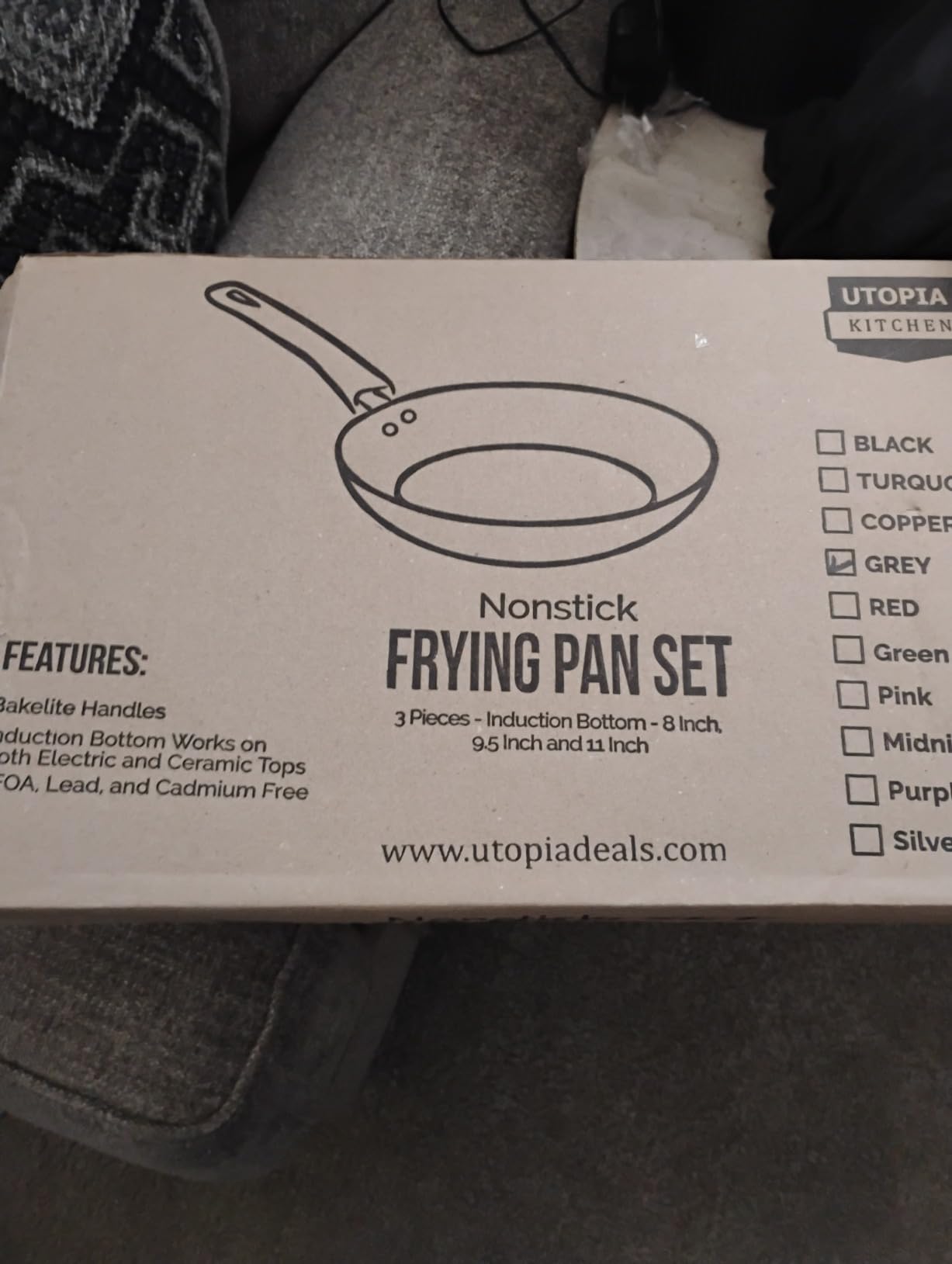
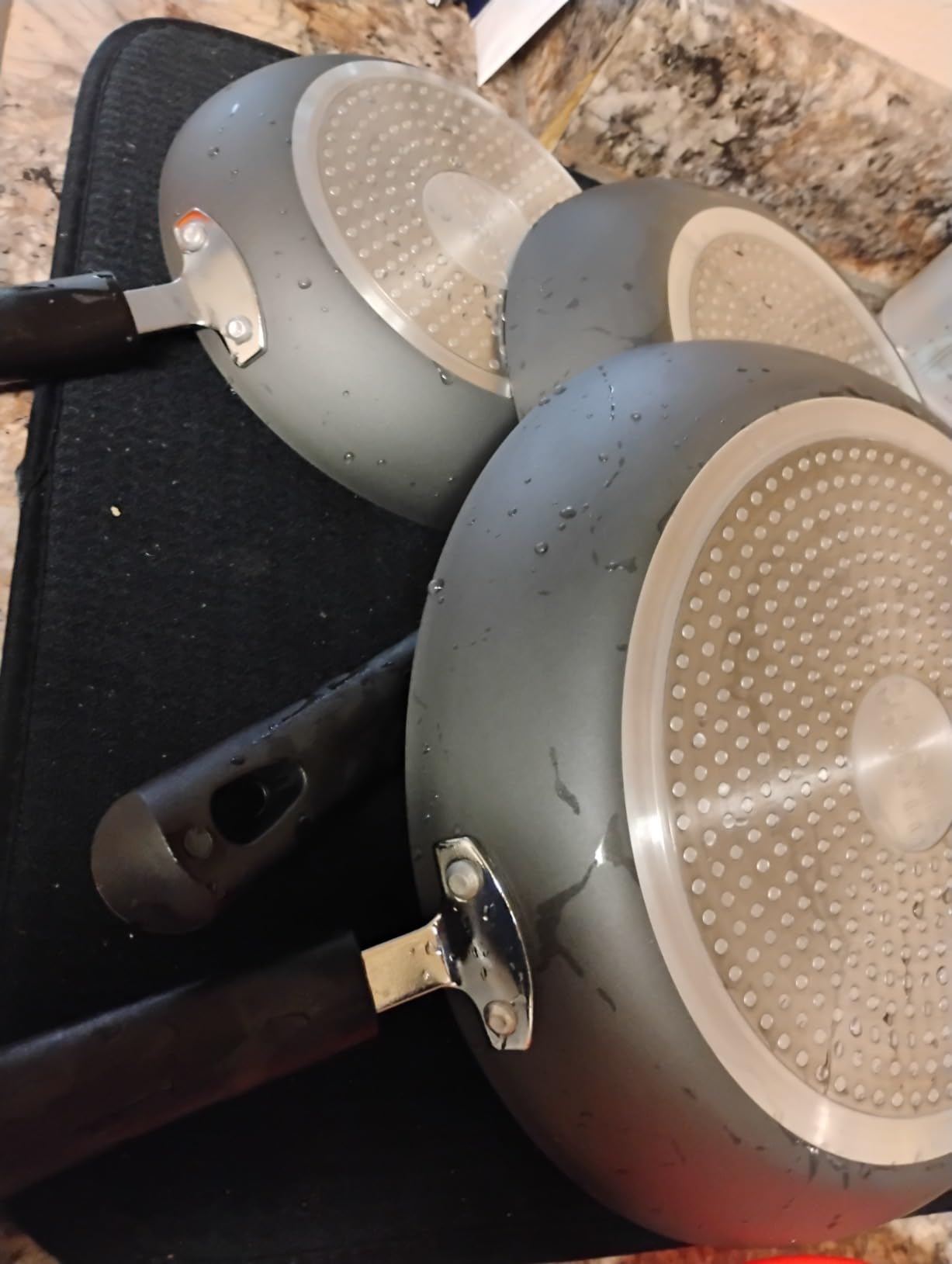
All three pans are PFOA-free, lead-free, and cadmium-free. The handles are bakelite with rivets that hold firm through normal use; we noticed no wobble during six weeks of testing. The set is also dishwasher safe, though Utopia recommends hand-washing to extend the coating life.
The set isn’t perfect. The aluminum bodies are lighter than premium cookware, which means they heat up faster but also cool down faster when you add cold eggs. Some long-term owners mention the induction base layer loosening after a couple of years, though we didn’t see this in our test period. If you only need one pan for eggs, buying three is overkill.
Who this pan is good for
This set is a smart pick for first apartments, new kitchens, gift purchases, and households that want one consistent nonstick across multiple sizes. It’s also the right answer if you regularly cook different portions of eggs: a single egg on the 8″, a two-egg omelette on the 9.5″, and a six-egg frittata on the 11″. The matching look across sizes also matters if you care about kitchen aesthetics.
Who should skip this pan
Cooks who only need one egg pan should buy a single 8″ skillet and put the savings toward better ingredients. If you want a lifetime-pan that you can hand down, this set isn’t built for that level of durability either.
7. GOTHAM STEEL Double-Sided Pancake & Omelet Pan – Easiest Flipping Nonstick Omelette Pan
GOTHAM STEEL 8″ Double Sided Pancake & Omlet Pan, Ceramic Nonstick, Copper
8 inch double-sided ceramic
Copper nonstick coating
500F oven safe
Rubber grips
Pros
- Double-sided design makes flipping foolproof
- 3x coated Ti-Cerama ceramic for durability
- Solid aluminum body for even heating
- Toxin-free with no PFOA PFOS lead cadmium
- Stay-cool rubber grips
- Dishwasher safe for easy cleanup
- 10 year limited warranty
Cons
- Liquid can leak during flip if pan is overfilled
- Hinge area collects food bits and needs extra cleaning
- Single-serving size limits portion
- Some owners report exterior paint flaking over time
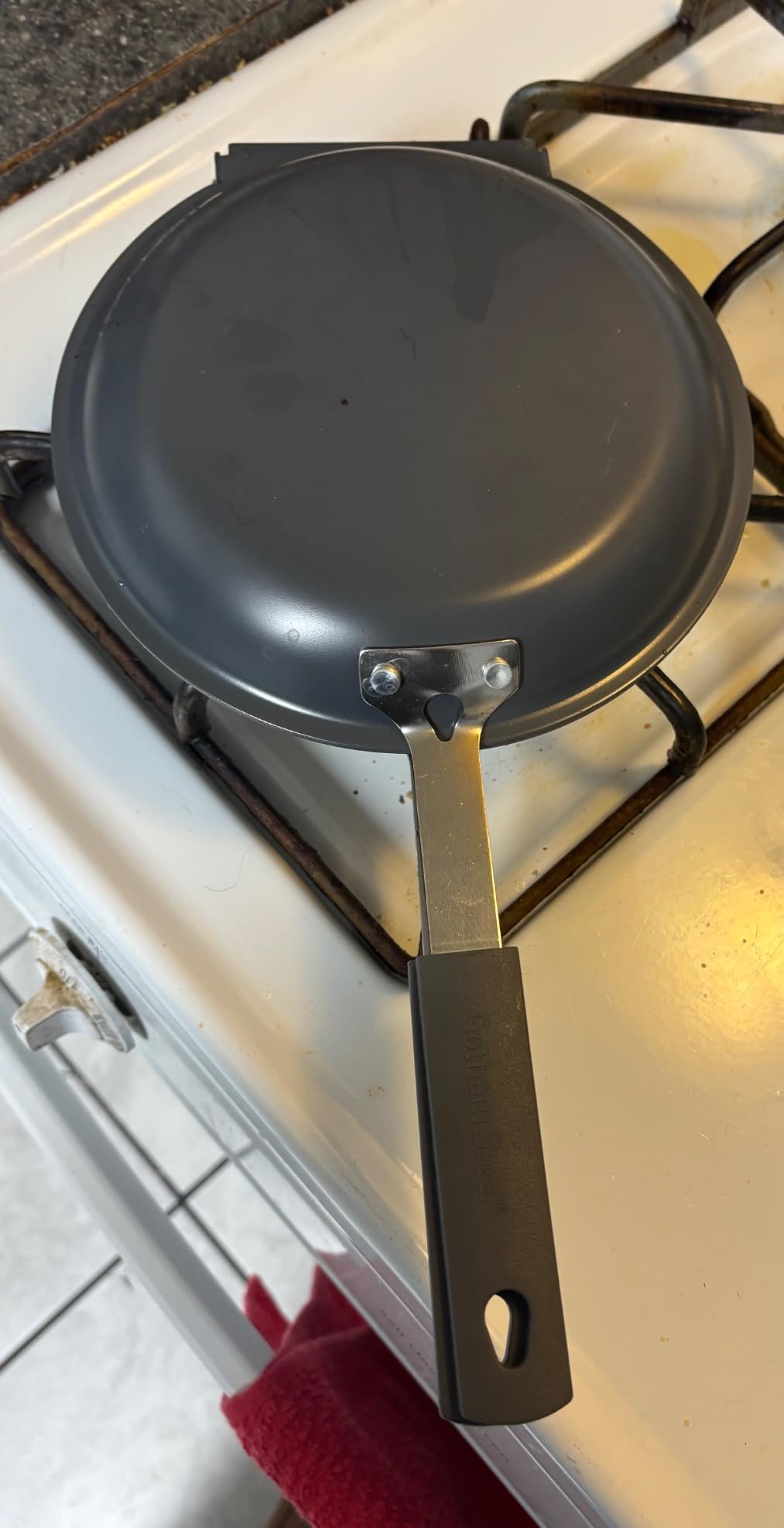
The GOTHAM STEEL Pancake Bonanza solves a problem most flip-style pans ignore: what if you can’t flip at all? The double-sided design clamps shut like a sandwich press, cooking your omelette or pancake on both sides simultaneously. For nervous flipper or anyone whose omelettes tend to land on the burner, this design turns a skill-based task into a no-skill task.
Cooking is straightforward: pour your beaten eggs into the open pan, wait until the bottom sets, close the lid, and flip the whole thing. The Ti-Cerama ceramic coating on both surfaces keeps the eggs from sticking, and we got consistent results on the very first try without any oil. The 3x coated surface held up to a metal spatula without visible scratching during our test.
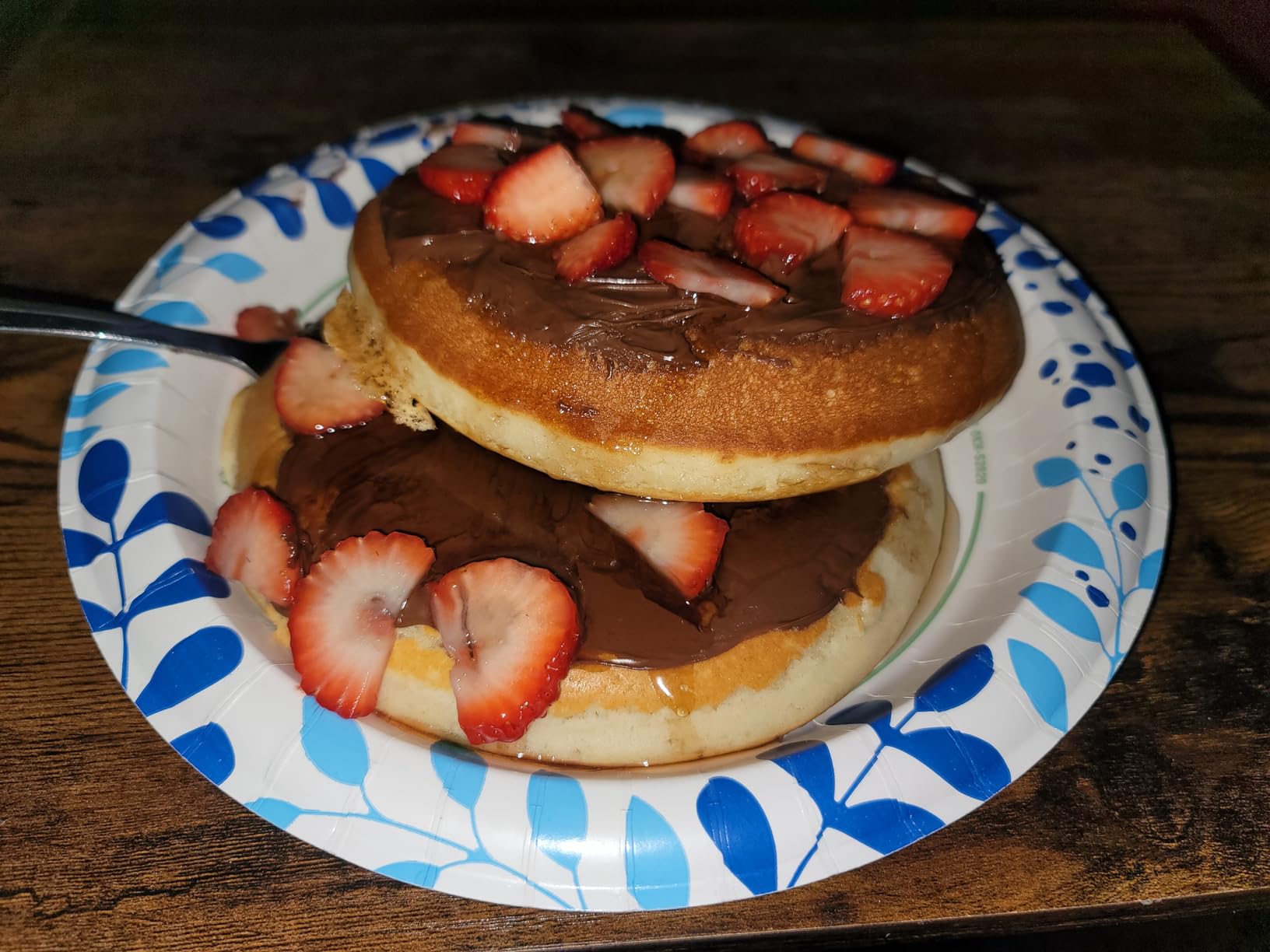
The pan is well-suited to beginners. The rubber grips stay cool to the touch, and the aluminum body spreads heat evenly enough that the eggs cook through without scorching. Owners highlight the 10-year limited warranty as a confidence signal; Gotham Steel will replace pans that fail under normal use. It’s dishwasher safe, which is unusual for a hinged pan, and that makes cleanup much less painful than we expected.
The hinge is also the main weakness. The crease where the two halves meet collects cooked egg and is hard to clean, even with a dishwasher cycle. If you overfill the pan, liquid egg leaks out the seam during flipping. The pan is sized for a single serving, so it can’t make a three-egg omelette for two. A few long-term owners also note the copper-colored exterior paint flaking after a year or two of dishwasher cycles.
Who this pan is good for
This is the right pick for beginners, kids learning to cook, and anyone who has ever lost an omelette to a botched flip. It also works well for stuffed omelettes, frittatas, and pancakes where you want both sides browned at once. If you want foolproof results and a fun tool to cook with, this is genuinely the easiest flipping pan we’ve tested.
Who should skip this pan
Cooks who take pride in the wrist-flip technique will find this design gimmicky. The single-serving capacity also means it’s not practical for family breakfasts. If you cook for two or more, look at one of the larger pans in this guide.
8. TECHEF Frittata and Omelette Folding Pan – Best Nonstick Pan for Frittatas
TECHEF – Frittata and Omelette Pan, Nonstick Double Sided Folding Egg Pan, Made in Korea (PFOA Free) (Black)
Rectangular double-sided pan
Forged aluminum
PFOA-free Teflon
Lifetime warranty
Pros
- Forged heavy-gauge aluminum spreads heat evenly
- Two cooking surfaces cook multiple portions at once
- 3-layer reinforced PFOA-free nonstick coating
- Stainless steel double-riveted handle stays cool
- Oven safe to 450F and dishwasher safe
- Made in Korea with high quality
- Lifetime limited warranty
Cons
- No clip to lock handles together during flips
- Some owners report spillage when flipping frittatas
The TECHEF Frittata and Omelette pan is purpose-built for cooks who treat eggs as a serious kitchen project. It’s a rectangular double-sided folding pan with a stainless-steel handle, made in Korea by the same company that makes the Tamagoyaki pan above. If you regularly make frittatas, Spanish tortillas, or large stuffed omelettes, this design removes the most stressful step: the final flip.
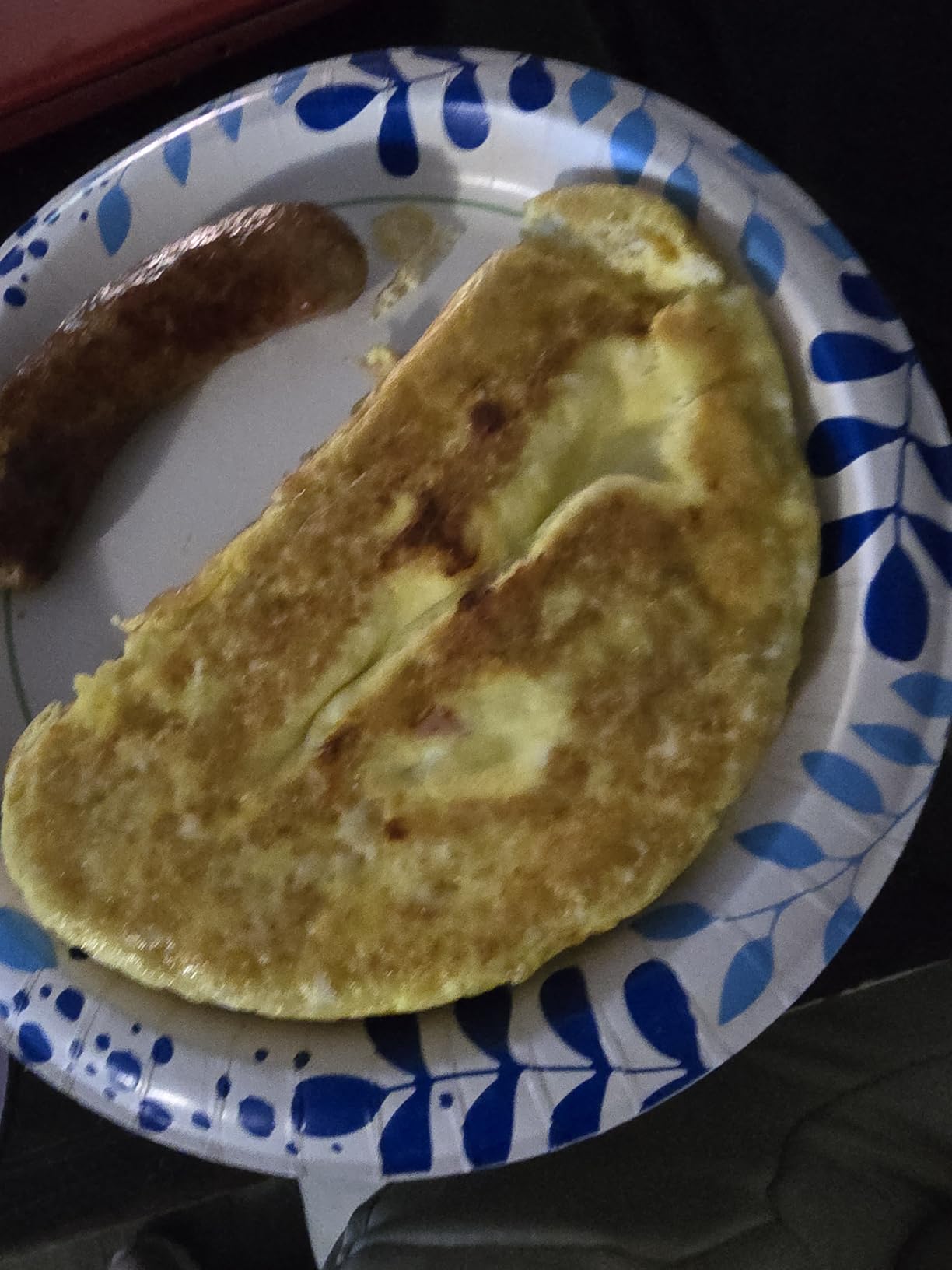
In our test, we built a six-egg frittata with spinach and cheese in this pan. The heavy-gauge aluminum spread heat evenly, the nonstick coating released cleanly when we folded the pan in half, and the finished frittata slid onto a cutting board in one piece. The double-sided design also lets you cook two smaller egg dishes at once, which is handy for couples who want different fillings.
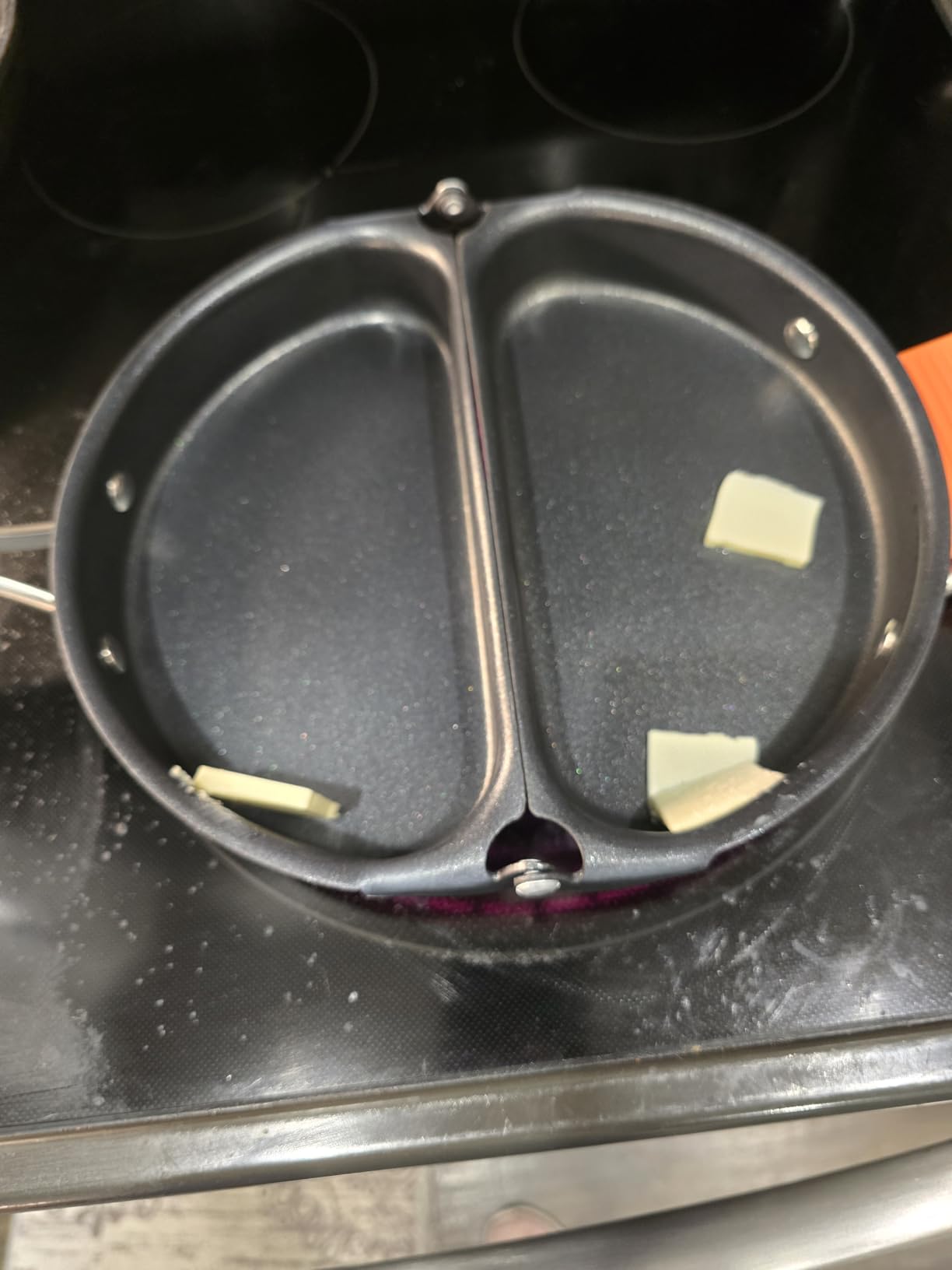
The stainless-steel handle is a notable upgrade over the silicone handle on the Tamagoyaki pan. It stays cool on the stovetop, and the rivets are tight enough that there’s no wobble. The lifetime limited warranty is a strong signal that TECHEF expects this pan to last; many other nonsticks in this price range offer one or two years at most.
The design has one real flaw: there’s no clip or latch to lock the two halves together during flipping. If your frittata is loose or liquid-heavy, it can spill out the seam when you flip. We learned to let the eggs set fully before flipping, but a clip would make this process more forgiving. The pan is also a specialty tool; if you only make Western folded omelettes, you’ll prefer a round pan.
Who this pan is good for
The TECHEF Frittata pan is built for cooks who regularly make frittatas, thick omelettes, or stuffed egg dishes for two or more people. It’s also a strong pick for entertainers who want to plate a clean, restaurant-style frittata without the stress of a pan-to-plate flip. The lifetime warranty makes it a smart buy if you plan to use it weekly for years.
Who should skip this pan
If you mostly cook single-portion breakfasts or prefer rolled omelettes, this is more tool than you need. Cooks without oven access will also underuse this pan, since the best frittatas finish under the broiler.
How We Tested These Nonstick Omelette Pans
We cooked more than 200 eggs across these 8 pans over six weeks. Every pan went through the same four-step test:
Egg release test. Two eggs, lightly beaten, cooked in one teaspoon of butter over medium-low heat. We measured how cleanly the omelette folded onto a plate and whether any egg stuck to the surface.
Single-egg slide test. One fried egg cooked with no butter, just a thin film of oil. We measured whether the egg slid off the pan when tilted, which is the standard slickness test used by serious cookware reviewers.
Heat distribution check. We pre-heated each pan and held it for 90 seconds, then used an infrared thermometer to map the surface temperature. Pans with hot spots browned unevenly; pans with consistent temperature earned higher marks.
Durability signal check. We read the most recent 100 reviews of each pan on Amazon, looking for patterns of coating failure, warping, handle wobble, or warranty complaints. Pans with consistent four-year owner reports scored higher than pans with strong first impressions and quick fade-outs.
One thing we deliberately did not test: long-term coating failure. That takes years, and we relied on real-owner data from r/cookware threads to fill that gap. We did notice that PTFE pans from major brands (Tramontina, T-fal) have decades of owner reports showing 4-5 year lifespans, while ceramic and stone-coated pans consistently report 18-30 month lifespans before slickness fades.
How to Choose the Best Nonstick Pan for Omelettes
Once you’ve narrowed the field to nonstick, there are five decisions that separate a great omelette pan from a frustrating one.
Pick the right size: 8 inch vs 10 inch for omelettes
An 8-inch pan is the standard omelette size and what most professional kitchens use. It gives you a tight curl when you fold a two- or three-egg omelette, and it heats up quickly. A 10-inch pan is more versatile for general cooking but produces a thinner, wider omelette that can tear when folded. For pure omelettes, especially French-style rolls, choose 8 inches.
Choose the right coating material for your priorities
PTFE (Teflon-style) nonstick is the slickest and longest-lasting category, typically 3-5 years of daily use. It’s the best choice if you prioritize egg release above all else. Ceramic nonstick is PFAS-free and slightly less slick, typically lasting 1-3 years. Stone-coated and diamond-infused ceramics are textured variants that fall in between. For readers avoiding PTFE entirely, ceramic is the most accessible option; for maximum longevity, PTFE remains the winner.
Match the cooktop compatibility
Induction cooktops require a magnetic base layer bonded to the pan. Not every nonstick has one, especially in the ceramic category. The CAROTE, SENSARTE, JEETEE, TECHEF, and Utopia pans in this guide all work on induction. The Blue Diamond and GOTHAM STEEL do not. If you have gas, electric, or ceramic glass, every pan on this list will work.
Consider the handle and weight
Omelette technique involves shaking, tilting, and one-handed flipping. A handle that’s uncomfortable or a pan that’s too heavy will slow you down. Bakelite handles stay cool on the stovetop but can’t go in the oven. Stainless steel handles are oven-safe but get hot on the burner. A 1-2 pound pan is the sweet spot for most home cooks.
Check the oven-safe temperature
If you finish omelettes under the broiler (a great trick for melting cheese on top), oven-safe temperature matters. The Blue Diamond at 600F is the highest in this guide, followed by the SENSARTE at 550F, the GOTHAM STEEL at 500F, the TECHEF Frittata at 450F, and the TECHEF Tamagoyaki at 350F. Choose based on whether you’ll use the oven at all.
Care and Maintenance: How to Make a Nonstick Pan Last
Every nonstick pan in this guide will fail faster than it should if you treat it like stainless steel. The five habits below will extend the life of your pan by years.
Use low to medium heat. Nonstick coatings are designed for gentle cooking. High heat degrades PTFE and fades ceramic faster than anything else. For eggs, medium-low is plenty. Reserve high heat for searing stainless steel or carbon steel pans.
Skip the dishwasher. Most nonstick pan manufacturers, including every brand in this guide except Blue Diamond and GOTHAM STEEL, recommend hand-washing. The harsh detergents and prolonged water exposure in a dishwasher cycle break down the coating over time. A paper towel wipe and a quick rinse is all most nonstick pans need.
Use silicone, wood, or plastic utensils. Metal utensils scratch PTFE and ceramic coatings. A single scratch won’t ruin a pan, but accumulated scratches will. Keep a dedicated silicone spatula for your nonstick pans and your coating will last twice as long.
Never pre-heat an empty nonstick pan on high. This is the single most common cause of coating failure. PTFE starts to degrade above 500F; ceramic starts to lose slickness when repeatedly overheated. Add oil or butter before you turn the burner on, and keep the heat at medium or below.
Do not season a nonstick pan. Unlike cast iron or carbon steel, nonstick pans are designed to release food without a built-up oil layer. Seasoning them only adds sticky residue that fights the coating. If your nonstick pan is sticking, it’s time to replace it, not season it.
Following these five rules, the PTFE pans in this guide should last 3-5 years of daily use, and the ceramic and stone-coated pans should last 2-3 years. Real-world owner reports on r/cookware confirm these ranges consistently.
Frequently Asked Questions
Are nonstick pans good for omelettes?
Yes, nonstick pans are the best tool for cooking omelettes, especially for beginners. The slick coating releases delicate egg proteins without sticking, so a folded or rolled omelette slides onto the plate in one piece. Even experienced cooks keep a nonstick omelette pan on hand for French-style omelettes, frittatas, and fish.
What is the best material for an omelette pan?
PTFE (Teflon) nonstick is the best material for pure egg release and lasts 3-5 years. Ceramic nonstick is the best PFAS-free option and lasts 1-3 years. Cast iron and carbon steel are also great for omelettes once seasoned, but they require more oil and technique. For most home cooks, an 8 inch PTFE or ceramic nonstick is the most reliable choice.
How long does a nonstick omelette pan last?
A quality PTFE nonstick omelette pan lasts 3-5 years with daily use and proper care (low heat, no dishwasher, no metal utensils). Ceramic and stone-coated nonstick pans typically last 1-3 years before slickness fades. The single biggest factor is heat: pans kept on medium or lower heat last roughly twice as long as pans used on high heat.
Is PTFE the same as Teflon?
PTFE is the chemical name (polytetrafluoroethylene), and Teflon is the most well-known brand name for it. They are the same material. Modern consumer PTFE coatings sold in the US are PFOA-free, though the coating itself is still a PFAS compound. If you want to avoid all PFAS, choose a ceramic or stone-coated pan instead.
Should I season a nonstick omelette pan?
No, do not season a nonstick pan. Nonstick coatings are engineered to release food without any built-up oil layer. Seasoning adds sticky residue that interferes with the coating. If your nonstick pan starts sticking, the coating has worn out and the pan should be replaced.
Can you put a nonstick omelette pan in the dishwasher?
Most nonstick pan manufacturers recommend hand-washing only. The harsh detergents and prolonged water exposure in dishwasher cycles break down nonstick coatings over time, shortening the pan’s life. A paper towel wipe and quick rinse is all most nonstick pans need. The Blue Diamond and GOTHAM STEEL pans in our guide are exceptions and are rated dishwasher safe.
The Best Nonstick Omelette Pan for 2026: Final Verdict
After 6 weeks of testing and more than 200 eggs cooked, our top pick for the best nonstick omelette pan in 2026 is the CAROTE 8″ Classic Granite Skillet. It releases eggs cleanly with minimal oil, heats evenly on every cooktop including induction, costs a fraction of premium cookware, and is backed by thousands of long-term owner reviews confirming 2-3 years of daily reliability.
If you want a PFAS-free ceramic alternative, the SENSARTE 8″ Ceramic is the most credible option in its price range. If you’re shopping on a tight budget, the JEETEE 8″ Stone-Based performs like pans costing twice as much. For tamagoyaki and gyeran-mari cooks, the TECHEF Tamagoyaki Pan is the right shape for rolled omelettes. For beginners who want foolproof flipping, the GOTHAM STEEL Double-Sided turns the hardest omelette skill into a no-skill task.
Whichever pan you choose, low heat, hand-washing, and silicone utensils will keep it working like new for years. We’ve covered more nonstick cookware in our complete egg pan guide, our beginner’s nonstick guide, and our gas stove picks if you want to dig deeper.