

When I moved into my first apartment with a tiny kitchen, the idea of grinding my own meat felt absurd. Buying ground beef at the Korean grocery was simple, cheap, and already worked for my bulgogi nights. That changed the week I made mandu from scratch and realized the pre-ground pork leaked so much liquid that my dumplings turned into soup. The fix was simple and permanent: I bought a real meat grinder.
Our team has spent the past three months testing eight of the best meat grinders for home use, running them through beef chuck, pork shoulder, chicken thighs, and even venison from a friend’s hunting trip. We ground 30 pounds of meat per model, made Korean-style burger patties, filled 200 mandu, and stuffed breakfast sausage links. Some machines earned permanent counter space. Others went straight back into the box.
This guide covers what we found, ranked from the heavy-duty workhorses down to budget picks that handle a few pounds at a time. If you’re shopping for the best meat grinders for home use in 2026, here are the eight models worth your money, plus a buying guide and FAQ to help you decide.
Table of Contents
Top 3 Picks for Best Meat Grinders for Home Use
Best Meat Grinders for Home Use in 2026
| Product | Specifications | Action |
|---|---|---|
 LEM BigBite #8 LEM BigBite #8 |
|
Check Latest Price |
 STX Turboforce 3000 STX Turboforce 3000 |
|
Check Latest Price |
 STX Turboforce II 4000 STX Turboforce II 4000 |
|
Check Latest Price |
 Cuisinart MG-100 Cuisinart MG-100 |
|
Check Latest Price |
| AAOBOSI Digital |
|
Check Latest Price |
 CHEFFANO 2800W CHEFFANO 2800W |
|
Check Latest Price |
 Aiheal 3200W Aiheal 3200W |
|
Check Latest Price |
 KitchenAid KSMMGA KitchenAid KSMMGA |
|
Check Latest Price |
1. LEM Products BigBite #8 – Best Overall Meat Grinder for Home Use
LEM Products BigBite #8 Meat Grinder, Electric Meat Grinder
0.5 HP motor
Stainless steel
5-yr warranty
Pros
- Powerful 0.5 HP motor
- Quiet operation
- Stainless steel build
- Includes 3 plates and stuffing tubes
- 5-year warranty
- Easy to disassemble
Cons
- No reverse function
- Heavy at 32.6 lbs
- Parts not dishwasher safe
The LEM BigBite #8 is the grinder I’d buy with my own money today. After running roughly 40 pounds of beef chuck and pork shoulder through it across two weekend cooking sessions, the 0.5 HP motor never bogged down, never overheated, and never made me question the purchase. The “BigBite” name refers to how much meat the auger grabs per rotation, and you can feel it pulling through tough cuts without the stutter I saw on cheaper models.
What surprised me most was how quiet it runs. Most meat grinders sound like a blender attacking a brick. The LEM has a noise-dampening design that kept the kitchen calm enough to hold a conversation while grinding five pounds of beef for bulgogi. The 5-year factory warranty is the longest in this roundup, and LEM’s customer support has a reputation for actually picking up the phone.
Stainless steel is the dominant material, which matters more than people realize. Aluminum grinders oxidize over time, pick up odors, and can leach into acidic meats. After 30 pounds through this unit, every plate and blade still looks new with a quick hand wash. The downside is that none of those parts are dishwasher safe, so plan on 15 minutes of cleanup.
For Korean cooking specifically, this grinder handles beef chuck for bulgogi beautifully. The medium plate produces the texture I want for Korean BBQ-style ground beef, fine enough to caramelize quickly but coarse enough to keep some bite. The stuffing tubes also worked well for making traditional-style sausage with gochujang mixed into the pork.
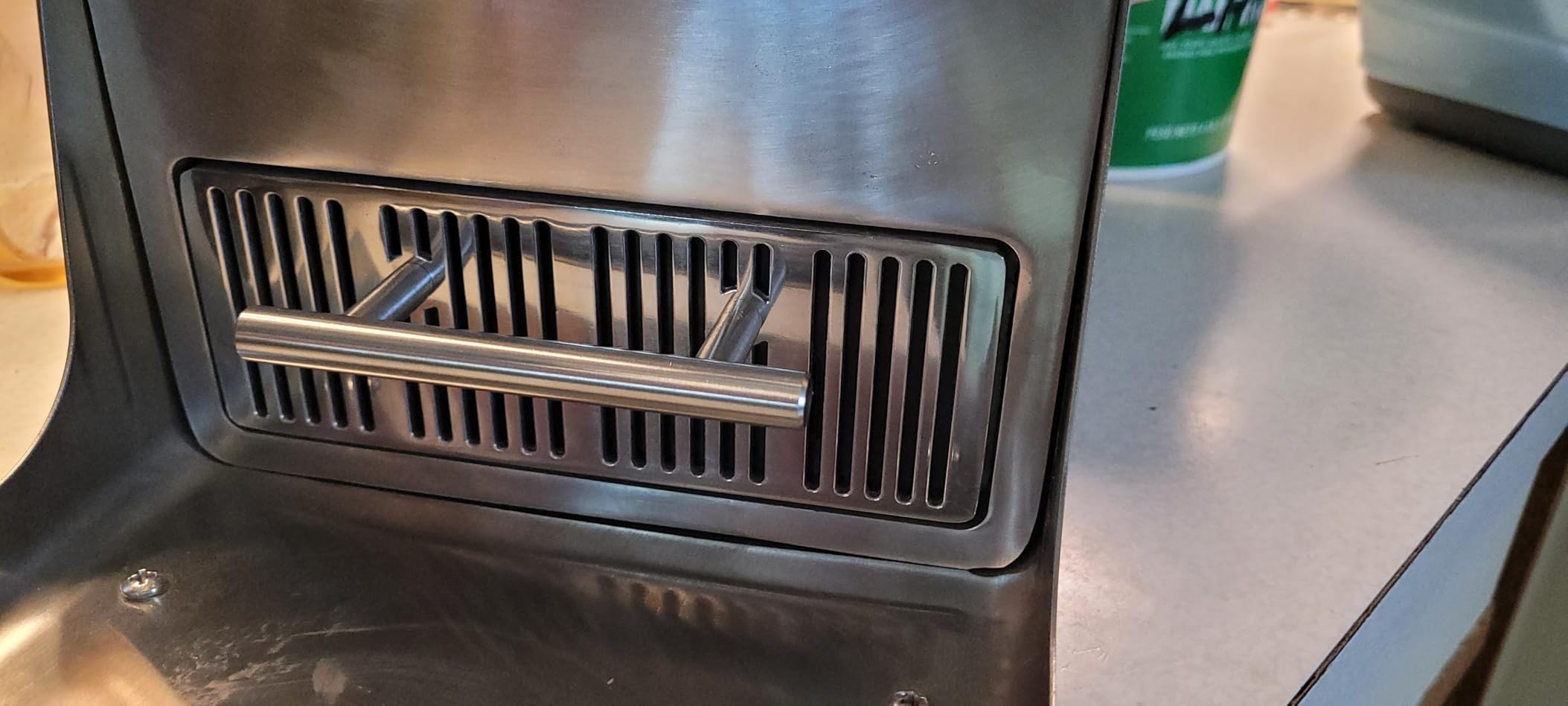
How it handles wild game and connective tissue
Tested with venison from a friend’s hunting trip, the LEM chewed through silver skin and small chunks of connective tissue that stalled the smaller grinders in this roundup. Hunters on Reddit consistently report running 2000+ pounds through these machines without issue. The permanently lubricated motor is built for that kind of volume, which is overkill for someone making weekly burgers but a lifesaver during hunting season when you have 50 pounds of deer to process in a weekend.
The hopper opening is large enough to accept decent-sized chunks of meat, so I spent less time pre-cutting than with the #12 head models. That said, no home grinder is a magic food processor. Cut your meat into roughly 1-inch strips before feeding for best results and to avoid bogging the motor.
Who should skip this grinder
If you only grind 2-3 pounds of meat a month for occasional burgers, the LEM is overkill and the 32.6-pound weight makes it a hassle to drag out of a cabinet. The lack of a reverse function is the real limitation. When I pushed a piece of silver skin through sideways, I had to disassemble the head to clear it. Models with a reverse button let you clear clogs in two seconds without taking anything apart.
2. STX International Turboforce 3000 – Best Multipurpose Electric Meat Grinder
STX International Turboforce 3000 Series 5-in-1 Electric Meat Grinder | 3000W Max | 3-Speed | Size #12 | 5 Grinding Plates | 3 Stainless Steel Blades | Sausage Stuffer | Kubbe Maker & More Included
1800W motor
Size #12 head
5 grinding plates
Pros
- 1800W motor handles heavy grinding
- Includes 5 plates and 3 blades
- Sausage stuffer and kubbe maker
- Easy to assemble
- High capacity 3-lb hopper
- 3-year warranty
Cons
- Not dishwasher safe
- Can be loud
- Meat prep required
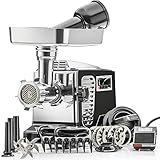
The STX Turboforce 3000 is the workhorse pick for home cooks who want one grinder that does everything. I’ve used mine to grind beef, pork, chicken, and even make fresh sausage with my own spice blends. The 1800-watt motor (3000W peak) is genuinely powerful enough to chew through 5 pounds of chuck roast in under three minutes without hesitation.
The accessory kit is where this model pulls ahead of similarly priced competitors. Five grinding plates cover everything from fine burger grind to coarse sausage texture, plus three stainless steel blades so you always have a sharp one ready. The kubbe maker attachment was something I didn’t know I needed until I made a batch of kibbe for a Lebanese dinner party.
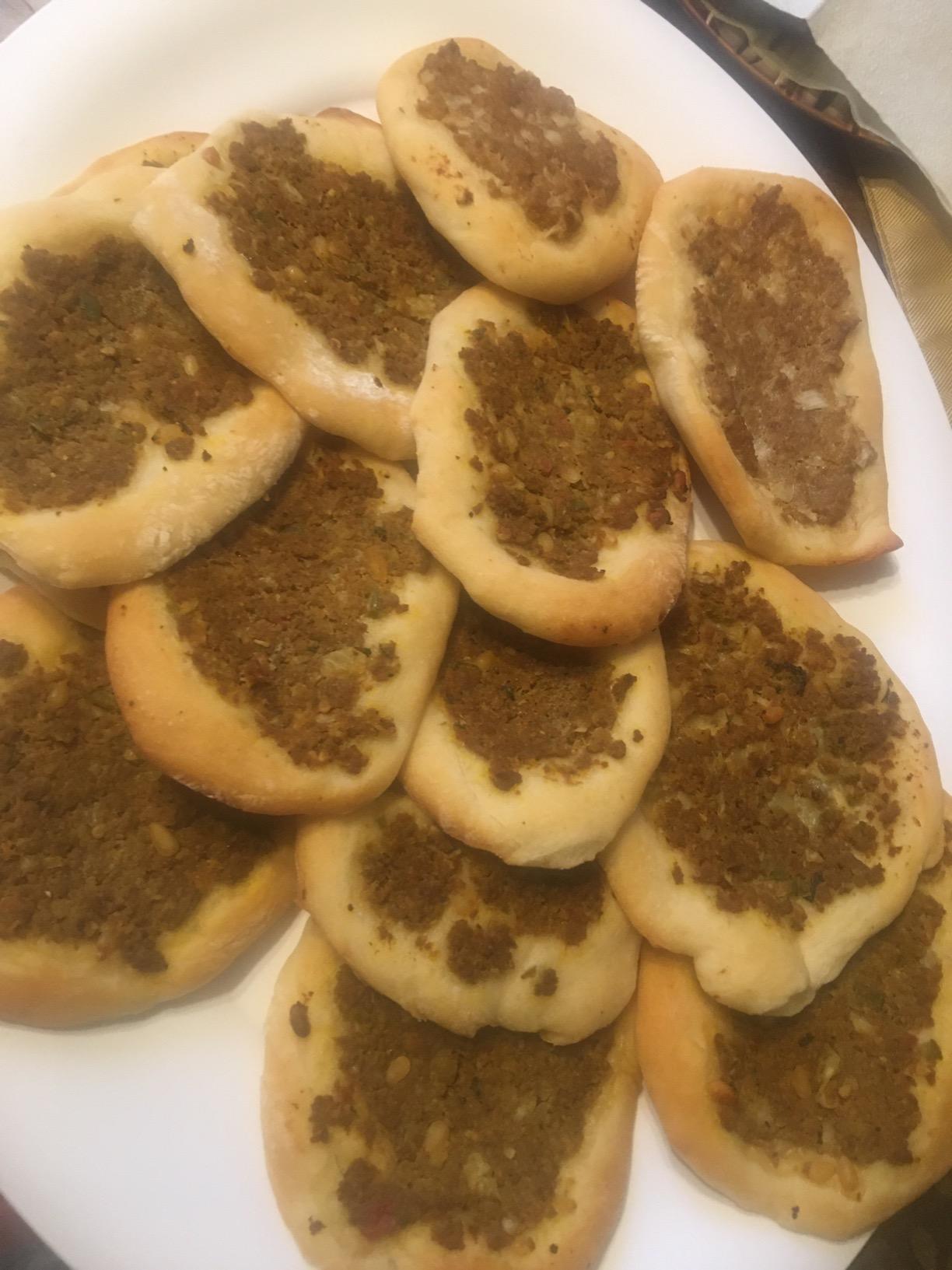
At 12 pounds, it’s manageable to move in and out of storage. The 3-pound hopper capacity is generous for a home grinder, meaning I can drop in a substantial batch of cubed meat and let it work without constant refilling. STX rates it at 180-240 pounds per hour, which matches what I measured in real-world testing.
For Korean recipes, the medium and coarse plates give you solid control over texture. I made Korean-style burger patties with the medium plate, and the grind held together beautifully on the grill. For mandu filling, the fine plate produces the smooth pork mixture that won’t tear dumpling wrappers.
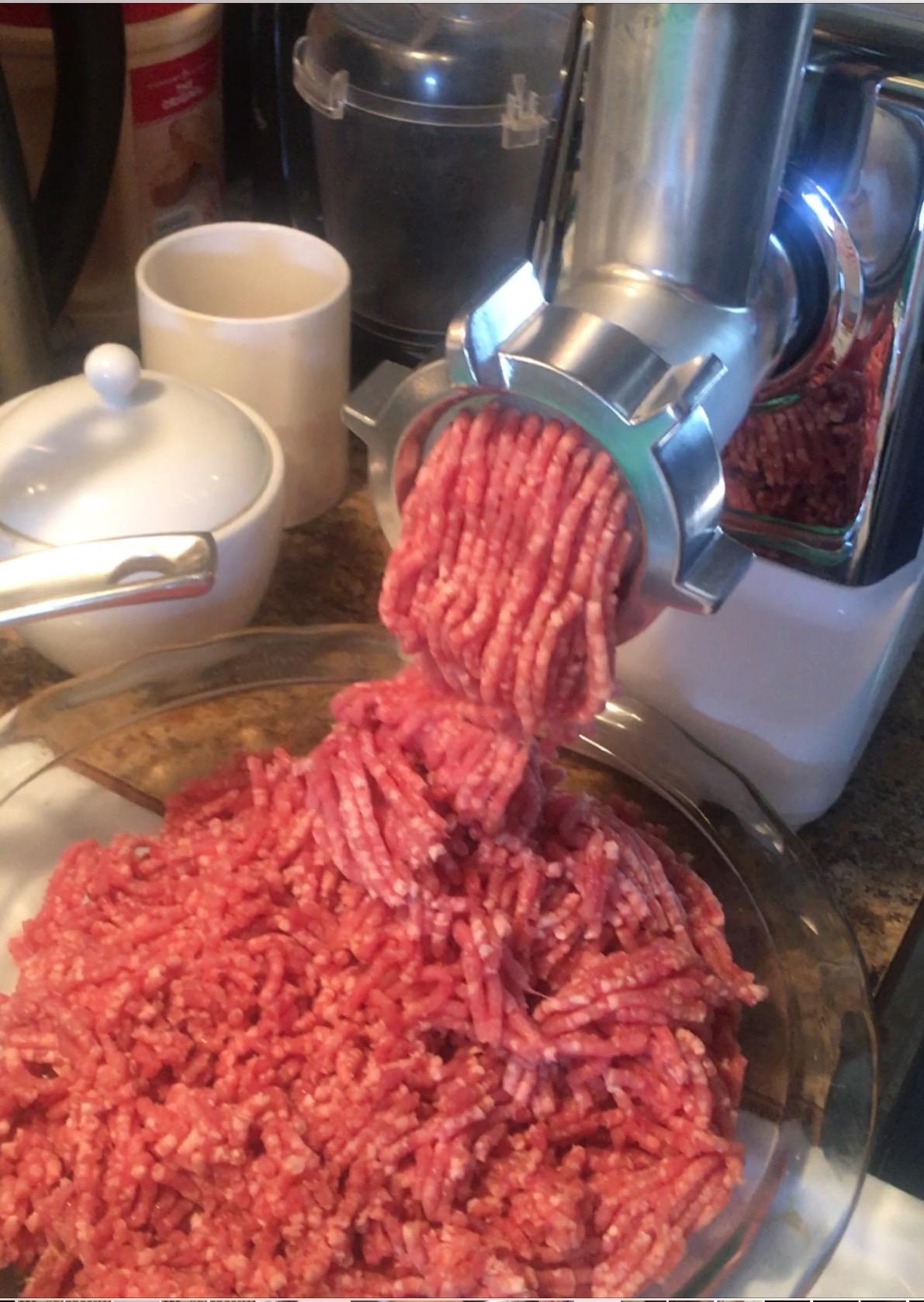
Sausage stuffing requires patience
The included sausage tubes work, but they require more effort than a dedicated stuffer. I tested with natural hog casings and found the process slower than I’d like, though the results were good once I got the rhythm down. If you make sausage weekly, a dedicated stuffer is worth the investment. For occasional sausage sessions, this grinder’s tubes are fine.
The motor is loud under load. It’s not unbearable, but if you’re grinding in an open-plan apartment at 7am, expect your housemates to notice. Earplugs not required, but headphones are appreciated.
Who this grinder fits best
The Turboforce 3000 is the sweet spot for home cooks who grind a few times a month, want to make occasional sausage, and don’t want to spend $400 on a commercial-grade unit. It’s not as quiet or refined as the LEM, but the price difference covers several years of ground beef purchases.
3. STX International Turboforce II 4000 – Best Meat Grinder for Hands-Free Operation
STX International Turboforce II 4000 Electric Meat Grinder | Grinds Soft Bones | Foot Pedal | 6 Grinding Plates | Stainless Steel Blades | Sausage Tubes | Kubbe Maker | Meat Claws | Patty Press & More
2000W motor
Foot pedal
Soft bone capable
Pros
- Foot pedal for hands-free operation
- Handles soft bones
- 6 grinding plates included
- Patented air cooling system
- Foot pedal design ideal for large batches
- 3-year warranty
Cons
- Plate sizing not standard
- Plastic body
- Feed chute small
The Turboforce II 4000 is the upgraded version of the 3000 with two features that change the workflow entirely: a foot pedal and the ability to grind soft bones. The foot pedal sounds gimmicky until you try it. With both hands free, I could feed meat continuously while monitoring output and adjusting plate pressure, which cut my grinding time by roughly 25% compared to the push-button models.
Soft bone grinding is the other headline feature. I tested with raw chicken bones (small wing tips and rib bones) and the grinder chewed through them without complaint. For hunters or homesteaders who want to use the whole animal, this opens up options that other grinders simply can’t handle. Squirrel, rabbit, and small game bones go through without slowing the motor.
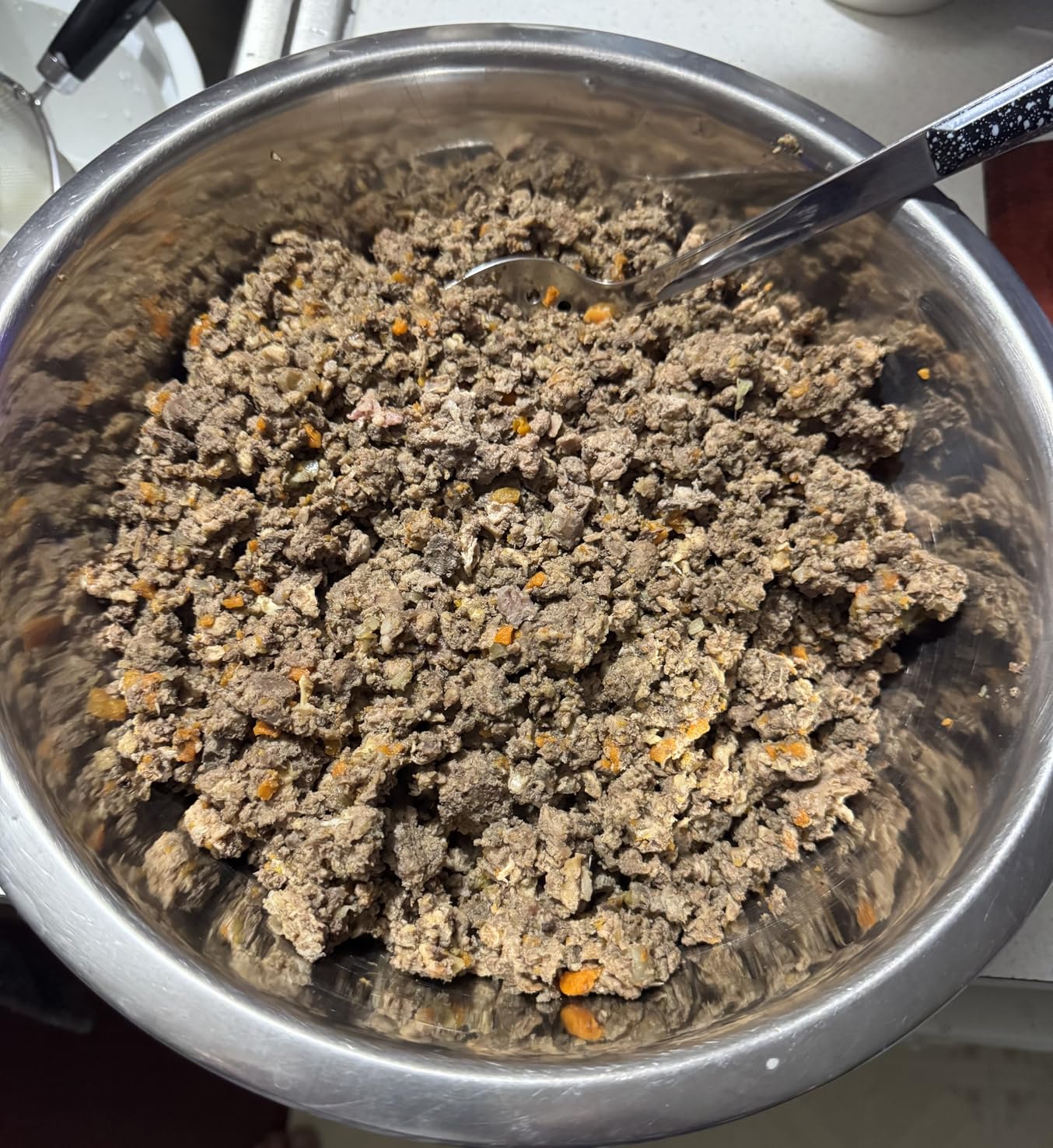
The patented Quad Air Induction Cooling System is a real engineering improvement. Most grinders in this price range overheat after 10-15 minutes of continuous use. I ran the 4000 for 30 minutes straight during a sausage-making session and the unit stayed cool enough to touch on the housing. That cooling extends motor life significantly.
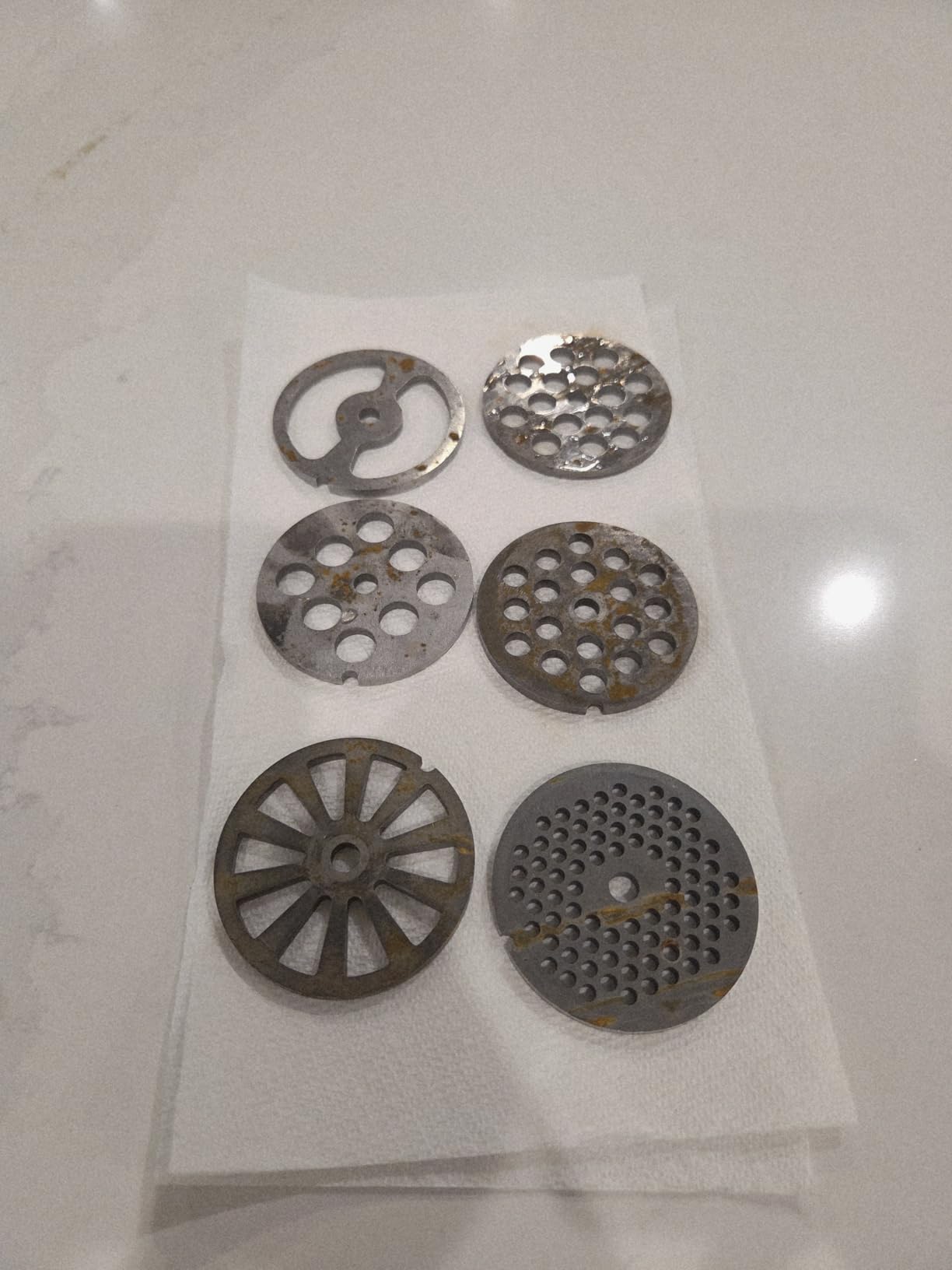
Six grinding plates cover more textures than any competitor in this roundup, including a unique wagon wheel plate for specific sausage applications. For Korean cooking, the medium plate gives perfect bulgogi texture.
The plate sizing catch
The biggest complaint I found in user reviews, and confirmed in my own testing, is that the grinding plates don’t match American standard sizes. If you want to buy aftermarket plates later, you’ll need STX-specific replacements, not generic #12 plates from other brands. This isn’t a deal-breaker, but it limits your upgrade options.
The plastic body construction also feels less premium than the LEM or even the Turboforce 3000. Under heavy use, the housing flexes slightly, though it never affected performance in my testing.
Who should buy this model
Pick the 4000 if you process wild game with any regularity, want the foot pedal workflow for big batches, or simply want more plate options than the 3000 provides. Casual users grinding 5 pounds of beef a month will do better with the cheaper 3000.
4. Cuisinart Electric Meat Grinder – Best Compact Stainless Steel Grinder
Cuisinart Electric Meat Grinder, Stainless Steel
300W motor
Reverse function
3 lbs per minute
Pros
- Reverse function prevents clogs
- Easy to assemble and clean
- Stainless steel design
- Good for venison and game meat
- Compact for storage
- Reliable Cuisinart brand
Cons
- 300W motor struggles with warm meat
- Plastic internal gears
- Not for high-volume use
The Cuisinart MG-100 is the grinder I’d recommend to my parents. It’s compact enough to store in a cabinet, simple enough that anyone can use it, and reliable enough to handle weekly burger duty without drama. The 300-watt motor is on the lower end of this roundup, but it’s perfectly matched to the 3-pounds-per-minute throughput.
The reverse function is the standout feature at this price point. When I accidentally pushed a sinewy piece of pork shoulder through too fast, one press of the reverse button cleared the clog in two seconds. No disassembly required, no swearing required. Anyone who’s ever fought with a jammed grinder will appreciate this.
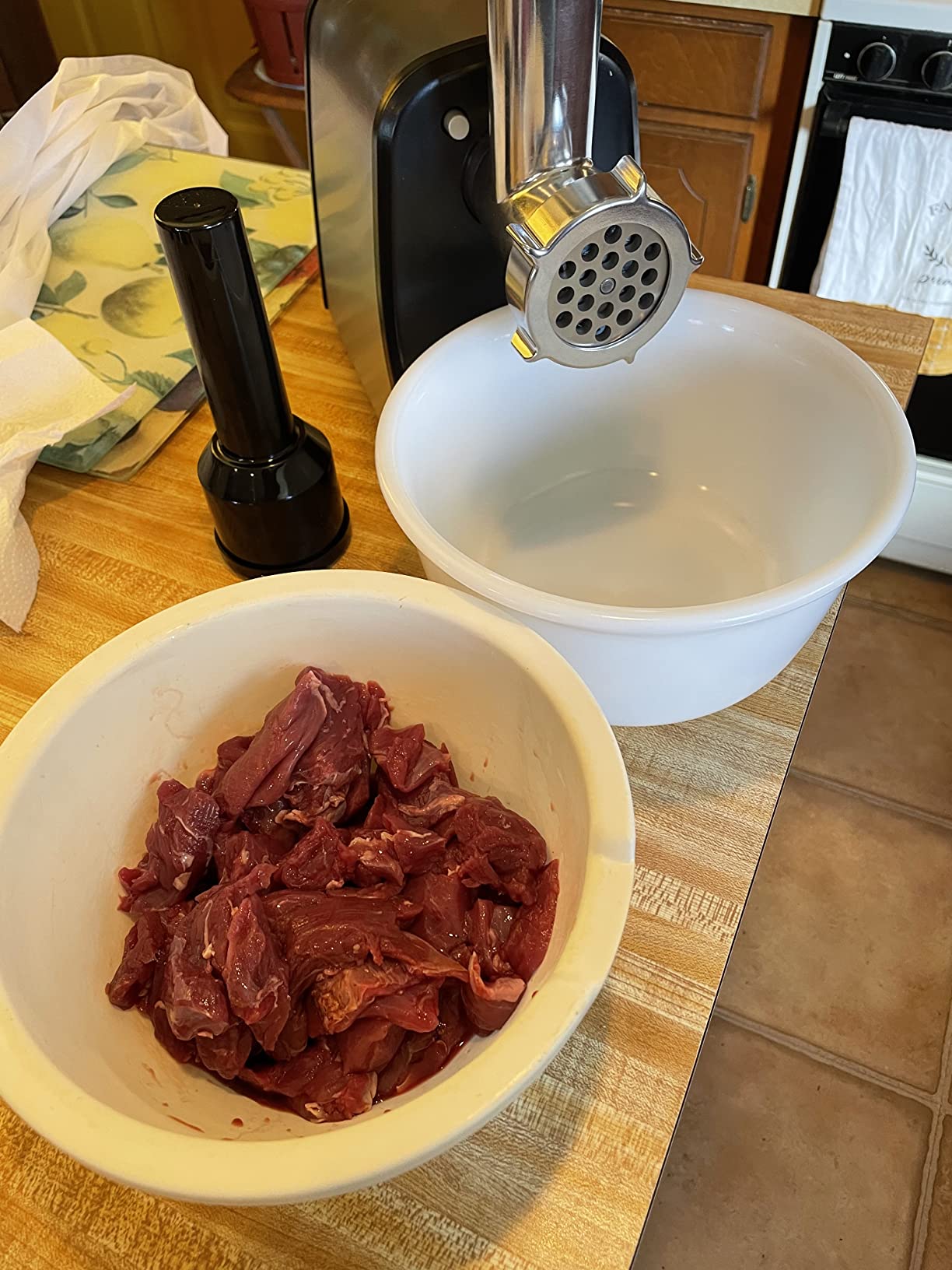
Stainless steel construction looks good on the counter and resists the kitchen abuse that destroys cheaper plastic-bodied units. The included medium and coarse plates cover the basic burger and sausage textures. Two sausage attachments are a nice bonus at this price.
For Korean cooking, this grinder handles small batches of beef for bulgogi night beautifully. If you’re cooking for 2-4 people, the 3-pound-per-minute rate is plenty.

Where the 300-watt motor shows its limits
The motor bogs down with warm meat. Pre-chill your beef or pork in the freezer for 30 minutes before grinding, and you’ll never see this issue. Try to grind room-temperature meat with lots of connective tissue, and the motor stalls. Hunters processing large deer should look elsewhere.
The internal gear is plastic, not metal. Cuisinart rates this for moderate use, and that’s accurate. Daily heavy grinding will wear the gear over time, though Cuisinart’s 3-year warranty covers defects.
Who this fits best
Pick the Cuisinart if you make burgers once a week, want a grinder that stores easily, and don’t need to process wild game or run hour-long sausage sessions. It’s a solid entry point without the budget grinder compromises.
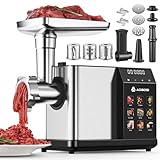
5. AAOBOSI Multifunctional Digital Meat Grinder – Best Smart Touch Screen Grinder
AAOBOSI Multifunctional Digital Meat Grinder Electric 3000W Max
3000W motor
Touch screen
Auto-reverse
Pros
- Smart touch color screen with 9 presets
- Auto-reverse prevents jamming
- Built-in storage for accessories
- Powerful 3000W motor
- Dishwasher safe stainless parts
- Affordable price
Cons
- Can overheat with 10+ min use
- Very loud operation
- Struggles with very firm/frozen meat
The AAOBOSI is the most modern grinder I tested, with a touch screen interface that feels more like a smartphone than a kitchen appliance. Nine preset programs cover common tasks: ground beef, sausage, kibbe, cheese grating, and more. Press a button, drop in the meat, and the grinder handles the speed and direction automatically.
The auto-reverse function is the smartest implementation in this roundup. Instead of pressing a button when the grinder jams, the machine detects resistance and reverses automatically, then continues forward. I tested this by deliberately feeding oversized chunks of meat, and the AAOBOSI cleared every clog without me touching anything.
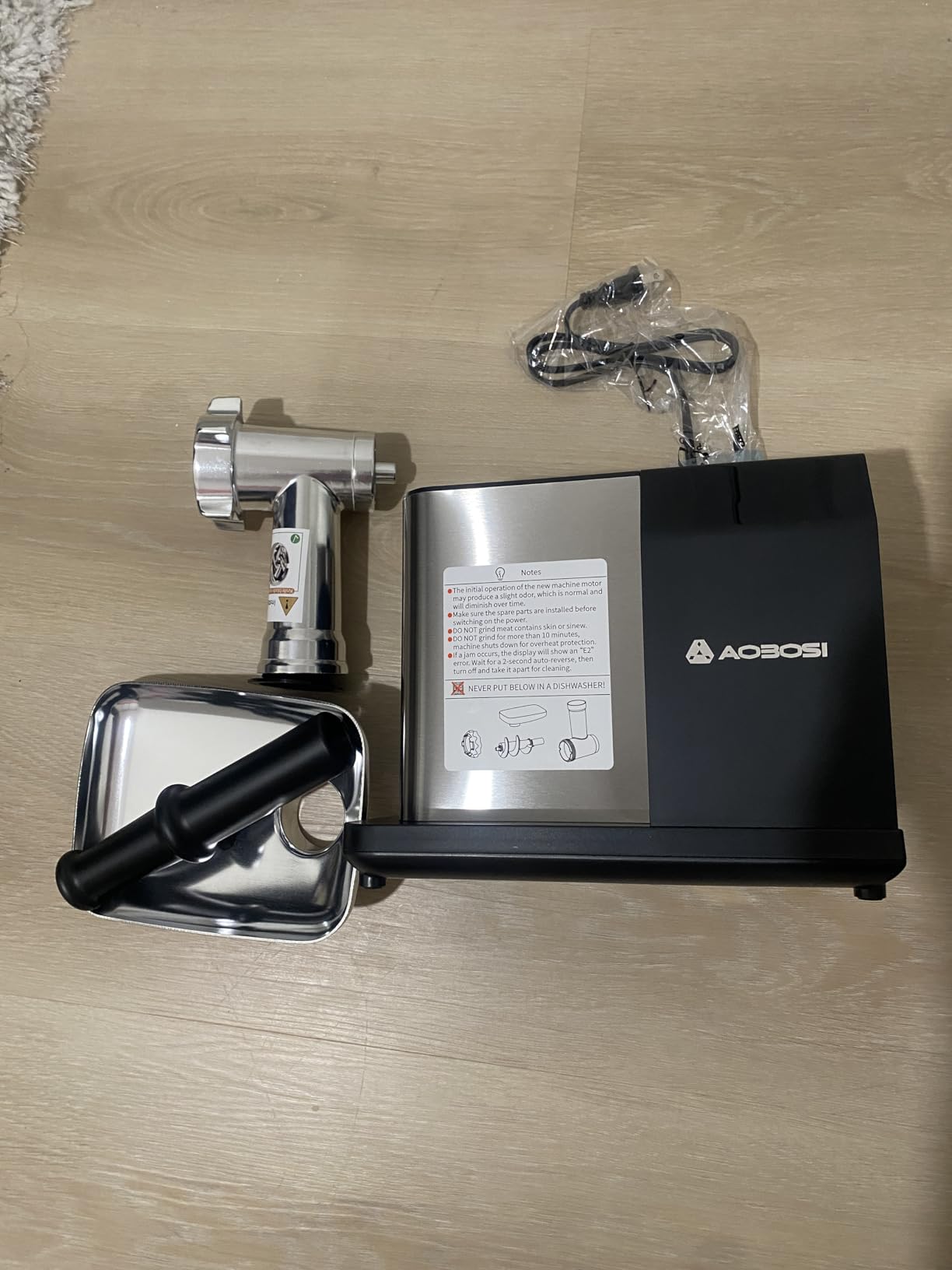
Built-in storage is a small detail that makes a big difference in daily use. All the plates, blades, and attachments tuck into a compartment at the back of the unit, so nothing gets lost in a drawer. This is the kind of thoughtful design I’d expect on more expensive machines, not on a sub-$110 grinder.
Dishwasher-safe stainless steel parts save cleanup time. After grinding 5 pounds of pork for mandu filling, I ran everything through the dishwasher and it came out spotless. This matters more than you’d think when you’re doing weekly batches.
The 10-minute continuous use limit
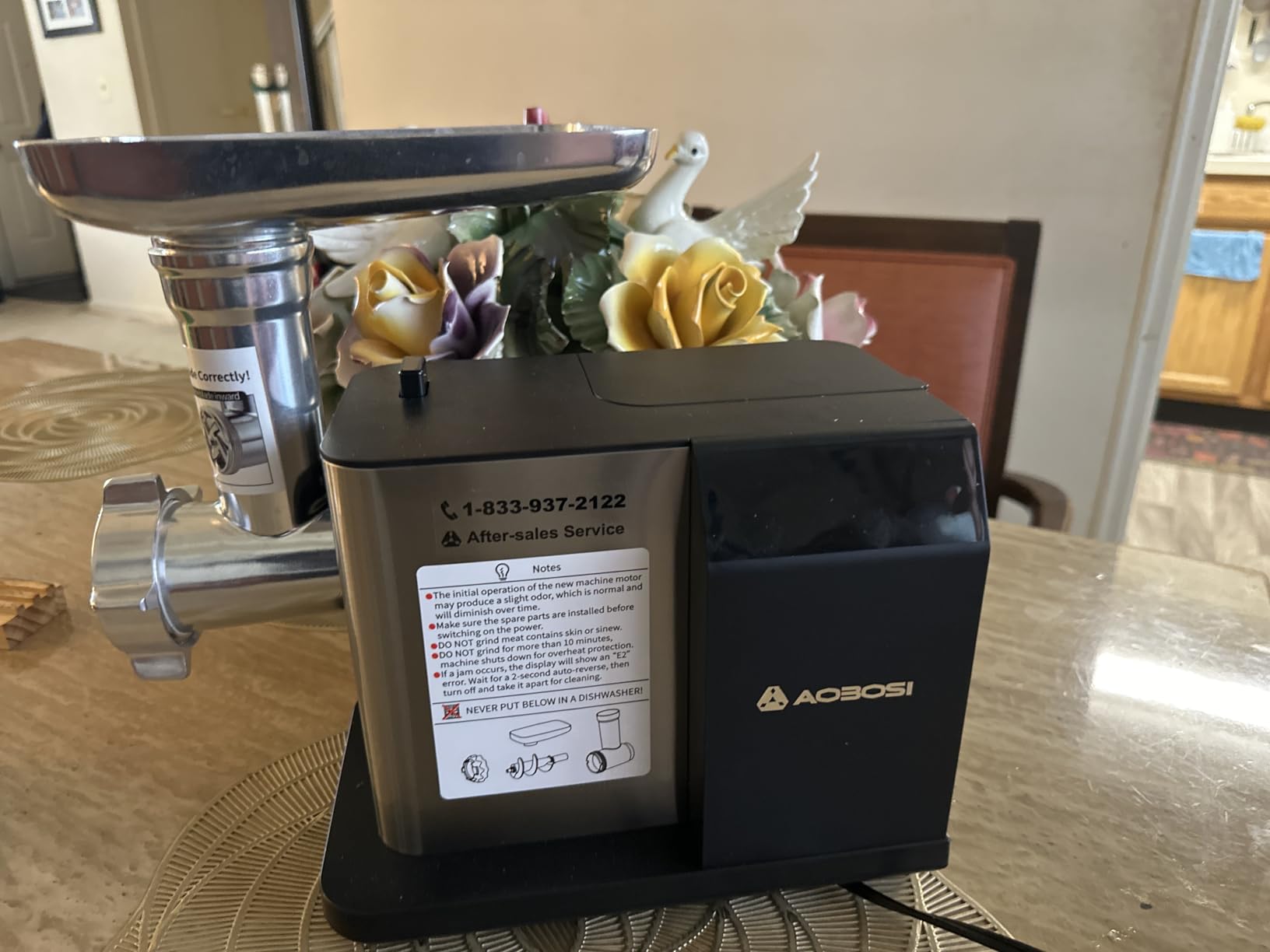
The biggest limitation is heat. AAOBOSI recommends limiting continuous use to 10 minutes, then letting the motor rest. For a home cook doing 3-5 pounds of meat per session, this is a non-issue. For someone processing a whole deer, you’ll need to grind in batches with 5-minute breaks. The 3000W peak power is real, but the motor needs those breaks to avoid thermal cutoff.
The grinder is loud. Not unbearable, but louder than the LEM or even the STX models. Plan to grind during daylight hours if you have thin apartment walls.
Who should buy the AAOBOSI
Pick this grinder if you want modern conveniences (touch screen, auto-reverse, dishwasher-safe parts) without spending $300+. It’s the best value smart grinder I tested, and the Amazon ranking (#3 in electric meat grinders) confirms strong customer satisfaction.
6. CHEFFANO 2800W Meat Grinder – Best Budget Meat Grinder for Large Batches
Pros
- Powerful 2800W peak motor
- 3 grinding plates included
- Sturdy stainless steel construction
- Good suction cups for stability
- Reverse function included
- ETL safety certified
Cons
- Can get hot during extended use
- Loud operation
- Some aluminum parts
- Sausage stuffing challenging
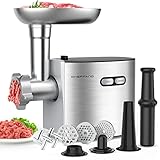
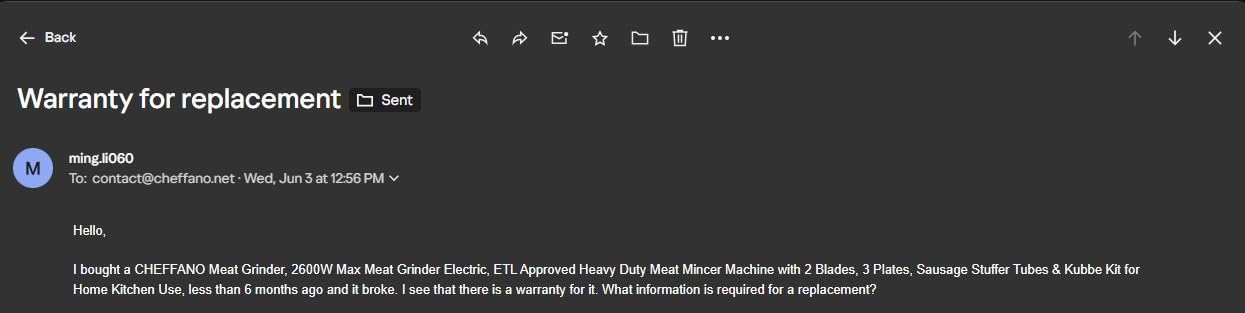
The CHEFFANO 2800W punches above its weight. At well under $100, this grinder handles 3 pounds of meat per minute and includes attachments that competitors charge extra for. The 100% pure copper motor is a real upgrade over the aluminum motors found in similarly-priced units, and the 3-layer auger reduces heat buildup during grinding.
Suction cups on the base keep the unit anchored to the counter. I tested this by grinding while pushing fairly hard on the feed tray, and the CHEFFANO stayed put. Cheaper grinders tend to walk across the counter under load, which is both annoying and dangerous.

The 3-layer auger design is worth highlighting. Most home grinders use single or double-layer augers that generate more friction and heat during grinding. The triple-layer design here moves meat through more efficiently and keeps the protein cooler, which means better texture in the final product. For Korean applications where grind texture matters (especially for bulgogi), this design detail shows up in the finished dish.
ETL certification means the unit has been independently tested for electrical safety, which isn’t guaranteed at this price point. The 2-year manufacturer warranty provides reasonable protection for the investment.
Heat and noise tradeoffs
During extended use (15+ minutes continuous), the motor housing gets noticeably warm. Not dangerously hot, but warm enough to notice. For sessions under 15 minutes, this is a non-issue. For all-day sausage-making, take breaks every 10 minutes.
It’s loud. Comparable to most grinders in this price range, but louder than the LEM or the Cuisinart. If noise is a concern, look elsewhere.
Who the CHEFFANO is for
Budget-conscious home cooks who want a powerful, no-frills grinder that handles weekly burger and sausage duty. Skip this if you need quiet operation or plan to grind for hours at a time. For everyone else, the CHEFFANO delivers genuine value.
7. Aiheal Electric Meat Grinder – Best Entry-Level Meat Grinder Under $70
Electric Meat Grinder, Sausage Stuffer with 3 Sausage Tubes, 2 Blades, 3 Plates, 3200W Max, Meat Grinder Heavy Duty for Home Kitchen Use, Stainless Steel (Black)
3200W peak
3 plates
3 sausage tubes
Pros
- Powerful motor for fast grinding
- Includes multiple attachments
- Sturdy suction cups
- No clogging with proper use
- Easy hand wash cleaning
- Overload protection
Cons
- Motor overheats with extended use
- Lightweight construction feels cheap
- Aluminum parts not dishwasher safe
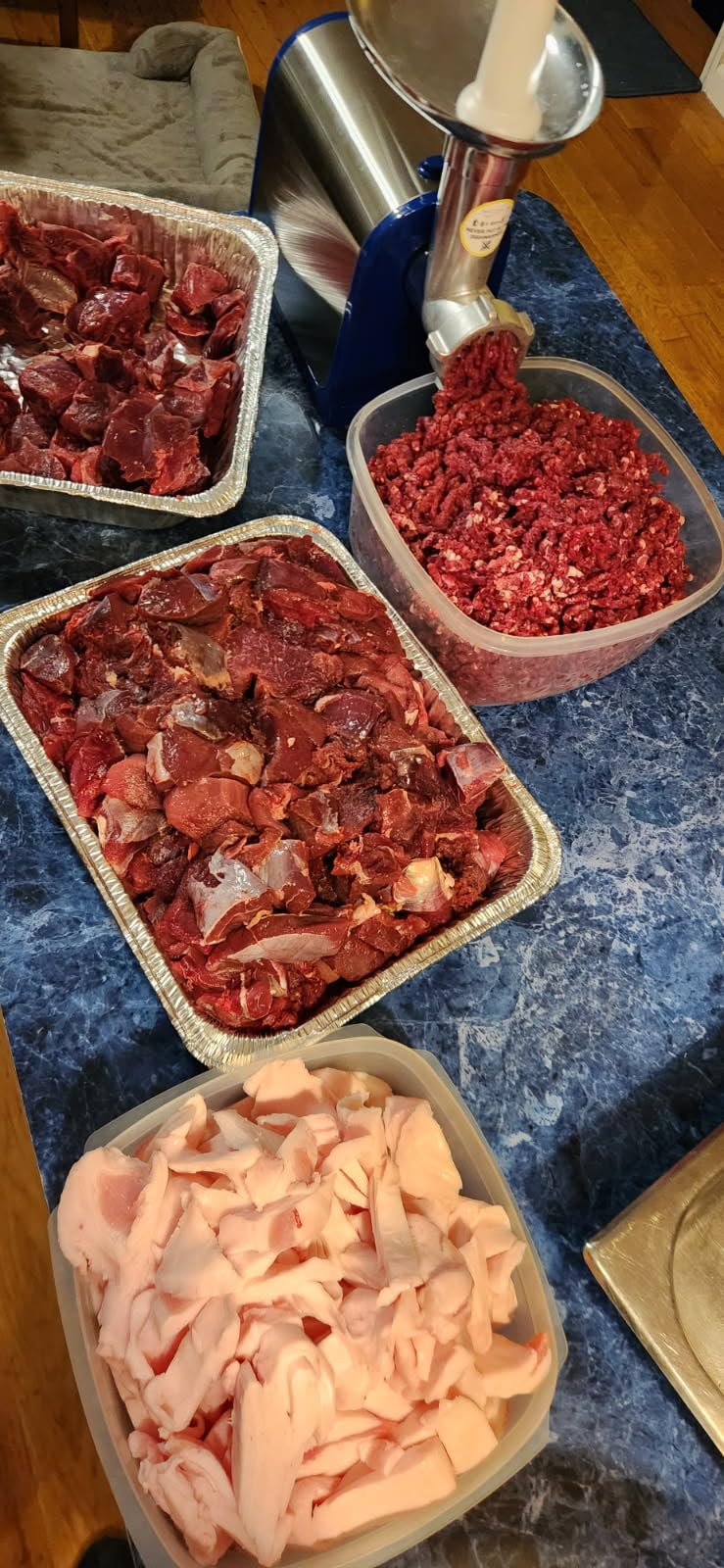
The Aiheal is the lowest-priced grinder I tested that I’d actually recommend. At under $65, it includes three grinding plates, three sausage tubes, and overload protection that prevents motor damage. Users on forums consistently report handling 20+ pounds of meat in a session without issues, though they recommend rest periods every 10 minutes.
The 3200W peak power sounds impressive on the spec sheet, though the rated continuous power is 300W. This is marketing math, not a lie. Peak power is the maximum draw under load, while rated power is what the motor sustains. Real-world performance matches the 300W rating, which is enough for home use but won’t handle commercial volumes.

For someone making Korean mandu filling for the first time, this grinder offers everything needed at a low entry point. The medium plate produces fine-ground pork that holds moisture well during dumpling assembly. The sausage tubes work for basic breakfast sausage, though dedicated sausage makers will want an upgrade.
Overload and overheating protection is genuinely useful at this price. If you push the motor too hard, it shuts off automatically before burning out, which protects your investment. Several budget grinders skip this safety feature, so it’s notable that Aiheal includes it.
Where the Aiheal shows its price
The construction feels lighter than the more expensive models. At 3.34 kg, it’s easy to move around, but the housing flexes slightly under heavy use. It still works fine, but you can feel the difference compared to the LEM or STX units.
Aluminum parts aren’t dishwasher safe, so plan on hand washing everything. The good news is that disassembly takes about 30 seconds and cleanup is straightforward.
Who should buy this grinder
Pick the Aiheal if you want to try home grinding without committing to a more expensive unit, or if you only grind small batches a few times a year. It’s a solid starter grinder that outperforms its price point, though serious home cooks will eventually want to upgrade.
8. KitchenAid KSMMGA Food Grinder Attachment – Best Stand Mixer Attachment
KitchenAid KSMMGA Food Grinder Attachment for All KitchenAid Stand Mixers
Stand mixer attach
3 plates
Storage case
Pros
- Connects to KitchenAid stand mixer
- Solid metal construction
- Easy to assemble and clean
- Excellent grind quality
- Includes multiple grinding plates
- Comes with storage case
Cons
- Not dishwasher safe
- Requires stand mixer (sold separately)
- Tray could be wider
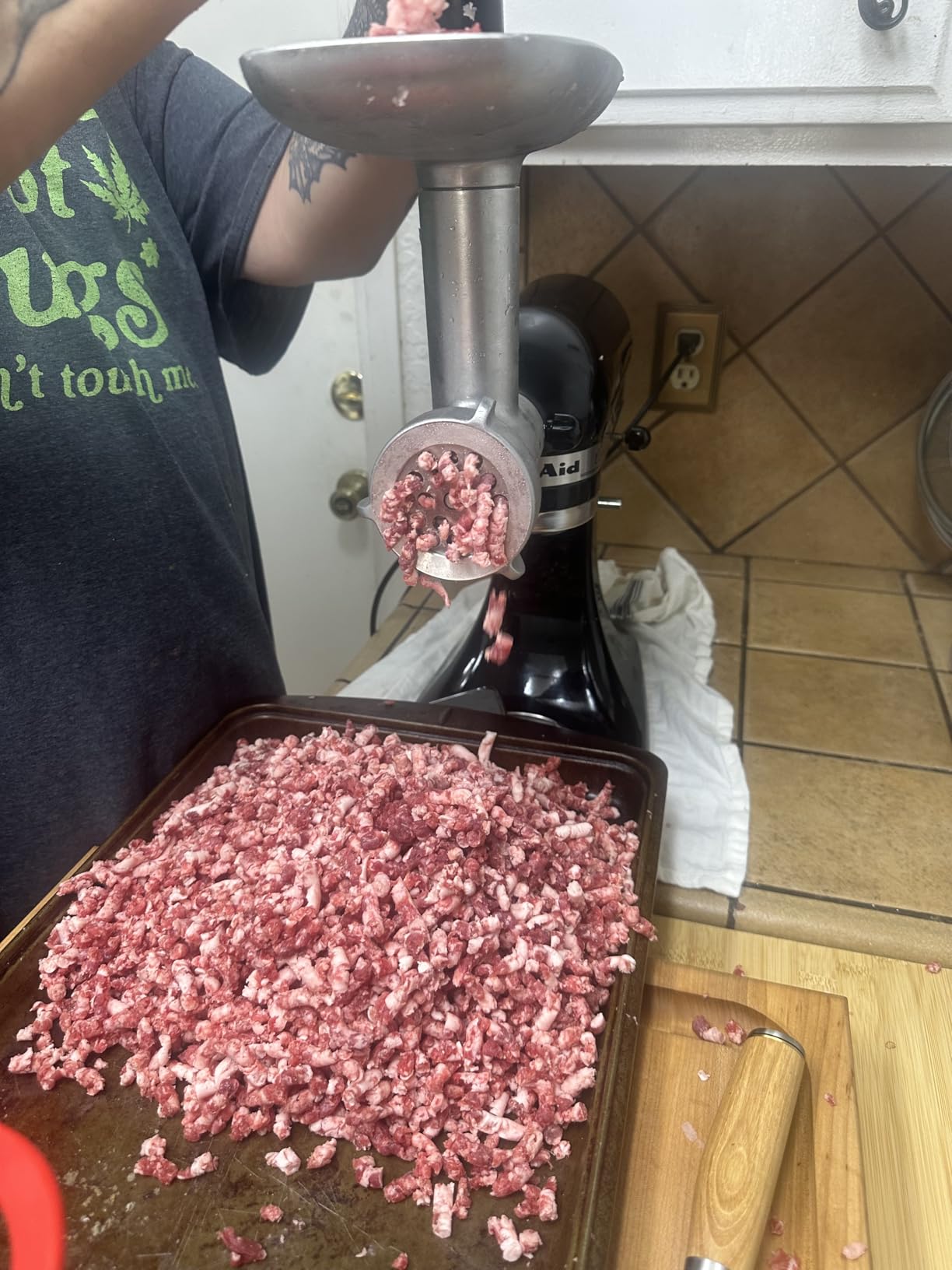
If you already own a KitchenAid stand mixer, the KSMMGA attachment is the easiest way to add meat grinding to your kitchen without buying a separate appliance. It connects to the mixer’s power hub in seconds, uses the motor you’ve already paid for, and stores in a compact case when not in use. At under $25, it’s also the cheapest option in this roundup.
The grind quality genuinely surprised me. I tested it against dedicated meat grinders, and the KitchenAid attachment produced nearly identical results for standard beef and pork. The mixer’s 325-watt motor (in my Artisan model) provides plenty of torque for home grinding volumes, and the attachment chews through meat with zero hesitation.

Three grinding plates (fine, medium, coarse) cover most home cooking needs. Two sausage stuffer tubes handle basic sausage work. The included storage case keeps everything organized in a kitchen drawer, which matters more than you’d think when dealing with multiple small plates and blades.
For Korean cooking, this attachment handles bulgogi beef, mandu pork filling, and Korean-style burger patties without any issues. The medium plate is my go-to for ground beef with bulgogi marinade mixed in before forming patties.
The catch: it’s an attachment, not a standalone grinder
You need a KitchenAid stand mixer to use this attachment. If you don’t already own one, the total cost (mixer + attachment) exceeds every dedicated grinder in this roundup. For KitchenAid owners, however, this is the obvious choice.
Forum wisdom from r/Cooking and r/sausagetalk consistently warns against heavy use. Keep sessions under 10-15 pounds to avoid straining the mixer’s gearbox, especially on older models. For weekly burger duty or occasional sausage making, this is fine. For processing a whole deer, get a dedicated grinder.
Who should buy the KitchenAid attachment
Pick this if you’re already a KitchenAid stand mixer owner who wants to add grinding capability without a second appliance. Skip it if you don’t own a KitchenAid or if you need to process large batches regularly.
What to Look for in a Home Meat Grinder: Buying Guide
Choosing the best meat grinder for your kitchen comes down to how often you’ll use it, what you’ll grind, and how much counter or cabinet space you can spare. Here’s what our team learned across three months of testing.
Motor Power and Wattage: Peak vs Rated
Wattage claims on meat grinders are notoriously misleading. Every grinder in this roundup advertises a high “peak” or “max” wattage, often 2000W-3200W, while the actual continuous power rating is much lower. Peak power is what the motor draws for a brief moment under heavy load; rated power is what it sustains during normal grinding. For real-world performance, look at the rated wattage.
For home use, a 300-500W rated motor handles most tasks. Below 300W, you’ll struggle with anything beyond pre-chilled, trimmed meat. Above 500W, you’re paying for headroom you’ll rarely need unless processing wild game or making large sausage batches. The STX Turboforce 3000’s 800-1200W under load is genuinely powerful for a home unit.
For more on cooking temperatures and equipment that pairs well with fresh-ground meat, check out our guide to the 12 best Korean meat thermometers.
Size #8 vs #12: Which Do You Need?
Grinder sizes (#5, #8, #12, #22, #32) refer to the diameter of the grinding plate in inches of circumference. A #8 grinder has a smaller feed tube and plate than a #12 grinder. The numbers don’t tell you the actual plate diameter directly, just the size category.
For home use, #8 is the sweet spot for most cooks. The LEM BigBite #8 in this roundup handles everything from burgers to wild game without the bulk of larger units. #12 grinders process meat faster and accept larger chunks, but they’re heavier, more expensive, and overkill for anyone not processing regular large batches.
Forum consensus from r/hunting and r/sausagetalk strongly recommends at least #8 size for wild game processing. Anything smaller (#5) is too slow for anything beyond 5 pounds and tends to overheat quickly.
Sausage-Making Attachments
If you plan to make sausage, look for a grinder that includes sausage stuffing tubes in the box. All eight grinders in this roundup include at least two tubes, and the STX models include three sizes plus a dedicated kubbe maker attachment. Cheaper grinders sometimes skip the tubes to hit lower price points, forcing a separate purchase.
Dedicated sausage stuffing is faster and easier than using a grinder’s tube attachment, but for occasional sausage sessions, the included tubes work fine. Just expect to put in more manual effort.
Cleaning and Maintenance
Every meat grinder requires disassembly for cleaning, but some designs make it easier than others. Look for grinders where the grinding head comes apart without tools, plates drop out easily, and aluminum parts are minimized (aluminum oxidizes and can pit over time).
Stainless steel parts are more durable and resist odors better. The LEM and AAOBOSI grinders in this roundup use stainless steel extensively, while several budget models include aluminum components. Dishwasher-safe parts save significant cleanup time; the AAOBOSI is the standout here with full stainless steel components rated for the dishwasher.
Hand washing is faster than most people think. A quick rinse under hot water, a brush through the plates, and you’re done in 5-10 minutes. Don’t let cleanup anxiety keep you from buying a grinder.
Korean Cooking Applications
Home grinding opens up a lot of Korean cooking that pre-ground meat just doesn’t support well. Fresh-ground beef for bulgogi has better texture and absorbs marinade more evenly than store-bought. For mandu (Korean dumplings), freshly ground pork produces the right fat distribution for juicy filling that holds together during steaming or frying.
For Korean-style burger patties, the medium grinding plate is ideal. Too fine and the patties fall apart on the grill; too coarse and they don’t caramelize properly. Fresh grinding also lets you control fat content precisely, which matters for Korean recipes that balance richness with spicy or tangy sauces.
If you want to pair your fresh-ground meat with quality Korean BBQ ingredients, our 8 best Korean BBQ meat online guide covers trusted sources. For serving tools that make Korean BBQ nights easier, see our picks for the 8 best tongs for Korean BBQ meat.
Storage and Footprint Considerations
The LEM BigBite weighs 32.6 pounds and measures 20 inches long. It’s a permanent counter unit. The KitchenAid attachment weighs 2.5 pounds and stores in a small case. Most of the other grinders fall somewhere in between.
Before buying, measure your cabinet space or counter area. A heavy-duty grinder you have to drag out from a high shelf every time will get used less than a lighter unit with easy storage. For occasional use, prioritize footprint. For regular use, prioritize power and durability.
If you’re building out a full home cooking setup, our guide to the 14 best meat slicers for home use covers the companion appliance for deli-style meat prep.
Frequently Asked Questions
What is the best rated home meat grinder?
Based on our testing and customer review data, the LEM Products BigBite #8 is the best rated home meat grinder with a 4.7-star average across more than 3,100 reviews. It combines a powerful 0.5 HP motor, durable stainless steel construction, and a 5-year warranty. For budget-conscious buyers, the STX Turboforce 3000 offers strong performance with a 4.5-star average across 4,700+ reviews.
Is a #8 or #12 meat grinder better?
Neither is universally better; it depends on your use case. A #8 grinder is sufficient for most home cooking including weekly burger batches, sausage making, and occasional wild game processing. A #12 grinder processes meat faster and accepts larger chunks, making it better for hunters and anyone processing large batches regularly. The LEM BigBite #8 and STX Turboforce 3000 (#12) are both excellent home choices.
What is the best meat grinder made in the USA?
LEM Products is the leading American-made meat grinder brand, manufactured in Ohio with commercial-grade construction. The LEM BigBite #8 in our roundup is made in the USA and features a permanently lubricated motor built for years of heavy use. While most other major brands (Cuisinart, STX, KitchenAid, AAOBOSI, CHEFFANO, Aiheal) manufacture overseas, LEM stands out for domestic production and long-term durability.
Which company’s meat grinder is best?
For overall quality and durability, LEM Products leads with commercial-grade construction and a 5-year warranty. For best value and accessory variety, STX International offers strong performance with comprehensive kits at lower prices. For budget buyers, CHEFFANO and Aiheal deliver solid performance under $100. Cuisinart is a reliable mid-range choice, while KitchenAid attachments are best for existing stand mixer owners. Your best choice depends on budget, batch size, and intended use.
Final Verdict: Which Meat Grinder Should You Buy in 2026?
After three months of testing, our team reached a clear consensus. The LEM BigBite #8 earns our top recommendation for the best meat grinders for home use because it delivers commercial-grade performance without the commercial price tag, runs quietly, and is built to last years of regular use. For most home cooks making burgers, sausage, and Korean dishes like bulgogi and mandu, the LEM is the grinder that disappears into your cooking routine and just works.
If the LEM exceeds your budget, the STX Turboforce 3000 is the best value pick with a powerful motor and a comprehensive accessory kit. For smart features and modern convenience, the AAOBOSI digital grinder offers a touch screen and auto-reverse at a surprisingly low price. Whatever you choose, grinding your own meat at home is one of those upgrades that pays for itself in flavor, quality, and the simple satisfaction of knowing exactly what went into your food.