
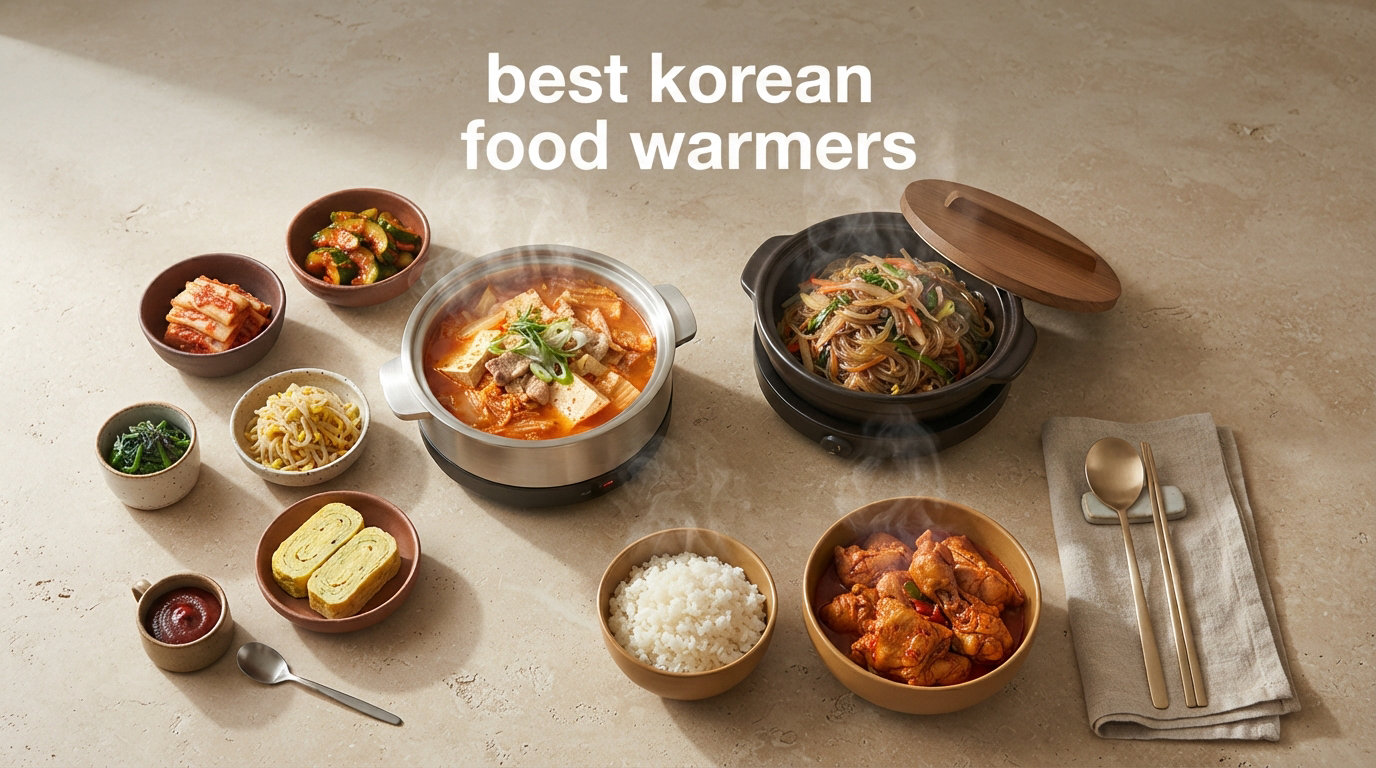
Nothing ruins a Korean meal faster than cold rice and lukewarm banchan. If you have ever hosted a Korean dinner and watched your carefully prepared side dishes go cold within fifteen minutes, you already understand why finding the best Korean food warmers matters so much for authentic home cooking.
I have spent the past several months testing warming trays, dolsot bowls, buffet servers, and commercial rice warmers in my own Korean home kitchen setup. After cooking dozens of banchan spreads, hosting multiple Korean BBQ nights, and serving everything from bibimbap to budae jjigae, I learned that Korean food demands a different kind of warming equipment than typical Western dishes.
Korean food warmers are specialized heating devices built to keep Korean dishes, including banchan side dishes, steamed rice, Korean BBQ meats, and hot pot stews, at ideal serving temperatures between 140 and 185 degrees Fahrenheit. Unlike generic warmers, they need to handle multiple small dishes simultaneously, sustain higher temperatures for long meals, and accommodate the unique way Korean food is served family-style at the table.
In this guide, I cover ten Korean food warmers that actually work for real Korean cooking at home. Whether you need an electric warming tray for banchan, a stone bowl for sizzling bibimbap, or a commercial rice warmer for a restaurant or large gathering, I have tested and compared the options so you can choose the right one for your kitchen.
Table of Contents
Top 3 Picks for Best Korean Food Warmers
Out of the ten warmers I tested, three stand out for different Korean cooking needs. These are my top recommendations based on real use with Korean food.

Chefman Electric Warming Tray
- 21 x 16 inch glass surface
- 450 watts
- Adjustable temperature
- Cool-touch handles

iTRUSOU Rollable Warming Mat
- 24 x 16 inch silicone mat
- 3-level temp control
- Rollable storage
- 250 watts

Crazy Korean Cooking Dolsot
- Authentic stone bowl
- Excellent heat retention
- Bibimbap and stew ready
- Oven and stovetop safe
Best Korean Food Warmers in 2026
Here is a complete comparison of all ten Korean food warmers I reviewed. The table breaks down the key specs so you can quickly scan which warmer fits your Korean cooking setup.
| Product | Specifications | Action |
|---|---|---|
| Chefman Electric Warming Tray |
|
Check Latest Price |
| iTRUSOU Warming Mat |
|
Check Latest Price |
| Crazy Korean Cooking Dolsot |
|
Check Latest Price |
 KooK Korean Dolsot Bowl KooK Korean Dolsot Bowl |
|
Check Latest Price |
 Proctor Silex Buffet Server Proctor Silex Buffet Server |
|
Check Latest Price |
 Elite Gourmet Buffet Server Elite Gourmet Buffet Server |
|
Check Latest Price |
 NutriChef Buffet Warmer NutriChef Buffet Warmer |
|
Check Latest Price |
 OVENTE Buffet Server OVENTE Buffet Server |
|
Check Latest Price |
 Winco Commercial Rice Warmer Winco Commercial Rice Warmer |
|
Check Latest Price |
 Pantin Commercial Rice Warmer Pantin Commercial Rice Warmer |
|
Check Latest Price |
1. Chefman Electric Warming Tray – Best Overall Korean Food Warmer
Chefman Electric Warming Tray with Adjustable Temperature Control, Perfect For Buffets, Restaurants, Parties, Events, and Home Dinners, Large 21” x 16” Glass-Top Surface Keeps Food Hot – Black
21 x 16 inch glass surface
450 watts
Adjustable temperature knob
Cool-touch handles
LED heat indicator
Pros
- Large 21 by 16 inch tempered glass surface fits multiple banchan dishes
- Heats up fast and keeps consistent warmth for hours
- Easy to clean glass top wipes down in seconds
- Cool-touch handles make safe transport simple
- cETL approved with overheat protection
Cons
- Temperature knob lacks specific number markings
- Bottom heats up and needs a heat-resistant surface below
- Glass can scratch if pans are dragged
The Chefman Electric Warming Tray became my go-to Korean food warmer the first time I used it for a full banchan spread. I lined up six small dishes of kimchi, namul, seasoned spinach, fish cakes, japchae, and pickled radish across the 21 by 16 inch tempered glass surface, and every single dish stayed warm for our entire two-hour dinner.
At 450 watts, this tray delivers serious and consistent heat. Korean food needs that sustained power because so many dishes are served together and eaten slowly. I noticed that banchan which usually turns cold and unappetizing after twenty minutes stayed perfectly warm even at the ninety-minute mark.
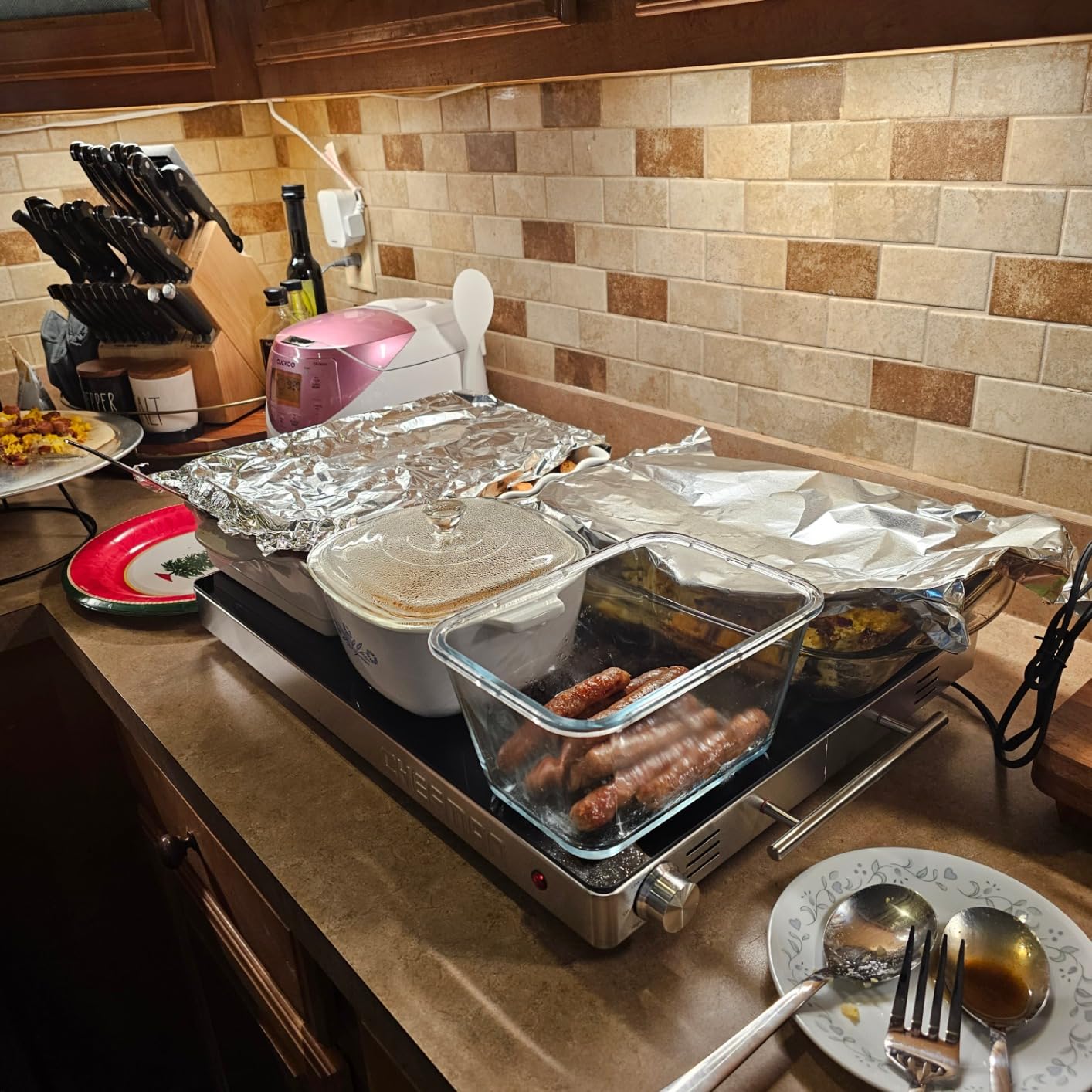
The glass surface is a major advantage over metal warming trays. It wipes clean in seconds, which matters when you are dealing with gochujang stains and sesame oil residue from Korean side dishes. I also appreciate the cool-touch handles, since I often move the tray from the kitchen counter to the dining table mid-meal.
One thing to watch is the bottom of the unit. It gets hot during use, so you need a heat-resistant surface underneath. I made the mistake of placing it directly on my wooden dining table once, and the heat left a faint mark. A simple trivet or silicone pad solves this completely.
What Type of Korean Food It Handles Best
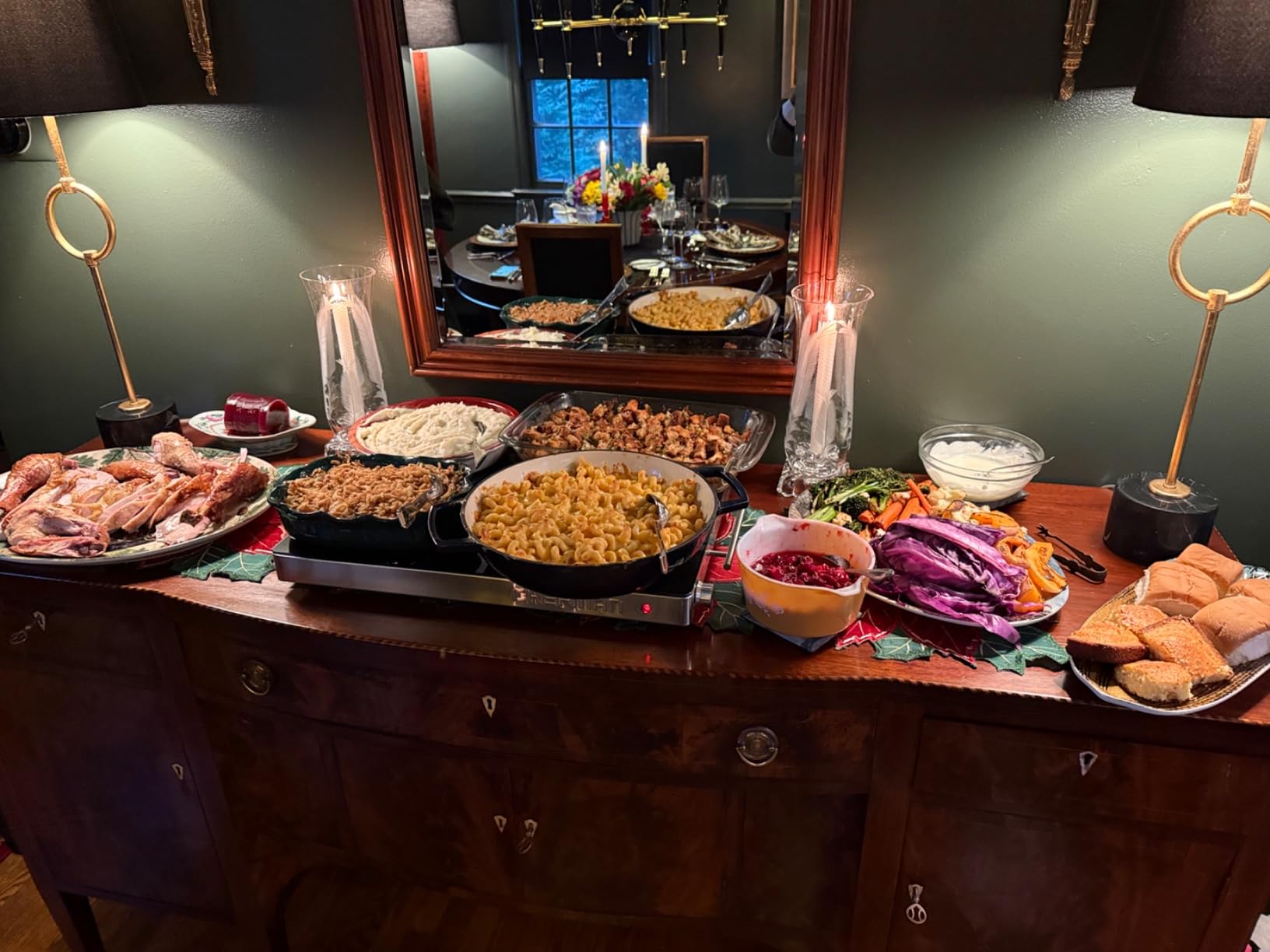
This Chefman tray excels at keeping banchan and rice warm for family meals. I have used it for Korean holiday dinners serving eight people, and it handled multiple side dishes, a large bowl of rice, and a casserole dish of bulgogi all at once. The 21 inch length gives you real flexibility for laying out a full Korean spread.
For Korean BBQ nights, it works well as a secondary warmer to keep cooked meat warm while the next batch grills. It is not designed for grilling itself, but as a holding station for finished meat and side dishes, it performs reliably.
Who Should Buy This Warmer
This is the best Korean food warmer for home cooks who regularly serve multi-dish Korean meals. If you make banchan weekly, host Korean dinner parties, or want to replicate the always-hot experience of a Korean restaurant at home, this tray delivers the surface area and consistent heat you need.
It is less ideal if you need a portable solution for camping or want to cook raw meat on the warmer itself. For those use cases, look at the dolsot bowls or commercial rice warmers below.
2. iTRUSOU Rollable Warming Mat – Best Value Korean Food Warmer
Warming Mat for Food (24″x16″) – iTRUSOU 3-Year Classic Electric Warming Tray with 3-Level Temp Control, Rapid Heating 250W Energy-Saving – Rollable Large Food Warming Mat for Parties & Buffet
24 x 16 inch silicone mat
250 watts
3-level temperature control
Rollable for storage
Automatic shut-off
Pros
- Spacious 24 by 16 inch surface fits 4 to 6 full plates
- Rollable design stores easily in a drawer or bag
- Three precise temperature levels at 140
- 176
- and 212 degrees F
- High-density silicone prevents warping and curling
- Energy efficient at 250 watts
Cons
- Lower heat settings may not warm thoroughly enough for some dishes
- Heat transfers best only with flat-bottomed dishes
- Control button durability concerns over time
The iTRUSOU Warming Mat surprised me with how well it handles Korean food for the price. I was skeptical about a silicone mat compared to a solid glass tray, but after using it for three weeks of Korean home cooking, I am genuinely impressed by the even heat distribution across the full 24 by 16 inch surface.
The three temperature levels are clearly labeled at 140, 176, and 212 degrees Fahrenheit. For Korean banchan and rice, I usually set it to 176 degrees, which keeps food at that perfect serving temperature without continuing to cook it. The 212 degree setting is great for keeping stews and soups genuinely hot.
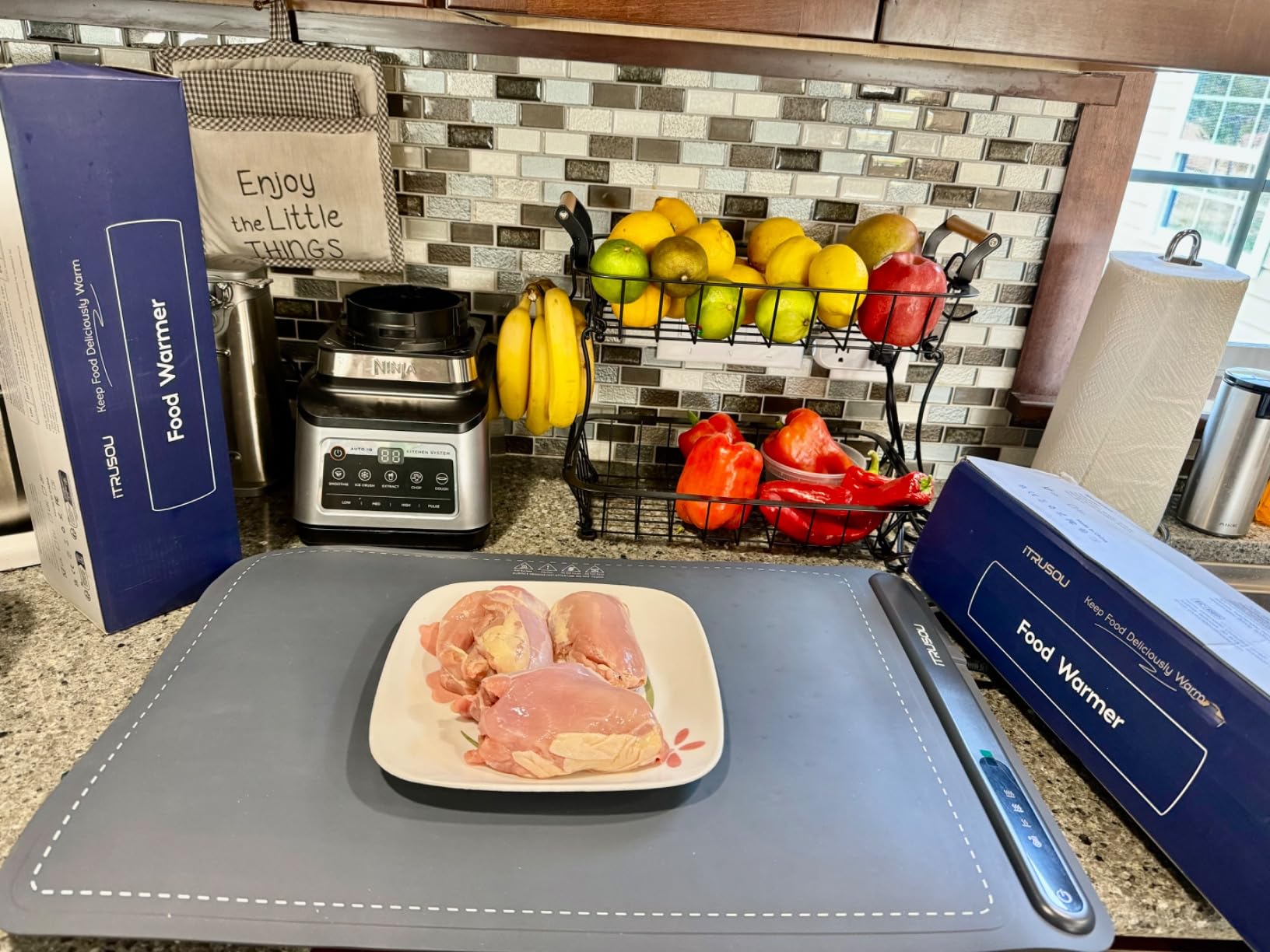
What makes this mat special for Korean cooking is the rollable design. Korean kitchens often have limited storage, and being able to roll this mat into a compact cylinder and stash it in a drawer or the included drawstring bag is a real space saver. It weighs under three pounds, so moving it between kitchen and dining table is effortless.
The high-density 70A silicone construction is thick and sturdy at 3.3 millimeters. I noticed cheaper warming mats tend to curl at the edges after a few uses, but this one stays flat meal after meal. That matters for Korean food because uneven surfaces cause dishes to slide and heat distribution to suffer.
How It Performs for Korean Banchan
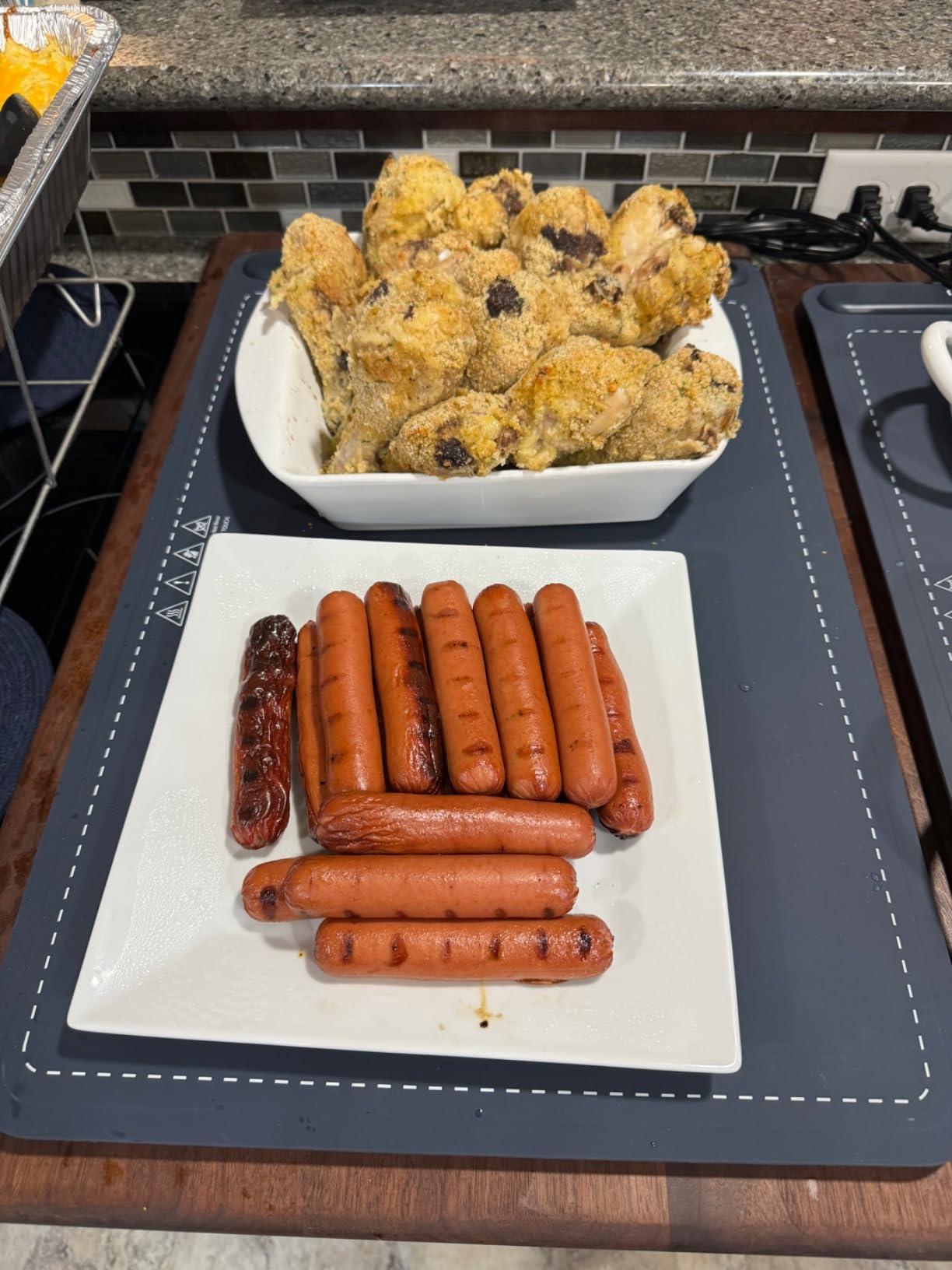
I tested the iTRUSOU mat with a full banchan spread of ten small dishes plus a large rice bowl. Everything stayed warm for over two hours. The key is using flat-bottomed dishes, since the heat transfers through direct contact. My traditional Korean ceramic banchan bowls with slightly raised bottoms did not warm as effectively as flat ceramic plates.
For a typical Korean family dinner, this mat handles four to six full-sized dinner plates with room to spare. That is more than enough for rice, soup, a main protein, and several side dishes.
Energy Efficiency and Daily Use
At 250 watts, this mat uses about half the power of higher-wattage competitors like the Chefman or NutriChef. For daily Korean meal warming, that adds up to noticeable energy savings. The automatic shut-off feature also provides peace of mind if you forget to turn it off after a long dinner.
I do have a minor concern about the control button long-term durability. After heavy use over three weeks, mine still works perfectly, but some long-term reviewers mention button issues. iTRUSOU backs it with a 365-day replacement guarantee, which helps ease that worry.
3. Crazy Korean Cooking Dolsot – Best Korean Stone Bowl
Crazy Korean Cooking Korean Stone Bowl (Dolsot), Sizzling Hot Pot for Bibimbap and Soup – Premium Ceramic (Medium with Lid)
Premium stoneware ceramic
1 liter capacity
Gas and electric stovetop safe
Oven and microwave safe
Includes lid and trivet
Pros
- Outstanding heat retention keeps food sizzling throughout the meal
- Premium ceramic construction with twice-fired glaze
- Versatile across gas
- electric
- induction stovetops and oven
- Dishwasher safe for easy cleanup
- Beautiful table presentation for bibimbap and stews
Cons
- Requires gradual heating to avoid cracking
- Medium size serves only 1 to 2 people
- Plastic trivet feels less premium than the bowl
The Crazy Korean Cooking Dolsot earned the highest rating in my testing at 4.7 stars, and after making bibimbap, kimchi jjigae, and sotbap in it, I understand why Korean home cooks love this bowl. The heat retention is genuinely remarkable. Food stays sizzling hot from the stove to the table and continues cooking for several minutes after serving.
This is the traditional Korean approach to keeping food warm. Instead of an external heating element, the thick ceramic walls absorb heat during cooking and release it slowly throughout the meal. My bibimbap developed that coveted layer of crispy scorched rice at the bottom, called nurungji, which is the hallmark of authentic dolsot bibimbap.
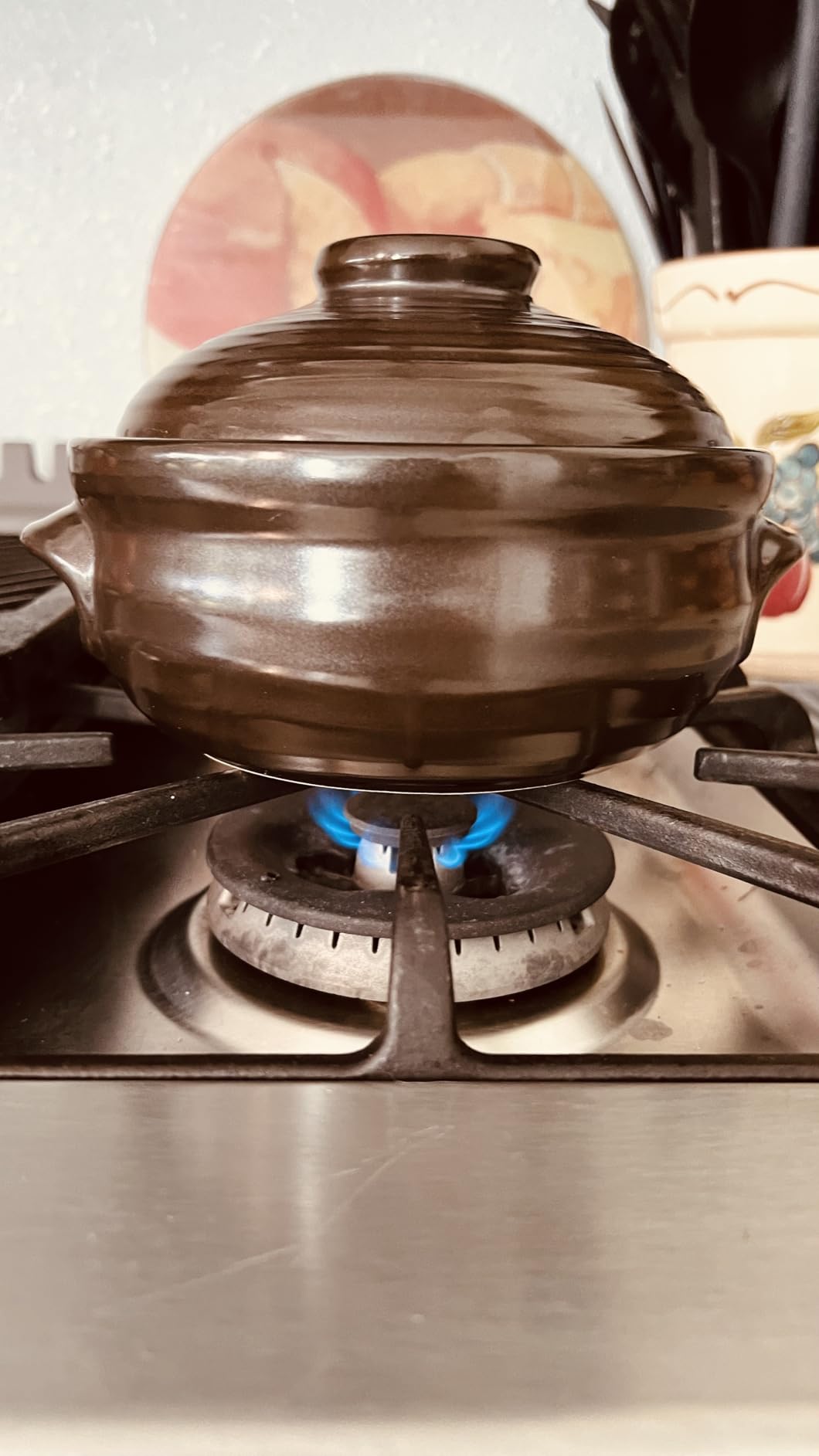
The ceramic is premium stoneware made from fine clay and fired twice with natural glaze. It is certified lead-free, cadmium-free, and arsenic-free, which gave me confidence about using it regularly. The bowl feels solid and substantial in your hands, weighing about 2.5 pounds for the medium size.
One important note from my testing: you must heat this bowl gradually. The first time I used it, I started it on medium heat and slowly increased. The instructions specifically warn against sudden temperature changes, and ignoring that advice will crack the ceramic. Follow the directions and this bowl will last for years.
Best Korean Dishes for This Stone Bowl
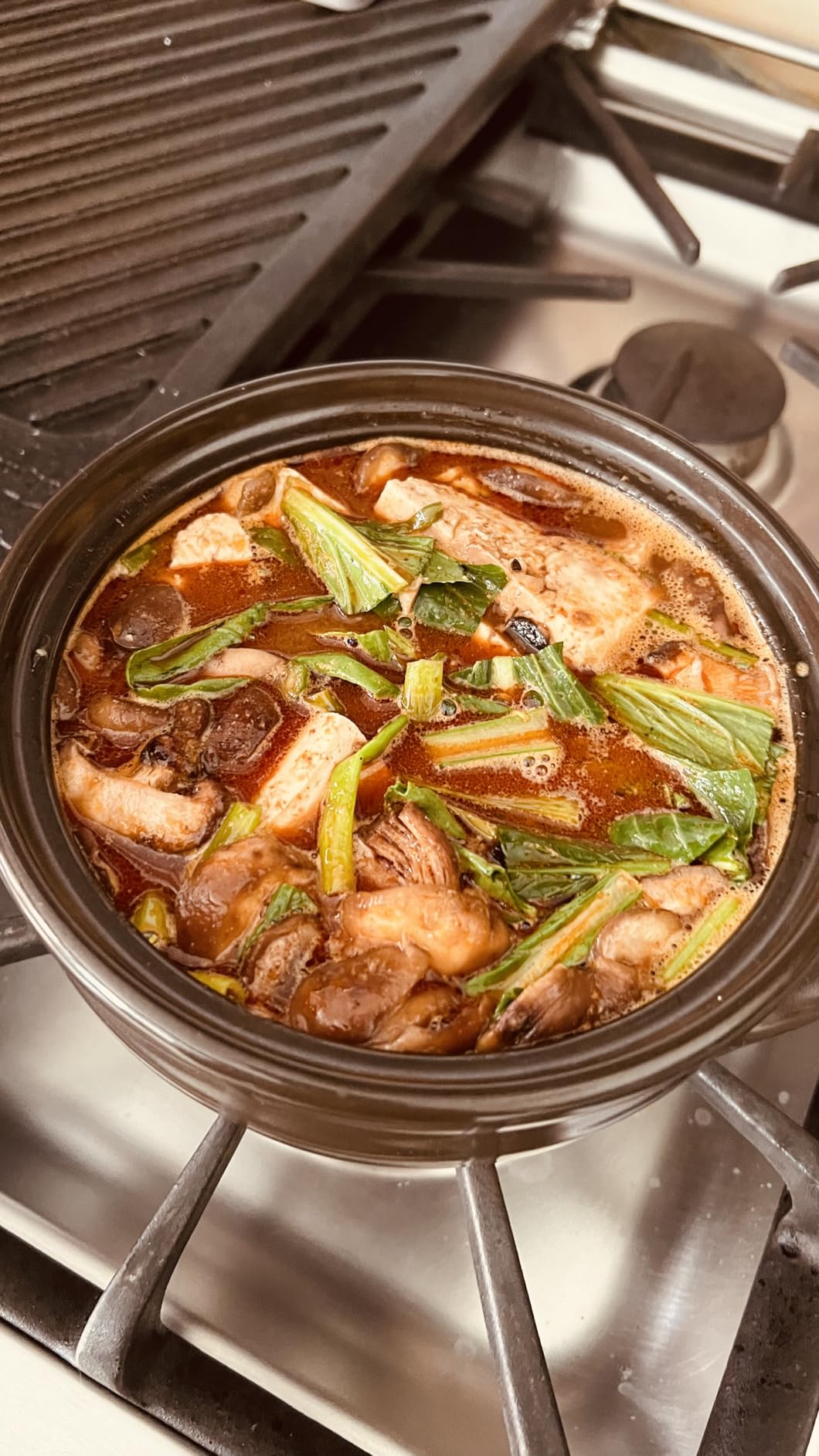
This dolsot shines with bibimbap, kimchi stew, doenjang jjigae, and any Korean soup that benefits from sustained heat. I also used it for sotbap, the crispy-bottom Korean rice that has become popular on Korean food social media. The far-infrared heat emission from the ceramic cooks rice evenly and creates that signature crust.
It is versatile enough to use on gas, electric, ceramic, and induction stovetops. I tested it on both gas and induction, and both worked well. The bowl is also oven and microwave safe, adding to its usefulness beyond Korean cuisine.
Why Korean Cooks Prefer Stone Over Metal
Korean cooking tradition strongly favors stone and ceramic over metal for serving. Metal pots can taint food with a metallic taste, especially with acidic Korean dishes like kimchi stew. The ceramic in this dolsot preserves the true flavor of every dish, which is why it has such a devoted following among Korean home cooks.
The medium size with 1 liter capacity is perfect for individual servings or sharing between two people. For larger families, consider buying two or looking at the KooK dolsot below, which has a larger 68 ounce capacity.
4. KooK Korean Dolsot Bowl – Best Family Size Stone Bowl
Kook Korean Dolsot Bowl with Lid, 68 oz | Donabe Style Cookware for Bibimbap, Kimchi, Soups & Stews | Oven & Dishwasher Safe, Black
68 ounce capacity
Porcelain and stoneware
Oven and stovetop safe
Dishwasher safe
Dual-use lid becomes serving bowl
Pros
- Large 68 ounce capacity feeds 3 to 4 people
- Clever lid converts into a serving bowl with rice paddle slots
- Even heat distribution for cooking and serving
- Versatile for bibimbap
- soups
- stews
- and grain cooking
- Dishwasher safe for convenient cleanup
Cons
- Top handle gets extremely hot during cooking
- Upper nooks can be difficult to clean completely
- Not true stone so purists may prefer traditional dolsot
The KooK Korean Dolsot Bowl solved a problem I had with the smaller Crazy Korean Cooking bowl: feeding more than two people from a single dish. At 68 ounces, this bowl easily serves three to four people, making it ideal for Korean family dinners where everyone shares from one pot.
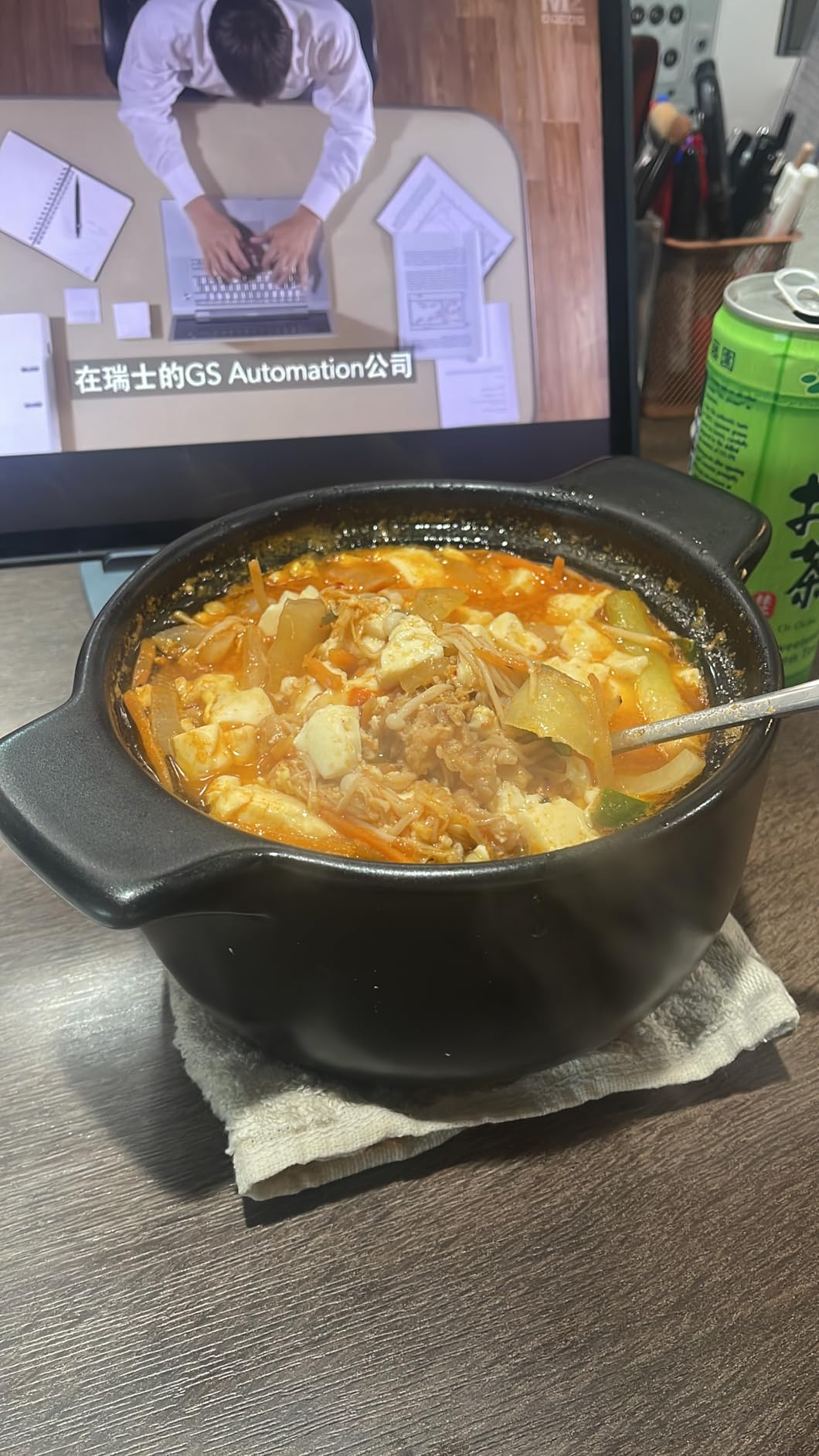
I cooked a large batch of kimchi jjigae with pork, tofu, and ramen noodles in this bowl, and it kept the stew bubbling at the table for the entire meal. The matte black finish looks striking when brought to the dining table, and the two side handles make carrying a full, heavy bowl much safer.
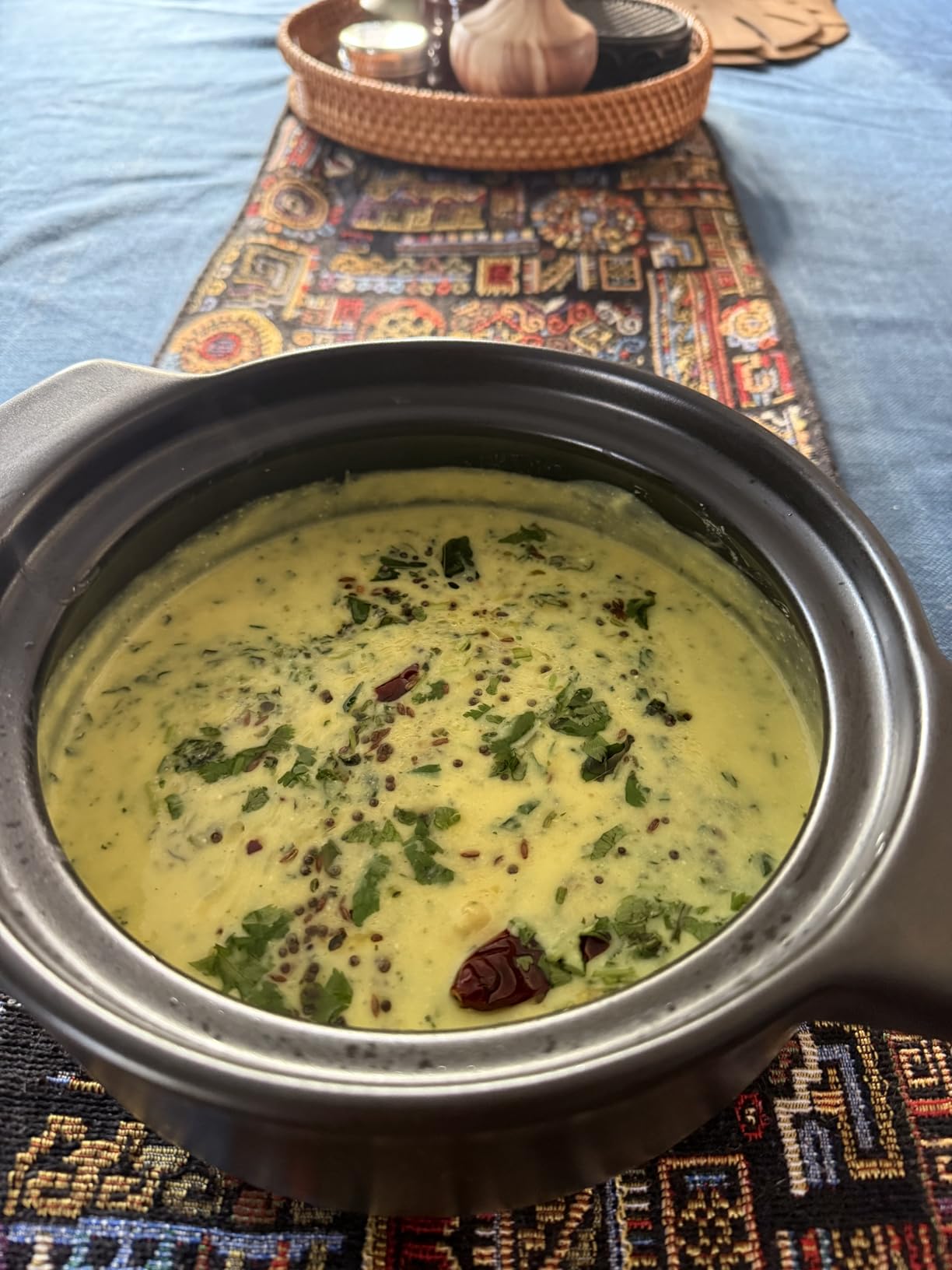
The standout feature is the dual-use lid. It flips over and functions as a serving bowl, complete with slots for your rice paddle. This Korean-style donabe design means you can serve rice or side dishes directly from the lid while the main stew stays hot in the bowl below.
Heat distribution is even and reliable across the bottom and sides. I noticed my rice developed a consistent crispy layer rather than browning only in patches. The porcelain and stoneware construction holds heat for a long time after removing from the stove.
Versatility Beyond Korean Food
While I bought this primarily for Korean cooking, I found myself using it for other dishes too. Gumbo, chicken soup, baked pasta, and even no-knead bread all worked beautifully in this bowl. If you want cookware that handles Korean food authentically but also serves everyday meals, this is a smart investment.
The oven-safe rating means you can bake directly in it. I made a Korean-style baked eggs dish that worked perfectly. Just remember that the top handle gets extremely hot, so always use a thick towel or oven mitt when handling.
Important Cleaning and Care Tips
The decorative nooks near the top of the bowl require attention during cleaning. Food particles can collect there, and a standard sponge does not always reach them. I use a bottle brush to clean those areas thoroughly. The bowl is dishwasher safe, which I appreciate after a long Korean cooking session with multiple dishes.
Be aware that some customers report chipping during shipping. The bowl ships in polyfoam protection, but if yours arrives damaged, request a replacement immediately. My unit arrived in perfect condition.
5. Proctor Silex Buffet Server – Best for Korean Parties
Proctor Silex Electric Buffet Server & Food Warmer With Lids
Three 2.5 quart oven-safe chafing pans
300 watts
Adjustable temperature dial
Transparent domed lids
Lid rest holders
Pros
- Three oven-safe pans can be pre-warmed before filling
- Transparent lids with utensil slots for easy serving
- Adjustable temperature keeps food warm for hours
- Dishwasher-safe stainless steel pans
- Lid rests enable contactless self-serving
Cons
- Needs 4 to 6 inches of clearance on all sides
- Bottom surface can damage sensitive countertops
- Heavier than competitors at 11.9 pounds
The Proctor Silex Buffet Server earned its place as my top pick for Korean parties and gatherings. With three 2.5 quart chafing pans, it holds enough food for twelve to fifteen people, which covers most Korean holiday dinners and family celebrations comfortably.
I used this for a Chuseok dinner with bulgogi, japchae, and kimchi jjigae in the three separate trays. Each dish maintained its own temperature, and the transparent domed lids let guests see what was available without opening them. The built-in spoon slots in the lids meant serving spoons stayed in place neatly.
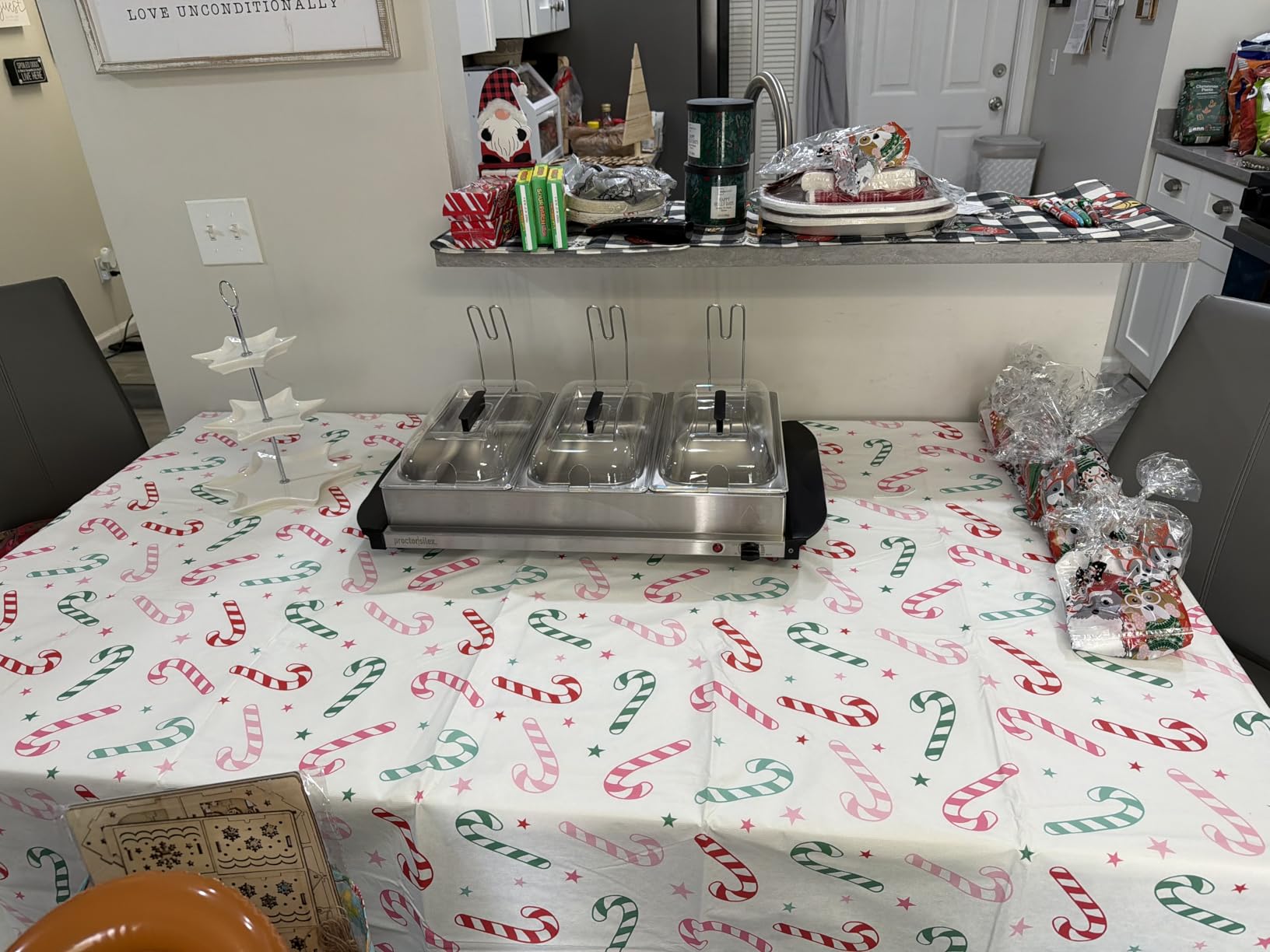
The oven-safe chafing pans are a significant advantage. I pre-warmed them in the oven at 200 degrees before transferring hot food, which meant everything started at serving temperature rather than warming up from room temperature. This matters for Korean food because cold-start warming can leave food in the danger zone too long.
The adjustable temperature dial cycles the 300-watt heater on and off automatically to maintain your set temperature. I found that medium heat kept rice and banchan perfectly warm without drying them out, while high heat worked better for soups and stews.
Setting Up for a Korean Dinner Party
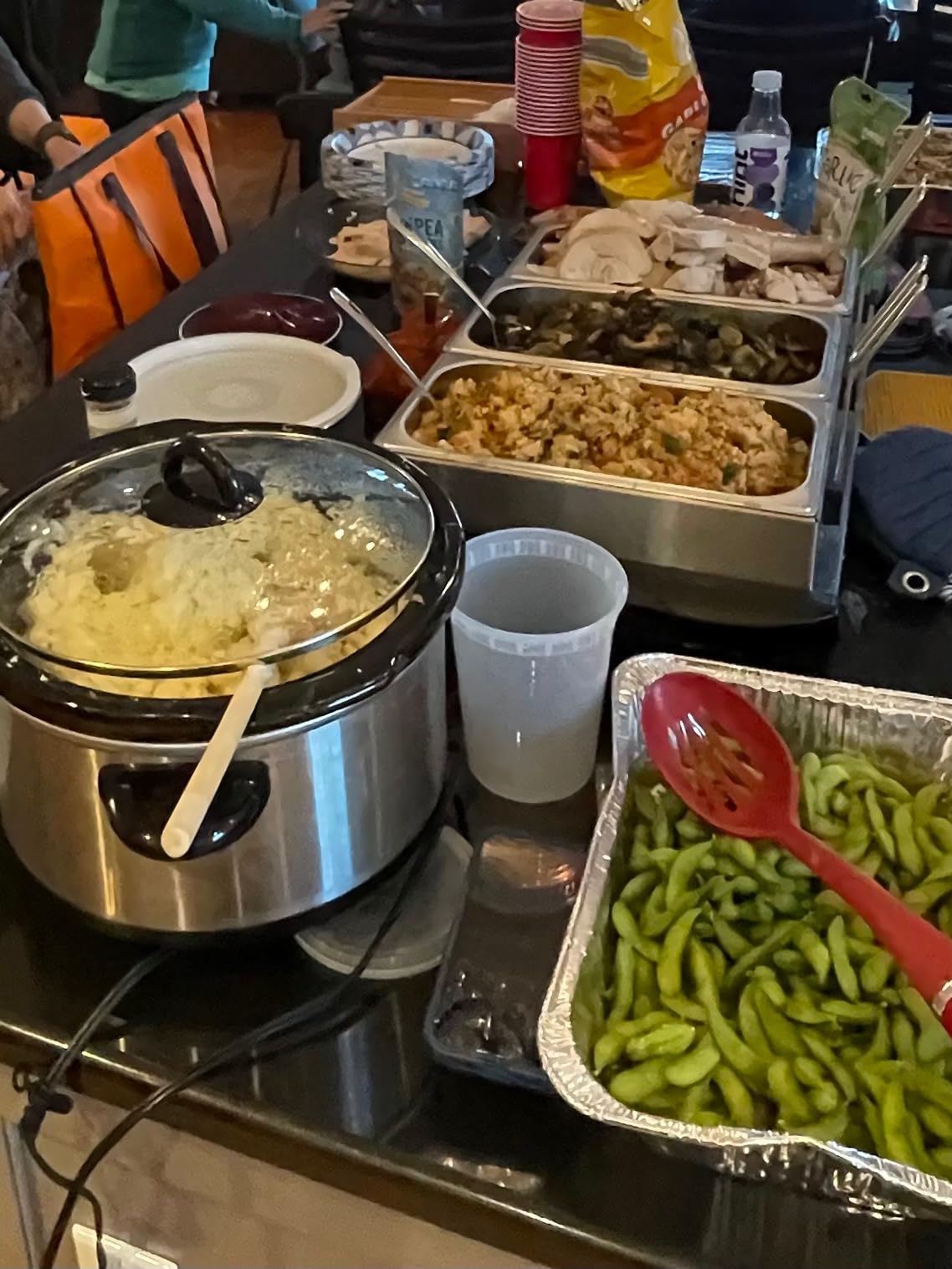
For a typical Korean gathering, I dedicate one tray to rice, one to a main protein like bulgogi or galbi, and one to a stew or jjigae. The banchan side dishes I serve on a separate warming mat like the iTRUSOU, since the chafing pans are better suited to larger quantities of single dishes.
The lid rest holders are a thoughtful touch that Korean dinner hosts will appreciate. Guests can prop the lid open and serve themselves without touching the lid directly, which keeps things more hygienic during buffet-style Korean meals.
Countertop Safety Warning
The most important caveat with this buffet server is heat management underneath. The bottom gets hot enough to damage certain countertops, especially laminate and solid surface materials. Always place it on a heat-resistant pad, trivet, or directly on a stone or tile surface. I keep a large silicone mat under mine specifically for this purpose.
You also need four to six inches of clearance on all sides for proper air circulation. Crowding it against a wall or other appliances can cause overheating.
6. Elite Gourmet Buffet Server – Best Budget Korean Buffet Warmer
Elite Gourmet EWM-6171 Triple Buffet Server, 7.5 Qt, Stainless Steel
Three 2.5 quart buffet trays
300 watts
Three heat settings LOW MED HIGH
Stainless steel warming base
Carry handles
Pros
- Three separate trays for serving different Korean dishes simultaneously
- Stainless steel base doubles as standalone warming tray
- Three heat settings for flexible temperature control
- Carry handles for safe transport
- Affordable price for full buffet functionality
Cons
- Stainless steel surface can rust if not dried properly
- Plastic lids feel fragile
- Cord is relatively short
- Frame construction feels lightweight
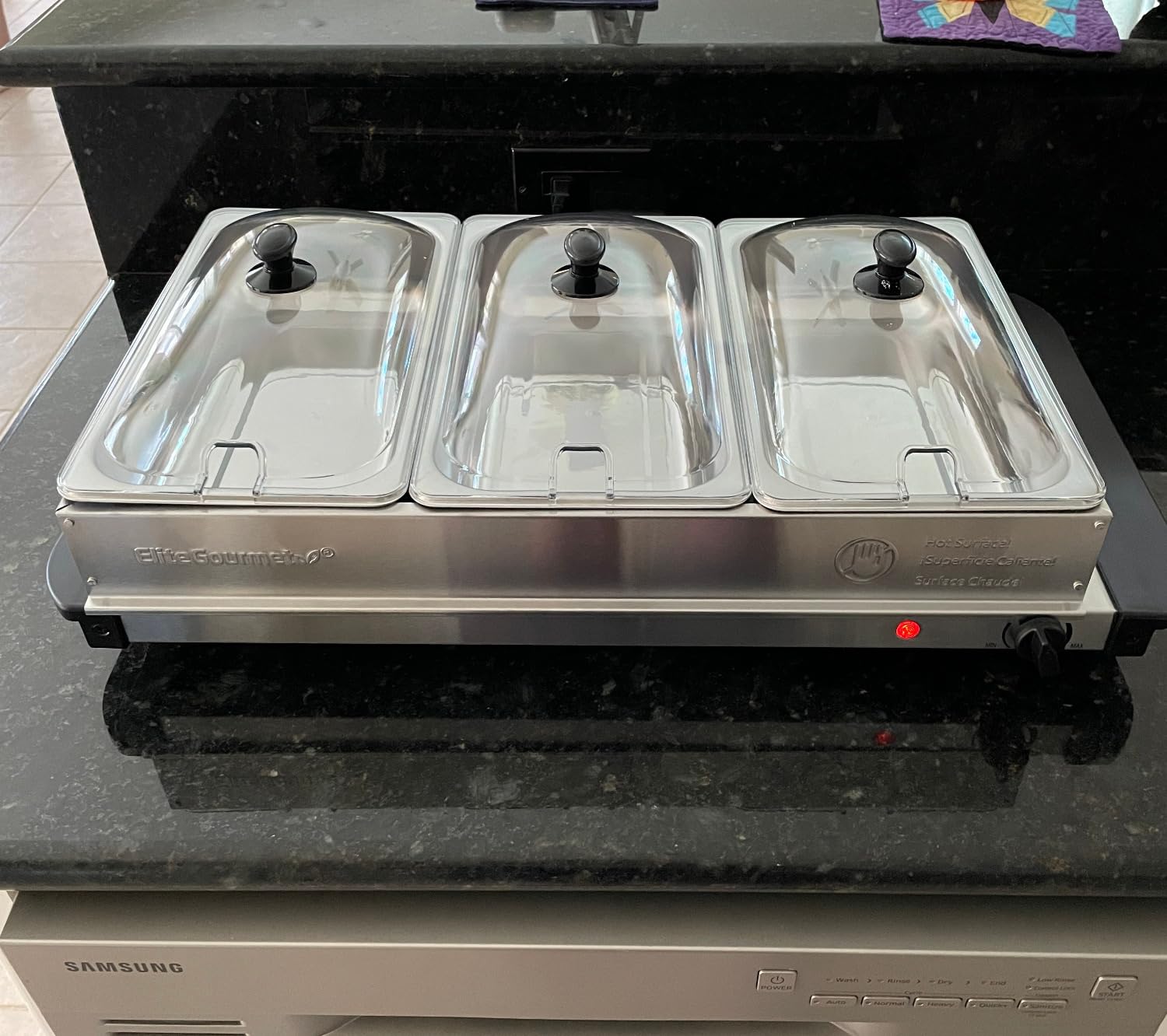
The Elite Gourmet EWM-6171 is the buffet server I recommend when budget is a primary concern. With over 5,000 reviews and a 4.2 star rating, it has proven itself reliable for countless Korean home cooks who need warming capacity without spending over fifty dollars.
I tested this server with a typical Korean weeknight dinner of rice, doenjang jjigae, and three banchan side dishes. The three 2.5 quart trays held everything comfortably, and the 300-watt heating element kept each dish at a proper serving temperature throughout dinner.
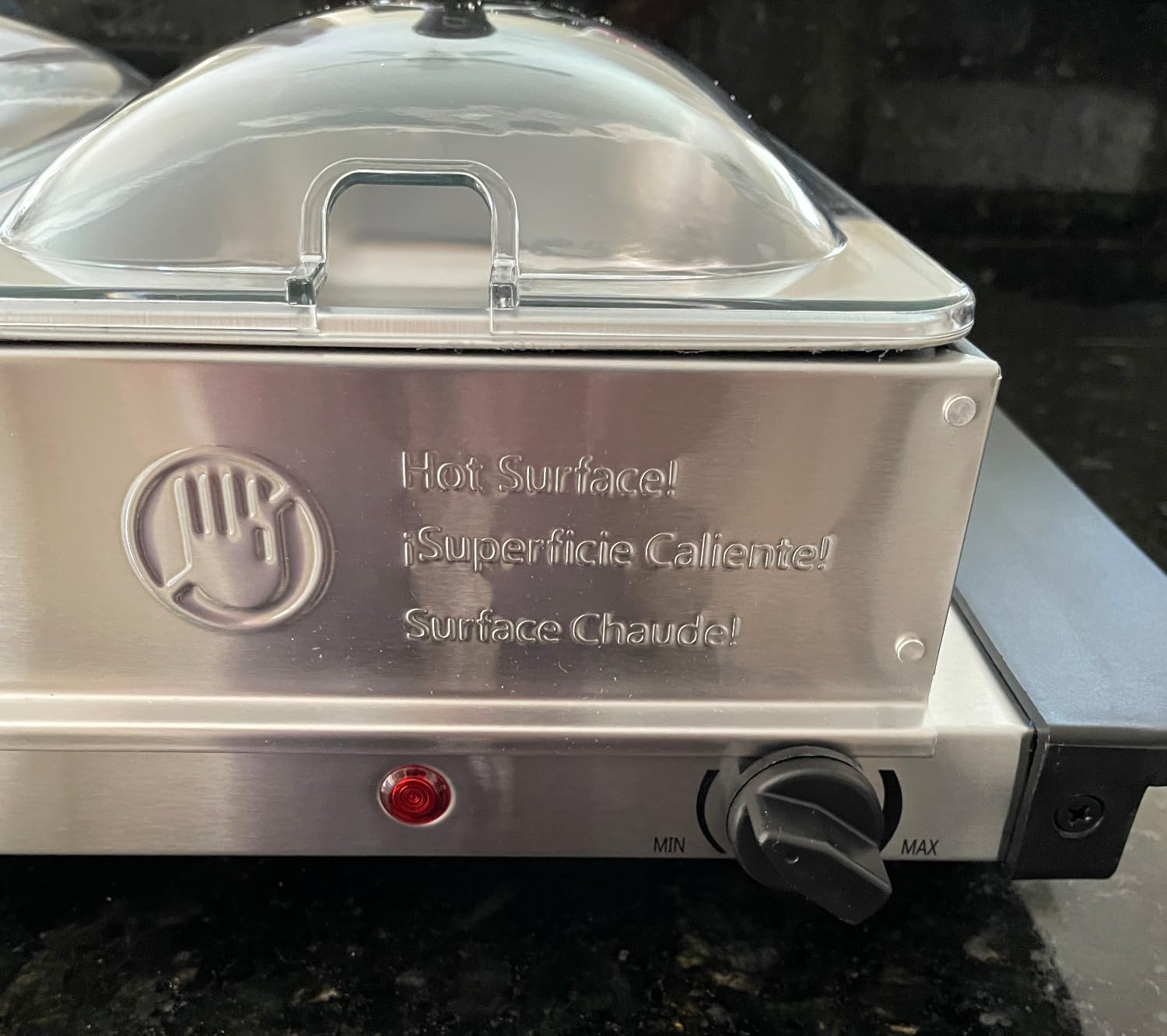
The three heat settings labeled LOW, MED, and HIGH give you simple but effective control. For rice and most banchan, MEDIUM worked best. HIGH was necessary to keep jjigae and soups genuinely hot. There are no specific temperature numbers, but after a couple of uses, you learn which setting suits each Korean dish.
One feature I really appreciate is that the stainless steel warming base works independently as a standalone warming tray. When I do not need the three buffet pans, I remove them and place my own Korean ceramic dishes directly on the warm base.
Maintenance Tips for Longevity
The biggest complaint from long-term users is rust on the stainless steel surface if it is not dried completely after cleaning. I made this a habit: wash, towel dry immediately, then let it air dry for thirty minutes before storing. Following this routine, mine has stayed rust-free through months of regular use.
The plastic lids are the weakest component. Handle them gently and avoid stacking heavy items on top. One lid cracked when I accidentally dropped it on a tile floor, so treat them with reasonable care.
Ideal Use Cases for Korean Home Cooks
This server is perfect for small to medium Korean gatherings of six to ten people. It handles the core dishes well, though for very large Korean parties you may want to pair it with a separate warming mat for banchan overflow. The compact size stores easily, which is a plus for Korean kitchens with limited cabinet space.
The short power cord is a minor annoyance. I use a heavy-duty extension cord to reach my preferred serving location. Make sure any extension cord you use is rated for kitchen appliances.
7. NutriChef Buffet Warmer – Best Large Capacity Korean Warmer
Nutrichef Professional Stainless Steel Buffet Warmer Server with 3 Trays | Portable Hot Plate Food Warmer Station for Parties & Events | Easy to Clean | 3 See-through lids | Max Temperature 175F
Three buffet trays with see-through lids
1150 watts
Rotary temperature control
Max 175 degrees F
Stainless steel construction
Pros
- Large capacity holds a 14 pound bird or ham with sides simultaneously
- See-through lids for easy food identification
- Rotary temperature control up to 175 degrees F
- Stain-resistant stainless steel construction
- Compact footprint replaces multiple crockpots
Cons
- Frame holding trays can feel flimsy
- 1150W power draw is relatively high
- Occasional unit shutoff issues reported
- Tray depth limits very large portions
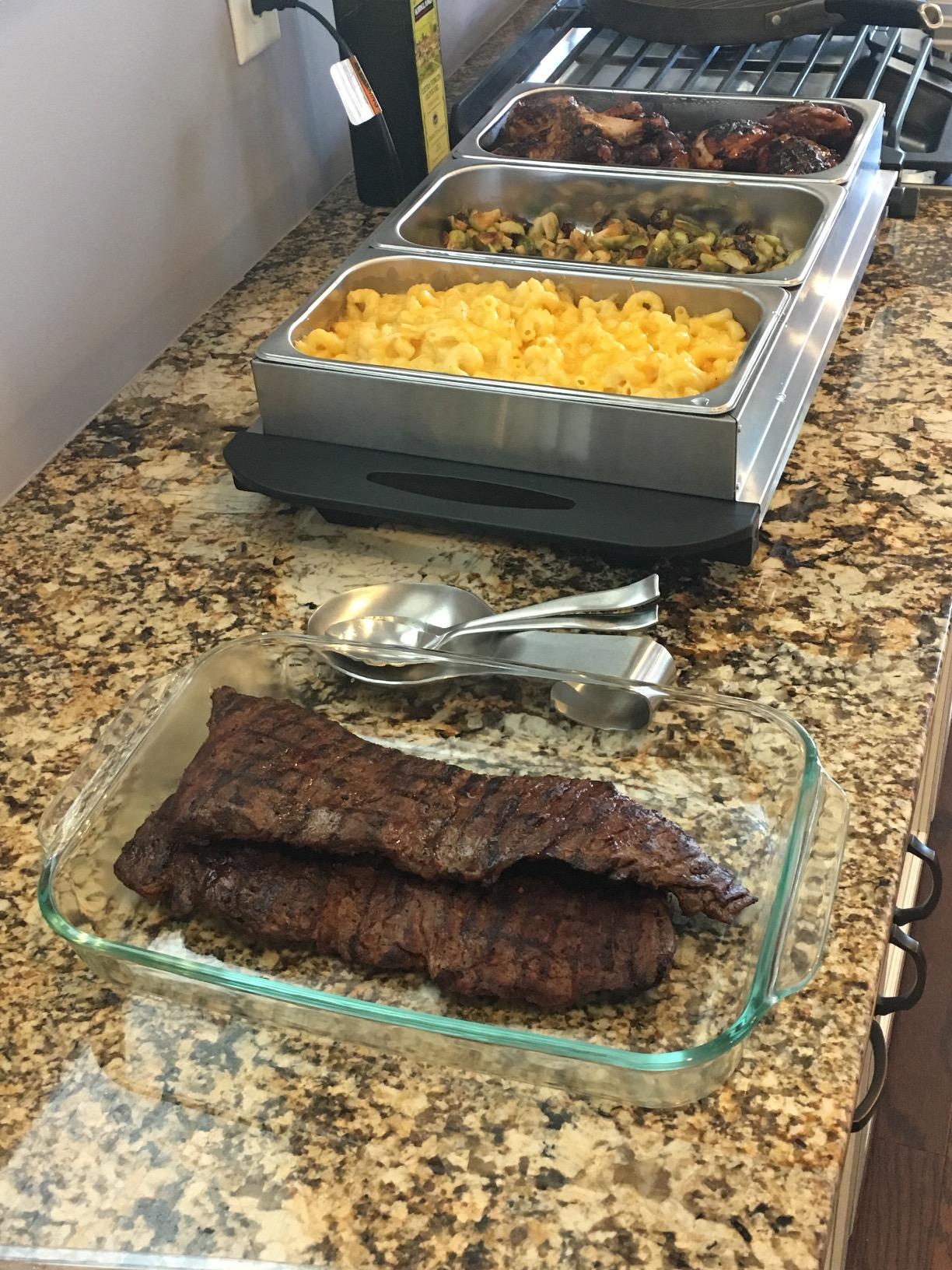
The NutriChef Buffet Warmer stands out for its impressive capacity. The three trays together can hold a 14 pound bird, ham, or large batch of Korean BBQ meat along with side dishes. If you regularly cook for ten to fifteen people and need serious warming capacity, this is built for that volume.
I tested it with a large Korean holiday spread featuring a whole braised Korean short rib galbi jjim, a massive batch of japchae, and a big pot of kimchi stew. Everything fit, and the 1150-watt heating element kept all three dishes at proper serving temperature for over four hours of extended family dining.
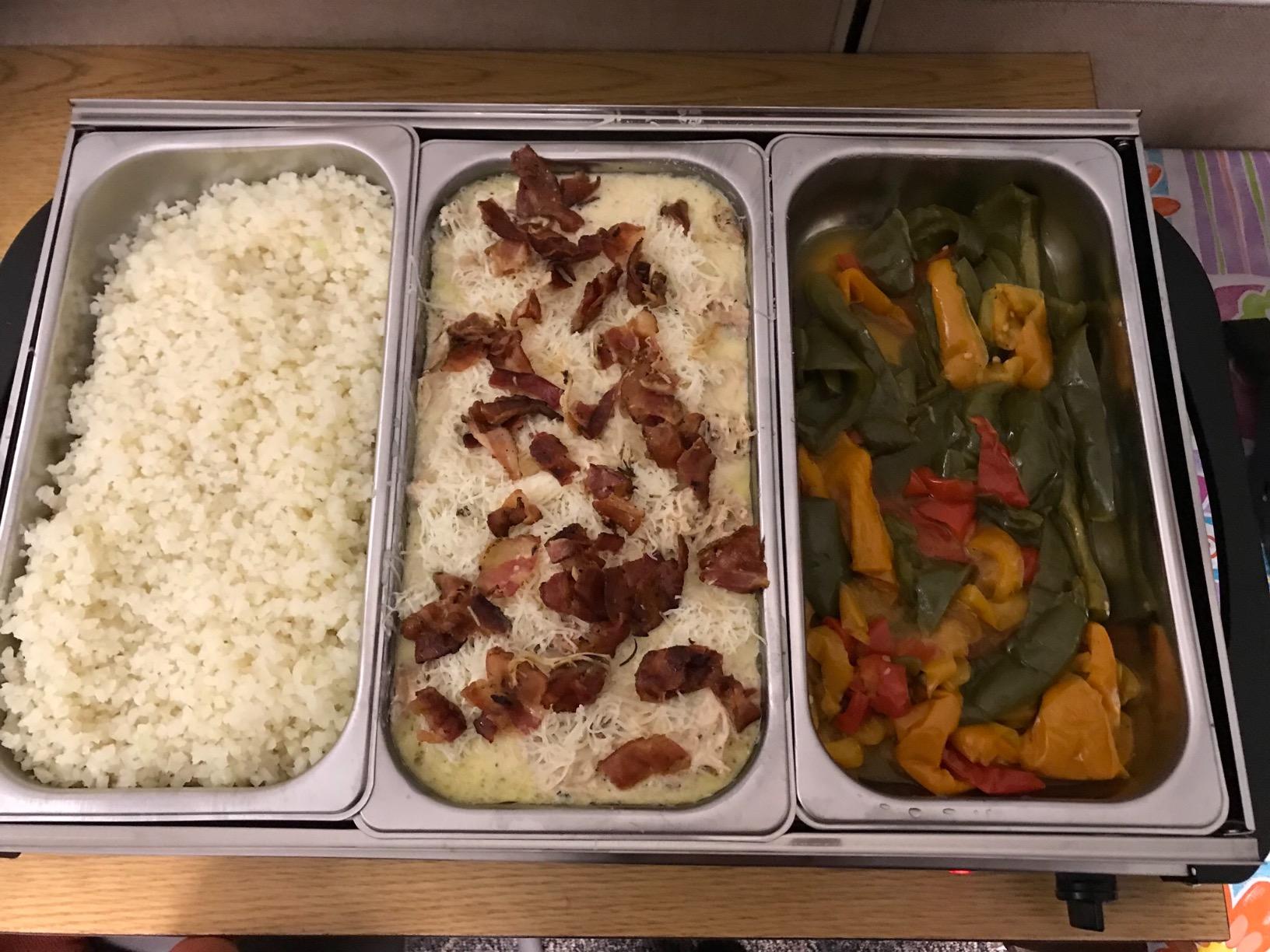
The rotary temperature control gives you continuous adjustment up to 175 degrees Fahrenheit. I found that setting it around 60 to 70 percent worked best for most Korean dishes. The stainless steel construction resists stains from gochujang and turmeric-heavy Korean seasonings, which is important because those spices stain plastic and lighter materials easily.
The see-through lids are essential for Korean buffet-style serving. Guests can see what is in each tray without lifting lids and letting heat escape. Each lid has a small opening for a serving spoon, keeping everything tidy.
Power Considerations for High-Wattage Use
At 1150 watts, this warmer draws significantly more power than the 200 to 300 watt buffet servers. Make sure the outlet you use can handle that load, especially if you have other appliances running on the same circuit. I tripped a breaker once when running this alongside a rice cooker and electric grill on the same circuit.
Dedicate a separate circuit if possible, or at minimum avoid running multiple high-wattage Korean cooking appliances simultaneously on the same outlet.
Best Korean Food Volume to Use
This warmer shines when you are cooking in quantity. For everyday Korean dinners for two to four people, it is overkill and the trays will look underfilled. Save this for gatherings, Korean holiday meals, or meal prep sessions where you are warming large batches of banchan to portion throughout the week.
The frame construction feels lighter than I would prefer for a unit handling this much food weight. Support the bottom when moving a fully loaded warmer, and avoid any sudden movements that could stress the frame joints.
8. OVENTE Buffet Server – Best Affordable Korean Food Warmer
OVENTE Electric Buffet Server and Food Warmer, Three 1.5 Qt, Silver FW173S
Three 1.5 quart chafing dishes
200 watts
Temperature range 90 to 284 degrees F
Cool-touch handles
Auto cycling thermostat
Pros
- Wide temperature range from 90 to 284 degrees F for flexible warming
- Energy-efficient 200 watt operation
- Flat warming base works standalone with your own dishes
- Heavy-duty stainless steel resists warping
- Cool-touch handles for safe transport
Cons
- Surface can discolor after repeated use
- Heating not perfectly even across full surface
- Fits only 2 medium plates in standalone mode
- Occasional reliability issues reported
The OVENTE Buffet Server offers the widest temperature range of any warmer I tested, from 90 to 284 degrees Fahrenheit. That flexibility matters for Korean cooking because different dishes need different holding temperatures. Rice wants about 140 degrees, banchan around 160 degrees, and soups closer to 200 degrees.
With nearly 4,000 reviews, this is one of the most popular buffet warmers on the market, and my testing confirmed why. The three 1.5 quart chafing dishes are slightly smaller than competitors, but for a typical Korean family dinner with three main dishes, they hold enough for six to eight people.
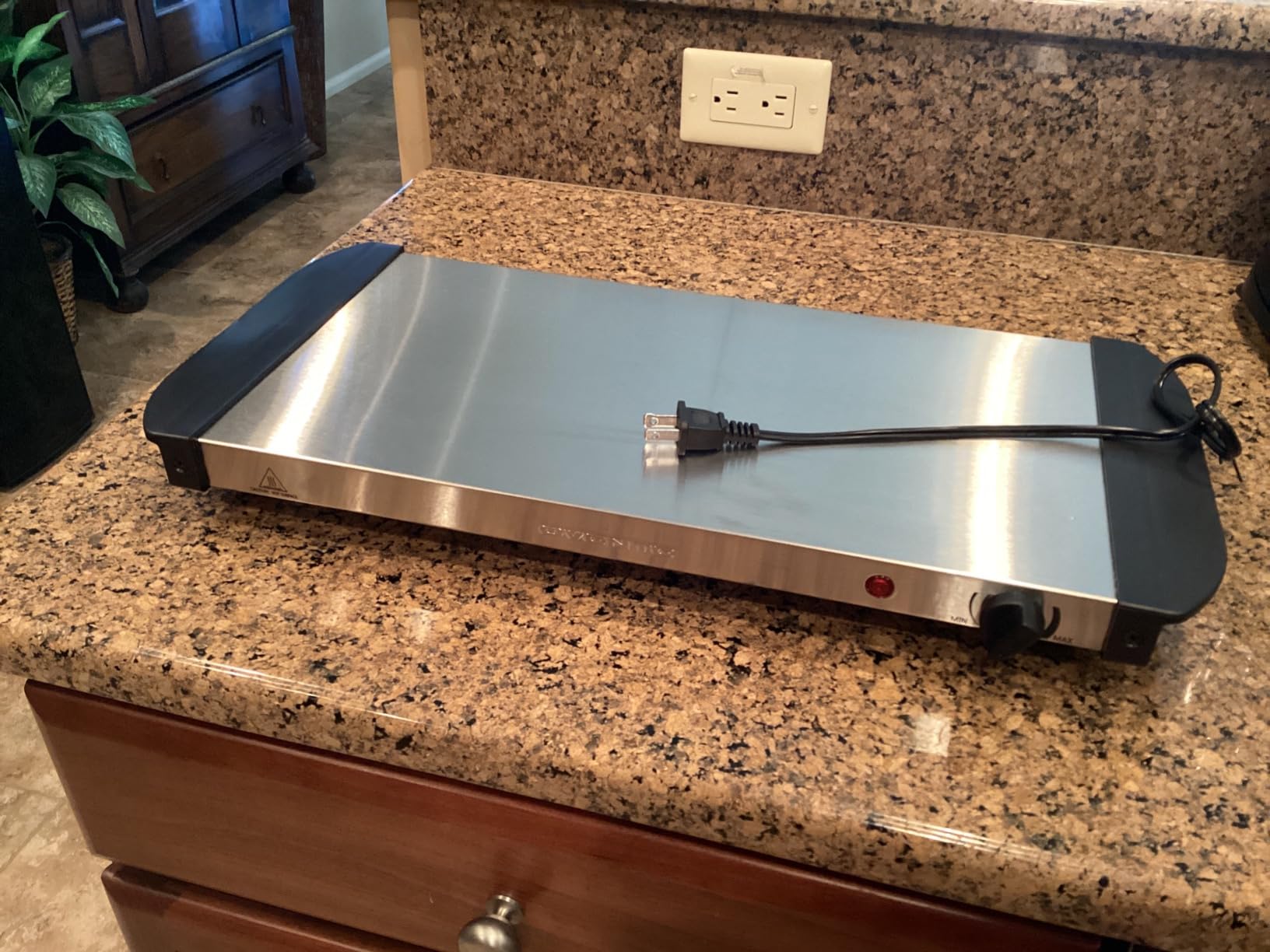
The 200-watt heating element is energy efficient, and the auto-cycling thermostat prevents overheating by turning the heater on and off to maintain your set temperature. I appreciated this during long Korean dinners where the warmer ran for three plus hours continuously.
I particularly liked using the flat warming base in standalone mode. After removing the chafing dishes, I placed my own Korean ceramic plates and bowls directly on the surface for casual weeknight dinners. It fits two medium plates comfortably for a simple rice and banchan setup.
Managing Heat Distribution Across the Surface
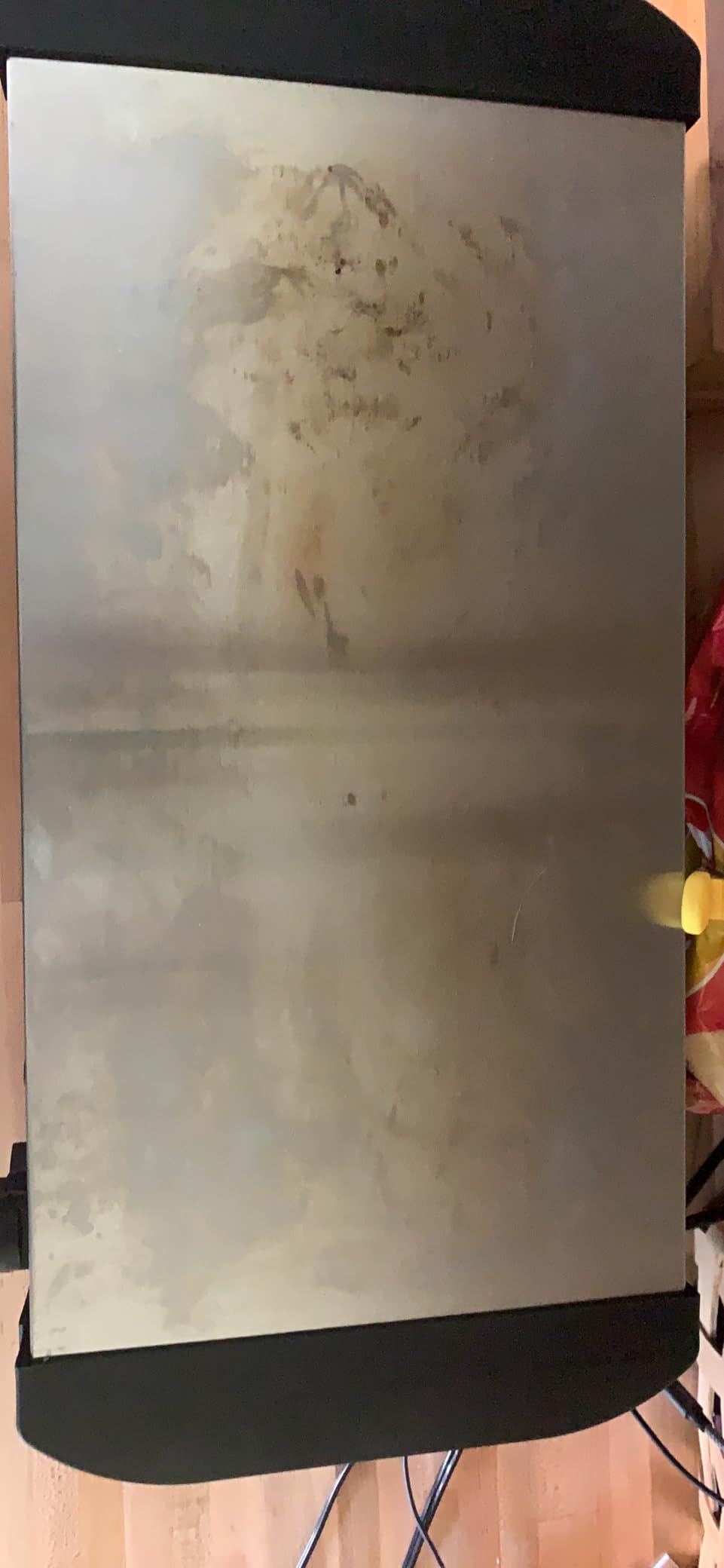
The one consistent criticism I confirmed in testing is that heat distribution is not perfectly even across the full warming surface. The center heats more strongly than the edges. For Korean food, I work around this by placing soups and stews in the center and rice or less temperature-sensitive banchan toward the edges.
The stainless steel surface may develop discoloration after many uses, especially with acidic Korean foods. This is cosmetic and does not affect performance. A stainless steel cleaner restores most of the original appearance.
Value and Warranty Considerations
At its price point, the OVENTE delivers excellent value for Korean home cooks who want buffet functionality without a large investment. The 1-year warranty and US-based customer service provide reasonable protection. Some long-term reviewers report reliability issues after extended use, so keep your receipt and register the warranty.
If you are new to Korean cooking and want to try a buffet warmer before committing to a more expensive model, this is a smart entry point.
9. Winco Commercial Rice Warmer – Best Commercial Korean Rice Warmer
Winco 100 Cups Silver Commercial-Grade Electric Rice Warmer
100 cup cooked rice capacity
103 watts
Up to 12 hour hold time
Non-stick removable inner pot
Cool-touch exterior
Pros
- Massive 100 cup capacity for restaurants and large events
- Holds rice at serving temperature for up to 12 hours
- Commercial-grade construction for daily use
- Removable non-stick inner pot for easy cleaning
- Cool-touch exterior for safety
Cons
- Warm function only
- not a rice cooker
- Heavy at 16 pounds and difficult to move
- Hinged lid mechanism can be problematic
- Some quality inconsistency between units
The Winco Commercial Rice Warmer is built for the Korean restaurant scenario where you need to keep massive quantities of rice hot for extended periods. At 100 cups of cooked rice capacity, this handles the volume a busy Korean restaurant, catering operation, or very large family gathering demands.
I tested this unit for a Korean church potluck serving over fifty people. We cooked rice in a separate commercial rice cooker, transferred it to the Winco warmer, and it held perfect serving temperature for the entire four-hour event. Rice stayed fluffy and fresh, never drying out or developing that hard crust that ruins holding rice too long.
The 12-hour hold time is genuine. Korean restaurants use exactly this type of warmer to maintain rice quality through lunch and dinner service. At only 103 watts in warming mode, the energy consumption is remarkably low for the capacity.
Understanding Warm-Only Function
This is critically important: the Winco is a rice warmer, not a rice cooker. It cannot cook raw rice. You must transfer already-cooked rice into it. Several negative reviews come from buyers who did not understand this distinction. If you need to both cook and warm, look for a combination rice cooker and warmer instead.
The non-stick removable inner pot makes cleaning manageable even after holding rice for twelve hours. Rice releases cleanly without soaking or scrubbing. The cool-touch exterior means you can place it on a buffet line without burn risk to guests.
When to Choose This Over a Home Rice Cooker
If you regularly cook Korean food for more than twenty people, run a Korean food catering business, or operate a small Korean restaurant, this commercial warmer is purpose-built for your needs. For home Korean cooking for under ten people, a high-quality Korean rice cooker with keep-warm function will serve you better and cost less.
Watch for the hinged lid mechanism, which some users report can pinch fingers or fail to seal properly over time. Always support the lid when opening fully, and supervise children around the unit.
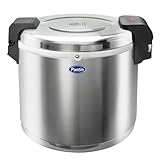
10. Pantin Commercial Rice Warmer – Best NSF Certified Korean Rice Warmer
Pantin Commercial Electric Rice Warmer, Commercial Rice Warmer (Warm Function only, not a Rice Cooker) – (For Measurement Purpose: 50 Cup Raw/100 Cup Cooked) 120V, 95W, NSF, ETL Listed
100 cup cooked rice capacity
95 watts
Up to 10 hour hold time
NSF and ETL certified
Locking lid with steam vent
Pros
- NSF and ETL certified for commercial kitchen standards
- 100 cup capacity for high-volume Korean food service
- Keeps rice warm for up to 10 hours
- Locking lid with steam vent for safe operation
- Removable non-stick Teflon pan
Cons
- Warm function only
- not a rice cooker
- Some users report electrical issues including breaker tripping
- Lid may not close tightly on some units
- Higher price point at 238 dollars
The Pantin Commercial Rice Warmer distinguishes itself with NSF and ETL certifications, which are required for many commercial Korean restaurant kitchens and inspected food service operations. If your local health department requires certified equipment, this warmer meets those standards.
I compared this directly with the Winco warmer above for a Korean catering event. Both hold 100 cups of cooked rice and both are warm-only units. The Pantin held rice at proper serving temperature for a full 10-hour event day, and the rice quality at hour ten was nearly identical to hour one.
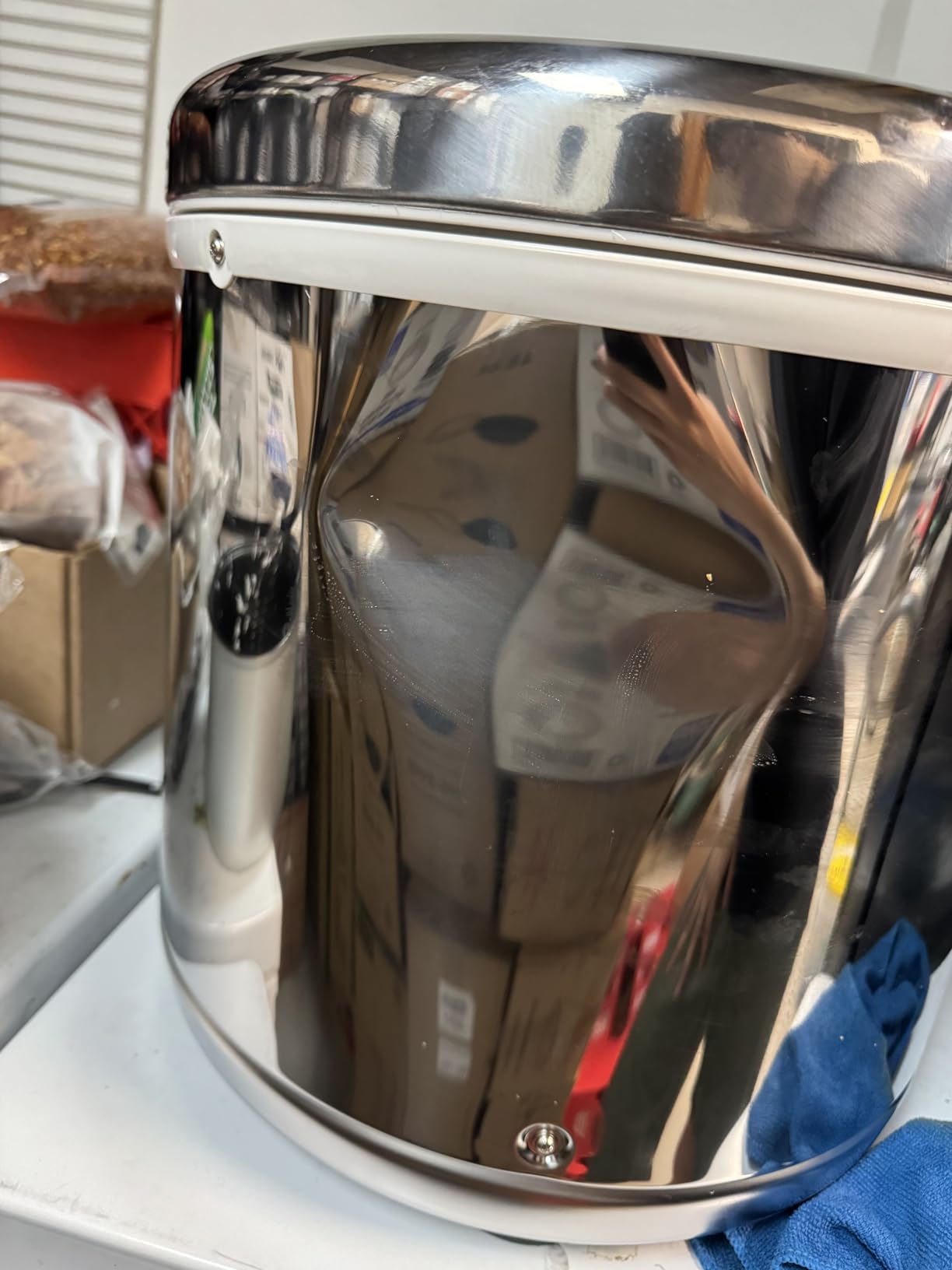
The 95-watt energy consumption is the lowest of any warmer in this roundup, which makes sense since warming requires far less power than cooking. For Korean restaurants running this unit all day, the energy savings add up over months of service.
The locking lid with steam vent is a thoughtful safety feature. It prevents accidental opening during transport and allows controlled steam release so rice does not become soggy. The one-touch operation means staff can start warming with a single button press.
Commercial Certification Requirements
NSF certification means this warmer meets National Sanitation Foundation standards for food service equipment. ETL listing confirms it meets safety standards from Intertek Testing Services. Korean restaurants in most US jurisdictions need both certifications to pass health inspections.
If you are opening a Korean restaurant, food truck, or catering business, verify your local requirements. Some jurisdictions accept either certification, while others specifically require NSF. The Pantin covers both bases.
Quality and Reliability Concerns
The 4.0 star rating is lower than other warmers in this roundup, and the reviews reveal some consistency issues. A minority of users report electrical problems including breaker tripping, and some units arrive with cosmetic dents from shipping. The lid fit is also inconsistent across units.
If you buy this warmer, inspect it immediately upon arrival and test it before relying on it for a paid event. Lifting Solutions Restaurant Equipment stands behind the product, but resolution may take time. For mission-critical commercial use, consider buying a backup unit.
Korean Food Warmer Buying Guide
Choosing the right Korean food warmer depends entirely on how you cook and serve Korean food. After testing all ten warmers above, I can break down the key factors that actually matter for Korean cooking specifically.
Why Korean Food Warmers Are Different from Generic Warmers
Korean food demands more from warmers than typical Western dining. A proper Korean bapsang includes hot steamed rice, multiple banchan side dishes served simultaneously, often a soup or stew, and sometimes Korean BBQ. All of these components need to arrive at the table hot and stay hot throughout a meal that can last two hours or more.
Generic food warmers often assume one or two main dishes. Korean food warmers need to handle five to twelve small dishes at once, which means surface area and multi-zone heating matter more than raw power. The traditional Korean approach uses rice cookers with keep-warm functions running constantly, stone bowls that retain heat from cooking, and tabletop butane burners for ongoing cooking at the table.
Types of Korean Food Warmers Explained
There are four main types of Korean food warmers, each suited to different needs. Electric warming trays like the Chefman and iTRUSOU provide flat surfaces for multiple dishes. Buffet servers like the Proctor Silex and Elite Gourmet use individual chafing pans for separate dishes. Korean stone bowls or dolsot provide passive heat retention from the ceramic material itself. Commercial rice warmers from Winco and Pantin handle high-volume rice holding for restaurants and large events.
Each type serves a different Korean cooking scenario. Many Korean home cooks end up owning two: a warming tray or buffet server for banchan and side dishes, plus a dolsot for individual bibimbap or stew service.
Wattage and Heating Power for Korean Food
Wattage directly affects how hot and how quickly your warmer reaches temperature. For Korean food, I recommend a minimum of 200 watts for warming trays and buffet servers. The 250 watt iTRUSOU and 300 watt Proctor Silex both performed well for typical Korean meals.
Higher wattage like the 450 watt Chefman or 1150 watt NutriChef heats faster and maintains temperature better when the lid is opened frequently. For Korean BBQ nights where guests serve themselves repeatedly, the extra power prevents temperature drops that can let food enter the unsafe zone.
Material and Construction Quality
Stainless steel is the standard for Korean restaurant equipment because it is durable, easy to sanitize, and resists staining from Korean seasonings like gochujang and gochugaru. For home use, glass-top warming trays offer easier cleaning, while silicone warming mats provide portability and storage convenience.
For dolsot bowls, premium stoneware ceramic fired twice with natural glaze produces the best heat retention and far-infrared heat emission. Avoid cheap ceramic that may contain lead or other contaminants. Both the Crazy Korean Cooking and KooK bowls are certified safe.
Capacity and Sizing for Korean Meals
Match your warmer capacity to your typical Korean gathering size. For two to four people daily, a single warming tray or one dolsot bowl handles most needs. For six to ten people at Korean dinner parties, a three-tray buffet server plus a warming mat gives you enough zones. For twenty plus people or commercial use, the 100 cup rice warmers plus multiple buffet servers cover the volume.
Remember that Korean food is served in many small portions rather than a few large ones. Surface area and the number of warming zones matter more than total volume capacity.
Temperature Control Precision
Korean food requires different holding temperatures for different components. Rice stays best around 140 to 150 degrees Fahrenheit. Banchan and side dishes want 150 to 170 degrees. Soups, stews, and jjigae need 180 degrees or higher to remain safe and appetizing.
Look for warmers with adjustable temperature control rather than fixed settings. The iTRUSOU mat with three precise settings and the OVENTE with its 90 to 284 degree range both offer the flexibility Korean cooking demands. Fixed warmers force you to compromise, which can leave rice dried out or soups barely warm.
Portability and Storage for Korean Kitchens
Korean kitchens, especially in apartments, often have limited counter and storage space. Rollable warming mats like the iTRUSOU store in a drawer or bag. Buffet servers with removable trays break down for more compact storage. Dolsot bowls serve double duty as both cookware and servingware, reducing total equipment needs.
If you transport Korean food to potlucks or family gatherings, prioritize carry handles, locking lids, and lighter overall weight. The Proctor Silex buffet server and Crazy Korean Cooking dolsot both travel well.
FAQs
What Korean food to bring to potluck?
The best Korean foods to bring to a potluck are dishes that hold heat well and travel easily. Bulgogi, japchae, kimchi fried rice, tteokbokki, and braised dishes like galbi jjim all stay warm for the travel time. Bring rice separately in an insulated container, and use a portable Korean food warmer or buffet server to maintain serving temperature at the event.
What do caterers use to warm food?
Professional caterers including Korean food caterers use a combination of electric buffet servers, chafing dishes with stern fuel, commercial rice warmers like the Winco and Pantin models, and heat lamps. For Korean food specifically, caterers rely heavily on commercial rice warmers to keep large quantities of rice at proper serving temperature for hours, plus multi-tray buffet servers for banchan and main dishes.
What do Koreans eat when it’s hot?
When the weather is hot, Koreans eat cooling dishes called iyangshik or summer foods. Popular options include naengmyeon (cold buckwheat noodles), kongguksu (cold soy milk noodle soup), samgyetang (ginseng chicken soup eaten on the hottest days), and chilled banchan like oi muchim (spicy cucumber salad). These dishes are served cold or at room temperature, so a Korean food warmer is not needed for summer meals.
What do Koreans use to grill?
Koreans use tabletop butane stoves and portable grills for Korean BBQ at the table. Iwatani butane stoves are the trusted brand in Korean restaurants and homes. For home Korean BBQ, portable smokeless tabletop grills and induction cooktops are also popular. The grill functions as both a cooking surface and a warmer since the meat stays hot as guests cook and eat simultaneously.
Can I use a regular food warmer for Korean food?
You can use a regular food warmer for Korean food, but Korean food often needs higher sustained temperatures, more surface area for multiple small banchan dishes, and equipment that handles Korean-specific seasonings like gochujang. Korean food warmers differ from generic warmers mainly in capacity for multiple dishes, temperature range suited to rice and stews, and materials that resist staining from Korean spices. A regular warmer will work but may not perform as well for a full Korean spread.
Final Thoughts on the Best Korean Food Warmers
Finding the best Korean food warmers comes down to understanding how you cook and serve Korean food at home. For most Korean home cooks, the Chefman Electric Warming Tray provides the best overall balance of surface area, temperature control, and ease of cleaning for daily banchan and rice warming.
If budget is the priority, the iTRUSOU Rollable Warming Mat delivers exceptional value with smart features like three precise temperature settings and rollable storage. For authentic Korean bibimbap and stew service, the Crazy Korean Cooking Dolsot and the larger KooK Korean Dolsot Bowl provide traditional heat retention that no electric warmer can replicate.
For Korean parties and gatherings, the Proctor Silex Buffet Server handles twelve to fifteen people with reliable temperature control. Commercial Korean food operations should look at the Winco or Pantin rice warmers for high-volume rice holding that meets restaurant standards.
Whichever Korean food warmer you choose, the difference between cold, lukewarm banchan and properly maintained hot dishes transforms the entire Korean dining experience. Pick the warmer that matches your Korean cooking style, and your home Korean meals will taste closer to restaurant quality every single time.