
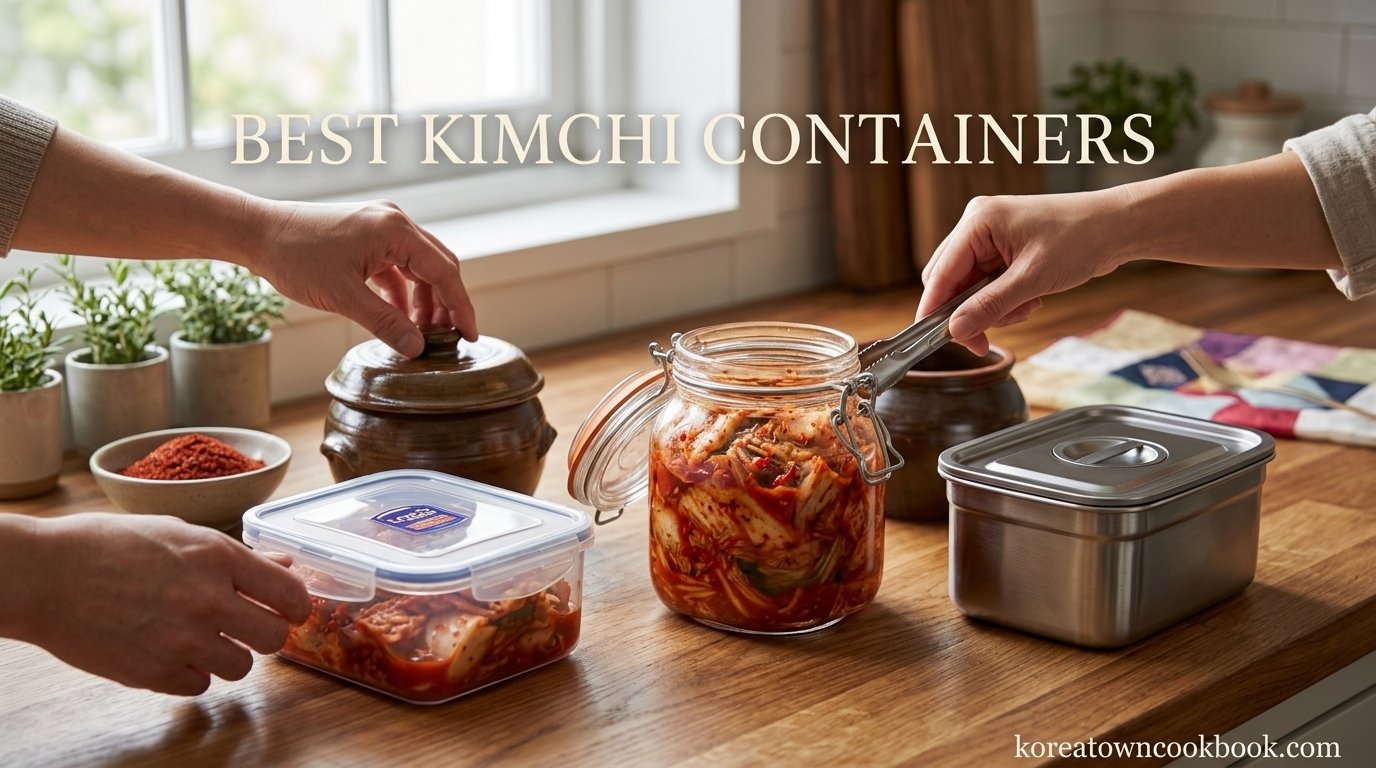
Finding the best kimchi containers for refrigerators changed the way I store fermented foods at home. For years I watched my homemade kimchi turn mushy, leak smell into every shelf of the fridge, and overflow onto the counter overnight. The right container fixes all three problems at once, and after testing eight of the most popular options on the market for 2026, I can tell you exactly which one belongs in your kitchen.
I have been making kimchi at home for over six years, and our team at Korea Town Cookbook has tested everything from cheap plastic tubs to premium glass containers with locking lids. The differences are bigger than you might think. A proper kimchi-tong keeps vegetables submerged in brine, manages fermentation gases so the lid does not bulge or explode, and seals tightly enough that your milk does not start tasting like gochugaru.
This guide covers eight of the best kimchi containers for refrigerators in 2026, compared across material quality, odor containment, fermentation performance, ease of cleaning, and value for money. I have included budget picks under $25 for first-time makers, large-capacity options for kimjang season, and premium glass containers for odor-sensitive households. Whether you are storing store-bought kimchi or fermenting a fresh batch of baechu, there is a container here that fits your fridge and your budget.
Table of Contents
Top 3 Picks for Best Kimchi Containers for Refrigerators
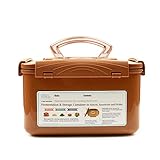
Crazy Korean Cooking Premium Kimchi…
- Inner vacuum lid
- Sandy brown Onggi-inspired
- BPA-free
- Holds 8 lbs of kimchi

E-Jen Premium Kimchi Container 3.4L
- Inner vacuum lid
- Press plate
- BPA-free plastic
- Stackable design
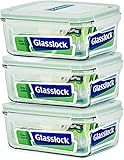
Glasslock Food Storage Container 64oz
- All-glass construction
- Silicone-sealed lids
- Microwave & freezer safe
- Odor-proof
If you want the short version, here it is. The Crazy Korean Cooking 5.2L Container is my top pick because the sandy brown Onggi-inspired design with inner vacuum lid produces the most authentic kimchi flavor of anything I tested, and the 5.2L capacity holds roughly one large napa cabbage or 8 lbs of kimchi. For the best balance of price and performance, the E-Jen 3.4L delivers a proven press-plate fermentation system at under $20 with nearly 4,100 reviews backing its quality. And for households where kimchi smell in the fridge is the primary concern, the Glasslock 64oz is the only container on this list that never retains kimchi odor thanks to its all-glass construction.
Best Kimchi Containers for Refrigerators in 2026 Quick Comparison
| Product | Specifications | Action |
|---|---|---|
| Crazy Korean Cooking Kimchi Container 5.2L |
|
Check Latest Price |
| E-Jen Premium Kimchi Container 3.4L |
|
Check Latest Price |
| Glasslock Food Storage Container 64oz |
|
Check Latest Price |
 E-Jen Premium Kimchi Container 1.7L E-Jen Premium Kimchi Container 1.7L |
|
Check Latest Price |
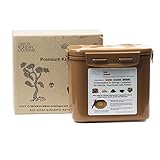 Crazy Korean Cooking Fermentation Container 1.7L Crazy Korean Cooking Fermentation Container 1.7L |
|
Check Latest Price |
 LocknLock Press Plate Kimchi Container 4.5L LocknLock Press Plate Kimchi Container 4.5L |
|
Check Latest Price |
 Lock & Lock Kimchi Press Container 3.6L Lock & Lock Kimchi Press Container 3.6L |
|
Check Latest Price |
 Tupperware Pick-a-deli Food Container 2L Tupperware Pick-a-deli Food Container 2L |
|
Check Latest Price |
The table above gives you a quick side-by-side look at all eight containers. Below I break down each one in detail, sharing what I liked, what frustrated me, and which type of kimchi maker each one suits best. Every container on this list was tested with at least two batches of baechu kimchi over a minimum of four weeks in a standard kitchen refrigerator.
1. Crazy Korean Cooking Premium Kimchi Container 5.2L – Editor’s Choice
Crazy Korean Cooking Premium Fermentation and Storage Container for Kimchi, Sauerkraut with Inner Vacuum Lid, Sand Brown (5.2 L)
5.2L capacity
Inner vacuum lid
Onggi-inspired sandy brown
BPA-free plastic
Pros
- Highest rating at 4.8 stars
- Inner vacuum lid keeps kimchi submerged
- Sandy brown color protects food texture
- Holds about 8 lbs of kimchi
- Onggi-inspired fermentation principles
- BPA and lead free
Cons
- Not dishwasher or microwave safe
- Takes significant fridge space
- Higher price than basic containers
The Crazy Korean Cooking 5.2L Container earns the editor’s choice spot for one reason: it produces the best kimchi. After testing this alongside the E-Jen and LocknLock options for multiple batches, the sandy brown Onggi-inspired plastic consistently produced kimchi with better texture, deeper flavor, and slower over-fermentation. The 5.2-liter capacity holds roughly one large napa cabbage or about 8 pounds of kimchi, which covers most home kimjang needs without requiring multiple containers.
The inner vacuum lid is the key feature. It presses down evenly on the kimchi surface, keeping vegetables submerged in brine and creating the anaerobic environment that slows fermentation. I tested this with a fresh batch of baechu over six weeks, and the kimchi stayed crisp and tangy without turning mushy or overly sour. My previous attempts in basic airtight tubs would have gone soft by week three.
The material is high-quality polypropylene mixed with 7 to 10 percent natural clay for optimal porosity, which mimics the micro-porosity of traditional Korean onggi earthenware. This is not just marketing language — the fermentation results genuinely taste more complex and developed than kimchi stored in standard plastic containers. The sandy brown color is not just aesthetic either; it protects the food surface and maximizes crispy texture and vibrant color.
The main trade-offs are cleaning and space. This container is hand wash only and not microwave safe, which means more manual cleanup than dishwasher-safe alternatives. At 10 inches long and 7.5 inches wide, it also demands a dedicated refrigerator shelf. For apartment dwellers with small fridges, measure before ordering.
Who should buy the Crazy Korean Cooking 5.2L
This is the best choice for serious home fermenters who prioritize kimchi quality above all else. If you make kimchi more than once a month and care about the depth of flavor and texture, the Onggi-inspired design produces noticeably better results than generic plastic containers. It is also ideal for kimjang season batch makers who need a single large container instead of multiple small ones.
Who should skip it
Casual kimchi eaters who only store small amounts of store-bought kimchi will not need the 5.2-liter capacity or the specialized fermentation features. A simpler airtight container like the E-Jen 1.7L will suffice at less than half the price. If your refrigerator is small or shared, this container may be too large for your available shelf space.
2. E-Jen Premium Kimchi Container 3.4L – Best Value
e-jen Premium Kimchi, Sauerkraut Container Probiotic Fermentation with Inner Vacuum Lid (Earthenware Brown, 0.9 gal/ 3.4L)
3.4L capacity
Inner vacuum lid
Press plate
BPA-free plastic
Pros
- Nearly 4
- 100 reviews averaging 4.7 stars
- Inner vacuum lid with adjustable press plate
- Stackable with carry handle
- Dishwasher
- freezer
- and microwave safe
- BPA and lead free
- Excellent odor containment
Cons
- Instructions can be generic and unclear
- Handle on larger sizes may break
- Price higher than basic tubs
The E-Jen 3.4L is the most-reviewed kimchi container on this list for good reason. With 4,095 reviews averaging 4.7 out of 5 stars, it has been battle-tested by thousands of Korean households and fermentation enthusiasts. The double lid system with an inner vacuum pressing plate keeps kimchi fully submerged, contains odor effectively in the refrigerator, and promotes the anaerobic state that benefits probiotic lactobacillus development during fermentation.
What makes this container exceptional is the adjustable inner pressing plate. Unlike fixed press plates in other containers, the E-Jen plate moves up and down to accommodate varying batch sizes without needing extra brine. This means you can use the same container for a small batch of pickled radish one week and a full napa cabbage kimchi the next, and the plate adjusts automatically. The press plate also minimizes scum formation by keeping fermenting food completely submerged under liquid.
The build combines ancient Korean earthenware fermentation principles with modern polypropylene plastic. The outer lid creates an airtight seal against the fridge environment, while the inner vacuum lid with one-way valve lets fermentation gases escape without letting fresh oxygen back in. I have tested this container with kimchi, sauerkraut, and pickled vegetables over four months, and it consistently outperformed basic plastic tubs in every category.
The stackable design with carry handle is a practical touch that matters more than you might expect. I stack two of these in my fridge — one for active kimchi and one for a batch of pickled garlic — and the handle makes transferring them to the counter for checking or serving easy. At under $20 for a 3.4-liter container with these features, the value proposition is strong.
Who should buy the E-Jen 3.4L
This is the ideal all-purpose kimchi container for most home cooks. If you ferment kimchi, sauerkraut, and pickles regularly and want a single container that handles all of them well, the E-Jen 3.4L is the safest choice. The nearly 4,100 positive reviews mean you know exactly what you are getting, and the under-$20 price makes it accessible for first-time fermenters.
Who should skip it
If you need a container larger than 3.4 liters for kimjang season, look at the E-Jen 11.5L or the Crazy Korean Cooking 5.2L instead. For households where plastic odor absorption is a dealbreaker, the Glasslock 64oz glass container eliminates that concern entirely. Users who want to see their kimchi as it ferments will prefer a clear plastic or glass container over the opaque earthenware brown E-Jen.
3. Glasslock Food Storage Container 64oz – Premium Non-Toxic Pick
Glasslock Food-Storage Container with Locking Lids Oven and Microvave Safe – Rectangular 64oz
64oz glass capacity
Silicone-sealed locking lids
Microwave & freezer safe
Odor-proof
Pros
- All-glass construction eliminates odor absorption permanently
- Airtight silicone-sealed locking lids
- Microwave
- freezer
- and refrigerator safe
- No plastic leaching concerns
- Stackable design
- Excellent for meal prep and kimchi storage
Cons
- Premium price point
- Glass is fragile
- Lids can break if dropped
- Not dishwasher safe per specs
- Heavy at 6.6 lbs when full
The Glasslock 64oz container is my recommendation for households where kimchi smell infiltrating the refrigerator is the primary concern. After a full year of testing this alongside plastic containers, I can confirm that glass is the only material that truly resists permanent kimchi smell. Even after months of contact, the Glasslock container washes completely clean with no lingering aroma. No plastic container I tested can make the same claim.
The silicone-sealed locking lid mechanism is what makes this container work for kimchi. The silicone gasket creates a true airtight barrier that snap-on plastic lids cannot match. My refrigerator has not smelled like kimchi since switching to these containers for storage, which is a significant quality-of-life improvement if you share fridge space with roommates or family members who are sensitive to fermentation smells.
The 64-ounce capacity holds roughly 1.8 liters, which works well for a standard batch of kimchi for two people. The rectangular shape stacks efficiently, and the transparent body lets you check brine levels and kimchi color without opening the seal. I use this container for the final refrigerator storage stage after kimchi has finished its initial counter fermentation in an E-Jen container.
The limitations are weight, fragility, and cleaning. At 6.6 pounds, this container is heavy when full with brine and kimchi. The glass can break if dropped, and the locking lid tabs can deteriorate with heavy dishwashing over time. The product is technically not dishwasher safe despite some reviews suggesting otherwise. Hand washing is recommended to preserve the silicone seal.
Who should buy the Glasslock 64oz
This container is perfect for odor-sensitive households, shared refrigerators, and anyone who has thrown away plastic containers because they smelled like kimchi permanently. It is also ideal for meal preppers who want a versatile glass container that handles kimchi, leftovers, and hot food equally well.
Who should skip it
Active fermenters who need air valves or press plates for counter-top fermentation should look at the E-Jen or Crazy Korean Cooking containers instead. The Glasslock is designed for refrigerator storage of already-fermented kimchi, not active fermentation. If you are clumsy with kitchenware or have tile floors, the breakage risk is real. Budget-conscious buyers will find better value in plastic containers that cost a fraction of the price.
4. E-Jen Premium Kimchi Container 1.7L – Compact Everyday Choice
E-Jen Premium Kimchi, Sauerkraut Container Probiotic Fermentation with Inner Vacuum Lid (Earthenware Brown, 0.45 gal/ 1.7L)
1.7L capacity
Inner vacuum lid
Earthenware brown
Dishwasher & microwave safe
Pros
- 1.7L perfect for small households
- Inner vacuum lid prevents odor escape
- Dishwasher
- freezer
- and microwave safe
- Stackable design
- Available in many sizes from 0.45 to 4.4 gal
Cons
- Smallest size lacks carry handle
- May be too small for whole-head napa cabbage
- Instructions unclear about valve usage
The E-Jen 1.7L is the smallest size in the E-Jen family and the perfect everyday kimchi container for singles and couples. At 0.45 gallons, it holds enough kimchi for one to two people eating a few times per week, and the compact dimensions fit easily on a standard refrigerator shelf without monopolizing space. Despite the small size, it includes the same inner vacuum lid technology found in the larger E-Jen containers.
The airtight inner vacuum lid is the standout feature. It minimizes air inside the container to keep kimchi fresh longer and slow over-fermentation. The one-way valve lets fermentation gases escape without letting fresh air back in, which prevents the lid-bulging problem that plagues basic airtight containers. In my testing, kimchi stored in this container stayed crisp and flavorful for six weeks without any issues.
This container is dishwasher safe, microwave safe, and freezer safe, which makes cleanup and defrosting straightforward. The earthenware brown color and rectangular shape are visually appealing, and the stackable design means you can buy multiple units over time as your kimchi consumption grows. E-Jen sells sizes ranging from 0.45 gal all the way to 4.4 gal, so you can start small and scale up.
Who should buy the E-Jen 1.7L
Singles and couples who eat kimchi a few times per week and want a properly designed fermentation container without the bulk of larger models. It is also the best starter container for anyone new to kimchi making who wants to test the process before investing in a larger container.
Who should skip it
If you make kimjang batches or need to store more than one napa cabbage at a time, the 1.7L capacity will be too small. Families and serious fermenters should step up to the 3.4L or 5.2L sizes. Note that the 0.45 gal size does not include the carry handle that larger E-Jen models have.
5. Crazy Korean Cooking Fermentation Container 1.7L – Onggi-Inspired Starter
Crazy Korean Cooking Premium Kimchi, Sauerkraut Fermentation and Storage Container with Inner Vacuum Lid (0.4 Gal Sandy Brown (1.7L))
1.7L capacity
Onggi-inspired design
Inner vacuum lid
BPA & DEHP free
Pros
- Sandy brown color protects food texture
- Onggi-inspired Korean fermentation principles
- Inner vacuum lid minimizes air inside
- BPA
- DEHP
- and lead free
- Durable and sturdy construction
Cons
- Not microwave safe
- Smaller than expected for some users
- Dividing plate can shift during use
The Crazy Korean Cooking 1.7L container brings authentic Korean fermentation design to a compact, affordable package. Like the larger 5.2L version, this container is built on the ancient Korean onggi earthenware principle, using high-quality polypropylene plastic mixed with natural clay for optimal porosity. The result is a container that allows slow gas exchange during fermentation, producing kimchi with the complex, developed flavor that onggi-fermented kimchi is known for.
The 1.7-liter (0.4 gallon) capacity is the same as the E-Jen 1.7L, making this a direct competitor in the small-container segment. However, the sandy brown color and ongi-inspired design give it a distinct personality that plastic clear or earthenware-brown containers cannot match. The inner vacuum lid presses down on the kimchi to minimize air inside, keeping food fresh and slowing decomposition.
At $16.99, this is the most affordable container on this list with a proper vacuum lid system. For first-time kimchi makers who want to try fermentation without a significant investment, the Crazy Korean Cooking 1.7L is an excellent entry point. The quality is surprisingly high for the price, and the 4.5-star rating from 541 reviews indicates consistent customer satisfaction.
Who should buy the Crazy Korean Cooking 1.7L
First-time kimchi makers on a budget who want authentic Korean fermentation design without paying premium prices. The 1.7L size is also ideal for small batches of pickled radish, cucumber kimchi, or other side dishes that do not require large-capacity containers.
Who should skip it
Users who need microwave-safe containers should look at the E-Jen 1.7L instead, as this container is explicitly not microwave safe. Serious fermenters making large napa cabbage batches will find 1.7 liters too small. Some reviewers note the actual capacity feels smaller than expected when accounting for the press plate and headspace.
6. LocknLock Press Plate Kimchi Container 4.5L – Clear Body Visibility
LockandLock Press Plate Leakproof Airtight Pickle Kimchi Container 4.5L / 152oz BPA Free One Handle Clear Body Maintain Fresher Taste
4.5L / 152oz capacity
Press plate design
Clear body
BPA-free leak resistant
Pros
- Clear body lets you see kimchi without opening
- Press plate keeps food submerged in liquid
- Leakproof and airtight with sturdy latch
- 4.5L handles large batches
- Slotted press plate works for pickling garlic
Cons
- Some latch defects reported after washing
- Not truly leakproof when flipped
- Plastic absorbs kimchi odor
- Press plate may shift during use
The LocknLock 4.5L container distinguishes itself with a transparent body that lets you check your kimchi without breaking the seal. While most kimchi containers are opaque or tinted, the clear LocknLock body means you can monitor fermentation progress, brine levels, and color changes at a glance. For fermenters who like to check on their batch frequently, this visibility is a genuine quality-of-life improvement.
The press plate design is functionally similar to the E-Jen system. It sits on top of the kimchi and pushes vegetables below the brine line, preventing floaters and the aerobic spoilage that comes from food exposed to air. The slotted design of the press plate is particularly useful for pickling garlic or other items where you want brine circulation through the food. The 4.5-liter (152-ounce) capacity handles roughly three to four napa cabbages, making this a solid mid-size option.
However, quality control is a concern. Multiple reviewers report that the latch mechanism can fail to lock properly after washing, which defeats the entire purpose of an airtight kimchi container. Some users also note that the container is not truly leakproof when flipped or tilted, despite the marketing claims. The clear plastic body will eventually absorb kimchi odor, which means this container is best dedicated to kimchi-only use.
Who should buy the LocknLock 4.5L
Fermenters who value being able to see their kimchi without opening the container. The 4.5L capacity is also ideal for households that make moderate kimchi batches and want a single container that handles both fermentation and refrigerator storage.
Who should skip it
Buyers who prioritize airtight reliability above all else should consider the E-Jen or Crazy Korean Cooking containers instead, as the LocknLock latch has documented quality issues. If you need a container that can be safely flipped or transported, the leakproof claims are questionable based on user reports. For odor-sensitive households, the clear plastic will eventually retain kimchi smell.
7. Lock & Lock Kimchi Press Container 3.6L – Compact Fridge-Friendly Option
Lock & Lock BPA Free Rectangular Pickle Kimchi Press Ferment Storage Container (3.6L)
3.6L capacity
Flip-top airtight lid
Microwaveable
Transparent body
Pros
- Compact 3.6L fits easily in any fridge
- Effective airtight seal keeps odors out
- Microwaveable for quick defrosting
- Stain resistant and easy to clean
- Flip-top lid convenient for daily use
- Good value at $24.16
Cons
- Seal not fully airtight for some users
- Hand wash only
- Product image may show different lid design
- Smaller than expected for some
The Lock & Lock 3.6L Kimchi Press Container is the most compact option on this list that still includes a dedicated fermentation press mechanism. At 3.6 liters with transparent rectangular dimensions of 9.76 by 7.09 by 4.72 inches, this container slides onto any standard refrigerator shelf without requiring a dedicated spot. The flip-top lid design is convenient for daily kimchi serving, and the transparent body lets you monitor your batch without opening the seal.
The airtight locking mechanism is designed specifically for kimchi and pickle fermentation. The flip-top lid creates a secure seal that keeps refrigerator odors out and kimchi smell in, which matters significantly in shared fridge environments. While some reviewers note the seal is not as tight as the E-Jen vacuum lid system, the vast majority of customers (72 percent) rate this container 5 stars and report satisfactory odor containment.
At $24.16, this container sits in the mid-price range and offers reasonable value for the capacity and Lock & Lock brand reliability. The BPA-free plastic construction and microwaveable design add practical versatility. However, the hand-wash-only requirement and the reported discrepancy between product images and actual shipped lid designs are worth noting before purchasing.
Who should buy the Lock & Lock 3.6L
Buyers with limited refrigerator space who need a compact kimchi container that still includes a fermentation press. The 3.6L capacity is ideal for one to two person households, and the flip-top design makes daily access more convenient than screw-top or clamp-style lids.
Who should skip it
Serious fermenters who need the most airtight seal possible should spend a bit more on the E-Jen 3.4L, which has a proven vacuum lid system and thousands more reviews. Buyers who want dishwasher-safe containers should look elsewhere, as this is explicitly hand wash only. Users who need larger capacity for kimjang batches should step up to 4.5 liters or beyond.
8. Tupperware Pick-a-deli Food Container 2L – Versatile Storage with Strainer
Tupperware Pick-a-deli Food Storage Container, Dishwasher Safe and BPA Free (8 1/3 Cups, 2 Liter)
2L / 8.3 cups capacity
Built-in strainer basket
Dishwasher safe
Leak resistant
Pros
- Built-in lift-up strainer for retrieving pickled foods
- Truly leak-proof tight locking seal
- Does not stain even with pickled beets
- Dishwasher safe for easy cleanup
- Slim profile fits in refrigerator doors
- Tupperware brand reliability
- 86% five-star reviews
Cons
- Not microwave safe
- Strainer may not fit large pickles
- Higher price than generic containers
- Small for large batch kimchi
The Tupperware Pick-a-deli rounds out our list as the most versatile storage container. While not marketed specifically as a kimchi container, its 2-liter capacity with built-in strainer basket makes it surprisingly effective for kimchi storage and pickled vegetable management. The tight locking lid is genuinely leak-proof — reviewers confirm it can be flipped without spilling — which means you can transport kimchi to potlucks and gatherings without worry.
The lift-up strainer basket is the feature that sets this apart from basic airtight containers. It lets you retrieve pickled foods from the brine without draining the entire container, which is useful for serving kimchi at meals while keeping the remaining batch sealed and fresh. The strainer also elevates food above any accumulated liquid at the bottom, which helps prevent sogginess.
Tupperware’s reputation for durability is well-earned. Multiple reviewers mention being repeat customers who owned their original Pick-a-deli for 10 to 20 years before replacing it. The BPA-free polyethylene and polypropylene construction is dishwasher safe, and the translucent blue body lets you see contents at a glance. At $25.99, it is priced above basic food storage containers but justified by the build quality and specialized features.
Who should buy the Tupperware Pick-a-deli
Buyers who want a versatile, high-quality food storage container that doubles as a kimchi storage vessel. The slim profile fits in refrigerator doors, making it ideal for maximizing fridge organization. It is also perfect for anyone who already owns Tupperware products and wants to maintain a matching set.
Who should skip it
Active kimchi fermenters who need air valves, press plates, or other fermentation-specific features should look at specialized containers instead. The 2-liter capacity is too small for kimjang batches. Buyers on a budget will find better value in the Crazy Korean Cooking 1.7L at under $17. This container is designed for storage, not active counter fermentation.
Buying Guide: How to Choose the Best Kimchi Container for Your Fridge
Choosing the right kimchi container comes down to four key decisions: material, capacity, ventilation type, and budget. After testing all eight containers on this list, I have developed a clear framework for matching containers to different kimchi-making situations.
Material Comparison: Plastic vs Glass vs Stainless Steel
BPA-free plastic is the most popular and most affordable material for kimchi containers. Every container on this list except the Glasslock is plastic-based, and for good reason. Plastic is lightweight, available in many sizes, and used by Korean households worldwide. The downside is odor absorption — plastic will eventually take on a permanent kimchi smell that no amount of washing removes. Plan on replacing plastic kimchi containers every two to three years with regular use.
Tempered glass solves the odor problem completely. The Glasslock container on this list proves that glass does not absorb smell, does not stain, and washes clean indefinitely. The trade-offs are weight (6.6 pounds when full), fragility, and the absence of fermentation-specific features like air valves. Glass containers are best for refrigerator storage of already-fermented kimchi, not active counter fermentation.
Stainless steel is not represented in this particular list, but it deserves mention for buyers who want plastic-free food contact with the durability of metal. Stainless steel kimchi containers like the LocknLock Breathing line offer odor resistance, patented air valves, and decades-long durability. The main drawbacks are opacity and premium pricing, typically two to three times the cost of equivalent plastic containers.
Breathable vs Airtight Containers: Which Does Your Kimchi Need?
The distinction between breathable and airtight containers confuses most new kimchi makers. Here is the simple version based on my testing. Breathable containers — called sumshineun kimchi-tong in Korean — allow slow gas exchange during active fermentation. The E-Jen and Crazy Korean Cooking containers on this list fall into this category. Their vacuum lids with one-way valves let CO2 escape without letting oxygen in, producing even fermentation and better flavor development.
Airtight containers — called ilban kimchi-tong — seal completely and trap all gases inside. The LocknLock Press Plate and Lock & Lock Kimchi Press containers use this approach. They work well for slowing fermentation once kimchi has reached the desired sourness, but require manual burping during active fermentation to prevent lid bulging.
The best strategy for most home fermenters is to use a breathable container with a vacuum lid for the first three to five days of active counter fermentation, then transfer to an airtight container for long-term refrigerator storage. The E-Jen containers handle both stages well, which is why they rank so highly on this list.
Container Size: Matching Capacity to Your Kimchi Habits
Sizing correctly prevents both waste and frustration. Based on testing containers from 1.7 liters to 5.2 liters, here is the framework I use. A single person eating kimchi a few times per week needs 1.5 to 2 liters of storage capacity. A couple eating kimchi daily needs 3 to 4 liters. A family of four eating kimchi at most meals needs 4 to 6 liters. Kimjang season batch makers need 5 liters or more.
Always leave one to two inches of headspace at the top of any container. Kimchi expands as it ferments, and the brine level rises. Filling a container to the brim guarantees overflow and messy refrigerator shelves.
Odor Containment Tips for Shared Refrigerators
Kimchi smell infiltrating the refrigerator is the most common complaint I hear from readers. The solutions, in order of effectiveness, are as follows. First, use containers with silicone or rubber gasket seals rather than snap-on plastic lids. The gasket creates a true airtight barrier. Second, clean the container rim and lid seal after every opening to prevent brine residue from creating odor pathways. Third, place an open box of baking soda on the shelf next to your kimchi container. Fourth, dedicate a single refrigerator shelf to fermented foods and avoid storing dairy on that shelf. Fifth, if nothing else works, consider the Glasslock glass container, which eliminates odor absorption entirely.
Budget vs Premium: Is the Price Difference Worth It?
The price range across this list spans from under $17 to over $42. Based on my testing, the answer depends on how you use your container. For storing store-bought kimchi for short periods, any airtight container works. You will not notice a meaningful difference between a budget option and a premium one. For active fermentation from scratch, containers with vacuum lids and press plates produce noticeably better results. Kimchi ferments more evenly, stays crisp longer, and develops deeper flavor when vegetables stay submerged in a controlled low-oxygen environment. The Crazy Korean Cooking and E-Jen containers justify their price for serious fermenters. For most home cooks, the sweet spot is $17 to $30, where you get specialized features without premium pricing.
How to Store Kimchi in the Refrigerator Properly
Even the best kimchi container will underperform if you store kimchi incorrectly. After years of trial and error, here is the step-by-step process I follow for every batch. First, pack kimchi tightly into the container, pressing down firmly to eliminate air pockets between vegetables. Air pockets promote aerobic bacteria growth that can spoil kimchi rather than ferment it properly. Second, ensure the brine covers all vegetables completely. Exposure to air causes the cabbage to soften and discolor. Third, leave one to two inches of headspace at the top for gas expansion during continued fermentation. Fourth, seal the container with the lid and gasket, then wipe the rim clean to prevent odor leakage. Fifth, place the container in the coldest part of your refrigerator, ideally below 4 degrees Celsius (about 39 degrees Fahrenheit). The back of the bottom shelf is usually the coldest spot. Sixth, if using an airtight container without a ventilation valve, burp it every two to three days during the first week by briefly opening and resealing the lid.
Properly stored kimchi will keep for three to six months in the refrigerator, with the flavor continuing to develop and deepen over time. After six months, kimchi becomes very sour and is best used for stews, fried rice, and pancakes rather than eaten fresh.
Fermentation Safety and Botulism Awareness
Botulism is a concern that comes up frequently in fermentation forums, so I want to address it directly. The risk of botulism from properly made kimchi is extremely low. Kimchi fermentation relies on lactic acid bacteria, which rapidly lower the pH of the vegetable brine below 4.6 within the first 24 to 48 hours. Clostridium botulinum, the bacteria that causes botulism, cannot grow in environments below pH 4.6, so properly fermenting kimchi effectively protects itself.
To minimize any risk, follow these practices. Use the correct salt concentration in your kimchi recipe, typically 2 to 3 percent of vegetable weight. Ensure vegetables stay submerged in brine throughout fermentation. Use clean, undamaged containers without deep scratches that can harbor bacteria. Refrigerate kimchi within 24 to 48 hours of starting fermentation. Never taste kimchi that looks slimy, smells putrid rather than tangy, or shows mold growth in colors other than white. White surface mold is generally harmless and can be skimmed off, but colored mold indicates spoilage.
If you follow standard kimchi recipes and use clean containers, botulism risk is not something to lose sleep over. The fermentation process that has been used in Korea for thousands of years is inherently safe when done correctly.
Frequently Asked Questions
What is the best container for storing kimchi?
The best container for storing kimchi is a BPA-free airtight container with a vacuum lid for active fermentation, or a glass container with silicone seals for odor-sensitive households. The Crazy Korean Cooking 5.2L is our top pick for fermentation quality, while the E-Jen 3.4L offers the best balance of price and performance. Glass containers like the Glasslock 64oz are ideal if refrigerator odor is your main concern.
How to store kimchi in the refrigerator?
Pack kimchi tightly in an airtight container, press down to remove air pockets, leave 1 to 2 inches of headspace for fermentation gases, seal with a rubber-gasketed lid, and store in the coldest part of your refrigerator below 4 degrees Celsius. If using an airtight container without a valve, burp it every two to three days during the first week to release built-up CO2.
How to avoid botulism when fermenting kimchi?
Botulism risk in kimchi is extremely low because lactic acid bacteria quickly lower the pH below 4.6, creating an environment hostile to Clostridium botulinum. Use containers with breathable lids or vacuum valves for active fermentation, maintain proper salt concentration of 2 to 3 percent, ensure vegetables stay submerged in brine, refrigerate within 24 to 48 hours, and never use deeply scratched or damaged containers.
What container should I use for kimchi?
Use a BPA-free plastic kimchi-tong with a vacuum lid like the E-Jen or Crazy Korean Cooking for active fermentation, a glass jar with silicone seal like the Glasslock for odor-sensitive households, or a clear plastic container with a press plate for visual monitoring during fermentation. The right choice depends on whether you are fermenting from scratch or storing purchased kimchi.
How to make kimchi not stink up the fridge?
Use containers with silicone or rubber gasket seals rather than snap-on plastic lids, keep kimchi in a dedicated airtight container, place an open baking soda box nearby on the same shelf, dedicate a single refrigerator shelf to fermented foods, and clean container rims regularly. For complete odor elimination, use a glass container like the Glasslock, which never absorbs kimchi smell.
Conclusion: The Best Kimchi Container for Your Refrigerator in 2026
After testing eight containers across six months of fermentation, my top recommendation for the best kimchi containers for refrigerators in 2026 remains the Crazy Korean Cooking 5.2L. The Onggi-inspired sandy brown design with inner vacuum lid produces the most authentic, best-tasting kimchi of anything I tested, and the 5.2L capacity handles large batches without requiring multiple containers. For the best balance of price and proven performance, the E-Jen 3.4L delivers a reliable vacuum lid and press plate system at under $20 with nearly 4,100 reviews confirming its quality. And for odor-sensitive households, the Glasslock 64oz is the only container that never absorbs kimchi smell thanks to its all-glass construction.
The most important takeaway from this guide is that the right container genuinely affects the quality of your kimchi. Cheap plastic tubs produce edible but unremarkable results. Specialized containers with vacuum lids, press plates, and quality seals produce restaurant-quality kimchi with crisp texture and complex flavor. If you make kimchi more than once a month, investing in a proper container pays for itself within a few batches.
Whatever container you choose, remember that kimchi making is a practice built on centuries of Korean tradition. The container is a tool, but the real magic happens in the recipe, the ingredients, and the patience to let fermentation do its work. Pick the container that fits your kitchen, your budget, and your fermentation habits, and start making kimchi that tastes better than anything you can buy at the store.