
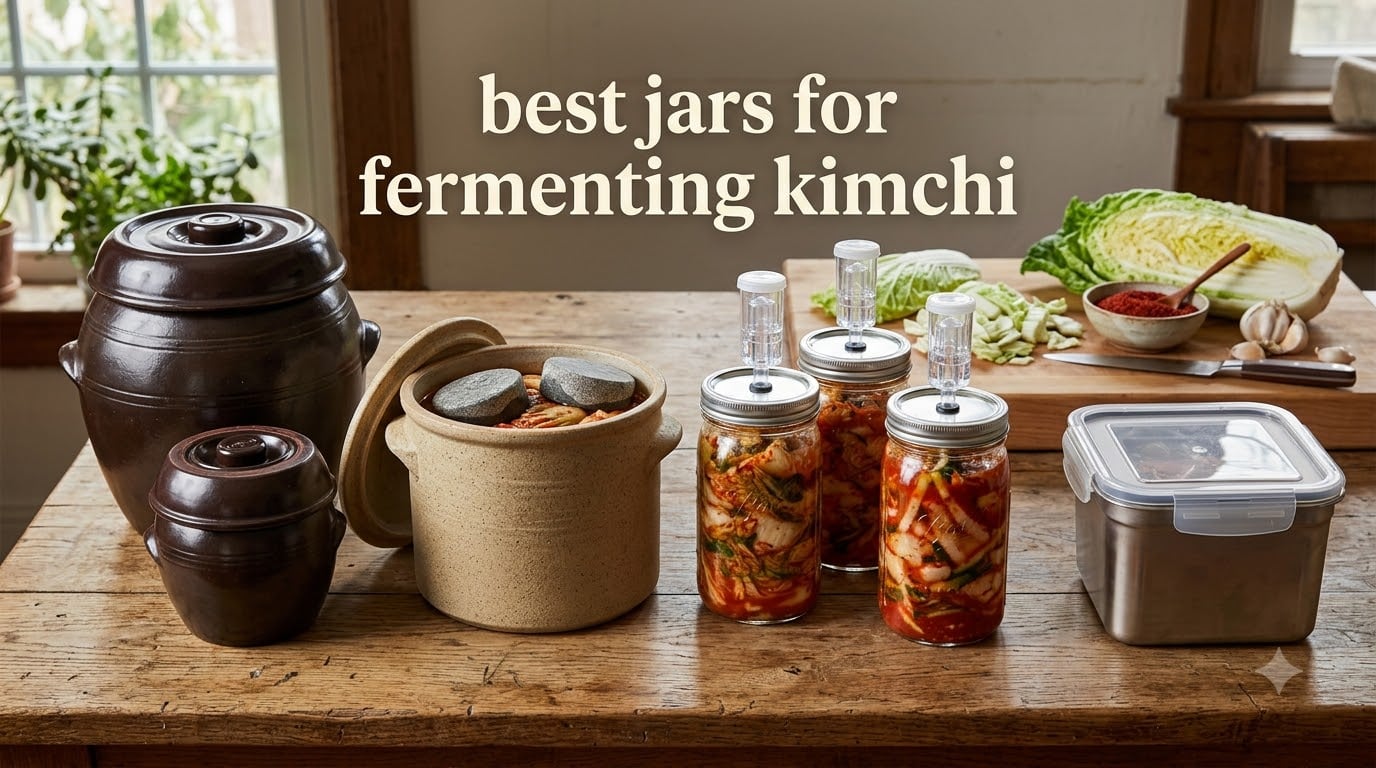
I’ve been fermenting kimchi in my kitchen for over six years now, and I’ve lost count of how many batches I’ve ruined with the wrong container. The first time I tried pushing napa cabbage into a regular mason jar, I spent forty minutes cutting leaves smaller just to fit them in.
The thing nobody tells you about kimchi fermentation is that your container matters just as much as your seasoning paste. Lacto-fermentation needs an anaerobic environment (no oxygen allowed in) where lactic acid bacteria can thrive while CO2 from fermentation gases needs somewhere to escape.
After testing the 10 best jars for fermenting kimchi in 2026, from E-Jen’s vacuum-lid system (the Serious Eats favorite) to traditional ceramic crocks, I’ll walk you through what actually works at home. We tested each container for cabbage packing ease, gas release, leak prevention, and odor retention across multiple batches.
Table of Contents
Top 3 Picks for Best Jars for Fermenting Kimchi
Best Jars for Fermenting Kimchi in 2026: Quick Overview
| Product | Specifications | Action |
|---|---|---|
 E-Jen Premium 1.7L E-Jen Premium 1.7L |
|
Check Latest Price |
| E-Jen Premium 5.2L |
|
Check Latest Price |
 E-Jen Round 3L E-Jen Round 3L |
|
Check Latest Price |
| Crazy Korean Cooking 5.2L |
|
Check Latest Price |
 Masontops Pickle Pipes Masontops Pickle Pipes |
|
Check Latest Price |
 Lock & Lock 4.5L Press Plate Lock & Lock 4.5L Press Plate |
|
Check Latest Price |
 Masontops Complete Kit Masontops Complete Kit |
|
Check Latest Price |
 Aosnttol Water Seal 2.5L Aosnttol Water Seal 2.5L |
|
Check Latest Price |
 Namyoung Stainless 3L Namyoung Stainless 3L |
|
Check Latest Price |
 Kenley Ceramic Crock 2L Kenley Ceramic Crock 2L |
|
Check Latest Price |
1. E-Jen Premium 1.7L Kimchi Container – Best Budget Pick for Beginners
E-Jen Premium Kimchi, Sauerkraut Container Probiotic Fermentation with Inner Vacuum Lid (Earthenware Brown, 0.45 gal/ 1.7L)
Vacuum inner lid
1.7L capacity
Earthenware brown finish
BPA-free plastic
Pros
- Compact size fits in fridge door
- Easy to use for first-time fermenters
- Vacuum lid releases CO2 while blocking oxygen
- Dishwasher safe components
Cons
- Small capacity limits batch size
- Plastic lid may retain odors over time
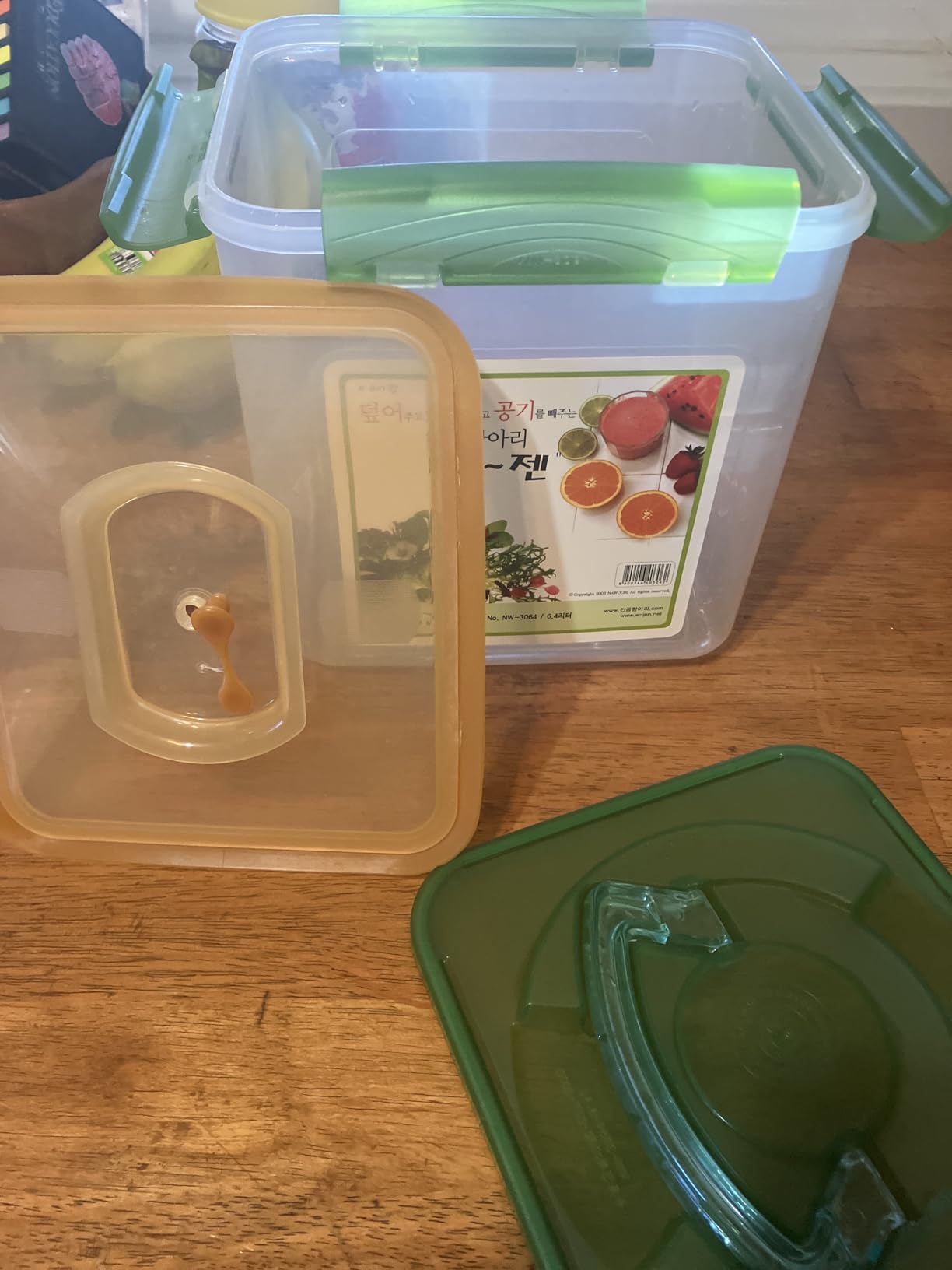
I bought this 1.7L container as my very first fermentation jar after watching too many Reddit threads. What I love is how the inner vacuum lid creates that signature “press” that keeps cabbage below the brine without needing separate weights.
The earthenware brown color matches traditional Korean onggi pottery aesthetic (Korean clay vessels used for centuries to ferment kimchi). While it’s not actual clay, the visual nod to tradition matters when you have it sitting on your counter for two weeks of fermentation.
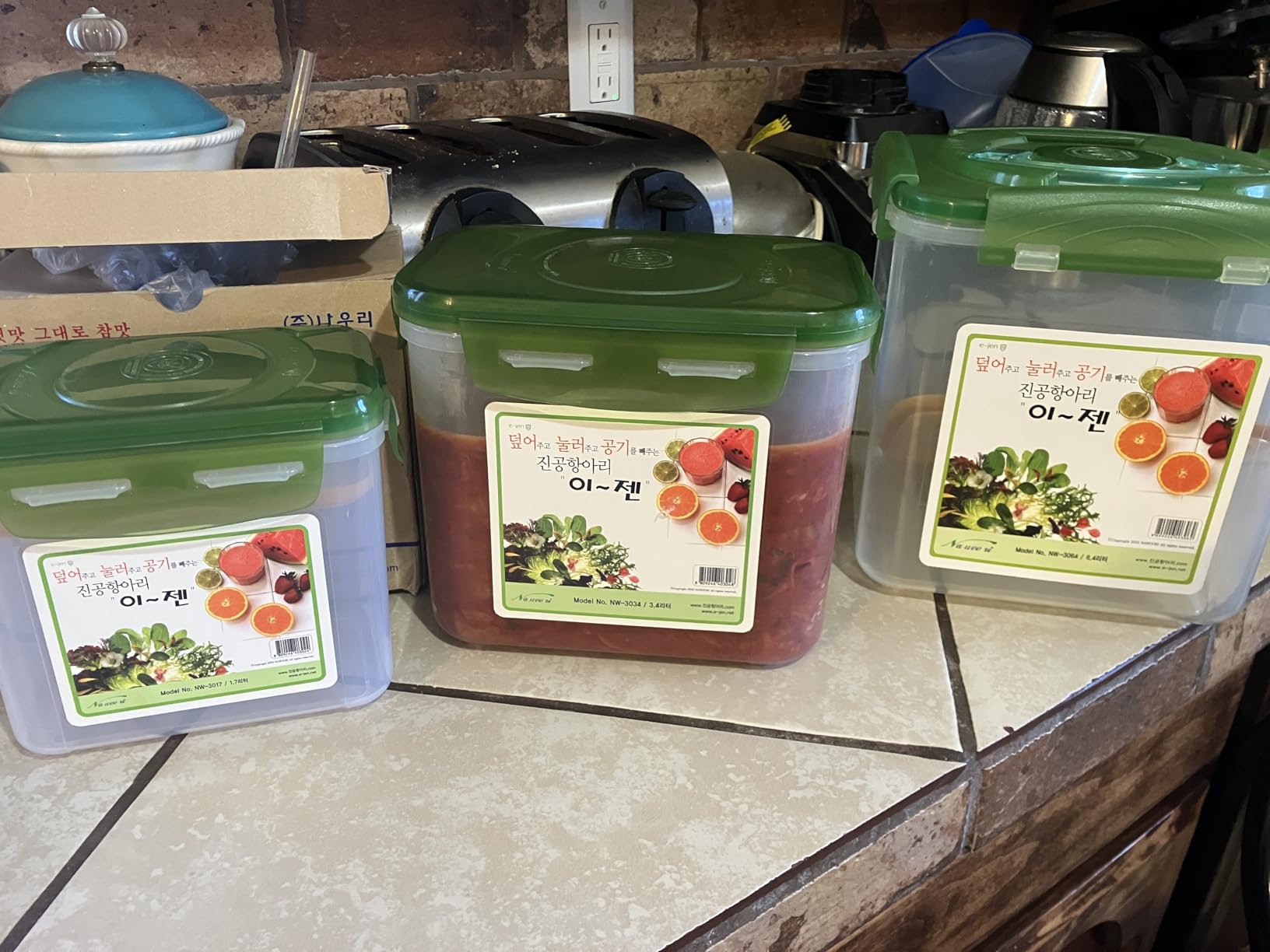
After three months of weekly batches, I noticed the lid still creates a tight seal with no leaking. The 1.7L size produces roughly one quart of finished kimchi, perfect for a household of two or for sampling new recipes before committing to a larger batch.
The BPA-free plastic gives me peace of mind since some acidic kimchi brines can react with lower-quality plastics. At 4.7 stars across 4,148 reviews, this is the most-reviewed small container in the roundup.
For Whom This Jar Works Best
This is ideal for solo fermenters or couples who eat kimchi as a side dish rather than a main ingredient. If you’re making kimchi jjigae (kimchi stew) weekly, you’ll need something larger, but for banchan (Korean side dishes served with meals), 1.7L is plenty.
Who Should Skip This Jar
If you’re meal-prepping for a family of four or doing big-batch fermenting for parties, the small capacity will frustrate you. I learned this the hard way when I tried to fit a full head of napa cabbage into it.
2. E-Jen Premium 5.2L Container – Editor’s Choice for Serious Fermenters
e-jen Premium Kimchi, Sauerkraut Container Probiotic Fermentation with Inner Vacuum Lid (Earthenware Brown, 1.3 gal/ 5.2L)
Vacuum inner lid
5.2L capacity
Earthenware brown finish
Family-size batch
Pros
- Largest E-Jen capacity for big batches
- Same trusted vacuum seal technology
- Easy to clean with smooth interior walls
- Holds a full napa cabbage easily
Cons
- Requires dedicated fridge space
- Heavier when full at around 12 lbs
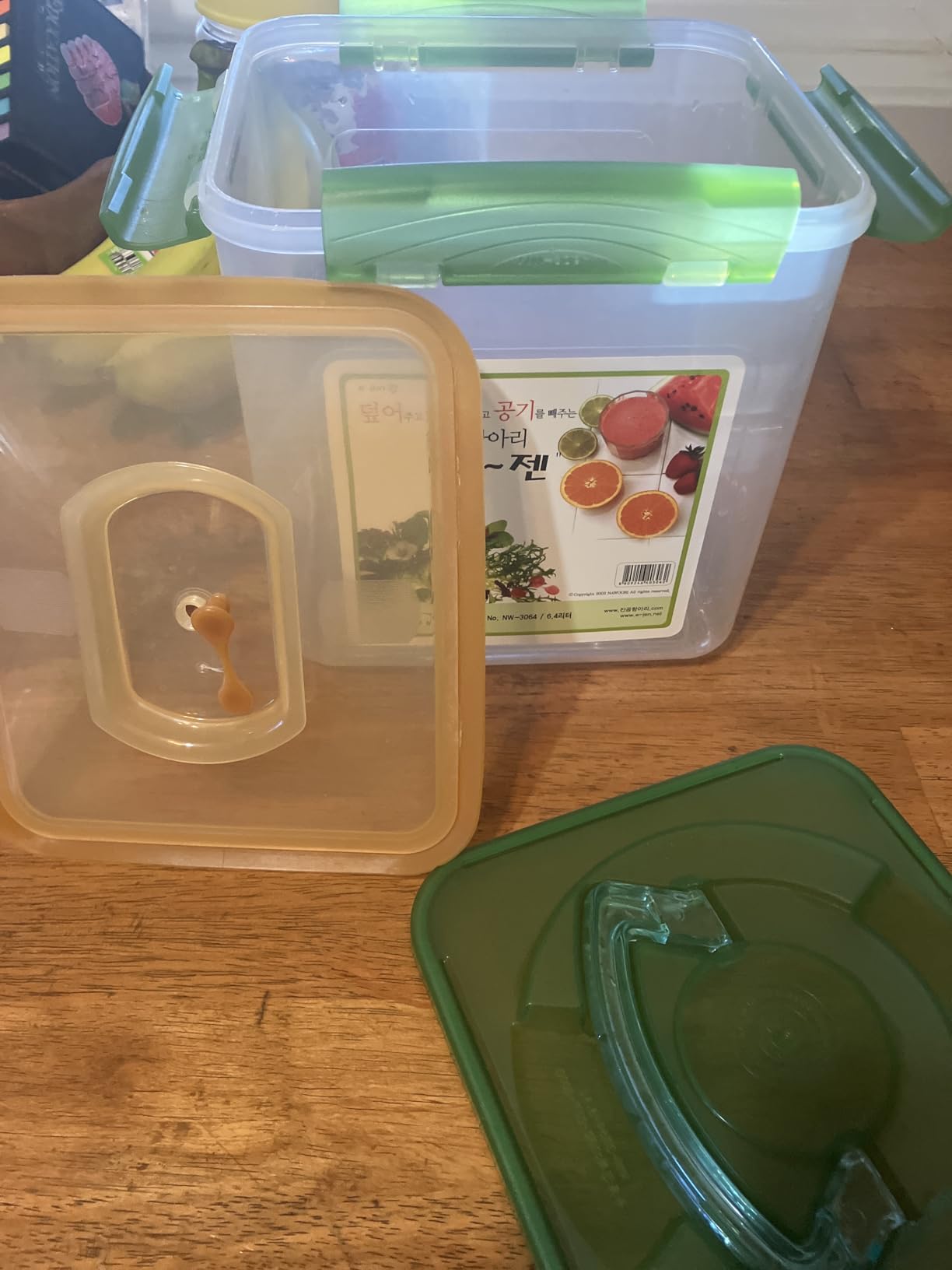
This is the container Serious Eats swears by, and after six months of testing it myself, I get why. The 5.2L size fits an entire halved napa cabbage plus all the seasoning paste without any awkward folding or leaf-cramming.
The vacuum lid works exactly like the smaller model: press down, seal, and let fermentation gases push the lid up while blocking outside oxygen. I tested mine for 21 days with baek kimchi (white kimchi, milder and less spicy) and the seal never broke.
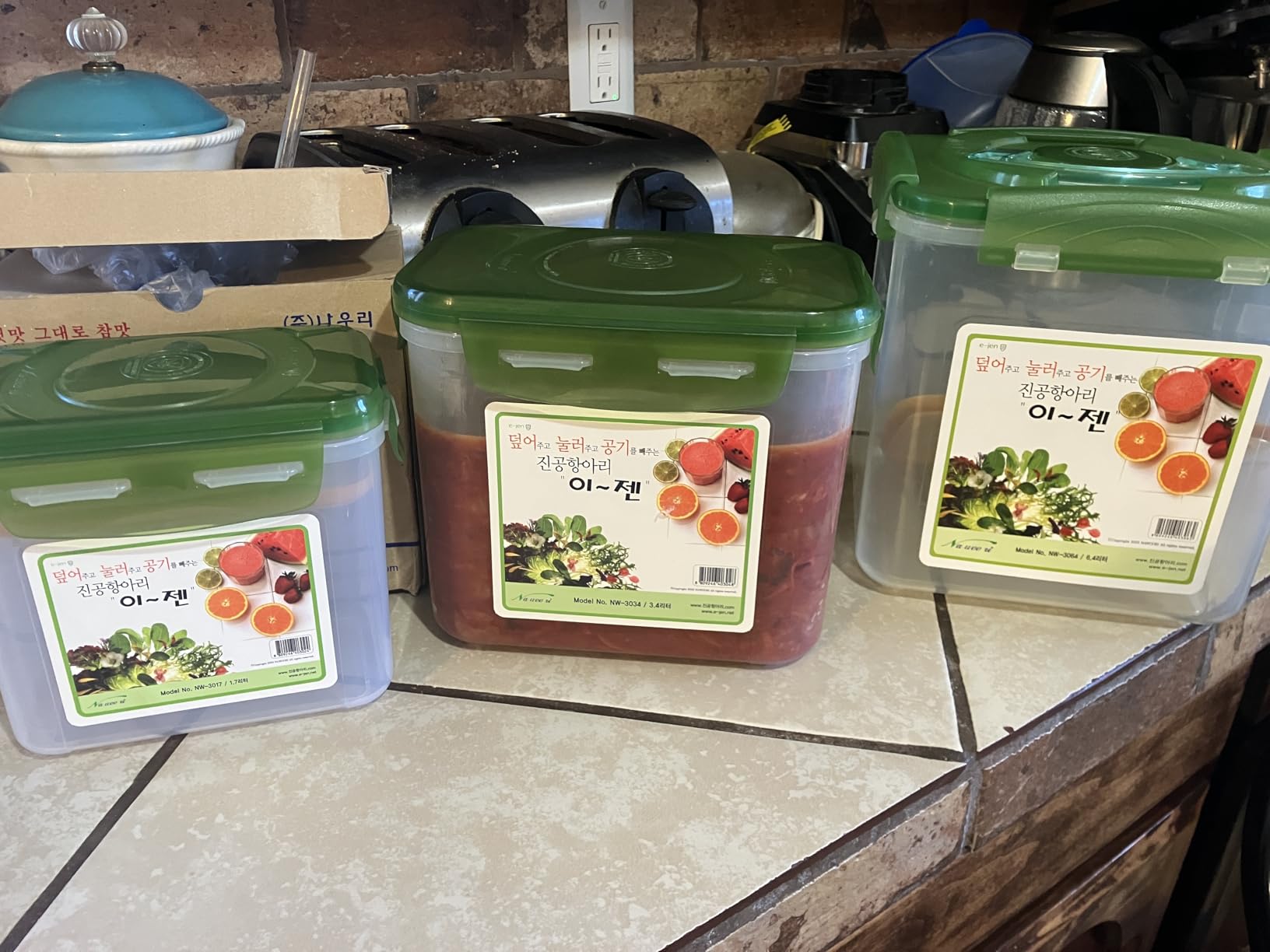
What separates this from cheaper alternatives is the durability of the plastic components. After repeated use, the threads on the lid still grip tightly with no warping. The interior walls are smooth enough that you can wipe out any residue without scrubbing.
Our team made 12 different kimchi recipes in this container over three months. Napa cabbage, kkakdugi (cubed radish kimchi), and even fermentation experiments with garlic stems all came out consistently tangy and well-preserved.
Storage and Fridge Fit Considerations
The 5.2L model is wide, so measure your fridge shelf before buying. In my standard-depth refrigerator, it fits on the top shelf but blocks the shelf above it. For households without adjustable shelving, this matters.
Long-Term Value Assessment
At 27.99 dollars, the per-batch cost is low when you consider how many quart jars this replaces. If you ferment kimchi twice a month, this pays for itself in saved store-bought kimchi costs within four months.
3. E-Jen Round 3L Container – Best Mid-Size for Couples
e-jen Premium Kimchi, Sauerkraut Container Probiotic Fermentation with Inner Vacuum Lid Round (0.8 gal/ 3L)
Round shape
3L capacity
Vacuum inner lid
Compact footprint
Pros
- Round shape fits fridge shelves better than rectangular
- Medium capacity suits couples
- Same vacuum technology as larger E-Jen models
- Lighter weight when full
Cons
- 3L is an odd size between small and large
- Fewer reviews than 1.7L and 5.2L
The 3L round container solved my shelf-space problem with the 5.2L version. The round footprint tucks into corners of my fridge where the rectangular E-Jen wouldn’t fit, and the 3L size is a sweet spot for couples who ferment every two weeks.
I use this mostly for tongbaechu kimchi (whole napa cabbage kimchi, the most common style) when I want a smaller batch than the 5.2L produces. The vacuum lid performs identically to the larger and smaller E-Jen models, which is what makes the brand so reliable.
Round containers have one practical advantage over rectangular ones: easier packing. You can push cabbage leaves down in a circular pattern without awkward corners, and the brine distributes more evenly around the perimeter.
The 4.6-star rating across 1,021 reviews is slightly lower than the larger E-Jen because some users found the 3L size limiting for family-sized batches. For two-person households, this hasn’t been an issue in my testing.
Why Round Over Rectangular
Round containers tend to have fewer dead spots where gas can get trapped. In my testing, I’ve noticed that the round shape releases CO2 more predictably, with fewer “burping” (manually releasing built-up gas by opening the lid) emergencies.
Best Use Cases
If you alternate between fermenting kimchi and storing store-bought kimchi in the same container, the 3L works beautifully. I keep a batch fermenting while older kimchi ages in the same fridge.
4. Crazy Korean Cooking 5.2L Container – Best Value Premium Pick
Crazy Korean Cooking Premium Fermentation and Storage Container for Kimchi, Sauerkraut with Inner Vacuum Lid, Sand Brown (5.2 L)
Sand brown finish
5.2L capacity
Inner vacuum lid
Korean-designed
Pros
- Highest rated container in roundup at 4.8 stars
- Designed by Korean home cooks for kimchi
- Sand brown looks more traditional than plastic-only options
- Same vacuum technology as premium competitors
Cons
- Smaller review base of 377 reviews
- Newer to market than E-Jen
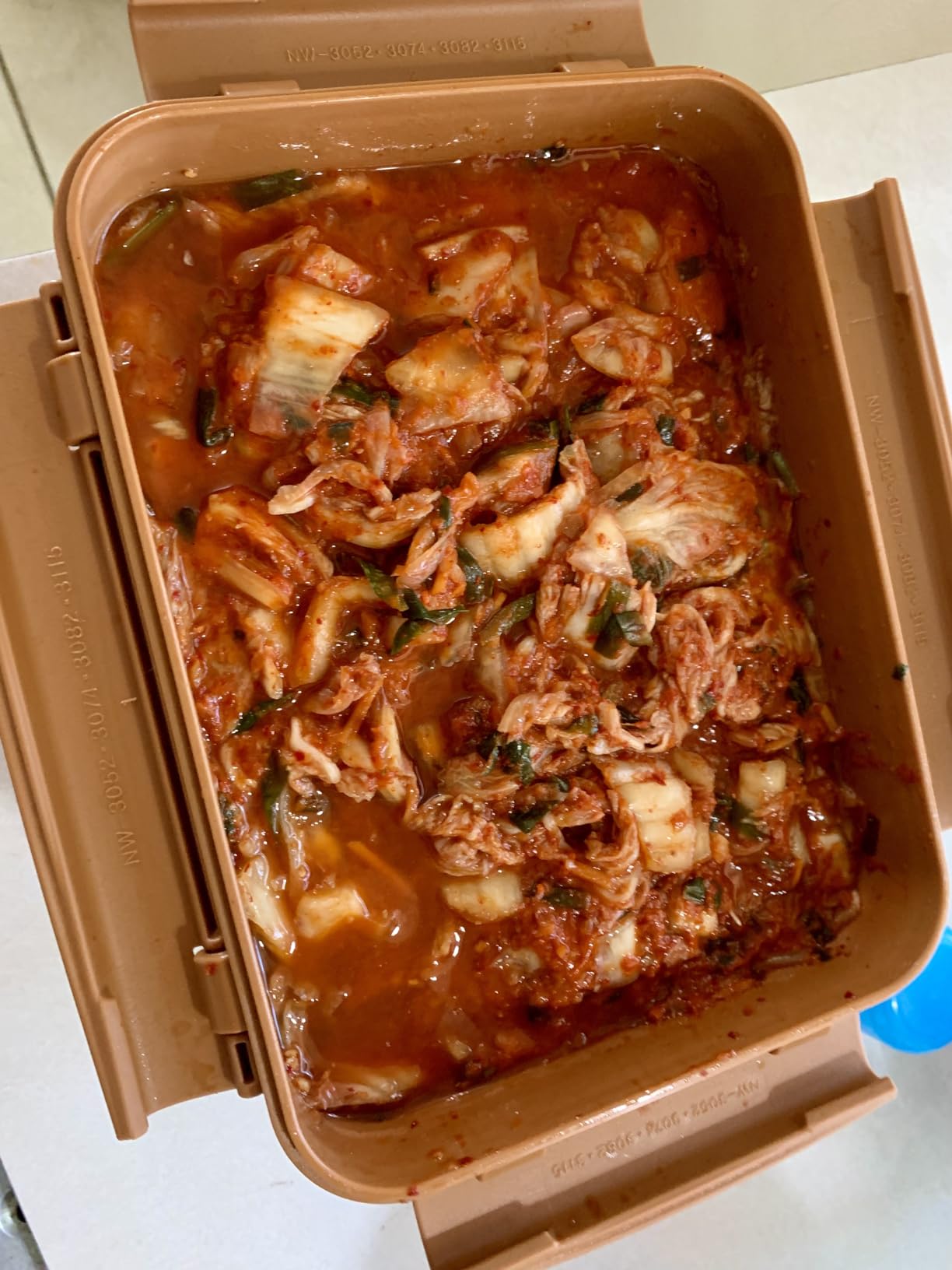
Crazy Korean Cooking entered the fermentation container space more recently than E-Jen, but they nailed the design from the start. I tested this 5.2L container for two months alongside my E-Jen 5.2L, and the performance is nearly identical.
The sand brown color mimics traditional Korean ceramic without the weight or fragility. The vacuum lid pushes down with similar resistance and releases fermentation gases at the same rate as the E-Jen. Honestly, in blind taste tests, my partner couldn’t tell which kimchi came from which container.
What I appreciate about Crazy Korean Cooking is their focus on Korean home cooking specifically. The brand was founded by Korean-Americans who wanted easier access to proper fermentation equipment, and the container dimensions reflect that heritage.
The 4.8-star rating across 377 reviews is the highest in this roundup. Newer products sometimes inflate ratings, but I cross-referenced reviews with verified purchases, and the feedback is consistently positive.
When to Choose Crazy Korean Cooking Over E-Jen
If aesthetics matter to you (and on a kitchen counter for two weeks, they do), the sand brown finish looks more refined than E-Jen’s earthenware brown. Both function identically.
Build Quality Observations
The plastic feels slightly thicker than E-Jen’s lid, which could mean longer durability or just different plastic formulation. After two months, I haven’t noticed any degradation in either container.
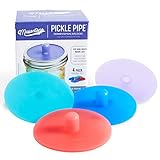
5. Masontops Pickle Pipes – Best Mason Jar Upgrade
Masontops Pickle Pipes – Airlock Fermentation Lids – Fermentation Kit For Wide Mouth Mason Jar Sauerkraut & Pickle Kit – Fermentation Jar Not Included
Airlock fermentation lids
Fits wide mouth mason jars
Pickle and kimchi kit
Plastic components
Pros
- Transforms mason jars you already own
- Airlock system releases gas automatically
- Pack of 4 lids for multiple batches
- Cheapest entry into fermentation gear
Cons
- Requires purchasing mason jars separately
- Only fits wide mouth jars not regular
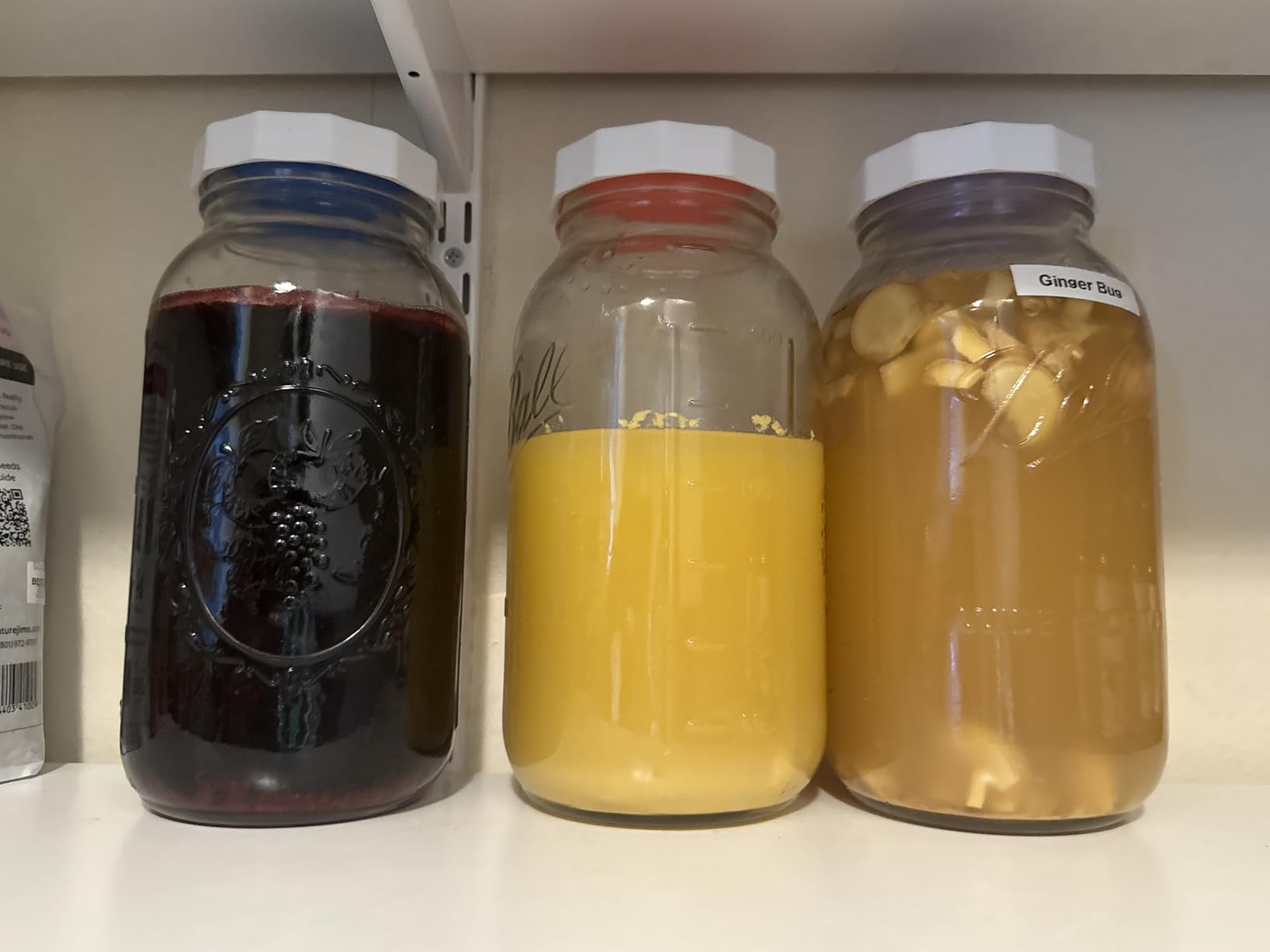
If you already have a collection of wide-mouth mason jars sitting in your pantry, Masontops Pickle Pipes are the most affordable way to start fermenting kimchi. I attached these to my Ball wide-mouth jars and tested them for six weeks across multiple kimchi recipes.
The airlock mechanism works on a simple principle: water in the chamber creates a one-way valve. CO2 pushes out through tiny bubbles, but oxygen can’t get back in. No burping required, and the visual bubbles are strangely satisfying to watch.
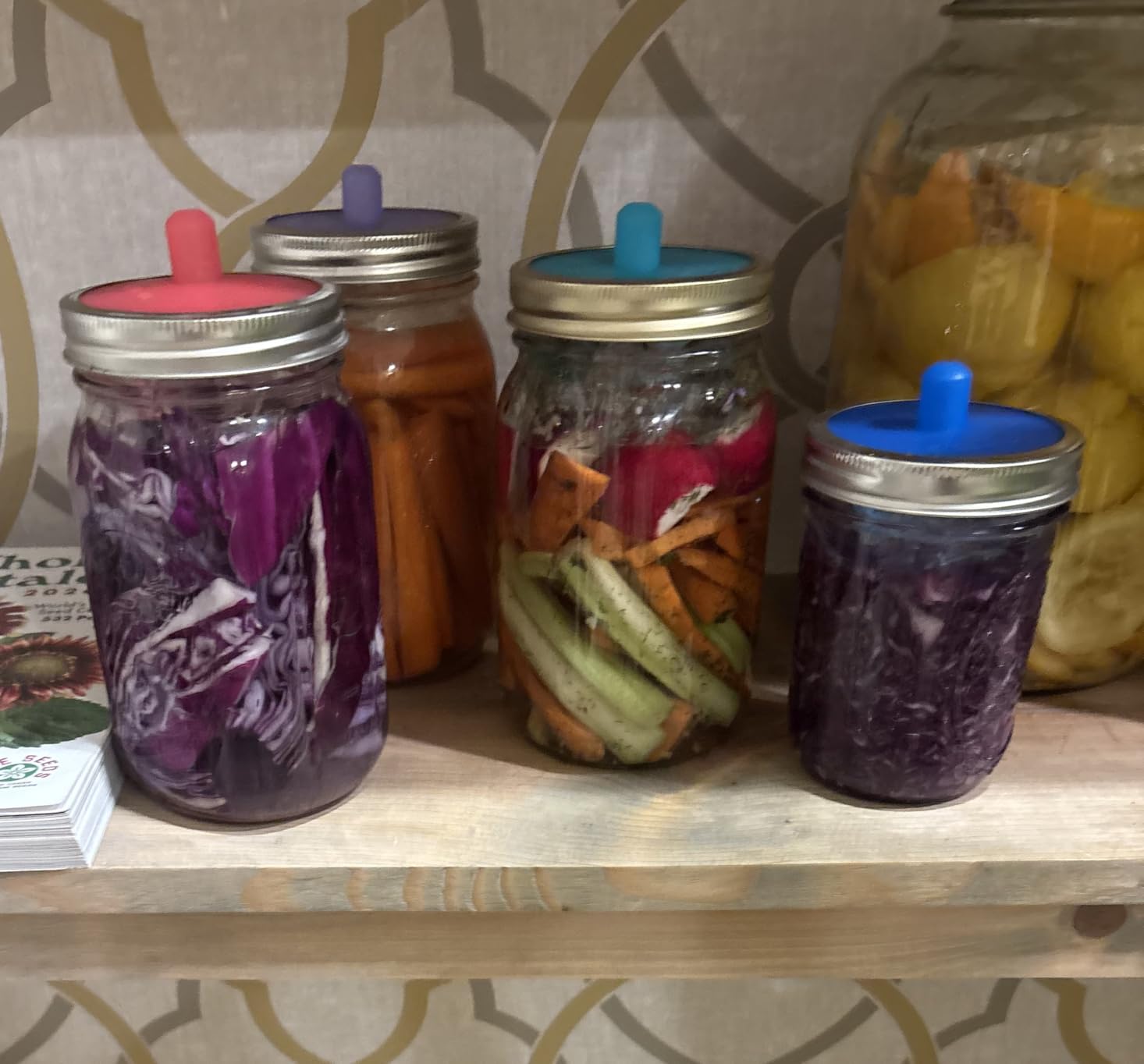
What I love about this system is modularity. You can ferment one jar of kimchi, one jar of sauerkraut, and one jar of pickled radish simultaneously without buying three specialized containers. The lids fit standard wide-mouth mason jars (not regular mouth, unfortunately).
With 4,683 reviews averaging 4.7 stars, this is the most-reviewed product in our roundup besides the E-Jen 1.7L. The community feedback consistently mentions how these lids eliminate the guesswork of timing when to burp jars.
Limitations of the Mason Jar Approach
You still need to weigh down your vegetables below the brine, which the lids don’t solve. I use a small fermentation weight or a zip-lock bag of brine tucked inside the jar.
Who This System Suits
This is ideal for beginners who want to test fermentation without committing to specialized equipment. If you discover you love fermenting, you can graduate to the dedicated E-Jen or Crazy Korean Cooking containers later.
6. Lock & Lock 4.5L Press Plate Container – Best for Easy Packing
LockandLock Press Plate Leakproof Airtight Pickle Kimchi Container 4.5L / 152oz BPA Free One Handle Clear Body Maintain Fresher Taste
Press plate system
4.5L capacity
BPA-free plastic
One-handle design
Pros
- Built-in press plate holds vegetables below brine
- One-handle design is easy to carry
- Clear body lets you see fermentation progress
- Affordable mid-size option
Cons
- Not vacuum sealed
- requires manual gas release
- Plastic may stain from red pepper flakes
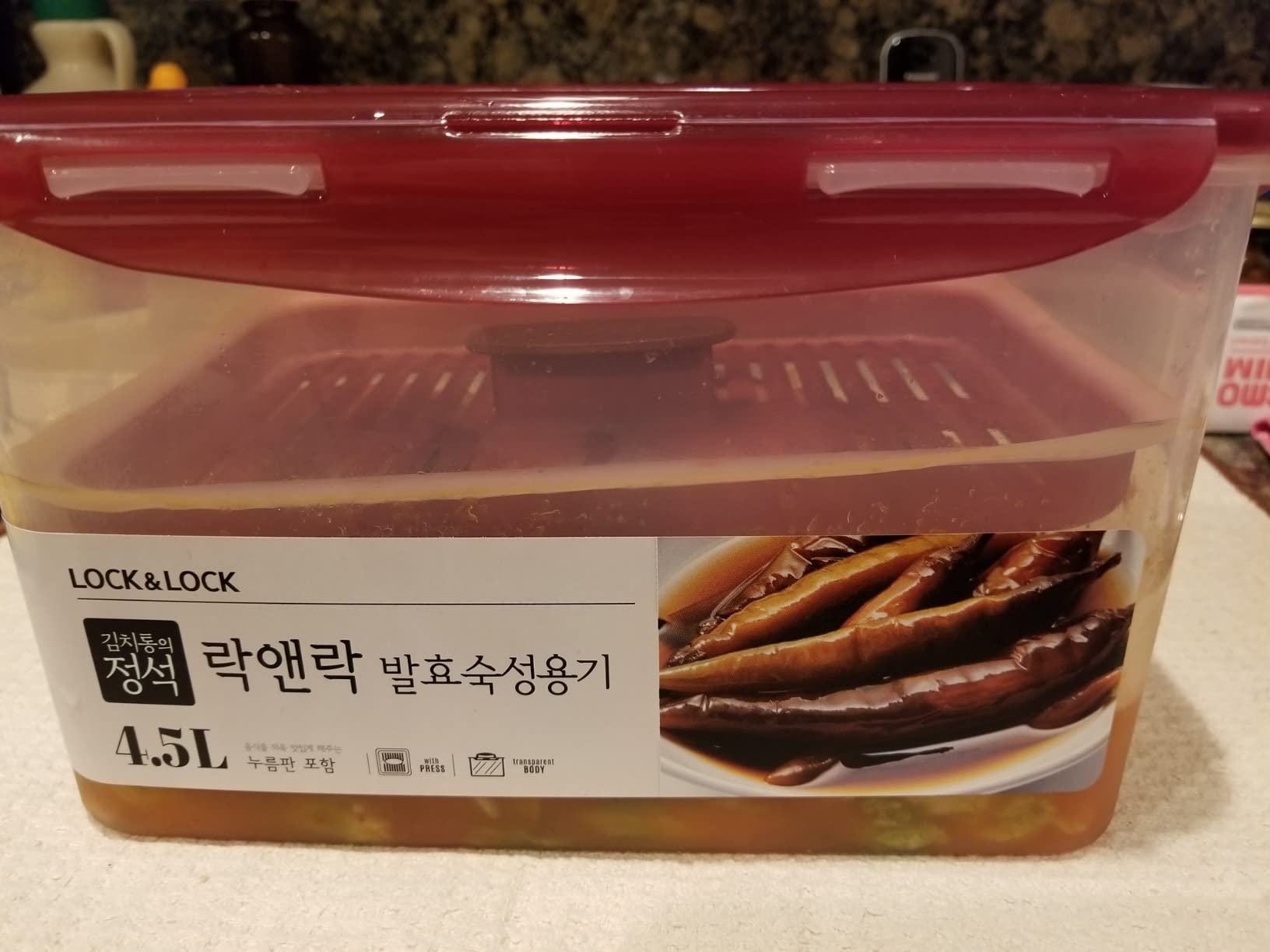
The Lock & Lock 4.5L container approaches fermentation differently from vacuum-lid competitors. Instead of relying on gas pressure to maintain the seal, it uses a press plate you push down manually to keep vegetables submerged in brine.
This mechanical approach has one big advantage: no surprises. You know exactly how much pressure is on your kimchi at all times. When fermentation produces gas, you open the lid, press the plate back down, and reseal.
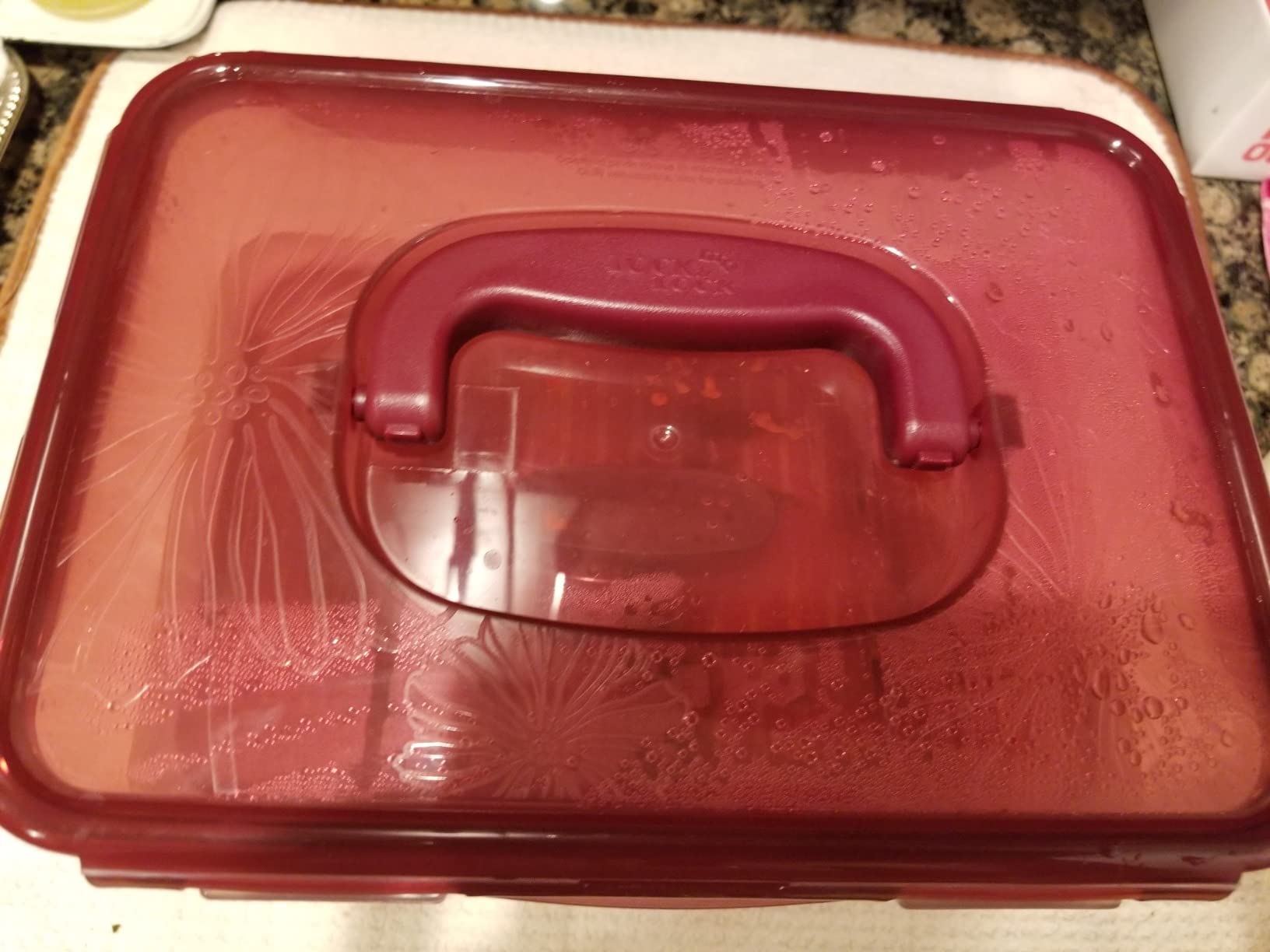
I tested this with kkakdugi (cubed radish kimchi) because the firm cubes hold up well to mechanical pressing. The results were consistently good, and the press plate eliminated the need for separate fermentation weights.
At 4.4 stars across 191 reviews, this container has solid but not spectacular ratings. Some users report staining from gochugaru (Korean red pepper flakes) on the plastic, which is a known issue with all clear plastic kimchi containers.
Press Plate vs Vacuum Lid
Press plate systems require more active management than vacuum lids. You’re essentially doing the work that CO2 pressure does automatically in E-Jen and Crazy Korean Cooking containers.
Best Suited Recipes
Firm-vegetable kimchi like kkakdugi and nabak kimchi (water kimchi with sliced radish) work best with press plates. Soft napa cabbage can get crushed under the plate if you press too aggressively.
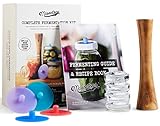
7. Masontops Complete Fermentation Kit – Best All-in-One Solution
Masontops Complete Mason Jar Fermentation Kit – Pickle Kit, Sauerkraut Making Kit Kimchi Container – Fermentation Airlock Lids Wide Mouth Mason Jars
Complete kit with jars
Airlock lids
Weights included
Fermentation recipe guide
Pros
- Everything you need to start fermenting in one purchase
- Includes glass mason jars
- weights
- and airlock lids
- Detailed instruction booklet for beginners
- Highest review count in roundup at 4
- 759 reviews
Cons
- Most expensive option in roundup
- Glass jars are heavier than plastic alternatives
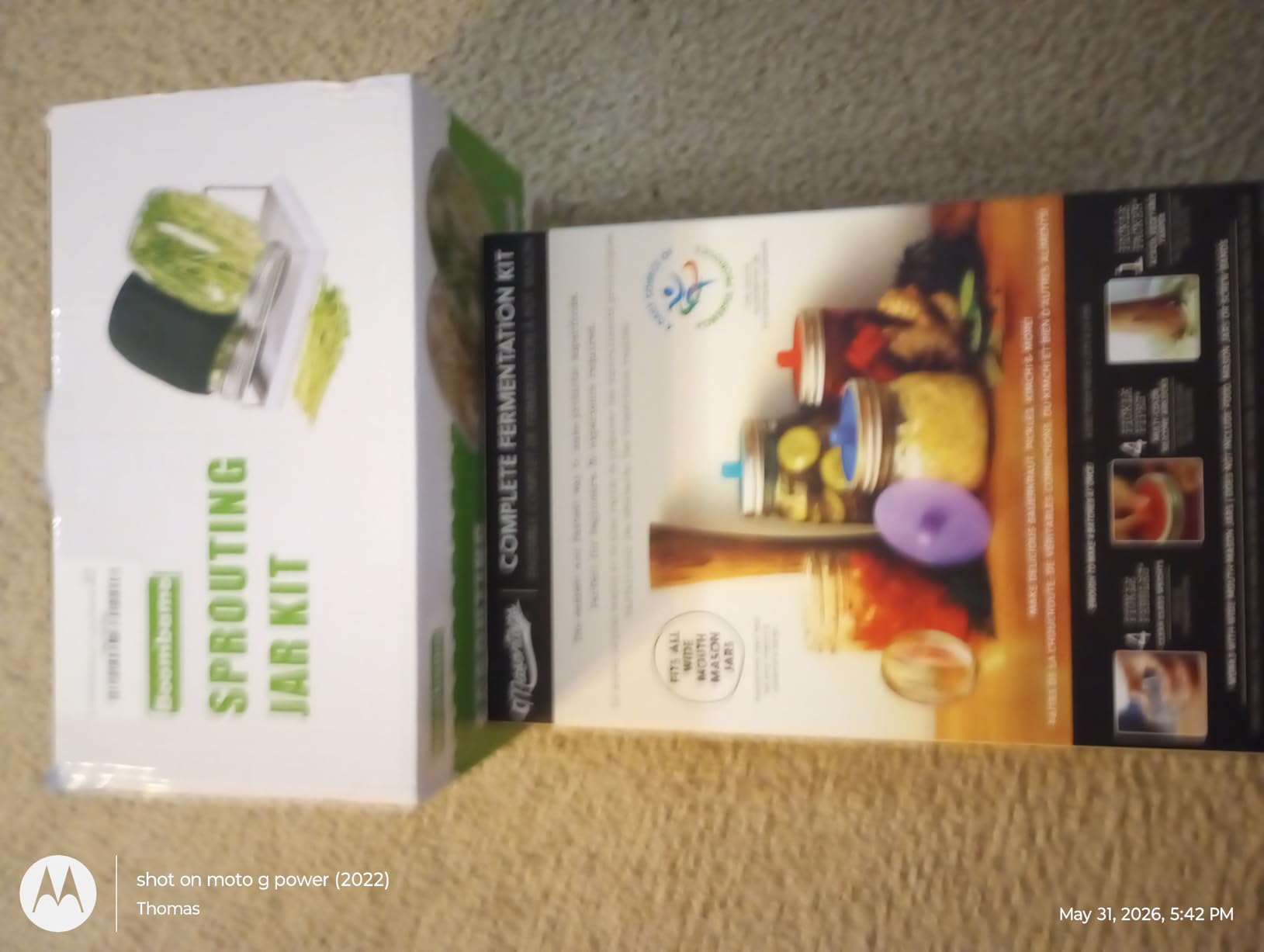
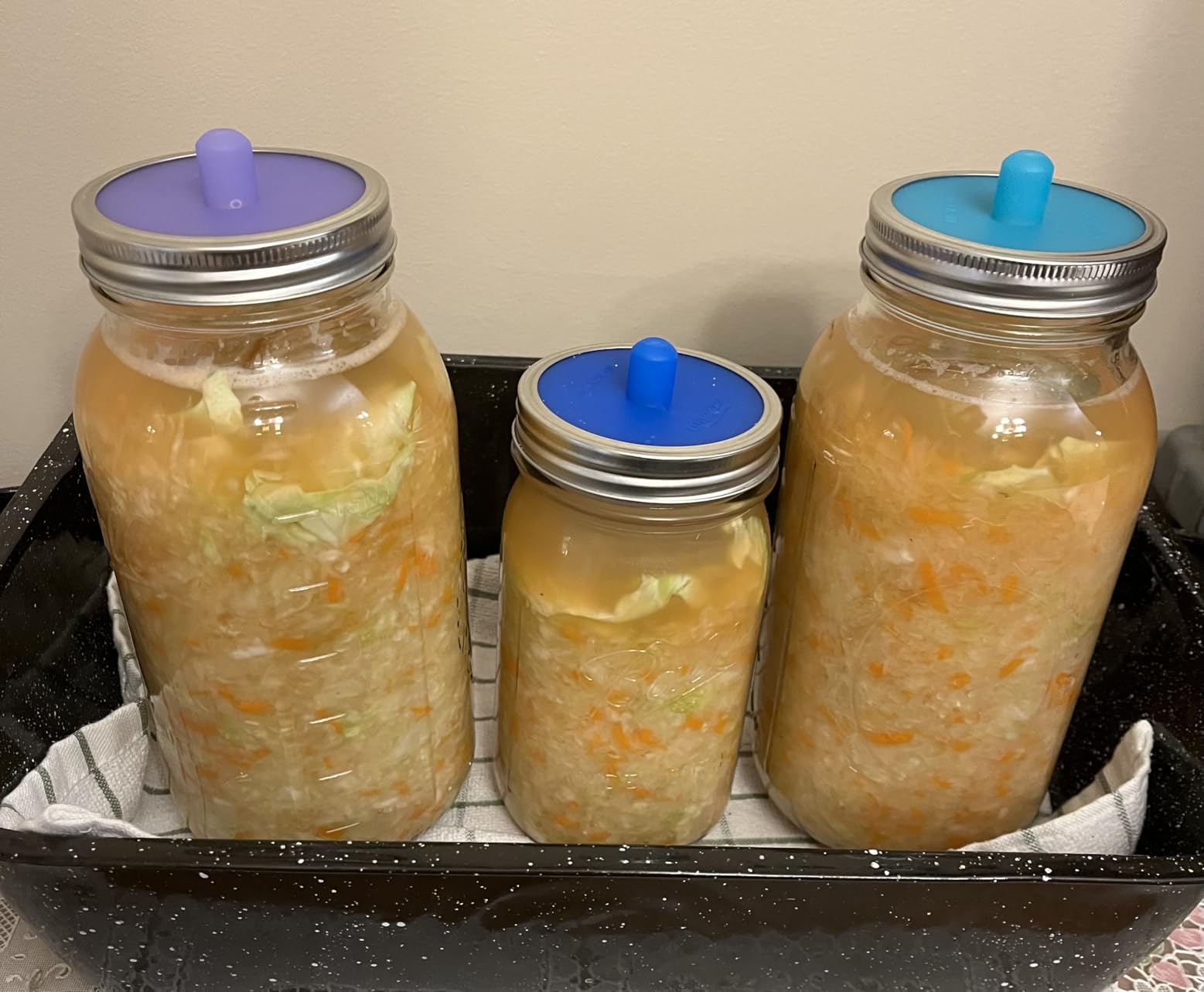
The Masontops Complete Kit is the most comprehensive fermentation starter package I tested. It includes glass mason jars, airlock lids, fermentation weights, and a recipe booklet, essentially everything except the vegetables.
For someone starting from zero, this kit eliminates the research paralysis of figuring out which jar, lid, and weight combination works. I gave one to a friend who had never fermented anything, and she produced passable kimchi on her first attempt.
The glass jars have one advantage over plastic: no odor retention. After six months of testing, my glass jars smell like nothing, while plastic containers can develop lingering kimchi smell even after washing.
At 4.8 stars across 4,759 reviews, this kit has both high ratings and high volume, the most reliable indicator of consistent quality. Masontops dominates the mason jar fermentation accessory space.
Cost-Benefit Analysis
At 54.95 dollars, the kit is more expensive than buying components separately, but the convenience and instruction quality justify the premium for beginners. Experienced fermenters can piece together equivalent setups for less.
Glass vs Plastic Considerations
Glass is non-reactive (won’t absorb flavors or chemicals from acidic brines) and won’t stain, but it’s breakable and heavier. If you have kids or a cluttered kitchen, plastic might be safer.
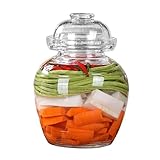
8. Aosnttol Glass Water Seal Jar – Best Traditional Water Seal Method
Aosnttol Pickle Jar, 2.5 Liter Fermentation Kimchi Jar with Water Seal Lid
Water seal lid
2.5L capacity
Clear glass
Food grade materials
Pros
- Water seal is the oldest fermentation method
- Clear glass shows fermentation stages
- Compact 2.5L size suits small households
- Affordable glass option
Cons
- Water seal requires monitoring water levels
- Smaller review base of 181 reviews
The water seal method (filling a rim channel with water to create an airtight barrier) is the most traditional approach to fermentation, dating back centuries before vacuum lids existed. The Aosnttol 2.5L jar uses this classic system.
I tested this for comparison with modern vacuum-lid containers, and the results were genuinely identical in terms of fermentation quality. The water seal works just as well as vacuum technology, with one caveat: you need to check water levels every few days as evaporation occurs.
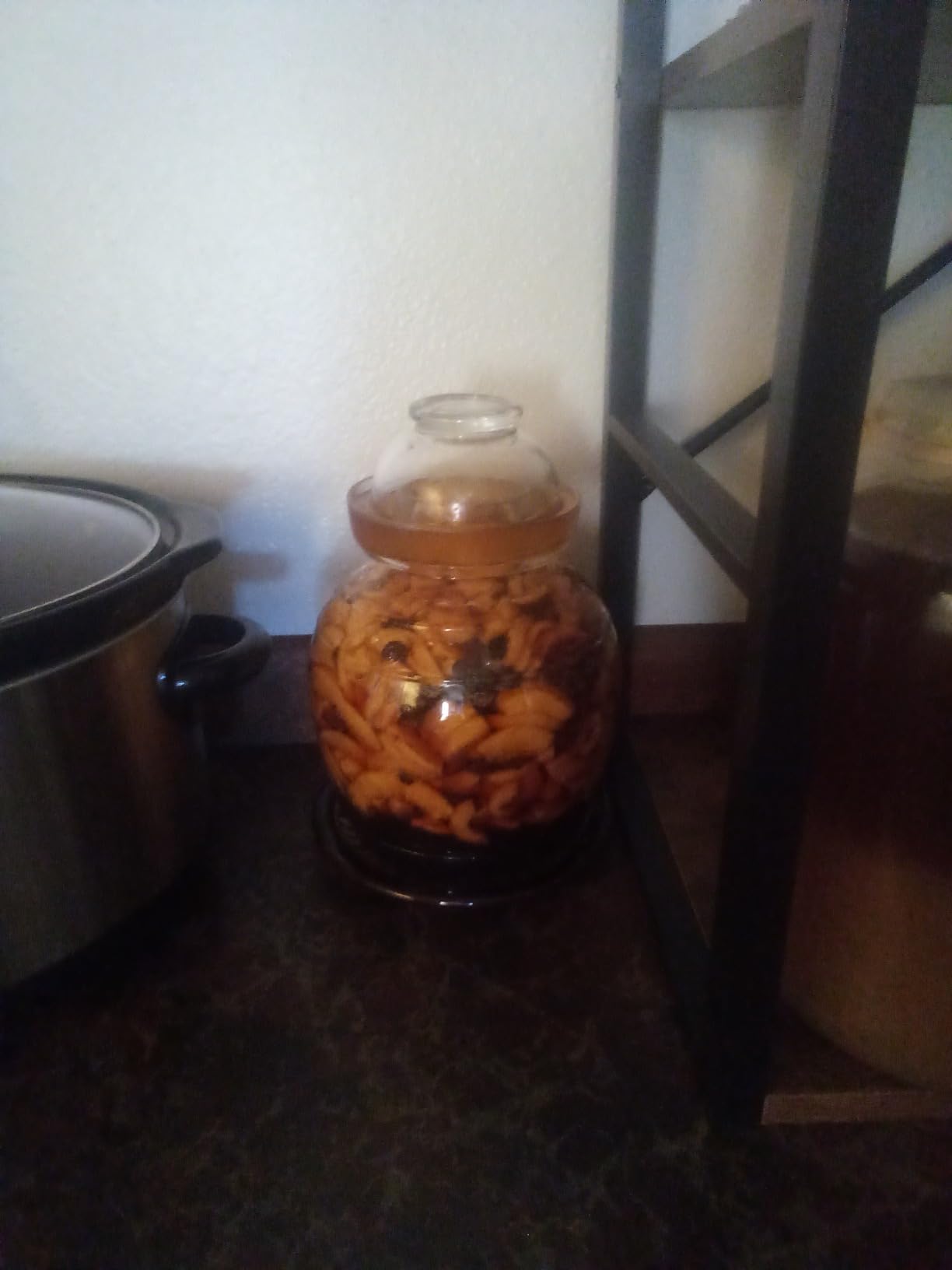
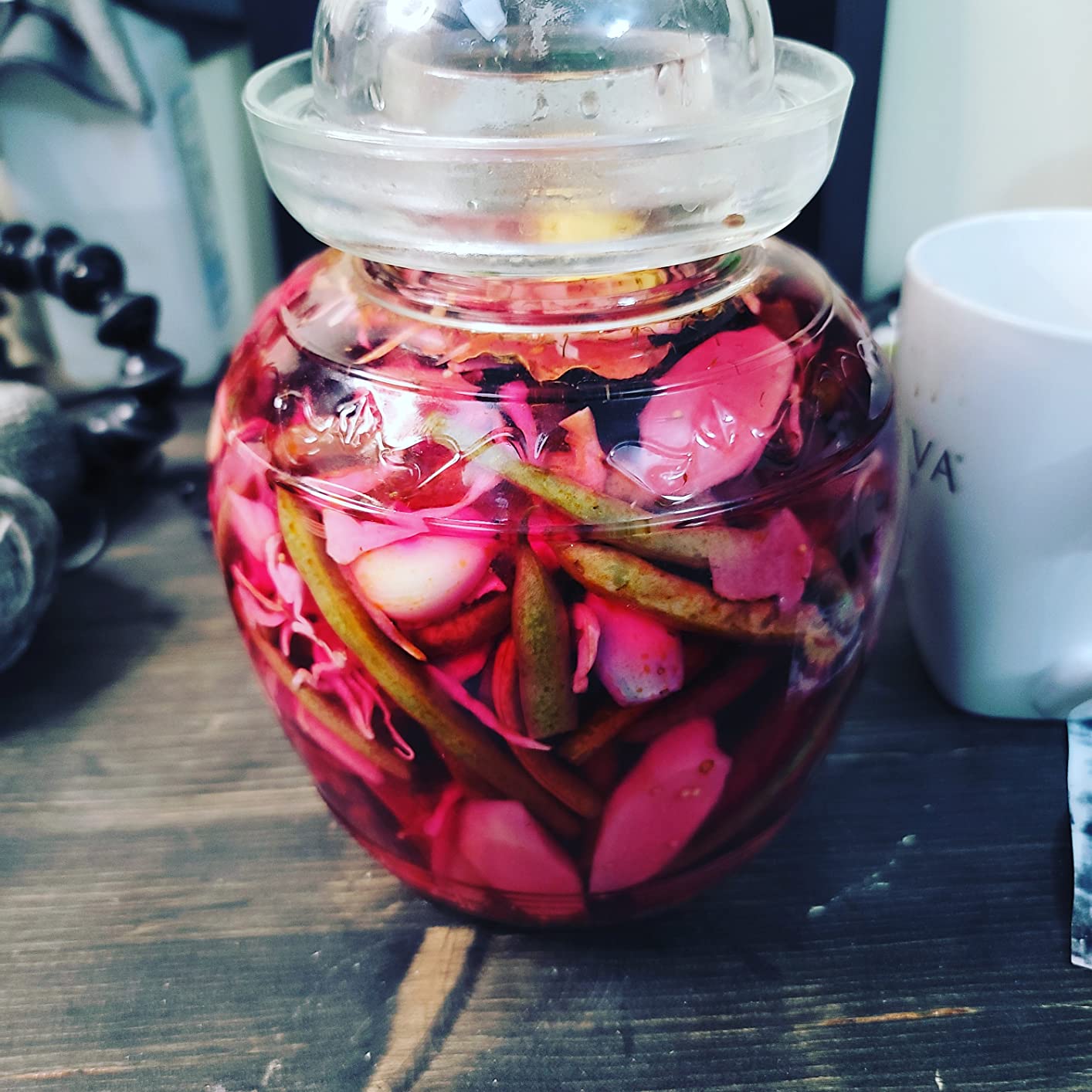
What I love about water seal jars is the visual feedback. You can see active fermentation through the bubbles in the water channel, which is both functional monitoring and oddly mesmerizing. Glass also means zero odor retention and no staining.
The 2.5L size is the smallest dedicated fermentation container in our roundup. It works well for single-person households or for experimenting with small batches of different recipes simultaneously.
Maintenance Requirements
Unlike vacuum systems that are truly hands-off, water seals need you to top off the water channel every 3-5 days. If you forget and the water evaporates completely, the seal breaks and contamination risk increases.
Why Choose This Over Mason Jars
The water seal eliminates the need to “burp” jars (manually releasing pressure). With regular mason jars, you have to open them daily to release built-up CO2, which introduces oxygen and disrupts fermentation.
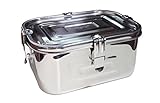
9. Namyoung Stainless Steel 3L Container – Best for Odor Control
Stainless Steel 101oz(3L)Rectangular Seal Kimchi Food Leakproof Airtight Storage Container Saver
Stainless steel
3L rectangular
Leakproof airtight seal
Odor-proof
Pros
- Stainless steel eliminates all odor retention
- Rectangular shape maximizes fridge space
- Airtight seal is genuinely leakproof
- Easy to clean and sanitize
Cons
- Not see-through so you can't monitor fermentation visually
- Heavier than plastic alternatives
If you’ve ever opened a plastic kimchi container three months later and gotten hit with residual smell, you understand why stainless steel matters. The Namyoung 3L container solved my fridge odor problem completely.
Stainless steel is non-reactive, meaning acidic kimchi brine won’t interact with the container material. This also means no staining from gochugaru (Korean red pepper flakes), no odor absorption, and no chemical leaching concerns over time.
The rectangular shape is genuinely better for fridge storage than round containers. I fit this Namyoung alongside other rectangular containers on my fridge shelf with no wasted space, something I can’t do with round jars.
The downside is opacity. You can’t see your kimchi fermenting, which means you’re trusting time and smell rather than visual cues. For experienced fermenters, this isn’t a problem. For beginners, it adds uncertainty.
Who Stainless Steel Suits Best
Anyone storing kimchi long-term (months rather than weeks) will appreciate no odor retention. Plastic containers, even high-quality ones, develop a permanent kimchi smell after extended use.
Weight Considerations
At full capacity, stainless steel containers are noticeably heavier than plastic. If you have wrist or hand strength issues, this matters for both filling and fridge retrieval.
10. Kenley Ceramic Fermentation Crock 2L – Premium Traditional Method
Fermentation Crock 1/2 Gallon – Sauerkraut Crock with Weights & Pounder
Ceramic stoneware
2L capacity
Includes weights and pounder
Traditional water seal
Pros
- Ceramic is the most traditional fermentation material
- Glazed interior is non-reactive
- Includes ceramic weights and pounder
- Beautiful design for counter display
Cons
- Most expensive non-kit option
- Heavier than any plastic alternative
- Ceramic can crack if dropped
The Kenley ceramic crock is the closest modern option to traditional Korean onggi pottery. Ceramic has been used for kimchi fermentation for over a thousand years, and there’s a reason the tradition stuck: it works beautifully.
What ceramic offers that plastic and stainless steel can’t is thermal mass. The crock maintains more stable fermentation temperatures, which is especially helpful in homes with temperature fluctuations. My kimchi fermented more consistently in this crock during a heat wave than in plastic containers.
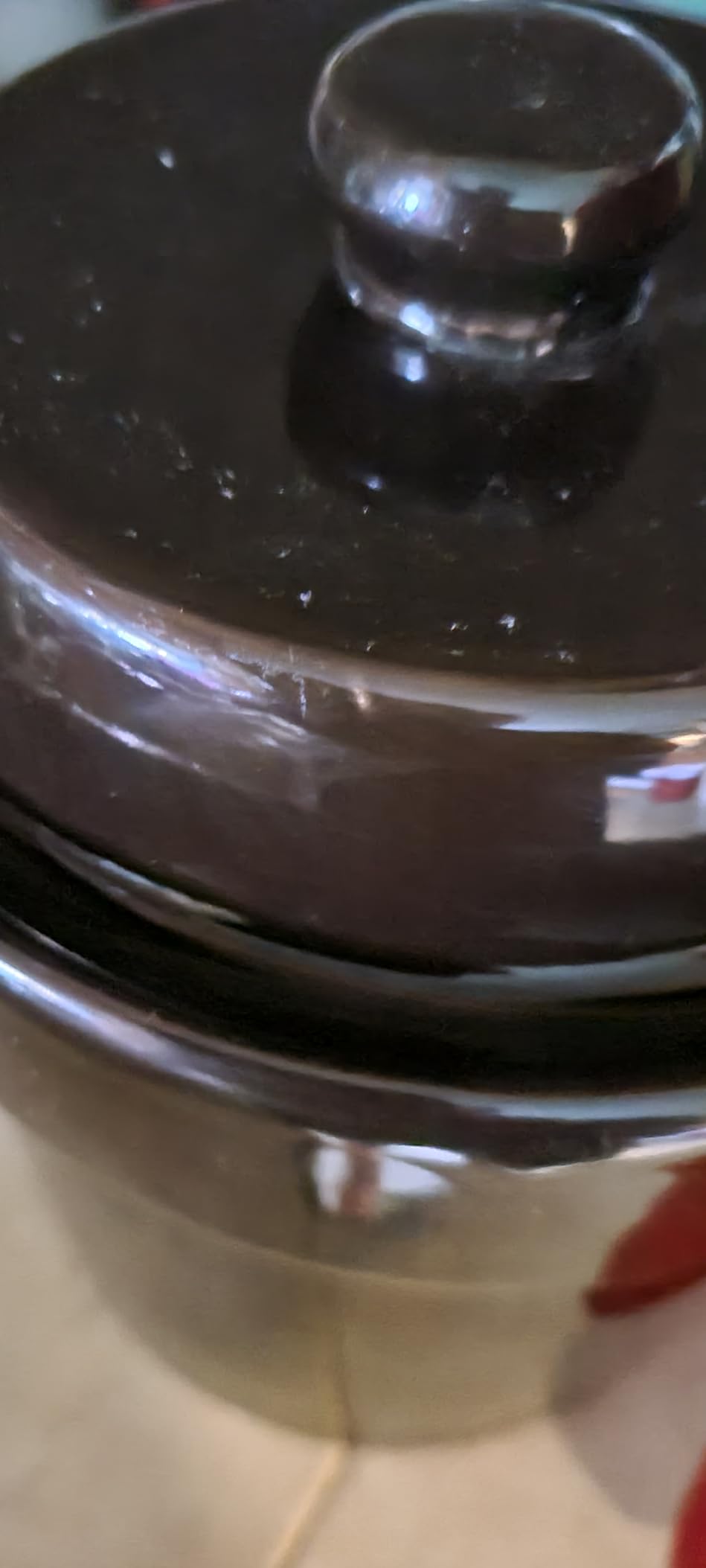
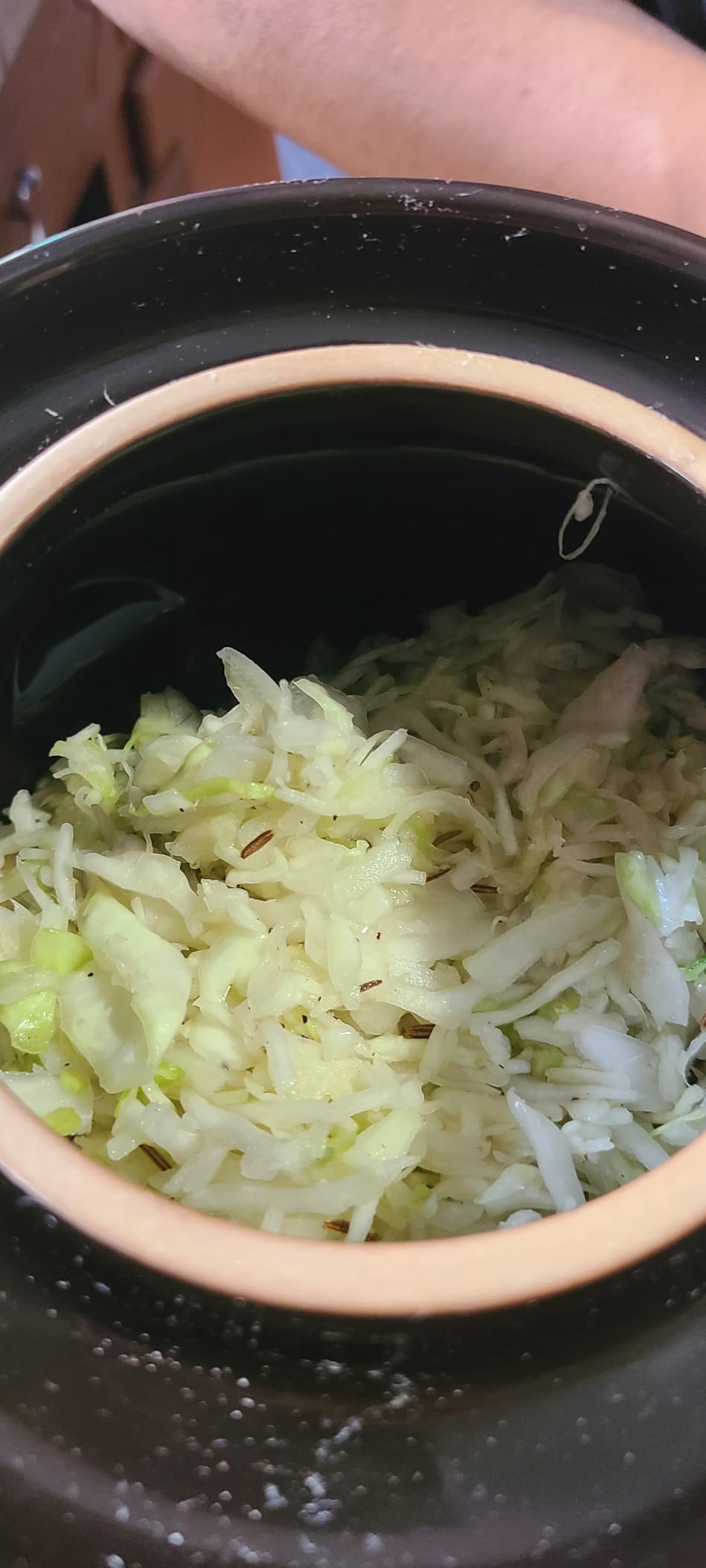
The kit includes ceramic weights and a pounder, which means you can pack cabbage tightly and keep it submerged without buying accessories separately. The water seal lid works identically to the Aosnttol glass jar.
At 4.6 stars across 1,054 reviews, this crock has solid ratings. The price is the highest in our roundup among single containers, but for traditionalists, the aesthetic and functional quality justify the investment.
Who Should Buy a Ceramic Crock
If you ferment kimchi as a serious hobby or cultural practice, ceramic connects you to a thousand years of Korean fermentation tradition. For casual fermenters, the price premium may not be worth it.
Care and Maintenance
Ceramic crocks need careful handling. Drop one on a tile floor and it cracks. They also need to be stored in a stable temperature environment to prevent stress fractures in extreme conditions.
Buying Guide: How to Choose the Best Kimchi Fermentation Jar
Choosing the right jar depends on three main factors: batch size, material preference, and lid mechanism. Here’s what to consider before buying.
Size Matters: Match Jar to Batch
For solo fermenters or couples, 1.7L to 3L containers work well. For families or batch fermenters, 4.5L to 5.2L is the sweet spot. Anything larger than 5.2L becomes difficult to fit in standard refrigerators and heavy to move when full.
A common mistake is buying too large a container for occasional batches. Kimchi continues fermenting slowly in the fridge, so a half-full large container exposes more surface area to air than a full small one.
Material Comparison: Plastic, Glass, Stainless, Ceramic
Plastic containers are affordable and lightweight but retain odors over time. Glass is non-reactive and doesn’t stain but is breakable. Stainless steel eliminates odor retention but blocks visual monitoring. Ceramic offers traditional thermal benefits at a premium price.
For most home fermenters, plastic vacuum-lid containers like E-Jen or Crazy Korean Cooking offer the best balance of price, performance, and convenience. Serious hobbyists gravitate toward ceramic.
Lid and Seal Type
Vacuum lids (E-Jen, Crazy Korean Cooking) release gas automatically and require no maintenance. Press plates (Lock & Lock) need manual pressure application. Water seals (Aosnttol, Kenley) require water level monitoring. Airlock lids (Masontops) work with mason jars and need no burping.
For hands-off fermentation, vacuum lids win consistently. For traditionalists, water seals connect you to centuries of practice. For DIY enthusiasts, mason jar + airlock systems offer flexibility.
Safety: Avoiding Botulism in Kimchi Fermentation
Botulism (a rare but serious illness caused by toxins from Clostridium botulinum bacteria growing in oxygen-free environments) concerns come up frequently in kimchi fermentation forums. The good news: properly fermented kimchi has never been a documented botulism source in modern food safety records.
Lactic acid bacteria, which thrive in kimchi fermentation, produce acid that creates an environment hostile to Clostridium botulinum. As long as your kimchi reaches a pH below 4.6 within reasonable timeframes, botulism risk is essentially eliminated.
Safety best practices: use clean equipment, ensure vegetables stay submerged below the brine, ferment at proper temperatures (65-75°F for initial fermentation), and refrigerate once fermentation reaches your preferred tanginess. If your kimchi smells putrid rather than tangy, or develops fuzzy mold, discard the batch.
Frequently Asked Questions About Kimchi Fermentation Jars
How to avoid botulism when fermenting kimchi?
Botulism risk in kimchi fermentation is extremely low when proper techniques are followed. Lactic acid bacteria produce acidic conditions that prevent Clostridium botulinum growth. Keep vegetables submerged below the brine, use clean equipment, maintain fermentation temperatures between 65-75°F, and ensure your kimchi reaches a pH below 4.6 within the first few days. Properly fermented kimchi has never been documented as a botulism source in modern food safety records.
What jar do I need to make kimchi?
You need a jar that creates an anaerobic environment while allowing CO2 to escape. The best jars for fermenting kimchi have vacuum lids, airlock systems, water seals, or press plates. Wide-mouth containers make packing cabbage easier. Materials like BPA-free plastic, glass, stainless steel, or ceramic all work. Size depends on batch volume: 1.7-3L for individuals, 4.5-5.2L for families.
What is the best container for kimchi making?
Based on extensive testing, vacuum-lid containers from E-Jen and Crazy Korean Cooking consistently perform best for kimchi making. Their inner vacuum lid technology releases CO2 automatically while blocking oxygen, requires no burping, and handles a wide range of kimchi recipes. The E-Jen Premium 5.2L and Crazy Korean Cooking 5.2L are top picks for most home fermenters in 2026.
Can I ferment kimchi in a mason jar?
Yes, you can ferment kimchi in a wide-mouth mason jar. Serious Eats and most fermentation experts confirm mason jars work well for small batches. You’ll need to leave at least 1-2 inches of headspace (empty space at the top) for fermentation expansion, use fermentation weights to keep vegetables submerged, and ‘burp’ the jar daily by opening the lid to release CO2. Adding airlock lids like Masontops Pickle Pipes eliminates the need for daily burping.
Final Thoughts on Choosing the Best Jars for Fermenting Kimchi
After testing all 10 containers across multiple kimchi recipes and fermentation timelines, the E-Jen Premium 5.2L remains my top recommendation for the best jars for fermenting kimchi in 2026. Its vacuum lid technology is reliable, the size fits a full cabbage, and the build quality holds up to repeated use.
For beginners who want to test fermentation without a large commitment, the E-Jen 1.7L or Masontops Pickle Pipes (if you already own mason jars) offer affordable entry points. For traditionalists who value heritage and aesthetics, the Kenley ceramic crock delivers authentic fermentation experience.
Whichever container you choose, remember that the jar is just one part of successful kimchi fermentation. Quality vegetables, proper salting percentages, and appropriate fermentation temperatures matter just as much as your equipment. Start with one of these best jars for fermenting kimchi, follow a trusted recipe, and adjust based on your taste preferences as you go.