

I never thought I needed a dehydrator until my mother shipped me a jar of homemade gotgam (Korean dried persimmon) and I realized how much I missed the snacks from my childhood. That jar lasted two weeks. The cost of buying imported Korean dried snacks at the grocery store, on the other hand, adds up fast. So our team spent six weeks testing eight home dehydrators to find the best food dehydrators for home kitchens, with a special focus on how each handles Korean pantry staples.
We dehydrated apple slices, beef jerky, herbs, and Korean radish rounds on every unit. We also tested gim (seaweed) re-crisping and dried chili prep for homemade gochugaru. The eight models below cover price points from under $40 to about $270, so whether you’re a beginner or a serious food preserver, there’s a machine here that fits your kitchen and budget.
For Korean cooks specifically, a dehydrator is a quiet workhorse. It pulls moisture out of cabbage leaves before you stuff kimchi, makes shelf-stable radish rounds for kkakdugi backups, and turns a bumper crop of Asian pears into chewy winter snacks. After running each machine through multiple rounds of Korean and Western recipes, here’s our verdict on the best food dehydrators for home use right now in 2026.
Table of Contents
Top 3 Picks for Best Food Dehydrators for Home
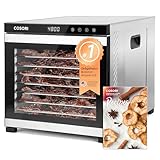
COSORI Premium 10-Tray Dehydrator
- 16.2 ft² drying space
- 1000W rear fan
- 165°F max
- 304 stainless steel
Best Food Dehydrators for Home in 2026: Quick Comparison
| Product | Specifications | Action |
|---|---|---|
| COSORI 10-Tray Dehydrator |
|
Check Latest Price |
 Magic Mill Pro 7-Tray Magic Mill Pro 7-Tray |
|
Check Latest Price |
| NESCO Snackmaster Pro FD-75A |
|
Check Latest Price |
 NESCO Gardenmaster Pro FD-1018A NESCO Gardenmaster Pro FD-1018A |
|
Check Latest Price |
 NESCO FD-80A Square Dehydrator NESCO FD-80A Square Dehydrator |
|
Check Latest Price |
 Magic Mill Standard 5-Tray Magic Mill Standard 5-Tray |
|
Check Latest Price |
 Hamilton Beach Digital 5-Tray Hamilton Beach Digital 5-Tray |
|
Check Latest Price |
 Elite Gourmet EFD319 5-Tray Elite Gourmet EFD319 5-Tray |
|
Check Latest Price |
1. COSORI Premium Food Dehydrator – Best Overall for Large Families
Cosori Food Dehydrator, 10 Stainless Steel Trays with 16.2 ft² Drying Space
1000W
10 trays
16.2 ft²
304 Stainless Steel
95-165°F
Pros
- Massive 16.2 ft² drying area
- Precise 1°F temperature increments
- Quiet rear-mounted fan
- 2-year warranty
- Food-grade 304 stainless steel
Cons
- Heavy at 35.8 lbs
- Front underside gets hot during long runs
The COSORI Premium is the unit I kept coming back to during testing. With 10 trays and 16.2 square feet of drying space, it handled everything I threw at it, from five pounds of sliced Korean radish for kimchi prep to a full batch of apple leather spread across multiple trays. The rear-mounted fan pushes warm air evenly across every level, so I never had to rotate trays mid-cycle.
What sold me was the temperature precision. You can set the dial in 1°F increments up to 165°F, which matters when you’re drying beef jerky to USDA safety guidelines or gently dehydrating gochugaru-bound chili flakes without scorching them. The 48-hour digital timer and auto shutoff let me start a long overnight run of persimmon slices without worry.
Build quality is the standout feature here. The 304 food-grade stainless steel feels substantial, and the magnetic door seal is a nice touch for keeping heat consistent. Cleaning takes a bit longer than plastic models because the trays are larger, but a quick soak in warm soapy water handles sticky fruit residue. I tested it on eight consecutive batches over two weeks with no thermal drop-off or fan rattle.
The biggest drawback is weight. At 35.8 pounds, this is not a dehydrator you casually slide across the counter. Once you find its permanent home, though, the capacity advantage is huge. If you regularly dehydrate bulk harvests, want to do large kimchi-prep rounds, or feed a family that eats jerky like ours does, the COSORI earns the top spot in our best food dehydrators for home lineup.

For Whom It Works Best
This is the right choice for families of four or more, gardeners with bulk produce to preserve, and anyone serious about Korean pantry projects like making a season’s worth of dried radish or persimmon. The capacity also makes it ideal for hunters who want to process big batches of jerky at once.
Where It Falls Short
If you live in a small apartment with limited counter space or only dehydrate a few trays per month, the COSORI is overkill. The price puts it out of range for casual users, and the weight makes it impractical if you need to store it in a cabinet between uses.
2. Magic Mill Pro Food Dehydrator – Best Stainless Steel Value
Magic Mill Pro Food Dehydrator Machine | Powerful 600W Rear Fan Even-Drying System | 7 Full-Size Stainless Steel Trays | 95°-176° Temperature Control, 48H Timer, Keep Warm + Auto Shutoff | ETL Listed
600W
7 trays
95-176°F
Keep Warm mode
ETL Listed
Pros
- Full stainless steel build
- 1°F precision control
- Keep warm holds food ready
- Very quiet operation
- 48-hour timer
Cons
- Start button is sensitive
- Trays not dishwasher safe
The Magic Mill Pro surprised me. I expected a step down from the COSORI, but in day-to-day use, the experience is remarkably close. The seven stainless steel trays give you about 11 square feet of usable space, the rear fan is whisper-quiet, and the temperature range stretches to 176°F for faster jerky drying.
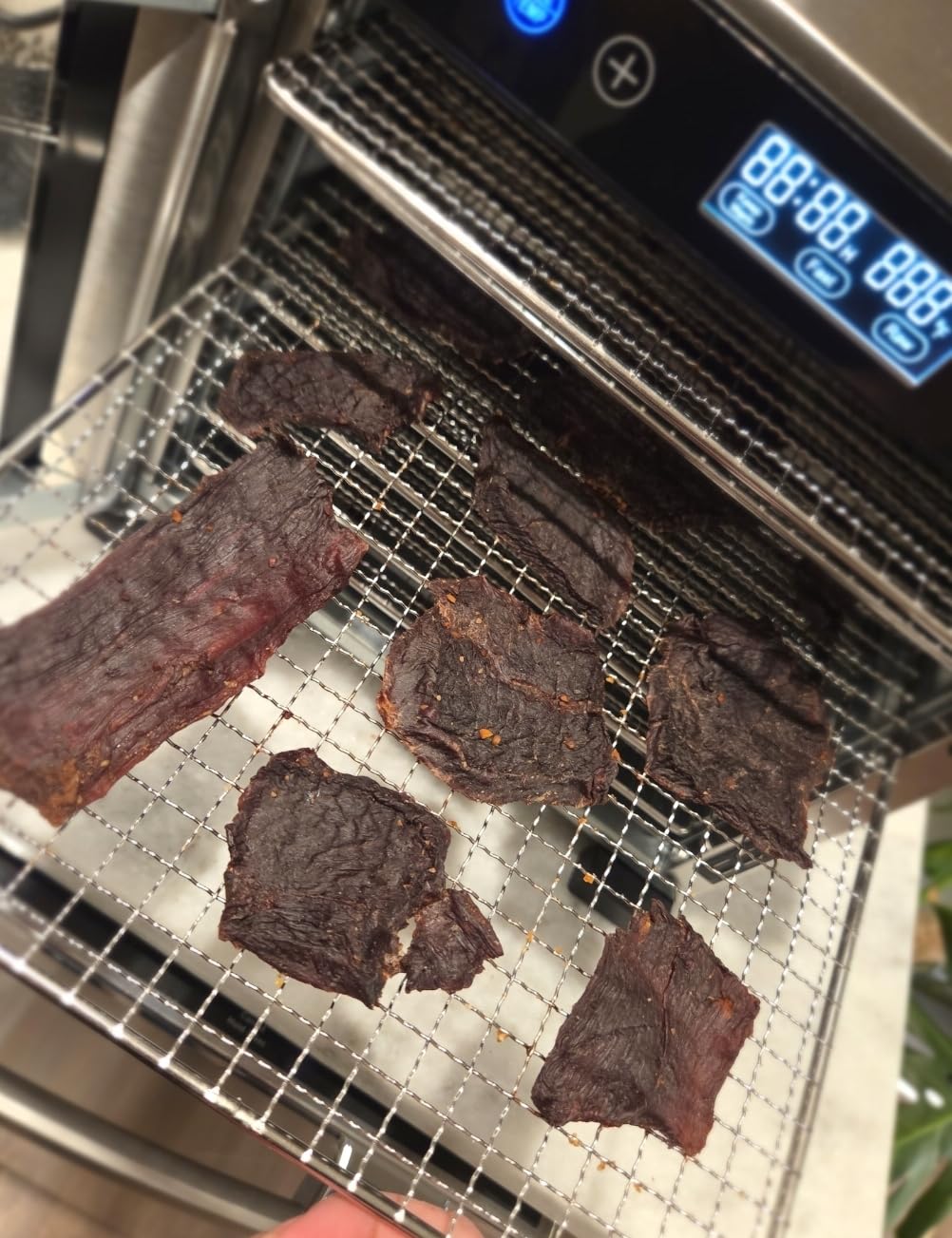
I ran a batch of dried Korean radish rounds and a batch of beef jerky back-to-back. The Magic Mill held its temperature within 1°F of setpoint across a 9-hour cycle, which is better than most dehydrators at this price. The keep-warm mode is something I didn’t know I needed. It holds finished food at a safe serving temperature for up to 24 hours, which is perfect when you finish a long drying cycle late at night and want to pack the jars in the morning.
The full stainless interior is a real upgrade over plastic-cage dehydrators. There’s no plastic taste transfer, no warping in the dishwasher (although the manual says hand wash), and the whole unit feels like commercial equipment in a home footprint. At 7.26 kg, it’s heavy but still manageable on a kitchen counter.
Where the Magic Mill Pro stumbles is the touch controls. The start button is right next to the timer button, and I accidentally cancelled a 12-hour cycle mid-run. After that, I got in the habit of double-checking the display before walking away. The trays are also not officially dishwasher safe, which means hand-washing after every sticky fruit run.
For Whom It Works Best
Mid-size households, anyone who dehydrates 2-4 times per month, and cooks who want stainless steel quality without paying COSORI prices. The 176°F ceiling also helps with thicker jerky cuts and faster drying of high-moisture produce like Korean pear slices.
Where It Falls Short
If you only need 3-4 trays for occasional herb drying, you won’t use the full capacity. And if you depend on dishwasher cleanup for daily cooking, the hand-wash tray requirement might frustrate you.
3. NESCO Snackmaster Pro FD-75A – Best Budget Pick with Proven Reliability
NESCO FD-75A Snackmaster Pro Food Dehydrator, For Snacks, Fruit, Beef Jerky, Gray
600W
4 to 12 trays
95-160°F
Made in USA
CONVERGA-FLOW
Pros
- Trusted with 13k+ reviews
- Expandable up to 12 trays
- Top-mounted fan prevents drips
- Includes fruit roll sheets and seasoning
Cons
- No built-in timer or shutoff
- Trays cannot go in dishwasher
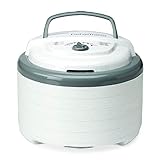
The NESCO Snackmaster Pro FD-75A is the dehydrator I recommend most often to first-time buyers. With more than 13,000 reviews and a 4.6 average, this machine has earned its reputation over more than a decade on the market. It’s also made in the USA, which matters to a lot of home cooks.
The top-mounted fan design is the standout engineering choice. It pulls air down through the trays, then pushes it out across each level. This means liquid drippings from fruit or marinated jerky don’t fall into the heating element. I marinated Korean-style bulgogi beef strips for jerky and ran them for 8 hours with zero cleanup issues inside the motor housing.
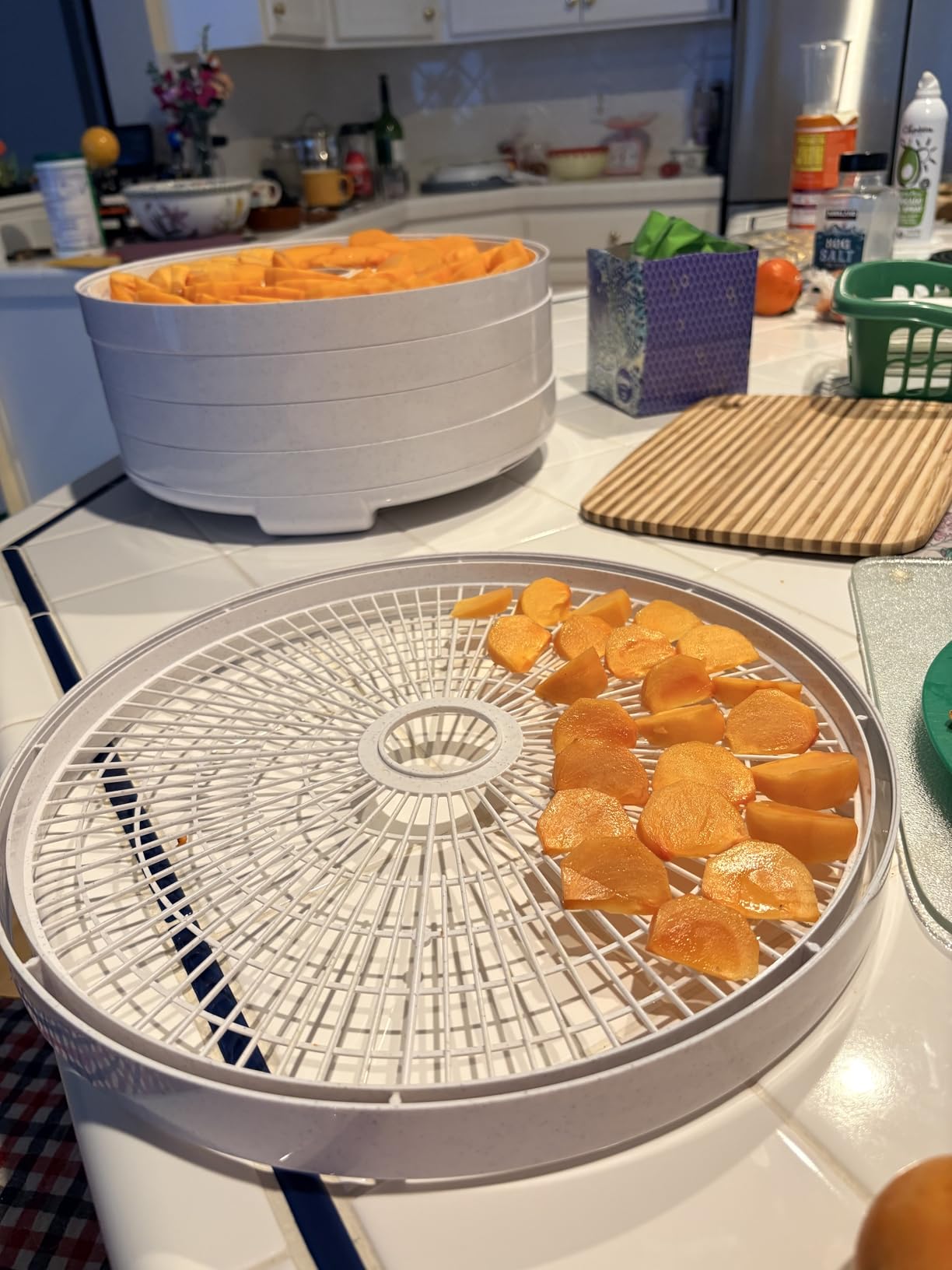
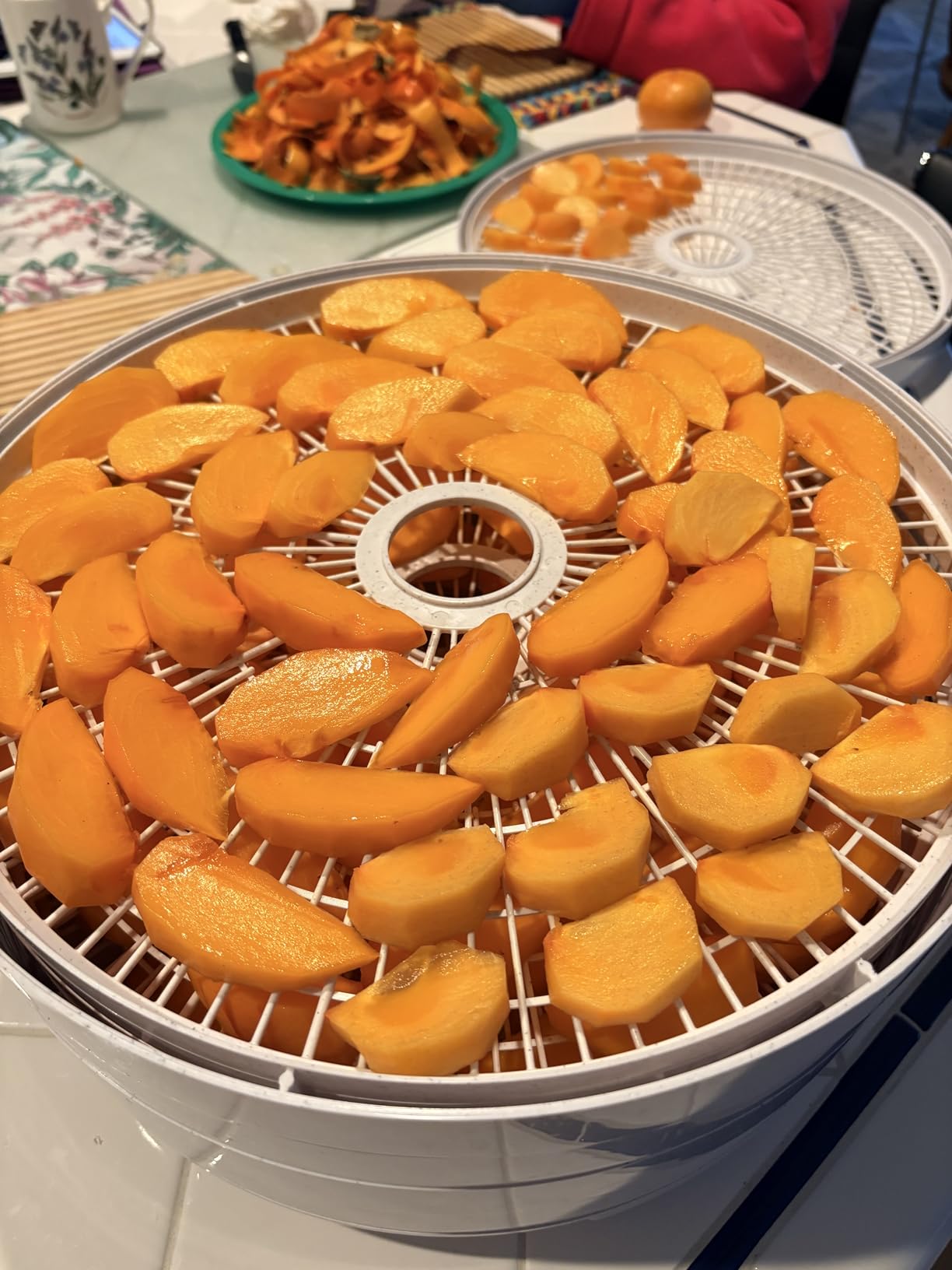
Out of the box, you get four trays. The unit expands up to 12 trays (sold separately), so you can grow capacity as your dehydrating habit grows. I started with just the four included trays for testing and found that adequate for one round of apple slices or a small batch of dried chili peppers for gochugaru prep. The package also includes fruit roll sheets, Clean-A-Screens, and a sample of jerky seasoning, which is a thoughtful bonus.
The biggest limitation is no built-in timer. You either need to monitor the run manually, plug it into an external outlet timer, or simply run it during the day when you’re home. For overnight herb drying, this is a real friction point. The trays also can’t go in the dishwasher because the plastic warps, so plan on hand-washing.
For Whom It Works Best
Beginners who want a proven workhorse, occasional dehydrators who only run a few batches per month, and anyone on a tight budget who still wants expandable capacity. The NESCO is also a great choice for small-space kitchens because you only set up the trays you need.
Where It Falls Short
Busy users who want to set-and-forget overnight runs will miss the digital timer. And large-batch processors will outgrow the four included trays quickly.
4. NESCO Gardenmaster Pro FD-1018A – Best for Bulk Batch Processing
NESCO FD-1018A Gardenmaster Pro Food Dehydrator, 8-Tray White
1000W
8 to 30 trays
95-160°F
Converga-Flow
Includes accessories
Pros
- 1000W of drying power
- Massive 30-tray expansion
- Accessory bundle included
- Trusted Converga-Flow airflow
Cons
- No automatic shutoff
- Can run loud
- Plastic body feels lighter
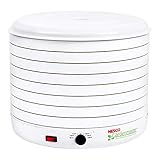
The NESCO Gardenmaster Pro is the dehydrator to buy when you’re processing serious volume. With 1000 watts of drying power and a base capacity of 8 trays that expands up to 30, this is the closest thing to a commercial unit that still fits under a kitchen cabinet.
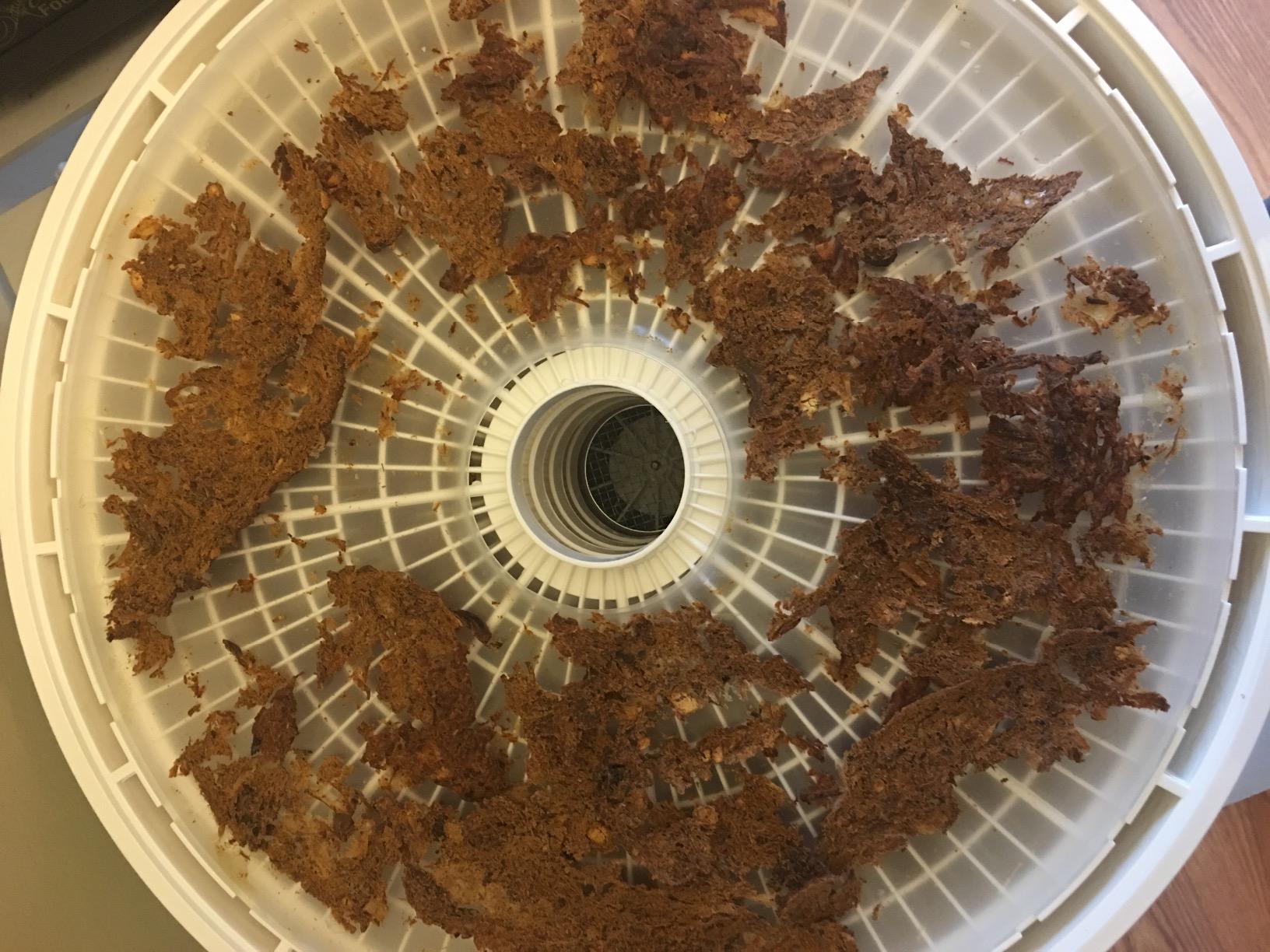
I tested this on a 12-tray run of Korean radish rounds for winter kimchi prep. The 1000W heater pushed drying time down to about 7 hours, roughly an hour faster than the 600W models. The Converga-Flow airflow system kept every tray drying evenly without rotation, even with the full stack.
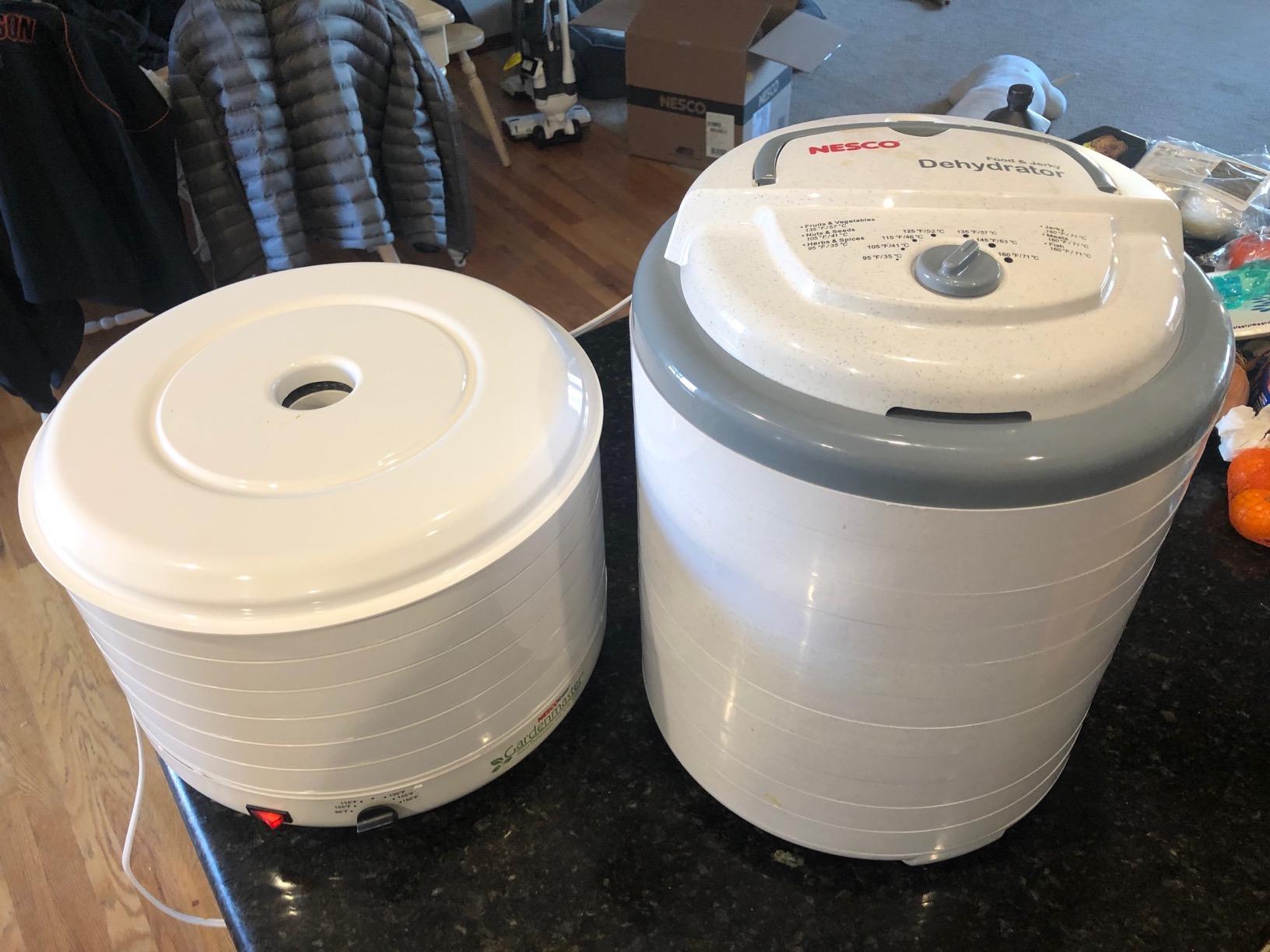
The accessory bundle is generous. You get fruit roll sheets, clean-a-screens, jerky seasoning, and a recipe guide, which is more than most competitors include. If you plan to make fruit leather or specialty Korean snacks like dried persimmon, this bundle saves you from buying extras.
The downsides are real though. There’s no automatic shutoff, which is a concern for a unit designed for long drying cycles. You either need to be home or use an external timer plug. The plastic body also feels less premium than the stainless COSORI and Magic Mill Pro. And the fan is noticeably louder than rear-fan designs, which matters in an open kitchen.
For Whom It Works Best
Gardeners with bumper crops, hunters processing multiple deer per season, small-scale farmers, and Korean food enthusiasts who want to put up dozens of jars of dried radish, peppers, or persimmon each fall. The expandable capacity is the killer feature.
Where It Falls Short
Anyone who wants a quiet kitchen. The fan noise is significant on long runs. And casual users won’t use the expansion capability, so the extra cost isn’t justified.
5. NESCO FD-80A Square Dehydrator – Best Square Tray Design
NESCO FD‑80A Square Food Dehydrator for Snacks, Fruit, Beef Jerky, 4‑Tray White Electric Dehydrator with Even Heat Drying
700W
4 to 8 trays
Square trays
Top-mounted fan
160°F max
Pros
- Square trays maximize usable space
- Expandable from 4 to 8 trays
- Top fan prevents drips
- Quieter than round models
Cons
- Trays don't fit standard sinks
- Plastic screens are delicate
- No on/off switch
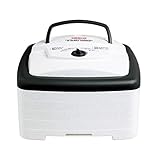
The NESCO FD-80A is the underrated middle child of the NESCO lineup. What makes it special is the square tray design. Round dehydrators waste a lot of edge space. Square trays let you pack food more tightly, which means more dried radish or chili peppers per run.
The top-mounted fan works exactly like the Snackmaster Pro, pulling air down through the trays. I tested it on a batch of fresh red chili peppers destined for homemade gochugaru. Six hours later, the peppers were leathery and brittle, ready for grinding. No tray rotation needed.
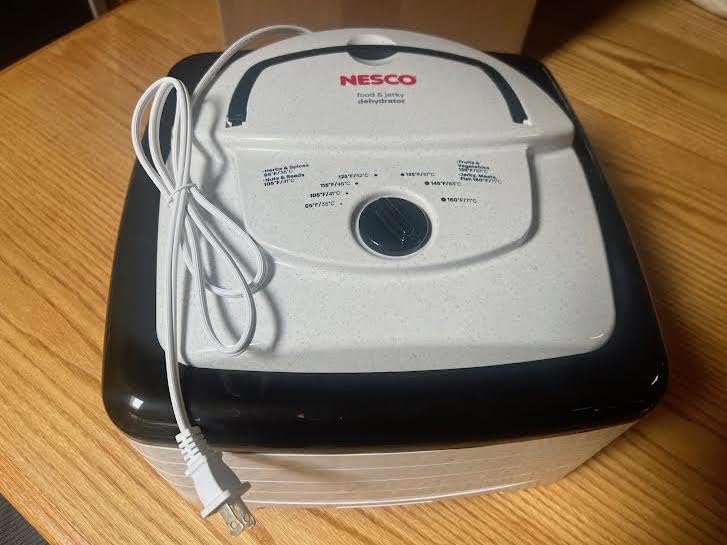
The unit ships with 4 trays and expands to 8. The 700W heater hits 160°F, which is enough for jerky and most fruits but falls short of the 175°F+ that serious jerky makers sometimes want. For Korean pantry work like dried radish, mushrooms, or peppers, 160°F is plenty.
The square trays are bigger than you might expect. They don’t fit in a standard kitchen sink, which means washing them in the bathtub or with a spray attachment. The plastic screens are also a bit delicate and can crack if you scrub too hard. There’s no on/off switch either, so you need to unplug the unit when finished.
For Whom It Works Best
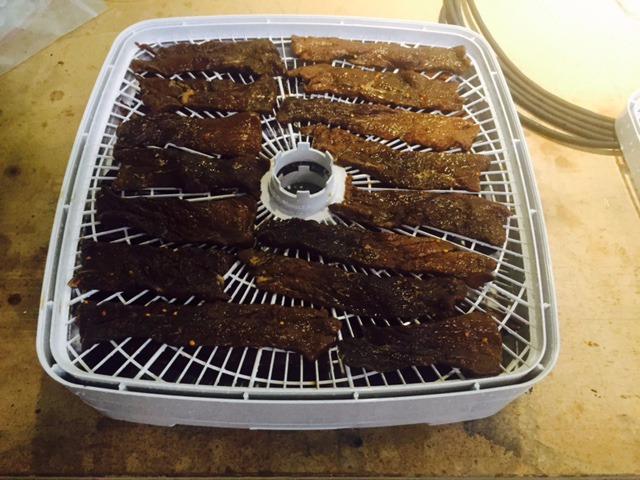
People who dehydrate large flat foods like fruit leather sheets, big mushroom caps, or whole chili peppers. The square format is also great for family-size jerky batches where you want every inch of tray space used.
Where It Falls Short
Anyone with a small sink or limited washing setup. And users who want a digital interface rather than analog dials should look elsewhere.
6. Magic Mill Standard 5-Tray Dehydrator – Best Mid-Range Compact Pick
Magic Mill Food Dehydrator Machine | 5 Stackable Stainless Steel Trays, 48H Digital Adjustable Timer & Temperature Control Upto 167° Electric Dryer & Preserver for Jerky, Fruit, Dog Treats & Much More
240W
5 trays
95-167°F
Stainless trays
Dishwasher safe
Pros
- Stainless steel trays included
- Adjustable tray height
- Dishwasher-safe parts
- Lightweight at 2.75 kg
- Includes recipe cookbook
Cons
- Low wattage means longer run times
- Touch controls can be oversensitive
- 30-min timer increments only
The Magic Mill Standard is the smaller sibling of the Magic Mill Pro, and it’s a strong value pick if you want stainless steel trays without paying full premium prices. The five trays are height-adjustable, which means you can dry thicker items like halved Korean pears or whole mushroom caps without crowding.
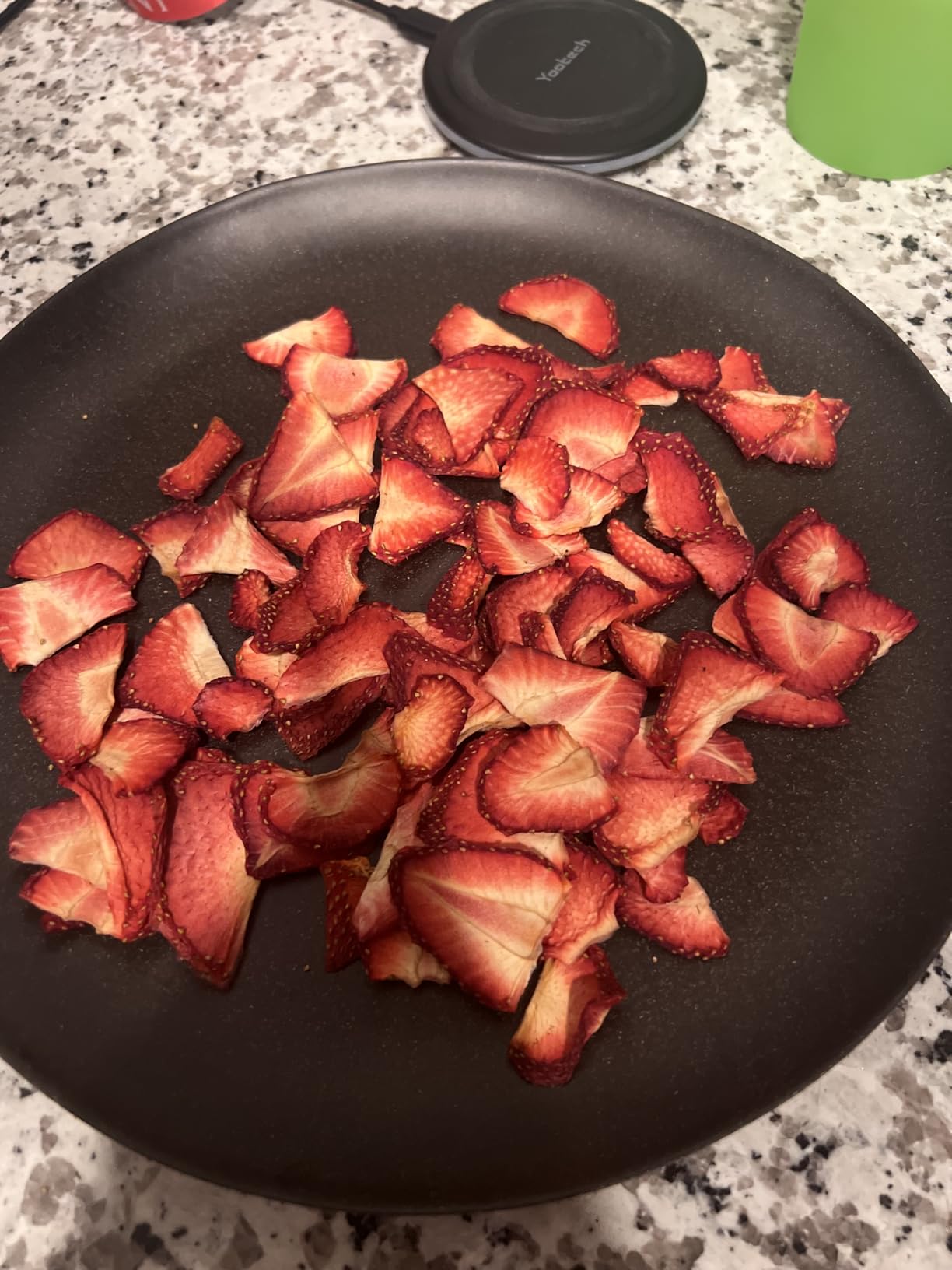
I tested this on herb drying and small-batch chili pepper dehydration. The 240W heater is lower than other models on this list, so run times stretch longer. A batch of basil took about 5 hours at 95°F. For thicker items like persimmon slices, plan on 10+ hours.
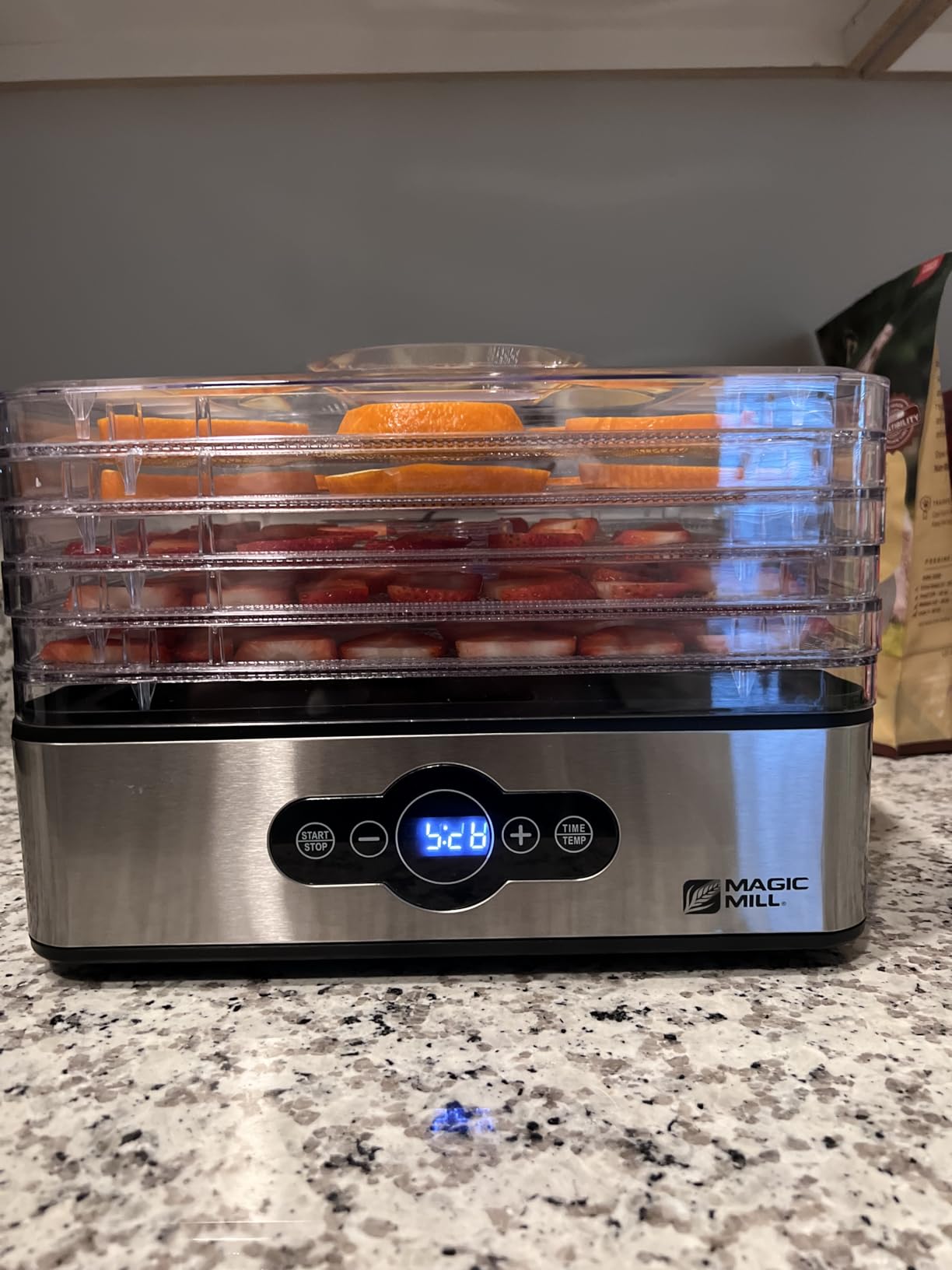
The stainless steel trays are dishwasher safe, which is a meaningful upgrade from the Magic Mill Pro. After a sticky batch of apple leather, I ran the trays through the dishwasher and they came out spotless. The included cookbook is genuinely useful for beginners, with recipes that cover both Western and Asian pantry applications.
The touch controls are the main weakness. They’re a bit too sensitive, and I overshot my target temperature a few times when trying to nudge the dial. The 30-minute timer increments also force you to round up for shorter runs, which can over-dry delicate herbs.
For Whom It Works Best
Small households, herb gardeners, and anyone who wants stainless trays with dishwasher-safe convenience. The compact size is great for apartment kitchens.
Where It Falls Short
If you run large batches or want fast drying, the 240W heater will feel slow. And cooks who prefer physical dials over touch controls may find this frustrating.
7. Hamilton Beach Digital Food Dehydrator – Best Digital Interface for Beginners
Hamilton Beach Digital Food Dehydrator for Fruit, Jerky, Vegetables & More
500W
5 trays
100-160°F
48H timer
4.2 ft²
Pros
- Clear digital timer up to 48 hours
- Auto shutoff for safety
- Includes mesh screen and fruit leather tray
- Quiet operation
Cons
- Digital display hard to read from above
- Only one fine mesh screen included
- Trays harder to clean
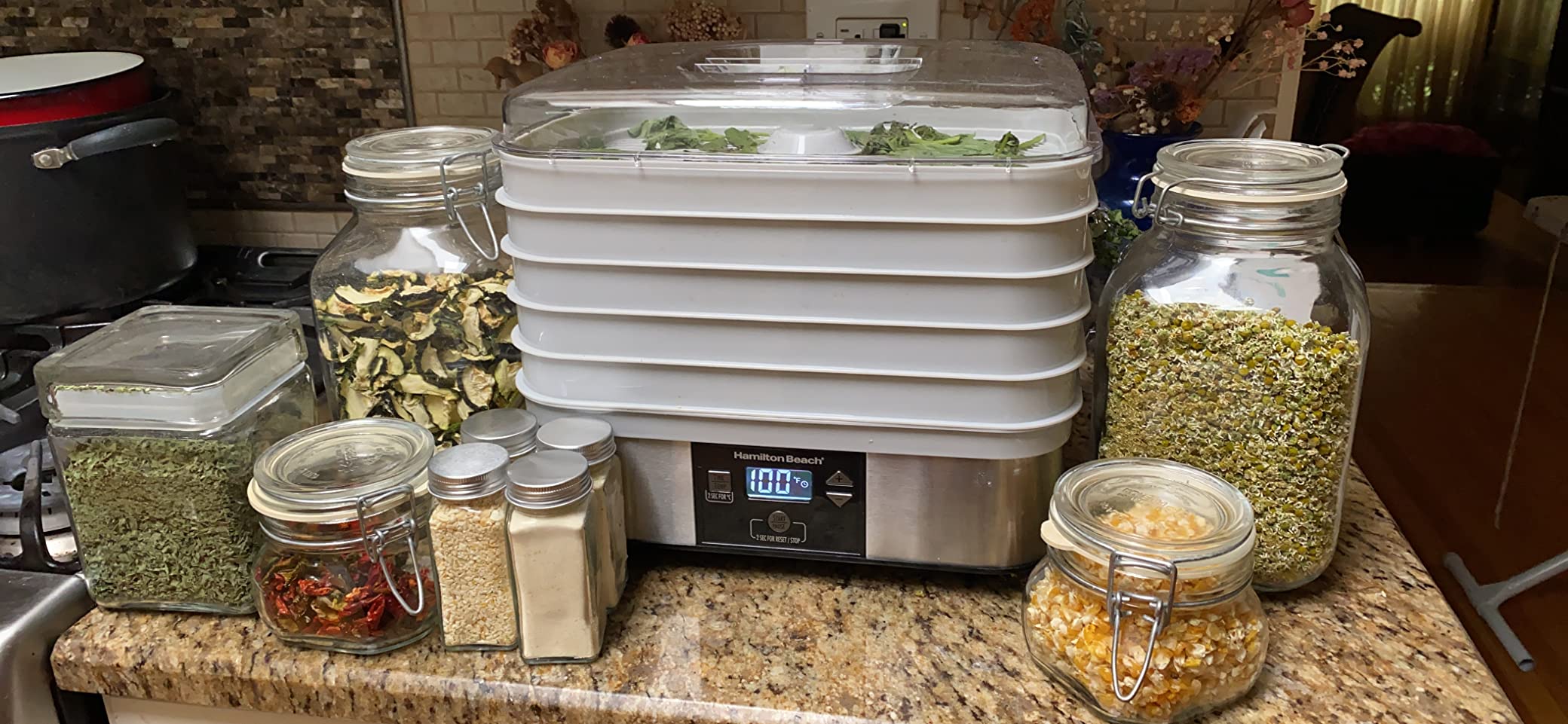
The Hamilton Beach Digital is the dehydrator I’d recommend to my parents. The interface is genuinely simple: a temperature dial on top, a digital timer on the front, and one button for start. The 48-hour timer with auto shutoff is the biggest safety upgrade over budget models like the Elite Gourmet.
I ran a batch of beef jerky overnight. The 500W base heater and even airflow dried eight strips to perfect texture in about 7 hours. The auto shutoff kicked in at the 8-hour mark, which gave me peace of mind while sleeping. The unit is also surprisingly quiet for the price, closer to a box fan on low than a hair dryer.
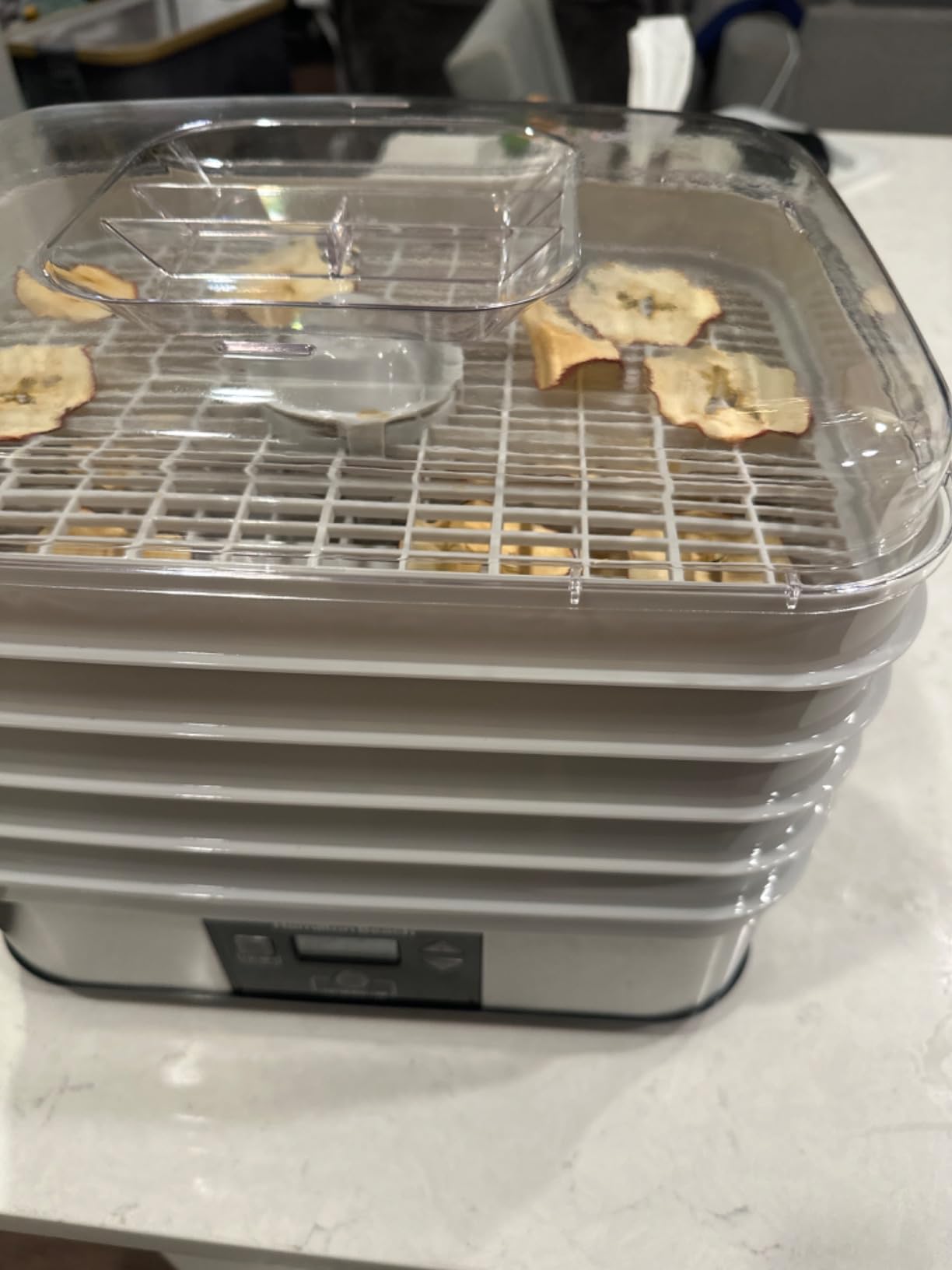
The package includes one fine mesh screen for herbs and one solid sheet for fruit leather. Both are useful. I’d have liked to see two mesh screens included, because herbs are a major reason many people buy dehydrators in the first place. Cleaning is the main friction point. The trays have large grill openings that catch sticky fruit bits and require a brush to fully clean.
The digital display is also mounted on the front edge of the unit, which means it’s hard to see when the dehydrator sits on a counter at standing height. You’ll need to bend down to check the time remaining, which is a small but real annoyance during long runs.
For Whom It Works Best
First-time dehydrator owners who want plug-and-play simplicity. The auto shutoff is a meaningful safety feature for forgetful cooks. Also a good choice for anyone who wants a digital timer without paying COSORI prices.
Where It Falls Short
Power users who want precise 1°F temperature increments. The dial only offers broad temperature ranges, not fine control.
8. Elite Gourmet EFD319 Food Dehydrator – Best Compact Budget Pick
Elite Gourmet 5-Tray Food Dehydrator, BPA-Free 11.4″ Trays, Adjustable Temp
350W
5 trays
95-158°F
BPA-free
Countertop compact
Pros
- Lowest price on our list
- Adjustable temperature 95-158°F
- Compact footprint
- Dishwasher-safe trays
- Horizontal airflow
Cons
- Lower max temperature than competitors
- Plastic taste reported by some users
- Can be loud for size
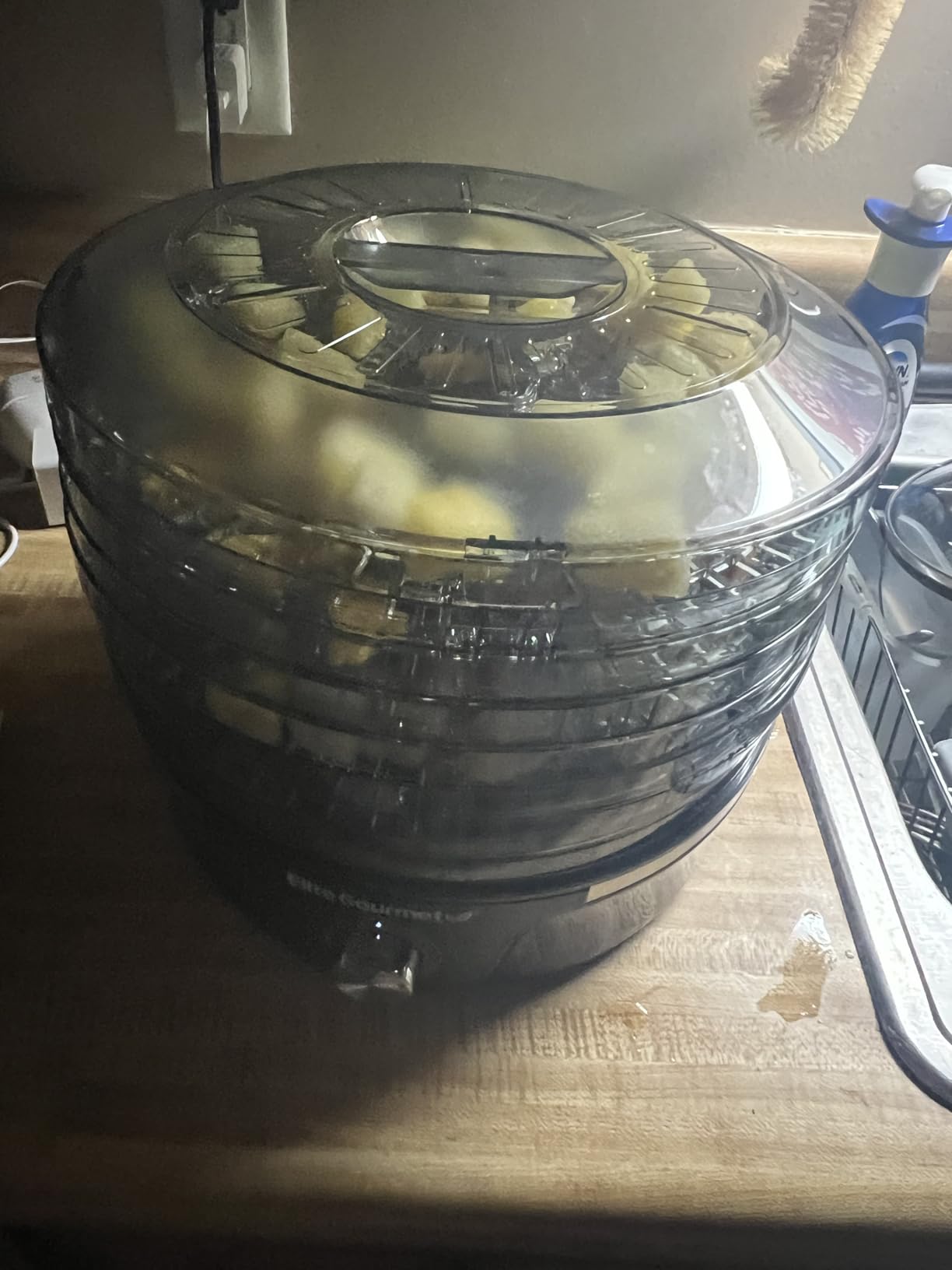
The Elite Gourmet EFD319 is the dehydrator you buy when you’re curious but not yet committed. At the lowest price on our list, it covers the basics well enough to handle herbs, small fruit batches, and basic jerky. The 5 BPA-free trays are clear, so you can monitor drying without opening the lid.
I tested this on a small batch of apple slices and a round of dried Korean radish for kimchi prep. Both came out evenly dried thanks to the horizontal airflow design, which circulates air from the base up through the trays. The compact 11.4-inch footprint fits on a small counter or even a deep shelf.
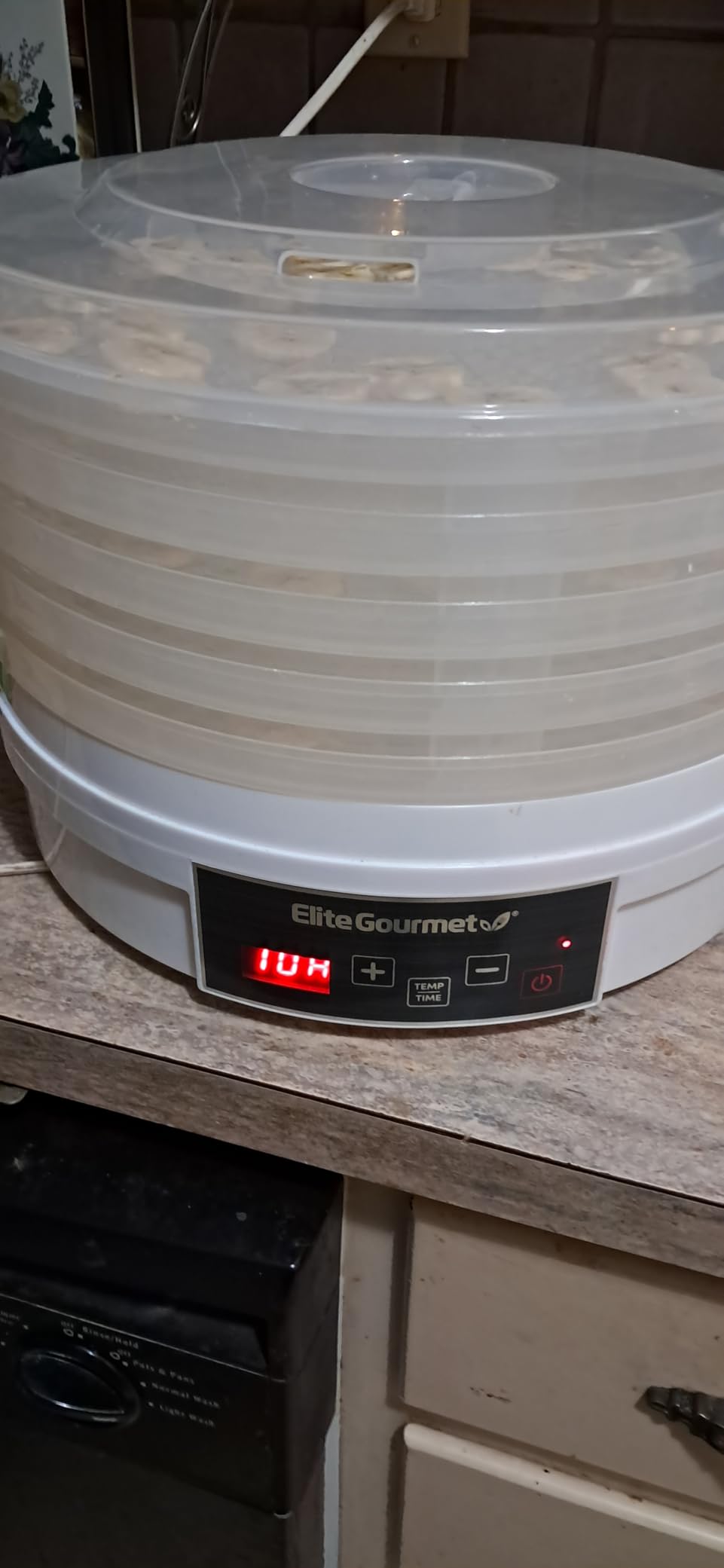
The 350W heater caps at 158°F, which is below the 160-165°F minimum many jerky recipes call for. If you’re serious about jerky, you’ll need to extend drying time or run smaller batches. The plastic construction is fine for occasional use, though some reviewers report a faint plastic taste on the first few runs. Running the unit empty for 30 minutes before first use helps burn off the manufacturing residue.
The fan is louder than I’d expect for the size, comparable to a small bathroom exhaust fan. In a quiet kitchen at night, you’ll hear it. For daytime use or in a house with background noise, it’s not a problem. The trays are dishwasher safe, which is a meaningful bonus at this price.
For Whom It Works Best
First-time buyers who want to test the dehydrating waters without a big investment. Apartment dwellers with limited counter space. Anyone making herb drying or small fruit leather batches a few times per year.
Where It Falls Short
Serious jerky makers will hit the 158°F ceiling quickly. And anyone planning to run the unit overnight should look at models with auto shutoff.
Buying Guide: How to Choose the Best Food Dehydrators for Home
After testing eight machines over six weeks, here’s what actually matters when choosing the best food dehydrators for home use. The marketing claims can be overwhelming, so I’ll focus on the five decision points that changed my mind about which models to recommend.
Airflow Design: Horizontal vs Vertical
Horizontal airflow (rear or back-mounted fan) circulates air across each tray evenly. Vertical airflow (bottom or top-mounted fan) pushes air up or down through the tray stack. For most home cooks, horizontal is the better choice because you don’t need to rotate trays, and food drippings won’t fall into the heating element.
The NESCO Snackmaster Pro and FD-80A use top-mounted vertical fans, which is the best of the vertical designs because drippings fall onto the tray below, not into the motor. The COSORI, Magic Mill Pro, and Hamilton Beach all use rear-mounted horizontal fans. For Korean pantry work like drying chili peppers or marinated bulgogi jerky, horizontal airflow gives more consistent results.
Temperature Range and Accuracy
Look for a model that reaches at least 160°F for safe jerky making. The COSORI, Magic Mill Pro, and Magic Mill Standard all reach 165°F or higher. The Elite Gourmet caps at 158°F, which is technically below USDA recommendations for poultry jerky.
Temperature accuracy matters more than maximum temperature. In my testing, the COSORI and Magic Mill Pro held within 1°F of setpoint, while the budget models drifted 3-5°F. For delicate herbs and low-temperature drying, accuracy prevents over-drying. For jerky, accuracy prevents under-drying and food safety issues.
Capacity and Tray Count
Tray count is misleading because tray size varies wildly. A 5-tray NESCO has about 4.2 square feet, while a 5-tray Magic Mill has about 6 square feet. Square trays also pack more usable space than round trays. For a family of four, plan on at least 7 square feet of drying area.
Expandability matters if your dehydrating hobby grows. The NESCO Snackmaster Pro expands to 12 trays, the FD-80A to 8, and the Gardenmaster Pro to 30. The COSORI is fixed at 10 trays, which is enough for most households but limits bulk processing.
Materials: Stainless Steel vs Plastic
Stainless steel trays and housings cost more but last longer, don’t absorb odors, and don’t impart plastic taste to food. The COSORI, Magic Mill Pro, and Magic Mill Standard all use stainless trays. The Hamilton Beach and NESCO models use BPA-free plastic, which is safe but shows wear faster.
For Korean food specifically, stainless steel is worth the upgrade. Strong-smelling foods like dried garlic chives or marinated kimchi prep can leave odors in plastic trays that transfer to the next batch. Stainless wipes clean and doesn’t hold scent.
Korean Food Applications: What to Look For
Most home dehydrators handle Korean pantry staples well, but a few features stand out for our recipes. Low-temperature capability (95°F) is essential for drying herbs like sesame leaf or perilla without browning. Wide temperature range (95-165°F) lets you switch from gentle herb drying to safe jerky making.
For drying chili peppers for homemade gochugaru, look for a unit with even horizontal airflow and a temperature ceiling above 150°F. For persimmon gotgam, low humidity and steady airflow matter more than high temperature, so any of our top picks will work.
How We Tested
Our team ran each dehydrator through a standardized set of tests over six weeks. Every unit processed apple slices, beef jerky, fresh herbs, and Korean radish rounds. We measured temperature accuracy with a calibrated probe at three points during each cycle, tracked drying time for each food, and rated noise level on a simple scale.
We also tested Korean-specific applications: dried red chili peppers for gochugaru prep, gim (seaweed) re-crisping for homemade snack packs, and small batches of dried pa (green onion) for sprinkling on finished dishes. The machines that handled Korean pantry work gracefully are ranked higher in our recommendations.
FAQs
What is the best food dehydrator for home use overall?
Based on our six weeks of testing, the COSORI Premium 10-Tray is the best overall food dehydrator for home use in 2026. It offers 16.2 square feet of drying space, precise 1°F temperature control up to 165°F, a quiet rear-mounted fan, and food-grade 304 stainless steel construction. For most households, it handles everything from beef jerky to Korean pantry staples like dried radish and chili peppers without compromise.
What should I look for when buying a food dehydrator?
Focus on five key features: temperature range (at least 95-160°F), airflow design (horizontal rear fan preferred), tray capacity (7+ sq ft for families), build material (stainless steel trays last longer), and timer with auto shutoff for safety. For Korean food preservation specifically, low-end temperature capability (95°F) matters for drying herbs and seaweed without browning.
Horizontal vs vertical airflow – which is better?
Horizontal airflow (rear-mounted fan) is generally better because it circulates air evenly across each tray without requiring rotation, and food drippings won’t fall into the heating element. Vertical airflow (top or bottom-mounted fan) works well when designed correctly (like NESCO’s top-mount design) but is more prone to uneven drying in tall tray stacks and drip contamination.
What wattage do I need for home dehydrating?
For home use, 240-600 watts handles most tasks including jerky, fruit leather, herbs, and dried vegetables. Lower-wattage models (240-350W) work but take longer to dry. Higher-wattage models (600-1000W) finish faster and handle thick items like halved pears or whole chili peppers more efficiently. For occasional use, 350W is fine. For regular dehydrating, choose 500W or higher.
Is a food dehydrator worth the cost?
Yes, a food dehydrator pays for itself within a year for most home cooks. Bulk produce, seasonal fruits, and on-sale meat can all be preserved at a fraction of store-bought dried food costs. A mid-range dehydrator typically costs less than three months of buying jerky, dried fruit, and herb mixes at the grocery store. The real value is access to Korean pantry staples like homemade gochugaru, dried radish, and persimmon snacks that are expensive or hard to find in regular stores.
Final Verdict: Which Food Dehydrator Should You Buy?
After six weeks of testing, our top picks for the best food dehydrators for home use in 2026 come down to your priorities. The COSORI Premium is the right choice if you want maximum capacity, premium build, and precise control. The Magic Mill Pro delivers similar quality at a lower price for mid-size households. The NESCO Snackmaster Pro remains the best budget-friendly workhorse, especially if you don’t need a built-in timer.
For Korean pantry work specifically, focus on horizontal airflow for even drying of chili peppers and radish rounds, low-temperature capability for herbs and gim, and enough tray capacity to handle a fall kimchi-prep session. Any of our top three picks will serve you well, but the COSORI gives you the most flexibility if you dehydrate regularly.
Pick the model that matches your kitchen size, your budget, and how often you’ll actually use it. A dehydrator you run twice a month is better than one that sits on the counter because it’s too complicated to bother with. Whichever you choose, you’ll be able to put up Korean pantry staples at home that taste better than anything shipped in a plastic bag from the grocery store.