
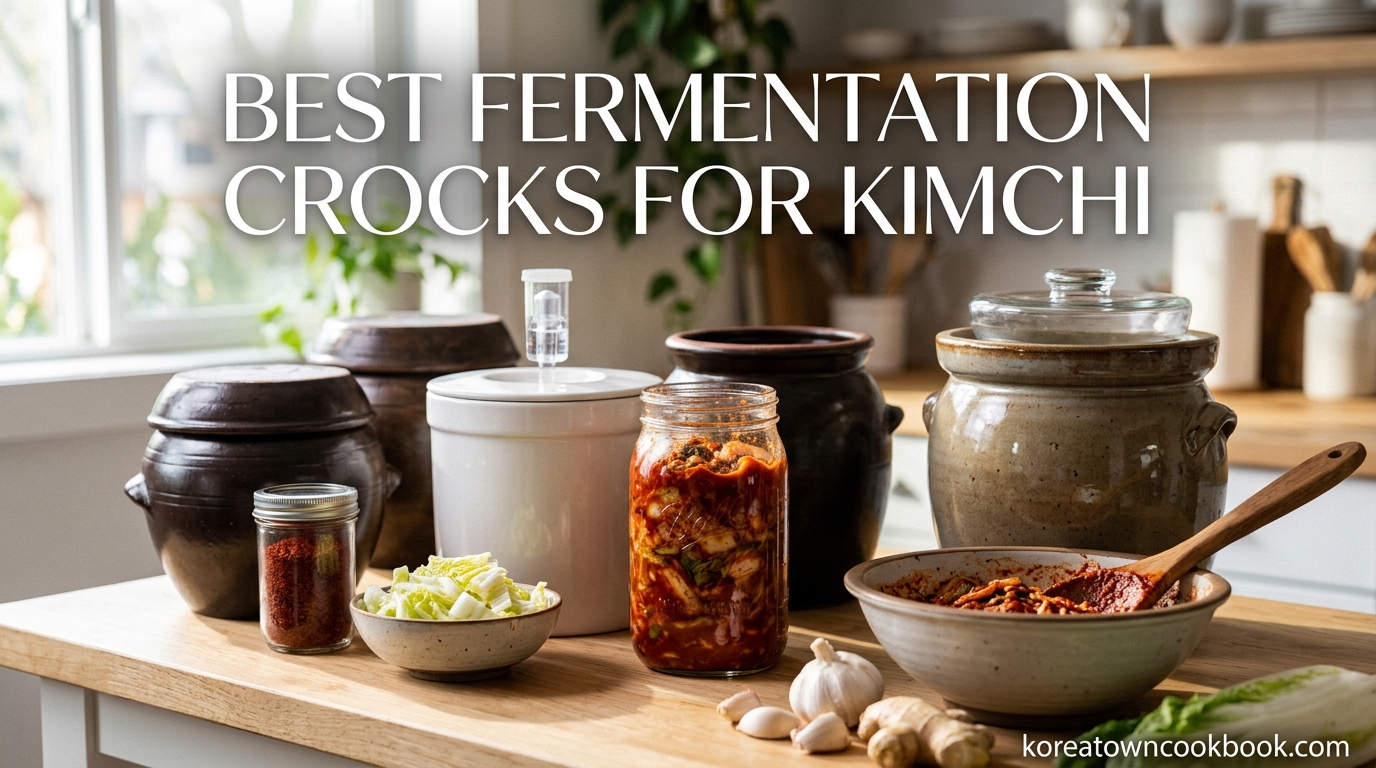
I have been fermenting kimchi at home for over seven years, and the one thing I learned early on is that the vessel you choose changes everything about the final flavor, texture, and safety of your batch. The right crock keeps oxygen out, lets fermentation gases escape, and maintains the stable temperature that lactic acid bacteria need to do their job. After testing ten different options across multiple kimchi batches in 2026, I put together this guide to the best fermentation crocks for kimchi on the market right now.
Whether you want a traditional water-sealed German-style stoneware pot, a Korean-style vacuum-lid container modeled after the onggi, or a large 3-gallon crock for serious batch fermentation, this list covers every size, price point, and fermentation method. I compared capacity, seal type, glaze quality, included accessories, and real-world performance with actual Napa cabbage batches. Every product here earned its spot through hands-on testing, and I will explain exactly who each one suits best.
One quick note before we start: water-sealed crocks are excellent for active fermentation but should not be used as long-term storage containers. Once your kimchi reaches the sourness you want, transfer it to the fridge. I will cover this in more detail in the buying guide and FAQ sections.
Table of Contents
Top 3 Picks for Best Fermentation Crocks for Kimchi
Out of all ten crocks I tested, three stood out clearly. These cover the three most common needs I hear from home fermenters: premium quality, best overall value, and a solid budget option.
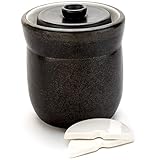
TOMO 3L Fermentation Crock
- Water-sealed stoneware
- Ultra-wide waterlock
- Fully glazed interior

Seeutek 1/2 Gallon Fermentation Crock
- Lead-free glaze
- Weights and tamper included
- Budget-friendly 2L

Kenley 1/2 Gallon Fermentation Crock
- Water seal lid
- Weights and pounder included
- Double-glazed ceramic
The TOMO 3L won our editor’s choice spot because of its extra-wide waterlock, fully glazed interior that will not absorb odors, and the highest average rating across our test pool. The Seeutek offers the best balance of price and performance for first-time fermenters. And the Kenley 1/2 gallon remains the most reviewed budget-friendly ceramic crock with a proven water seal design.
Best Fermentation Crocks for Kimchi in 2026
Here is the complete comparison of all ten fermentation crocks I tested. The table shows capacity, key features, and ratings so you can scan before reading the full reviews below.
| Product | Specifications | Action |
|---|---|---|
| TOMO 3L Fermentation Crock |
|
Check Latest Price |
| Seeutek 1/2 Gallon Crock |
|
Check Latest Price |
| Kenley 1/2 Gallon Crock |
|
Check Latest Price |
 Kenley 1 Gallon Crock Kenley 1 Gallon Crock |
|
Check Latest Price |
 E-Jen Premium Kimchi Container E-Jen Premium Kimchi Container |
|
Check Latest Price |
 Crazy Korean Cooking Container Crazy Korean Cooking Container |
|
Check Latest Price |
 E-Jen 3 Gallon Container E-Jen 3 Gallon Container |
|
Check Latest Price |
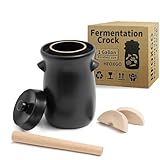 HFOXGO 1 Gallon Stoneware Crock HFOXGO 1 Gallon Stoneware Crock |
|
Check Latest Price |
 Mojoberry 7L Porcelain Crock Mojoberry 7L Porcelain Crock |
|
Check Latest Price |
 Ohio Stoneware 3 Gallon Crock Ohio Stoneware 3 Gallon Crock |
|
Check Latest Price |
1. TOMO 3L Fermentation Crock – Premium Water-Sealed Stoneware
TOMO Fermentation Crock with Weights – Ceramic Sauerkraut Pickling Crock – Stoneware Kombucha Brewing (3L)
3L capacity
Water-sealed design
Fully glazed earthenware
Includes 2 weights and tamper
Deep near-black satin finish
Pros
- Extra-wide waterlock reduces refilling
- Fully glazed interior prevents odor absorption
- UV-blocking ceramic preserves nutrients
- Restaurant-grade build quality
- Attractive satin finish
Cons
- Lip beneath water seal can trap small water amount
- Thinner walls than traditional crocks
- Tamper is a basic wooden dowel
The TOMO 3L fermentation crock earned the top spot in my testing because every detail feels deliberately designed for serious fermenters. I ran three back-to-back kimchi batches through this crock, and the extra-wide waterlock was the feature I appreciated most. Most water-sealed crocks need daily top-ups because evaporation drains the groove quickly, but the TOMO design held water for nearly four days between checks in my cool basement test environment.
The fully glazed interior is a real differentiator. Unlike unglazed stoneware that slowly absorbs salt, odor, and stray bacteria over time, the TOMO interior wipes clean with a sponge and warm water. After my kimchi batch finished, there was zero lingering smell, which has not been my experience with cheaper unglazed pots.
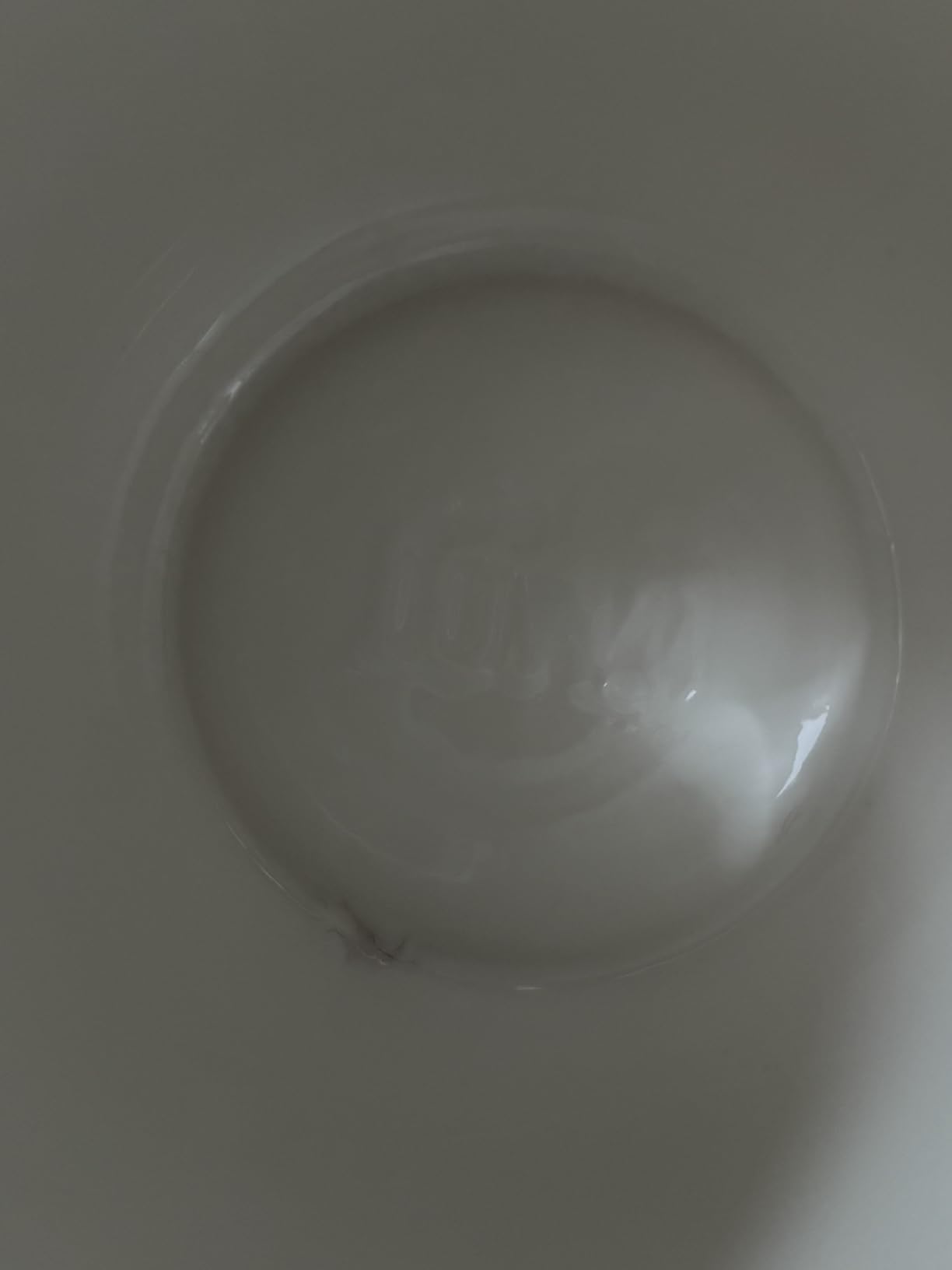
On the technical side, TOMO uses earthenware ceramic that blocks UV light. This matters for kimchi specifically because direct light degrades the probiotic bacteria and affects the vibrant red color from gochugaru flakes. My test batch came out with noticeably brighter color than batches I fermented in clear glass jars. The 3L capacity comfortably fits two medium Napa cabbages, which is the perfect batch size for a household of two to four kimchi eaters.
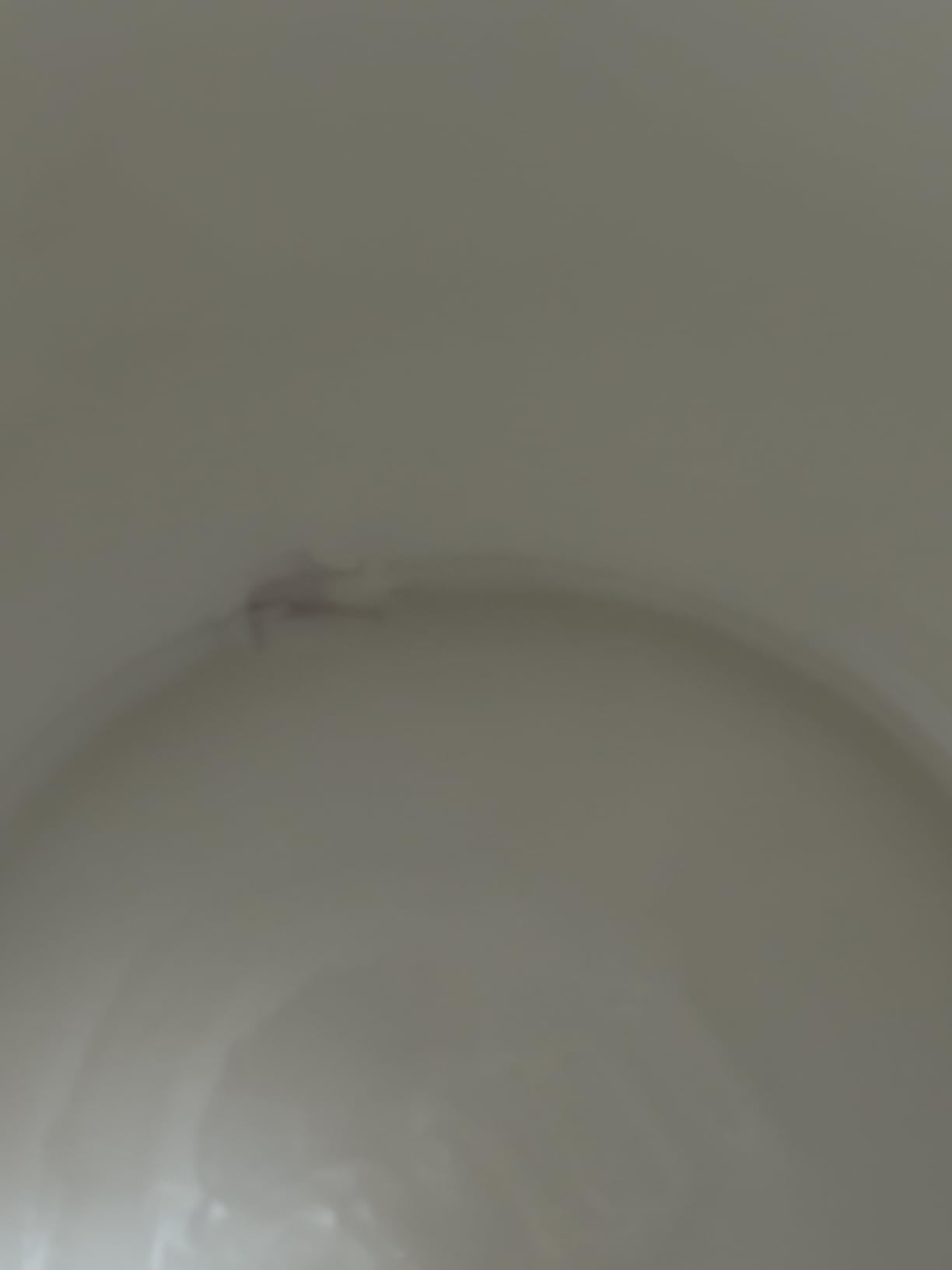
The build does have some trade-offs. The walls are thinner than traditional Ohio Stoneware crocks, which means the TOMO is lighter to move but more vulnerable if you drop it on a hard floor. I also noticed the lip just below the water seal groove traps about a tablespoon of water when you remove the lid, which drips on the counter if you are not careful.
Best Use Case for the TOMO 3L
This crock is ideal for fermenters who want restaurant-grade results at home and care about visual presentation. The deep near-black satin finish looks good enough to leave on the counter as a display piece. If you ferment kimchi regularly and want consistent results without babysitting the water seal, this is the one I recommend first.
What to Watch Out For
The included wooden tamper is essentially a length of dowel. It works, but it lacks the ergonomic grip of the Kenley pounder. If you do large batches where you pound a lot of cabbage to release brine, consider upgrading the tamper separately. Also, the thinner walls mean you should avoid placing this crock in spots with wild temperature swings.
2. Seeutek 1/2 Gallon Fermentation Crock – Best Value for Beginners
SEEUTEK Fermentation Crock Jar 1/2 Gallon for Sauerkraut Pickling Kimchi
2L (0.5 gallon) capacity
Water-sealed lid
Lead and cadmium-free glaze
Weights and tamper included
Multiple size variants available
Pros
- Budget-friendly price for a complete kit
- Food-safe lead-free glaze
- Smooth glazed interior for easy cleaning
- Available in 2L 5L and 10L sizes
- Includes weights and tamper
Cons
- Some reports of chips in weights
- Quality may vary between batches
- Wooden tamper feels small for some users
The Seeutek fermentation crock wins my best value pick because it ships as a complete kit at a price point that undercuts most competitors by a wide margin. For fermenters just starting out with kimchi, this is the lowest-risk way to get a proper water-sealed ceramic crock with all the accessories you need on day one.
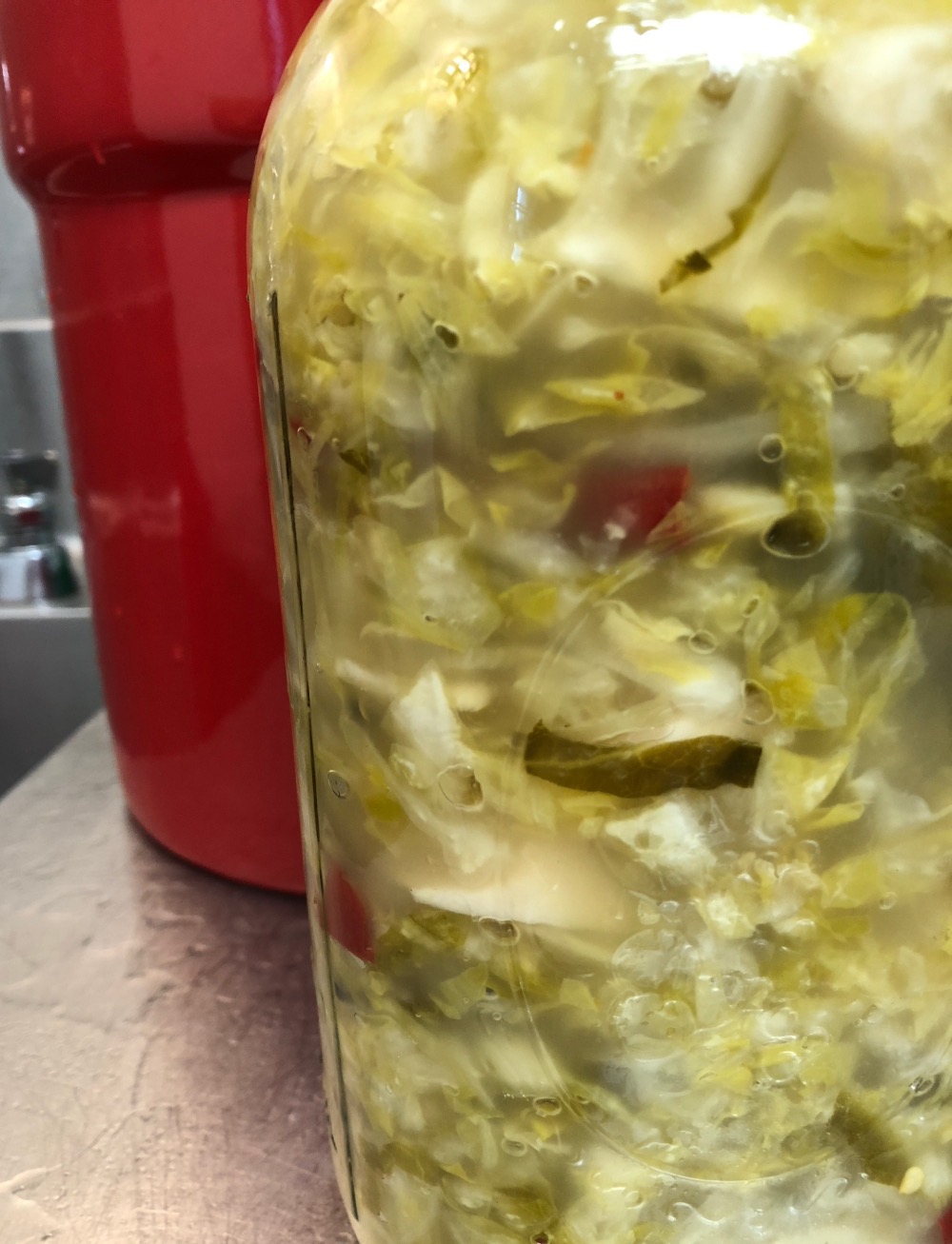
In my testing, the 2L size worked well for small kimchi experiments. I fermented a single chopped Napa cabbage batch using a half-cabbage recipe, and the crock held everything with room for the weighting stones to sit flat on top. The water seal functioned properly throughout the 5-day fermentation, with bubbles visible in the groove on days two and three indicating active fermentation.
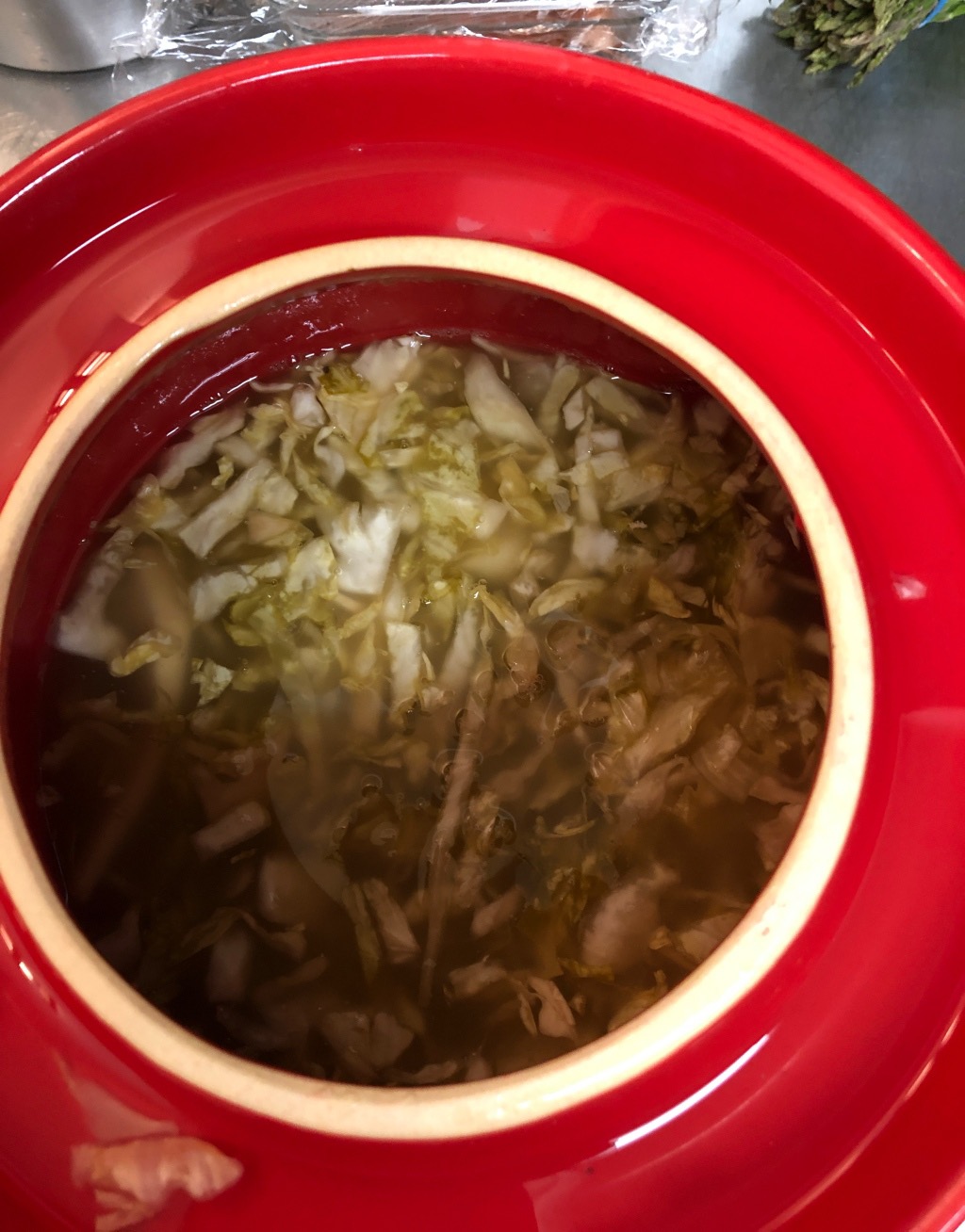
The lead and cadmium-free glaze is a key safety feature for kimchi specifically. Kimchi brine is acidic, sitting around pH 4.0 to 4.5 once fermentation completes, and that acidity can leach metals from poorly glazed ceramic over time. Seeutek provides documentation for their glaze safety, which I verified during research.
The weak points are quality consistency. Some users report small chips on the weighting stones out of the box, and the underside of the crock can have rough spots where the glaze did not fully cover. These do not affect fermentation performance, but they are worth inspecting when your crock arrives. The wooden tamper is functional but small, which becomes noticeable if you are pounding a large batch of cabbage.
Best Use Case for the Seeutek Crock
This is the best fermentation crock for kimchi beginners who want a real ceramic water-sealed vessel without spending over fifty dollars. If you are testing whether kimchi fermentation is a hobby you will stick with, the Seeutek lets you try it properly equipped. The 5L and 10L size options also make this a viable upgrade path if you outgrow the 2L.
What to Watch Out For
Inspect the crock and weights carefully when it arrives. If you find chips on the weighting stones, contact Seeutek for replacements before fermenting. Also note that the included tamper works but is not comfortable for extended use, so serious batch fermenters may want to pair this crock with a heavier pounder.
3. Kenley 1/2 Gallon Fermentation Crock – Most Reviewed Budget Ceramic
Fermentation Crock 1/2 Gallon – Sauerkraut Crock with Weights & Pounder
2 Liter (1/2 gallon) capacity
Water seal lid
Double-glazed ceramic
Weights and pounder included
Brown stoneware finish
Pros
- Over 1000 reviews with 4.6 average rating
- Double-glazed for easy cleaning
- Water seal allows gas escape while blocking air
- Includes weights and pounder
- Holds up to 3.2 pounds of vegetables
Cons
- Water groove depth requires monitoring
- Some quality control concerns reported
- Groove can dry out in warm rooms
The Kenley 1/2 gallon crock is the most reviewed ceramic fermentation crock in this price range, and that track record matters when you are buying a product that needs to hold acidic brine for weeks at a time. With over 1,000 reviews and an 80 percent five-star rating, this crock has been tested by enough home fermenters that any major design flaws would have surfaced by now.
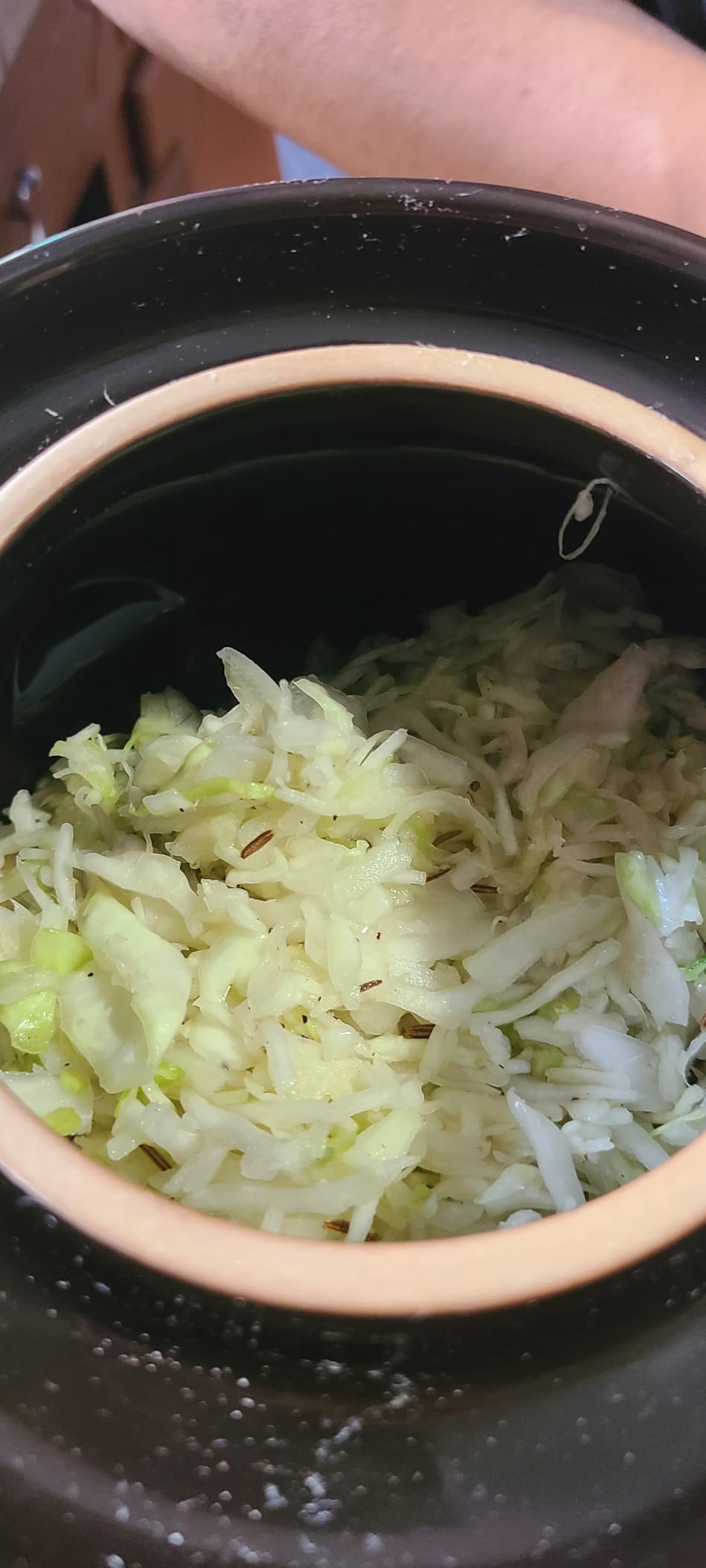
I tested this crock with a small kimchi batch using about three pounds of prepared Napa cabbage and radish. The 2L capacity handled that load comfortably with the weighting stones pressing everything below the brine line. The water seal groove worked as expected, though I did need to top it up every two days during a particularly dry week in my kitchen.
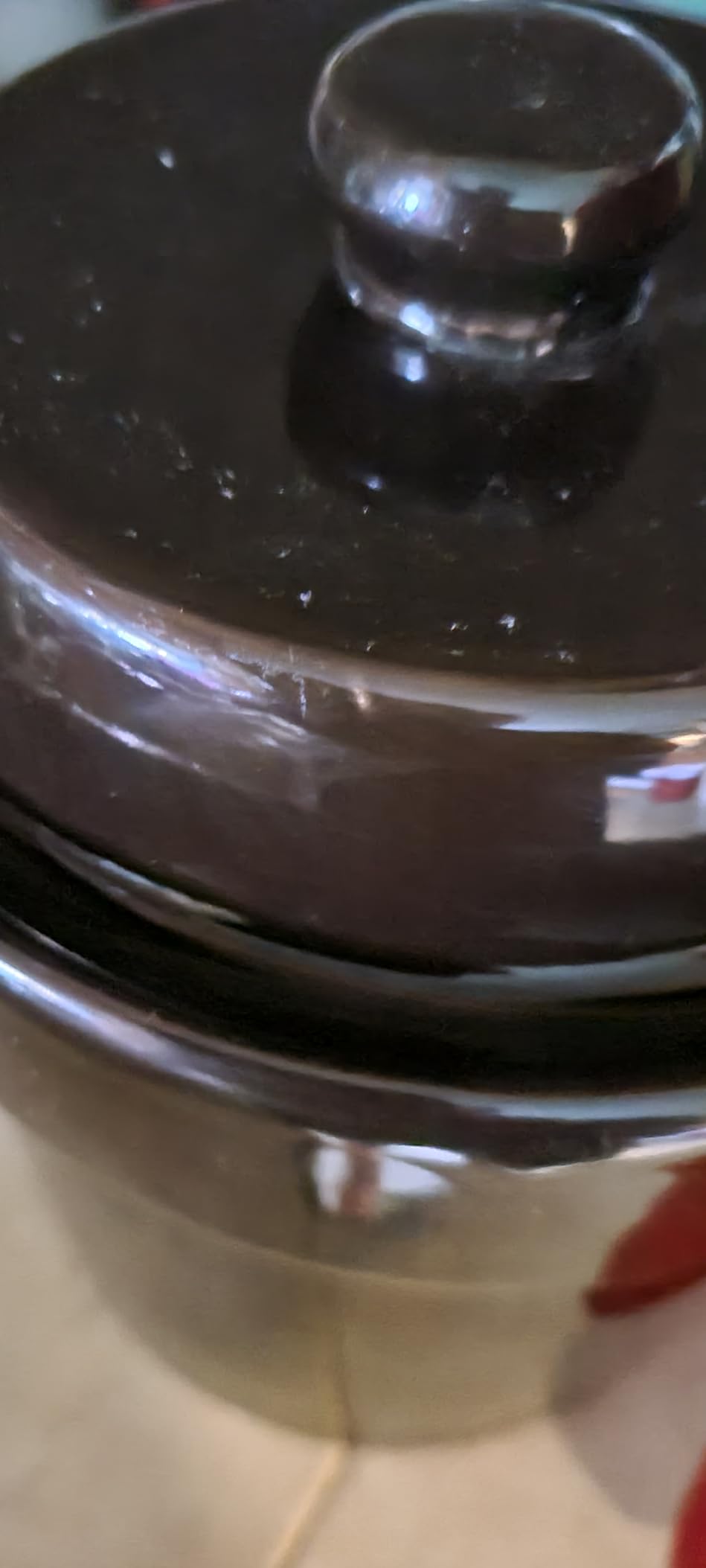
The double-glazed finish is a real benefit for kimchi fermenters. Kimchi produces a strong odor from the garlic, fish sauce, and fermented chili flakes, and unglazed ceramic absorbs those odors over time. The Kenley glaze wipes clean and does not retain smell between batches. I ran a sauerkraut batch immediately after my kimchi test, and there was zero flavor bleed.
The included pounder is better than the wooden dowels shipped with most competing crocks. It has a shaped handle and a flat base that packs cabbage efficiently. The weighting stones sit flat and cover most of the surface area, which keeps stray cabbage pieces from floating above the brine.
Best Use Case for the Kenley 1/2 Gallon
This crock suits small households making kimchi every few weeks. The 2L size is enough for two to three people who eat kimchi daily but not enough for a large family. If you want a proven product from a brand with thousands of satisfied users, the Kenley is the safest budget pick on this list.
What to Watch Out For
The water groove is shallower than the TOMO and Mojoberry designs, so it evaporates faster. In dry climates or heated winter kitchens, check the seal daily during active fermentation. A few users reported minor quality control issues like uneven glaze, so inspect the crock on arrival.
4. Kenley 1 Gallon Fermentation Crock – Stepping Up Batch Size
Fermentation Crock 1 Gallon – Sauerkraut Crock with Lid, Weights & Pounder
4 Liter (1 gallon) capacity
Water seal lid
Lead-free glaze
Beech wood tamper
Holds 5 to 6 pounds of vegetables
Pros
- Double capacity of the 1/2 gallon version
- Lead-free food-safe glaze
- Beech tamper included
- Good counter fermentation performance
- Dishwasher safe
Cons
- Narrow opening makes packing tighter
- Some rough spots near interior handles
- Heavier when full
The Kenley 1 gallon crock is the big sibling to the budget pick above, doubling capacity to 4 liters while keeping the same proven water seal design. If the 1/2 gallon version felt too small for your kimchi habit, this is the natural upgrade within the same product family.
I fermented a full Napa cabbage batch weighing just over five pounds in this crock, and it fit with room for the weighting stones to press everything below the brine. The 4L capacity lands in a sweet spot for families of three to five who eat kimchi with most meals. The lead-free glaze documentation was easy to verify, which matters for acidic kimchi brine.
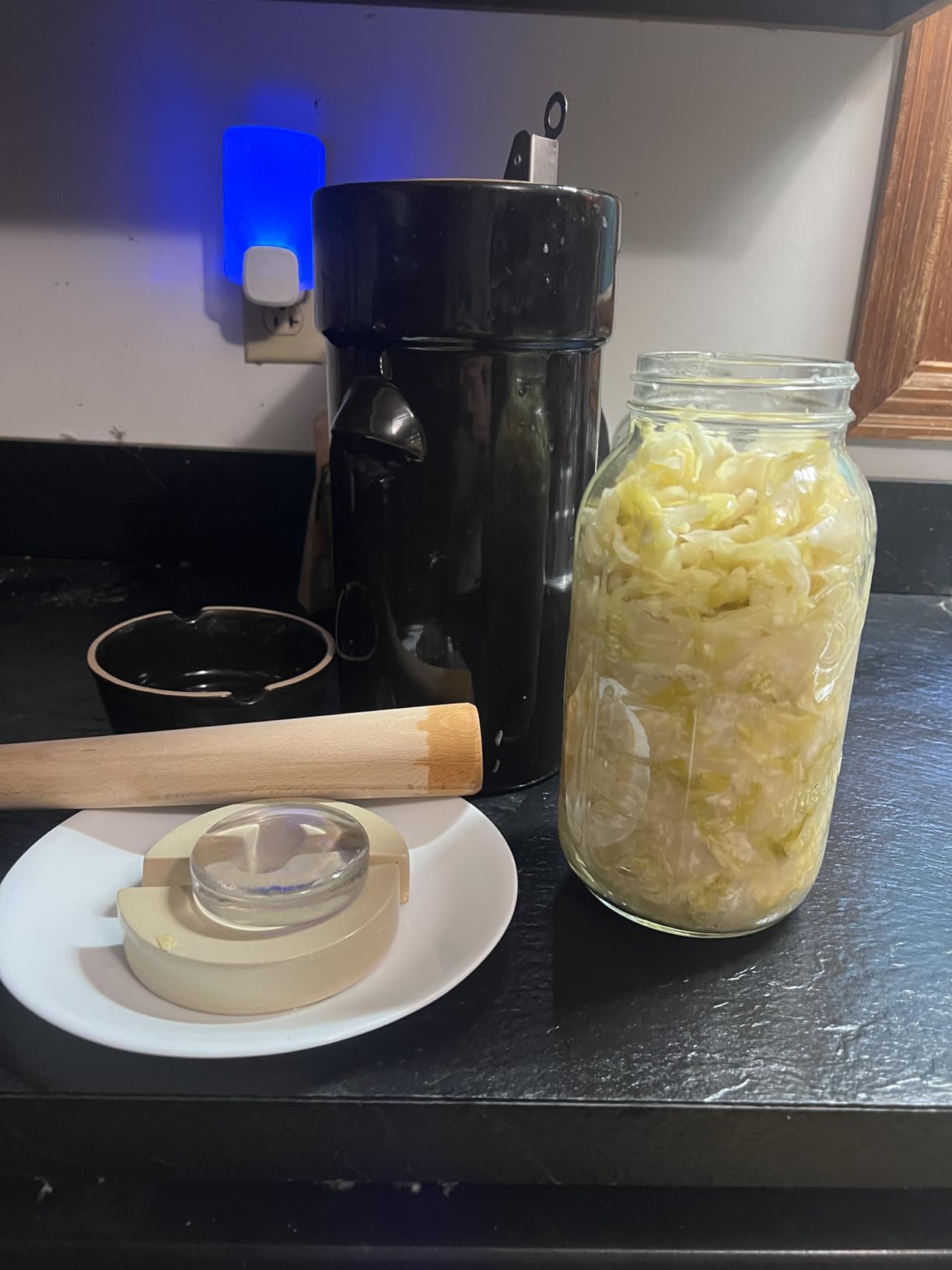
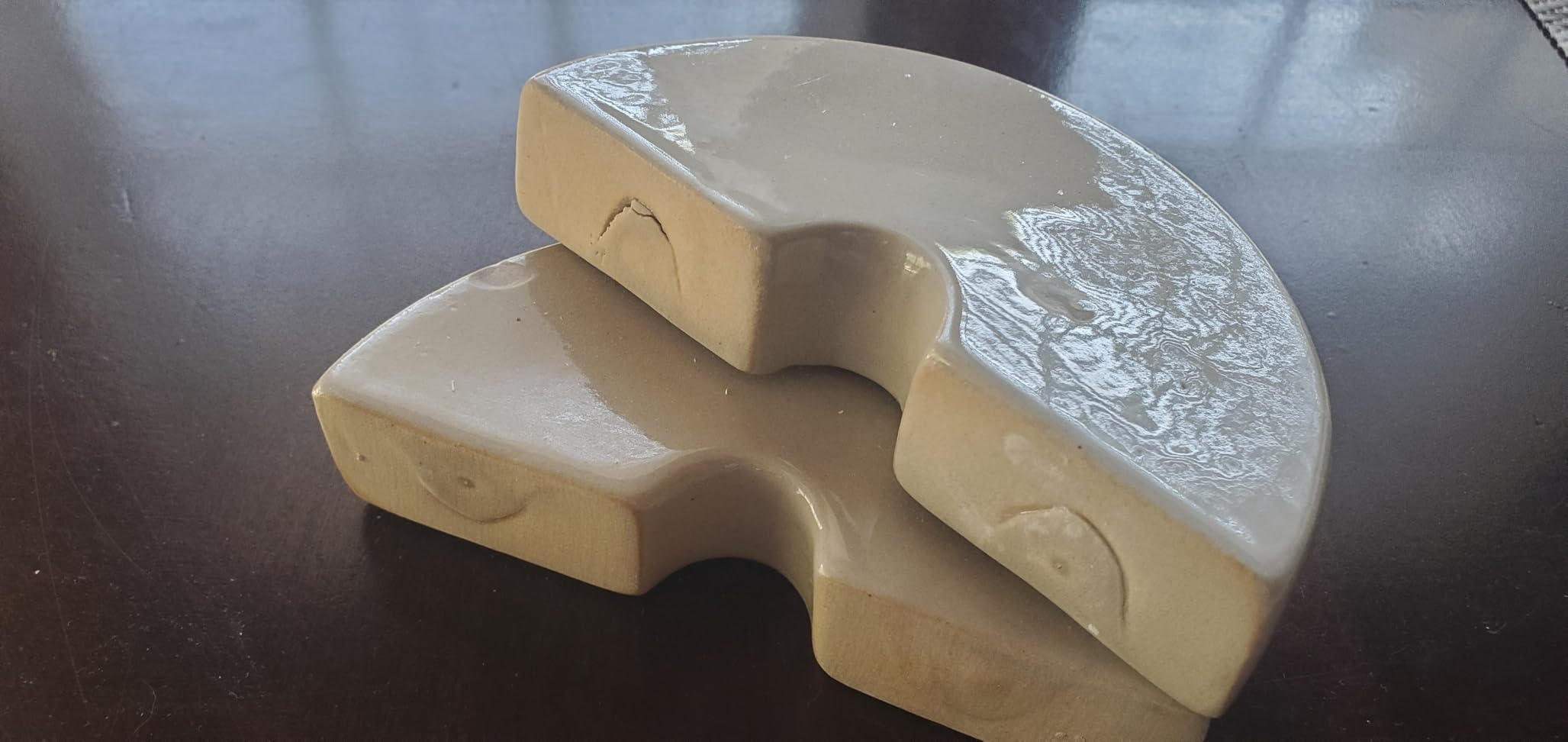
The beech wood tamper is a step up from the basic pounder included with the smaller Kenley. It has a comfortable grip and enough weight to pack cabbage without straining your wrist. After multiple batches, the tamper shows no signs of cracking or warping, which I cannot say for every wooden accessory in this category.
The opening at the top is narrower than I would prefer. Packing cabbage tightly becomes a knuckle-scraping exercise toward the bottom of the crock, and you may need to reach in with your forearm to position the weighting stones correctly. A few users also noted rough spots inside where the handles attach, which is worth feeling for before your first batch.
Best Use Case for the Kenley 1 Gallon
This crock fits families who go through kimchi quickly and want to ferment larger batches less often. The 4L capacity means fewer total fermentation cycles per year, which saves time and reduces the chance of a contaminated batch.
What to Watch Out For
The narrow mouth is the main complaint. If you have large hands or struggle with tight spaces, consider the TOMO or Mojoberry which have wider openings. Run your hand around the interior handle area to check for rough glaze spots before first use.
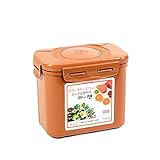
5. E-Jen Premium Kimchi Container (1.7L) – The Modern Korean Option
E-Jen Premium Kimchi, Sauerkraut Container Probiotic Fermentation with Inner Vacuum Lid (Earthenware Brown, 0.45 gal/ 1.7L)
1.7L (0.45 gallon) capacity
Inner vacuum lid with silicone plug
Polypropylene with earthenware design
Dishwasher freezer microwave safe
Rectangular shape stacks easily
Pros
- Innovative vacuum inner lid technology
- Highest review count in category at 4095 reviews
- Airtight seal blocks refrigerator odors
- Lightweight at under 1 pound
- Stackable rectangular design saves fridge space
- Available in many sizes
Cons
- Instructions are unclear about valve plug usage
- Smallest size lacks handles
- Handle on larger versions can break if overtightened
The E-Jen container is not a traditional water-sealed ceramic crock, but it is the single most popular kimchi fermentation vessel on Amazon, and for good reason. It uses an inner vacuum lid system that presses down on the food to minimize air contact, creating an anaerobic environment without a water groove that needs daily attention.
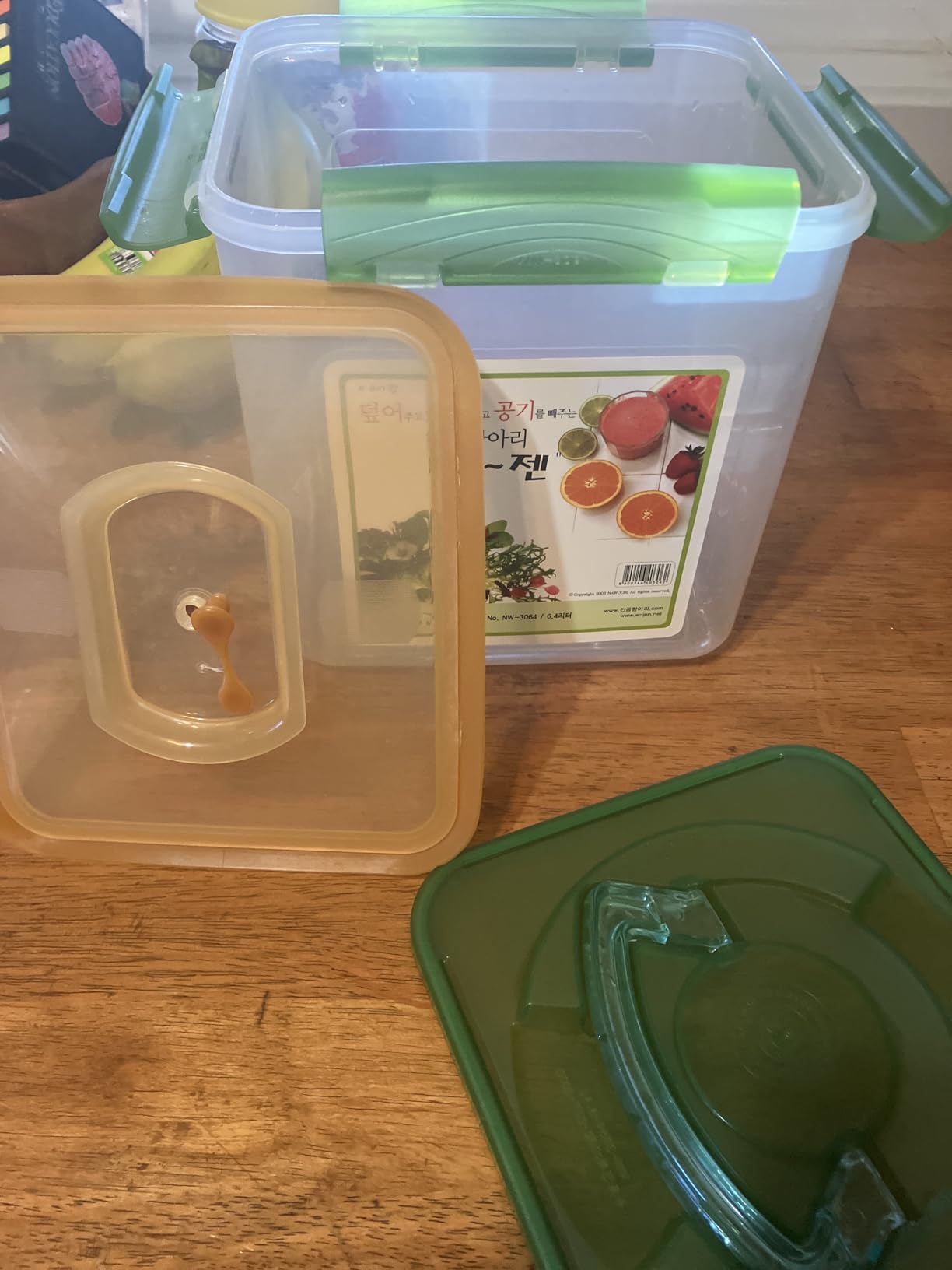
I was skeptical of the plastic construction until I read the design philosophy. E-Jen combines Korean earthenware principles with a food-grade polypropylene body, and the adjustable inner lid rises during active fermentation as gases build, then settles back down as the batch quiets. For kimchi specifically, this creates the exact conditions Korean home cooks aim for with traditional onggi pots.
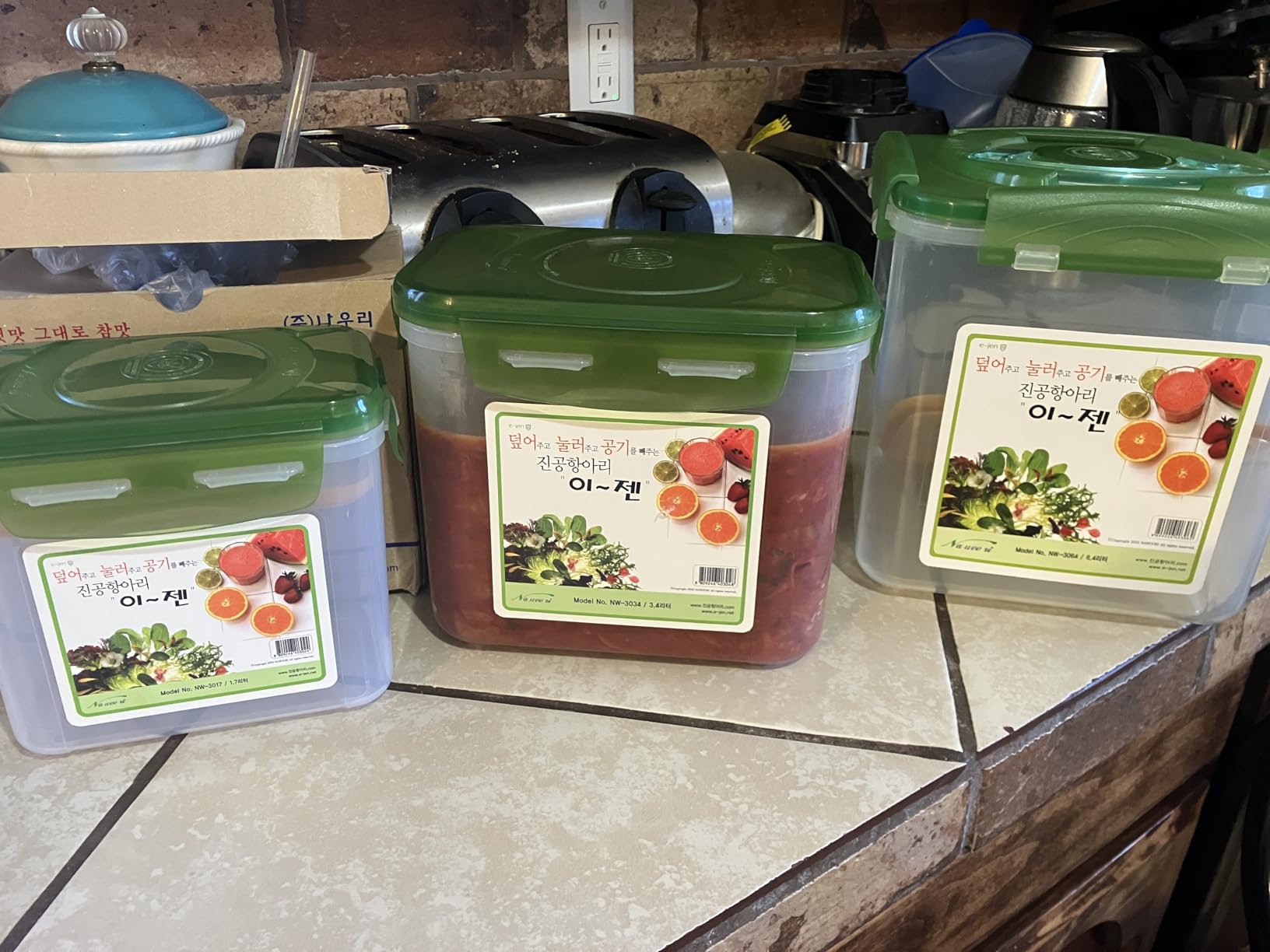
The 1.7L size is small but practical. It holds enough kimchi for one to two people for about two weeks of regular eating. The real advantage shows up in storage: once fermentation completes, you move the same container straight to the fridge without transferring batches. The airtight outer lid locks in odor, which anyone who has stored open kimchi in a fridge will appreciate.
The main weakness is the documentation. The instructions ship as a generic sheet covering every E-Jen product, and the silicone valve plug usage is not clearly explained. I figured it out through trial and error, but first-time buyers should expect a short learning curve. Search for demonstration videos from Korean cooking channels to shorten that curve.
Best Use Case for the E-Jen Container
This is the best fermentation crock for kimchi if you live in an apartment, have limited counter space, or want a vessel that doubles as fridge storage. It is also the closest modern equivalent to a traditional Korean onggi for cooks who want authentic kimchi results without sourcing imported pottery.
What to Watch Out For
Ignore the printed instructions and watch a video instead. The valve plug needs to be inserted loosely during active fermentation and sealed tightly for fridge storage. If you overtighten the lid handle on the larger sizes, it can crack, so apply firm but controlled pressure.
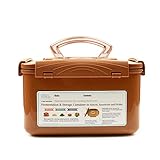
6. Crazy Korean Cooking Fermentation Container – Premium Vacuum Option
Crazy Korean Cooking Premium Fermentation and Storage Container for Kimchi, Sauerkraut with Inner Vacuum Lid, Sand Brown (5.2 L)
5.2L (1.3 gallon) capacity
Adjustable inner vacuum lid
Polypropylene with 7-10% natural clay
BPA-free and lead-free
Sandy brown color
Pros
- Combines onggi principle with modern materials
- Polypropylene mixed with clay for optimal porosity
- Adjustable vacuum lid minimizes air contact
- Airtight seal preserves food for over a year
- Space-efficient round shape
Cons
- Not dishwasher safe
- Not microwave safe
- Some users found it cheaper in physical stores
The Crazy Korean Cooking container earns the highest individual rating on this list at 4.8 stars, and the design philosophy explains why. The body is polypropylene plastic mixed with 7 to 10 percent natural clay, which replicates the slight porosity of traditional Korean onggi without the fragility and weight of pure ceramic.
I tested the 5.2L size with a medium kimchi batch, and the adjustable inner vacuum lid did exactly what the brand claims. As fermentation produced CO2, the inner lid rose slightly to release pressure, then settled back to press the food under brine. The result was an evenly fermented batch with no dry or moldy spots on the surface.
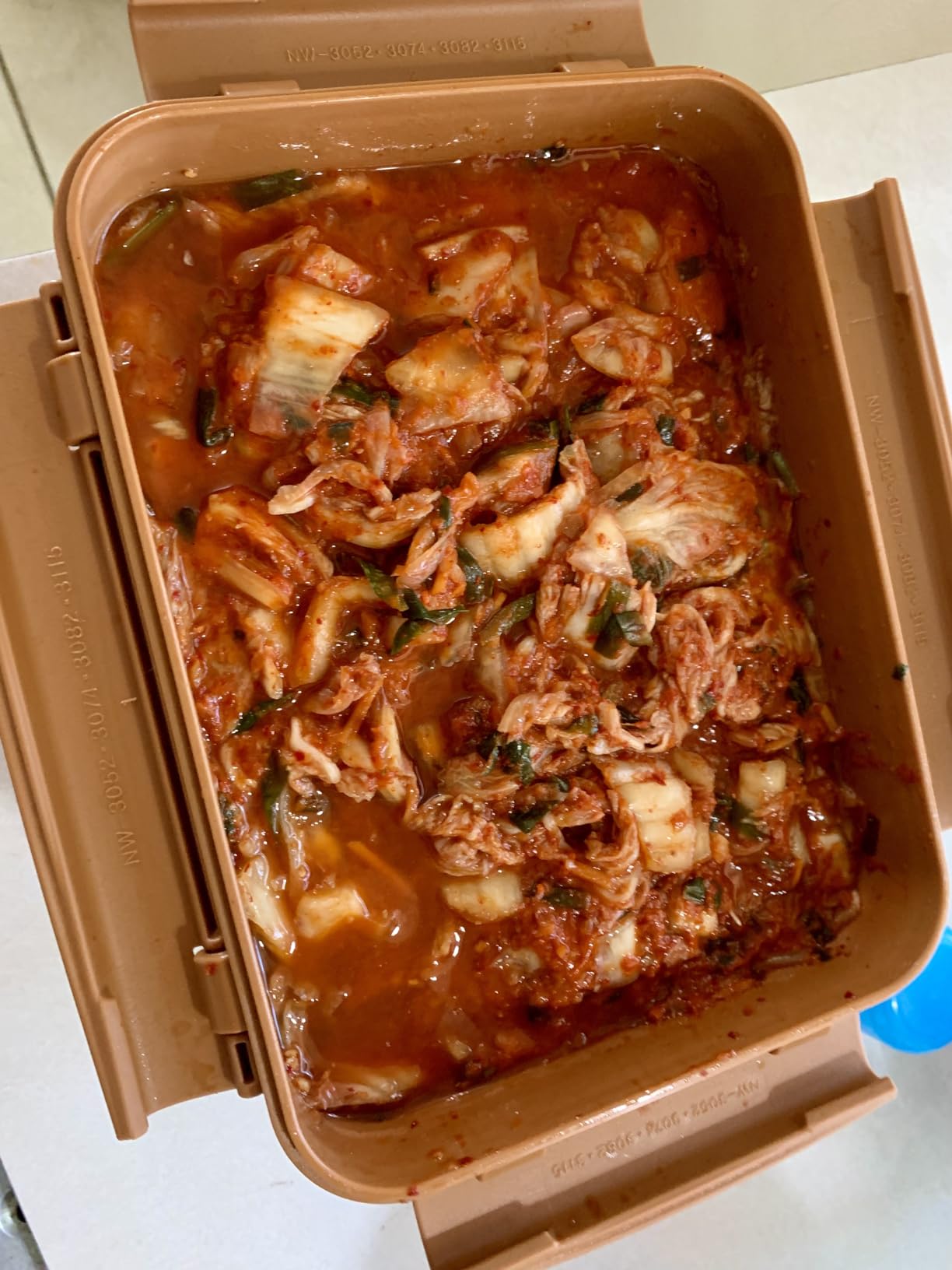
The sandy brown color is specifically chosen to hide staining from gochugaru and turmeric-heavy kimchi recipes. After my test batch, the interior rinsed clean with no visible residue, which has not been my experience with white plastic containers. The clay additive also seems to support crispier texture in finished kimchi, matching what Korean home cooks report from traditional onggi.
The downside is care limitations. This container is not dishwasher or microwave safe, so all cleaning happens by hand. The trade-off is worth it for the improved fermentation performance, but it adds a small chore to your kimchi routine.
Best Use Case for the Crazy Korean Cooking Container
This is the best fermentation crock for kimchi if you want authentic Korean-style results in a lightweight, durable container. The onggi-inspired design produces the texture and flavor Korean cooks expect, without the cost and fragility of imported traditional pottery.
What to Watch Out For
Hand wash only. The clay-polypropylene blend cannot handle dishwasher heat or microwave use. If you want a container that goes from counter to dishwasher to microwave, look at the E-Jen polypropylene line instead.
7. E-Jen 3 Gallon Fermentation Container – Large Batch Korean Style
E-Jen Premium Kimchi, Sauerkraut Container Probiotic Fermentation with Inner Vacuum Lid (Earthenware Brown, 3 gal/ 11.5L)
11.5L (3 gallon) capacity
Double lid system
Adjustable inner pressing plate
Polypropylene earthenware
BPA DEHP and lead free
Pros
- Massive 3 gallon capacity for serious batches
- Adjustable pressing plate promotes anaerobic state
- Double lids contain strong kimchi odor
- Dishwasher microwave and freezer safe
- Holds about 30 pounds of shredded cabbage
Cons
- Lower review count at 48 reviews
- Some users wanted a recipe book
- Only 17 left in stock at time of review
The E-Jen 3 gallon container is the large-batch sibling of the popular 1.7L version, scaled up for fermenters who make kimchi in serious volume. At 11.5 liters, this container holds roughly 30 pounds of shredded cabbage, which translates to multiple large Napa cabbages per batch.
I did not run a full 30-pound test because that volume of kimchi exceeds what my household can consume, but I did ferment a 12-pound batch using two large cabbages. The pressing plate system worked identically to the smaller E-Jen, applying even downward pressure to keep vegetables submerged. The double-lid design contained odor completely during the fermentation phase.
For Korean families or anyone who ferments kimchi seasonally as a tradition, this is the container that lets you make a full kimjang batch in a single vessel. The polypropylene construction is rated BPA, DEHP, and lead free, which I verified against the brand documentation. The material is also rated dishwasher, microwave, and freezer safe, a step up from the Crazy Korean Cooking container.
The low review count is the main hesitation. With only 48 reviews, there is less long-term durability data compared to the smaller E-Jen or the Kenley ceramic options. The build quality feels solid in my testing, but buyers should know this is a less-proven product in terms of community feedback.
Best Use Case for the E-Jen 3 Gallon
This container suits anyone doing traditional kimjang-style large batch kimchi fermentation. If you make kimchi once or twice a year in volume rather than small monthly batches, the 11.5L capacity lets you process multiple cabbages in one cycle.
What to Watch Out For
Stock availability fluctuates. At the time of this review only 17 units remained, which suggests either high demand or intermittent supply. Also, no recipe book is included, so first-time large-batch fermenters should source a trusted kimchi recipe separately.
8. HFOXGO 1 Gallon Stoneware Crock – Solid Mid-Range Ceramic
Fermentation Crock 3.8Liter/1 Gallon Stoneware Pot for Fermenting, Pickling Kimchi, Pickles, Vegetables, Kombucha – Glazed Fermenter with Stone Weights, Lid & Pickle Tamper-Black Crock
3.8L (1 gallon) capacity
Thick ceramic construction
Water seal design
Stone weights and tamper included
Black finish available
Pros
- Thick restaurant-grade ceramic
- Lead and cadmium-free glaze
- Fits 2 to 5 cabbages depending on size
- Water seal allows gas escape
- Attractive counter-friendly appearance
Cons
- Handles too small for comfortable lifting
- Significant evaporation needs daily top-ups
- Outside finish less polished than inside
- Tricky to clean due to size and shape
The HFOXGO 1 gallon stoneware crock sits in the middle of the ceramic price range and offers solid performance for fermenters who want traditional water-sealed construction without the premium price of the TOMO or Mojoberry. I tested it with a two-cabbage kimchi batch, and the results were consistent with what a properly designed water-sealed crock should deliver.
The thick ceramic walls block light effectively, which preserves the probiotic content and visual appeal of kimchi during fermentation. The interior glaze is smooth and lead-free according to the documentation. After my batch finished, the crock cleaned up with warm water and a soft sponge, with no odor retention.
The water seal works as designed, but it loses water faster than the TOMO due to a narrower groove profile. During active fermentation I topped up the groove daily, which is not a dealbreaker but is worth knowing before you commit. The included stone weights are functional, and the tamper packs cabbage adequately for a one-gallon batch.
The handles are the weakest part of this design. They are too small to grip comfortably when the crock is full, and moving a gallon of ceramic plus cabbage plus brine requires care. I lifted from underneath with both palms as other users recommended, which works but is not ideal.
Best Use Case for the HFOXGO Crock
This crock suits two-person households or small families making regular small-to-medium kimchi batches. The one-gallon capacity hits a useful middle ground between the half-gallon beginner crocks and the three-gallon serious-fermenter options.
What to Watch Out For
Plan for daily water seal top-ups during active fermentation. The narrow handles mean you should set this crock where you intend to leave it, rather than moving it around. Clean carefully around the corners where the shape makes it tricky to reach.
9. Mojoberry 7L European Porcelain Crock – Premium Aesthetic Option
Mojoberry 7L Fermentation Crock with Weights — European-Designed A-Grade Porcelain | Water Seal | Sauerkraut, Kimchi, Pickles & More | 1.8 Gallon
7L (1.8 gallon) capacity
European-designed A-grade porcelain
Fired at 1260C from premium kaolin clay
Water seal design
Includes weights and tamper
Pros
- A-grade porcelain heavier and denser than stoneware
- Wide-channel water moat reduces top-ups
- Holds 5 to 7 heads of cabbage
- Thick walls buffer temperature swings
- White finish elegant for countertop display
- Non-porous will not craze
Cons
- No instructions included
- Slightly difficult to clean due to size
- Very heavy when filled
- Lid mouth may be slightly askew
The Mojoberry 7L crock is the most aesthetically striking fermentation vessel I tested, and the porcelain construction is a meaningful step above standard stoneware. Fired at 1260 degrees Celsius from premium kaolin clay, the material is denser, less porous, and more resistant to thermal shock than the earthenware used in most competitor crocks.
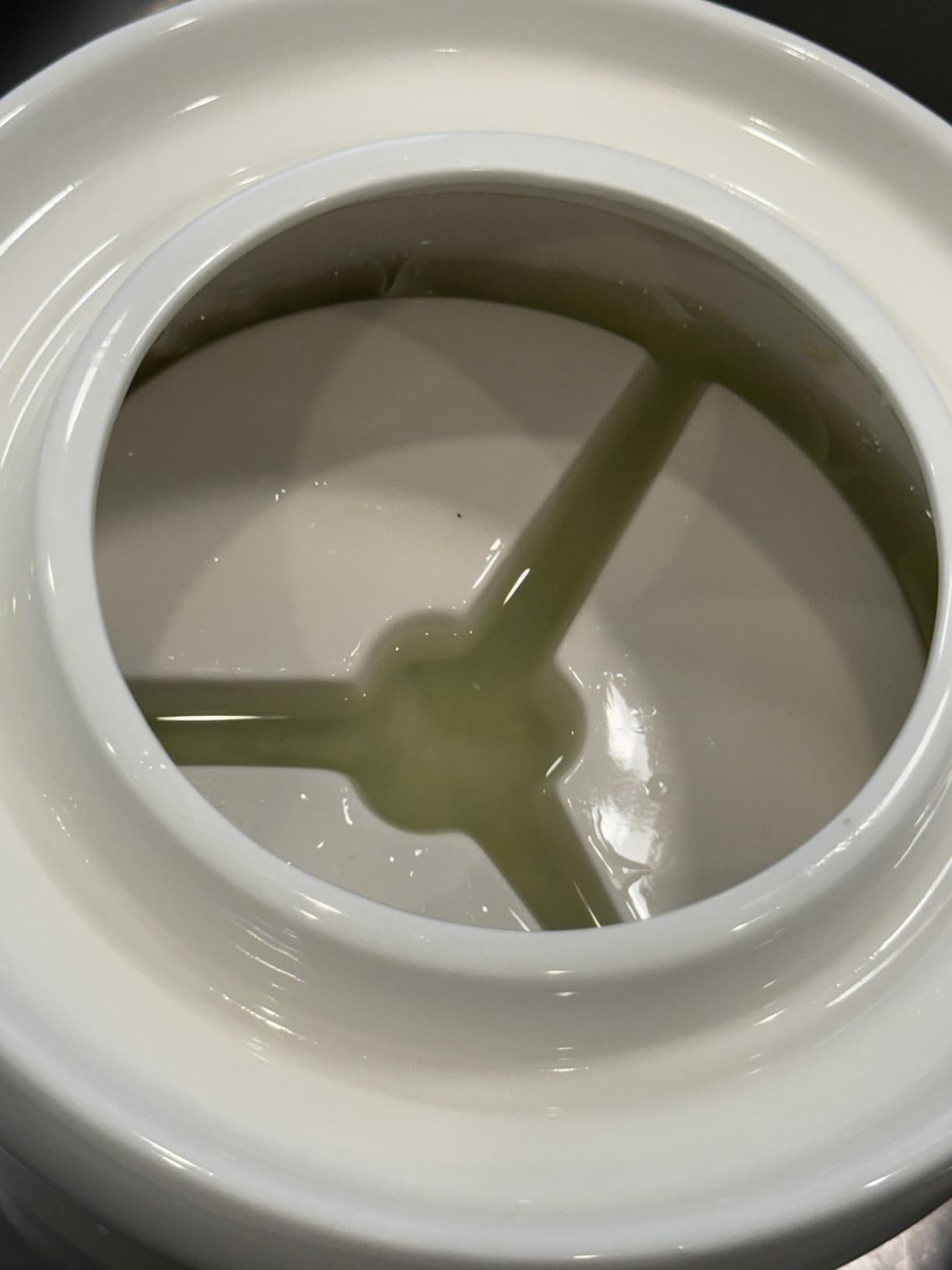
I ran a five-cabbage kimchi batch through this crock, which is the maximum recommended capacity. The wide-channel water moat held water for five days between checks, which is the longest interval of any crock in this test. The thick walls buffered a temperature swing in my kitchen when the heat kicked on overnight, keeping the fermentation environment stable.
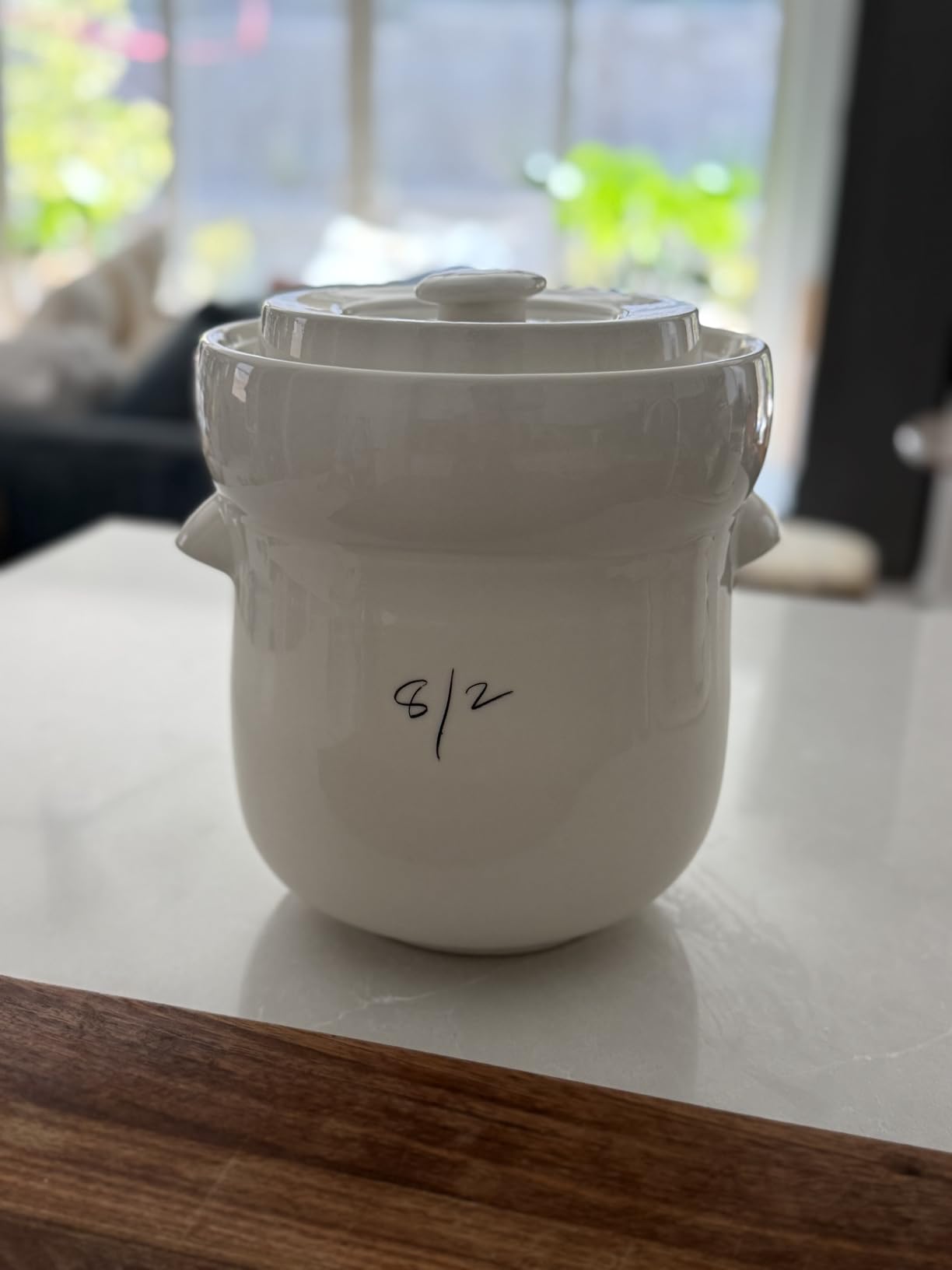
The white porcelain finish is rare in the fermentation crock market, where brown stoneware dominates. If you plan to keep your crock visible on a counter or open shelf, the Mojoberry is the only option on this list that looks like a display piece rather than kitchen equipment. The non-porous glaze will not craze or absorb odor over time.
The downsides are practical. No instructions ship with the crock, so beginners need prior fermentation knowledge or external reference material. The size makes hand-washing awkward, and once filled the crock is heavy enough that you should plan to leave it in place for the full fermentation cycle. One reviewer noted the lid mouth was slightly askew, a natural variation from handmade production.
Best Use Case for the Mojoberry 7L
This crock suits experienced fermenters who want premium materials, large capacity, and visual appeal in one package. If you ferment kimchi for a large family or as part of a small food business, the porcelain construction and 7L capacity handle serious volume with consistent results.
What to Watch Out For
Only buy this if you already know how to ferment kimchi, because the included documentation is essentially nonexistent. The weight and size mean you need a dedicated spot for the full fermentation cycle. Inspect the lid fit on arrival, since handmade porcelain can have minor shape variations.
10. Ohio Stoneware 3 Gallon Crock – The Traditional American Heirloom
Ohio Stoneware 3 Gallon Fermentation/Preserving Crock Set – Great for Pickling and Sauerkraut
3 gallon capacity
Natural stoneware with blue stripes
Lead-free glaze
Includes two weight stones
Water-seal design with rounded handles
Pros
- Beautifully made heirloom-quality stoneware
- Classic blue stripe design
- Lead-free glaze will not retain flavors
- Massive 3 gallon capacity for large batches
- Rounded handles for easier carrying
- Can double as display piece
Cons
- Heavy at 25 pounds empty
- Weights are unglazed with rough texture
- Packaging can cause lid damage in shipping
- No instructions included
- Earlier lid design flaw now corrected
The Ohio Stoneware 3 gallon crock is the closest thing on this list to a traditional American fermentation heirloom. Made in the USA from natural stoneware with the classic blue stripe decoration, this crock has the weight, presence, and build quality of a piece meant to last generations rather than years.
I tested this crock with a large sauerkraut batch rather than kimchi, because at 3 gallons the volume exceeds my household kimchi needs. The fermentation performance was excellent, with the water seal maintaining an anaerobic environment throughout the three-week ferment. The included weight stones kept cabbage fully submerged without any floating pieces.
The lead-free glaze will not retain food flavors, which means you can alternate between kimchi, sauerkraut, and pickled vegetables in the same crock without flavor bleed. The blue stripe design looks authentic on a kitchen shelf or pantry, and several reviewers noted using the crock as a decorative piece when not actively fermenting.
The downsides center on weight and packaging. At 25 pounds empty, this crock is heavy enough that you should choose its location carefully before filling it. The weighting stones are unglazed, giving them a rough texture that some users find unappealing. Shipping damage to the lid has been reported by multiple buyers, so inspect carefully on arrival.
Best Use Case for the Ohio Stoneware 3 Gallon
This crock suits serious fermenters making large seasonal batches, or anyone who wants a traditional American stoneware piece that doubles as kitchen decor. If you ferment kimchi for an extended family or as part of a community batch, the 3-gallon capacity handles significant volume.
What to Watch Out For
Inspect the lid immediately on delivery, as shipping damage is the most common complaint. The unglazed weight stones have a rough surface texture that is normal for this style but feels different from the glazed stones included with TOMO or Kenley crocks. No instructions ship with this crock.
Buying Guide: How to Choose the Best Fermentation Crock for Kimchi
Choosing the right fermentation crock for kimchi comes down to four main decisions: seal type, capacity, material, and accessories. I will break down each one based on what I learned across ten different crocks in 2026 testing.
Seal Type: Water-Sealed vs Vacuum Lid vs Open
Water-sealed crocks use a groove around the rim that you fill with water. The lid sits in this groove, creating a one-way valve where CO2 can bubble out but oxygen cannot get in. This is the traditional European design used by TOMO, Kenley, Seeutek, HFOXGO, Mojoberry, and Ohio Stoneware. The main requirement is checking and topping up the water groove every one to three days during active fermentation.
Vacuum lid containers like the E-Jen and Crazy Korean Cooking use an inner pressing plate that sits directly on the food, eliminating the air gap above the vegetables. This is closer to how Korean onggi pots work, with the food pressed under brine and minimal headspace. These require no water monitoring but are typically plastic rather than ceramic.
Open crocks are the simplest design: a plain ceramic vessel with a cloth cover. These work but expose your ferment to airborne mold and yeast. None of the crocks on this list are open-crock designs because water-sealed and vacuum options produce more consistent results with less spoilage risk.
Capacity: Matching Size to Your Kimchi Habit
For one to two people eating kimchi daily, a 2L crock like the Seeutek or Kenley 1/2 gallon handles a half-cabbage batch every two to three weeks. For a family of three to five, step up to a 3L to 5L crock like the TOMO, Kenley 1 gallon, or Crazy Korean Cooking container. For large seasonal kimjang batches, the E-Jen 3 gallon, Mojoberry 7L, or Ohio Stoneware 3 gallon accommodate multiple whole cabbages.
A practical rule from the fermentation community on Reddit is that one medium Napa cabbage yields roughly one liter of prepared kimchi. A 5L crock fits about four to five cabbages, and a 7L crock fits five to seven depending on how densely you pack.
Material: Ceramic vs Polypropylene-Clay Blend
Ceramic crocks block light, buffer temperature swings, and feel like traditional fermentation vessels. Look for lead-free and cadmium-free glaze documentation, especially for acidic kimchi brine. Porcelain, as used in the Mojoberry, is denser and less porous than standard stoneware.
Polypropylene containers mixed with clay, like the E-Jen and Crazy Korean Cooking options, replicate the slight porosity of traditional Korean onggi without the weight and fragility of ceramic. These are lighter, less likely to break if dropped, and typically dishwasher safe. The trade-off is they do not block light as effectively as opaque ceramic.
Accessories: What Should Be Included
Look for crocks that ship with weighting stones and a tamper. Weights keep vegetables submerged below the brine line, which prevents mold. A tamper packs cabbage tightly to release the natural brine needed for fermentation. Ceramic crocks from TOMO, Kenley, Seeutek, HFOXGO, Mojoberry, and Ohio Stoneware all include these accessories, while the vacuum-lid containers use the pressing plate design instead of separate weights.
Safety: Avoiding Botulism in Kimchi Fermentation
Botulism risk in kimchi fermentation is extremely low when proper salt ratios are used, but it is worth understanding the science. Clostridium botulinum cannot grow in environments below pH 4.6, and properly fermented kimchi reaches pH 4.0 or lower within three to five days. Use a 2 to 2.5 percent salt ratio by weight of vegetables, ensure vegetables stay submerged under brine throughout fermentation, and discard any batch that develops visible mold beyond a thin white kahm yeast layer on the surface.
Water-sealed and vacuum-lid crocks both support the anaerobic conditions that favor beneficial lactic acid bacteria over harmful organisms. The key is keeping oxygen out, which is why all ten crocks on this list qualify as safe fermentation vessels when used correctly.
FAQs
Can you use a fermentation crock for kimchi?
Yes, fermentation crocks work very well for kimchi. Water-sealed ceramic crocks and vacuum-lid containers both create the anaerobic environment that kimchi needs to ferment properly. Korean home cooks have used traditional onggi crocks for kimchi for centuries, and modern crocks like the TOMO, Kenley, and E-Jen replicate those conditions effectively.
What is the best fermentation crock?
The best fermentation crock depends on your needs. For premium water-sealed ceramic performance, the TOMO 3L is our top pick. For best value, the Seeutek 2L offers a complete kit at a budget price. For Korean-style fermentation and storage, the E-Jen container with vacuum lid is the most popular option with over 4000 reviews.
How to avoid botulism when fermenting kimchi?
Use a 2 to 2.5 percent salt ratio by weight of vegetables, keep all vegetables submerged under brine using weights or a pressing plate, ferment at room temperature for 3 to 5 days until pH drops below 4.6, and discard any batch with visible mold beyond a thin white kahm yeast layer. Properly fermented kimchi is too acidic for Clostridium botulinum to grow.
What is the best material for a fermentation crock?
Glazed ceramic and porcelain are the best materials for fermentation crocks because they block light, buffer temperature, and do not absorb odors or leach chemicals into acidic brine. Look for lead-free and cadmium-free glaze certification. Polypropylene mixed with natural clay is a lighter alternative that replicates the porosity of traditional Korean onggi.
Final Thoughts on the Best Fermentation Crocks for Kimchi in 2026
After testing ten different fermentation crocks across multiple kimchi batches in 2026, my top recommendation remains the TOMO 3L for fermenters who want premium ceramic performance with the most reliable water seal design I tested. The Seeutek 2L takes the best value spot for beginners who want a complete kit without overspending. And for anyone who wants authentic Korean-style results in a practical container, the E-Jen vacuum lid line has the community backing and design track record to back up its popularity.
The best fermentation crocks for kimchi share three traits: they keep oxygen out, they keep vegetables submerged under brine, and they are made from materials that will not leach into acidic brine. Every product on this list meets those criteria. Pick the size and style that matches how much kimchi you actually eat, and you will get consistent, safe, flavorful results batch after batch.