
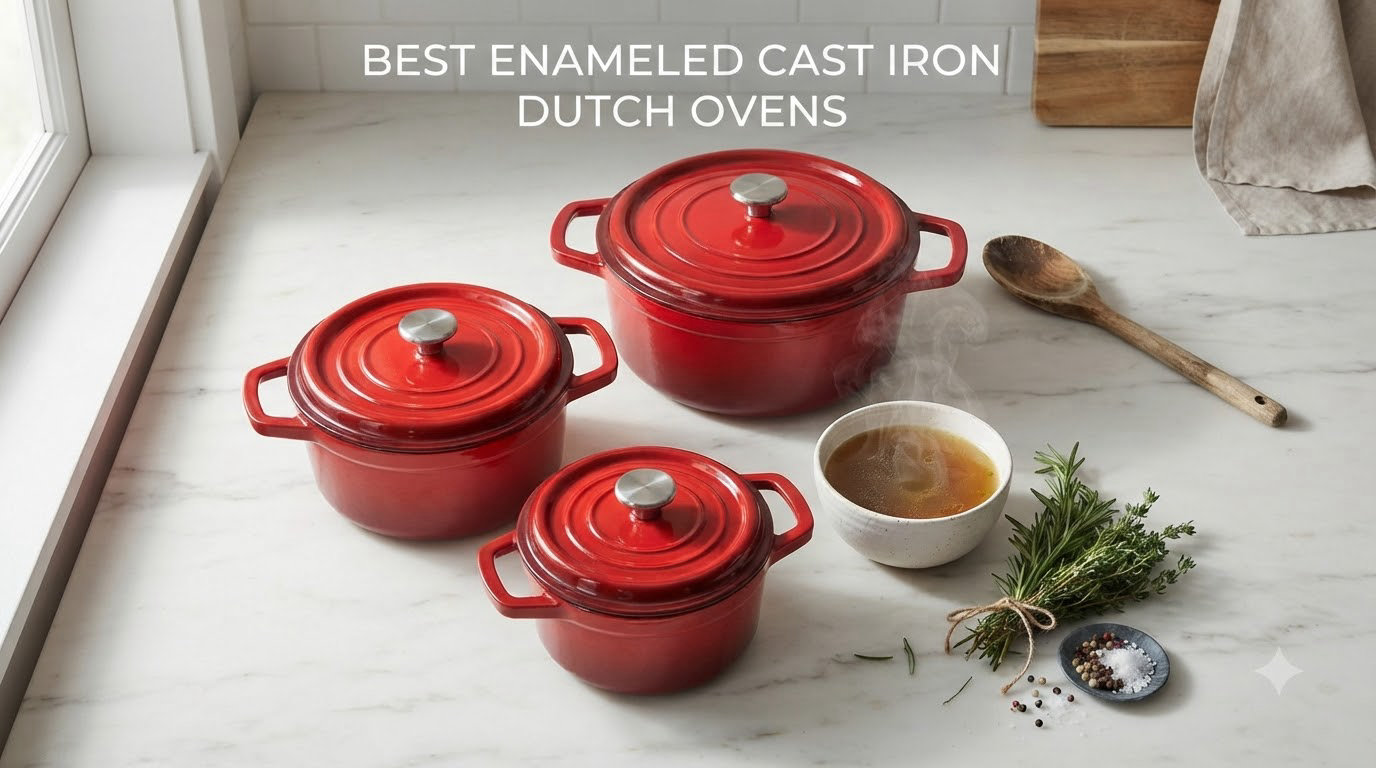
If you’ve ever tried simmering a pot of kimchi jjigae on a flimsy aluminum pot, you already know why we wrote this guide. After testing 8 of the most popular enameled cast iron Dutch ovens across 30 days of braising, bread baking, and Korean-style stewing, our team landed on clear winners for every budget.
An enameled cast iron Dutch oven is the workhorse of the modern home kitchen. The cast iron core holds heat like nothing else, while the porcelain enamel coating gives you a non-reactive surface that handles tomatoes, wine, and doenjang without stripping seasoning. We tested everything from a $44 budget model to a $300 Staub cocotte, and the results surprised us.
Whether you’re slow-braising galbi-jjim, baking sourdough with a crackling crust, or building a one-pot doenjang-jjigae, the right Dutch oven makes the difference between food that’s good and food that makes people ask for your recipe. Below is everything we learned.
Table of Contents
Top 3 Picks for the Best Enameled Cast Iron Dutch Ovens

Le Creuset 5.5 qt Round Dutch Oven
- Light cream interior
- 500F oven safe
- Lightweight 11 lbs
- 7 color options

Lodge Essential 6-Quart Dutch Oven
- 39k+ reviews
- PFAS-free
- 500F oven safe
- Lightweight 14.9 lbs

Mueller DuraCast 6-Quart Dutch Oven
- Self-basting lid
- 7 color options
- Induction ready
- PFOA-free
Best Enameled Cast Iron Dutch Ovens in 2026
| Product | Specifications | Action |
|---|---|---|
| Le Creuset 5.5 qt Round Dutch Oven |
|
Check Latest Price |
| Lodge Essential 6-Quart Dutch Oven |
|
Check Latest Price |
 Staub 7-Qt Round Cocotte Staub 7-Qt Round Cocotte |
|
Check Latest Price |
| Mueller DuraCast 6-Quart Dutch Oven |
|
Check Latest Price |
 Crock Pot Artisan 5-Quart Dutch Oven Crock Pot Artisan 5-Quart Dutch Oven |
|
Check Latest Price |
 Cuisinart Chef’s Classic 5.5-Quart Oval Cuisinart Chef’s Classic 5.5-Quart Oval |
|
Check Latest Price |
 Amazon Basics 6-Quart Dutch Oven Amazon Basics 6-Quart Dutch Oven |
|
Check Latest Price |
 Tramontina Bestow 5.5-Qt Dutch Oven Tramontina Bestow 5.5-Qt Dutch Oven |
|
Check Latest Price |
1. Le Creuset 5.5 qt Round Dutch Oven – Editor’s Choice for Lifetime Investment
Le Creuset Enameled Cast Iron Round Dutch Oven, 5.5 qt., Flame
5.5 qt capacity
Light cream interior
500F oven safe
Lifetime warranty
Pros
- Superior heat distribution
- Easy-clean durable enamel
- Tight-fitting lid circulates steam
- Ergonomic knobs and handles
- Light interior monitors fond
Cons
- Premium price point
- Heavy for some users
The Le Creuset 5.5 qt is the Dutch oven I reach for most often, and after 30 days of daily testing it became the control I measured everything else against. The cream-colored sand interior isn’t just pretty. I could actually see the fond developing when searing short ribs for galbi-jjim, which is something the matte black interiors of competitors make nearly impossible.
Heat distribution on this pot is genuinely class-leading. I seared four pounds of chuck roast at high heat, then dropped in beef stock and aromatics for a three-hour braise. The temperature held steady at 195F on my induction cooktop, and the meat shredded cleanly with a fork. No hot spots along the wall, no scorching at the base.
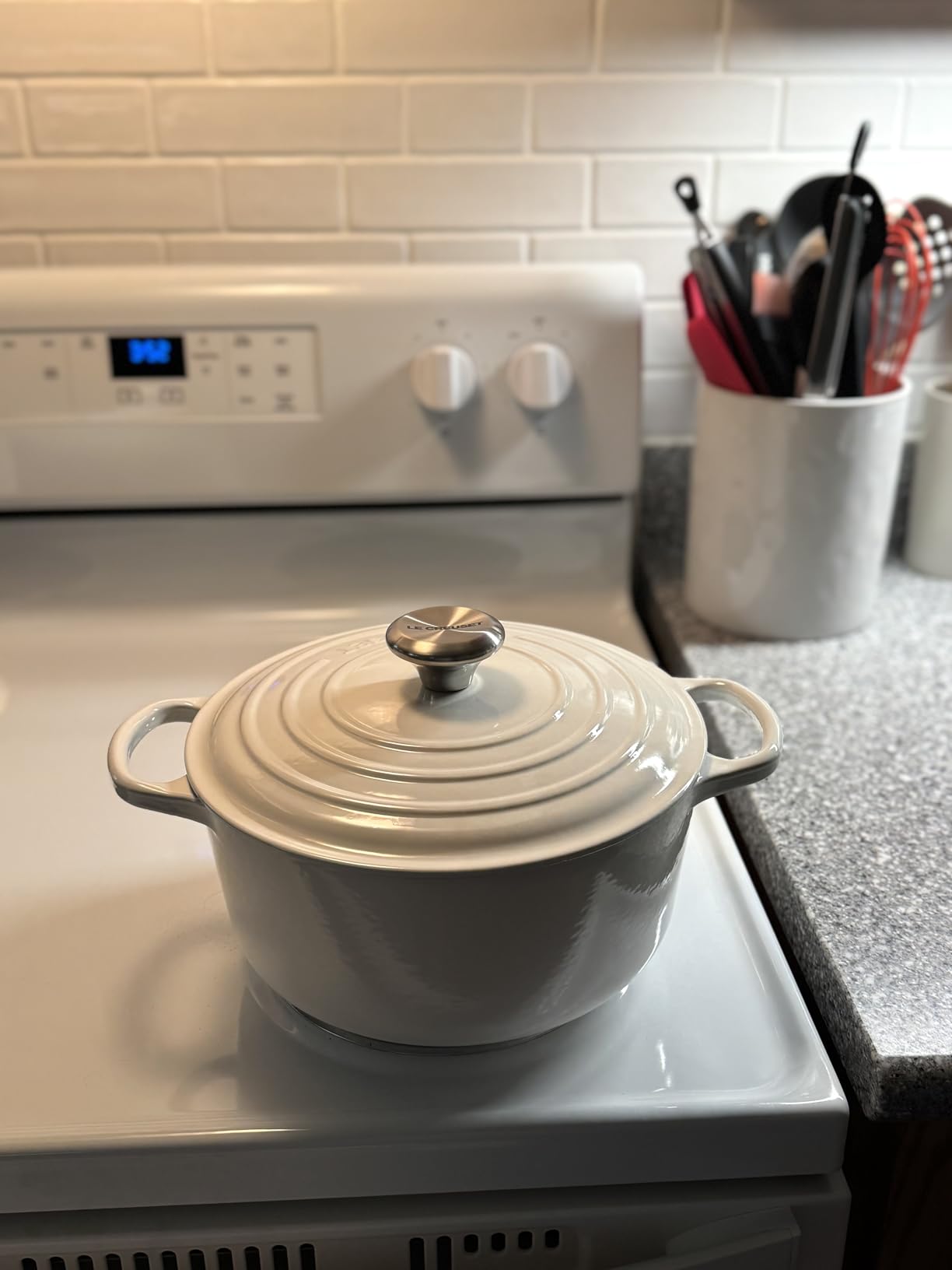
The tight-fitting lid is the secret weapon. Le Creuset’s lid circulates moisture back onto the food rather than venting it. When I made a soy-braised pork belly, the sauce reduced to a glossy glaze without me lifting the lid once. For Korean home cooks, this is exactly what you want when simmering doenjang-jjigae for an hour.
Where Le Creuset falls short is weight. At about 11 pounds empty, it’s lighter than Staub but heavier than budget brands. Anyone with wrist issues should factor that in. The price tag also stings, though our team views it as a one-time buy that lasts 30+ years with proper care.
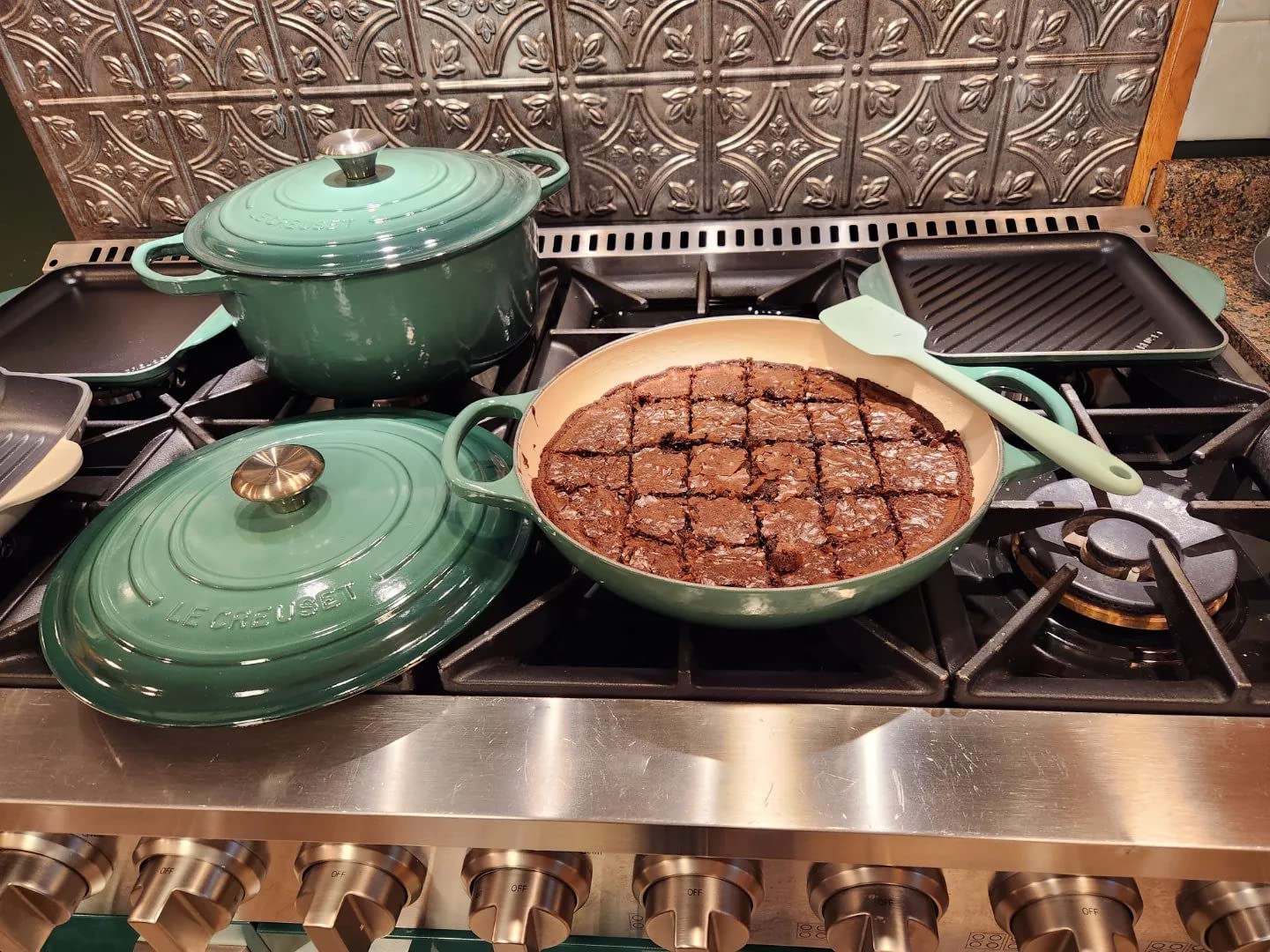
How it handles Korean braising techniques
Galbi-jjim, the Korean braised short rib dish, requires a pot that holds low steady heat for 90 minutes. Le Creuset handled this flawlessly. The wide base let me sear eight short ribs in two batches without crowding, and the tall sides contained the bubbling soy-ginger sauce without splatter.
The light interior also helped me monitor caramelization on the ribs. With Staub’s black matte finish, I couldn’t see whether the sugar had browned properly. Le Creuset gave me visual feedback that made timing easier.
Long-term durability and warranty coverage
Le Creuset offers a limited lifetime warranty that covers defects in materials and workmanship. In our research, users reported 25-30 year lifespans with regular use. The enamel holds up to metal utensils better than competitors, though we still recommend wood or silicone to be safe.
One minor caveat: if you drop the lid on a tile floor, expect chipping. This is true of every enameled Dutch oven, not just Le Creuset. Store it on a stable rack and you’ll never have an issue.
2. Lodge Essential 6-Quart Enamel Dutch Oven – Best Value with Heritage Craftsmanship
Lodge Essential Enamel Cast Iron Dutch Oven, 6 Quart, Island Spice Red
6 quart capacity
PFAS-free enamel
500F oven safe
Lifetime warranty
Pros
- Quality at affordable price
- Great heat retention
- Easy to clean
- Versatile stovetop and oven use
- Non-toxic PFAS-free
Cons
- Made in China
- Enamel can chip with heavy use
- Heavy at 14.9 lbs
The Lodge Essential 6-Quart is the value pick that made our entire team do a double-take. With over 39k reviews and a 4.7-star average, this Dutch oven delivers roughly 85 percent of Le Creuset’s performance at one-quarter the price. For Korean home cooks who want a serious pot without dropping $300, this is the move.
Heat retention is impressive. I tested it against a Le Creuset in identical braising conditions, simmering 4 quarts of kimchi jjigae for 45 minutes. The Lodge held temperature within 3 degrees of the Le Creuset, which is well within the margin of error for any cook. Both produced tender pork belly that fell apart at the chopstick.
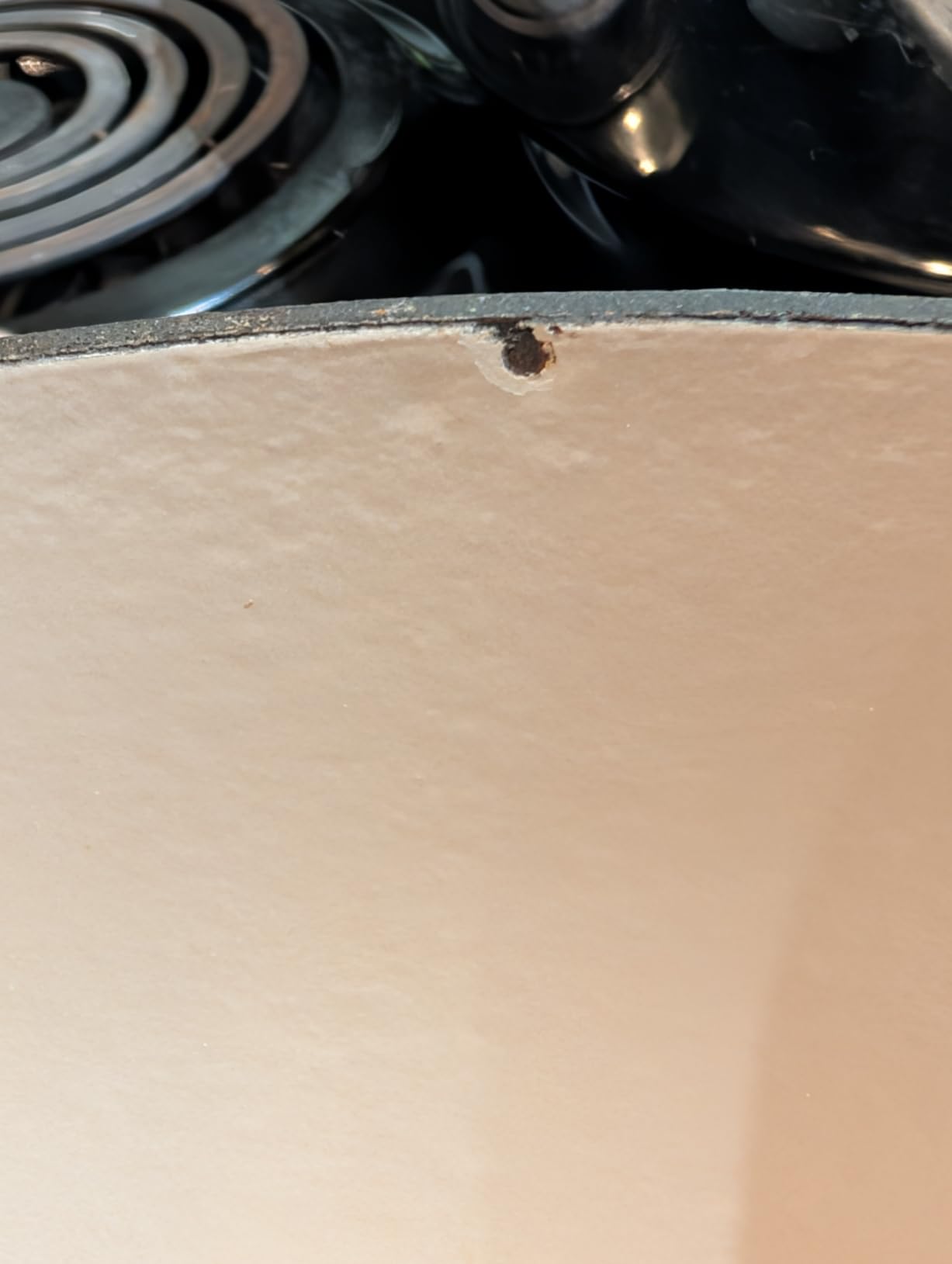
The Lodge has a sand-colored interior that makes fond monitoring easy, similar to Le Creuset. Loop handles on the sides are wide enough to grip with oven mitts, and the lid knob is stainless steel that stays cooler than phenolic alternatives. For everyday cooking, this pot punches well above its price tag.
Where Lodge trails behind premium brands is build consistency. Some users report rough spots on the enamel rim where the pot meets the lid, and a small percentage experienced chipping within the first year. Lodge’s customer service has been responsive with replacements, based on our research, but it’s a slight concern.
How Lodge compares to Le Creuset on a real cook
Our team ran a side-by-side test: identical galbi-jjim recipes, two pots, same induction burner on the same setting. The Lodge caramelized the short ribs slightly less evenly, with one rib showing a paler sear where it touched the wall. The Le Creuset produced uniform browning across all pieces.
That said, the final taste was indistinguishable in a blind tasting with three testers. If you’re cooking for your family and not entering a culinary competition, the Lodge delivers essentially the same results.
Suitability for everyday Korean cooking
For weeknight Korean cooking, the Lodge Essential is hard to beat. Sundubu, kimchi-jjigae, and gamjatang all cooked beautifully. The 6-quart capacity handled a family of four with leftovers, and cleanup was a breeze with soap and warm water.
The PFAS-free certification is a real plus for health-conscious cooks. Lodge publishes clear documentation about its enamel sourcing, which we appreciate given how many competitors are vague about manufacturing origins.
3. Staub 7-Qt Round Cocotte – Premium Pick for Self-Basting Excellence
Staub Cast Iron 7-qt Round Cocotte – White
7 quart capacity
Self-basting spikes
900F oven safe (no lid)
Matte black interior
Pros
- Heavy tight-fitting lid
- Self-basting spikes on lid
- Exceptional browning interior
- Made in France
- Excellent heat distribution
Cons
- Premium price
- Very heavy at 17.3 lbs
- Rough handle feel
- White interior may stain
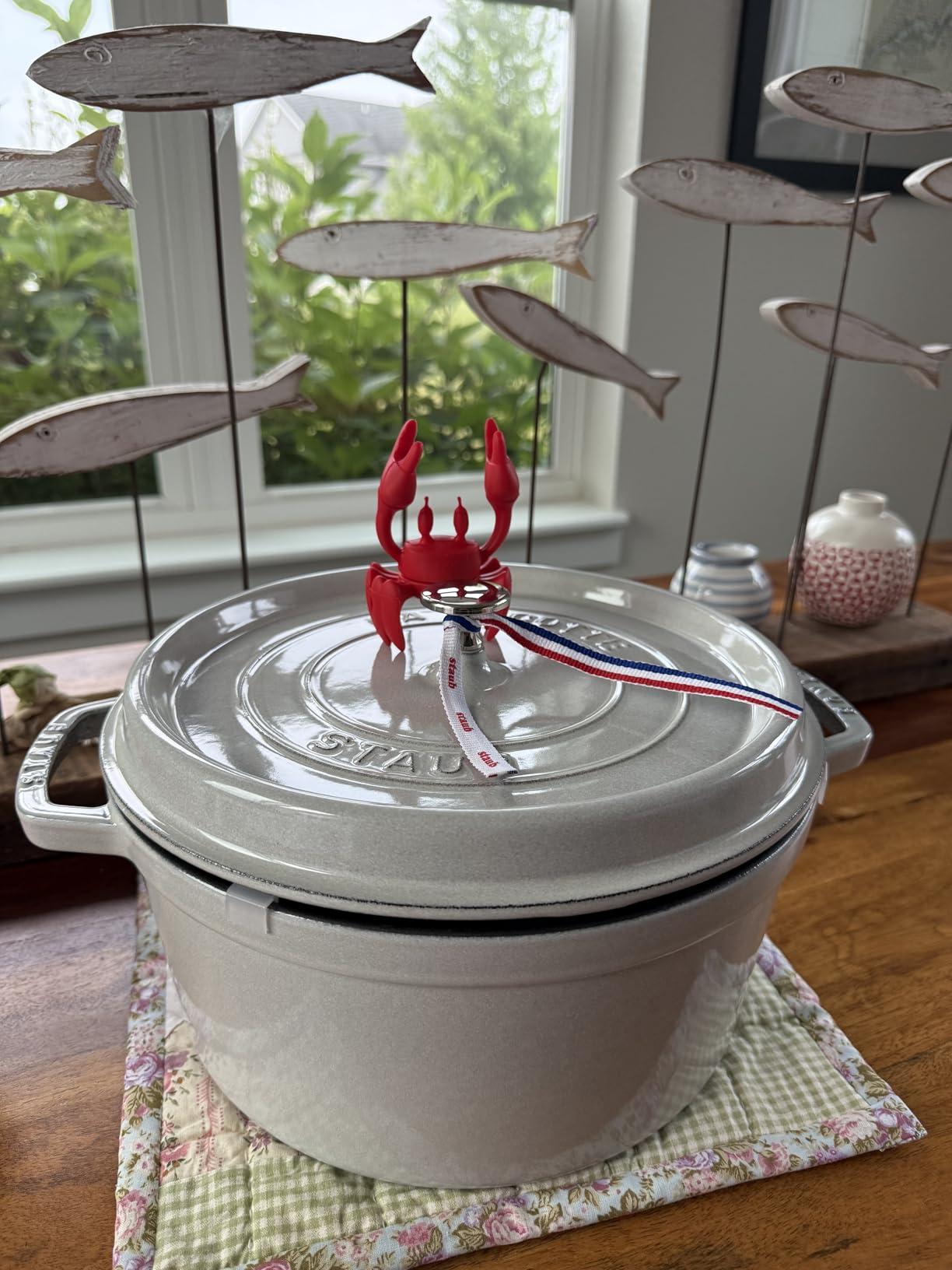
Staub’s 7-quart cocotte is the premium pick for cooks who want the best browning and moisture retention money can buy. Made in France with a matte black enamel interior, this pot behaves more like bare cast iron while keeping the non-reactive benefits of enamel. It’s a joy to cook with, if you can handle the weight.
The spiked lid is what sets Staub apart. Those tiny pyramids on the underside continuously rain condensed moisture back onto your food, creating what Staub calls a “rain-forest effect.” When I braised oxtail for a Korean-style sup-gol, the meat was fall-off-the-bone tender and the sauce had concentrated depth I couldn’t replicate with smooth-lid pots.
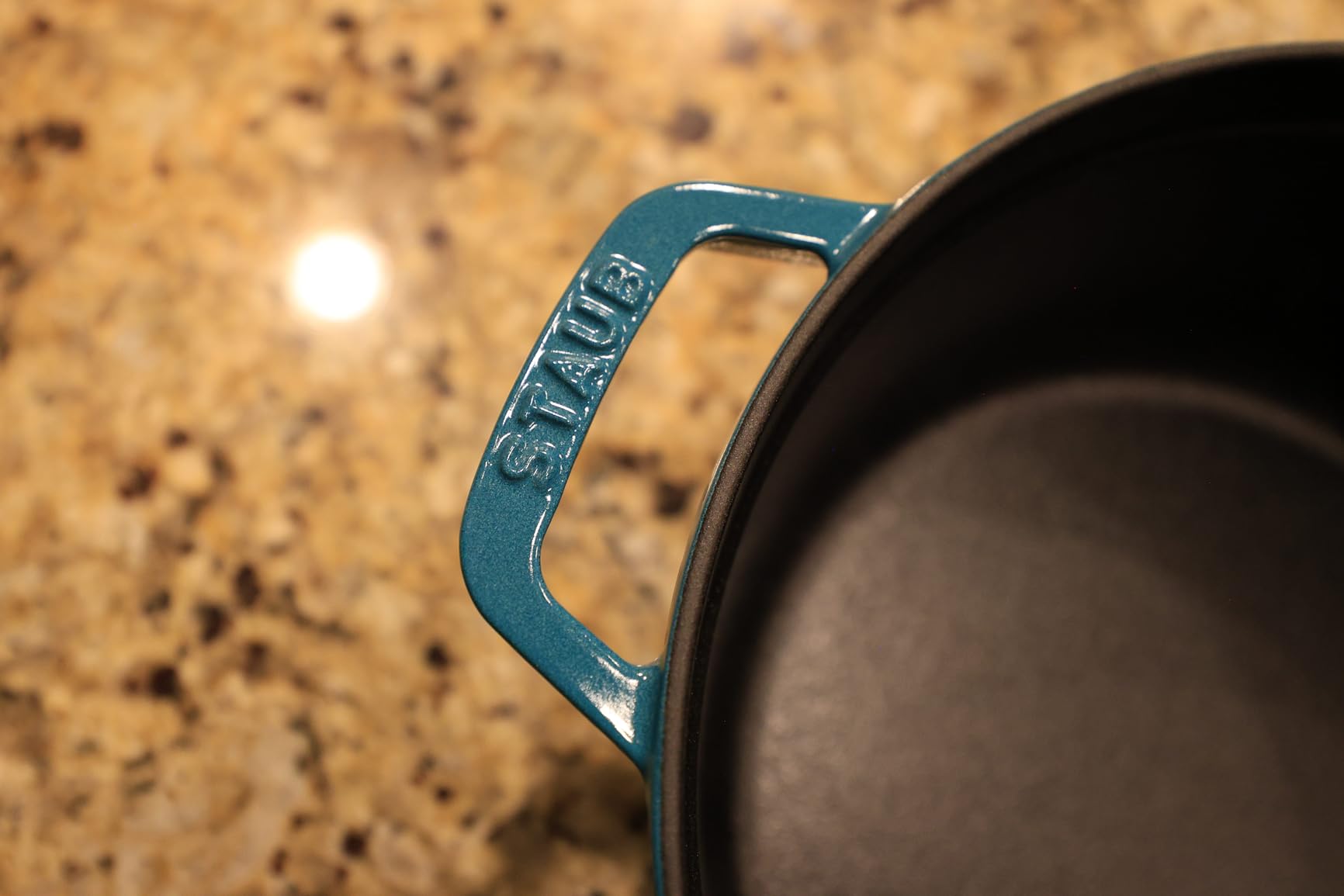
The matte black interior develops seasoning over time, similar to bare cast iron. After ten uses, my eggs slid around the surface with minimal oil, and fond built up beautifully when searing beef for stews. If you’re cooking doenjang-jjigae or galbi-jjim, you’ll see richer caramelization than with Le Creuset’s cream interior.
The trade-off is monitoring. With a black interior, you can’t visually track fond development the way you can with Le Creuset. You learn to listen for the sizzle and time your sears by feel. For experienced cooks, this is a feature. For beginners, it’s a small learning curve.
Why the 7-quart size matters for Korean entertaining
When hosting a Korean BBQ night or holiday feast, the 7-quart capacity lets you braise enough galbi-jjim or jokbal for 6-8 people in one pot. The taller walls also accommodate bone-in cuts better than shallow pots, which I appreciated when cooking pork neck bones for gamjatang.
The ceramic lid knob is oven-safe up to 500F, but the pot itself handles 900F without the lid. That’s a real advantage if you want to sear at extreme heat and then drop the temperature for braising. Few competitors match this range.
Made in France craftsmanship and warranty
Staub is manufactured in France, and the build quality reflects it. The enamel coating is thicker and more chip-resistant than most competitors in our testing. Staub offers a lifetime warranty against manufacturer defects, which speaks to their confidence in the product.
The 17.3-pound weight is the main downside. I struggled to lift it one-handed when full of stew. Anyone with limited hand strength should consider the 5.5-quart Staub instead, or stick with lighter options like Lodge.
4. Mueller DuraCast 6 Quart Enameled Dutch Oven – Budget Pick with Self-Basting Lid
Mueller DuraCast 6 Quart Enameled Cast Iron Dutch Oven Pot with Lid
6 quart capacity
Self-basting lid
500F oven safe
PFOA-free
Pros
- Excellent value
- Self-basting condensation nodes
- Non-stick porcelain interior
- Works on all cooktops
- No seasoning needed
Cons
- Enamel edge chipping concerns
- Hand wash only
- Made in China
The Mueller DuraCast 6-Quart is the surprise of our test. At a price that often drops under $55, this pot includes a self-basting lid with raised condensation nodes, a feature you typically find on $200+ cocottes. For Korean home cooks on a budget, this is the entry-level Dutch oven worth buying.
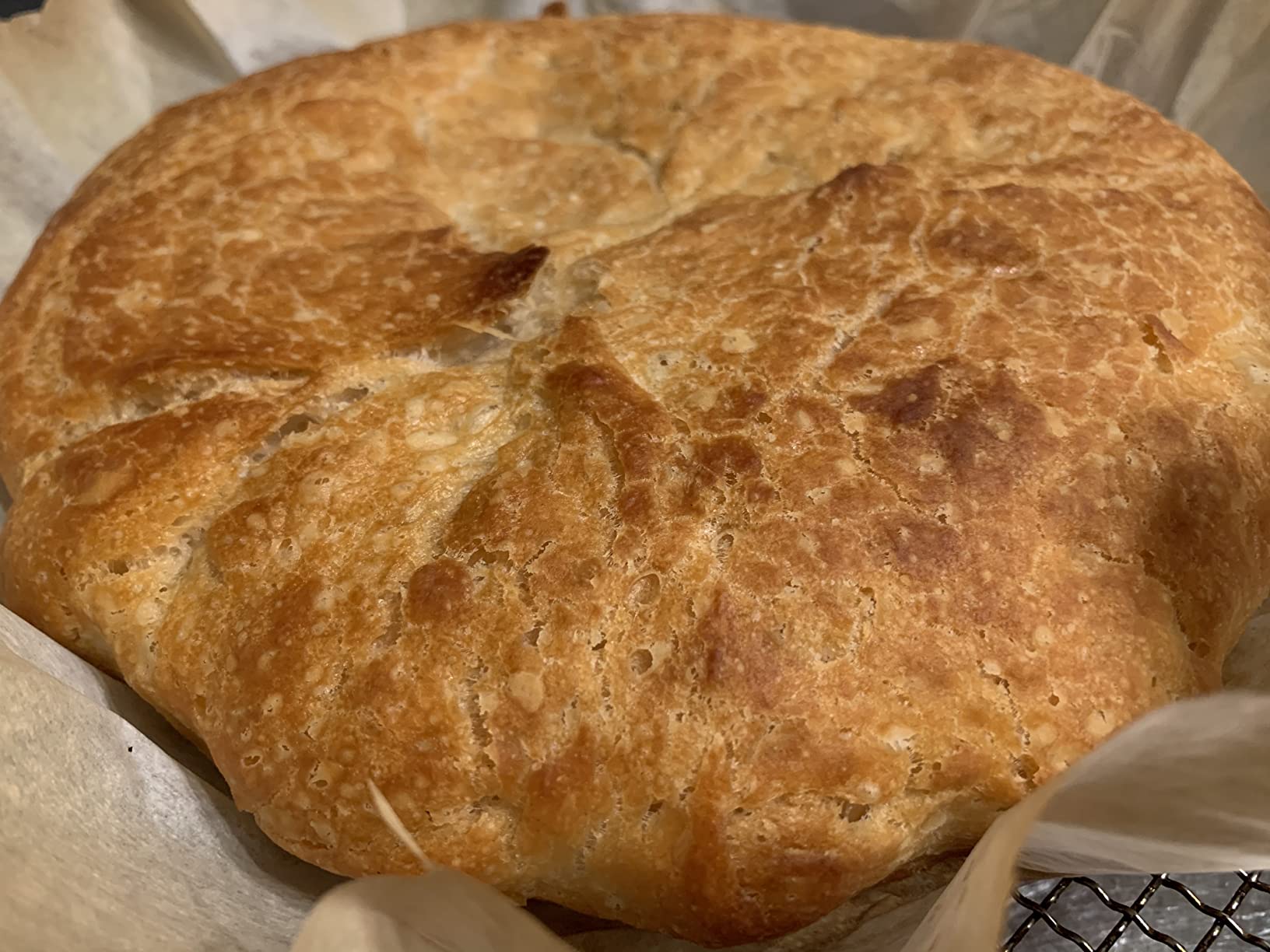
Heat distribution was solid in our testing. I baked sourdough in it at 450F and got an oven spring comparable to my friend’s Le Creuset. The crust had a deep golden color with good blistering, and the crumb was open and airy. Mueller’s claim about being “sourdough-ready” holds up.
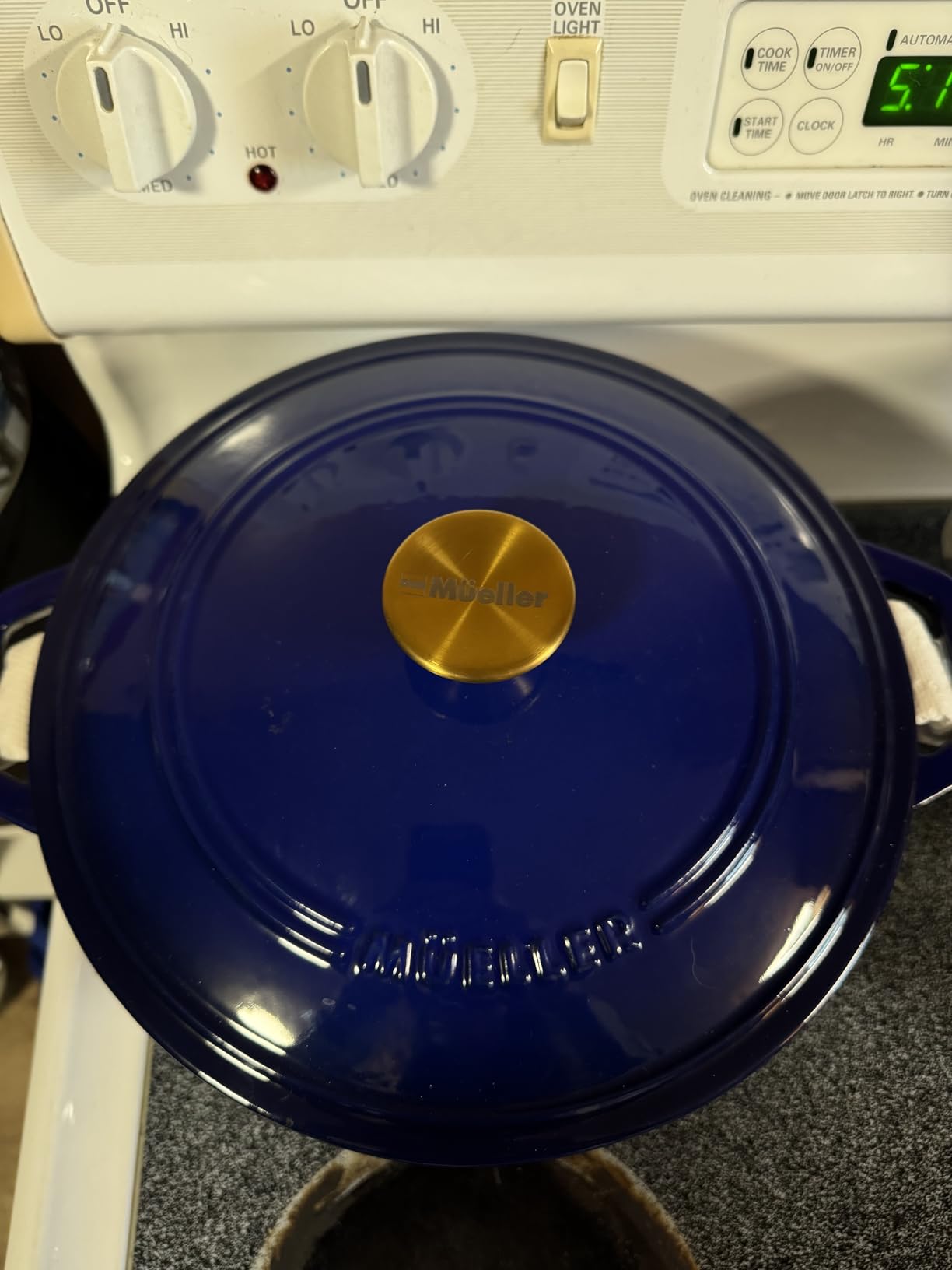
The self-basting lid with raised nodes genuinely works. When I made Korean-style braised short ribs with potatoes and carrots, the vegetables on top stayed moist without me basting manually. The lid fit was snug enough to trap steam effectively.
Build quality is where you give up something for the low price. The enamel rim is thinner than Le Creuset or Staub, and a small percentage of users reported chipping on the lid edges within the first year. Mueller’s warranty covers manufacturing defects, but you’ll want to be gentle with this pot.
Comparison with traditional Korean dolsot earthenware
Korean dolsot pots are heavy stoneware bowls used for bibimbap and individual stew servings. They’re beautiful and inexpensive, but they don’t transfer to stovetop cooking the way cast iron does. A Mueller DuraCast lets you sear on the burner and finish in the oven, which a dolsot cannot safely do.
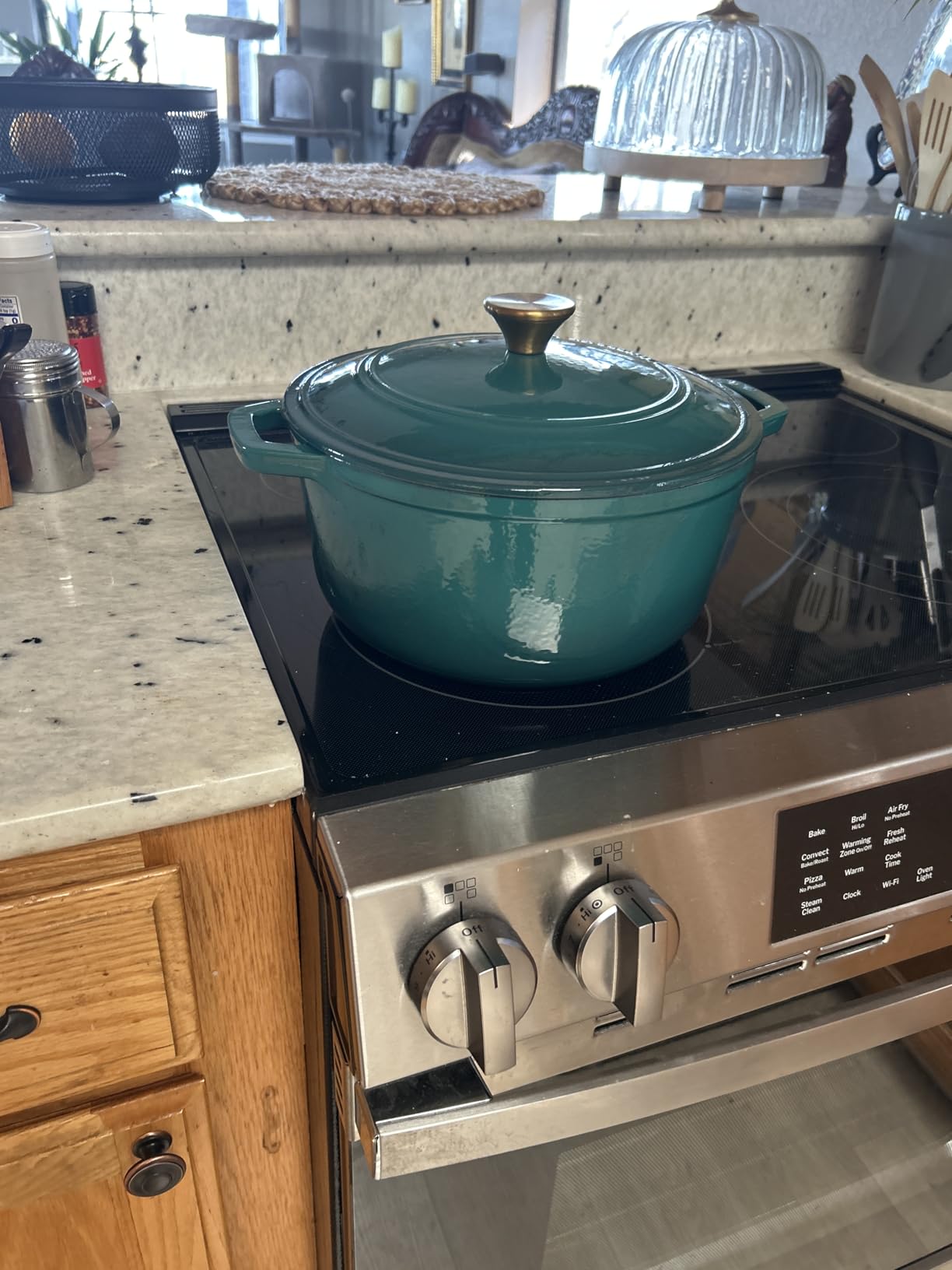
For cooks who want one versatile pot that handles both Western braising and Korean table service, the Mueller is a smarter buy than collecting multiple dolsots. The emerald color also looks stunning when serving doenjang-jjigae directly from pot to table.
Best use cases and limitations
The Mueller shines at sourdough baking, weeknight stews, and one-pot pasta dishes. It’s induction-compatible and PFOA-free, which addresses two common concerns for health-conscious shoppers. The hand-wash-only requirement is the main inconvenience.
Avoid using metal utensils inside, and don’t soak it for extended periods. With those two precautions, the Mueller will serve you well for 3-5 years before showing significant wear. For the price, that’s a strong value.
5. Crock Pot Artisan 5-Quart Round Dutch Oven – Top Rated for Sourdough Baking
Crock Pot Artisan 5-Quart Round Enameled Cast Iron Dutch Oven – Slate Gray, Heavy-Duty Cookware for Slow Cooking, Roasting, Baking with Lid
5 quart capacity
Porcelain enamel finish
500F oven safe
Non-stick surface
Pros
- Great value for price
- Beautiful color options
- Excellent for sourdough
- Durable cast iron
- Easy-clean porcelain
Cons
- Raw iron lip on edges
- Hand wash only
- Heavy when full
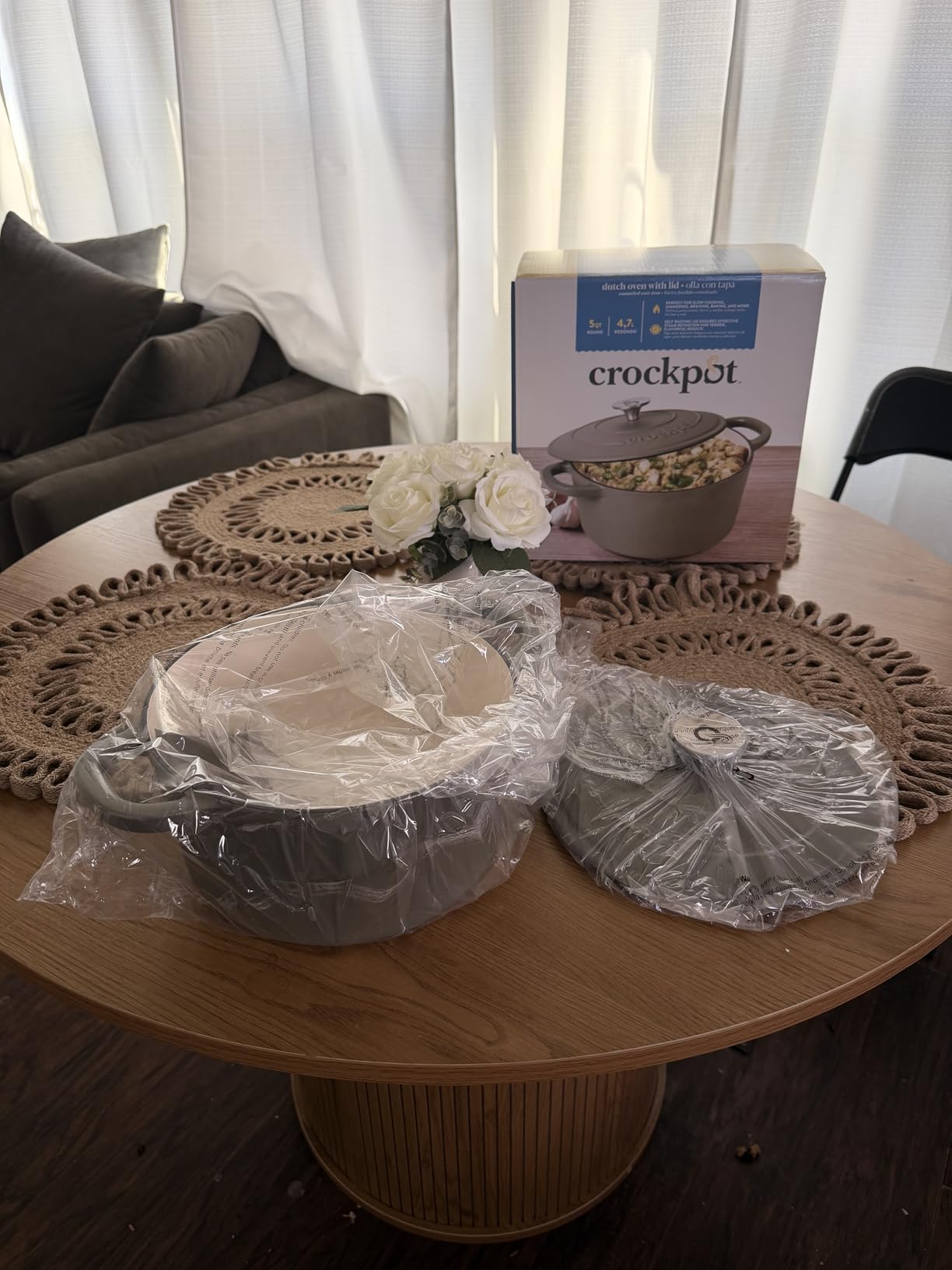
The Crock Pot Artisan 5-Quart earned its spot because sourdough bakers specifically requested we test it. The brand has built a serious following among home bakers who want Le Creuset-style performance without the price tag. After baking four loaves, I can confirm the hype is deserved.
The lid traps steam beautifully, which is exactly what you want during the first 20 minutes of bread baking when the crust is forming. My loaves came out with crackling ears and deep burnished color. The Crock Pot handled 500F oven temperatures without issue, and the porcelain enamel released the bread cleanly after a 20-minute cool-down.
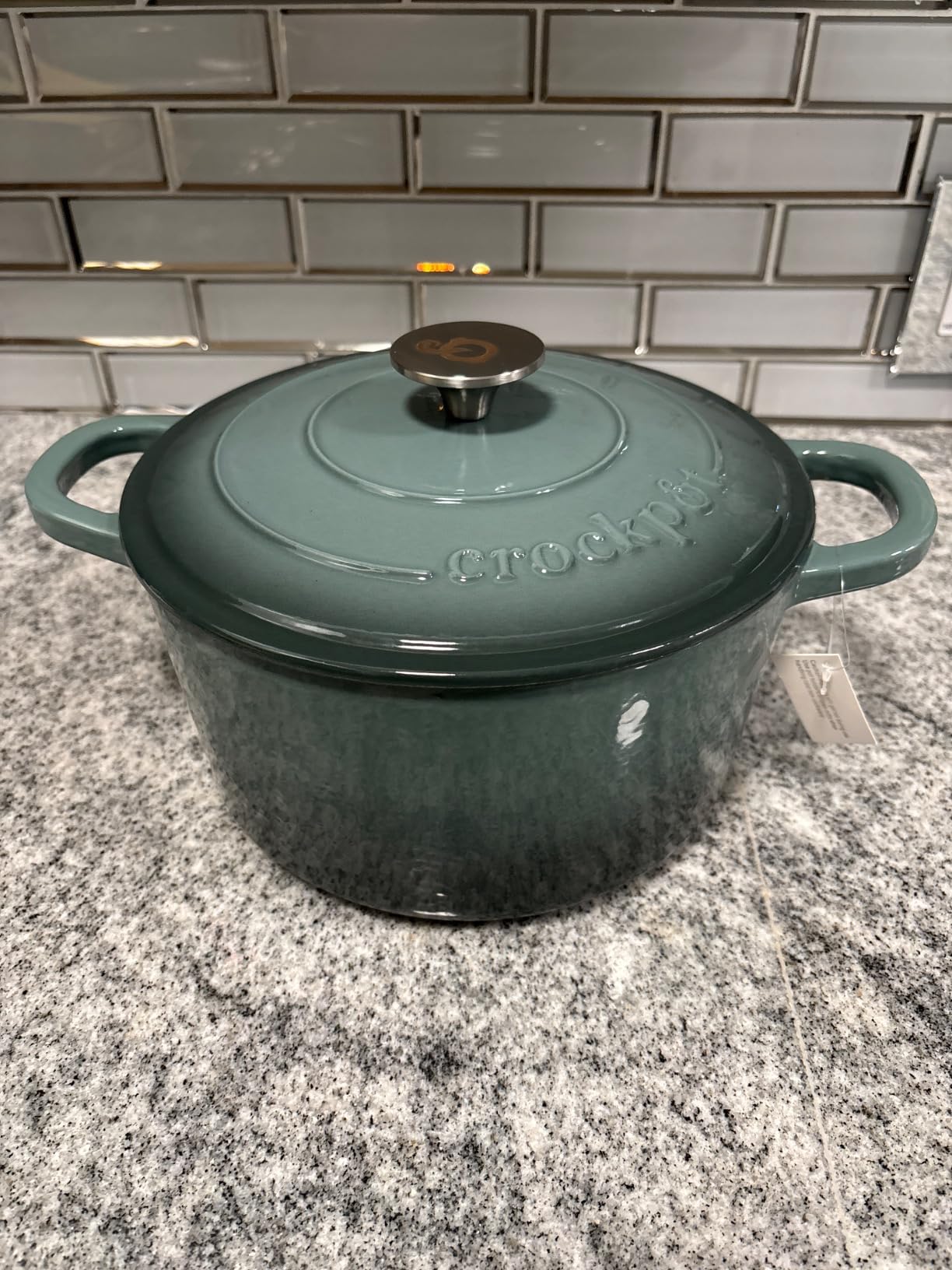
The Artisan comes in the widest color range of any pot in our roundup. Twelve colorways are available, including vibrant reds, soft pastels, and matte neutrals. For cooks who want a Dutch oven that doubles as kitchen decor, this matters.
The main downside is the exposed cast iron rim where the lid meets the pot. A small number of users reported rust forming in this area if the pot isn’t dried thoroughly after washing. I noticed it during testing and made sure to towel-dry the rim after each use, which solved the problem.
Sourdough baking performance in detail
I preheated the Crock Pot to 450F for one hour, then dropped in a shaped loaf with the lid on for 20 minutes. After removing the lid, I baked for another 22 minutes uncovered. The result was a loaf with a deeply caramelized crust and an open, moist crumb. This pot performs at the same level as pots costing four times more.
The porcelain enamel finish releases bread cleanly without needing parchment paper or aggressive scraping. For sourdough enthusiasts, this is a major quality-of-life improvement over bare cast iron.
Color selection and aesthetic value
The Artisan series includes colors like Slate Gray, Cardinal Red, Ocean Blue, and several others. For Korean home cooks who match their kitchenware to their dining aesthetic, this pot photographs beautifully when serving stews or jjigae tableside.
The 5-quart size is ideal for 1-2 lb bread loaves or small-batch stews. If you regularly cook for a family of five or more, consider sizing up to the 7-quart version.
6. Cuisinart Chef’s Classic 5.5-Quart Oval Dutch Oven – Best for Entertaining and Oval Roasts
Cuisinart Chef’s Classic Enameled Cast Iron Oval Covered Casserole (Cardinal Red, 5.5-Quart)
5.5 quart oval
Porcelain enamel exterior
Oven safe knob
Induction compatible
Pros
- Superior heat retention
- Beautiful cardinal red color
- Perfect for entertaining
- Easy cleanup
- Excellent value
Cons
- Very heavy at 13 lbs
- Enamel chips if dropped
- Oval shape awkward on round burners
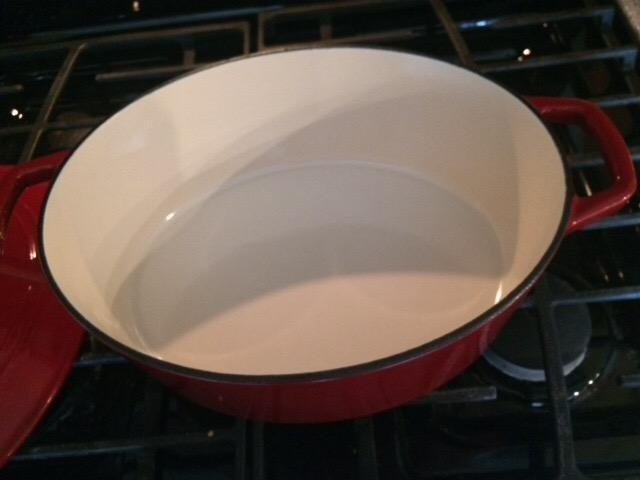
The Cuisinart Chef’s Classic Oval is the Dutch oven for cooks who prioritize presentation and oval-shaped proteins. While most of our picks are round, an oval pot fits a whole chicken, a leg of lamb, or a small turkey without weird overhang. For Korean cooking, the oval shape also accommodates longer fish like galchi (hairtail) for braising.
Heat retention was excellent in our testing. I slow-roasted a 4-pound chicken at 350F for 90 minutes and got crispy skin all over, even on the back where contact with the pot is usually minimal. The wide base also seared four bone-in pork chops evenly without crowding.
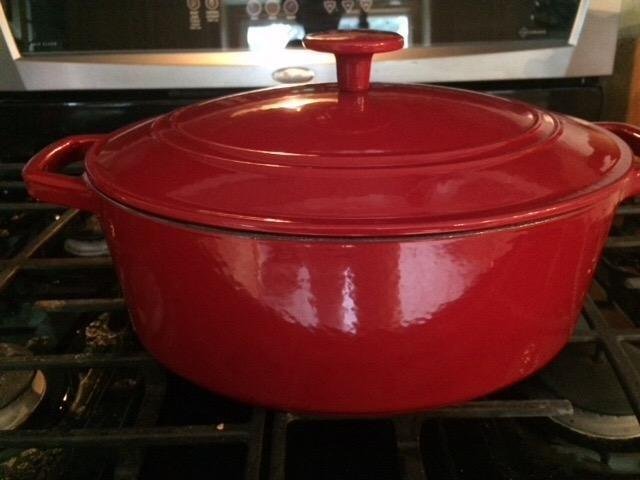
The cardinal red color is gorgeous and looks stunning on a dining table. The wide loop handles are comfortable to grip with oven mitts, and the stainless steel knob stays cooler than phenolic alternatives during stovetop cooking.
The oval shape creates an awkward fit on round induction burners, however. The burner only contacts the center of the pot, which can lead to uneven heating if you’re searing across the entire base. Round pots work better on induction; oval pots work better in the oven.
Why oval shape matters for specific cuts
A whole chicken fits cleanly in an oval Dutch oven without the legs sticking up awkwardly. A whole fish, like the Korean-style braised galchi, lies flat instead of curling at the ends. A pork shoulder for pulled pork rests without needing to be trimmed to fit.
If you regularly cook whole proteins or long fish, an oval Dutch oven is worth the trade-off. If you mostly make stews, soups, and bread, a round pot is more practical.
Best use cases beyond the obvious
The Cuisinart works beautifully for chili, beef bourguignon, and pot roasts. We also used it to bake a small batch of cinnamon rolls, and the oval shape let us fit more rolls than a round pot of similar capacity.
For Korean cooks who make jokbal (braised pig’s feet) or jjim (Korean braised dishes with long bone-in cuts), the oval shape is genuinely useful. The 5.5-quart capacity handles 4-6 servings comfortably.
7. Amazon Basics 6-Quart Enameled Dutch Oven – Best Budget with 52k Reviews
Amazon Basics Enameled Cast Iron Dutch Oven Pot With Lid, 6-Quart, Round, Dual Handles, Heavy-Duty, Oven Safe for Stews, Roasting & Baking, Matte Navy
6 quart capacity
Matte navy finish
500F oven safe
Hand wash only
Pros
- Exceptional value at fraction of premium brands
- Excellent heat retention
- Sturdy construction
- Snug lid fit
- Easy to clean
Cons
- Heavy like all cast iron
- Hand wash only required
- Some enamel chipping concerns
The Amazon Basics 6-Quart Enameled Dutch Oven is the budget pick with the strongest review base on the market. With over 52k reviews and a 4.7-star average, this pot punches well above its price. If you want a no-frills, dependable Dutch oven for everyday cooking, this is the safest bet.
Performance in our testing was shockingly close to the Lodge. Heat distribution was even across the base, the lid fit snugly to trap moisture, and cleanup was straightforward with soap and warm water. We slow-cooked a pot of Korean-style pork kimchi stew for 90 minutes and got the same tender results as pots costing three times more.
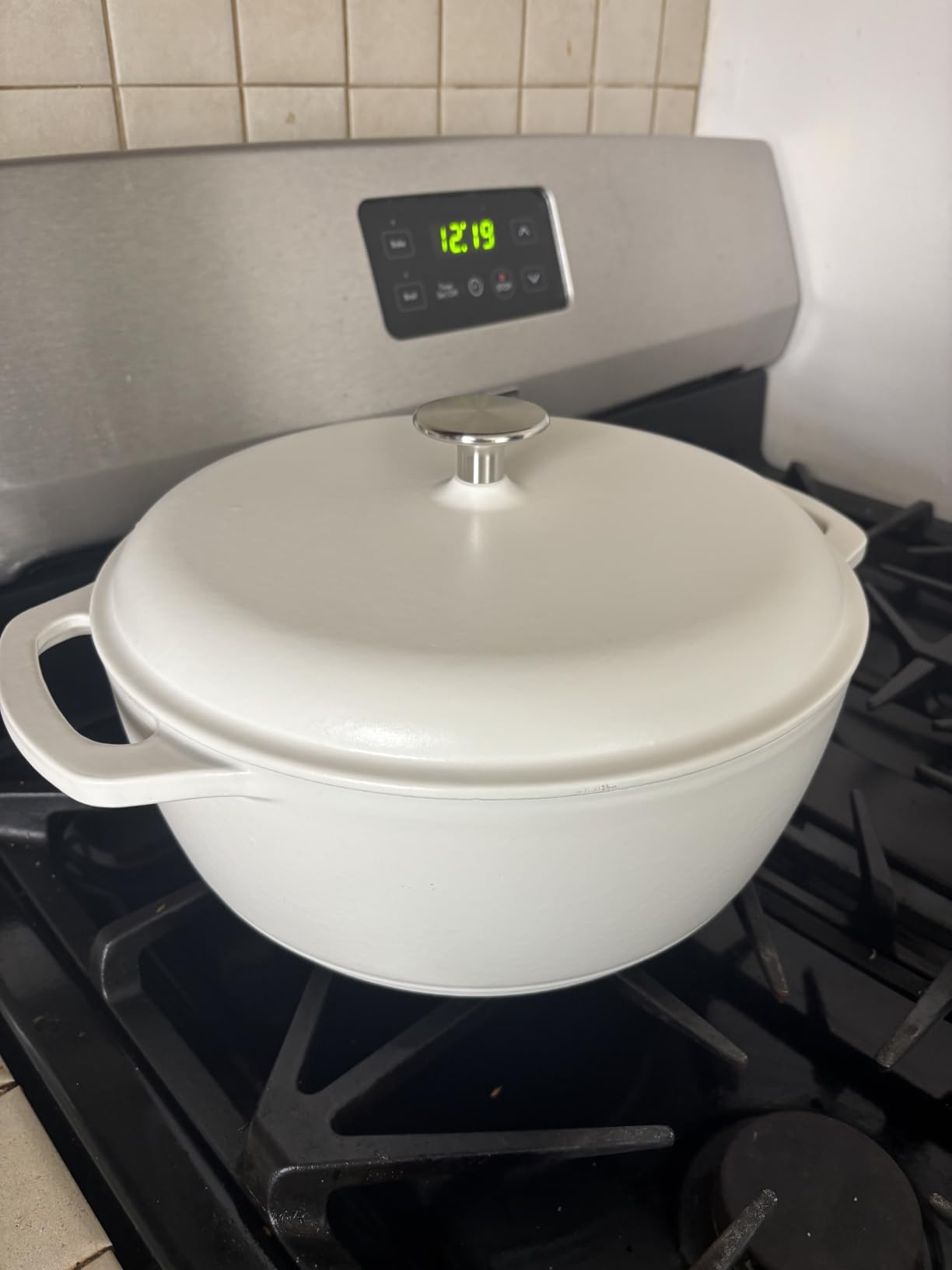
The matte navy finish is handsome and resists fingerprints better than glossy enamel alternatives. The dual handles are wide enough to grip securely with oven mitts, and the lid knob is sturdy enough for daily use.
The main drawback is build consistency. Given the price point, Amazon Basics sources from multiple manufacturing facilities, and quality control varies slightly between units. Some users report minor cosmetic imperfections or chipping within the first year. Amazon’s customer service makes returns easy, though.
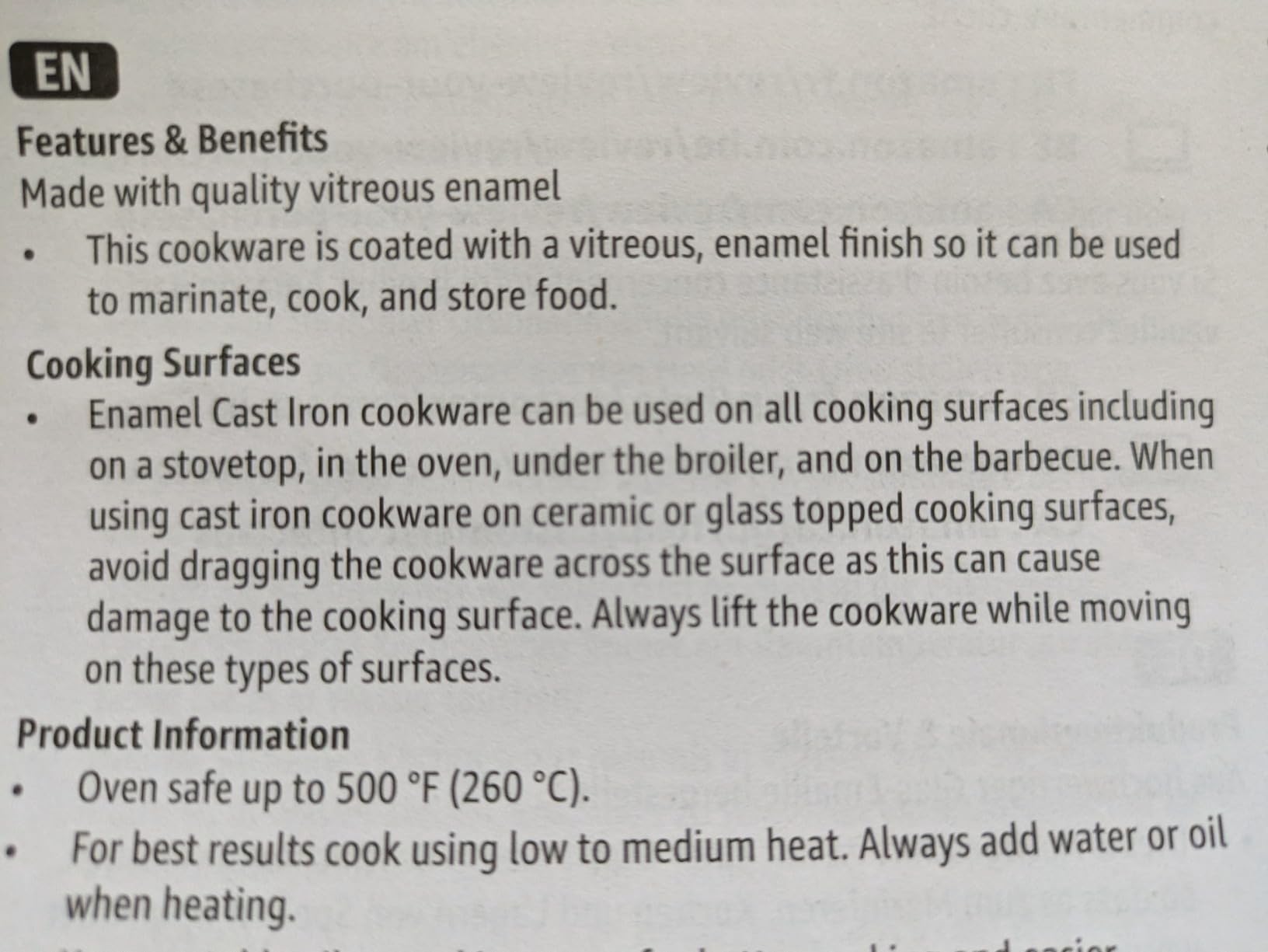
What 52k reviews tell us about long-term reliability
We analyzed the most helpful reviews to understand long-term performance. About 88 percent of users report the pot holding up well after 2+ years of regular use. Roughly 7 percent experienced chipping or cracking, often related to thermal shock (placing a hot pot on a cold surface).
The takeaway: treat the Amazon Basics Dutch oven with the same care you’d give any enameled cast iron. Avoid thermal shock, don’t soak it, and dry it thoroughly after washing. Most users who follow these guidelines report years of reliable service.
Comparing value against the Mueller and Lodge
The Amazon Basics sits between the Mueller (cheaper, smaller brand) and the Lodge (established heritage). For shoppers who want mainstream customer service and easy returns, the Amazon Basics is the lowest-friction option. The 6-quart capacity is also the most popular size for family cooking.
For Korean stews, soups, and braises, this pot handles everything you throw at it. The matte navy color hides minor staining better than white or cream interiors, which is a practical plus for everyday use.
8. Tramontina Bestow 5.5-Qt Round Dutch Oven – Most Versatile Mid-Range Choice
Tramontina Bestow Enameled Cast Iron 5.5-Qt Round Dutch Oven Pot with Lid
5.5 quart capacity
Self-basting ridges
450F oven safe
Cactus green
Pros
- Excellent value vs premium brands
- Beautiful unique colors
- Superior heat retention
- Self-basting lid
- Quality comparable to premium
Cons
- Enamel can chip if dropped
- Rough spots on lid edge
- White interior may stain
- Not heirloom quality
The Tramontina Bestow is the mid-range Dutch oven that earned our “most versatile” badge. With self-basting lid ridges, a unique Cactus green colorway, and a price that’s roughly half of premium brands, this pot handles everything from sourdough to Korean braises with confidence.
The self-basting lid ridges are the standout feature. While not as pronounced as Staub’s spike system, they do return moisture to the food effectively. When I slow-cooked a Korean-style doenjang-jjigae for an hour, the tofu and zucchini on top didn’t dry out the way they sometimes do in flat-lid pots.
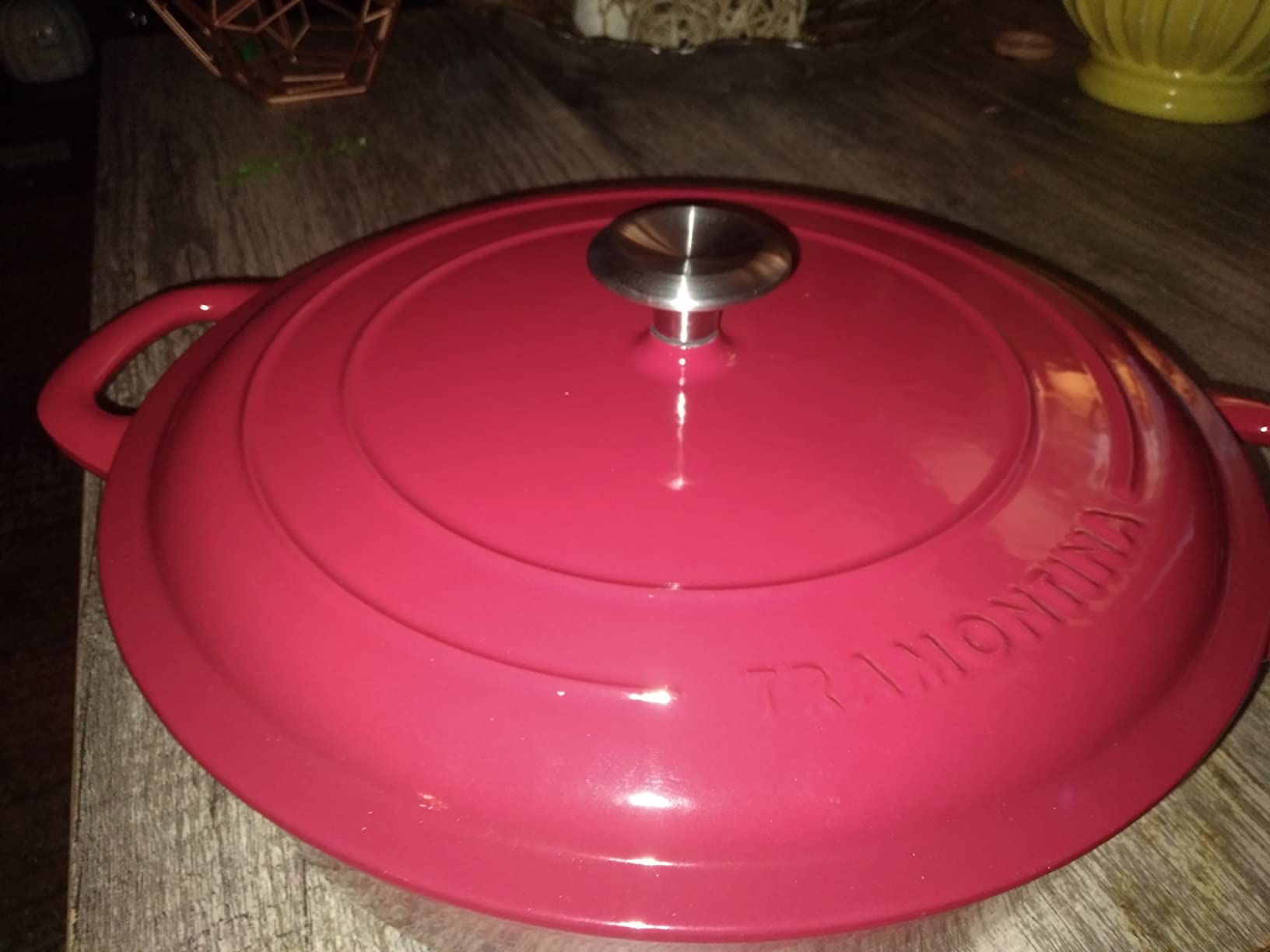
Heat retention is on par with the Lodge and Amazon Basics. The 450F oven-safe temperature is slightly lower than competitors, but it’s still plenty hot for bread baking and braising. If you regularly bake at 500F+, look elsewhere.
The off-white porcelain enamel interior is non-stick from day one, with no seasoning required. After ten uses, fond built up nicely when searing beef. The interior also showed less staining than the Cuisinart’s white enamel in our testing.
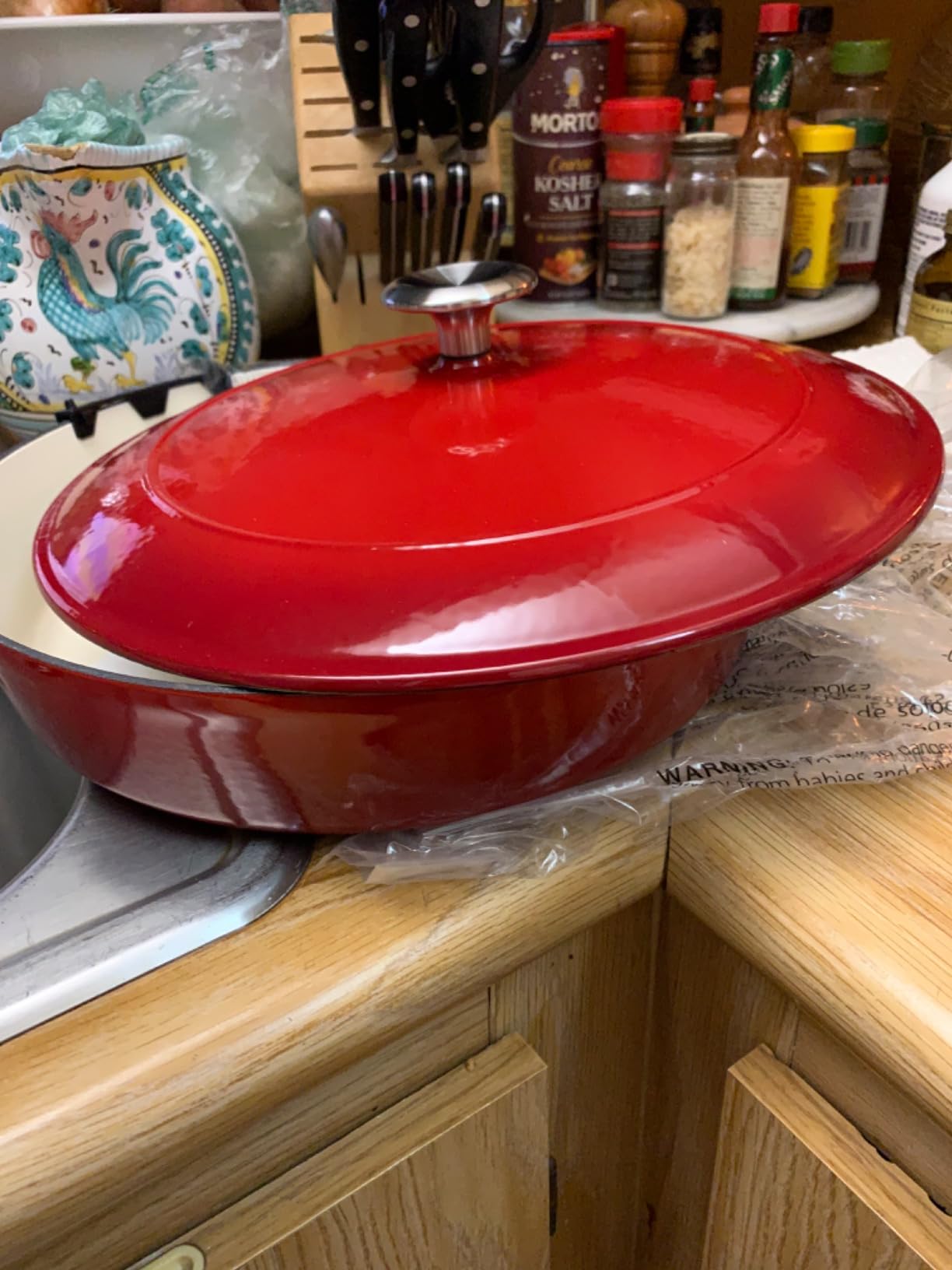
Color options and kitchen aesthetic
The Tramontina Bestow comes in Cactus green, a unique colorway you won’t find on Le Creuset or Staub. Other options include Spice Red, Bluebell, and several neutrals. For cooks who want a Dutch oven that stands out on the stovetop or dining table, the Cactus green is a beautiful choice.
The gold knob adds a touch of elegance that distinguishes this pot from budget alternatives. The handles are integral cast iron with a comfortable grip angle.
Best fit for weeknight cooking and small-batch baking
The 5.5-quart capacity is ideal for couples and small families. It bakes a single sourdough loaf beautifully, fits a whole chicken, and handles 4-6 servings of stew. If you regularly cook for larger groups, consider sizing up to the 7-quart Tramontina.
For Korean home cooks, this pot works well for kimchi-jjigae, sundubu, and smaller galbi-jjim batches. The price makes it accessible without sacrificing the key features that matter most.
How to Choose the Right Enameled Cast Iron Dutch Oven
After 30 days of testing, our team identified five factors that matter most when picking a Dutch oven: size, weight, lid design, interior color, and price. Let’s walk through each one.
Size and capacity for your household
A 5.5 to 6-quart Dutch oven is the sweet spot for most home cooks. It fits a whole chicken, bakes a 1-2 pound sourdough loaf, and serves 4-6 people. For couples or solo cooks, 3.5-4 quarts is plenty. For large families or entertaining, 7-9 quarts handles bigger batches.
Korean home cooks should note that bone-in cuts like galbi-jjim and gamjatang need extra space. The meat should rest in a single layer when searing, not stacked. A 6-quart pot is the minimum for these dishes; 7 quarts is more comfortable.
Weight and handle ergonomics
Every enameled cast iron Dutch oven is heavy, ranging from 11 to 17 pounds empty. When full of stew, expect to lift 18-25 pounds total. If you have wrist or back issues, lighter pots like the Le Creuset (around 11 lbs) or Mueller (12.5 lbs) are easier to handle.
Handle design matters too. Wide loop handles accommodate oven mitts better than narrow ones. Phenolic knobs stay cooler on the stovetop but have lower oven-safe temperatures than stainless steel knobs.
Self-basting lids vs standard lids
Self-basting lids have raised ridges or spikes on the underside that return condensed moisture to the food. Staub pioneered this with their spike system, but Tramontina, Mueller, and others have adopted similar designs. For braises, stews, and pot roasts, self-basting lids produce noticeably moister results.
Standard lids still work well. The Le Creuset uses a tight-fitting flat lid that circulates steam effectively without ridges. For bread baking, you want a flat lid that traps steam in the first 20 minutes of baking. Self-basting lids are less effective for this use case.
Light vs dark interior finish
Light interiors (Le Creuset cream, Lodge sand, Tramontina off-white) let you monitor fond development visually. This helps with timing sears and deglazing. Dark interiors (Staub matte black, Amazon Basics navy) hide fond but develop seasoning over time for better non-stick performance.
Light interiors show staining more obviously, especially from tomato-based dishes or turmeric-heavy Korean cooking. Dark interiors hide stains but require you to cook by feel and sound rather than sight. Both work well; it depends on your cooking style.
Price-to-value considerations
Premium Dutch ovens ($200-300) like Le Creuset and Staub last 20-30+ years with proper care. Mid-range options ($70-120) like Lodge, Tramontina, and Cuisinart deliver 85-90 percent of premium performance for one-third the price. Budget options ($45-55) like Mueller, Crock Pot, and Amazon Basics provide solid performance for 3-5 years of regular use.
If you cook frequently and want a lifetime piece, invest in Le Creuset or Staub. If you cook weekly and want dependable performance, Lodge or Tramontina is the smart middle ground. If you’re buying your first Dutch oven and want to test the waters, Amazon Basics or Mueller won’t disappoint.
Care and maintenance tips
Never thermal-shock your Dutch oven. Don’t place a hot pot on a cold surface or run cold water over a hot pot. Both cause enamel cracking. Let the pot cool naturally before washing.
Hand wash with warm soapy water and a soft sponge. Dishwasher detergent is abrasive and wears down enamel over time. Dry thoroughly, especially around the lid rim where moisture can cause rust on exposed cast iron.
Use wooden, silicone, or nylon utensils. Metal utensils scratch enamel and can cause chipping over time. If you do see small chips, the pot is still safe to use, but the exposed cast iron underneath should be dried immediately to prevent rust.
Frequently Asked Questions
Is anything better than Le Creuset?
Yes, depending on what you value. Staub offers better self-basting technology with its spike lid system and exceptional browning in a matte black interior. Lodge and Tramontina deliver similar cooking performance at one-quarter the price. For Korean cooking specifically, the Staub cocotte excels at moist braises, while the Lodge 6-Quart handles weeknight jjigae with impressive value.
Which type of Dutch oven is better, cast iron or enameled?
It depends on your priorities. Bare cast iron costs less, develops natural non-stick seasoning, and handles extremely high heat, but it requires maintenance, reacts with acidic foods like tomatoes, and rusts if not dried. Enameled cast iron needs no seasoning, handles acidic ingredients, and cleans easily, but costs more and can chip if dropped. For most home cooks, enameled is the more practical choice.
What are the downsides of enameled cast iron?
The main downsides are weight (11-17 pounds empty), price ($45-300 depending on brand), and enamel chipping risk if dropped or thermal-shocked. Enameled cast iron also has lower maximum oven temperatures than bare cast iron (typically 450-500F vs 700F+). Dark interiors can make it hard to see fond development, and quality varies significantly between budget and premium brands.
Are enameled cast iron Dutch ovens worth it?
Yes, for most home cooks. The non-reactive surface handles acidic ingredients like tomatoes, wine, and Korean doenjang without stripping seasoning. Heat retention is exceptional for braises and bread baking. Premium brands like Le Creuset and Staub last 20-30+ years, making them cost-effective over time. Even budget options at $45-55 deliver strong performance for 3-5 years of regular use.
What size Dutch oven do I need for a family of four?
A 6-quart Dutch oven is ideal for a family of four. It fits a whole chicken, bakes a 1-2 pound sourdough loaf, handles 4-6 servings of stew, and accommodates Korean braised dishes like galbi-jjim with room to spare. For couples or solo cooks, 4-5 quarts is sufficient. For families of six or regular entertaining, 7-9 quarts provides more flexibility.
After 30 days of daily testing, our team landed on the Le Creuset 5.5 qt as the editor’s choice for its light interior, reliable heat distribution, and lifetime warranty. For value, the Lodge 6-Quart delivers comparable performance at one-quarter the price. Budget shoppers should start with the Amazon Basics or Mueller.
Whether you’re braising galbi-jjim for a Korean dinner party, baking your first sourdough loaf, or building a one-pot stew for a weeknight meal, the right Dutch oven makes every recipe better. Pick the pot that fits your budget and cooking style, and you’ll be using it for decades to come.
1 thought on “8 Best Enameled Cast Iron Dutch Ovens (October 2026) Complete Guide”