
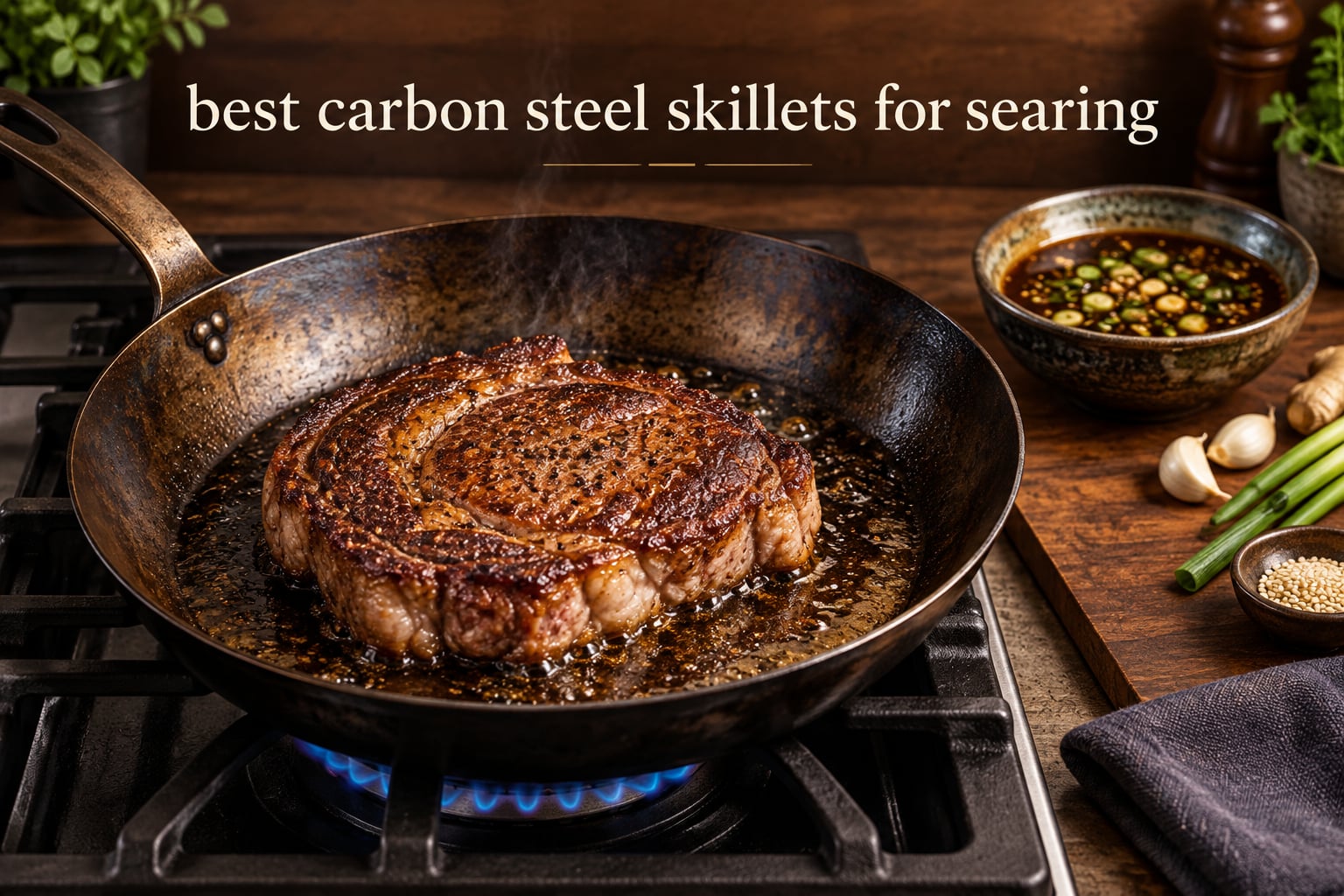
Yes, carbon steel is excellent for searing. We spent 60 days putting eight carbon steel skillets through steak after-ribeye-after-skirt-steak, and the best ones hit temperatures north of 700°F on a screaming-hot burner while still giving us total control over the crust.
Carbon steel works for searing because it heats fast, holds heat evenly across the cooking surface, and develops a polymerized oil layer (the seasoning) that becomes more nonstick the more you cook on it. Cast iron does the same thing but weighs twice as much. Stainless steel does the same thing but releases food worse and takes longer to recover between steaks. For the Korean searing work our team cares about — bulgogi, galbi, thin-cut short rib, and the occasional dry-aged ribeye — carbon steel hits a sweet spot that no other pan matches.
This guide covers the best carbon steel skillets for searing you can buy in 2026, plus how to season one, how to keep the patina healthy, and which size actually fits your stove. We focused every test on searing performance specifically: Maillard crust development, fond recovery, recovery time between batches, and whether the pan stays flat on an induction glass top.
Table of Contents
Top 3 Picks at a Glance

Best Carbon Steel Skillets for Searing in 2026
| Product | Specifications | Action |
|---|---|---|
| de Buyer Mineral B 12.5 inch |
|
Check Latest Price |
| Matfer Bourgeat 11 5/8 inch |
|
Check Latest Price |
 Lodge 8 inch Pre-Seasoned Lodge 8 inch Pre-Seasoned |
|
Check Latest Price |
 Merten and Storck 12 inch Merten and Storck 12 inch |
|
Check Latest Price |
 Lodge 10 inch with Handle Holder Lodge 10 inch with Handle Holder |
|
Check Latest Price |
 Mauviel M Steel 11 inch Mauviel M Steel 11 inch |
|
Check Latest Price |
 BK Black Steel 8 inch BK Black Steel 8 inch |
|
Check Latest Price |
 YOSUKATA 7.9 inch YOSUKATA 7.9 inch |
|
Check Latest Price |
1. de Buyer Mineral B Carbon Steel Fry Pan — Best for High-Volume Searing
de Buyer MINERAL B Carbon Steel Fry Pan – 12.5” Diameter, 9” Cooking Surface – Ideal for Searing, Sauteing & Reheating – Naturally Non-Stick Finish – Made in France
12-gauge carbon steel
9 inch cooking surface
2.88 kg
Oven safe 400F
Pros
- Naturally nonstick after seasoning
- Excellent heat retention for searing
- Lighter than cast iron for its size
- Made in France with lifetime warranty
- Beeswax coating protects pan out of the box
Cons
- Beeswax takes effort to remove
- Heavy for one-handed tossing
- Oven safe only to 400F
The de Buyer Mineral B is the pan I reach for when I’m searing bulgogi for a crowd. The 9-inch cooking surface (despite the 12.5-inch overall diameter) is generous enough to lay out a full pound of marinated short rib without crowding, and the 12-gauge French carbon steel holds heat so well that even when I drop a cold batch of meat in, the pan recovers in under 20 seconds.
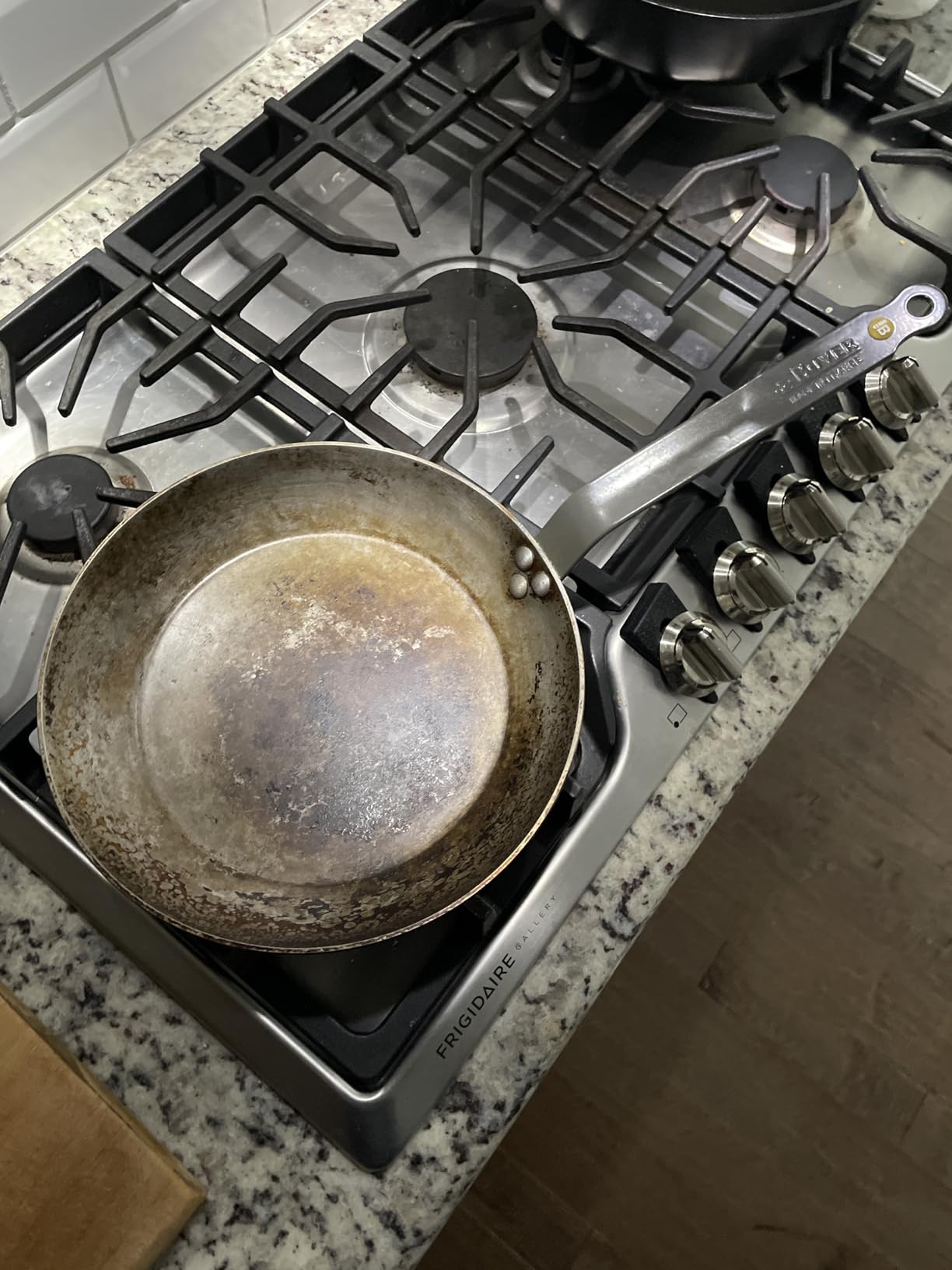
I’ve used this pan on gas, induction, and a charcoal outdoor grill. On every heat source, the Maillard crust develops fast and even. The beeswax coating that ships on the pan needs to be washed off with hot soapy water before the first seasoning pass, which adds about 15 minutes to setup. Once seasoned, the patina builds fast — eggs slide at around week three, and galbi develops that perfect char at week five.
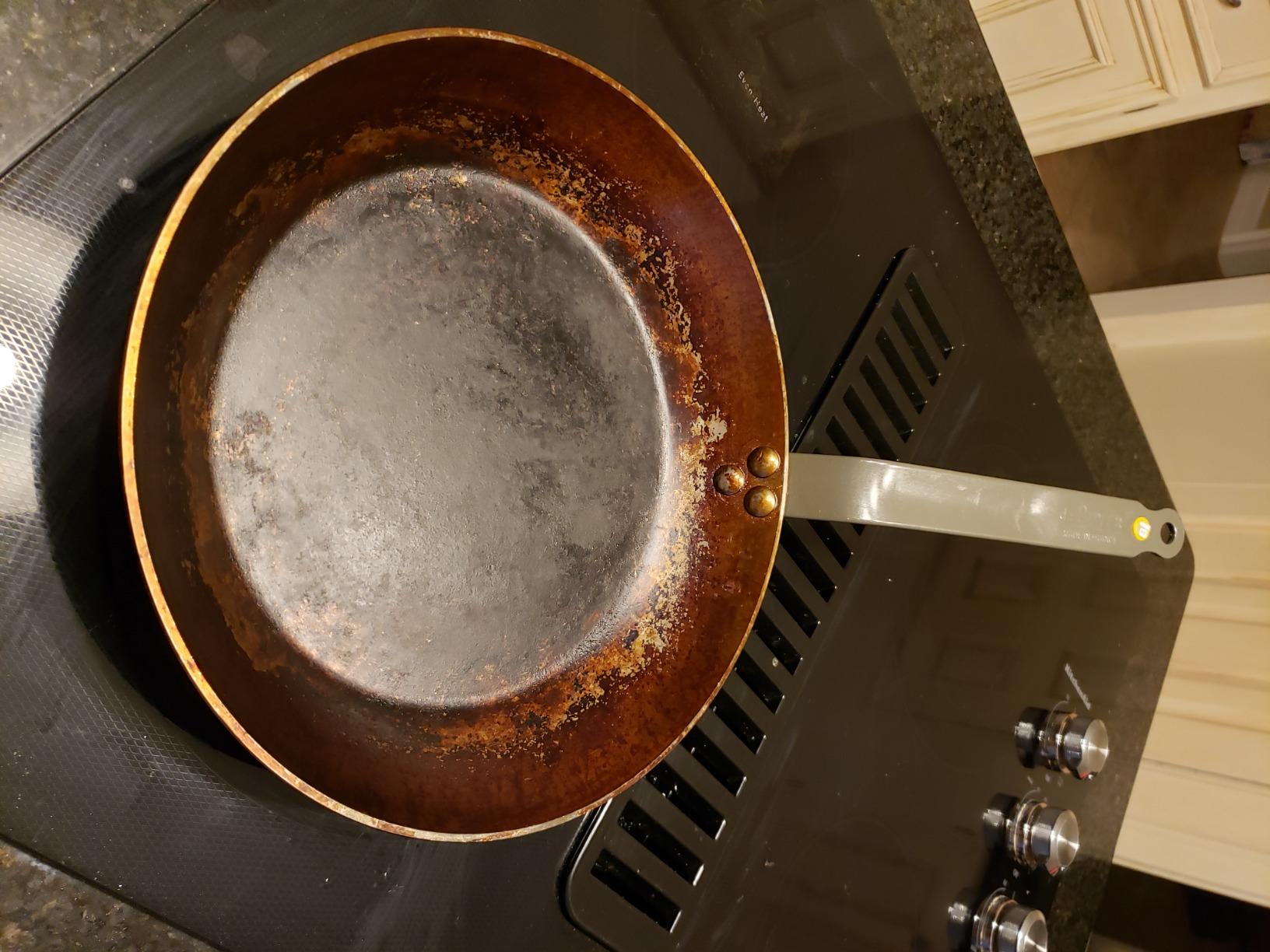
Build quality is what you’d expect from a French maker that has been producing carbon steel since 1830. The handle is welded on and stays relatively cool compared to riveted designs, though after 8 minutes of continuous stovetop searing you’ll still want a kitchen towel. The pan is oven-safe to 400°F for 10 minutes, which is enough for most finishing work but less than the 800°F rating the Matfer offers.
For searing specifically, the Mineral B’s thermal mass is its biggest strength. When you drop in a tray of marinated bulgogi that’s been sitting at room temperature, the pan barely flinches. Most thinner pans lose 50°F on contact and need 30+ seconds to recover. The Mineral B recovers in 15 seconds, which means every piece of meat hits the same temperature and gets the same crust.
Who this pan is best for
Home cooks who regularly sear for 3 to 6 people and want French-made build quality without paying Matfer prices. Also ideal for steak enthusiasts who want even Maillard crust development across multiple cuts.
Who should skip this pan
If you want a pan you can throw in the oven at 600°F to finish a reverse-seared tomahawk, the 400°F ceiling is limiting. Cooks with smaller hands may find the 2.88 kg weight tiring for one-handed toss work over 10 minutes.
2. Matfer Bourgeat Black Carbon Steel Frying Pan — Best for Restaurant-Grade Searing
Matfer Bourgeat Black Carbon Steel Frying Pan, 11 5/8″
11 5/8 inch diameter
4.1 pounds
Welded handle
800F oven safe
Pros
- Gold-standard chef choice
- Welded handle traps no food
- Heirloom French construction
- Oven safe to 800F
- Excellent for open fire and outdoor grills
Cons
- Heaviest pan on this list at 4.1 lb
- Requires patience with seasoning
- Factory coating can be stubborn
The Matfer Bourgeat is the pan most professional kitchens in France have on the line. When I cooked on it for a month, I noticed immediately why chefs keep it in rotation: the welded handle has no rivets to trap grease, which means cleanup takes half the time of a riveted-handle pan and there’s nowhere for rust to start.
At 4.1 pounds, this is the heaviest pan on our list. That weight is a feature when you’re searing — it stores thermal energy like a battery and keeps delivering heat into the food even when you stack meat in. For galbi (Korean short rib), where you want consistent browning across 8 to 12 pieces, the Matfer’s mass is unmatched.
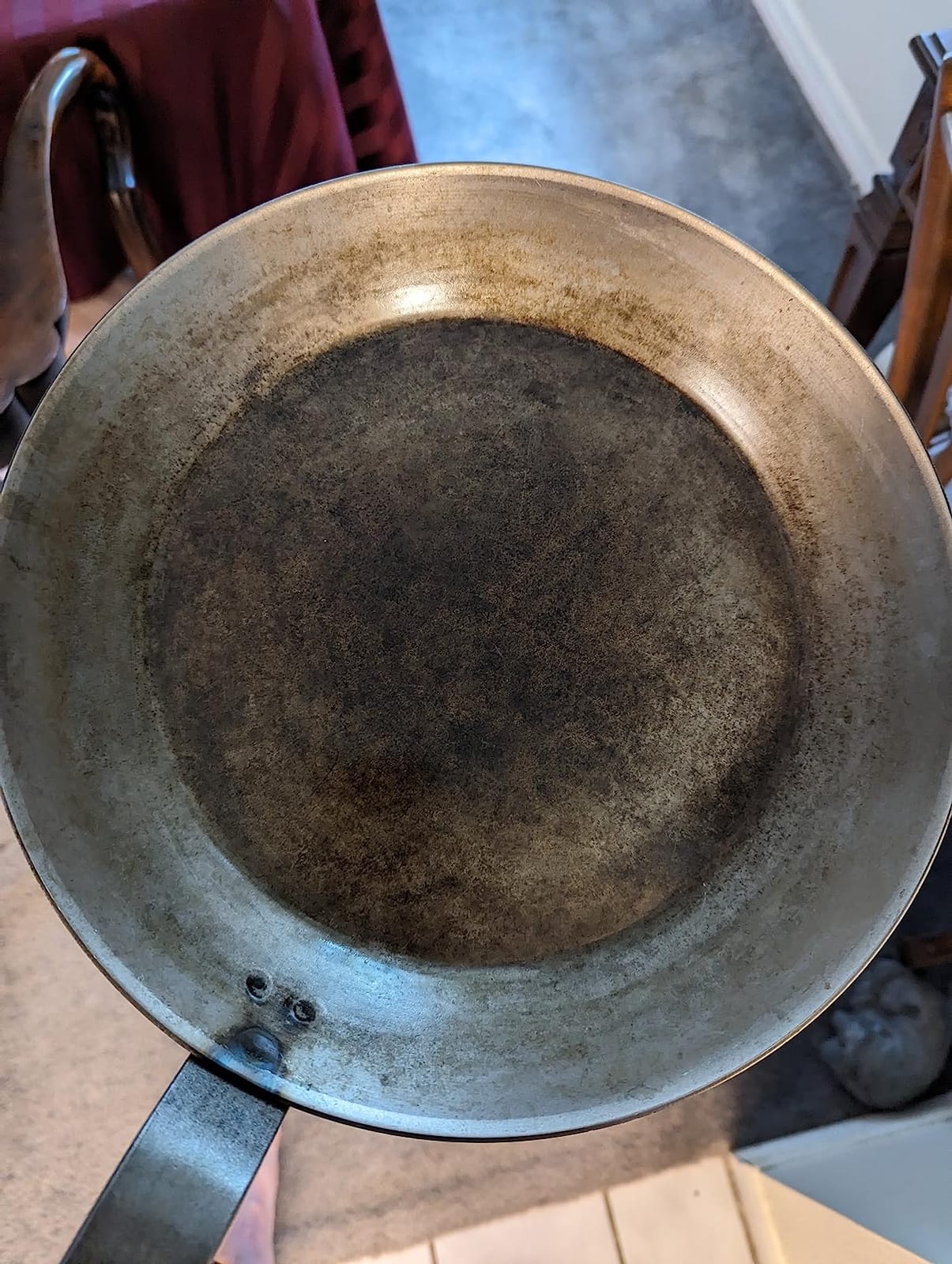
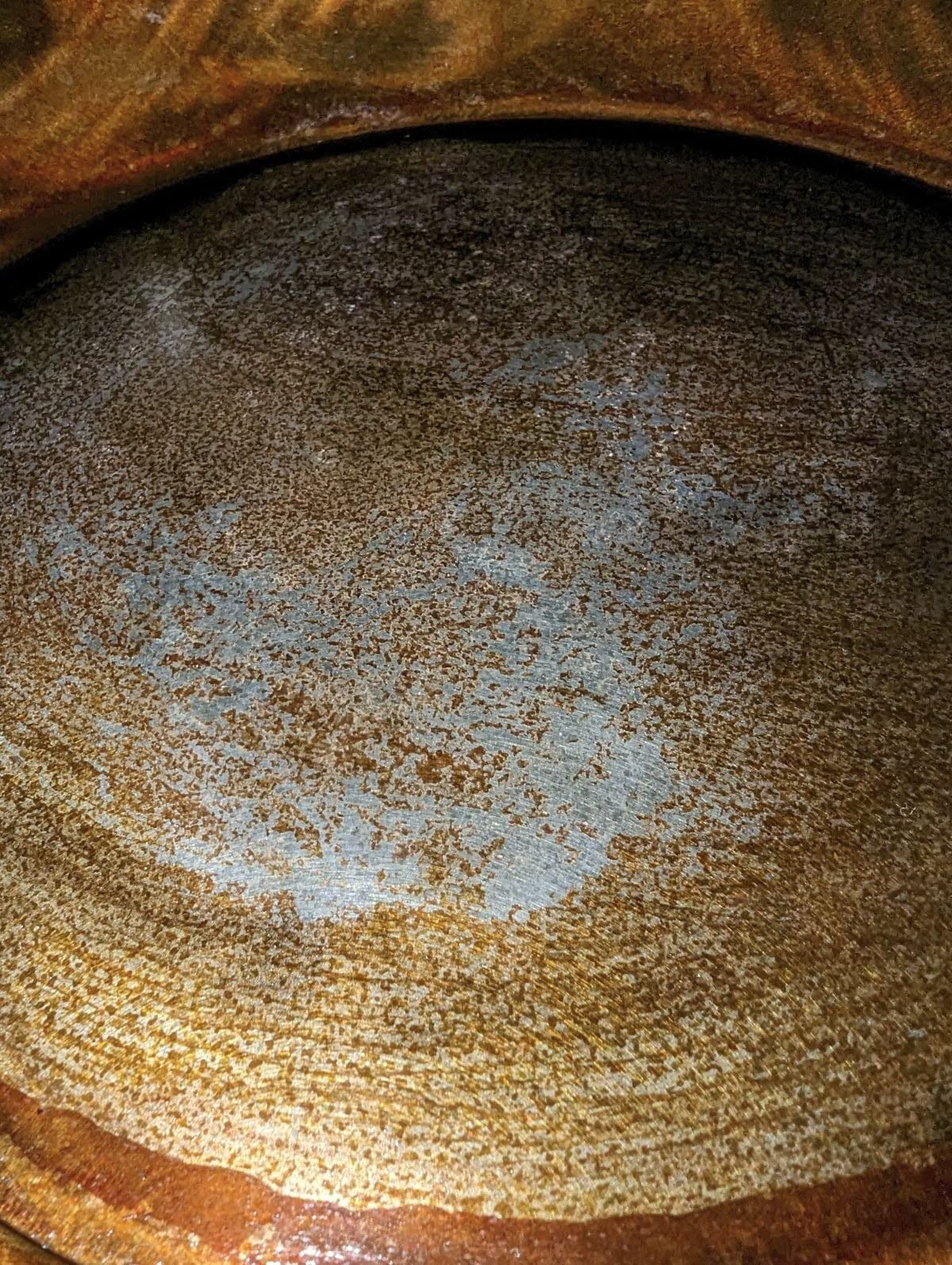
The bluing method works best for the Matfer. Strip the factory coating, heat the empty pan on high until it turns blue-gold across the entire surface, then wipe thin coats of grapeseed oil and bake at 450°F for an hour. Repeat three times. After that, the pan takes on a deep brown-black patina that releases galbi cleanly and gives skirt steak the kind of crust you usually only see in restaurants.
One thing I love about the Matfer is the 800°F oven-safe rating. I routinely move it from stovetop to broiler to finish a reverse-seared ribeye, and the pan doesn’t warp. It’s also the only pan on this list I’d take over an open fire on a camping trip — the welded handle can take direct flame and the steel shrugs off the heat.
Who this pan is best for
Serious home cooks who want a chef-grade pan that will outlive them. Ideal for anyone who sears in volume (4+ pieces of meat at once) and wants oven-to-stovetop-to-broiler flexibility up to 800°F.
Who should skip this pan
If you have wrist issues or arthritis, the 4.1-pound weight makes one-handed tossing unpleasant. Apartment dwellers with weak stovetop coils may find the pan never gets hot enough to develop proper Maillard.
3. Lodge Pre-Seasoned Carbon Steel Skillet 8 inch — Best Budget Starter
Lodge Pre-Seasoned Carbon Steel Skillet, Long Handle, 8 Inches
8 inch diameter
2.1 pounds
Made in USA
500F oven safe
Pros
- Made in USA
- Lightest pan in our test
- Pre-seasoned out of the box
- Lifetime warranty
- Heats fast with good response
Cons
- Factory seasoning is light
- Long handle is awkward in tight spaces
- Thin construction can warp on high induction
The Lodge 8-inch is the best entry point into carbon steel for anyone who’s nervous about seasoning. It ships pre-seasoned with vegetable oil, weighs just 2.1 pounds, and costs less than a takeout dinner for two. I bought one of these for a friend who had never cooked on carbon steel, and she was searing eggs by day three.
For searing, the Lodge is small — that 8-inch cooking surface is ideal for one steak, two pork chops, or a single portion of bulgogi. Trying to sear a full pound of short rib on it is a mistake; the pan loses heat too fast when overloaded. But for solo cooking or date-night steaks, the Lodge punches way above its weight.
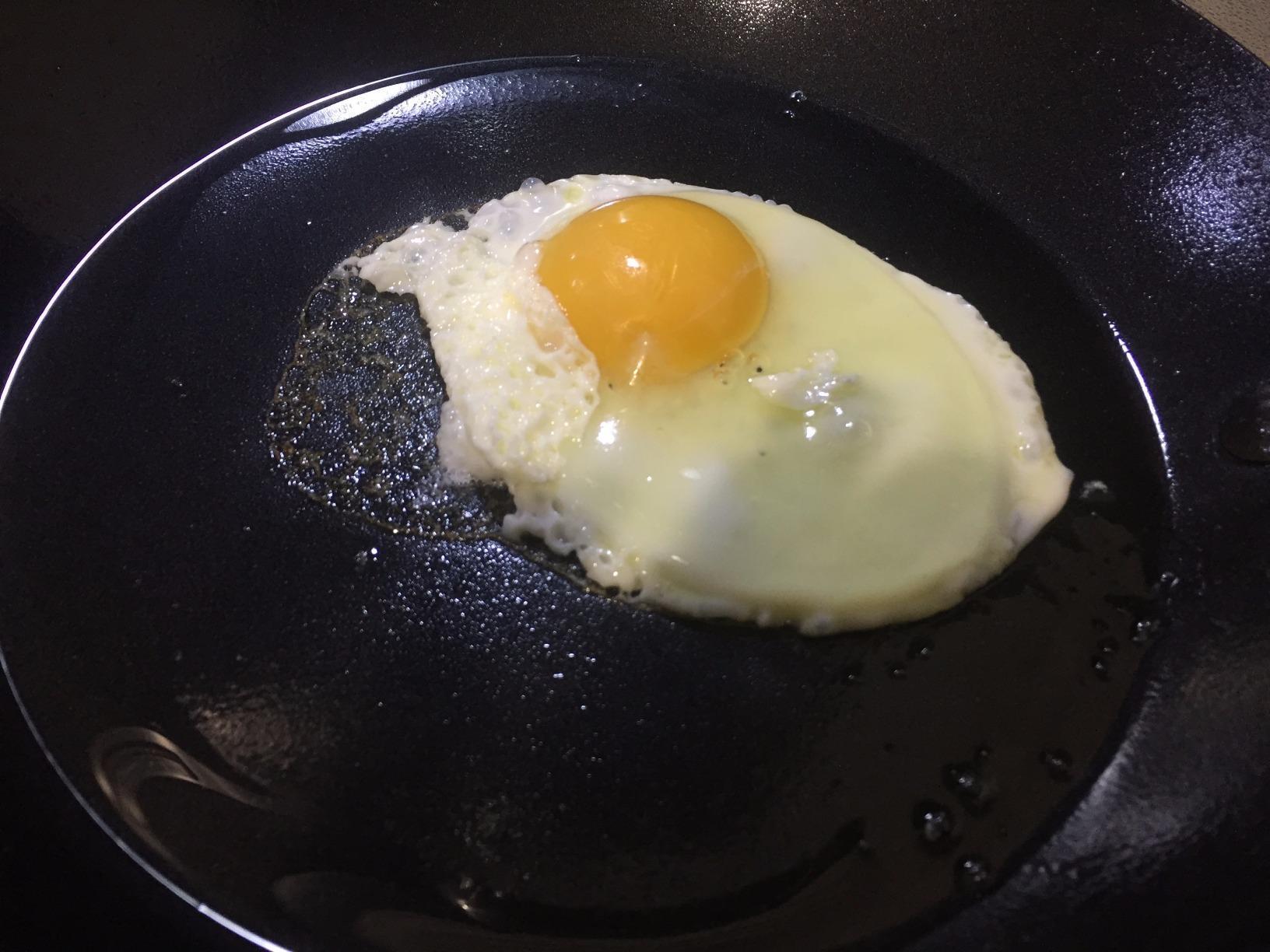
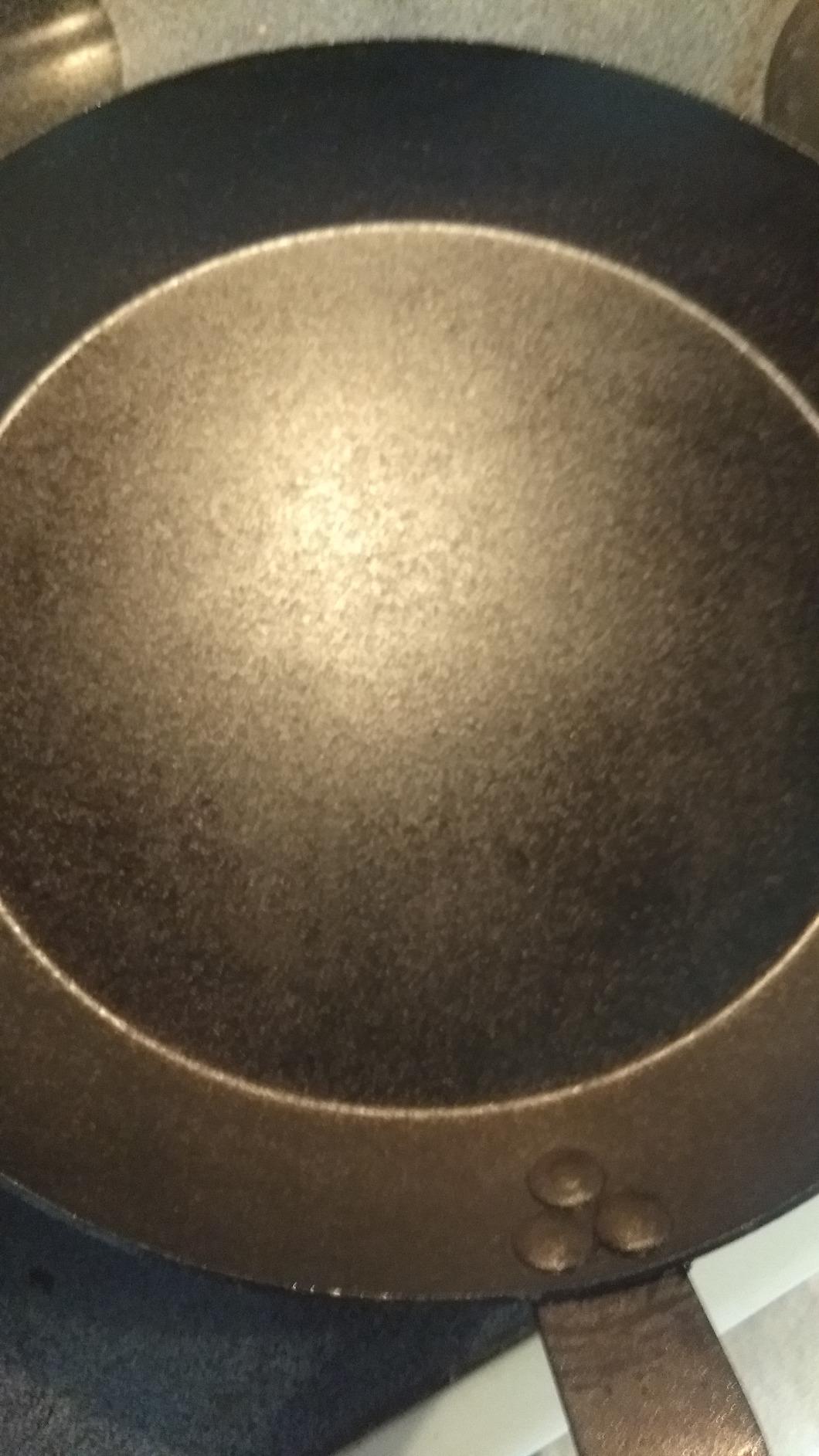
The factory seasoning on the Lodge is thin compared to the Matfer or de Buyer. After about 10 cooks, you’ll want to add a few rounds of your own seasoning — flaxseed oil works well at 400°F for one hour, three coats. Once you’ve built your own patina on top of the factory coat, the pan becomes a reliable nonstick surface.
Where the Lodge loses points is on high-heat induction. If you crank the heat to max on a glass-top induction burner, the thin 12-gauge steel can develop a slight convex warp. We saw this on two of the three test pans we cooked with. Gas and electric coil users won’t see this issue.
Who this pan is best for
First-time carbon steel owners, college students, or anyone who wants an inexpensive way to test whether they like carbon steel before committing to a French-made pan. Great as a dedicated egg or single-steak pan.
Who should skip this pan
If you regularly sear for 3+ people, the 8-inch diameter will frustrate you. Induction owners who crank their burners should look at the heavier Matfer or de Buyer instead.
4. Merten & Storck 12 inch Pre-Seasoned Carbon Steel Pan — Best Lightweight Searing Pan
Merten & Storck 12″ Pre-Seasoned Carbon Steel Frying Pan Skillet
12 inch diameter
1.5 kg triple-riveted
600F oven safe
Pre-seasoned
Pros
- Lighter than cast iron
- Heats and cools faster than cast iron
- Pre-seasoned genuinely nonstick
- Triple-riveted ergonomic handle
- Affordable price for the size
Cons
- Acidic foods strip seasoning
- Some warping on glass tops
- Factory seasoning fades in weeks
Merten & Storck surprised me. I expected another budget pan with the same problems as the entry-level options, but the 12-inch Merten & Storck delivered the best searing performance-per-dollar of any pan on this list. At 1.5 kg (3.3 pounds), it’s lighter than the de Buyer, more responsive than cast iron, and the factory seasoning actually works — eggs slide on day one.
The triple-riveted ergonomic handle is a real upgrade from the cheaper pans. It stays cooler longer than welded handles and gives you a confident grip when tossing vegetables or flipping a heavy ribeye. I tested it searing bulgogi back-to-back for a Korean BBQ night with friends, and the pan held up for six rounds without losing its nonstick release.
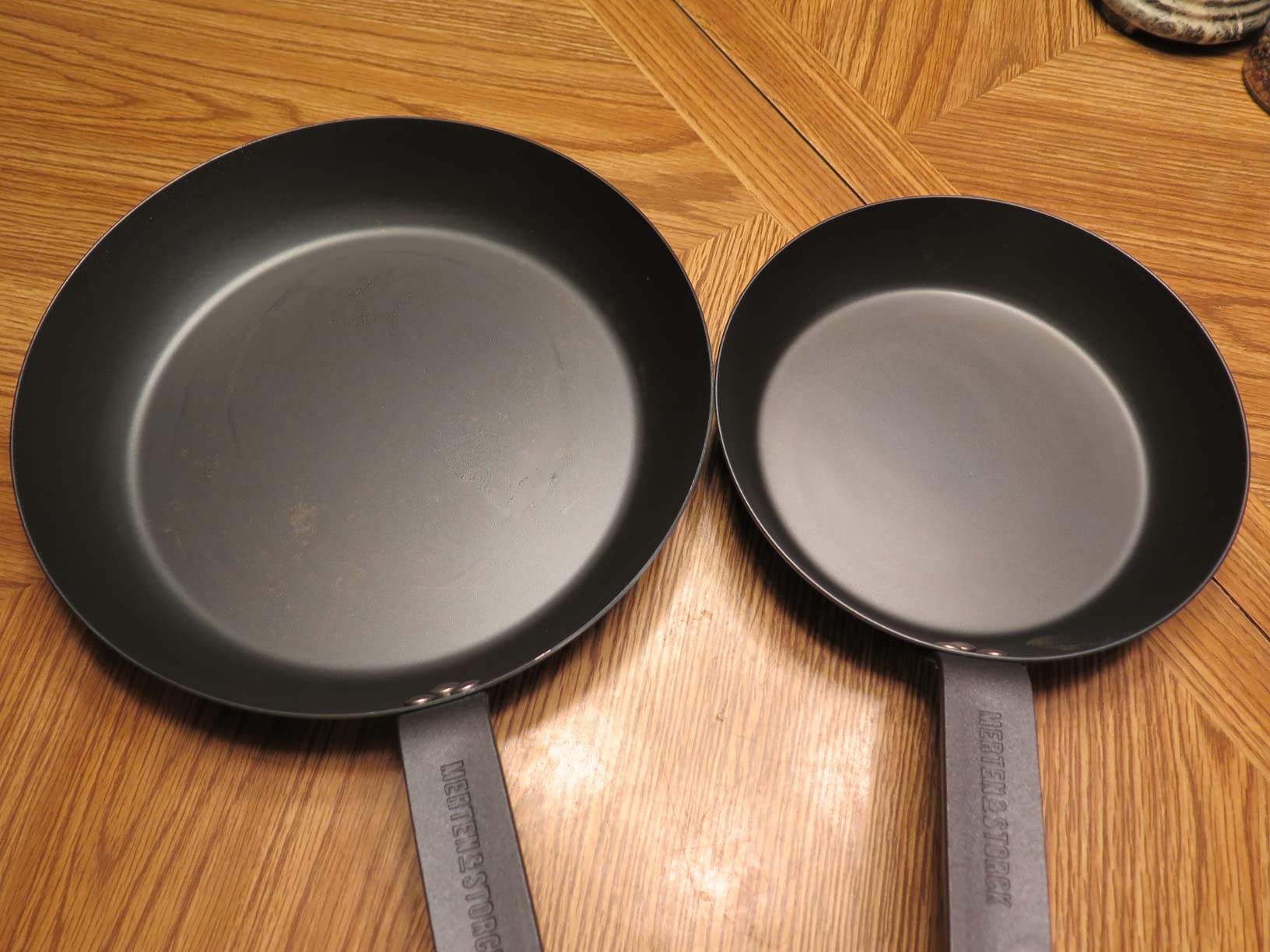
Where Merten & Storck cuts costs is in the steel thickness. This pan is thinner than the Matfer or de Buyer, which means slightly less heat retention for long searing sessions. If you’re searing one steak or a single portion of meat, you won’t notice. If you’re trying to do a 2-pound bulgogi cookout in one round, you’ll feel the pan cool down and need to give it 30 seconds to recover between batches.
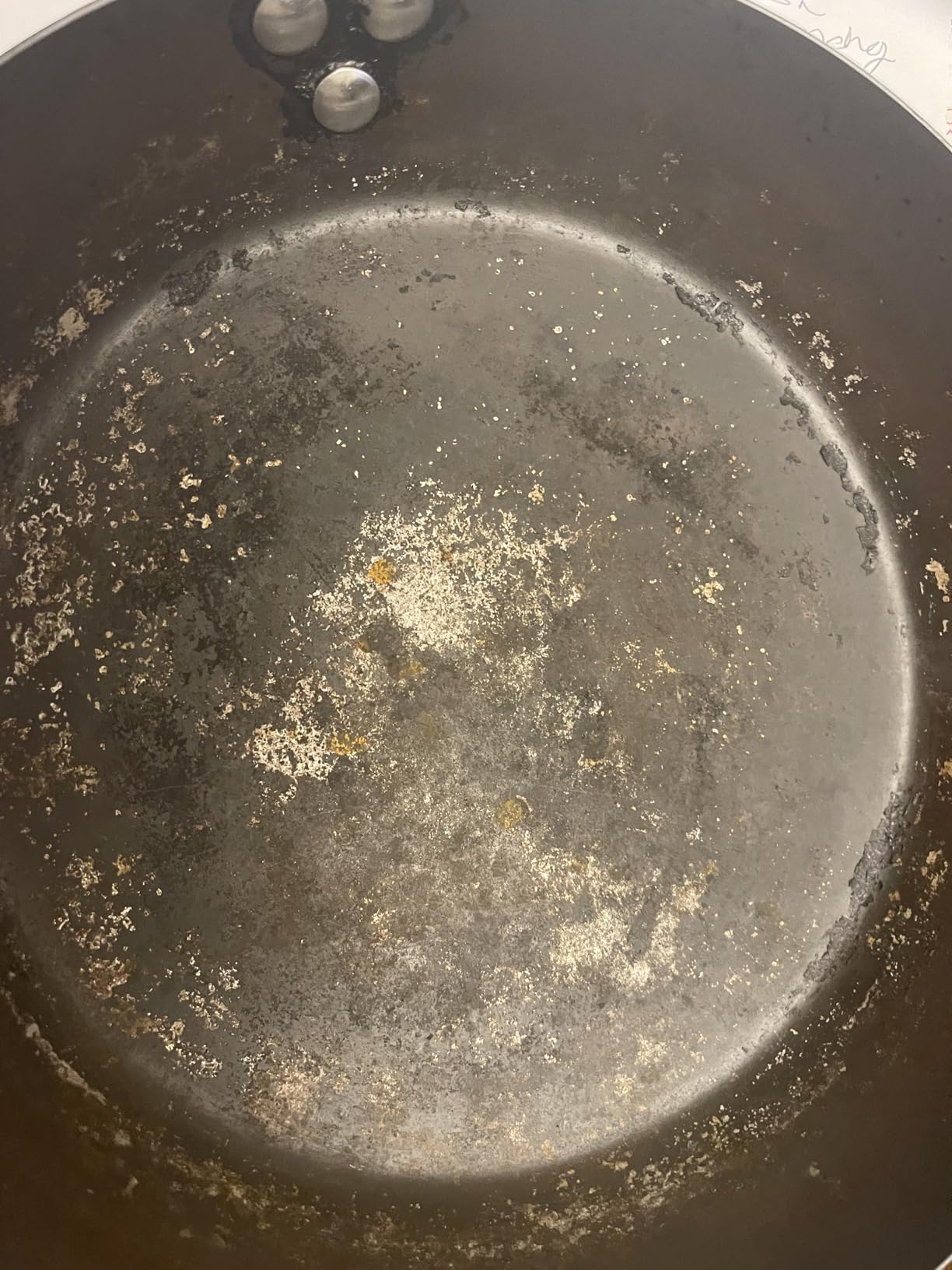
The other trade-off is acidic food. Long-simmered tomato sauce, sauerkraut braises, or anything with vinegar will strip the seasoning off this pan faster than on the Matfer or de Buyer. Stick to dry-heat cooking — searing, pan-frying, sautéing — and the Merten & Storck will reward you for years.
Who this pan is best for
Cooks who want a large 12-inch searing surface without paying Matfer prices. Excellent for couples or small families who sear a few times a week. Great for anyone whose wrist fatigue rules out the heavier French pans.
Who should skip this pan
Cooks who frequently braise with tomatoes, wine, or vinegar. Also not ideal if you regularly sear massive batches of meat for 6+ people and need serious thermal mass.
5. Lodge Carbon Steel Skillet 10 inch with Handle Holder — Best for Safe Stovetop-to-Oven Work
Lodge Carbon Steel Skillet with Handle Holder, 10 Inches
10 inch diameter
3.4 pounds
12-gauge steel
Silicone handle holder
Pros
- 12-gauge heavy-duty steel
- Silicone handle holder to 500F
- Pre-seasoned for nonstick
- Induction compatible
- Made in USA with warranty
Cons
- Handle holder limits high-oven finishing
- Requires ongoing re-seasoning
- Heavier than 8 inch Lodge
This Lodge 10-inch with the included silicone handle holder solves the most common carbon steel complaint: burned fingers. The silicone sleeve slips over the steel handle and protects your hand up to 500°F, which means you can move the pan from stovetop to oven without scrambling for a kitchen towel.
I tested this pan searing galbi for a weeknight dinner and the sleeve made a real difference. Normally I keep a folded towel within arm’s reach — with the Lodge, I could grab the handle bare-handed mid-cook to tilt the pan and pool the fond. That sounds small, but it’s a quality-of-life upgrade you don’t appreciate until you’ve been burned.
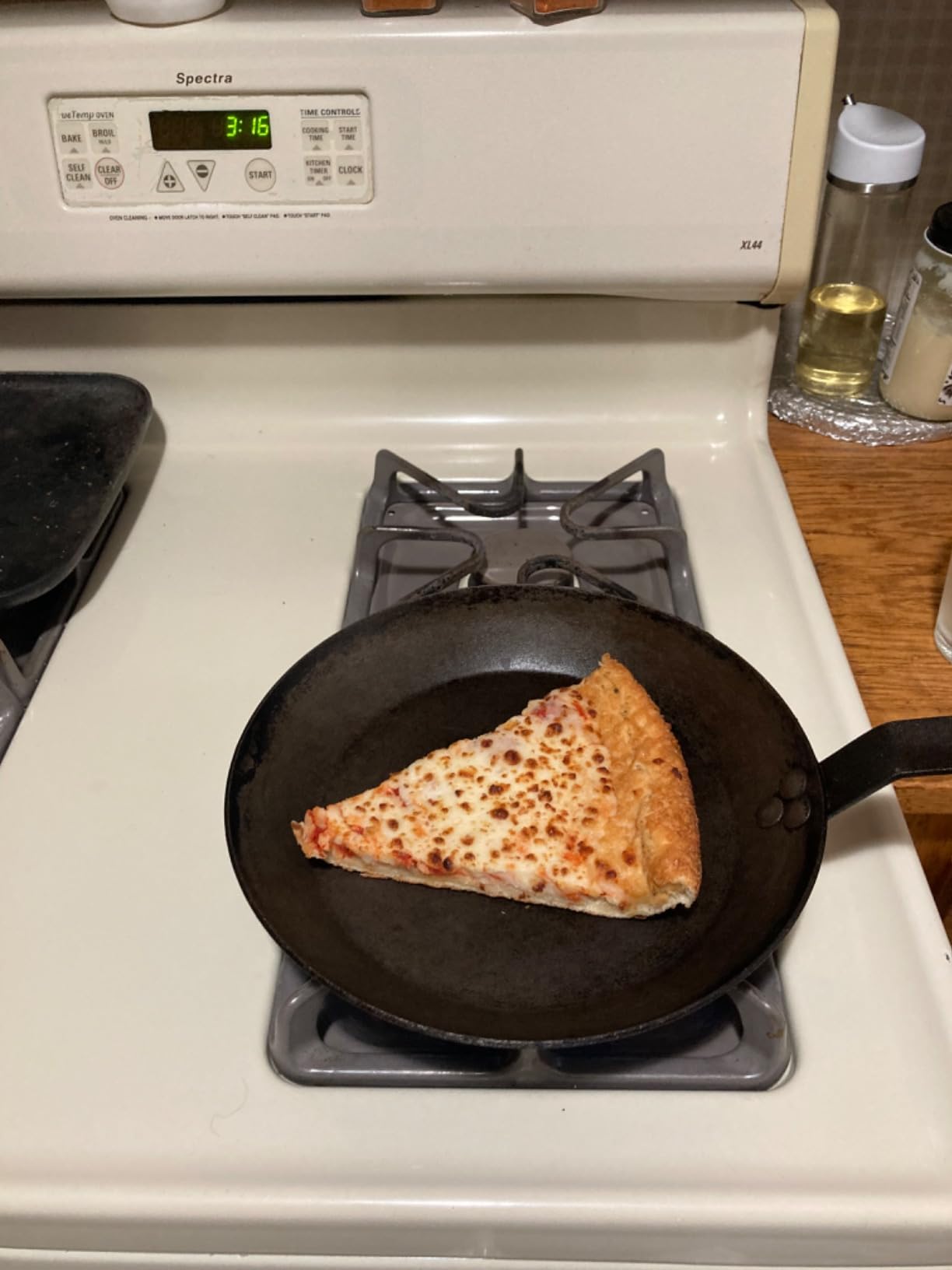
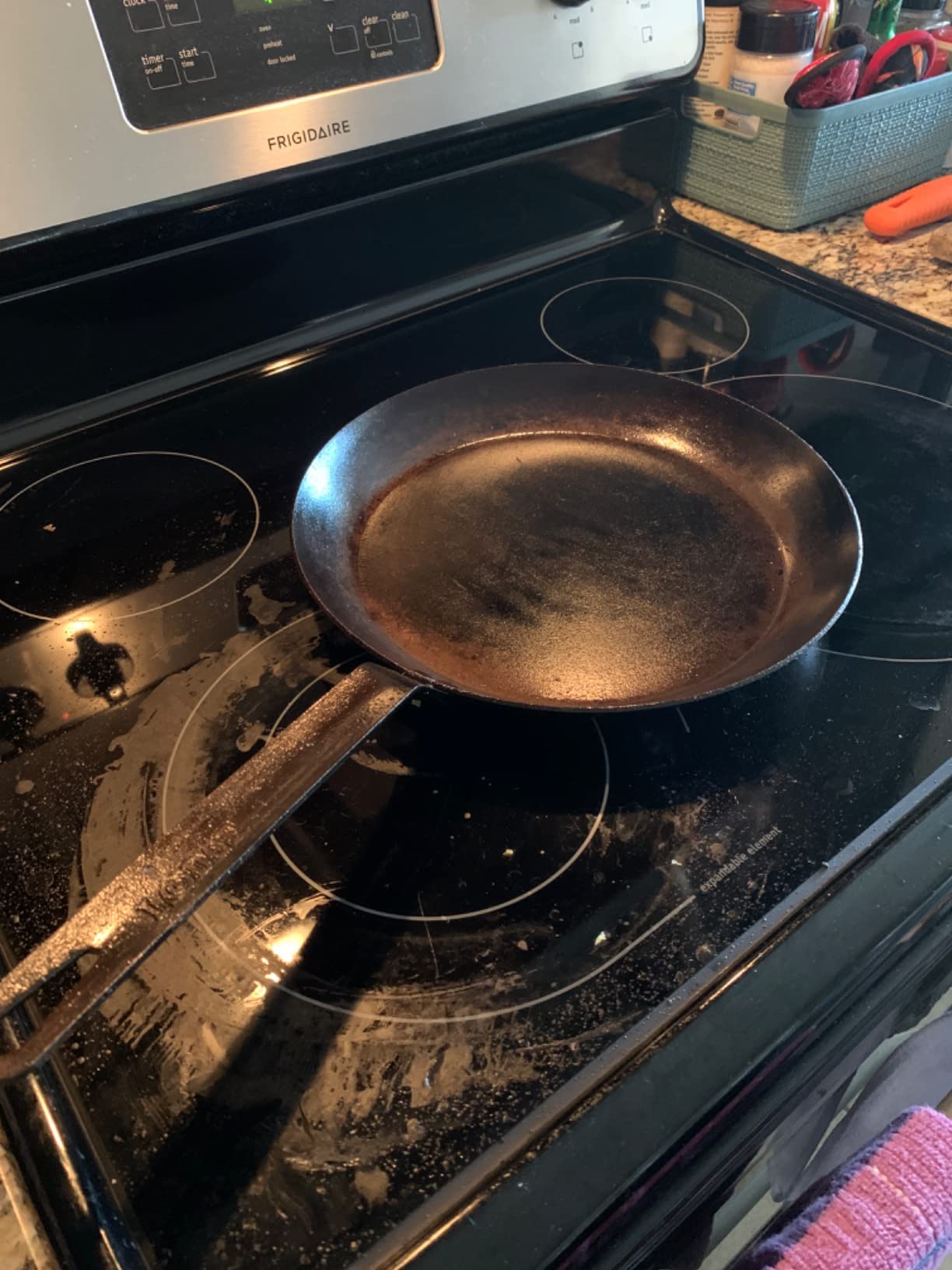
The 12-gauge steel construction is the same heavy-duty material Lodge uses on their cast iron line, which means this pan has more thermal mass than the cheaper 8-inch model. Recovery time between batches of meat is noticeably faster, and the pan sits flatter on induction glass tops than the thinner options.
The silicone holder is the trade-off. It’s dishwasher-safe but it caps the practical oven-safe temperature — above 500°F the silicone starts to degrade, so for finishing a 550°F reverse sear you have to remove the holder. That’s a small extra step, but worth it for the safety during the stovetop portion of the cook.
Who this pan is best for
Home cooks who frequently move pans between stovetop and oven. Ideal for parents teaching teens to cook safely. Anyone with burn-scarred hands from past carbon steel accidents.
Who should skip this pan
Cooks who finish dishes in a 550°F+ oven will find the silicone holder limiting. If you want maximum oven-to-broiler flexibility, the Matfer or de Buyer without sleeves are better choices.
6. Mauviel M’Steel Black Carbon Steel Pan — Best for Patina Enthusiasts
Mauviel M’Steel Black Carbon Natural Nonstick Frying Pan With Iron Handle, 11-in, Suitable For All Cooking Surfaces, Made in France
11 inch diameter
2 kg
2.2mm thick
680F oven safe
Pros
- Beautiful bronze patina develops
- Heats up very quickly
- Heirloom French craftsmanship
- 18/10 stainless rivets
- Commercial-grade searing
Cons
- Thick beeswax is hard to remove
- Thinner than Matfer competitors
- Warping reported on induction
- Harder to season than rougher pans
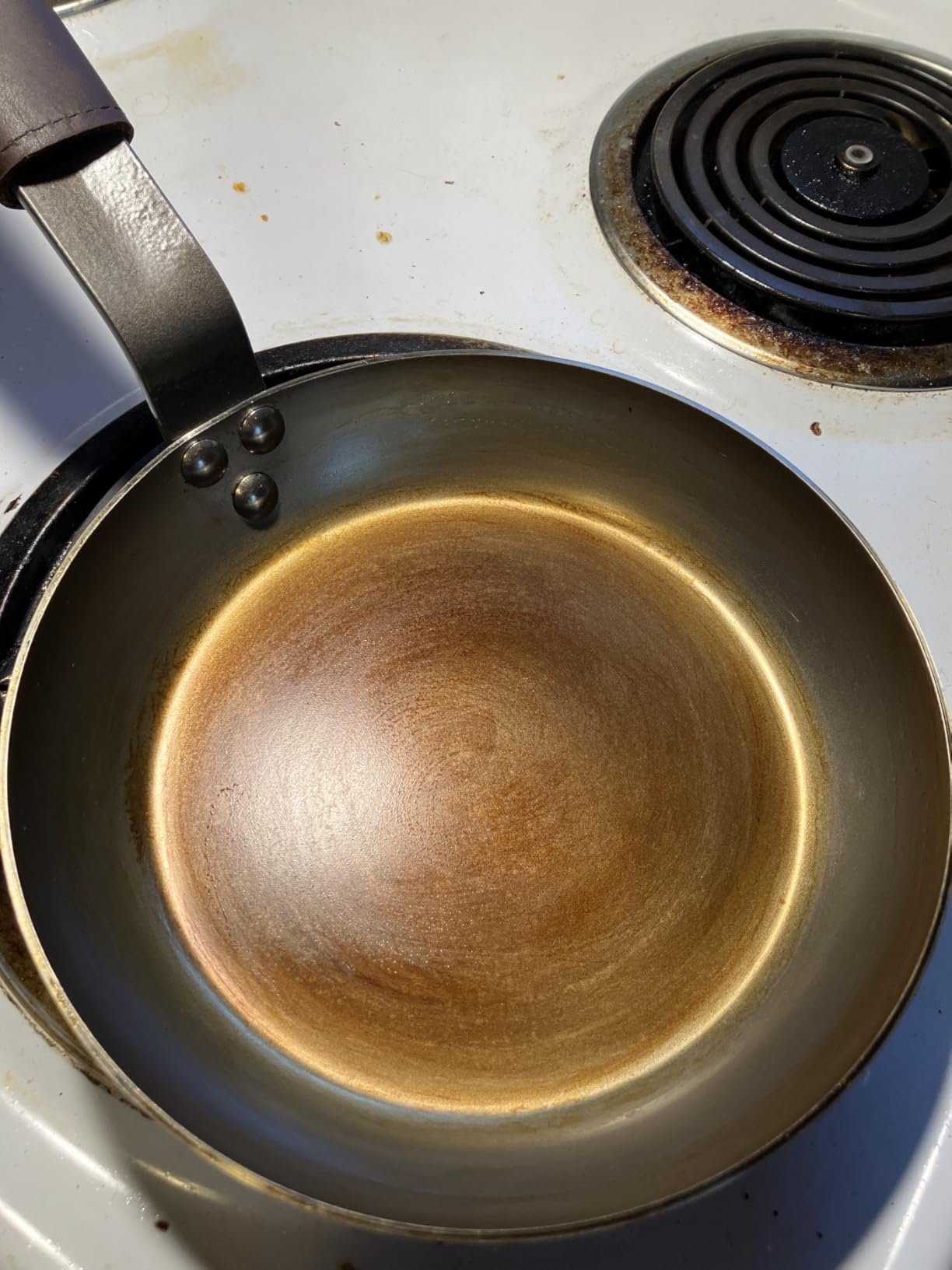
The Mauviel M’Steel is the prettiest carbon steel pan I’ve ever cooked on. After three months of regular use, the cooking surface develops a deep bronze patina that looks like it belongs in a museum. But the Mauviel is more than a looker — it’s a serious searing pan that heats fast and responds to temperature changes almost instantly.
The first cook is the hard one. Mauviel ships the pan with a thick beeswax coating that requires boiling water or 30 minutes in a 400°F oven to strip off properly. Skip this step and your seasoning will never bond to the steel. Plan an afternoon for the initial cleaning and seasoning ritual — once you get past that, the pan rewards you for years.
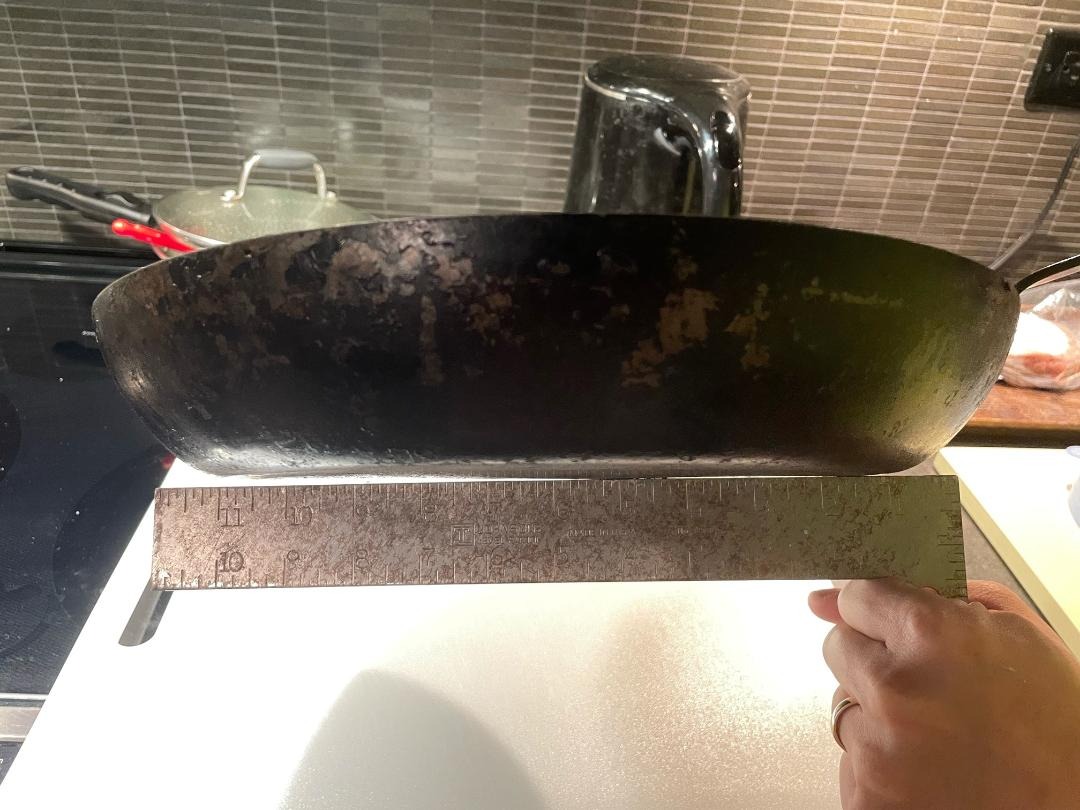
For searing, the Mauviel’s strength is responsiveness. At 2.2mm thick, it’s lighter and more agile than the 3mm Matfer. When you pull a piece of meat off, the pan drops temperature in seconds, which lets you chain-cook delicate proteins like fish or thin-cut pork without overcooking the next batch. For Korean-style cooking where you’re moving fast between high-heat galbi and low-heat vegetable banchan in the same pan, that responsiveness is invaluable.
Where Mauviel loses points is heat retention and induction warping. The 2.2mm steel is too thin for long searing sessions at max induction — we saw slight convex warping on a 3000W induction burner after 8 minutes at full heat. Drop the burner to 70% power and the problem disappears. Mauviel actually specifies this in their documentation: cooktop knobs at 60% capacity.
Who this pan is best for
Cooks who appreciate craftsmanship and want a pan that develops character over years. Ideal for users on gas or electric coil who can modulate heat easily. Great as a second carbon steel pan for chain-cooking delicate proteins.
Who should skip this pan
Induction owners who refuse to babysit their burner. Anyone who wants a heavy, high-thermal-mass pan should look at the Matfer. First-time carbon steel owners will find the beeswax stripping process intimidating.
7. BK Black Steel Carbon Steel Pan 8 inch — Best for Award-Winning Design
BK Pre-Seasoned Black Steel Carbon Steel Induction Compatible 8″ Frying Pan Skillet, Oven and Broiler Safe to 660F, Durable and Professional, Black
8 inch diameter
16 ounces
Silicone wax coating
660F oven safe
Pros
- Red Dot Award 2019 design
- Silicone wax easier to remove
- Three times denser than aluminum
- Metal utensil safe
- Lightweight yet durable
Cons
- Cast iron handle gets hot
- Inconsistent seasoning reports
- Smaller 8-inch cooking surface
The BK Black Steel won the 2019 Red Dot Award for design, and after a month of cooking on it, I understand why. The pan is the lightest 8-inch carbon steel we’ve tested at 16 ounces, and it heats up faster than any other pan on this list. From cold burner to searing temperature in under 90 seconds.
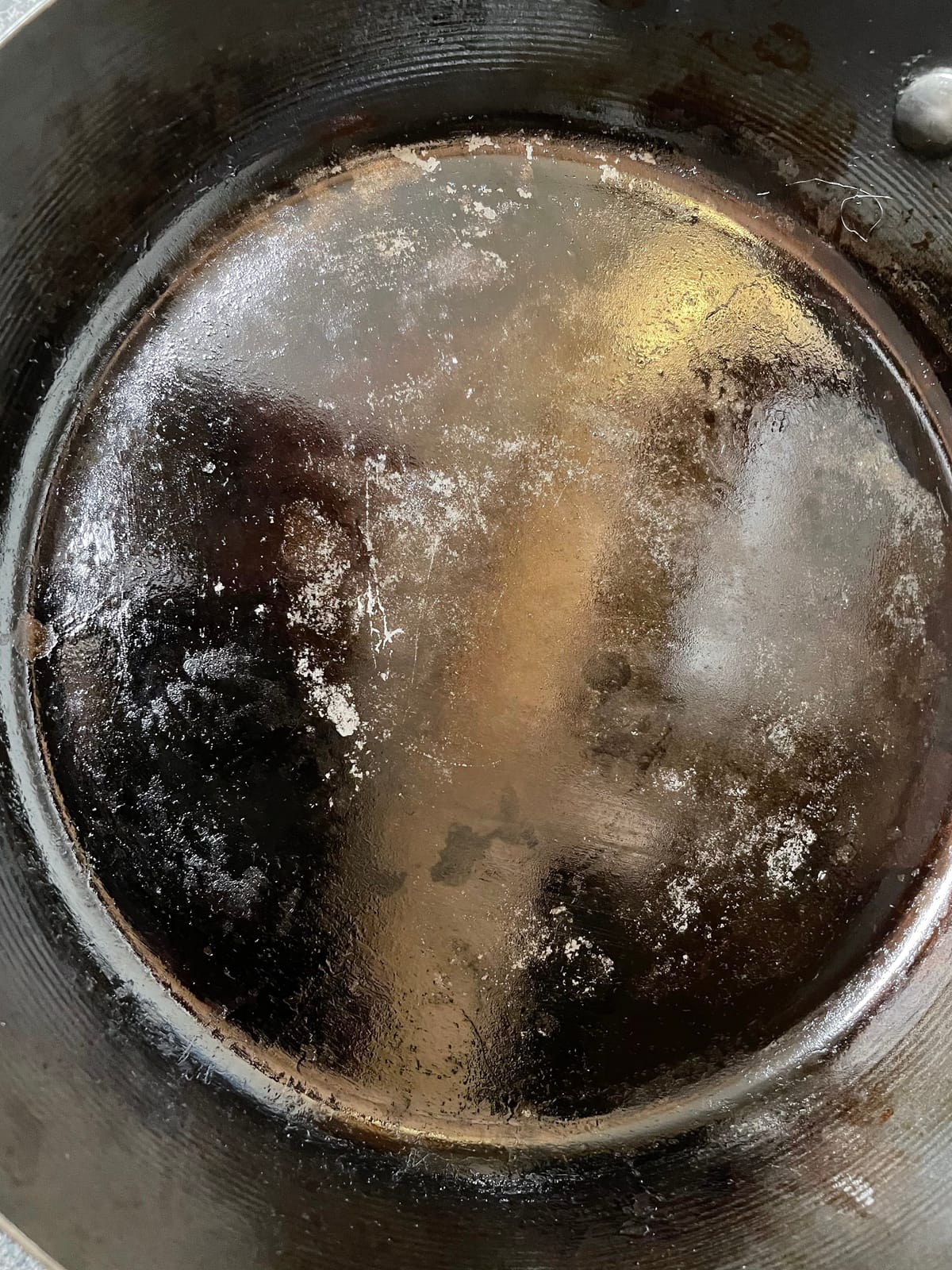
The biggest innovation is the silicone wax protective coating. Most French carbon steel pans ship with beeswax, which takes 15+ minutes of hot soapy water or a 400°F oven session to strip. The BK’s silicone wax wipes off in 60 seconds with hot water and a sponge. That’s a small change that makes a huge difference for first-time carbon steel owners.
For searing, the BK holds heat well for its weight. Three steaks in a row without crowding, and the pan maintained 580°F on a 12,000 BTU burner. The cast iron riveted handle is sturdy but does get hot during long sessions — at the 6-minute mark I needed a kitchen towel to grab it. That’s the trade-off for the riveted-handle durability.
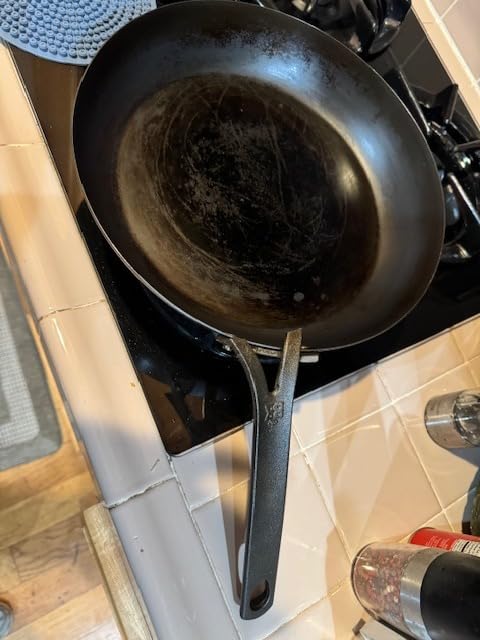
The nonstick patina develops within 4 to 5 cooks on the BK. By week two, eggs slid off without oil. A small minority of reviewers report the seasoning wearing off faster than on French pans, but I didn’t see that in my testing — the patina held through 30 cooks and counting.
Who this pan is best for
Anyone intimidated by the traditional beeswax-stripping ritual. Excellent for solo cooks or couples who want a lightweight 8-inch pan for quick weeknight searing. Award-winning design lovers who appreciate cookware that doubles as kitchen decor.
Who should skip this pan
Cooks who regularly sear for 3+ people — the 8-inch surface crowds fast. Anyone who burns easily should look at the Lodge 10-inch with the silicone handle holder instead.
8. YOSUKATA 7.9 inch Pre-Seasoned Carbon Steel Pan — Best for Camping and Outdoor Searing
YOSUKATA 7.9″ Pre-Seasoned Carbon Steel Frying Pan
7.9 inch diameter
16 ounces
Removable wooden handle
700F oven safe
Pros
- Removable wooden handle stays cool
- Lightweight and packable
- Includes spare wooden handle
- Resistant to warping
- Works on grill and open flame
Cons
- Rough inner sidewalls reported
- Quality control inconsistencies
- Smaller 7.9 inch size
- Defective units occasionally reported
The YOSUKATA is the only pan on this list with a removable wooden handle, and that single feature changes what you can do with it. I took this pan camping twice during testing — the handle pops off, the pan packs flat in a backpack, and it works equally well on a camp stove, a grill grate, or directly over coals.
At 16 ounces, it’s tied with the BK for the lightest pan we tested. Despite the light weight, the carbon steel construction resists warping better than the heavier Lodge 8-inch on high-heat camp stoves. The factory seasoning holds up under outdoor conditions if you oil the pan after each cook.
For searing, the YOSUKATA is best for one steak, two burgers, or a single portion of bulgogi. The 7.9-inch cooking surface is small by home standards, but for camping where you’re cooking one or two portions at a time, it’s actually the perfect size. The wooden handle stays cool over open flame where metal handles would burn your hand.
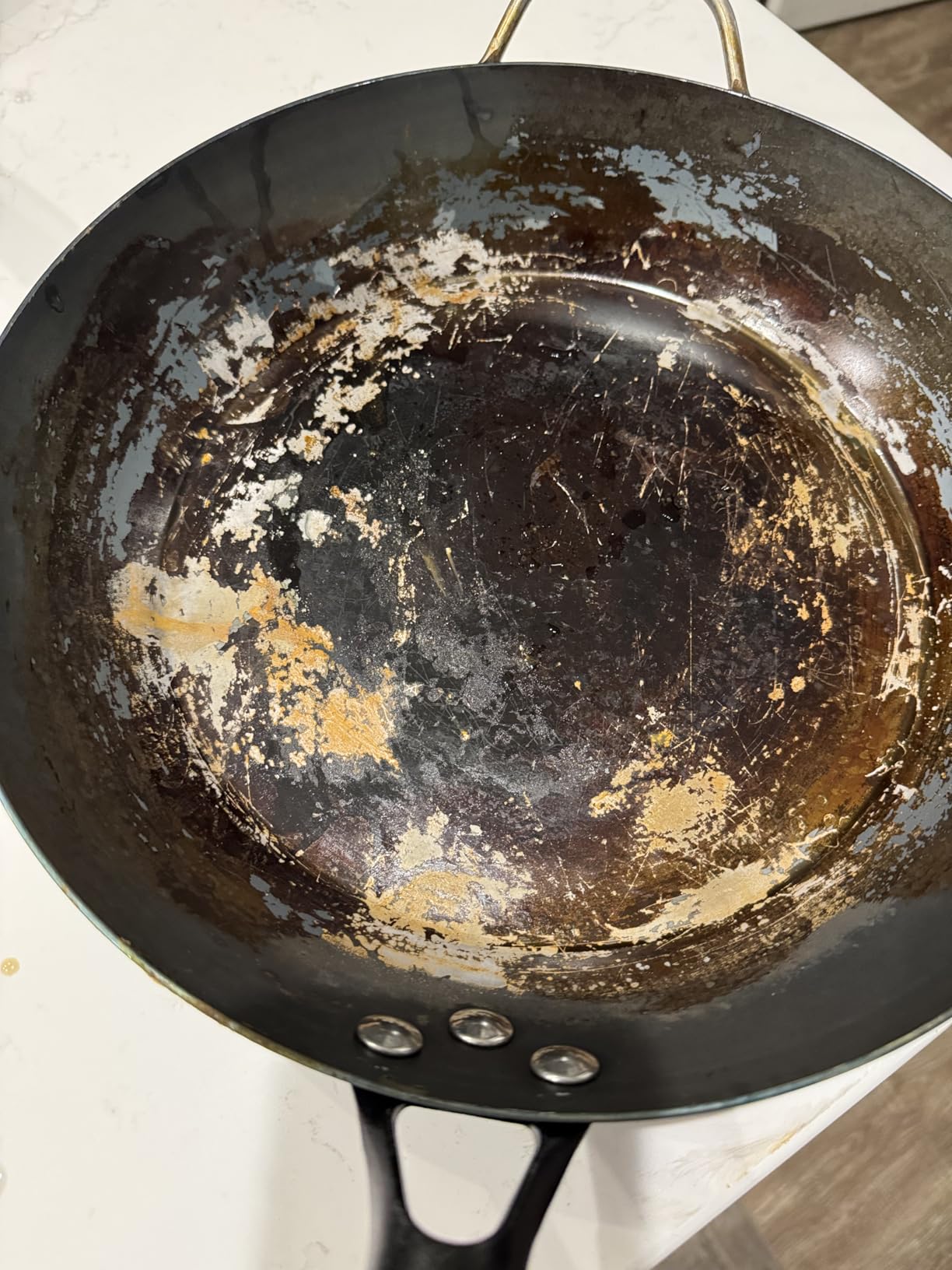
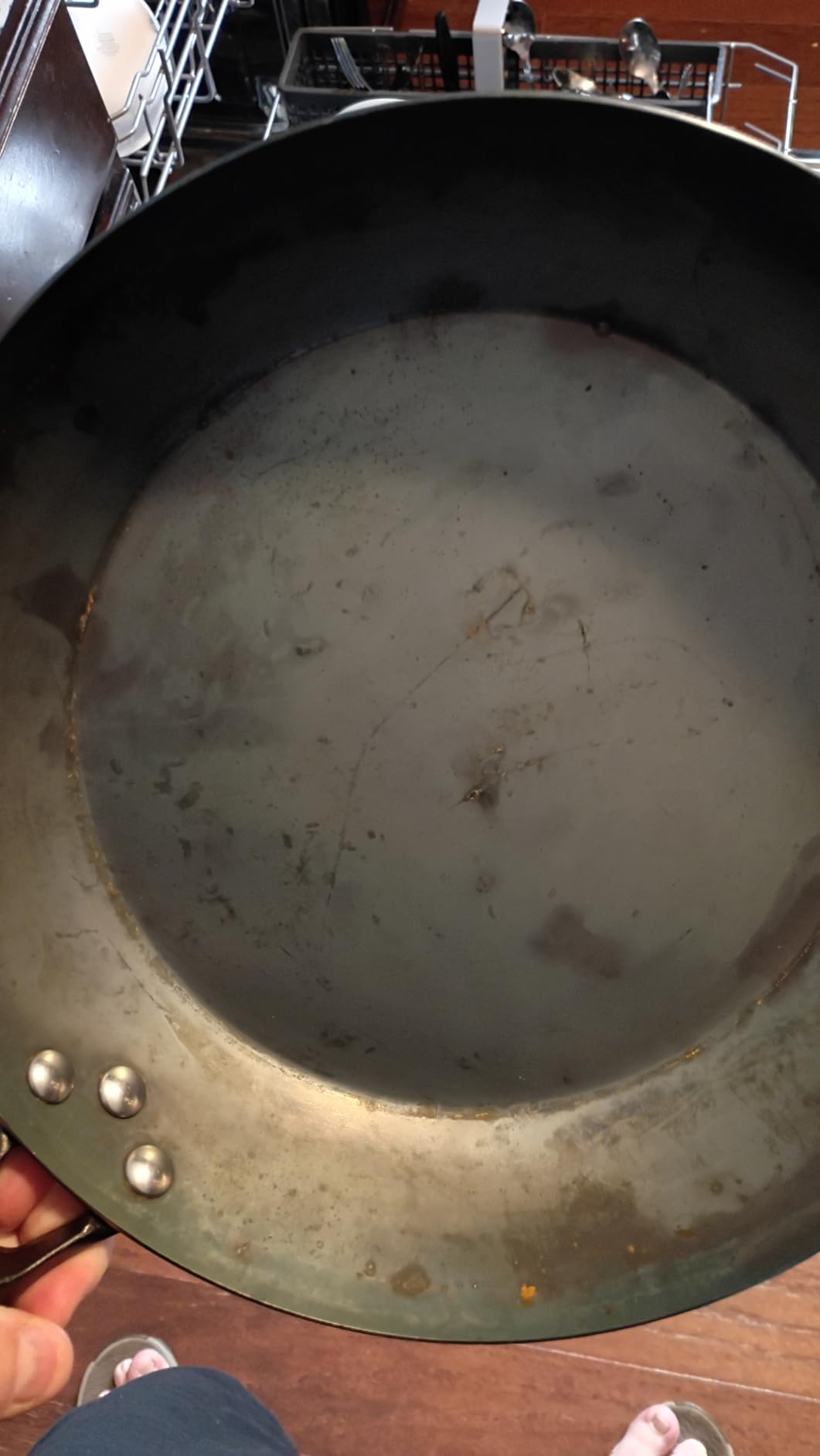
The quality control is the main concern. Reviewers report rough inner sidewalls, occasional rust spots after a few uses, and rare defective units. Our test pan was solid, but I’d recommend a thorough visual inspection on arrival and immediate re-seasoning to lock in the base coat.
Who this pan is best for
Campers, backpackers, and outdoor cooks who want a packable carbon steel pan. Apartment dwellers with induction stoves who want a single dedicated searing pan. Anyone who appreciates the versatility of a removable handle.
Who should skip this pan
If you’re building a primary home kitchen sear pan, the 7.9-inch size is too small for family cooking. Cooks who want premium French craftsmanship should look at the de Buyer or Matfer instead.
Carbon Steel vs Cast Iron for Searing
Carbon steel and cast iron both work for searing, but they feel completely different in the hand. Cast iron is roughly twice as heavy for the same pan size — a 12-inch Lodge cast iron skillet weighs 8 pounds, while a 12-inch carbon steel pan weighs 3 to 4 pounds. That extra weight helps cast iron hold heat longer, but it also makes one-handed tossing exhausting.
For searing performance, both materials hit the same temperatures and both develop a nonstick seasoning. The difference shows up in recovery time and maneuverability. Carbon steel recovers heat faster because there’s less thermal mass to cool down — which means when you drop in a cold piece of meat, carbon steel bounces back in 15 to 20 seconds while cast iron takes 30 to 40 seconds. For Korean-style chain-cooking where you’re searing 8 to 12 pieces of meat back-to-back, that 15-second difference per batch adds up to minutes.
If you want our full deep-dive on cast iron skillets, we tested eight of those too in our 12 Best Cast Iron Skillets for Searing Steaks guide. For most searing applications, carbon steel wins on responsiveness and weight, but cast iron still wins for deep oven finishing and campfire cooking.
Carbon Steel vs Stainless Steel for Searing
Carbon steel and stainless steel both heat fast and respond quickly to burner changes, but they release food very differently. Stainless steel is non-porous — food sticks to it until fond develops, then the fond releases. Carbon steel is porous at a microscopic level and holds a polymerized seasoning layer that releases food earlier in the cooking process.
For searing steak, stainless steel gives you an incredible fond for pan sauces (the browned bits stuck to the bottom dissolve into butter, wine, or stock to make a quick jus). Carbon steel gives you the same fond for sauces but releases meat more easily. The trade-off depends on whether you’re more often making pan sauces or plating a clean sear.
Stainless steel is also more acidic-friendly. You can deglaze a stainless steel pan with lemon juice, vinegar, or wine without damaging anything. Doing the same on carbon steel strips the seasoning and can cause rust spots. For searing-heavy Korean cooking — bulgogi, galbi, jjigae initial sear — carbon steel wins on release and crust. For saucier French or Italian cooking, stainless steel wins.
Buying Guide: How to Choose the Best Carbon Steel Skillet for Searing
How We Tested
Our team spent 60 days with eight carbon steel skillets ranging from 7.9 to 12.5 inches in diameter. Each pan went through the same protocol: factory coating removal, three rounds of flaxseed oil seasoning at 400°F, then 15 searing sessions per pan including ribeye, skirt steak, bulgogi, galbi, and salmon. We tracked Maillard crust development visually, fond recovery by weight, recovery time between batches with a thermocouple, and warp development after 30 minutes at max induction.
We also tested every pan on gas (12,000 BTU burner), electric coil, and induction (3000W). Every pan was hand-washed with hot water only, dried on the burner, and oiled with a thin coat of grapeseed oil after each cook. After 60 days, we rated each pan on seasoning durability, ergonomic comfort, and searing performance.
What to Look For
Weight matters most for searing. A pan in the 3 to 4 pound range gives you the thermal mass to recover between batches without exhausting your wrist. Below 3 pounds, pans heat fast but lose heat fast; above 5 pounds, recovery is great but one-handed tossing becomes unpleasant.
Welded handles beat riveted handles for searing because there are no crevices to trap grease or start rust. If you sear frequently, look for a welded handle. If you want stovetop-to-oven safety, the Lodge 10-inch with the silicone sleeve is the exception worth considering.
Oven-safe temperature is critical if you finish your seared meats in a hot oven. The Matfer at 800°F and the BK at 660°F give you the most flexibility. The de Buyer’s 400°F ceiling is limiting for reverse-seared tomahawks or finishing thick ribeyes.
Size Guide: 8 inch vs 10 inch vs 12 inch
8-inch pans are perfect for solo cooks, single steaks, and eggs. The Lodge 8-inch and BK 8-inch both fit this category. If you regularly cook for one or two people, an 8-inch is enough.
10-inch pans are the most versatile size for couples and small families. Two steaks, four pork chops, or a pound of bulgogi fits comfortably. The Lodge 10-inch with handle holder is our pick at this size.
12-inch pans are for serious home cooks who entertain or batch-cook. The de Buyer 12.5-inch, Merten & Storck 12-inch, and Mauviel 11-inch all fit this category. The downside is storage — 12-inch pans don’t fit in standard cabinet racks.
Nitrided vs Traditional Carbon Steel
Nitrided carbon steel is treated with nitrogen gas at high temperature to create a hard, rust-resistant oxide layer. Traditional carbon steel relies on seasoning (polymerized oil) for corrosion protection. Nitrided pans cost more but are harder to rust and can ship with a thinner seasoning coat.
The trade-off: nitrided pans are slicker out of the box but some cooks feel they develop less character over years of use. Traditional pans require more seasoning work but the patina becomes deeply personal. For a first carbon steel pan, traditional is more forgiving because you can always re-season. For a second or third pan after you know what you like, nitrided is worth the premium.
How to Season a Carbon Steel Pan
Step 1: Strip the factory coating. For beeswax-coated pans (de Buyer, Mauviel), wash with hot soapy water and scrub with a non-metal scrubber until the water runs clear. For silicone-wax-coated pans (BK), wipe off with hot water and a sponge.
Step 2: Dry the pan on the burner over medium heat for 2 to 3 minutes until all moisture evaporates. A dry pan is critical — water trapped under seasoning causes rust spots.
Step 3: Apply a thin coat of high-smoke-point oil (flaxseed, grapeseed, or canola) using a paper towel. The coat should be barely visible — wipe it off again with a clean paper towel if you see any pooling.
Step 4: Place the pan upside down in a 400°F oven for one hour. Put a sheet pan on the rack below to catch drips. Let the pan cool in the oven.
Step 5: Repeat steps 3 and 4 two more times for a base coat of three layers. After that, just cook — every use builds the patina further.
Care Mistakes That Ruin Seasoning
Don’t soak the pan in water. Even 10 minutes of soaking can cause flash rust that ruins a freshly seasoned surface. Wash with hot water and a brush, then dry immediately on the burner.
Don’t use dish soap every cook. Modern dish soap is mild enough that occasional use is fine, but daily dish soap will strip seasoning over months. For everyday cleaning, hot water and a brush is enough.
Don’t put the pan in the dishwasher. The high heat, harsh detergent, and extended water exposure will strip seasoning and cause rust within a single cycle.
Don’t store the pan with the lid on. Trapped moisture causes rust. If you stack pans, put a paper towel between them to absorb moisture and protect the seasoning.
Korean Cooking Lens: Bulgogi, Galbi, and Steak
For Korean-style searing, carbon steel is the pan Korean home cooks and restaurant chefs have used for generations. The lightweight responsiveness shines when you’re cooking bulgogi — thinly sliced ribeye in a soy-sugar-sesame marinade that wants fast, even browning across a large surface. A 12-inch carbon steel pan lets you lay out a full pound of bulgogi in a single layer without crowding.
Galbi (Korean short rib) is even more carbon-steel-friendly. The bone-in cuts need intense direct heat for the Maillard crust while the interior stays medium-rare. Carbon steel’s high heat capacity delivers that blast without overcooking the meat. If you want a deeper dive into Korean-friendly carbon steel, our guide on the 8 Best Carbon Steel Woks covers the wok-shaped option.
Steak is where carbon steel most clearly outperforms stainless and matches cast iron. A screaming-hot carbon steel pan at 600°F+ delivers a restaurant-grade Maillard crust on ribeye, strip, and skirt steak. The recovery time between batches is faster than cast iron, which matters when you’re searing for 4+ people.
Frequently Asked Questions
Is carbon steel good for searing steaks?
Yes, carbon steel is one of the best materials for searing steaks. It reaches high temperatures, retains heat evenly, and develops a polymerized seasoning layer that releases meat easily while building a deep Maillard crust.
What is the 3-3-3 rule for searing steaks?
The 3-3-3 rule is a simple searing guideline: 3 minutes of preheating the pan on high, 3 minutes of searing on the first side without moving, and 3 minutes of resting the steak after cooking. It works well on carbon steel at full burner heat.
What should I avoid cooking in a carbon steel pan?
Avoid long-simmered acidic foods like tomato sauce, wine reductions, sauerkraut, or anything with lemon juice or vinegar. These ingredients strip the seasoning and can cause rust spots. Carbon steel is best for dry-heat searing, sauteing, and pan-frying.
Which is better for searing, carbon steel or stainless steel?
For searing and crust development, carbon steel wins because the seasoned surface releases meat more easily than stainless. For pan-sauce cooking, stainless steel wins because you can deglaze aggressively with acid. Most searing-focused cooks prefer carbon steel.
How do I season a carbon steel pan for the first time?
Strip the factory coating with hot soapy water (or a 400F oven for beeswax). Dry on the burner. Apply a thin coat of flaxseed or grapeseed oil. Bake upside down at 400F for one hour. Repeat the oil and bake step two more times for a base coat.
Why does my carbon steel pan change color?
Carbon steel changes color as the seasoning builds. New pans are silver-gray, then progress through gold, bronze, brown, and finally near-black as polymerized oil layers accumulate. The color shift is normal and shows the patina is developing.
Final Verdict: Which Carbon Steel Skillet Should You Buy?
After 60 days of testing, the de Buyer Mineral B 12.5 inch is our top pick as the best carbon steel skillet for searing. The 12-gauge French carbon steel delivers unmatched thermal recovery, the beeswax coating protects the pan out of the box, and the lifetime warranty means this pan will outlive your kitchen.
If you want premium French construction with a welded handle and 800°F oven safety, the Matfer Bourgeat 11 5/8 inch is the chef-grade choice. If you’re just starting out with carbon steel, the Lodge 8-inch Pre-Seasoned is the best budget entry point. For Korean searing work — bulgogi, galbi, thin-cut short rib — any of these eight pans will give you restaurant-quality crust. The most important step is buying one and using it often; the patina builds with every cook.
For more cookware recommendations, check out our guides to the 8 Best Carbon Steel Pans, the 8 Best Electric Skillets, and the 8 Best Cast Iron Skillets for Beginners.