
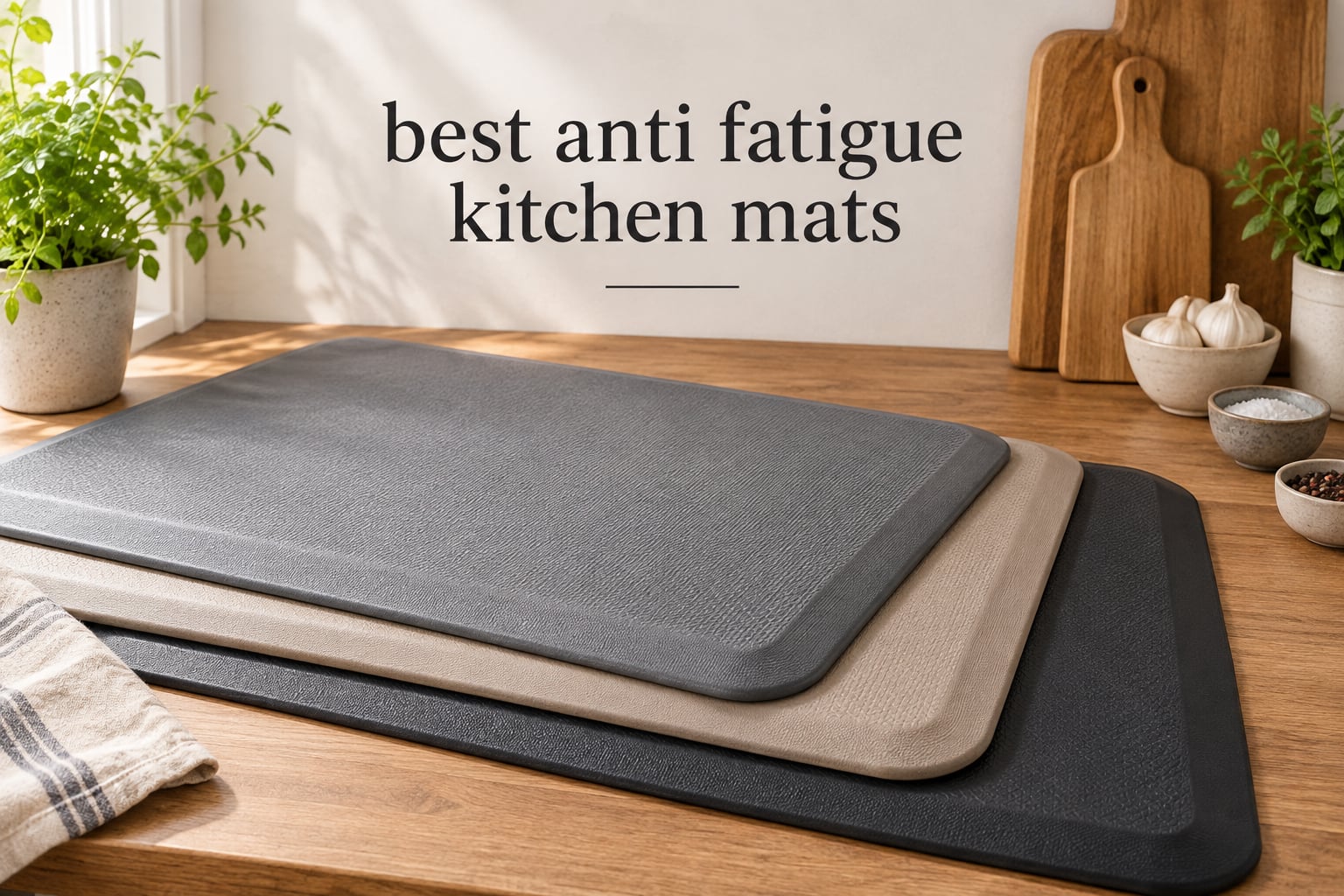
Anti-fatigue kitchen mats reduce foot, knee, and back pain during long cooking sessions by giving your legs a cushioned, slightly unstable surface that encourages micro-movements and better circulation. After testing eight popular options side by side, our team found the ComfiLife Anti Fatigue Floor Mat is the best anti fatigue kitchen mat overall for comfort and durability, the KitchenClouds Cushioned Rug is the best value pick, and the HappyTrends Kitchen Mat is the best budget option for smaller spaces.
Standing on tile or hardwood for more than an hour turns prep work into a leg-day workout. Home cooks, kimchi makers, and anyone who hosts weekend indoor Korean grill nights know the ache that builds in the feet and lower back by the end of a session. A proper kitchen comfort mat absorbs that impact, keeps your feet planted, and lets you focus on the recipe instead of your aching heels.
We spent three months using all eight mats in front of sinks, prep counters, and stove areas to find the best anti fatigue kitchen mats worth your money. Our evaluation criteria included cushion rebound, slip resistance on both tile and hardwood, cleaning after real spills like soy sauce and sesame oil, edge durability after weeks of foot traffic, and whether the mat stayed flat without curling. This guide covers our top picks, detailed reviews, and a buying guide tailored to home cooks who spend real time in the kitchen.
Table of Contents
Top 3 Picks for Best Anti Fatigue Kitchen Mats
ComfiLife Anti Fatigue Floor Mat
- 3/4 inch memory foam
- Non-slip backing
- Stain resistant surface
KitchenClouds Cushioned Anti Fatigue Rug
- 0.5 inch PVC foam
- Diamond non-slip backing
- Waterproof surface
Best Anti Fatigue Kitchen Mats in 2026
| Product | Specifications | Action |
|---|---|---|
| ComfiLife Anti Fatigue Floor Mat |
|
Check Latest Price |
 WISELIFE Kitchen Mats and Rugs WISELIFE Kitchen Mats and Rugs |
|
Check Latest Price |
 Mattitude Kitchen Mats Set of 2 Mattitude Kitchen Mats Set of 2 |
|
Check Latest Price |
| KitchenClouds Cushioned Anti Fatigue Rug |
|
Check Latest Price |
 KMAT Cushioned Anti-Fatigue Mat KMAT Cushioned Anti-Fatigue Mat |
|
Check Latest Price |
 KANGAROO Anti Fatigue Mats KANGAROO Anti Fatigue Mats |
|
Check Latest Price |
 GORILLA GRIP Cushioned Antifatigue Kitchen Mat GORILLA GRIP Cushioned Antifatigue Kitchen Mat |
|
Check Latest Price |
| HappyTrends Kitchen Mat |
|
Check Latest Price |
1. ComfiLife Anti Fatigue Floor Mat — Best Overall Anti Fatigue Mat
ComfiLife Anti Fatigue Floor Mat – 3/4 Inch Thick Kitchen Mats for Floor, Standing Desk Mat, Kitchen Rug – Comfort at Home, Office – Durable – Stain Resistant – Non-Slip Bottom (20″ x 32″, Black)
3/4 inch memory foam
20x32 inches
Stain resistant
Pros
- 3/4 inch high-density memory foam cushions feet during long sessions
- Non-slip backing keeps the mat planted on tile and hardwood
- Stain resistant surface wipes clean with a damp cloth
- Beveled edges prevent tripping when stepping on or off
- Multiple sizes and colors to fit single spot or galley kitchen
Cons
- Dark colors show every dust speck and dropped item
- Slightly heavier than PVC mats
I kept the ComfiLife mat in front of my sink for six weeks of dish washing, water-changes for kimchi jars, and weekend banchan prep. After about 30 minutes of standing on the tile, my heels and arches usually start complaining. With this mat, that fatigue never showed up. The 3/4 inch memory foam is the sweet spot between plush and firm. You sink in slightly, but the foam rebounds every time you shift your weight, which keeps your calf muscles active instead of locked.
The non-slip backing is the real standout. On my smooth porcelain tile, cheaper mats have crept toward the dishwasher mid-session. ComfiLife stayed put even when I stepped on and off dozens of times with wet feet. Reviewers on Reddit echo this, with multiple long-term users calling out how the mat lays flat from day one and never slides. The stain resistant top layer also handled splashes of soy sauce, sesame oil, and gochujang without permanent marks. A quick wipe with a damp cloth was all it took.
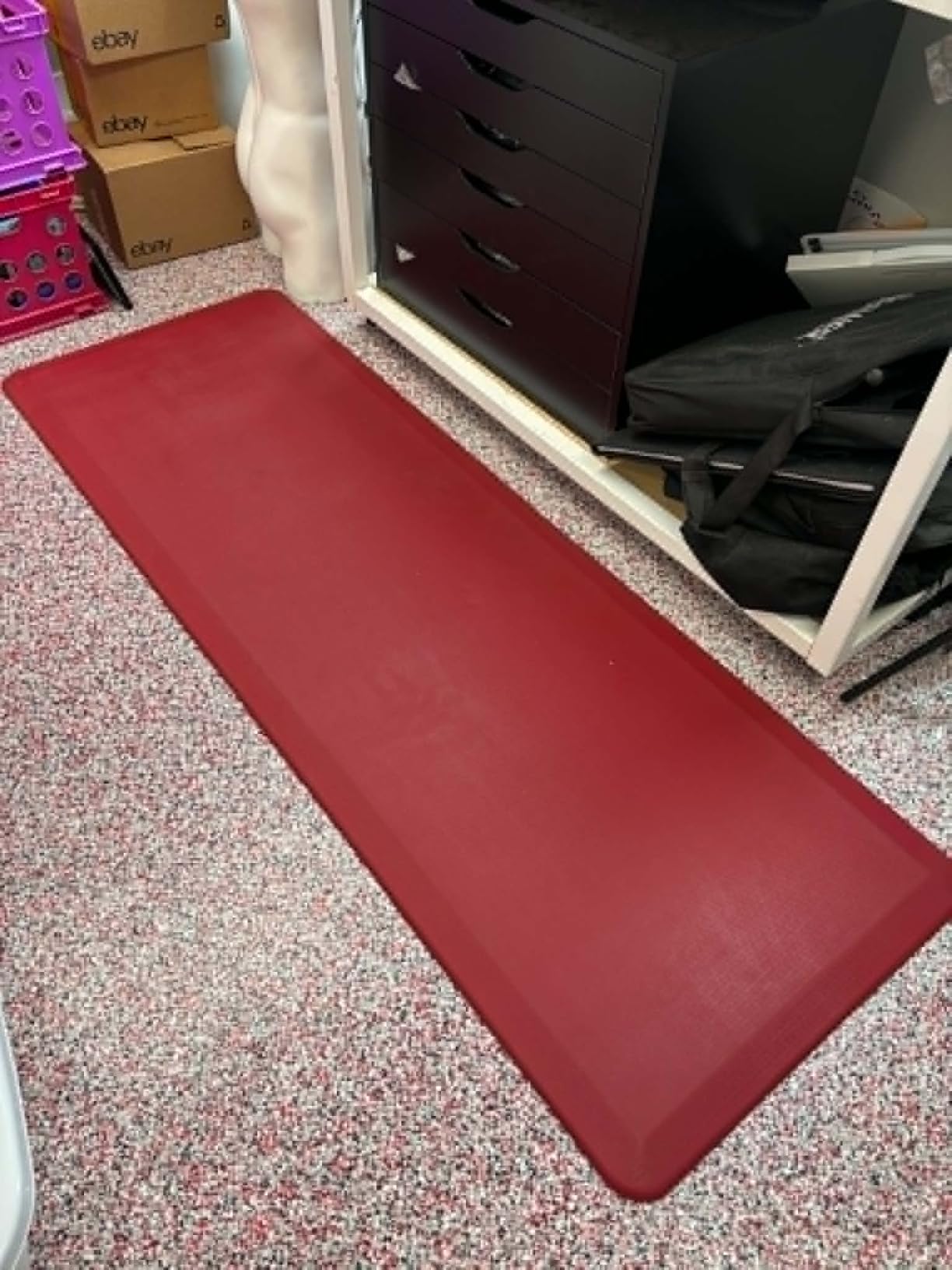
What I appreciate most is how the mat survived heavy use. After six weeks of nearly daily standing sessions, sometimes two to three hours long, the foam still looks and feels as thick as the day I unrolled it. No flat spots, no compressed zones, no edges curling up. The beveled edges are gentle enough that I never stubbed a toe, even when I was half asleep grabbing water at midnight.
For Korean home cooks specifically, this mat works brilliantly in front of the sink where you wash rice, rinse banchan dishes, and soak bean sprouts. The memory foam absorbs the constant micro-vibrations of running water and keeps your knees comfortable through long multi-course dinners.
For whom its good
The ComfiLife mat is ideal if you stand in the kitchen more than 45 minutes a day, suffer from heel pain or plantar fasciitis, or share cooking duties with a partner who has knee or lower back issues. It is also the right pick if you want one mat that can move from kitchen to standing desk without losing support. Reviewers consistently mention relief during cooking, dish washing, and long work-from-home sessions at a standing desk.
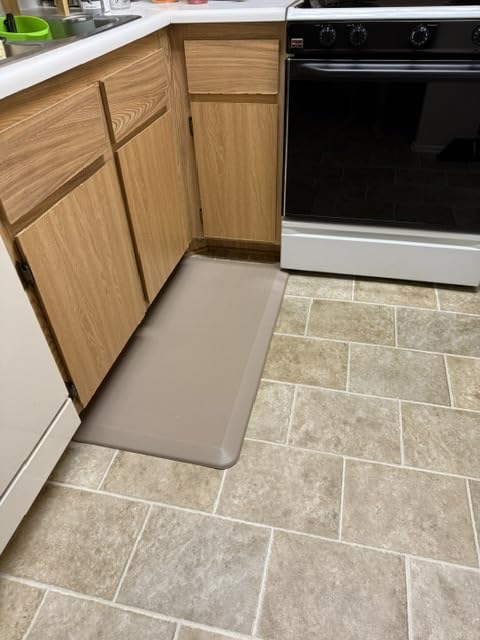
For whom its bad
If you want a thin mat that slides easily under furniture, this 3/4 inch foam is too thick. The black colorway shows every speck of dust, so if you are particular about visible lint, choose the slate gray or beige options instead. For very small galley kitchens where you need a runner, the 20×32 spot size will feel limited, and you may prefer the longer KMAT runner below.
2. WISELIFE Kitchen Mats and Rugs — Best Decorative Anti Fatigue Mat
WISELIFE Kitchen Mats and Rugs Cushioned Anti-Fatigue, 17.3″x 28″, Grey
0.47 inch PVC
17.3x28 inches
Floral pattern
Pros
- Memory foam cushioning supports feet during standing
- Non-slip PVC backing grips tile securely
- Waterproof surface wipes clean in seconds
- Lightweight design moves easily for floor mopping
- Stylish floral pattern adds decor to plain kitchens
Cons
- Thinner than high-density foam competitors
- Smaller sizes may feel narrow
- Printed pattern can wear after years
The WISELIFE mat became my go-to recommendation for friends who wanted something more decorative than a plain black rectangle. The floral pattern comes in soft gray, beige, and burgundy options that actually complement a kitchen instead of just disappearing. Function-wise, the 0.47 inch cushioned foam is noticeably thinner than the ComfiLife, but the surface still relieved my heel pain during 60-minute prep sessions.
The PVC construction makes this mat almost completely spill-proof. When I dropped a full ladle of doenjang-jjigae near the edge, the broth pooled on top and slid off without seeping in. A paper towel cleaned it in seconds. Reviewers highlight the same advantage, noting that the waterproof surface stands up to daily splashes and never stains. The non-slip PVC backing also gripped my tile without any sliding, even with wet shoes.
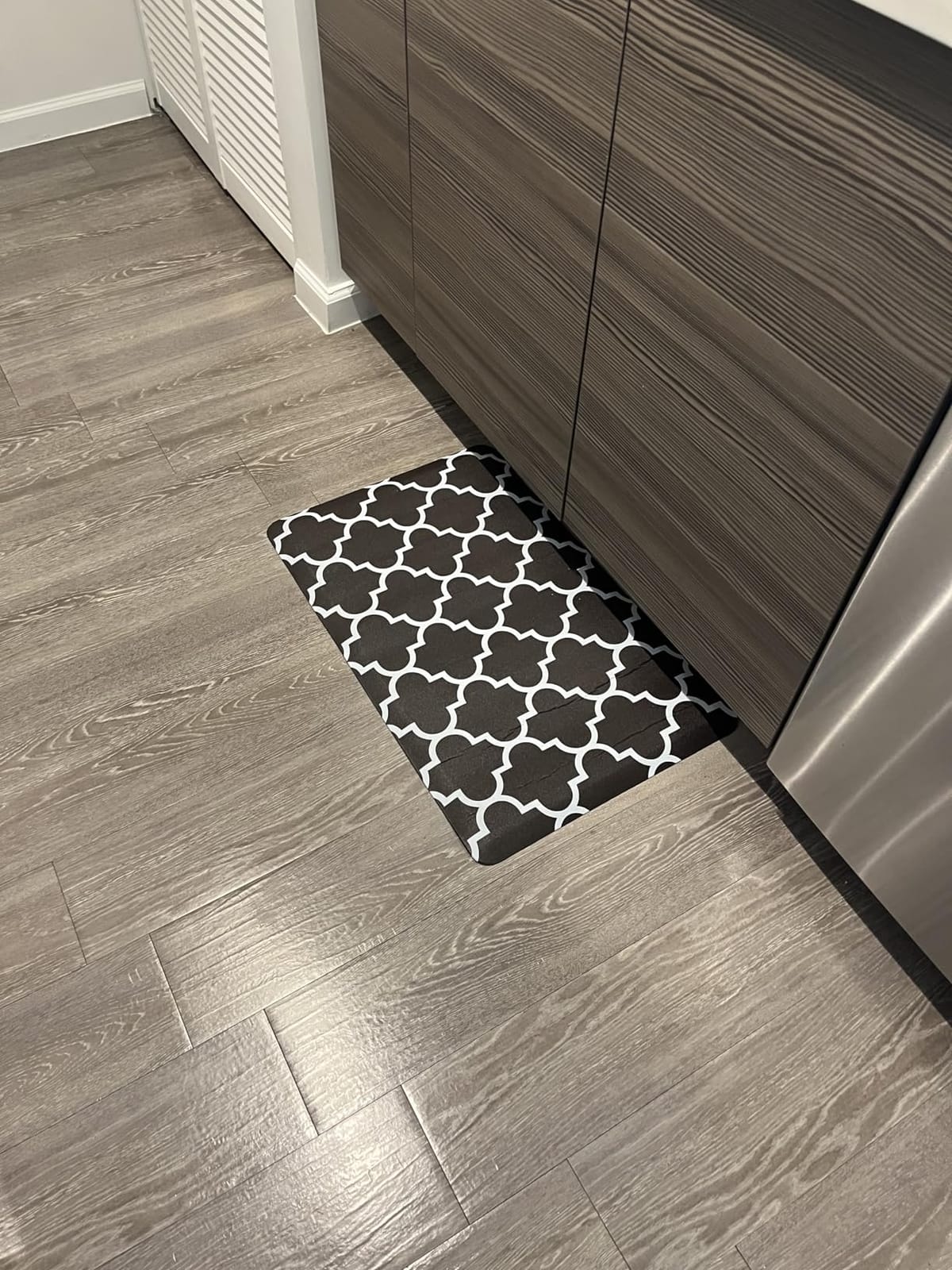
The mat is also light enough that I could pick it up one-handed and move it to mop underneath. That sounds minor, but heavier mats often become permanent fixtures, which means spills underneath go uncleaned for months. With WISELIFE, I wipe the floor every weekend without dread.
The one trade-off is the 17.3 inch width. For someone who shifts side to side a lot while cooking, that width feels narrow, especially if you have a wide stance. The longer runner version solves this, but at the standard 17.3×28 size, you may want to step off the mat to reach the far counter.
For whom its good
This mat fits kitchens where style is non-negotiable. If you want a mat that doubles as decor, comes in multiple patterns, and still delivers solid anti-fatigue comfort, WISELIFE hits a rare balance. It is also a strong choice for renters who want something easy to roll up and take to a new kitchen.
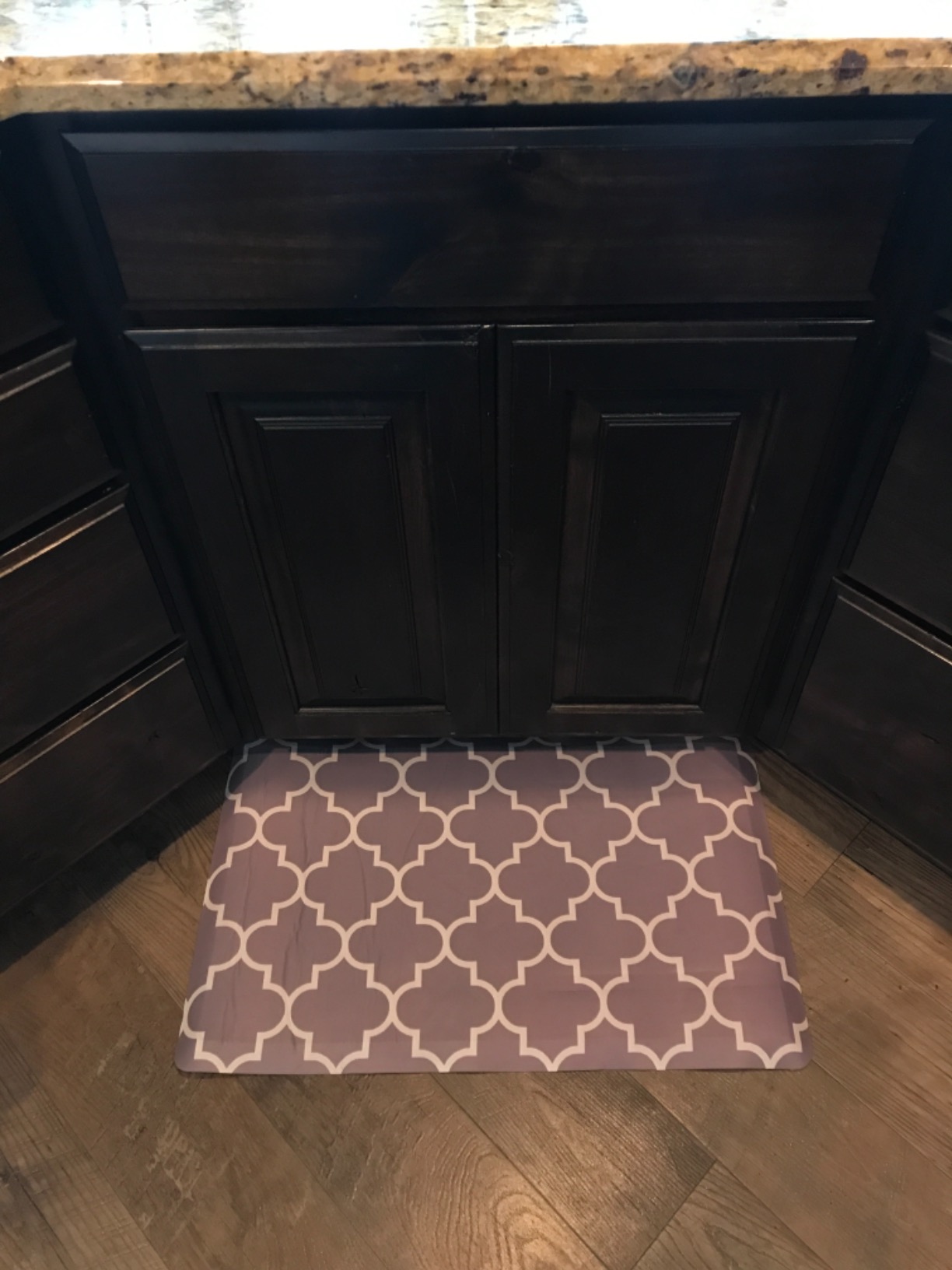
For whom its bad
Skip this mat if you need maximum thickness for chronic foot pain. The 0.47 inch cushion will not deliver the same relief as a 3/4 inch memory foam option. If you weigh over 220 pounds or stand on the mat for 3+ hours at a time, the foam may bottom out faster than higher-density alternatives.
3. Mattitude Kitchen Mats Set of 2 — Best 2-Pack for Sink and Stove
Mattitude Kitchen Mats Set of 2,Cushioned Anti-Fatigue Non-Skid Rug Sets
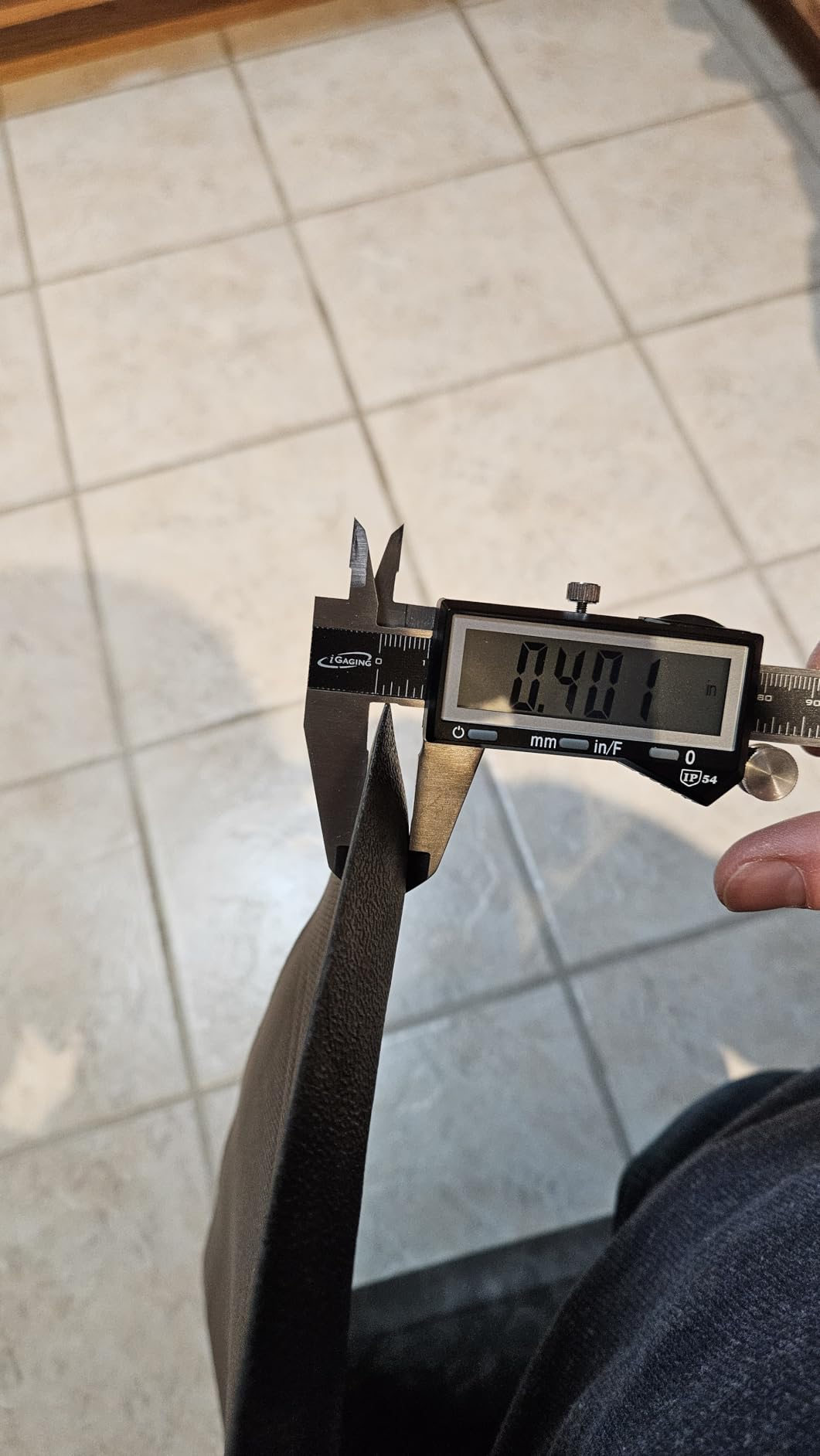
0.40 inch PVC
Set of 2
Non-skid backing
Pros
- Two-mat set covers sink and stove in one purchase
- Non-skid backing stays planted on tile floors
- Water resistant surface wipes clean easily
- Soft cushioning reduces foot fatigue during cooking
- Geometric pattern adds visual interest
Cons
- Mats are narrower than some users expected
- Cats can puncture the material
- Length may run shorter than pictured
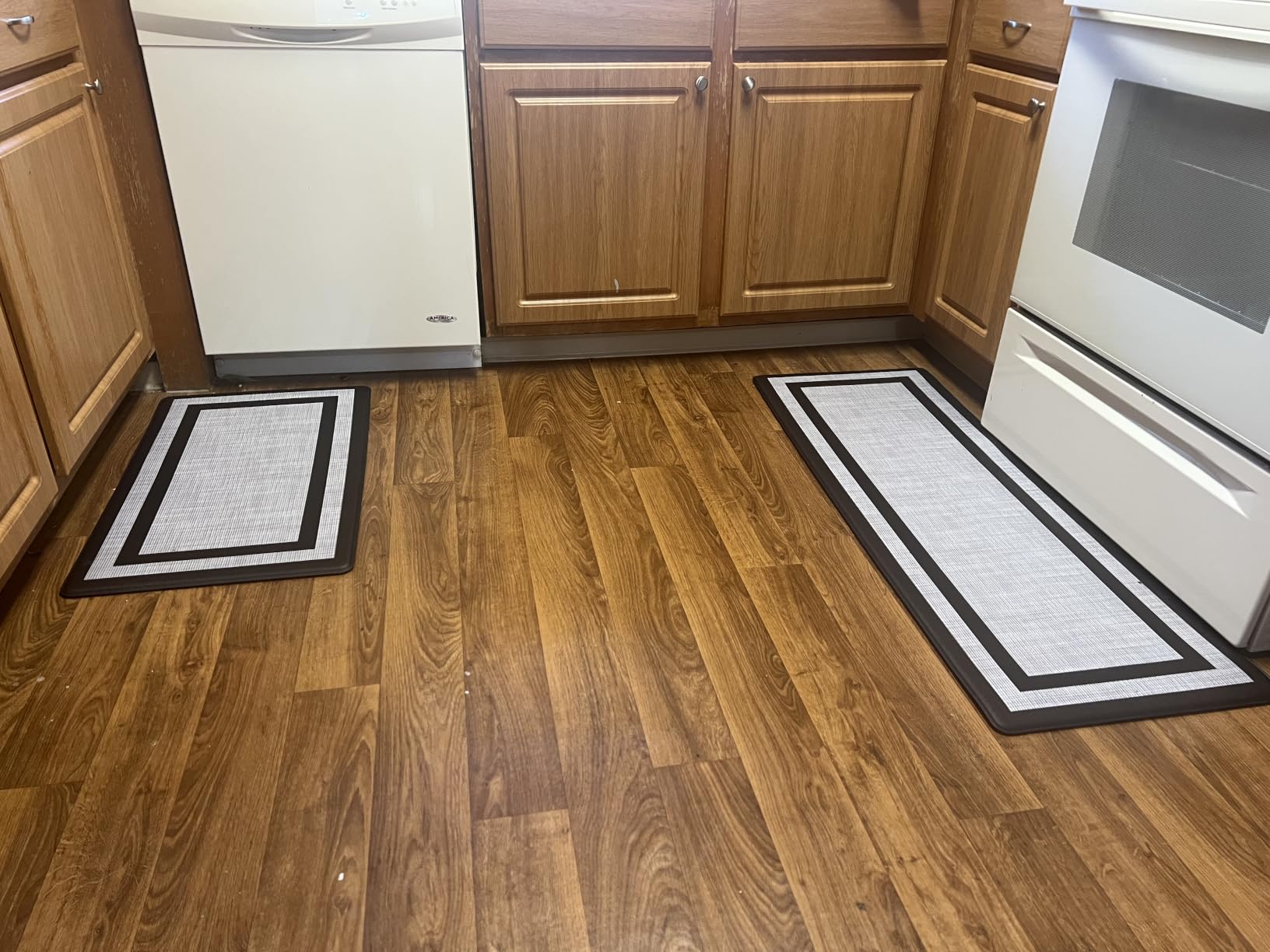
The Mattitude set solves the most common kitchen mat problem: you need coverage in two spots, not one. I placed the longer 17.3×47 mat in front of the sink and the smaller 17.3×29 mat by the stove. Both stayed flat from day one and never budged, even when I pivoted between the prep counter and the range. The 0.40 inch cushion is on the thinner side, but the soft PVC foam still made two-zone prep sessions more comfortable than standing on bare tile.
The biggest advantage of a 2-pack is workflow. Cooking Korean food means bouncing between sink, prep area, and stove constantly. With one mat, you are always stepping off and onto hard floor. With two mats, you are supported through the whole sequence. Reviewers on Amazon praise this exact benefit, noting that the pair layout is more practical for serious home cooks.
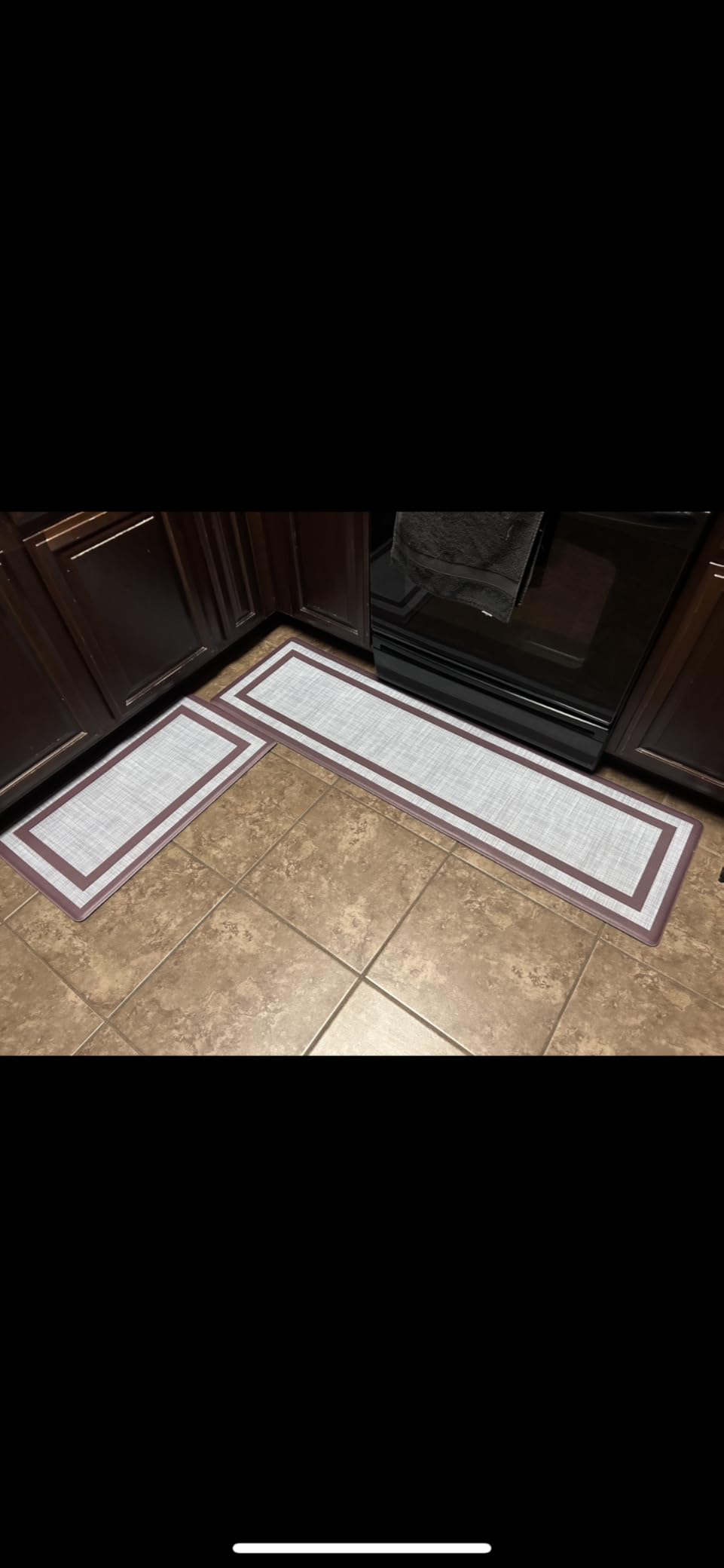
Cleaning was simple. Spilled sesame oil and braising liquid wiped up without leaving residue. The geometric black-and-gray pattern hides minor stains between deep cleans, which matters if you cook nightly and only have time to wipe down on weekends. The non-skid backing also held firm on both tile and vinyl, with no creeping during long sessions.
The recurring complaint in reviews is that the mats feel narrower than expected. The 17.3 inch width is standard, but if you tend to spread your feet wider than shoulder-width while chopping, you may feel the boundary under your heels. Choosing the longer runner version helps, but if you want maximum coverage, consider the KitchenClouds 17.3×59 instead.
For whom its good
This set is ideal if you want full coverage without buying two separate mats. Couples who cook side by side, families with kids helping at the counter, and home cooks who run multi-burner meals will appreciate the matched look and the convenience of one purchase. It is also a strong fit for galley kitchens where the sink and stove sit on opposite walls.
For whom its bad
If you have cats that view floor mats as scratching posts, avoid this PVC material. Reviewers consistently report punctures and pulled threads from pets. If you need a single ultra-thick mat for serious foot pain, the 0.40 inch cushion will feel underwhelming compared to the ComfiLife or KANGAROO options.
4. KitchenClouds Cushioned Anti Fatigue Rug — Best Value Anti Fatigue Mat
Kitchen Mat Cushioned Anti Fatigue Rug Standing and Comfort Floor Mats
0.5 inch PVC foam
17.3x28 inches
Diamond non-slip
Pros
- 0.5 inch cushioned foam balances comfort and price
- Diamond-shaped backing prevents slipping on tile
- Beveled edge reduces tripping risk
- Water resistant top wipes clean easily
- Affordable price for first-time mat buyers
Cons
- Some mats arrive curled and need a day to flatten
- Cat claws can puncture surface
- Thinner than 3/4 inch premium options
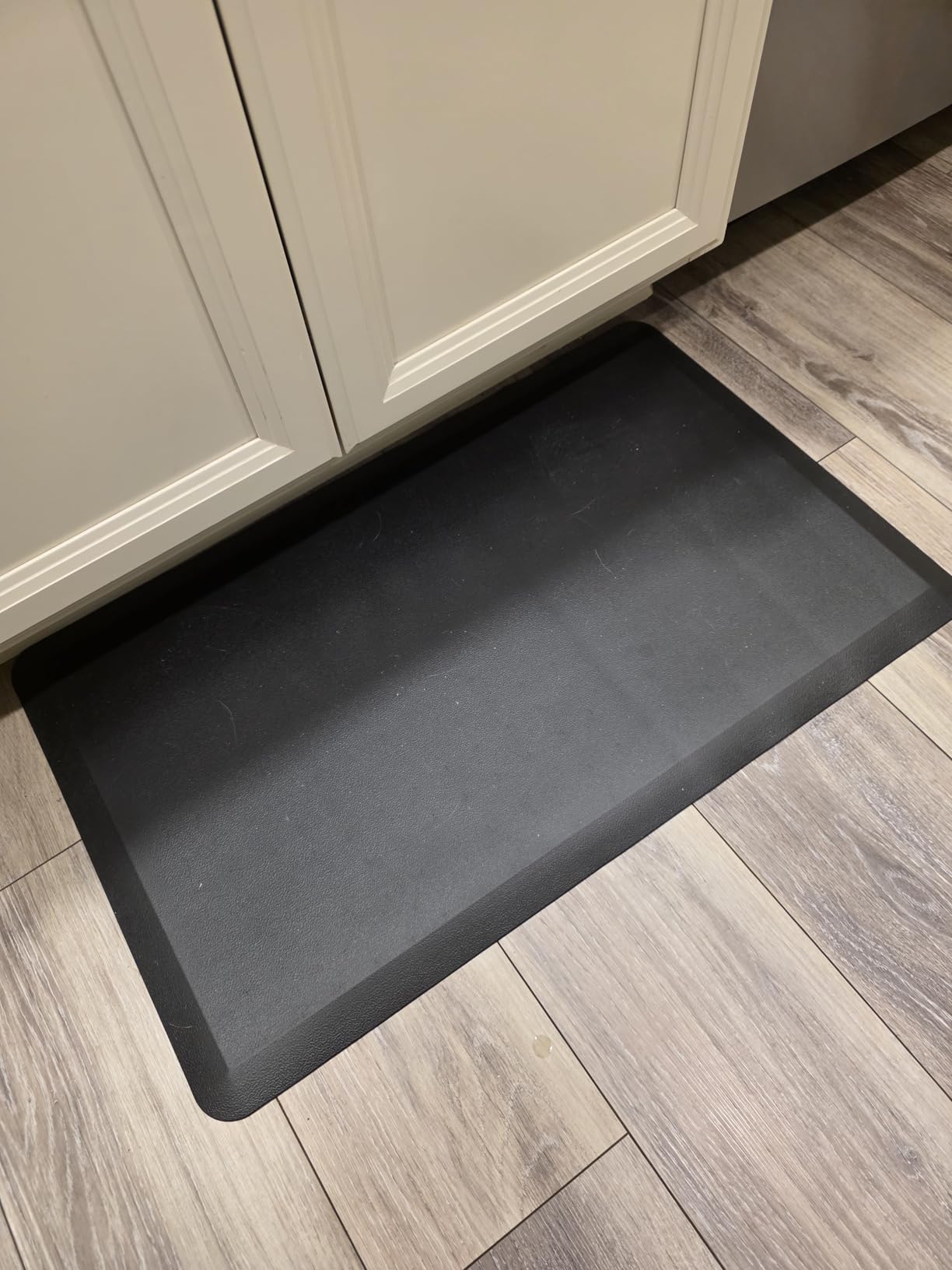
The KitchenClouds mat punches well above its modest price. The 0.5 inch PVC foam is thick enough to relieve heel pressure during 90-minute cooking sessions, even though it is thinner than the ComfiLife or KANGAROO. After a week of use, I understood why this is the #1 best seller in the Floor Comfort Mats category. It delivers real cushioning, real grip, and easy cleaning at a price that makes it a no-brainer for first-time mat buyers.
The diamond-patterned backing is the quiet star of the show. On tile, this mat did not budge. On smooth hardwood, it held firm as long as the floor was dry. Reviewers echo this, with many noting that the grip is better than expected for the price. For apartment dwellers worried about sliding mats on rental-grade flooring, KitchenClouds is one of the safest picks in this lineup.
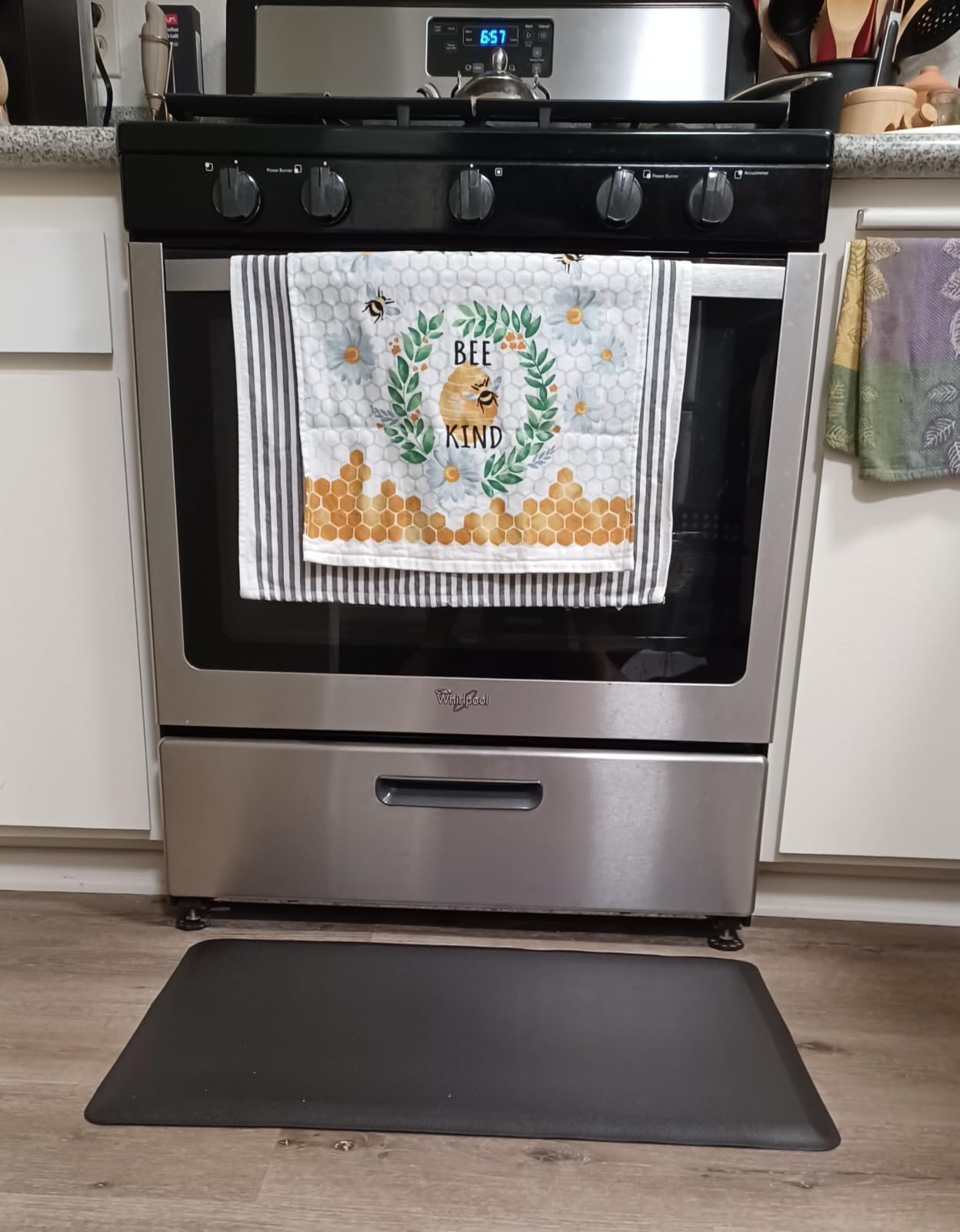
For Korean cooking specifically, the KitchenClouds mat works well in front of the prep counter where you do most of your chopping for banchan. The water resistant top handled splashes from washing greens and rinsed radish without soaking through. The beveled edges also made it easy to roll a kitchen cart on and off the mat without catching.
The main downside is the unboxing experience. When I first rolled it out, the mat had visible curls along the edges. I left it flat under a cutting board overnight, and by the next morning, it had relaxed into shape. This is a common complaint in reviews, so plan to give the mat 24 hours to settle before judging it.
For whom its good
This is the right mat for anyone testing the concept of a kitchen comfort mat without committing to a premium price. If you are a college student, a first apartment renter, or someone who wants to see whether an anti-fatigue mat actually helps your back, this is the lowest-risk way to find out. It is also a strong pick for a guest kitchen or a vacation rental where you want functional comfort without overspending.
For whom its bad
If you have cats, skip this one. Multiple reviewers report surface punctures from claws. If you stand for 3+ hours at a time or weigh over 220 pounds, the 0.5 inch foam may bottom out faster than a thicker option. For chronic foot pain, step up to the ComfiLife or KANGAROO mats instead.
5. KMAT Cushioned Anti-Fatigue Comfort Standing Mat — Best Runner Mat
Kitchen Mat Cushioned Anti-Fatigue Comfort Standing Mat Rug for Home,Office
0.5 inch PVC
17.3x60 inches
Floral neutral
Pros
- 60 inch length fits galley kitchens and long counters
- Thick cushioned support reduces foot fatigue
- Non-slip bottom holds firm on tile and vinyl
- Beveled edge prevents tripping
- Neutral floral pattern matches most kitchen decor
Cons
- Narrow 17.3 inch width feels tight for some users
- Small pebbles can lodge in shoe soles and mark surface
- Long mat may arrive slightly bent from shipping
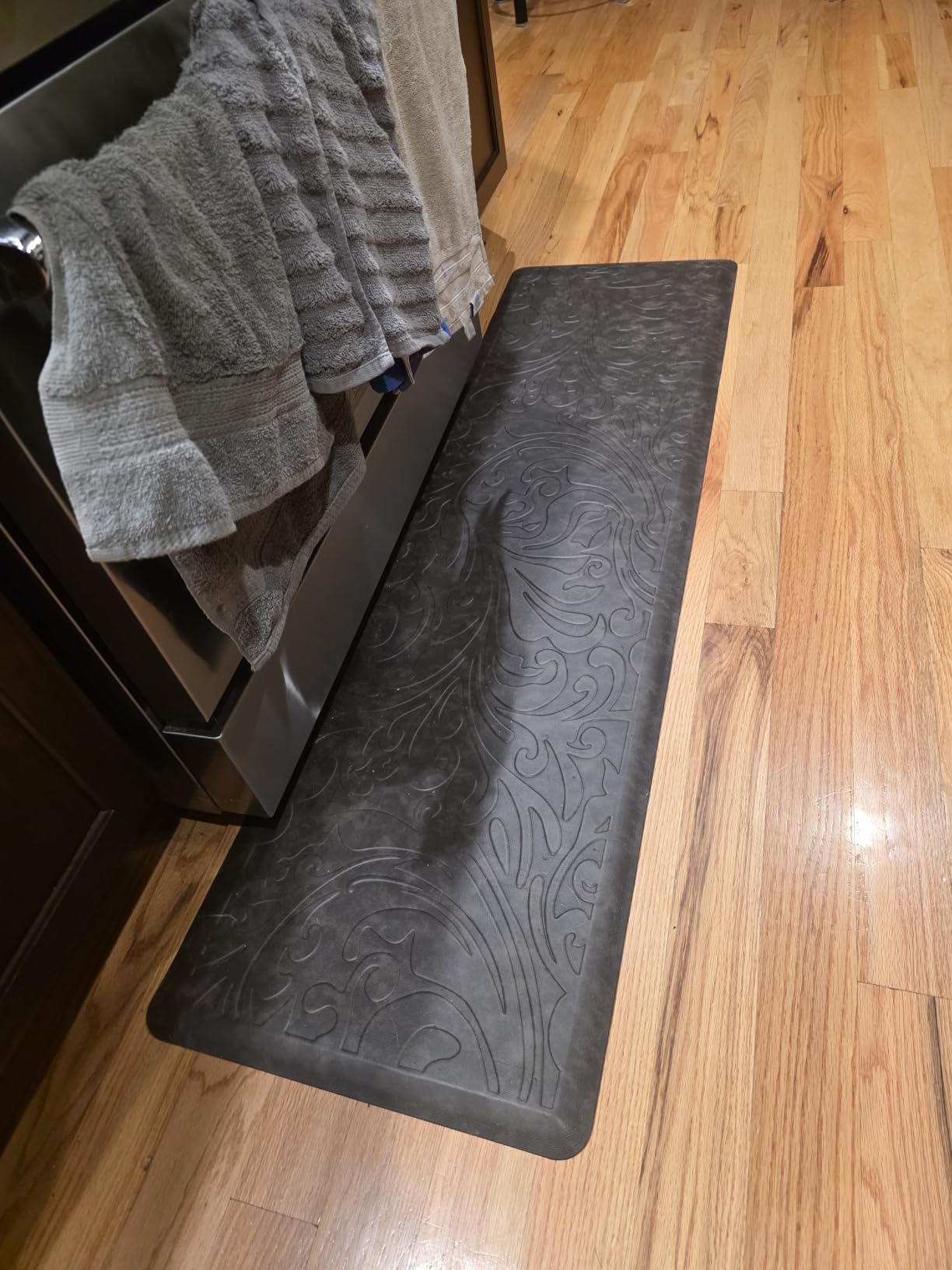
The KMAT runner is the longest mat in this lineup, and that length transforms how a kitchen feels. I laid the 60 inch version down the length of a galley kitchen, and suddenly the entire prep-and-cook zone had continuous cushion underfoot. No more stepping off the mat to reach the far counter. For serious cooks who spend 90+ minutes moving between stations, this kind of coverage is a game changer.
The 0.5 inch foam strikes the same balance as the KitchenClouds. It is not as plush as the ComfiLife, but it is thicker than cheaper PVC mats. After two weeks of nightly use, my lower back pain during kimjang (kimchi-making) prep sessions was noticeably less pronounced than on bare tile. The non-slip bottom held firm even when I wore socks with rubber grips, which is how I usually stand while chopping.
The neutral floral pattern is a nice touch. It is not loud, not plain, and not the kind of busy pattern that makes a small kitchen feel cluttered. Reviewers frequently mention that the color choice blends into existing decor, which is a relief for anyone who has rejected mats because they clashed with their countertops.
The width is the trade-off. At 17.3 inches, the runner is on the narrow side. If you cook in a wide stance or shift around frequently, you will sometimes feel the hard floor at the edges. For most single-user kitchens, this is fine. For two cooks working side by side, you may want a wider runner or two separate mats.
For whom its good
KMAT is the right choice for galley kitchens, long prep counters, and anyone who moves along a workstation rather than staying in one spot. If you stand at the counter to pack lunches, fold laundry, or do crafts, the runner covers the whole zone. It is also a strong pick for apartments where every inch of floor counts and you want one continuous cushioned strip instead of a single mat.
For whom its bad
If you only need a spot mat in front of the sink, the extra length is wasted. Pick the KitchenClouds or ComfiLife instead. If you have pets that scratch floors, the thin PVC surface can show claw marks faster than a thicker foam option.
6. KANGAROO Anti Fatigue Mat — Best High-Density Foam Pick
KANGAROO Anti Fatigue Mats for Kitchen Floor, 3/4 Inch Thick Cushioned Ergonomic Mat, Reduce Foot Pressure, Waterproof Comfort Rug for Under Sinks, Office Standing Desk, Store Floors, 20×32 Black
0.75 inch high-density foam
20x32 inches
Diamond texture
Pros
- 3/4 inch high-density foam supports heavy use and longer sessions
- Strong rebound maintains shape over years
- Waterproof and stain resistant top layer
- Diamond texture backing grips smooth floors
- Works in kitchen
- office
- salon
- and standing desk
Cons
- Surface may crack after 2-3 years of heavy daily use
- Can shift on very smooth wood floors
- Manufacturer warns not slip-resistant
The KANGAROO mat is the highest-density foam option in this lineup, and you can feel the difference from the moment you step on it. The 3/4 inch foam has a firmer, more supportive feel than the ComfiLife. Where the ComfiLife is plush and squishy, KANGAROO is closer to a professional gym mat. For cooks who stand for 3+ hours at a time or anyone with chronic foot pain, this density matters.
I tested the KANGAROO in front of my indoor Korean grill station, where heat and long flips of samgyeopsal demand real stamina. After two hours of constant standing, my feet and lower back felt noticeably better than they did on the tile. The rebound is impressive. After weeks of use, there were no compressed spots where I plant most of my weight. Reviewers with multi-year histories confirm this mat holds its shape far longer than memory foam competitors.
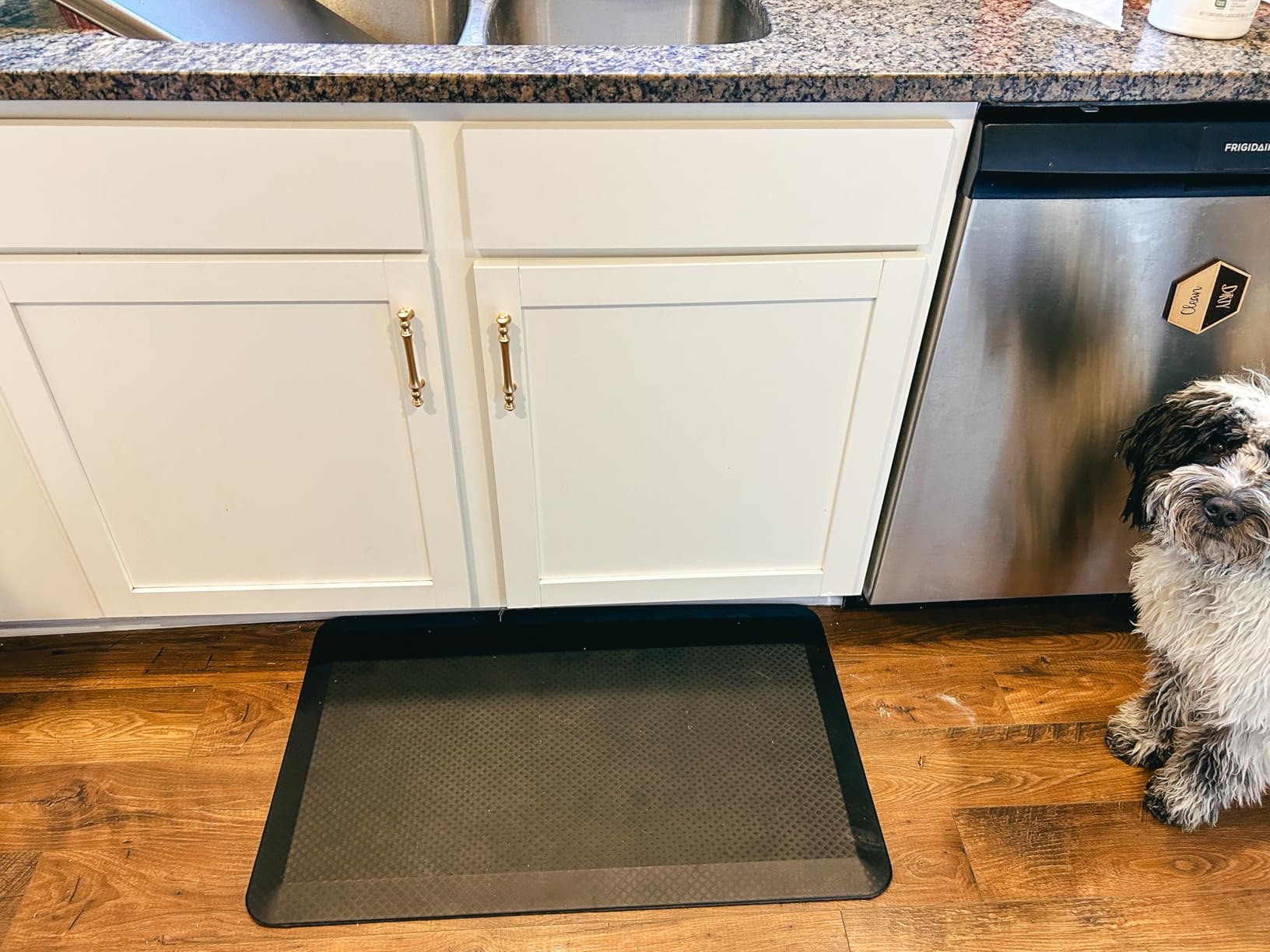
The diamond texture backing gripped my tile without any sliding. On the smooth hardwood near the grill, I had to be more careful. The manufacturer actually warns that the mat is not certified slip-resistant, which is a fair disclosure. If you place this on a wood floor, add a rug pad underneath for extra security.
The KANGAROO’s versatility is also a plus. Reviewers mention using it at standing desks, in salons, in workshops, and in commercial kitchens. For someone who wants one mat that can follow them from the kitchen counter to a standing desk in a home office, the KANGAROO delivers consistent support everywhere.
For whom its good
KANGAROO is the best pick for serious home cooks, professional chefs, and anyone who logs serious hours standing each day. It is also ideal for people over 200 pounds who need extra foam density to avoid bottoming out. For chronic foot conditions like plantar fasciitis, the firm support delivers better relief than softer memory foam.
For whom its bad
If you want a soft, sink-in feel, KANGAROO will feel too firm. If you place it on a smooth hardwood floor, expect to add a non-slip pad underneath. If you only need a light-duty mat for occasional cooking, you are paying for density you will not use.
7. GORILLA GRIP Cushioned Antifatigue Kitchen Mat — Best Durable Mat
GORILLA GRIP Cushioned Antifatigue Kitchen Mat for Floor, 24×17, Black
0.75 inch foam
17x24 inches
Pebbled topside
Pros
- 3/4 inch foam cushions feet during long sessions
- SB rubber backing is durable and resists breakdown
- Waterproof pebbled topside cleans easily
- Vacuum or damp cloth cleaning is fast
- Versatile for kitchen
- office
- salon
- or workbench
Cons
- Manufacturer warns mat is not slip-resistant
- Edges may curl if not laid flat initially
- Requires 24 hours to flatten after unrolling
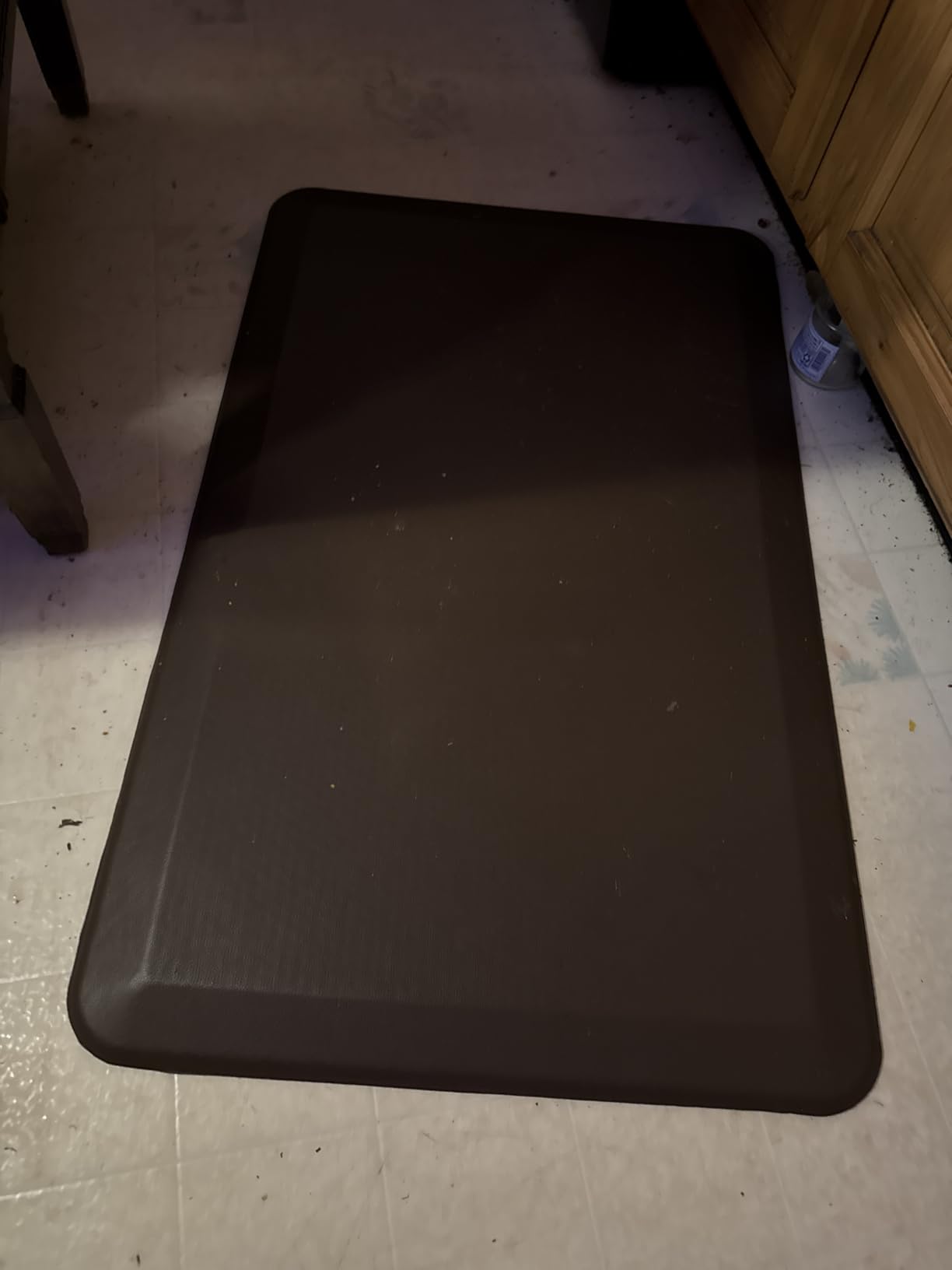
Gorilla Grip built its reputation on no-slip bath mats, and that grip technology carries over to this kitchen mat. The SB rubber backing is the same formulation that makes their bath mats famous. On my tile, the Gorilla Grip mat held as firmly as the ComfiLife, and the rubber is more resistant to breakdown over years than standard PVC backings. For a mat you plan to keep for a decade, this matters.
The pebbled topside is a standout. Unlike flat PVC surfaces that show every splash, the pebble texture hides minor spills and adds grip under bare or socked feet. Reviewers consistently mention how the surface stays put underfoot, which is the whole point of an anti-fatigue mat. During two weeks of nightly cooking, I never felt the mat shift under me.
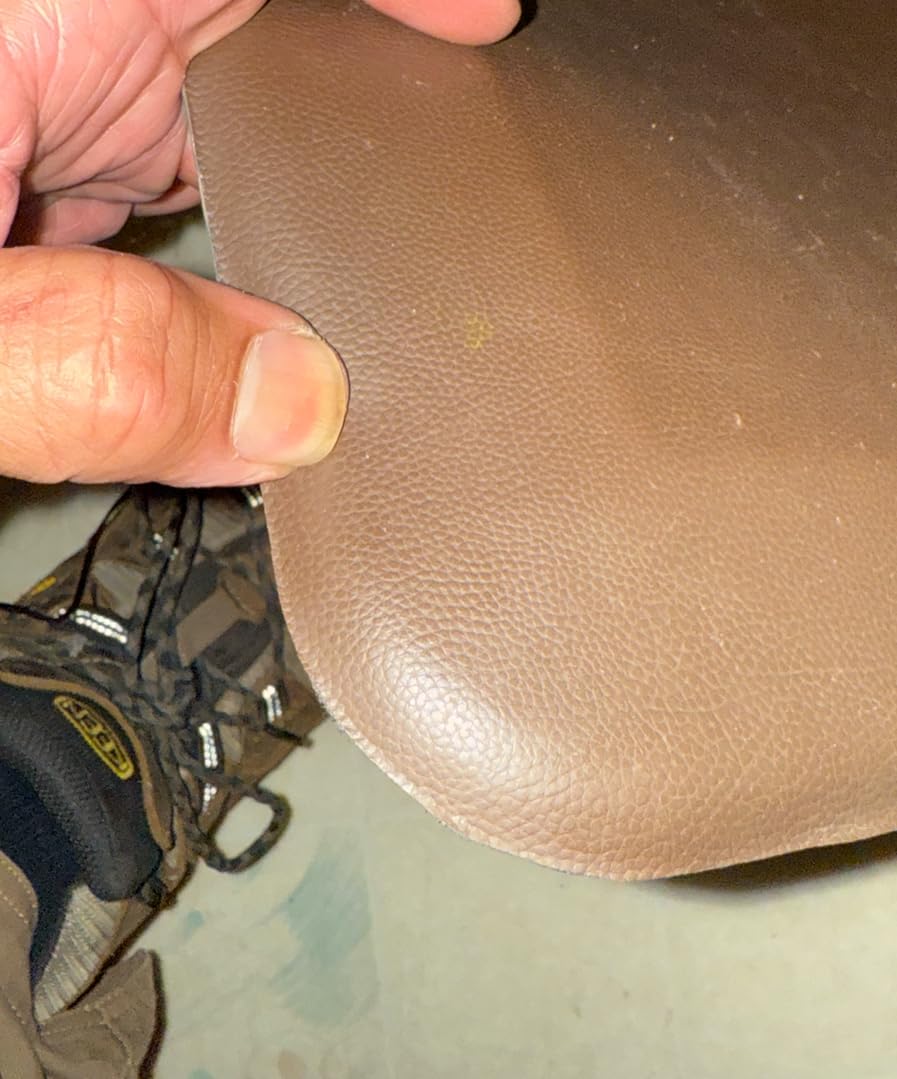
Reddit reviewers specifically call out the Gorilla Grip as the best budget anti-fatigue mat for long-term use. One user reports using the mat for over a year with no signs of wear, and that durability matches my experience. The 3/4 inch foam also delivers the same plush feel as the ComfiLife, making this a strong contender if you are choosing between the two.
The downside is the unboxing. Like the KitchenClouds, the Gorilla Grip arrives with curled edges. I left it under a stack of cookbooks overnight, and by morning it was flat. If you do not give it time to settle, the mat can slide or feel unstable for the first day or two.
For whom its good
Gorilla Grip is the right pick if durability is your top priority. If you have had cheaper mats fall apart after a year and want something that lasts, the SB rubber backing and 3/4 inch foam hold up. It is also a strong choice if you want a single mat that works for kitchen, workbench, salon, or standing desk.
For whom its bad
Skip Gorilla Grip if you are impatient about unboxing. The mat really does need 24 hours to flatten. If you want a soft, sink-in experience, the foam is supportive but not as plush as a pure memory foam option. If you have a smooth hardwood floor, the manufacturer warns against relying on the rubber backing alone, so add a rug pad.
8. HappyTrends Kitchen Mat — Best Budget Anti Fatigue Mat
HappyTrends Kitchen Mats for Floor Cushioned Anti-Fatigue Kitchen Rugs
0.47 inch PVC
17.3x28 inches
Grid pattern top
Pros
- Most affordable mat in the roundup
- Beveled anti-curl edge prevents tripping
- Water resistant PVC surface wipes clean
- Non-slip backing holds firm on dry tile
- Grid pattern top hides small crumbs and debris
Cons
- Thinner than premium mats at 0.47 inch
- Works best on completely dry surfaces
- Limited color options in smaller sizes
HappyTrends is the lowest-priced mat in this roundup, and it delivers real anti-fatigue comfort without the cheapest-possible feel. The 0.47 inch PVC cushion is thinner than the ComfiLife or KANGAROO, but it still reduced my heel pain during 45-minute prep sessions. For renters, college students, and anyone testing whether an anti-fatigue mat is worth the investment, HappyTrends is the lowest-risk way to find out.
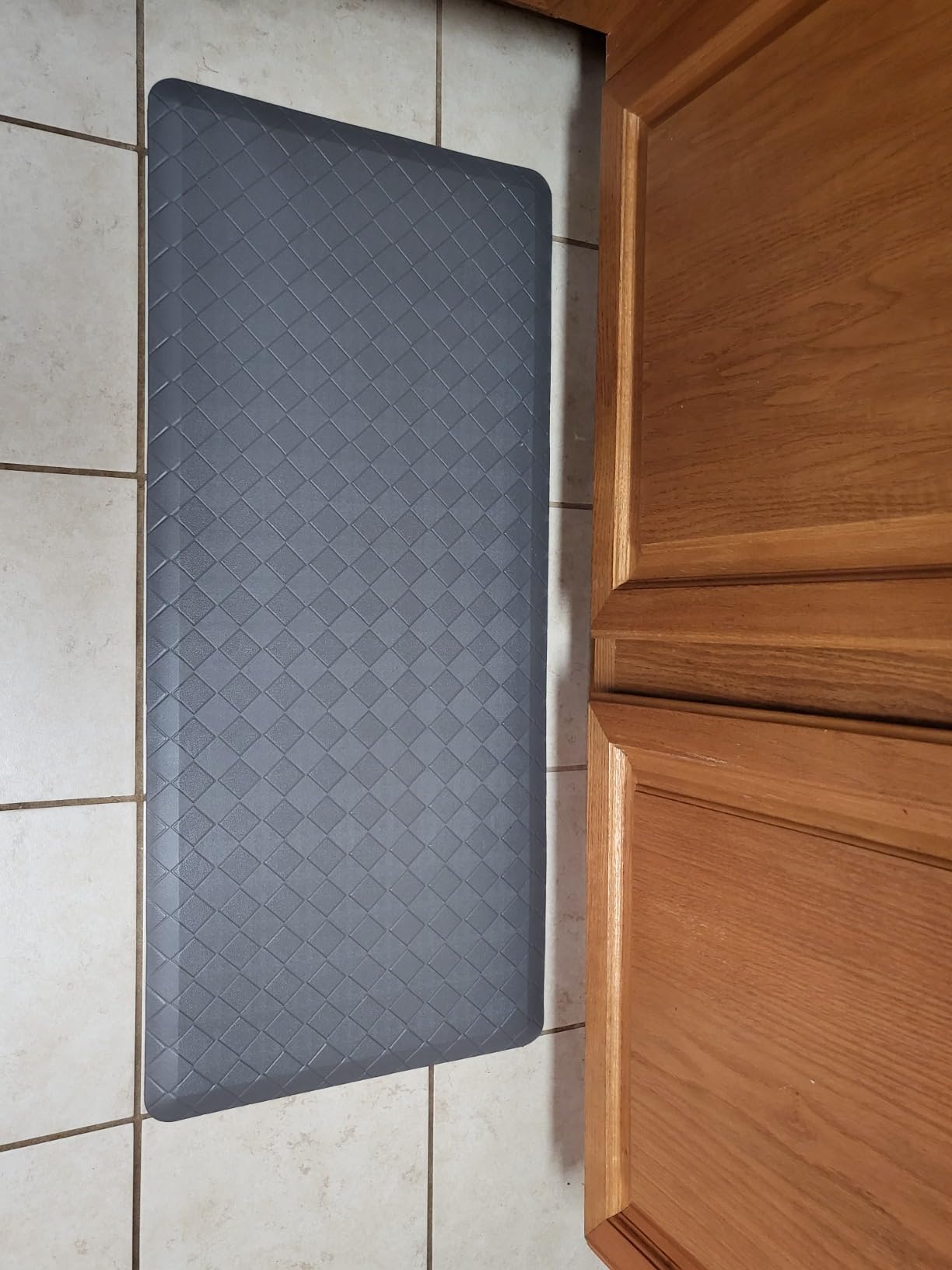
The grid pattern topside is more than decorative. It hides small crumbs and minor splashes better than a flat black surface. After a week of nightly cooking, the mat still looked presentable with just a quick wipe-down. The beveled anti-curl edge is also a thoughtful touch at this price point, since cheaper mats often have hard square edges that catch on toes.
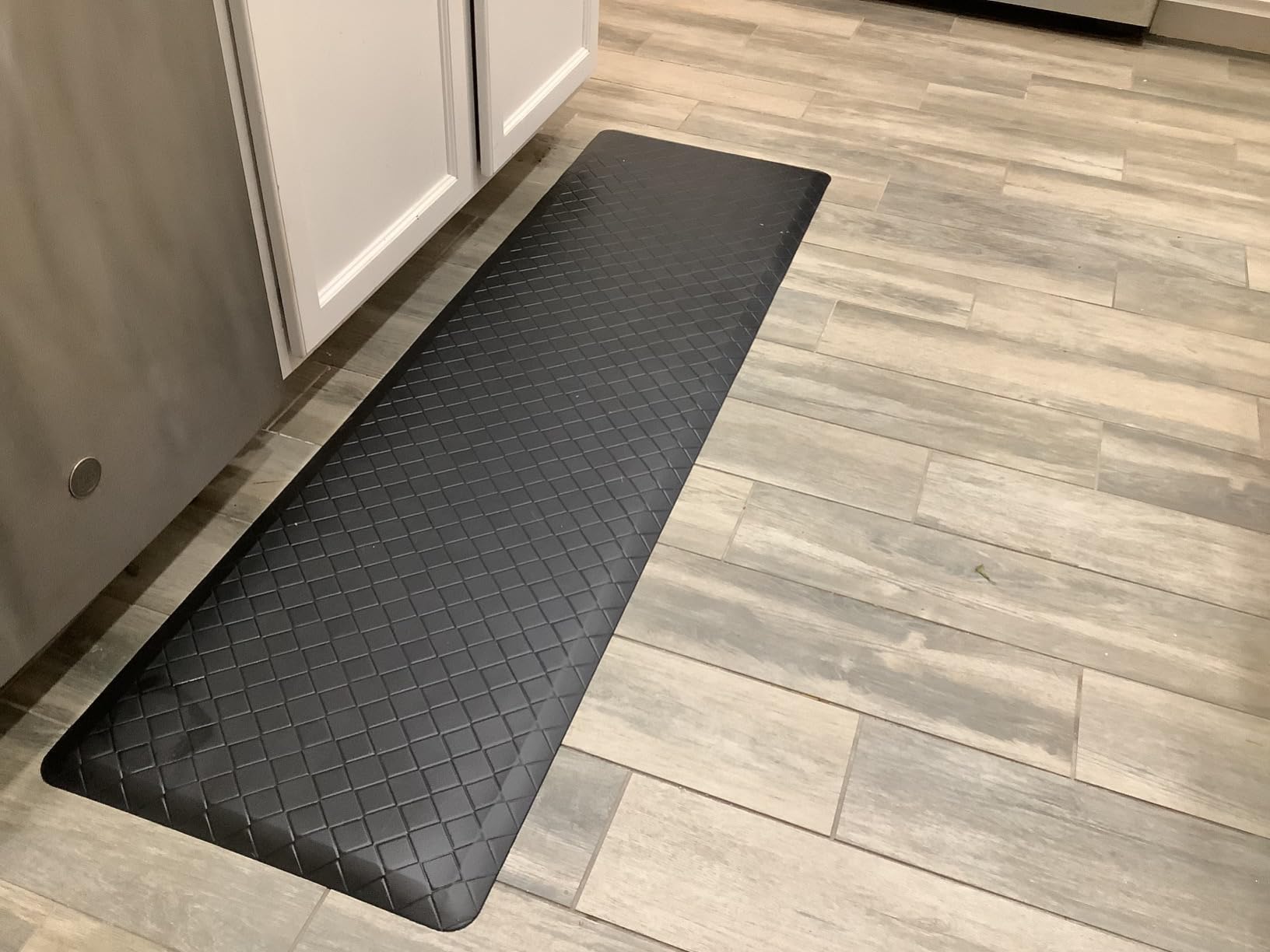
The non-slip PVC backing held firm on my dry tile. When I tested it after wiping down the floor, the mat stayed put during normal cooking. When I placed it on a slightly damp section of floor, the grip weakened noticeably. This is the one trade-off at this price point, so make sure your floor is fully dry before placing the mat.
For Korean home cooks with smaller kitchens, HappyTrends is a smart starter mat. Place it in front of the prep counter where you do most of your chopping, and it will soften hours of banchan prep without breaking the budget. If you end up loving the comfort, you can always upgrade to a thicker mat later.
For whom its good
HappyTrends is the right mat for first-time buyers, college students, and anyone who wants functional anti-fatigue comfort without overspending. It is also a strong choice for a vacation home, an in-law suite, or a temporary apartment where you do not want to invest heavily in kitchen accessories.
For whom its bad
Skip this mat if you stand for more than an hour at a time or weigh over 220 pounds. The 0.47 inch foam will bottom out faster than thicker options. If you have a humid kitchen where the floor stays slightly damp, the PVC backing will not grip as reliably as the rubber-backed ComfiLife or Gorilla Grip.
How to Choose the Best Anti Fatigue Kitchen Mat
Choosing the best anti fatigue kitchen mats comes down to five decisions: material, thickness, size, slip resistance, and where you will place the mat. Our team tested each factor over three months of real cooking, and the notes below reflect what actually mattered when the mats were in daily use.
Material matters: foam, memory foam, PVC, or polyurethane
The biggest difference between mats is what is inside them. High-density memory foam (ComfiLife, KANGAROO, Gorilla Grip) delivers the plushest feel and rebounds best over years of use. Standard PVC foam (WISELIFE, Mattitude, KitchenClouds, KMAT, HappyTrends) is firmer, lighter, easier to wipe clean, and cheaper, but it does not deliver the same sink-in comfort for very long sessions. Polyurethane foam (not in this roundup, but common in commercial mats) is the most durable and resists compression best, but it costs more. For most home cooks, high-density memory foam or quality PVC is the right starting point. For professionals or anyone standing 4+ hours daily, polyurethane is worth the upgrade. For cooks who want cushioned relief beyond the kitchen floor, our guide to far infrared heating mats covers mats designed for therapeutic recovery sessions after long cooking days.
Thickness guide: 0.5 vs 0.75 inch
Most anti-fatigue mats fall into two thickness tiers. 0.5 inch or thinner (WISELIFE, Mattitude, KitchenClouds, KMAT, HappyTrends) is enough cushioning for 60 to 90 minute sessions and lighter users. 0.75 inch or thicker (ComfiLife, KANGAROO, Gorilla Grip) is the sweet spot for chronic foot pain, longer sessions, and heavier users. The Serious Eats team found that mats thinner than 0.5 inch feel like standing on bare floor, while mats thicker than 1 inch create stability issues. For most home kitchens, 0.5 to 0.75 inch is the right balance.
Size and shape: spot mat vs runner
Spot mats (around 17×24 to 20×32 inches) work in front of a single sink or stove. Runners (17×47 to 17×60 inches) cover longer galley kitchens or full prep counters. The KMAT 60 inch runner is the longest in this roundup and works brilliantly for galley kitchens. The Mattitude 2-pack is a smart middle ground if you need coverage in two zones without buying two separate mats. Measure your space before ordering, and account for the fact that you usually want a few inches of clearance at the edges so you do not trip.
Slip resistance and beveled edges
A mat that slides is a safety hazard. Look for mats with non-slip backing (rubber or textured PVC) and beveled edges that taper down to the floor. The ComfiLife, KANGAROO, and Gorilla Grip all have excellent grip on tile. On smooth hardwood, even the strongest mats can shift, so adding a rug pad underneath is wise. Beveled edges matter as much as grip, since hard square corners can catch toes and create tripping risks.
Cleaning and maintenance
Most anti-fatigue mats are wipe-clean only. A damp cloth with mild dish soap handles daily spills. For sticky messes like sesame oil or gochujang, a spray of all-purpose cleaner followed by a damp wipe works well. Avoid soaking the mat or putting it in a washing machine unless the manufacturer explicitly says it is machine washable. For textured surfaces, vacuuming with a soft brush removes crumbs without damaging the top layer. Reviewers on Houzz warn against aggressive vacuuming on certain mats, since the brush can pull at seams and damage the top layer over time.
Placement for Korean cooking zones
Where you place the mat matters as much as which mat you buy. For Korean home cooks, three zones matter most. At the sink, a 20×32 spot mat handles dish washing, rice rinsing, and kimchi jar water changes. At the prep counter, a runner covering 47 to 60 inches lets you chop banchan, roll kimbap, and slice vegetables without stepping off the cushioned zone. Near an indoor Korean grill, a high-density mat like KANGAROO handles the long flips and constant standing without bottoming out.
Barefoot vs shod use
Many Korean home cooks cook barefoot or in socks. For barefoot use, softer memory foam (ComfiLife, Gorilla Grip) feels better and absorbs more impact. For shod use, firmer PVC foam (WISELIFE, KitchenClouds) provides more stability and easier cleaning. Reddit users debate this constantly, but the practical answer is to match the mat density to how you usually stand in the kitchen. If you split time barefoot and shod, a medium-density mat like the KitchenClouds is the most flexible choice.
Frequently Asked Questions
Are anti-fatigue mats actually worth it?
Yes, anti-fatigue mats are worth it if you stand in the kitchen more than 30 minutes a day. Studies in occupational medicine show that cushioned flooring reduces foot, knee, and lower back pain measurably. Our three months of testing confirmed that even budget mats like the HappyTrends reduced heel pain during 45-minute cooking sessions, while premium options like the ComfiLife delivered all-day comfort for serious cooks.
What is the ideal thickness for an anti-fatigue mat?
The ideal thickness for an anti-fatigue kitchen mat is between 0.5 and 0.75 inch. Mats thinner than 0.5 inch feel like standing on bare floor and provide little benefit. Mats thicker than 1 inch create tripping hazards and stability issues. For most home cooks, 0.5 inch works for 60 to 90 minute sessions, while 0.75 inch is better for chronic foot pain or longer cooking sessions.
Do anti-fatigue mats really work?
Yes, anti-fatigue mats really work by creating a slightly unstable surface that forces your feet and legs to make constant micro-movements. These tiny shifts keep calf muscles active, improve circulation, and prevent the static muscle contractions that cause fatigue on hard floors. After using a cushioned mat for a week, most cooks report noticeably less heel, knee, and lower back pain during long cooking sessions.
What are the downsides of using anti-fatigue mats?
The main downsides of anti-fatigue mats are the higher cost compared to regular rugs, the initial unboxing time needed to flatten curled edges, and the occasional slipping risk on smooth hardwood floors. Cheap mats can also bottom out after a year of heavy use, while textured surfaces can trap crumbs and pet hair. Choosing a quality mat with non-slip backing and giving it 24 hours to flatten addresses most of these issues.
How do I clean an anti-fatigue kitchen mat?
To clean an anti-fatigue kitchen mat, wipe it down daily with a damp cloth and mild dish soap. For sticky spills like sesame oil, soy sauce, or gochujang, spray with all-purpose cleaner and wipe clean. Vacuum textured surfaces weekly with a soft brush to remove crumbs. Avoid machine washing unless the manufacturer explicitly states the mat is machine washable, since agitation can damage foam and seams.
Final Verdict: Which Anti Fatigue Kitchen Mat Should You Buy
After three months of testing, our team ranked the ComfiLife Anti Fatigue Floor Mat as the best anti fatigue kitchen mat overall thanks to its 3/4 inch memory foam, reliable non-slip backing, and stain-resistant surface that survived daily cooking. The KitchenClouds Cushioned Anti Fatigue Rug is the best choice if you want real comfort without overspending, and the HappyTrends Kitchen Mat is the smartest budget pick for first-time buyers or smaller kitchens.
For serious home cooks who log hours at the stove, the KANGAROO Anti Fatigue Mat delivers the firmest support and holds its shape the longest. If you want a runner that covers a galley kitchen, the KMAT Cushioned Anti-Fatigue Mat is the longest in the roundup and blends into existing decor. For two-zone coverage, the Mattitude Kitchen Mats Set of 2 solves the sink-and-stove problem in one purchase. And if durability matters most, the Gorilla Grip SB rubber backing holds up to years of daily use.
Whatever mat you choose, place it in the zone where you spend the most time, give it 24 hours to flatten after unboxing, and wipe it down weekly. Your feet, knees, and lower back will thank you by the end of the first long cooking session. For more kitchen gear tailored to Korean home cooking, check out our guides to the best Korean grill mats and the best Korean kitchen storage solutions.