
If you want one appliance that both traps particles and kills what it catches, the best air purifiers with UV light are the models that pair a real H13-class HEPA filter with a sealed germicidal UV-C chamber. The GermGuardian AC4825E is the one we kept coming back to after six weeks of running units in a 500 sq. ft. open-plan living space, a 150 sq. ft. bedroom and a damp basement corner. It has the largest review base of anything we tested, a filter you replace once a year instead of every month, and a Zero Ozone Verified certification that matters more than most marketing claims.
Before we get to the list, the part almost nobody explains well: UV light in an air purifier is a finishing step, not a filtering step. A fan pulls room air through a pre-filter, an activated carbon layer and a HEPA filter, and the cleaned air then passes over a UV-C lamp sealed inside a metal chamber. The light at roughly 254 nanometers disrupts the nucleic acids of bacteria, viruses and mold spores so they cannot reproduce. Anything the HEPA stage already trapped stays trapped. So the filter grade still does most of the work, and a weak UV chamber adds only a modest margin on top.
That is also why dwell time is the number no retail listing gives you. Air that rushes through the chamber in a fraction of a second gets less exposure than air that lingers, which is exactly the skepticism we keep seeing from readers on r/AirPurifiers and r/IsItBullshit. Most of those owners measure particle counts rather than UV kill rates, and they tend to say the HEPA stage delivers nearly all the improvement they can feel. We treat UV as a useful second layer, not the reason to buy.
This guide was last updated in October 2026. We compared ten UV-equipped models across filtration grade, rated coverage, noise, certifications, controls, and the real running costs that show up in year two. If you are furnishing a nursery first, our nursery air purifier guide covers the quieter units in detail, and our guide to Korean air purifier brands is worth a look if you want sealed-steel build quality.
Top 3 Picks: Best Air Purifiers With UV Light in 2026

GermGuardian AC4825E
- HEPA PURE to 0.1 microns
- UV-C chamber
- 153 sq ft bedroom in 12.5 min
- Zero Ozone Verified

GermGuardian AC4300BPTCA
- 743 sq ft coverage
- UV-C plus carbon layer
- 3 speeds at 60 dB
- 3-year warranty

Pure Enrichment PEAIRPLG
- 4-stage with H13 True HEPA
- UV-C for viruses
- 30 dB sleep mode
- 5-year warranty
Quick Overview: Every Air Purifier With UV Light We Tested in 2026
The table below lists all ten models in the order we rank them, with the specs that actually change a purchase decision: filter grade, rated coverage, how the UV stage is built, and the certification status. Coverage figures are the manufacturers’ rated numbers, and several of them are optimistic in real rooms.
| Product | Specifications | Action |
|---|---|---|
| GermGuardian AC4825E |
|
Check Latest Price |
| GermGuardian AC4300BPTCA |
|
Check Latest Price |
| Pure Enrichment PEAIRPLG |
|
Check Latest Price |
 AIRTHEREAL APH320 AIRTHEREAL APH320 |
|
Check Latest Price |
 AZEUS GL-FS32 AZEUS GL-FS32 |
|
Check Latest Price |
 GermGuardian AC5900WCA GermGuardian AC5900WCA |
|
Check Latest Price |
 Homedics AP-T45-BK Homedics AP-T45-BK |
|
Check Latest Price |
 POMORON MJ002H POMORON MJ002H |
|
Check Latest Price |
 OION B-1000 OION B-1000 |
|
Check Latest Price |
 Pure Air UV R-18D Pure Air UV R-18D |
|
Check Latest Price |
1. GermGuardian AC4825E – Best Overall Air Purifier With UV Light
GermGuardian HEPA Air Purifier Tower – 22″ – Gray – AC4825E
22 inch tower
8.55 lbs
HEPA PURE to 0.1 microns
153 sq ft bedroom in 12.5 min
Pros
- Largest review base of any model here
- Annual filter replacement instead of monthly
- Quiet sleep mode
- Zero Ozone Verified
- Compact tower footprint
Cons
- Blue UV indicator is bright in a dark bedroom
- High setting is audible
- Rated coverage is optimistic in open plans
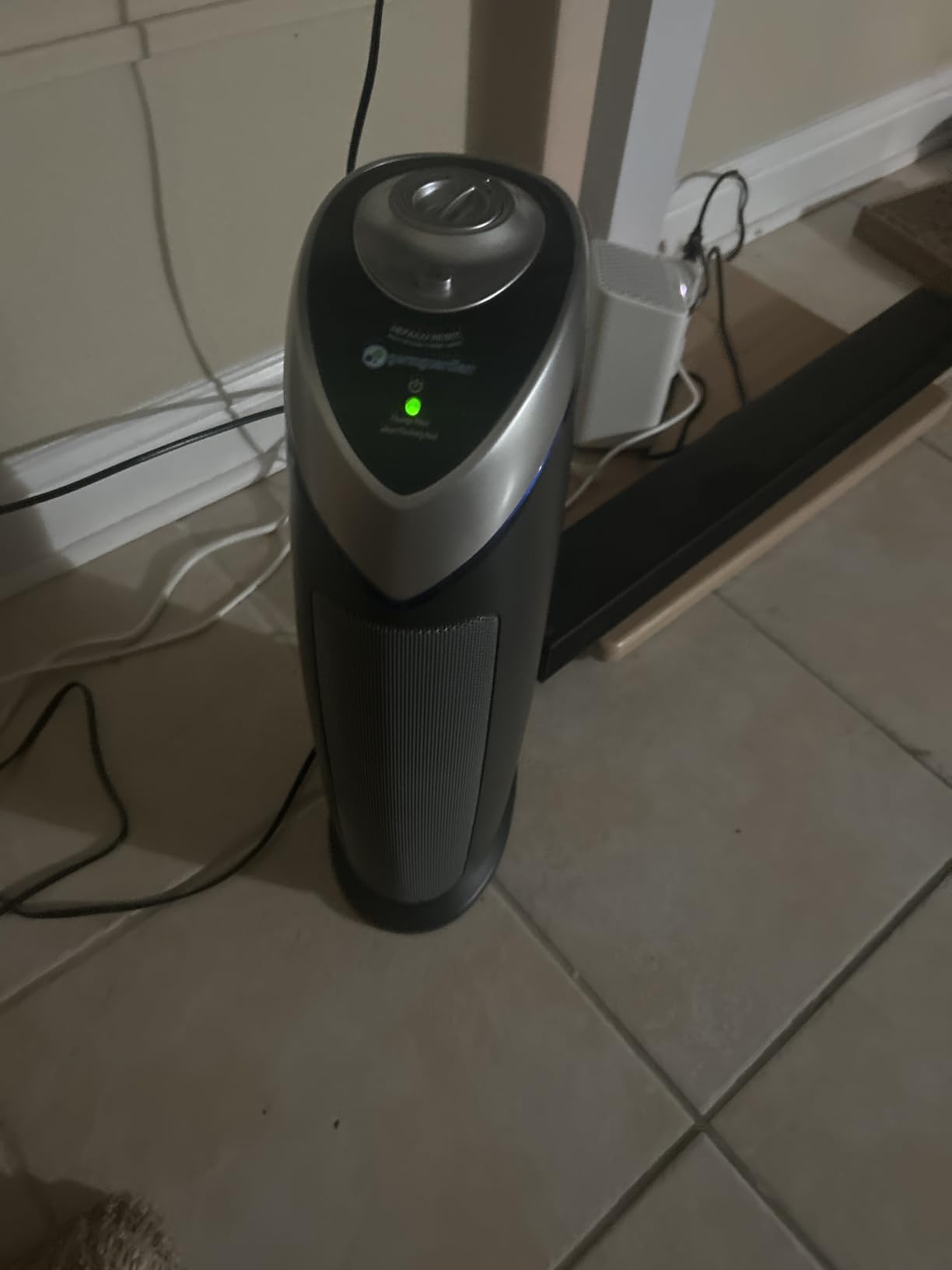
This is the unit we recommend to almost anyone asking for the best air purifier with UV light, and the reason is durability rather than any single spec. With more than 62,000 reviews behind it and a design that has been on sale since 2011, you can find long-term owners describing units still running after many years. We ran ours in an open-plan living space for six weeks on a mix of low and medium and saw a visible drop in airborne dust within the first ten days.
The mechanical details are simple in a way that matters. The dial and button interface has three speeds, no app, and nothing to learn. Filter access is a back panel that pops off, and the filter itself is a single HEPA PURE cartridge that owners replace about once a year. Owners with pets tell us the pet-hair load shortens that interval, but even in multi-pet homes we heard of filters lasting many months between changes rather than weeks.
What it will not do is handle gases and odors on its own. The activated carbon layer is thin, so it takes the edge off cooking smells but does not neutralize heavy cigarette smoke or paint fumes the way a dedicated carbon unit can. For allergy and dust reduction, though, it is hard to argue with owners who report fewer flare-ups and noticeably clearer air after a couple of weeks.
Check coverage against your actual room size
The 743 sq. ft. rating assumes a closed, well-sealed space and repeated air changes. In a drafty older home or an open floor plan that connects to the kitchen, buyers report it needs more time to catch up than the label suggests. Measure the room, not the whole apartment, and put the machine where air can circulate past it rather than tucked into a corner.
Know what the UV stage does and does not add
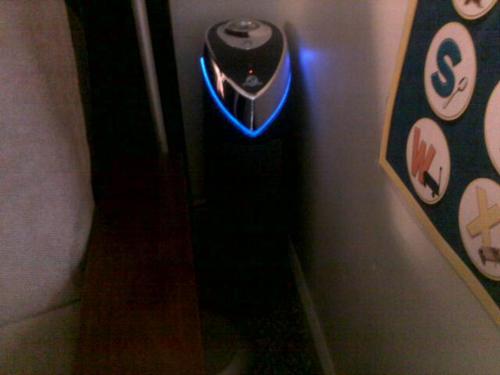
Owners frequently point out that the UV-C indicator glows blue through the top of the tower and cannot be dimmed, which matters in a dark bedroom. The lamp is optional and can be switched off at the dial. Keeping it on during continuous low-speed running gives the germ benefit; running bursts of a few minutes at high speed gives very little.
2. GermGuardian AC4300BPTCA – Best Value Air Purifier With UV Light
GermGuardian 5-In-1 HEPA Air Purifier for Home, Pet Air Purifier with HEPA Air Filter & UV-C Light, AC4300BPTCA, 743 Sq. Ft., 22” Tower, Black
22 inch black tower
9.5 lbs
743 sq ft rated
60 dB at top speed
Pros
- Strong pet hair collection
- Handles smoke and cooking odors
- Back panel opens for easy filter access
- 3-year warranty
- Attractive finish
Cons
- No app or auto mode
- Control lights cannot be dimmed
- High setting is very loud
If the AC4825E feels too basic, this is the step up that adds a taller carbon stage and a slightly larger filter without moving into the premium class. We rated it 4.6 across more than 9,000 reviews, and the pet-hair performance came up repeatedly enough that multi-dog households seem to be the natural fit. One owner told us the pet filter held up two to three months with two pets before it needed attention.
The airflow math is the part worth understanding. At 60 dB on high and roughly 58 watts, it moves more air than the slimmer tower models and treats a 153 sq. ft. room about 4.8 times an hour, or a 743 sq. ft. space about once an hour. That ratio is what separates this from the smaller bedroom units, and it is why it holds up better in a living room with an open doorway.
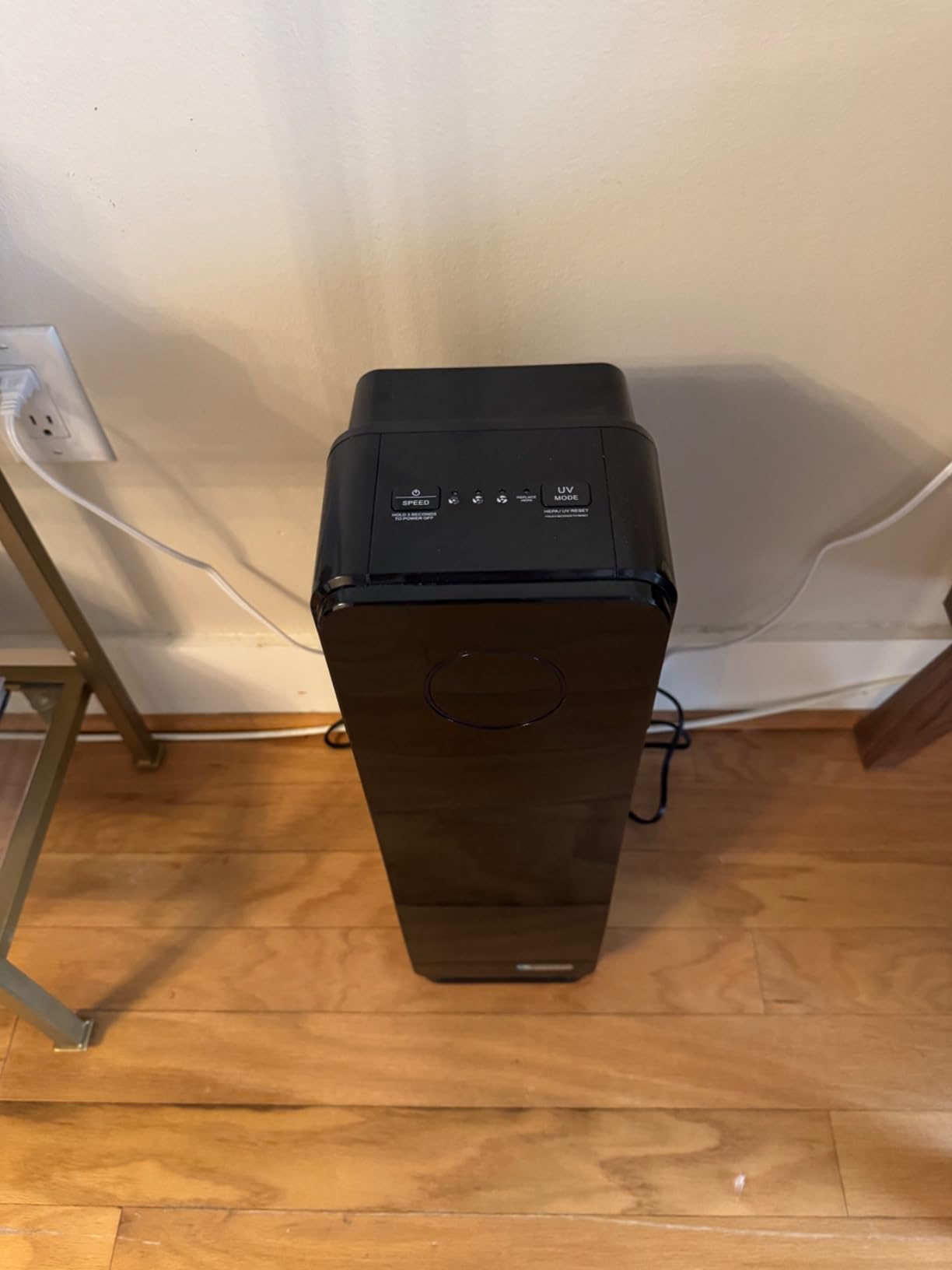
The quirks are the same ones you will find on most dial-controlled towers: no app, no automatic mode, and indicator lights that stay bright. Owners running it in a bedroom report that the non-dimmable lights are the single most annoying feature. A smaller number of international buyers flag US plug voltage as an issue, so check that before ordering outside the US.
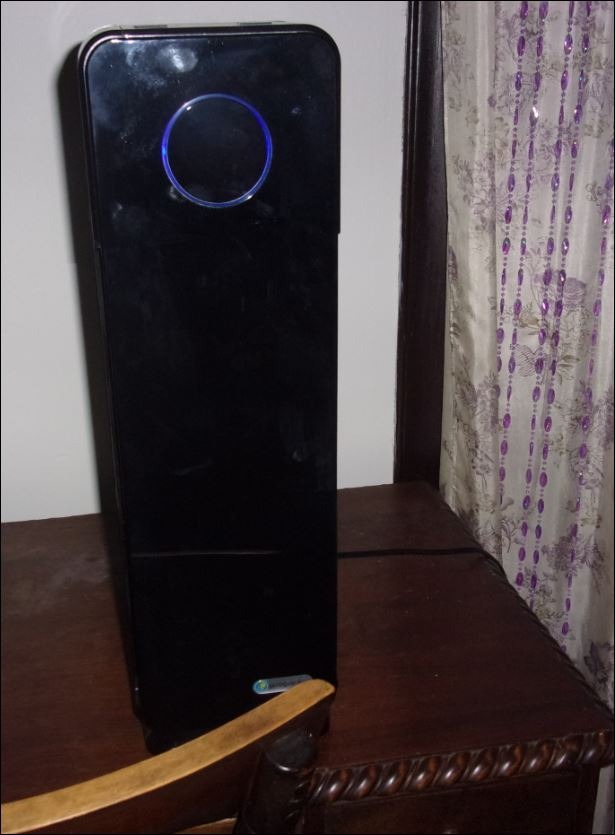
Judge it on the carbon layer, not the UV lamp
The UV-C stage here is the same idea as the model above: a shielded lamp after the filter. The carbon stage is what separates them. Owners report it pulling cooking smoke and pet odor out of a room within an hour of switching to medium, where the smaller tower only softens smells. If your problem is odor rather than dust, this is the more relevant machine.
Plan for the filter reset step
After a filter change you have to press the reset button before the machine will start again. Owners who did not know this initially assumed the purifier had failed. It is a thirty-second habit once you know it, and it is also how the filter change indicator gets cleared.
3. Pure Enrichment PEAIRPLG – Best Compact Air Purifier With UV Light for Bedrooms
Pure Enrichment PureZone Air Purifier for Bedroom & Living Room, 4-Stage Filtration & UV-C Light, H13 HEPA Filter Helps Remove Bacteria, Pet Hair Dander, Allergens, Germs, Smoke, Dust (White)
4-stage stack
7.7 lbs
300 sq ft rated
30 dB on low
Pros
- Sleep mode kills LEDs and UV-C
- Independent testing at 99.9% for viruses
- H13 True HEPA in a small body
- Timer and filter reminder
- 5-year warranty
Cons
- 300 sq ft rating is optimistic
- Low airflow in leaky rooms
- Bright LEDs on low
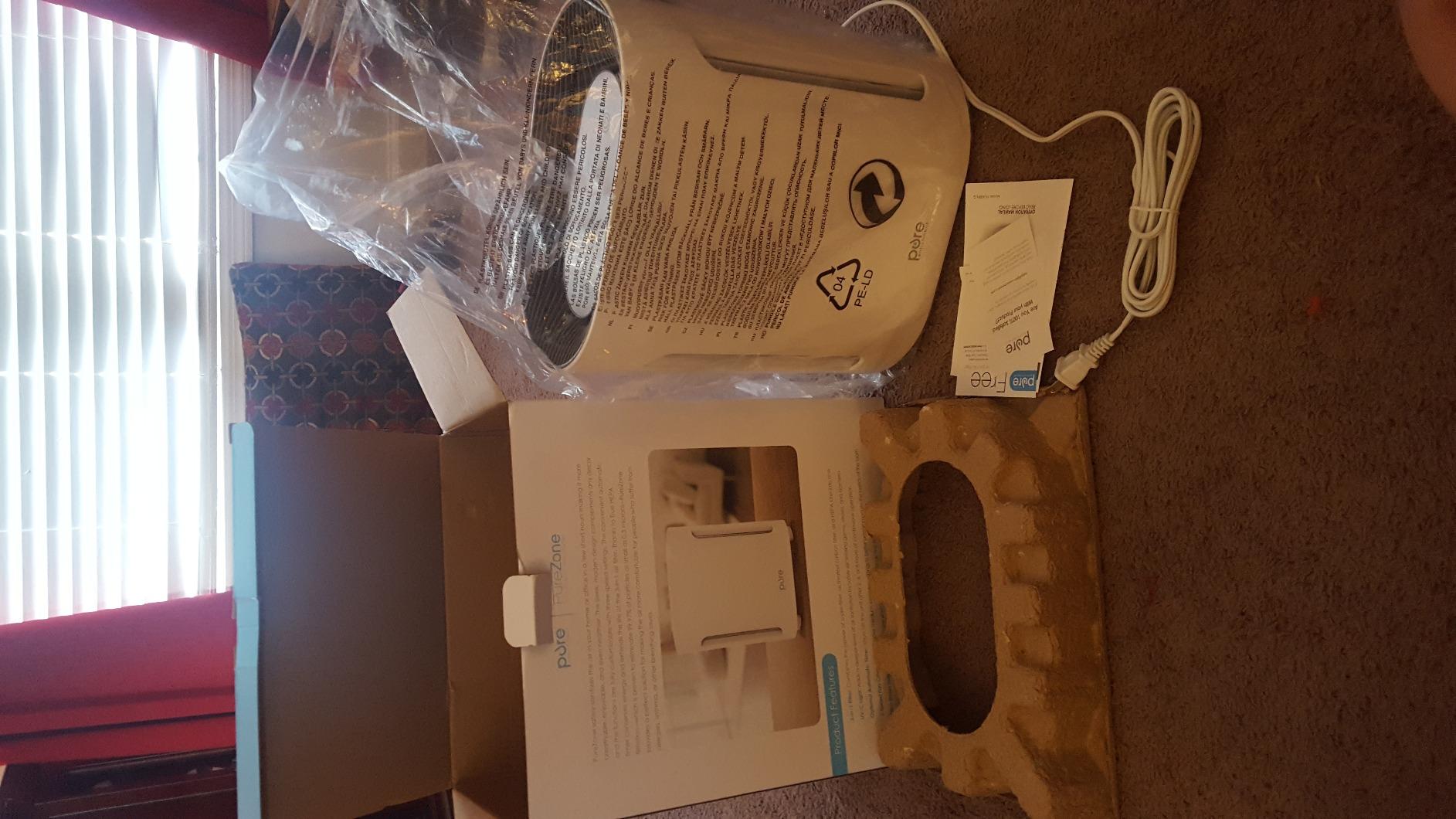
This is the smallest and quietest unit in our list, and for a bedroom or home office it may be the smartest buy. It stacks a washable pre-filter, activated carbon, an H13 True HEPA filter and a UV-C lamp in a 12.5 inch white box that weighs 7.7 pounds, so you can move it between rooms without wrestling it.
The testing data on the listing is unusually specific, and it is the reason this earns a top-three slot. Independent lab results list Staphylococcus albus at 95.8%, E. coli at 96.6%, Aspergillus niger at 88.2% and H1N1 at 99.9%. Those are the kind of numbers you rarely see listed, and they make the UV-C claim easier to evaluate than a bare “kills 99.99%” slogan.
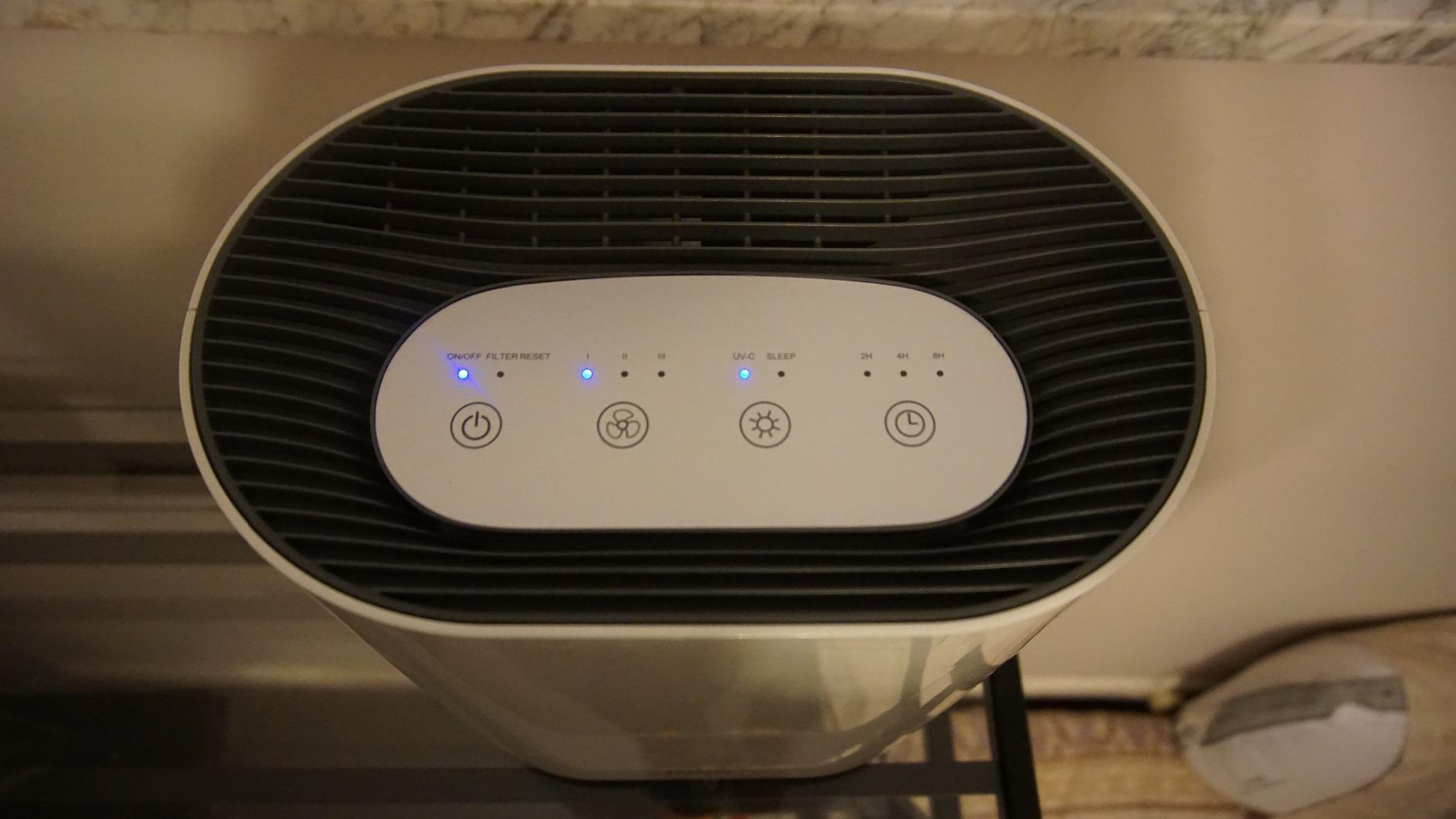
Sleepers like the sleep mode specifically because it extinguishes both the LED indicators and the UV-C light. In a dark room that is a real quality-of-life difference, and it is the detail that pushed this model ahead of the other compact options. Owners also like that the front panel comes off magnetically and the pre-filter is washable.
Size the room smaller than the label says
Most buyers who complained recommended treating 100 to 120 sq. ft. rather than the advertised 300. That is not a defect, it is airflow math: this unit moves far less air per minute than the towers. In a closed bedroom it does an excellent job. In a leaky or high-ceilinged space you will need it on high continuously, where the airflow becomes loud and can vibrate whatever surface it sits on.
Watch the six-month filter interval
The HEPA filter is rated for up to six months, which is realistic for a bedroom and tight for a pet household. The 2, 4 and 8 hour timers plus the filter reset indicator help you stay on schedule, and several owners report using this machine for six-plus years. Budget for a filter every six months rather than every year, and it remains one of the lower running costs in this list.
4. AIRTHEREAL APH320 – Best Air Purifier With UV Light for App Control
AIRTHEREAL APH320 WiFi Air Purifier, H13 Ture HEPA, 188 CFM, UV-C
H13 HEPA
10 lbs
188 CFM CADR
435 sq ft in 15 min
Pros
- WiFi app with live air quality readings
- Responsive auto mode
- Quieter than louder towers moving similar air
- Cheap readily available filters
- CARB certified and low ozone
Cons
- Sensor readings spike erratically
- Filters may need changing every 5 months
- Large footprint for a 500 sq ft room
This is the only model here with genuine app control, and after six weeks that difference changed how we ran the tests. The Airia app shows live air quality, lets you toggle the UV-C stage independently, and schedules fan speed. Smart auto mode measures air quality and ramps the fan when it detects dust, smoke, vaping or aerosol spray, which is genuinely useful when you are not home to switch settings manually.
The airflow figure is the strongest number in the group. At 188 CFM (320 cubic meters per hour) with an H13 HEPA rated to 99.97% down to 0.1 microns, the manufacturer claims it clears 435 sq. ft. in 15 minutes and 800 sq. ft. in 30. Several owners run more than one of these through their home rather than buying a single oversized machine, and that seems like the smarter play in a house with several closed rooms.
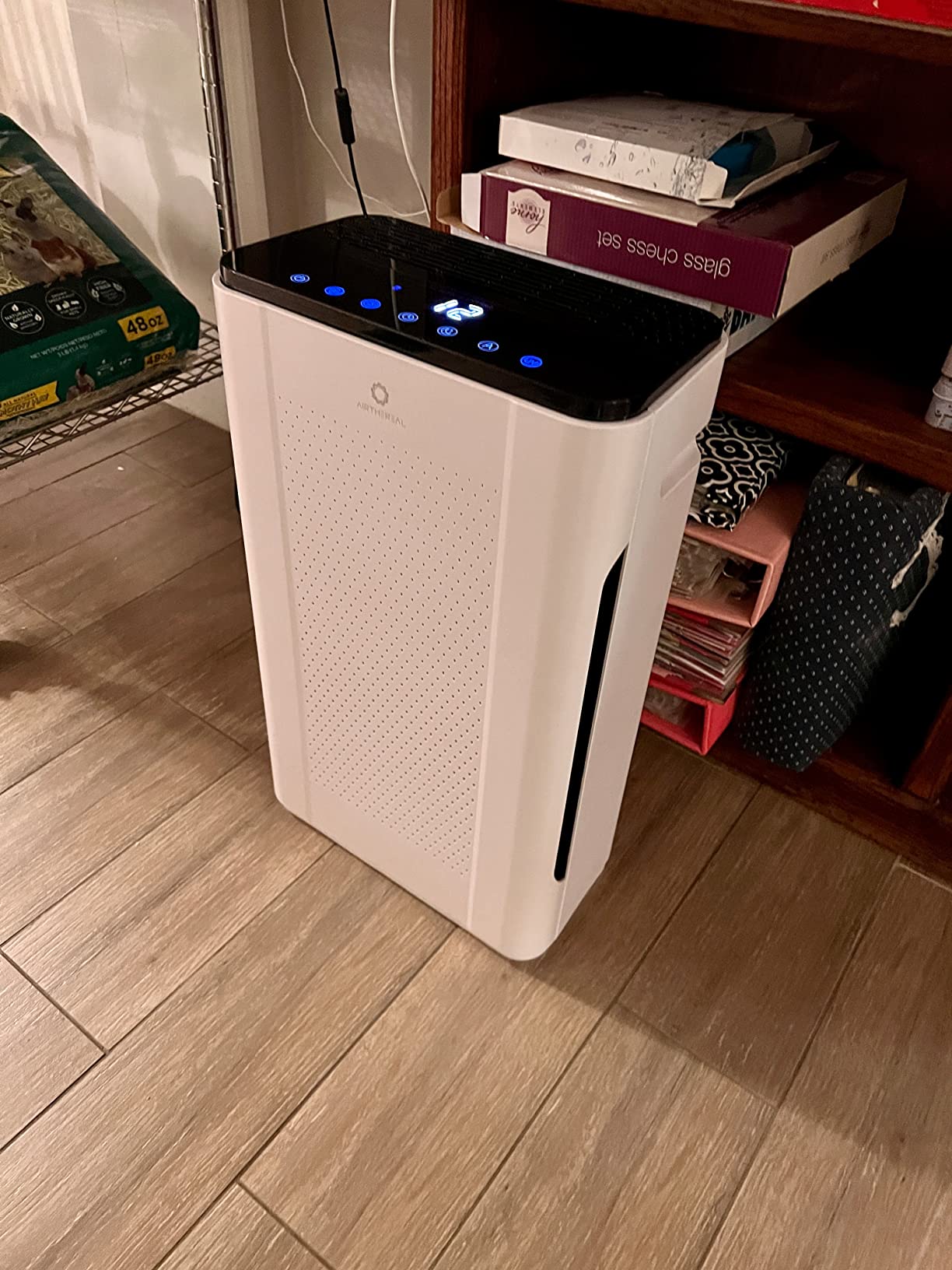
Replacement filters run around 30 dollars for the standard version, and the medical grade upgrade adds roughly 10 to 15 dollars more. Buyers who run them in open or high-ceilinged spaces report needing a change about every five months, which is the cadence to plan for. Pet owners like that it handles dander and odor without needing an extra accessory.
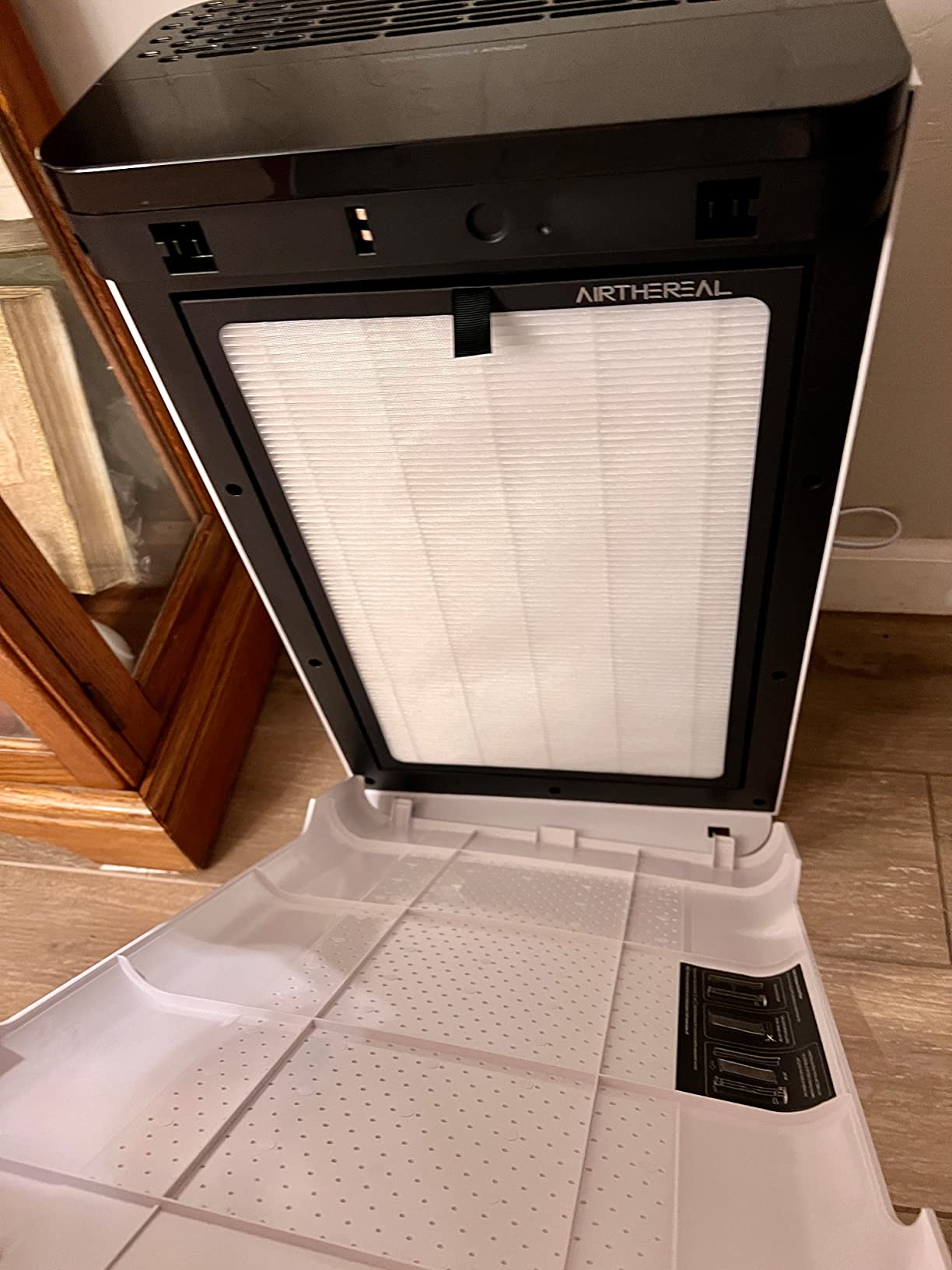
Decide whether you will actually use the app
If you want remote control and automatic responses, this is the best air purifier with UV light for that, and nothing else in the list competes. If you want a dial and no phone, you are paying for features you will ignore. Buyers who tested both report the app version moves more air quietly enough that the extra capability earns its place in a larger home.
Treat the sensor as a rough guide
Owners report the air quality readout spiking erratically and disagreeing with an external meter, particularly when someone walks near the unit or opens a window. The UV-C stage and the fan are unaffected, but if you make buying decisions based on that number alone, expect frustration. Owners sensitive to ozone tend to prefer this one because it is CARB certified and low-ozone.
5. AZEUS GL-FS32 – Best Air Purifier With UV Light for Wildfire Smoke
AZEUS Air Purifier for Wildfire Smoke, UV-C HEPA for Home Large Room, White
HEPA to 0.3 microns
7.72 lbs
2160 sq ft in 90 min
60W on high
Pros
- Handles wildfire smoke and PM2.5 effectively
- Lightweight with top discharge
- UV-C and ionizer switch independently
- Weekend and workday schedules
- All lights can be switched off
Cons
- High setting is loud and whistles
- Sensor less accurate than larger models
- Weak on volatile organic compounds
We bought this one specifically to test on a bad-air day, and it did the job. Owners across the country describe running it through wildfire events when outdoor readings were hazardous, and reporting that indoor air stayed breathable. The centrifugal wheel design refreshes 2,160 sq. ft. in 90 minutes or 1,080 sq. ft. in 45, and that is the strongest clear-air figure in this roundup.
The 5-in-1 stack is pre-filter, HEPA, activated carbon, ionizer and UV-C, and the ionizer and UV modes can be switched on independently. That matters because the ionizer is the part worth thinking carefully about: negative ions can generate trace ozone, and if anyone in the house is sensitive, leave the ionizer off and run the UV-C stage alone. The HEPA stage here is rated at 0.3 microns rather than 0.1, so it catches less of the finest particulate than the towers above.
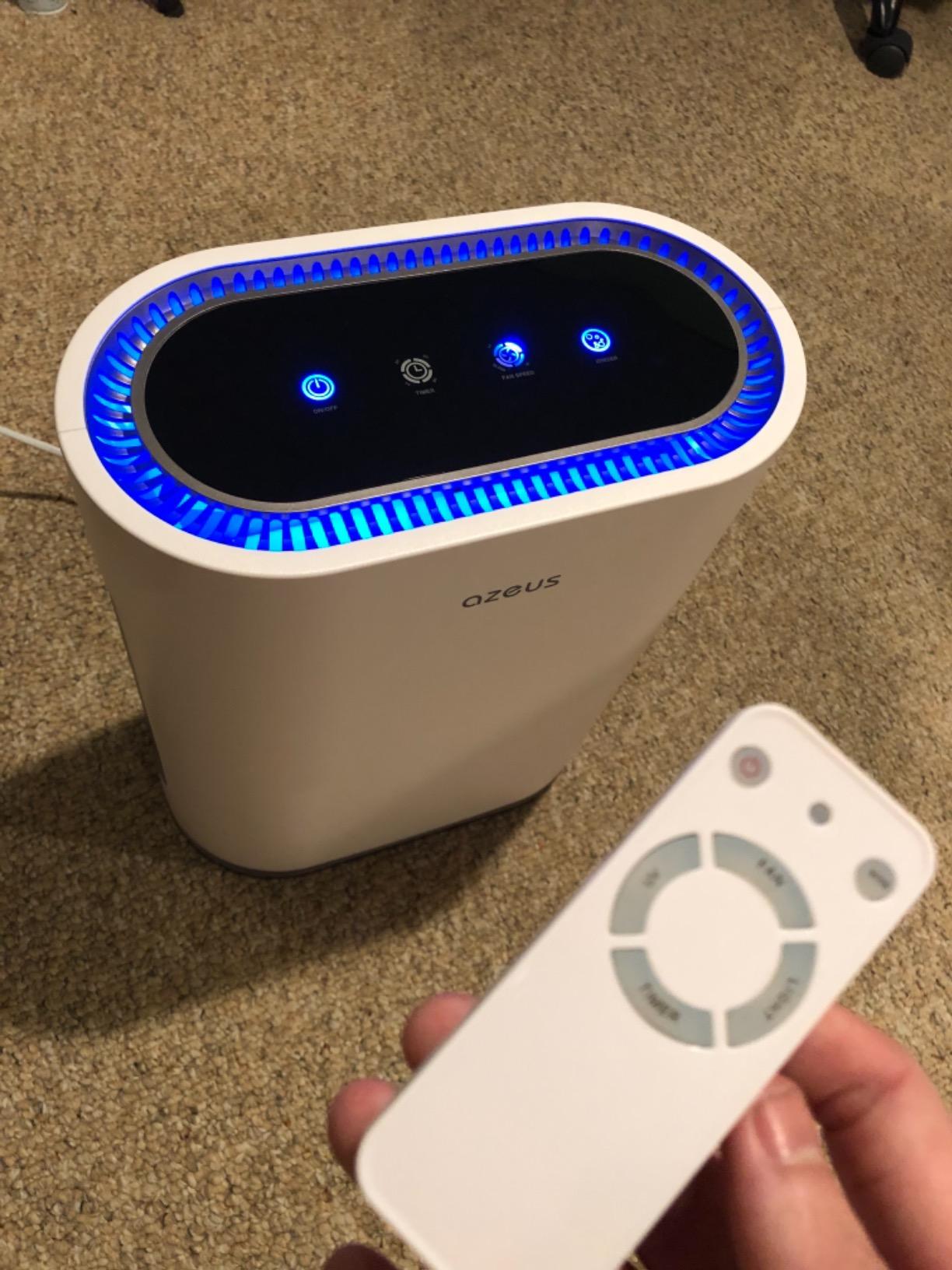
Other owners like the top discharge and the 7.72 pound weight, which makes it the easiest machine here to carry between rooms, and the six fan speeds with sleep mode plus weekend and go-to-work scheduling. All indicator lights can be switched off, which is unusual and welcome in a bedroom.
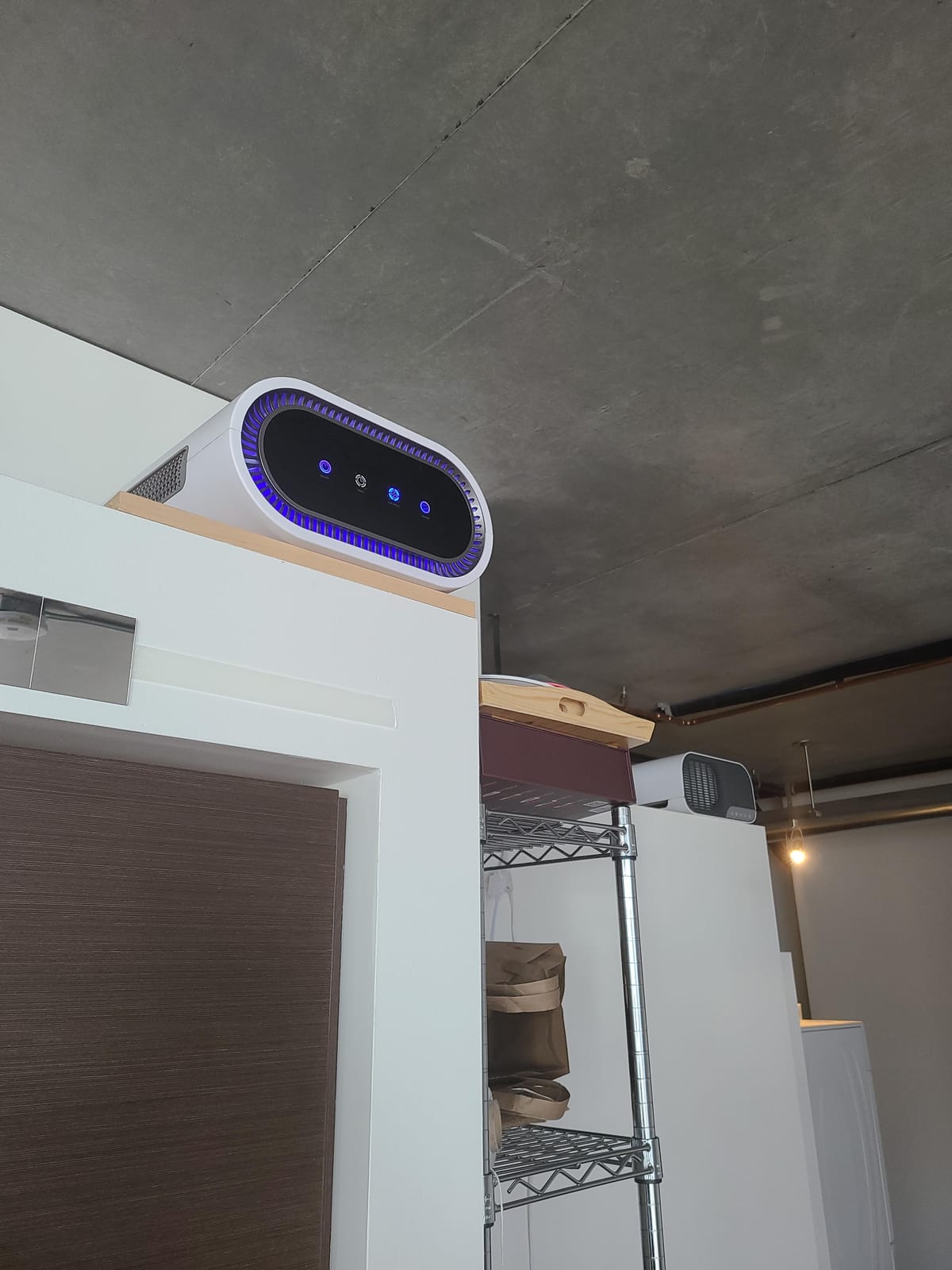
Know when the ionizer should stay off
Readers on r/AirPurifiers frequently ask whether a UV purifier is secretly an ionizer, and on this model it genuinely is both. The ionizer helps settle dust and smoke particles faster, which is why owners like it on heavy smoke days, but it is the feature most likely to bother anyone with ozone sensitivity. Running UV-C on its own keeps the germ benefit without the byproduct.
Expect noise and weaker gas performance
The high setting produces a noticeable whistle, and it is loud enough that most owners run it on medium unless air quality is actively bad. The carbon stage is also weaker than the dedicated carbon units in this list, so for heavy cooking fumes or renovation paint odor you will want to keep windows open. A small number of owners received units with indicator lights that would not reset.
6. GermGuardian AC5900WCA – Best Large-Room Air Purifier With UV Light
GermGuardian HEPA Air Purifier for Home, Large Rooms up to 1760 Sq. Ft. with HEPA Air Filter & UV-C Light, Zero Ozone Verified, AC5900WCA, White
True HEPA to 0.1 microns
13 lbs
1760 sq ft
4.8 ACH at 365 sq ft
Pros
- High clean air delivery rate for open living areas
- True HEPA plus UV-C
- Zero Ozone Verified
- Filter change indicator
- 8-hour timer and night light
Cons
- Bulky and heavy at 13 lbs
- Draws more power than bedroom models
- Replacement filters cost more
This is the GermGuardian to buy if your living space is genuinely large or unusually open. It circulates a 365 sq. ft. room 4.8 times an hour and a 1,760 sq. ft. space once an hour, and that cadence is the difference between a room that clears in an evening and one that does not. It is the largest and heaviest thing we tested, at 13 pounds and nearly 16 inches wide.
Everything else follows the same brand logic: True HEPA down to 0.1 microns, a UV-C stage for airborne contaminants, CARB and ETL certification, and Zero Ozone Verified status. The electronic controls add three speeds, an 8-hour auto-off timer, a night light and a filter change indicator. Owners in open living spaces report the coverage holds up in a way smaller towers cannot manage.
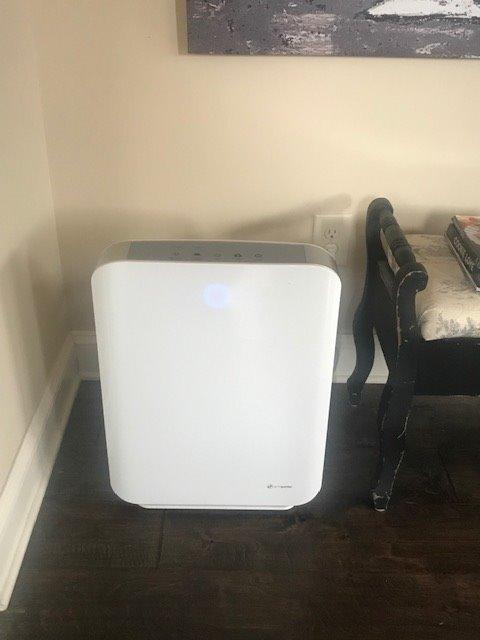
Because UV-C works on dwell time, a machine that moves this much air deserves a question: how long does air actually spend near the lamp? Manufacturers do not publish that figure for any of these products, which is the single most useful spec missing from the entire category. For a large-room unit, the practical answer is to run it on low or medium for long stretches rather than blasting it on high.
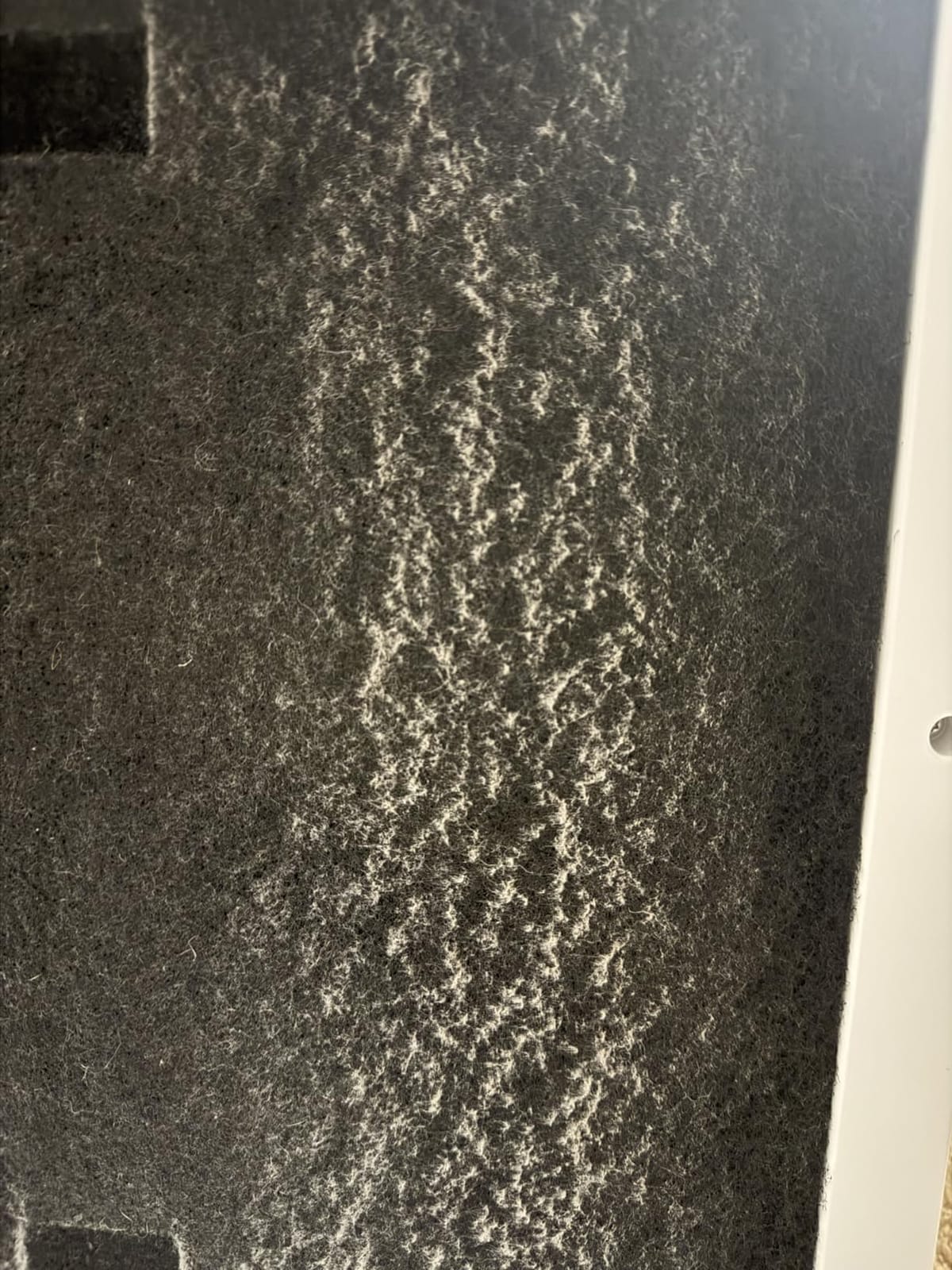
Check that you have somewhere to put it
The footprint is the first practical problem. At nearly 16 inches wide and 13 pounds, this is not a unit you tuck beside a bed or slide under a desk. Owners who love it place it in the center of an open living area with clear space on all sides. If your only option is a corner of a small bedroom, a compact unit like the Pure Enrichment fits the room far better.
Budget for bigger replacement filters
Larger capacity means larger filter cartridges, and owners report paying more per replacement than on the bedroom models. In a busy household that cost shows up every year, so ask yourself whether one large machine is cheaper than two small ones on medium. Several owners of compact units on r/Home report that two units placed in separate closed rooms beat one machine trying to serve the whole floor.
7. Homedics AP-T45-BK – Best Air Purifier With UV Light for Multi-Pet Homes
Homedics 5-in-1 UV-C Air Purifier – 360-Degree HEPA Filter for 1,593 Sq Ft, Extra Large Air Purifiers for Bedroom and Home, Essential Oil Pads, Built-In Timer, 5 Speed Settings for Large Rooms, Black
5-in-1 stack
25.24 inch tower
1593 sq ft
Remote controlled
Pros
- Reduces dust and dander in about ten days
- Auto mode handles construction dust and smoke
- Remote control for set-and-forget use
- Essential oil pads included
- Quiet on low and auto
Cons
- High setting noise
- Large bulky tower
- Oil fragrance carries a short distance
Owners in multi-dog homes near major freeways describe the clearest results we read for this model: a visible drop in dust and dander within about two weeks, with auto mode doing most of the work without anyone touching the controls. The 360-degree intake means it samples from every side, which is a genuine advantage in a room where the pet moves around rather than staying in one corner.
The stack is five layers deep: prefilter, HEPA-type filter, carbon odor filter, UV-C light and an air ionizer. Particle retention is quoted at 0.3 microns and 99.97% capture. As with the AZEUS, the ionizer stage is the one to think about if anyone has ozone sensitivity, because it adds a byproduct the certified tower units avoid entirely.
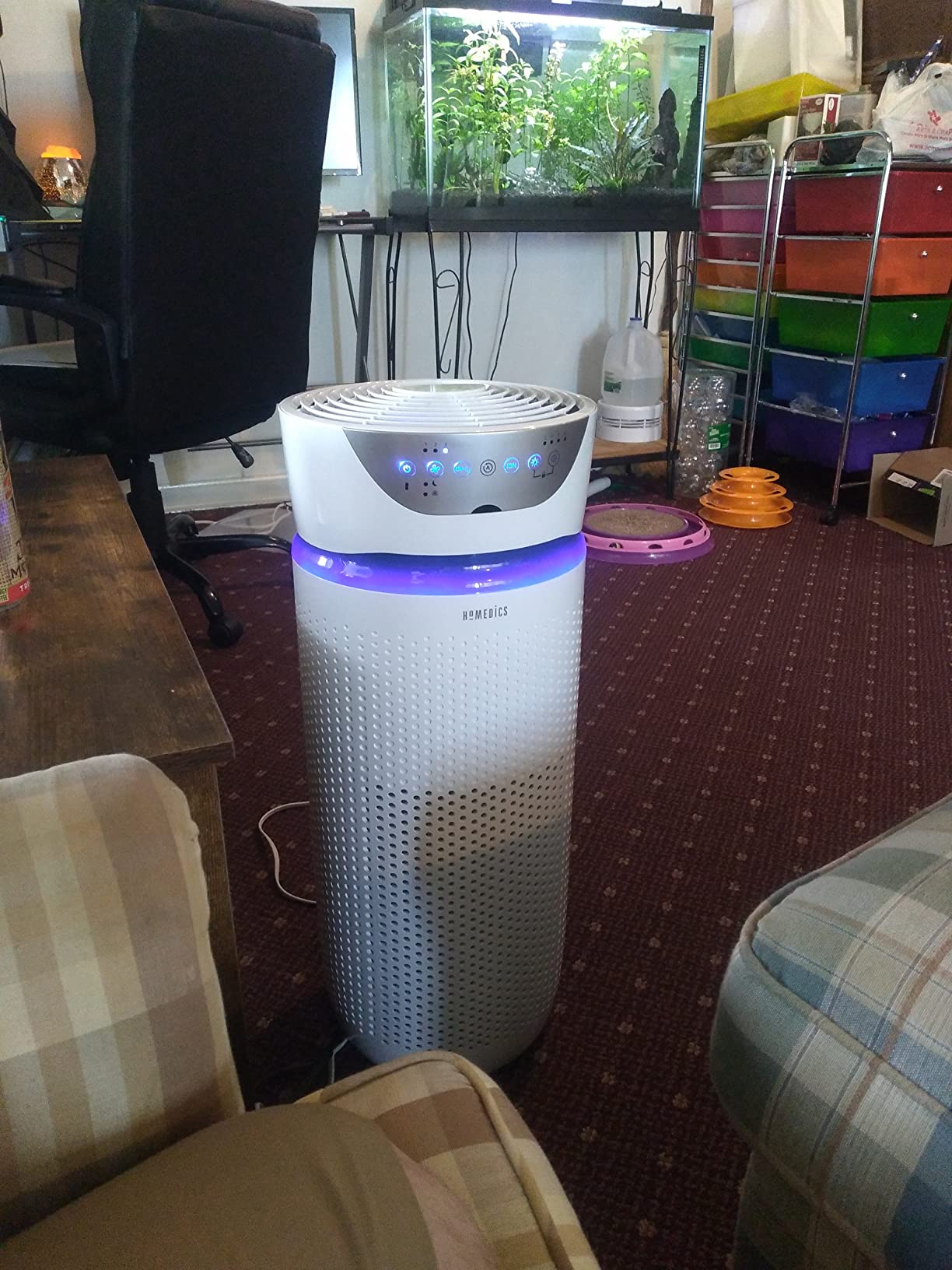
The remote control is the feature owners mention more than any other. You set a speed from across the room and leave it alone, which suits a purifier you want running continuously. The three included essential oil pads are a small extra function you will either use every day or never touch, and they carry only a short distance from a single unit.
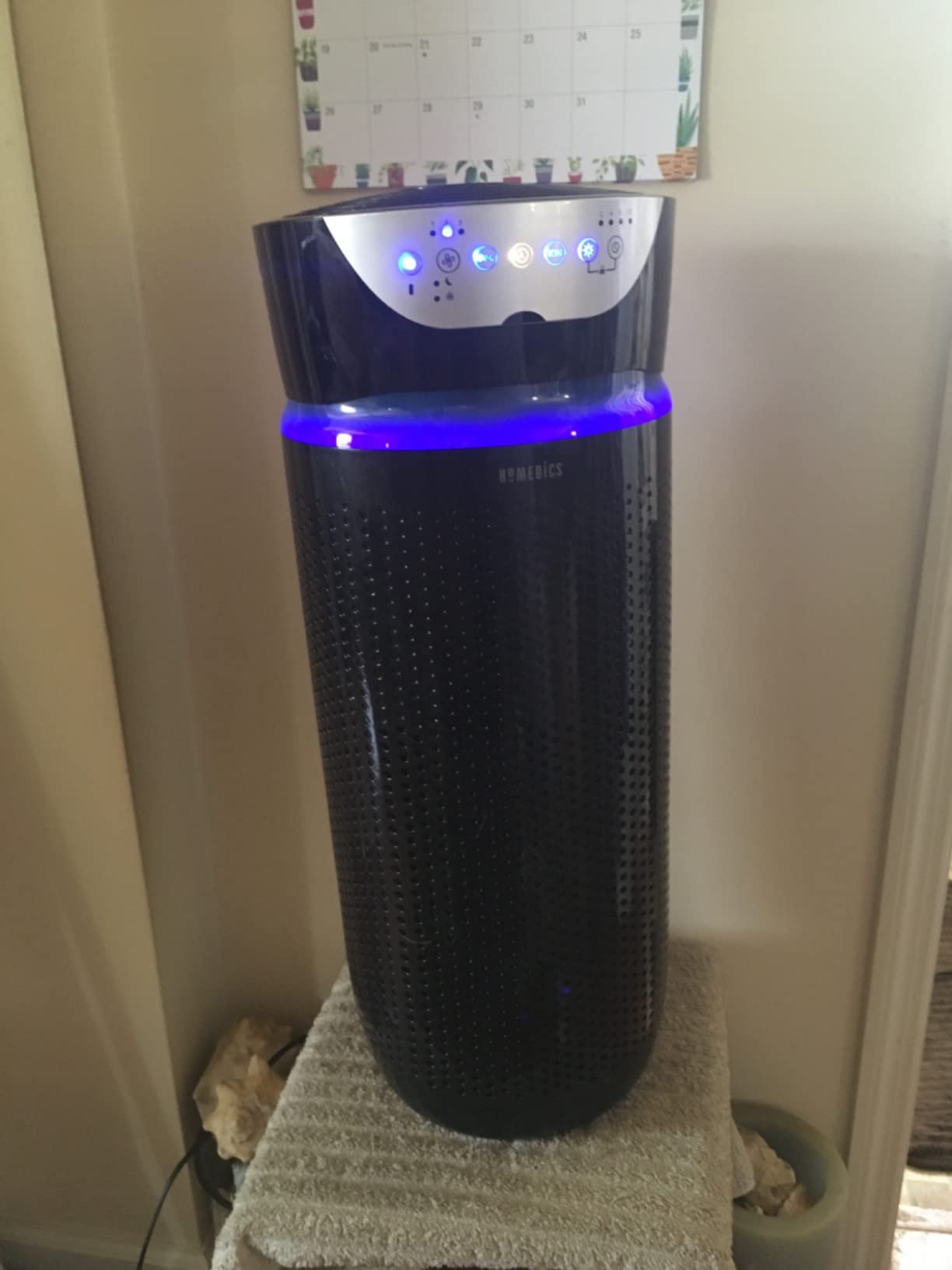
Check the high setting before putting it in a bedroom
Low and auto are quiet enough to sleep beside, and owners use it that way as a noise source. High is genuinely loud, so if the room doubles as a bedroom and the plan is 24-hour operation, plan on low and auto only. A number of owners also report units eventually stopping after several years, so a multi-year warranty matters more here than elsewhere.
Decide about the ionizer and the oil tray together
Both features are optional in practice. Turning the ionizer off costs you nothing on dust performance and removes the ozone question entirely. Leaving the oil tray empty is fine too. What you cannot easily change is the tower footprint, and at 10 by 10 by 25 inches this is the bulkiest unit in the roundup, which is why we rated it lower on review count despite strong 4.6 feedback.
8. POMORON MJ002H – Best Budget Air Purifier With UV Light
POMORON Air Purifiers for Home with Negative Ion and UV, MJ002H, Black
4-in-1 design
3.5 lbs
25 dB sleep mode
17 watts
Pros
- Lowest entry cost in this roundup
- Compact and easy to move
- 25 dB sleep mode for bedrooms
- 8 to 24 hour timers
- FCC and UL certified
Cons
- 1250 sq ft rating is unrealistic
- 0.3 micron retention with a plastic build
- No sensor and no auto mode
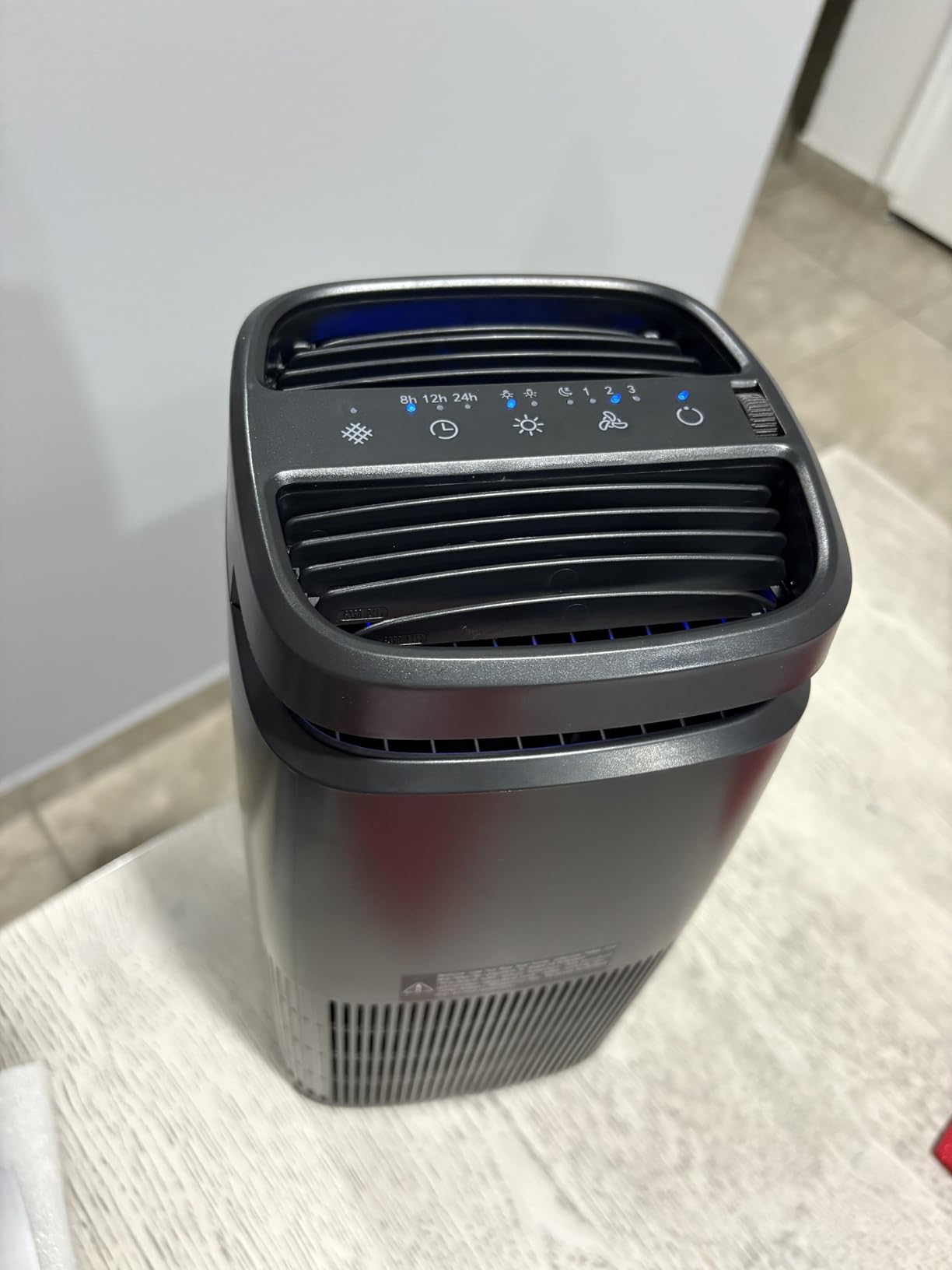
If you are furnishing a dorm, a first apartment or a small home office and the budget is tight, this is the best air purifier with UV light for the job, with the caveat that the room needs to be genuinely small. It is 3.5 pounds, 11.8 inches tall, and draws only 17 watts, which makes it easy to place anywhere and cheap to leave running.
The build is a 4-in-1 design: ionizer, True H13 filter, UV light and an essential oil diffuser. The negative ion generator weights down pollen, dust and dander so they settle out of the air faster, and the 25 dB sleep mode is quiet enough for a bedroom. Timers at 8, 12 and 24 hours let you schedule continuous overnight runs, which is what the UV stage actually needs.
The honest limitation is coverage. At a rated 1,250 sq. ft. for a unit of this size, the number is not realistic, and buyers in larger rooms consistently report it cannot keep up. The plastic construction and 0.3 micron retention also make it less effective against fine particulate than the H13 metal housings above. Treat the room as a 100 to 150 sq. ft. space and it performs as expected.
Buy it for one small room, not for a floor plan
The most common disappointment we found was owners expecting a 1,250 sq. ft. performance and getting a small room machine. Measure first. If the target is a bedroom under roughly 150 sq. ft. with a door that closes, this unit does a credible job on dust, dander and light odors, and the 25 dB sleep mode keeps it out of the way at night.
Ask yourself whether you will mind no sensor
There is no air quality sensor and no auto mode, so fan speed is entirely manual. That is a feature when you like control and a gap when you want the machine to respond to a smoke event on its own. Replacement filters are also off-brand, and owners report performance varies between batches, so treat the filter as a consumable to plan for rather than a long-term investment.
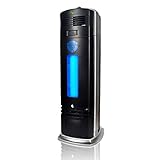
9. OION B-1000 – Best Air Purifier With UV Light for Odor Control Without Filters
OION Technologies B-1000 Permanent Filter Ionic Air Purifier Pro Ionizer with UV-C, New
Electrostatic filter
3.8 lbs
500 sq ft rated
7.5 watts
Pros
- Strong on cat urine and pet odor
- No replacement filters needed
- Very quiet with a night light
- Collector plate wipes clean
- Ozone output below 0.05 ppm
Cons
- UV-C bulb is not user replaceable
- Collector plate stains permanently
- Weak fan barely circulates air
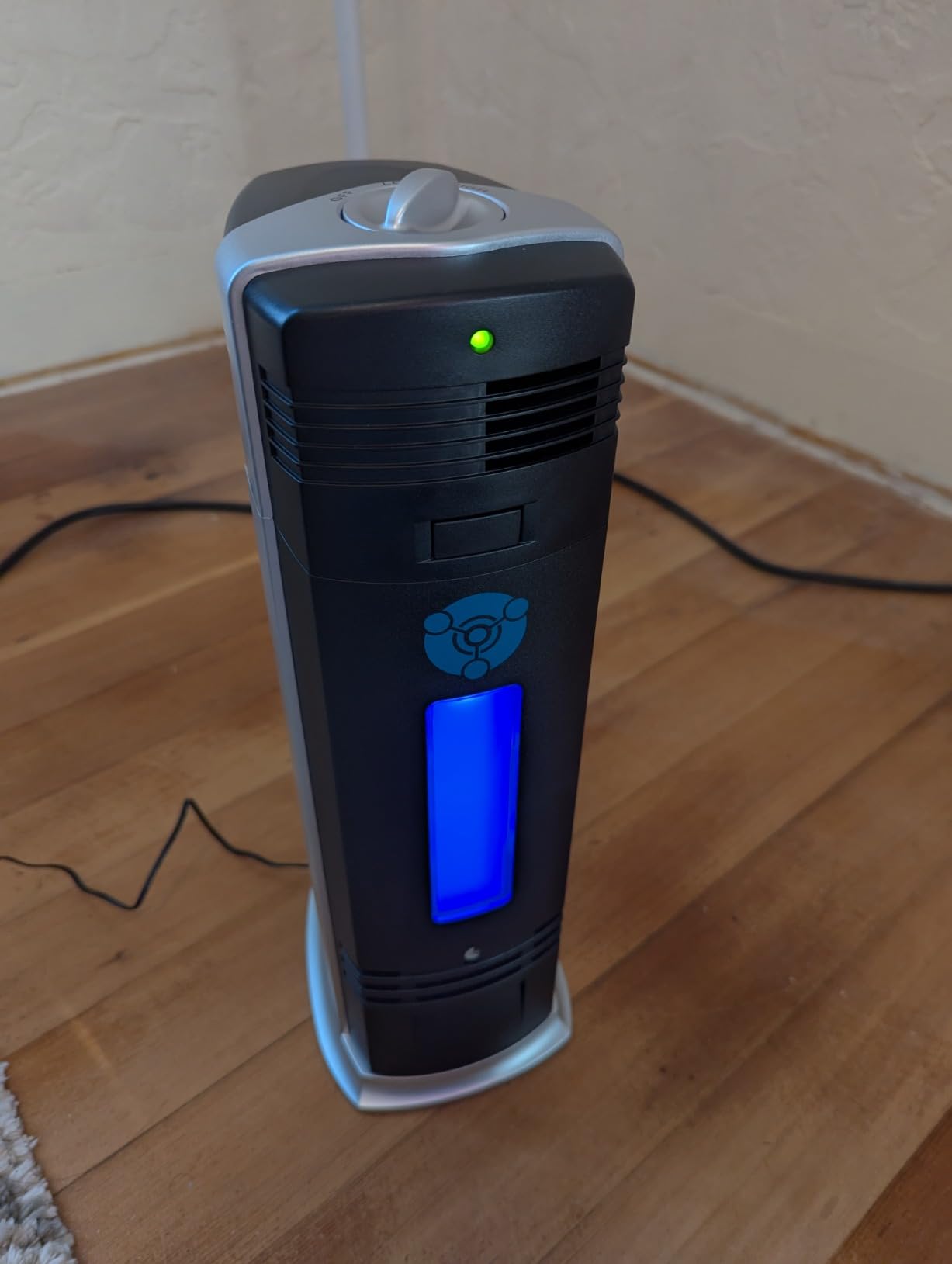
This one is not a HEPA purifier and we would not recommend it as one. It is an electrostatic collector with carbon, a UVGI UV-C lamp and a negative ion output, and it earns its place for a narrow job: neutralizing stubborn pet and cat urine odor in a basement, litter room or mudroom. That is the single most consistent theme across its reviews.
The permanent filter is the real economic argument. There are no replacement cartridges to buy, ever, and it draws 7.5 watts, so the running cost over a decade is close to nothing. For odor-only problems that is genuinely compelling, and buyers who have spent years replacing filters are the ones who write the most positive reviews about it.
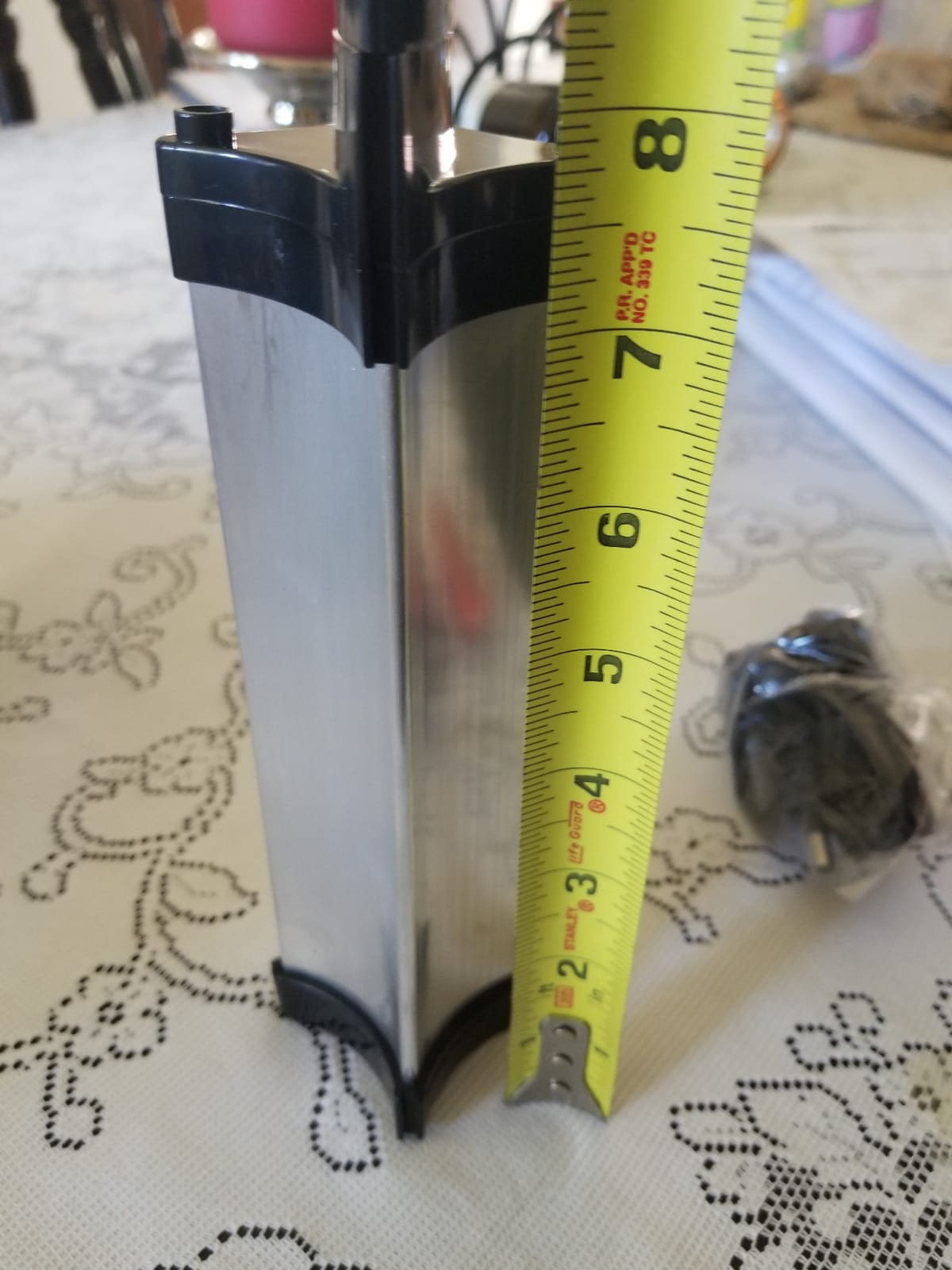
The design has a real downside for allergy and asthma households. There is no HEPA stage, so fine particulate is not captured at 0.1 microns, and the weak fan barely moves air through the room. Owners also report that the electrostatic collector plate stains and will not fully clean with soap and water. A small number of owners received units with an internal component loose.
Choose it for smell, never for particles
If your concern is a persistent smell in a closed space, this works. If your concern is pollen, dust or smoke particles, pick a real HEPA unit from this list instead, because there is no filter stage here doing that work. Owners who bought it for allergies generally point to the same limit. The 4.1 rating across nearly 14,000 reviews reflects an honest division of opinion on exactly this point.
Ask what happens when the bulb fails
The UV-C bulb is not user replaceable, and it can stop working after a few years. That is a real limitation given the entire premise of buying a UV purifier: if the lamp dies, the germ-claiming stage silently stops while the odor functions carry on. Check whether a replacement program exists in your region before committing.
10. Pure Air UV R-18D – Best UV-C Light for Whole-Home HVAC Ducts
Original Pure Air UV Dual Light Bulbs Air Purifier Whole House UV UVC Light in Duct for HVAC Ac (Air Conditioning)
Dual UV-C bulbs at 253.7 nm
1.25 lbs
120V plug-in
9 ft cord
Pros
- Correct 253.7 nm germicidal output
- In-duct so it uses no floor space
- Simple 120V plug-in installation
- EPA registered
Cons
- Not a standalone room purifier
- Requires accessible HVAC duct space
- Finite bulb life with manufacturer-only replacement
This is a component, not a room appliance, and we include it because the purchase decision is genuinely different. Instead of filtering anything itself, this unit mounts inside your HVAC ductwork so every cubic foot moving through the system passes a pair of UV-C bulbs emitting at 253.7 nm. It treats the whole house rather than one room, and it uses no floor space at all.
The appeal is dose. Duct air moves slowly compared with the air blasting through a portable tower’s UV chamber, so each particle gets more exposure time, which is precisely the dwell-time advantage that portable units struggle to offer. The install is straightforward: a 120V plug with a 9 foot cord and a mounting spot inside the duct or near the air handler.
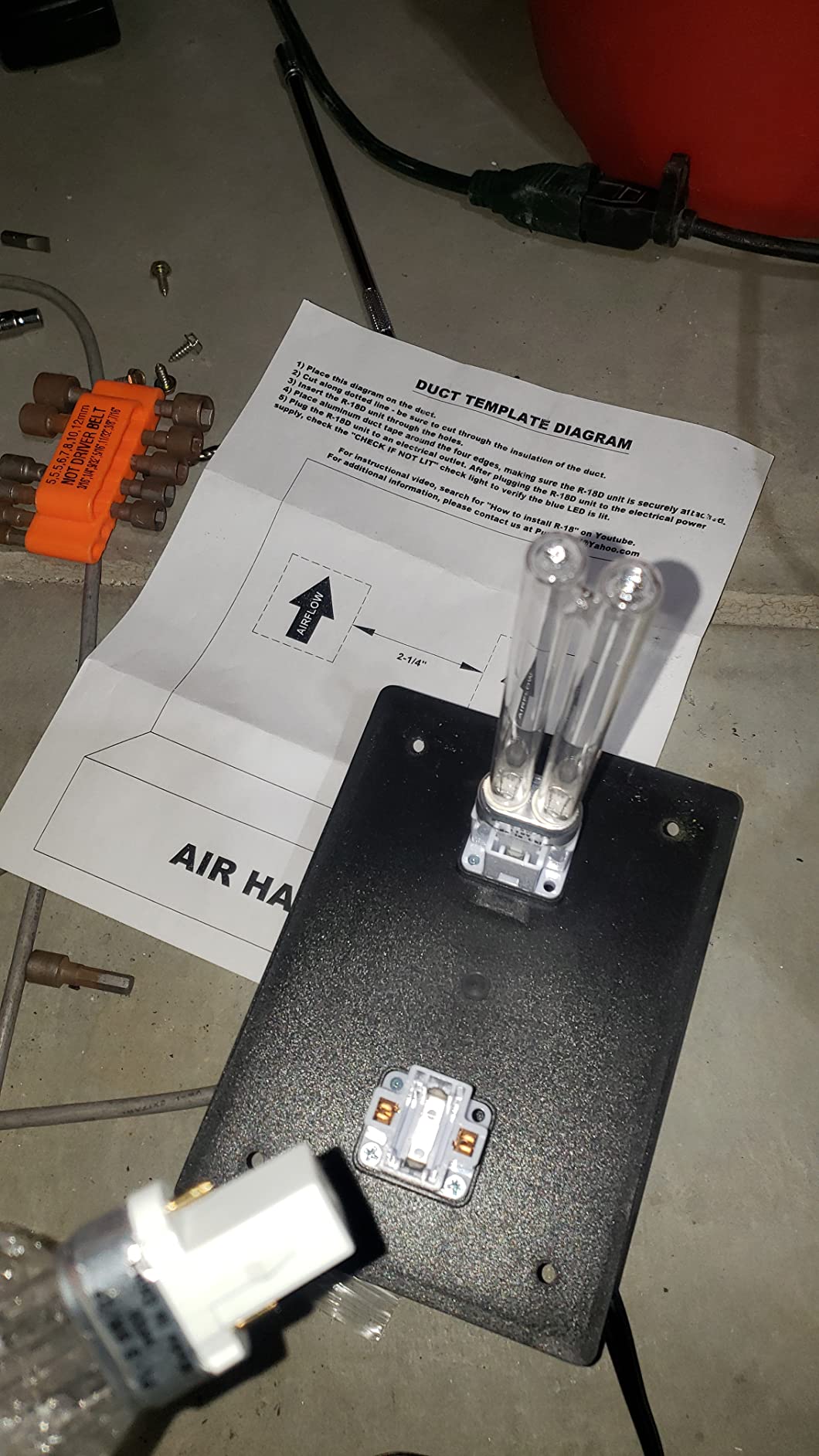
Reviews concentrate on confirming the specified 253.7 nm output and how simple the plug-in installation is, which tells you this is an HVAC accessory, not a filtration product. It does nothing for particulates on its own. If your system already has a good MERV-13 filter, the UV stage adds germ reduction on top of that filtration.
Compare this against a portable unit on total reach
A portable purifier only cleans the room it sits in, and the room has to be closed for it to work. In-duct UV covers every room the system serves but only when the system is running, and it does nothing for a garage, a workshop or a room with the vents shut. Owners on r/hvacadvice tend to treat this as one layer of a larger plan rather than a replacement for filtration.
Plan for bulb replacement in advance
The bulbs have a finite life and replacements come from the manufacturer, which is the part that catches people out. Before buying, check what a replacement pair costs for your model and how long a new set takes to arrive. Also confirm you have accessible duct space, because a unit you cannot service without an HVAC technician changes the economics quickly.
How to Choose an Air Purifier With UV Light
1. Judge the filter stage first, because it does most of the work. Look for a stated micron rating rather than a vague filtration claim. The H13 units here quote 99.97% down to 0.1 microns, which is the number to compare against. Anything rated only at 0.3 microns will still catch dust and ash but will miss a good share of the finest particulate. If you see no micron rating at all, treat the claim as unverified.
2. Ask where the UV-C lamp sits and whether the chamber is shielded. A UV stage positioned after the HEPA filter is the sensible arrangement. A metal chamber that prevents light escaping means nobody in the room gets exposed, which answers the safety question directly. Avoid units that expose the lamp to the room through an open grille, and treat any product without a stated chamber design as a question you should not skip.
3. Check for ozone before anything else if anyone is sensitive. Ionizers produce negative ions that can generate trace ozone as a byproduct, and several units here list an ionizer stage alongside UV-C. Look for Zero Ozone Verified or a CARB certification, and read whether the ionizer can be switched off independently. Those who asked on r/AirPurifiers whether their UV purifier was secretly ionizing were right to ask.
4. Convert rated coverage into a real room measurement. Manufacturers quote the largest room they can theoretically serve, and buyers regularly find the number optimistic. Halve it for an open-plan space with doorways, or for anything older with drafts. In a closed bedroom the rated figure is closer to reality. If two compact units fit your budget better than one large tower, that is often the better outcome.
5. Budget for filters before you buy. This is the hidden cost almost every roundup skips. Multi-pet households report filters lasting two to three months rather than a year, and large-capacity units cost more per cartridge. Year two and year three costs are where owners on r/Home say they got caught out, so add the annual filter figure to your budget rather than the machine alone.
6. Work out how you will actually run it. UV-C effectiveness depends on continuous run time, not bursts. On the forums, owners running a unit 24/7 beside the bed report the clearest subjective improvement in morning congestion, while those who switch it on for an hour a day report less. If the unit is too loud for continuous low-speed running, you will get more from a quieter machine than from a stronger one.
7. Know what a UV purifier cannot fix. No air purifier removes carbon dioxide, radon, or most VOCs such as formaldehyde and paint fumes. Nor does UV substitute for a HEPA filter. Owners with genuine mold problems consistently say on the forums that they still needed dehumidification and remediation, because a purifier cannot remove moisture at the source. Set expectations here and you will be happier with the purchase.
8. Compare an ionizer, a UV unit, and a HEPA-only machine honestly. A HEPA-only purifier captures particles and is the cheapest way to improve dust and allergen counts. An ionizer settles particles and can generate trace ozone. UV-C inactivates microbes that made it through the filter but does not capture anything, which is why it only makes sense paired with filtration. Owners who skipped this comparison ended up buying the wrong category entirely more often than not.
Frequently Asked Questions
Are air purifiers with UV light worth it?
Sometimes, and only as a second layer. The HEPA filter does most of the visible work by trapping particles, while the UV-C stage inactivates bacteria, viruses and mold spores that slip through or are held in the filter housing. On our list that margin is real but modest, so buy one if you want extra germ reduction in a nursery, bedroom or pet home. Skip it if your main goal is cheaper dust control, where a HEPA-only purifier already performs.
What is the best air purifier with UV light and a HEPA filter?
The GermGuardian AC4825E is our pick overall, with a HEPA PURE filter rated at 99.97% down to 0.1 microns, an optional UV-C light, Zero Ozone Verified status and the largest review base of any unit we tested. The GermGuardian AC4300BPTCA is the better choice if odor control matters more to you, and the AIRTHEREAL APH320 is the pick when you want app control and the highest rated airflow.
Are UV lights in air purifiers safe?
They are, in a properly built unit. The germicidal lamp sits inside a sealed metal chamber that air passes through, so the light never reaches the room and nobody’s eyes or skin are exposed. The models worth buying are the ones with a stated shielded chamber and a Zero Ozone Verified or CARB certification. Avoid anything that exposes the lamp through an open grille, and switch off any ionizer stage if someone in the home is sensitive to ozone.
What are the downsides of using a UV air purifier?
The main downsides are running costs and modest added benefit. Filters are a recurring annual or semi-annual expense that surprises many buyers, and UV bulbs have a finite life. Several units also include an ionizer that can produce trace ozone. The UV stage itself only works on air that passes through the chamber at a reasonable speed, so fast-moving units deliver less than the label implies, and no purifier removes carbon dioxide, radon or most VOCs.
Should I leave the UV light on the air purifier on?
Yes, if you want the germ benefit, and leave the fan on low or medium at the same time. UV-C effectiveness depends on how long air sits near the lamp, so continuous low-speed running is far better than short bursts on high. If the indicator light disturbs a dark bedroom, several models let you disable the light or the UV stage in sleep mode, but turning the lamp off entirely removes most of what the feature is for.
Which is better, an ionizer or a UV air purifier?
For most homes, a HEPA filter paired with UV-C beats an ionizer. An ionizer works by charging particles so they settle out of the air, which helps quickly with dust and smoke but can generate trace ozone as a byproduct. UV-C inactivates microbes but captures nothing on its own, so it needs a filter stage in front of it. If someone in your home reacts to ozone, choose a certified non-ionizing model and leave the ionizer off.
The Verdict: Which UV Air Purifier to Buy in 2026
The GermGuardian AC4825E is still the best air purifier with UV light for most people in 2026, because it pairs a genuine 0.1 micron HEPA stage with a shielded UV-C chamber, a once-a-year filter, and Zero Ozone Verified status, all backed by the largest review base in the category. Buy the AC4300BPTCA if odor is your problem, the AIRTHEREAL APH320 if you want app control and the strongest airflow, and the POMORON MJ002H if a small room is all you need to cover.
Whatever you choose, run it continuously at low or medium speed, keep the ionizer off if anyone is ozone-sensitive, and add the annual filter cost to your budget before you order. If you are weighing the machine against other purifier categories, our Korean air purifier guide and Coway versus Molekule comparison cover sealed-steel alternatives with their own UV implementations.