
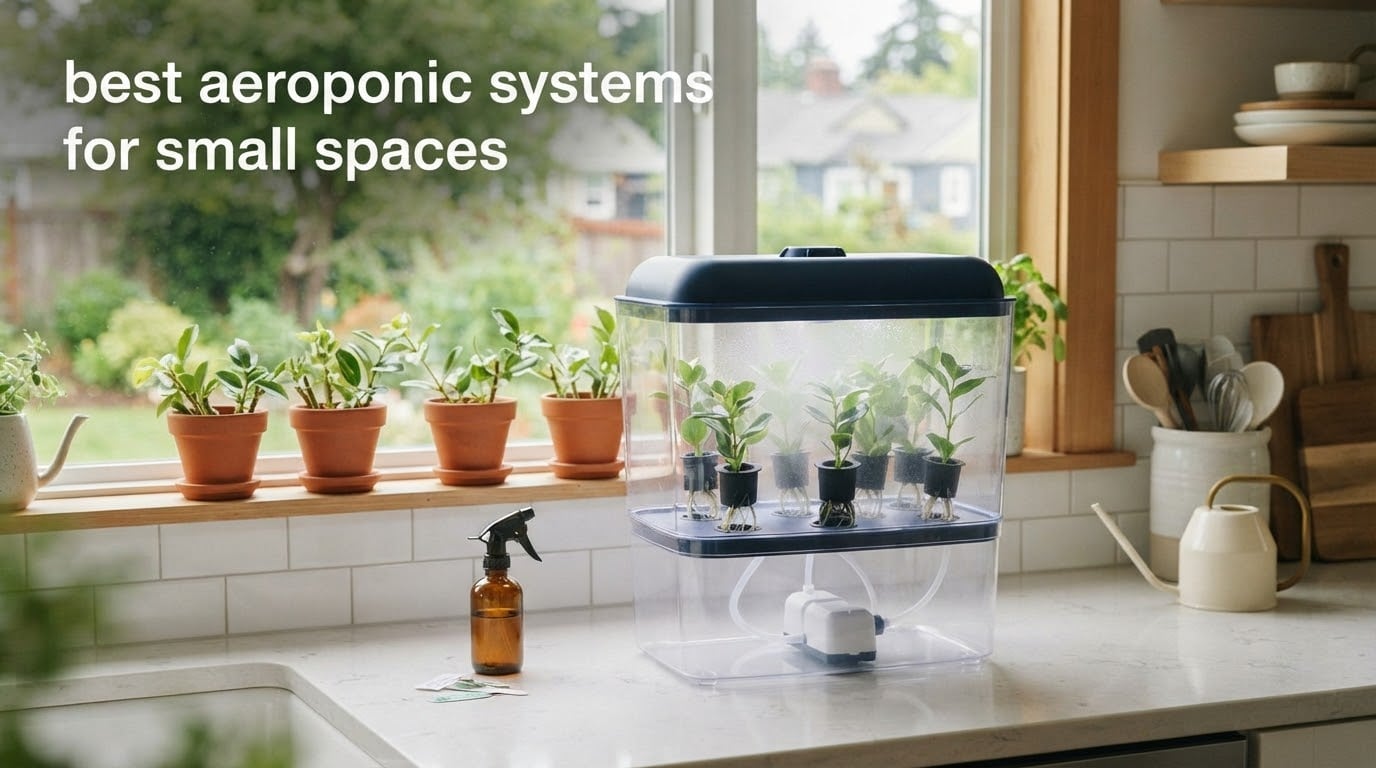
Most people who want to grow plants indoors do not have a spare closet, a basement bench, or a sunny corner going spare. They have a stretch of kitchen counter, a shelf above the washing machine, and roughly twelve square feet of usable floor. That constraint rules out most of the hydroponic towers filling the bestseller charts, because those units are designed around headroom rather than around a room that already feels full.
That is where the best aeroponic systems for small spaces earn their place. Rather than stacking dozens of plant sites vertically, the units in this roundup keep their footprint down at roughly 12 to 14 inches square, and they buy their capacity with misting hardware instead. Nine of the ten systems here are mist propagators built for cloning cuttings, and the tenth is a vertical tower that trades true aeroponics for a footprint under one square foot. I explain exactly where that distinction matters in the buying guide further down.
We compared all ten against the same criteria: measured dimensions, site count, what is actually in the box, pump and manifold design, and the complaints that show up repeatedly across verified reviews. We also weighted the things that quietly ruin a small-space setup, like open reservoirs that grow algae, pumps rated only for 120V mains, and units that need a separate dome or lamp before a single cutting goes in. Our full method sits at the end of the introduction below, so you can see exactly what the rankings are built on.
Table of Contents
Top 3 Picks: Best Aeroponic Systems for Small Spaces
For most small spaces the CLONE KING 36 Site comes first: it holds 36 cuttings inside a 13.75-inch square and carries the deepest review history of anything we tested. If your available surface is a shelf with a lip, the Hydrofarm Oxyclone trades eight sites for a shallower body. If you want the fewest parts on the counter, the HORTIPOTS 35 Site includes a hard-clear humidity dome and needs no separate air pump.
CLONE KING 36 Site Cloner
- 36 sites in a 13.75 inch square
- 13 spray heads
- 317 GPH submersible pump
- Reservoir
- lid
- manifold and inserts included

Hydrofarm Oxyclone OX20SYS
- 20 sites
- 13.75 x 10.75 inch footprint
- 160 GPH pump plus air stone
- 1.75 gallon reservoir
- One year warranty

HORTIPOTS 35 Site Cloner
- 35 sites
- Hard-clear humidity dome included
- UL-listed pump with pre-filter
- No air pump required
- 1.625 inch neoprene inserts
Best Aeroponic Systems for Small Spaces: Quick Comparison in 2026
All ten systems in this roundup, with the deciding spec for each. Read the footprint column first; it eliminates half the list in a small apartment before any other feature matters.
| Product | Specifications | Action |
|---|---|---|
| CLONE KING 36 Site Aeroponic Cloning Machine |
|
Check Latest Price |
| Hydrofarm Oxyclone OX20SYS Recirculating Cloning System |
|
Check Latest Price |
| HORTIPOTS 35 Site Aeroponic Cloner |
|
Check Latest Price |
 HORTIPOTS 24 Site Aeroponic Cloner HORTIPOTS 24 Site Aeroponic Cloner |
|
Check Latest Price |
 DL Wholesale Psycloner Pro 35 Site Clone Machine DL Wholesale Psycloner Pro 35 Site Clone Machine |
|
Check Latest Price |
 EZ Clone 16 Cutting Cloning System EZ Clone 16 Cutting Cloning System |
|
Check Latest Price |
 PowerGrow Systems 21-Site Bucket Cloner Kit PowerGrow Systems 21-Site Bucket Cloner Kit |
|
Check Latest Price |
 HORTIPOTS 70 Site Aeroponic Cloner HORTIPOTS 70 Site Aeroponic Cloner |
|
Check Latest Price |
 LYCereal 30-Plant Indoor Hydroponic Tower LYCereal 30-Plant Indoor Hydroponic Tower |
|
Check Latest Price |
 Viagrow 24-Site Clone Machine with Light Viagrow 24-Site Clone Machine with Light |
|
Check Latest Price |
One clarification before the reviews. Nine of these products are high-pressure or low-pressure mist propagators, which suspend cuttings in air and spray the root zone. The LYCereal tower is drip-fed recirculating hydroponics marketed as aeroponic, and it grows food crops rather than clones. We keep it in the list because the footprint question in small spaces is real, but the review labels it honestly.
1. CLONE KING 36 Site Aeroponic Cloning Machine: the Most Sites Per Square Foot
CLONE KING 36 Site Aeroponic Cloning Machine. Expect 100% Success Rates!
36 mist sites
13.75 x 13.75 x 12.5 inches
5 pounds
317 GPH pump
13 spray heads
Pros
- 36 cuttings inside a 13.75 inch square footprint
- 13 spray heads give even coverage across the whole lid
- 317 GPH submersible pump is a strong spec for this class
- Reservoir
- lid
- manifold
- pump and inserts all included
- Deepest review history of any unit here at 1867 ratings
Cons
- Includes blue and red inserts only so other collar sizes must be bought separately
- No grow light included
- Reservoir-level water changes still needed across a rooting cycle
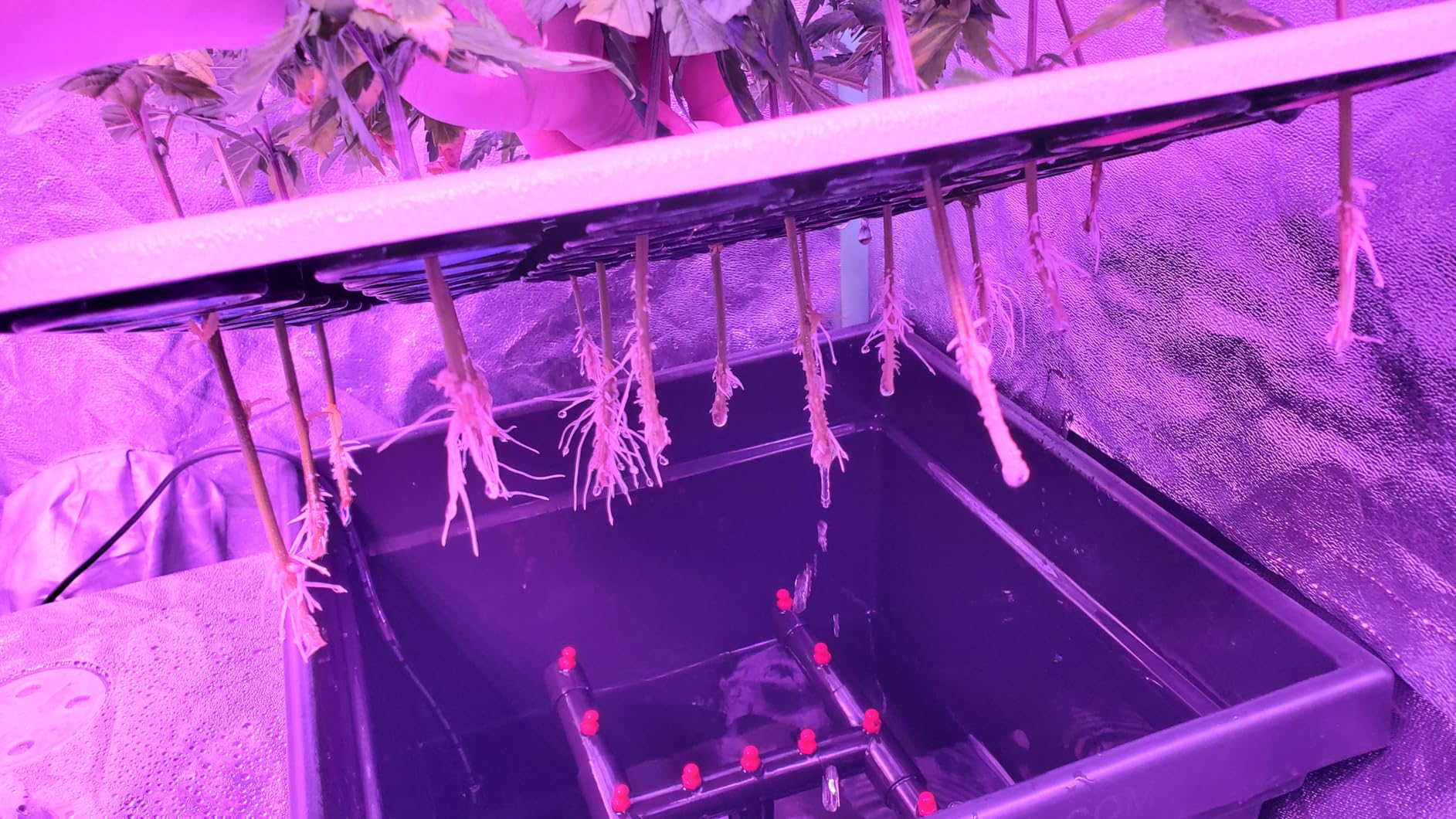
This is the unit we kept coming back to. Thirty-six cuttings in a body that measures 13.75 inches on a side means the whole machine sits on a single kitchen tile, and at five pounds you can lift it with one hand to check the reservoir. The rating distribution supports the spec sheet: 76 percent of reviewers gave it five stars.
The 317 GPH submersible pump is the part that makes the density work. With 13 spray heads spread across the lid, mist reaches the outer ports instead of only the centre ones, and that is the difference between a uniform batch and a ragged one. Buyers describe consistent rooting and few complaints beyond the missing light and the insert sizes.
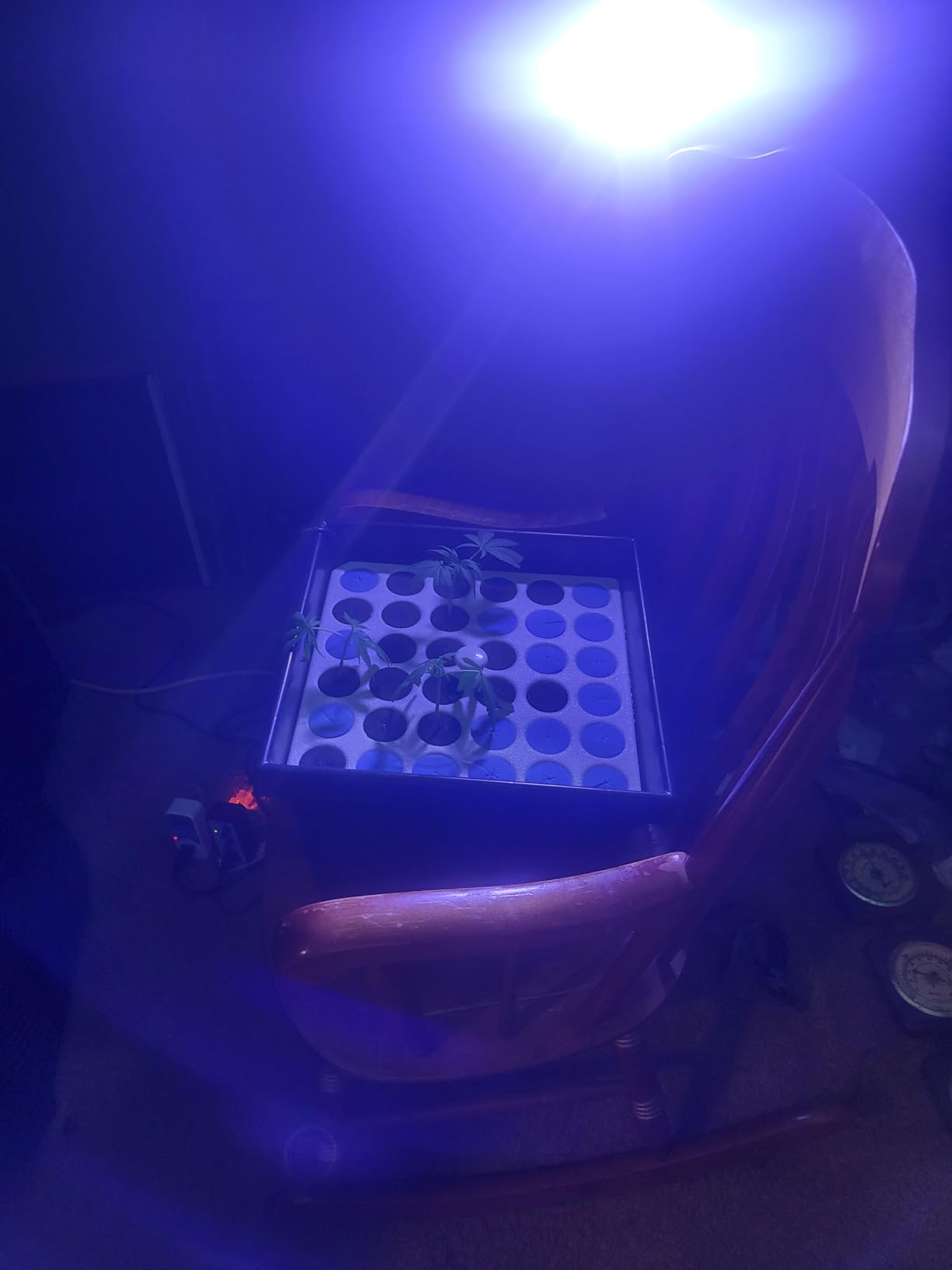
What you have to add: a grow light, and neoprene inserts in whatever diameter your cuttings actually are. The box currently includes blue and red inserts only, so if you are working with 2-inch collars you are buying a separate consumable before day one. Budget for that before the machine arrives.
Reservoir maintenance is the other real commitment. Over a multi-week rooting cycle you still change the water at reservoir level, which in a small kitchen means a sink, a towel down, and about five minutes. Plan your timing so a batch finishes near a weekend rather than mid-week.
What to check before you buy it
Measure the shelf opening rather than the shelf top. At 12.5 inches tall with the lid on, this needs clearance above it for a lamp arm, and many upper shelves do not have it.
Count your cuttings against the 36 sites honestly. If you only have 12 healthy cuttings, a 16-site unit will root them faster with less reservoir to manage. Capacity you do not fill is just water volume you clean.
Where it falls short
It is a propagator, not a grow system. Once roots are three inches long the cuttings need soil or a net pot, and none of that is part of this machine. Plan the transfer step in advance.
The blue and red inserts are the most common regret. Confirm your stem diameter first, because the alternative is a second consumable order while fresh cuttings wait.
2. Hydrofarm Oxyclone OX20SYS: the Shallowest Body for Tight Shelves
Oxyclone OX20SYS Recirculating Cloning System, 20 Sites, Compact
20 mist sites
13.75 x 10.75 x 6.25 inches
5.3 pounds
1.75 gallon reservoir
160 GPH pump
Pros
- Shallowest body here at 6.25 inches tall
- Active Aqua pump and 4 inch air stone deliver high dissolved oxygen
- Complete kit includes reservoir
- lid
- 20 oxyCERTS
- pump
- air pump
- tubing and air stone
- Hydrofarm Active Aqua hardware is widely serviced
- One year manufacturer warranty
Cons
- 120V pump is not usable on 220V mains without a converter
- Only 20 sites so batches are small
- No humidity dome and no grow light included
Height is the dimension that quietly ends most shelf plans, and this is the shortest unit in the roundup at 6.25 inches. If you have a cubby above a fridge or a shallow cabinet shelf, this is the one that physically fits where a taller dome machine will not.
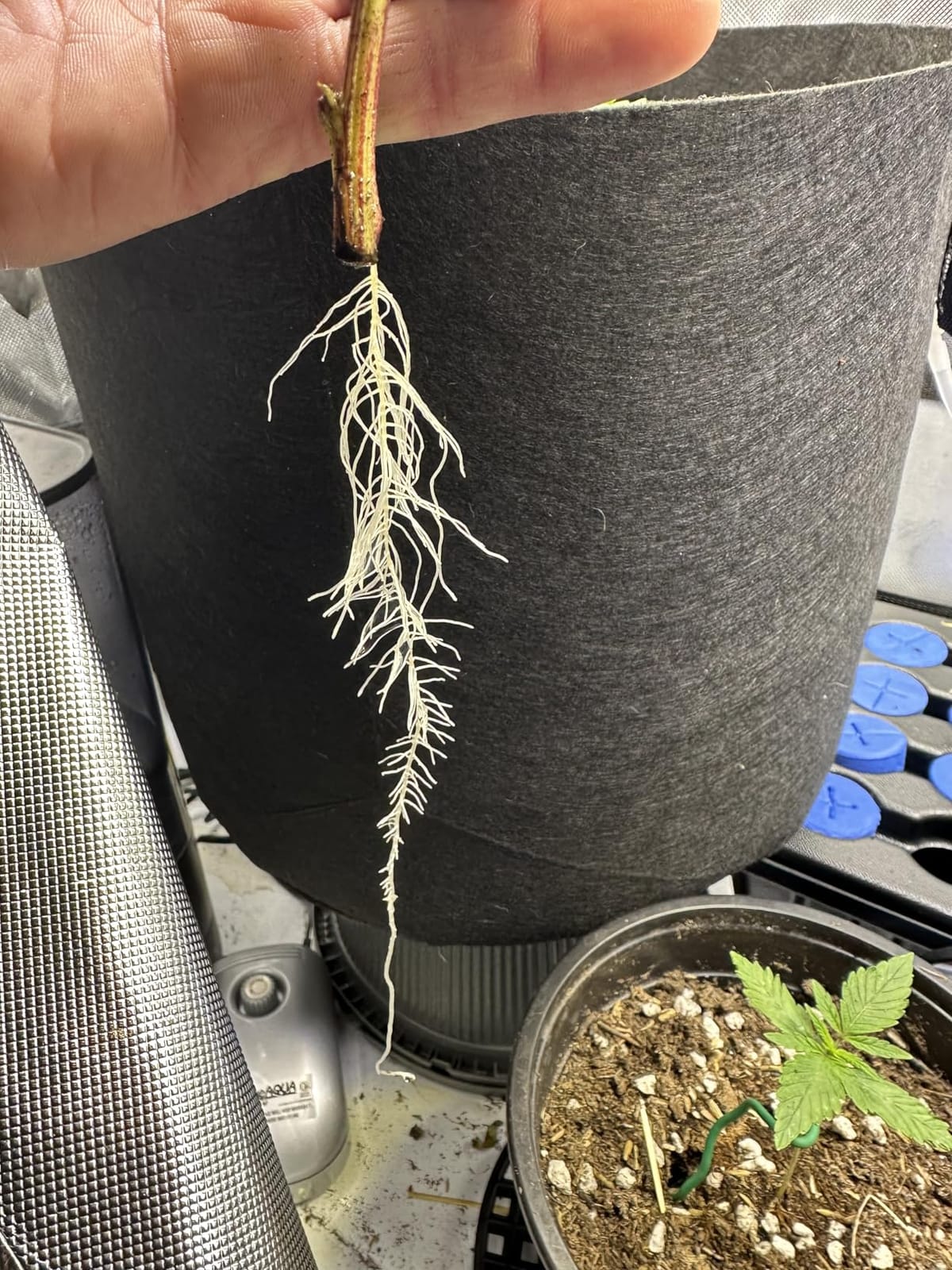
The aeration design is what separates it from a basic mist box. A Venturi valve pulls bubbles in while the 160 GPH submersible pump drives turbulence, and a 4-inch air diffuser keeps dissolved oxygen moving through the 1.75-gallon reservoir. Owners rate the build quality and the branding above most peers, and the Active Aqua parts are easy to replace.
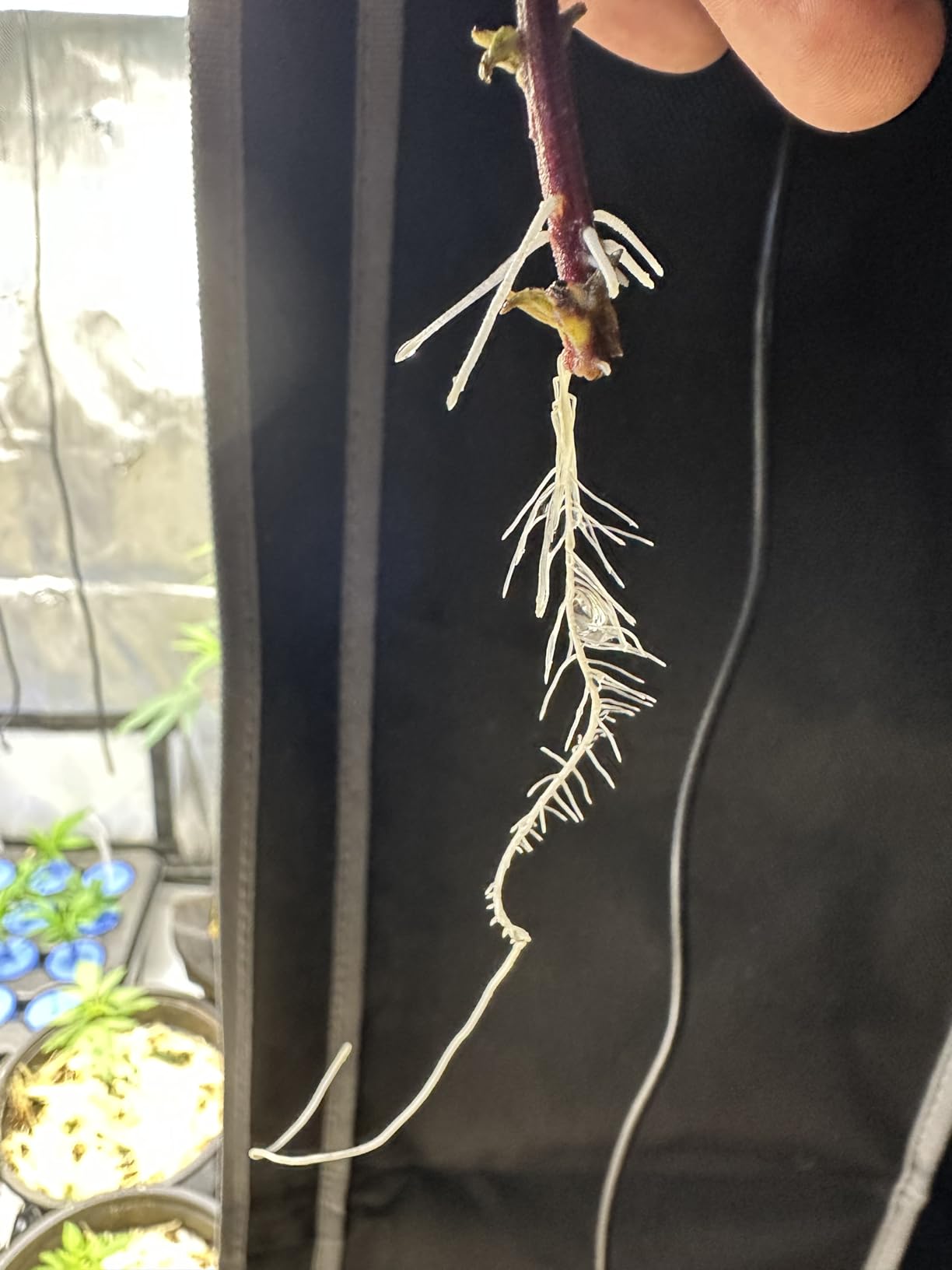
Be aware that the whole aeration chain is 120V. Outside the US and Canada you need a converter, and that is a line item people forget. The warranty is one year, which is standard here but worth noting if you plan to run multi-week cycles continuously.
Twenty sites is a genuinely small batch, and it is the second-lowest capacity on the list. That is a fair trade for the footprint, but if you are propagating herbs in quantity you will run more cycles than the price difference suggests.
What to check before you buy it
Bring a tape measure to the shelf and check vertical clearance above the lid. Even though the body is short, a dome and lamp arm add height back, and that is often the dimension that fails first.
Confirm your mains voltage. If it is not 120V, the pump and air pump both need converter hardware and the quietness of the system changes once the converter is in the chain.
Where it falls short
No dome and no light in the box. The product listing is unusually honest that cloning still needs both, which is good for budgeting but bad for anyone hoping for a single-box start.
The recirculating loop needs a top-up check. A 1.75-gallon reservoir in a warm kitchen loses water faster than a sealed one, and that is a twice-daily glance rather than a weekly one.
3. HORTIPOTS 35 Site Aeroponic Cloner: the Fewest Parts on Your Counter
Aeroponic Cloner Machine, Cloning Machine 35 Site for Cutting Rooting Germination Kit Using 1.625 inch Neoprene Clone Inserts
35 mist sites
1.625 inch neoprene inserts
UL-listed pump with pre-filter
Foldable hard-clear dome included
ABS and PP construction
Pros
- 35 sites without a large footprint
- UL-listed pump with pre-filter housing resists clogging
- Works without a separate air pump
- Hard-clear foldable dome included
- Roots cuttings in 4-10 days
Cons
- Dome is awkward to fit before the unit is filled
- Needs 1.625 inch neoprene inserts matched to this model
- No lighting included
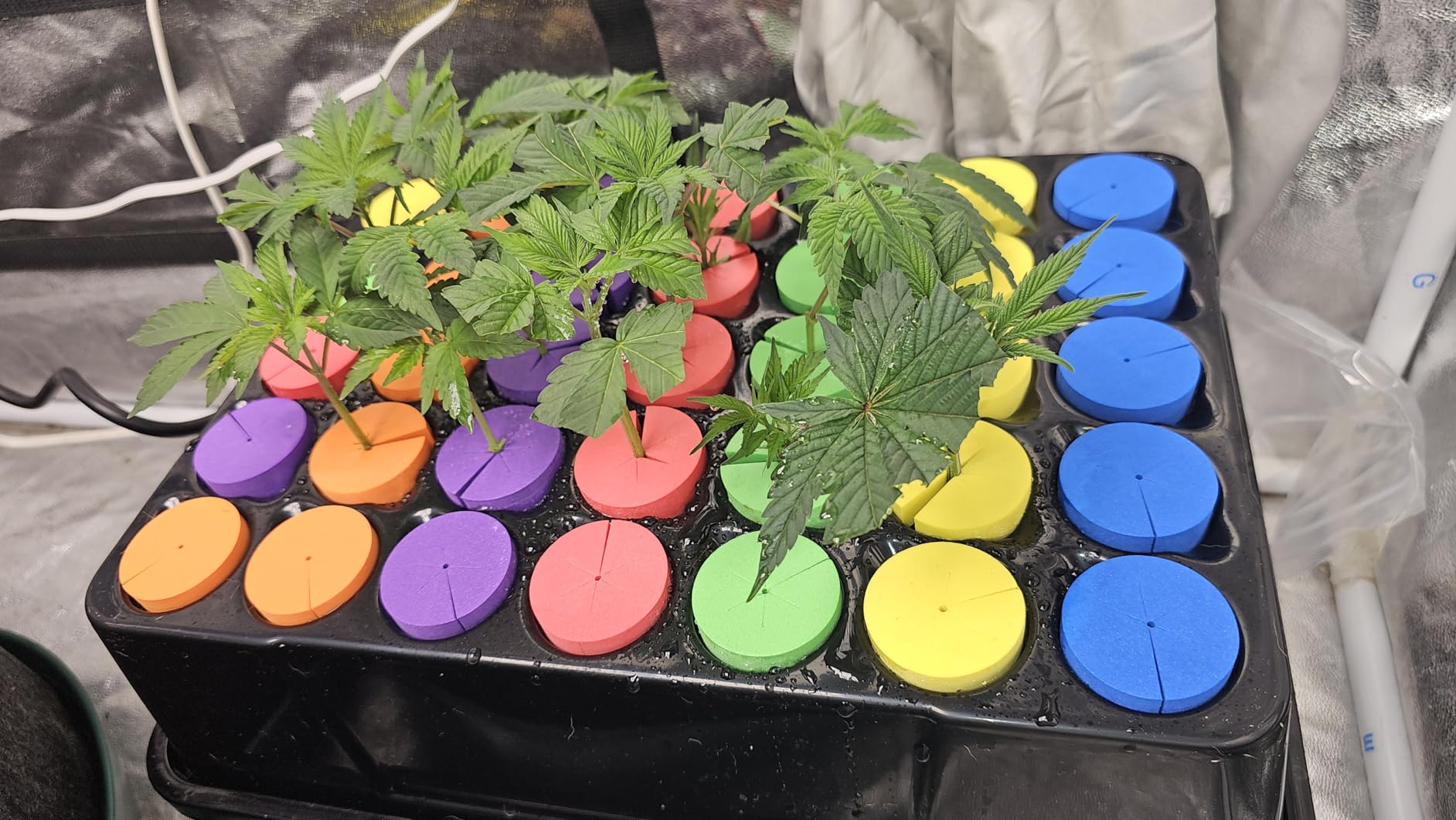
This is the pick for anyone who dreads parts. There is no air pump to plumb in, no diffuser, and no extra tubing, because the lid vents and circulates on its own. A pump, a manifold, and a lid that folds out of the way. For a kitchen counter that doubles as a workspace, fewer components means fewer things to store between cycles.
The pre-filter housing on the UL-listed pump is the detail reviewers rate most. Clogging is the most common complaint across every cloner in this roundup, and a filter that catches debris before it reaches the sprayers is the direct answer. Manufacturing is 100 percent new ABS and PP, and the manifold design uses a smaller pump and generates less heat than typical.
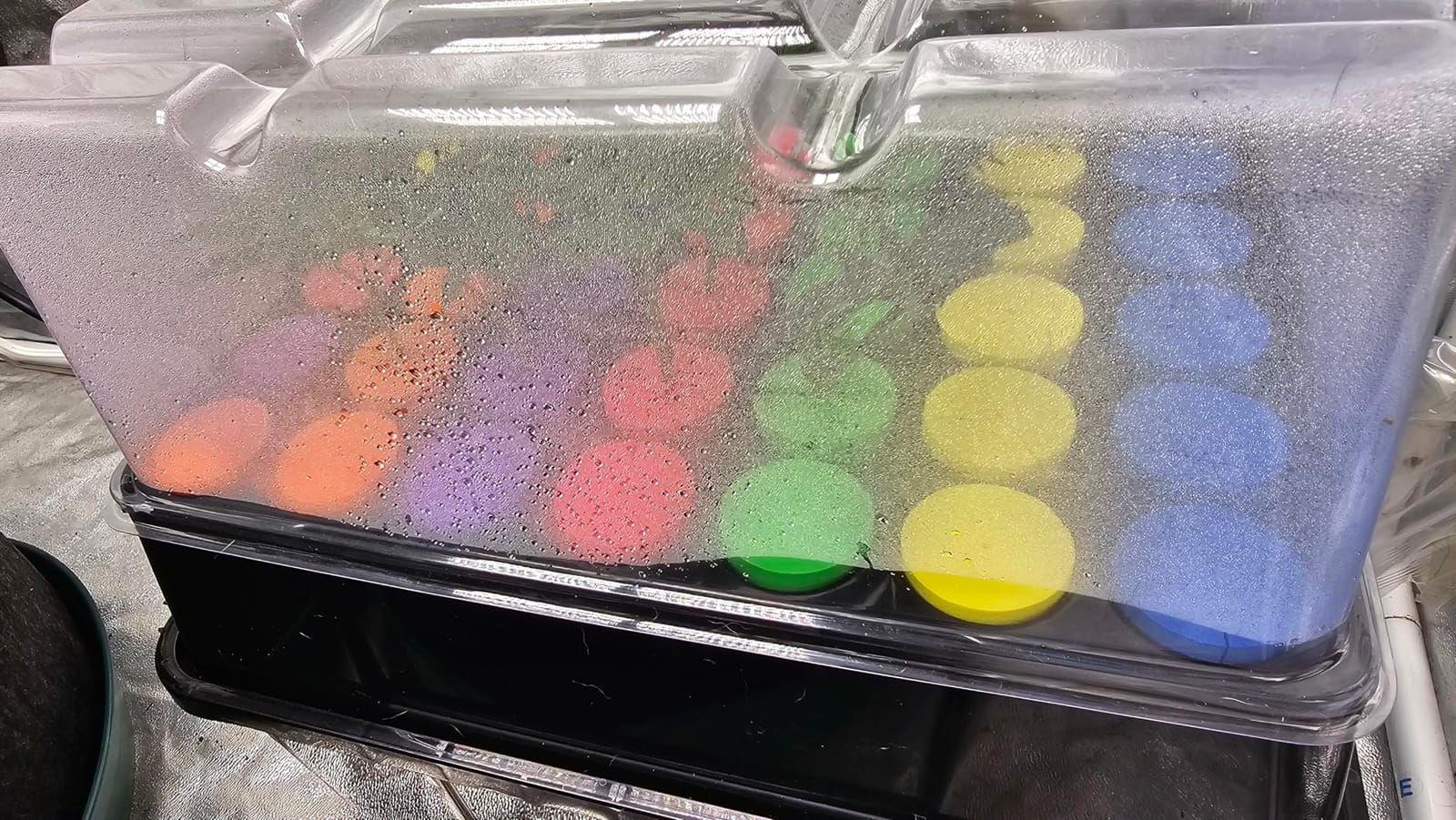
The dome is a foldable hard clear piece, and reviewers specifically favour it over the thin vinyl domes that turn brittle after a few months of mist contact. Owners also like that it roots in 4 to 10 days, so a batch cycles quickly inside a small footprint.
Two practical cautions. Fit the dome before you fill the reservoir, because the reverse order is genuinely awkward. And the inserts are 1.625 inch neoprene, matched to this model, so they are a model-specific consumable rather than a universal part.
What to check before you buy it
Check whether you already own 1.625 inch inserts or 2 inch collars. Neighbouring models use the 2 inch size, and mixing them is the single most common purchase mistake in this category.
Decide on a mist interval timer before the first cycle. Without one you are switching the pump manually, and inconsistent root zones show up as uneven callusing.
Where it falls short
No grow light. Cuttings under a dome need a proper light source once they start pushing leaves, so add that to the cost before ordering.
At 35 sites it is a mid-size batch, so propagation throughput is moderate. If your aim is dozens of cuttings a month, plan a rotation rather than a single large run.
4. HORTIPOTS 24 Site Aeroponic Cloner: the Lightest Unit You Can Lift
Aeroponic Cloner Machine 24 Site for Cuttings Rooting Using 2 inch Neoprene Inserts or 2 inch Clone Collars
24 mist sites
2 inch neoprene collars
BPA-free ABS and PP
2.08 kg
UL-listed pump with pre-filter
Pros
- Mid-size 24 sites balanced for a shelf or under-bench gap
- Uses widely available 2 inch clone collars
- No separate air pump so only one pump on the shelf
- Lightest unit here at 2.08 kg
- Multiple owners report full rooting on the first run
Cons
- Reported cracking between lid sections lets mist escape and light into the reservoir
- Black plastic body described as somewhat flimsy
- Included 2 inch plugs sit loosely and allow splash-up
- 120V pump only
- Setup instructions are minimal on technique
Two kilograms is the number that matters here. This is the only unit in the roundup light enough to lift one-handed while checking roots, which in a small space means moving it from a high shelf to a work surface without asking for help. Everything else about the design follows from that weight saving.
It also uses 2-inch clone collars, the same widely available size as several competing designs, so replacement inserts are easy to find in ordinary garden supply. The pump is UL-listed with a pre-filter housing, and it runs without an air pump. Rooting performance draws consistent positive reports, with several owners describing full success on their first run.
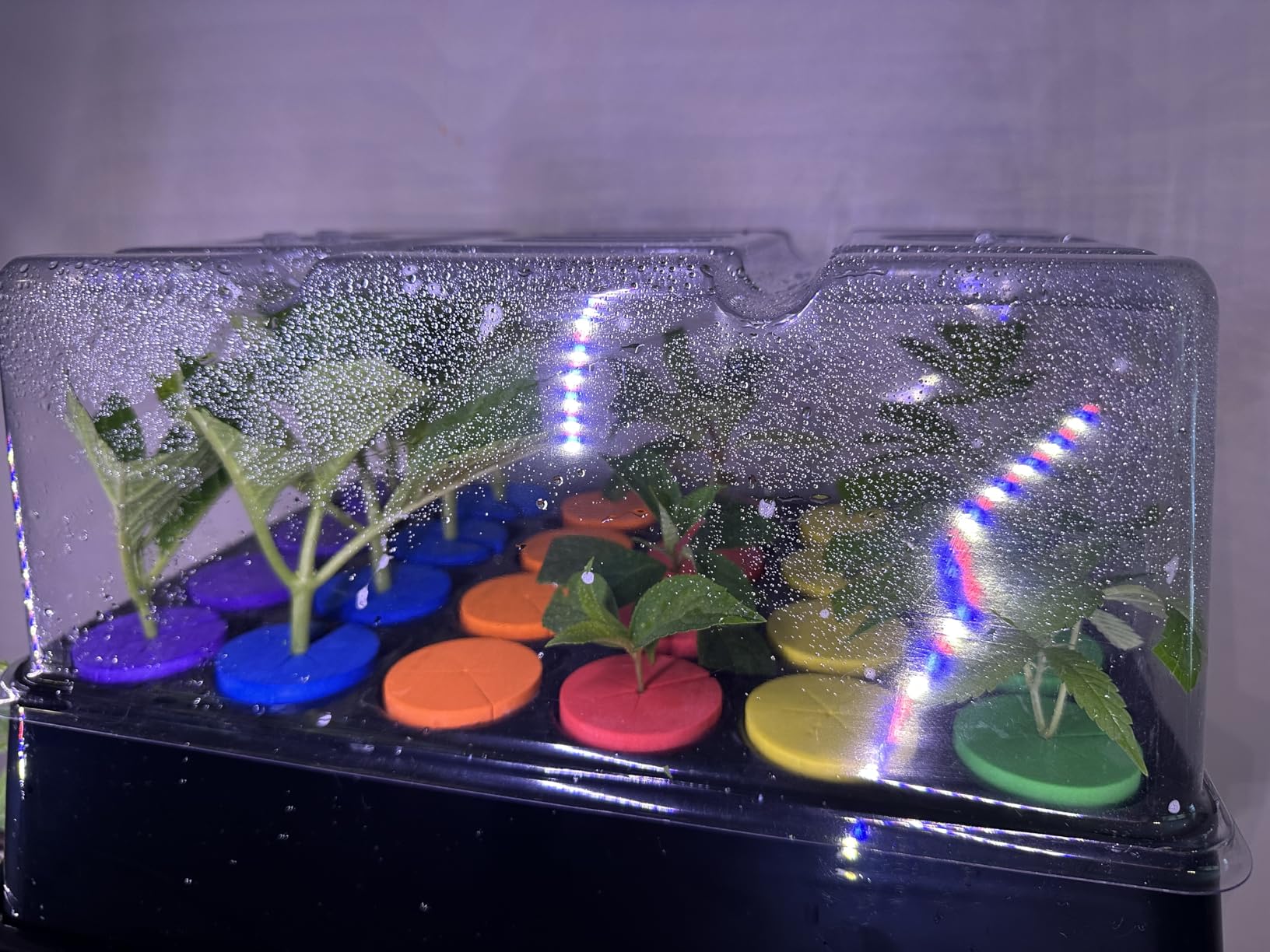
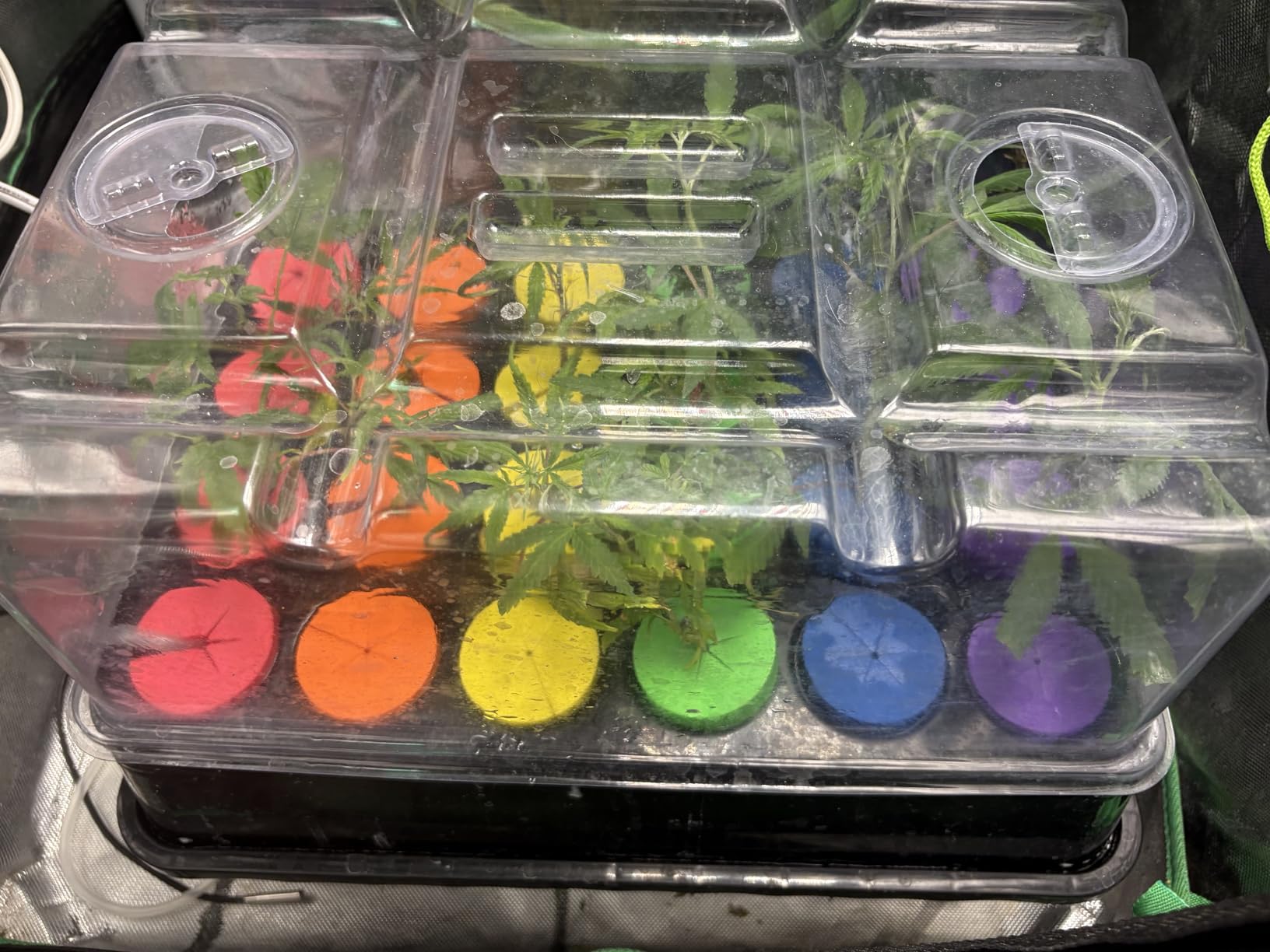
This model also carries the highest share of one-star feedback among the 20-plus-site units, and the reason is specific. Owners report cracking between lid sections, which lets mist escape and light into the reservoir, and the resulting algae growth is permanent because it sits in seams you cannot reach. Inspect the lid seam on arrival.
Reviewers also flag the included 2-inch plugs as loose in the ports, allowing solution splash-up onto the lid, and the pump is 120V only. A spray interval timer is widely recommended as a required accessory, and the instructions do not really teach interval timing on their own.
What to check before you buy it
Run a fingernail along the lid seam out of the box. If the join feels springy rather than rigid, expect to reseat it during the first cycle and keep it out of direct light afterwards.
Check your ceiling height if the unit lives under a bench. The lamp arm is what fails, not the machine, and under-bench installs are the tightest setups in this roundup.
Where it falls short
The black plastic body is described as somewhat flimsy, and the flexible lid sections are the weakest part of the design. Treat it as a shelf unit rather than one that travels between rooms.
Twenty-four sites is a modest batch. It suits steady propagation of a few varieties rather than a large single sowing, and you will run more cycles than the price suggests.
5. DL Wholesale Psycloner Pro 35 Site: the One With Three Size Options
Psycloner Pro Clone Machine, Aeroponics System, Cloner for Plant Cuttings, Propagation + Bonus (35 Site)
35 mist sites
Neoprene inserts included
Humidity dome included
ABS propagation tray
2.12 kg
Pros
- Three size options in 35
- 70 and 140 site versions
- Roots of 3-4 inches in as little as 13 days
- Humidity dome included to prevent transplant shock
- Vertical cylinder form uses very little shelf area
- 70 site buyers report roughly 99 percent success
Cons
- Flimsy ABS that warps in a dishwasher and then leaks
- Corner cracks near the badge and pump cord can appear within a week
- Collapsible lid flap bows out and can dump water outside the reservoir
- Some pumps needed the impeller hand-spun after first runs
- 120V-only pump
The reason this one earns a place is the family behind it. The same product comes in 35, 70 and 140 site configurations, so if you outgrow the small unit you are not starting from zero. Owners report roots of three to four inches in as little as 13 days, and 70-site buyers describe success rates near 99 percent.
The ABS propagation tray is designed to block light from the roots while promoting evaporative cooling, which is a real advantage over open designs. The vertical cylinder footprint uses very little shelf area, and the humidity dome is included, so there is one fewer thing to source separately.
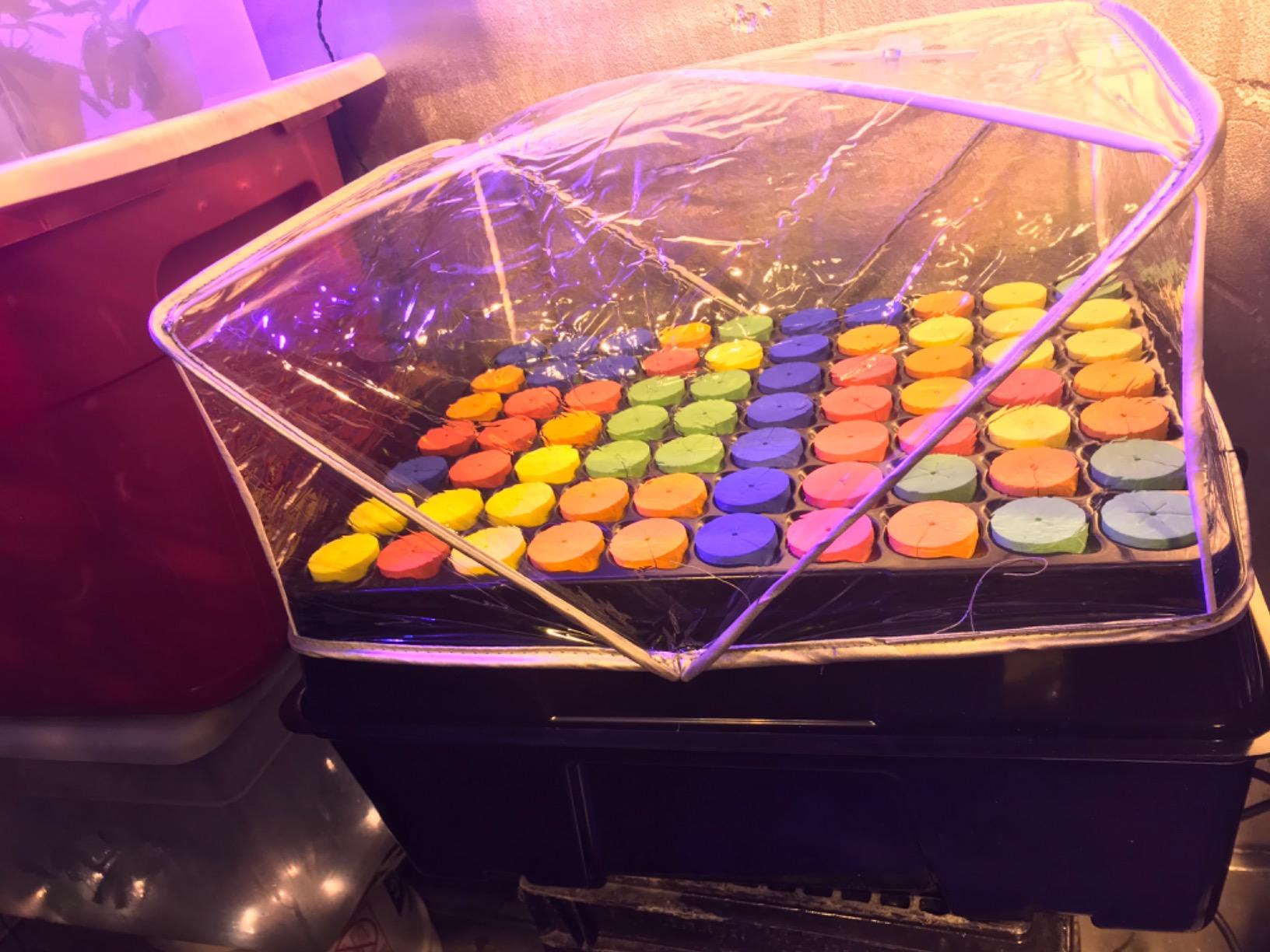
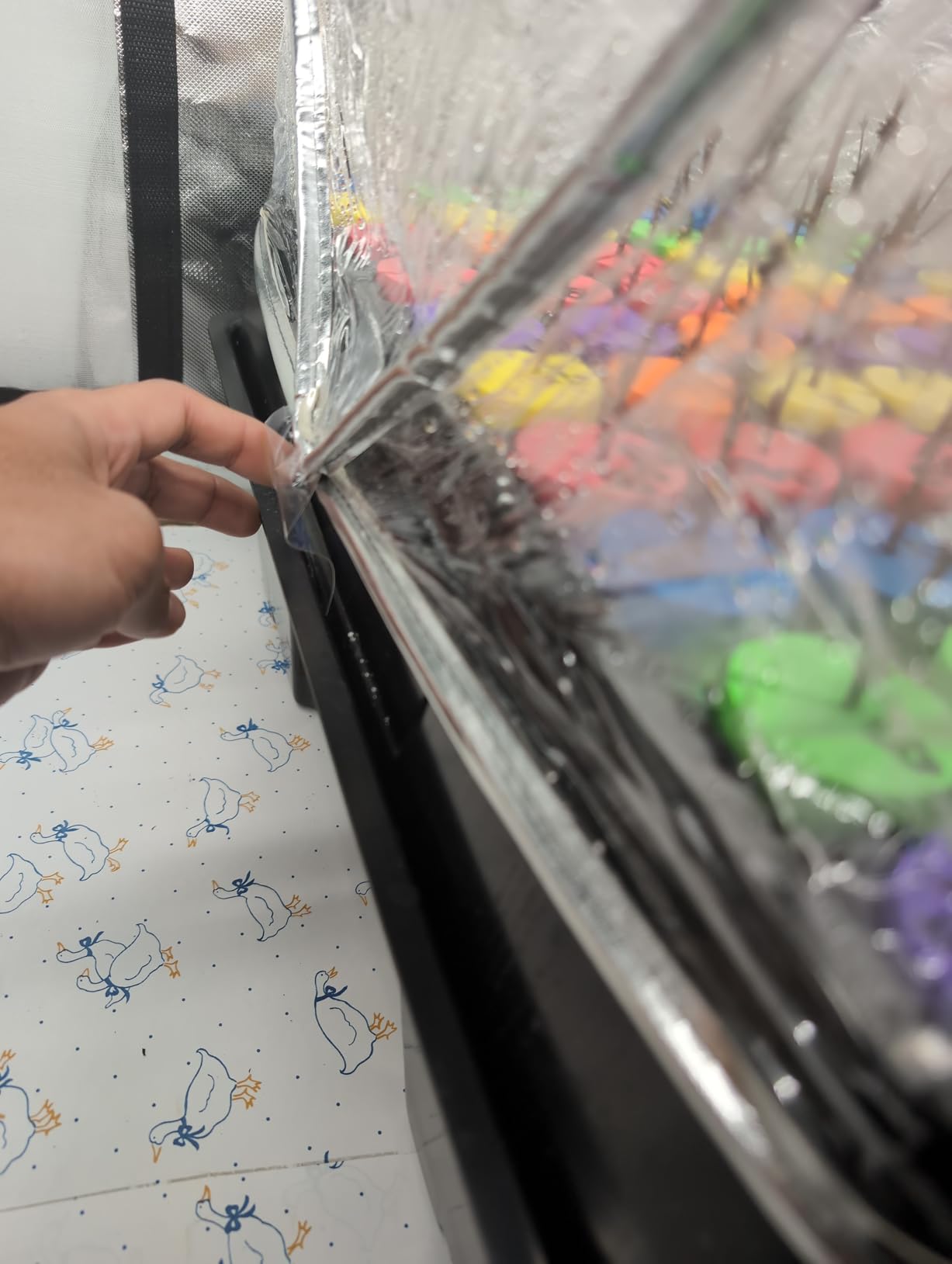
It is also the lowest-rated unit here, and the reasons are consistent enough to plan around. The ABS warps in a dishwasher, and once the tray warp the fit that keeps the seal fails. Separately, owners report hairline cracks developing near the badge corner and the pump cord within a week of gentle use, and a lid flap that bows out in the middle and spills water outside the reservoir.
A few units needed the pump impeller hand-spun after the first runs, and the pump is 120V only, so it will burn out on EU mains. Rooting still works well for people who patch or reseat the tray, but this is not the unit to buy if you want zero fiddling.
What to check before you buy it
Decide on your cleaning method first. If the plan involves a dishwasher, this tray is the wrong material, and hand washing every part is not a small chore in a small kitchen.
Look at the lid flap angle on arrival and make sure it seats flat. Owners who reseat it report much better containment, and an unreseated flap will wet your counter within a day.
Where it falls short
Durability is the weak point, and it is structural rather than cosmetic. The lid seam and badge corner are where failures begin, so this unit ages faster than the engineered-plastic alternatives on this list.
The 120V-only pump rules it out for anyone outside North American mains without a converter. Budget for that as part of the system, not as an afterthought.
6. EZ Clone 16 Cutting Cloning System: the Smallest Reliable Footprint
EZ Clone 16 Cutting Cloning System
16 mist sites
14.3 x 14.7 x 12.3 inches
8 pounds
Made in the USA
Model EZCL-BL16-LP-1
Pros
- Smallest site count makes it the tightest countertop option here
- Highest 5-star share of any unit at 79 percent
- Built by Hawthorne Hydroponics
- a long-established US maker
- Made in the United States
- Consistent build quality with very few negative reviews
Cons
- Smallest capacity so batches of 16 limit throughput
- No listing detail on an included dome or lighting
- Heaviest unit relative to its size at 8 pounds
Sixteen sites is not many, and that is exactly the argument. The volume of water you have to top up, change and keep clean drops with site count, and in a small kitchen the sink-time saved is the real feature. Seventy-nine percent of reviewers gave it five stars and only 2 percent gave two stars, which is the cleanest distribution on the list.
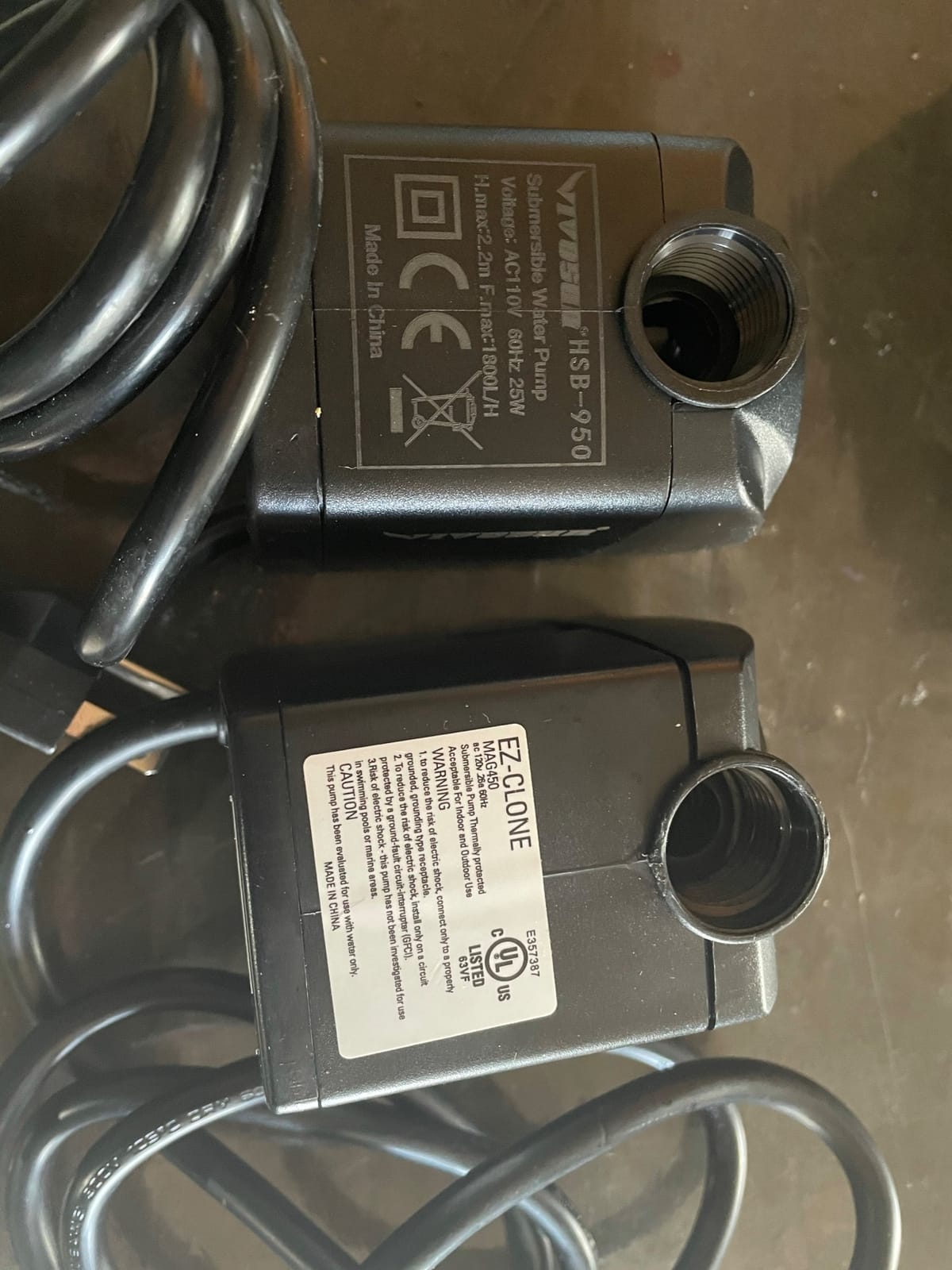
It is built by Hawthorne Hydroponics and made in the United States, which matters if you care about replacement parts existing in a few years. The footprint is 14.3 by 14.7 inches, slightly larger than the cheapest units here but still firmly countertop territory, and it is rated for indoor use.
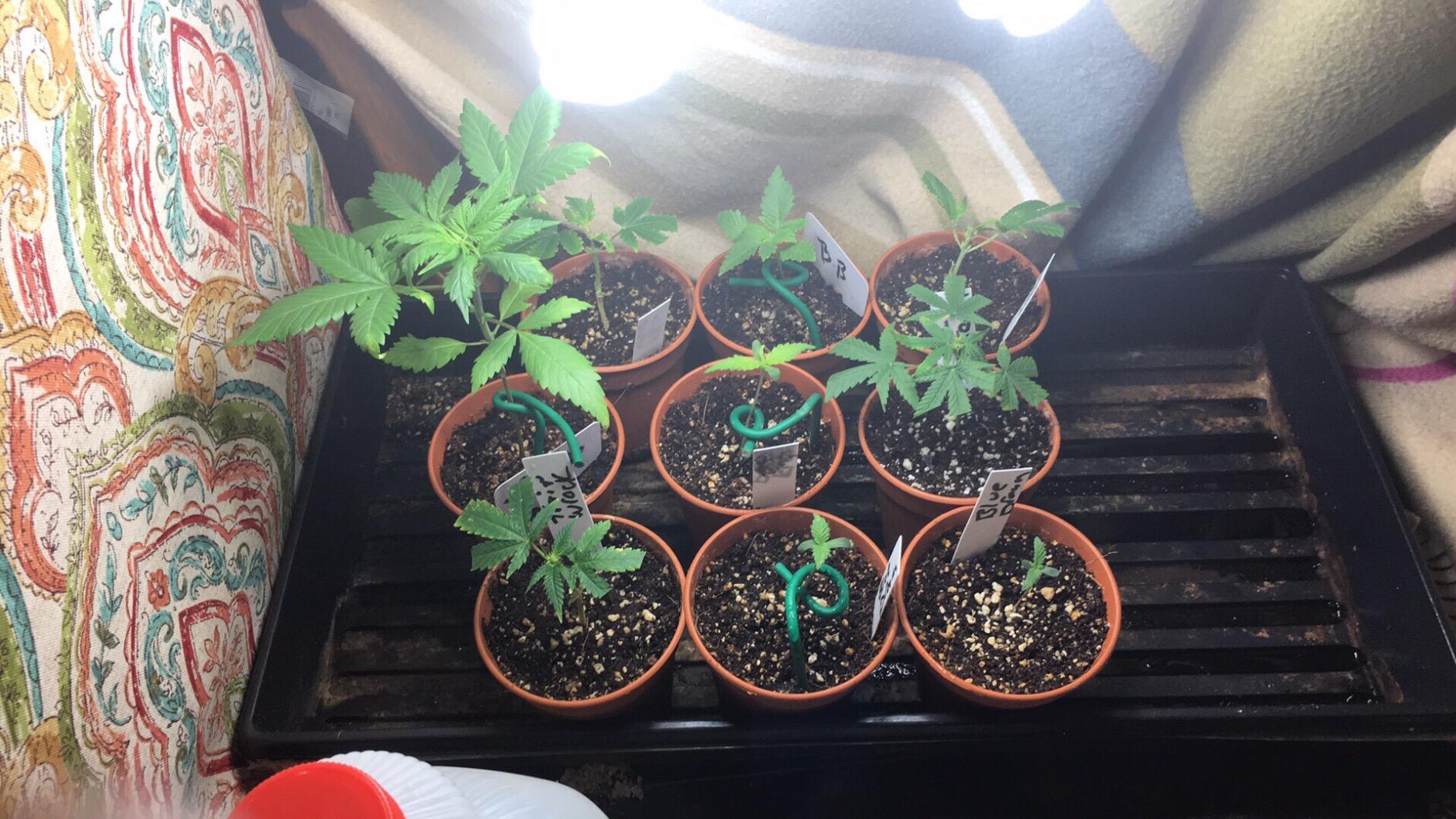
Two honest weaknesses. At eight pounds it is the heaviest unit relative to its size, so it is a permanent counter fixture rather than something you lift between rooms. And the listing gives almost no detail on whether a dome or lighting is included, so plan to buy both and treat any bundled accessory as a bonus.
Sixteen sites also caps throughput. If your goal is a steady supply of rooted herb cuttings for a windowsill planter, that is workable. If you are trying to fill a tower or a bed in one round, you will run this repeatedly.
What to check before you buy it
Check the reservoir capacity against your sink situation. Fewer sites means less water, which is the main reason to like this unit, so confirm that advantage survives your actual counter depth.
Ask the seller what is in the box regarding a dome. The listing is thin on this point and it changes the total cost of a first cycle by more than the machine does not.
Where it falls short
Sixteen sites is the smallest capacity in the roundup. It is a batch starter, and the constraint shows up the moment you want more than a handful of cuttings at once.
Eight pounds will strain an upper shelf. This one belongs on a counter or a low bench, which narrows the placement options in a very small room.
7. PowerGrow Systems 21-Site Bucket Cloner Kit: the Complete Entry-Level Starting Kit
Plant Cloning Machine – Deluxe 21-Site Bucket Cloner Kit by PowerGrow Systems
21 mist sites
12 x 12 x 12 inches
5 pounds
360 degree spray nozzles
Includes bucket, pump and gel
Pros
- Entry-level price among these kits
- 360 degree spray nozzles give full-circle coverage
- Uses a standard bucket so it occupies the least shelf space here
- Made in the USA
Cons
- Open bucket reservoir is exposed to light which can promote algae
- No humidity dome included
- Plastic bucket is less durable than sealed reservoir units
This is the entry point, and the value case is simply that everything arrives in one box. Bucket, 21-site lid, clone collars, pump and cloning gel. For a first-time grower who wants mist propagation without a shopping list, that completeness is the selling point, and owners treat it as a cheap way to find out whether cloning appeals to them.
The 360-degree spray nozzles cover the full circle rather than one arc, which matters in a round bucket where every site sits at a different distance from the centre. At 12 inches square it is the most compact cubical unit here, and using a standard bucket means you can substitute containers without buying a purpose-built reservoir.
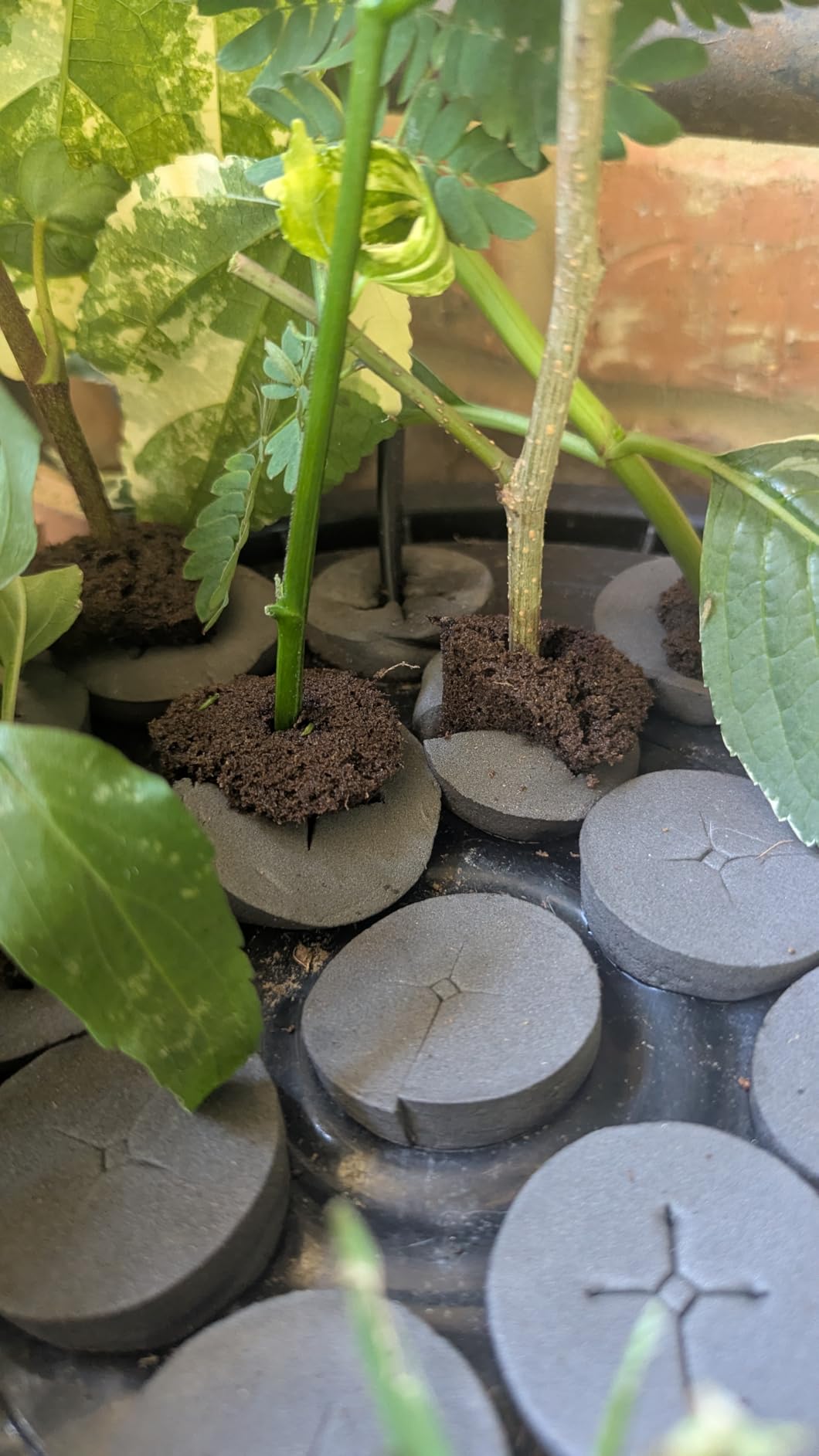
The design tradeoff is that an open bucket is exposed to light, and that is the most common complaint. Algae grows in lit nutrient solution, and in a clear-sided bucket you will be managing it rather than ignoring it. Opaque wrap or a fitted cover solves most of the problem for very little money.
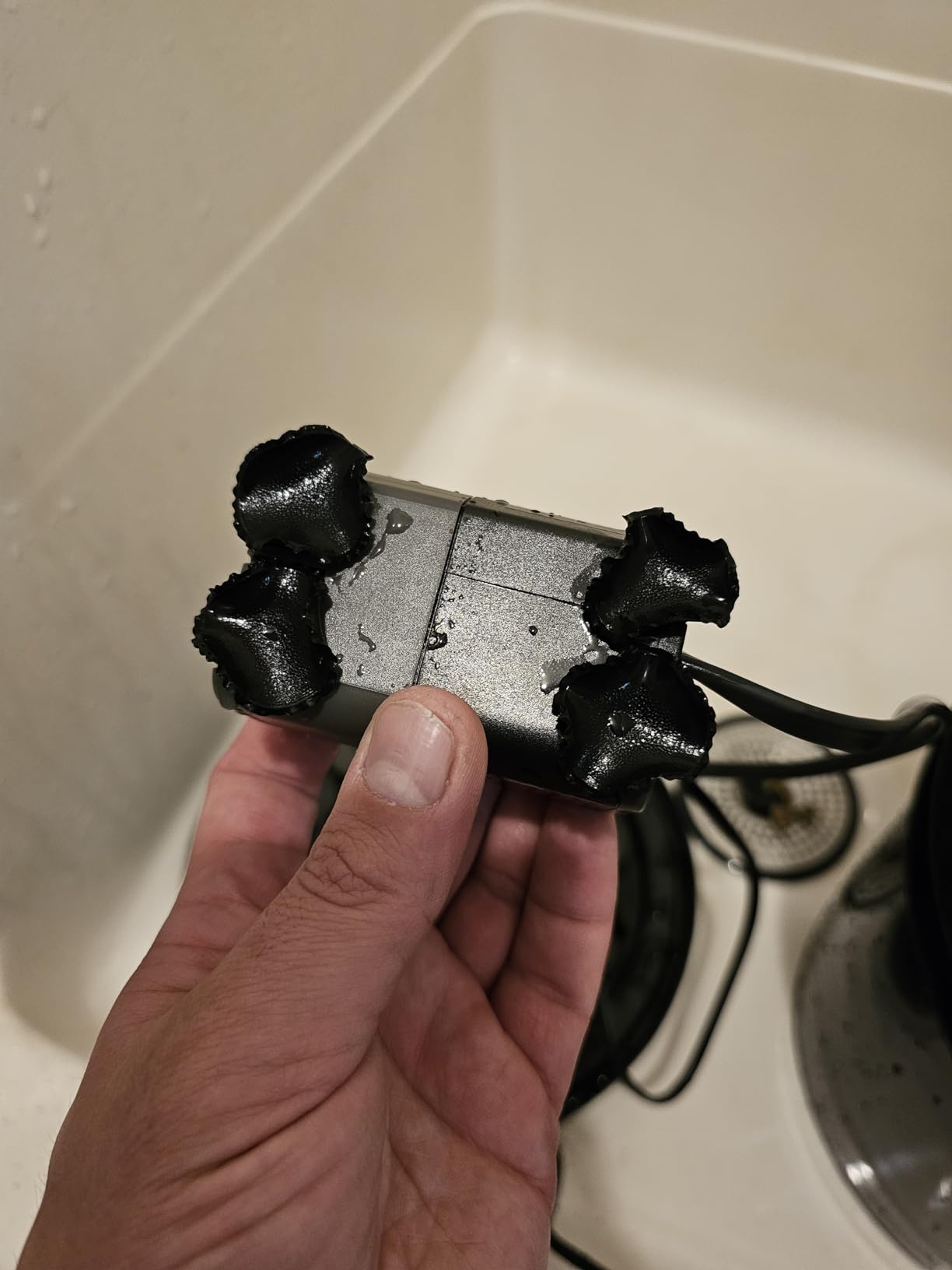
There is no humidity dome, so add one if you are working with tender cuttings in their first week. The plastic bucket itself is less durable than the sealed reservoir units, and that is a fair expectation at this price level.
What to check before you buy it
Look at the bucket dimensions against your under-sink or cabinet clearances. A standard five-gallon bucket is taller than most closed cloner bodies, so height can be the surprise here rather than width.
Plan for light control. If the bucket is translucent or clear, decide now whether you will wrap it, because algae starts the moment nutrient solution is exposed to light.
Where it falls short
No dome is a real gap for cuttings, which wilt quickly without one in the first few days. Treat the dome as part of the purchase rather than an optional extra.
Open-bucket construction means you are managing evaporation and light every week. Sealed units ask less of you, and that difference compounds over a season.
8. HORTIPOTS 70 Site Aeroponic Cloner: the Maximum Capacity Option
HORTIPOTS Cloning Machine Aeroponic Cloner System 70 Site for Plant Cuttings Using 1.625 inch Neoprene Clone Inserts (1-5/8 inch)
70 mist sites
Foldable clear humidity dome
UL-listed pump with pre-filter
8.3 pounds
1.625 inch inserts
Pros
- Highest capacity here at 70 sites
- Engineered ABS described as leak-free over years of use
- UL-listed pump with pre-filter housing resists clogging
- No separate air pump so the footprint stays narrow
- Free foldable humidity dome included
Cons
- Highest cost in the roundup
- Largest footprint among closed-reservoir units so it needs a floor or low bench
- Heaviest unit here at 8.3 pounds
- 120V pump only
Seventy sites is the number to start from if your plant material is limited and your space is vertical. One cycle of seventy cuttings replaces roughly four runs of a 16-site unit, and that matters when you are propagating a single parent plant you cannot scale.
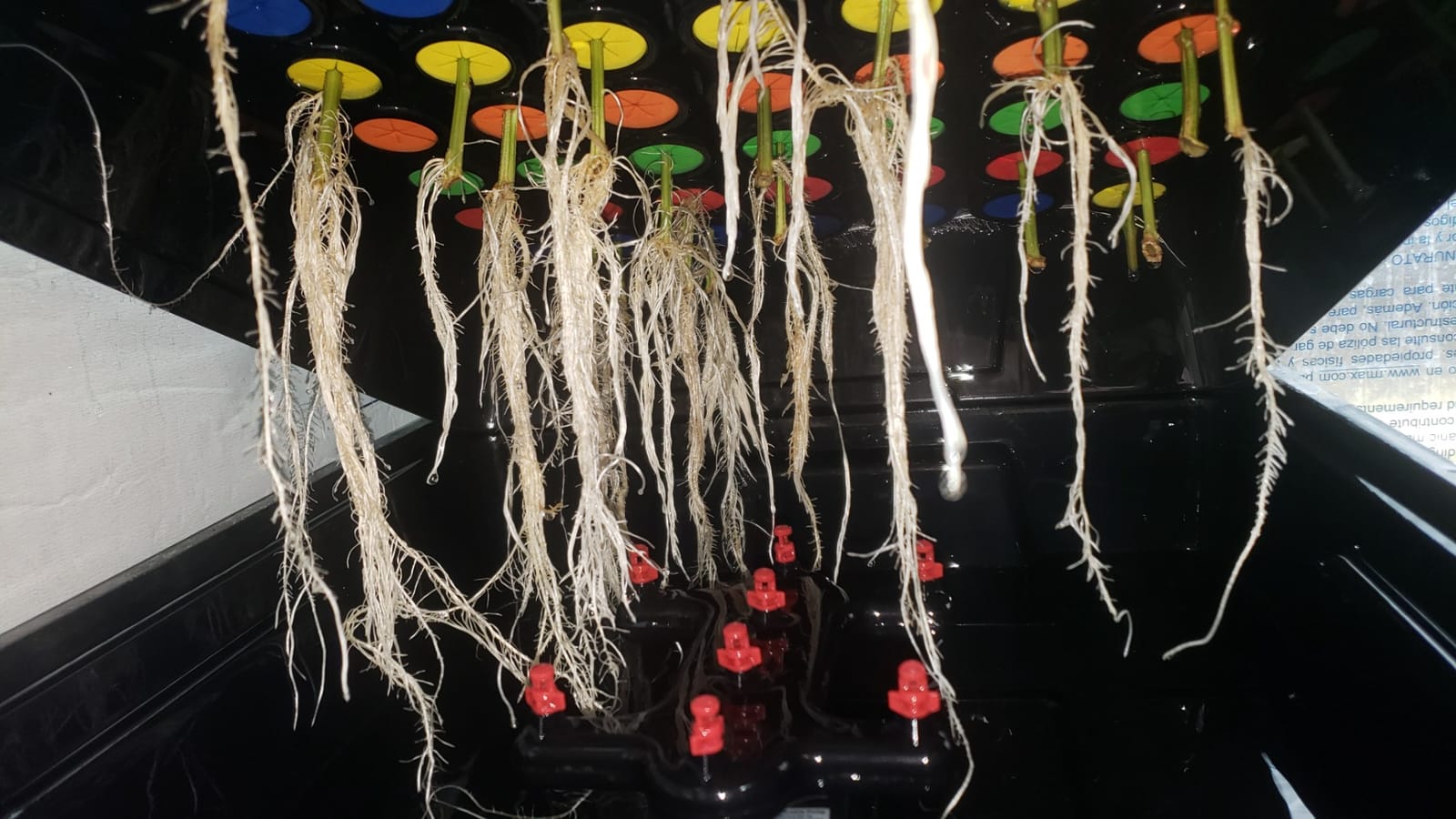
Construction is 100 percent new ABS engineering plastic, and owners describe it as leak-free over years rather than months. The UL-listed pump and pre-filter housing address the clogging problem directly, and the foldable hard-clear humidity dome is included. Running without a separate air pump keeps the footprint narrow for a unit of this size.
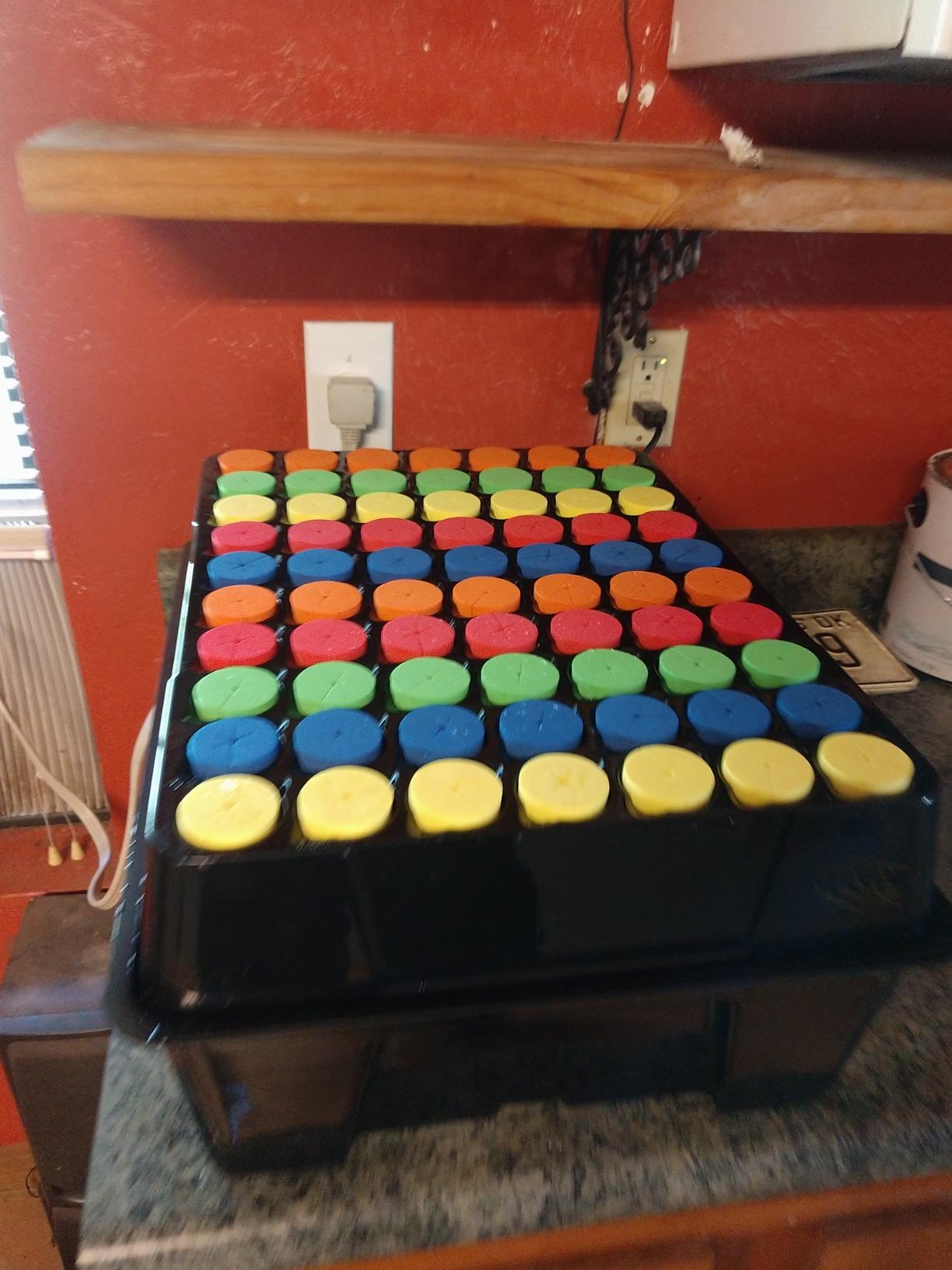
It also carries the two costs that come with size. It is the heaviest unit in the roundup at 8.3 pounds, and it is the largest of the closed-reservoir units, which rules out upper shelves entirely. This one goes on the floor or a low bench, so check floor clearance before anything else.
It is the most expensive option here and the pump is 120V only. The reward is throughput per square foot, and if you cannot use seventy sites in a single cycle, the capacity advantage turns into an advantage in water volume instead.
What to check before you buy it
Measure floor or low-bench clearance, including room to lift the lid and pull the tray out for cleaning. At this weight, working height matters more than footprint.
Count realistic cuttings per cycle. Seventy sites only pays off if you can fill them; a half-full run doubles your reservoir handling for no gain.
Where it falls short
Not for a shelf, and not for a small upper cabinet. If your available space is measured in vertical clearance rather than floor area, this is the wrong shape of machine.
Eight pounds plus a full reservoir makes it a two-person lift in awkward corners. Plan where it will live before the box arrives.
9. LYCereal 30-Plant Indoor Hydroponic Tower: the Smallest Floor Footprint
LYCereal Hydroponics Growing System, 30-Plant Indoor Hydroponic Tower with Pump System, Plants Germination Kit, Smart Aeroponic Herb Garden, Vertical Hydroponic System for Gardening Lover (No Seed)
Up to 30 plants
9.84 x 9.84 x 33.86 inches
6 tiers
10L tank with level gauge
Timer-controlled pump
Pros
- Smallest floor footprint here at under one square foot using vertical space
- Mostly pre-assembled so setup is quick
- Timer-controlled pump lets you set watering cycles
- 10L tank with a visible level gauge
- Stays stable even with top-heavy growth
Cons
- No grow light or fertilizer included
- Seeds not included
- Material is not identified as food-grade
- Not a true mist propagator but a drip-fed vertical hydroponic tower
This is the odd one out in the roundup and I want to be straight about why. It is marketed as an aeroponic tower, but the water delivery is a recirculating drip through growth sponges, not a misting manifold. It grows food crops rather than clones, so it answers a different question than the other nine units here.
What it does answer is the footprint question. At 9.84 by 9.84 inches it uses less than one square foot of floor space while holding up to 30 plants across six tiers. The 10-litre tank has a visible level gauge, and the pump runs on a timer, so watering cycles are something you set rather than something you attend to.
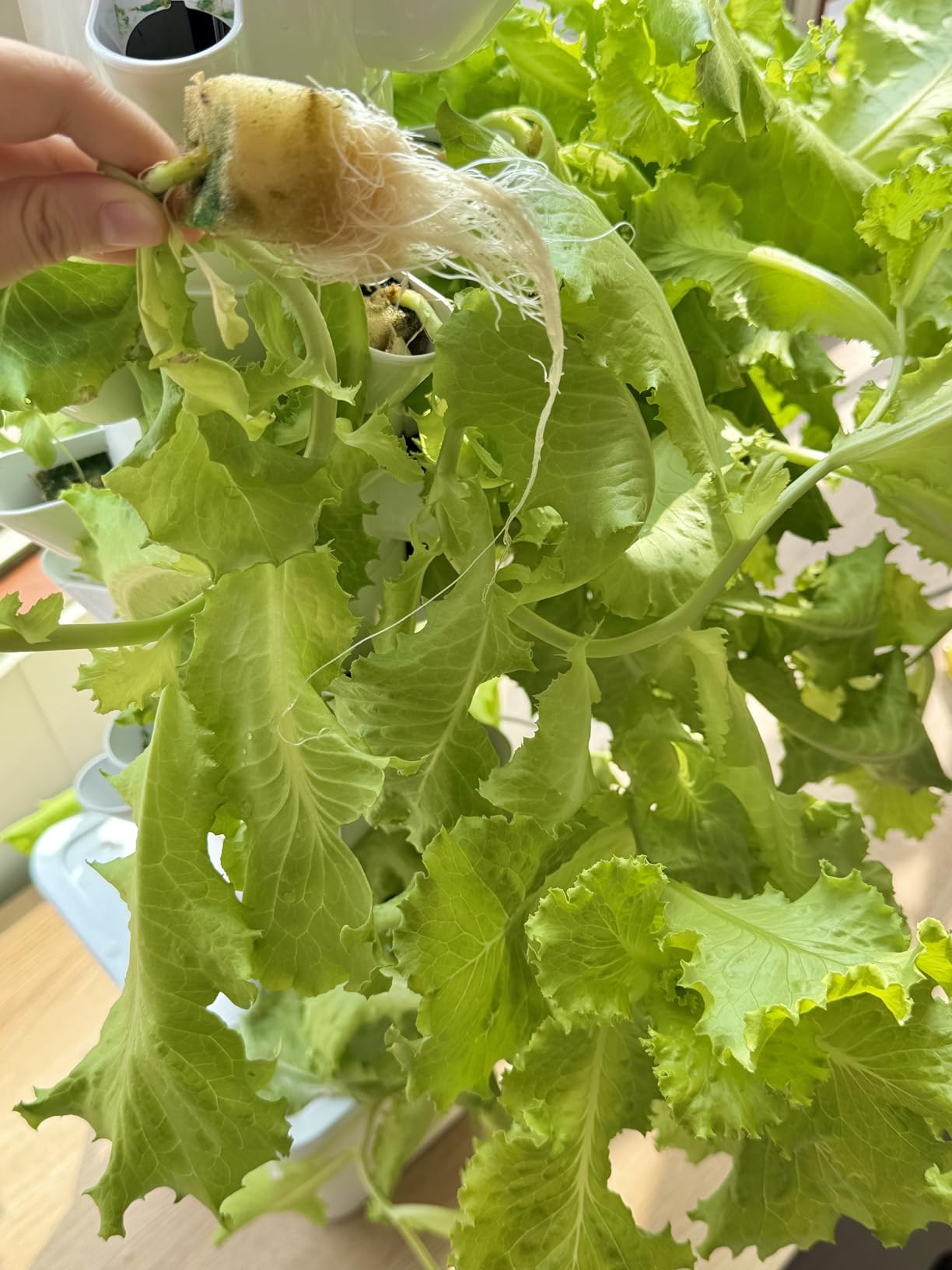
The box is generous for the money. Six tower sections, the tank, timer, pump, power adaptor, level gauge, funnel, filter, hose, shower cap and 64 growth sponges all arrive together, and the unit is mostly assembled on arrival. Owners report stable construction even once the top tiers are full and top-heavy.
The gaps are significant for anyone growing edibles. There is no grow light and no fertilizer, seeds are not included, and the plastic is not identified as food-grade. With only 48 ratings, long-term reliability is not established either, so treat early feedback as encouraging rather than proven.
What to check before you buy it
Measure height as well as width. At 33.86 inches tall it needs a clear corner or a doorway-height gap, and a low ceiling makes it a non-starter regardless of floor area.
Decide who supplies light. With no lamp included, this unit only works if you already have a full-spectrum source positioned to cover six tiers evenly, which is harder than it sounds.
Where it falls short
It is not a propagator. If your goal is cloning or germination, this does the wrong job and the other nine units on this list do it properly.
Unspecified plastic grade and no included nutrients are fair concerns for edible crops. Ask questions about material contact before you put food plants in it.
10. Viagrow 24-Site Clone Machine with 1020 Grow Light: the Only All-in-One Bundle
Viagrow® Clone Machine 24-Site Plastic Aeroponic Hydroponic System with 1020 Grow Light and 7 in. Humidity Dome/A Product of The Harvest Company™
24 mist sites
1020 grow light included
7 inch humidity dome
4 pounds
Internal pump filter
Pros
- Only all-in-one unit here bundling cloner
- grow light and humidity dome
- Pretested manifolds and misters plus internal pump filter target clogging
- Lightest cloner in the roundup at 4 pounds
- BPA free
- Multicolored neoprene collars help track varieties
Cons
- Lowest review count here at 36 ratings so long-term reliability is not established
- Smallest site count among the multi-site units alongside the EZ Clone
- Bundled light is a fixed 1020 fixture rather than a timer-equipped unit
This is the box that answers the most common objection to buying a cloner. Nine of the ten units in this roundup need a separate grow light, a separate dome, or both. This one arrives with a 24-site machine, a 1020 grow light and a 7-inch humidity dome in the same package, which removes two shopping decisions from a first cycle.
It is also the lightest cloner here at four pounds and is BPA free, so it is easy to reposition between a window and a work surface. The pretested manifolds and misters, plus an internal pump filter, aim squarely at the clogging problem that generates most cloner complaints. Multicolored neoprene collars make it simple to track different species in the same run.
Water temperature is worth noting because it is specified rather than left open. Viagrow recommends 65 to 75 F, matching ambient air temperature, which is a sensible target for a unit that will sit in a room rather than a tent. Follow that range and the mist is not fighting the room.
Two limitations stand out. With 36 ratings it has by far the thinnest review history here, so early enthusiasm is not the same as proven durability. And the bundled light is a fixed 1020 fixture, not a timer-controlled unit, so you still need a timer or a smart plug to automate the cycle.
What to check before you buy it
Check whether the 1020 spectrum is enough for your crop plan. Propagation under a dome is forgiving, but later stages after transplant are not, and the light is fixed rather than adjustable.
Verify the dome clears the light once both are assembled. Bundled parts are designed together, and this is the one unit where that should hold, but check before you fill the reservoir.
Where it falls short
Twenty-four sites is a modest batch for a cloner, and there is no way to expand it. If you need more capacity, this is a fixed endpoint rather than a starting point.
With the thinnest review history in the roundup, long-term reliability is unproven. The bundle is genuinely complete, and that is a different thing from being well tested.
Buying Guide: Choosing an Aeroponic System for Small Spaces
Start with the dimension that actually fails
Width is almost never the binding constraint. Every unit here is between 12 and 14.75 inches across, which fits any standard shelf. Height is what ends plans, because a cloner plus a dome plus a lamp arm needs considerably more vertical space than the product dimensions suggest.
Sort your available spaces into three groups before you shop. Countertop spaces can take almost anything, including the 12-inch bucket unit. Shelf spaces with a low lip favour the shallowest bodies, which is where the Hydrofarm Oxyclone at 6.25 inches tall earns its place. Under-bench and floor spaces are the only places the 70-site unit works, because nothing else here gives you the throughput per cycle and the height profile is prohibitive above waist height.
Leave a few inches of clearance above any unit for the light and for your hand. A system you cannot comfortably open is a system you will stop maintaining.
Countertop versus floor-standing, in one question
Ask yourself how much counter surface you can give up permanently. A cloner with a 36-site reservoir occupies roughly a square foot of your work area, plus the drying space for harvested cuttings, for as many weeks as the cycle runs. If your counter is also your only food preparation surface, the 16-site or 21-site options give up far less of it.
Floor-standing is the better answer when you are batching large volumes of cuttings and can dedicate a corner. It also solves the weight problem, since heavier units do not need to be lifted repeatedly. The trade is that floor space in a small apartment is usually the scarcer resource, not counter space.
Rental-friendly choices
Every unit in this roundup works without drilling, mounting, or any permanent change, which is a meaningful advantage in a rental. They are all countertop or floor objects, and none requires a wall anchor. That removes the single most common objection apartment dwellers raise about indoor growing hardware.
Two additional rental-friendly points. Choose a sealed reservoir over an open bucket, because an open bucket needs a permanent home on your counter rather than a temporary spot. And pick a footprint that lets you clear the whole area at the end of a cycle, since you will want the surface back for more than a few weeks.
Noise, because apartments are quiet
Pump noise is the most common complaint from small-space growers, and it deserves a real answer. A mist cloner runs a small submersible pump in short bursts rather than a continuous circulation loop, so a reservoir under a litre or two of quiet between cycles is normal. The Hydrofarm Oxyclone, with its separate air pump, produces the most continuous sound of the group because the aeration runs alongside the mist.
Practical mitigation is placement more than equipment. Put the unit on a shelf away from your bedhead, on a closed shelf rather than an open one, and on a thin rubber or cork mat rather than bare wood, which absorbs the low hum. The bucket-format design in the PowerGrow kit has the most resonance of the group because the walls are thin plastic, so extra padding pays off there.
What gets left out of the box
Count the missing pieces before you commit, because they add up. Every cloner here except the Viagrow bundle needs a grow light bought separately. Every cloner here except the Viagrow bundle and the EZ Clone needs a humidity dome, and the EZ Clone listing is genuinely unclear. The CLONE KING and HORTIPOTS units need inserts matched to their own port sizes. Five of the ten units use a 120V pump, so anyone on 220V mains needs a converter.
The recurring consumables are neoprene collars or clone inserts, plus rooting gel or cloning hormone. The 2-inch and 1.625-inch sizes are model-specific, so decide which machine you want first and then buy inserts in that size, not the other way round.
What to grow, and what each system is for
All nine cloners are propagation tools. They take cuttings from a mother plant and root them in 4 to 10 days, then the rooted clone moves to soil, a net pot, or a larger system. They are not salad machines. The tower is the only unit here built to hold food crops through to harvest, and it does so with 30 sites across six tiers.
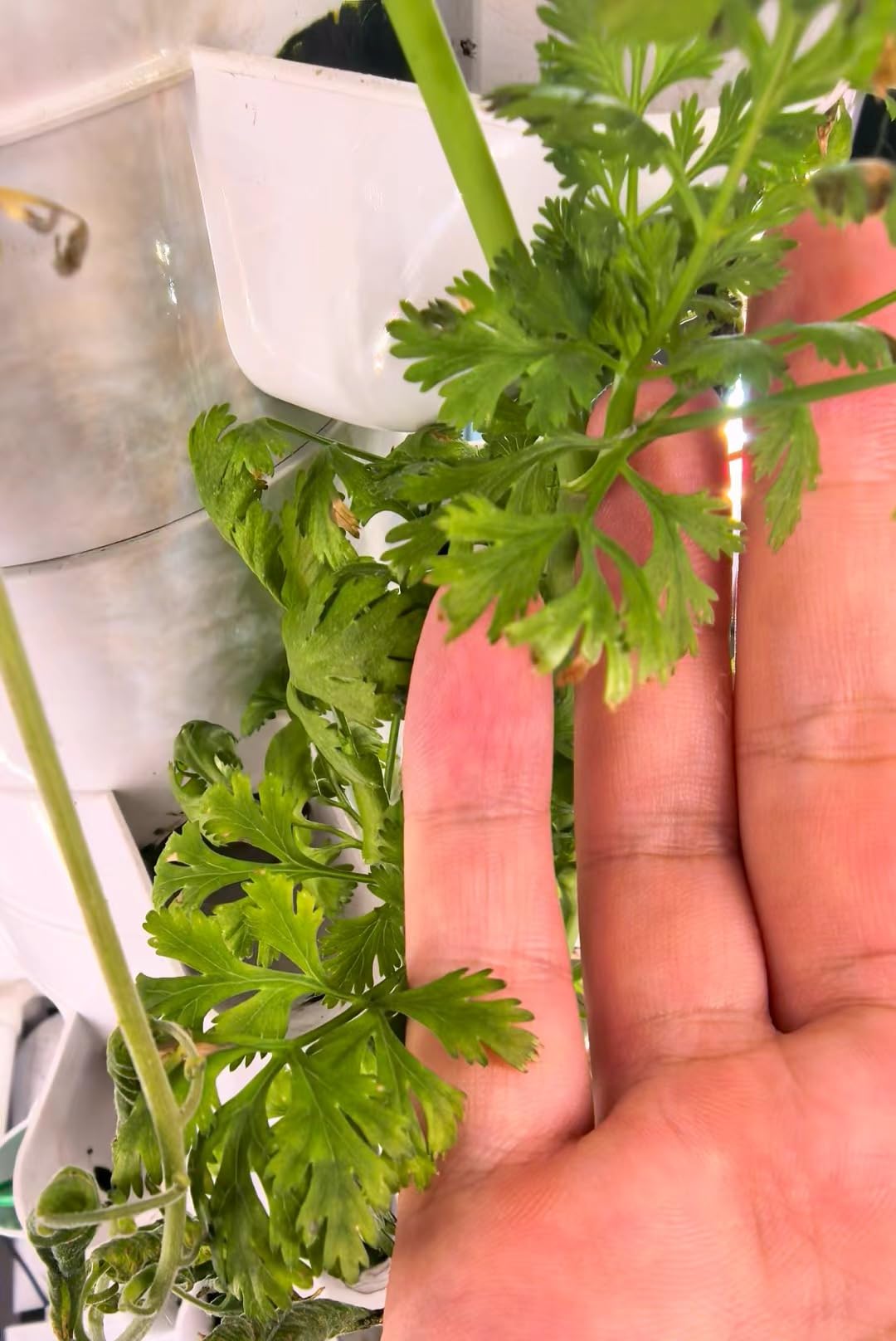
For the tower, leafy greens and herbs suit the site count best, since they stay compact at the top of a tier. Fruiters like tomatoes and peppers are listed as suitable, but they need far more light than the tower provides out of the box, so plan a separate lighting setup before attempting them indoors.
The small-space routine
Daily: a glance at the water level, which takes seconds on units with a sight gauge and about a minute on a sealed cloner where you have to open the lid. That is the whole daily commitment for a mist system.
Weekly: check the reservoir for algae, especially on open-bucket designs, wipe the lid seam, and confirm the pump is still producing mist across the outer ports. Clean the manifold before a new batch, not between cuttings in the same batch.
Per cycle: change the reservoir water, sanitise the tray and collars, and plan the transplant container before the roots hit their maximum. In a small space, unplanted rooted cuttings become a second grow area you did not plan for.
If you want more practical small-space planning, our picks for office desks for small spaces and pantry organization systems follow the same footprint-first thinking we apply here.
Frequently Asked Questions
What is the best hydroponic system for small spaces?
For mist propagation the best small-space pick is the CLONE KING 36 Site, which holds 36 cuttings in a 13.75-inch square body. For growing food crops rather than clones, the LYCereal 30-Plant tower uses less than one square foot of floor space and holds up to 30 plants. Measure vertical clearance before either, because height is the dimension that most often rules a system out.
What is better, aeroponic or hydroponic?
Aeroponics suspends roots in air and sprays them with nutrient solution, which delivers oxygen and water directly to the root zone. Hydroponics keeps roots in contact with a nutrient bath or a flowing film, so roots are partly submerged. Aeroponics usually roots cuttings faster, while hydroponics is easier to run and is what most countertop towers use.
What are five disadvantages of aeroponics?
Pump and manifold parts fail and need replacement, which is the most common complaint. Sprayers clog without a pre-filter and need cleaning. Mist clones need a separate grow light and humidity dome. Inserts and collars are model-specific consumables. Units with 120V-only pumps need a converter outside North American mains, and a multi-week cycle still requires reservoir water changes.
Are aeroponic towers worth it?
They are worth it when you have a limited number of parent plants and want many cuttings at once, since a single cycle propagates a whole batch faster than repeated small runs. They are less worth it for a beginner who wants to eat from the system, because towers grow food crops while cloner units only root cuttings, and a transplant step is still required.
What are the best vegetables to grow in an aeroponic tower?
Leafy greens and herbs fit a small vertical tower best, because they stay compact at the top of each tier. Basil, lettuce and kale are the typical choices. Fruiters such as tomatoes and peppers need far more light than a tower provides out of the box, so they require a separate full-spectrum lighting setup before they will crop indoors.
Bottom Line: Which Aeroponic System Fits Your Smallest Space?
For most small spaces, the CLONE KING 36 Site is the right answer. Thirty-six cuttings inside a 13.75-inch square, thirteen spray heads, a 317 GPH pump and the deepest review history in the category make it the safest first machine, and it is our editor’s choice for 2026. Add a grow light and the correct insert size before the box arrives, and it will run for years.
If vertical clearance rather than floor area is your problem, the Hydrofarm Oxyclone at 6.25 inches tall solves it, accepting eight fewer sites to get there. If you want the fewest parts on a shared counter, the HORTIPOTS 35 Site includes a hard dome and needs no air pump. If your first attempt is a practice run rather than a production batch, the PowerGrow bucket kit is the least costly complete way to find out whether you enjoy mist propagation at all.
Whichever one you choose for the best aeroponic systems for small spaces, buy the missing accessories on the same day, measure the vertical clearance twice, and expect a five-minute reservoir routine once a week. That is the whole commitment, and it fits almost anywhere. For more compact-space thinking, our guide to bar carts for small spaces applies the same footprint-first rule to a different corner of the room.