
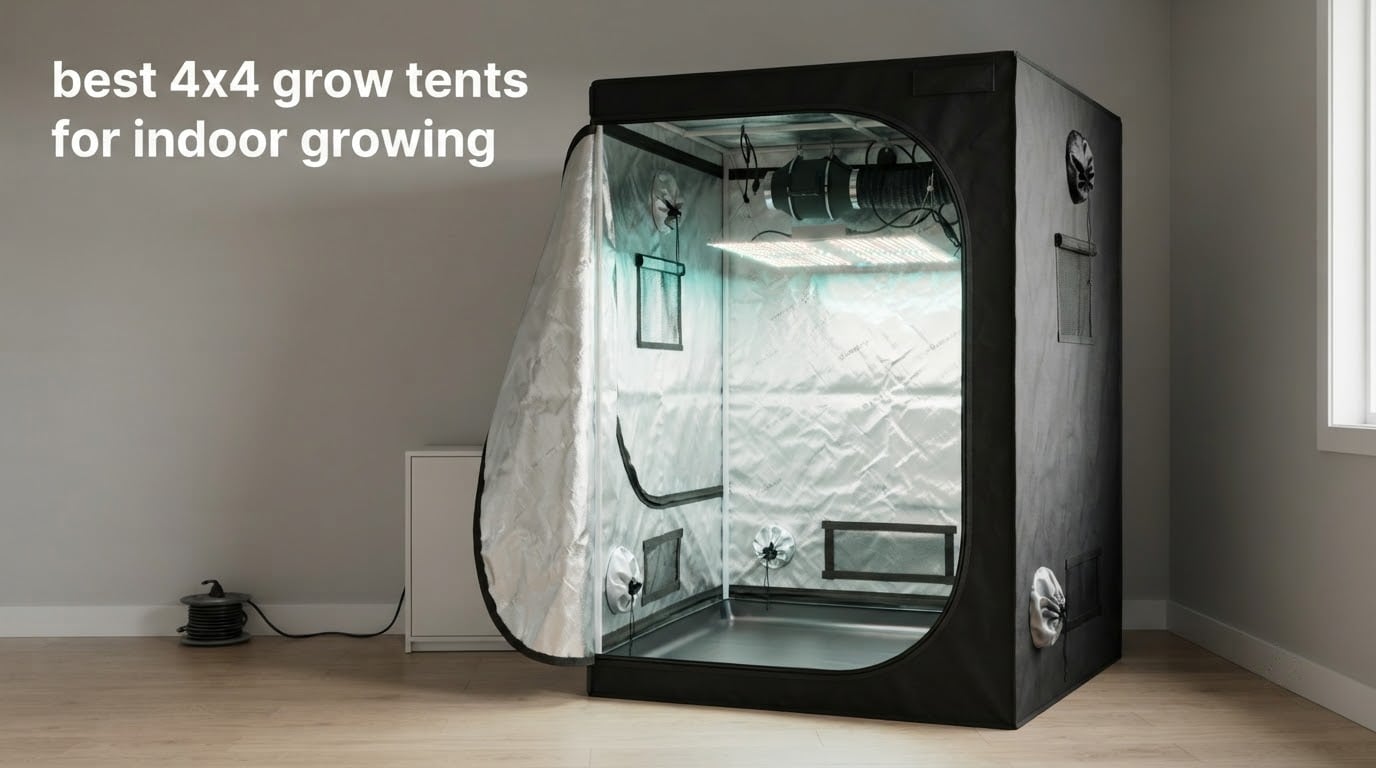
A 4×4 grow tent is the most requested footprint in indoor growing, and for good reason. At 48 by 48 inches of floor space it holds a full canopy of four to six plants without feeling cramped, fits a closet corner or a cleared section of basement, and leaves enough headroom to hang a light and an inline fan without drilling into the ceiling.
We spent weeks comparing the best 4×4 grow tents for indoor growing across canvas weight, frame gauge, zipper engineering and port layout. The results surprised us. The tent with the most reviews is not the one with the thickest canvas, and the cheapest option in the running is not the one with the worst light sealing.
What follows is a straight comparison of ten 4×4 tents, from bare tent-only shells to full kits with lights, controllers and carbon filters. We also broke down how canvas denier actually changes performance, how to size ventilation for the roughly 106 cubic feet of volume inside a 4×4, and how many plants you can realistically fit under each training method.
Before we get into the list, one honest note. A tent is a shell, and it does only three jobs well: hold light in, bounce light around, and keep weather out. Everything that determines yield happens inside that shell. If you want a shortcut through the rest of the build, our indoor security camera picks cover the monitoring side of a small indoor setup, and our truck bed tent roundup covers the portable fabric-shelter basics that share frame design with grow tents.
Our Top 3 4×4 Grow Tents for Indoor Growing in 2026

VIVOSUN S448 Grow Tent
- 48x48x80 inch footprint
- 340g double-stitched fabric
- 100 lb top bar rating
- reflective mylar lining

AC Infinity CLOUDLAB 844
- 2000D canvas
- 1 inch poles rated to 150 lbs
- controller mount
- lab-tested mylar

MARS HYDRO 4×4 Advanced
- 1680D double-stitched canvas
- sewn-in zipper flap
- 70 kg frame
- detachable floor tray
The VIVOSUN S448 wins this list on evidence rather than hype. More than 33,000 ratings sit behind it, and the recurring theme in that review base is a tent that simply works without drama, which is exactly what a first room needs.
The AC Infinity CLOUDLAB 844 carries the highest average rating here and the thickest canvas, and if you plan to hang a heavy light and a carbon filter and never think about the tent again, it is the smarter long-term buy. The MARS HYDRO 4×4 Advanced takes the middle ground with genuine 1680D fabric and one of the better light-lock zipper designs we looked at.
Quick Overview: Best 4×4 Grow Tents in 2026
| Product | Specifications | Action |
|---|---|---|
| VIVOSUN S448 4×4 Grow Tent |
|
Check Latest Price |
| AC Infinity CLOUDLAB 844 |
|
Check Latest Price |
| MARS HYDRO 4×4 Advanced Tent |
|
Check Latest Price |
 Spider Farmer 4×4 Grow Tent Spider Farmer 4×4 Grow Tent |
|
Check Latest Price |
 zazzy 4×4 Grow Tent zazzy 4×4 Grow Tent |
|
Check Latest Price |
 VIVOSUN R446 4×4 Low Profile VIVOSUN R446 4×4 Low Profile |
|
Check Latest Price |
 MELONFARM 4×4 Grow Tent MELONFARM 4×4 Grow Tent |
|
Check Latest Price |
 zazzy 4×4 98 Percent Reflective zazzy 4×4 98 Percent Reflective |
|
Check Latest Price |
 MARS HYDRO Smart Grow Tent Kit MARS HYDRO Smart Grow Tent Kit |
|
Check Latest Price |
 VIVOSUN Smart Grow Tent Kit VIVOSUN Smart Grow Tent Kit |
|
Check Latest Price |
1. VIVOSUN S448 4×4 Grow Tent – The All-Rounder With the Biggest Review Base
VIVOSUN S448 4×4 Grow Tent 48″x48″x80″ Mylar Tent for Indoor Plants
48x48x80 inch
340g double-stitched fabric
100 lb top bars
100 percent reflective mylar
Pros
- Huge verified review base
- Tool-free corner connectors
- Waterproof double-stitched fabric
- Observation window plus heat vent
- Interior tool organizer
Cons
- Lighter canvas than 1680D or 2000D rivals
- Occasional zipper seam leaks
- Single-sheet instructions
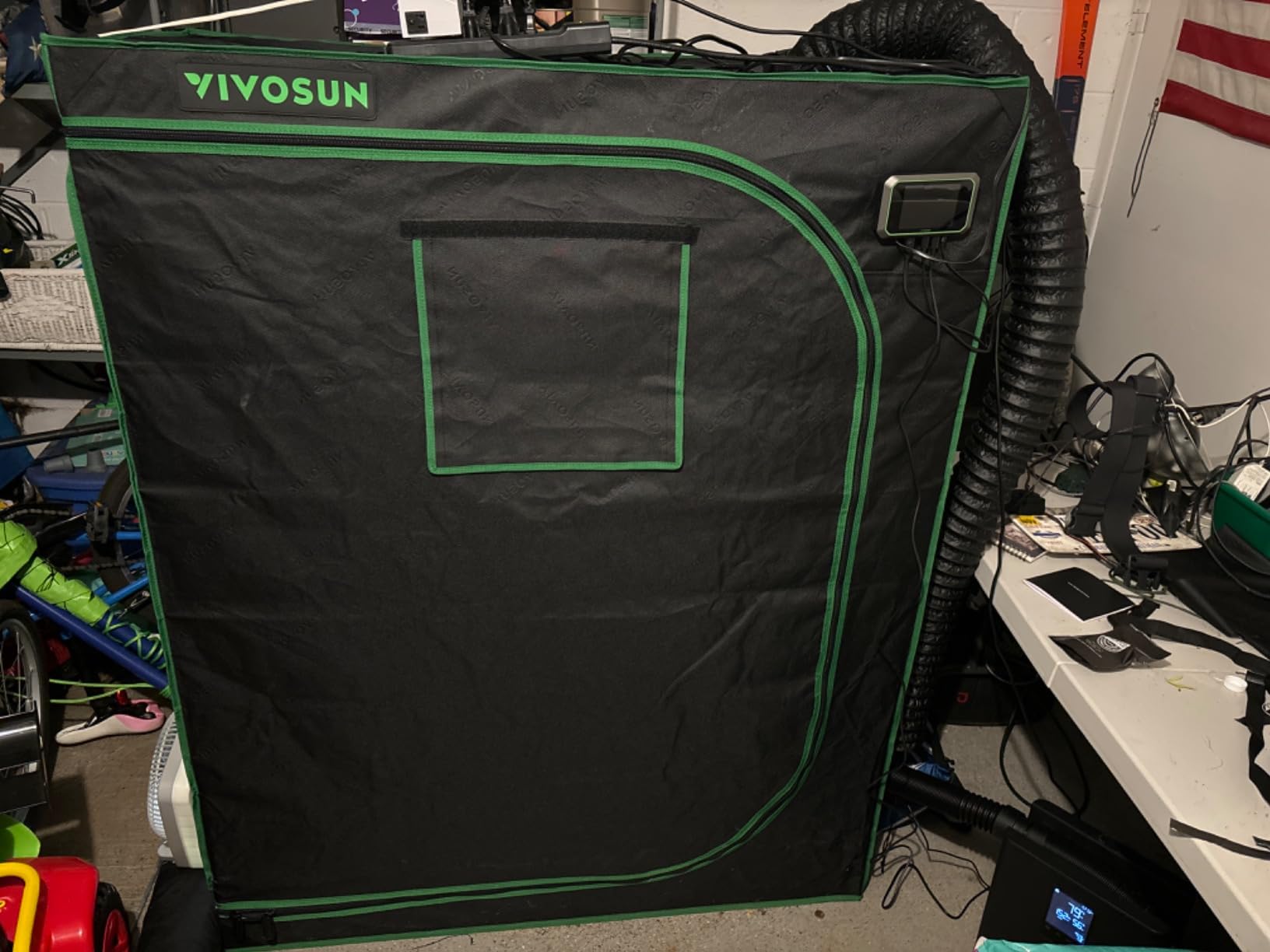
This is the tent we set up first, and it is the one we kept coming back to while working through the rest of the list. The S448 is a 48x48x80 inch steel frame tent with a 100 percent reflective mylar interior and a 340g high-density, double-stitched outer shell that reviewers describe as waterproof and tear-resistant.
Assembly took under half an hour with no tools at the frame stage. The corner connectors snap together, you stand the frame, and then the cover goes over the top. Owners say the cover is the part that benefits from a second pair of hands, since you are pulling a heavy fabric sleeve over a fully assembled frame.
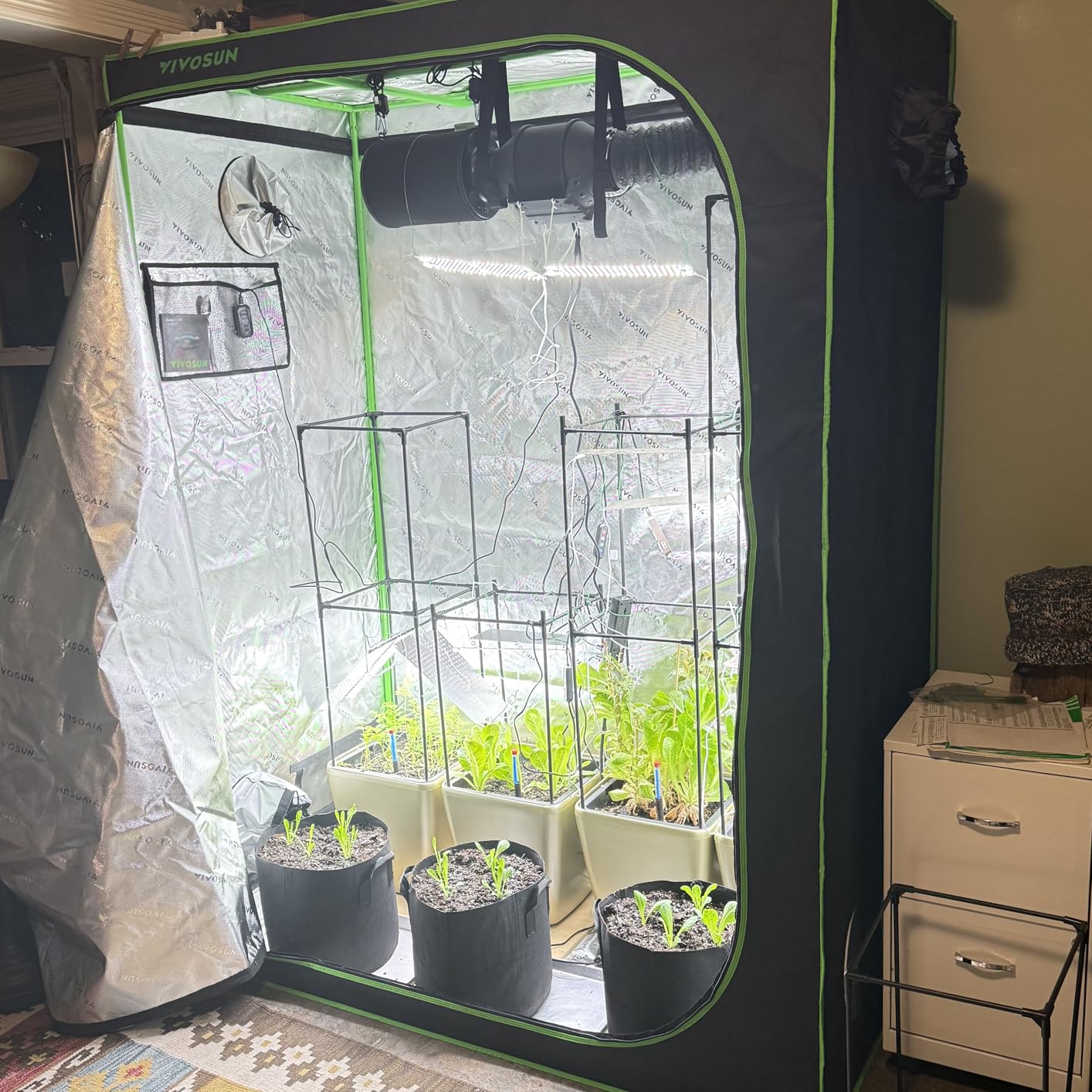
Where the S448 really earns its place is the top bar rating of 100 lbs per bar. That is enough headroom for a mid-weight LED and a small carbon filter, which covers the majority of 4×4 rooms. It is not enough to hang a 200 lb setup without thinking about it, and buyers running heavier filters report the bars flexing.
The port layout is generous: multiple openings sized for duct fans, lamps and electrical cords, plus an internal tool organizer pocket. The observation window and the separate lower vent window both use hook-and-loop covers, and that lower window does real work in summer when the canopy runs hot.
Who Should Buy the VIVOSUN S448
Buy the S448 if this is your first 4×4 room and you want a proven, low-friction shell. The 33,000-plus ratings mean every common failure mode has already been documented, which makes troubleshooting easy. If you are running a mid-weight light, four to six plants and a light-touch ventilation setup, it handles the job without drama.
It is also the tent we recommend for anyone who wants a small fabric footprint that still feels substantial. The mylar lining throws light back at the canopy effectively, and the removable floor tray makes cleanup after a wet cycle a two-minute job.
Who Should Skip the VIVOSUN S448
Skip it if you plan to hang a heavy light plus a large carbon filter and want zero frame movement. The 100 lb bar rating is fine but not generous, and the fabric is lighter than the 1680D and 2000D options in this list. Growers who plan to keep the same tent for five years or more will get more out of the thicker shells below.
The other reason to pass is light-tightness anxiety. Reviewers do report leaks at zipper seams and occasional fabric pinholes, and for photoperiod plants a stray light during the dark period is a real concern. Test the tent dark before you commit to a full cycle, and expect to run a strip of tape over any seam that glows.
2. AC Infinity CLOUDLAB 844 – Thickest Canvas and a Frame That Does Not Flex
AC Infinity CLOUDLAB 844, Advance Grow Tent 4×4, Thickest Poles & Mylar
2000D Oxford canvas
1 inch steel poles
150 lb weight capacity
Controller mount plate
Pros
- Thickest canvas in the class
- 1 inch poles rated to 150 lbs
- Front zipper flap blocks light
- Controller mount and cable passthrough
- White stain-resistant catch tray
Cons
- Heavy at nearly 44 lbs for one-person setup
- Highest cost in the list
- Occluded zipper windows limit inspection
The CLOUDLAB 844 is the tent we would put in a room we never plan to move. At 4.7 stars it holds the highest average rating in this group, and the build quality is obvious the moment you lift the box, because it weighs nearly 44 lbs.
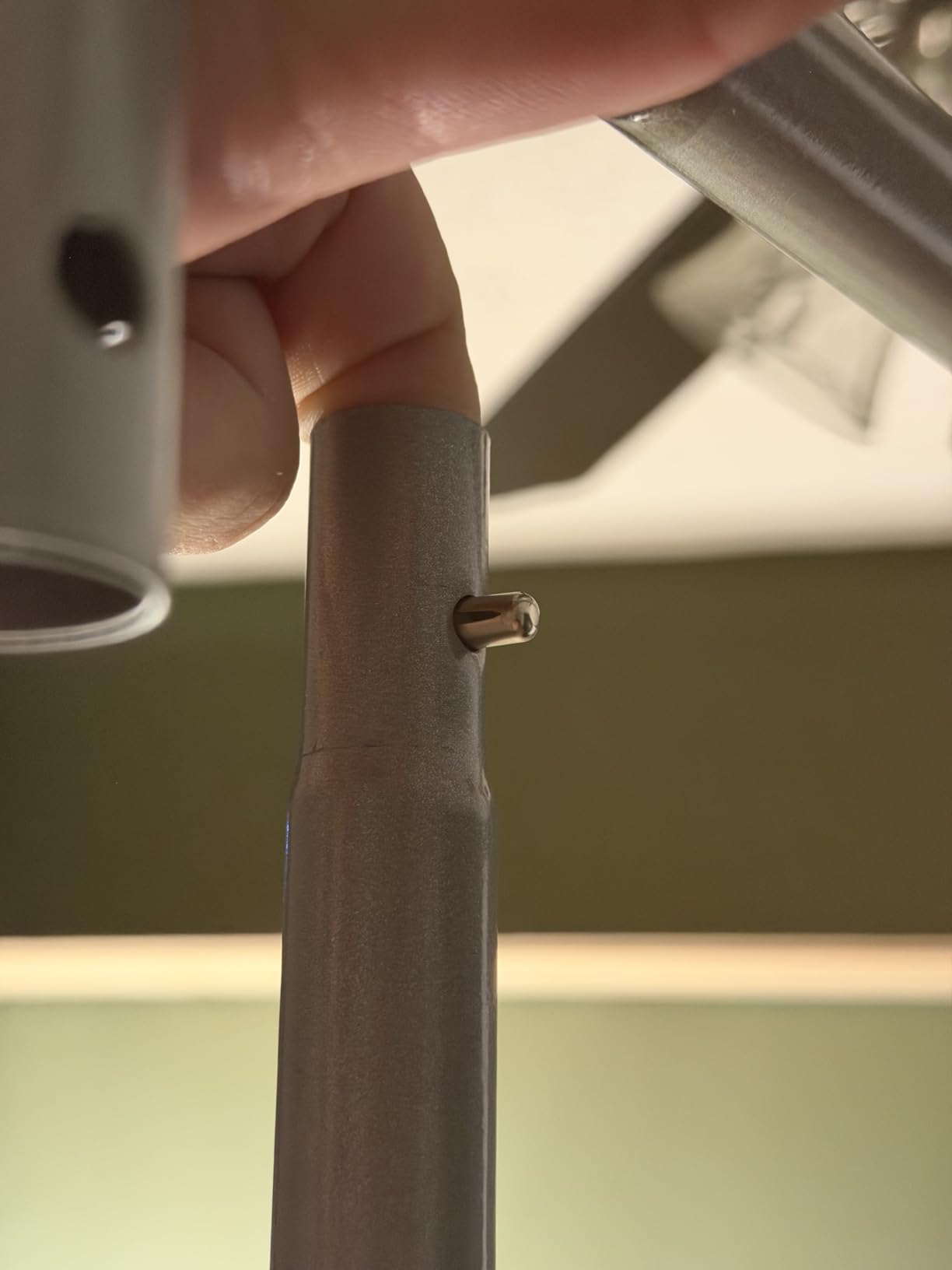
That weight comes from 2000D waterproof Oxford canvas, the thickest outer fabric in this comparison, paired with 1 inch steel poles rated to 150 lbs. Buyers describe the result as feeling closer to a commercial room than a consumer tent, and they describe the frame as steady under a heavy light and carbon filter combination.
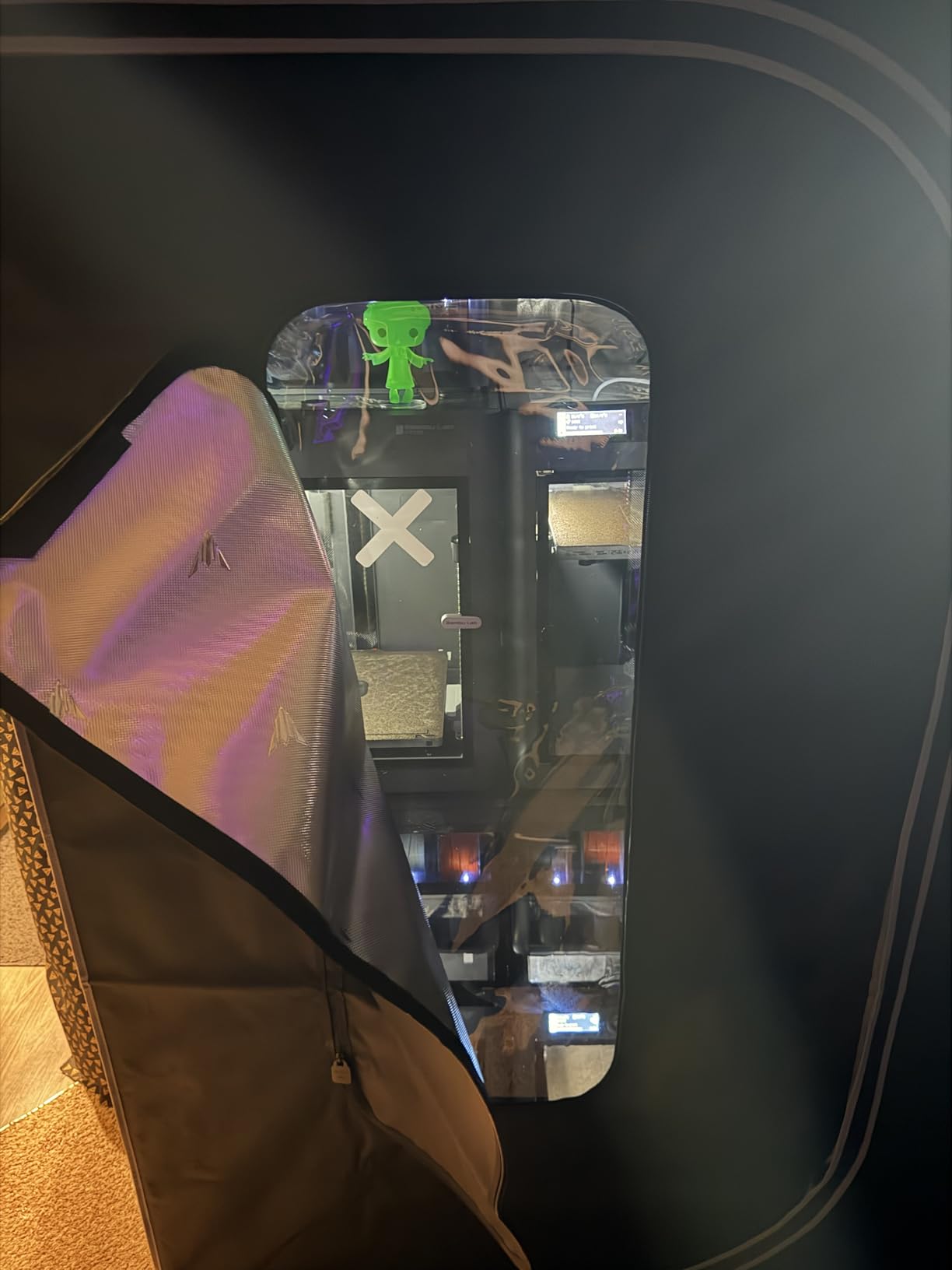
The controller mounting plate is the detail nobody else in this list matches. It gives you a clean, sealed place to mount a controller, and the lightproof cable passthrough keeps wiring from becoming the weak point in your light seal. There are also four 4 inch duct ports and five 8 inch duct ports, so you are not stuck with a single ventilation path.
Layered sealing comes from front zipper flaps that add a second light-blocking layer over the main zipper, and the 2x side doors make plant rotation easier than a single-door layout. The white stain-resistant catch tray and the tool bag with a release buckle are small quality-of-life touches that add up over multiple cycles.
Who Should Buy the AC Infinity CLOUDLAB 844
Buy it if you are building a room you intend to keep for years and you plan to hang a serious light and filter load. The 150 lb rating means the frame does not become the limiting factor in your setup. It is also the pick for anyone already invested in AC Infinity controllers who wants the cable routing handled properly.
Grow forum members single out AC Infinity support as the strongest in this category, which matters when something arrives damaged or a zipper fails after a year. For a higher purchase price than the alternatives here, that service record is part of what you are paying for.
Who Should Skip the AC Infinity CLOUDLAB 844
Skip it if this is a budget-first build or if you are moving rooms regularly. Nearly 44 lbs is genuinely awkward for a single person to wrestle over a frame, and reviewers say the assembly benefits from two sets of hands. The premium over the mid-range tents is real money for a feature set you may never use.
The occluded zipper windows are another small tradeoff. If you like to check on your plants by cracking a door and peering through clear plastic, these windows are deliberately covered. You get light sealing in exchange for visibility, and some growers consider that a fair deal while others do not.
3. MARS HYDRO 4×4 Advanced Grow Tent – Best Light-Sealing Design at This Level
MARS HYDRO 4×4 Advanced Grow Tent, 48″x48″x80″ Indoor Plant Growing
1680D double-stitched canvas
70 kg frame capacity
Sewn-in zipper flap
Observation window and floor tray
Pros
- Sewn-in shade cloth zipper flap blocks pinholes
- 1680D canvas with diamond mylar lining
- Pop-snap frame builds fast
- Hangers fit MARS HYDRO controllers and iHub
Cons
- Shelf-style bars need extra securing for heavy loads
- Fabric can run slightly small
- Door step is a minor trip hazard
This is the tent we recommend to anyone who has been burned by pinhole leaks before. The MARS HYDRO 4×4 Advanced solves the classic fabric tent problem with a zipper flap that has shade cloth sewn directly into it, rather than relying on a loose flap that can shift and expose the zipper teeth.
Underneath that is 1680D double-stitched canvas with a high-reflectivity diamond mylar lining, and a steel frame rated to 70 kg, or about 154 lbs. The dual heavy-duty metal zippers carry a double-layer black inner lining, which is doing more light-blocking work than most tents in this price bracket.
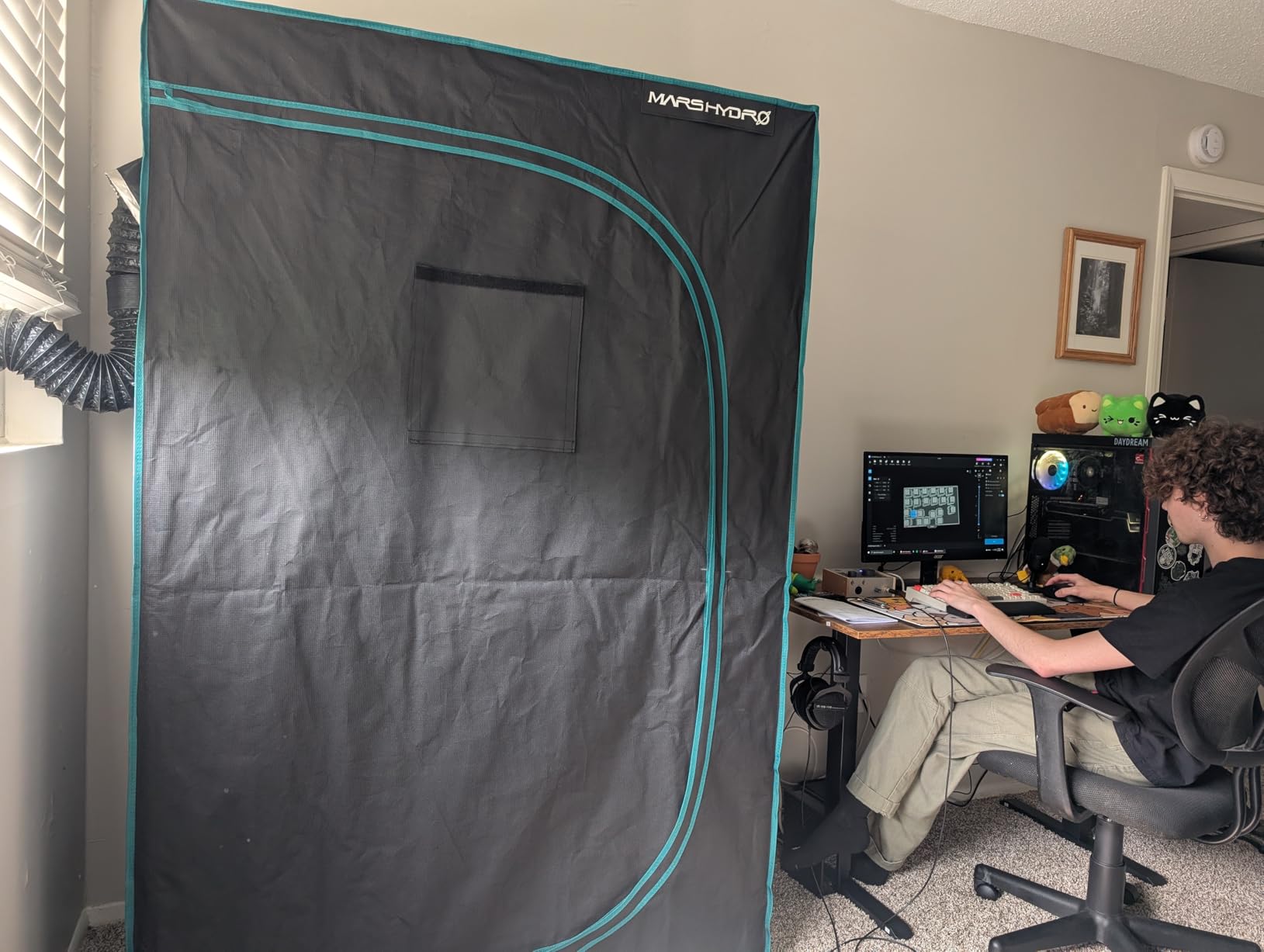
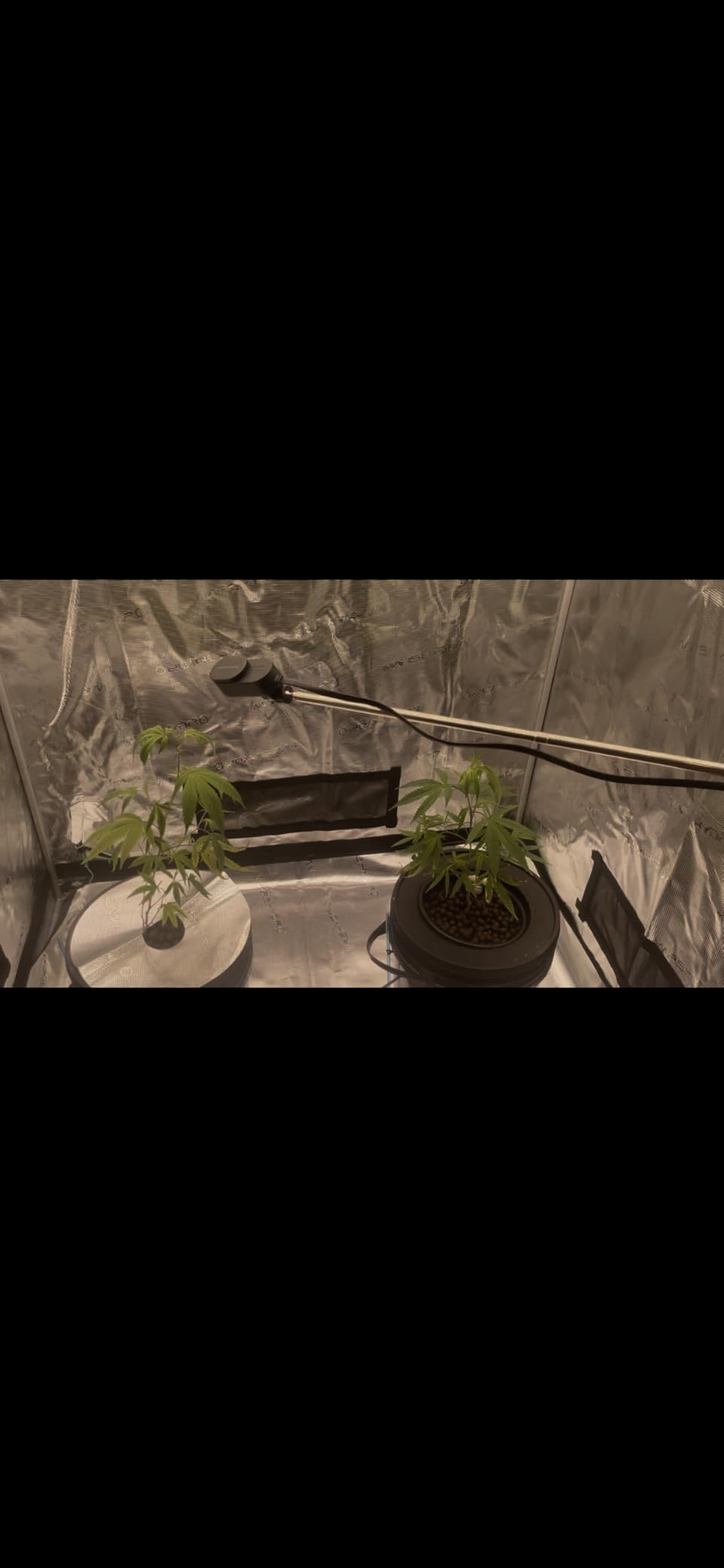
Assembly is the fastest here. The pop-snap frame goes up quickly enough that a first-time builder can finish before losing patience, and the double-layer viewing window gives you a look at the canopy without opening the door. The detachable waterproof floor tray comes out for cleaning, which matters if you are growing in fabric pots that shed water.
Controller hangers are built into the frame for MARS HYDRO controllers and the iHub, so if you plan to automate temperature and humidity, the wiring path is already there. That is a small feature that removes an afternoon of improvisation for anyone in that ecosystem.
Who Should Buy the MARS HYDRO 4×4 Advanced
Buy it if light sealing is your number one concern and you want more than entry-level fabric. The sewn-in zipper flap is the single most effective light-lock detail we found in this list, and the 1680D canvas holds up better to abrasion and repeated handling than 600D shells.
It is also a strong pick for a beginner who wants a fast build. The pop-snap frame removes the most intimidating part of setting up a tent, and the detachable tray means cleanup is not a reason to procrastinate.
Who Should Skip the MARS HYDRO 4×4 Advanced
Skip it if you plan to hang a genuinely heavy fixture. The shelf-style hanging bars rely on gravity hooks, and reviewers across sizes note they need additional securing hardware when carrying a large light or a carbon filter. If the load is heavy, add straps or a dedicated support bar rather than trusting the hooks.
A few buyers also report fabric measuring slightly smaller than advertised and a door step that catches a toe. Neither is a dealbreaker, but if you are close on dimensions in a tight closet, measure twice before you commit.
4. Spider Farmer 4×4 Grow Tent – Noticeably More Rigid Than Its Peers
Spider Farmer 4×4 Grow Tent 48″x48″x80″ Indoor Plant Growing 2026 New
1680D Oxford canvas
150 lb frame capacity
Enlarged observation window
SBS zippers with flap
Pros
- Tear-proof 1680D Oxford canvas
- 150 lb reinforced frame
- Enlarged 11.8 by 15.7 inch window
- Controller hooks and cable passthrough
- Tool bag and waterproof floor tray
Cons
- Heavier fabric makes solo installs awkward
- Short zipper flap compared with rivals
- Occasional fabric defects needing tape
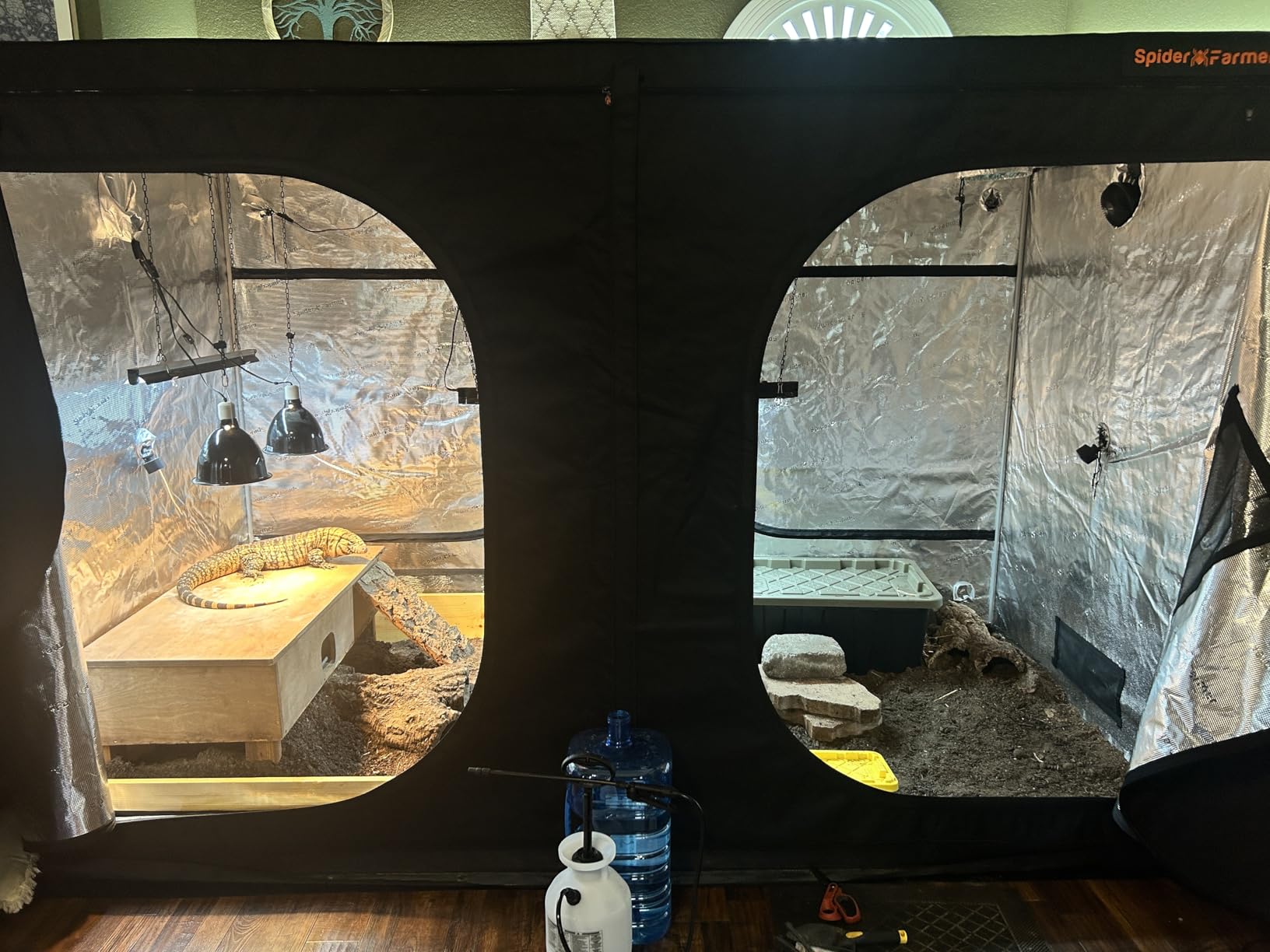
The Spider Farmer 4×4 produced the most noticeable difference in frame rigidity when we moved it next to the lighter tents. It uses 3x-thicker hardened steel poles with reinforced adapters rated to 150 lbs, and that extra stiffness is visible the moment you push on a top bar.
The outer shell is tear-proof 1680D Oxford canvas with a reflective mylar interior, and the interior chamber measures 106.72 cubic feet, which lines up with the roughly 106 cubic feet other manufacturers list for the same footprint. The pro-grade SBS zippers run with a zipper flap and dual stitching to lock both light and temperature.
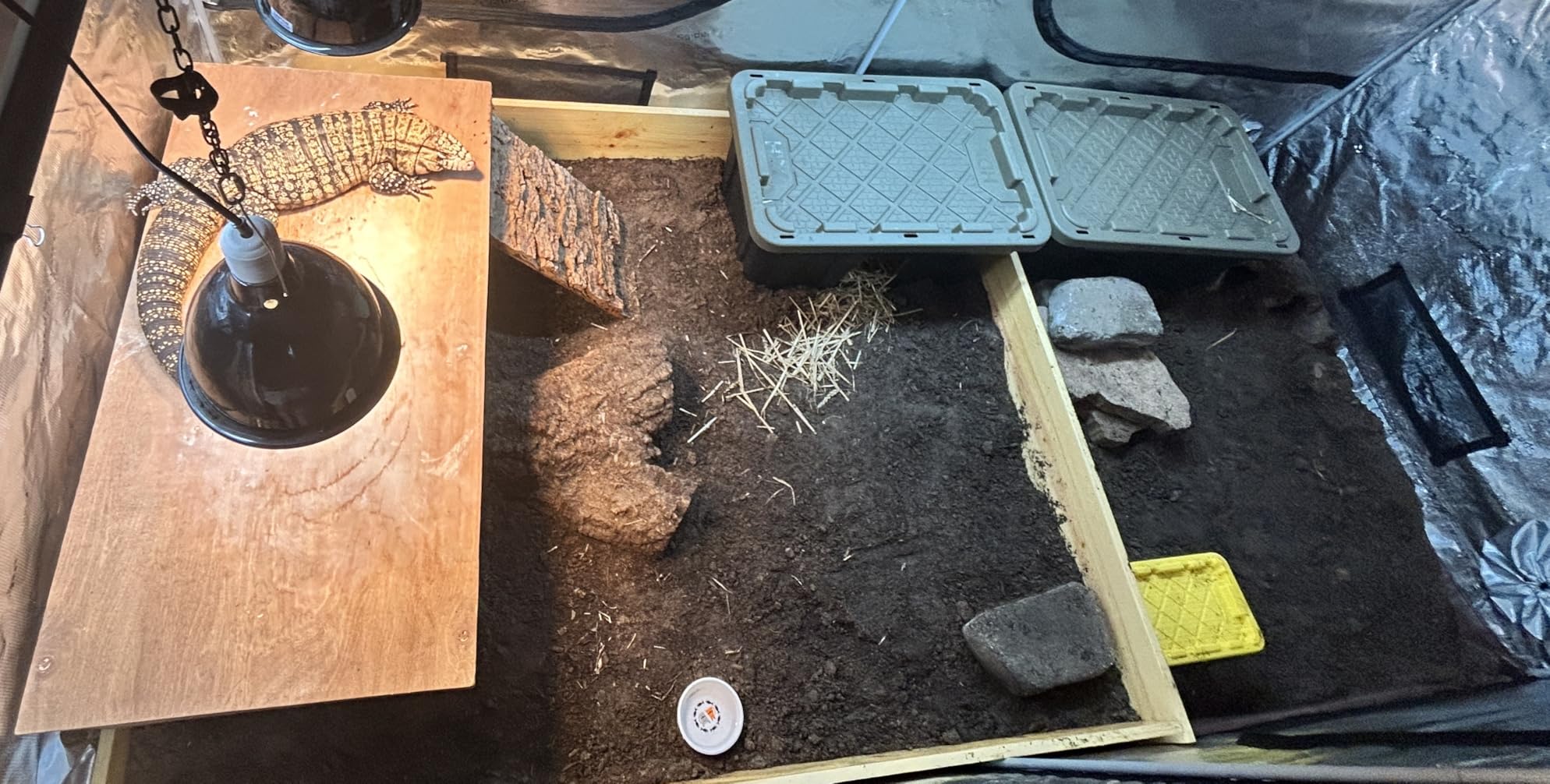
The observation window is the largest in this comparison at 11.8 by 15.7 inches, and it is genuinely useful during the vegetative stage when you want to judge canopy density without opening the door and disturbing the air. Controller hooks and a dedicated cable passthrough port give you a clean place to route automation wiring.
The tool-free build includes a waterproof floor tray and a tool bag, so the basics are handled. Reviewers like that the frame and fabric are noticeably more rigid than tents in the same general bracket, and they consistently describe the enlarged window as the feature they notice most in daily use.
Who Should Buy the Spider Farmer 4×4
Buy it if you want a 4×4 that feels closer to a 5×5 in terms of solidity without paying for the heaviest shell in the list. The 150 lb frame rating matches the premium tier while the fabric is a step lighter, which makes the whole tent easier to handle than the 2000D option above.
It is also a good match for anyone running a mid-to-heavy light who still wants a visible window. The enlarged view is the best in this roundup, and for growers checking plant color and canopy development daily, that visibility is worth more than a slightly thicker canvas.
Who Should Skip the Spider Farmer 4×4
Skip it if you are installing alone. Reviewers note the fabric-heavy build is awkward solo, and putting a heavy cover over a rigid frame is the part that needs two people. Plan an afternoon with a friend or pay for a room where you have help available.
The zipper flap is also shorter than some competing designs, and a few buyers report minor fabric defects that needed seam taping before use. Inspect the shell under a light before you hang anything, because catching a flaw on day one is easier than catching a leak during flowering.
5. zazzy 4×4 Grow Tent – Straightforward Build With Reflective Mylar Throughout
zazzy 4×4 Grow Tent, 48″x48″x78″ 600D Mylar Growing Tents for Indoor Plant
600D mylar Oxford canvas
110 lb pole rating
95 percent reflective lining
48x48x78 inch
Pros
- Clear printed instructions
- Tool-free assembly
- Patented anti-rust PA connectors
- Observation window and easy-access door
- Removable floor tray
Cons
- 600D fabric is lighter than premium models
- 78 inch height is under the 80 inch standard
- Occasional zipper seam leaks
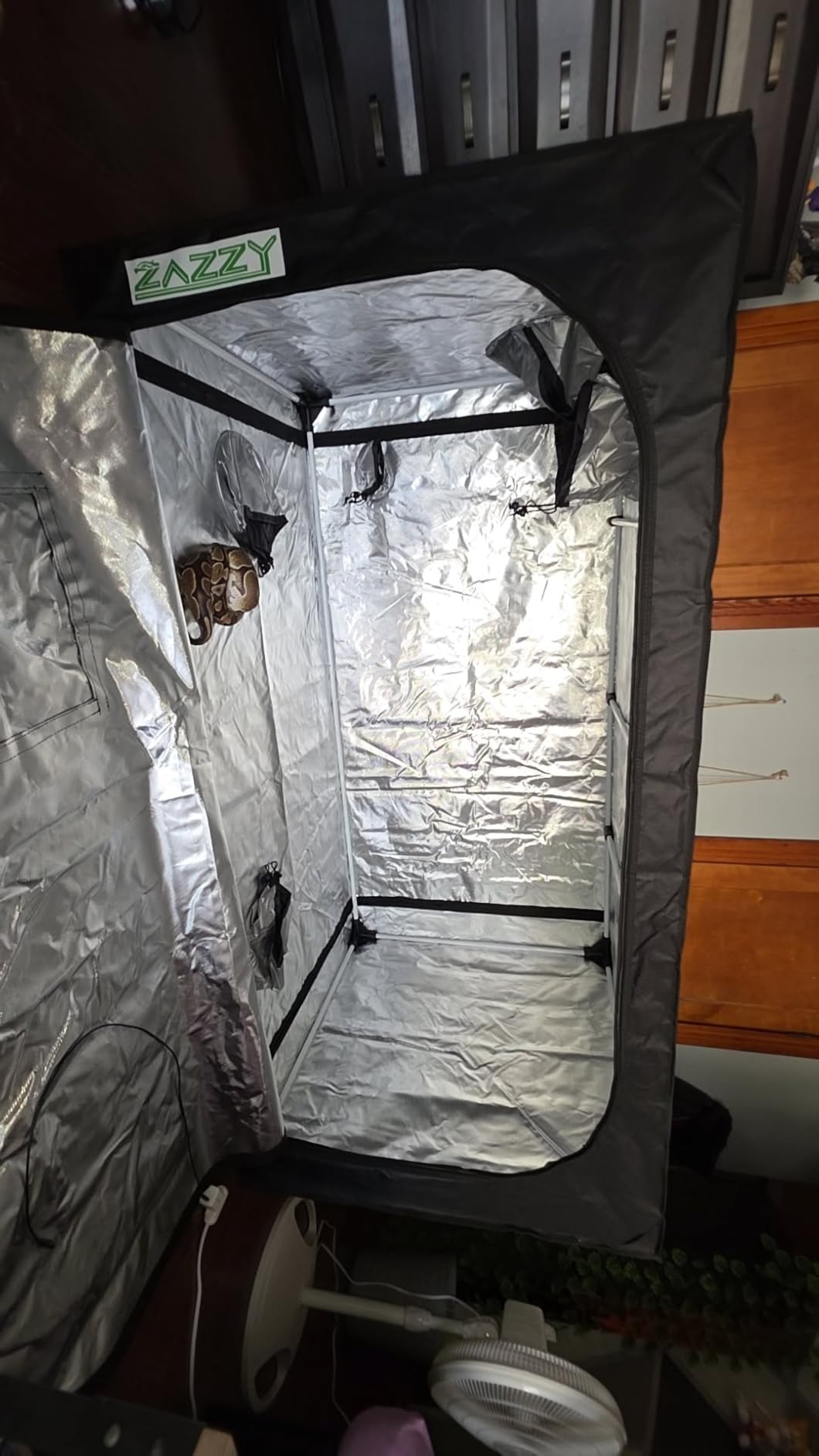
The zazzy 4×4 is the tent we would hand to someone who has never built one. It ships with clear printed instructions, assembles without tools, and the patented PA corner connectors have adjustable tightness, so you can dial the frame tension instead of guessing at it.
The interior lining is 95 percent reflective mylar, which does real work in a small room where every reflected photon matters. The all-steel poles carry a 110 lb rating, which is above the entry-level norm and enough for a light-duty fixture in most setups.
There is an observation window and a smooth easy-access door, plus a removable floor tray that makes wet-cycle cleanup straightforward. Total dimensions are 48 by 48 by 78 inches, so note that height is two inches under the 80 inch standard that most 4×4 tents follow.
That two-inch difference matters more than it sounds. If you are running a tall duct fan on top of an 80 inch tent footprint, or hanging a light at the standard 18 to 24 inch distance, every inch of height counts. In a room with 80 inches of clearance and a thick baseboard, measure carefully.
Who Should Buy the zazzy 4×4
Buy it if this is your first build and you want instructions that actually match the parts in the box. The adjustable corner connectors eliminate the most common assembly frustration, and the reflective lining at 95 percent is close to what the pricier shells deliver.
It also makes sense as a second room or a grow space for plants that do not need photoperiod control. If your canopy is short and your light is modest, the light sealing demands on this tent are manageable, and the removable tray keeps cleanup quick.
Who Should Skip the zazzy 4×4
Skip it if you are running tall plants or stacking a heavy light and carbon filter on the bars. The 110 lb rating is solid for light loads but the 600D canvas is the lightest class in this comparison, and the 78 inch height removes headroom you may want for ventilation equipment.
Reviewers do report light leaks along zipper seams on some units. For a tent you plan to use for photoperiod plants, treat that as a maintenance item rather than a dealbreaker, and check the seams with a flashlight before your first dark cycle.
6. VIVOSUN R446 4×4 Low Profile Tent – Built for Basements With No Headroom
VIVOSUN R446 4×4 Grow Tent 48″x48″x72″ Roof Cube Tent
48x48x72 inch
600D waterproof Oxford
Sloped roof design
Litchi-pattern mylar lining
Pros
- 72 inch height fits low basements
- Sloped roof clears usable light space
- Litchi mylar reflects about 1.5x diamond pattern
- Waterproof double-stitched canvas
Cons
- Usable light height drops to about 5 feet at the center
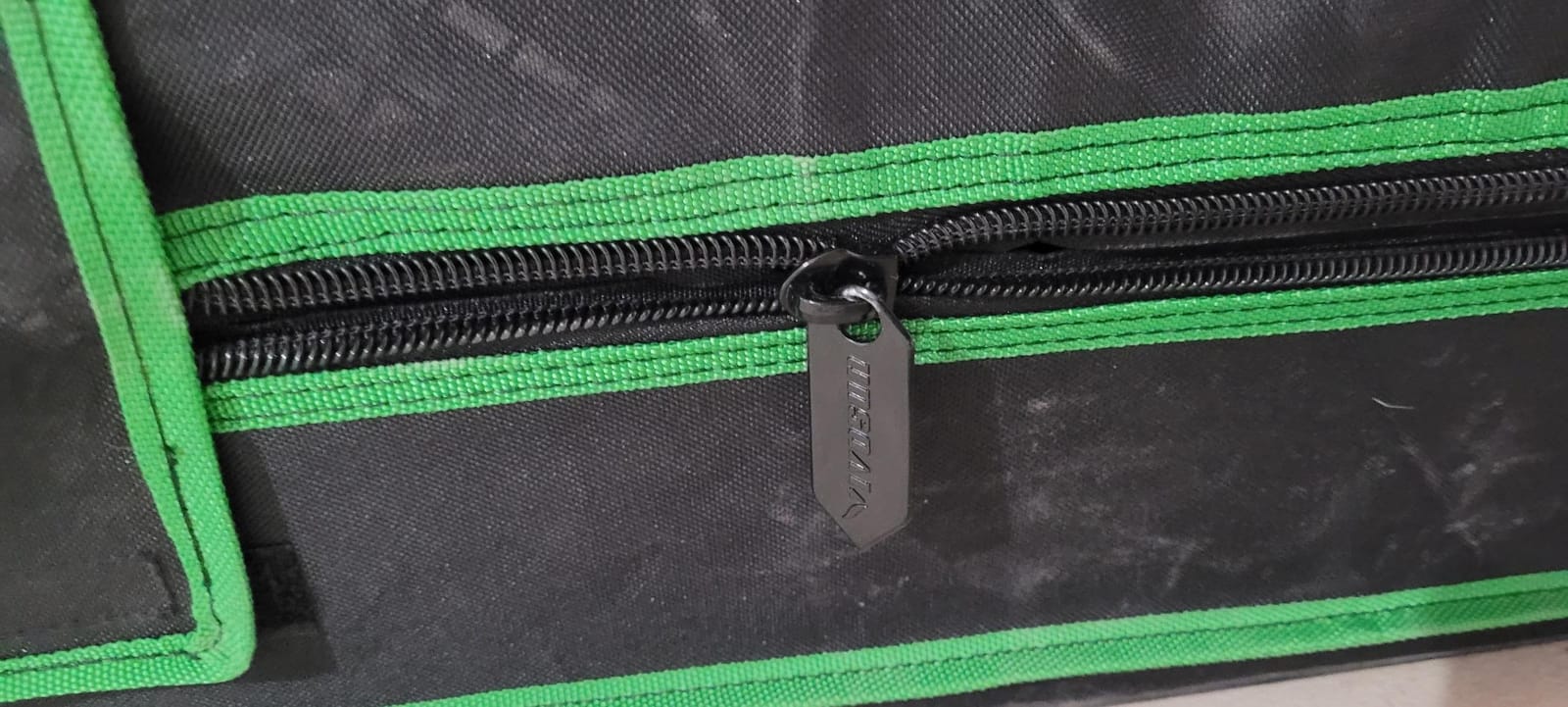
- Seams and zipper flaps leak light
- Loose threads and a light frame
When a basement ceiling gives you 72 inches and nothing more, the R446 is the tent that solves the problem rather than fighting it. At 48 by 48 by 72 inches it is one of the shortest 4×4 shells available, and the sloped roof design clears usable vertical space under the center of the tent that a flat-top model would waste.
The interior uses a litchi-pattern mylar lining, and reviewers report it reflecting roughly 1.5 times what diamond mylar does. In a low-ceiling room where your light sits closer to the canopy than it would in an 80 inch tent, higher reflectance makes a measurable difference.
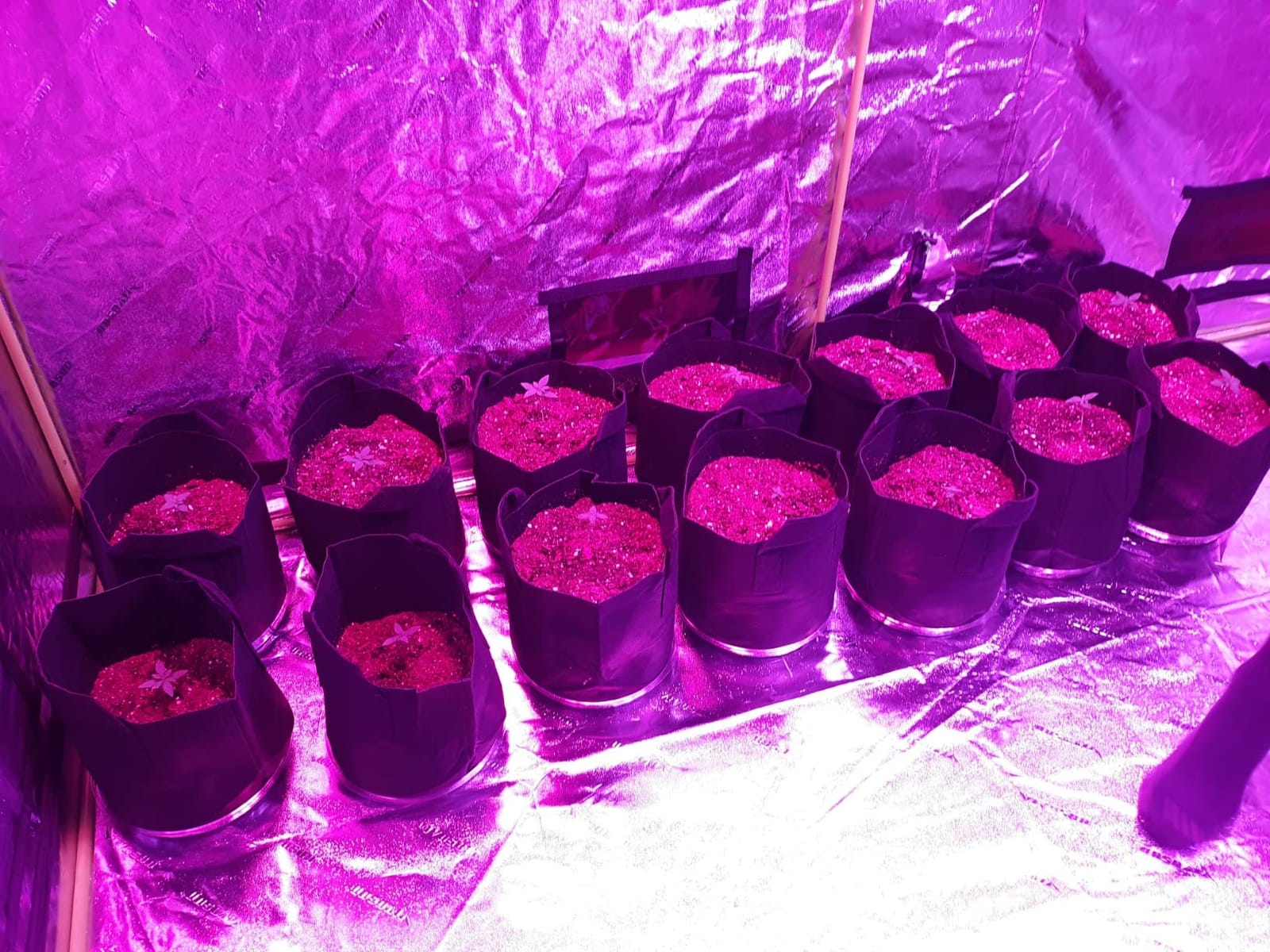
The outer shell is 600D waterproof Oxford canvas, double-stitched, and the removable mylar floor tray is included. Setup needs no tools, and the observation window uses a peel-off flap rather than a sewn one, which is simpler to operate on a low tent where you are crouching.
Be realistic about the ceiling. The sloped roof means your usable light height at the center of the tent is roughly 5 feet, so hanging distance for a taller light becomes tight. Growers report light leaks at poorly stitched seams and short zipper flaps, and aluminum tape is the common fix.
Who Should Buy the VIVOSUN R446
Buy it if height is your binding constraint. A 72 inch footprint solves basement and closet setups where an 80 inch tent physically will not go, and the sloped roof makes better use of the remaining inches than a flat roof of the same height would.
It is also a sensible second tent for growers running a short-cycle or lower-light setup. The litchi mylar lining and the removable tray both point to a room you will maintain frequently rather than leave alone for weeks.
Who Should Skip the VIVOSUN R446
Skip it if you grow tall plants or run a large light. With usable center height around 5 feet, hanging a big panel at a safe distance gets difficult, and light intensity at the canopy rises as you lower the fixture. Reviews also mention loose threads and a frame that feels light compared with heavier rivals.
Seam and zipper flap leaks are the other reason to pass. If your plants are photoperiod-sensitive and you cannot monitor the tent during the dark period, a tent with a stronger light-lock design is a better investment than patching seams with tape.
7. MELONFARM 4×4 Grow Tent – The Entry Shell With More Poles Than It Looks Like It Should Have
MELONFARM 4×4 Grow Tent, 48″x48″x80” High Reflective 600D Diamond Mylar Canvas with Observation Window and Floor Tray for Hydroponic Indoor Plant Growing
600D double-stitched canvas
Waterproof polyester mylar lining
Double observation windows
Tool-free setup
Pros
- First-time builders finish in 45 to 60 minutes
- Waterproof reflective lining
- Multiple duct and cord ports
- Storage bag and floor tray included
- No chemical off-gassing reported
Cons
- Thin poles for an 80 inch frame
- Flimsier fabric and zippers than branded rivals
- Some boxes arrive with missing poles
- Small leaks at velcroed ports
The MELONFARM MFGTENT4 is the model we recommend when someone wants a no-pressure first shell without buying into a brand ecosystem. It is 48 by 48 by 80 inches, tool-free to install, and most first-time builders finish the whole thing in 45 to 60 minutes.
The shell is 600D double-stitched canvas with a waterproof reflective polyester film lining, and there are two transparent observation windows plus a large heavy-duty zipper door. Interior volume is listed at 2.94 cubic meters, which converts to about 103 cubic feet, in the same range as the other 4×4 tents here.
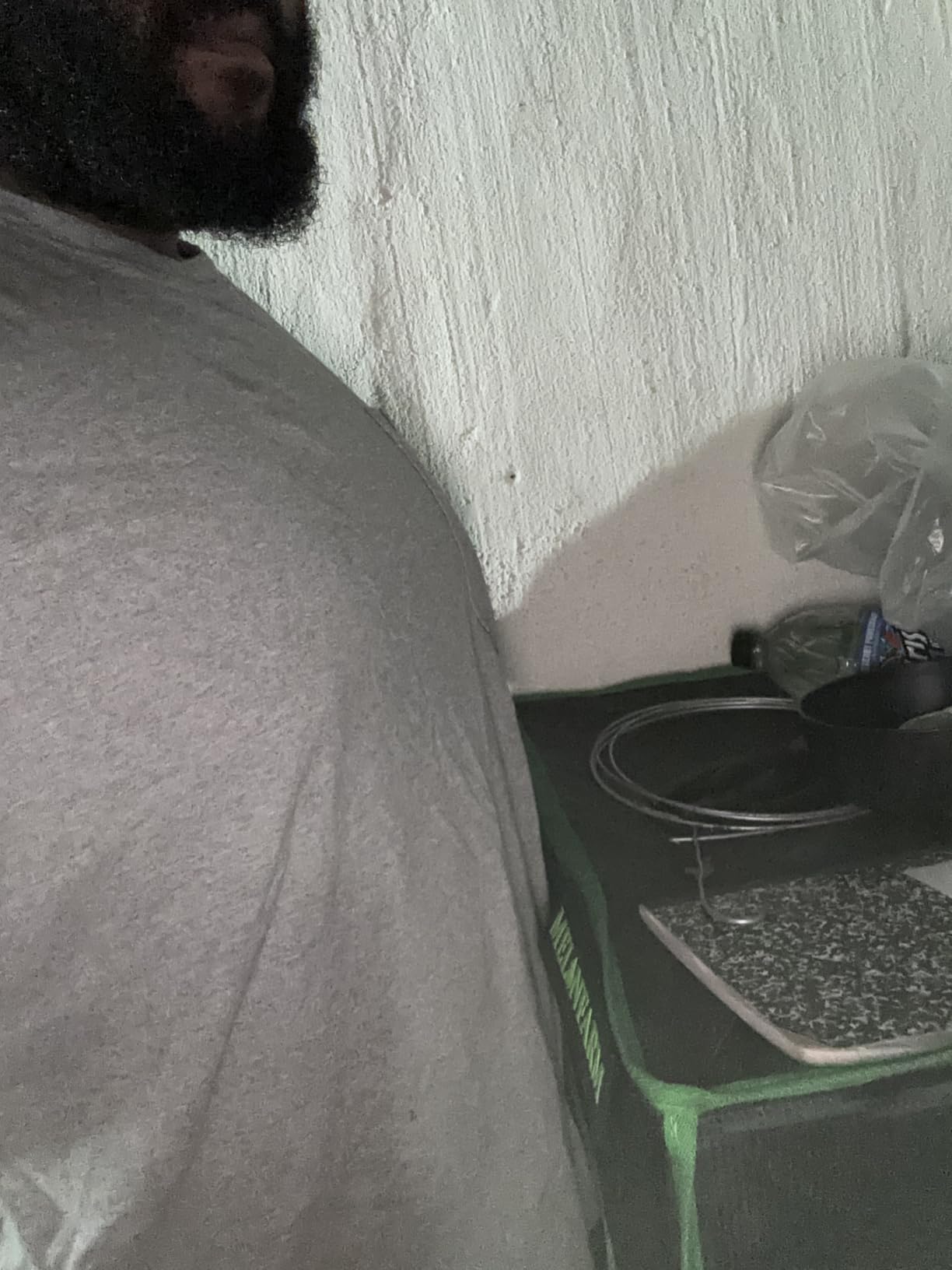
Multiple vents and ports are provided for fans and electrical cords, and a storage bag plus removable floor tray are included. A few buyers specifically mention no chemical off-gassing from the fabric, which matters if you are sensitive to smells in an enclosed room.
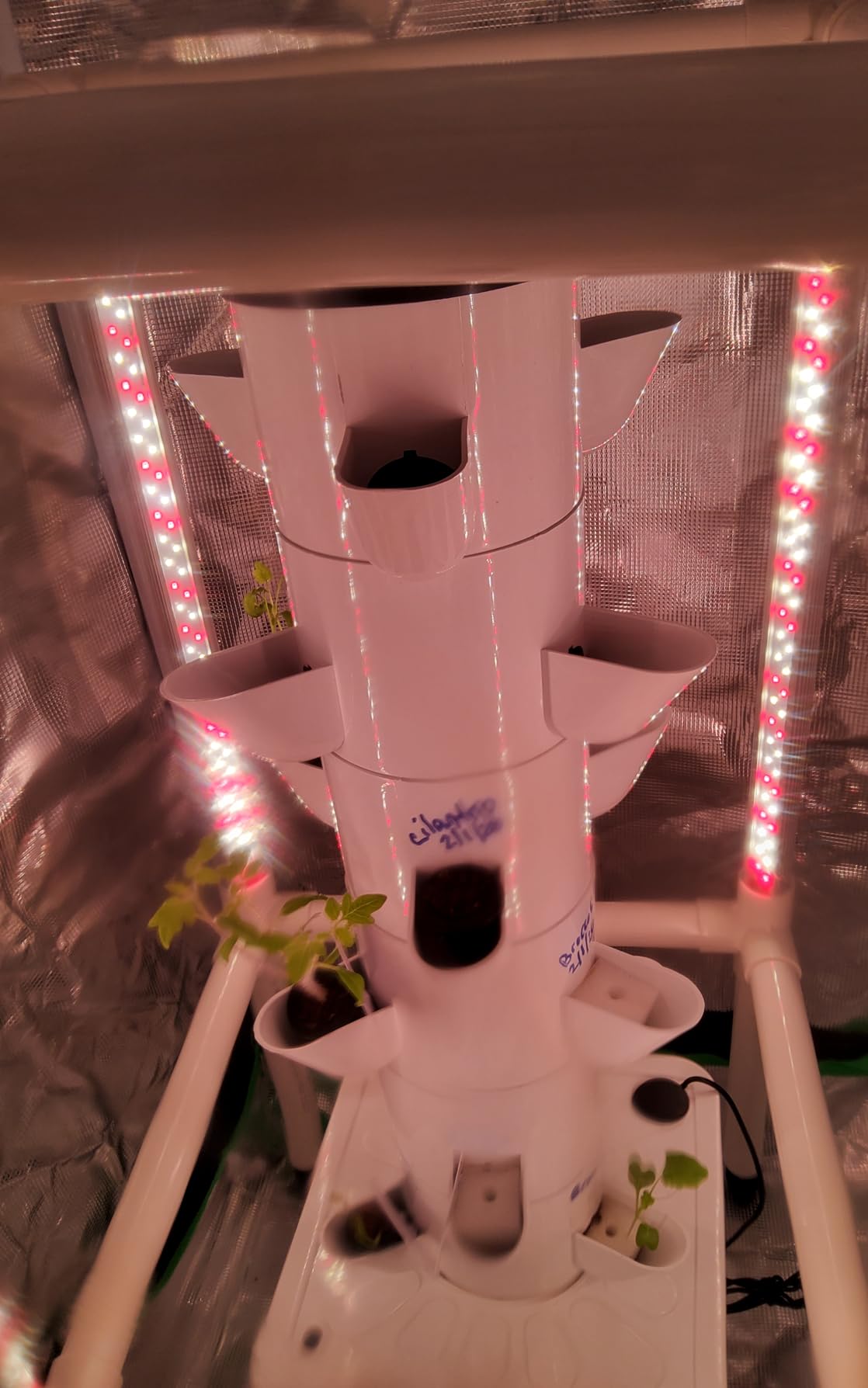
Where it falls short is hardware. Reviewers describe thin, small-diameter poles that look undersized for an 80 inch frame, and they report fabric and zippers that feel flimsier next to VIVOSUN or AC Infinity units. Some boxes have arrived with missing or mismatched poles, so count the hardware before you start.
Who Should Buy the MELONFARM 4×4
Buy it if the goal is a low-cost shell for a first run or a side project. The canvas is thick enough to handle normal handling, the setup is genuinely quick, and the double windows give you two viewing angles that most entry tents skip.
It is also a reasonable choice for a grow room that will hold short-cycle plants with a modest light. Nothing about the design is fragile in normal use, it simply asks less of you than the heavier shells in this roundup.
Who Should Skip the MELONFARM 4×4
Skip it if you are hanging anything heavy. Thin poles over an 80 inch span flex under hand pressure, and any flex becomes sag once a light and carbon filter are loaded onto them. The finicky zippers are the other weak point, with wear showing up earlier than the fabric does.
Small light leaks around the velcroed viewing and ventilation ports show up in reviews often enough to plan around. If you are growing photoperiod plants, add that to your pre-flowering checklist so you are not discovering a glowing seam at midnight.
8. zazzy 4×4 with 98 Percent Reflective Lining – Built for Pest Control First
4×4 Grow Tent 48″x48″x78″ 600D Mylar Hydroponic Growing Tents for Plant
98 percent reflective mylar
600D tear-proof canvas
78 inch height
Mesh rectangle vents
Pros
- 98 percent reflective lining
- Mesh vents block insects while allowing airflow
- Upgraded anti-rust PA connectors
- Removable mylar floor tray
- Tool-free install with printed instructions
Cons
- No observation window on this variant
- 600D canvas is lighter than premium shells
- Leaks around velcroed vents and seams
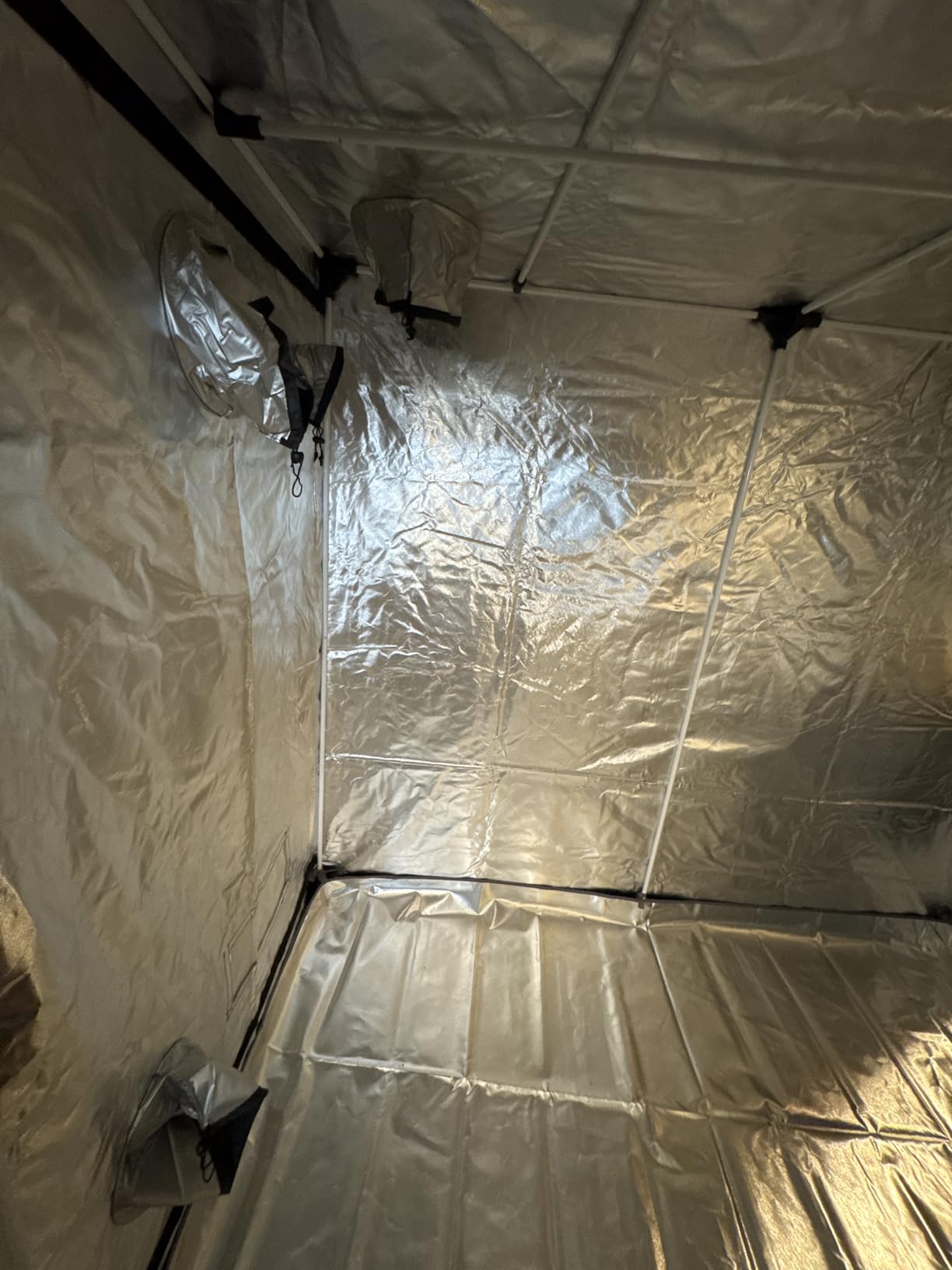
This zazzy variant solves for a problem most tents ignore: insects. The mesh rectangle vents let air move through the shell while keeping bugs and dust out, which in a basement or a shared building can be the difference between a clean canopy and a month of treating pests.
The lining is 98 percent reflective mylar with extra-thick material and double stitching, the highest rated reflectivity among the 600D tents in this roundup. The upgraded PA corner connectors have adjustable tightness, and the 600D canvas is described as tear-proof for its class.
Interior chamber volume is listed at 104 cubic feet, and total dimensions are 48 by 48 by 78 inches. Heavy-duty zippers and a removable mylar floor tray are included, and installation is tool-free with printed instructions in the box.
The catch is visibility. This specific variant has no observation window, and the lower opening is only for heat dissipation. Buyers who upgraded from a windowed version mention noticing that immediately, so treat it as a feature tradeoff rather than an oversight.
Who Should Buy the zazzy 98 Percent Lining Model
Buy it if pests are a recurring problem in your space. The mesh vent screens are a practical answer to a real issue, and they do it without cutting airflow, which is the compromise most tents force on you when they add screens.
It is also a good pick if you want high reflectivity without the weight of a thicker shell. The 98 percent lining plus the anti-rust connectors give you a tent that holds up in a damp basement, and the removable tray keeps cleanup fast.
Who Should Skip the zazzy 98 Percent Lining Model
Skip it if you like to check on plants through a window. There is no observation window on this version, and the heat-dissipation opening is not a substitute. Growers who worked with a windowed tent before buying this one were the ones who flagged it most.
Velcroed vent edges and seams are also the reported leak points, and 600D canvas is lighter than the 1680D and 2000D shells. If your priority list starts with light sealing rather than insect exclusion, choose one of the windowed tents above instead.
9. MARS HYDRO Smart Grow Tent Kit with TSW2000 – Everything In One Box
MARS HYDRO 4×4 Smart Grow Tent Kit with TSW2000 with iControl Controller
300W LED light
Smart Controller 43
402 CFM inline fan
1680D tent and carbon filter
Pros
- Complete box including light fan filter and tent
- App control over WiFi with VPD and CO2 automation
- 32 dB inline fan with 0 to 100 percent speed
- 704 SMD LEDs with 0 to 100 percent dimming
- Trellis netting and grow bags included
Cons
- Light coverage misses parts of the footprint
- Window light leaks
- Cheap included hangers can slip
- Modest carbon filter performance
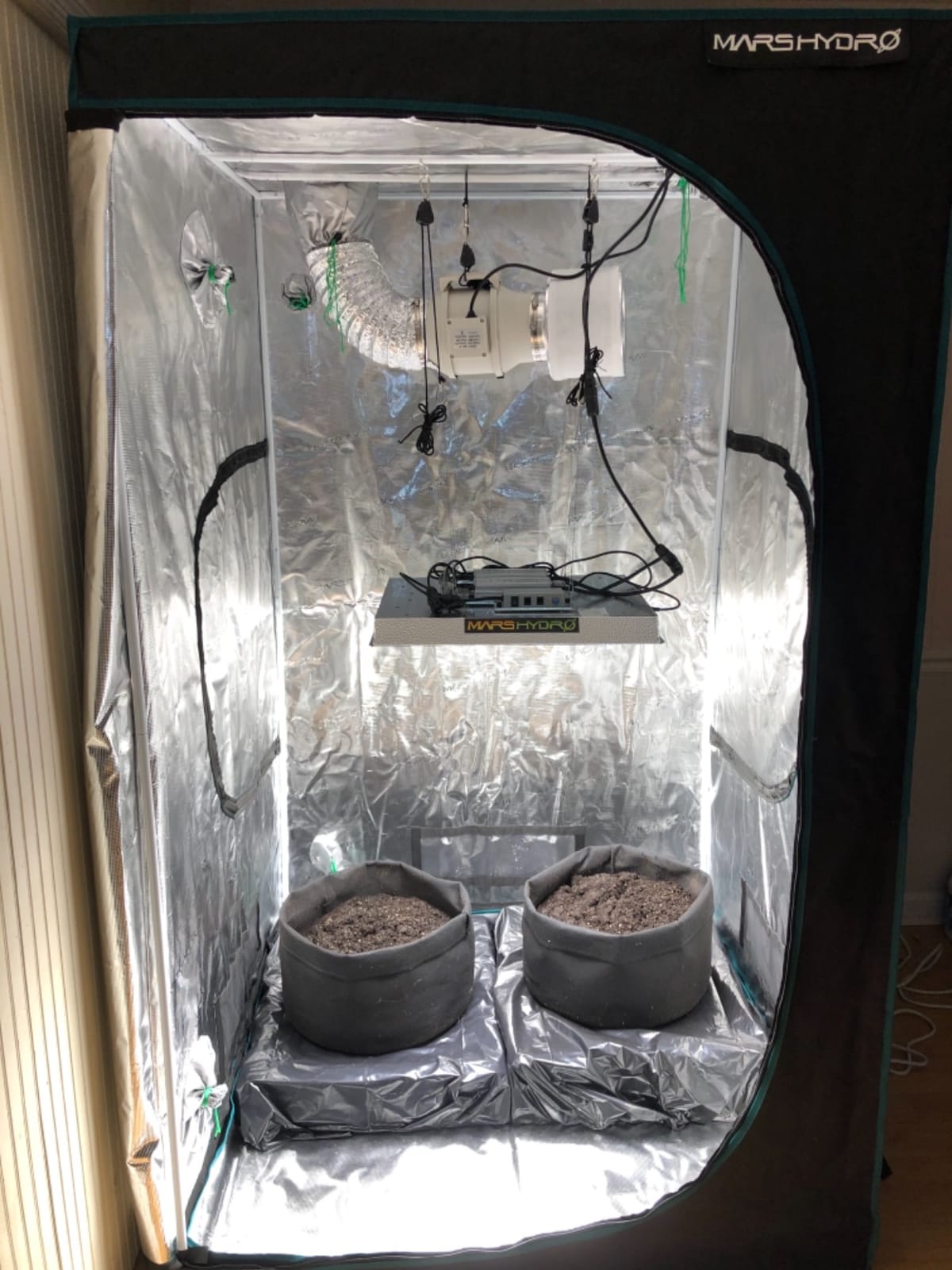
Some growers spend a month choosing components. This kit removes that step entirely, and if you would rather open one box and start building, it is the most complete option in this roundup. You get a 300W TSW2000 light, a Smart Controller 43, a 402 CFM inline fan, a carbon filter, 25 feet of ducting, trellis netting, three stainless clamps, six grow bags and two rope hangers.
The controller is the standout. It automates temperature, humidity, VPD, CO2, lighting and ventilation, and you can drive all of it from an app over WiFi. For a grower who cannot be home during the day, that automation is doing more for consistency than a heavier canvas would.
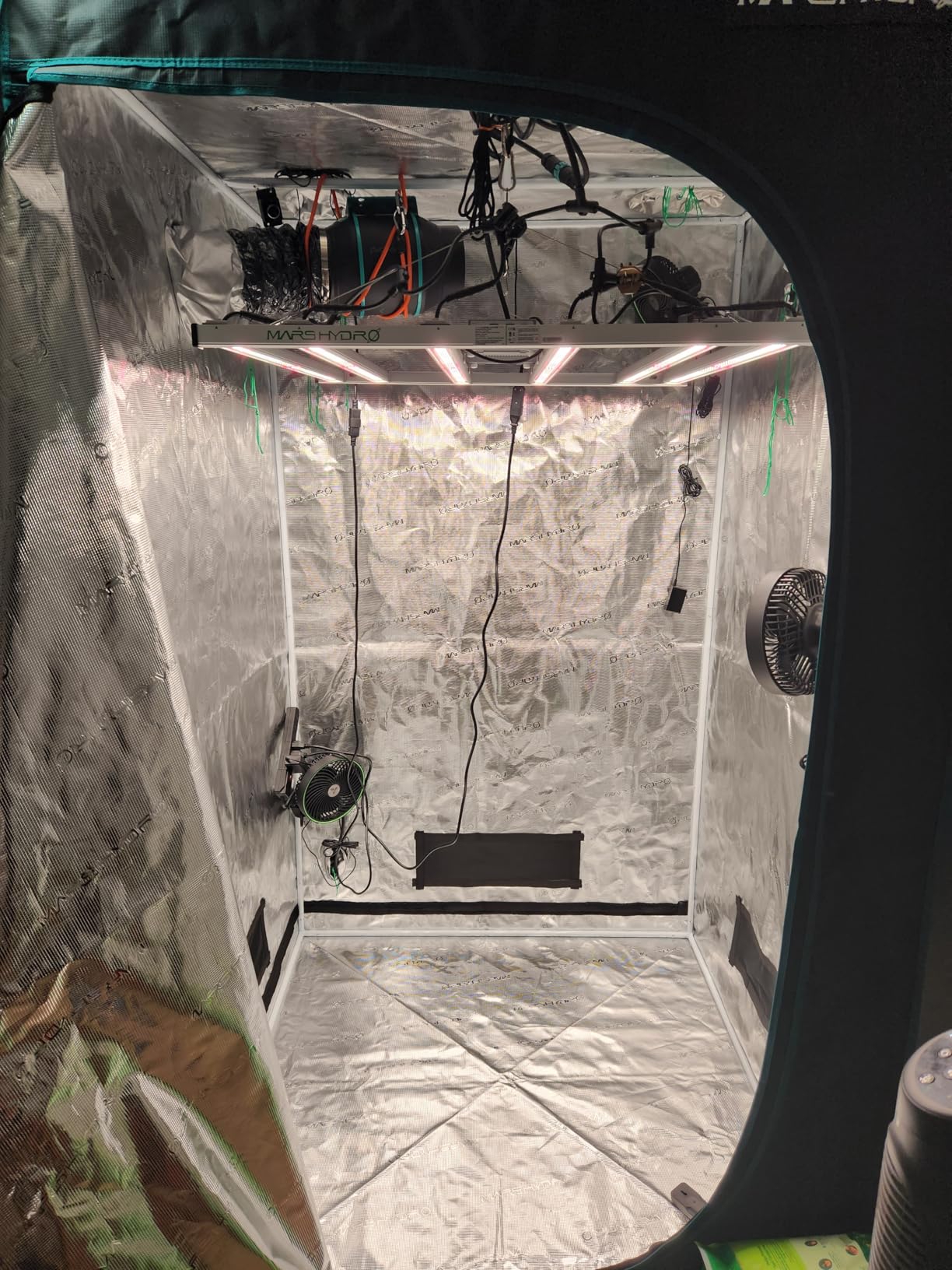
Light output is a 300W full-spectrum array with 704 SMD LEDs and 0 to 100 percent dimming, aimed through a patented 120-degree white reflector. The inline fan runs from 0 to 100 percent speed at 32 dB with a 1050-plus gram Australian Virgin Charcoal filter, which is one of the quieter fans in this category and matters in apartments.
Two details to know before you start. Buyers report the light coverage does not reach the full 16 square foot footprint, so rotating the canopy or accepting uneven growth is part of the routine. The included hangers are also cheap straps that can slip, so replace them before they hold anything expensive.
Who Should Buy the MARS HYDRO Smart Grow Tent Kit
Buy it if you want a complete 4×4 room in one purchase and you plan to automate. The combination of a 300W light, a smart controller and a 402 CFM fan covers the core of a functioning room, and the app automation handles the daily adjustments that beginners forget.
It is also strong for growers in apartments or shared buildings. A 32 dB inline fan is among the quieter options in this roundup, and reviewers confirm the fan ramps smoothly rather than jumping between speeds.
Who Should Skip the MARS HYDRO Smart Grow Tent Kit
Skip it if you already own quality components. You are paying for a light, fan and filter you may not need, and the modest carbon filter performance means many growers end up replacing it. Buyers also report window light leaks and occasional boxes arriving with missing hardware or generic off-brand accessories.
Check the tent dimensions in the listing carefully. The listing shows a 48 by 48 by 80 inch footprint while the kit specifications describe the tent as 40 by 40 by 70 inches, so confirm what you actually receive before you plan your room layout around it.
10. VIVOSUN Smart Grow Tent Kit 4×4 – App Control and a 400W Light in the Box
VIVOSUN Smart Grow Tent Kit 4×4, 4-Plant WiFi-Integrated Grow System
400W full-spectrum LED
GrowHub E42A controller
388 CFM inline fan
106 cubic foot chamber
Pros
- Everything needed to start in one box
- App control with real-time temperature and humidity
- EC motor with PWM airflow control
- Includes trellis net and five 5-gallon grow bags
Cons
- Light dims only to 25 percent minimum
- Limited ports on the included hub
- No built-in heating or humidity control
- Sensors described as decent but not exact
The VIVOSUN Smart Grow Tent Kit is the other complete-room option here, and it lands in a different place. Where the MARS HYDRO kit leans on automation breadth, this one leans on light output. The included LumaLight 400W full-spectrum LED uses diodes at 3000K, 5000K, 660nm and 730nm to cover seedling through harvest.
Control runs through the GrowHub E42A controller and its app, which handles the light, fan and sensors and tracks real-time indoor and outdoor temperature and humidity. Airflow comes from an AeroZesh G6 6 inch inline duct fan rated at 388 CFM, driven by an EC motor with PWM control for fine tuning at lower power draw.
Interior volume is 106 cubic feet, matching the standard 4×4 footprint. The accessory list is generous: a 6 inch carbon filter, ducting, a prefilter, two clamps, a 4 foot trellis net, five 5-gallon grow bags, pruning shears, rope hangers, hanging straps, vent covers and aluminum ducting tape.
Two limits are worth planning around. The light dims only to 25 percent, which is still bright for shade-tolerant plants, and the controller has limited ports, so upgrading to the E42A+ adds device capacity. There is also no integrated heater or dehumidifier, so full climate control still means add-ons.
Who Should Buy the VIVOSUN Smart Grow Tent Kit
Buy it if you want a strong light in the box and you prefer a single app over several controllers. The 400W fixture covers a 4×4 footprint more evenly than a smaller panel, and the EC motor fan responds smoothly to app commands instead of running at fixed speeds.
It is a good fit for a first full cycle in an apartment or spare room where you want everything in one delivery. The included trellis, five 5-gallon grow bags and pruning shears mean you can start a four-plant run without a second order.
Who Should Skip the VIVOSUN Smart Grow Tent Kit
Skip it if you need fine dimming control or a large device list on one controller. The 25 percent minimum dimming is the most-cited limitation, and the included hub has fewer ports than the upgraded version. Growers with a mixed load of lights, fans and climate devices will outgrow it quickly.
Sensor accuracy is described as acceptable rather than precise, which is fine for trending but not for tight VPD targets. And with no built-in heating or humidity control, the kit gets you started rather than finished, so budget for add-ons if your room swings in temperature.
How to Choose the Right 4×4 Grow Tent
Canvas denier is the first number to look at, and it is the number most buyers get wrong. Denier measures fabric density, and the practical tiers are 600D for entry tents, 1680D for mid-range and 2000D for premium. Heavier canvas resists pinholes, holds shape better and insulates more, but it also adds weight and cost.
Frame diameter and hang weight come next. Look for the per-bar capacity rather than a vague strength claim, and match it to your combined light and carbon filter weight plus safety margin. The frames here range from 100 lbs on the entry VIVOSUN shell to 150 lbs on the AC Infinity and Spider Farmer models, with the MARS HYDRO kit rated at 154 lbs for the frame.
Light sealing is the part that decides whether your room behaves during flowering. The details that matter are double-flap zippers, black lining behind the zipper teeth, and fabric sewn into the zipper flap rather than a loose flap that can shift. The MARS HYDRO 4×4 Advanced is the clearest example of that sewn-in design, and the AC Infinity 844 uses front zipper flaps for a second blocking layer.
You can test any of these tents yourself before you commit. Set it up in a dark room, turn off every light, close every port, and run a flashlight along the seams, zipper tracks, duct openings and the observation window from the inside. Any glow you can see from outside is a leak you can fix now with fabric tape rather than discover at midnight in week six of flowering.
Ventilation sizing is arithmetic once you know the chamber volume. A 4x4x80 inch tent measures roughly 106 cubic feet, which matches the 104 to 107 cubic feet figures the manufacturers here publish. Growers generally run an inline fan in the 300 to 400 CFM range for a tent of this size, and both complete kits here land there with 402 CFM and 388 CFM fans. Once a carbon filter is on the line, plan on the higher end of that range because the filter drops airflow.
Port sizing follows from that. Eight inch duct ports pair with 8 inch fans and ducting, and four inch ports handle smaller intake or exhaust runs. The AC Infinity 844 provides four 4 inch ports plus five 8 inch ports, giving you flexibility to split intake low and exhaust high, which is the arrangement that keeps the canopy moving air evenly.
The kit versus tent-only decision is really a question about how much time you have. A kit gets you a working room in one order and saves the research phase, but you inherit the components it shipped with, including the fan and filter that many growers replace within a year. A tent-only purchase lets you match every component to your room and your budget, at the cost of sourcing and researching each piece.
Plant count depends entirely on your training method. In a sea of green you can run roughly 16 plants in a 4×4, usually in smaller containers with tight spacing. Low-stress training works better at four to six plants, since each one needs room to bend and spread. Screen of green is the most efficient use of the footprint, with three to four plants trained across a net, and standard untrained grows sit somewhere around four plants in 5-gallon containers.
If floor space is the constraint everywhere else in your setup too, our indoor putting green picks work through the same tradeoffs between available square footage and training density, just in a different corner of the house.
Height is the last constraint and the one that ends a project before it starts. Standard 4×4 tents run 80 inches, the two budget zazzy options and the low-profile VIVOSUN run 78 or 72 inches, and anything over 80 inches needs checking against your door and ceiling height before purchase. If you are working in a basement, measure from the floor to the joist, not to the ceiling tile, and subtract the depth of any ducting or light housing.
Frequently Asked Questions
What is the best 4×4 grow tent?
The VIVOSUN S448 is our top pick for most growers because it pairs a proven build with the largest review base in this roundup. If you want the thickest canvas and the strongest frame regardless of weight, the AC Infinity CLOUDLAB 844 with 2000D canvas and 150 lb poles is the premium choice.
How many plants can I grow in a 4×4 grow tent?
Plant count depends on training method. A sea of green supports roughly 16 smaller plants, low-stress training works at four to six plants, screen of green handles three to four plants trained across a net, and a standard untrained grow sits at about four plants in 5-gallon containers.
What is the recommended CFM for a 4×4 grow tent?
A 4x4x80 inch tent measures roughly 106 cubic feet, so an inline fan in the 300 to 400 CFM range covers it well. Once a carbon filter is attached, run closer to the upper end because the filter reduces airflow. The complete kits in this roundup ship 402 CFM and 388 CFM fans.
What canvas denier is best for a grow tent?
For most indoor rooms 1680D is the sweet spot, since it resists pinholes and abrasion without becoming difficult to handle. 600D is workable for light loads and short-cycle plants, while 2000D is worth it when you plan to keep the same tent for years and hang heavy fixtures.
What is the best wattage grow light for a 4×4 grow tent?
A 300W to 400W full-spectrum LED covers a 16 square foot footprint. The two complete kits here include 300W and 400W fixtures. If you already own a light, check the frame hang weight first, since heavier fixtures need a frame rated well above the light itself.
Is 80 degrees too hot for a grow tent?
Yes, sustained temperatures in the 80s push plants into heat stress and slow growth and photosynthesis. Keep the canopy area below that range by exhausting hot air at the top of the tent and drawing cool air low, and remember that a tent with no upper exhaust simply traps heat.
Final Verdict on the Best 4×4 Grow Tents
The VIVOSUN S448 is our pick for the best 4×4 grow tents for indoor growing in 2026, because it is the only shell here with a review base large enough to trust completely, and it gets the fundamentals right without adding weight you have to fight. Growers who want the thickest fabric and the stiffest frame should step up to the AC Infinity CLOUDLAB 844, and anyone on a tight basement ceiling should look at the VIVOSUN R446.
Whichever one you choose, set it up in the dark first, check the seams with a flashlight, and match the fan to the room before the plants arrive. A tent you have already tested will not surprise you at midnight in week six.