
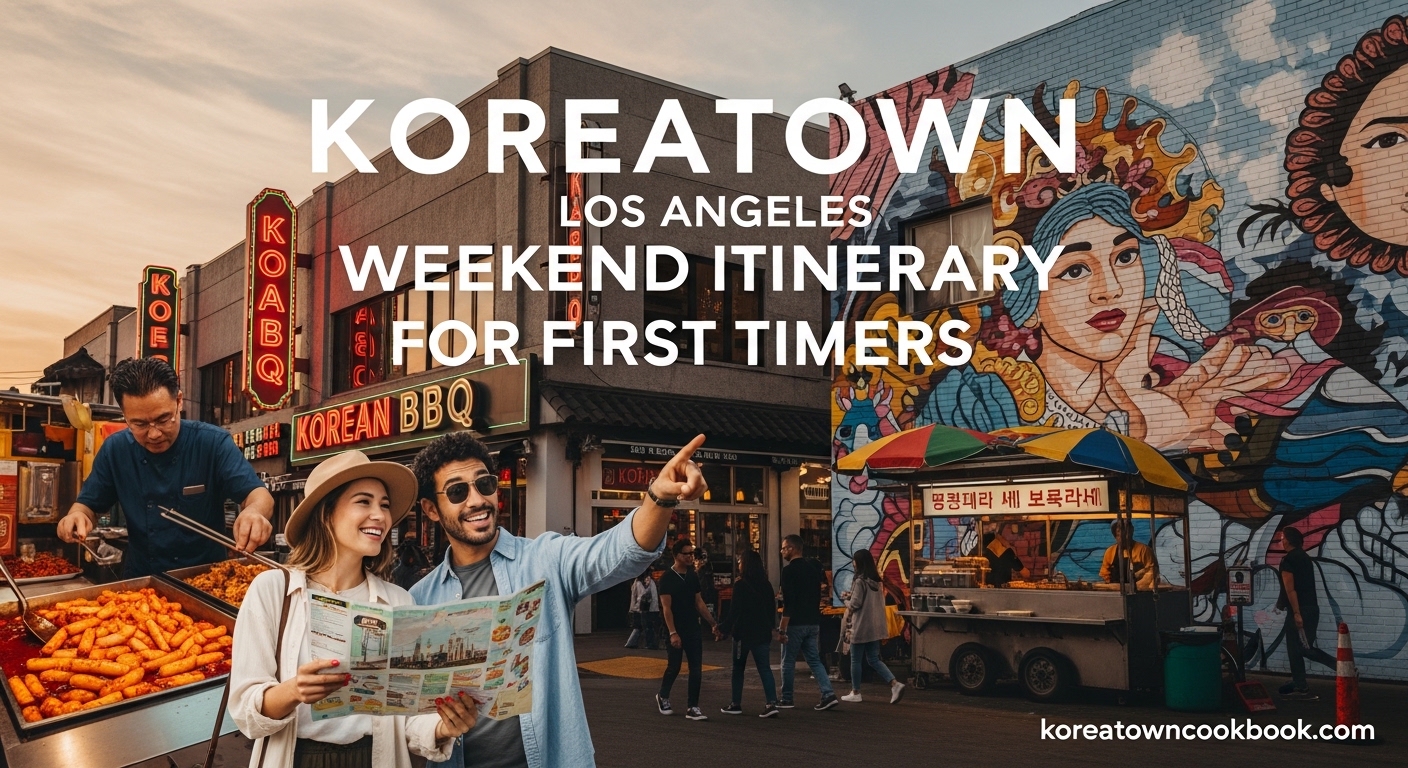
If you are planning your first trip to Los Angeles and wondering whether Koreatown deserves a spot on your itinerary, the answer is a resounding yes. Koreatown — or K-Town as locals call it — is one of the most concentrated food and culture destinations in all of Southern California, and it is perfectly sized for a single weekend of exploration.
I have spent countless weekends wandering through K-Town’s neon-lit streets, sampling everything from sizzling Korean barbecue to late-night tofu stew at 2am. What keeps pulling me back is the neighborhood’s rare combination of authenticity, walkability, and round-the-clock energy that you simply will not find anywhere else in Los Angeles.
Is Koreatown in Los Angeles worth visiting? Absolutely. Here is what makes it special:
- A Walk Score of 93, making it one of the most walkable neighborhoods in all of LA
- 24-hour Korean restaurants, karaoke bars, and spas that keep the area buzzing at all hours
- The highest concentration of Korean barbecue spots outside of Seoul itself
- A thriving K-beauty, K-pop, and Korean culture scene you can experience firsthand
- Easy access via the Metro Purple Line, connecting you straight from downtown LA
This Koreatown Los Angeles weekend itinerary for first timers covers everything you need from Friday evening through Sunday afternoon. I will walk you through where to eat, what to do, how to get around, and what to expect at every stop. Whether you are a foodie chasing the best KBBQ in the city or a curious traveler looking to experience something beyond the typical Hollywood tourist trail, this guide has you covered.
Table of Contents
Why Koreatown Los Angeles Should Be on Your Weekend List
Koreatown sits just west of downtown LA, bordered roughly by Vermont Avenue to the east, Crenshaw Boulevard to the west, Melrose Avenue to the north, and Pico Boulevard to the south. What makes this roughly 2.7-square-mile neighborhood so remarkable is how much it packs into such a compact area.
The neighborhood began taking shape in the late 1960s and early 1970s when Korean immigrants established businesses along Olympic Boulevard and Wilshire Boulevard. Over the decades, it grew into the largest Koreatown in the United States — and it is still evolving. Today, you will find a layered mix of old-school Korean institutions alongside trendy new cafes, fusion restaurants, and creative spaces.
For first-time visitors, Koreatown Los Angeles offers something most LA neighborhoods cannot: everything is genuinely walkable. With a Walk Score of 93, you can comfortably stroll between restaurants, bars, spas, and shops without needing to hail a ride every 20 minutes. That alone makes it a refreshing change from the usual car-dependent Los Angeles experience.
The food scene is the obvious draw. Korean barbecue, bibimbap, bulgogi, kimchi stew, Korean fried chicken, bingsu (shaved ice dessert) — the list goes on. But K-Town is far more than just a food destination. Korean spas, K-beauty shops stocked with skincare products you cannot find elsewhere, noraebang (karaoke rooms), late-night soju bars, and a vibrant cultural scene round out the experience.
What surprised me most on my first visit was the neighborhood’s energy at night. While most of LA shuts down by 10pm, Koreatown keeps going. Restaurants serve until the early morning hours, karaoke rooms stay open past midnight, and the streets stay lively. That alone makes it a fantastic base for a weekend trip.
Koreatown also offers excellent value compared to trendier LA neighborhoods like Santa Monica or Beverly Hills. A hearty Korean meal often costs less than a basic entree elsewhere in the city, and the spa experience delivers hours of relaxation for a fraction of what a typical American day spa charges. For budget-conscious travelers looking to maximize their LA experience without draining their wallet, K-Town is a smart choice.
Friday Evening: Arrival and First Taste of K-Town
Check Into Your Hotel and Get Oriented
If you are flying into LAX, the easiest way to reach Koreatown is via the LAX FlyAway bus to Union Station, then connecting to the Metro Purple Line which drops you right in the heart of K-Town. The whole journey takes about 60 to 90 minutes and costs a fraction of a rideshare. Alternatively, a Lyft or Uber from LAX will run you roughly $35 to $55 depending on traffic and time of day.
For hotels, The Line Hotel on Wilshire Boulevard is the most iconic option — it sits right in the center of Koreatown with rooftop views and easy walking access to everything. The hotel itself has become something of a cultural hub, hosting pop-up events and housing a popular coffee shop in its lobby. If you want something more budget-friendly, there are several mid-range motels and smaller hotels along Western Avenue and Olympic Boulevard that are clean, safe, and well-located.
Another solid option is staying at an Airbnb or vacation rental in the neighborhood. Many locals rent out apartments and guesthouses, and you will find options ranging from simple studios to spacious two-bedroom units. Staying in a residential part of K-Town gives you a more local experience and often includes kitchen access, which is handy if you want to store snacks from the Korean market.
Parking tip: If you are driving, many restaurants and spas offer validated parking. Look for buildings with underground lots — street parking in K-Town can be tight on weekend evenings, and reading the posted signs carefully is important to avoid tickets. Some hotels also offer parking for a daily fee, which can be worth it for the convenience alone.
Dinner: Your First Korean BBQ Experience
There is no better way to kick off a Koreatown Los Angeles weekend itinerary than with Korean barbecue. KBBQ is an interactive dining experience where raw marinated meats are grilled right at your table, and you wrap each bite in fresh lettuce leaves with banchan (small side dishes like kimchi, pickled radish, and seasoned spinach).
The experience is social, messy in the best way, and deeply satisfying. You will smell the charcoal and sizzling meat before you even sit down, and the communal atmosphere of sharing grilled meats around a table makes it an instant highlight of any trip.
For your first KBBQ experience, I recommend starting with one of these approaches. If you want the classic all-you-can-eat experience, look for spots along Western Avenue that offer AYCE packages — you pay a set price and order as much as you want from a menu of marinated beef, pork belly, chicken, and more. If you prefer a la carte ordering with higher-quality cuts, head to one of the established restaurants on Wilshire Boulevard where the focus is on premium meats like wagyu and dry-aged galbi.
Here are a few tips that will make your first KBBQ experience smoother:
- Start with bulgogi (thinly sliced marinated beef) and galbi (marinated short ribs) — these are crowd-pleasers and forgiving for beginners
- Let the server handle the grilling if they offer — they know the exact timing for each cut
- Try wrapping your meat in a lettuce leaf with a dab of ssamjang (thick spicy paste) and a strip of raw garlic
- Do not skip the banchan — refills are always free, so sample everything
- Pace yourself. It is tempting to order everything at once, but KBBQ is best enjoyed slowly over 90 minutes to two hours
- Order a bottle of soju to share — it is the traditional accompaniment and adds to the authentic experience
After dinner, take a walk along Wilshire Boulevard or 6th Street to start getting a feel for the neighborhood. You will notice neon signs in Korean and English, groups of friends spilling out of restaurants, and the distinct buzz of a neighborhood that truly comes alive after dark. This post-dinner stroll is one of my favorite parts of visiting K-Town — there is something magical about the glow of restaurant signs reflecting off wet pavement on a Friday night.
Saturday Morning: Spa Day and Coffee Culture
Korean Spa Experience (Jjimjilbang)
If there is one uniquely Korean experience you should try during your Koreatown LA weekend, it is visiting a jjimjilbang — a Korean bathhouse and spa. These are not your typical day spas. A jjimjilbang is a sprawling facility with multiple sauna rooms, hot and cold soaking pools, steam rooms, relaxation areas, and often a cafe or restaurant inside.
The Korean spa tradition dates back centuries in Korea, where communal bathhouses served as gathering places for socializing, relaxation, and wellness. The jjimjilbang in Koreatown Los Angeles carry on this tradition with modern amenities and a distinctly Californian twist. Some of the larger spas in K-Town span multiple floors and offer everything from salt rooms to jade therapy saunas to ice rooms designed to shock your system after a hot soak.
I will be honest: my first visit to a Korean spa was slightly intimidating because I did not know what to expect. So let me walk you through the basics so you can go in feeling confident.
First, here is how a typical jjimjilbang visit works. You pay an entrance fee at the front desk, receive a uniform (usually shorts and a t-shirt), and a towel. You will get a wristband or key for a locker. The facility is typically divided into gender-segregated wet areas (where you bathe and soak nude) and co-ed dry areas (where you wear your uniform and can visit different sauna rooms, relax, or eat).
The wet areas typically include hot soaking pools at various temperatures, cold plunge pools, steam rooms, and individual shower stations with stools. The dry areas feature themed sauna rooms — you might find a salt sauna, a clay room, a charcoal room, or an ice room. Each has different supposed health benefits, and part of the fun is trying them all.
Key etiquette tips for first-timers:
- Shower thoroughly before entering any pools or soaking areas — this is the most important rule
- In the wet areas, you are expected to be nude. This is completely normal and nobody pays attention to you
- Bring your own toiletries if you are particular about products, though most spas provide basic soap and shampoo
- Stay hydrated. Drink plenty of water between sauna sessions
- Most people spend two to four hours at a jjimjilbang. There is no rush
- Tipping is generally not expected at Korean spas
- Start with shorter sessions in each sauna room — five to ten minutes — and build up from there
- Bring a book or download podcasts for the relaxation areas between sauna rounds
Plan to spend your Saturday morning from around 9am to noon at the spa. It is a deeply relaxing way to start your day, and you will feel refreshed and energized for the rest of your Koreatown adventures. Many locals make this a weekly ritual, and after one visit, you will understand why.
Coffee and Breakfast Spots
After your spa session, Koreatown’s coffee scene is ready to welcome you. K-Town has a surprisingly strong cafe culture with everything from no-frills Korean coffee shops serving sweet iced Americanos to trendy specialty spots with latte art and house-made pastries. The Korean approach to coffee tends toward sweeter, creamier drinks, but you will find excellent espresso-based drinks at the specialty shops too.
For a quick breakfast, look for Korean bakeries along Olympic Boulevard that offer pastries filled with red bean, cream, or sweet potato. These are inexpensive and pair perfectly with a strong coffee. Korean bakeries often blend French techniques with Korean flavors — you might find croissants filled with sweet red bean paste or breads topped with crispy cookie crumble (called soboro).
If you want something heartier, several Korean breakfast spots serve dishes like gimbap (Korean rice rolls), kimchi fried rice, or soup and rice combinations that locals eat to start their day. A bowl of kongnamul gukbap (soybean sprout soup with rice) is a traditional Korean breakfast that is light, warming, and perfect after a morning at the spa.
One of my favorite things about K-Town cafes is that many of them are designed for lingering. Comfortable seating, free Wi-Fi, and a relaxed atmosphere make them great places to rest between activities. Grab a coffee, review your itinerary, and plan your afternoon. You will notice that many locals treat cafes as their second office or living room, settling in with laptops or books for hours at a time.
Saturday Afternoon: Shopping and Cultural Exploration
K-Beauty Shopping
Korean beauty products have taken the global skincare world by storm, and Koreatown Los Angeles is one of the best places in the United States to shop for them in person. Instead of ordering online and guessing which products might work for your skin, you can browse, test, and get recommendations from knowledgeable staff who actually use these products themselves.
K-beauty is known for its multi-step skincare philosophy, innovative ingredients like snail mucin and fermented rice water, and products that range from gentle daily cleansers to intensive sheet masks. The approach emphasizes prevention and hydration over harsh treatments, which is why it has gained such a loyal following worldwide.
The stores in K-Town carry everything from popular mainstream Korean brands to smaller, harder-to-find labels that have not yet reached mainstream American retailers. You will see rows upon rows of serums, essences, ampoules, sheet masks, sunscreens, and creams organized by skin concern — brightening, acne-fighting, anti-aging, hydration, and more.
You will find K-beauty shops scattered throughout the neighborhood, with several concentrated along Western Avenue and in the shopping plazas off Olympic Boulevard. Most stores have testers available, and the staff are typically enthusiastic about helping you build a routine that fits your skin type and budget. Do not be afraid to ask questions — they love introducing newcomers to Korean skincare.
Even if you are not normally a skincare person, browsing these shops is a fun cultural experience. The packaging alone is worth seeing — cute character collaborations, minimalist glass bottles, and beautifully designed gift sets make great souvenirs. A set of Korean sheet masks is one of the most popular souvenirs visitors take home from K-Town.
Korean Market Visit
No Koreatown weekend itinerary is complete without a visit to a Korean market. H-Mart, the largest Korean grocery chain in the United States, has a prominent location in K-Town and is well worth exploring even if you are staying in a hotel and cannot cook. The name H-Mart stands for “Han Ah Reum,” which translates to “one arm full of groceries” — and you will quickly see why.
What makes these markets special for visitors is the prepared food section. You will find ready-to-eat kimbap (Korean rice rolls), marinated meats, banchan by the pound, fresh tofu, Korean snacks, and an entire aisle dedicated to different types of kimchi. It is like a museum of Korean food that you can actually eat. The kimchi aisle alone can have 20 or more varieties — cabbage kimchi, radish kimchi, cucumber kimchi, and specialty versions with oysters or fresh seafood.
I always pick up a few things to snack on later — some Korean chips, a bag of dried squid, maybe a bottle of Korean barley tea or a box of Pepero (Korean cookie sticks dipped in chocolate). The prices are generally very reasonable, and it is a fun way to try products you would never find at a typical American grocery store.
Beyond H-Mart, Koreatown has several smaller markets and convenience stores worth browsing. These neighborhood shops often carry items the larger stores do not, including specialty Korean condiments, handmade kimchi from local producers, and seasonal items that change throughout the year. If you see a small market with a crowd of locals shopping inside, that is usually a good sign.
If you are looking for K-pop merchandise, Korean snacks to bring home, or just want to experience the sensory overload of a properly stocked Asian grocery store, budget about 45 minutes to an hour for this stop. The K-pop and Korean entertainment section of some stores carries CDs, posters, photocard collections, and other fan merchandise that makes for unique gifts.
Saturday Evening: Late-Night Eats and Nightlife
Dinner: Beyond BBQ
By Saturday evening, you have had Korean barbecue. Now it is time to explore the rest of Korean cuisine. Koreatown Los Angeles has an incredible depth of dining options that go far beyond grilled meats, and your second night is the perfect opportunity to branch out.
Some dishes and restaurants to seek out on your second night:
- Korean fried chicken — double-fried for extra crunch, typically served with a sweet and spicy glaze or garlic soy sauce. The skin crackles when you bite into it, and the meat inside stays juicy. Pair it with cold beer for the Korean fried chicken and beer combo known as chimaek
- Sundubu-jjigae — soft tofu stew served bubbling hot in a stone pot, often with a raw egg cracked on top that cooks in the residual heat. BCD Tofu House on Wilshire Boulevard is open 24 hours and is a neighborhood institution
- Naengmyeon — cold buckwheat noodles in a tangy icy broth, perfect if you are visiting during warmer months. The broth is refreshingly tart, often made with dongchimi (radish water kimchi), and the chewy noodles are a textural delight
- Korean dumplings (mandu) — plump, juicy, and typically pan-fried or steamed to order. Fillings range from pork and kimchi to vegetables and glass noodles. A plate of mandu makes a great shared appetizer or a light meal on its own
- Japchae — stir-fried glass noodles with vegetables and beef, slightly sweet and satisfying. The translucent noodles have a satisfying chew, and the dish is colorful with carrots, spinach, mushrooms, and bell peppers
- Tteokbokki — chewy rice cakes smothered in a sweet and spicy gochujang sauce. This beloved Korean street food is often sold at small counters and food stalls throughout K-Town, and it makes an excellent late-night snack
One of the best things about dining in Koreatown is the 24-hour restaurant culture. If you are the type who likes a late dinner, you are in the right place. Several restaurants stay open past midnight on weekends, and some never close at all. BCD Tofu House, for example, serves its full menu around the clock. There is something uniquely satisfying about sitting down to a steaming bowl of tofu stew at 1am while the restaurant buzzes with other night owls.
Karaoke (Noraebang) and Nightlife
After dinner, it is time for one of K-Town’s most entertaining experiences: noraebang, or Korean-style karaoke. Unlike American karaoke where you sing in front of a bar full of strangers, Korean noraebang gives you a private room for you and your friends. You get a TV screen, microphones, a song remote, and sometimes tambourines. You order drinks and snacks through an intercom or app, and the room is yours for as long as you book it.
Noraebang rooms are rented by the hour, and prices are usually quite reasonable — often $20 to $40 per hour for a small room, split among your group. The song selection is massive, with English, Korean, Japanese, and Spanish options in most places. Some of the newer noraebang venues have upgraded to touchscreen song systems, disco lighting, and even fog machines for the full experience.
A few tips for your first noraebang experience:
- Most places charge per room, not per person, so going with a group of four to six people is the sweet spot
- You can usually bring in outside food, but drinks typically need to be purchased from the venue
- Song selection varies by venue — some have more English songs than others, so ask when you walk in
- Noraebang spots along 6th Street and Western Avenue tend to stay open latest, often until 2am or later on weekends
- Do not be shy about singing. Everyone is there to have fun, and the private room setting makes it low-pressure
- Try a Korean song even if you do not speak the language — the romanized lyrics on screen make it surprisingly easy to follow along
If karaoke is not your thing, Koreatown also has a growing craft cocktail scene, several soju bars with extensive flavored soju menus (try the yogurt or green grape flavors — they go down dangerously easy), and laid-back wine bars that are perfect for winding down the evening. The bar scene in K-Town tends to be younger and more energetic than other parts of LA, with a good mix of locals and visitors.
For a different kind of evening, consider visiting one of Koreatown’s rooftop bars. Several hotels and buildings in the neighborhood offer rooftop drinking with sweeping views of the LA skyline. The combination of city lights, a cold drink, and the distant hum of K-Town below is a memorable way to spend your Saturday night.
Sunday: Brunch, Desserts, and Departure
Sunday Brunch in Koreatown
Sunday morning in Koreatown is a quieter, more relaxed affair. The late-night crowds have dispersed, and the neighborhood settles into a comfortable weekend rhythm. This is the perfect time for a leisurely brunch before you wrap up your Koreatown Los Angeles weekend itinerary.
You have two directions you can go for Sunday brunch. The first is traditional Korean breakfast fare — a steaming bowl of haejangguk (hangover soup) if you overindulged the night before, or a simple spread of rice, soup, and banchan at one of the neighborhood’s more traditional restaurants. These meals are typically inexpensive and deeply satisfying. Haejangguk, sometimes called “hangover soup,” is a rich beef bone broth with vegetables and congealed blood cake — it sounds intimidating but is surprisingly delicious and genuinely restorative.
The second option is the modern brunch scene. Several cafes and restaurants in K-Town offer Korean fusion brunch dishes like kimchi breakfast burritos, bulgogi breakfast sandwiches, or Korean-style eggs Benedict with gochujang hollandaise. These spots tend to get busy on Sunday mornings, so arriving before 10am is a smart move. The fusion brunch trend in Koreatown has really taken off in recent years, blending the best of Korean flavors with familiar brunch formats.
Either way, take your time on Sunday morning. One of the joys of Koreatown is slowing down and enjoying a meal without rushing. Many of the Sunday brunch spots have outdoor seating, and the morning light in K-Town is surprisingly pleasant. Grab a table by the window or on the patio, order more food than you think you need, and savor your last few hours in the neighborhood.
Dessert Crawl Before You Leave
Before you head out of Koreatown, I highly recommend a mini dessert crawl. K-Town has an exceptional dessert scene, and trying two or three different sweets is a wonderful way to cap off your weekend. The Korean approach to desserts tends to be less cloyingly sweet than American desserts, which makes it easy to sample multiple items without feeling overwhelmed.
Start with bingsu — Korean shaved ice dessert topped with sweet red bean, condensed milk, fresh fruit, or matcha powder. The texture is light and fluffy, almost like fresh snow, and it is nothing like the dense shaved ice you might be used to. Bingsu is typically meant to be shared, so order one large bowl and split it with your travel companions. Popular varieties include mango bingsu, strawberry bingsu, and the classic patbingsu with sweet red bean. During summer months, bingsu shops in K-Town have lines out the door — it is that popular.
Next, look for a Korean bakery selling different types of bread and pastry. Korean cream bread, soboro (peanut-topped bread), and castella (Japanese-influenced sponge cake that is popular in Korean bakeries) are all worth trying. Korean bakeries often have a self-serve format where you grab a tray and tongs, browse the shelves, and bring your selections to the counter. Grab a few items to-go for the road trip or flight home.
Finally, if you have room, stop at one of K-Town’s many boba or tea shops for a drink. Korean milk tea, fruit teas with real fruit pieces, or a simple sweet Americano will give you that last taste of K-Town before you leave. Many of these tea shops also sell Korean snacks and candy near the register, which make perfect last-minute souvenirs.
Practical Tips for Your Koreatown Weekend
Getting Around Koreatown
I mentioned the Walk Score of 93 earlier, and I want to emphasize how much this matters for visitors. In a city notorious for requiring a car to get anywhere, Koreatown is a genuine exception. Most of the restaurants, spas, shops, and bars listed in this itinerary are within a 15-minute walk of each other. You can genuinely park your car on Friday evening and not touch it again until Sunday.
For destinations that are a bit farther out, the Metro Purple Line has several stops in K-Town including Wilshire/Western, Wilshire/Normandie, and Wilshire/Vermont. A single ride costs $1.75, and day passes are available for $3.50. The Purple Line connects directly to downtown LA’s Union Station, making it easy to reach other parts of the city if you want to extend your trip beyond Koreatown.
Rideshare services like Uber and Lyft are abundant in Koreatown and typically have short wait times. Most rides within K-Town itself cost between $6 and $12. If you are driving, be aware that parking can be challenging on weekend evenings — look for parking structures rather than street parking when possible.
For the more adventurous, Koreatown is also bike-friendly. Several streets have bike lanes, and the flat terrain makes cycling easy. Some hotels and rental shops in the area offer bike rentals by the hour or by the day.
Budget-Friendly Tips
A weekend in Koreatown can be surprisingly affordable if you know a few tricks. Here is how to keep costs down without sacrificing the experience.
For dining, skip the high-end restaurants for at least one meal and eat at a Korean market food court instead. The prepared food counters at H-Mart and similar markets offer generous portions of authentic Korean dishes at a fraction of restaurant prices. A full plate of bulgogi with rice and banchan at a market counter might cost half of what you would pay at a sit-down restaurant. You can easily build a satisfying meal from the prepared food section for under $15.
All-you-can-eat KBBQ is actually a strong value if you come hungry. Most AYCE spots charge a flat rate, and if you eat enough to skip lunch, you effectively get two meals for the price of one. Just remember that wasting food at AYCE restaurants can result in extra charges, so order in small batches and pace yourself.
Korean spas are one of the best entertainment values in K-Town. For a single admission fee of $25 to $40, you get hours of relaxation across multiple sauna rooms, soaking pools, and lounging areas. Compared to typical American spas that charge $100 or more per treatment, a jjimjilbang visit is a remarkable bargain. Some spas even offer package deals that include a body scrub treatment for a modest additional fee.
Walking is free, and Koreatown rewards pedestrians. Neon signs, interesting architecture, street art, and the general atmosphere of the neighborhood make simply wandering an activity in itself. I have spent entire afternoons in K-Town just walking and photographing street scenes without spending a dollar beyond a coffee.
Another money-saving tip: many Korean restaurants serve free refills on banchan, rice, and sometimes even soup. The value per dollar at Korean restaurants in K-Town is genuinely high compared to most other cuisines in Los Angeles.
Safety and What to Expect
Let me give you the honest assessment that forum discussions suggest first-timers are looking for. Koreatown is generally safe for visitors, and I have walked through the neighborhood at various hours without issues. Like any urban area in Los Angeles, basic street smarts apply — stay aware of your surroundings, keep valuables out of sight, and stick to well-lit streets at night.
The main commercial corridors — Wilshire Boulevard, Olympic Boulevard, Western Avenue, and 6th Street — are well-trafficked and feel secure even late at night thanks to the 24-hour restaurant culture that keeps people on the streets. Side streets can be quieter and darker, so stick to the main drags when walking after dark. The constant foot traffic from restaurants and bars creates a natural sense of safety that you do not find in quieter LA neighborhoods.
One thing that surprises some first-timers is that Koreatown is more diverse than the name suggests. While Korean businesses dominate, you will also find Salvadoran restaurants, Bangladeshi shops, and other Latin American and Asian businesses mixed in. This diversity is part of what makes the neighborhood so interesting. You might walk past a Korean barbecue restaurant, a pupuseria, and a Bangladeshi grocery store all on the same block.
If you are visiting with family, most restaurants are family-friendly and welcoming to children. Korean dining culture is communal by nature, and children are generally welcome everywhere. The Korean spas, however, have age restrictions in some areas, so call ahead if you are traveling with young kids to confirm the policy.
Language is rarely a barrier in Koreatown. Most restaurant menus are bilingual, and staff at establishments that cater to visitors speak English. If you end up at a restaurant where the menu is only in Korean, pointing at what other tables are eating is a perfectly acceptable way to order — and often leads to the best meals.
FAQ
Is Koreatown in Los Angeles worth visiting?
Yes, Koreatown is absolutely worth visiting. It is one of the most walkable neighborhoods in Los Angeles with a Walk Score of 93, offers 24-hour Korean dining, authentic Korean barbecue, Korean spas, K-beauty shopping, karaoke, and a vibrant nightlife scene — all within a compact area that you can explore entirely on foot.
Is Koreatown LA walkable?
Very walkable. Koreatown has a Walk Score of 93, which puts it among the most pedestrian-friendly neighborhoods in all of Los Angeles. Most restaurants, spas, shops, and nightlife venues are within a 10 to 15 minute walk of each other, and the Metro Purple Line provides easy transit access.
Where should a first-time tourist stay in Los Angeles?
For a Koreatown-focused weekend, stay in K-Town itself along Wilshire Boulevard or Western Avenue. The Line Hotel is the most well-known option. If you want to explore broader Los Angeles, consider staying in Santa Monica for the beach, Hollywood for tourist attractions, or downtown LA for central access. Koreatown is an excellent base for food-focused travelers who want walkability.
What should I know before visiting a Korean spa for the first time?
Shower thoroughly before entering any soaking pools. In the gender-segregated wet areas, bathing nude is standard practice. Bring your own toiletries if you are particular about products. The co-ed dry sauna areas require wearing the provided uniform. Most people spend two to four hours at a jjimjilbang. Tipping is not expected. Stay hydrated between sauna sessions.
How much does a weekend in Koreatown cost?
Budget roughly $40 to $60 per person per day for food if you mix affordable market meals with one nice restaurant dinner. Korean spa admission typically runs $25 to $40 for a full day. Hotels in K-Town range from budget motels to boutique properties. Karaoke rooms average $20 to $40 per hour split among your group. Transportation within K-Town is minimal since the neighborhood is so walkable.
Is Koreatown LA safe for tourists?
Yes, Koreatown is generally safe for tourists. The main commercial streets (Wilshire, Olympic, Western, and 6th Street) are well-lit and busy even late at night thanks to the 24-hour dining culture. Standard urban precautions apply — stay aware of your surroundings and stick to well-trafficked areas after dark. Many visitors walk the neighborhood at all hours without issues.
Making the Most of Your Koreatown Los Angeles Weekend Itinerary
Your first Koreatown Los Angeles weekend itinerary does not need to be perfect — it just needs to get you through the door. Once you arrive, the neighborhood has a way of pulling you in with the smell of sizzling barbecue, the warmth of a jjimjilbang sauna, and the infectious energy of late-night karaoke.
The key experiences to prioritize on a first visit are Korean barbecue at a busy table-side grill restaurant, at least two hours at a Korean spa, late-night dining at a 24-hour spot, and one noraebang session. Everything else — the K-beauty shopping, the dessert crawl, the market visits — is a bonus that makes the weekend feel complete.
Koreatown is one of those rare Los Angeles neighborhoods that actually gets better with repeat visits. Once you know your way around, you start discovering the quieter spots, the hole-in-the-wall restaurants with no English menus, and the hidden cocktail bars that locals guard carefully. This first weekend is just the beginning.
Have you been to Koreatown Los Angeles? I would love to hear about your favorite spots or answer any questions about planning your trip. Drop a comment below and share your experience.