
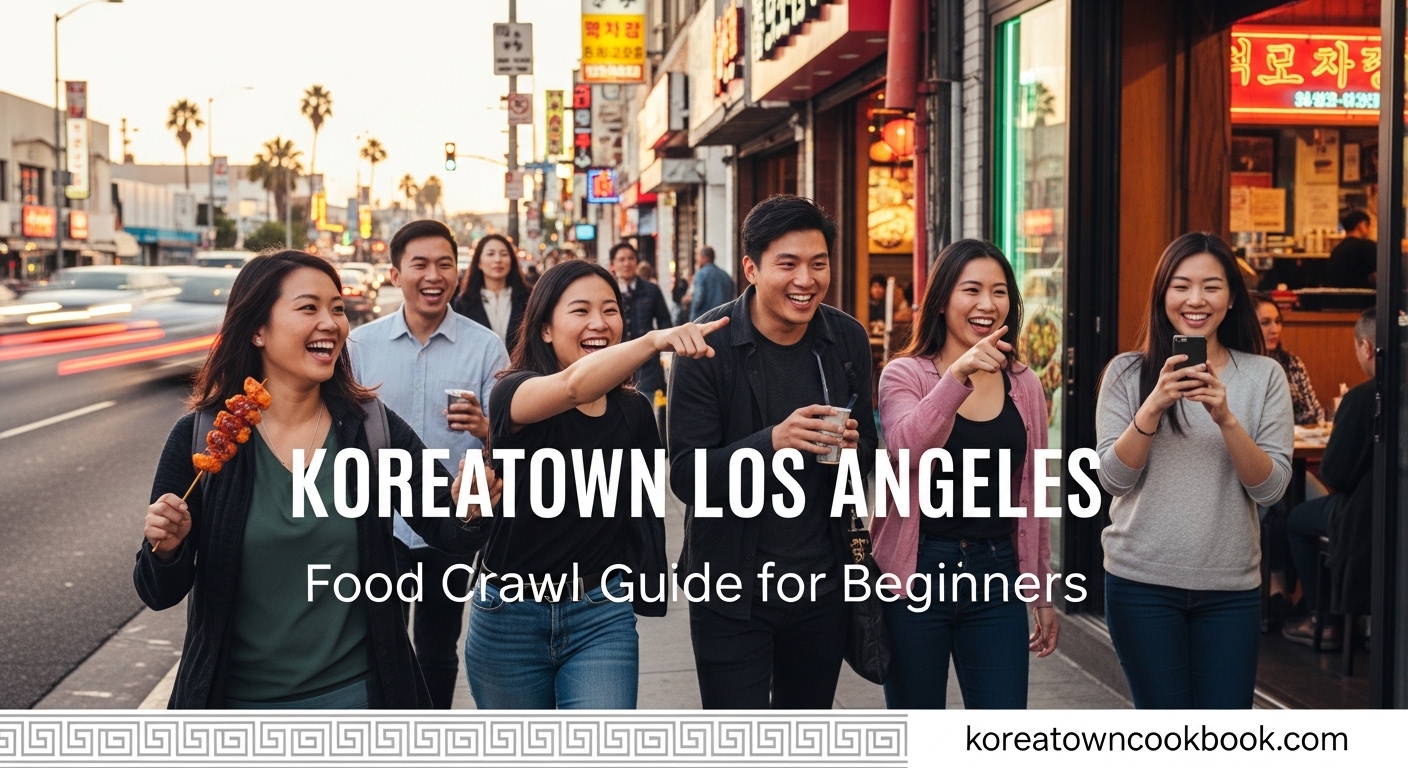
Los Angeles hosts the largest Koreatown in the United States, a vibrant 3-square-mile neighborhood west of Downtown LA where neon signs glow 24 hours a day and the air smells of charred beef and garlic. If you’ve never experienced Korean cuisine beyond kimchi on a sushi roll, you’re in for a revelation. This Koreatown Los Angeles food crawl guide for beginners will walk you through everything you need to know to navigate your first foray into one of America’s greatest food neighborhoods.
A food crawl differs from a typical dinner out. Instead of sitting down at one restaurant for a full meal, you visit multiple establishments, sharing small plates family-style and experiencing the incredible diversity of Korean cuisine from rich, fermented vegetables to sizzling tabletop grills. It is less about filling up and more about tasting widely.
Table of Contents
What is a Korean Food Crawl?
A Korean food crawl works by visiting multiple restaurants in one outing, ordering shareable small plates at each stop, and experiencing different categories of Korean cuisine. Think of it as a progressive dinner where each course happens at a different restaurant. In Koreatown Los Angeles, this could mean starting with cold noodles at one spot, sharing some banchan at another, and finishing with premium Korean BBQ at a third.
LA’s Koreatown is considered the mecca of Korean cuisine in America. The quality and variety available here rivals what you would find in Seoul itself, with some categories arguably better here than anywhere else in the world. Whether you crave a steaming pot of sundubu jjigae, perfectly marinated galbi, or the simplest bowl of gukbap after a late night, Ktown delivers with an authenticity that surprises even seasoned travelers.
What Makes Koreatown Los Angeles Special
Koreatown Los Angeles, commonly called Ktown, is a concentrated neighborhood roughly bounded by 8th Street, Vermont Avenue, Olympic Boulevard, and Wilshire Boulevard. This area grew rapidly in the 1970s and 1980s as Korean immigrants established businesses and created a cultural hub that has since become one of the most vibrant dining destinations in the entire country.
What sets Ktown apart from other Korean neighborhoods is its variety. You will find everything from humble gukbap houses open at 6am to sophisticated omakase BBQ experiences to karaoke bars with late-night food service. The neighborhood truly never sleeps, with many establishments operating 24 hours. This makes it perfect for food crawls at any hour, though most visitors find success starting around noon and winding down by 10pm when the dinner rush peaks.
Banchan refers to the small side dishes served alongside Korean entrees. These typically include kimchi, pickled vegetables, namul (seasoned greens), and various preserved preparations. At most Korean restaurants, banchan arrives automatically and is refilled complimentary.
For first-time visitors, the sheer density of restaurants can feel overwhelming. Do not fall into the trap of defaulting to whichever place has the longest line. Some of the best experiences come from quieter establishments where locals have been eating for decades. Use this guide to help you make informed decisions about where to spend your appetite and discover the flavors that make Ktown legendary.
Planning Your First Koreatown Food Crawl
Successful food crawls require some advance planning, though nothing too complicated. The goal is to experience variety without exhausting yourself or your budget. Here are the key considerations before you venture into Ktown.
Group Size and Dining Dynamics
Korean dining is fundamentally communal. Dishes arrive designed to share, and most restaurants expect table-wide ordering where everyone contributes to the meal. For this reason, food crawls work best with groups of three to six people. Larger groups can order more dishes but may find logistics challenging when moving between establishments. Solo visitors or pairs can absolutely do a food crawl but should plan to order fewer dishes per stop and perhaps combine some categories into single restaurant visits.
Sharing is not optional in Korean dining culture; it is the default mode. Even dishes ordered as individual bowls often arrive with multiple spoons for communal serving. Embrace this aspect of the cuisine and let it guide your group ordering decisions.
Budget Considerations
One of the wonderful aspects of Ktown is the range of price points available. You can eat very well for under $20 per person at casual establishments, while premium BBQ can run $80 or more per person. For a typical food crawl hitting three to four stops with moderate ordering, plan on approximately $40 to $60 per person depending on your choices. This allows you to sample widely without going overboard.
The key to budget-friendly crawling is mixing price points. Start at a casual spot for lower-cost dishes like gukbap or jjajangmyeon, save the premium BBQ for your middle stop, and if you still have room, grab something quick and inexpensive at a late-night venue. This approach maximizes variety while managing total spend.
Timing Your Crawl
Koreatown restaurants generally follow two peak periods: lunch from 11:30am to 1:30pm and dinner from 7pm to 9pm. Visiting outside these windows means shorter waits and more attentive service. Weekend brunch has become increasingly popular in Ktown, with many spots offering special menus that work well for hungry crawlers.
For your first crawl, consider starting around 3pm. You will miss the lunch rush, find available seating, and be perfectly positioned to continue through the dinner service if you want to keep going. Alternatively, an early evening start around 5pm lets you experience the neighborhood as it transitions from day to night populations.
Essential Korean Dishes for Beginners
If you are wondering which Korean food a beginner should eat, start with dishes that offer clear flavors, familiar presentations, and lower spice levels before progressing to more challenging fare. Here are the essential Korean dishes that form the foundation of any Ktown food crawl.
-
Bulgogi
Thinly sliced marinated beef cooked on a tabletop grill. The marinade typically includes soy sauce, sugar, sesame oil, and garlic, creating sweet and savory flavors that caramelize beautifully when grilled. Bulgogi is often considered the gateway Korean dish for non-Koreans because the sweetness makes it approachable and the grilling process is entertaining and interactive. -
Bibimbap
A rice bowl topped with seasoned vegetables, gochujang (red chili paste), a fried egg, and often some meat. The name translates to “mixed rice,” and the ritual involves thoroughly combining all components before eating. The flavors work together beautifully, and the textural contrast between crunchy vegetables, creamy egg, and chewy rice creates satisfaction with every bite. Dolsot bibimbap arrives in a hot stone bowl that creates crispy rice at the bottom. -
Kimchi
While kimchi itself is a side dish rather than a main, understanding it is crucial to Korean cuisine. This fermented vegetable preparation, most famously made with napa cabbage and Korean red pepper flakes, appears at every Korean table. The funkiness from fermentation, the heat from chili, and the sour tang from extended aging create a condiment that punctuates almost every Korean meal. Try it on its own in small bites to appreciate its complexity before using it as an accompaniment to other dishes. -
Galbi
Marinated beef short ribs cut across the bone into thin slices. The marinade penetrates the meat during cooking, creating caramelized edges with intense beefy flavor inside. Galbi represents Korean BBQ at its most luxurious, and the thin cut ensures fast cooking that preserves the marinade’s sweetness without burning. Look for galbi at premium BBQ establishments where quality control over meat sourcing is strict. -
Soondubu Jjigae
A soft tofu stew cooked with vegetables, sometimes seafood or meat, and flavored with gochujang. The tofu arrives silky and almost creamy, breaking apart easily as you stir the stew. This dish provides warmth and comfort, with the spice building gradually as you eat. Order it with rice and mix in the stew’s liquid with your grains for a satisfying combination. Many regulars add an egg directly to the bubbling stew just before eating. -
Naengmyeon
Cold buckwheat noodles served in a tangy ice-cold broth, topped with cucumber, radish, and sometimes meat or a boiled egg. This dish seems counterintuitive in its cold preparation but becomes deeply satisfying on hot days or after the richness of grilled meats. The broth carries acidic notes that cut through fat and refresh the palate.Jjajangmyeon, a comfort food consisting of noodles in a savory black bean sauce, offers another accessible entry point with familiar flavors that appeal to almost everyone who tries it. -
Japchae
Sweet potato glass noodles stir-fried with vegetables and sometimes meat, seasoned with soy sauce and sesame oil. The noodles have a unique chewy texture that differs significantly from wheat-based pastas, and the dish balances sweetness with savory depth. This works well as a shared side dish at any point during your crawl and provides textural variety to richer grilled items. -
Mandu
Korean dumplings filled with ground pork and vegetables, typically served pan-fried until crispy on one side and steamed on the other. These make excellent starter items at any restaurant that offers them, providing protein and starch while you wait for larger dishes. The dipping sauces served alongside, typically a combination of soy sauce and vinegar with chili, elevate the already flavorful filling.
Progress through these dishes in order as you visit Ktown multiple times. On your first visit, focus on bulgogi, bibimbap, and kimchi to establish your baseline. Your second visit might introduce soondubu jjigae and japchae. Save galbi and naengmyeon for when you feel more comfortable navigating the menu and understanding Korean dining dynamics.
Korean BBQ Basics: How to Navigate Your First KBBQ Experience
Korean BBQ forms the centerpiece of most Ktown visits, and understanding how to approach it will dramatically improve your experience. The system differs significantly from Western steakhouse dining, with its own rituals, techniques, and social dynamics.
Understanding KBBQ Tiers
Koreatown restaurants generally fall into three categories when it comes to BBQ pricing and quality. Understanding these tiers helps you allocate your budget appropriately.
| Type | Price Range | Typical Experience | Best For |
|---|---|---|---|
| AYCE (All-You-Can-Eat) | $25-45 per person | Self-service at table, preset options, 90-120 minute time limits | Groups wanting maximum variety, first-timers on budget |
| Mid-Range | $40-70 per person | Table service, premium cuts available, full menu access | Regular dining, special occasions, quality-focused groups |
| Premium/Fine Dining | $80-150+ per person | Omakase-style service, top-tier beef, full staff attention | Celebrations, serious food enthusiasts, experience-focused |
For beginners, an AYCE restaurant offers the best introduction because you can experiment freely without worrying about waste or cost. Once you understand what you like, you can make informed decisions about spending more at higher-tier establishments.
The Tabletop Grill Ritual
The signature element of Korean BBQ is cooking at your table on a built-in gas or charcoal grill. The dynamic changes everything about dining out. You control doneness precisely, interact with your food continuously, and the grill creates ambiance and entertainment throughout your meal.
Key technique: cook thin slices just until they change color on both sides, then use scissors to cut them into manageable pieces before wrapping in lettuce or perilla leaves with garlic, ssamjang (dipping sauce), and optionally some kimchi. This wrapping creates the perfect bite balance of protein, vegetable, and carb.
Ssam refers to the lettuce or leaf wrapping used to encase grilled meat and accompaniments. The term can also refer to the act of wrapping. A proper ssam combines meat, sauce, garlic, and vegetables in a single hand-held package that delivers all flavor elements together.
The Flow of a KBBQ Meal
A typical KBBQ meal progresses through distinct phases. First, banchan arrives and you may snack on these while reviewing the menu. Then your meats are brought out raw, and cooking begins with the higher-fat cuts that develop flavor through rendering. As the meal progresses, restaurant staff often suggest when to switch meat types and may help with tricky cuts.
The final phase involves using remaining banchan and ssam to create最後の rice bowls, combining any leftover meat with rice, kimchi, and gochujang. Some establishments offer fried rice that incorporates grill remnants for an entirely different experience. Do not rush through these phases; the progression is part of the pleasure.
Korean Dining Etiquette: What First-Timers Need to Know
Understanding Korean dining etiquette enhances your experience and shows respect for the culture you are exploring. You do not need to master every detail before your first visit, but knowing these fundamentals will help you feel more comfortable and make better impressions on anyone dining with Koreans.
-
Pouring Soju for Others, Never Yourself
In Korean drinking culture, pouring your own drink is considered inconsiderate. Keep an eye on others’ glasses and pour for them when empty, while someone will do the same for you. When receiving a pour, hold your glass with both hands as a sign of respect, especially when being served by elders. This ritual creates social connection through reciprocal care, and violating it marks you as inexperienced. -
Use Both Hands for Receiving
When someone hands you something, particularly an elder or someone of higher status, receive with both hands or with your right hand while supporting your right arm with your left hand. This applies to dishes, drinks, business cards, and any other items exchanged during the meal. -
Wait for the Eldest to Begin Eating
At formal gatherings and family meals, the eldest person typically starts eating first. Observe the dynamic at your table and follow the lead when you see others beginning. In more casual restaurant settings, this rule relaxes considerably, but showing awareness of it demonstrates cultural sensitivity. -
Do Not Stick Chopsticks Upright in Rice
This visual reference resembles funeral offerings and is considered deeply inappropriate. When not using chopsticks, rest them across your bowl or on the chopstick rest provided. Place them parallel to each other when setting them down after eating. -
Turn Your Head Away When Drinking
When consuming alcohol, particularly soju, turn your head slightly away from elders as a sign of respect. This is less strictly enforced in casual Ktown settings but remains good practice for formal situations. -
Start with Banchan Before Moving to Mains
The small dishes at your table are not afterthoughts; they are integral to the meal. Begin eating some banchan alongside your main dishes to experience the complete flavor profile that Korean cuisine intends. Kimchi especially pairs with rich grilled meats, providing acidic contrast that cleanses the palate. -
Do Not Leave Empty Bowls or Plates
Finishing all your rice shows the host you appreciated the meal. With banchan, leaving some remnants is acceptable since those dishes are shared and continuously refilled. However, personal portions like rice should be consumed completely.
These rules may seem numerous, but Korean dining culture feels natural once you experience it a few times. Most Ktown restaurants cater to diverse clientele and do not expect tourists to know every detail. Show respect, follow the group’s lead, and focus on enjoying your food. Authenticity matters more than perfect adherence to protocol.
Top Koreatown Restaurants by Category
With dozens of Korean restaurants within a compact area, choosing where to eat requires some guidance. Here are the categories and establishments that consistently deliver quality experiences for first-time visitors and seasoned crawlers alike.
Best for First-Time Korean BBQ
All-You-Can-Eat BBQ
BCD Tofu House
While technically known for soondubu jjigae, BCD Tofu House represents accessible Korean cuisine that beginners trust. The operation runs smoothly, the food arrives consistently, and the staff understands how to guide newcomers through ordering. This reliability makes it an excellent starting point before venturing to more complex BBQ experiences.
Korean BBQ Destinations
Premium BBQ
Park’s BBQ
A longtime staple that consistently ranks among Ktown’s best. Park’s offers premium beef cuts in an upscale setting that demonstrates how refined Korean BBQ can be. The staff handles cooking for you at certain tables, showing proper technique and allowing you to focus entirely on eating.
Mid-Range BBQ
Oo-Kook
Reliable quality at moderate prices, Oo-Kook provides the full KBBQ experience without the premium pricing. Multiple locations give flexibility, and the menu includes excellent non-BBQ options for groups with varied preferences.
Non-BBQ Essential Experiences
Soup and Stew
Sun Nong Dan
Open 24 hours, Sun Nong Dan excels at rich, hearty dishes like galbi jjim (braised short ribs) and various stews. The gamjatang (bone broth soup) provides warmth after late-night exploring. This establishment demonstrates that Korean BBQ does not represent the entirety of Ktown’s culinary offerings.
Noodles
Hangari
Specializing in naengmyeon and bibap, Hangari shows the cold noodle side of Korean cuisine that newcomers often miss. The buckwheat naengmyeon especially provides refreshing contrast to heavier grilled meats and works well as a palate cleanser mid-crawl.
Suggested Food Crawl Route for First-Timers
No competitor provides a structured food crawl route through Koreatown, yet this approach offers the ideal introduction to the neighborhood for newcomers. This route optimizes for variety, proximity, and progression from lighter to heavier dishes.
12:00 PM – Stop 1: Lunch
Start with something accessible
Begin your crawl at a casual gukbap or jjajangmyeon spot near the Vermont and 8th Street area. Order something simple and filling that establishes your baseline and gets you oriented. Eat slowly, observe your surroundings, and take in the neighborhood’s energy. A bowl of gukbap (soup with rice) runs under $10 and provides comfort without weighing you down.
1:30 PM – Stop 2: Small Plates
Explore banchan and sides
Walk east on 8th Street to a restaurant offering mandu, japchae, and other shared dishes. Here you sample multiple preparations without committing to heavy proteins. Order several dishes family-style, trying things you have never heard of alongside familiar names. This stop builds your confidence in Korean menu navigation.
3:30 PM – Stop 3: Korean BBQ
The centerpiece experience
By mid-afternoon, you should be ready for the main event. Choose an AYCE or mid-range KBBQ restaurant and order some combination of bulgogi, galbi, and perhaps some pork options. Take your time cooking, wrapping in ssam, and experiencing the full ritual of Korean BBQ. This is where your crawl earns its name, and you should linger here.
6:00 PM – Stop 4: Dessert or Quick Bite
Finish with something sweet or savory
If you still have appetite, finish with either a Korean dessert like patbingssu (shaved ice with sweet toppings) or head to a late-night spot for something like tteokbokki. This final stop provides closure without requiring another full meal. Many prefer ending with coffee and something sweet at one of Ktown’s excellent Korean bakeries or cafes.
This route assumes moderate appetites and three to four people sharing. Adjust portions and stops based on your group’s size and hunger levels. The walk between stops should take five to fifteen minutes maximum, keeping you in the core Ktown area throughout.
Getting Around Koreatown: Is Ktown Walkable?
Yes, Koreatown Los Angeles is walkable, particularly within the restaurant-dense core bounded by 8th Street, Vermont Avenue, Olympic Boulevard, and Wilshire Boulevard. Most major restaurants, cafes, and bars fall within this compact area, making foot travel practical and pleasant.
The sidewalk infrastructure works reasonably well, though you will encounter some uneven surfaces and narrow passages near older buildings. Evening foot traffic remains high enough that you rarely feel isolated, and the neon-lit streets create an atmospheric walking experience unlike anything else in Los Angeles.
For traveling between distant points or when energy flags after a long crawl, ride-share pick-up works well throughout Ktown. Uber and Lyft drivers know the neighborhood well and can collect you within minutes of any restaurant. Driving yourself introduces parking complications that detract from the experience, so leave your car parked if you brought one.
If you drove to Ktown, several parking structures offer hourly rates, particularly along Vermont Avenue and near major intersections. Street parking exists but can be competitive during peak hours. Arrive early or late for better availability, and always check signage carefully to avoid tickets in this actively enforced area.
Budget-Friendly Options in Koreatown
Exploring Ktown need not drain your wallet. The neighborhood offers excellent options at every price point, and budget-friendly dining does not mean compromising on quality or authenticity.
The cheapest path through Ktown involves focusing on gukbap houses, food courts, and casual establishments offering individual dishes under $15. BCD Tofu House provides complete meals for under $20. Many banchan-centric restaurants offer satisfying plates of japchae, rice with various toppings, and noodle dishes in the $10-15 range. Hot dogs and Korean fusion items at Ktown food stalls provide interesting snacking for under $10.
To maximize budget, save premium BBQ for a later visit once you know what you like. Your first experience works fine at AYCE establishments where you can try everything without significant investment. Budget an average of $40-50 per person for a full crawl with multiple stops, and you will eat exceptionally well while leaving plenty of room for future visits to explore deeper.
Ktown’s late-night happy hours deserve special mention for budget visitors. Many restaurants offer reduced prices on selected items between 10pm and midnight, allowing you to experience quality dining at significantly lower costs. This pattern suits night owls perfectly, turning a late crawl into an exceptional value.
Quick Bites: Koreatown Plaza Food Court
For visitors wanting variety without committing to a full restaurant experience, the Koreatown Plaza food court offers accessible entry points into Korean cuisine. Located within the Koreatown Plaza shopping center, this food court features multiple vendors offering different preparations at reasonable prices.
What to eat at Koreatown Plaza food court? Focus on items that translate well in quick-service settings: tteokbokki (spicy rice cakes) from specialty vendors, mandu dumplings, Korean-Mexican fusion options like Korean tacos, and various rice-based bowls. These items work well for sampling multiple things without the overhead of table service.
The food court works best as a snacking stop rather than a destination meal. Come with a group, split several items, and move on to restaurants for your main experiences. The convenience and variety make it valuable for covering broad ground, even if individual quality trails dedicated restaurants.
Frequently Asked Questions
Which Korean food should a beginner eat?
Start with mild dishes like bibimbap, bulgogi, and kimchi. Progress to more adventurous options like sundubu jjigae and galbi as you become comfortable with Korean cuisine. These foundational dishes teach you flavor profiles and textural contrasts that inform everything else you will encounter in Ktown.
Is Koreatown in LA walkable?
Yes, the main restaurant district in Koreatown Los Angeles is concentrated and walkable. The area roughly bounded by 8th Street, Vermont Avenue, Olympic Boulevard, and Wilshire Boulevard contains most major restaurants within a compact area. Use ride-share for traveling between distant spots when needed.
What to eat at Koreatown Plaza food court?
Try the Korean-Mexican fusion options, tteokbokki (spicy rice cakes), mandu (dumplings), and various small plate dishes for quick variety. The food court offers accessible entry points for beginners wanting to sample multiple things without committing to full restaurant dining.
What is the etiquette for eating Korean food?
Key rules include: do not pour your own soju (wait for someone else to pour for you), use both hands when receiving items from elders, start with banchan (side dishes), and follow the lead of others when eating communal dishes. Showing respect through these gestures enhances your dining experience and demonstrates cultural appreciation.
Ready to Explore Koreatown Los Angeles
Koreatown Los Angeles represents one of America’s truly great food neighborhoods, and a food crawl offers the perfect introduction for beginners. The combination of accessibility, variety, and authentic Korean cuisine creates an experience that rewards repeated visits. You do not need to understand everything on your first attempt; the journey itself teaches you.
Start with approachable dishes, follow the etiquette basics you learned here, choose restaurants that match your comfort level, and move at a pace that lets you absorb the culture. Each visit builds your knowledge and confidence, turning first-timer uncertainty into seasoned crawler expertise. Before long, you will be recommending spots to others and discovering your own hidden gems.
The flavors of bulgogi caramelizing on a tabletop grill, the satisfaction of a perfect ssam wrap, the refreshment of cold naengmyeon on a warm day, the complex tang of properly fermented kimchi, the warmth of soondubu jjigae at midnight. These experiences await you in Ktown, ready to expand your culinary horizons in ways that no other neighborhood in America can match.
Your food crawl begins now. Start exploring.