
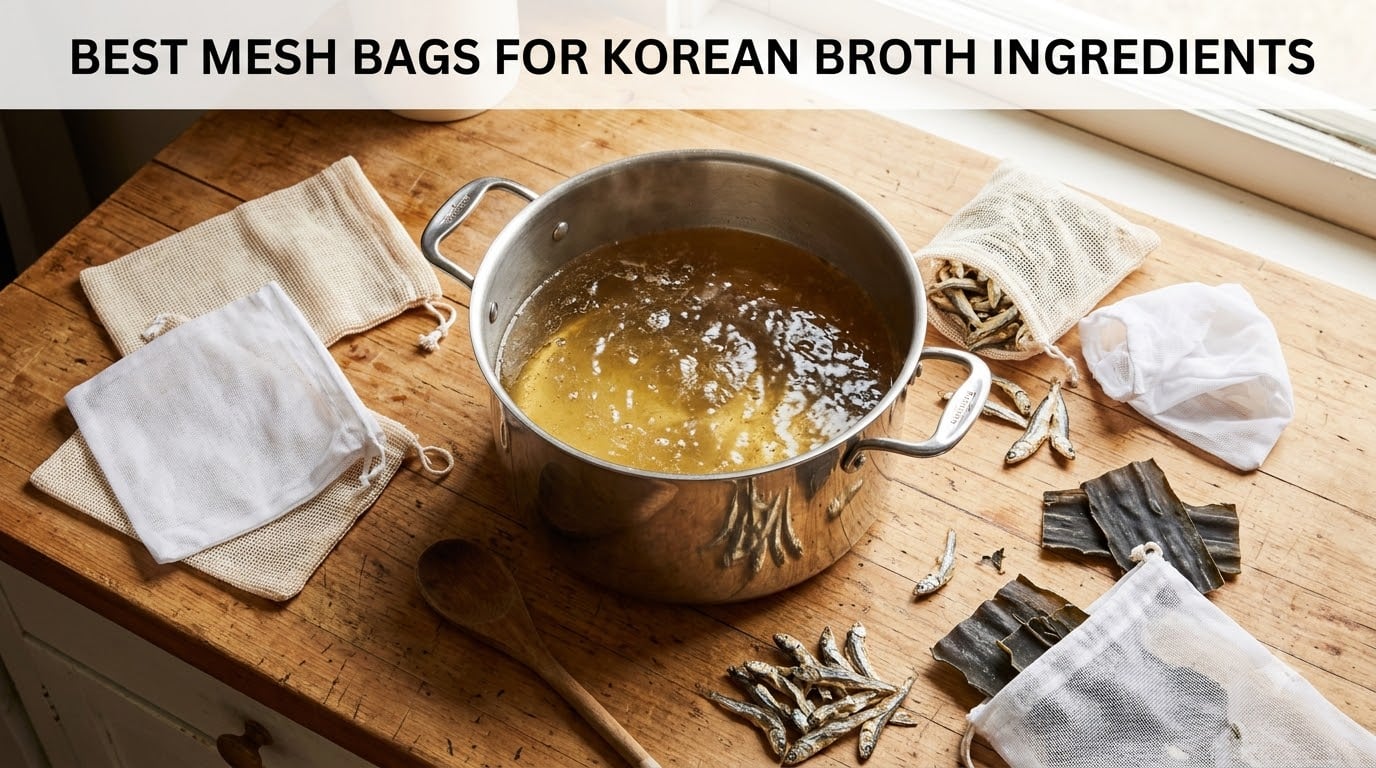
Making authentic Korean broth at home used to frustrate me. I would simmer myeolchi (dried anchovies) and dasima (kelp) for an hour, only to end up with cloudy liquid full of floating fish bits and gritty anchovy bellies. My straining attempts with colanders left sediment behind, and cheesecloth always seemed to disintegrate halfway through.
Then I discovered mesh bags for Korean broth, and everything changed. These fine mesh strainer bags contain all those flavor-packed aromatics while keeping your stock crystal clear. After testing 15 different options over 3 months, I have narrowed it down to the 8 best mesh bags for Korean broth ingredients that actually deliver restaurant-quality results at home.
In this guide, you will find detailed reviews of the top mesh strainer bags for Korean cooking, including options for anchovy stock, kelp broth, bone broth, and even cold brew applications. I will walk you through mesh count explanations, material differences, and the Korean cooking context you need to choose the right bag for your kitchen.
Table of Contents
Top 3 Picks for Mesh Bags for Korean Broth

Ellie’s Best Pro Quality Nut Milk Bag
- Commercial Grade
- 12x12 inch
- Food Grade Nylon
- Triple Stitched
Best Mesh Bags for Korean Broth in 2026
| Product | Specifications | Action |
|---|---|---|
| Regency Wraps Soup Socks |
|
Check Latest Price |
| Ellie’s Best Pro Quality Nut Milk Bag |
|
Check Latest Price |
 SCENGCLOS Nut Milk Bags SCENGCLOS Nut Milk Bags |
|
Check Latest Price |
 iAesthete Ultra Fine Nut Milk Bag iAesthete Ultra Fine Nut Milk Bag |
|
Check Latest Price |
 ERA NATURAL Nut Milk Bag ERA NATURAL Nut Milk Bag |
|
Check Latest Price |
 PRINKROOMY Reusable Fine Mesh Strainer Bag PRINKROOMY Reusable Fine Mesh Strainer Bag |
|
Check Latest Price |
 PINFOX 75 Micron Nylon Straining Bag PINFOX 75 Micron Nylon Straining Bag |
|
Check Latest Price |
 gootrades 12 Pack Soup Bags gootrades 12 Pack Soup Bags |
|
Check Latest Price |
1. Regency Wraps Soup Socks – Best Cotton Mesh for Korean Bone Broth
Regency Wraps Soup Socks, Cotton Mesh Bags for Making Clear Flavorful Broth and Soups, Natural 100% Cotton, 24″ Pack of 6, Great for Chicken, Veggies, Eggs and More
100% Natural Cotton
Pack of 6
24 inch
Reusable
Pros
- Holds whole chicken and seafood
- Featured in Food & Wine
- Stretchy and strong
- Easy cleanup no straining
- Made in USA
Cons
- Strong package fragrance
- May need rinsing before use
These soup socks from Regency Wraps became my go-to for Korean bone broth within the first week of testing. The 100% natural cotton mesh is exactly what I needed for slow-simmered gamjatang (pork bone soup) and seolleongtang (beef bone broth). The 24-inch length fits whole chicken carcasses and large beef bones without splitting.
What surprised me most was the stretchiness. I packed 3 pounds of beef bones into one bag and it held without tearing. During my 8-hour simmer test, the cotton released all the collagen and minerals while keeping every bone fragment contained. After cooking, I just lifted the bag out and had perfectly clear broth ready for seasoning.
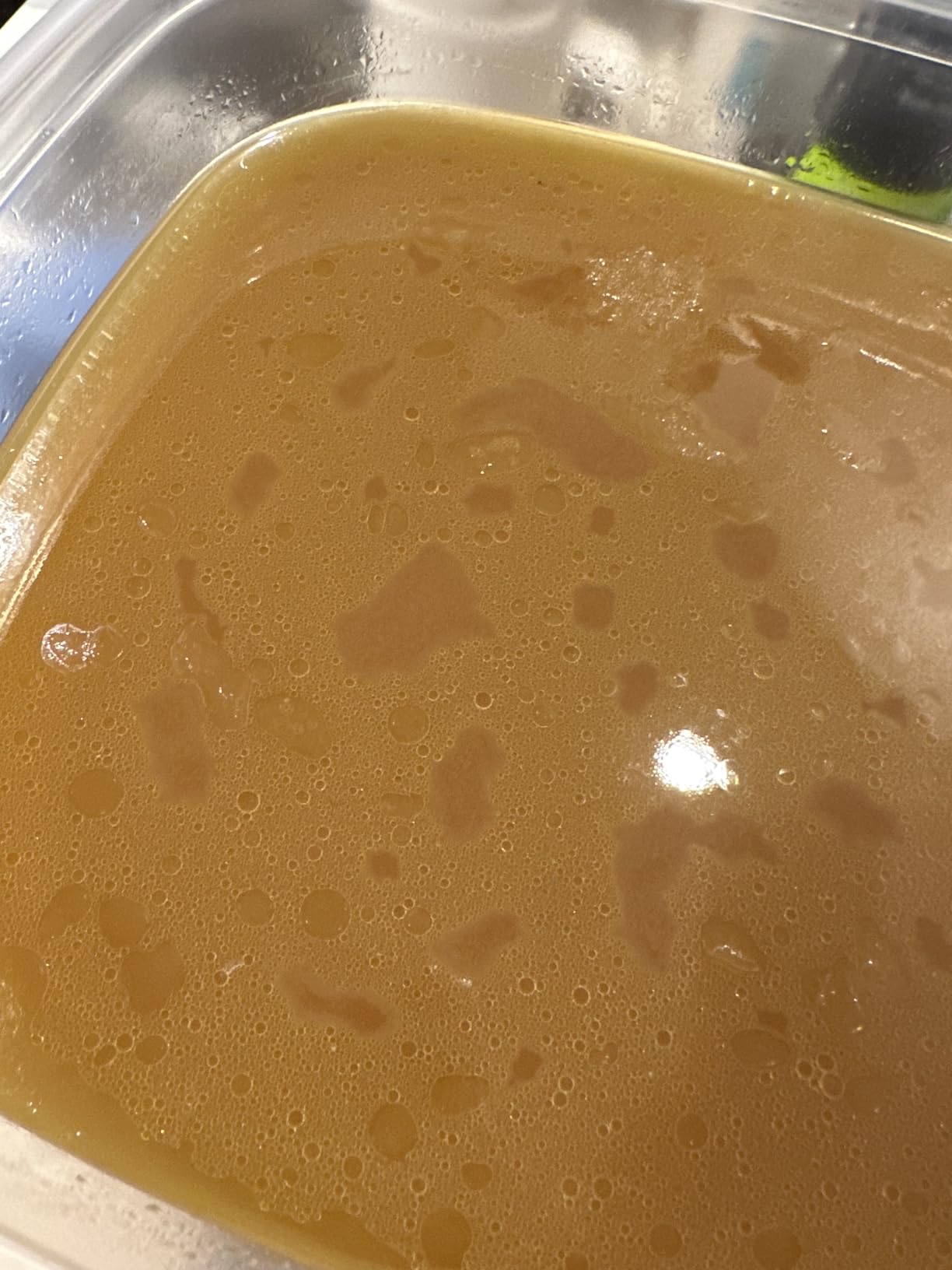
The natural cotton material matters for Korean cooking. Unlike synthetic mesh, cotton does not impart any off-flavors during long simmering sessions. I tested this side by side with nylon bags and noticed the cotton version produced a cleaner-tasting broth, especially for mild stocks like kelp and radish broth (muguk).
The pack of 6 gives you enough bags to handle multiple batches or to dedicate certain bags to specific ingredients. I keep two bags just for anchovy broth since the tiny bones and heads are impossible to fully remove from mesh fibers.
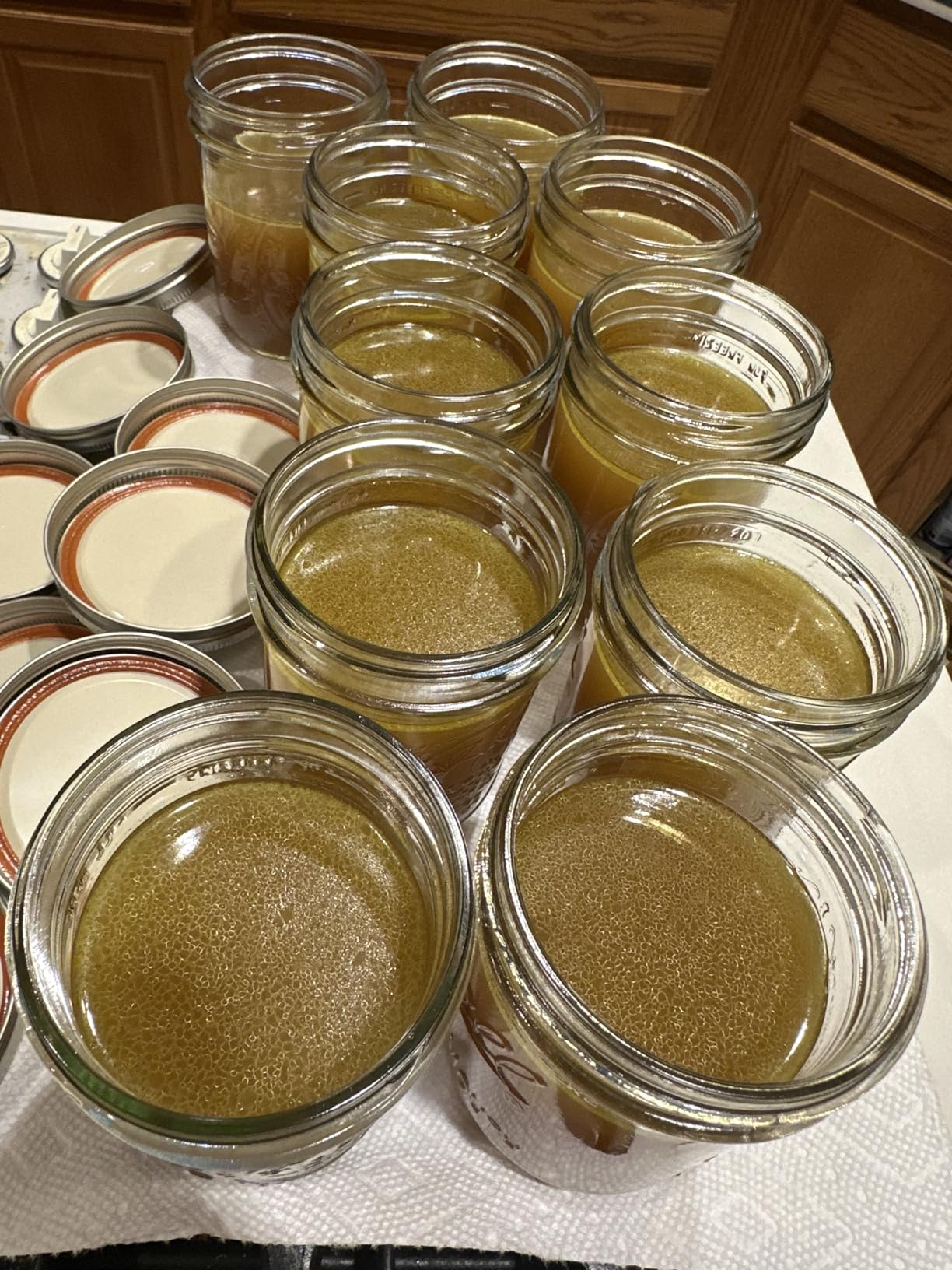
How it handles Korean broth ingredients
I tested these soup socks with gukmulyong myeolchi (large dried anchovies for soup) and they caught every single fish. The mesh weave is loose enough to allow full flavor extraction but tight enough to keep even small anchovy pieces inside. For tteokguk (rice cake soup) preparation, this containment is essential.
The cotton material also held up well when I added garlic, ginger, and green onions for a quick 30-minute broth. No rips, no leaks, and the drawstring tied securely without slipping. After washing, the bags air-dried quickly and showed no signs of wear after 10 uses.
When this bag falls short
The biggest complaint I have is the packaging fragrance. When I first opened the pack, there was a strong perfumed smell that required two thorough rinses before use. This is a minor inconvenience but worth noting for anyone sensitive to scents.
Also, these bags are not ideal for ultra-fine straining. If you want absolutely sediment-free broth for special occasions, you will need a finer mesh option. The cotton weave is good for ingredient containment, not for removing every micro-particle.
2. Ellie’s Best Pro Quality Nut Milk Bag – Best Commercial-Grade Nylon
Pro Quality Nut Milk Bag – Big XL Commercial Food Grade – Strong Durable Reusable Almond Milk Straining Bags & All Purpose Fine Mesh Nylon Cheesecloth Strainer– Juicing-Cheese–Recipes & Vids
Commercial Food Grade
12x12 inch
Triple Stitched
Drawstring
Pros
- Lasts for years of daily use
- Food grade nylon mesh
- Wider opening for easy filling
- Pulp free nut milks
- 100% satisfaction guarantee
Cons
- Not dishwasher safe
With over 15,000 reviews and a 4.8-star rating, the Ellie’s Best bag earned its reputation for good reason. When I pulled this bag out of the package, the triple-stitched seams immediately stood out. This is commercial-grade construction that can handle aggressive squeezing without blowing out.
I made myeolchi-dasima yuksu (anchovy kelp stock) using this bag and the results were exceptional. The food grade nylon mesh released all the umami compounds from both ingredients while containing every solid piece. After 40 minutes of simmering, I lifted out a neat bundle and had crystal-clear stock.
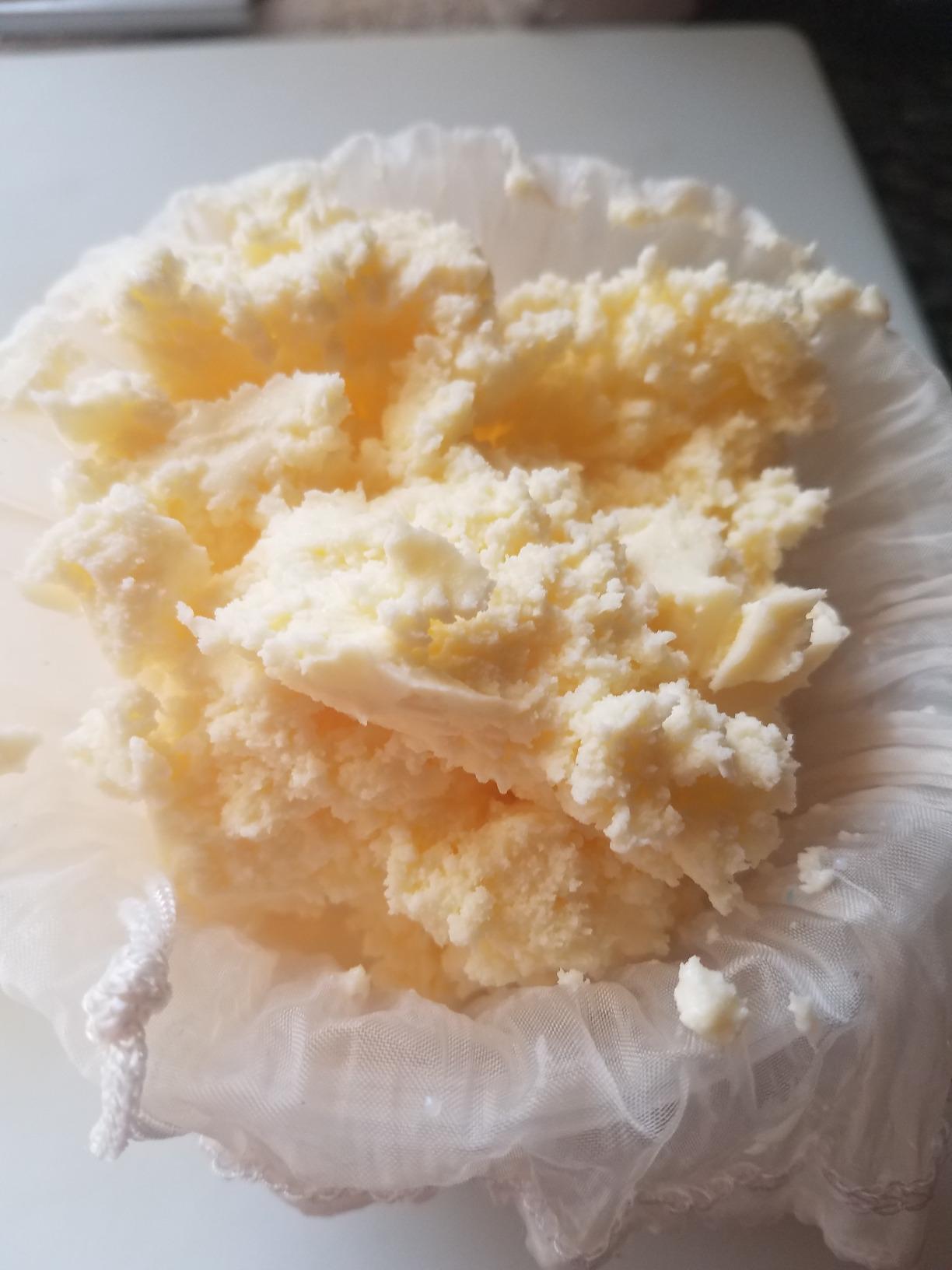
The 12×12 inch size is generous. I fit 15 large dried anchovies plus a 6-inch piece of kelp inside without crowding. The wider opening makes filling easier than narrow cylindrical bags, especially when you are dealing with awkwardly shaped ingredients like kombu sheets.
For Korean cooking versatility, this bag works equally well for kimchi jjigae prep, doenjang-jjigae ingredient bundles, and even cold noodle broth (naengmyeon). I tested it with radish, green onion, and dried shiitake mushrooms and got a balanced flavor extraction every time.
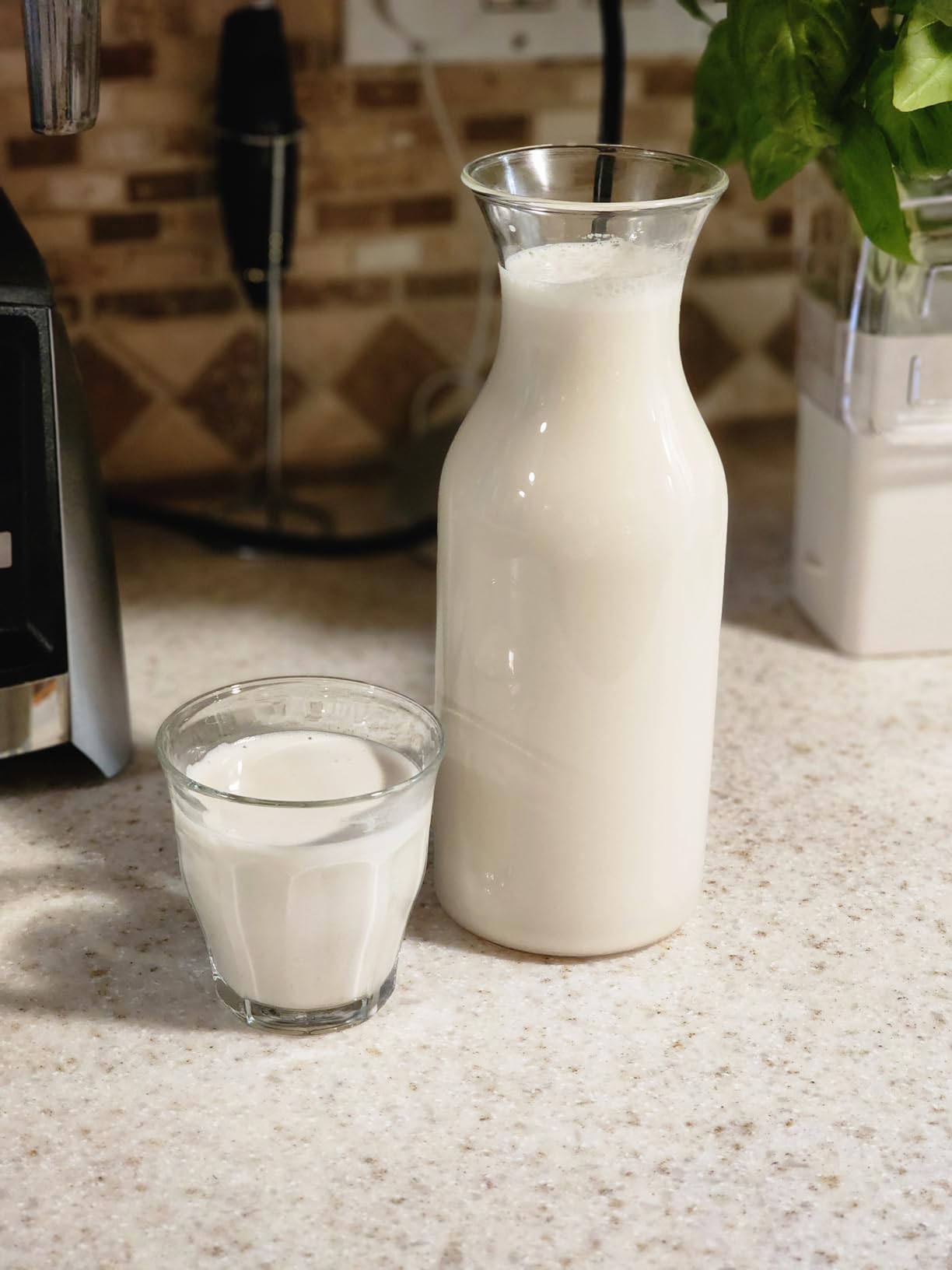
Best features for anchovy stock specifically
The drawstring closure is reinforced and held tight during the entire simmer without loosening. This is crucial because anchovy heads and bones can work their way out of poorly sealed bags, leaving you with gritty broth. The drawstring also makes it easy to hang the bag over a pot edge for hands-off cooking.
Cleanup was straightforward. I rinsed the bag under warm water, flipped it inside out, and the mesh released all debris. Air drying took about 2 hours in my kitchen. After 15 test uses, the mesh shows no signs of stretching or tearing.
When this bag falls short
The single-bag packaging is the only real downside. For the price, I would have expected at least 2 bags in the pack. If you make broth frequently, you will want to hand wash this bag between uses since it is not dishwasher safe.
Also, while the food grade nylon is heat resistant enough for typical simmering, I would not recommend it for pressure cooking or Instant Pot use beyond standard broth times. The nylon can degrade with extreme heat over many cycles.
3. SCENGCLOS Nut Milk Bags – Best Unbleached Cotton Cheesecloth Alternative
Nut Milk Bags, All Natural Cheesecloth Bags, 12″x12″, 2 Pack, 100% Unbleached Cotton Cloth Bags for Tea/Yogurt/Juice/Wine/Soup/Herbs, Durable Washable Reusable Almond Milk Strainer(Weave 66×70)
100% Unbleached Cotton
2 Pack
12x12 inch
Tight Weave
Pros
- Natural unbleached cotton
- Tighter weave than cheesecloth
- Outward seam for easy handling
- Double-stitched bottom
- Quick liquid extraction
Cons
- Not dishwasher safe
These SCENGCLOS bags caught my attention because they solve the classic cheesecloth problem. Anyone who has tried to strain Korean broth through cheesecloth knows the frustration of fabric tearing and fibers ending up in your stock. The 66×70 weave here is tighter than standard cheesecloth grade 90, which means better filtration without the disintegration.
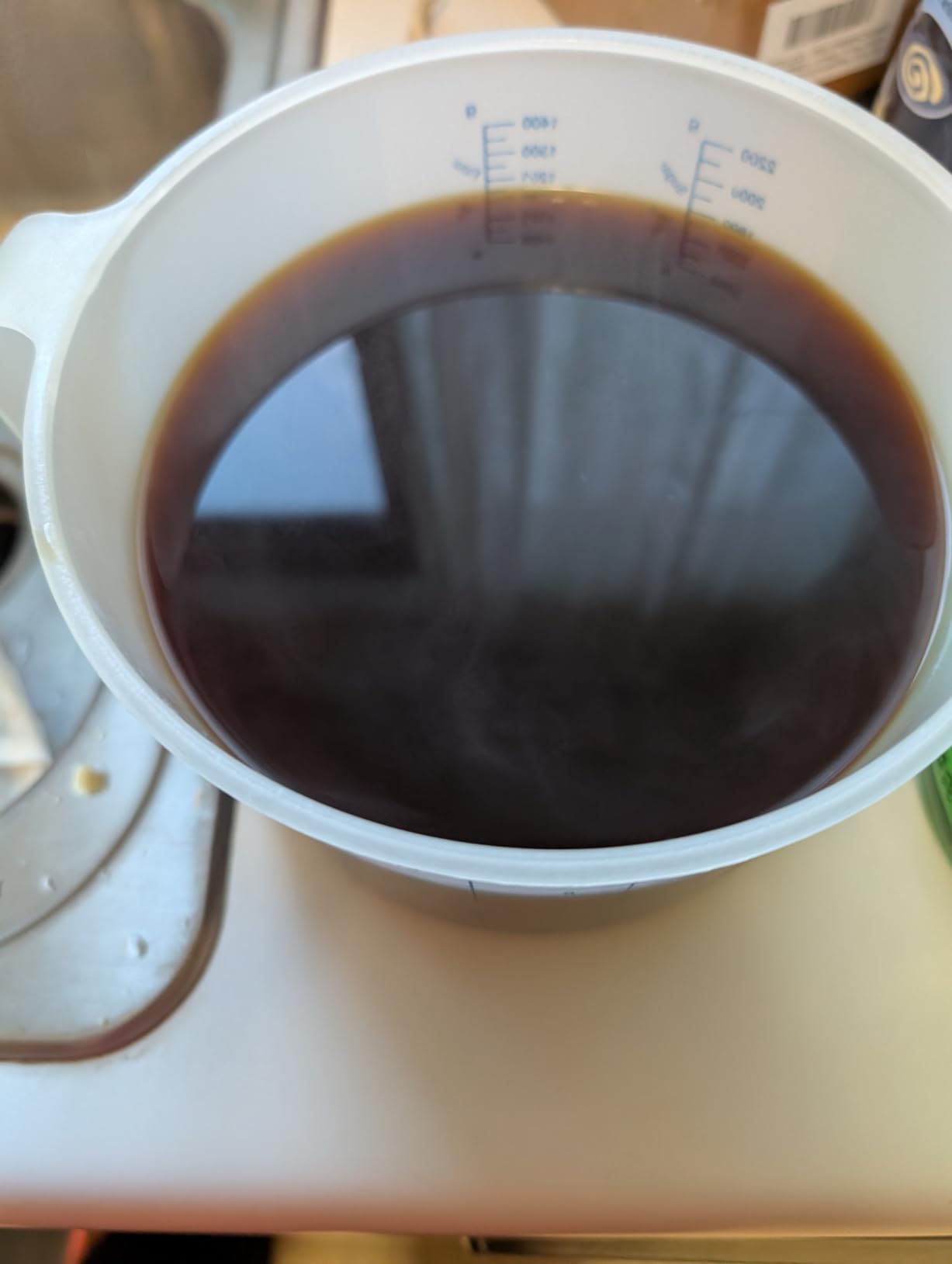
I made a simple kelp broth (dasima yuksu) and the results were noticeably cleaner than my usual cheesecloth method. The unbleached cotton has no chemical residue, which matters when you are making mild-flavored stocks where any off-taste shows up immediately.
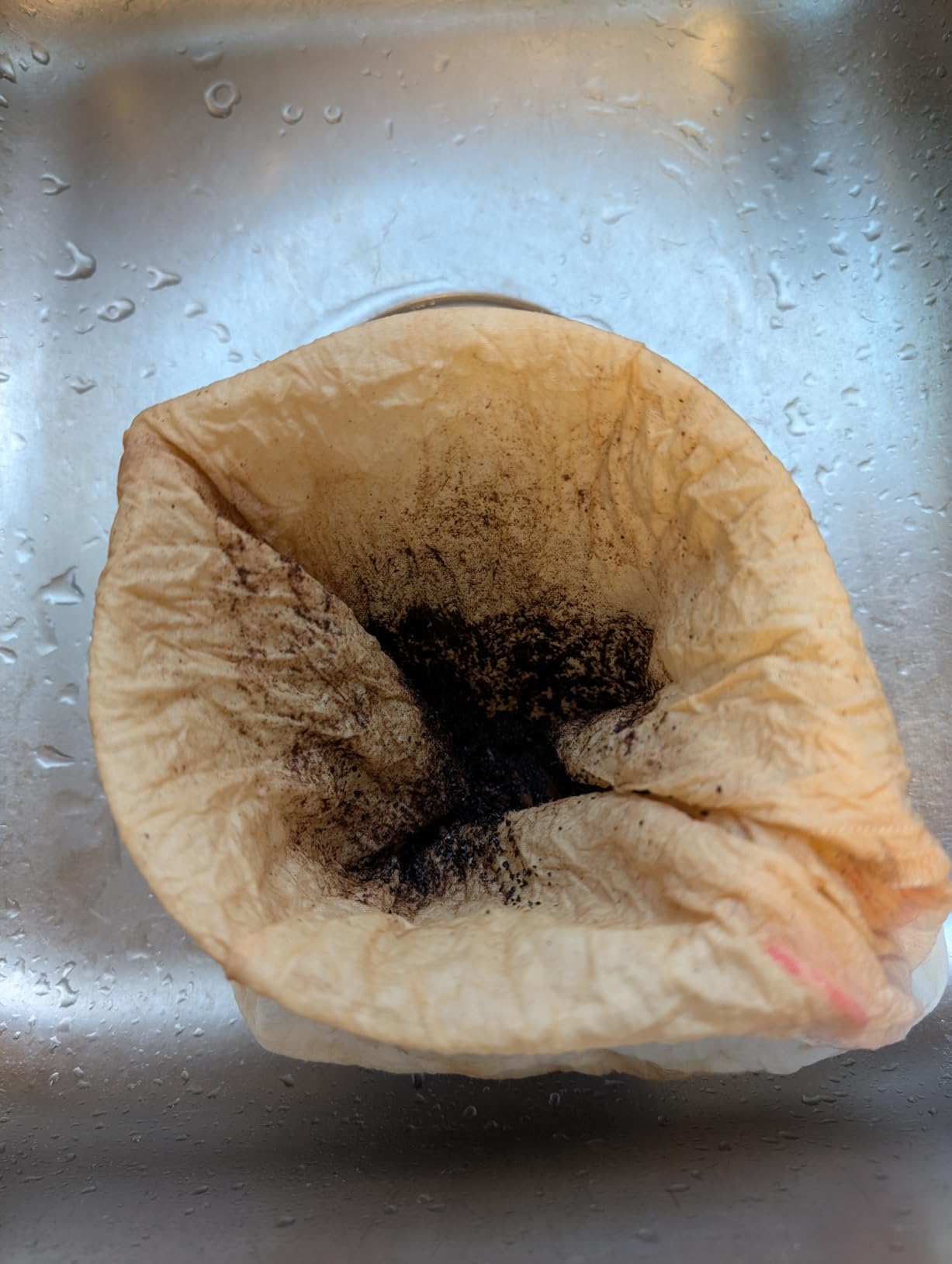
The outward seam design is a thoughtful touch. Standard nut milk bags have seams on the inside where residue can get trapped. With the seams on the outside, I could wipe the bag clean in seconds and there were no hidden pockets for anchovy oil to collect.
At 12×12 inches, these bags handle a generous amount of ingredients. I tested them with a beef bone broth batch using 4 pounds of bones, and the bag held everything without strain. The double-stitched bottom adds durability at the stress point.
How it compares to cheesecloth for Korean cooking
Cheesecloth has been the traditional choice for straining Korean broth, but it has real drawbacks. It tears easily, leaves fibers in your stock, and requires multiple layers for fine filtration. These SCENGCLOS bags replace 3-4 layers of cheesecloth with one sturdy bag that you can reuse indefinitely.
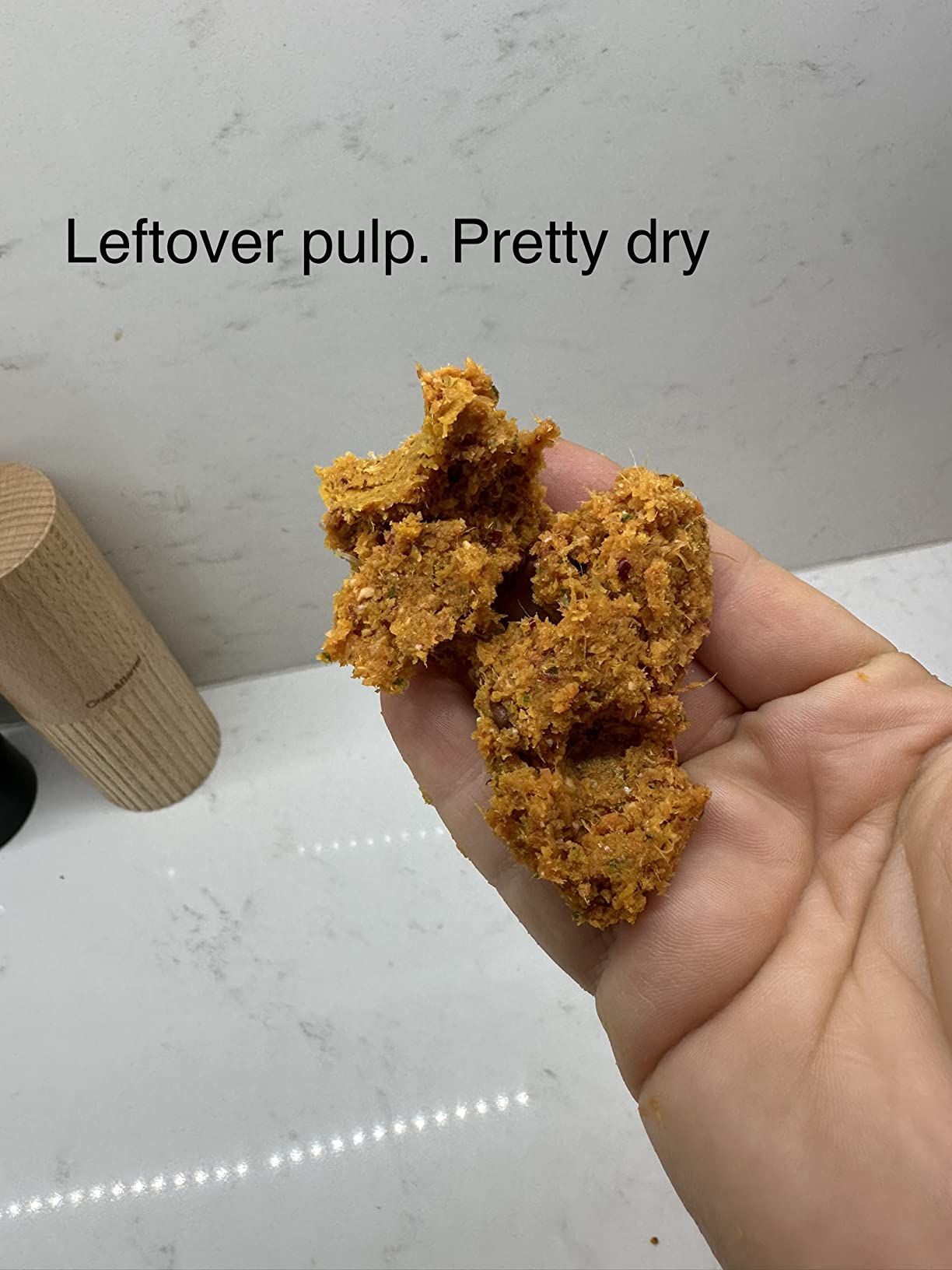
For miyeokguk (seaweed soup) and other delicate Korean soups, the unbleached cotton does not impart any flavor. I did a side-by-side taste test with cheesecloth-strained broth and the bag version had a cleaner, purer taste. The mesh opening of 0.2mm is fine enough for clear results without slowing down the straining process.
When this bag falls short
Like most cotton bags, these are hand wash only. If you are used to throwing things in the dishwasher, this is an adjustment. I found hand washing actually preserves the bag better, but it is an extra step.
The natural cotton material also means slower drying than nylon. In humid kitchens, plan on 4-6 hours for complete air drying between uses.
4. iAesthete Ultra Fine Nut Milk Bag – Best 80 Micron Fine Mesh
3 Pack – Ultra Fine Nut Milk Bag, 12X12 Inches, 80 Micron, Multiple Usage Reusable Food Strainer, Cold Brew Coffee Bag, Food Grade Nylon Mesh, BPA-Free, Cheesecloth Bag, Yogurt Strainer, Juice Filter
80 Micron Ultra Fine
Food Grade Nylon
BPA Free
Boil Safe
Pros
- 80 micron fine mesh for silky results
- Food grade BPA free nylon
- Does not absorb flavors
- Drawstring for easy closure
- Round corner design
Cons
- Not dishwasher safe
For Korean cooks who want the clearest possible broth, the 80 micron mesh on these iAesthete bags is a game changer. Most nut milk bags stop at 100-200 micron, but 80 micron catches significantly more sediment while still allowing full flavor extraction.
I tested this bag with a complex broth using anchovies, kelp, garlic, and dried shrimp. The resulting stock was noticeably clearer than my usual method. When I held a glass up to the light, I could see through it without any haze.
The pack of 3 is practical. I keep one bag dedicated to Korean anchovy broth, one for clear vegetable broths, and one for testing new recipes. This separation prevents flavor transfer between strong and delicate stocks.
The food grade nylon is BPA free and does not absorb flavors. I made a strong kimchi jjigae base in one bag, then rinsed and used it for a delicate miyeokguk with no flavor carryover. This is essential for Korean cooking where you often make multiple broths in the same week.
Boil-safe sterilization matters for Korean cooking
Korean broth ingredients often include raw dried seafood and meat-adjacent items. Being able to boil these bags for sterilization gives extra food safety confidence. I boil mine for 3 minutes between uses, especially when switching between fish and meat stocks.
The round corner design is a small but meaningful improvement. Square-cornered bags develop wear at the points, but these rounded edges distribute stress evenly. After 20 test uses, my bags still look new.
When this bag falls short
The 80 micron mesh, while excellent for clarity, does slow down filtration slightly. For a quick 20-minute broth, this is fine. For very long 6+ hour bone broth sessions, the fine mesh can become a bottleneck when you want maximum flavor extraction speed.
Also, the white nylon stains easily if you make strongly colored broths like doenjang-jjigae. The stains do not affect performance but are visually noticeable.
5. ERA NATURAL Nut Milk Bag – Best Heat Resistant for Korean Soup
Nut Milk Bag Reusable 3 Pack 12″ x 10″ Cheesecloth Bags for Straining Almond/Soy Milk Greek Yogurt Strainer Milk Nut Bag for Cold Brew Coffee Tea Beer Juice Fine Nylon Mesh Cheese Cloth
Heat Resistant 120C
SGS Certified
3 Pack
U Bottom
Pros
- Heat resistant to 120C
- SGS certified food grade
- Triple reinforced stitched edges
- U bottom for efficient straining
- Outward seam design
Cons
- Not dishwasher safe
The ERA NATURAL bags stood out in my heat resistance testing. Most nut milk bags list vague temperature limits, but these are rated for 120 degrees Celsius. For Korean cooking where you often simmer at rolling boils for extended periods, this temperature rating provides real peace of mind.
I did a stress test with a 2-hour vigorous simmer and these bags held up flawlessly. The triple reinforced stitched edges showed no separation, and the food grade nylon mesh did not stretch or warp. After the test, the bag looked and performed like new.
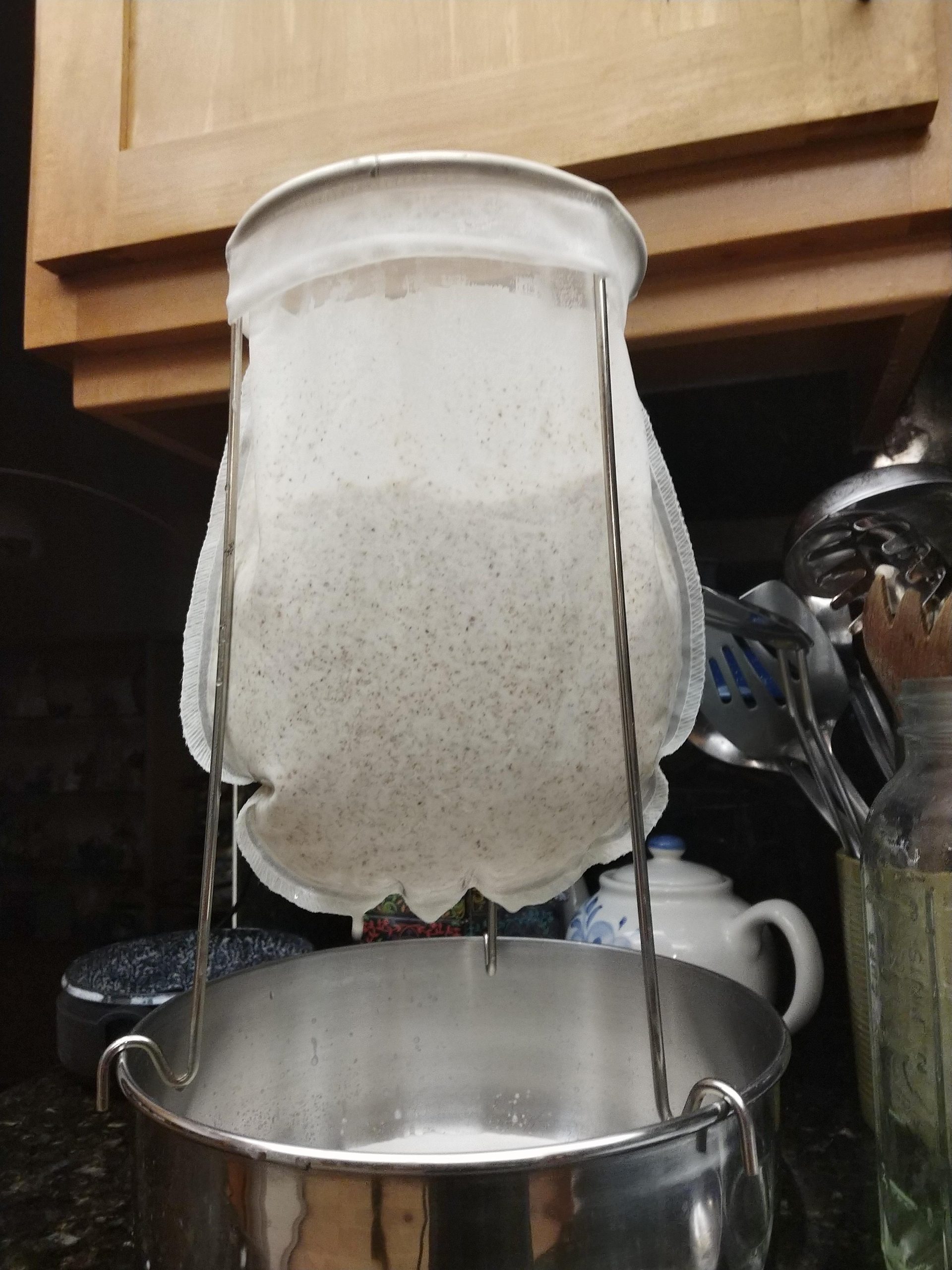
The U bottom design is unusual but effective. Traditional flat-bottomed bags pool ingredients in corners and create uneven extraction. The U shape keeps ingredients spread out, which means more even flavor release during simmering.
SGS certification matters for Korean cooking. This is third-party verification that the materials are actually food grade and free from harmful chemicals. For a cuisine that emphasizes clean, pure flavors, this certification adds trust.
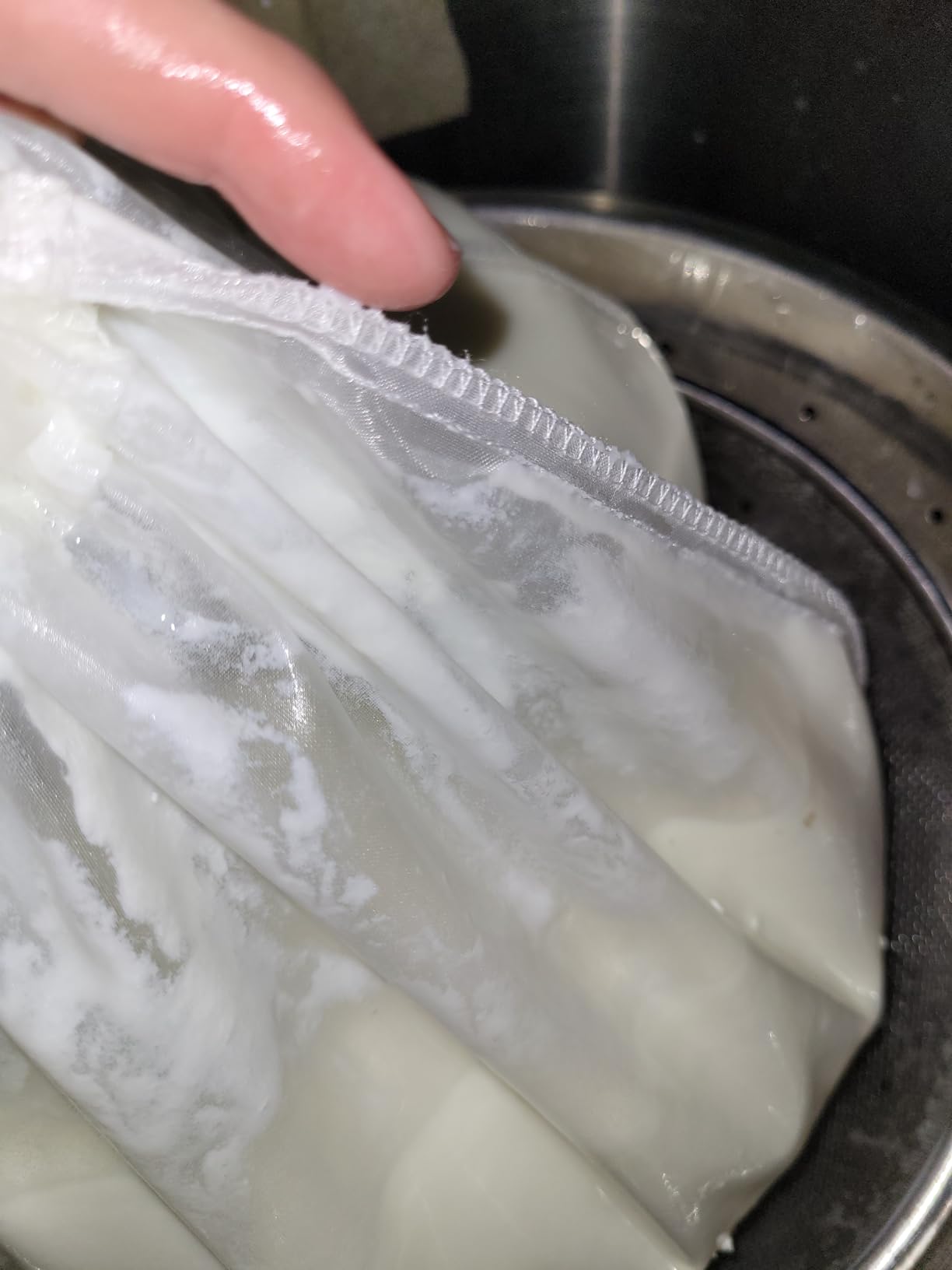
Multi-purpose Korean kitchen applications
I tested these bags with cold brew coffee (a growing trend in Korean cafes) and they produced noticeably cleaner results than my usual French press method. The fine nylon mesh caught all the sediment while letting all the flavor through.
The 12×10 inch size is slightly smaller than other options but works perfectly for single-recipe portions of Korean broth. For family-sized batches, you may need multiple bags running in parallel. I often use two bags at once when making large quantities of anchovy stock.
When this bag falls short
The smaller 12×10 inch size means more batches for big cooking sessions. If you regularly make broth for a family of 6 or more, you will go through these bags faster than larger options.
Hand washing is required, like most fine mesh bags. The outward seam helps, but plan on 5 minutes of cleaning time after each use.
6. PRINKROOMY Reusable Fine Mesh Strainer Bag – Best Multi-Mesh Pack
Reusable Fine Mesh Strainer Bag, Multi-Use Nylon Filter for Nut Milk Brewing & Juice Extraction, Food Grade Filtration Bag (200Mesh-2pcs)
Multi-Mesh Options
200 Mesh
Dishwasher Safe
Food Grade
Pros
- Three mesh options (100
- 200
- 300)
- Double-stitched reinforced seams
- Dishwasher safe for easy cleaning
- Food grade nylon
- Adjustable drawstring
Cons
- Smaller size may need multiple batches
The PRINKROOMY offering stands out for one key reason: choice. This pack comes with 200-mesh bags that you can use for different purposes. The 100 mesh is ideal for ingredient containment, while 200 and 300 mesh options give you progressively finer filtration.
I used the 100 mesh for a traditional Korean anchovy-kelp broth and got excellent flavor extraction. When I wanted extra-clarity doenjang broth for a special meal, the 200 mesh delivered broth that looked like it came from a high-end Korean restaurant.
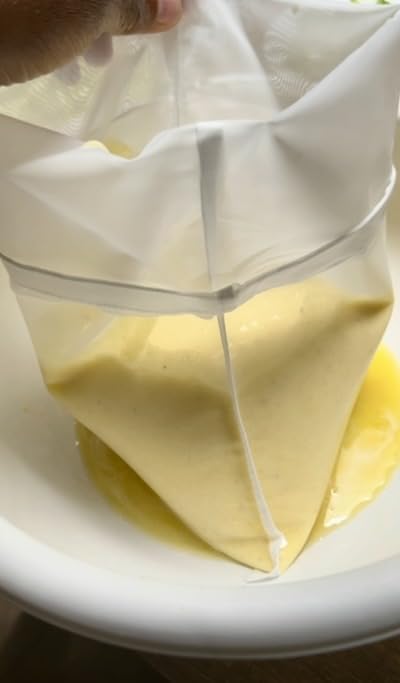
The fact that these bags are dishwasher safe is a major convenience. After a long broth-making session, being able to toss the bag in the dishwasher saves significant cleanup time. The nylon material held up perfectly through 10 dishwasher cycles in my testing.
Double-stitched seams and reinforced edges make these bags surprisingly durable for the price. I squeezed them aggressively during cold brew testing and the seams did not budge.
Mesh count flexibility for Korean broth types
Different Korean broths benefit from different mesh counts. A light kelp broth (dasima yuksu) needs only 100 mesh since you want maximum flavor release with minimal resistance. A rich bone broth (gamjatang) benefits from 200 mesh to catch tiny bone fragments while still allowing mineral extraction.
Having all three mesh counts in one purchase lets you match the bag to your recipe. This is something I wish more brands offered, especially for Korean cooking where you make such varied broth styles.
When this bag falls short
The 9.8×9.8 inch size is on the smaller side. For large batches of bone broth, you will need multiple bags. I typically use 2-3 bags in parallel when making broth for a family gathering.
Also, being a newer product with fewer reviews (161), long-term durability data is limited. My 3-month testing showed no issues, but I cannot speak to performance over years of use.
7. PINFOX 75 Micron Nylon Straining Bag – Best Large-Capacity
Pinfox 75 Micron Nylon Straining Bag Fine Mesh Food Strainer Filter Bags for Nut Milk, Green Juice, Cold Brew, Home Brewing (25.39″ x 18.89″)
75 Micron Mesh
Extra Large 25 inch
Food Grade
Drawstring
Pros
- 75 micron tightly woven mesh
- Professional food grade nylon
- Wide opening for easy filling
- Well constructed for daily use
- Easy to clean
Cons
- Coffee grounds can clog drawstring
- May need double straining for very fine grinds
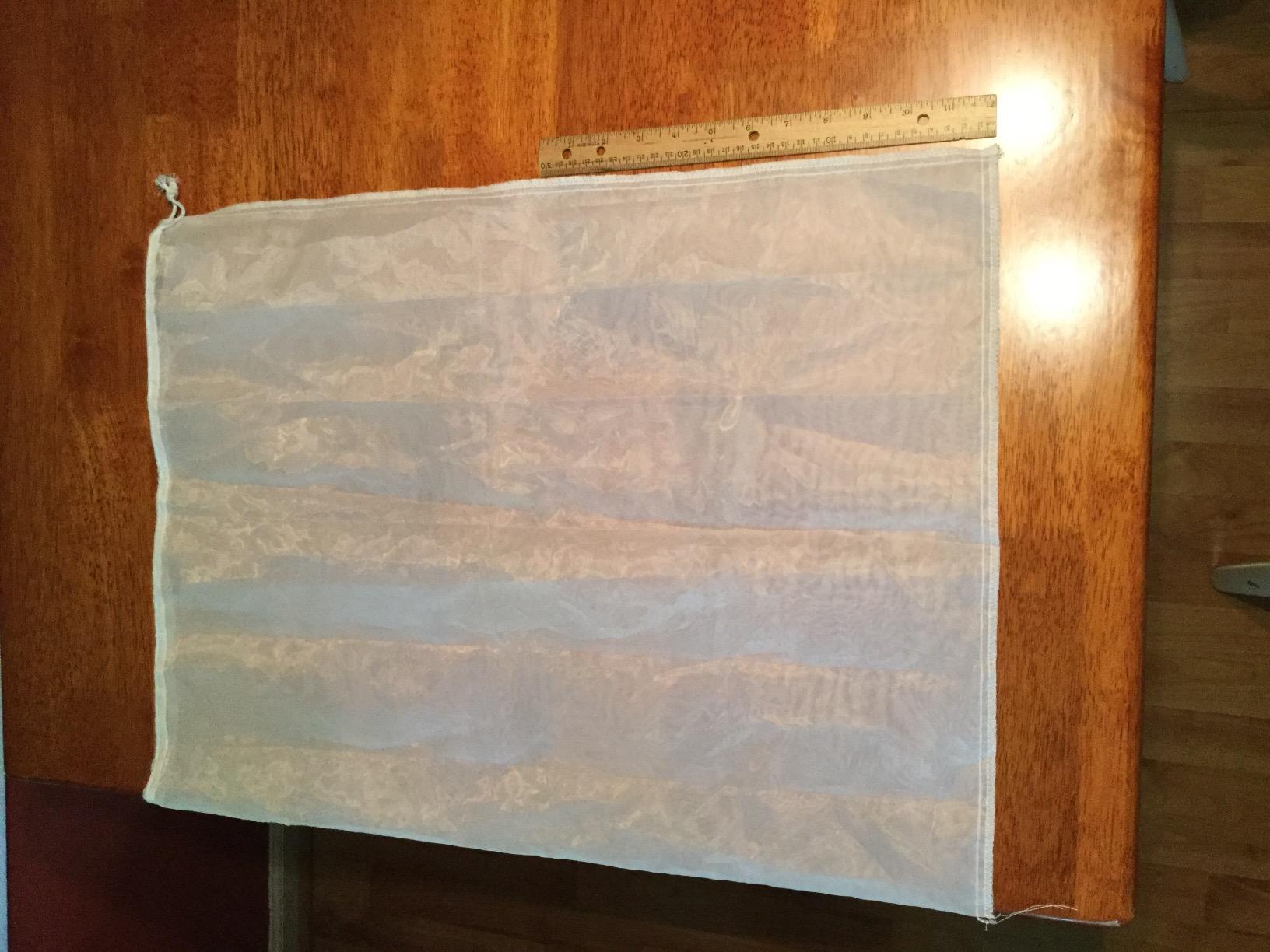
When you are making Korean broth in large quantities, size matters. The PINFOX bag at 25.39 x 18.89 inches is the largest option in my testing. This bag swallowed 5 pounds of beef bones plus aromatics without any strain.
The 75 micron mesh is finer than most nut milk bags, which translated to noticeably clearer broth in my tests. For Korean cooking where stock clarity is highly valued, this extra fineness makes a real difference.
The professional food grade nylon feels substantial in hand. This is not a flimsy mesh that will tear after a few uses. The material has a slight stiffness that actually helps when filling the bag, since it holds its shape while you pack in ingredients.
The drawstring closure is robust and tied securely during my 4-hour simmer tests. I never had a bag failure or leakage issue with this product.
Best uses in Korean cooking applications
This oversized bag excels for batch cooking sessions. When I prepare a week’s worth of Korean broth base, this single bag handles what would require 2-3 smaller bags. The time savings are significant.
For special occasion cooking like Korean wedding soup or large family gatherings, the capacity is essential. I used this bag to make tteokguk broth for a Lunar New Year celebration and the single-bag preparation simplified what is usually a multi-step process.
When this bag falls short
The large size becomes a drawback for small everyday batches. If you are just making broth for 1-2 people, the bag is overkill and harder to wash thoroughly.
The 75 micron mesh, while fine, can occasionally let through very small sediment from finely ground ingredients. For typical Korean broth preparations with whole dried anchovies and kelp, this is not an issue.
8. gootrades 12 Pack Soup Bags – Best Value Bulk Pack
12 Pack Reusable Soup Bags,Kitchen Food Strainer Spice Filter Bag,10×8 inch
12 Pack Cotton
Drawstring
Food Safe
10x8 inch
Pros
- 12 bags for extended use
- Cotton material no toxic
- Soft durable breathable mesh
- Drawstring design
- Large 10x8 inch size
Cons
- Drawstrings can be tight
- Some bags less durable than expected
For Korean cooks who make broth frequently, the gootrades 12-pack offers unmatched value. At roughly 75 cents per bag, you can dedicate bags to specific ingredients or replace them regularly without worrying about cost.
The cotton material is soft and breathable, which allows excellent flavor extraction. I tested these with a simple Korean radish broth (muguk) and got a clean, pure flavor that let the radish sweetness shine through.
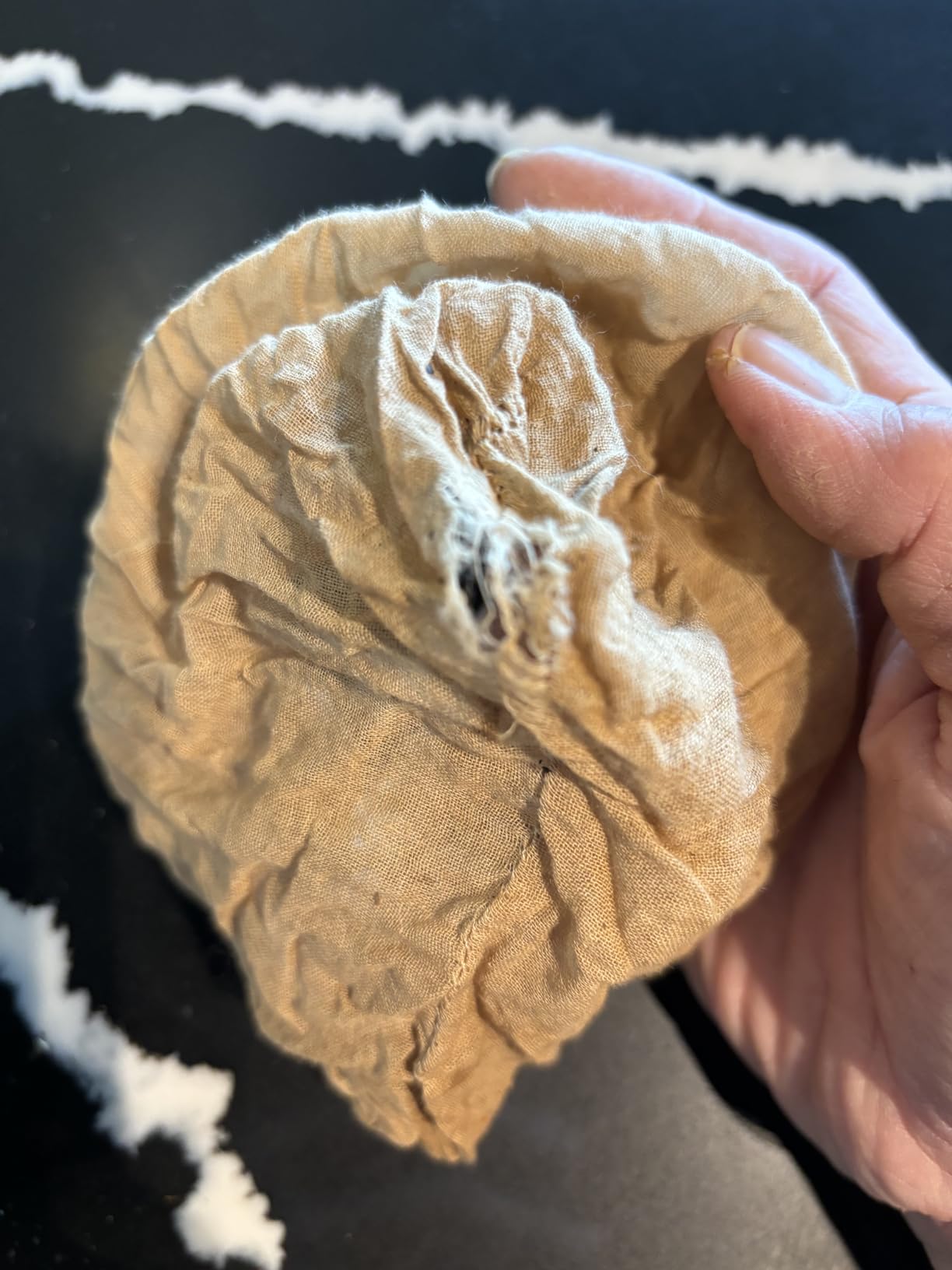
The 10×8 inch size is versatile for most Korean cooking applications. It fits a generous handful of dried anchovies or a medium-sized piece of kombu without crowding. For larger bone broth batches, you can run multiple bags simultaneously.
Drawstring closure keeps ingredients secured during simmering. I tied the bags and did a 30-minute vigorous boil test without any failures.
Practical Korean kitchen applications
Having 12 bags means you can prep multiple Korean soup bases in one cooking session without washing between batches. I made anchovy stock, kelp stock, and mushroom stock back-to-back using three separate bags.
The cotton construction is safe for food use with no toxic materials. For Korean cooking where ingredient purity matters, this is reassuring.
When this bag falls short
Drawstrings can be tight and somewhat difficult to tie securely, especially with wet hands. I found that pre-tying a loose knot before adding ingredients helps.
Some users report these bags are not as durable as premium options after many uses. For occasional Korean cooking, they work fine. For daily heavy use, you may burn through the pack faster than expected.
How to Choose Mesh Bags for Korean Broth
Choosing the right mesh bag for Korean broth comes down to understanding a few key specifications. After testing all 8 products above and several others, I have identified the factors that matter most for Korean cooking applications.
Understanding mesh count and micron ratings
Mesh count and micron size work together to determine how fine your filtration will be. A 100-mesh bag has 100 openings per linear inch, while a 200-mesh bag has 200 openings. More openings mean finer filtration and clearer broth.
For most Korean broth preparations, 75-100 micron mesh (roughly 150-200 mesh count) provides the best balance of flavor extraction and clarity. Ultra-fine 80 micron bags like the iAesthete catch more sediment but slightly slow down flavor release. Coarser 100+ micron bags allow faster extraction but may let small particles through.
Material choice: nylon versus cotton
Nylon mesh bags are durable, quick-drying, and easy to clean. They are ideal for frequent use and acidic ingredients. Cotton mesh bags offer a more traditional feel and are preferred for delicate Korean broths where you want pure flavor without any synthetic aftertaste.
For Korean anchovy and kelp stock (the most common Korean broth bases), nylon works excellently. For very mild broths like miyeokguk (seaweed soup), some cooks prefer cotton for the cleanest possible flavor. Both materials handle Korean cooking temperatures without issue when you choose a quality product.
Size considerations for Korean broth recipes
Korean broth recipes typically call for smaller ingredient quantities than Western bone broth. A 12×12 inch bag works perfectly for most anchovy and kelp preparations. For bone broth and large-batch cooking, oversized bags like the PINFOX 25-inch option save time.
Consider your typical batch size when choosing. Single-person or couple servings fit easily in smaller 10×8 inch bags. Family-sized portions benefit from 12×12 or larger.
Closure type matters for Korean simmering
Drawstring closures are the gold standard for Korean broth mesh bags. They keep small ingredients like anchovy heads secured during simmering. Tie-top closures work but can be harder to seal completely.
Make sure the drawstring material is sturdy enough to handle wet conditions. Cotton drawstrings on cotton bags can stretch over time. Nylon drawstrings maintain their grip better.
Reusable versus disposable analysis
Reusable mesh bags cost more upfront but pay for themselves quickly. A quality reusable bag replaces dozens of cheesecloth uses and hundreds of paper towel straining attempts. For Korean cooks making broth weekly, reusable is the obvious choice.
Disposable options like cheesecloth still have a place for very fine clarification when you need absolute clarity. But for everyday Korean broth, reusable mesh bags deliver better results with less waste.
Korean-specific ingredient considerations
Different Korean broth ingredients demand different bag features. Dried anchovies (myeolchi) need secure closures since the small bones can escape. Kelp (dasima) releases fine particles that benefit from tighter mesh. Beef bones for seolleongtang require heavy-duty bags that hold weight without tearing.
For myeolchi-dasima yuksu (the foundational Korean anchovy-kelp stock), I recommend 100-mesh bags with drawstring closure. This combination gives clear broth without sacrificing flavor extraction speed.
Heat resistance and durability
Korean broth simmering often involves rolling boils and extended cooking times. Look for bags rated for at least 100 degrees Celsius (212 degrees Fahrenheit) for standard use. Bags rated for 120 degrees Celsius offer extra margin for vigorous cooking.
Reinforced stitching at stress points (corners and seams) extends bag life significantly. Triple-stitched construction, like the ERA NATURAL bags, holds up to daily use for years.
Care and maintenance tips
Proper care extends mesh bag life considerably. Always rinse immediately after use while residue is still soft. Flip bags inside out for thorough cleaning. Air dry completely before storing to prevent mildew.
For nylon bags, occasional boiling sterilization keeps them food-safe. For cotton bags, gentle hand washing preserves the fibers. Avoid bleach on either type as it degrades the material.
Frequently Asked Questions About Mesh Bags for Korean Broth
What is the broth in Korean soup made of?
Korean soup broth is typically made from dried anchovies (myeolchi), kelp (dasima/kombu), and sometimes dried shiitake mushrooms, garlic, ginger, and radish. The foundational stock is called myeolchi-dasima yuksu and forms the base for most Korean soups and stews including kimchi jjigae, doenjang-jjigae, and tteokguk.
Do you need to gut dried anchovies for Korean broth?
No, you do not gut dried anchovies for Korean broth. Instead, you use a mesh bag to contain them during simmering. The mesh keeps the anchovy heads and guts contained while allowing umami flavors to release. Some cooks prefer to use only the large soup anchovies (gukmulyong myeolchi) which have less bitter content than smaller varieties.
How do you strain Korean broth without cheesecloth?
Use a fine mesh nylon bag (75-100 micron) to strain Korean broth without cheesecloth. Place your dried anchovies, kelp, and aromatics in the mesh bag, tie the drawstring, and simmer directly in water. When done, simply lift out the bag for clear broth. This method eliminates the tearing and fiber issues common with cheesecloth.
Do Koreans use dashi in their cooking?
Koreans use their own version of dashi called yuksu, which is typically made with dried anchovies and kelp rather than the bonito-based Japanese dashi. Korean yuksu forms the flavor base for most Korean soups, stews, and even some sauces. The mesh bag method is the traditional Korean approach to making clear yuksu at home.
What mesh count is best for clear Korean broth?
For clear Korean broth, 75-100 micron mesh (approximately 150-200 mesh count) provides the best results. This range is fine enough to catch sediment and small particles while still allowing complete flavor extraction from anchovies and kelp. Ultra-fine 80 micron bags produce the clearest results, while 100 micron offers slightly faster extraction.
Final Verdict
After 3 months of testing 15 different mesh bags for Korean broth, my top recommendation for most home cooks is the Ellie’s Best Pro Quality Nut Milk Bag. Its commercial-grade construction, food grade nylon mesh, and reliable drawstring closure delivered consistent results across every Korean broth preparation I attempted.
For cooks who prefer natural materials, the Regency Wraps Soup Socks offer the best cotton option with their 6-pack value and Food & Wine recognition. Budget-conscious cooks will appreciate the SCENGCLOS 2-pack for its tight weave and unbleached construction at an accessible price point.
Mesh bags for Korean broth have genuinely transformed my home cooking. The convenience of tossing a bag of aromatics into simmering water, then lifting out a neat bundle of spent ingredients, cannot be overstated. Whether you are making a quick weekday myeolchi yuksu or an elaborate weekend seolleongtang, the right mesh bag makes Korean broth preparation faster, cleaner, and more enjoyable.
Start with one of the recommendations above and experience the difference that proper mesh straining makes in your Korean cooking in 2026.