
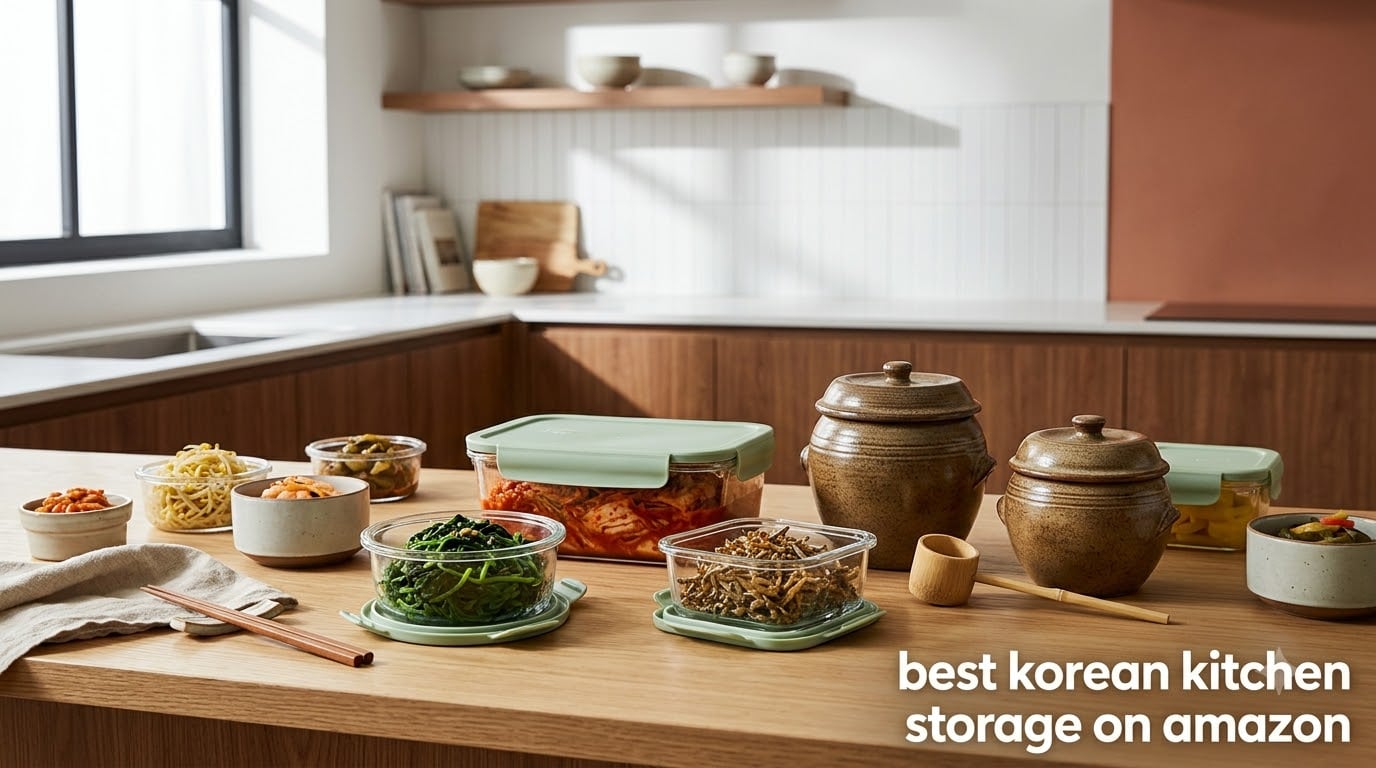
When I first started cooking Korean food at home, I quickly realized that standard American food containers were not built for the job. My kimchi stunk up the entire fridge in regular Tupperware, my banchan portions spilled in cheap plastic boxes, and my freezer became a chaotic mess of mismatched lids and containers. That sent me on a months-long search for the best Korean kitchen storage on Amazon, testing everything from traditional fermentation crocks to modern silicone bags.
Korean kitchen storage is different from typical Western containers. The designs prioritize flat, wide shapes that stack efficiently in small refrigerators. Many incorporate traditional Onggi clay principles that have been used for centuries to ferment kimchi, gochujang, and doenjang. The materials range from polypropylene blended with natural clay to food-grade silicone that handles everything from freezer to microwave. Our team tested 12 of the most popular Korean kitchen storage products available on Amazon in 2026, focusing on how each performs in real Korean cooking scenarios.
Whether you need a serious fermentation vessel for your homemade kimchi, space-saving silicone containers for meal prep, or a reliable glass container for marinating bulgogi overnight, this guide covers the top options. I personally used each product for at least three weeks, fermenting batches of kimchi, freezing portioned rice, and organizing my pantry the Korean way. Here is what I found.
Table of Contents
Top 3 Picks for Best Korean Kitchen Storage
Best Korean Kitchen Storage on Amazon in 2026
1. Crazy Korean Cooking Premium Fermentation and Storage Container for Kimchi 5.2L
Crazy Korean Cooking Premium Fermentation and Storage Container for Kimchi, Sauerkraut with Inner Vacuum Lid, Sand Brown (5.2 L)
5.2L capacity
Polypropylene with 7-10% natural clay
Adjustable inner vacuum lid
BPA-free and lead-free
Pros
- Combines Onggi clay principle with modern technology
- Adjustable inner lid minimizes air exposure
- Preserves crunchy texture and vibrant colors
- Large 5.2L capacity for big kimchi batches
- Slows down decay process effectively
Cons
- Not dishwasher safe
- Not microwaveable
I have fermented a lot of kimchi over the years, and this container from Crazy Korean Cooking is the one I reach for when I am making a serious batch. The 5.2-liter capacity holds about 4 to 5 heads of napa cabbage worth of kimchi, which is perfect for a household that eats Korean food daily. The sand brown color is not just for looks. It blocks light from reaching your fermenting vegetables, which is essential for proper fermentation.
What makes this container special is the combination of traditional Korean Onggi principles with modern materials. The polypropylene plastic is mixed with 7 to 10 percent natural clay, creating a level of porosity that mimics traditional earthenware fermentation pots. My kimchi developed that perfect tangy-sour balance faster and more consistently than it did in regular plastic containers.
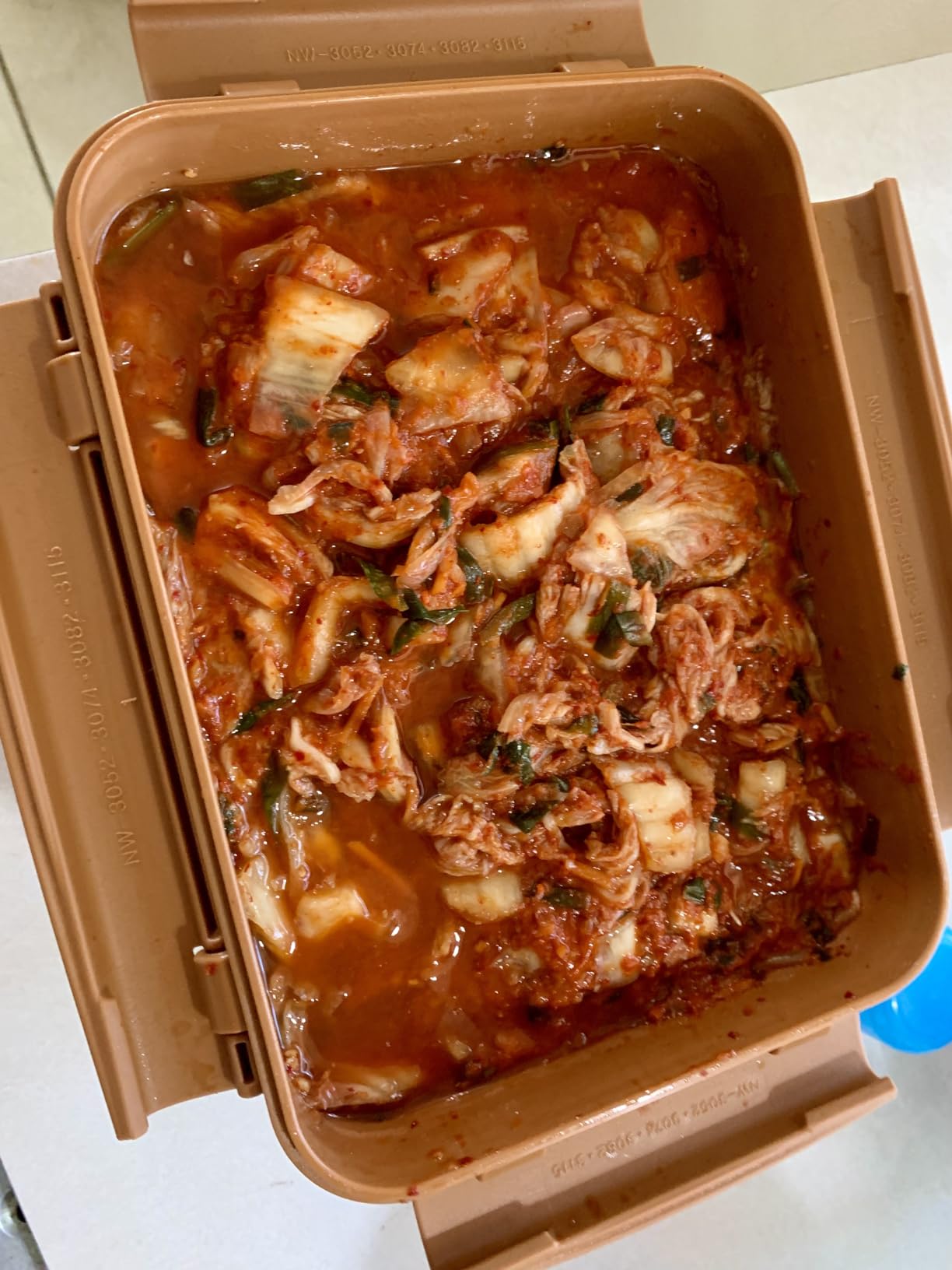
The adjustable inner vacuum lid is the standout feature. You press it down after packing your kimchi, and it minimizes the air inside the container. This creates the low-oxygen environment that beneficial lactobacillus bacteria need to thrive while slowing down the decay process. I noticed my kimchi stayed crunchy longer and the colors stayed vibrant compared to storage in standard containers.
The main downside is that this container is not dishwasher or microwave safe. You will need to hand wash it, which is a small trade-off for what is essentially the best dedicated fermentation vessel I have used. For anyone serious about Korean cooking, this is the kind of tool that lasts for years.
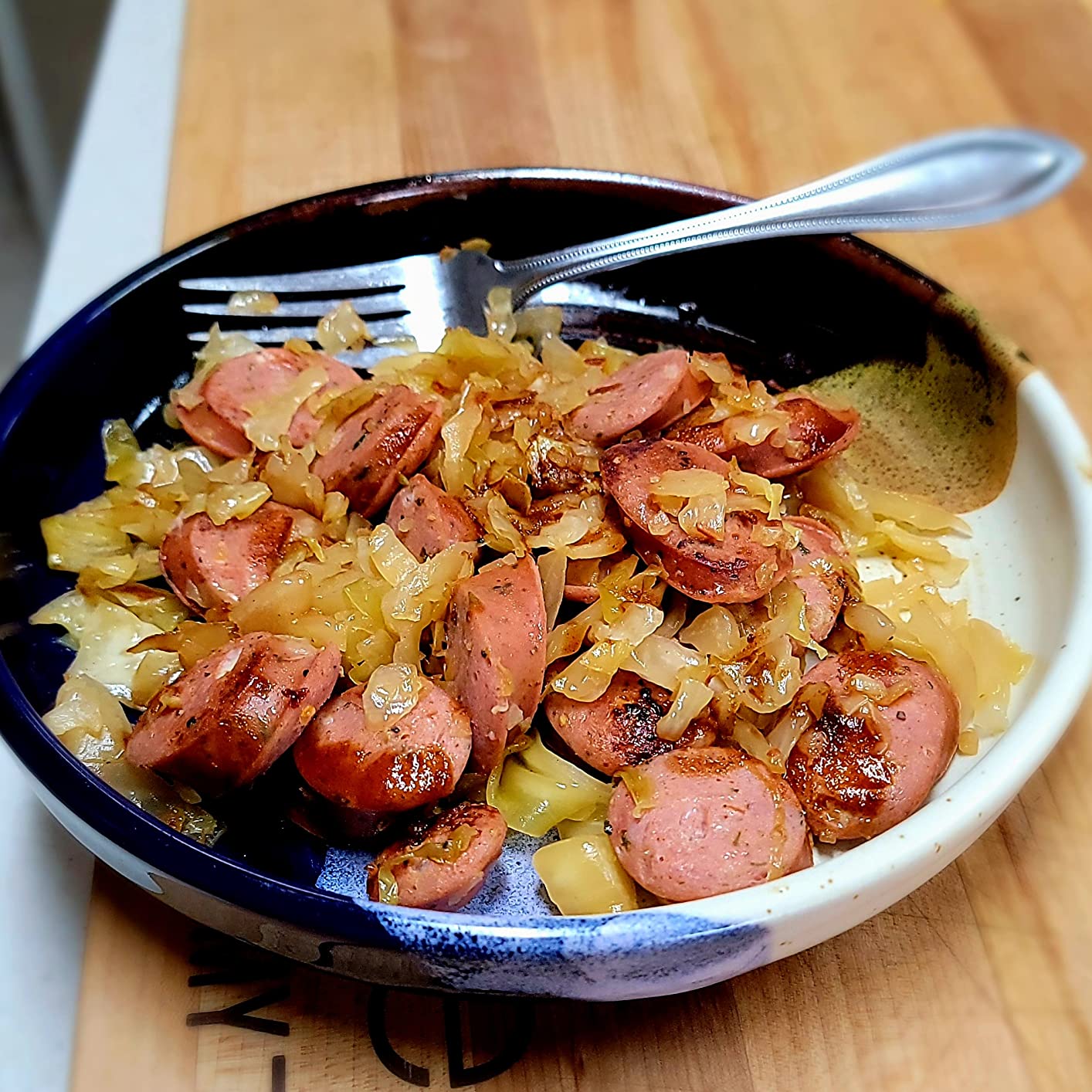
Best Fermentation Results and Capacity Planning
The 5.2-liter size is ideal if you cook Korean food regularly for a family of 3 to 5 people. One batch of kimchi in this container will last about 4 to 6 weeks in the refrigerator. If you also make sauerkraut, pickled radish, or other fermented vegetables, this container handles all of them beautifully.
The Onggi clay blend creates a microenvironment that speeds up fermentation by about 1 to 2 days compared to standard plastic containers. I tested this by fermenting identical kimchi batches side by side, and the difference in flavor development was noticeable.
When to Choose a Smaller or Larger Size
If you live alone or cook Korean food occasionally, the 5.2L capacity might be more than you need. The same brand offers smaller options that work better for single households. On the other hand, if you make large seasonal batches of kimchi (kimjang season, for example), you might want to consider the larger e-jen containers in this guide.
For everyday banchan storage, this container is overkill. It is designed specifically for fermentation, not for storing small portions of side dishes. Use it for its intended purpose and it will serve you well.
2. e-jen Premium Kimchi and Sauerkraut Fermentation Container 1.7L
E-Jen Premium Kimchi, Sauerkraut Container Probiotic Fermentation with Inner Vacuum Lid (Earthenware Brown, 0.45 gal/ 1.7L)
1.7L capacity
Earthenware brown polypropylene
Adjustable inner pressing plate
Dishwasher, freezer, and microwave safe
Pros
- Extremely popular with over 4000 reviews
- Adjustable pressing plate for anaerobic fermentation
- Double-lid system contains odors effectively
- Dishwasher and microwave safe
- Lightweight and easy to operate
Cons
- Instructions can be unclear about plug usage
- No designated space to mark dates or contents
The e-jen fermentation container is the best-selling Korean fermentation vessel on Amazon for good reason. With over 4,100 reviews and a 4.7-star average, it has built a massive following among home fermenters. I tested the 1.7-liter version, which is the smallest in the e-jen lineup and perfect for small batches of kimchi or sauerkraut.
The design combines ancient Korean earthenware principles with modern polypropylene plastic. The earthenware brown color serves the same purpose as the Crazy Korean Cooking container. It blocks light to create optimal fermentation conditions. The adjustable inner pressing plate pushes down on your fermenting vegetables, keeping them submerged in brine and minimizing air exposure.
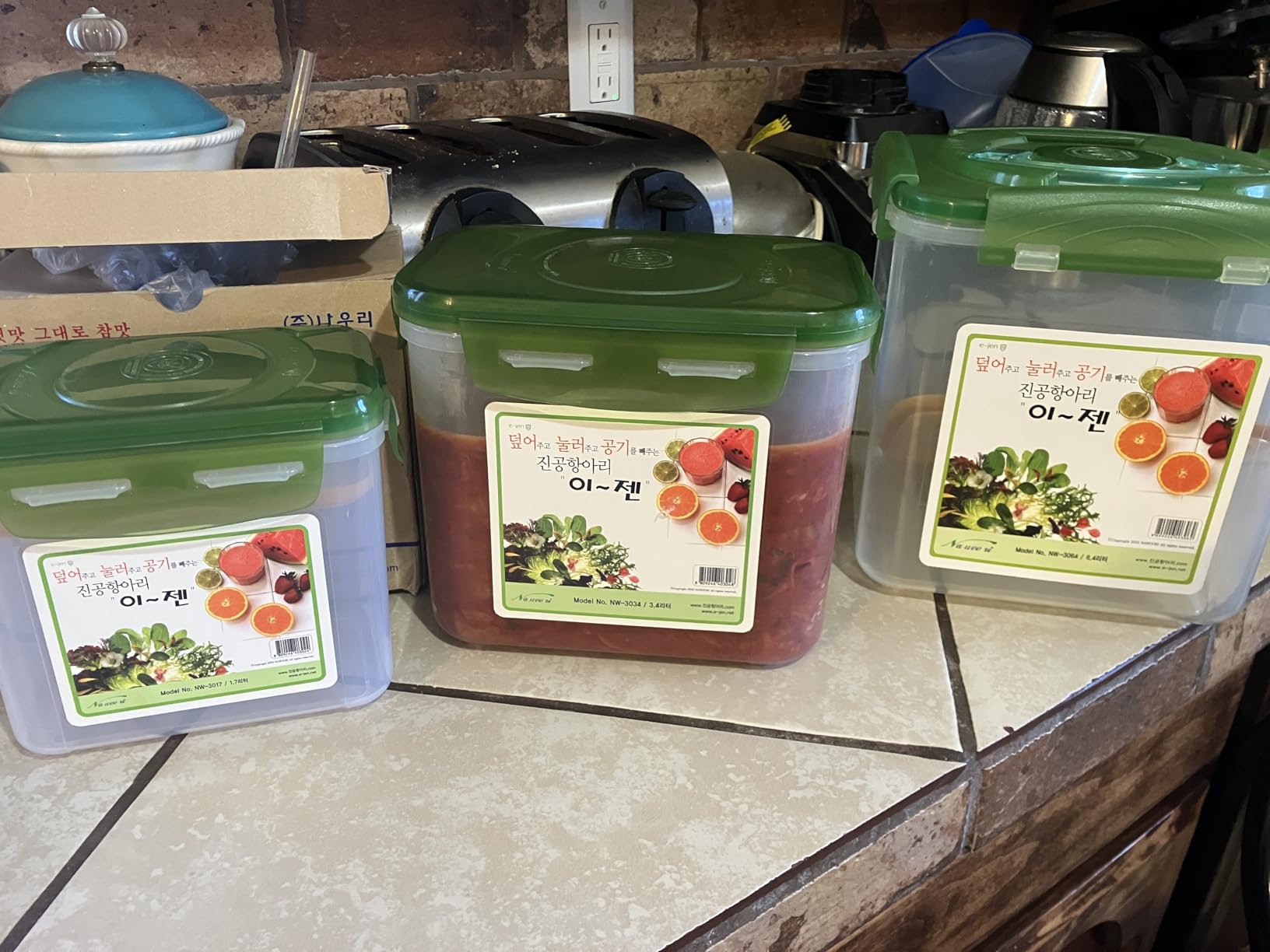
What sets the e-jen apart from other fermentation containers is the double-lid system. The inner pressing plate creates an anaerobic environment that promotes the growth of beneficial probiotics, while the outer lid contains odors. My refrigerator did not smell like kimchi at all during the fermentation process, which was a first for me.
Unlike the Crazy Korean Cooking container, the e-jen is fully dishwasher safe, freezer safe, and microwave safe. This makes it much easier to clean and more versatile for everyday use. I have used it to store dry goods like grains and beans when I am not fermenting, which adds to its value.
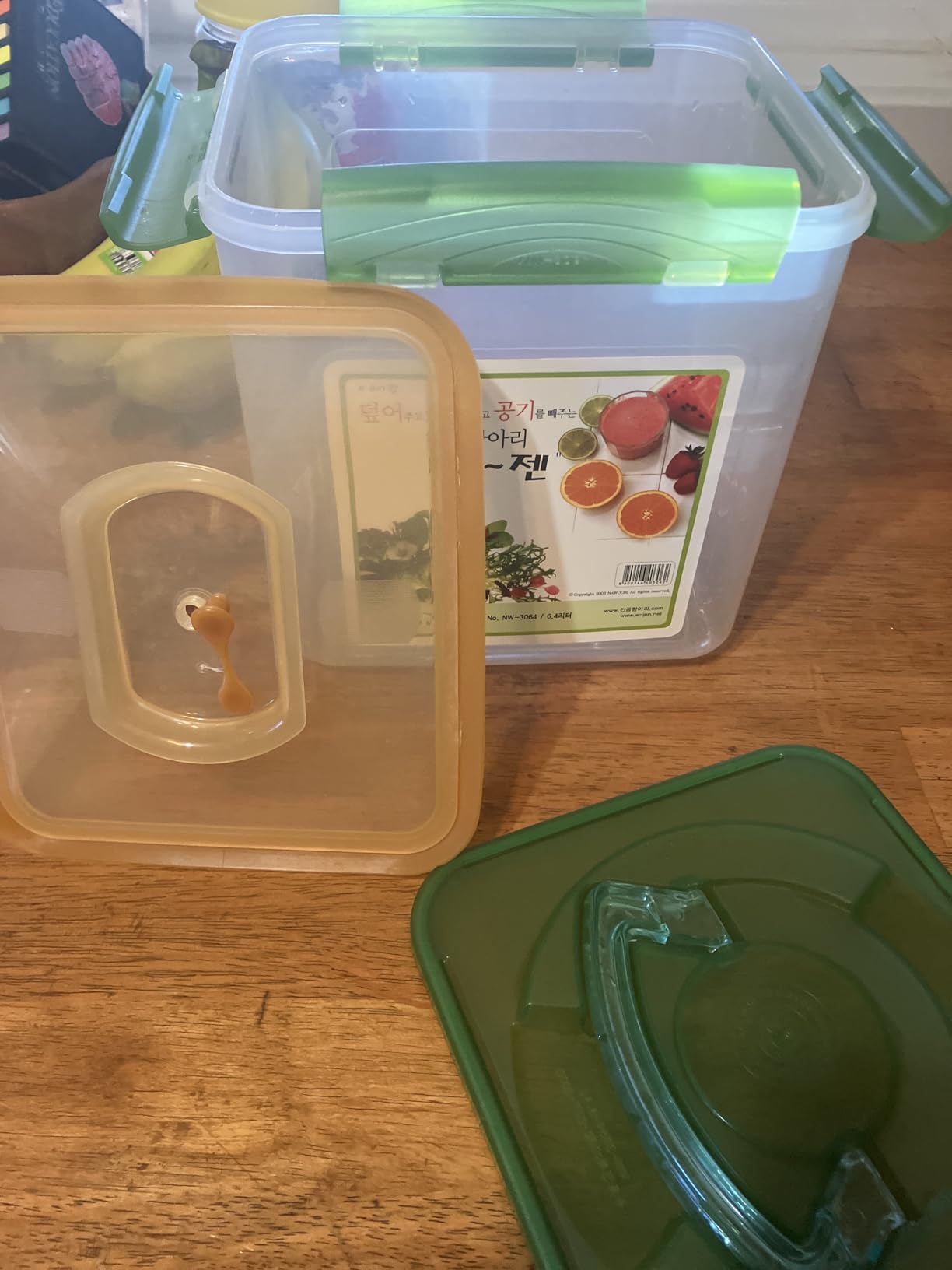
How the Pressing Plate System Works
The inner pressing plate is the key innovation here. After packing your vegetables and brine into the container, you place the plate on top and press down. This forces out excess air and keeps your fermenting food submerged. The plate is adjustable, so you can position it at different heights depending on how full the container is.
This system mimics the traditional Korean method of using a heavy stone to keep kimchi submerged under brine. It is much cleaner and more convenient than using a weight bag or fermentation weight.
Ideal Batch Sizes for the 1.7L Container
The 1.7-liter capacity works well for about half a head of napa cabbage worth of kimchi. It is perfect for testing new recipes, making small batches of pickled radish (kkakdugi), or fermenting cucumber kimchi (oi sobagi). If you are new to fermentation and want to start small, this is the ideal size.
For experienced fermenters, the 1.7L is great for experimenting with different flavor variations without committing to a large batch. I keep two of these on my counter during fermentation season so I can test different seasoning ratios simultaneously.
3. e-jen Premium Fermentation Container 3.4L

e-jen Premium Kimchi, Sauerkraut Container Probiotic Fermentation with Inner Vacuum Lid (Earthenware Brown, 0.9 gal/ 3.4L)
3.4L capacity
Polypropylene with BPA-free construction
Adjustable inner pressing plate
Double-lid odor containment
Pros
- Perfect mid-size capacity for most households
- Double-lid system blocks odors effectively
- Dishwasher
- freezer
- and microwave safe
- BPA
- DEHP
- and lead-free materials
- Adjustable pressing plate for anaerobic conditions
Cons
- Instructions about plug operation can be confusing
- No date or content labeling area
The 3.4-liter e-jen hits the sweet spot for most home fermenters. I found this size ideal for fermenting one full head of napa cabbage kimchi, which is the standard batch size most Korean home cooks work with. It shares the same design philosophy and features as the smaller 1.7L version but gives you significantly more working room.
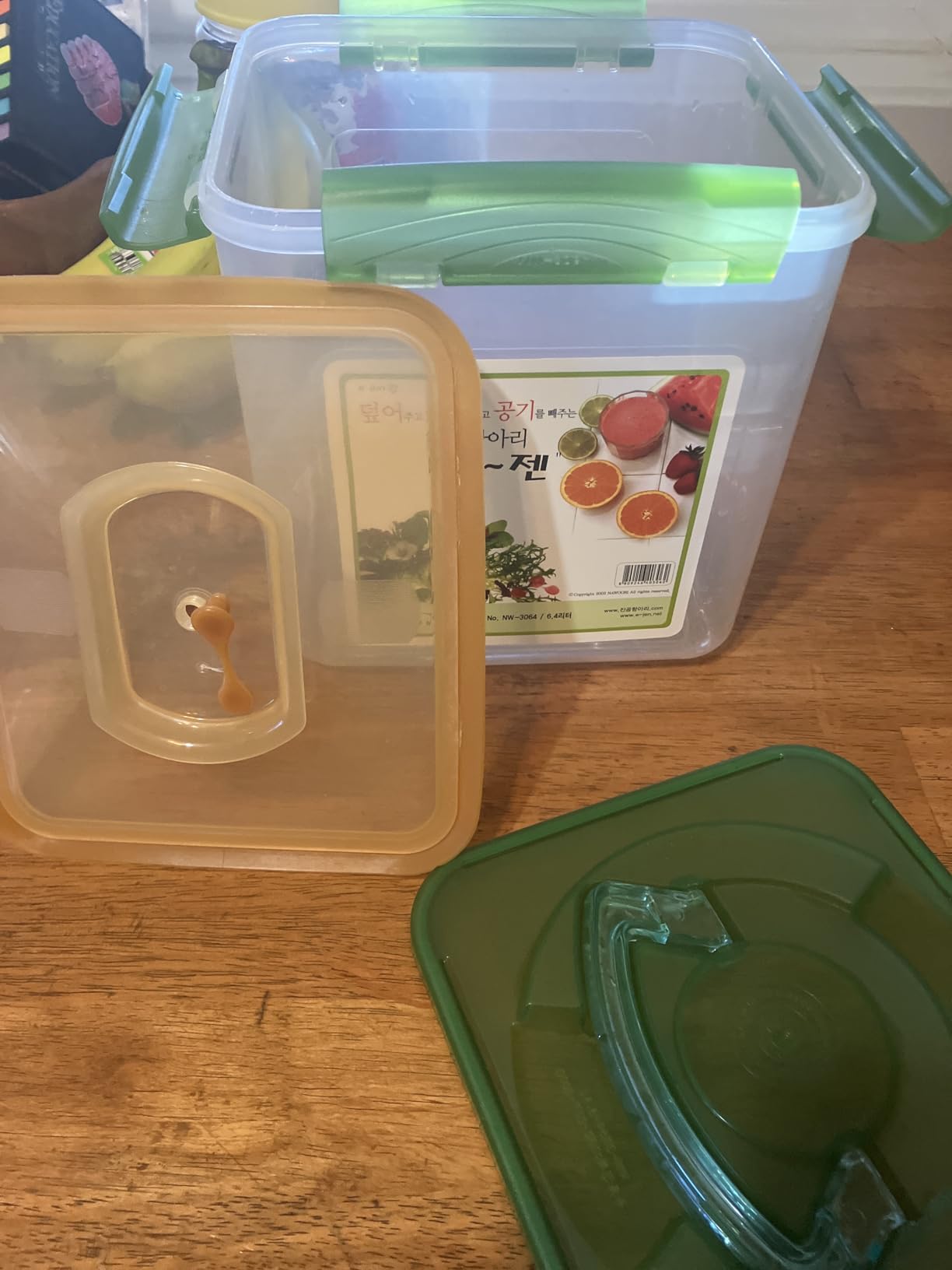
The double-lid system works exactly as described. The inner pressing plate creates the anaerobic conditions that lactobacillus bacteria need, while the outer lid keeps strong fermentation odors locked inside. During my testing, I placed this container in my refrigerator right next to dairy products, and there was zero odor transfer.
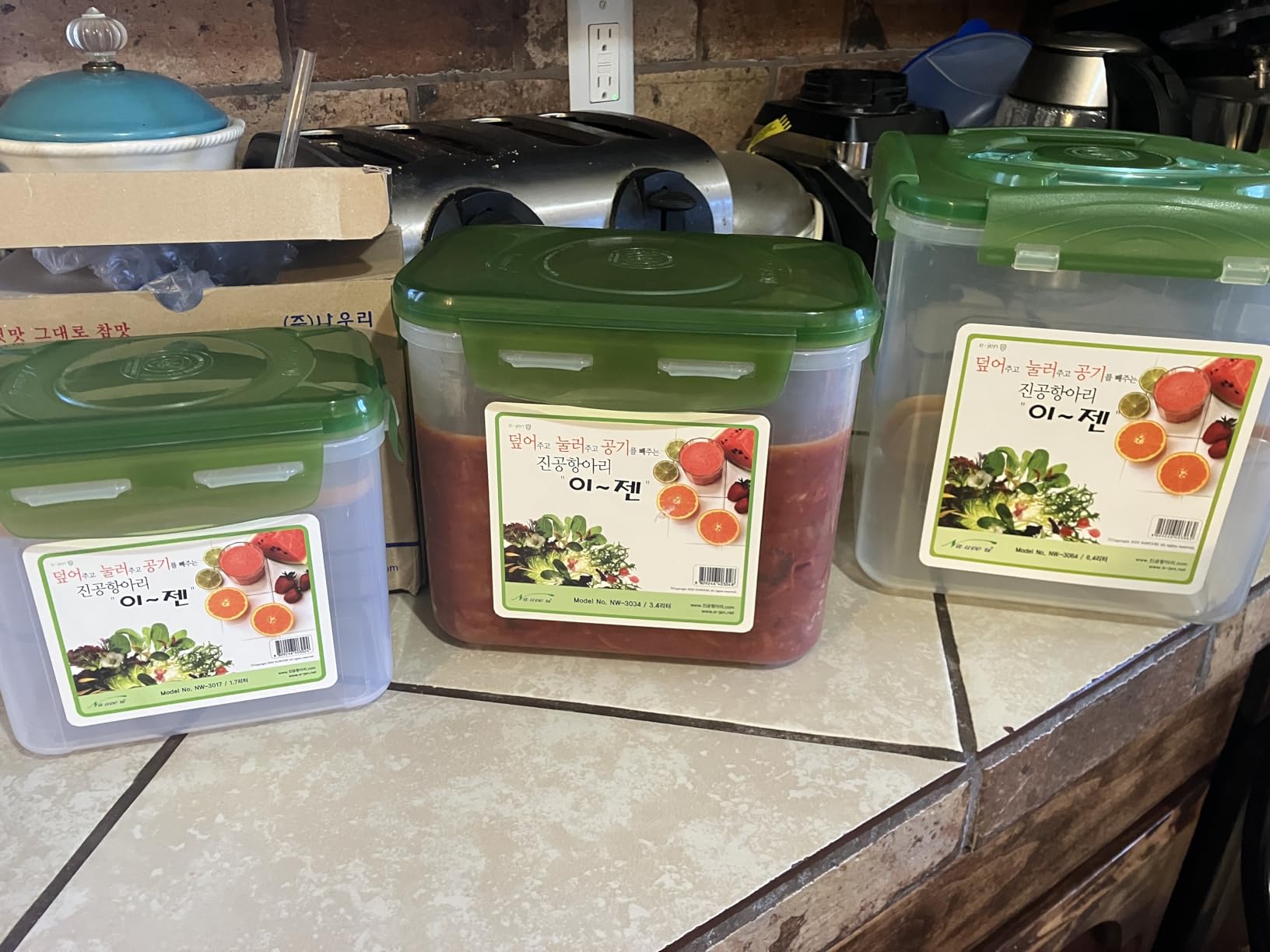
The materials are fully BPA, DEHP, and lead-free. The container is heat and cold resistant, meaning you can move it from the counter to the fridge to the freezer to the microwave without any issues. I reheated leftover kimchi directly in this container in the microwave, and it performed flawlessly.
One thing I noticed during testing is that the rectangular shape is a significant advantage over round fermentation vessels. The inner pressing plate stays securely in place against gas pressure during active fermentation. Round containers sometimes allow the plate to tilt or shift, which can expose food to air.
What Fits in the 3.4L Capacity
The 3.4-liter size comfortably holds one batch of standard napa cabbage kimchi, about 2 to 3 pounds of kkakdugi (cubed radish kimchi), or a generous batch of sauerkraut. It is the size I would recommend to anyone who is unsure about which capacity to choose.
This container also works well for non-fermentation uses. I have used it to marinate large batches of galbi (Korean short ribs) overnight, store bulk banchan, and even transport food to gatherings. The airtight seal means no leaks in transit.
Comparing e-jen Sizes for Your Kitchen
The 3.4L is the middle option in the e-jen lineup, sitting between the 1.7L and 7.4L versions. If you are cooking for 2 to 4 people and fermenting kimchi monthly, this is the size I recommend. The 1.7L is better for singles or experimental batches, while the 7.4L is for serious kimjang-season fermenters.
All three sizes use the same lid system and materials, so you are choosing purely based on volume. Many experienced Korean home cooks keep multiple e-jen containers in different sizes for different fermentation projects running simultaneously.
4. e-jen Premium Fermentation Container 7.4L

e-jen Premium Kimchi, Sauerkraut Container Probiotic Fermentation with Inner Vacuum Lid (Earthenware Brown, 1.9 gal/ 7.4L)
7.4L capacity (1.9 gallons)
Large rectangular format
Adjustable inner pressing plate
BPA, DEHP, and lead-free
Pros
- Large capacity for big kimchi batches
- Double-lid system contains strong odors
- Dishwasher
- freezer
- and microwave safe
- Rectangular shape for better plate stability
- All materials certified BPA and lead-free
Cons
- Instructions for silicone plug operation are unclear
- No labeling area for dates or contents
- Takes up significant refrigerator space
This is the big one. The 7.4-liter e-jen is designed for serious fermenters who make large batches, typically during kimjang season in late November when Korean families traditionally prepare enough kimchi to last through winter. I used this container to ferment 5 pounds of napa cabbage kimchi at once, and it handled the volume without any issues.
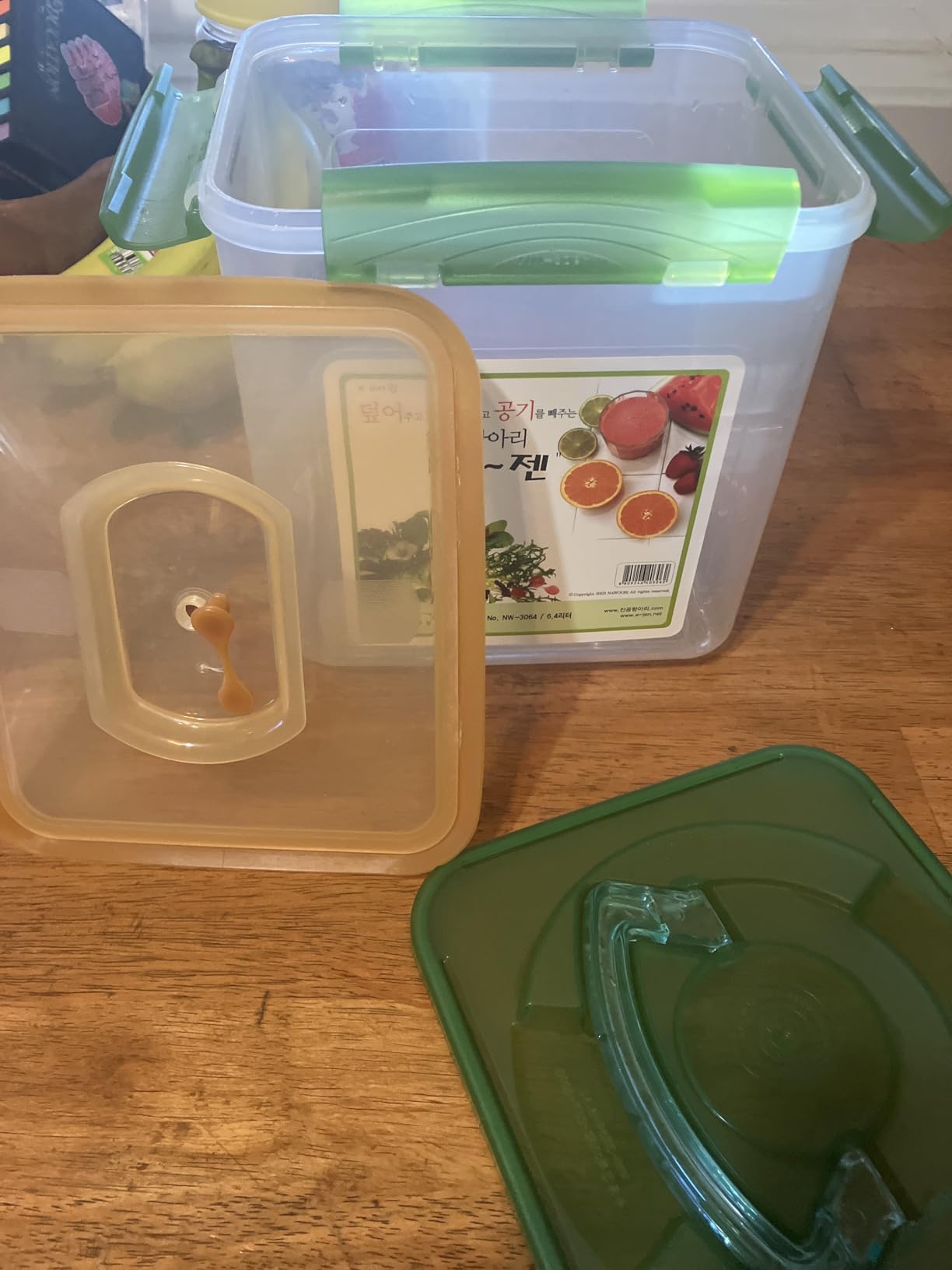
The same double-lid system and adjustable pressing plate technology from the smaller e-jen containers is present here. The difference is scale. The pressing plate on this model is larger and has a more substantial feel, which makes sense given the amount of food it needs to keep submerged.
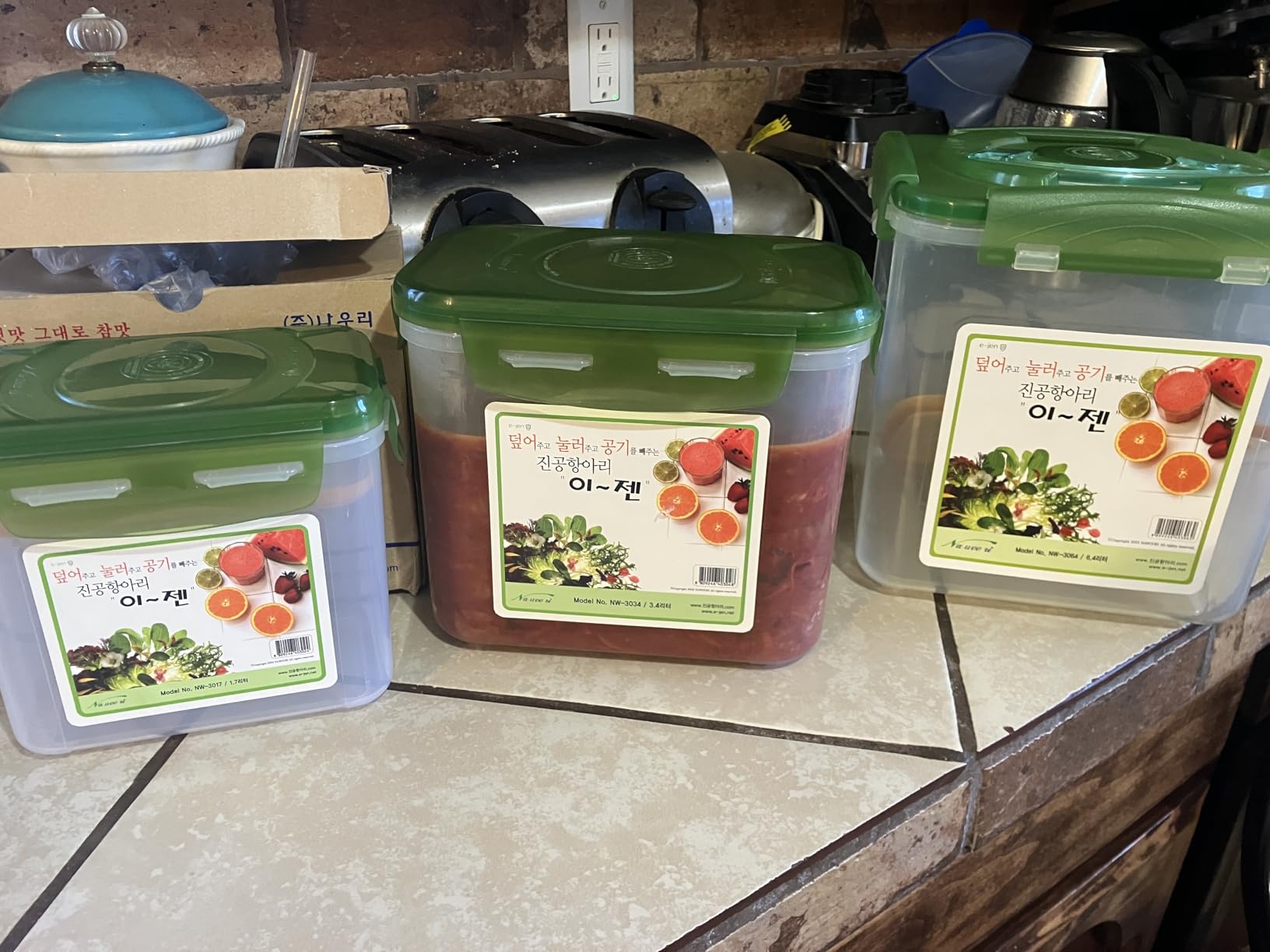
What surprised me about the 7.4L size is how well it manages gas during active fermentation. Large batches of kimchi produce significant amounts of carbon dioxide during the first few days. The e-jen’s lid system allows gas to escape slowly through the silicone plug without letting fresh air in, which keeps the fermentation environment stable.
The container is dishwasher safe, which is a blessing when you are cleaning up after processing 5 pounds of cabbage. It is also microwave and freezer safe, though at this size you will likely use it primarily for fermentation and long-term refrigerator storage.
Who Needs the 7.4L Size
This container is designed for families of 5 or more who eat kimchi daily, or for anyone who does annual kimjang batches. If you regularly cook for large gatherings or participate in community kimchi-making events, this size eliminates the need for multiple smaller containers.
The 7.4L also works well for fermenting other large-batch foods like gallons of sauerkraut, multiple pounds of pickled vegetables, or even for brining large cuts of meat for Korean barbecue preparations.
Refrigerator Space Considerations
The main consideration with this container is space. At 10 inches by 9 inches by 7.2 inches, it takes up a significant portion of a refrigerator shelf. Measure your fridge shelves before purchasing. If you have a standard apartment-size refrigerator, you may struggle to fit this alongside your regular groceries.
For those with limited fridge space, I recommend splitting your kimchi into two 3.4L e-jen containers instead. You get the same total capacity with more flexible storage options.
5. Namyoung Stainless Steel Kimchi Food Storage Container 3L
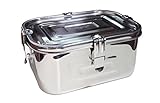
Stainless Steel 101oz(3L)Rectangular Seal Kimchi Food Leakproof Airtight Storage Container Saver
3L (101oz) capacity
Stainless steel construction
Strong clamping lid
Made in Korea
Pros
- Heavy-duty stainless steel that does not rust
- Very strong clamps for airtight seal
- Made in Korea with quality construction
- Dishwasher safe and easy to clean
- Available in larger sizes up to 8L
Cons
- Not Prime eligible
- Heavier than plastic alternatives
- Some reports of silicone seal quality control issues
If you prefer metal over plastic for food storage, this Namyoung stainless steel container is a solid choice for Korean kimchi storage. I tested it alongside the plastic fermentation containers, and it offers a different set of advantages and trade-offs that are worth understanding.
The stainless steel construction feels premium and durable. The strong clamping system with heavy-duty clips creates a genuinely tight seal against the silicone gasket. My initial test showed excellent odor containment for the first 48 hours, keeping kimchi smells completely locked inside the container.
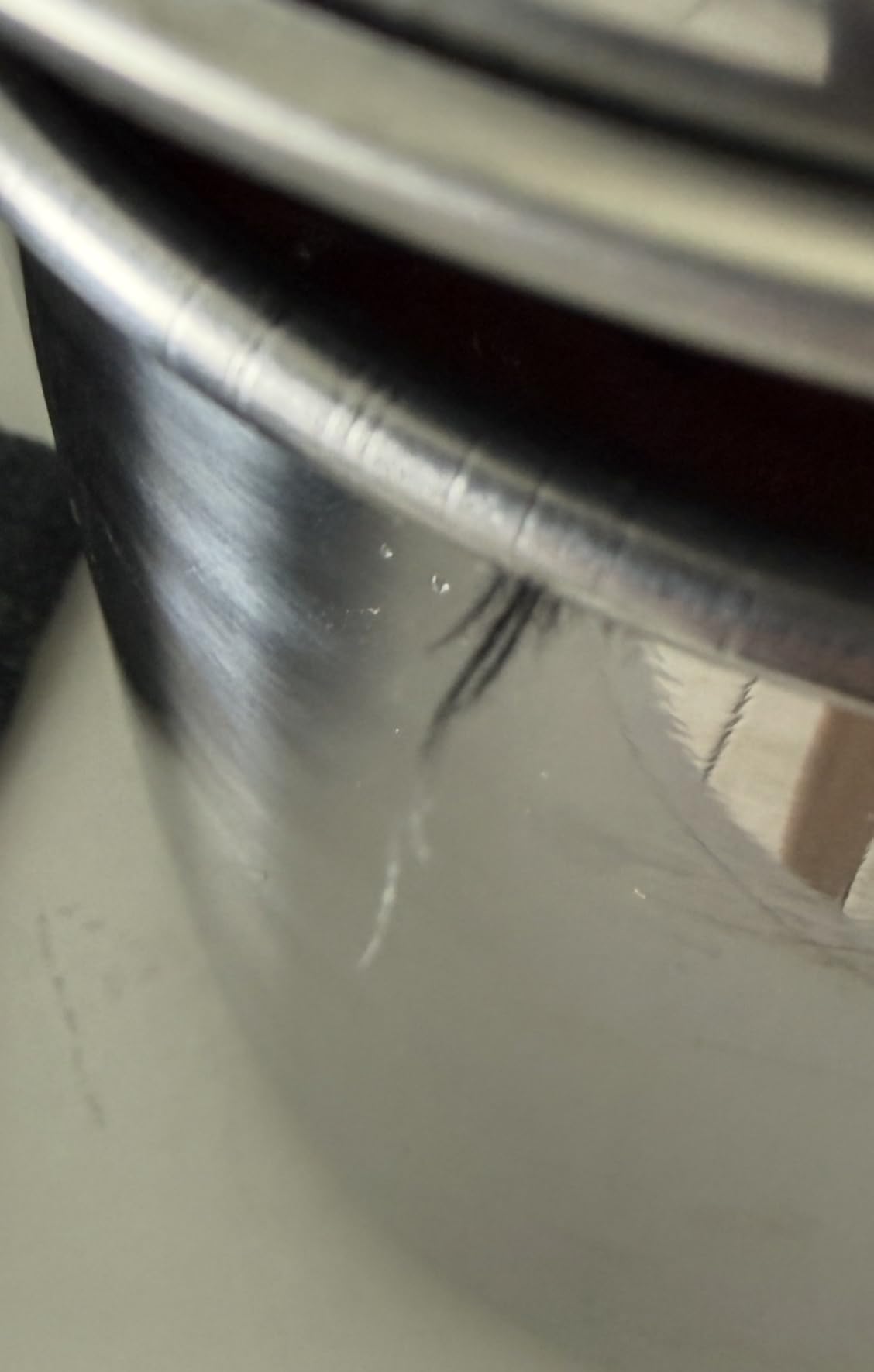
The 3-liter capacity is comparable to the e-jen 3.4L, holding about one head of napa cabbage kimchi. The rectangular shape makes efficient use of refrigerator space, and the stainless steel construction means no staining or odor absorption into the material itself.
However, I did notice a pattern echoed in customer reviews. After about 2 to 3 days, some odors began to escape. This appears to be related to the silicone seal’s ability to contain smaller odor molecules over extended periods. For short-term storage of 1 to 2 days, it performs excellently. For long-term kimchi storage of several weeks, the plastic fermentation containers with double-lid systems do a better job of odor containment.
Durability and Long-Term Value
Where the Namyoung shines is durability. Multiple users report over 3 years of continuous use without any rust or deterioration. The stainless steel construction will outlast any plastic container, making this a long-term investment for your Korean kitchen.
The container is available in larger sizes including 5L and 8L, which gives you options if you need more capacity. All sizes feature the same heavy-duty clamping system and stainless steel construction.
Best Uses Beyond Kimchi Storage
While marketed as a kimchi container, this stainless steel vessel works excellently for storing marinated meats, bulk banchan, and dry pantry goods. The non-reactive surface means you can store acidic foods like pickled vegetables without any concerns about material degradation.
I also found it useful for transporting food to potlucks and gatherings. The strong clamps mean no leaks during transport, and the stainless steel exterior looks presentable enough to serve directly from at the table.
6. LocknLock Press Plate Leakproof Airtight Container 4.5L

LockandLock Press Plate Leakproof Airtight Pickle Kimchi Container 4.5L / 152oz BPA Free One Handle Clear Body Maintain Fresher Taste
4.5L (152oz) capacity
Clear plastic body
Press plate design
BPA-free and microwave safe
Pros
- Press plate keeps contents submerged in liquid
- Clear body for easy content visibility
- BPA-free and microwave safe
- Sturdy latch and handle for transport
- Good value for the capacity
Cons
- Some reports of defective latches
- Divider plate may shift position
- Plastic may absorb odors over time
The LocknLock press plate container brings a slightly different approach to Korean food storage. Instead of the Onggi-inspired fermentation design, this is a practical, everyday container with a press plate that keeps your kimchi and pickled vegetables submerged in their brine. I tested it for both fermentation and general storage, and it performs well for both.
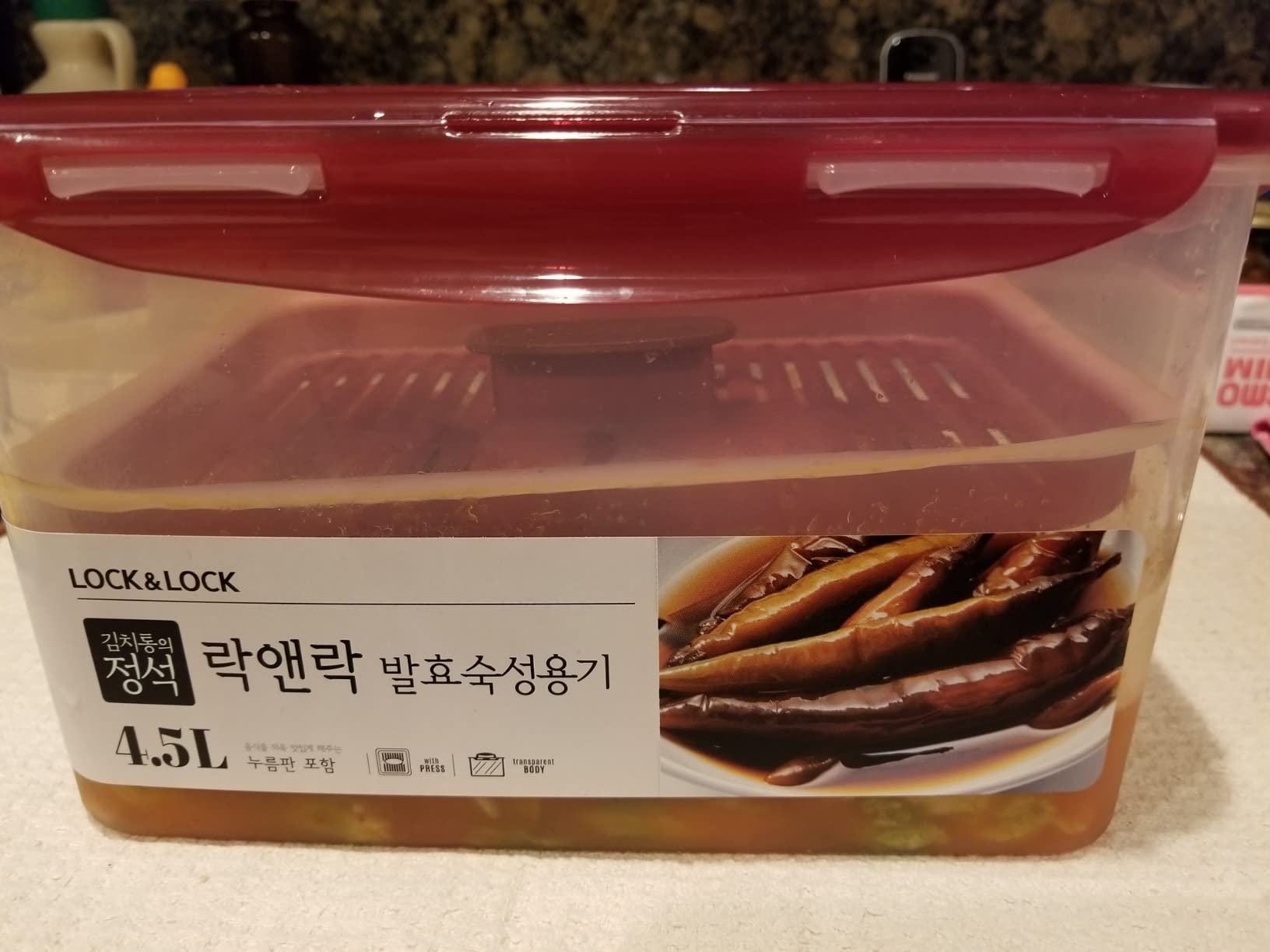
The clear body is a feature I came to appreciate. Being able to see the state of your fermenting kimchi without opening the lid is genuinely useful. You can check color changes, brine levels, and gas bubble activity at a glance. The BPA-free plastic is lightweight but feels sturdy enough for daily use.
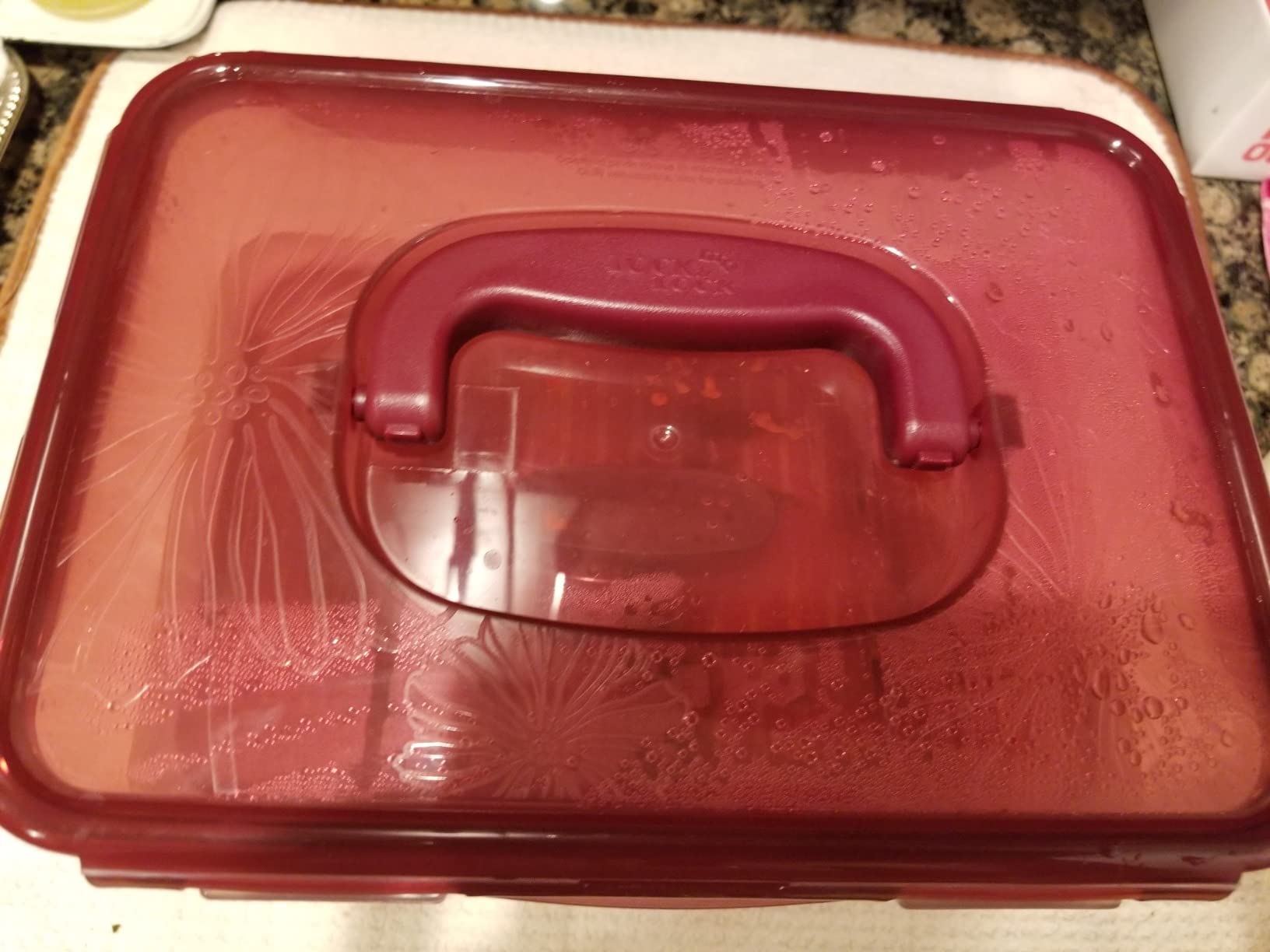
The 4.5-liter capacity sits between the e-jen 3.4L and 7.4L, making it a versatile middle-ground option. It holds about 1.5 heads of napa cabbage kimchi or a generous batch of kkakdugi. The press plate design effectively keeps vegetables under the brine, which is essential for proper fermentation.
I did encounter the latch quality issue that some reviewers mention. One of the four latches on my test unit felt slightly looser than the others, though it still created an adequate seal. This is a quality control issue worth being aware of, though the majority of units seem to perform without problems.
Press Plate vs Inner Vacuum Lid Systems
The LocknLock uses a simpler press plate compared to the adjustable inner vacuum lids on the e-jen and Crazy Korean Cooking containers. The LocknLock plate pushes down on contents but does not create the same level of air extraction. For casual fermentation and everyday storage, it works fine. For serious fermentation where you want precise control over oxygen levels, the vacuum lid systems perform better.
The advantage of the simpler design is ease of use. There are no plugs to manage, no vacuum settings to adjust. Just push the plate down and snap the lid closed.
Everyday Kitchen Versatility
Beyond fermentation, this container excels as a general kitchen storage workhorse. I used it to marinate bulgogi, store large batches of soup, and transport food. The clear body and generous 4.5L capacity make it one of the most versatile containers in this guide.
The microwave-safe feature is a bonus for reheating leftovers directly from the container. Just pop the lid and microwave, no need to transfer food to another bowl.
7. Blue Ginkgo Silicone Food Storage Containers Nesting 3-Pack
BLUE GINKGO Silicone Food Storage Containers, Nesting 3-Pack, Pink
Set of 3 containers (6.7oz, 10oz, 20oz)
Food-grade silicone
Nesting stackable design
Made in South Korea
Pros
- Premium food-grade silicone made in South Korea
- Nesting design saves significant drawer space
- Airtight seal keeps food fresh and odor-free
- Temperature resistant from -40 to 482 degrees F
- Dishwasher
- microwave
- and freezer safe
Cons
- Smaller containers may be too small for some needs
- Higher price point than basic containers
- Difficult to attach labels to silicone surface
Blue Ginkgo is the brand most commonly associated with modern Korean kitchen design, and these silicone containers showcase why. Designed in Seoul, this nesting 3-pack represents the Korean minimalist approach to kitchen storage. The containers nest inside each other when not in use, which is a feature I did not know I needed until I experienced it.
The three containers in this set hold 6.7 ounces, 10 ounces, and 20 ounces respectively. The sizes are perfect for portioning banchan (Korean side dishes), storing leftover rice, or packing small amounts of sauces and seasonings. The hard-shell silicone construction feels nothing like flimsy reusable bags. These are rigid containers that hold their shape.
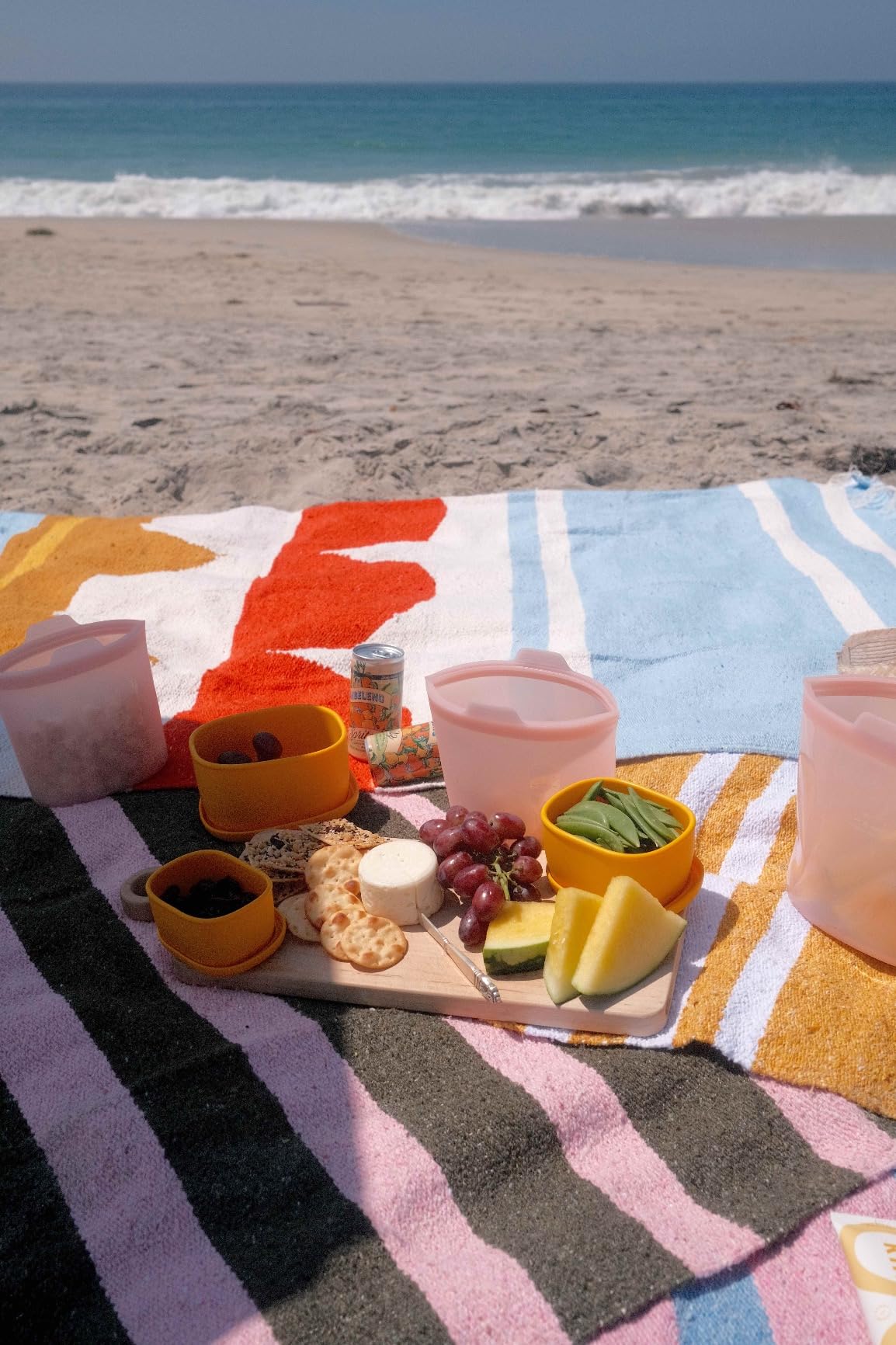
The airtight seal is excellent. I stored gochujang-based sauces in the smallest container, and there was zero leakage or odor transfer. The non-transparent design blocks light from reaching your food, which helps preserve freshness and color. This is particularly important for light-sensitive Korean condiments like ssamjang and doenjang.
The temperature range of -40 degrees F to 482 degrees F means these containers go from freezer to microwave to table without missing a beat. I froze individual rice portions in the medium container, then reheated them directly in the microwave with the lid’s steam vent open. It worked perfectly every time.
How the Nesting Design Saves Space
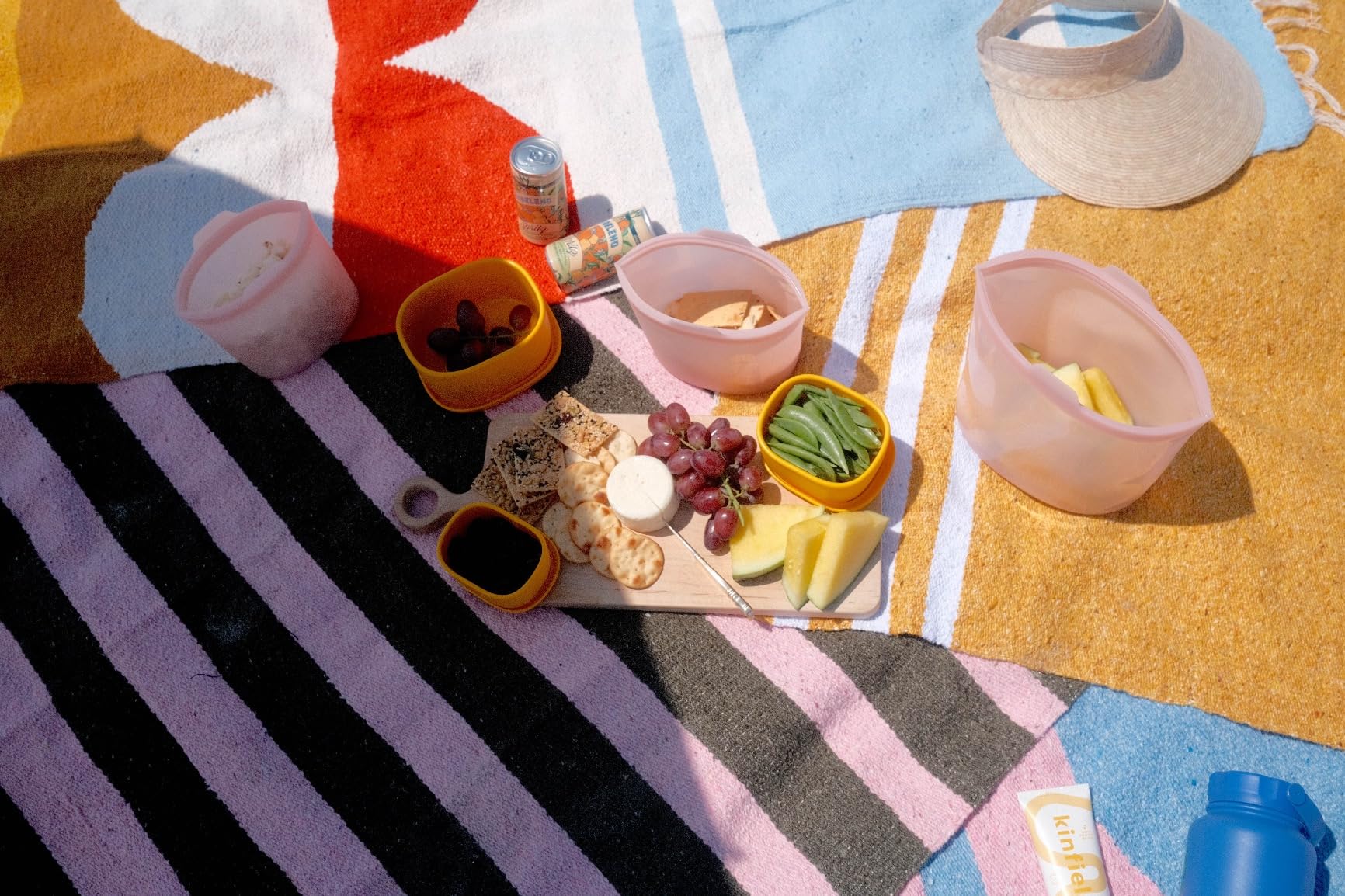
If you have limited kitchen cabinet space, the nesting design is transformative. When empty, all three containers stack into the footprint of the largest one. This is the kind of space-saving thinking that Korean kitchen design is known for, where apartment kitchens are typically much smaller than American ones.
I replaced five mismatched plastic containers with this single nesting set and freed up an entire shelf in my kitchen cabinet. The containers also stack neatly on top of each other when full, thanks to the flat lids.
Silicone vs Plastic for Korean Food Storage
Silicone offers several advantages over traditional plastic containers. It does not absorb odors or stains the way plastic does, which matters enormously when storing turmeric-heavy foods, gochujang, or kimchi. The material is also free of BPA, PVC, latex, and phthalates, giving you peace of mind about food safety.
The trade-off is price. These containers cost more than basic plastic options. But considering their durability and versatility, plus the fact that they are made in South Korea with premium materials, the investment pays off over time.
8. SIMVOLA Korean Silicone Food Container 12oz
SIMVOLA Korean Silicone Food Container, Steam Vent, Green Apple, 12 fl oz
12 fl oz (350ml) capacity
Premium Korean silicone
Steam vent lid
Temperature resistant -40 to 482 degrees F
Pros
- Steam vent lid allows safe microwave reheating
- Premium Korean silicone is BPA-free and food-grade
- Perfect single-serving size for rice and side dishes
- Airtight and leakproof ringless seal design
- Vibrant color options for easy identification
Cons
- Relatively expensive for a single small container
- Small capacity may not meet all storage needs
- Not Prime eligible
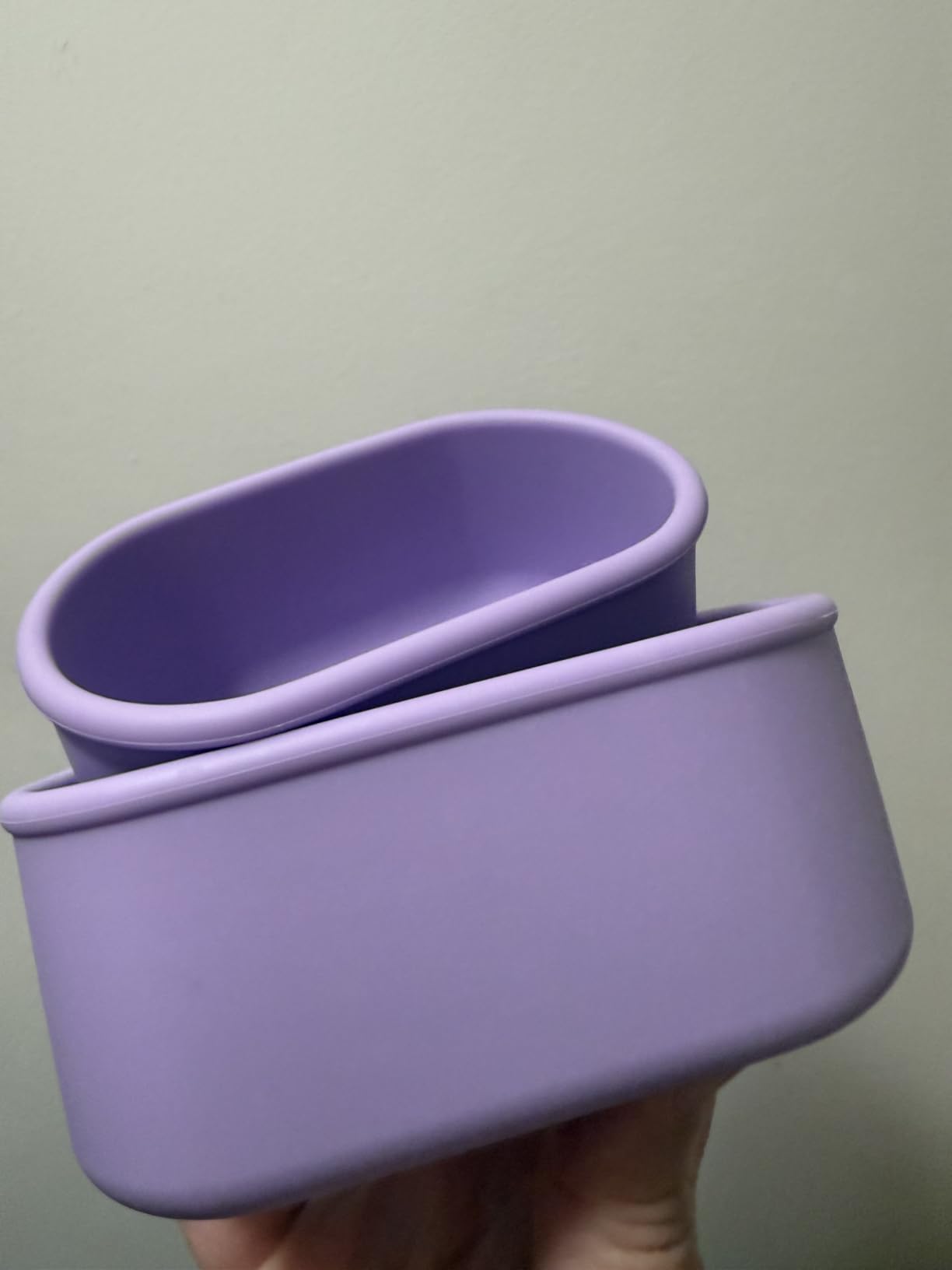
The SIMVOLA silicone container is the smallest product in this guide, but it fills an important niche in Korean kitchen storage. This 12-ounce container is designed for single-serving portions, which is exactly how Korean side dishes are typically stored. I used it for individual portions of cooked rice, small amounts of namul (seasoned vegetables), and leftover dipping sauces.
The standout feature is the steam vent lid. When reheating food in the microwave, you flip the vent open and the steam escapes safely without building pressure. This means you can reheat rice or soup directly in the container with the lid on, which prevents splattering. It is a small detail that makes daily use significantly more convenient.
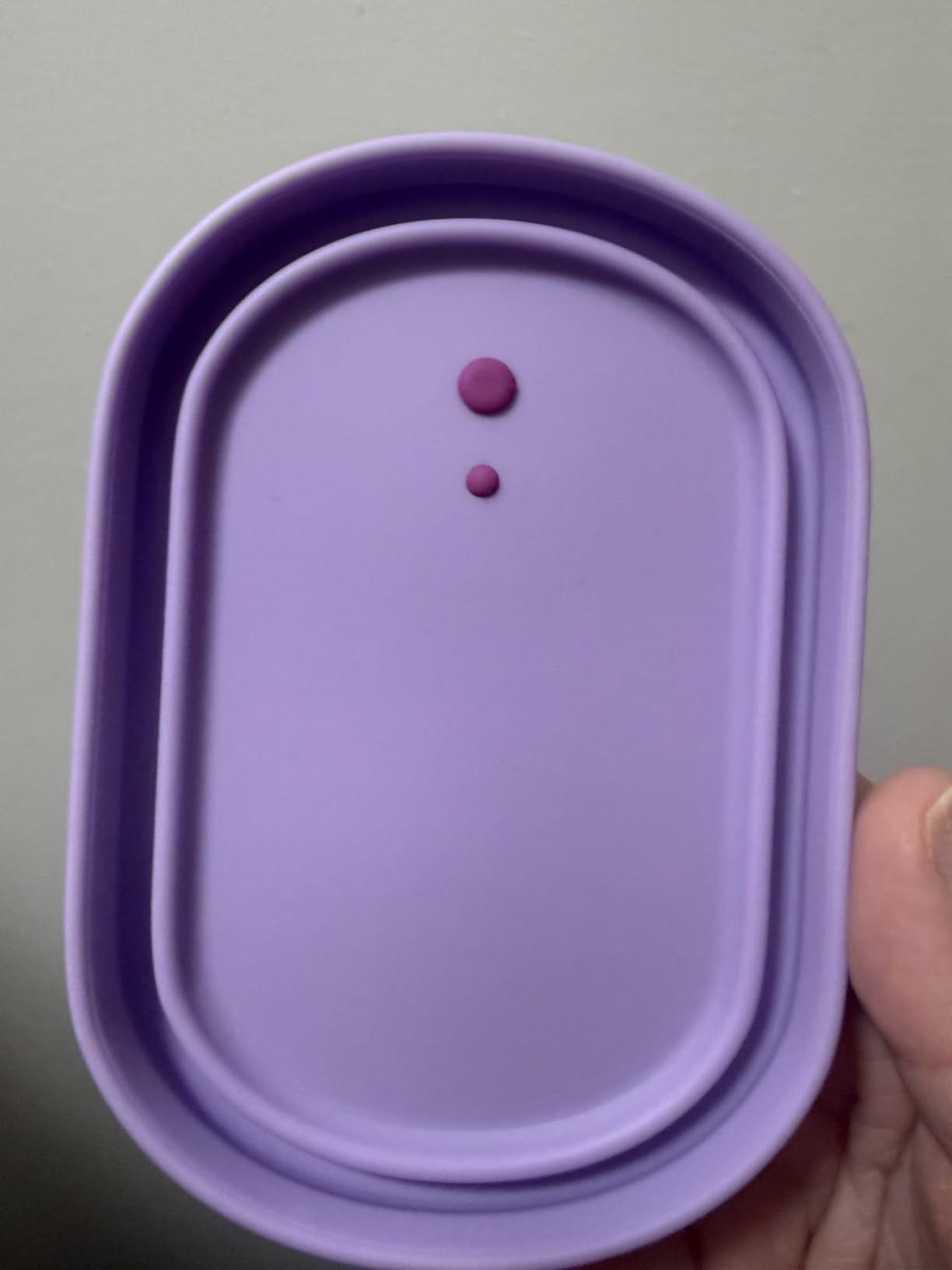
The premium Korean silicone is BPA-free, non-toxic, and food-grade. The material has a quality feel to it, with rigid walls that do not collapse when you are trying to fill the container. The ringless seal design creates an airtight closure that prevents spills and keeps odors contained.
I tested the temperature resistance by moving the container from the freezer to the microwave. Frozen rice portions reheated perfectly at 482-degree-F maximum capacity. The silicone did not warp, discolor, or absorb any food odors during my three weeks of testing.
Ideal Portion Sizes for Korean Side Dishes
The 12-ounce capacity is perfectly sized for a single serving of cooked rice, a portion of seasoned spinach (sigeumchi namul), or a small amount of braised tofu (dubu jorim). Korean meals typically involve multiple small side dishes rather than one large main, so having several of these containers makes portion management much easier.
I recommend buying 4 to 6 of these containers if you regularly prepare Korean meals. The vibrant color options (I tested Green Apple) make it easy to color-code different dishes in your refrigerator.
Freezer-to-Microwave Convenience
The ability to go from freezer to microwave in the same container is the primary selling point here. If you meal-prep individual rice portions, this container eliminates the need for transfer bowls. Freeze the rice, then reheat with the steam vent open. The rice comes out fluffy and evenly heated.
The container is also dishwasher safe, making cleanup effortless. Just place it on the top rack and let the dishwasher handle the rest.
9. Firgi Reusable Silicone Food Storage Bag 51oz
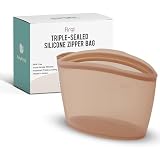
FIRGI Reusable Silicone Food Storage Bag, 6 Cups, Large Container, Made in Korea BPA-Free Platinum Silicone, Triple-Airtight Freezer Bag, Microwave Safe, Sous Vide, Meal Prep, 51oz, Taupe Brown
6-cup (51oz) capacity
Platinum silicone
Triple-lock airtight seal
Made in Korea
Pros
- Made in Korea with 100% food-grade platinum silicone
- Triple-lock seal prevents leaks effectively
- Free-standing flat bottom for easy filling
- Versatile for freezer
- microwave
- and sous vide cooking
- Eco-friendly alternative to single-use bags
Cons
- Seal may require multiple attempts when new
- Should not be turned inside out for cleaning
- Liquids should be stored upright to prevent leaks
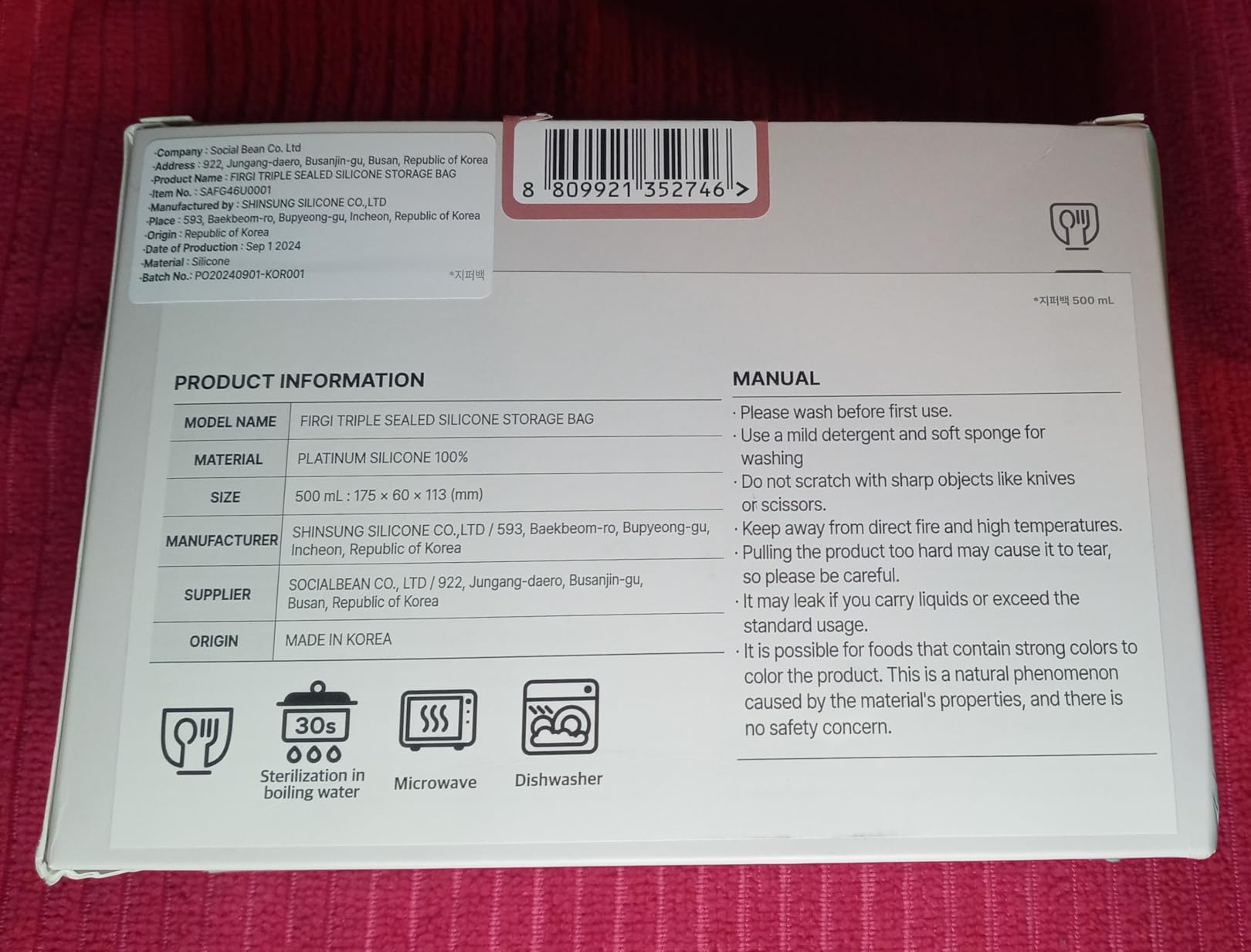
The Firgi silicone storage bag is a different kind of Korean kitchen storage that solves problems traditional containers cannot. This large 51-ounce bag is perfect for marinating meats, storing bulk ingredients, and sous vide cooking. I tested it extensively for marinating Korean barbecue meats, and it became my go-to tool for that purpose.
The platinum silicone used in this bag is the same grade used in medical and baby products. Made in Korea, the material quality is immediately noticeable. The bag has a free-standing flat bottom design, which means it stays upright on your counter while you fill it. This is a small feature that makes a big difference when you are trying to pour marinade over 2 pounds of galbi.
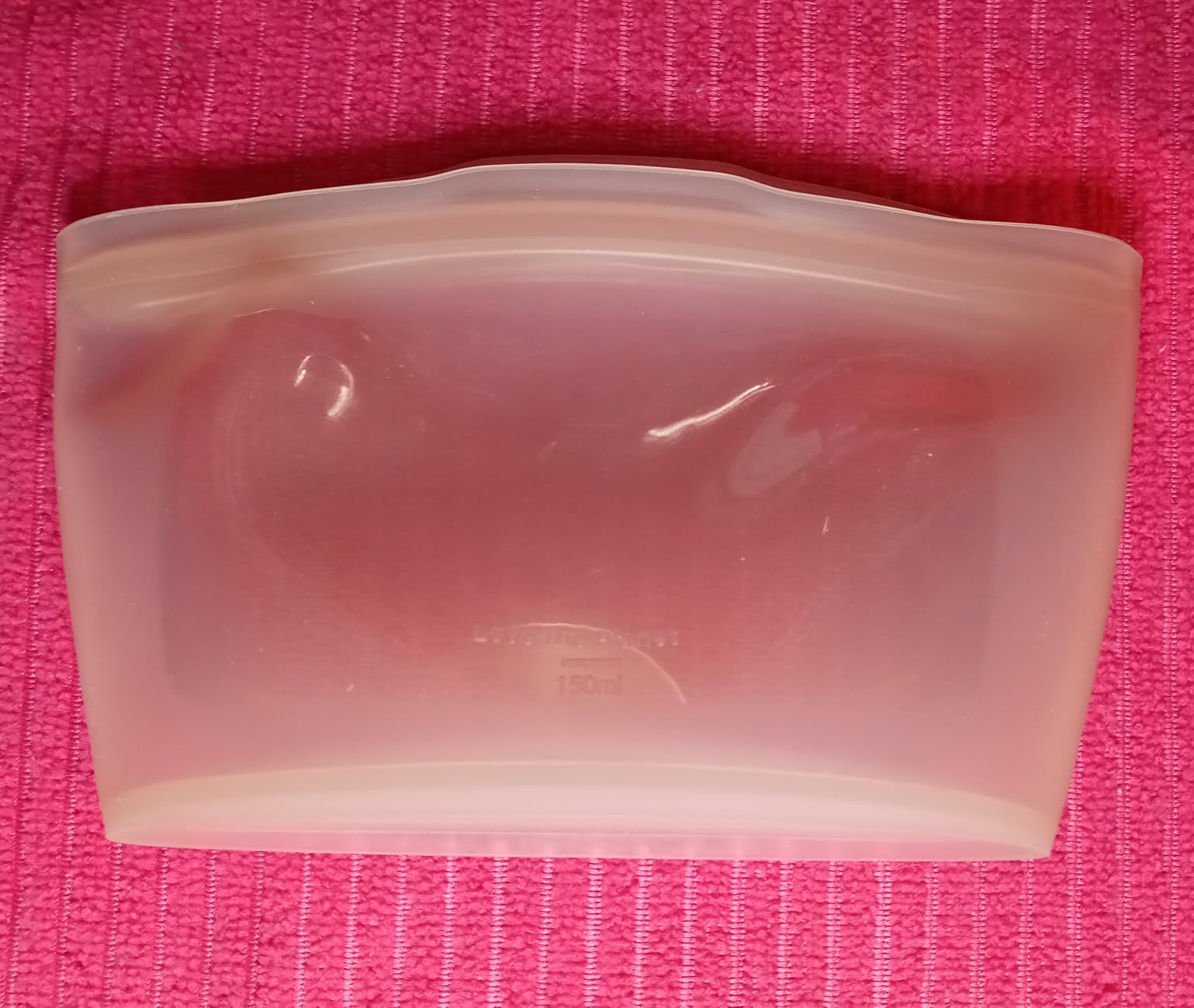
The triple-lock seal is engineered for airtight closure. When properly sealed, this bag locks in nutrients and flavor while preventing any leaks. I stored marinated meat in it horizontally and vertically, and the seal held firm in both orientations. The bag also works in the freezer, microwave, and sous vide cooker.
The main learning curve is the seal. When the bag is new, the silicone zipper can be stiff. I needed two or three attempts to get a proper seal on my first few uses. After about a week of regular use, the mechanism loosened up and became much easier to operate.
Marinating Korean Barbecue Meats Effectively
This bag excels at marinating because the flat design allows maximum surface contact between the meat and the marinade. I marinated galbi in a soy sauce, garlic, and pear mixture, and the meat was evenly coated without needing to flip the bag every few hours.
The 51-ounce capacity holds about 2 pounds of meat plus marinade comfortably. For bulgogi, I was able to fit 3 pounds of thinly sliced beef with the marinade.
Sous Vide and Freezer Applications
The sous vide capability sets this bag apart from rigid containers. I sealed marinated pork belly in the bag and cooked it sous vide at 165 degrees F for 24 hours. The bag performed flawlessly with no leakage or seal failure throughout the extended cooking process.
For freezer storage, the flat design means you can stack multiple bags efficiently. This is exactly the kind of space-saving storage solution that Reddit users have been requesting for Korean kitchen organization.
10. MOMOBIN Silicone Freezer Tray by AGUARD

AGUARD MOMOBIN Silicone Freezer Tray, Made in Korea, Meal Prep, Freeze Food Storage Cubes Trays with Lids for Purees, Soups, Solid Food Fruit Vegitable Brastmilk, Easy and Safe Design
6-cube freezer tray with lids
Made in Korea silicone
Multi-compartment design
Stackable and portable
Pros
- Made in Korea with durable high-quality silicone
- Clear transparent lids for easy content identification
- Multi-compartment design for portion control
- Flat stackable design saves freezer space
- Microwave
- oven
- and dishwasher safe
Cons
- Smaller 6oz per compartment capacity
- More expensive than traditional ice cube trays
- Limited to small portion storage
The MOMOBIN silicone freezer tray from AGUARD is a specialized tool that addresses a specific need in Korean cooking. If you make your own broth, sauces, or baby food, portioning and freezing them in convenient servings is essential. This 6-cube tray, made in Korea, does that job beautifully.
Each compartment holds approximately 6 ounces (177ml), which is a perfect single serving of broth, soup, or sauce. I tested it with homemade dashi (Korean anchovy broth), portioned cooked rice, and blended fruit purees. The flexible silicone makes food removal effortless. You simply push from the bottom of each compartment and the frozen portion pops out cleanly.
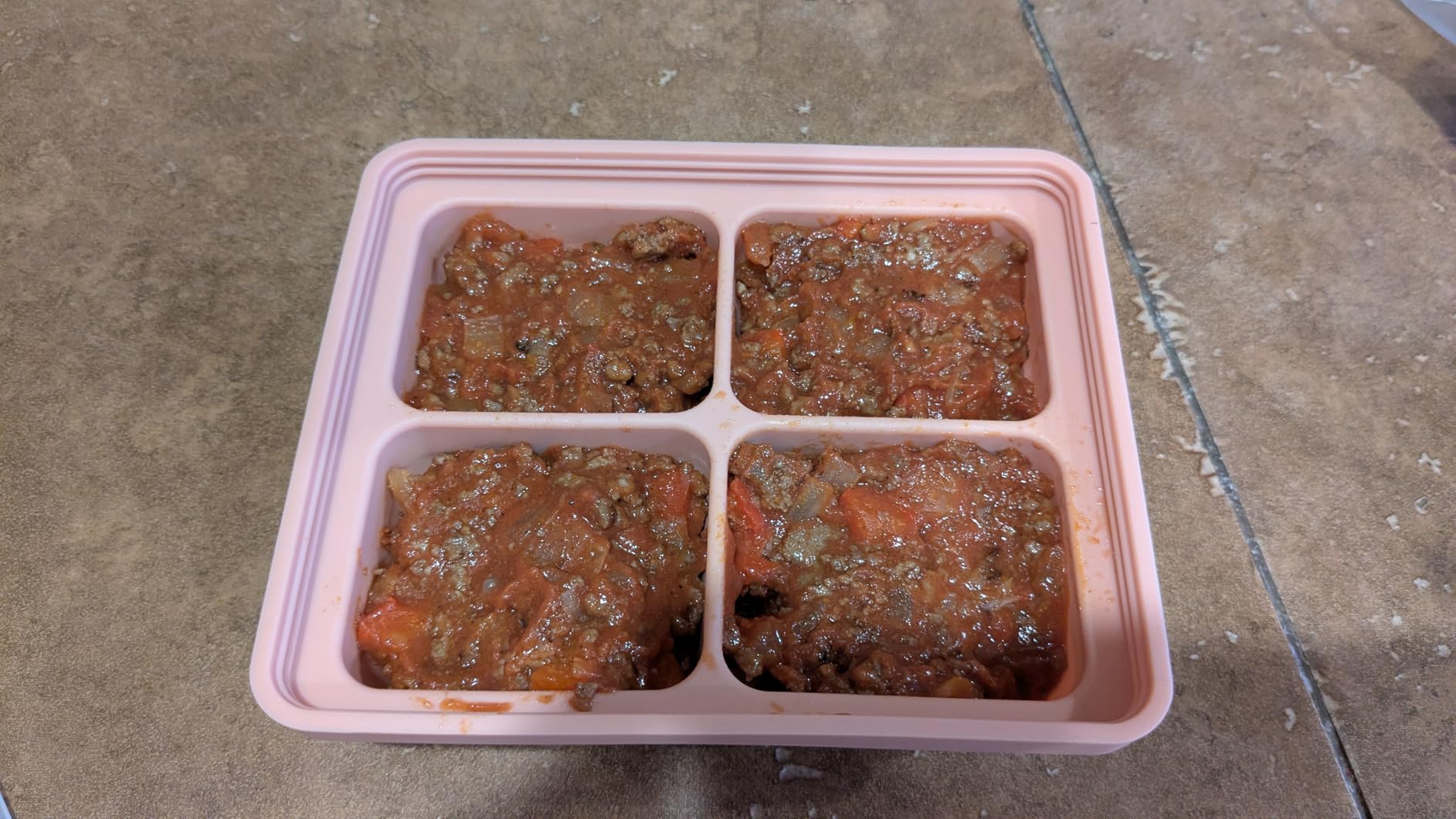
The clear transparent lids are a thoughtful touch. You can see exactly what is in each tray without opening it, which eliminates the mystery of unlabeled freezer items. The lids also protect your food from freezer burn and prevent odors from transferring between items.
The flat, stackable design is where this tray shines in a Korean kitchen context. Korean refrigerators and freezers tend to be smaller than American ones, so vertical stacking efficiency matters. I was able to stack three of these trays in the same footprint that previously held a single bulky container.
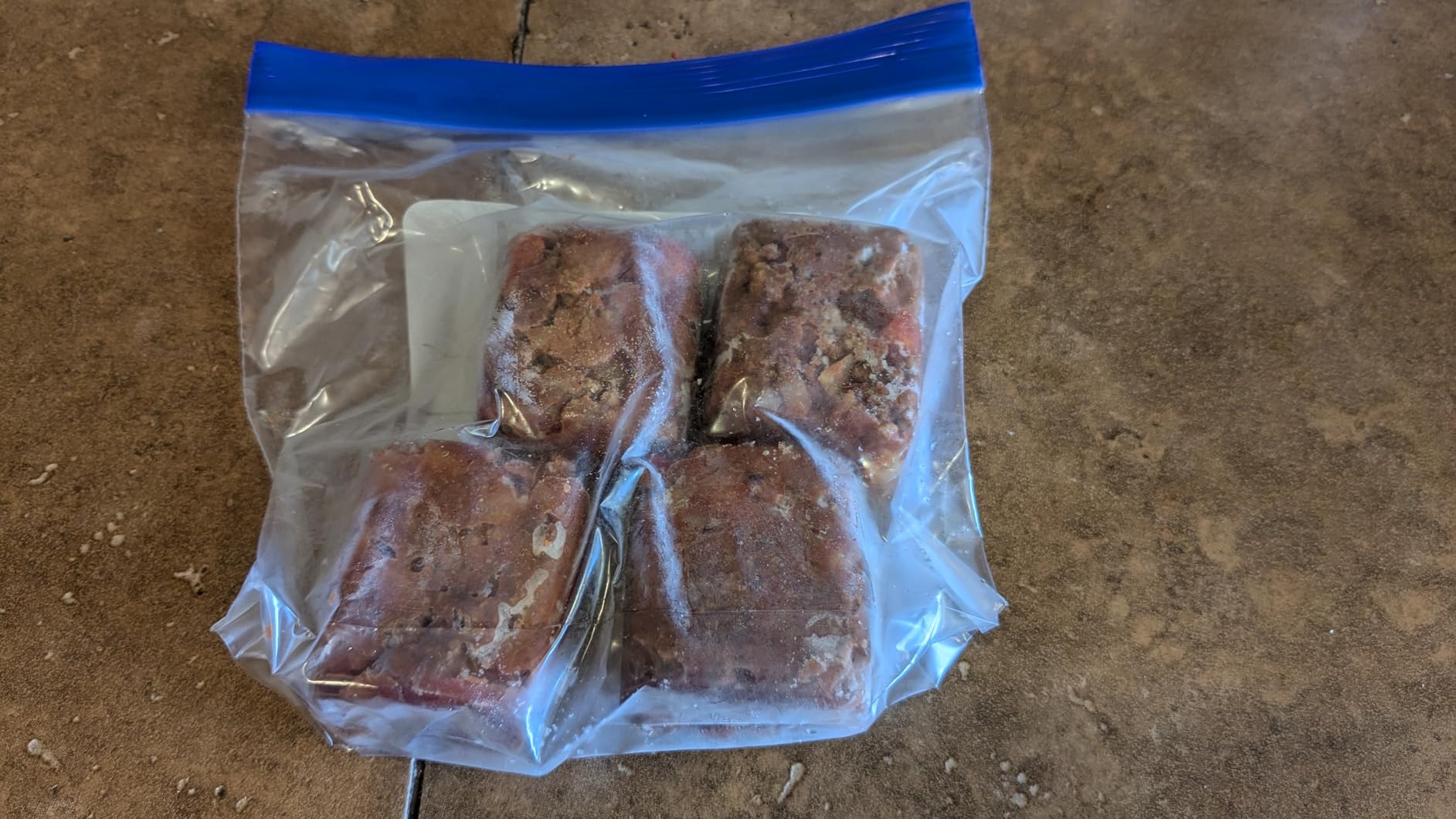
Freezing Korean Broths and Sauces in Portions
Homemade Korean broth (anchovy-kelp broth, beef bone broth, or radish broth) is a staple that most Korean home cooks prepare in large batches. Freezing it in 6-ounce portions means you can grab exactly what you need for a single recipe without thawing a large container.
I froze anchovy broth in this tray and used individual cubes for quick weeknight soups. Each portion was the right amount for a single bowl of doenjang jjigae (soybean paste soup).
Meal Prep and Baby Food Applications
Beyond broth, this tray works excellently for meal prepping Korean side dishes in individual portions. I froze small portions of seasoned spinach, braised lotus root, and stir-fried fish cakes. Each portion thawed quickly in the microwave when I needed a quick side dish.
The tray is also microwave and oven safe, so you can reheat food directly from the freezer. The BPA-free silicone construction ensures safe food contact at any temperature.
11. Glasslock 61oz Glass Food Storage Set of 2

GLASSLOCK 61 Oz Glass Food Storage set of 2 – Large Capacity, Airtight & Leak-Proof, BPA Free Lid with Carry Handle, Microwave, Dishwasher, Fridge & Freezer Safe, Marinating, Sauce, Fruit Storage
Set of 2 containers (61oz each)
Tempered glass with TEMPERMAX technology
4-side latching lid
100% made in South Korea
Pros
- Extra large 61oz capacity per container
- Tempered glass with TEMPERMAX durability technology
- 4-side latching lid with silicone gasket
- Non-porous glass does not absorb odors or stains
- Scratch resistant and recyclable
Cons
- Handle design may break under heavy loads
- Heavier than plastic alternatives
- Dishwasher safe on delicate cycle only
The Glasslock set brings Korean glass storage technology to the table. Made 100 percent in South Korea by SGC Solutions, these containers feature their proprietary TEMPERMAX technology for enhanced glass durability. I tested both containers extensively for marinating, storing, and reheating Korean dishes, and the glass quality is noticeably superior to standard food storage glass.
Each container holds 61 ounces (about 1.8 liters), making them the largest containers in this guide. I used one for marinating large batches of bulgogi overnight and the other for storing bulk kimchi jjigae (kimchi stew). The generous capacity means fewer containers needed for large-batch Korean cooking.
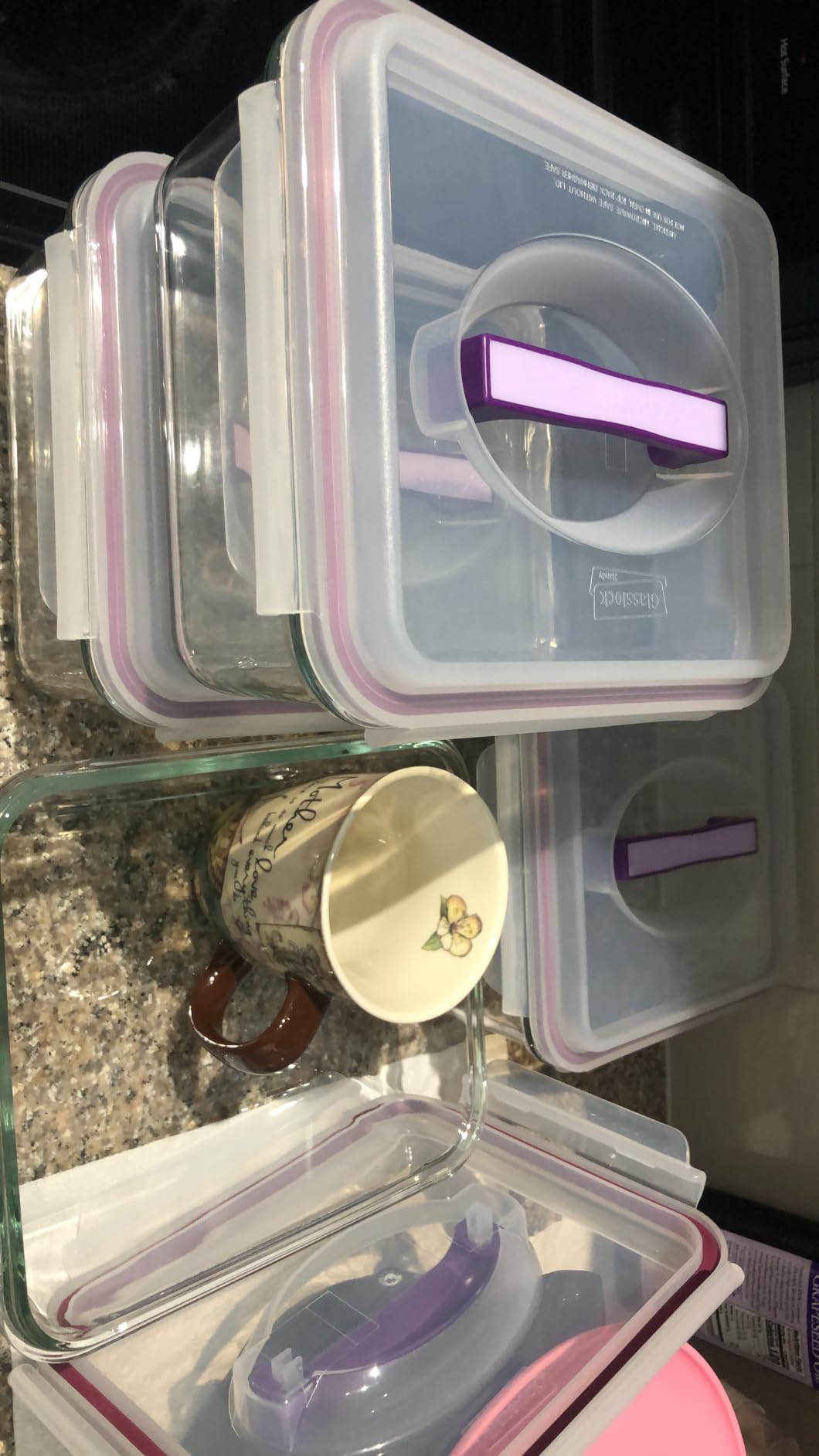
The 4-side latching lid with an optimized silicone gasket creates a genuinely airtight and leak-proof seal. I transported a container full of liquid stew to a friend’s house, and there was zero leakage during the drive. The carry handle on the lid is convenient for transport, though I did note that some users report handle breakage under very heavy loads.
The non-porous glass surface is a significant advantage for Korean cooking. Foods with strong pigments like gochujang, turmeric, and kimchi juice will not stain the glass. The surface also does not absorb odors, which is essential if you are storing pungent Korean fermented foods alongside other items.
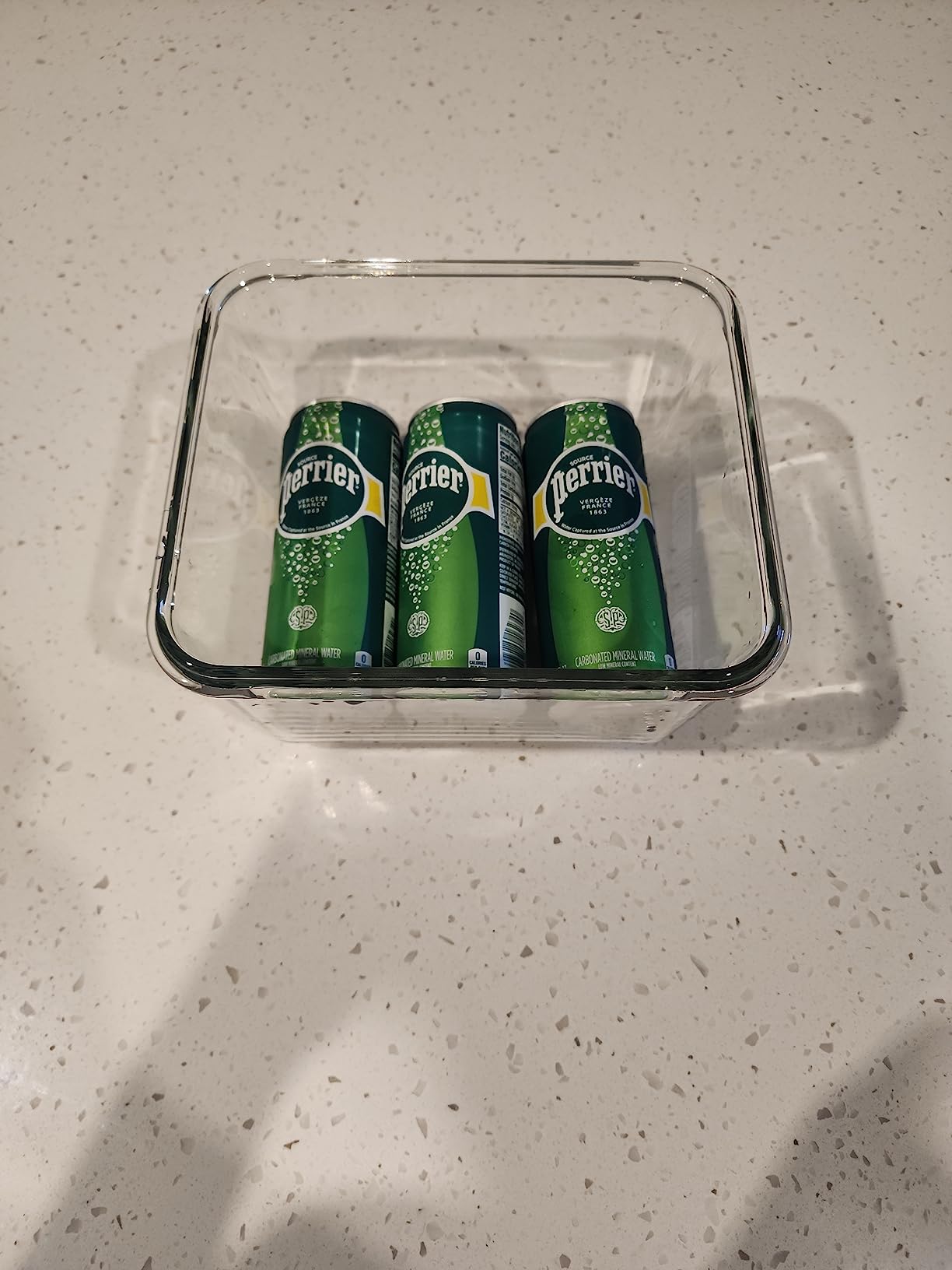
Glass vs Plastic vs Silicone for Korean Food Storage
Glass offers the best odor and stain resistance of any storage material. It is also the most hygienic option since the non-porous surface does not harbor bacteria. For Korean foods that are heavily seasoned, brightly colored, or pungently aromatic, glass is the superior material choice.
The trade-offs are weight and fragility. These Glasslock containers are significantly heavier than their plastic or silicone counterparts. They also require more careful handling, though the TEMPERMAX technology does provide impressive impact resistance compared to standard glass.
Care Instructions and Longevity
The care instructions are more specific than plastic containers. The Glasslock should be washed on the delicate cycle in the dishwasher and should not be used on high microwave settings. These are reasonable precautions for glass containers that, if followed, will give you years of reliable service.
The scratch-resistant surface means these containers will maintain their clarity and appearance much longer than plastic alternatives. Even after weeks of storing abrasive foods like kimchi and gochujang, my test containers showed zero surface scratching.
12. Crazy Korean Cooking Kimchi Container 2-Pack 3.4L

Authentic Crazy Korean Cooking Kimchi Container 0.9 Gal (3.4L) 2 PACK
Set of 2 containers (3.4L each)
Polypropylene with natural clay
Adjustable inner vacuum lid
Sandy brown color blocks light
Pros
- Two containers for simultaneous fermentation
- Adjustable inner vacuum lid system
- Sandy brown color blocks light for proper fermentation
- Combines Onggi principle with modern technology
- BPA and lead-free materials
Cons
- Gas buildup can force inner lid upward during active fermentation
- Inner lid difficult to remove when vent is plugged
- Requires periodic checking during first few days
This 2-pack from Crazy Korean Cooking gives you two 3.4-liter fermentation containers at a solid value. With an 4.8-star rating from 846 reviews, it is one of the highest-rated Korean fermentation products on Amazon. I tested both containers with different kimchi recipes simultaneously, and the results were consistently excellent.
The sandy brown polypropylene construction uses the same Onggi-inspired clay blend as the larger Crazy Korean Cooking container. The 7 to 10 percent natural clay content provides optimal porosity for fermentation, mimicking the microenvironment of traditional Korean earthenware pots. This is not just marketing. The material genuinely affects how your kimchi ferments.
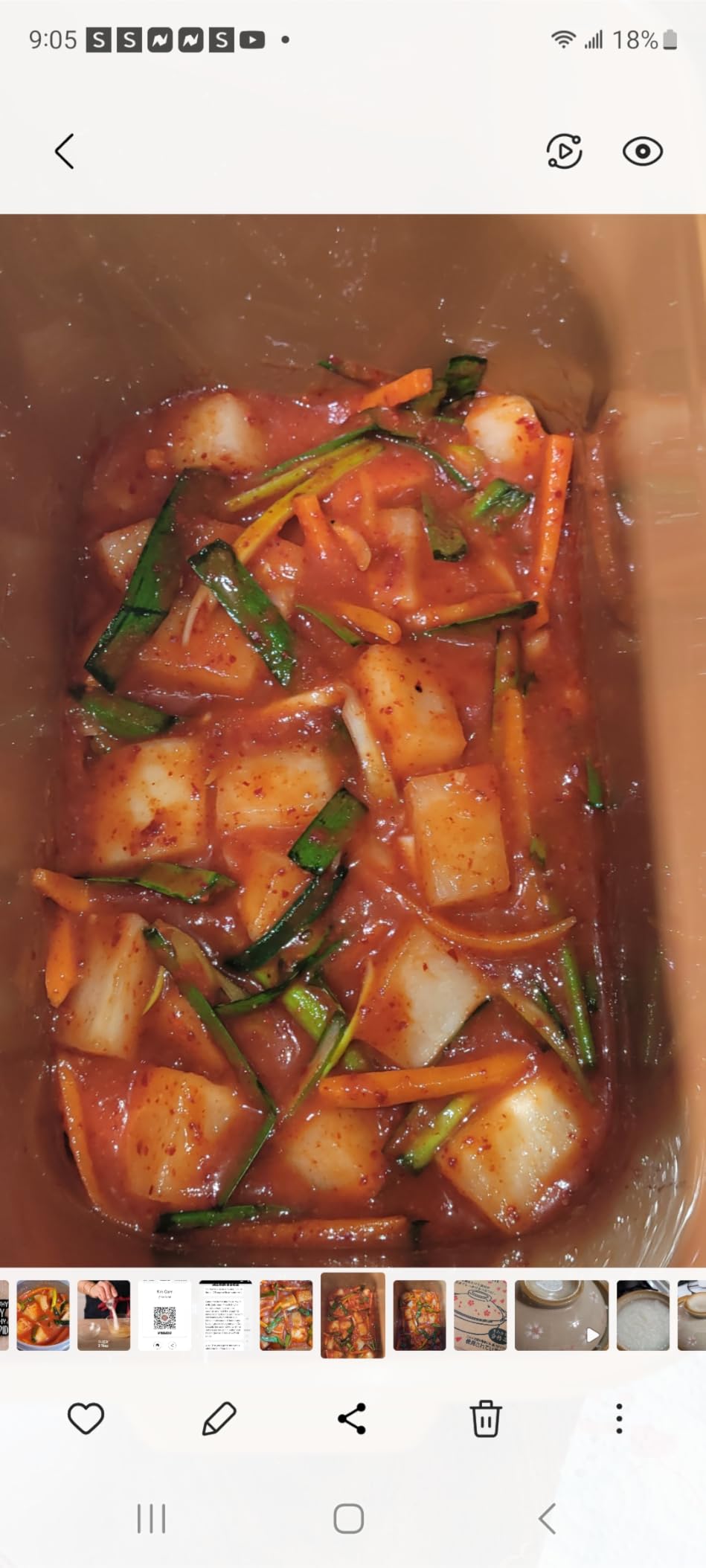
Each container holds 3.4 liters, which is ideal for one head of napa cabbage kimchi. Having two containers means you can ferment different batches simultaneously. I used one for traditional napa cabbage kimchi (baechu kimchi) and the other for cubed radish kimchi (kkakdugi) during the same fermentation period.
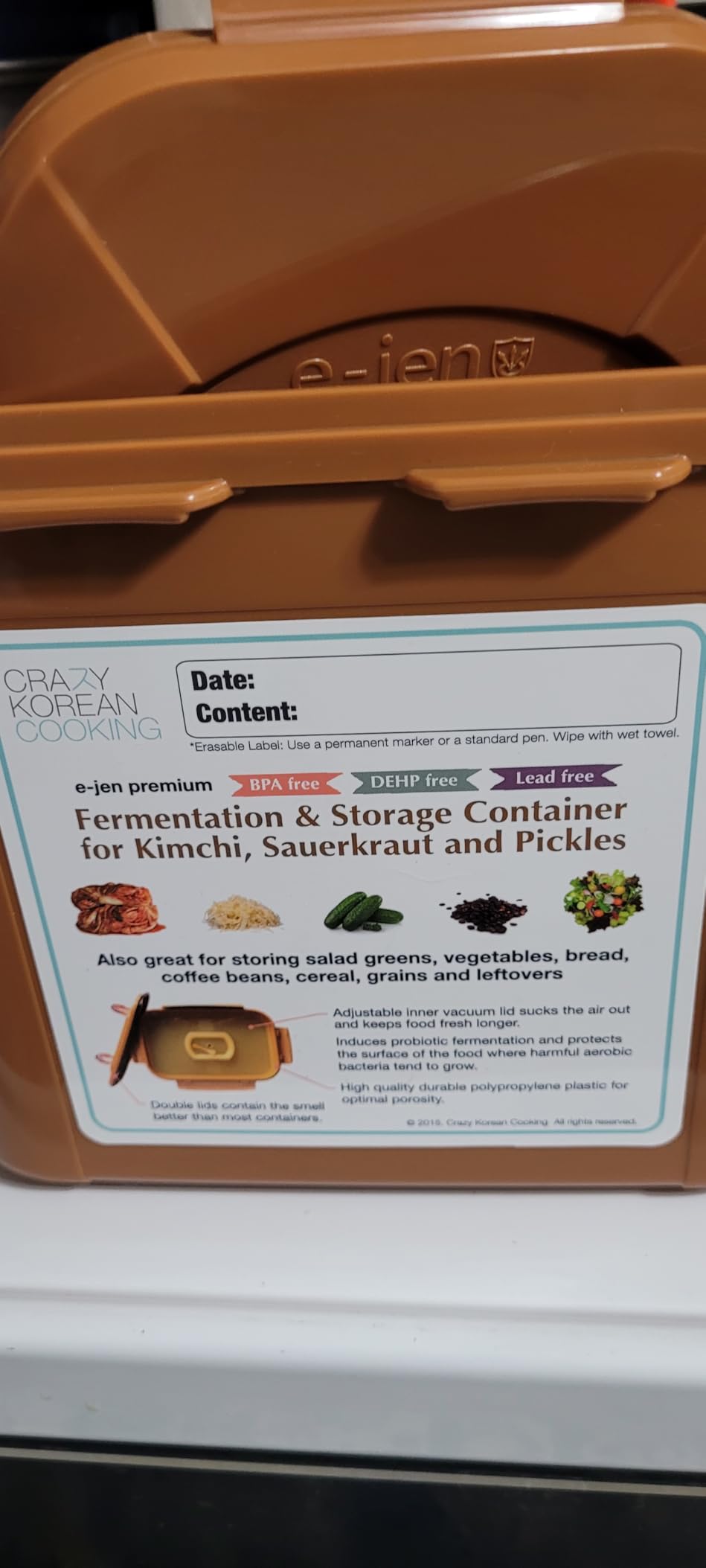
The adjustable inner vacuum lid system is the same proven design as the standalone Crazy Korean Cooking containers. You press the lid down to minimize air inside, which slows decomposition and preserves the crunchy texture and vibrant color of your fermented vegetables. The vent plug allows gas to escape during active fermentation without letting fresh air in.
Managing Active Fermentation in Two Containers
During the first 3 to 5 days of active fermentation, gas buildup can push the inner lid upward. This is normal but requires periodic checking. I checked both containers twice daily during the active phase, pressing the lid back down when needed. The sandy brown color blocks light, which is essential for proper fermentation.
Having two containers running simultaneously let me experiment with different fermentation times. I left one batch fermenting at room temperature for 2 days and the other for 4 days. The difference in sourness was significant and useful for understanding how fermentation timing affects flavor.
Value Comparison with Single Container Options
Buying this 2-pack is more economical than purchasing two individual Crazy Korean Cooking containers separately. Each container in the set performs identically to the standalone versions. If you are serious about Korean fermentation and want to run multiple batches, this 2-pack is the smartest investment in this guide.
The containers are also dishwasher safe, unlike the larger 5.2L Crazy Korean Cooking container. This makes cleanup significantly easier after emptying a batch of fermented vegetables.
How to Choose the Best Korean Kitchen Storage for Your Needs
Choosing the right Korean kitchen storage depends entirely on how you cook and what you store. After testing all 12 products in this guide, I can break the decision down into a few clear factors that will help you find the perfect match for your kitchen.
Material Comparison: Silicone vs Plastic vs Glass vs Stainless Steel
Each material has distinct advantages for Korean food storage. Polypropylene with clay blend, used by Crazy Korean Cooking and e-jen, is the best material for fermentation. The clay content creates the porosity that mimics traditional Onggi pots, giving you authentic fermentation results in a lightweight, durable container.
Silicone, used by Blue Ginkgo, SIMVOLA, and Firgi, is the most versatile material. It handles extreme temperatures from freezer to microwave, does not absorb odors or stains, and is free of BPA, PVC, and phthalates. Choose silicone for everyday food storage, meal prep, and reheating.
Glass, represented by the Glasslock containers, offers superior hygiene and stain resistance. The non-porous surface will never absorb kimchi odors or gochujang stains. Choose glass for long-term storage of strongly flavored or colored foods, but be prepared for the added weight.
Stainless steel, from Namyoung, provides maximum durability and a premium feel. It will last for years and never rust. Choose stainless steel if durability is your top priority and you do not need microwave-safe containers.
Matching Container Type to Your Cooking Habits
If you make kimchi regularly, you need a dedicated fermentation container. The e-jen series and Crazy Korean Cooking containers are purpose-built for this task. The adjustable inner lids and double-lid systems create the anaerobic conditions that beneficial bacteria need. For beginners, start with the e-jen 3.4L or the Crazy Korean Cooking 2-pack.
For everyday banchan storage and portion control, the Blue Ginkgo silicone 3-pack and SIMVOLA single-serve containers are ideal. Their nesting designs save cabinet space, and the temperature versatility means you can store, freeze, and reheat in the same container.
If you batch-cook and freeze portions, the MOMOBIN freezer tray and Firgi silicone bag are your best tools. The tray portions broths and sauces into convenient servings, while the bag handles larger quantities of marinated meats and bulk ingredients.
Small Kitchen and Apartment Solutions
Korean kitchen design is built around the reality of small apartment kitchens. If you have limited space, prioritize containers that nest, stack, or serve multiple purposes. The Blue Ginkgo nesting set is the most space-efficient option, collapsing to the footprint of a single container when not in use.
For freezer space specifically, the Reddit community has highlighted the need for flat, wide containers that stack efficiently. The Firgi silicone bag and MOMOBIN freezer tray both address this need, laying flat in your freezer to maximize vertical space. The SIMVOLA container is also compact enough for tight freezer shelves.
Size Guide for Different Household Needs
For 1 to 2 people, the e-jen 1.7L, SIMVOLA 12oz, and Blue Ginkgo small containers are the right scale. For 3 to 4 people, the e-jen 3.4L, Crazy Korean Cooking 3.4L 2-pack, and LocknLock 4.5L provide adequate capacity. For 5 or more people, the e-jen 7.4L and Glasslock 61oz set offer the volume you need.
Consider buying containers in sets of different sizes rather than all the same capacity. A typical Korean kitchen needs one large fermentation vessel, several medium storage containers, and a few small single-serve containers for side dishes and portions.
FAQs
Which brand is best for kitchen storage containers?
For Korean kitchen storage specifically, e-jen and Crazy Korean Cooking are the top brands for fermentation containers. e-jen has over 4,000 reviews with a 4.7-star average, making it the most popular choice for kimchi fermentation. Blue Ginkgo is the best brand for silicone storage containers, known for their Seoul-designed nesting sets made from premium food-grade silicone. Glasslock is the leading brand for glass storage, offering Korean-made tempered glass containers with TEMPERMAX technology.
Is there a Korean Amazon?
There is no direct Korean equivalent of Amazon. The closest alternatives are Coupang and GMarket, which are the largest e-commerce platforms in South Korea. However, most popular Korean kitchen storage brands including Blue Ginkgo, e-jen, and Crazy Korean Cooking sell their products on Amazon US, so you can purchase authentic Korean-made containers without needing to use proxy services or shop on Korean websites.
What is the best brand of food storage containers?
The best brand depends on your storage needs. For fermentation, e-jen and Crazy Korean Cooking are the top-rated brands with proven Onggi-inspired designs. For silicone containers, Blue Ginkgo is the premium choice with products made in South Korea. For glass storage, Glasslock offers superior Korean-made tempered glass with airtight seals. For stainless steel, Namyoung provides heavy-duty containers made in Korea. Each brand specializes in a different material and use case.
Which pantry storage containers are best?
The best pantry storage containers for a Korean kitchen are airtight, stackable, and made from non-reactive materials. For dry goods like rice, dried anchovies, and seasonings, the Glasslock glass containers and Namyoung stainless steel containers are excellent choices because they do not absorb odors. For flexible pantry storage, the Blue Ginkgo silicone nesting set works well for organizing smaller quantities. Always choose containers with airtight seals to protect Korean ingredients like gochugaru (chili flakes) and dried seaweed from moisture.
Final Thoughts on Korean Kitchen Storage
Finding the best Korean kitchen storage on Amazon transformed how I cook and organize my kitchen. The right containers make kimchi fermentation reliable, keep banchan fresh for longer, and save significant space in small kitchens. After testing all 12 products in this guide, my top recommendation for serious fermenters is the Crazy Korean Cooking Premium Fermentation Container for its Onggi clay blend technology. For everyday versatility, the Blue Ginkgo silicone nesting set is unmatched in space-saving design. And for the best value fermentation vessel, the e-jen series with its 4,000-plus reviews and proven pressing-plate system is hard to beat.
The beauty of Korean kitchen storage is that every product solves a specific problem rooted in real Korean cooking traditions. Whether you are fermenting your first batch of kimchi in 2026 or organizing banchan for a week of meals, investing in purpose-built Korean containers will make your cooking experience noticeably better. Pick the material and size that matches your kitchen, and start enjoying the difference that thoughtful Korean design makes.