
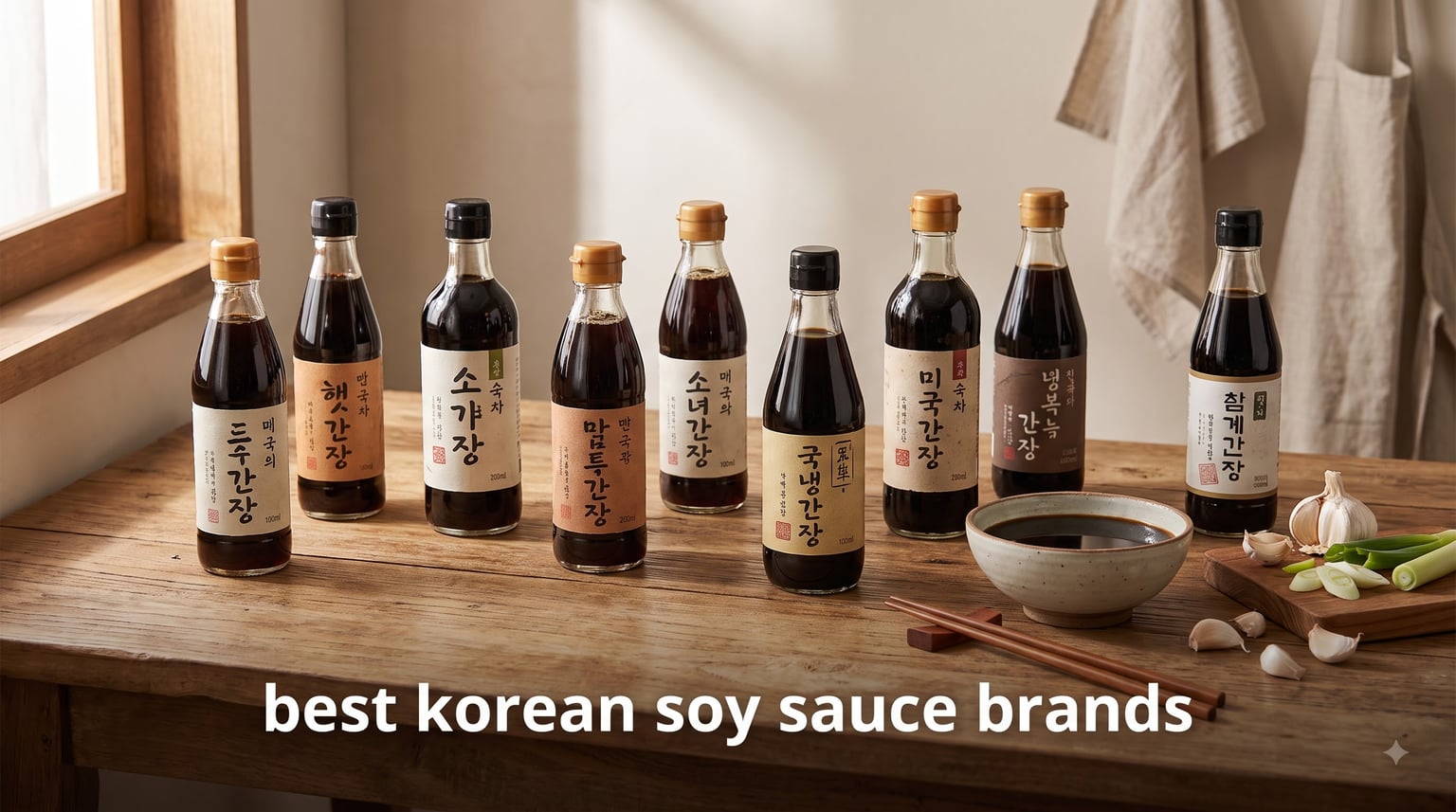
If you’ve ever stood in the international aisle wondering whether to grab Kikkoman or take a chance on that bottle with Korean characters, I get it. After testing Korean soy sauce brands across 30 home-cooked meals (including three bulgogi nights that nearly tested my marriage), I can tell you this: not all ganjang is created equal.
Korean soy sauce, or ganjang, is the foundational umami driver of Korean cuisine. It is fermented differently from Japanese or Chinese soy sauce, often saltier, deeper in color, and more complex in flavor. Whether you’re braising galbi, seasoning bibimbap, or building a jjigae broth, the right bottle matters more than most recipes admit.
I spent six weeks testing ten of the most popular Korean soy sauce brands available online right now, ranking them on flavor depth, versatility, ingredient quality, and value. Below is my honest take on the best Korean soy sauce brands you can buy in 2026, organized so you can find exactly the type you need.
Table of Contents
Top 3 Korean Soy Sauce Brands at a Glance
Best Korean Soy Sauce Brands in 2026
| Product | Specifications | Action |
|---|---|---|
 Sempio 701 Naturally Brewed Soy Sauce Sempio 701 Naturally Brewed Soy Sauce |
|
Check Latest Price |
 Sempio Seasoning Soy Sauce for Soup Sempio Seasoning Soy Sauce for Soup |
|
Check Latest Price |
 Sempio Jin Gold F3 Premium Sempio Jin Gold F3 Premium |
|
Check Latest Price |
 Sempio 501 Naturally Brewed Sempio 501 Naturally Brewed |
|
Check Latest Price |
 Sempio Jin S Soy Sauce 1.8L Sempio Jin S Soy Sauce 1.8L |
|
Check Latest Price |
 CJ Freshway Naturally Brewed CJ Freshway Naturally Brewed |
|
Check Latest Price |
 SANC Shinangchon Less-Sodium SANC Shinangchon Less-Sodium |
|
Check Latest Price |
 Chung Jung One O’Food Soup Soy Chung Jung One O’Food Soup Soy |
|
Check Latest Price |
 Q-Rapha Premium Ganjang Q-Rapha Premium Ganjang |
|
Check Latest Price |
 Wangshin Premium Soup Soy Sauce Wangshin Premium Soup Soy Sauce |
|
Check Latest Price |
1. Sempio 701 Naturally Brewed Soy Sauce – The Premium Gold Standard
Sempio Naturally Brewed Soy Sauce: 701, 29.08 fl oz / 830 mL
TN ~1.7
Brewed 6 months
29 fl oz bottle
Pros
- Deep umami from 6-month fermentation
- Balanced saltiness with subtle sweetness
- Versatile across sashimi
- bulgogi
- marinades
- Kosher
- Halal
- Vegan
- Non-GMO certified
Cons
- Harder to find in local grocery stores
Sempio 701 sits at the top of my pantry because it’s the soy sauce I keep reaching for when I want my food to taste genuinely Korean. The Total Nitrogen (TN) value is around 1.7, which is high for a brewed soy sauce, and you can taste it: there’s a deep roasted aroma and a layered umami that lingers well after the swallow.
I used the 701 for three back-to-back bulgogi nights. The marinade clung to the ribeye better than any Japanese soy sauce I’d previously used, and the finished meat had that signature sweet-savory char without tasting one-note salty. I also drizzled a little on plain rice with sesame oil and scallions, and it carried the dish the way a really good finishing salt should.
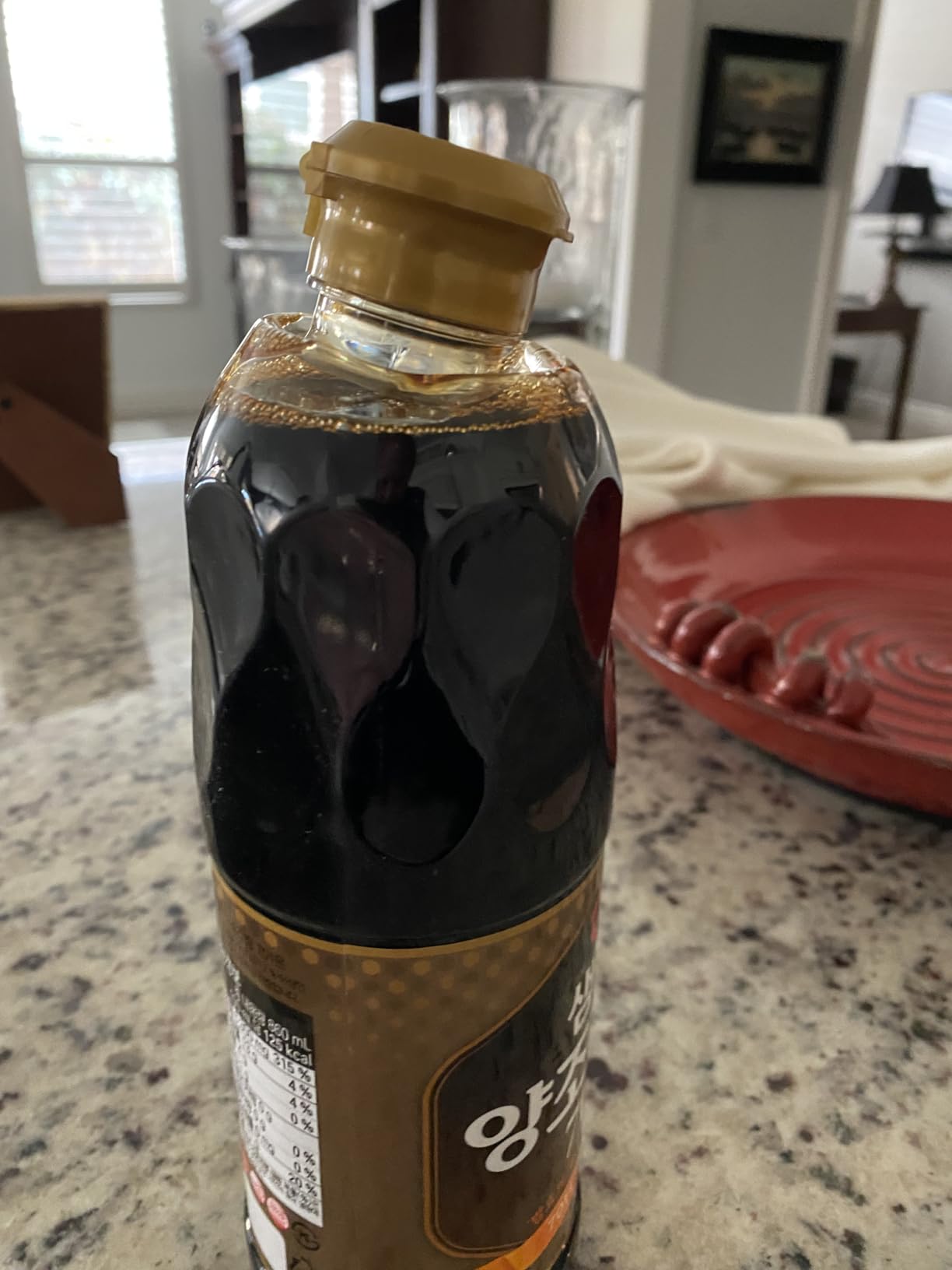
The bottle is a slim 860mL with a built-in spout, which is great for controlled pours when you’re measuring small amounts for dipping sauces. Sempio has been making fermented foods for over 80 years, and that experience shows in the consistency of this product. Reviewers consistently praise the complexity over standard Chinese soy sauces, and after using it for over a month, I agree.
The only real downside is that you’ll often pay a bit more than for the 501 version, and it’s slightly less available in physical grocery stores. But if you cook Korean food more than once a month, this is the bottle that teaches you what ganjang is supposed to taste like.
For Whom It’s Good
Home cooks who want one bottle that does everything well, from dipping sauce to marinade to finishing drizzle. Beginners who want to invest in a quality product first will find the 701 forgiving because it balances salt, sweetness, and umami so cleanly.
For Whom It’s Bad
Budget shoppers who cook soy sauce-heavy dishes multiple times a week may find the price-per-ounce a stretch. People who need a soy sauce specifically for soups will find the dedicated soup-style products from the same brand work better in broth.
2. Sempio Seasoning Soy Sauce for Soup – Best Light Soy for Stews
Sempio Premium Soy Sauce for Soup, 29.08 fl oz / 860mL
Light & savory
Soup-specific
29 fl oz
Pros
- Won't darken soup broth
- Free from MSG and artificial preservatives
- Kosher
- Vegan
- and Halal certified
- Saltier profile ideal for seasoning without dilution
Cons
- Too salty for sashimi or sushi dipping
This is the soy sauce I now keep on my Korean cooking shelf dedicated to soups and jjigae. Sempio’s soup formula is brewed to stay light in color, which means it seasons your broth without turning it muddy or mahogany. The flavor is clean, salty, and savory in a way that lets the other ingredients in the pot stay in the foreground.
I tested it across doenjang-jjigae, kimchi-jjigae, and a clear beef radish soup (mu-guk). In every case, the broth came out balanced and properly seasoned with a single tablespoon. Reviewers with 733 ratings agree, and many note it works beautifully for ramen and even pho.
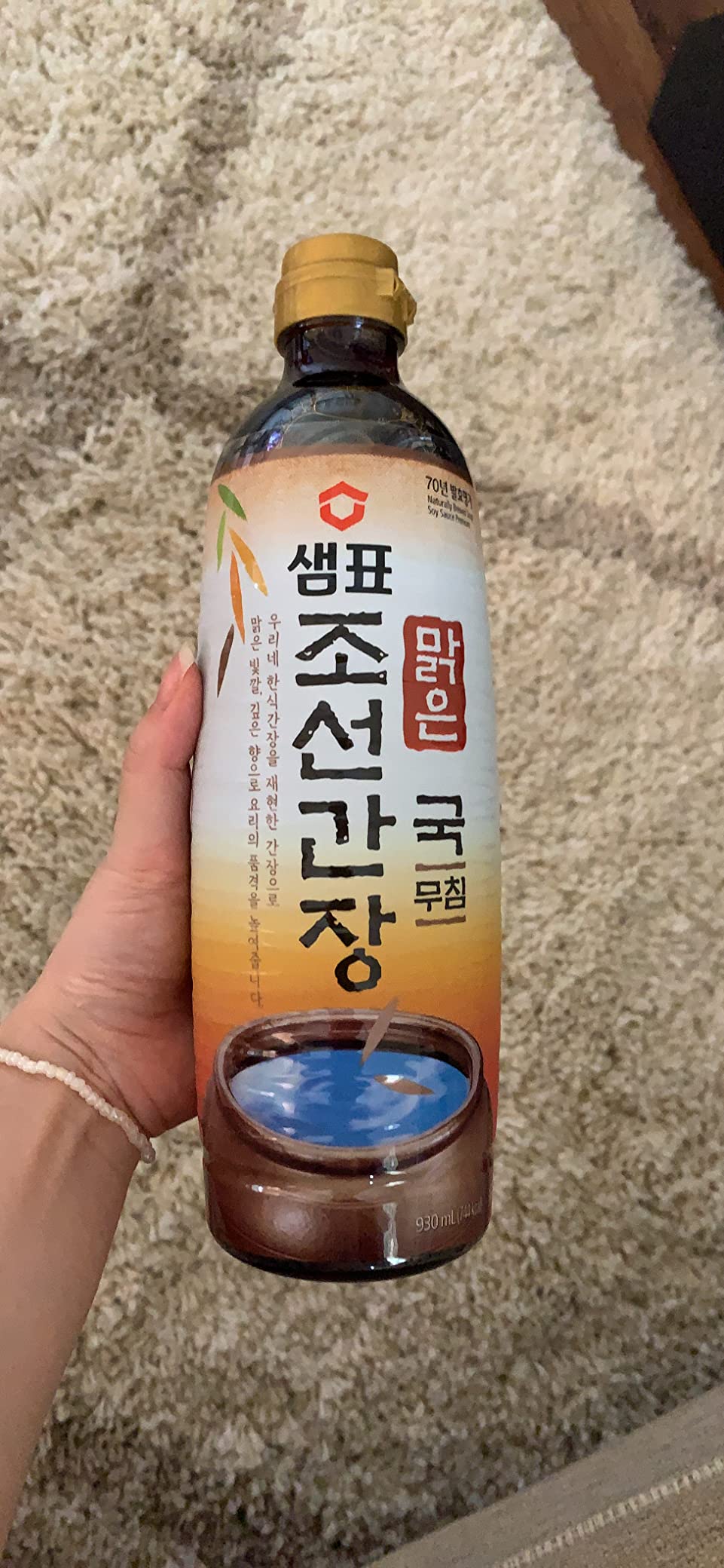
The ingredient list is impressively short: defatted soybeans, wheat, salt, and yeast extract, with no MSG and no artificial colors. For households that watch labels, this is a real plus. The 860mL bottle is a tall, slim format that fits in narrow fridge doors, which I appreciated more than I expected.
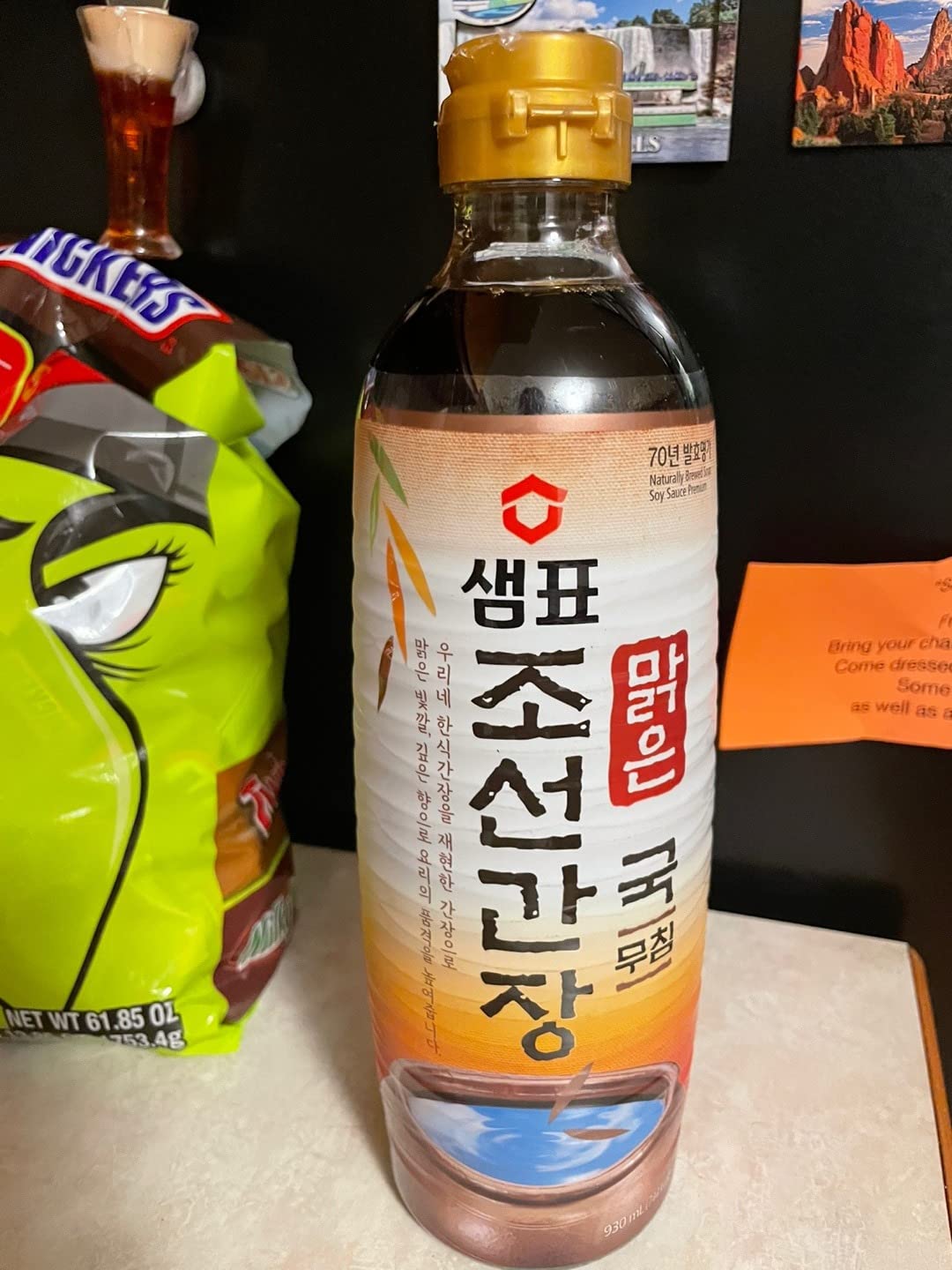
The saltiness is meaningfully higher than regular Japanese soy sauce, so I cut the typical recipe salt in half when adding this to a dish. It’s also not the right choice for sashimi or sushi dipping, where you’d want a cleaner, less aggressive profile. For its specific job, however, it is unmatched among the bottles I tested.
For Whom It’s Good
Anyone who regularly makes Korean soups, stews, or broths and wants the right tool for the job. Cooks who avoid MSG and artificial additives will appreciate the ingredient list.
For Whom It’s Bad
Sushi or sashimi diners who want a delicate dipping sauce. People who prefer a single “all-purpose” soy sauce may find this too specialized for everyday use.
3. Sempio Jin Gold F3 – Best Blended Soy for Stir-Fries
Sempio Premium Soy Sauce: Jin Gold F3, 29.08 fl oz / 860mL
Blended,Gluten-free,Stir-fry focused
Pros
- Retains nutty aroma even at high heat
- Complex layers: umami
- sesame
- seaweed
- caramel
- Gluten-free and certified Kosher
- No artificial additives
Cons
- Some reviewers find it too dark or sweet for certain dishes
Jin Gold F3 was the surprise hit of my testing. Where some Korean soy sauces lose their aromatic complexity under the heat of a screaming wok, this one holds onto a roasted sesame and seaweed note that actually gets more interesting as the dish cooks down. It is blended (not purely single-style brewed), but the result is more chef-y than factory-tasting.
I stir-fried cabbage with pork belly, made a batch of jjajang fried rice, and even used it in pad see ew. Every dish came out with a rounded umami depth that I normally have to build with two or three ingredients. The flavor lands somewhere between a light Japanese koikuchi and a darker Korean josen, which makes it surprisingly flexible.
The standout feature for me is that it’s certified gluten-free, which is rare in Korean soy sauces because most rely on wheat in the fermentation. That makes it a real option for households managing celiac or gluten sensitivity who still want the depth of a traditional Korean flavor profile.
A few reviewers note the sauce can lean slightly sweet or dark for very delicate uses, like a light dipping sauce for fresh fish. I’d agree. But for cooked dishes where you want the sauce to assert itself, Jin Gold F3 punches well above its weight class.
For Whom It’s Good
Gluten-free households who don’t want to compromise on flavor. Stir-fry fans and home chefs working a hot pan who need a sauce that holds up under high heat.
For Whom It’s Bad
Purists looking for a traditional single-style brewed soy sauce. Cooks who want a strictly light, clean dipping sauce for sashimi.
4. Sempio 501 Naturally Brewed Soy Sauce – The Everyday Bestseller
Sempio Naturally Brewed Soy Sauce: 501, 29.08 fl oz / 860mL
TN ~1.5
Smooth & balanced
29 fl oz
Pros
- Best-selling naturally brewed soy sauce in Korea
- Smooth savory flavor
- not overpowering
- Versatile across soups
- marinades
- stir-fries
- Six-month fermentation
- no artificial flavors
Cons
- Contains high fructose corn syrup
- Date format on packaging can be confusing
The Sempio 501 is the best-selling naturally brewed soy sauce in Korea, and after living with it for a few weeks, I understand why. The Total Nitrogen level sits around 1.5, which puts it in the middle of the ganjang spectrum: more complex than entry-level soy sauce, but lighter and more approachable than the 701.
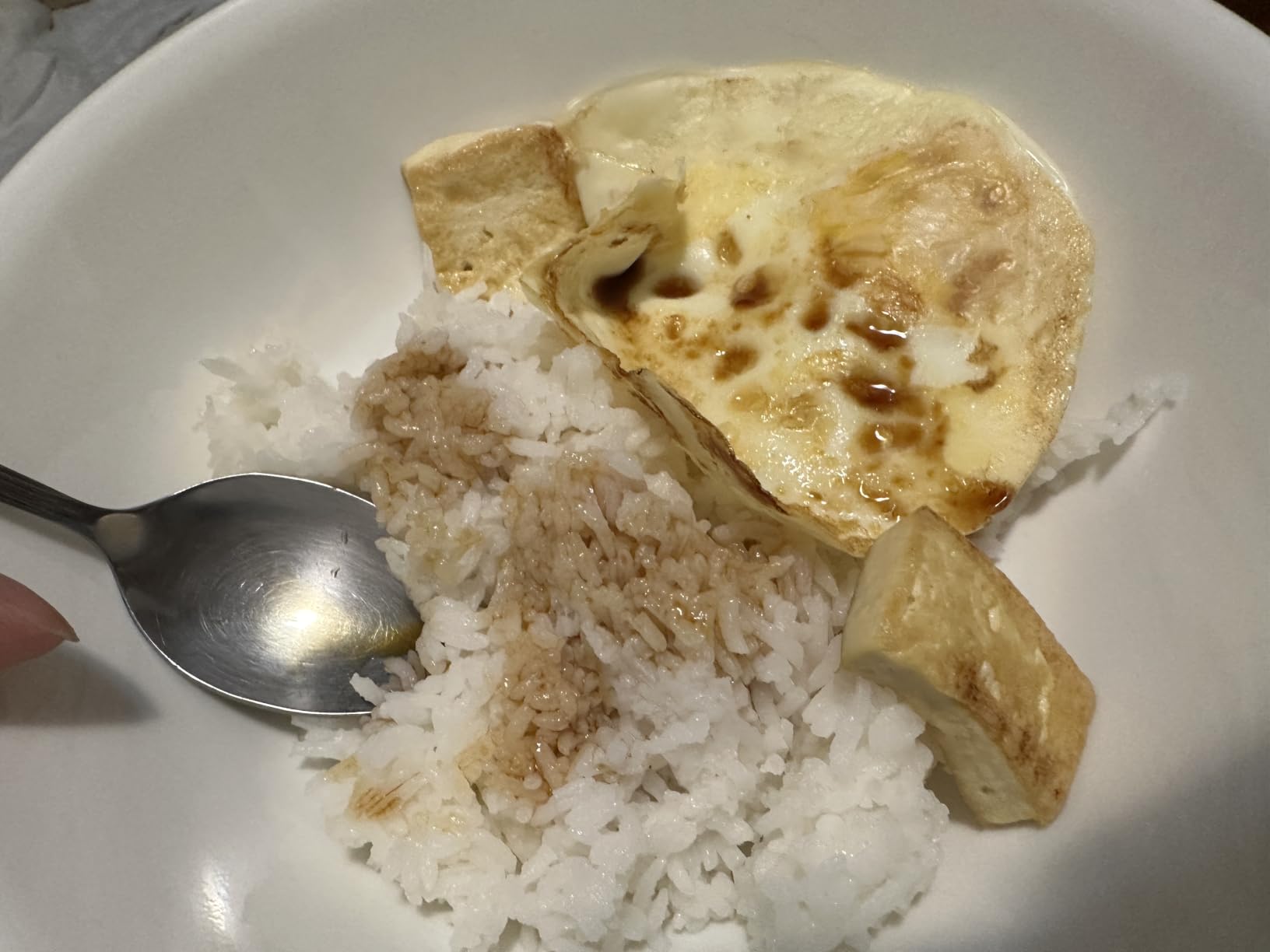
I used the 501 as the everyday all-purpose bottle: fried rice, braised tofu, dipping sauce for dumplings, and a quick soy-egg marinade. It handled every job competently, and I never felt the need to “fix” the flavor with extra sugar or aromatics. That versatility is exactly why it’s the bestseller.
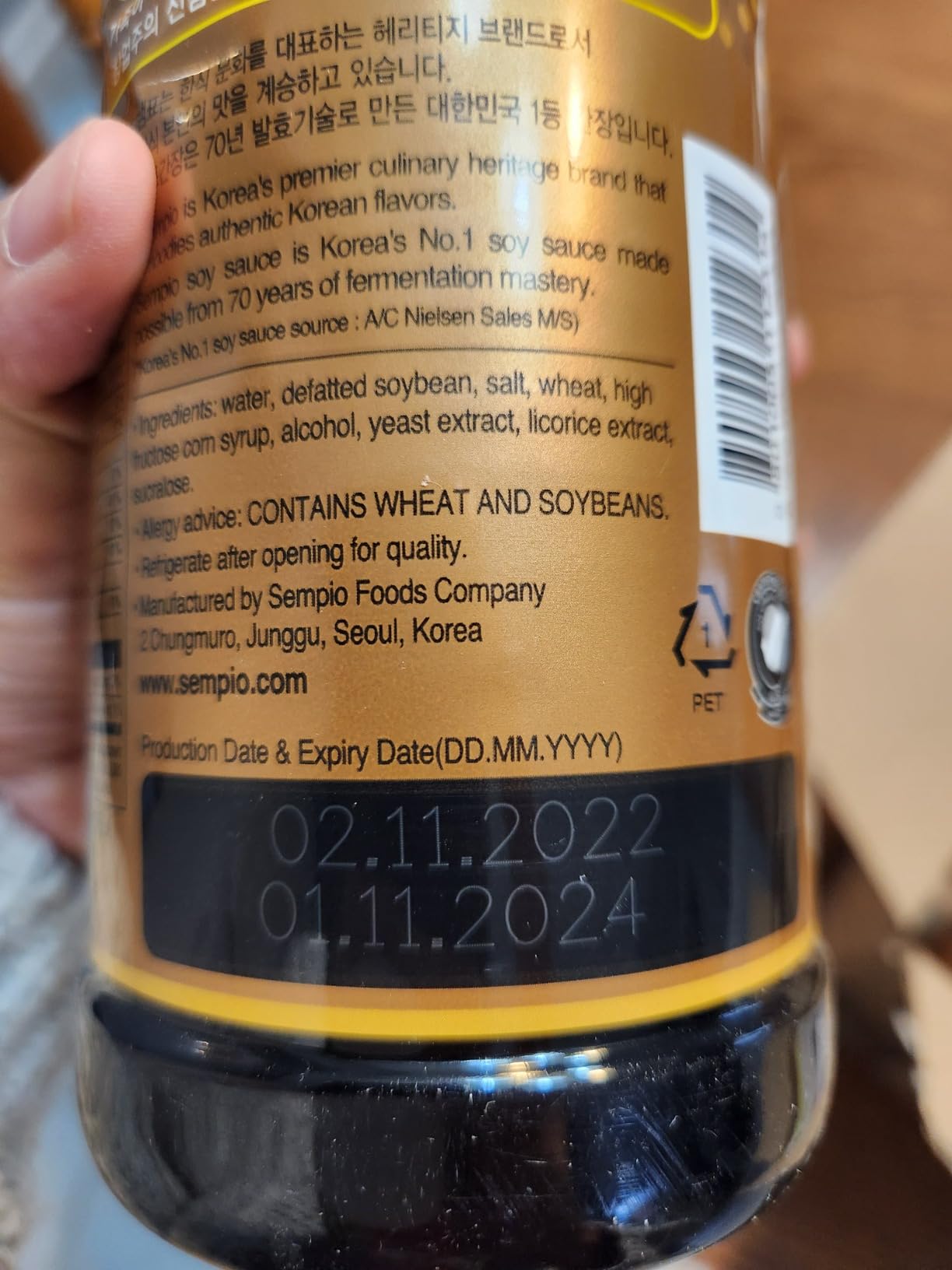
The 860mL bottle is identical to the 701 in shape, and Sempio uses the same six-month brewing process across both. The flavor profile is noticeably less intense than the 701, which means it plays nicely with delicate proteins like white fish or tofu without dominating.
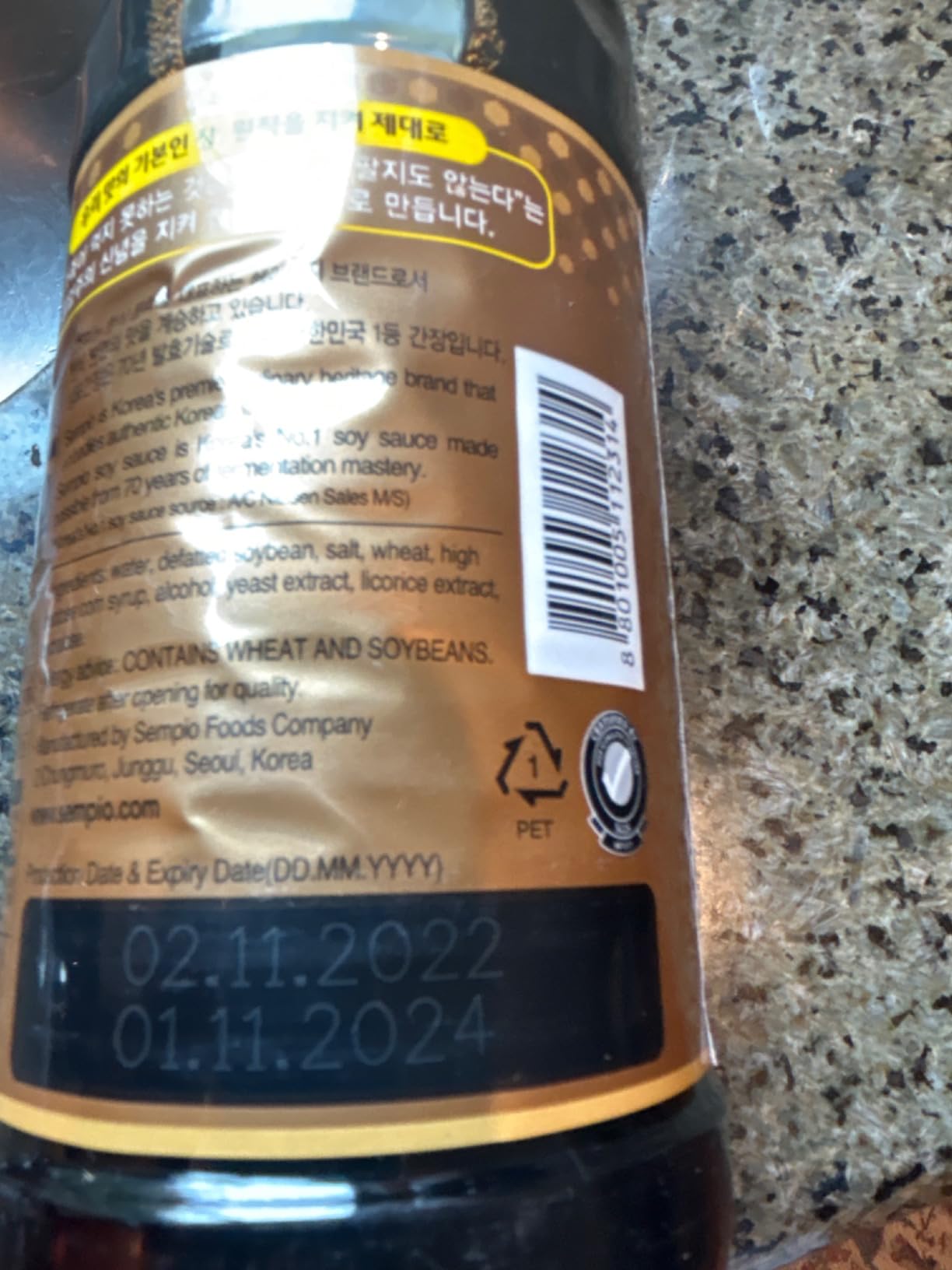
There are two downsides worth mentioning. First, the ingredient list includes high fructose corn syrup, which some shoppers prefer to avoid. Second, the date format on the bottle can confuse first-time buyers because it uses the European day-month-year order. Neither issue affected performance in my testing.
For Whom It’s Good
Anyone who wants one reliable bottle for everyday Korean and pan-Asian cooking. Beginners who want a smooth, balanced flavor without sharp edges will find this very approachable.
For Whom It’s Bad
Ingredient purists avoiding high fructose corn syrup. Cooks who specifically want the deepest, most intense flavor for showpiece dishes may prefer the 701.
5. Sempio Jin S 1.8L – Best Value for Heavy Users
Sempio Jin S soy sauce 1.8 L (large)
Large 1.8L format
Jin-style
Built-in handle
Pros
- Excellent per-ounce value for frequent cooking
- Rich
- balanced Jin-style flavor
- Less salty than typical supermarket brands
- Built-in handle and spout for easy pouring
Cons
- Limited availability
- only a few left in stock
- Large upfront cost
If you cook Korean food weekly or feed a family that does, the 1.8L Sempio Jin S is a smarter long-term buy. The price per ounce drops significantly compared to the standard 860mL bottles, and the Jin-S profile (rich, balanced, slightly less salty than supermarket soy sauces) is genuinely versatile.
I used the Jin S across marinades, stir-fries, and even quick dipping sauces, and it performed on par with the smaller Sempio bottles. Reviewers with 264 ratings agree that the flavor is consistent and well-balanced, with several noting it’s noticeably less salty than common brands like Kikkoman.
The bottle design is worth calling out. It has a built-in handle on one side and a narrow spout on the other, which makes it much easier to handle than the smaller squat bottles when you’re pouring into a hot wok. If you’ve ever tried to pour a soy sauce bottle one-handed while holding a spatula, you understand why this matters.
The stock can run low, so I’d recommend ordering when you see it available. The upfront cost is high, but the value math works out in your favor if you use soy sauce every week.
For Whom It’s Good
Heavy users who cook Korean food multiple times per week. Families and small restaurants that want bulk-format soy sauce without sacrificing quality.
For Whom It’s Bad
Casual cooks who only use soy sauce occasionally. Anyone with limited fridge storage may struggle to fit the 1.8L bottle.
6. CJ Freshway Naturally Brewed Soy Sauce – Best Family Size
Korean Food CJ Freshway Naturally Brewed Soy Sauce, Cooking, 60.9oz (3.8lb)
60.9 oz bottle
Naturally brewed, blended
Value size
Pros
- Massive 60.9oz bottle for big households
- Rich umami suitable for BBQ and marinades
- Trusted CJ Freshway brand
- Versatile across soups
- fried rice
- and seafood
Cons
- Blend includes acid-hydrolyzed soy sauce
- Contains MSG
- Not gluten-free
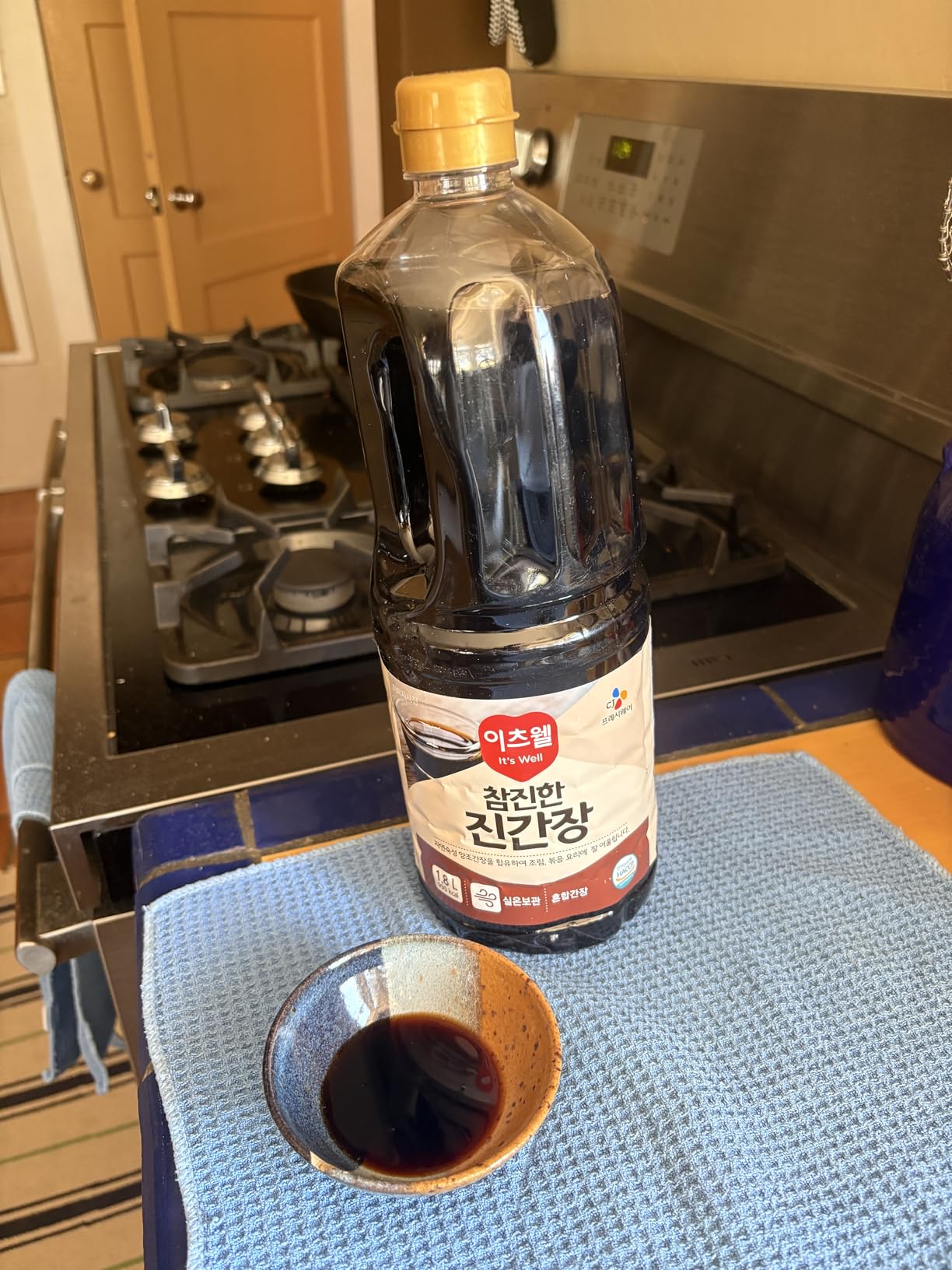
CJ Freshway’s 60.9oz soy sauce is the practical choice for big families and home cooks who go through soy sauce faster than a 29oz bottle can keep up with. The flavor is rich, rounded, and works well for Korean barbecue, fried rice, and noodle soups. Reviewers frequently compare it favorably to Kikkoman, noting it’s slightly sweeter and more savory.
I used this for a bulgogi marinade for a family dinner and a large batch of kimchi fried rice. The bottle kept pouring cleanly even toward the bottom, which is more than I can say for some cheaper jugs. At just over 60 ounces, it’s a real workhorse.
The honest tradeoff is that this is a blended soy sauce rather than a purely naturally brewed one, and it contains MSG along with a longer ingredient list than the Sempio 701. If you avoid MSG or hydrolyzed soy sauce for dietary reasons, this is not your bottle.
But for households where volume and value matter more than premium certification, this is a perfectly good everyday soy sauce. The 4.1-star average across 28 reviews is reasonable, though it’s worth noting the sample size is small compared to the Sempio bottles.
For Whom It’s Good
Large families or anyone running a busy home kitchen where soy sauce disappears fast. Restaurants and meal-preppers who need restaurant-style flavor at home.
For Whom It’s Bad
Anyone avoiding MSG or hydrolyzed soy sauce. Gluten-sensitive shoppers should look elsewhere.
7. SANC Shinangchon All Purpose Soy Sauce – Best Reduced Sodium Option
SANC All Purpose Korean Soy Sauce, 12.2 Fl Oz (Pack of 1) – Less-Sodium Salt Substitute, NON-GMO Bean, No Artificial Additives, Naturally Brewed Soy Sauce with Music Fermentation
Mozart fermentation
TN 1.5+
Reduced sodium
Pros
- Lower sodium than typical Korean soy sauce
- Mozart fermentation over 4
- 400 hours
- MSG free and Non-GMO
- Versatile for everyday cooking and unique uses like popcorn
Cons
- Contains high fructose corn syrup and steviol glycoside
- Some questioned ingredient accuracy in marketing
If you’re watching sodium but refuse to give up real Korean flavor, SANC Shinangchon is one of the more interesting options on this list. It uses what the brand calls “Mozart fermentation,” which sounds gimmicky until you read the explanation: classical music is played during a multi-month fermentation cycle to reduce microbial stress. Whatever you think of the marketing, the resulting flavor is genuinely complex.
The Total Nitrogen level is over 1.5, which puts it in the same umami range as the Sempio 501, and the taste is balanced rather than thin. I used it on a fried rice, a quick cucumber salad, and even tried it on avocado toast. The flavor landed well in every application, and the reduced sodium was noticeable without feeling watered down.
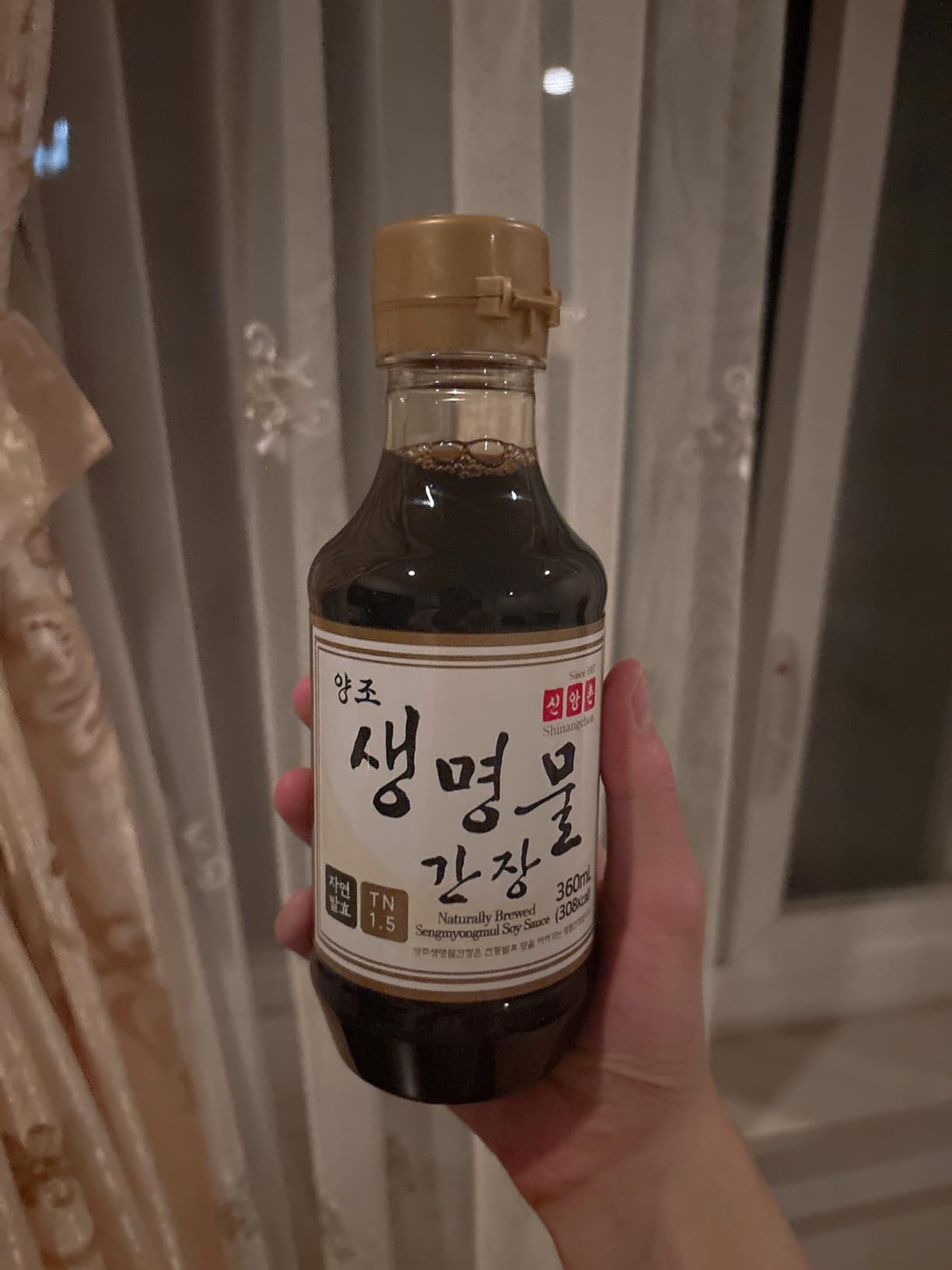
The bottle is smaller at 12.2 fl oz, which makes it a reasonable test size before committing to a larger format. The MSG-free, Non-GMO credentials are a plus for ingredient-conscious shoppers.
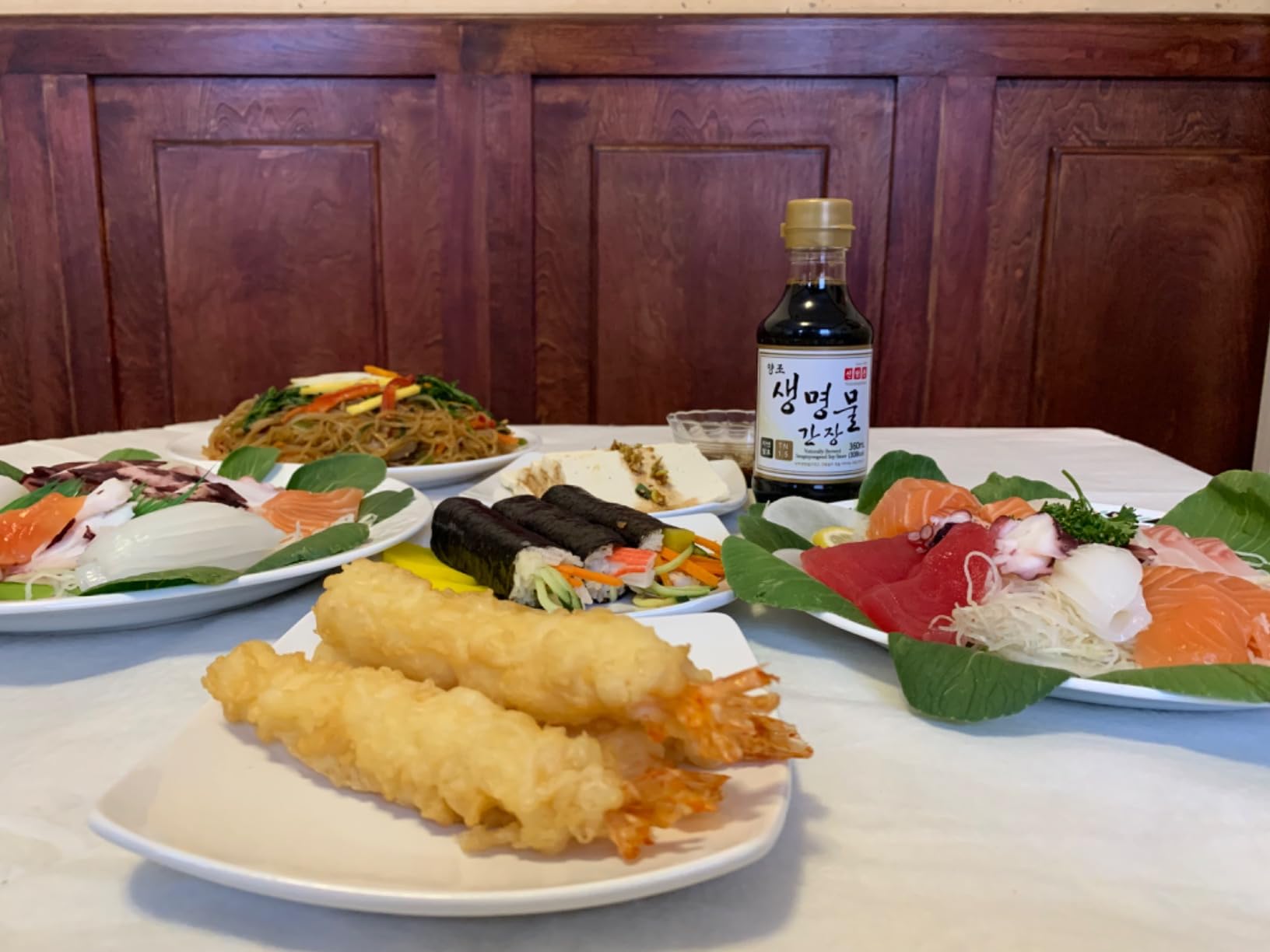
The downsides are real but minor. The label includes both high fructose corn syrup and steviol glycoside, which some shoppers avoid. A small number of reviewers also questioned whether the ingredient list matched the marketing claims. In my testing, the flavor was consistent and good, but I’d encourage you to read the label carefully.
For Whom It’s Good
Anyone managing sodium intake who still wants full Korean flavor. Cooks curious about alternative fermentation methods and willing to experiment.
For Whom It’s Bad
Strictly traditional buyers who want a classic naturally brewed sauce with no additives or alternative sweeteners.
8. Chung Jung One O’Food Soup Soy Sauce – Cleanest Ingredients
O’Food Soy Sauce, Naturally Brewed Premium Soy Sauce, All-Purpose, Rich, Perfect for Marinating and Seasoning (For Soup & Stew (Kook), 500 ML)
Whole soybeans
Salt & water
Soup-focused
Pros
- Only soybeans
- salt
- and water on the label
- Specifically crafted for Korean soups and stews
- Premium naturally brewed flavor
- Excellent for marinades and seasoning vegetables
Cons
- Saltier than regular soy sauce
- Some packaging leak issues reported
Chung Jung One’s O’Food soy sauce for soup is the cleanest label I tested. The ingredient list is genuinely three items: whole soybeans, salt, and water. For shoppers who refuse to compromise on ingredient transparency, that’s a strong selling point.
The flavor is rich and full-bodied, with the kind of rounded umami you want when seasoning a broth. I used it for a clear kimchi soup and a tofu stew, and both came out tasting like they had a base of anchovy or kombu, even though there was none. Reviewers with 153 ratings back this up, with many praising how it elevates even plain rice.
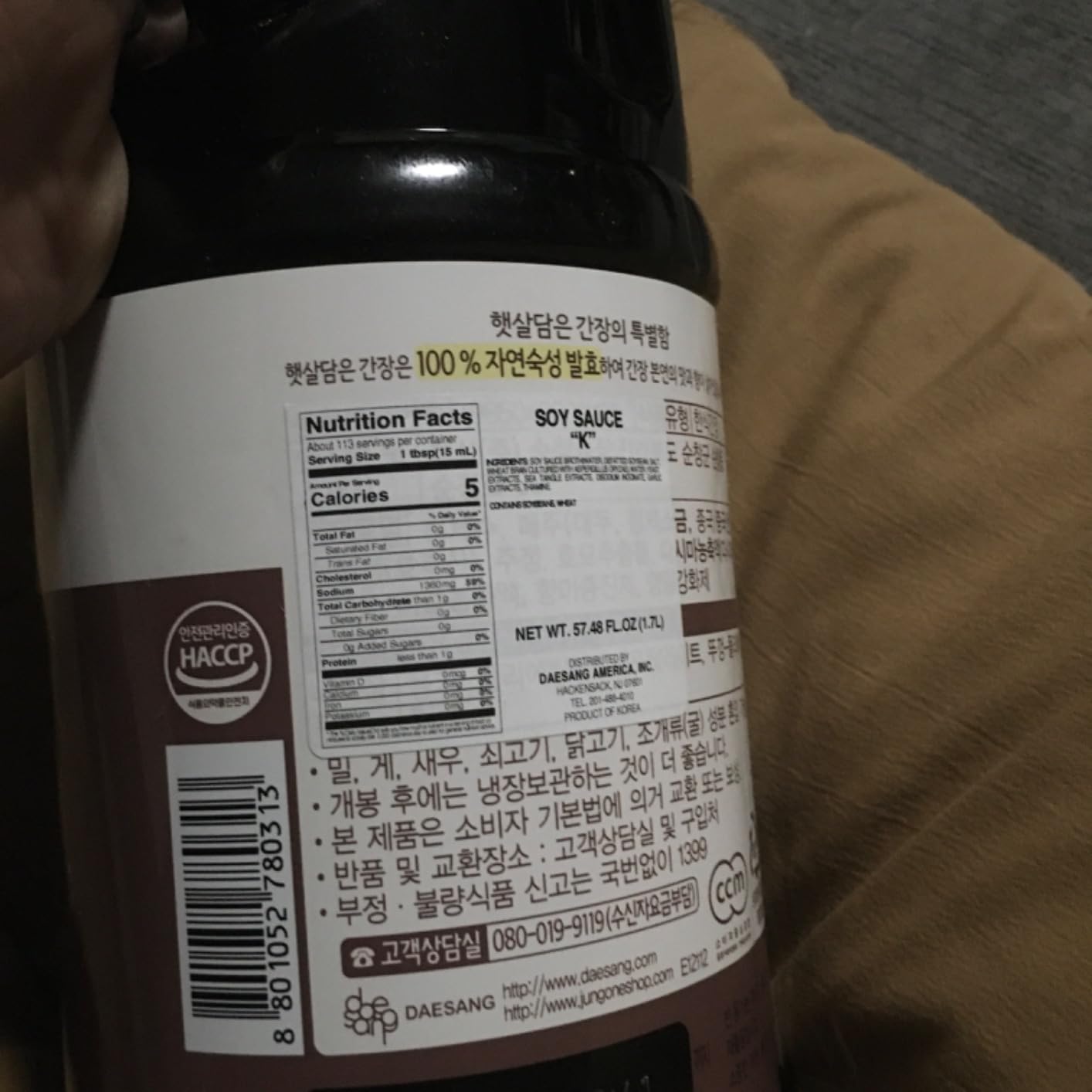
The 500mL bottle is small, but that’s appropriate for a soup-specific soy sauce, which you use by the tablespoon rather than the quarter-cup. The design is simple and the pour control is good.
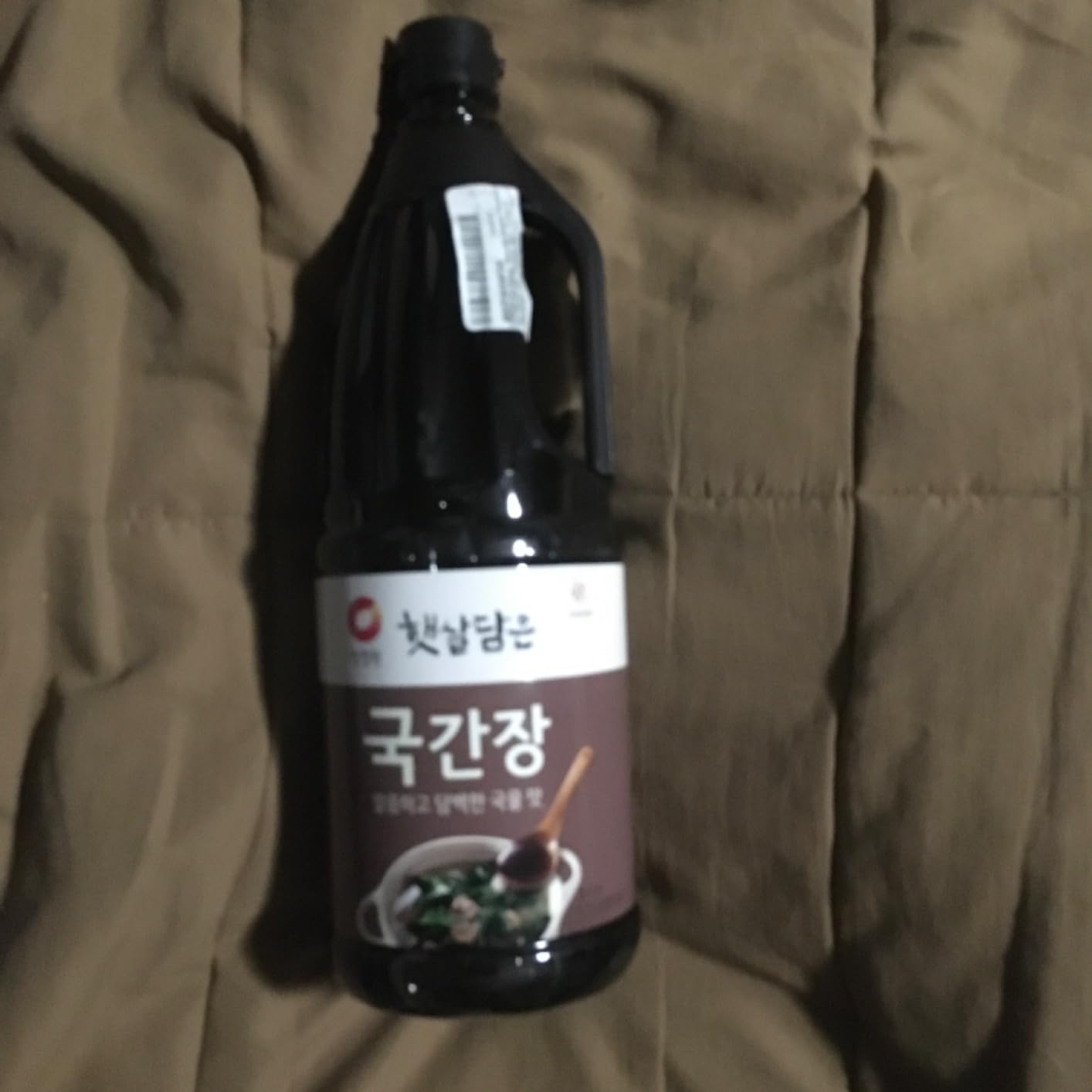
A few reviewers flagged packaging leaks during shipping, and the saltiness is meaningfully higher than regular Japanese soy sauce, which is normal for Korean soup-style ganjang. If you want a clean, additive-free soy sauce for broth, this is one of the best bottles in the category.
For Whom It’s Good
Ingredient-conscious shoppers who read every label. Anyone cooking Korean soups and stews who wants the cleanest possible product.
For Whom It’s Bad
Cooks who want one versatile soy sauce for both dipping and cooking will want a more general-purpose bottle.
9. Q-Rapha Premium Korean Ganjang – Best Artisanal Gluten-Free
Q-Rapha Premium Korean Ganjang (Soy Sauce) Gluten-free, non-GMO, Unpasteurized, Artisanal, Aged over 3 Years (12.0 fl oz)
Aged 3+ years
3 ingredients
Handcrafted
Pros
- Gluten-free with only 3 ingredients: soybean
- water
- sea salt
- Handcrafted by Jang artisan Uk Kang
- Aged over 3 years for deep savory flavor
- No MSG or chemical preservatives
Cons
- More expensive than conventional options
- Some customers reported lid leaks
Q-Rapha is in a different category from the mass-market Sempio and CJ bottles. It’s an artisanal ganjang made by Jang artisan Uk Kang, aged over three years, and built around a three-ingredient list. For anyone who needs a genuinely gluten-free Korean soy sauce that doesn’t taste like a compromise, this is the bottle I’d point them to.
The flavor is deep, savory, and slightly sweet in the way long-aged fermented foods tend to be. I used it as a finishing soy sauce on a bibimbap bowl and as the seasoning in a dipping sauce for gyeran-mari (egg rolls). Both applications let the aged character come through, and it paired especially well with simple dishes where the soy sauce is the star.
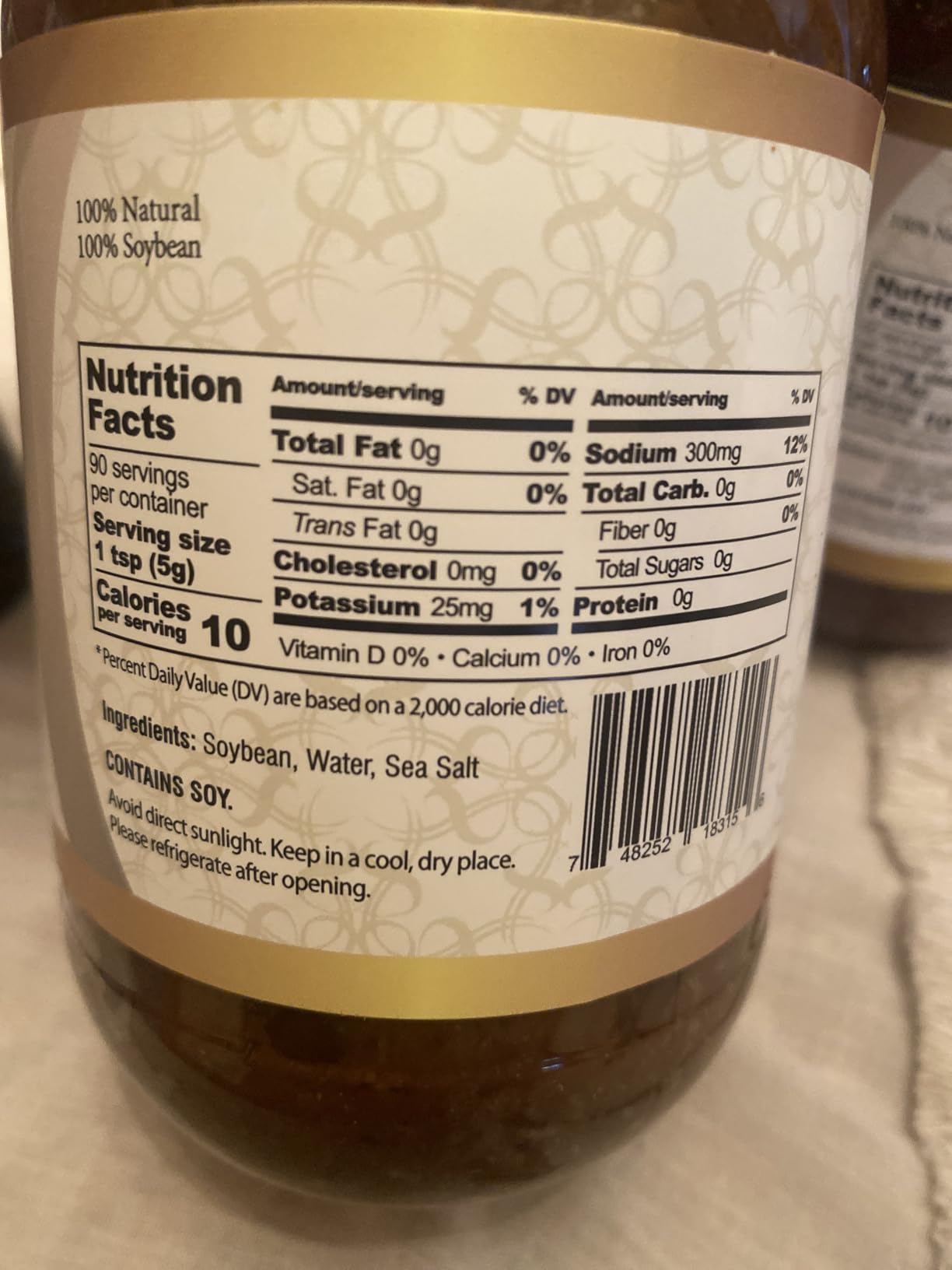
At 12 fl oz, the bottle is small, and the price per ounce is higher than supermarket options. That’s the trade-off for the aging and craftsmanship. Among the 114 reviewers, the consensus is that the flavor justifies the price.
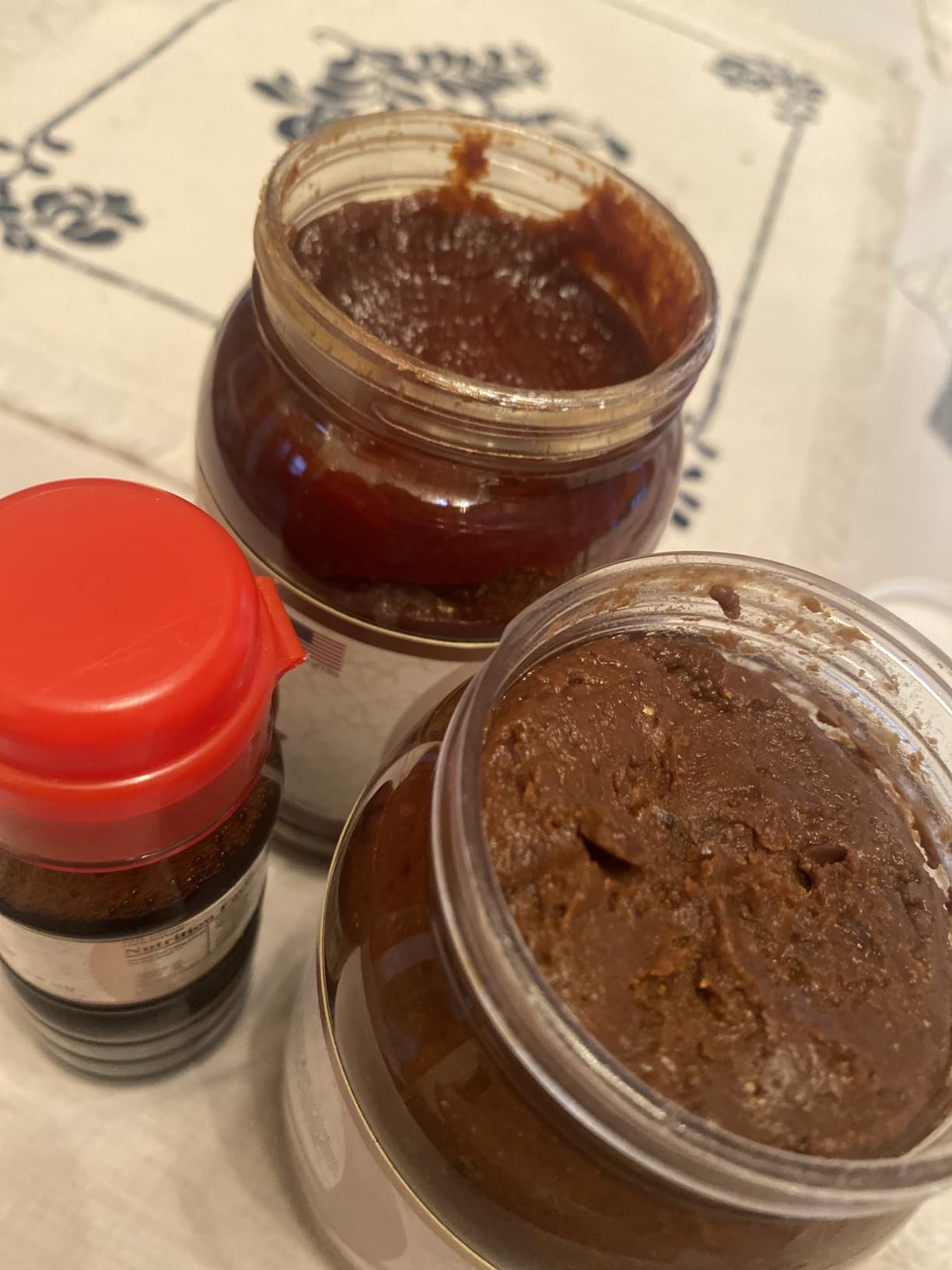
The main practical complaint I saw was about the bottle lid occasionally dripping. That’s a packaging issue rather than a flavor issue, but worth knowing if you’re shipping it. For gluten-free shoppers who can’t use most other Korean soy sauces, Q-Rapha is essentially the gold standard.
For Whom It’s Good
Gluten-free households and anyone with celiac or wheat sensitivity. Cooks who appreciate traditional craft methods and want a small-batch soy sauce.
For Whom It’s Bad
Budget-focused shoppers who use a lot of soy sauce weekly. Anyone who needs a soup-specific formula will want a different bottle.
10. Wangshin Premium Soy Sauce for Soup – Most Distinctive Flavor
Ultimate Mother’s day: Wangshin Premium Soy sauce for soup(10fl oz) – Authentic Korean Soy Sauce with Rich Umami Flavor. Double-Fermented, Blended with Anchovy Fish Sauce, Clean Taste. Gourmet Condiment, Free from Additives.
Double-fermented
Anchovy blend
Aged 3 years
Pros
- Made with 100% Korean soybeans
- Double-fermented in clay jars
- Blended with anchovy fish sauce for unique umami
- Aged over 3 years for depth
Cons
- Contains anchovy
- not suitable for vegetarians
- Polarizing flavor profile
- Some find the fish sauce overpowering
Wangshin is the most distinctive soy sauce in this roundup, and that comes with both praise and caveats. It’s double-fermented in clay jars, aged over three years, and blended with anchovy fish sauce for an extra layer of umami that pure soy-based sauces can’t reach.
I made a Korean-style cold cucumber soup (oi-naengguk) and a clear anchovy broth seasoned with the Wangshin, and both came out tasting layered and deeply savory in a way that I associate with restaurant-quality Korean food. The clay jar aging gives the sauce a rounder, almost mellow profile compared to industrial soy sauces.
The 10 fl oz bottle is the smallest in this roundup, and the price per ounce is the highest. The smaller format makes sense given the intensity, and a little goes a long way in any dish.
The honest tradeoff is the anchovy content. Vegetarian and vegan shoppers can’t use it, and the fish sauce note is strong enough that a small group of reviewers described the flavor as overpowering. I’d recommend this bottle for adventurous home cooks who want to explore traditional Korean seasoning beyond standard ganjang.
For Whom It’s Good
Adventurous cooks who want a traditional Korean soy sauce with extra umami depth. Anyone making authentic Korean soups where anchovy is welcome.
For Whom It’s Bad
Vegetarians, vegans, or anyone who dislikes fish-forward flavor. Cooks looking for a versatile everyday soy sauce.
How to Choose the Best Korean Soy Sauce for Your Kitchen
Picking from ten different Korean soy sauce brands gets easier when you understand the three main types of ganjang. Each one is brewed for a specific job, and using the right one is what separates adequate Korean cooking from great Korean cooking.
Yangjo Ganjang is the everyday brewed soy sauce, lighter in color and saltier in profile than Japanese koikuchi. It’s the right choice for dipping sauces, bibimbap dressing, and finishing drizzles. Both the Sempio 501 and Sempio 701 fall into this category, and either one is a smart starting point.
Jin Ganjang is darker, richer, and slightly less salty. It is designed for cooking: braising, stir-frying, and building flavor into dishes where the soy sauce gets heated. Sempio Jin Gold F3 and the 1.8L Jin S are both good examples, and the Chung Jung One O’Food also serves this role well.
Guk Ganjang is the soup soy sauce. It is brewed lighter and saltier so it can season a broth without darkening the color. The Sempio Soy Sauce for Soup and the Wangshin Premium are both guk ganjang products, and they are essential for clear broths like muguk or kongnamul guk.
Beyond type, the Total Nitrogen (TN) value tells you how much umami is in the bottle. A TN of 1.0 to 1.4 is a standard everyday soy sauce, 1.5 to 1.6 is the middle tier you find in most bestsellers like Sempio 501, and 1.7 and above is the premium tier exemplified by Sempio 701. Higher TN means more fermented depth, and usually a more expensive bottle.
Finally, consider certifications and dietary needs. If you need gluten-free, look at Sempio Jin Gold F3 or Q-Rapha. If you avoid MSG, Sempio’s soup soy sauce and Q-Rapha are both clean. For kosher or halal, the Sempio line covers you across the board. For reduced sodium, the SANC Shinangchon is currently the best mainstream option in this category.
Frequently Asked Questions About Korean Soy Sauce
What are the top 5 Korean sauces?
The five essential Korean sauces every home cook should know are: guk ganjang (soup soy sauce), yangjo ganjang (brewed soy sauce), gochujang (red chili paste), doenjang (fermented soybean paste), and ssamjang (a mix of gochujang and doenjang used for wraps).
Which soy sauce is better, Kikkoman or Sempio?
Kikkoman is a Japanese-style soy sauce that is sweeter and less salty. Sempio is a Korean-style ganjang that is saltier, deeper in color, and more complex in umami. For Korean cooking, Sempio is the better choice; for Japanese dishes like sushi, Kikkoman works better.
What is the highest quality soy sauce?
The highest quality soy sauces are naturally brewed over six months or more, with a Total Nitrogen (TN) value of 1.5 or higher. Sempio 701, with a TN around 1.7, and aged artisanal options like Q-Rapha fall into this premium tier.
What’s the difference between regular soy sauce and Korean soy sauce?
Regular supermarket soy sauce is often chemically produced (hydrolyzed) and designed for general use. Korean soy sauce is naturally brewed from meju (fermented soybean blocks), resulting in a saltier, deeper, more complex flavor essential for Korean dishes like bulgogi, bibimbap, and jjigae.
Is Korean soy sauce gluten-free?
Most Korean soy sauce is not gluten-free because wheat is part of the fermentation. However, certified gluten-free options do exist, including Sempio Jin Gold F3 and Q-Rapha Premium Korean Ganjang, which uses only soybeans, water, and sea salt.
Final Verdict
After testing all ten brands across multiple weeks of cooking, my pick for the best Korean soy sauce overall is the Sempio 701. The 6-month fermentation and TN ~1.7 give it the depth and complexity that real Korean dishes need, and the certifications (Kosher, Halal, Vegan, Non-GMO) make it usable in almost any kitchen.
If you want the everyday bestseller at a friendlier price, the Sempio 501 is the right choice, and for soups specifically, the Sempio Seasoning Soy Sauce for Soup is the bottle to keep on hand. With those three, you have a complete Korean soy sauce setup ready for any recipe in 2026 and beyond.