
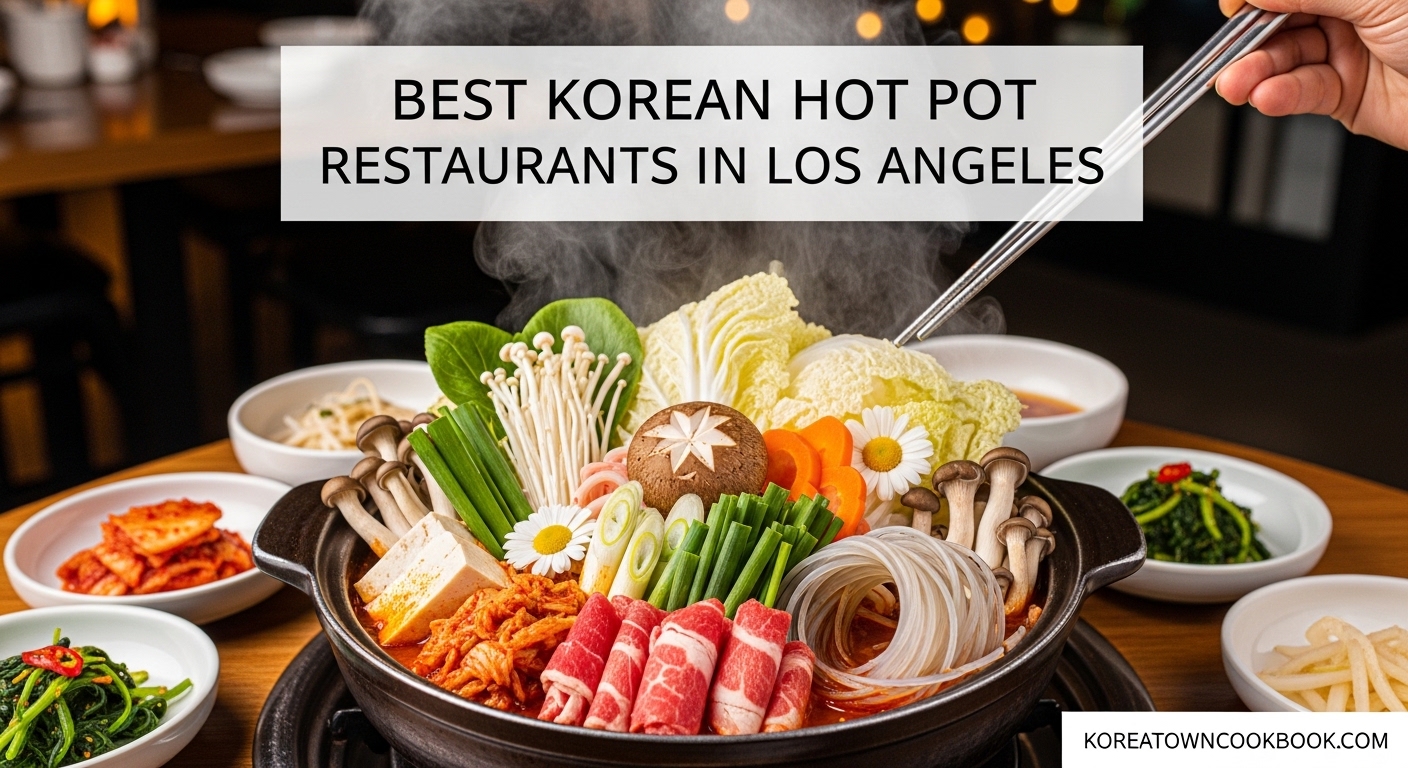
Los Angeles has one of the most diverse hot pot scenes in the country. From the fragrant, tongue-numbing Sichuan-style broths to the rich, fermented notes of Korean budae jjigae, this city delivers authentic regional varieties alongside creative fusion approaches. Whether you are craving a budget-friendly all-you-can-eat feast or a luxurious A5 wagyu experience, the LA metro area has options that rank among the best in the nation.
This guide covers the top Korean hot pot restaurants across Los Angeles, with a focus on neighborhoods like Koreatown, the San Gabriel Valley, Little Tokyo, and beyond. I tested these spots over the past several months, gathered real feedback from local food communities, and pulled everything together so you can find the perfect spot for your next hot pot craving.
Table of Contents
What is Korean Hot Pot?
Korean hot pot, known as jeongol (전골), is a communal dining tradition that sets itself apart from other Asian hot pot styles through its distinctive broth profiles and ingredient combinations. While Chinese and Japanese hot pot tends to emphasize clean, subtle flavors, Korean hot pot leans into bold, fermented, and spicy profiles that reflect the complexity of Korean cuisine.
The two most recognizable Korean hot pot variants are budae jjigae (부대찌개), literally “military stew,” which originated from ingredients repurposed during the Korean War using American Spam and beans, and paper hot pot, which uses thin sheets of tofu skin as wrappers for savory fillings. The communal nature of hot pot makes it ideal for groups, and theDIY sauce station concept—where you mix your own dipping sauces with ingredients like sesame oil, soy sauce, scallions, and gochujang—is a hallmark of the Korean experience.
Unlike the Sichuan-style malatang that floods social media with its numbing peppercorn heat, Korean hot pot balances spice with umami depth from fermented soybean paste, dried anchovies, and aged kimchi. Understanding these differences helps you navigate menus and pick the right spot based on your flavor preferences.
Our Top Picks at a Glance
If you are short on time, here are the three spots that consistently stand out across price points and dining styles.
Best for Special Occasions: Haidilao Hot Pot in Century City earns consistent 4.9-star ratings with its theatrical noodle-pulling shows, exceptional service, and cleanly presented broths that appeal to both first-timers and seasoned hot pot enthusiasts. Expect a 45-minute wait on weekends.
Best Value AYCE: Bon Shabu in Koreatown delivers reliable shabu shabu with quality sliced meats at a price point that works for regular outings. The DIY sauce station is expansive, and the lively atmosphere makes it perfect for groups.
Best Luxury Experience: Mikiya Wagyu Shabu House in Temple City brings A5 Japanese wagyu to the hot pot table in an elegant setting complete with EMV soundtrack curation. This spot costs around $100 per person but justifies every dollar for wagyu lovers.
Best Korean Hot Pot Restaurants in Los Angeles
Haidilao Hot Pot – Century City
Haidilao has become synonymous with premium hot pot service nationwide, and the Century City location exemplifies why this chain earned a 4.9-star rating from over 3,200 reviewers. The restaurant sits in the Westfield shopping center, making it conveniently accessible for Beverly Hills and Westside residents.
The broth selection here leans clean and aromatic rather than aggressively spicy. You will find traditional Sichuan spicy broth that delivers gradual numbing heat, plus milder options like mushroom and tomato. The real Haidilao signature, however, is the entertainment. Dancers twirl stretched noodles at your table, creating a spectacle that works particularly well for birthdays and celebrations.
Service standards at Haidilao exceed typical hot pot conventions. Servers actively monitor broth levels, replace napkins proactively, and offer hand massages during waits. The quality of thinly sliced beef and lamb is excellent, and the sauce station includes over twenty ingredients for building your perfect dip.
Who it is best for: First-time hot pot diners, special occasions, anyone who values service as much as food quality. Not ideal if you want an intimate, quiet dining experience.
Bon Shabu – Koreatown
Bon Shabu occupies a prime spot on Olympic Boulevard in the heart of Koreatown, drawing consistent crowds with its approachable all-you-can-eat model. The 4.2-star rating from 855 reviews reflects broad satisfaction rather than perfection, and that honest assessment matches what I found during visits.
The AYCE format here works well for groups watching budgets. You pay a set price and receive unlimited servings of premium beef brisket, pork belly, and chicken along with rotating vegetable plates and tofu. The broths are solid without being memorable—one spicy option and one mild—but the real value proposition lies in the quantity and quality balance.
Where Bon Shabu particularly shines is the sauce station. The Korean tradition of mixing custom dipping sauces reaches its full potential here, with options including sesame oil base, gochujang for heat, chopped scallions, and garlic. Take time to experiment with combinations because the right sauce elevates even ordinary cuts.
Who it is best for: Budget-conscious groups, casual gatherings, anyone wanting unlimited hot pot without breaking the bank. Not recommended if you prioritize premium meat quality over quantity.
Shabuya – Koreatown
Shabuya occupies the Westlake neighborhood just south of traditional Koreatown, drawing a mix of locals and visitors with its fun, energetic atmosphere. The customizable spice level system deserves special mention—you control the heat intensity directly at your table, which accommodates both spice-averse friends and Sichuan devotees.
The broth selection here is broader than Bon Shabu. Beyond the expected spicy pork and mild dashi options, Shabuya offers tom kha coconut broth that provides a Thai-inspired sweetness, mushroom broth for delicate palates, and a combination pot that runs two broths simultaneously through a divider. This flexibility makes Shabuya particularly valuable when dining with groups who cannot agree on a single flavor profile.
Service is attentive during peak hours, and the quality of sliced meats holds reliably across visits. The price point lands in the $$ range, making it accessible for regular visits while still delivering a satisfying hot pot experience. Expect waits of 30 to 45 minutes on weekend evenings.
Who it is best for: Families with children, groups with varying spice tolerances, casual weeknight dinners. Less suitable for those seeking luxury or authentic regional specificity.
Mikiya Wagyu Shabu House – Temple City
Mikiya in Temple City occupies a completely different tier from typical hot pot establishments. This is where you come when hot pot becomes a fine dining experience rather than casual comfort food. The 4.8-star rating reflects exceptional quality across every dimension, from ingredient sourcing to service presentation.
The star here is undoubtedly the A5 Japanese wagyu. This is not the place to economize on protein selections—the wagyu beef brisket and pork shoulder deliver richness and melt-on-your-tongue texture that simply cannot be replicated at standard AYCE spots. The staff provides guidance on optimal cooking times for each cut, ensuring you experience the meat at its best.
The EMV music soundtrack creates a sophisticated ambient environment that elevates the dining experience beyond typical hot pot restaurants. The broths here are refined and clean, designed to complement rather than overwhelm the premium proteins. Porridge finish at the end of the meal uses the seasoned broth to create a comforting conclusion.
Who it is best for: Celebrations, anniversaries, wagyu enthusiasts, anyone celebrating a special occasion. Not appropriate for quick casual meals or tight budgets.
Tensho – Little Tokyo
Tensho occupies the Little Tokyo scene with an elegant approach that emphasizes omakase-style appetizers alongside your hot pot experience. The restaurant targets a refined clientele seeking Japanese shabu shabu traditions with Korean influences, and it largely succeeds in creating that hybrid atmosphere.
The setting deserves particular attention. Unlike the casual energy of Koreatown spots, Tensho presents a more intimate, considered environment with thoughtful lighting and spacing. This makes it particularly suitable for business dinners or romantic dates where the ambiance matters as much as the food.
The omakase appetizer course precedes the hot pot and might include items like duck liver mousse,精致小食, and seasonal Japanese vegetables. Once you reach the hot pot phase, the focus shifts to quality proteins including wagyu and lamb. The self-pour sauce station emphasizes Japanese influences with ponzu and sesame while retaining Korean options.
Who it is best for: Date nights, business dinners, Japanese-Korean fusion enthusiasts, anyone wanting refined atmosphere alongside quality food.
Yuan’s Hot Pot – Rosemead
Yuan’s Hot Pot in Rosemead draws devoted regulars from across the San Gabriel Valley who appreciate the authentic Chinese-Korean hybrid approach and the signature Mercedes pot—a divided vessel running three distinct broths simultaneously. This three-flavor system allows you to experience spicy pork, mild chicken, and mushroom all in one meal without compromise.
The 4.5-star rating from regulars reflects consistent quality and the sense of genuine expertise in the kitchen. Unlike chains that serve standardized broths, Yuan’s prepares stocks with visible care, using longer reduction times that develop deeper flavor complexity. The beef and lamb cuts here are above average for AYCE establishments.
The Rosemead location sits comfortably in the residential area away from tourist-heavy zones, giving it an authentic neighborhood restaurant feel. Service is warm and the pace during off-hours feels relaxed, though weekend dinner service can feel rushed when the dining room fills.
Who it is best for: Broth enthusiasts, San Gabriel Valley locals, anyone wanting authentic flavors away from tourist areas. Less convenient if you are staying in the Westside or Beach Cities.
Xiao Long Kan Hot Pot – Alhambra
Xiao Long Kan brings authentic Chongqing-style mala hot pot to Alhambra, delivering the tongue-numbing, spice-forward experience that has become increasingly popular among LA food enthusiasts. This is not Korean-style hot pot in the traditional sense but rather Sichuan regional cooking that shares the communal hot pot format and has influenced Korean-Japanese fusion concepts.
The mala broth here is legitimate—the Sichuan peppercorns create that characteristic tingling numbness, while the chili oil delivers progressive heat without overwhelming the natural flavors of quality proteins. The restaurant sources beef, lamb, and pork in appropriate cuts for hot pot cooking, and the internal organs selection includes items that authentic malatang fans seek.
The Alhambra location draws SGV locals primarily, resulting in a dining room filled with Chinese-American families and groups rather than Instagram-seeking visitors. This authenticity contributes to a genuine atmosphere where the focus remains entirely on the food quality rather than theatrical presentations.
Who it is best for: Spice lovers, Sichuan malatang enthusiasts, anyone seeking authentic regional Chinese hot pot. Not recommended if you cannot handle significant heat or prefer mild flavors.
KPOT Korean BBQ and Hot Pot – Koreatown
KPOT represents a growing trend toward hybrid Korean BBQ and hot pot establishments that combine two distinct dining experiences into single locations. The Koreatown spot delivers on the promise of enjoying quality beef brisket and short ribs alongside customizable hot pot broths without choosing between the two formats.
The hot pot section offers several broth options including Thai Tom Yum, Japanese Miso, Szechuan Spicy, and Korean Seafood Tofu. This variety accommodates different preferences within groups, and the split-pot format allows two broths simultaneously. The Korean BBQ portion provides familiar bulgogi and galbi preparations alongside premium pork belly cuts.
The $$ price point positions KPOT as an accessible option for combined dining, and the growing chain has expanded locations across California, with additional spots planned in the Los Angeles area. The atmosphere is modern and energetic, particularly lively during weekend late-night hours when Koreatown’s nightlife scene peaks.
Who it is best for: Group diners wanting both cuisines, those who cannot decide between BBQ and hot pot, anyone seeking flexible dining options. Individual体验 excels when you want to sample both cooking styles.
Neighborhood Guide: Where to Find the Best Hot Pot in LA
Understanding the geographic distribution of quality hot pot helps you target the right area for your preferences and reduces unnecessary travel across this sprawling metropolitan area.
Koreatown
Koreatown remains the epicenter for accessible, social hot pot experiences in Los Angeles. The concentration of Korean restaurants here means competition drives quality while prices remain reasonable. Bon Shabu, Shabuya, and KPOT all operate within this compact area, making it possible to comparison shop by walking a few blocks rather than driving across town.
The K-town hot pot scene skews toward AYCE formats with lively atmospheres. Service is often multilingual, and many spots offer late-night hours that accommodate the neighborhood’s energetic social calendar. Parking can be challenging on weekends, so consider public transit or arrival during off-peak hours if possible.
San Gabriel Valley
The San Gabriel Valley, particularly Temple City, Rosemead, and Alhambra, delivers higher quality ingredients and more authentic regional cooking. Mikiya Wagyu Shabu House and Yuan’s Hot Pot represent the SGV approach where quality trumps quantity and expertise shows in every broth reduction.
The SGV spots attract dedicated food travelers from across LA who consider the drive worthwhile for superior dining experiences. These establishments tend toward a la carte or premium AYCE models rather than budget unlimited formats. Plan accordingly with reservations when possible.
Little Tokyo
Little Tokyo offers refined, Japanese-influenced hot pot experiences like Tensho that emphasize elegance and fusion approaches. The neighborhood works well when combining hot pot dining with other cultural activities, including Japanese grocery shopping, museum visits, and theatrical performances at the nearby Arts District.
Westside and Century City
Haidilao in Century City serves Beverly Hills, Westwood, and Santa Monica residents who want premium service without crossing the city. The Westfield location provides validated parking, making logistics simple for those driving from distant Westside neighborhoods. This location draws professional diners and families from the wealthier suburban zones.
What to Look for in a Great Korean Hot Pot Spot
Choosing the right hot pot restaurant depends on understanding your priorities across several dimensions. These factors matter more or less depending on your specific situation and preferences.
Broth Quality
The foundation of any hot pot experience is the broth. Premium establishments prepare stocks in-house using longer reduction times, resulting in deeper flavor complexity. Budget AYCE spots often rely on powder concentrates mixed with water, producing broths that taste flat and artificial. When evaluating a spot, ask about broth preparation and pay attention to depth of flavor during your first taste.
Korean-style hot pot broths typically balance fermented soybean notes against spice heat. Spicy pork broth should deliver gradual warmth rather than immediate burn, while mild broths should still carry meaningful umami rather than tasting like salted water. The best test is the final stage after cooking proteins—quality broths develop richer flavor as they absorb released juices.
Meat Quality
All-you-can-eat does not automatically mean compromised quality, but the correlation is strong. Premium AYCE spots like Mikiya source from Japanese wagyu programs that cost significant money per pound. Budget AYCE establishments necessarily negotiate lower-grade supply chains that sacrifice marbling for volume.
For special occasions or celebrations, prioritize spots with wagyu or prime cuts even if that means paying a la carte prices. For regular casual dining, good AYCE spots with properly sliced meats will satisfy without straining your wallet. Watch for proper_slice thickness— meats cut too thin fall apart in bubbling broth, while overly thick cuts cook unevenly.
Sauce Stations
The DIY sauce station represents a distinctly Korean element that elevates hot pot from cooking method to interactive culinary experience. The best sauce stations offer fifteen or more ingredients allowing infinite customization. Standard elements include sesame oil, soy sauce, rice vinegar, gochujang, chopped scallions, garlic, cilantro, and sometimes unexpected items like century egg or pickled vegetables.
Do not overlook the sauce station. The right combination transforms ordinary proteins into memorable meals. Start with a sesame oil base, add soy sauce for salt, introduce gochujang for fermented heat, and finish with fresh aromatics for brightness. Take time to experiment during your first visit so you understand the possibilities.
All-You-Can-Eat versus A La Carte
AYCE works best for groups wanting variety, extended social dining, and budget certainty. The format encourages lingering over multiple courses while sampling different proteins and vegetables. However, AYCE can incentivize restaurants to reduce quality, particularly toward the end of service when ingredients are depleted.
A la carte or premium AYCE formats often deliver superior protein quality because restaurants can focus investment on fewer, better ingredients rather than maximizing volume. If meat quality matters more than quantity, prioritize non-AYCE establishments or premium-tier AYCE spots like Mikiya where quality standards remain high despite the all-you-can-eat format.
Spice Level Customization
Not everyone handles Sichuan peppercorn heat equally. Spots like Shabuya that offer customizable spice levels at the table accommodate varying tolerances within groups. This flexibility matters significantly when dining with children, visitors unfamiliar with hot spice, or anyone managing spice sensitivity.
For authentic Chongqing-style malatang like Xiao Long Kan, expect aggressive mala seasoning as the default. Requesting reduced spice at these establishments often produces confused responses because the kitchen expects the full experience. Visit these spots only when your group embraces maximum heat.
Vegetarian and Dietary Options
Fully vegetarian hot pot options remain relatively rare in LA’s Korean hot pot scene, but spots with mushroom broth or clear dashi options can accommodate plant-based diners with appropriate protein substitutions. Tofu, mushrooms, bok choy, daikon, and glass noodles substitute effectively for meat proteins.
Always communicate dietary restrictions when booking or upon arrival. Korean hot pot kitchens can often prepare simpler vegetable-only broths when given advance notice, while spontaneous requests during peak service may receive less accommodation. Calling ahead costs nothing and ensures smoother dining experiences for everyone.
Hot Pot Tips and Etiquette
Hot pot involves more technique than most people realize. Understanding proper practices ensures you enjoy the experience fully while respecting communal dining traditions.
Do not overload the pot. Adding too many ingredients at once reduces broth temperature rapidly and results in uneven cooking. Cook in small batches, allowing the broth to return to a vigorous simmer between additions. This patience pays dividends in texture and flavor.
Use proper cooking times. Thinly sliced beef and lamb require only 15 to 30 seconds in bubbling broth—extended cooking turns premium proteins tough and chewy. Dense vegetable items like daikon and lotus root benefit from 3 to 5 minutes, while items like tofu and mushrooms cook in 1 to 2 minutes depending on thickness.
Understand dipping sauce timing. Dip cooked proteins immediately before eating while still hot from the broth. Letting proteins cool during the dip process results in uneven coating and temperature. Prepare your sauce before cooking your proteins rather than during.
Avoid double-dipping. Utensils used to handle raw proteins in the broth should not then touch communal sauces without thorough cleaning. Use designated serving utensils for communal ingredients and keep personal chopsticks separate.
Know when to finish. Korean hot pot tradition often concludes with noodles or rice cooked directly in the seasoned broth remaining from the meal. This porridge-style finish—called jjamppong or similar variations depending on the broth base—converts depleted broth into a comforting final course. Ask your server about this option if it appears on the menu.
Communicate with your server. Broth levels drop during extended cooking sessions, and good servers proactively replenish. Do not hesitate to request broth additions or adjustments to heat levels. Service at quality establishments should respond promptly to these requests.
FAQ
What is the etiquette for eating hot pot?
The main rules are: cook in small batches rather than overloading the pot, use proper cooking times for different ingredients (beef slices need only 15-30 seconds), dip proteins immediately while hot, avoid double-dipping with raw meat utensils into communal sauces, and finish with noodles or rice in the seasoned broth.
Is there a Korean version of hot pot?
Yes, Korean hot pot is called jeongol (전골). Unlike Chinese or Japanese styles, Korean hot pot often features budae jjigae (military stew) made with fermented soybean paste and sometimes Spam or beans, and paper hot pot using tofu skin wrappers. The flavor profiles emphasize fermented, spicy, and umami-rich elements distinctive to Korean cuisine.
What should I avoid at hot pot restaurants?
Avoid spots with generic powder-based broths when fresh options exist. Do not order AYCE if you want premium wagyu quality—those formats cannot justify the cost of top-tier meats. Avoid restaurants where the sauce station lacks variety, as the DIY dipping experience is central to Korean hot pot. Finally, avoid visiting during peak weekend hours if you hate waits—most popular spots see 45+ minute lines on Friday and Saturday evenings.
Which LA hot pot restaurants have the best broth?
Mikiya Wagyu Shabu House and Yuan’s Hot Pot consistently receive praise for broth quality, with in-house stock preparation and deeper flavor development. Haidilao offers clean, aromatic broths with excellent service. For authentic Sichuan mala, Xiao Long Kan delivers legitimate Chongqing-style heat and numbing.
Are there good vegetarian options at LA hot pot restaurants?
Options exist but are limited. Shabuya’s mushroom broth accommodates vegetable-focused meals, and any spot with clear dashi options works for vegetarians. Custom vegetable-only orders require advance notice. Fully dedicated vegetarian hot pot restaurants remain rare in LA’s Korean scene.
How much should I expect to spend on hot pot in LA?
Budget AYCE spots like Bon Shabu run $30-45 per person. Mid-range options like Shabuya and KPOT cost $45-65 per person. Premium AYCE and a la carte spots like Mikiya and Tensho range from $80-120+ per person, with wagyu upgrades adding significant cost. Prices reflect quality tier more than service differences.
Final Thoughts
Los Angeles offers one of the most complete hot pot dining landscapes in the country, with Korean, Sichuan, Taiwanese, and Japanese traditions each represented by committed establishments. The city’s diversity of neighborhoods means you can access casual AYCE shabu shabu in Koreatown within the same trip that delivers luxurious A5 wagyu in Temple City.
My recommendation for first-time readers: start with Haidilao if you have never experienced quality hot pot—the service, entertainment, and reliably excellent execution provide a perfect introduction. Once you understand what separates good from great, venture into SGV for Mikiya’s wagyu experience, then return to Koreatown for the social energy of Bon Shabu or Shabuya on subsequent visits.
Hot pot remains fundamentally social dining. The communal cooking format, the shared sauces, the extended table time—all elements conspire toward memorable meals with friends and family. Use this guide to navigate your options, but remember that the best hot pot experience comes from sharing the table with people you enjoy.
Happy eating.