
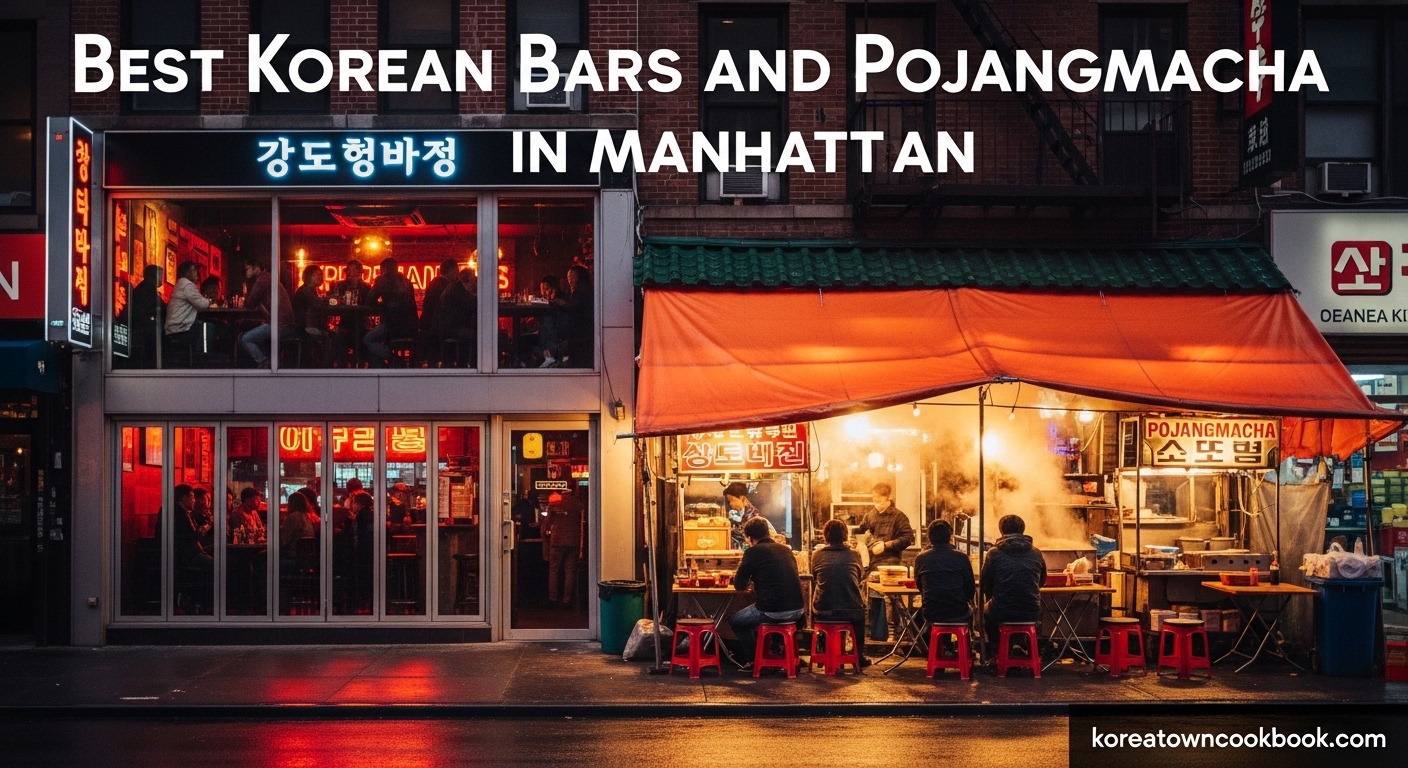
Manhattan’s Koreatown is a narrow stretch of blocks near Herald Square where the neon signs glow well past midnight, the soju flows freely, and the bar food alone is worth the trip. If you have ever wandered down 32nd Street after 10 PM, you already know the feeling. The sidewalks hum with groups spilling out of basement bars, the smell of sizzling meat drifts from second-floor grills, and somewhere behind an unmarked door, someone is pouring their third round of soju.
The best Korean bars and pojangmacha in Manhattan offer something you cannot find anywhere else in the city. They combine the communal energy of a Korean night out with the kind of drinking food that makes you wonder why every bar does not serve haemul pajeon. Whether you are looking for a rowdy group dinner with drinking games, a quiet cocktail in a hidden speakeasy, or your first taste of traditional Korean street food culture, this guide will walk you through every option worth your time.
I have spent years eating and drinking my way through Koreatown Manhattan, and the scene keeps getting better. New spots open regularly while old favorites hold strong. Here is everything you need to know to navigate the best Korean bars and pojangmacha in Manhattan in 2026.
Table of Contents
What Is a Pojangmacha?
A pojangmacha (pronounced poh-jang-ma-cha) is a traditional Korean street food tent or stall, the kind you see lining the streets of Seoul on cold winter nights. The name literally translates to “covered wagon.” In Korea, these tents serve cheap, comforting food well into the early morning hours: spicy tteokbokki, fish cake skewers called odeng, Korean blood sausage known as sundae, and steaming bowls of soup designed to soak up whatever you drank earlier that evening.
In Manhattan, the pojangmacha concept has evolved. You will not find literal orange tents pitched on 32nd Street. Instead, Korean restaurateurs have recreated the experience indoors, complete with tented ceilings, plastic stool seating, handwritten menu signs, and the same generous portions of drinking food. The vibe is intentionally casual and slightly chaotic. You come for the soju, you stay for the seafood pancake, and you leave with a full stomach and a good story.
The indoor pojangmacha spots in Manhattan serve what Koreans call anju, which translates to food eaten alongside alcohol. Anju is not a side dish or an appetizer. It is the reason you sit down in the first place. Think crispy fried chicken, bubbling stews, grilled squid, and platters of food meant to be shared among friends who are three rounds deep into a bottle of soju.
Best Korean Bars and Pojangmacha in Manhattan
Before diving into the full breakdown, here are the spots that consistently rise to the top. I have grouped them by the experience they offer so you can pick based on the kind of night you want.
Traditional Pojangmacha Vibe
Pocha 32 is the closest thing to a real Seoul pojangmacha you will find in Manhattan. Tent ceiling, plastic chairs, and the best haemul pajeon in Koreatown.
Itaewon Pocha brings the energy of Seoul’s Itaewon district to 32nd Street. Loud, fun, and perfect for groups who want to drink soju until the kitchen closes.
Modern Cocktail Scene
Osamil is a sleek Korean bar and restaurant with craft cocktails and elevated anju. Great for dates or a more refined night out.
Hidden Tiger is a speakeasy tucked behind an unassuming entrance. Finding it is half the fun. The cocktails are some of the best in Koreatown.
Party and Group Fun
Space Ping Pong Lounge combines Korean drinking culture with actual ping pong tables. It sounds chaotic because it is, in the best possible way.
Turntable Chicken Jazz is part fried chicken joint, part jazz bar, part dance party. The music is loud, the chicken is crispy, and nobody leaves early.
Traditional Pojangmacha Spots
Pocha 32
Pocha 32 sits on 32nd Street and has been a Koreatown staple for years. Walk inside and you are immediately hit with the tented ceiling, the clatter of soju glasses, and the sizzle of seafood pancakes hitting the table next to you. This place does not try to be fancy. It tries to be authentic, and it succeeds.
The haemul pajeon (seafood pancake) here is the one people talk about on Reddit, in group chats, and to anyone who will listen. The batter is light and crispy, packed with scallions and seafood, and arrives bubbling on a cast iron plate. It pairs perfectly with a bottle of soju or a bowl of makgeolli, the cloudy Korean rice wine that tastes like a slightly sweet, slightly fizzy drinkable bread.
Other must-order dishes include the budae jjigae, a spicy stew born from the Korean War era that combines Spam, hot dogs, ramen noodles, kimchi, and gochujang into something surprisingly delicious. The dweji bulgogi (spicy pork) is also excellent and comes sizzling on a plate with plenty of banchan on the side.
Pro tip from locals: come with at least four people. The portions are large, the food is meant to be shared, and the bill is easier to split when you have a group. Weekends get crowded after 9 PM, so arrive earlier if you want a table without waiting.
Itaewon Pocha
Named after Seoul’s famous nightlife district, Itaewon Pocha brings loud, high-energy Korean bar culture to the heart of Manhattan. The interior is designed to feel like a Korean street food market, with colorful signs, communal tables, and a soundtrack of K-pop and Korean hip hop that keeps the energy high all night.
The menu here is massive, which can be overwhelming for first-timers. Focus on the basics: the yukgaejang (spicy beef soup) is deeply satisfying, the LA galbi (short ribs) is sweet and tender, and the cheese tteokbokki adds a stretchy, gooey twist to the classic spicy rice cake dish. For drinks, start with a soju flight if you want to sample different flavors, or go straight for the classic green bottle of Chamisul Original.
One thing that sets Itaewon Pocha apart is the late-night atmosphere. This is where groups come to celebrate, and by midnight on a Friday, the whole restaurant feels like a private party. If you want a quieter experience, come on a weeknight. If you want the full chaotic, soju-fueled Koreatown experience, come on a Saturday after 10 PM.
Modern Korean Cocktail Bars
Osamil
Osamil is what happens when Korean drinking culture meets Manhattan cocktail sophistication. Located on 32nd Street, this two-story venue feels different from the rowdy pojangmacha spots nearby. The lighting is dim and warm, the cocktails are carefully crafted, and the food is elevated without losing its Korean soul.
The cocktail menu changes seasonally, but you can always expect Korean-inspired creations that incorporate ingredients like yuzu, gochujang, sesame, and Korean pear. If cocktails are not your thing, the soju selection is extensive and the staff can guide you toward something that matches your taste. The anju menu includes a stunning wagyu bulgogi, truffle kimchi fried rice, and a crispy pork belly dish that alone is worth the visit.
Osamil is one of the best spots in Koreatown for a date. The upstairs bar area has a more intimate feel, while the main dining room works well for groups. Reservations are recommended, especially on weekends. Walk-ins are possible but expect a wait during prime hours.
Hidden Tiger
Hidden Tiger is the speakeasy everyone in Koreatown talks about but not everyone can find. The entrance is deliberately unmarked and changes occasionally, which is part of the experience. Asking “how to get into Hidden Tiger” is practically a rite of passage for Koreatown regulars.
Here is what I can tell you without ruining the fun: it is located somewhere in the Koreatown area, you need to know what to look for, and the effort to find it pays off. Inside, the space is intimate and moody, with carefully designed interiors that feel like a secret club. The cocktails are genuinely excellent, crafted by bartenders who know their way around both classic and Korean-inspired drinks.
Because Hidden Tiger is small and sought after, getting in requires patience and timing. Arrive early in the evening on a weeknight for your best chance. They do not take reservations. The experience of finding the entrance, walking through the hidden door, and settling into a booth with a well-made cocktail is one of the most memorable nights you can have in Manhattan.
The Jin
Located near Lincoln Center, The Jin is a bit of a departure from the 32nd Street Koreatown scene. This is a modern Korean restaurant and bar with a super intimate space that has earned rave reviews for both food and service. Reddit users specifically call it out as “food and service top notch.”
The drink menu here leans toward refined cocktails and a curated wine list alongside Korean staples like soju and makgeolli. The food is modern Korean, meaning traditional flavors presented with contemporary techniques. It is an excellent choice if you want Korean flavors in a more upscale, quiet setting.
The Jin is worth the trip uptown if you want something different from the Koreatown bar crawl. It works well for a sit-down dinner with drinks rather than a loud group night out.
Party and Group-Friendly Korean Bars
Space Ping Pong Lounge
Space Ping Pong Lounge takes the concept of Korean drinking culture and adds ping pong tables. Yes, actual ping pong tables. You drink soju, you eat fried chicken, and you play table tennis in a dimly lit bar that feels like a house party you never want to leave.
The food here is solid Korean bar fare: fried chicken in multiple flavors, cheesy corn, sweet potato fries, and platters of fruit that come with your soju order. The drinks are affordable by Manhattan standards, which makes this a popular spot for younger crowds and birthday celebrations.
The ping pong tables are free to use but get claimed quickly on weekends. If playing is important to you, come early or be prepared to wait. Even without the ping pong, the atmosphere is worth the visit. This is one of those places where strangers become friends by the end of the night.
Turntable Chicken Jazz
Turntable Chicken Jazz does exactly what its name promises. It serves fried chicken, plays jazz (and eventually K-pop and hip hop), and turns into a full-on dance party as the night goes on. The chicken is crispy, the music is loud, and the energy is infectious.
The fried chicken here comes in several flavors, including soy garlic, spicy, and sweet chili. Order a bucket for the table along with some draft beer or soju, and you have the foundation for a great night. The space is long and narrow with a bar running down one side, which creates a fun, intimate atmosphere where everyone ends up talking to everyone else.
This is not the spot for a quiet conversation. It is the spot for a rowdy, fun, memorable night out with friends. Come with a group, come hungry, and do not plan anything early the next morning.
Krush
Krush is a Koreatown bar that flies under the radar compared to the bigger names on this list, but it has a secret weapon: hidden beer pong tournaments. This is the kind of local knowledge that gets passed around in Reddit threads and group chats, not on travel blogs.
Beyond the beer pong, Krush offers a solid Korean bar experience with good drinks, decent bar food, and a crowd that tends to be more local than touristy. The vibe is laid-back during the week and packed on weekends. If you are looking for a spot that feels more like a neighborhood hangout than a destination bar, Krush is worth seeking out.
Korean Drinking Etiquette: What First-Timers Need to Know
Korean drinking culture comes with a set of unwritten rules that locals follow naturally but newcomers might miss. Understanding these basics will make your experience more authentic and more enjoyable.
Pour with two hands. When someone pours you a drink, receive it with both hands or at least touch your pouring hand with your free hand. This shows respect. When pouring for someone else, especially someone older or senior, use both hands on the bottle.
Never pour your own drink. In Korean culture, you pour drinks for others and they pour for you. Pouring your own soju is considered bad luck. Instead, offer to pour for the people around you, and they will return the favor.
Turn away when drinking in front of elders. If you are drinking with someone older than you, turn your head slightly away when taking a sip. It is a small gesture of respect that Koreans notice and appreciate.
Say geonbae. The Korean word for “cheers” is geonbae (pronounced guhn-bae). It literally means “empty glass,” implying you should drink up. Say it before every round and clink glasses with everyone at the table.
Always order anju. Drinking without food is not the Korean way. Every Korean bar expects you to order something to eat alongside your drinks. It is not just a suggestion, it is the culture. Most bars have a minimum food order requirement anyway, so embrace it and try something new.
Pace yourself with soju. Soju goes down easy, especially the flavored varieties, but it packs a punch. A standard bottle is around 16 percent alcohol, and it is meant to be sipped, not shot rapidly. Take it slow, eat between rounds, and enjoy the conversation.
What to Order at a Korean Bar
If it is your first time at a Korean bar, the menu can be overwhelming. Here is a quick guide to the essentials that appear on almost every Koreatown bar menu.
Drinks to try: Soju is the default. Start with Chamisul Original if you want the classic clean taste, or try a flavored soju like grapefruit, green grape, or peach if you want something sweeter. Makgeolli is the cloudy rice wine that comes in a bowl and tastes slightly sweet and fizzy. Korean beers like Hite, Cass, and OB Lager are light and refreshing, perfect for washing down fried food.
Food to order: Haemul pajeon (seafood pancake) is non-negotiable. Korean fried chicken in any flavor is always a hit. Tteokbokki (spicy rice cakes) provides serious heat. Budae jjigae (army stew) is perfect for groups on a cold night. And grilled squid or jwipo (dried fish) are the kind of simple bar snacks that pair perfectly with cold beer.
Tips for Your Koreatown Bar Crawl
The best way to experience Korean bars and pojangmacha in Manhattan is to make a night of it. Start on 32nd Street between Broadway and Fifth Avenue, which is the main artery of Koreatown. Most of the bars listed here are within a three-block radius, so you can walk between them.
Thursday through Saturday nights are the busiest. If you want a more relaxed experience, try a Tuesday or Wednesday evening. Many bars offer happy hour specials on weeknights that are worth checking out.
Budget-wise, expect to spend more than you might at a dive bar but less than a cocktail lounge in the Lower East Side. Sharing food and drinks among a group of four to six people is the most cost-effective approach. The portions are generous and designed for sharing.
One last piece of advice: do not skip the late-night food. After a few rounds of soju, the tteokbokki hits different. Trust me on this one.
FAQ
Is Koreatown in NYC worth visiting?
Absolutely. Koreatown in Manhattan offers one of the most concentrated and authentic Korean food and bar scenes in the United States. Within a few blocks around 32nd Street, you will find everything from traditional pojangmacha-style bars to modern cocktail lounges, Korean BBQ restaurants, and late-night food spots. The area comes alive after dark and is worth visiting for the food alone.
How to get into Hidden Tiger, NYC?
Hidden Tiger is a speakeasy with a deliberately unmarked entrance in the Koreatown area. The entrance location and method of entry change occasionally, which is part of the experience. Your best approach is to visit during off-peak hours (early evening on a weeknight), ask around at nearby Korean bars for a hint, or check recent social media posts from locals who have visited. They do not take reservations, so arriving early improves your chances of getting in.
Where is the largest Korean neighborhood in New York City?
Flushing, Queens has the largest Korean population in New York City. However, the most concentrated and accessible Korean bar and restaurant scene is in Manhattan’s Koreatown, centered around 32nd Street between Broadway and Fifth Avenue. This small area packs dozens of Korean bars, restaurants, and pojangmacha into a few walkable blocks.
What are the best bars in Manhattan?
For Korean bars specifically, the best spots in Manhattan are concentrated in Koreatown on and around 32nd Street. Top picks include Pocha 32 for traditional pojangmacha vibes, Osamil for craft cocktails, Hidden Tiger for the speakeasy experience, Space Ping Pong Lounge for group fun, and Turntable Chicken Jazz for a party atmosphere. Each offers a different take on Korean drinking culture.
Conclusion
Manhattan’s Korean bar scene is one of the city’s great after-dark experiences, and it keeps getting better. From the tented ceilings and sizzling haemul pajeon at Pocha 32 to the hidden entrance and expert cocktails at Hidden Tiger, the best Korean bars and pojangmacha in Manhattan offer something for every kind of night out.
Start with the traditional spots if you want to understand where this culture comes from. Branch into the modern cocktail bars when you want something refined. And save the party bars for when you want to let loose with friends over fried chicken and soju. Whatever you choose, come hungry, bring friends, and remember to say geonbae before every round.
Koreatown is waiting. Go explore.