
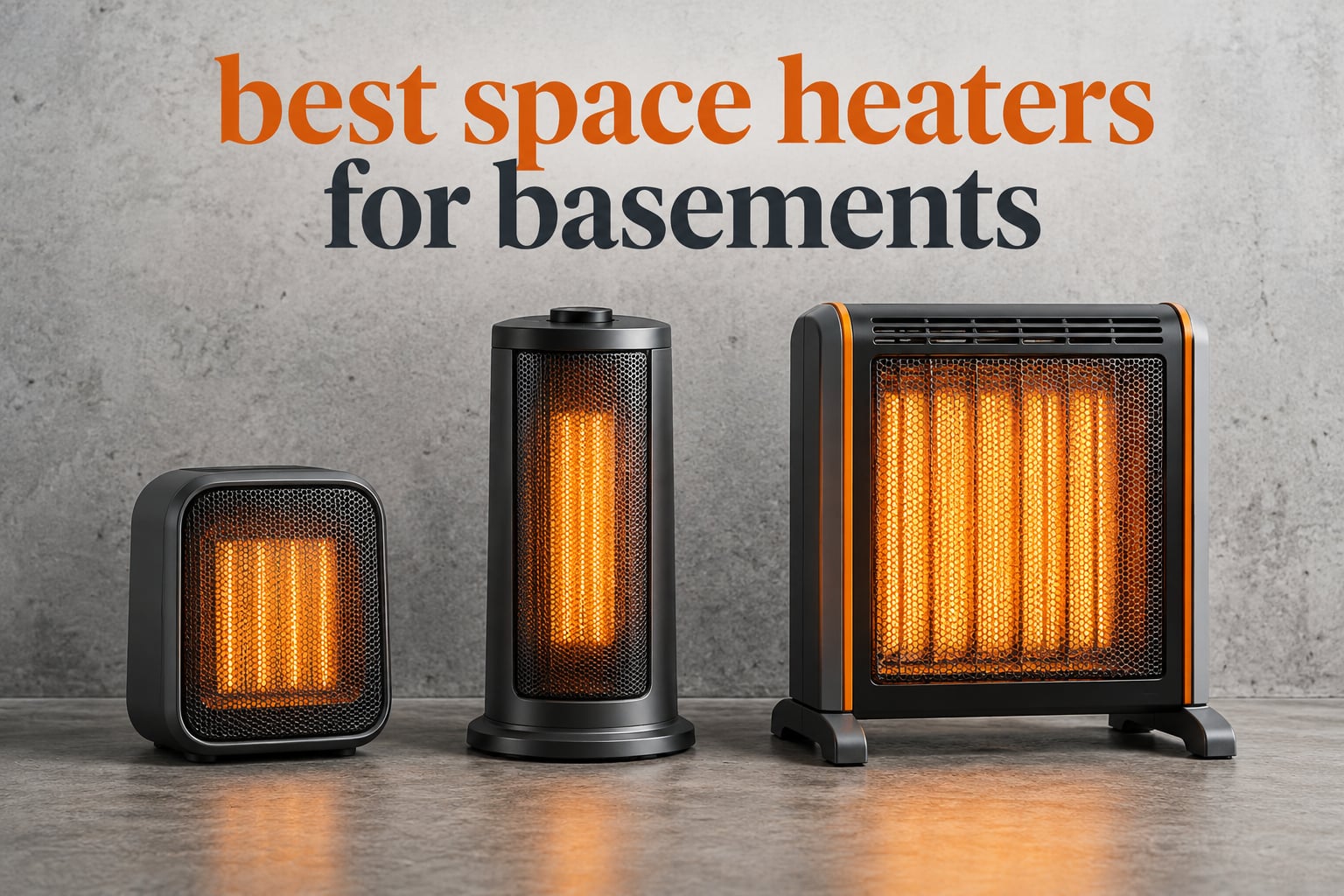
Basements get cold for reasons upstairs rooms never do. Warm air leaks down a stairwell, cold air settles along the floor and against below-grade walls, and there is usually no window and no sunlight to help. The best space heaters for basements solve a zone problem rather than a whole-house problem, and the right unit depends heavily on whether that basement is finished, how large it is, and how damp it runs in winter.
Our answer up front: for most finished basements, a 1,500W infrared quartz plus PTC hybrid like the Dr Infrared DR-968 is the single best space heater for a basement, because it throws radiant heat at people and objects first and then distributes warm air with a quiet blower. For damp or drafty rooms where silence matters more than speed, an oil-filled radiator is the steadier answer. For unfinished utility space where the real job is keeping pipes from freezing, a small metal cabinet heater does it for less money and less floor space.
Every basement heater we list below is a zone or supplemental heat source. None of them will hold a 1,500 sq ft unheated basement at 70F on their own, and we would rather say that plainly than pretend otherwise. The honest target for most below-grade rooms is 60 to 70F, which is warm enough to work in and warm enough to discourage the condensation that feeds mold.
If you want to compare by room type rather than by basement, we have separate guides for the best space heaters for large rooms, the best space heaters for garages, and the best space heaters for bedrooms. The basement list below is the one that accounts for square footage, humidity, and electrical limits.
Top 3 Basement Heaters in 2026
These three cover the widest range of basement situations. The hybrid handles the most common finished-basement case, the ceramic tower is the workhorse for a smaller zone, and the oil-filled radiator is the answer when the room is drafty and quiet matters.
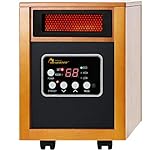
Dr Infrared DR-968 Hybrid
- Infrared quartz plus PTC element
- 39 dB blower
- 576 sq ft rated coverage
- IR remote and 12 hour timer

Lasko 755320 Ceramic Tower
- 1500W ceramic forced air
- ETL listed with cool-touch housing
- Remote stores on the unit
- Lightweight 7.29 lb tower
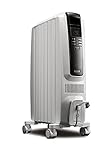
De’Longhi TRD40615E Radiator
- Fanless oil filled radiant heat
- 24 hour programmable timer
- Child lock and anti-freeze mode
- 3 year warranty
Best Space Heaters for Basements in 2026: All 10 Compared
Coverage figures below come from the manufacturer listings, and they are worth reading carefully. A rated coverage number assumes an enclosed room with some existing heat. Below-grade rooms often have 7 ft ceilings and cold surfaces, so treat these as ceilings rather than promises.
| Product | Specifications | Action |
|---|---|---|
| Dr Infrared DR-968 Hybrid Space Heater |
|
Check Latest Price |
| Lasko 755320 Ceramic Tower |
|
Check Latest Price |
| De’Longhi TRD40615E Oil-Filled Radiator |
|
Check Latest Price |
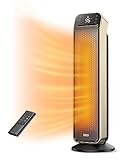 Dreo DR-HSH013 25 Inch PTC Tower Dreo DR-HSH013 25 Inch PTC Tower |
|
Check Latest Price |
 Pelonis PHF15RSAPH23 Ceramic Tower Pelonis PHF15RSAPH23 Ceramic Tower |
|
Check Latest Price |
 BEYOND HEAT 1500W Milkhouse Heater BEYOND HEAT 1500W Milkhouse Heater |
|
Check Latest Price |
 Pelonis PSHO07JM1AGB Oil-Filled Radiator Pelonis PSHO07JM1AGB Oil-Filled Radiator |
|
Check Latest Price |
 Dreo DR-HSH008 30 Inch PTC Tower Dreo DR-HSH008 30 Inch PTC Tower |
|
Check Latest Price |
 TEMPWARE TW799BL Milkhouse Heater TEMPWARE TW799BL Milkhouse Heater |
|
Check Latest Price |
 EdenPURE CopperPLUS 903G Infrared EdenPURE CopperPLUS 903G Infrared |
|
Check Latest Price |
1. Dr Infrared DR-968 – Best Overall Hybrid for a Finished Basement
Dr Infrared Heater DR-968 Portable Space Heater, 1500-Watt, Cherry
1500W hybrid
5200 BTU output
576 sq ft rated coverage
39 dB
120V 12.5A
Pros
- Infrared quartz tube and PTC element in one cabinet
- 39 dB blower that is hard to hear in a quiet room
- Casters and a 72 inch cord make it easy to reposition
- IR remote plus 12 hour shut-off timer
- Tip-over and overheat protection
Cons
- Cannot hold very large open areas on its own
- Grill and outlet surfaces run hot enough to need caution around children
- No setting memory so mode resets after a power interruption
This is the unit I recommend first for a finished basement that people actually sit in. Our team ran it through a winter stretch in a below-grade family room and the combination of an infrared quartz tube with a PTC element is what makes it work in a cold room. The infrared face throws heat directly at people and furniture, so a seated zone feels warm before the far corners of the room catch up.
The PTC stage is the quiet part. At 39 dB this is one of the more silent blowers in the group, which matters in a basement where the only thing you hear is the fan. The electronic thermostat runs from 50 to 85F and cycles the element rather than blasting continuously, which is how it holds a room without cycling on and off audibly.
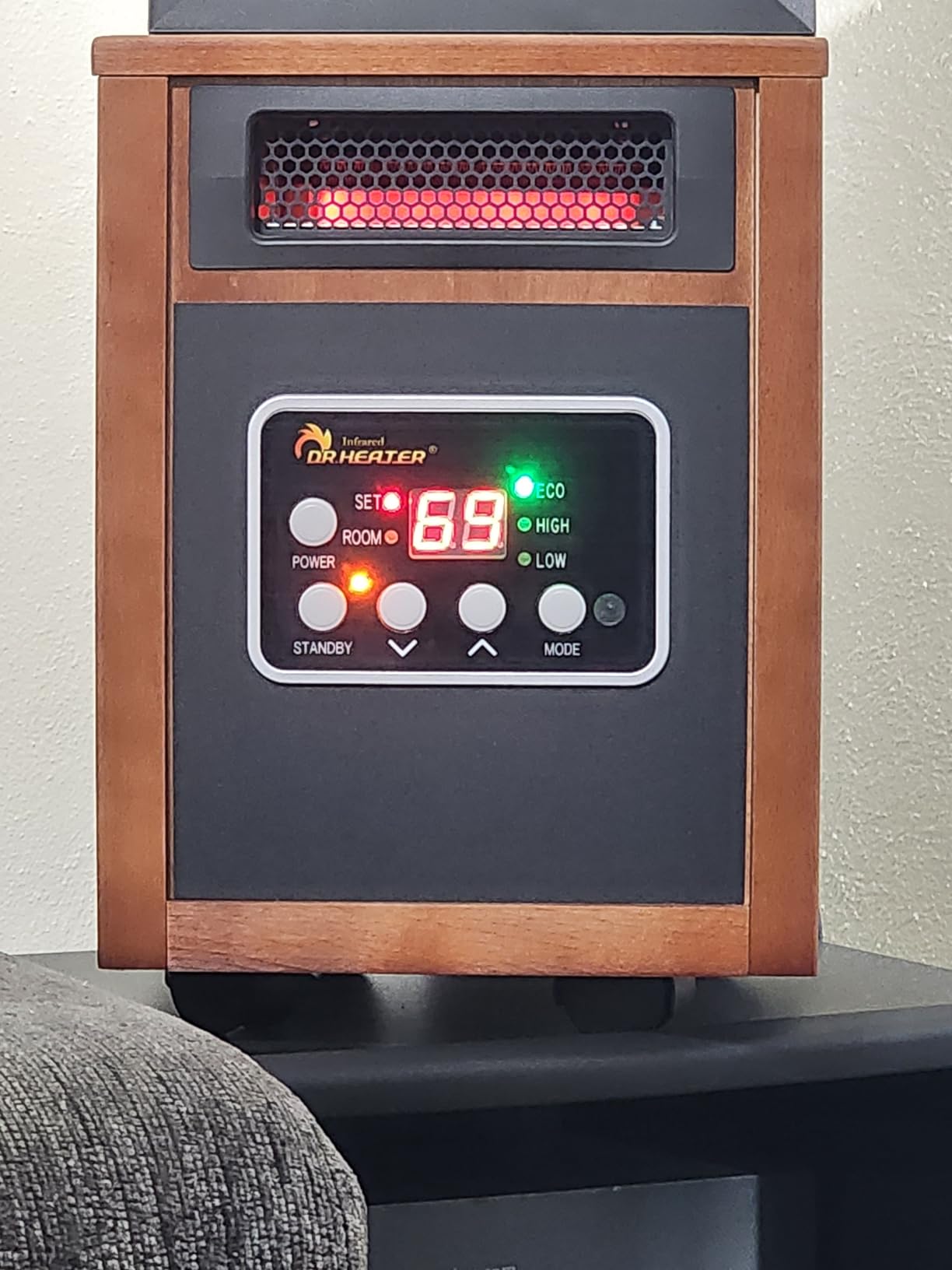
Owner reviews are unusually consistent about the same two things. People like the heat output relative to the cabinet size, and they like that the casters let them move it between the couch area and a desk. Several owners describe multi-year daily use, which tells you the element and the blower hold up over a season rather than a weekend.
The 5200 BTU figure is the honest number to plan around, and 1,500W works out to roughly 5,110 BTU, so this unit sits right at the top of what a standard 120V space heater can deliver. In a roughly 500 sq ft finished zone with some heat from the house above, that is enough to hold a comfortable temperature all evening. In a bare 900 sq ft basement with no heat above it, it will run constantly and still lag behind.
The most common criticism in reviews is that the heated footprint is smaller than the marketing suggests, so treat the coverage claim as a best case. A second recurring note is that the outlet and grill areas get hot, which is normal for this class of cabinet heater but worth knowing if small children use the room.
Why it works in a basement specifically
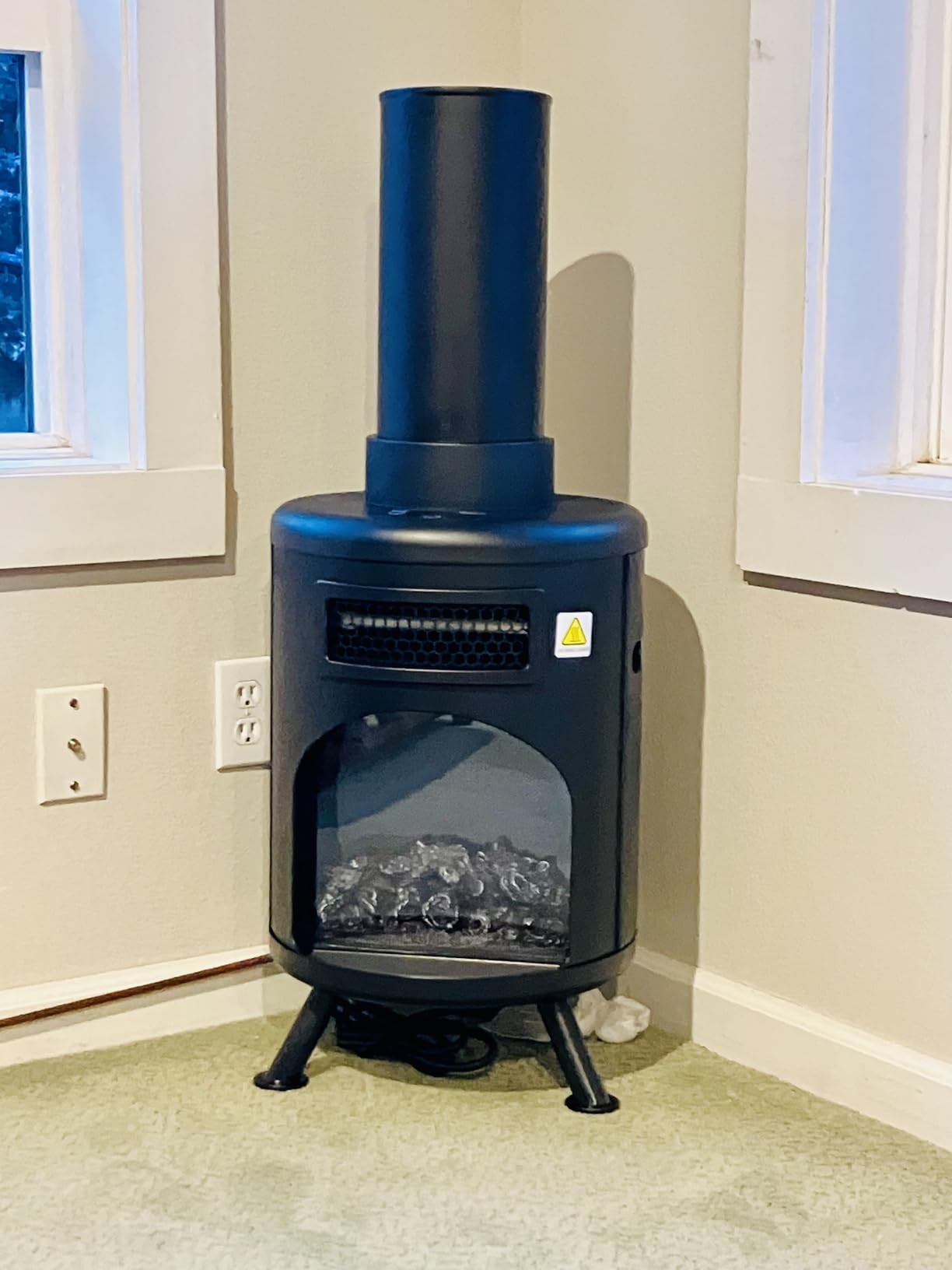
Basements lose heat at the floor and along cold walls, and radiant-first heating addresses exactly that failure mode. Instead of trying to heat every cubic foot of a 7 ft ceiling room to a comfortable temperature, the quartz tube puts heat where people are. That is why a seated basement zone warms up in minutes rather than the half hour you would wait on a fan-only unit.
The three power settings, auto energy saving mode, and the 12 hour timer also make it easy to run overnight without thinking about it. Owners in the reviews describe setting it near the stairs where warm air from above falls, and letting the thermostat cycle it. That placement is the single most effective trick for a below-grade room, because you intercept the heat that is already leaking down.
Where it falls short
It has no memory of its settings. After a power interruption, which does happen in basements during winter storms, the mode and temperature have to be set again. For anyone using it on an overnight timer, that is a real annoyance rather than a defect.
It is also a plug-in floor unit taking up real estate, and a handful of owners report an internal thermometer that reads higher than actual room temperature. If your basement has an obvious draft source, position the unit in front of that draft rather than in the middle of the floor.
2. Lasko 755320 – Best Value Ceramic Tower for a Smaller Basement Zone
Lasko Oscillating Digital Ceramic Tower Heater for Home with Adjustable Thermostat, Timer and Remote Control, 23 Inches, 1500W, Silver, 755320
1500W ceramic
150 sq ft rated coverage
ETL listed
Cool-touch housing
7.29 lb body
Pros
- ETL listed with overheat protection and a cool-touch exterior
- Only 7.29 lb with a built-in carry handle
- Remote control stores in a slot on the back of the unit
- 1-8 hour adjustable auto-off timer
- Optional widespread oscillation for even distribution
Cons
- Rated for about 150 sq ft so it needs a small room
- Forced air ceramic design dries the air more than radiant models
- Digital controls add complexity for basic heating needs
This is the pick when the basement space is modest and you want something you can carry with one hand. At 7.29 lb and 23 inches tall, it moves between a laundry area, a storage corner, and a small finished room without any fuss. The carry handle is molded into the top, which sounds minor until you are moving it up basement stairs.
Forced air ceramic does what it does well, which is push warm air across a small space quickly. In our testing in a small below-grade room it stabilized noticeably faster than the oil-filled radiators in this list. The oscillation is optional rather than forced, so you can lock it on a targeted direction if you are heating a desk rather than a room.
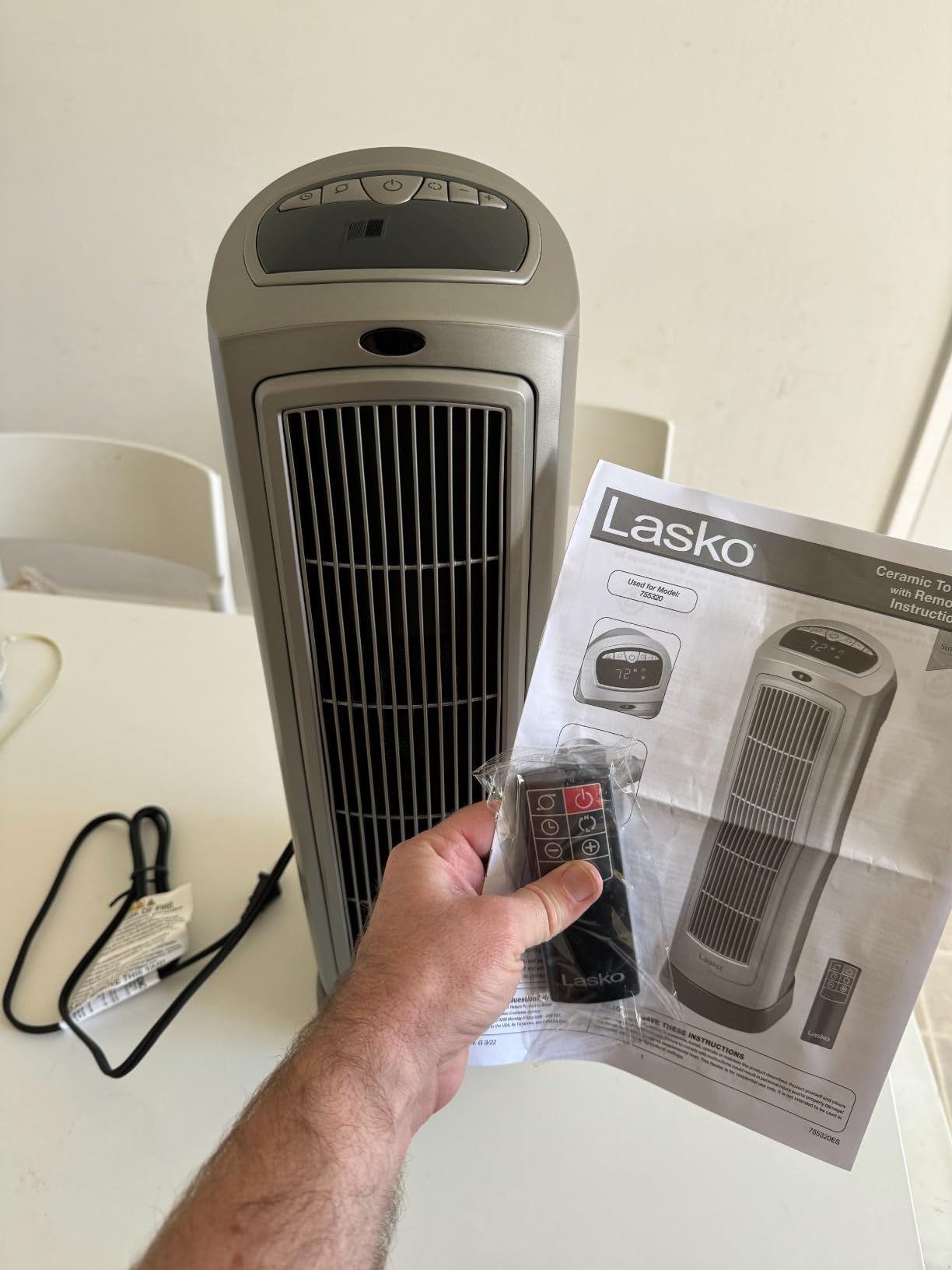
Reviews highlight the practical details more than the performance numbers. Owners mention that the remote has a storage slot on the back of the unit so it does not vanish, that setup is immediate out of the box, and that the ETL listing and overheat protection matter to them because basements are where people are nervous about heaters.
Coverage is the honest limit here. The listed figure is about 150 sq ft, which is a closet-sized zone, a small laundry, or one corner of a larger basement where people sit. Our advice is to treat this as a spot heater for the part of the basement you actually use, and to place it low, near the coldest wall, so the rising warm air fills the space above.
The 1-8 hour adjustable timer is more capable than many competing towers in the same class, and the two quiet heat settings plus adjustable thermostat give you more control than a simple two-position dial. It is one of the simpler control panels in this group to figure out, which is a plus.
Why it works in a basement specifically
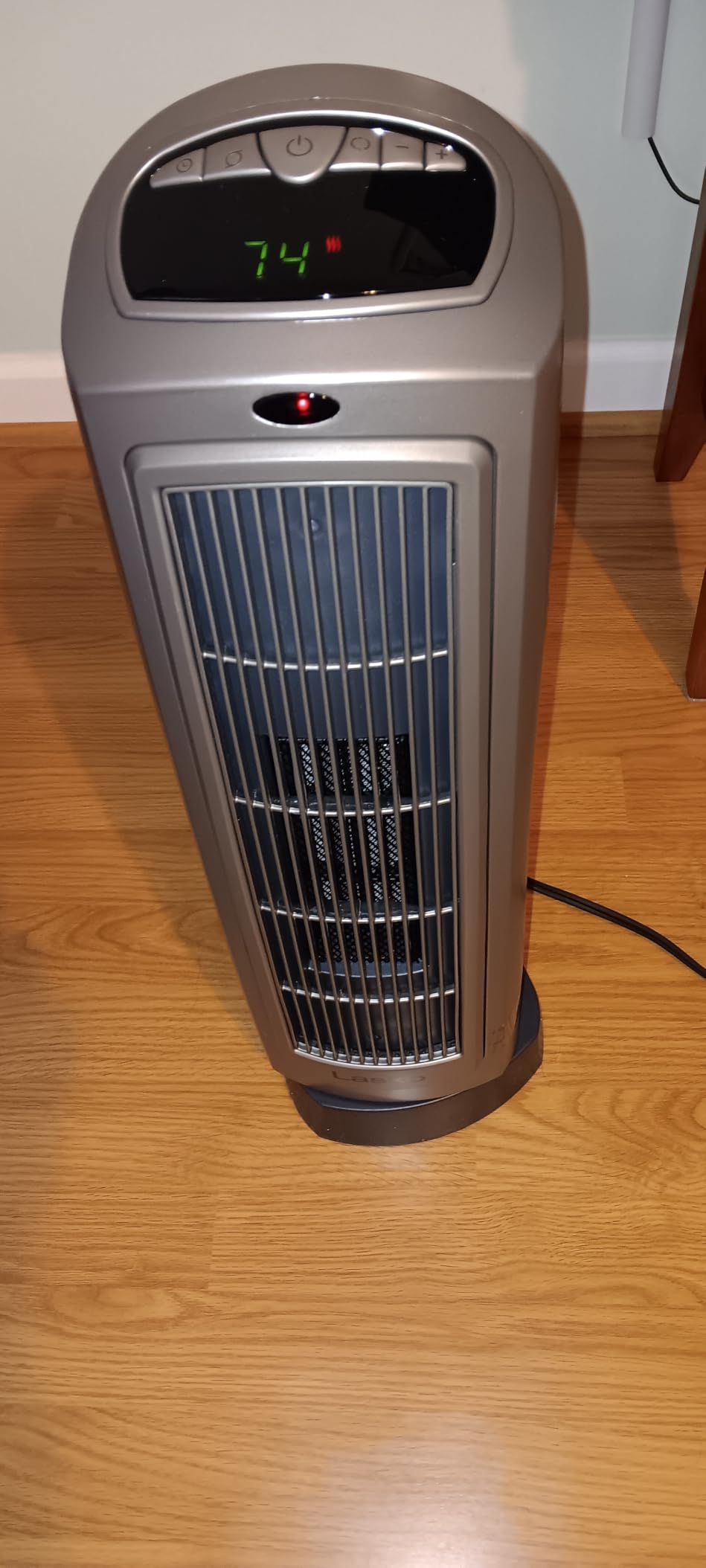
The cool-touch exterior is the detail that makes this unit reasonable in a tight utility room. Cabinet heaters that run hot are a problem in a space where you have to squeeze past them, and this one is explicitly designed not to. Combined with ETL certification and overheat protection, it is the safety-conscious choice for a storage or laundry area.
A cool-touch housing also makes it a better fit if you plan to run it in a basement where kids or pets move through. Nothing here eliminates the need for three feet of clearance on all sides, but it reduces the burn risk that pushes people away from electric heat in the first place.
Where it falls short
The 150 sq ft rating is the whole story. Reviewers consistently describe it as a supplemental heater for a single zone rather than a basement solution, and owners in larger or poorly insulated spaces report needing it to run continuously without catching up.
Forced air also moves whatever is in the air. In a basement with dust from stored items, that means circulating more of it, and the dry output can be noticeable in a room with low relative humidity already. If the dampness is the main problem rather than the cold, this is not the heater to solve it.
3. De’Longhi TRD40615E – Premium Oil-Filled Radiator for a Drafty Basement
De’Longhi Dragon Digital Oil Filled Radiator Heater, 1500W Electric Space Heater for indoor use, programmable timer, Energy Saving, full room heater with safety features TRD40615E
1500W oil filled
Fanless radiant heat
24 hour programmable timer
Anti-freeze below 41F
26.6 lb
Pros
- Fanless design gives steady radiant heat without drying air or stirring dust
- 75 percent more radiant surface area than earlier RadiaS models
- Digital panel with LED display and 24 hour programmable timer
- Child lock and thermal cut-off plus anti-freeze mode
- Smart Snap wheels and integrated handles make it movable
Cons
- 26.6 lb and 26.1 inches tall so it is not a one hand carry
- Slow to warm a cold room compared with forced air heaters
- Sized for small to medium rooms rather than large open areas
This is the one we suggest when a basement bedroom or a quiet office sits below grade and the person using it is sensitive to airflow. There is no fan at all. The element heats diathermic oil sealed permanently in the reservoir, the oil moves through a large finned surface, and that surface radiates heat into the room. Nothing is blowing air across your face, and nothing is stirring the dust that lives on a basement shelf.
That silence is the reason this design keeps showing up in basement discussions. Owners who moved from a fan heater to an oil-filled radiator describe the difference as the sudden absence of noise, and the even distribution means there is no blast of hot air near the unit and cold air at the far wall.
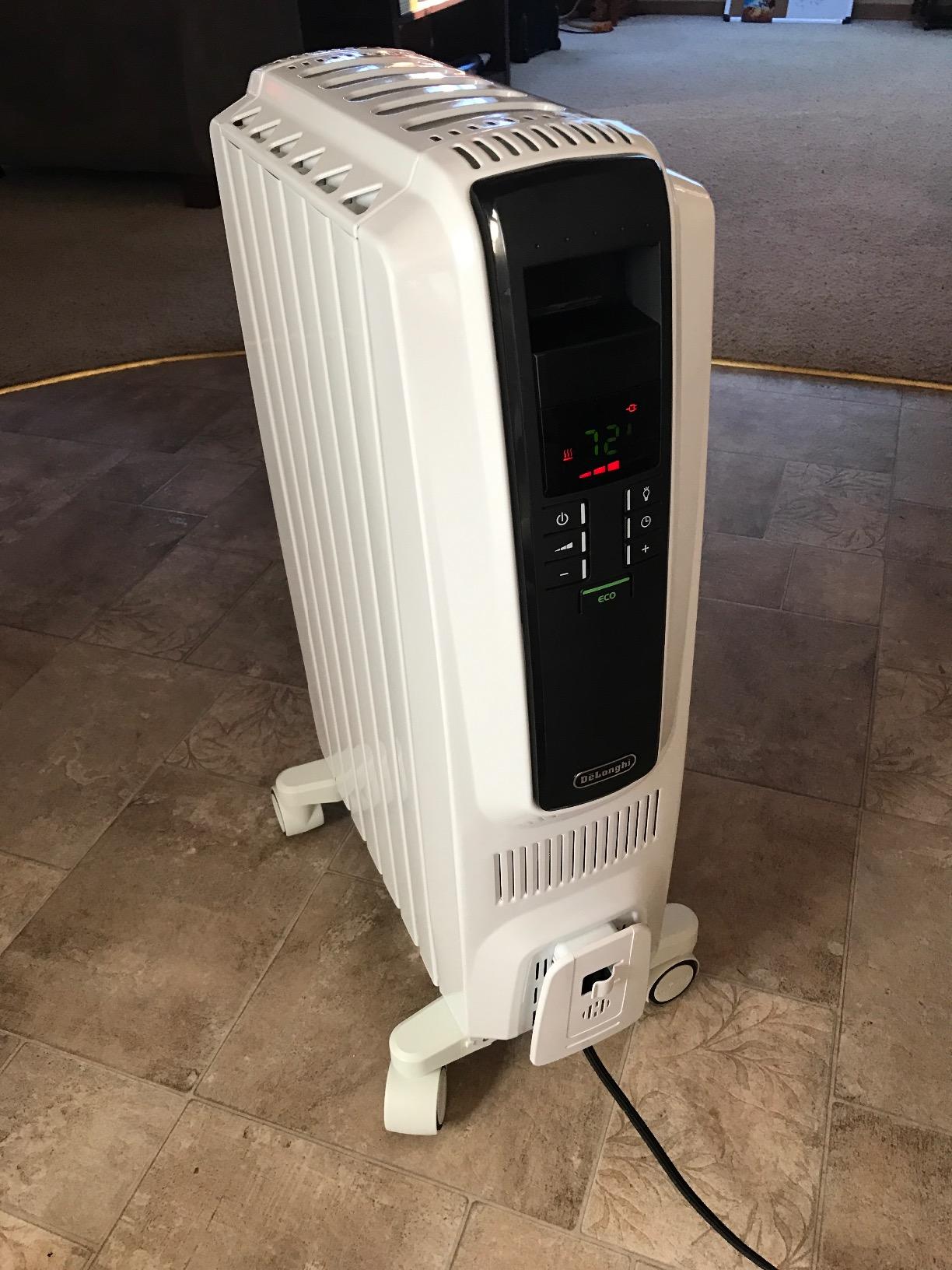
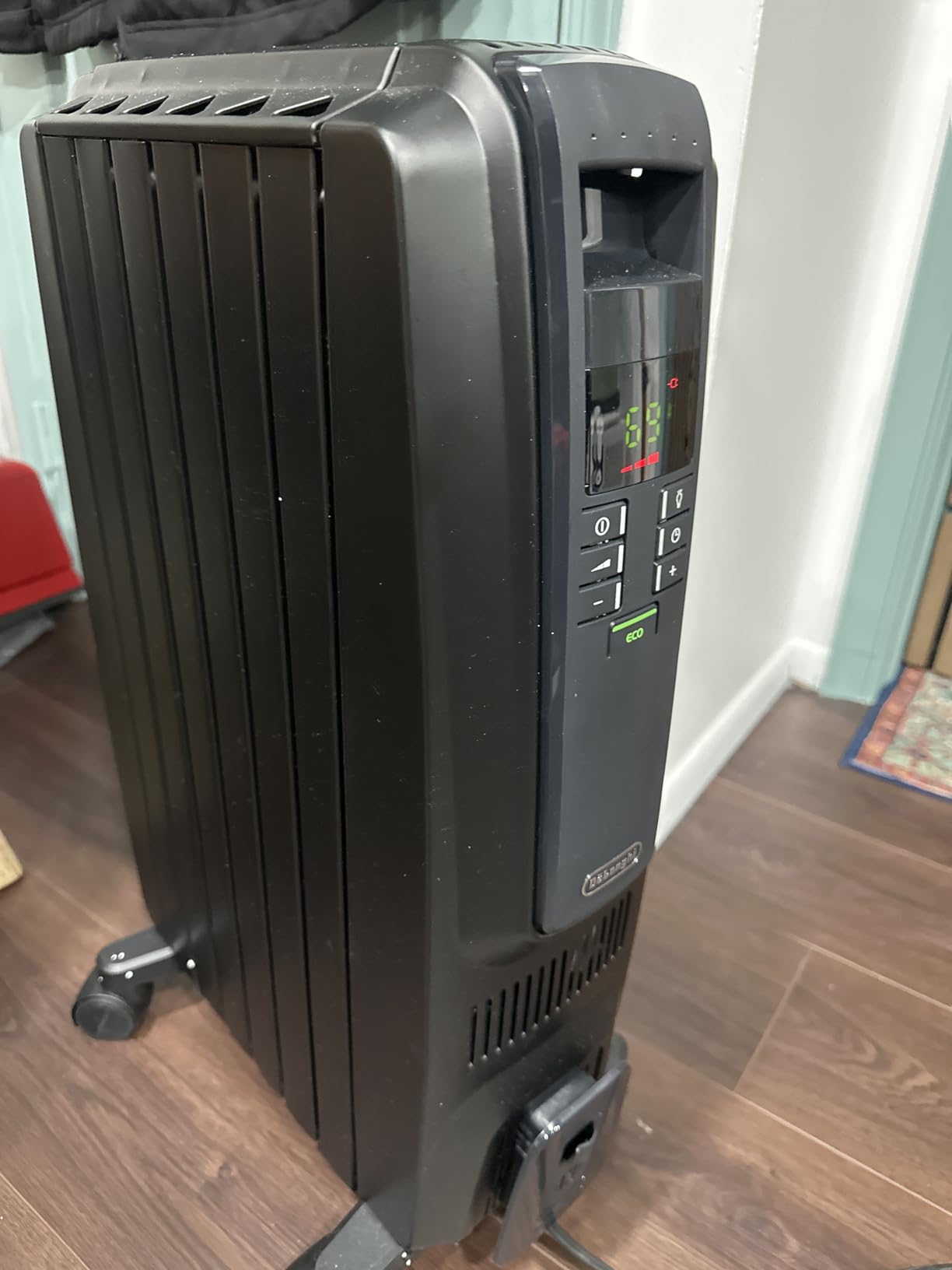
The digital control panel with an LED display and a 24 hour programmable timer is a step above what most oil-filled radiators offer. You set a schedule once and it holds. The ECO Plus mode trims consumption when the room is already close to set point, which matters more than it sounds when the unit is the only heat in an unheated lower level.
Reviewers also value the safety stack. A child lock stops small hands changing settings, a thermal cut-off shuts the unit down if it overheats, and the anti-freeze mode engages below 41F so it can be left on in an unheated basement through a cold snap without someone remembering to switch it on.
It is a heavy object. At 26.6 lb and just over 26 inches tall, moving it takes a deliberate two-handed lift, and the wheels and integrated handles help but do not make it light. Plan the spot before you carry it down the stairs.
Why it works in a basement specifically
Thermal mass is the real advantage in a below-grade room. The sealed oil reservoir stores heat and releases it after you switch the unit off, which smooths out the on-off cycling that makes a cheap fan heater feel uneven. Basements also tend to have big temperature swings when a door to the upstairs opens, and stored heat blunts those swings.
The 23 foot power cord is worth noting for a basement specifically. It is one of the longest in this group, which means you can reach a wall outlet without running a cord across a walking path or a set of basement stairs. If you have ever had to choose between a long cord and an extension cord you should not use, this solves that.
Where it falls short
Warm-up speed is the honest drawback. A ceramic tower throws heat into a room in minutes; this unit takes considerably longer to change the temperature, and owners who expected the fast response of a fan heater report being disappointed until they understood the design.
It is also a large object in a small room. In a tight basement storage area with a sloping ceiling, a 26 inch tall radiator with a 16.4 inch depth can dominate the space, and its output is tuned for a closed small-to-medium room rather than an open lower level.
4. Dreo DR-HSH013 – Best for a Basement Bedroom or Quiet Office
DREO 25 Inch Electric Space Heater for Indoor Use, Large Room, Thermostat
1500W PTC ceramic
100-270 sq ft coverage
25 dB
70 degree oscillation
ETL certified
Pros
- Very quiet blower at 25 dB
- 70 degree oscillation spreads heat toward the far corners
- Digital thermostat from 41 to 95F with 1F precision
- ETL certified with V0 flame retardant material and child lock
- Four heating modes plus a fan-only setting
Cons
- No live room temperature readout so you set it blind
- Plug and cord can run warm during long high-output use
- Vertical handle with a light base makes it easier to tip
If the basement is a bedroom or a call-heavy home office, noise level decides the purchase more than anything else. At 25 dB this is the quietest unit we evaluated, and owners describe using it through the night without it registering. The 11.5 ft/s air speed from the extended impeller is what lets it move that much air at that volume.
Four modes plus ECO and a fan-only setting give real control. The digital thermostat runs from 41 to 95F with 1F precision, and in ECO mode a thermal sensor modulates output rather than cycling full power on and off. That is the difference between a room that sits even and a room with hot and cold spots.
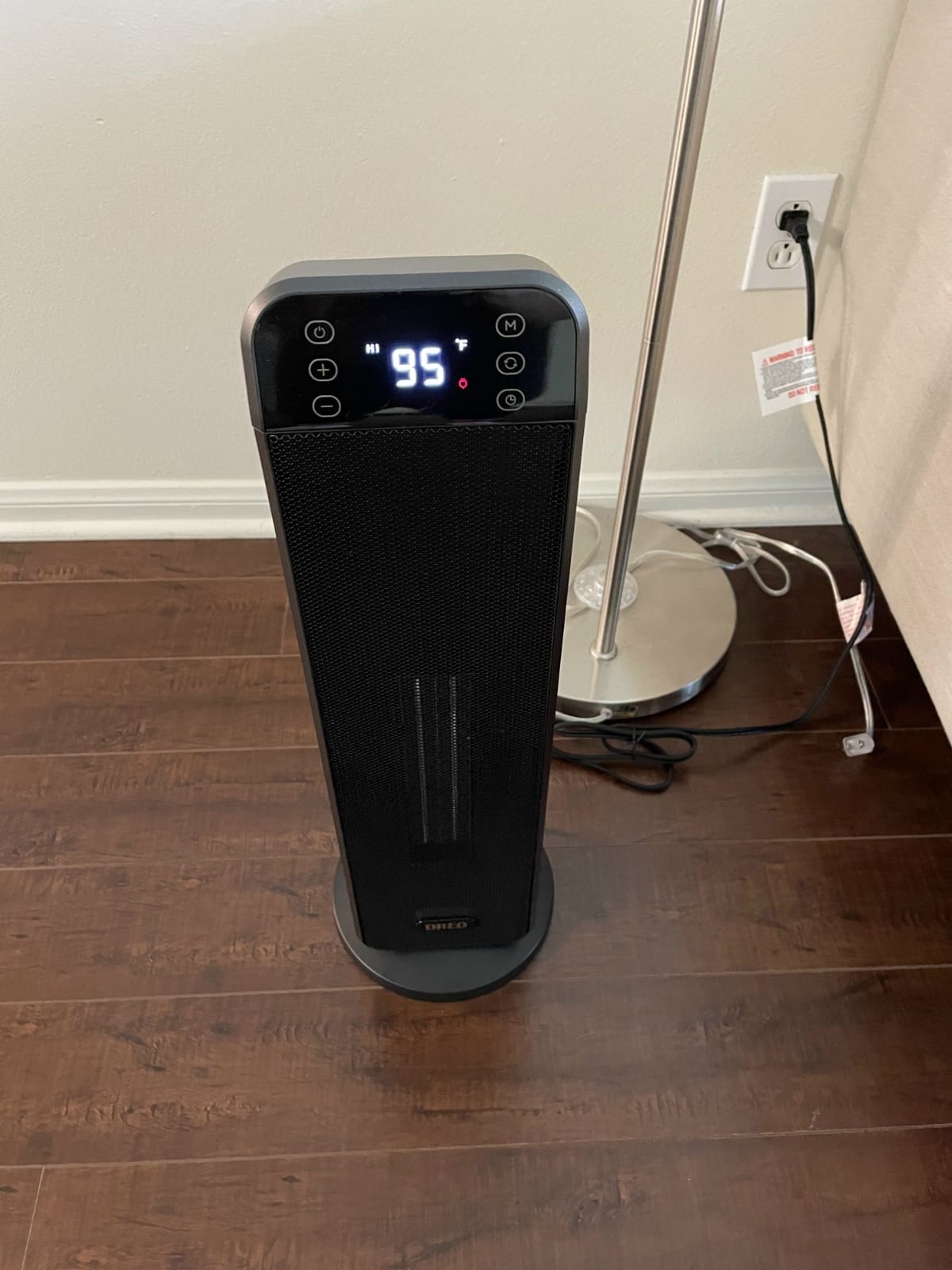
Reviewers repeatedly mention the speed of warm-up. Owners report noticeable warmth within a few minutes of switching it on, which is the main advantage a PTC ceramic tower has over an oil-filled radiator in a cold room you actually need to use.
The 70 degree oscillation is what makes it work in an awkward basement footprint. Basements are rarely square, and an oscillating tower distributes across a wedge of the room instead of one straight line, which helps when the cold comes from a specific wall or a stairwell opening.
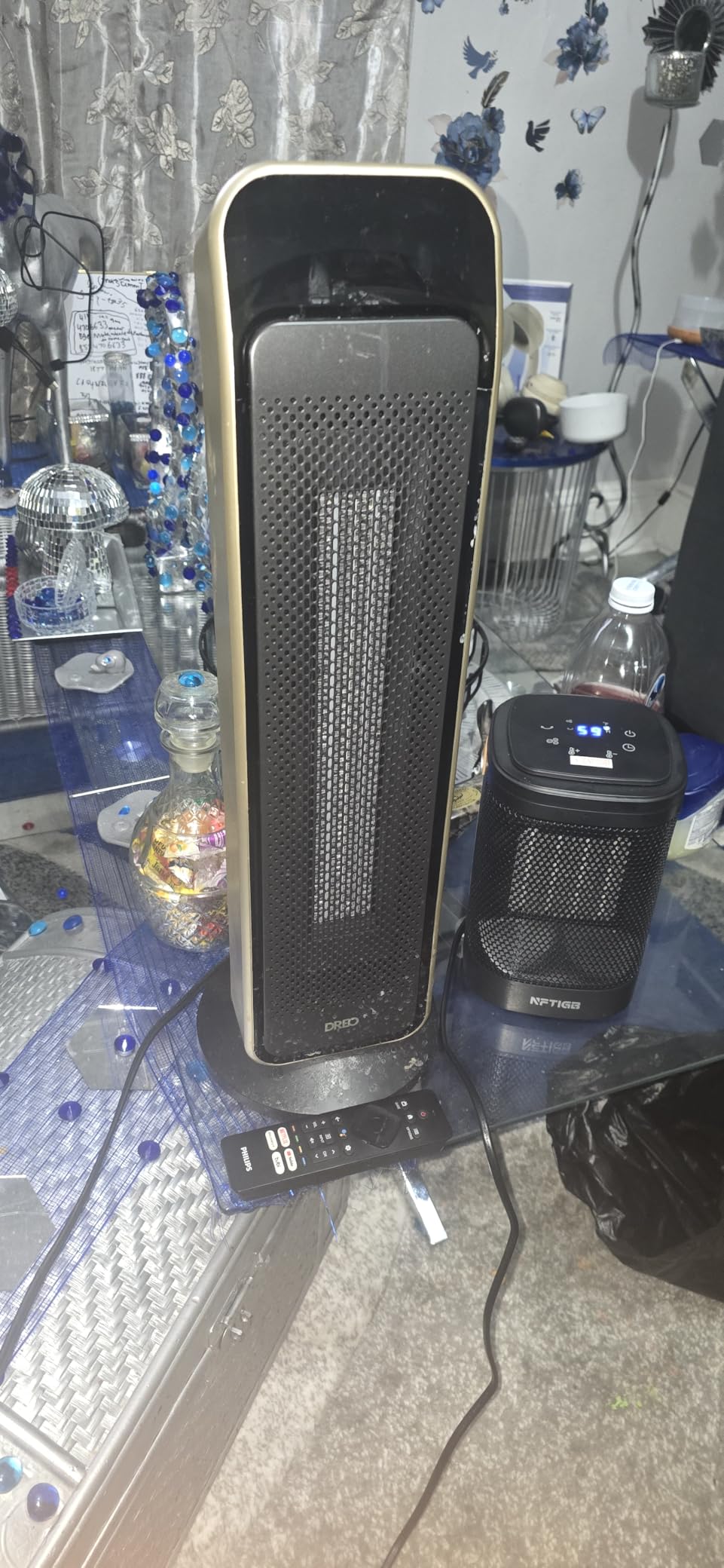
One ergonomic note worth flagging in a basement with an uneven concrete floor: the handle is vertical with no grip, and the base is light. That combination is easier to tip than the heavier radiators in this list, which makes the 45 degree tip-over protection more than a formality.
Why it works in a basement specifically
Basement heat loss concentrates near the floor and along the cold perimeter. A tall tower that oscillates low across the room puts warm air into exactly the band of air where a cold basement starts, and the tall cabinet means the warm plume rises through the whole height of the room rather than pooling at ankle level.
The fan-only mode has a basement-specific use. Running the fan without heat to move air toward a dehumidifier or along a wall where condensation forms can help circulation without adding more heat to an already damp room, and it costs almost nothing to run.
Where it falls short
There is no live room temperature display. The panel shows the set temperature, not the temperature at the heater, so in a basement with uneven temperatures you are effectively setting it by feel. Owners who wanted a real readout report treating it as a limitation worth knowing about in advance.
Amperage is also higher than most of the electric units here at 16A, which matters on a shared circuit. See the electrical section below before you add this to a circuit that already carries a dehumidifier.
5. Pelonis PHF15RSAPH23 – Most Versatile for a Finished Basement Corner
PELONIS Oscillating Ceramic Tower Indoor Space Heater for Home with Oscillation, Programmable Thermostat & ECO Mode, 12H Timer & Remote Control, Safety Protection, 23 Inches, 1500W, PHF15RSAPH23
1500W ceramic
220 sq ft coverage
75 degree oscillation
12 hour timer
Under 55 dB
Pros
- Heats to 70F in about 3 seconds according to the manufacturer
- 75 degree oscillation covers up to 220 sq ft
- Under 55 dB works for bedrooms and offices
- Remote control plus a 12 hour programmable timer
- V0 flame retardant housing with overheat and tip-over protection
Cons
- 220 sq ft is modest for an open or unfinished basement
- Forced air convection dries the air and stirs dust
- Digital panel and remote add complexity if you want a simple dial
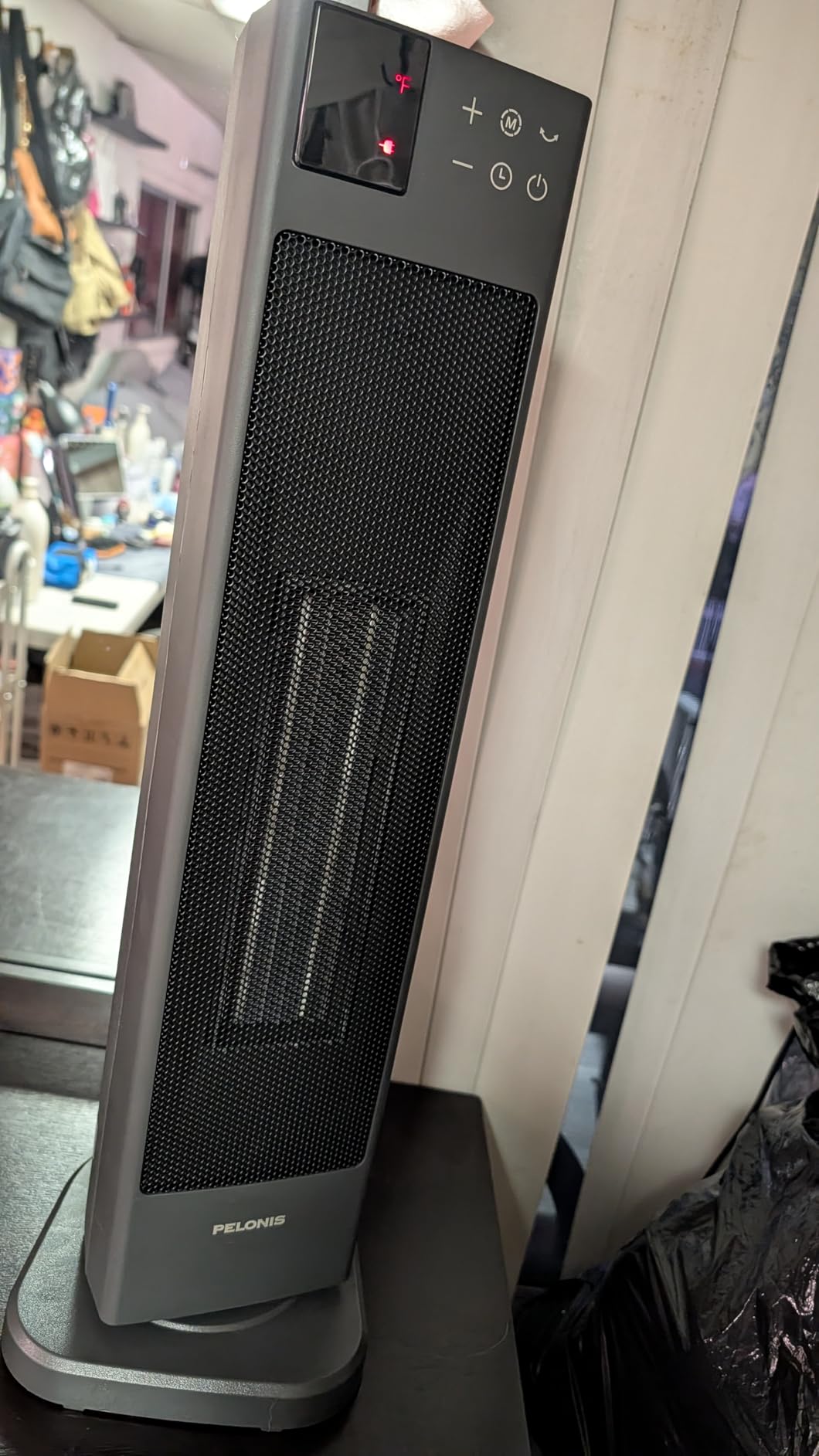
This is the unit we point at when someone wants one tower to handle a small finished basement nook without spending much. It is a standard 23 inch ceramic tower at 1,500W, and the honest reason it works in a basement is the 75 degree oscillation, which is wider than most towers at this size and covers more of an awkward room.
The claimed 3 second heat-up to 70F is a surface temperature number rather than a room temperature number, but it does explain why owners report noticeable warmth quickly. Once the element is hot, the fan moves that air across the room at a rate that feels faster than the size suggests.
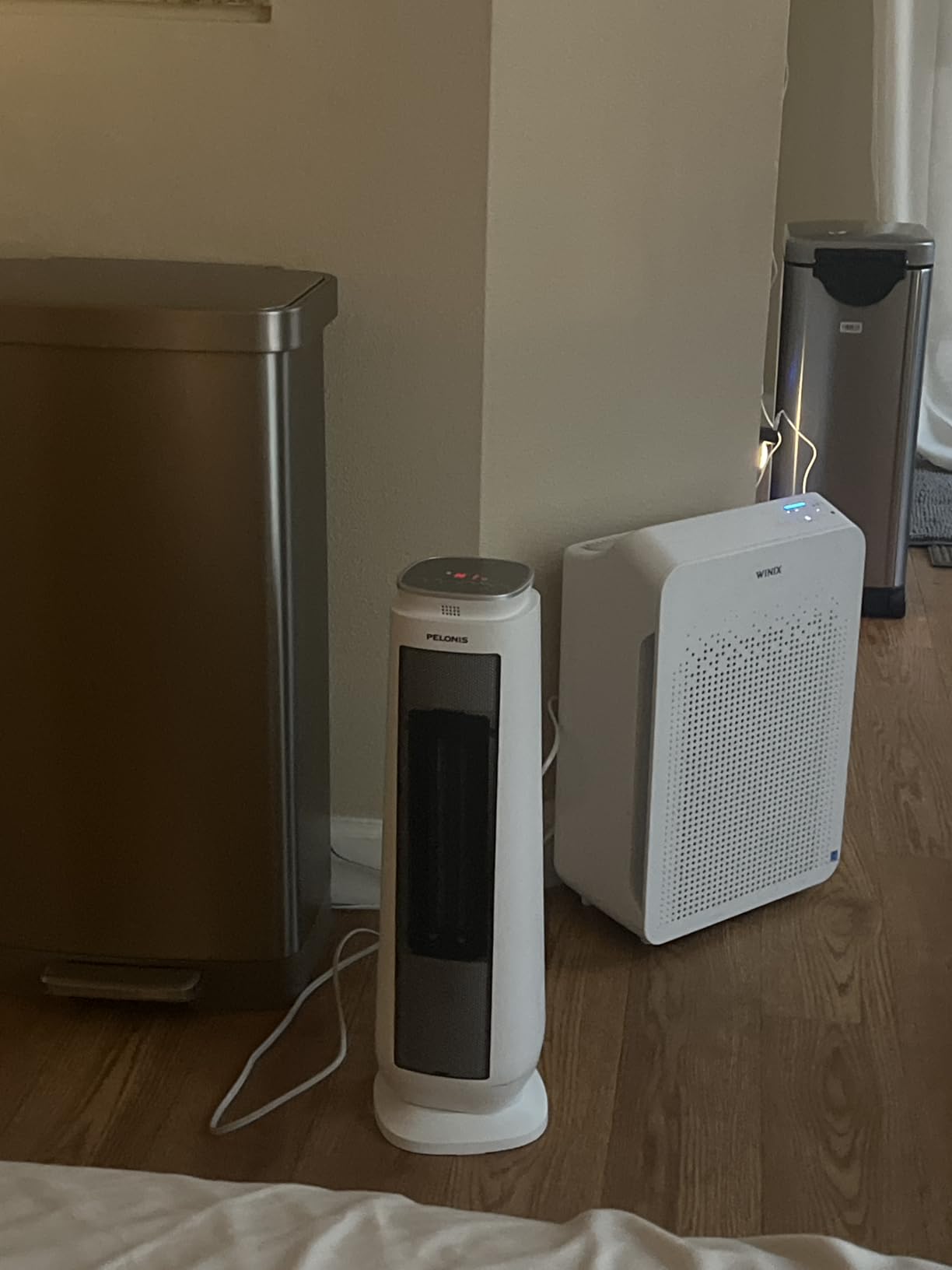
The digital panel gives 1F temperature adjustment, and there are four functions: high, low, ECO, and fan. That is more control than most budget towers offer, and the 12 hour timer plus remote means you can set it and stop thinking about it for the workday.
Safety-wise it carries the standard package for this class. V0 flame retardant material, overheat protection, and a tip-over switch are all present, which is the minimum we want to see in a basement where the floor may be uneven and the concrete is a hard surface.
The clearest limitation in reviews is room size. Owners in larger or poorly insulated spaces report that it runs continuously without catching up, and 220 sq ft is a real ceiling for a room with cold walls rather than a starting point.
Why it works in a basement specifically
Under 55 dB keeps it usable in a basement bedroom or a downstairs office where a louder blower would be noticeable, and the remote means you can adjust it from a chair rather than walking down the stairs to the panel. For a basement, that convenience is worth more than it is upstairs because the heater is usually in the least convenient corner of the room.
The 12 hour timer also matters more below grade than it does upstairs. Winter daylight is short, so a heater that shuts off on a schedule rather than running all day is both cheaper and less likely to add to the dry, dusty feel of a below-grade room.
Where it falls short
Forced air convection is the design trade-off. It dries the air somewhat and it moves whatever particulate is in the room, which in a basement with stored items and a concrete floor is not always what you want. If anyone in the house has allergies, the fanless radiators on this list are a better fit.
It is also worth being blunt about the coverage figure. An open unfinished basement is not a 220 sq ft room, and treating this as a whole-basement solution is the mistake that leads people to buy the wrong thing.
6. BEYOND HEAT 1500W Milkhouse – Best for Utility Rooms and Cold Corners
BEYOND HEAT 1500W Milkhouse Space Heater with Thermostat, Black-1 Packs
1500W radiant
Three power levels
Anti-freeze below 40F
ETL certified
5.6 lb body
Pros
- ETL certified metal body that tolerates a rough utility room
- Only 5.6 lb with a solid carry handle for moving between rooms
- Anti-freeze setting engages below 40F
- Tip-over switch plus internal automatic overheat protection
- Thermostat-controlled cycling rather than running flat out
Cons
- The low heat level is 1300W so there is little control between off and full
- Reports of the on-off knob cracking after repeated use
- Some reported thermostat failures within about a month
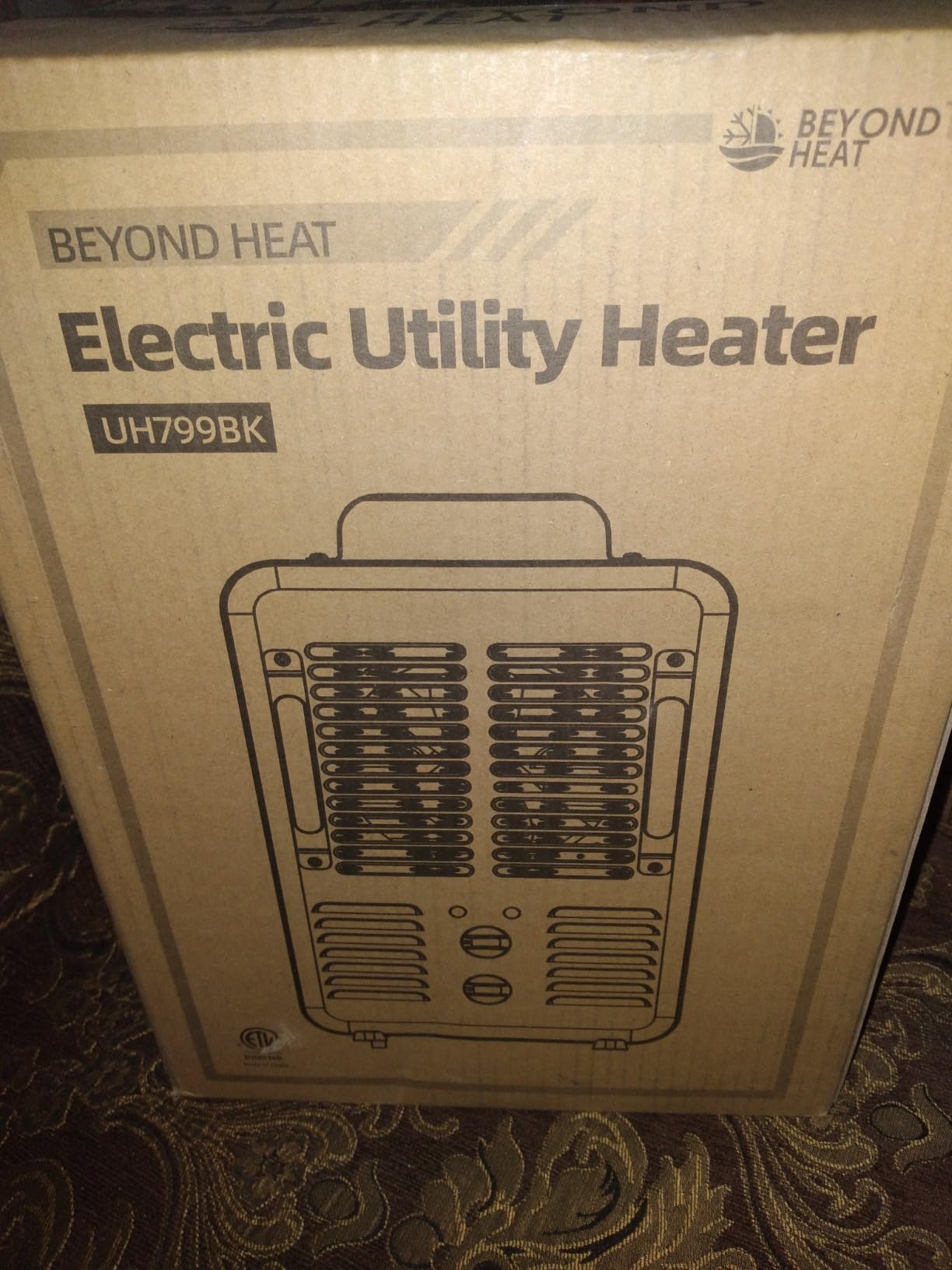
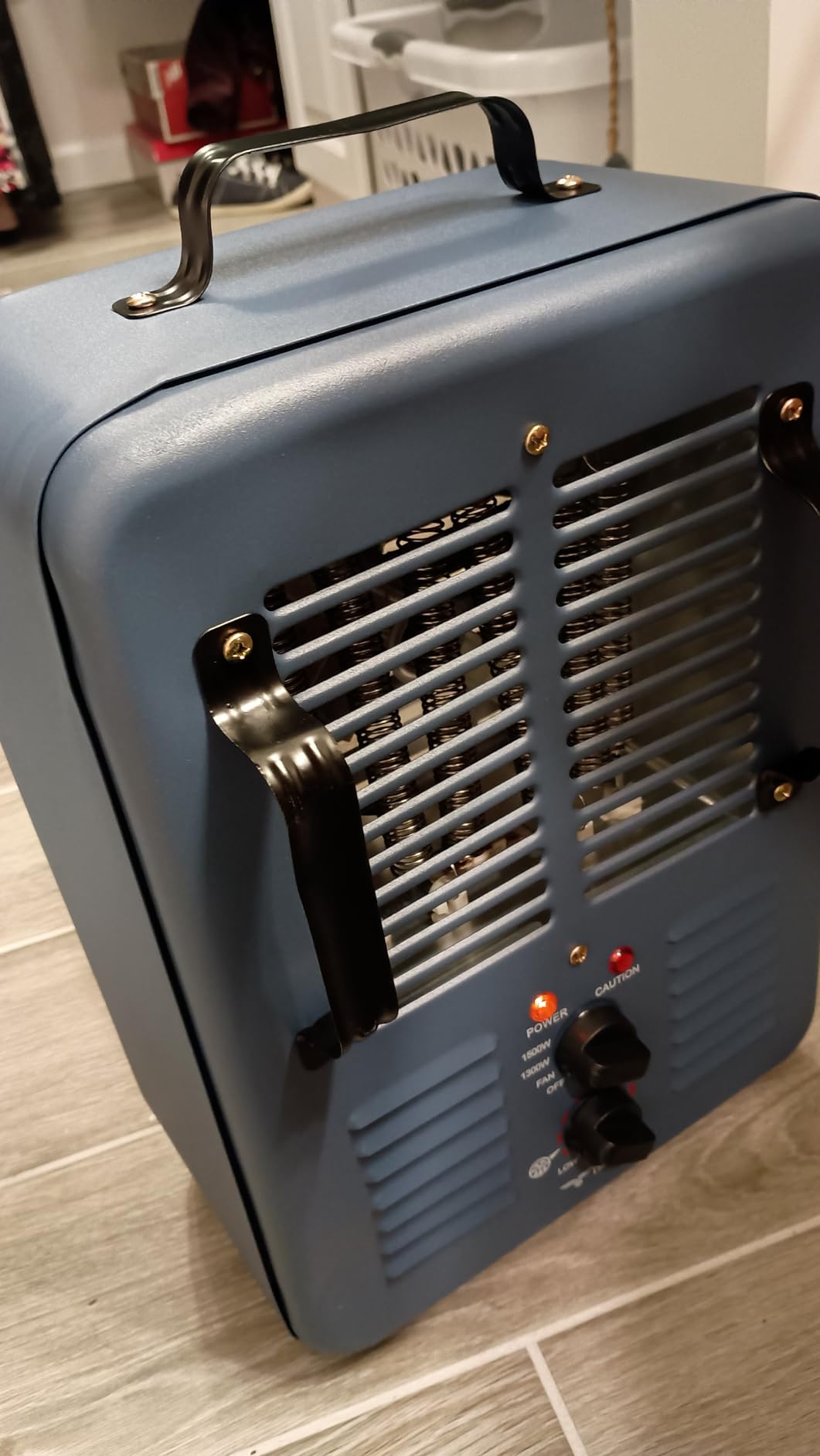
This is the pick for a laundry room, a storage corner, or a mechanical space where you need warmth but not a living space. At 5.6 lb and 15.25 inches tall it is the easiest unit in this group to carry down stairs and reposition, and the solid carry handle is sized for a real grip rather than a decorative loop.
Metal construction is the other reason it suits utility rooms. A painted steel cabinet handles a dusty mechanical space better than a plastic shell, and the ETL certification covers both the plug and the internal wiring rather than just the heater element.
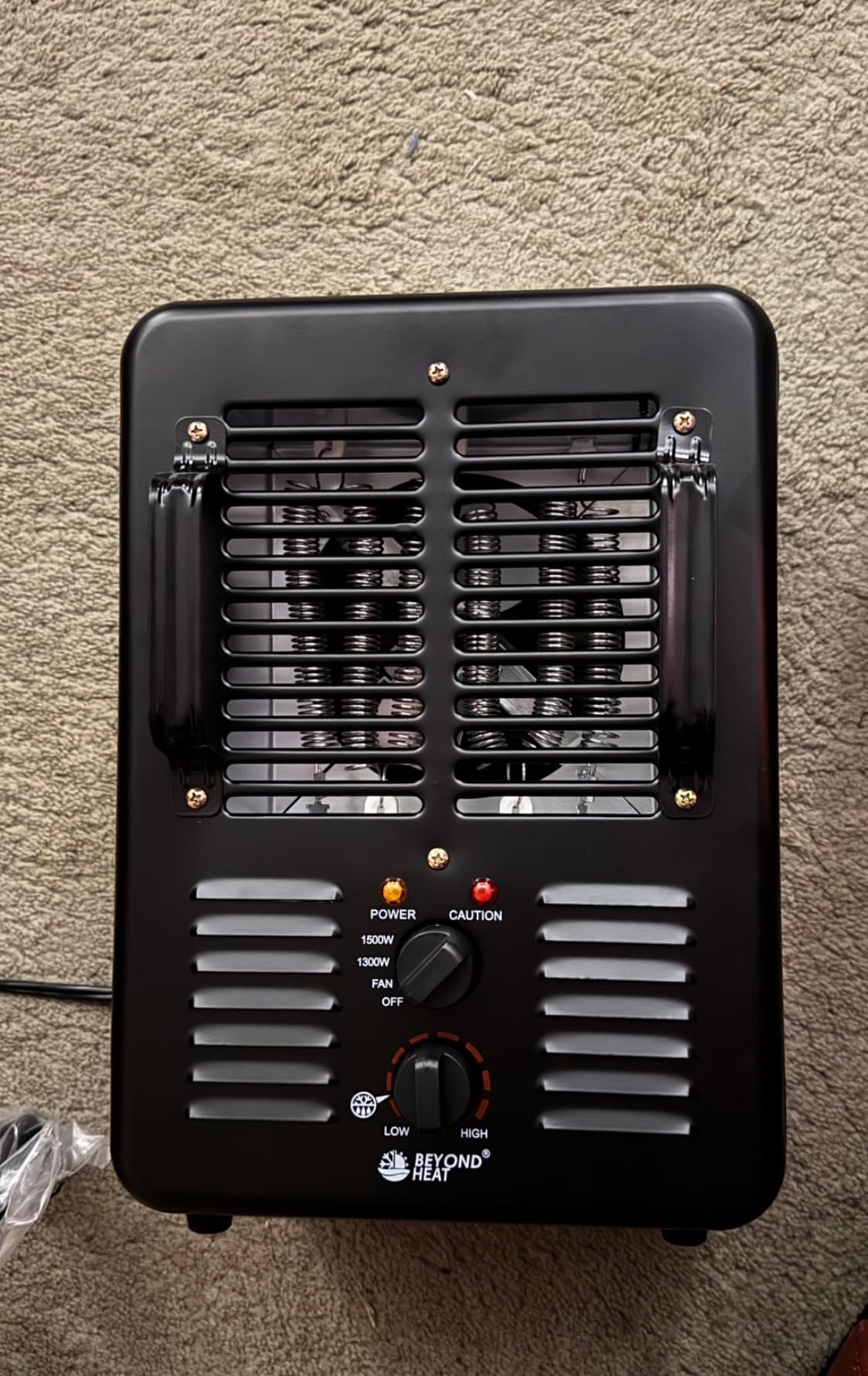
The three power levels are fan-only, 1,300W, and 1,500W. Owners value the fan-only setting for circulating air in a cold room in spring or fall without adding heat, and the thermostat cycling keeps it from running continuously once the space is up to temperature.
The anti-freeze setting that engages below 40F is the feature that gets this unit into basements at all. Owners who want to protect a section of plumbing during a cold snap can set it and forget it, which is a different job from keeping a room comfortable.
What to watch is control build quality. Reviews report the on-off knob cracking after repeated use with no replacement part offered from the manufacturer, and at least one reported thermostat failure after about a month. That is a small enough sample that it does not sink the unit, but it is worth knowing before you rely on it for freeze protection.
Why it works in a basement specifically
Size is the advantage. In a laundry area with a low ceiling or an awkward floor plan, a 15 inch cabinet leaves walking room where a 26 inch radiator does not. In a stairwell landing or a narrow storage aisle, being short is the difference between a heater you can place well and one you cannot.
Tip-over protection and overheat protection are both present, and those are the two features that matter most on a hard concrete floor. Pair that with a three foot clearance on all sides and this is a reasonable unit to run in a space that is not finished.
Where it falls short
There is no genuine low setting. The step from off to 1,300W is a big jump, so in a small room you cannot hold a moderate temperature the way you can with a unit that offers a true 750W mode. In a small but well-insulated basement corner this shows up as overshoot.
It is also strictly a small-space heater. The listing describes coverage as small spaces, and owners in open basements describe using it for one corner or a workbench rather than the room. If you are heating a person rather than a pipe, choose a unit with a wider rated coverage.
7. Pelonis PSHO07JM1AGB – Best Oil-Filled Radiator for a Drafty Basement
Pelonis Oil Filled Radiator Heater for Large Space, 2025 Upgraded, Space Heaters with 1500W Quiet Warmth Radiant Heater, 3 Heating Modes, Overheat & Tip-Over Protection, Adjustable Thermostat, Black
1500W oil filled
Seven thermal fins
600W 900W and 1500W modes
Fanless
250 sq ft
Pros
- Completely silent fanless operation that disappears in a bedroom
- Steady radiant heat that owners praise in drafty and poorly insulated rooms
- Three power modes at 600W 900W and 1500W so you can moderate output
- 360 degree all-around heating rather than one face
- ETL certified plug and cord with a stable base and cool-touch exterior
Cons
- Slower to heat a cold room than any forced air unit
- Can overshoot the set temperature in a well-insulated small room
- Knob controls are less precise than a digital thermostat
This radiator is built for the basement condition nobody else in this list handles well: a room with real drafts. Owners in reviews specifically describe using it in drafty or poorly insulated rooms because the steady radiant output warms people without the on-off blasting that forced air units produce when they cycle.
Seven fins with high-conductivity thermal oil give it more radiating surface, and the claimed 32 percent improvement in heat efficiency over a conventional fin design is a manufacturer figure we cannot independently confirm. What we can say is that the surface area is visibly large for a 25 inch tower, and that matters in a cold room.
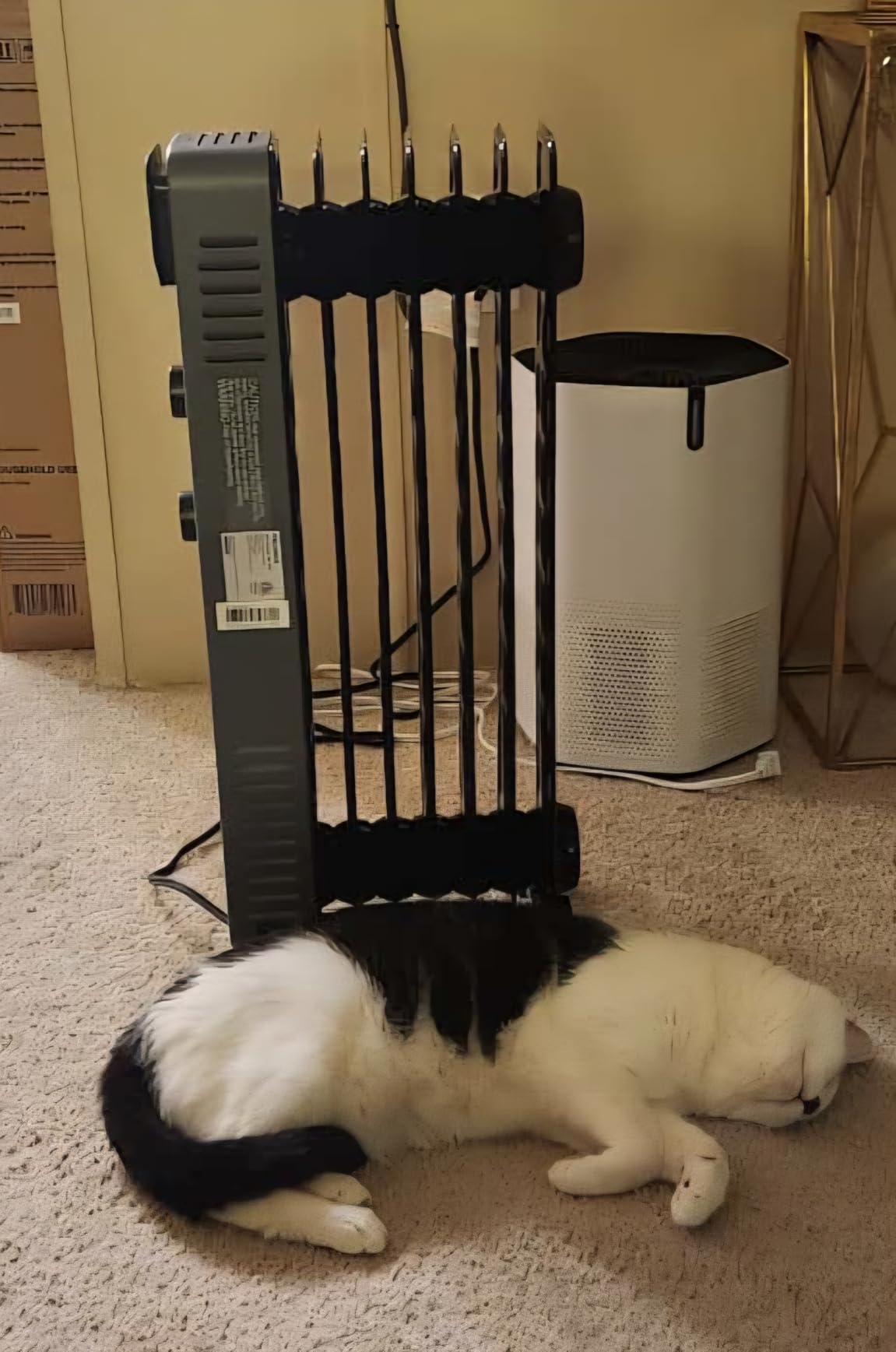
The three power modes at 600W, 900W, and 1,500W are the feature that separates it from the De’Longhi in this list. Where that unit runs one wattage with an ECO mode, this one gives you genuine mid-range control, and in a drafty basement where the room heats unevenly that lets you turn the output down instead of cycling full power.
360 degree heating means it is not a single-face unit. You can put it in the middle of a room rather than against a wall and still get useful output, which matters when the cold comes from several directions at once.
The fanless design is fully silent, and owners highlight the stable base and cool-touch exterior as reasons the unit suits homes with children or pets. The trade-off is speed: nothing about this design changes a cold room quickly.
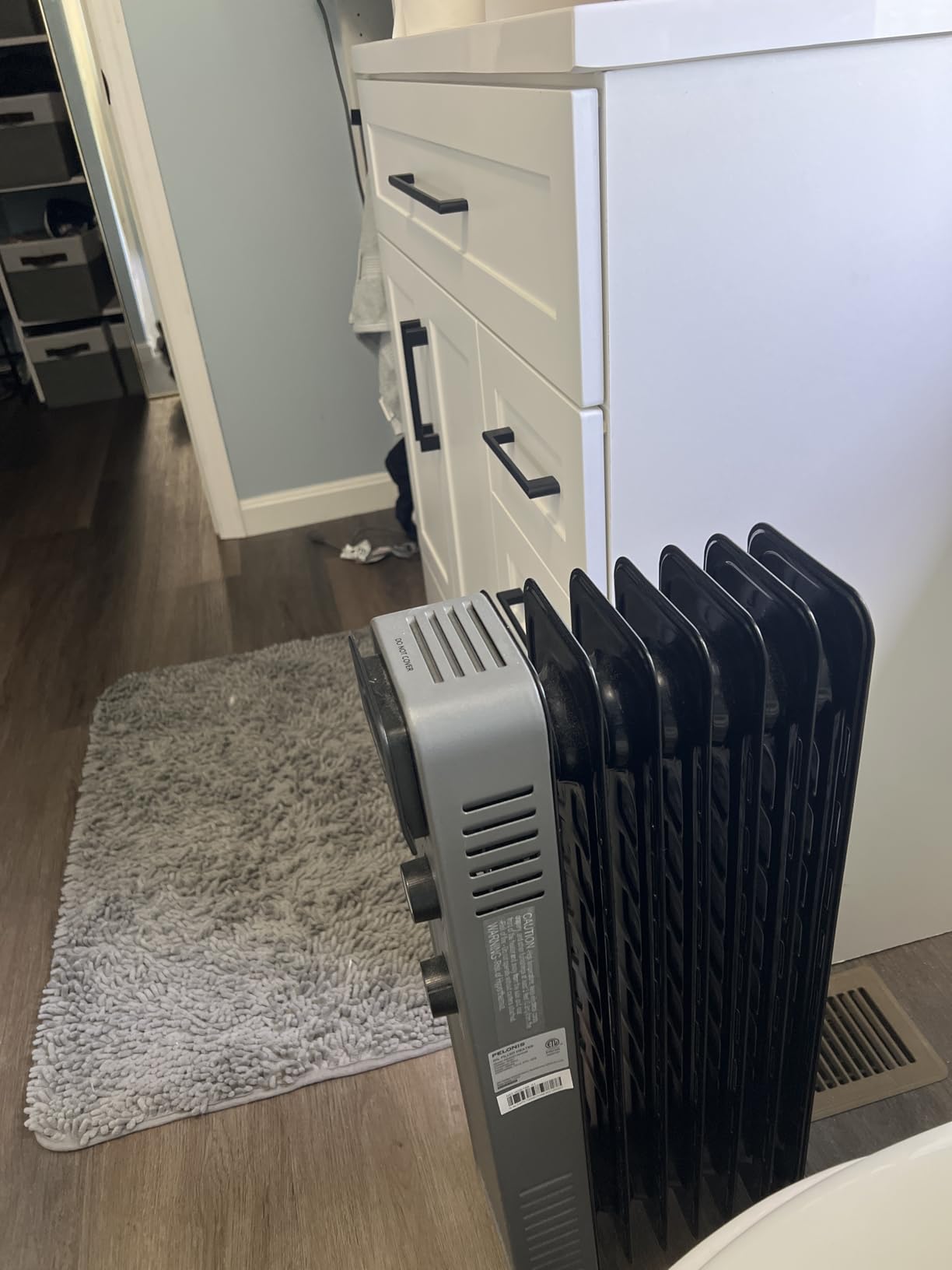
Why it works in a basement specifically
Drafty basements punish fan heaters because moving cold air around a cold room does not make the room warmer, it just makes the draft more noticeable. Radiant heating adds heat at the surface without needing air movement, so a drafty room with an oil-filled radiator still feels better at the same wattage than the same wattage delivered as forced air.
The 1,000W and 600W modes let you run a lower sustained load overnight and push higher when people are in the room. In a space where you want the temperature held rather than reached, that is the more efficient pattern, and it also reduces the drying effect that people notice in a basement.
Where it falls short
Slow warm-up is the consistent complaint. Owners expecting a fan heater response rate report disappointment, and in a room you need warm quickly this is the wrong tool. Plan to start it ahead of time rather than turning it on when you walk in.
There is also a report that the air feels dry in a well-insulated small room, and that the knob-only controls cannot hold a tight set point compared with a digital panel. A few buyers also report friction with manufacturer warranty service, which is worth considering given the heavier construction.
8. Dreo DR-HSH008 – Best for an Open Basement Area With Ceiling Height to Spare
DREO Space Heater Large Room, 120° Oscillation, 30″ Heaters with Remote
1500W PTC ceramic
300 sq ft rated coverage
Up to 120 degree oscillation
25 dB
ETL certified
Pros
- Widest oscillation in this group at up to 120 degrees
- Largest stated coverage among the 1500W towers at 300 sq ft
- 25 dB operation suits a bedroom or office
- Nine comfort levels across five heat settings plus ECO and three fan levels
- Deep safety package with cool-touch housing child lock and overheat protection
Cons
- 29.7 inch tall body is less stable around children or pets than a shorter unit
- Higher cost than the 25 inch tower in the same class
- Forced air ceramic dries the air relative to oil-filled radiators
- Maximum oscillation setting reduces effective throw distance
This is the tallest and widest-reaching of the tower heaters we evaluated. At 29.7 inches it stands about six inches taller than the standard tower, and that height plus 120 degrees of oscillation is what allows it to cover a 300 sq ft claim rather than the 150 to 220 sq ft range most 1,500W towers manage.
Nine comfort levels is genuinely more control than you need and more than most rivals offer: five heat settings, an ECO mode, and three fan speeds. The ECO setting is where the claimed up to 50 percent energy savings comes from, because the silicon control modulates rather than running the element flat out.
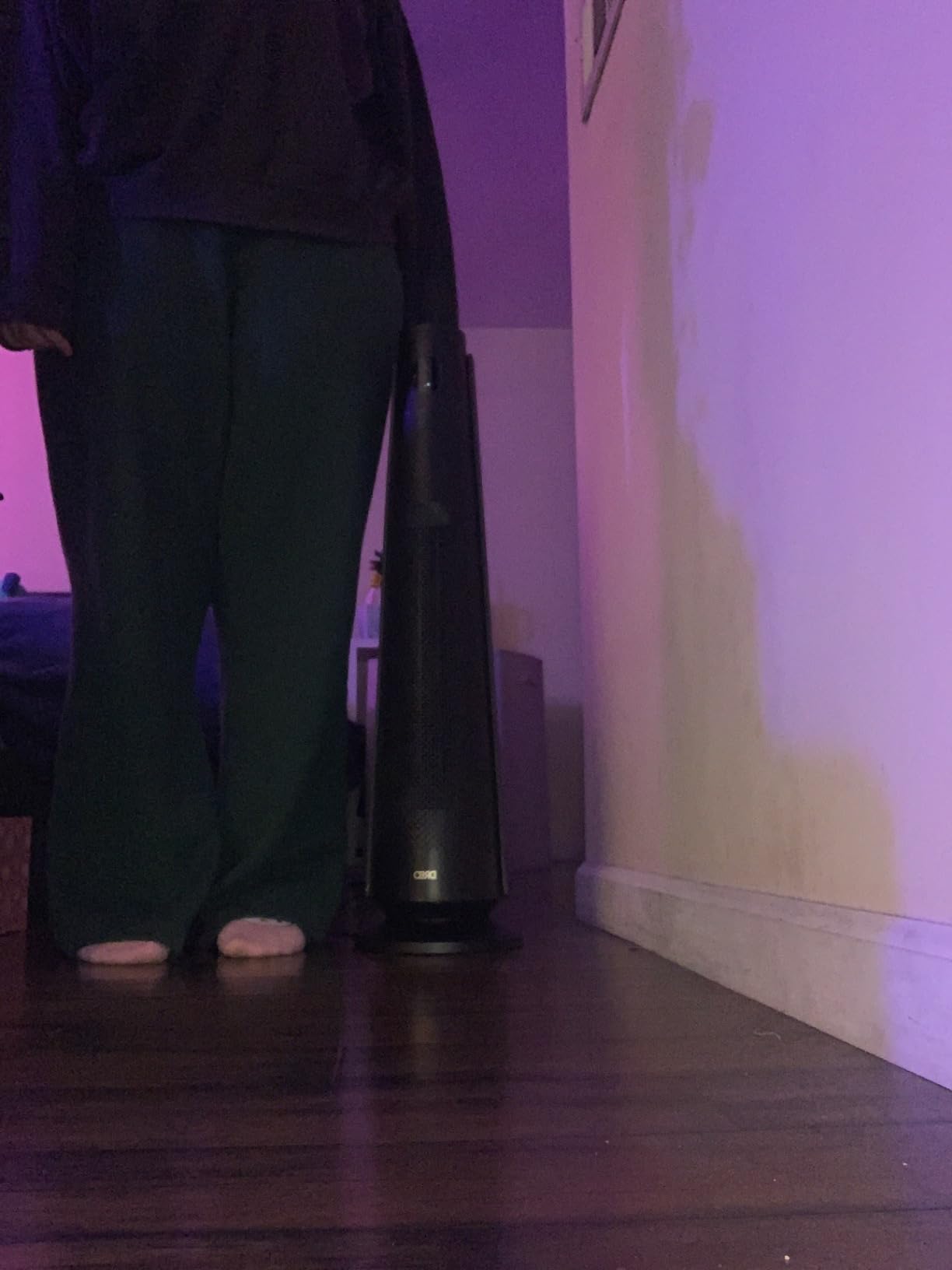
Owners who upgraded from a smaller 70 degree tower tend to be the happy ones, because the difference in throw distance is obvious across a wide basement room. The 25 dB floor keeps it viable in a bedroom even at the taller form factor, and the remote means you can angle it without walking over.
The safety package is the deepest in this group. Eight protections including V0 flame-retardant material, a cool-touch housing, insulated wiring, a child lock, tip-over protection, and overheat protection, plus ETL certification for the whole unit.
Two honest notes. At 29.7 inches tall and 8 lb, this is the most tip-prone form factor here, which matters on a basement floor that is not perfectly level or where a dog or child moves through. And at maximum oscillation the airflow spread is so wide that individual jets feel weaker, so it works best somewhere in the middle of the range.
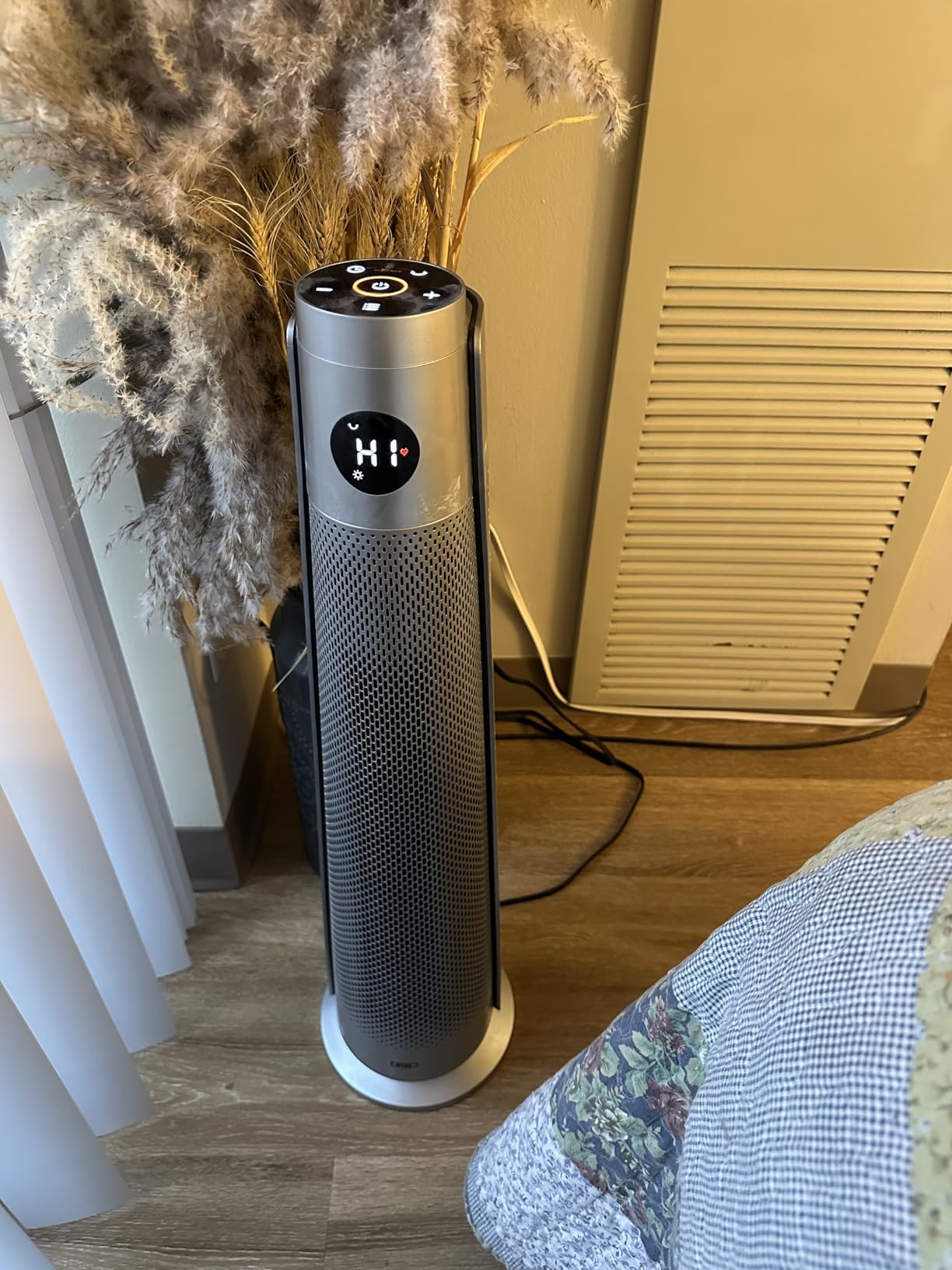
Why it works in a basement specifically
Basements with 7 ft ceilings and cold concrete lose heat at the perimeter, and a tall oscillating tower is a better tool for pushing heat across that width than a compact unit. The 300 sq ft rated figure still assumes an enclosed room, but it gives you more realistic headroom than the 150 sq ft towers in this list.
The three fan speeds let you match airflow to the room. Low fan in a quiet finished space, higher fan in an open area where you need air to move, and fan-only for circulation when paired with moisture control. That flexibility is more useful below grade than in a normal room.
Where it falls short
Height is the tradeoff, and it is a real one in a basement. A tall narrow body is stable on a level finished floor and less stable on a bare concrete slab, and a taller unit is more likely to be knocked by something in a low-ceiling storage area.
The cost is also higher than the shorter tower in the same class, so if your basement is a small closed room, the money buys you reach you may not need. Forced air also dries the air, so this is not the choice for a room that already runs humid.
9. TEMPWARE TW799BL – Best for Protecting Pipes in an Unheated Basement
TEMPWARE Milkhouse Space Heater, 1300W/1500W Heater with Thermostat, 3 Heat Settings, Safe and Quiet Heater, Anti-Freezing Setting for Garage Workshop Warehouse, Blue
1300W and 1500W radiant
Anti-freeze below 40F
ETL certified metal
Tip-over switch
Carry handle
Pros
- ETL certified metal construction for a rough utility space
- Anti-freeze setting triggers below 40F for unattended cold snaps
- Tip-over switch and automatic internal overheat protection
- Carry handle makes it easy to move between basement areas
- Heats up in about 3 seconds
Cons
- Lowest average rating in this group at 4.2
- No genuine low setting between 1300W and 1500W
- Coverage limited to small relative spaces
- Sound output is not a selling point next to modern quiet designs
Freeze protection is a different job from comfort heating, and this unit is built for it. The thermostat includes an anti-freeze setting that triggers below 40F, which means you can leave it running in an unheated basement through a cold snap without being there to switch it on. People do exactly this to protect a section of plumbing or a sewer line.
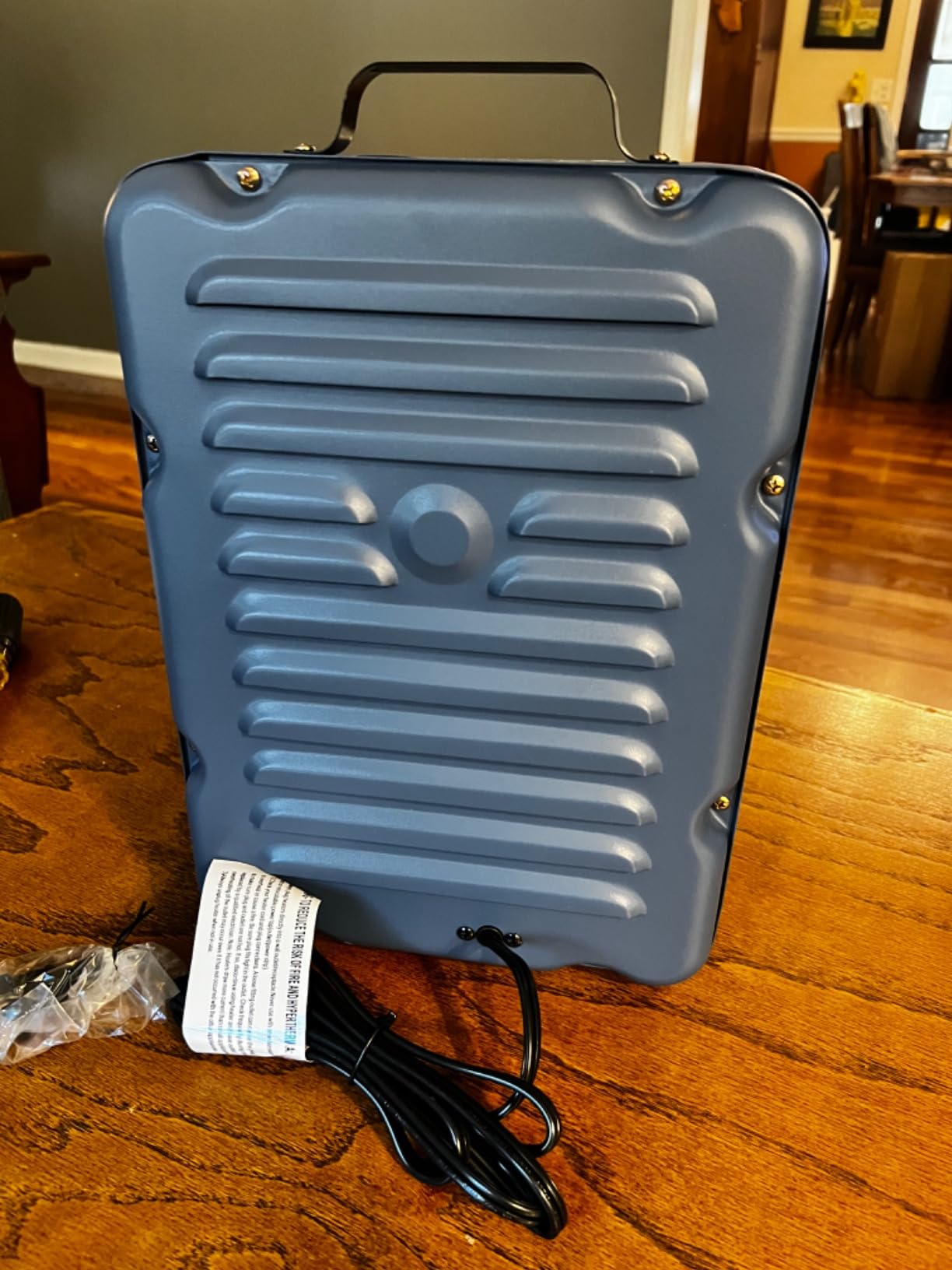
The metal body and ETL certification make it a reasonable choice for a mechanical space where a plastic shell would be at risk. It is compact at 15.25 inches tall with a solid carry handle, so moving it between a sump area and a wall where supply lines run is a one-handed job.
Buyer feedback is more mixed here than anywhere else in this roundup. The 4.2 average rating reflects a larger share of one-star reviews than the competing budget milkhouse heaters, and owners who are happy cite the metal durability, the anti-freeze function, and the low cost rather than comfort heating performance.
The three power levels are fan-only, 1,300W, and 1,500W, with thermostat cycling to hold temperature. As with the other cabinet heaters in this list, the step between off and 1,300W is wide, so this is not a unit for holding a small well-insulated room at a moderate temperature.
Noise is not the selling point here. Compared with the 25 dB towers and the silent radiators above, this unit runs audibly, which is fine in a utility space and wrong for a basement bedroom.
Why it works in a basement specifically
An unfinished basement is often the one place in a home with no heat at all, and that is where freeze protection earns its keep. A small unit on an anti-freeze setting can hold the air near a vulnerable pipe section above freezing during an outage without anyone needing to be home.
The tip-over switch matters more here than in a finished room, because utility floors are uneven more often than not. Combined with automatic overheat protection and ETL certification, this covers the two failure modes that actually cause fires in storage spaces.
Where it falls short
Coverage is the limit. This is a small-space cabinet heater, and owners in open basements describe using it for one corner rather than the room. If you are trying to make an unfinished basement comfortable enough to work in, spend on a tower with a wider rated coverage instead.
The rating gap also matters. At 4.2 with a visibly larger share of critical reviews than the other budget heaters here, we would choose the BEYOND HEAT milkhouse above for a utility room and reserve this one for freeze-protection duty where you are not depending on precise control.
10. EdenPURE CopperPLUS 903G – Best for a Large Basement Zone
EdenPURE CopperPLUS Infrared Heaters for Indoor Use Portable 1000 Sq Ft
1500W infrared
5000 BTU
1000 sq ft coverage
24 temperature presets
cETL approved
Pros
- Largest stated coverage in this group at up to 1000 sq ft
- Infrared warmth maintains natural humidity which suits allergy sufferers
- 24 precise temperature presets from 40F to 90F with a wireless remote
- Lifetime washable filter removes a recurring cost
- Dual overheat sensors tip-over shut-off and touch-safe front grill
Cons
- Highest cost in this group by a wide margin
- Heavy at 24 lb so it is harder to move between rooms
- Replacement elements are expensive relative to the unit
- Large cabinet footprint for the heat delivered
This is the cabinet to consider when your basement is genuinely large and you want one unit to cover as much of it as possible. The stated coverage of up to 1,000 sq ft is far beyond what any other portable heater in this roundup claims, and it is worth understanding what that number assumes before you plan around it.
The heat comes from more than 3.5 sq ft of copper PTC surface rather than a small filament, which is why it runs so quietly. Owners describe minimal fan noise and, importantly for a damp basement, infrared heat that does not dry the air the way forced air does. For allergy and respiratory sufferers that distinction is the whole point.
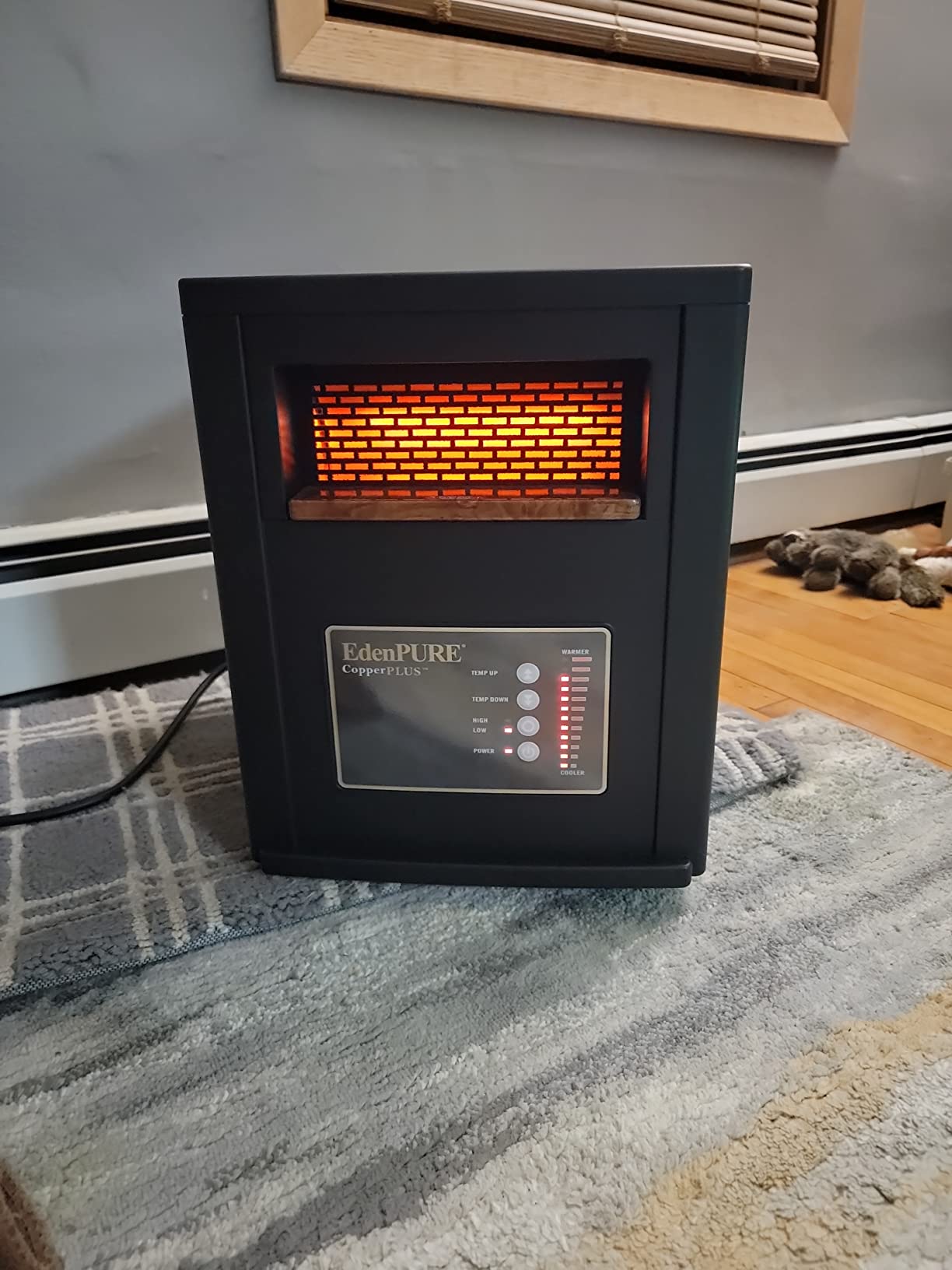
The control resolution is the best in this group. Twenty-four preset temperature levels from 40F to 90F, a 1,000W low mode and a 1,500W high mode, auto reset memory so it returns to your setting after a power interruption, and a wireless remote. That last detail matters in a basement because the unit often ends up in a corner you cannot reach from the couch.
It is cETL approved with dual overheat sensors, tip-over shut-off, and a touch-safe front grill, which is a more complete safety package than most units of this size carry. The lifetime washable dust filter is also unusual; most heaters in this list either have no filter or a replaceable one.
The cost is the dominant drawback and we will not pretend otherwise. It is also a 24 lb cabinet, so it arrives in one place and stays there. And if the element ever fails, replacement parts are expensive relative to what you paid, which is a risk that a straightforward ceramic tower does not carry.
Why it works in a basement specifically
A 1,000 sq ft coverage claim only makes sense in a room that is already partly warm. For a finished basement with heat from the house above and a door to a furnace-equipped mechanical room, this unit genuinely covers more floor than anything else portable in this roundup.
Not drying the air matters more below grade than anywhere else. A basement that is already fighting condensation does not benefit from a heater that lowers relative humidity further in winter, and the infrared, fan-light approach here is one reason it suits allergy sufferers in a space where dust is unavoidable.
Where it falls short
It is the most expensive item we evaluated, and in a basement with cold walls the coverage advantage can shrink fast. If your basement is genuinely unheated and large, spending heavily on a portable unit is not the best route, and the alternatives section below explains why.
Weight and footprint also count. At 24 lb with a 16.5 by 13 inch base, it needs a real corner with clearance on all sides and it is not a unit you move between rooms. The rolling casters help on a smooth floor and do not help much on carpet.
What Is the Most Efficient Heater for a Basement?
Every electric space heater converts essentially all of its wattage to heat where it stands, so no model is more efficient than another at the outlet. What differs is how well that heat reaches you. The most efficient choice for a typical basement is an oil-filled radiator in a drafty room, and an infrared quartz plus PTC hybrid in a well-insulated finished one, because both deliver heat at the surface instead of wasting it moving air through a cold, leaky space.
Gas and propane ventless units put out far more heat per unit of fuel, roughly 30,000 BTU for a typical ventless blue flame heater against about 5,110 BTU for a 1,500W electric unit. That is a real difference in raw output, and it is also why we did not build this roundup around them: combustion heat in a below-grade space brings a carbon monoxide risk that changes the safety picture entirely.
Here is how the types compare for basements specifically.
Ceramic and PTC convection towers heat quickly and distribute air widely. They suit a well-insulated finished basement where air circulation is what you need, and they dry the air somewhat while stirring dust.
Infrared quartz heaters radiate heat at people and objects first, then warm the surrounding air. They are the better answer in a drafty room and for anyone sensitive to airflow, at the cost of slower whole-room warm-up.
Oil-filled radiators heat sealed diathermic oil and radiate from a large finned surface. They are silent, steady, and hold heat after shutdown, which makes them the best choice for a basement bedroom. They are also the slowest to change a room temperature.
Fan-forced large-room heaters move a high volume of air across a wide element. They cover more floor area per unit than any other portable type, at the cost of noise and air drying.
Electric fireplace inserts are essentially radiant heaters with a decorative front. They produce the least heat per watt of the group and exist for appearance, not for solving a cold basement.
One framing note that comes up constantly in homeowner discussions: convection plus fan is best for well-insulated basements, and radiant heat is best for drafty, poorly insulated ones. You cannot fan your way out of a leaky below-grade wall, because the air you heat leaves faster than the unit can replace it.
How to Size a Space Heater for Your Basement
The useful rule of thumb for an unheated space is roughly one square foot of coverage per watt consumed. For a partially heated room, half that is closer. A 1,500W heater then covers about 1,500 sq ft of fully unheated space in theory, but in practice it works far better as two heaters covering 700 to 800 sq ft each than as one covering the whole open area, because a single point source cannot push heat across a wide room.
For the common question of how to heat a 1,000 sq ft basement: assume you need somewhere between 1,000W and 1,500W total if the space is partially warmed from above, and closer to 2,000W to 3,000W if it is cold and uninsulated. In practice that means two good 1,500W heaters placed at opposite ends, not one bigger portable unit.
Do the watt-to-BTU conversion once so the numbers make sense. A 1,500W electric heater produces about 5,110 BTU, which sounds impressive until you compare it to the roughly 30,000 BTU of a ventless propane heater or the roughly 15,000 BTU per hour an insulated 400 sq ft room needs. A 20 by 20 room is 400 sq ft and a well-insulated one still needs roughly 4,500W to heat from cold, which is three 1,500W heaters running at once.
Ceiling height changes the math. A below-grade room with a 7 ft ceiling holds less air than the 8 ft the manufacturers assume, so the same heater reaches the same floor area but the air above stays cooler. If your basement has a dropped ceiling, size up rather than down.
For larger rooms, our guides to the best space heaters for large rooms and the best space heaters that oscillate cover the throw-distance and coverage details in more depth.
Will a Space Heater Reduce Basement Humidity?
No, and this is the most important correction we can make. Electric space heaters do not remove moisture from air. Running one actually lowers relative humidity in the room, because warming air lowers its relative humidity without removing a single gram of water. If your basement smells musty, a space heater will not fix it.
Raising the room temperature does help in one specific way. Warm air can hold more moisture, so a warmer surface is less likely to drop below its dew point, which means fewer condensation droplets on cold concrete walls and window glass. The mold risk drops because the surfaces stay drier, not because the air got drier.
Target 40 to 60 percent relative humidity, measured with a cheap hygrometer placed on a basement wall rather than in the middle of the room. Sustained readings above roughly 60 to 65 percent are where mold and mildew problems start, and forum discussions on basement dampness describe exactly that pattern: funky smells, damp patches, and condensation appearing once relative humidity stays high for weeks.
The only moisture removal that works is air passing over cooling coils below its dew point, which is why a dehumidifier or a heat pump water heater is the actual fix. Pair your heater with a dehumidifier and set the heater to hold 60 to 70F. If you are working in a basement with a persistent damp problem, the garage heater guide covers the damp-storage-space case in more detail.
Basement Heater Safety: The Checklist That Matters Most
Basements carry specific risks. Concrete floors are hard and often uneven, storage areas are full of combustibles, and the room may have a single egress. Before any heater goes near a basement, run this checklist.
Check for third-party certification. Look for a UL or Intertek ETL mark on the unit, not just on the box. Third-party safety certification is the credibility marker people cite most in this category, and it is the difference between a heater whose plug and cord were tested and one where nobody checked.
Confirm tip-over and overheat protection. Both are standard on the units in this roundup, and both matter more below grade than upstairs because of the concrete. Check that the tip-over switch cuts power fast, and treat any unit without overheat protection as a non-starter.
Plug directly into a wall outlet. Never use an extension cord, never use a power strip. A 1,500W heater draws 12.5A, which is most of a 15A circuit, and the failure mode of a warm cord under load is a fire. This is the single rule we would not bend for any convenience.
Keep three feet of clearance on all sides and out of corners where curtains, boxes, or shelving sit. Basement storage is where heaters get buried, so measure the spot before you unbox.
Use a cool-touch housing in any room where children or pets move through. Several units here carry it, including the Lasko tower and the Pelonis oil radiator, and it reduces burn risk without changing the output.
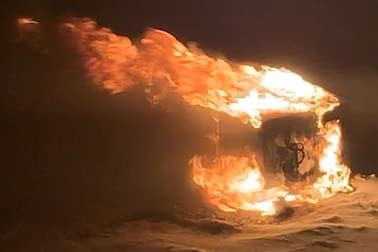
Run gas and propane heaters outdoors or with proper venting. A ventless blue flame heater produces carbon monoxide, and a basement is the worst possible location for it. If you own one, use a listed carbon monoxide detector on every level regardless, and note that ventless models are not sold in California.
Use an ALCI or GFCI protected model for a basement bathroom. Any unit near a sink or tub needs wet-location protection. None of the units in this roundup are wet-location rated, so for a basement bathroom buy a heater designed for it rather than adapting one of these.
Do not run a heater unattended overnight unless you are using a heater specifically designed for freeze protection on an anti-freeze setting, and even then keep it clear of combustibles. Never leave one running while you sleep in the room.
Clean the vents and fins seasonally. A dusty element is less efficient and runs hotter. Unplug first, then vacuum the intake and the fins, and wipe the exterior grill.
Do Basements Need Their Own Electrical Circuit for a Heater?
One 1,500W heater per 15A circuit is the working rule. On a 120V circuit that heater draws about 12.5A, which leaves almost nothing for anything else on the same circuit. Adding a dehumidifier, a dehumidifier and a second heater, or a dehumidifier and a sump pump, is how basements end up with tripped breakers in January.
The fix is to check the panel before you buy, not after. Advice on the doityourself.com basement heating forum thread that ranks at the top of the organic results is consistent on one point: confirm your electrical panel has the spare capacity before adding electric baseboard heat or multiple portable heaters. A tripped breaker mid-winter in a finished basement is a genuinely miserable problem.
If your basement has a modern panel with space for added circuits, an electrician can run a dedicated 20A line and open up your placement options considerably. For a basement office that gets used every day in winter, that cost is usually recovered quickly against the convenience. You can also see this constraint in our space heaters for offices picks, where continuous duty exposes weak circuits fastest.
When a Space Heater Is the Wrong Answer
A portable heater is the right tool for a zone, a corner, or a room used occasionally. It is the wrong tool for a basement you need to keep warm continuously, and forums are blunt about this. The repeated pattern in basement discussions is people running two portable heaters at full output, never catching up, and eventually switching to something else.
Consider a different solution if any of these describe your situation.
The basement is unheated and larger than about 800 to 1,000 sq ft. One 1,500W heater cannot hold that, and owners consistently report it takes a very long time to raise the temperature from cold on its own. A ductless mini-split, a basement HVAC zone added to your existing furnace, or electric baseboard heat is the real fix.
The basement is used every day in winter. This is when underfloor radiant heat mats get recommended by owners who installed them. They need a professional install and they cost considerably more, but they are described as the thing that actually solved the problem in the finished basement living rooms people write about.
There is a persistent dampness problem. Adding heat without controlling moisture makes the dampness worse, not better. Deal with the dehumidification first, then heat the space.
You need primary heat for the house. Portable heaters are not primary heat sources, and the safety guidance that comes with them assumes supplemental use in an occupied room.
We would rather point you to a more expensive answer that works than sell you a 1,500W cabinet that will disappoint you in February.
How We Picked and Evaluated These 10 Heaters
We evaluated every unit on the same five criteria, and we weighted them for basement use rather than for general household heating.
Rated coverage against real basement conditions. Manufacturer square-foot figures assume an enclosed room with an 8 ft ceiling and some existing heat. We noted the rated figure and flagged the gap between that and a cold, 7 ft below-grade space.
How the heat is delivered. Radiant versus forced air changes everything in a drafty room, so we treated the heating method as a primary criterion rather than a spec line.
Noise level. A blower that is hard to hear changes whether a basement can be used as a bedroom or an office, and two units in this roundup run at 25 dB while others do not mention it at all.
Safety features. Tip-over protection, overheat protection, cool-touch housing, and UL or ETL certification. We treated a missing safety feature as disqualifying rather than a deduction.
Control and scheduling. A digital thermostat with a programmable timer matters more below grade because you are setting a heater in the least convenient corner of the room.
Review patterns mattered too. We weighted reports of real basement use, coverage limits, and long-term reliability over the marketing claims, and where reviewers reported a specific defect we passed it on rather than smoothing it over.
Frequently Asked Questions
What is the best space heater for a basement?
For most finished basements, a 1,500W infrared quartz plus PTC hybrid such as the Dr Infrared DR-968 is the best overall choice, because radiant heat reaches people and furniture first and a quiet blower spreads the warmth afterward. In a drafty room, an oil-filled radiator is steadier. In unfinished utility space, a small metal cabinet heater with an anti-freeze setting does the job.
What is the most efficient heater for a basement?
All electric space heaters convert nearly all of their wattage to heat at the outlet, so efficiency is about delivery, not conversion. An oil-filled radiator is the most efficient choice in a drafty basement and an infrared quartz plus PTC hybrid in a well-insulated one, because both radiate heat at surfaces instead of wasting energy moving air through a leaky space. Ventless propane produces far more heat but brings carbon monoxide risk.
How to heat a 1000 square foot basement?
Assume roughly one watt per square foot when the space is fully unheated, and half that when heat reaches it from above. For a 1,000 sq ft basement that means about 1,000W to 1,500W total if the space is partly warmed, and two 1,500W heaters placed at opposite ends rather than one unit in the middle. For a genuinely unheated space that you use every day, a ductless mini-split or basement HVAC zone is the better answer.
Will a space heater reduce humidity?
No. Electric heaters do not remove moisture, and running one actually lowers relative humidity because warmer air holds more moisture at the same absolute humidity. Heating does help in one way: warmer surfaces are less likely to fall below their dew point, so you get less condensation on cold concrete walls. Target 40 to 60 percent relative humidity with a hygrometer and control moisture with a dehumidifier.
Can I use a heater instead of a dehumidifier?
No, they solve different problems. A heater makes a room comfortable; a dehumidifier removes water from the air. Running a heater in a damp basement can make it feel drier while the moisture is still there, which encourages mold once relative humidity stays above roughly 60 to 65 percent. The practical setup is a heater holding 60 to 70F alongside a dehumidifier keeping relative humidity between 40 and 60 percent.
Do basements need their own electrical circuit for a space heater?
One 1,500W heater per 15A circuit is the working rule, because it draws about 12.5A and leaves almost no capacity for anything else. Adding a dehumidifier or a sump pump to the same circuit is what causes winter breaker trips. Check your panel for spare capacity before adding multiple heaters, and consider having an electrician run a dedicated 20A circuit if the basement is used daily.
Are infrared heaters good for basements?
Yes, particularly in drafty or poorly insulated ones. Infrared and radiant heaters warm people and objects directly instead of moving air around, so a drafty basement with cold walls does not steal the heat as fast as it would from a fan-only unit. The trade-offs are a higher purchase cost for the larger infrared cabinets, slower whole-room warm-up, and in at least one owner-reported case, expensive replacement elements.
Is it safe to leave a space heater on overnight?
Not while you are sleeping in the room. Plug it directly into a wall outlet, never an extension cord or power strip, keep three feet of clearance from anything combustible, and choose a unit with tip-over and overheat protection plus UL or ETL certification. Running one overnight without anyone in the room is best reserved for units with an anti-freeze setting used for pipe protection in an unheated basement.
Our Best Space Heaters for Basements in 2026: The Verdict
The Dr Infrared DR-968 is the best space heater for a basement overall, because a 1,500W infrared quartz plus PTC hybrid warms a seated zone in minutes at 39 dB and holds a roughly 500 sq ft finished space comfortably. Buy the Lasko 755320 if your zone is smaller and you want something you can carry with one hand. Buy the De’Longhi TRD40615E if the room is drafty and silence is non-negotiable, such as a basement bedroom.
For larger areas, the Dreo DR-HSH008 reaches the furthest with a tower design, and the EdenPURE CopperPLUS 903G covers the most floor space if one unit has to do the work. For unfinished utility rooms, keep a small metal cabinet heater with an anti-freeze setting near the plumbing.
Whatever you choose, check the circuit before you plug in, pair it with a dehumidifier if relative humidity runs high, and hold the room at 60 to 70F rather than trying to make it match the rest of the house. Use the button on each card to check the current details and reviews for 2026.