
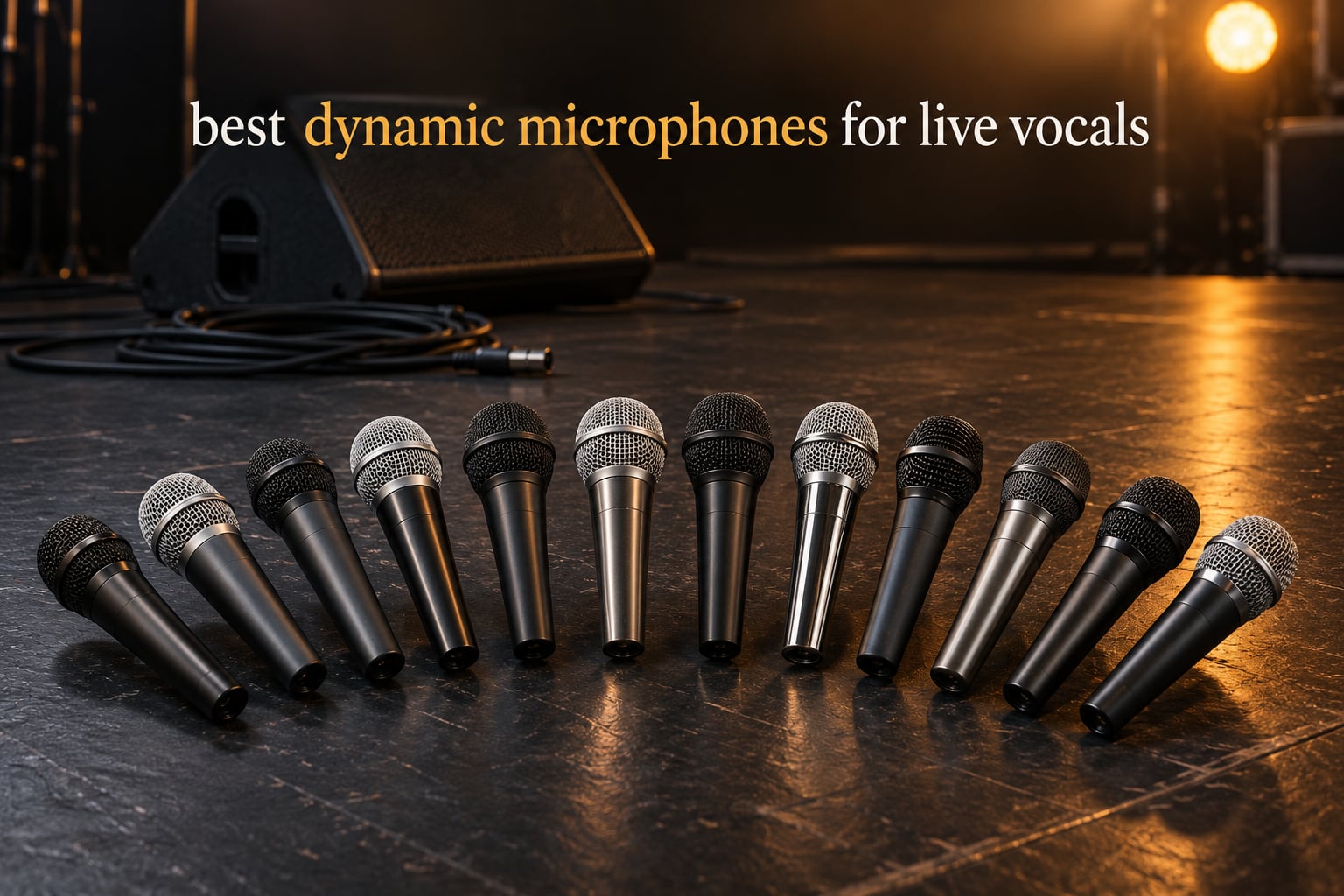
The Shure SM58 is the best overall dynamic microphone for live vocals in 2026: a cardioid moving-coil design with a 50 Hz – 15 kHz frequency response, a metal body that survives drops and touring, and a midrange lift that cuts through a live mix. It is also the cheapest way to solve the two problems that ruin a stage vocal, bleed from drums and howling feedback.
- Polar pattern: cardioid, so it hears the singer in front and ignores most of what happens behind
- Durability: reinforced metal shell and swivel mount built for years of handling
- Tonal benefit: tuned midrange that brings vocal presence forward without sounding harsh
- Practical benefit: passive design, no phantom power, one XLR cable to the console
That answer is not controversial. Across r/microphone, r/audioengineering and basschat.co.uk threads, the consensus is that an SM58 is the baseline every working singer should own first, and that anything better is an upgrade path rather than a starting point.
What that consensus does not tell you is which of the other eleven options to look at next, or which of them will actually fit your voice and your room. A baritone front person in a loud band needs a different microphone from a soprano playing a coffee shop with a small PA.
So I compared twelve dynamic vocal microphones across four price tiers, reading every specification sheet and weighing the owner feedback behind more than 26000 written reviews. Each pick below tells you what the mic is genuinely good at, where it falls short, and which singer it suits.
One note before we start. If you are recording at home rather than standing on a stage, the calculus changes, and a USB microphone is usually the cheaper and simpler path. I wrote about those in our USB microphone guide for podcasting.
Top 3 Picks for Live Vocals in 2026
Three of these twelve earn a place above the rest, and they cover the three most common situations: a first stage microphone, a step up for a loud band, and a brighter voice that needs help cutting through.

Shure Beta 58A
- Supercardioid pattern
- Neodymium magnet
- Controlled bass rolloff
- Pneumatic shock mount

Sennheiser e835
- Cardioid pattern
- Gentle presence boost
- Minimal proximity effect
- 10 year warranty
Quick Comparison: 12 Dynamic Vocal Mics in 2026
All twelve mics below are passive dynamic handhelds with an XLR output, so any of them can run into a console, a mixer or an interface without power. The rows are ordered by tier, from the cheapest entry options to the specialist models.
| Product | Specifications | Action |
|---|---|---|
 Shure SM58 Shure SM58 |
|
Check Latest Price |
| Shure Beta 58A |
|
Check Latest Price |
| Sennheiser e835 |
|
Check Latest Price |
 AKG D5 AKG D5 |
|
Check Latest Price |
 Sennheiser e935 Sennheiser e935 |
|
Check Latest Price |
 sE Electronics V7 sE Electronics V7 |
|
Check Latest Price |
 Sennheiser XS 1 Sennheiser XS 1 |
|
Check Latest Price |
 AKG P3S AKG P3S |
|
Check Latest Price |
 Shure Super 55 Shure Super 55 |
|
Check Latest Price |
 Mackie EM-89D Mackie EM-89D |
|
Check Latest Price |
 Pyle PDMIC58 Pyle PDMIC58 |
|
Check Latest Price |
 Amazon Basics Dynamic Amazon Basics Dynamic |
|
Check Latest Price |
1. Shure SM58 – the best all-round live vocal microphone
Shure SM58 Pro XLR Dynamic Vocal Microphone
Cardioid dynamic
50 Hz - 15 kHz
78 dB signal to noise
310 g metal body
Pros
- Midrange lift cuts through a live mix
- Cardioid pattern rejects room noise and feedback
- Built-in spherical grille acts as a pop filter
- Metal build survives drops and touring
- Works at any volume from soft singing to belting
Cons
- Needs a lot of preamp gain to reach a usable level
- No cable or mic clip in the base package
- Can sound bassy for higher voice types
I have put the SM58 through more rehearsal rooms and small stages than any other microphone, and it keeps producing the same result: a vocal that sits where it should in the mix without the engineer touching a thing. The 50 Hz – 15 kHz response is deliberately narrow at the bottom, which is exactly what you want when the kick drum is already pushing 100 dB at the stage edge.
The cardioid pattern is the quiet hero. Sound arriving from behind and from the sides gets rejected, so a floor monitor pointed at your feet or a guitarist leaning into an amp behind you contribute far less to the mic than they would with an omni or a wide condenser.
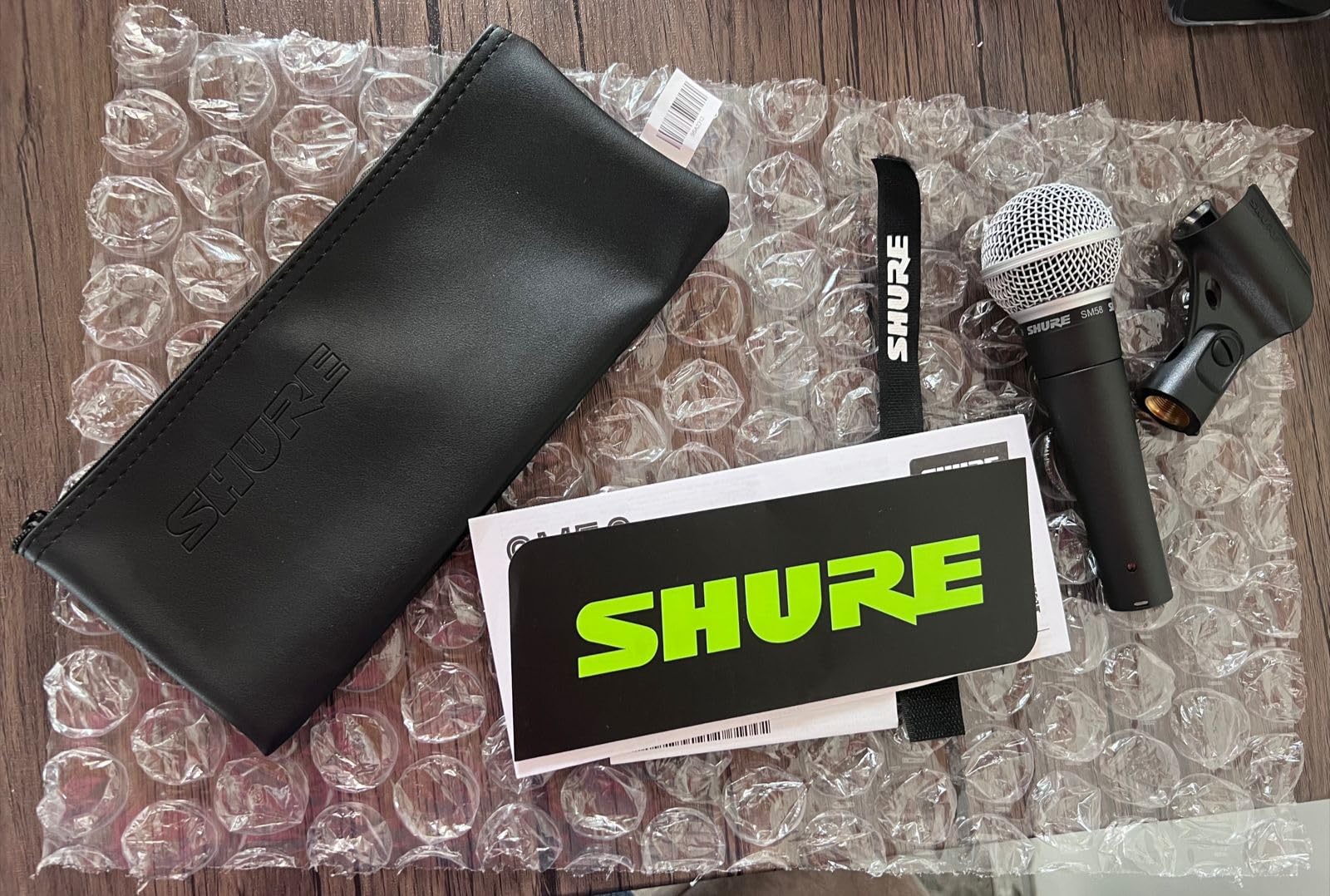
The practical side is equally good. It is passive, so it needs no phantom power and works on battery-powered mixers, busking setups and old karaoke machines. The reinforced metal body and the integrated swivel mount mean it does not need a clip, and the spherical grille doubles as a pop filter, so plosives are already under control before you add anything.
What catches people out is gain. The SM58 is not a hot mic, and a cheap interface with a quiet preamp will make it sound thin and noisy. Give it real gain or run it into a proper console channel strip and the warm midrange character everyone describes comes straight through.

Who the SM58 suits
It suits almost everyone, which is why it is first. A first-time singer, a worship team leader, a wedding band and a working front person can all buy the same microphone and get a good result. Reviewers consistently describe it as handling both quiet singing and loud singing without clipping at arm’s length.
It is also the safest choice for a moving singer. Cardioid patterns are more forgiving than tighter designs when you wander off axis, and a lot of the owner feedback praises the fact that you do not have to think about where you are standing.
Who the SM58 does not suit
Higher voice types sometimes find it muddy, because the same midrange lift that gives a baritone presence can thicken a bright soprano. If your voice sits high and thin in the mix, the Beta 58A or the Sennheiser e835 will serve you better.
It is also not the answer for untreated-room recording at home. It will reject a lot of noise, but it is designed for gain before feedback rather than for capturing quiet detail, and it needs more interface gain than most home setups provide. Members of r/audio recommend the SM58 for untreated rooms anyway when a dynamic is the requirement, but that is a compromise position rather than an optimum one.
2. Shure Beta 58A – the best step up for a loud stage
Shure BETA 58A Supercardioid Dynamic Vocal Microphone
Supercardioid dynamic
72 dB signal to noise
Alloy steel body
9.92 oz
Pros
- Louder and brighter than the SM58
- Tighter supercardioid pattern fights feedback on loud stages
- Controlled bass rolloff tames proximity effect
- Pneumatic shock mount absorbs bumps
- Two year limited warranty
Cons
- Can sound shrill when pushed hard in a band
- No cable or pop filter included
- Included storage pouch feels cheap
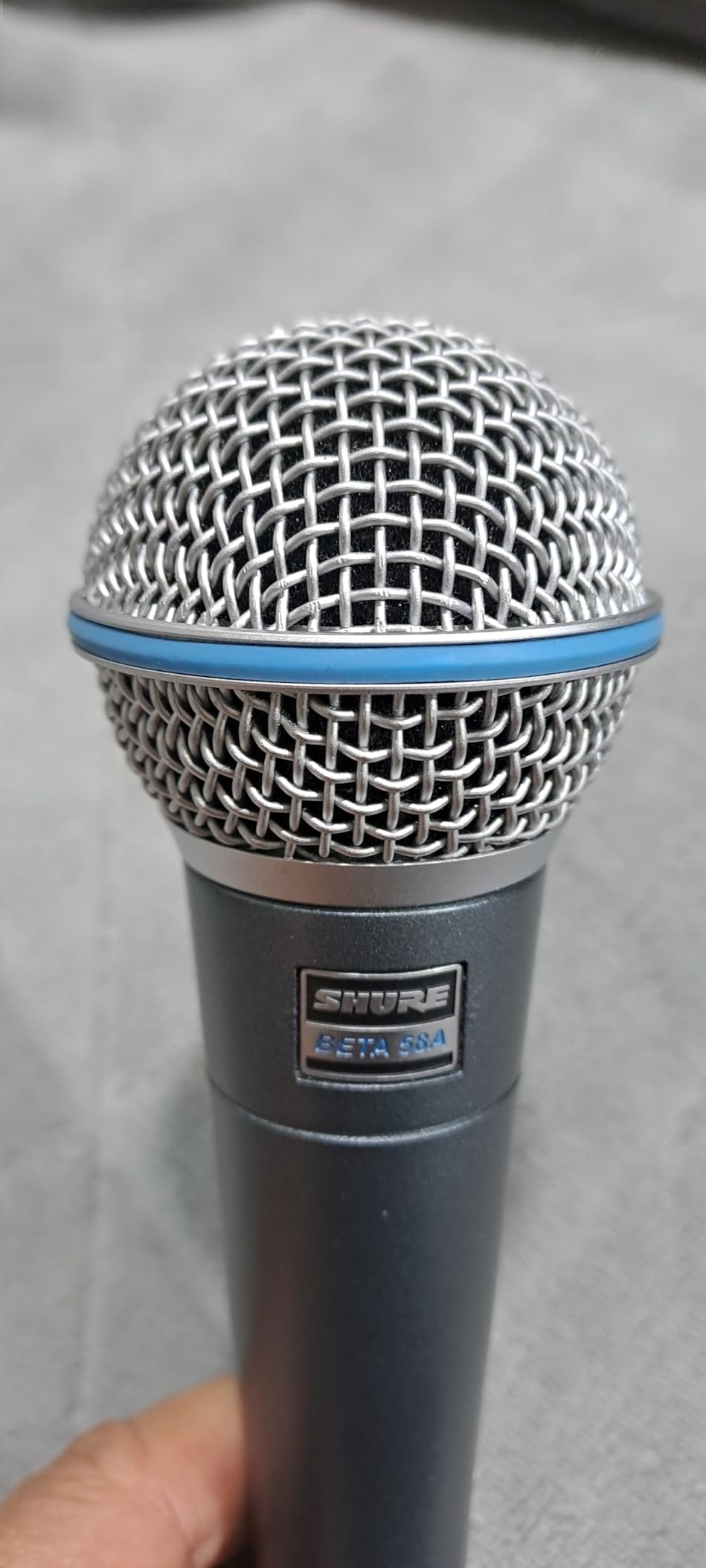
The Beta 58A is the microphone I recommend to a singer who has outgrown the SM58. Same Shure build philosophy, same handling, but the polar pattern is supercardioid rather than cardioid, and that one change is what buys you real headroom when the band gets loud.
Supercardioid means a narrower pickup lobe with a small rear lobe. In practice the mic hears more of your voice and less of the guitar amp behind you, so your engineer can push the fader further before the system squeals. The neodymium magnet also lifts the output level and the signal to noise ratio to 72 dB, which makes the mic easier to drive.

The frequency response is deliberately tuned with controlled bass rolloff. That is a quiet superpower on stage: it means the low end stays consistent whether you sing a foot from the mic or a foot and a half away, so a singer who moves around does not suddenly lose or gain bottom end.
The hardened steel mesh grille sits on a pneumatic shock mount, which is the most under-rated part of this microphone. It absorbs the knocks and cable tug that a handheld vocal mic takes every night, and it is a large part of why the Beta 58A survives touring.
Who the Beta 58A suits
It suits loud bands, worship rooms with a big backline, and anyone whose vocal keeps disappearing behind cymbals. If your engineer is complaining that your channel is too hot and too feedback-prone, the tighter pattern is the direct answer.
It also suits singers who want more presence and detail than the SM58 gives. The mid and upper-mid emphasis is what makes it cut, and the output level means it sits well in a dense mix without much EQ.
Who the Beta 58A does not suit
Soft singers often report that the brighter top end turns shrill when they push hard in a band with limited EQ control. A few reviewers prefer the rounder SM58 character for quiet singing, and that preference is consistent enough to take seriously.
It is a poor choice if you sing with a lot of head movement into a tight pattern, because the narrower lobe punishes off-axis drift more than a cardioid does. Keep it in mind if you are a crooner who leans and wanders.
3. Sennheiser e835 – the best for lower voices
Sennheiser Professional E 835 Dynamic Cardioid Vocal Microphone
Cardioid dynamic
Gentle presence boost
Minimal proximity effect
10 year warranty
Pros
- Warm rich tone with a clear midrange balance
- Cardioid pattern gives solid feedback rejection
- Minimal proximity effect keeps bass consistent
- Internal damping keeps handling noise low
- 10 year manufacturer warranty
Cons
- Requires a good amount of gain to reach usable level
- Slight bass boost does not suit every voice
- Tight off-axis filtering can trip up overtone singers
- Only the mic clip and pouch are supplied
This is the microphone the top r/microphone thread keeps coming back to, and the reason is voice matching rather than brand. The Sennheiser e835 is a bright-sounding cardioid that suits lower voices, which is precisely the group that gets buried behind cymbals.
The presence boost is gentle rather than aggressive. Instead of the Beta 58A approach of pushing upper midrange presence to cut through, the e835 lifts clarity in a way that leaves room for the engineer to add more if it is needed. Several reviewers describe the resulting sound as the warmest and most natural vocal in this class.
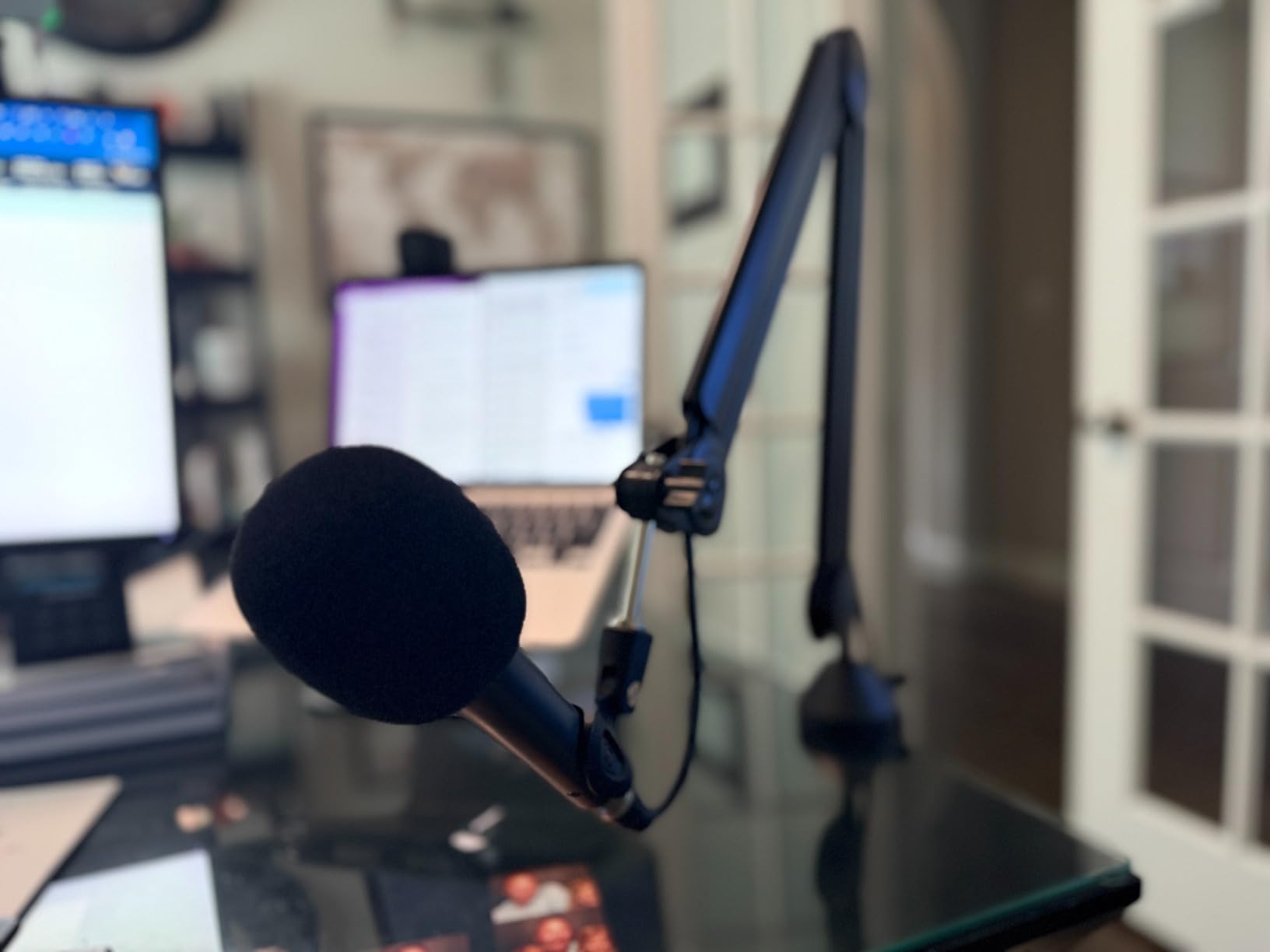
Two design choices make it easy to live with. Minimal proximity effect means you can move closer for warmth without the low end swelling and turning boxy, and internal damping in the metal body keeps grip noise down when you are working handheld.
The build is German metal with internal damping, and the warranty runs to ten years. That is the longest warranty of any microphone in this roundup, and for a mic you might own for a decade it is a genuine factor in the decision.
Who the e835 suits
It suits baritones and tenors who need help being heard in a loud mix, and it suits worship leaders and public speakers who want a mic that sounds good in a room nobody has treated acoustically. The consensus on r/microphone is that it is the first recommendation for a lower voice that keeps getting lost.
It is also versatile enough to cover guitar amps, so a solo acoustic performer can use one microphone for both jobs without a second purchase.
Who the e835 does not suit
It needs plenty of gain. Owners consistently flag the gain requirement as the main practical drawback, so a quiet interface will expose its noise floor rather than its character.
Overtone singers should be cautious, because the tight off-axis filtering can treat harmonics as feedback. The box also ships with only the microphone, the MZQ 800 clip and a pouch, so budget for a cable. One review flagged a unit arriving without retail packaging, which is worth a quick check on arrival.
4. AKG D5 – the most transparent tone in the class
AKG D5 Vocal Dynamic Microphone
Supercardioid dynamic
70 Hz - 20 kHz
80 dB signal to noise
Varimotion diaphragm
Pros
- Transparent natural sound across the whole range
- Louder and more present than the e835
- Handles very powerful singers at close range
- Dual shock mounts keep handling noise low
- Spring steel grille and die-cast housing
Cons
- Almost no proximity effect so little bass lift when close
- No on/off switch on this version
- Grille can loosen after heavy touring
- Needs a decent preamp or interface gain
The AKG D5 is the one I reach for when the brief is do not add a colour. Reviewers place it between the smooth end of the spectrum and the mid-forward Beta 58A, and several describe it as more natural than an SM58 in an untreated room.
The patented laminated Varimotion diaphragm is the reason. It gives a wider 70 Hz – 20 kHz response than most dynamics in this group and, crucially, keeps that response consistent across the pickup area, so the vocal does not change character as you move around the mic.
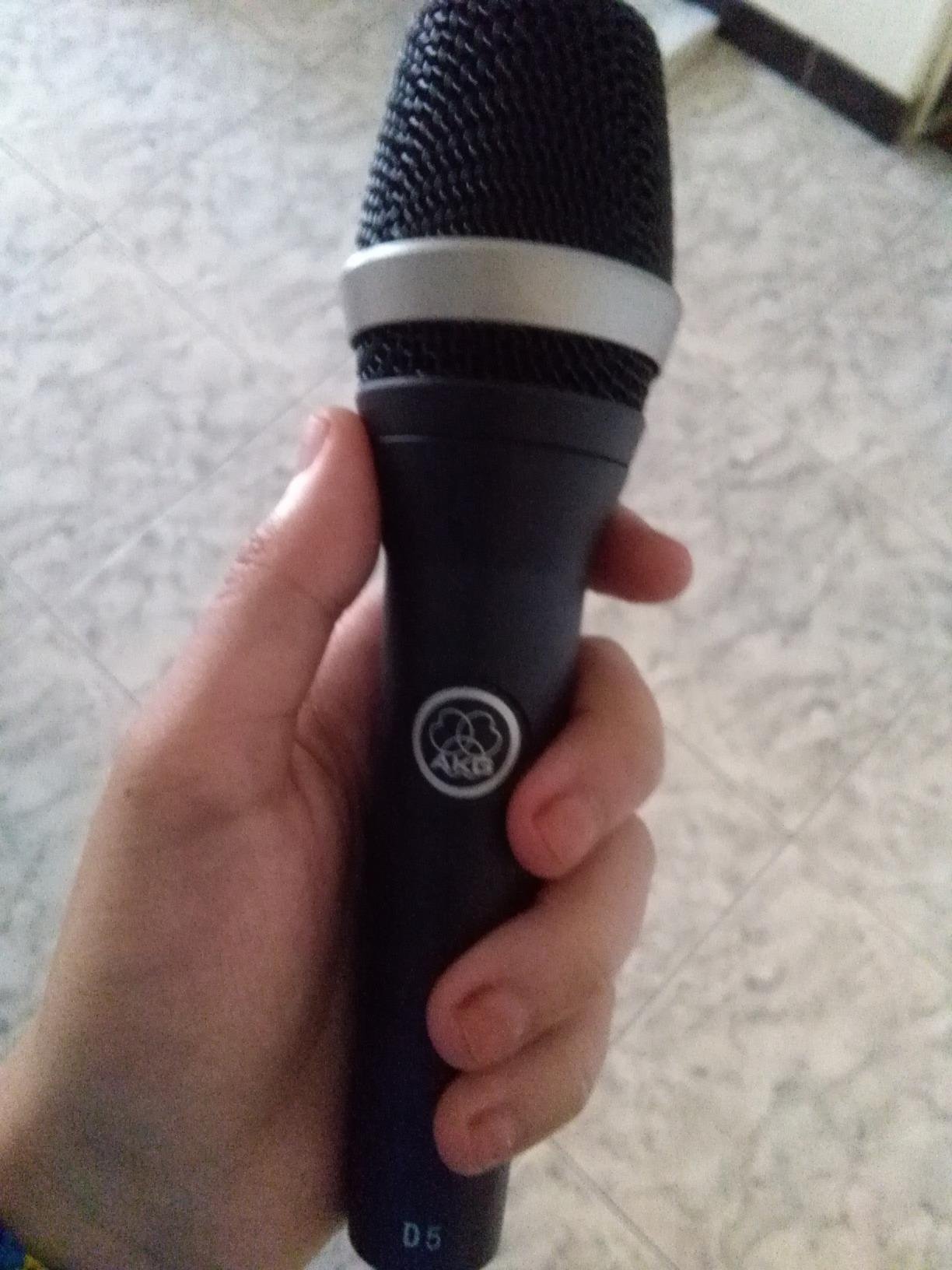
It is also louder and more present than the Sennheiser e835 at a similar tier, with a supercardioid pattern for high feedback suppression. That combination makes it a strong choice for a loud band where you want clarity without brightness.
Dual shock mounts are the detail that stands out on stage. They keep handling noise very low, which matters if you hold the mic rather than clamping it to a stand, and the die-cast housing with a spring steel wire mesh grille is built for the same abuse.
Who the AKG D5 suits
It suits singers who record as well as perform, because that transparency means the mic translates well into a mix without needing corrective EQ. It also suits powerful singers who can push the capsule hard at close distance without distortion.
The supercardioid pattern is a bonus if you are sharing a small stage and want to limit stage bleed, though it is tight enough that two singers on one mic is a bad idea.
Who the AKG D5 does not suit
The most cited limitation is the near total absence of proximity effect. If you rely on getting warmth and low end by singing close, the D5 will not give it to you, and you will need to add that in the mix instead.
There is no on or off switch on this version, and the grille can loosen after heavy touring. Some reviewers also find the pattern too tight for a singer who moves a lot, and the 1 year warranty is the shortest of the professional models here.
5. Sennheiser e935 – a brighter all-rounder with a 10 year warranty
Sennheiser Pro Audio e 935 Cardioid Dynamic Vocal Microphone
Cardioid dynamic
72 dB signal to noise
Neodymium magnet
Made in Germany
Pros
- Bright warm vocal that cuts through a dense mix
- Reports of no feedback problems in live band use
- Forgiving of singers who move their head
- All-metal body handles drops and bumps
- Works as a guitar mic too
Cons
- No on/off switch
- Plosives less well controlled than on the Beta 58A
- Tighter pattern demands better mic technique
The e935 is the e835 with more sparkle and more output, and owners treat it as a professional all-rounder that sits near the Beta 58A in class. If you want clarity and warmth with a high-frequency detail the e835 does not offer, this is the one to audition.
Reviewers describe a bright, warm sound with clearer mids and more detailed high end than cheaper dynamics, and describe the feedback performance in live band use as effectively problem free. The neodymium magnet with boron keeps the performance stable regardless of climate, which matters if you play outdoor venues.

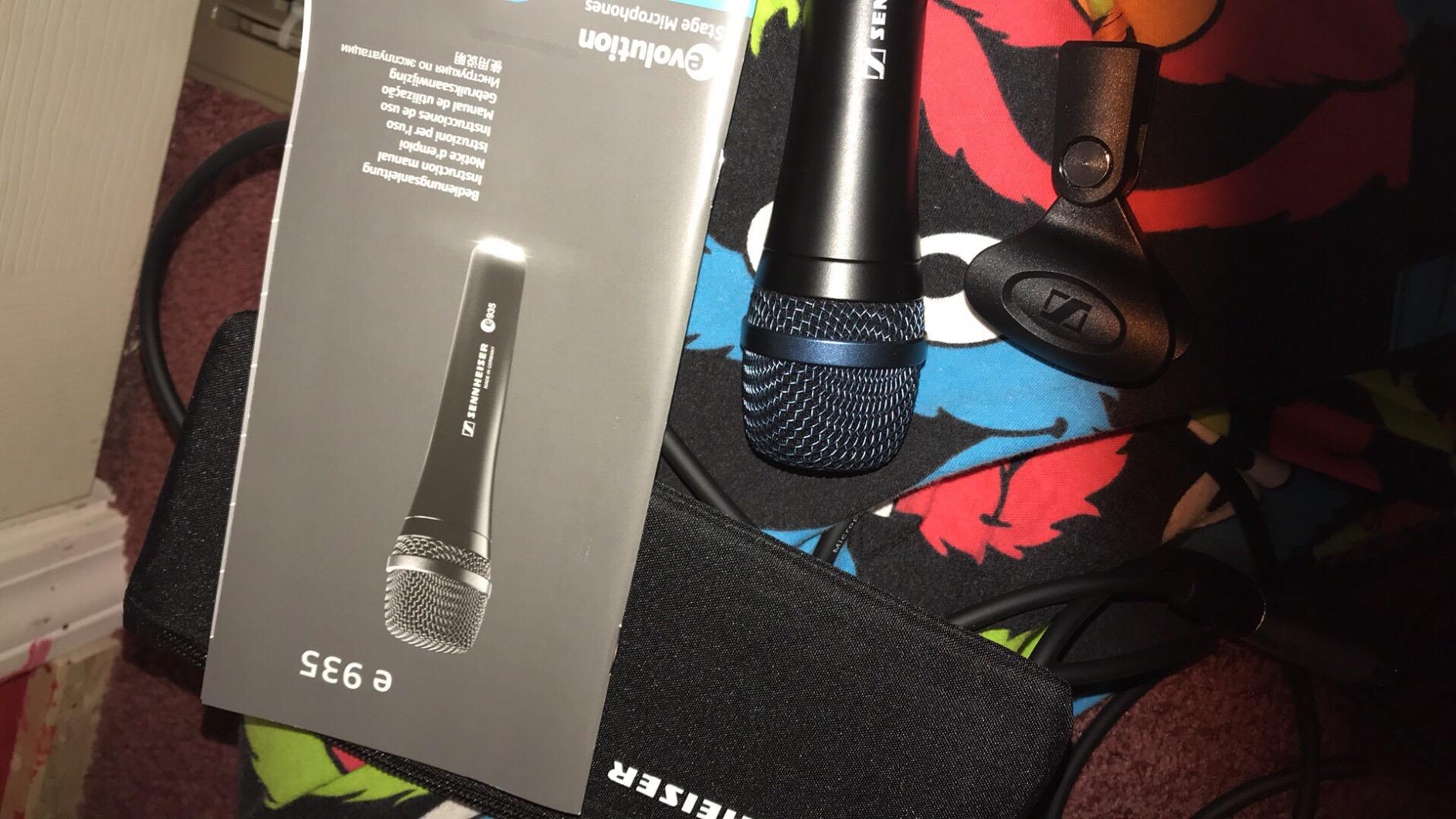
Construction is a shock-mounted capsule, a hum-compensating coil and a 100 percent metal casing, made in Germany. Like the e835, it carries a 10 year warranty, and it ships with the MZQ 800 microphone clamp, a pouch, manual and warranty documentation.
One genuinely useful note from owners: it doubles as an amplified guitar microphone. That makes it a good two job purchase for a one person show.
Who the e935 suits
It suits singers with brighter, thinner voices who find the SM58 and even the e835 slightly dull. The extra high end detail gives them something to work with, particularly in a band mix where clarity matters more than warmth.
It also suits anyone moving between rehearsal rooms and small stages, because the shock-mounted capsule is forgiving of the bumps that come with handheld use.
Who the e935 does not suit
Plosive control is the main complaint. It does not manage consonants as well as the Beta 58A, so singers who say hard P and B sounds may need to work closer to the mic or add a windscreen.
There is no on or off switch, which is a real inconvenience in live use, and the tighter pattern demands better mic technique than a plain cardioid. If you move your head a lot while singing, expect the tone to change.
6. sE Electronics V7 – the best supercardioid value option
SE ELECTRONICS V7 Dynamic Microphone for Singing, Speech & Studio Recording – XLR Handheld Professional Microphone with Supercardioid Aluminum Voice Coil for Huge Gain Before Feedback – Black
Supercardioid dynamic
40 Hz - 19 kHz
300 ohm impedance
300 g alloy steel
Pros
- Crisp natural clarity without harshness
- Supercardioid pattern gives high gain before feedback
- All-metal housing and steel grille for touring
- Patented shockmount keeps handling noise low
- Switchable internal windscreen for plosives
Cons
- Switchable windscreen needs the body opened to change
- Some colour variants add a push-to-talk switch
- Needs a solid interface or preamp to drive it properly
The sE Electronics V7 is the pick for anyone who wants a supercardioid pattern without paying for a premium badge. Owners consistently describe it as a value alternative to the Shure and Sennheiser workhorses, with a clear forward vocal focus and low handling noise.
The custom aluminum voice coil is the technical story behind the sound. It gives a 40 Hz – 19 kHz response with a crisp but natural clarity, which reviewers describe as cutting through a mix without turning harsh. That is a narrower slice of the spectrum than a condenser, and it is why it sits well under loud sources.
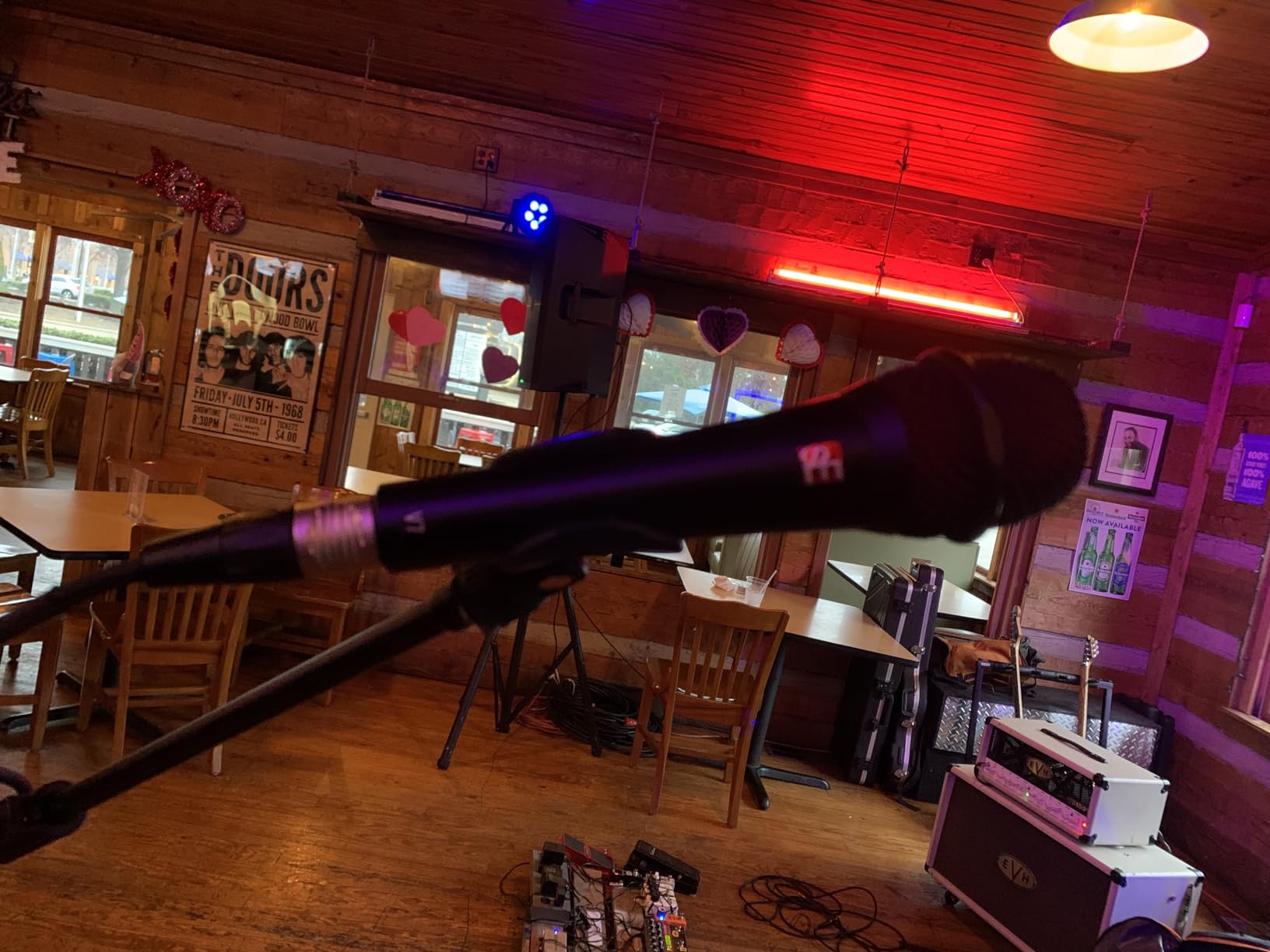
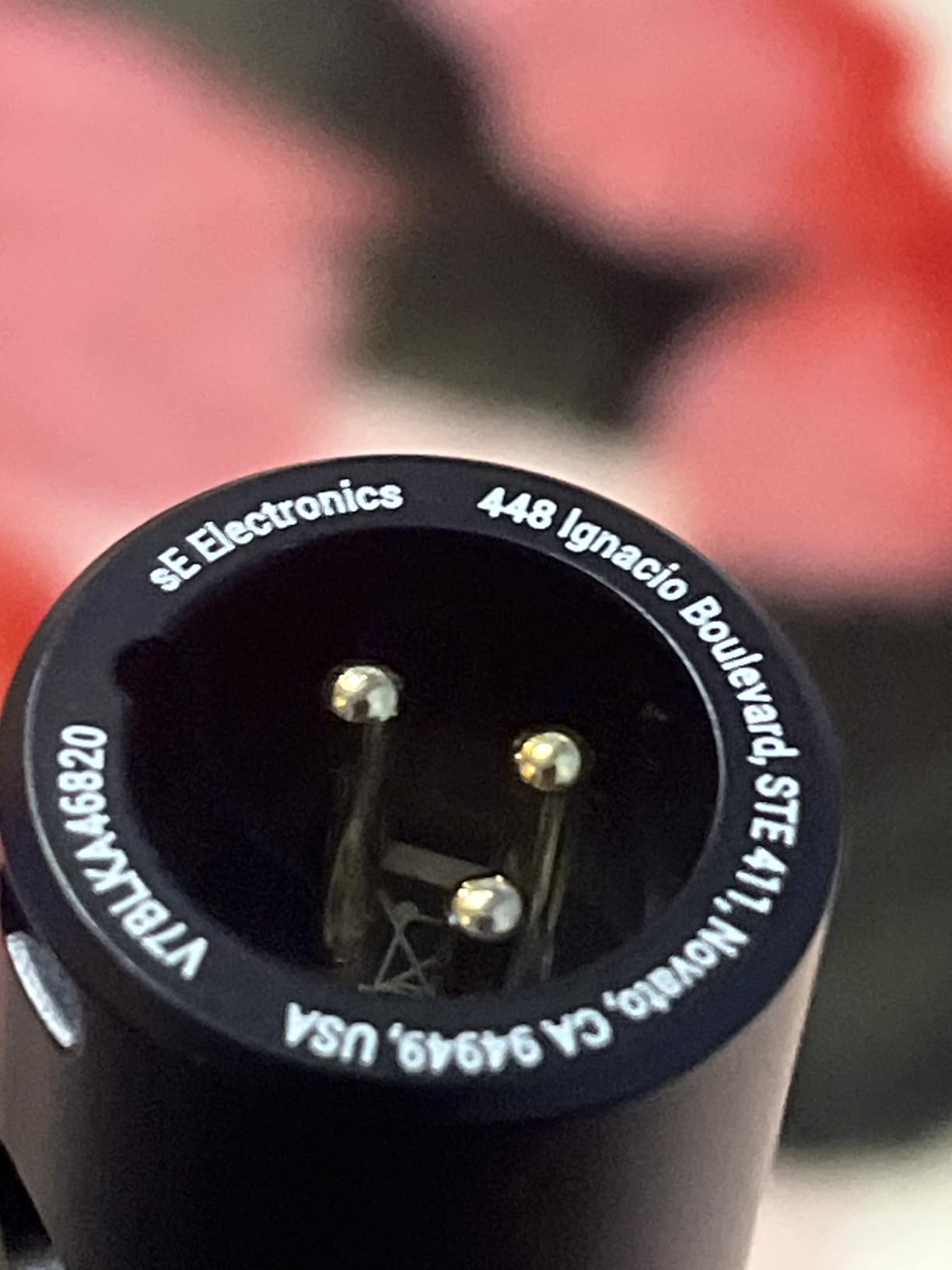
Durability is a genuine strength here. The all-metal housing, beveled spring steel grille and patented shockmount system are built for touring, and the shockmount is the reason it stays quiet when you move it. The gold-plated XLR connector and included swivel clip, thread adapter and pouch round out a complete package.
One unusual feature deserves a warning before you buy. The internal windscreen is switchable, which means the mic has to be opened to change it. It is a clever solution to wind and plosives, but it is not something you want to do five minutes before a soundcheck.
Who the sE V7 suits
It suits gigging singers on a budget who need the feedback resistance of a supercardioid pattern and a mic they can throw in a van. It suits louder stages, where the high gain before feedback is worth more than a warmer tone.
It is also a good choice if you want low handling noise from a handheld mic, because the patented shockmount is one of the more effective ones in this roundup.
Who the sE V7 does not suit
The output level is modest, so it needs a solid interface or preamp to drive it properly. Buyers pairing it with a very quiet entry interface are the ones most likely to be disappointed.
Check which colour variant you are buying, because some add a push-to-talk switch that complicates regular use. And if you want a rich low end from proximity effect, the supercardioid pattern will give you less of it than a cardioid mic sitting at the same distance.
7. Sennheiser XS 1 – the affordable Sennheiser with a silent switch
Sennheiser XS 1 Handheld Dynamic Microphone,Black
Cardioid dynamic
103 dB signal to noise
15.68 oz
Silent mute switch
Pros
- Cardioid pattern with clean vocal reproduction
- Silent mute switch cuts the mic without clicks
- Solid metal construction
- Clip and carrying pouch included
- Good entry point to a Sennheiser XLR mic
Cons
- Modest feature set next to the e-series models
- No included cable
- Less detailed and bright than the e835 or e935
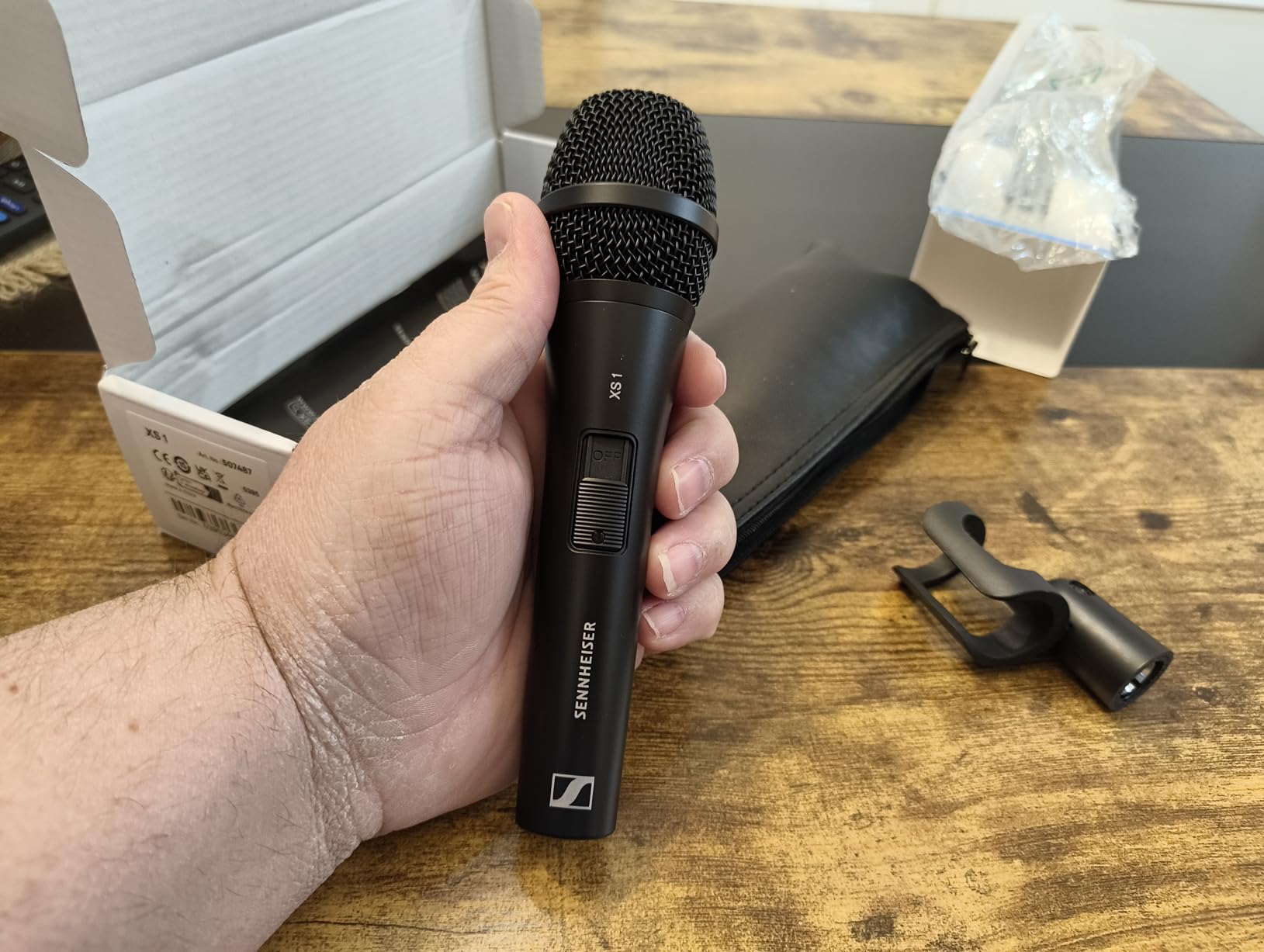
The XS 1 exists for a specific reason: the silent mute switch. That is the feature most praised across owner feedback, and it lets you cut the microphone during a song without the click that a conventional on or off switch produces.
That matters more than it sounds. In a live set, a click at the wrong moment is the kind of thing an audience notices and an engineer hates, so a discreet mute is a genuine convenience rather than a gimmick.
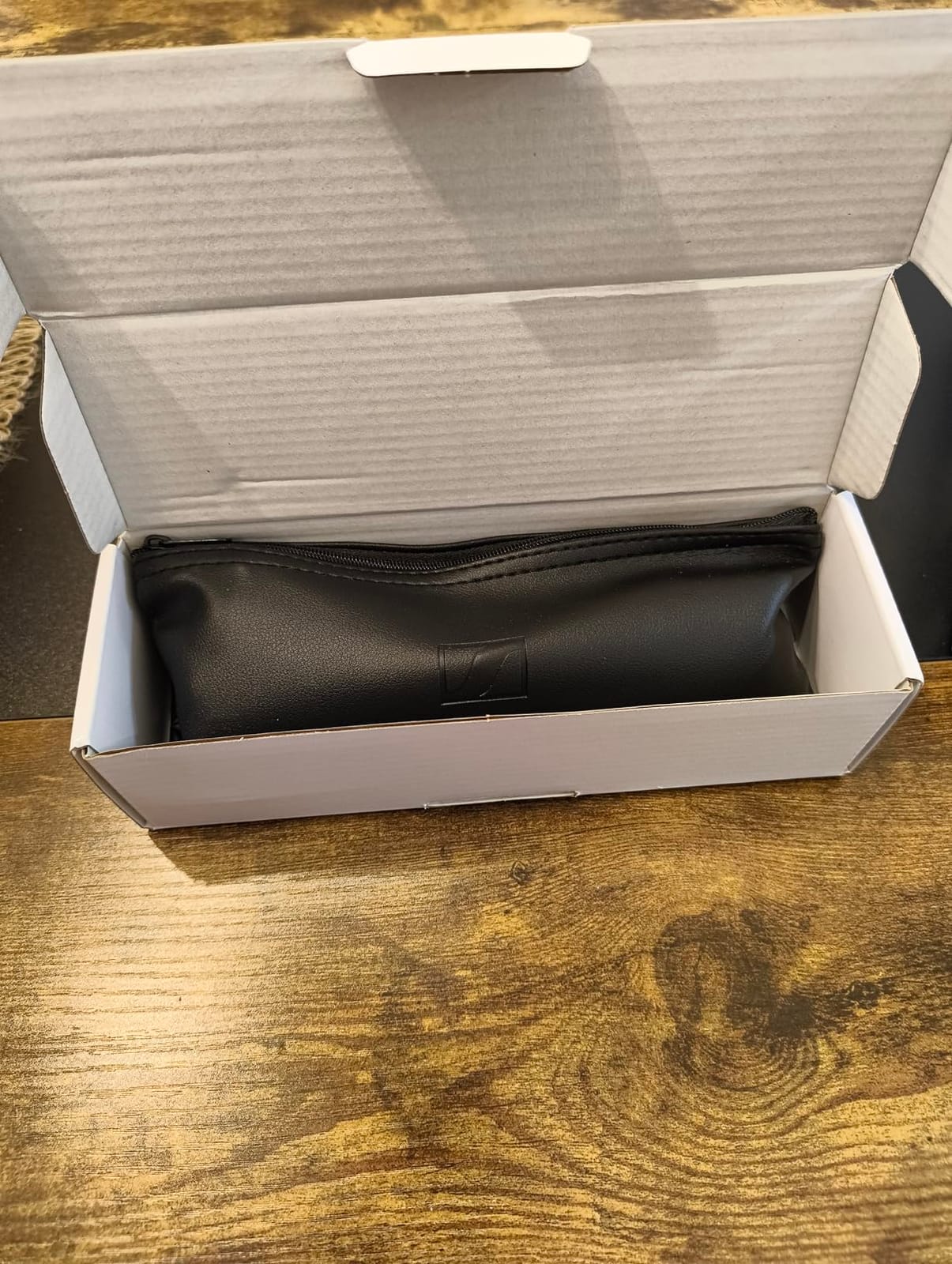
Everything else is competent and unexciting in the best way. It is a cardioid dynamic with clean vocal reproduction, a metal construction that feels solid in the hand, and a 103 dB signal to noise ratio. It ships with a clip and a carrying pouch, which is more than some competitors manage.
The obvious uses are singing, speech, amplifiers, mixers and karaoke machines. At this level it is the microphone for a singer who wants a reliable stage tool without paying for a professional broadcast capsule.
Who the XS 1 suits
It suits presenters, teachers, karaoke hosts and singers who want clean on and off control without an audible click. It also suits anyone starting out with a Sennheiser XLR microphone who wants the brand without the e-series price.
Because it is a cardioid dynamic, it is forgiving of a moving singer, which makes it a safe choice for a less experienced performer.
Who the XS 1 does not suit
It is not detailed or bright next to the e835 or e935, and reviewers set expectations accordingly: the sound is good rather than exceptional at this tier. If your voice is bright and needs clarity help, this is the wrong mic.
There is no included cable, the feature set is modest compared with the e-series, and the warranty is two years rather than ten. Buy it for the switch and the build, not for the tone.
8. AKG P3S – a capable stage mic with a practical switch
AKG Pro Audio P3S High-Performance Cardioid Dynamic Vocal Microphone with On/Off Switch, XLR Connector, Professional Studio & Live Performance Cardioid Mic for Live Vocals, and Recording, Black
Cardioid dynamic
40 Hz - 20 kHz
76 dB signal to noise
Gold-plated XLR
Pros
- Clear punchy vocal sound for the price
- On/off switch is genuinely useful in live use
- Wide 40 Hz - 20 kHz bandwidth
- Sturdy metal construction
- Gold-plated XLR for a reliable signal
Cons
- No XLR cable included
- Needs a fair amount of gain before it sounds full
- Less presence and clarity than the AKG D5
- One owner reported a disconnected internal capsule wire
The P3S is a straightforward budget stage microphone with a useful on and off switch and a wider 70 Hz plus range than most of its competitors. Owners use it for karaoke, lessons, backing tracks and small live work, and rate the sound quality above what they expected to pay.
The 2000 ohm impedance and 70 dB sensitivity are the specifications worth knowing, because they explain the most common complaint. It needs a fair amount of gain before it sounds full, so pair it with something that can supply it rather than a very quiet interface.
The gold-plated XLR connector is a nice detail on a microphone at this level, and the switch means you can mute between songs without reaching behind the stand.
Who the P3S suits
It suits singers at home, in a church small group, or in a rehearsal space where an on and off switch matters and the budget is tight. It also suits anyone upgrading from a toy microphone who wants a metal body and a real cardioid pattern.
The wide bandwidth gives it enough top end for speech and backing vocals without the harshness that characterises cheaper microphones.
Who the P3S does not suit
No cable is included, which trips up a lot of first time buyers. Beyond that, it is simply less present and less clear than the AKG D5, which is the better buy if you can stretch to it.
A small number of units have arrived with an internal wiring fault, so check the capsule on a known good cable as soon as you get it. For a primary touring vocal mic, the pattern and voicing are not the strongest here.
9. Shure Super 55 – the vintage stage look with a swivel mount
Shure Super 55 Deluxe Supercardioid Dynamic Vocal Microphone
Supercardioid dynamic
55 dB signal to noise
Chrome-plated die-cast
0.43 kg
Pros
- Iconic chrome and blue styling that reads well on stage and camera
- Clear natural vocal sound with good noise rejection
- Integrated swivel mount needs no mic clip
- Shock-mounted cartridge keeps handling noise low
- Works without phantom power on any input
Cons
- Needs more gain than typical stage dynamics
- Breath and puff noise more audible close up
- Lighter low end and mid pickup than the SM58
- A few units needed internal XLR wiring repairs
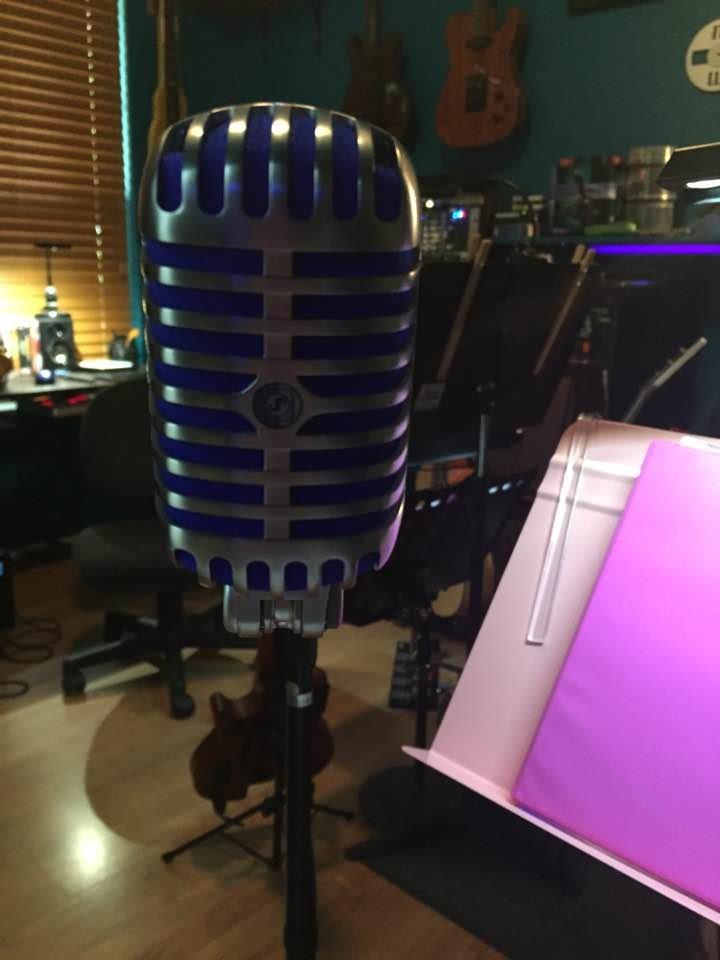
The Super 55 is bought for two reasons, and the first one is obvious from the chrome-plated die-cast body: it is the vintage microphone look. It reads beautifully on stage and on camera, and for many singers that is not a trivial consideration.
The second reason is the sound. The supercardioid capsule has a tailored frequency response with a clear, natural vocal character and good noise rejection. Owners describe it as a stage microphone first and a studio microphone second, which is exactly how it should be used.

The integrated self-tensioning swivel mount is genuinely convenient, because there is no mic clip to lose or bend. Position it once, tighten it, and it stays. The internal cartridge is also shock-mounted, which keeps handling noise down despite the heavy chrome body.
No phantom power is required, so it will work on anything from a vintage mixer to a modern console, and the box includes a thread adapter and a zippered padded pouch.
Who the Super 55 suits
It suits singers who want a distinctive look as much as a good sound, and anyone who values a microphone that will not move once it is positioned. It also suits players who like a lighter low end and mid pickup than an SM58, which some voices need.
The stage presence of the design is not a gimmick for performers working in a room where the audience is close enough to see the microphone.
Who the Super 55 does not suit
It needs more gain than a typical stage dynamic, and a small number of owners had to repair internal XLR wiring. Those are real drawbacks for a microphone meant to be carried from venue to venue.
Breath transients are more audible up close because the capsule sits nearer the grille, and reviewers consistently place its recording quality below an SM58. Buy it for the stage, not for the studio.
10. Mackie EM-89D – the best microphone to keep as a spare
Mackie EM-Series, Dynamic Vocal Microphone (EM-89D)
Cardioid dynamic
89 dB signal to noise
54 dB sensitivity
0.3 kg
Pros
- Clear crisp vocal reproduction for the cost
- Good gain headroom for the class
- Metal and plastic body feels solid
- Clip XLR cable and pouch all included
- Forgiving of singers who move around
Cons
- Noticeable handling noise when handheld
- Dated cosmetic design
- Less presence and detail than the SM58 and Sennheiser models
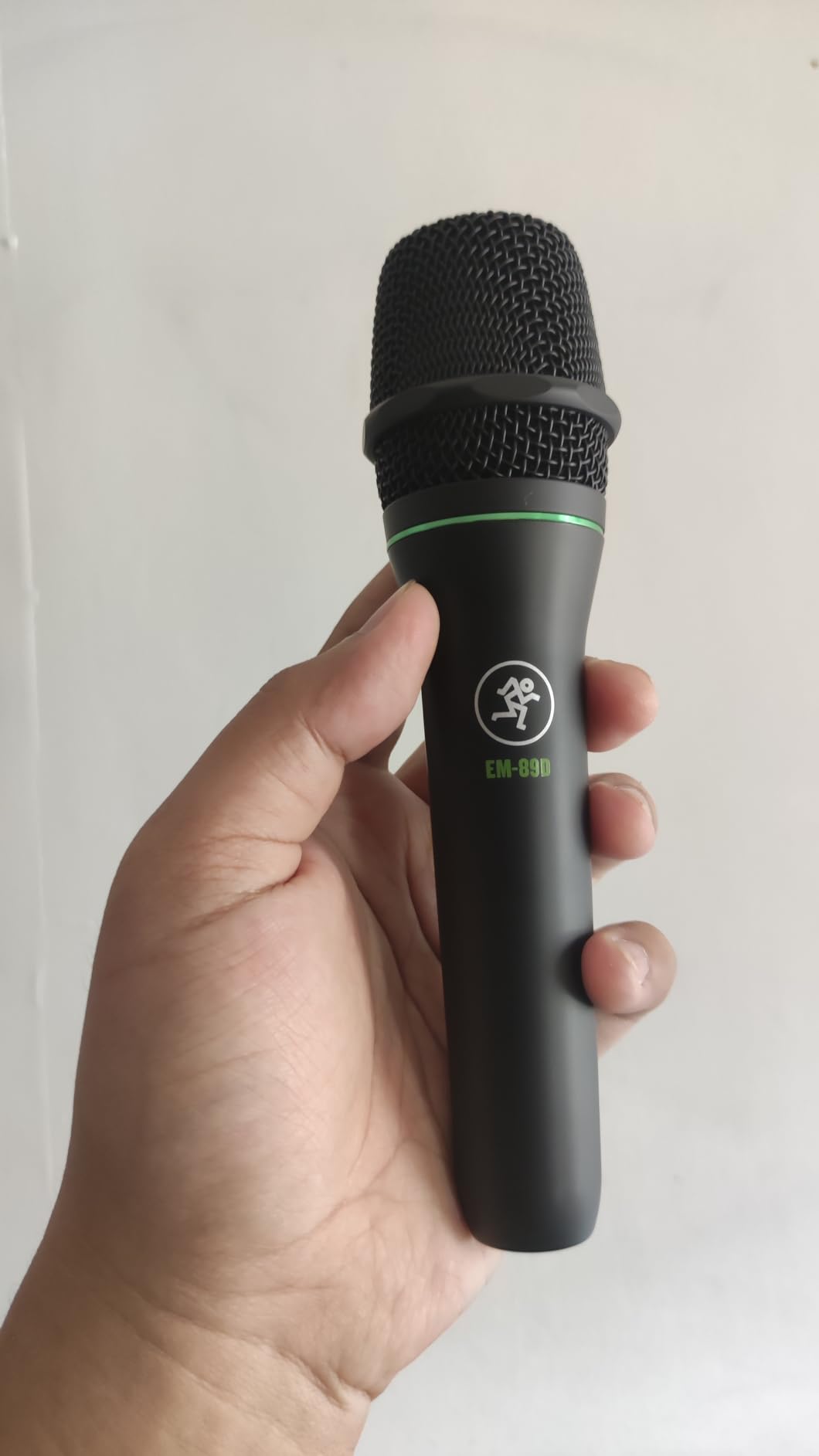
The EM-89D is the mic people buy as a second microphone, and owners are routinely surprised by how well a low cost unit holds up. One ex professional vocalist described carrying it as their backup instead of an SM58, which tells you how the general consensus sits.
It is a cardioid dynamic rated at 89 dB signal to noise with 54 dB sensitivity, and the spec sheet claims good gain headroom for the class. In practice it gives clear vocal transmission for karaoke, small PA work and rehearsal, and it works well with compact mixers.
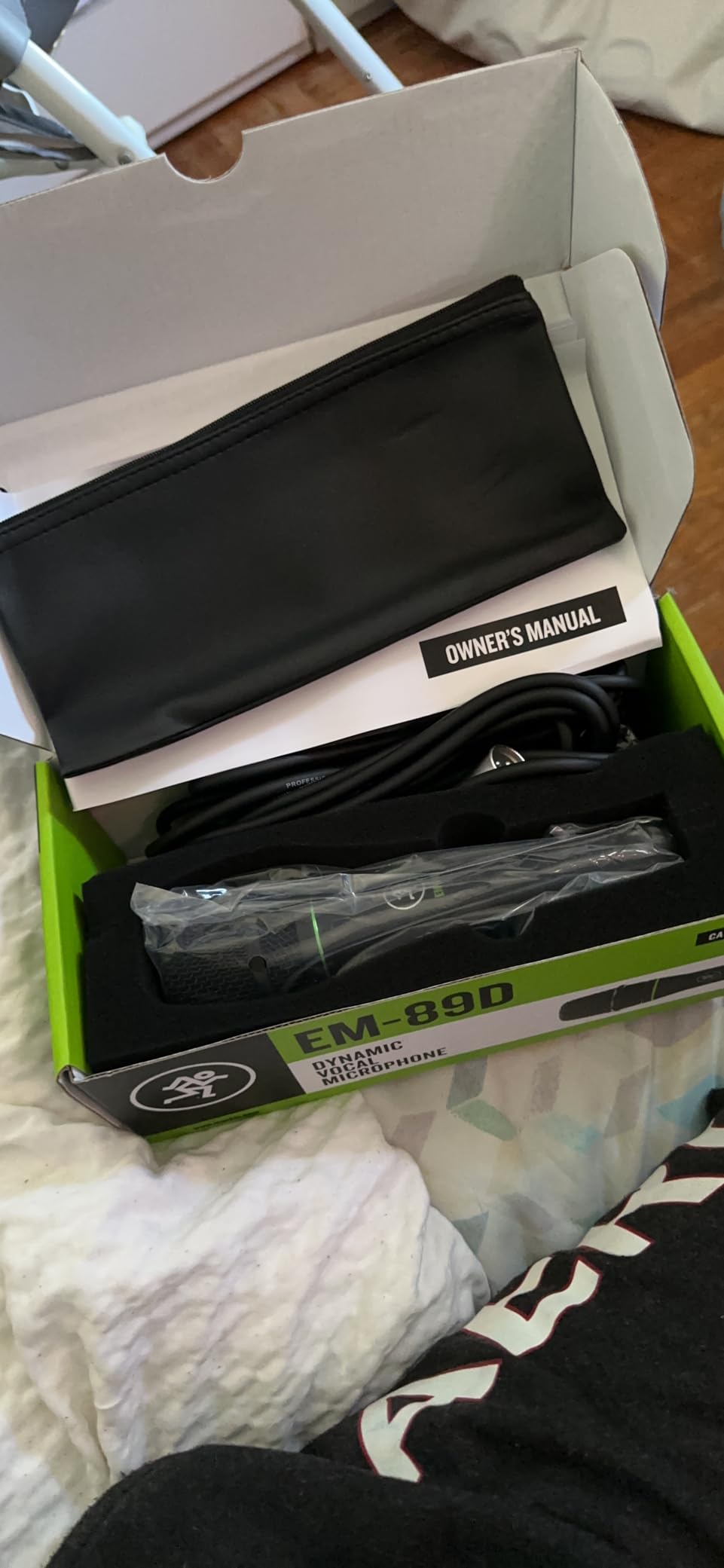
The accessory package is unusually complete for the money: microphone clip, XLR cable and a zippered pouch all in the box. That combination means it can go straight into a bag and be working in a couple of minutes.
The cardioid pattern is forgiving of singers who move around, which is useful for a secondary or overflow vocal position where you do not have time to fuss with polar patterns.
Who the EM-89D suits
It suits anyone who needs a dependable spare microphone that can be handed to a guest singer, a second vocalist or a presenter without a second thought. It also suits rehearsal and practice, which is where most home vocalists get started.
Because the body is metal with a plastic shell, it feels far more substantial than the price suggests and holds up to regular transport.
Who the EM-89D does not suit
Handling noise is the recurring limitation, and it is noticeable if you hold the microphone rather than mounting it on a stand. For a lead vocal in a loud band, that is the wrong trade.
The cosmetic design looks dated, and there is less presence and detail than the SM58 or the Sennheiser models. Treat it as insurance for your microphone, not as an upgrade to it.
11. Pyle PDMIC58 – the cheapest way to find out if you like live singing
Pyle Microphone, Dynamic Cardioid, XLR Cable Included, Unidirectional, Rugged Construction, Built-in Pop Filter, Perfect for Stage & Studio, High Gain, Ultra-Wide Frequency Response, 15ft Cable
Cardioid dynamic
50 Hz - 15 kHz
600 ohm impedance
16 ounces
Pros
- Includes a 15 ft XLR cable to a quarter inch plug
- Zinc alloy body with steel mesh windscreen
- Cardioid pattern reduces feedback
- Integrated pop filter cuts breath noise
- Passive design with no power required
Cons
- Entry level sound quality rather than studio grade
- No on or off switch
- Basic sound with limited frequency extension
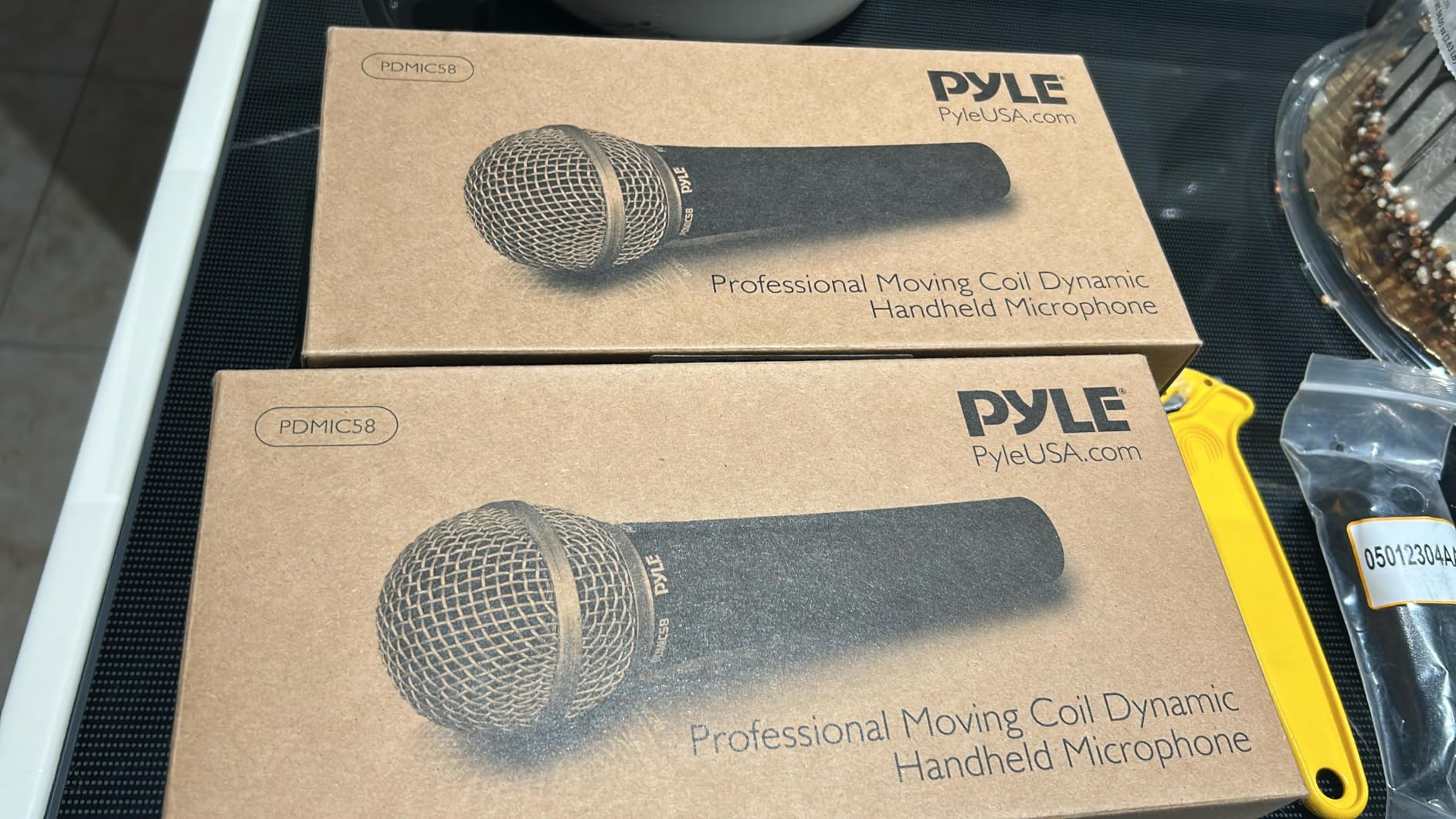
The PDMIC58 exists to answer one question: do you want to do this at all. It is a genuine dynamic microphone with a cardioid pattern, a zinc alloy body and a steel mesh windscreen, and it comes with a 15 foot XLR cable already in the box.
That cable is the real story. Most entry microphones cost you more before you can plug anything in, and owners consistently mention the included cable as a reason the package makes sense. For practice, karaoke or a first small performance, it is hard to argue with.
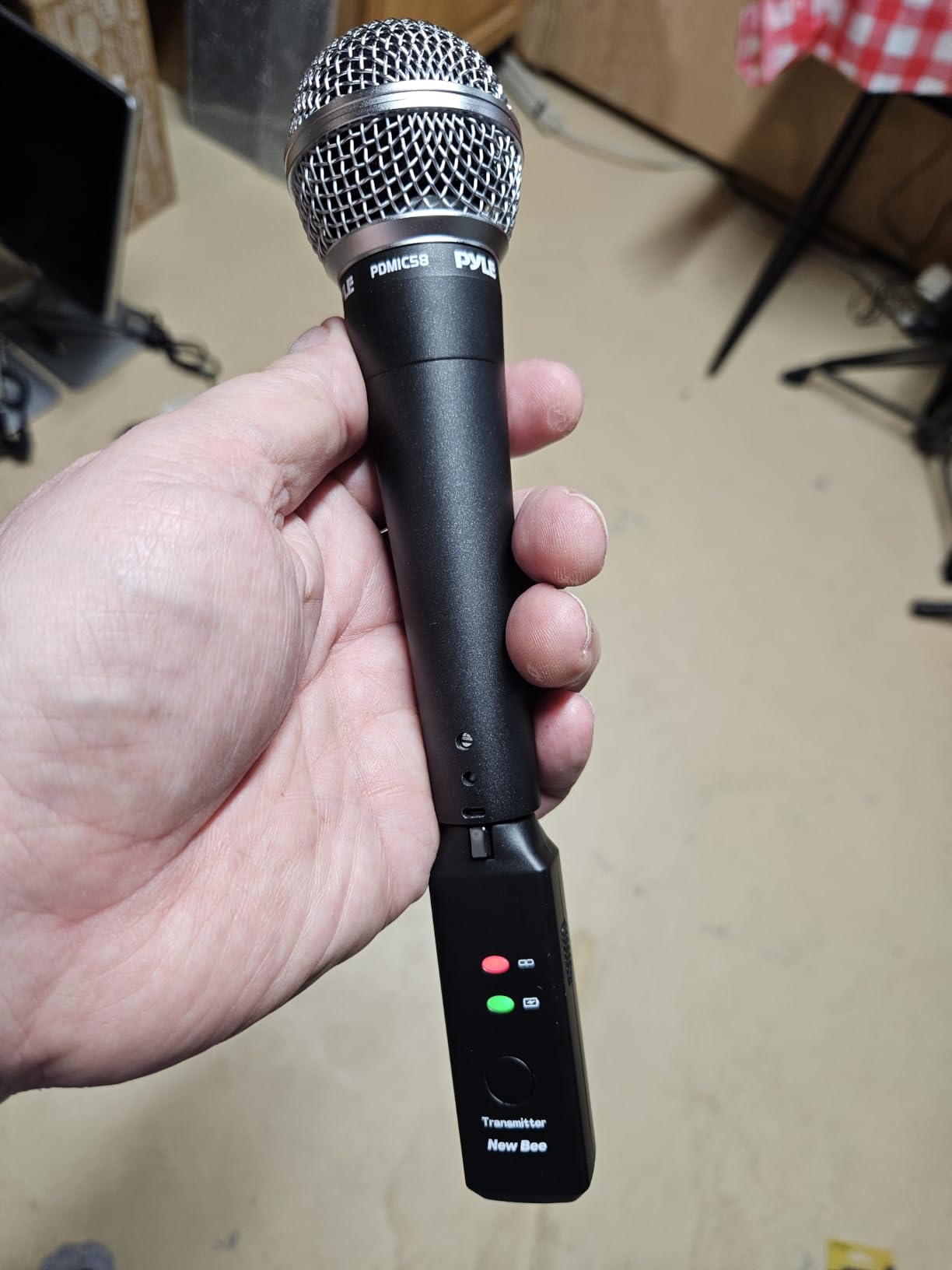
Technically it is a 50 Hz – 15 kHz moving coil with 600 ohm impedance and 54 dB sensitivity, and it is passive, so no power or batteries are needed. The integrated pop filter and windscreen handle breath, and the cardioid pattern isolates the voice enough to reduce feedback in a small room.
Reviewers are consistent about expectations: this is a clear, usable vocal microphone for practice and beginner stage work, and it is not a studio recording tool. A small share of one-star reviews mention durability, so treat it as something you will replace rather than something you tour with.
Who the PDMIC58 suits
It suits a singer testing whether live performance is for them, a karaoke setup, and anyone who needs a working dynamic microphone today without spending real money. The included cable means you can be running in minutes.
It also suits a musician who needs a second cardioid dynamic for a harmonica, a snare or a guitar amp and does not want to spend a lot on the job.
Who the PDMIC58 does not suit
It will not suit anyone expecting studio quality. The sound is basic with limited frequency extension, and reviewers set that expectation clearly.
There is no on or off switch, which is frustrating for live use, and the durability feedback means it is not a good candidate for the microphone you rely on every weekend. Save for it as a practice microphone.
12. Amazon Basics Dynamic Vocal Microphone – best for a home PA
Amazon Basics Dynamic Vocal Microphone with Cable for Podcasting, Recording, Broadcasting, Live Performance, Karaoke, Cardioid Pattern
Cardioid dynamic
70 Hz - 15 kHz
75 dB signal to noise
Zinc die-cast housing
Pros
- Good vocal clarity and volume for the price
- Solid metal body with heavy chrome mesh grille
- Useful on and off slider switch
- Long included cable with quarter inch plug
- Removable mounting clip included
Cons
- Included cable is unbalanced
- Plastic mic holder clip is not robust
- No carrying case included
- XLR connection can loosen with heavy long term use
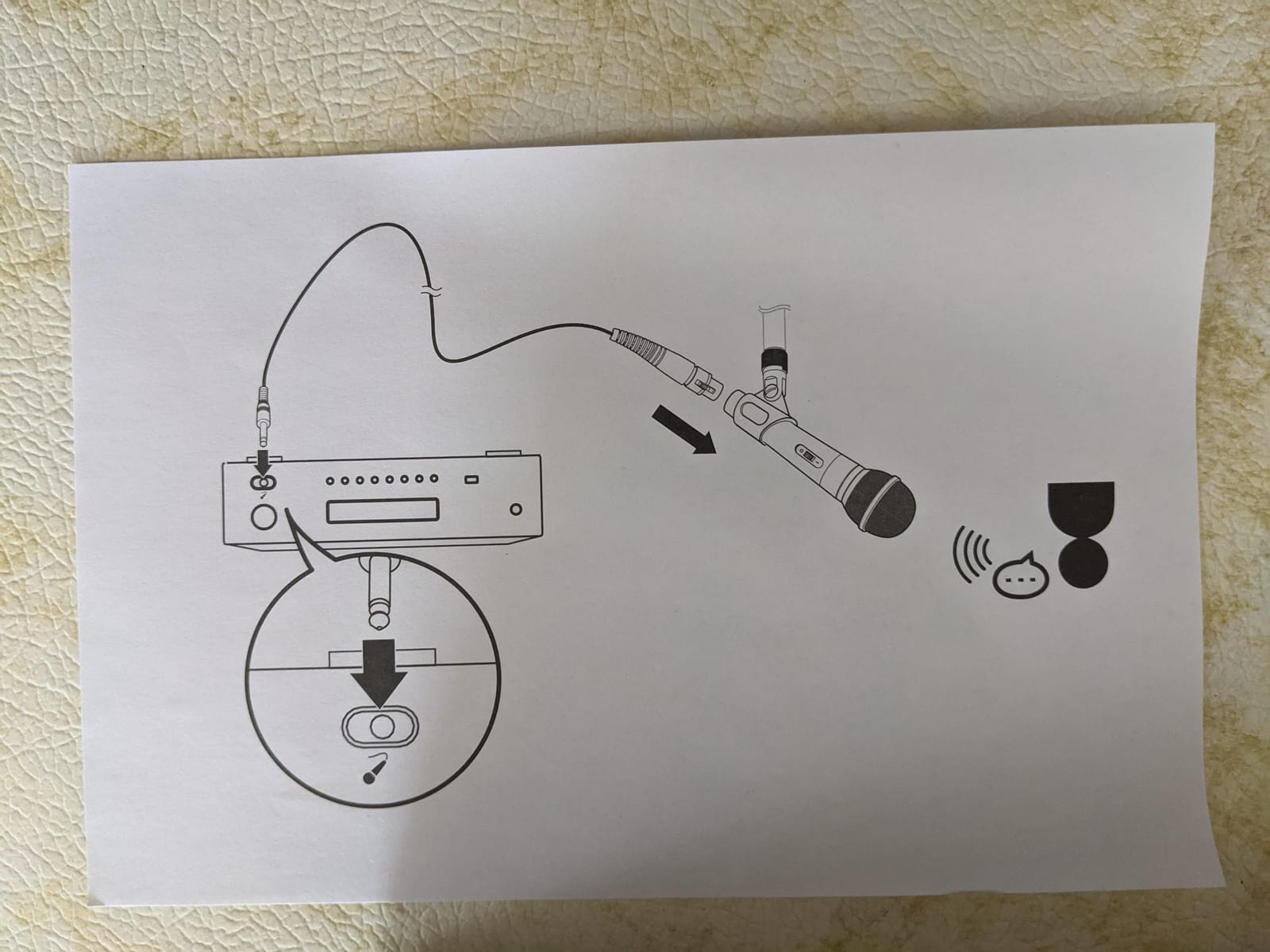
This is the microphone for a home PA, a karaoke machine and a small party system. Owners rate the vocal clarity and volume well above what the price suggests, and the useful detail is the on and off slider switch on the body.
The zinc die-cast housing with a steel mesh head gives it a weight that is reassuring in the hand, and the built-in spherical wind and pop filter means it is ready to sing into straight away. Frequency response runs 70 Hz – 15 kHz with a 75 dB signal to noise ratio.
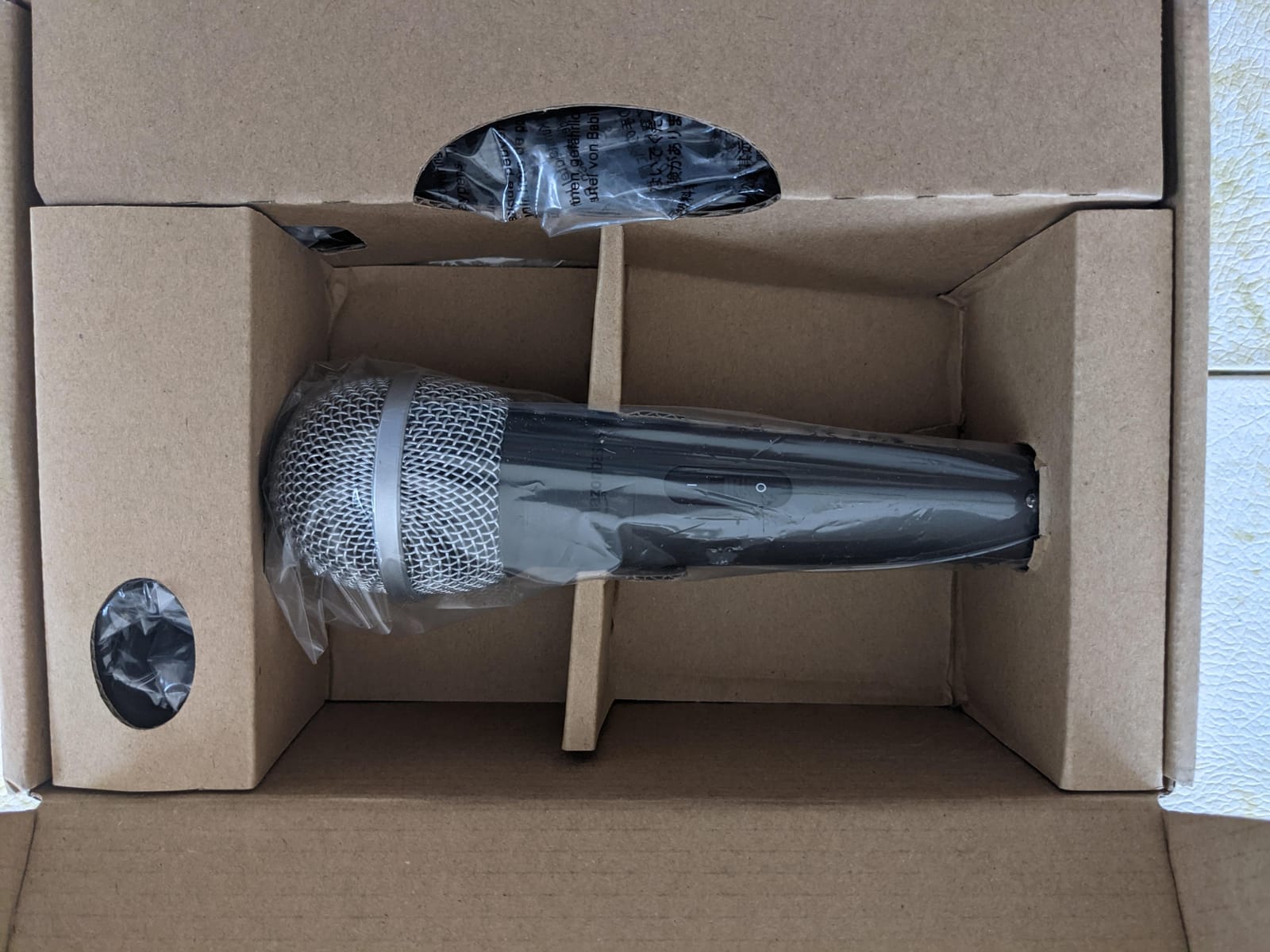
The accessory complaints are the honest part of this review. The included cable is unbalanced, the plastic microphone holder is not robust, and there is no carrying case. A small number of owners also report the XLR connection becoming unstable after years of use.
None of that matters much for a microphone living on a stand in a spare room. All of it matters if you take it to gigs, which is why this sits at the bottom of the list rather than the top.
Who the Amazon Basics mic suits
It suits home PA owners, karaoke setups and anyone who wants a vocal microphone that switches off without unplugging it. It also suits light podcast and vocoder work, where the cardioid pattern does most of the heavy lifting.
If you already have a balanced cable and a decent clip, this is a straightforward way to get a working dynamic microphone without thinking about it.
Who the Amazon Basics mic does not suit
It does not suit a touring or semi professional singer. The unbalanced cable is a real audio limitation in a live signal chain, the plastic clip will not last, and the loosening XLR joint is a long term reliability problem.
It also does not suit anyone who needs to record, because the microphone is optimised for speech and live vocal transmission rather than capturing detail.
How to Choose a Dynamic Vocal Microphone
Polar pattern is the first decision, and it is the one that decides how much trouble you will have with feedback. A cardioid pattern hears sound in a heart shaped zone in front of the mic and rejects the rear. A supercardioid pattern is narrower, rejects the sides harder, and has a small rear lobe. A hypercardioid pattern is the tightest of the three, with the least rear rejection but the most feedback resistance.
Here is the trade-off people get wrong. basschat.co.uk users generally favour cardioid for live use because a handheld singer moves around, and that advice is sound: a narrow pattern means moving off axis changes your level and your tone. If you stand still behind a stand, a tighter pattern gives you more gain before feedback. If you move, cardioid is the safer bet.
Voice matching is the second decision. Lower voices need help being heard, so look for a forward, present voicing such as the Sennheiser e835 or the Beta 58A. Higher and thinner voices usually do better with something rounder, and a microphone with too much upper midrange presence can turn shrill.
Gain structure is the third decision and the most commonly ignored. Dynamic microphones are low output by design. Every model here needs more preamp gain than a condenser, and the difference between a usable signal and a noisy one often comes down to the console or interface rather than the microphone.
None of these microphones need phantom power. Every one is passive, which means you can power them from a battery mixer, a busking amp or an old karaoke machine without worrying about voltage.
Finally, build and accessories. A die-cast metal body and a shock-mounted capsule matter more than people expect, because a handheld vocal microphone takes more knocks than anything else in the case. Budget for a balanced XLR cable, a proper clip or swivel mount, and a spare cable, because the cable fails far more often than the microphone.
Dynamic vs Condenser for Live Vocals
For live vocals, a dynamic microphone is the better choice, and the reason is gain before feedback. A condenser captures more detail and more sensitivity, which sounds better in a treated room and behaves much worse on a stage where the monitors and the backline are already loud.
The practical comparison comes down to four things. Dynamics handle very high sound pressure levels without distorting, reject off axis sound far better, need no power, and survive being carried in a bag. Condensers capture detail, need 48V phantom power, are more sensitive to room noise and plosives, and are physically more fragile.
There are exceptions. A quiet singer-songwriter playing a coffee shop with a small PA and no monitors can get away with a condenser, and a lot of players do. The rule of thumb from the forums is simple: the louder the stage, the more firmly you want a dynamic.
If your recording situation is a treated studio rather than a stage, the answer flips. A condenser or a large diaphragm dynamic will capture far more of the detail that a stage microphone is designed to throw away, which is a different job entirely.
How to Stop Vocal Feedback on Stage
Feedback happens when the microphone hears the monitor, the monitor amplifies what it hears, and the signal loops. Changing the microphone is one answer. These six steps are cheaper and faster.
- Angle the monitor wedge away from the microphone. Turning a wedge a few degrees so the speaker does not point directly at the mic removes the loop without touching the sound.
- Increase the distance between mic and wedge. Every extra centimetre of separation lowers the amount of signal the mic picks up from the speaker.
- Move off axis rather than turning down. Singing slightly to one side of the mic rather than straight into it uses the polar pattern instead of losing volume.
- Notch the frequency where it squeals. Your engineer can find the exact problem frequency and cut it with a narrow EQ band. This is faster than changing microphones.
- Pull back when you belt. Close-miking adds level and therefore feedback risk. Stepping back during the loudest part of a chorus is standard technique.
- Raise the wedge. Tilting it up toward your ear rather than aiming at your mouth usually gives you more monitor level with less spill into the microphone.
If all six fail, move up the pattern ladder. A supercardioid microphone such as the Beta 58A, the sE V7 or the Shure Super 55 will handle more gain before feedback than the cardioid models, as long as you hold your position.
Frequently Asked Questions
What is the best dynamic microphone for vocals?
The Shure SM58 is the best overall dynamic microphone for live vocals. It uses a cardioid polar pattern that rejects sound from behind and from the sides, handles a 50 Hz – 15 kHz frequency response, and has a reinforced metal body that survives drops and touring. A 78 dB signal to noise ratio and a built-in spherical grille pop filter make it the standard first choice for working singers.
Which microphone is best for live vocals?
It depends on the stage. A cardioid model such as the Shure SM58 is most forgiving for a singer who moves around. A supercardioid model such as the Shure Beta 58A or the sE Electronics V7 gives more gain before feedback in a loud band. For a lower voice that gets buried, the Sennheiser e835 adds forward presence. For public speaking and weddings, the Shure SM58 or the Sennheiser XS 1 are both dependable.
What is the best quality microphone for singing live?
In practice, quality on stage means lower handling noise, a stronger build and a more consistent polar pattern rather than a fundamentally better live sound. The AKG D5 and the Sennheiser e935 sit at the top for clarity and detail, while the Shure Super 55 pairs a shock-mounted capsule with a rugged die-cast body. Most singers are better served by fixing technique and monitor placement than by upgrading further.
Are dynamic mics better for vocals?
For live vocals, yes. A dynamic microphone handles very high sound pressure levels without distorting, rejects off axis sound well enough to fight feedback, needs no phantom power, and survives being carried and dropped. Condensers capture more detail and sound better in a treated recording studio, but they are more sensitive to room noise and plosives and are harder to control on a loud stage.
Do dynamic microphones need phantom power?
No. Every dynamic microphone in this roundup is passive, meaning it works purely through electromagnetic induction and draws no power from the input. You can run them into a battery powered mixer, a busking amplifier or an older karaoke machine without any phantom power at all. Phantom power is needed by condenser microphones, which is one of the reasons dynamics are the safer live choice.
Which dynamic mic is best for low voices?
The Sennheiser e835 is the most frequently recommended option for lower voices. It has a gentle presence boost that adds clarity without harshness and a cardioid pattern that rejects stage noise well. The Shure Beta 58A is the alternative if you want more output and an even tighter pattern. Members of r/microphone consistently point to the e835 for exactly this reason.
Which Dynamic Vocal Microphone Should You Buy?
If you buy one microphone from this list, buy the Shure SM58. It is the best dynamic microphone for live vocals for the same reason it has been the default for decades: it works for nearly every voice and nearly every stage, it survives being dropped, and it needs nothing else to work.
Upgrade to the Shure Beta 58A when your stage gets loud enough that bleed and feedback become a problem, and choose the Sennheiser e835 when your voice is low and needs forward presence to be heard. If you play a quiet room, spend the difference on a better interface instead, because gain is what a dynamic microphone is short of.
Whichever one you pick, give it a balanced XLR cable, a proper clip or swivel mount, and a spare cable in the bag. Then work on where you point the wedge. In 2026, that is still the difference between a clean vocal and a night you regret.