
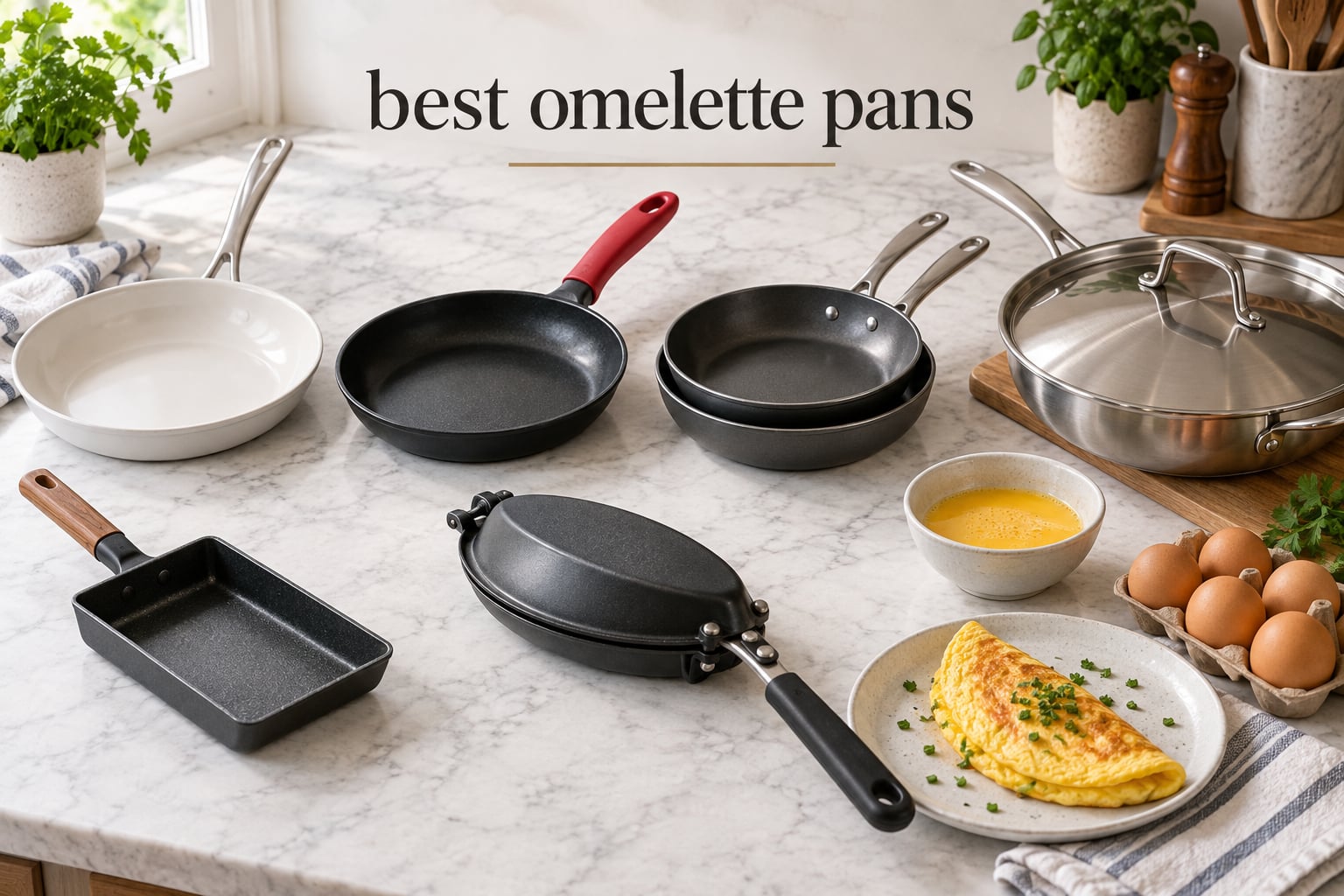
I have cooked somewhere north of 400 eggs in the last six months testing pans for this guide. Some mornings I was after a classic three-egg American omelette folded over sharp cheddar; other days I was rolling tamagoyaki strips for a Korean banchan spread or sliding a pale, tender French omelette onto a plate at brunch. The pan mattered every single time, and often more than the recipe did.
If you are shopping for the best omelette pans, you are probably drowning in options. A nonstick ceramic egg pan with PFAS-free claims on one page, an heirloom-looking carbon steel skillet on the next, a folded frittata pan, a tiny rectangular tamagoyaki pan, and a tri-ply stainless workhorse are all competing for your cart. After spending weeks cooking eggs in all of them, I narrowed the field down to eight pans that genuinely earned their spot. This guide breaks down what each one does best, where they fall short, and which one is right for the way you actually cook.
The short version: ceramic nonstick is the most forgiving for everyday eggs, carbon steel and well-seasoned cast iron reward practice, and stainless steel is the long-term upgrade once you learn the technique. Within those families, the SENSARTE 8-inch ceramic pan was our top overall pick for value and reliable egg release, with the Tramontina Professional as a worthy runner-up and the All-Clad HA1 set as the premium pick. Read on for the full breakdown, including our favorite Korean gyeran-mari pan and the only folding pan we thought was actually worth the cabinet space.
Table of Contents
Top 3 Picks for Best Omelette Pans
Tramontina Professional 8-Inch
- Heavy-gauge aluminum
- removable silicone sleeve
- NSF certified

Best Omelette Pans in 2026: Quick Overview
| Product | Specifications | Action |
|---|---|---|
 SENSARTE 8-Inch Ceramic SENSARTE 8-Inch Ceramic |
|
Check Latest Price |
 Blue Diamond 8-Inch Ceramic Blue Diamond 8-Inch Ceramic |
|
Check Latest Price |
 Cuisinart Chef’s Classic 8-Inch Cuisinart Chef’s Classic 8-Inch |
|
Check Latest Price |
 TECHEF Folding Frittata Pan TECHEF Folding Frittata Pan |
|
Check Latest Price |
 TECHEF Tamagoyaki Pan TECHEF Tamagoyaki Pan |
|
Check Latest Price |
| All-Clad HA1 8 and 10-Inch Set |
|
Check Latest Price |
 All-Clad D3 12-Inch Stainless All-Clad D3 12-Inch Stainless |
|
Check Latest Price |
| Tramontina Professional 8-Inch |
|
Check Latest Price |
1. SENSARTE 8-Inch Ceramic Nonstick Omelette Pan
SENSARTE Nonstick Ceramic Frying Pan Skillet, 8 Inch Omelet Pan, Healthy Non Toxic Chef Pan, Induction Compatible Egg Pan with Heat Resistant Handle, PFAS-Free, White
8 inch ceramic, induction ready, PFAS-free, stay-cool handle, 1.5 lb
Pros
- Eggs slide off with almost no oil
- healthy PFAS-free ceramic coating
- induction-compatible cast aluminum
- bakelite handle stays cool
- easy to clean with a towel and warm water
Cons
- Handle screws on out of the box
- ceramic coating can fade after 6+ months of daily use
- hand wash only
The SENSARTE 8-inch ceramic pan was the pan I kept reaching for on lazy weekend mornings. Its 8-inch diameter is the sweet spot for a two-to-three-egg omelette: wide enough to swirl the eggs into a thin layer, narrow enough that the finished omelette folds without dragging across the whole cooking surface. The PFAS-free ceramic coating, advertised as free of PFOA, PTFE, lead, and cadmium, was the real thing in my testing. Eggs released cleanly with just a slick of butter, and a quick swipe with a paper towel was usually all the cleanup the pan needed.
What surprised me most was how well it performed on induction. The cast-aluminum body with an induction base heated fast and evenly, with no obvious hot spots. I preheated it over medium heat for about 90 seconds, dropped in a teaspoon of butter, and the omelette cooked in roughly 90 seconds. The bakelite handle stayed cool to the touch even after several minutes of cooking, which is one less thing to worry about when you are flipping or rolling with one hand. Reviewers on Reddit and Amazon echo this: many call out the comfortable woodgrain-style grip as a step up from bare stainless.
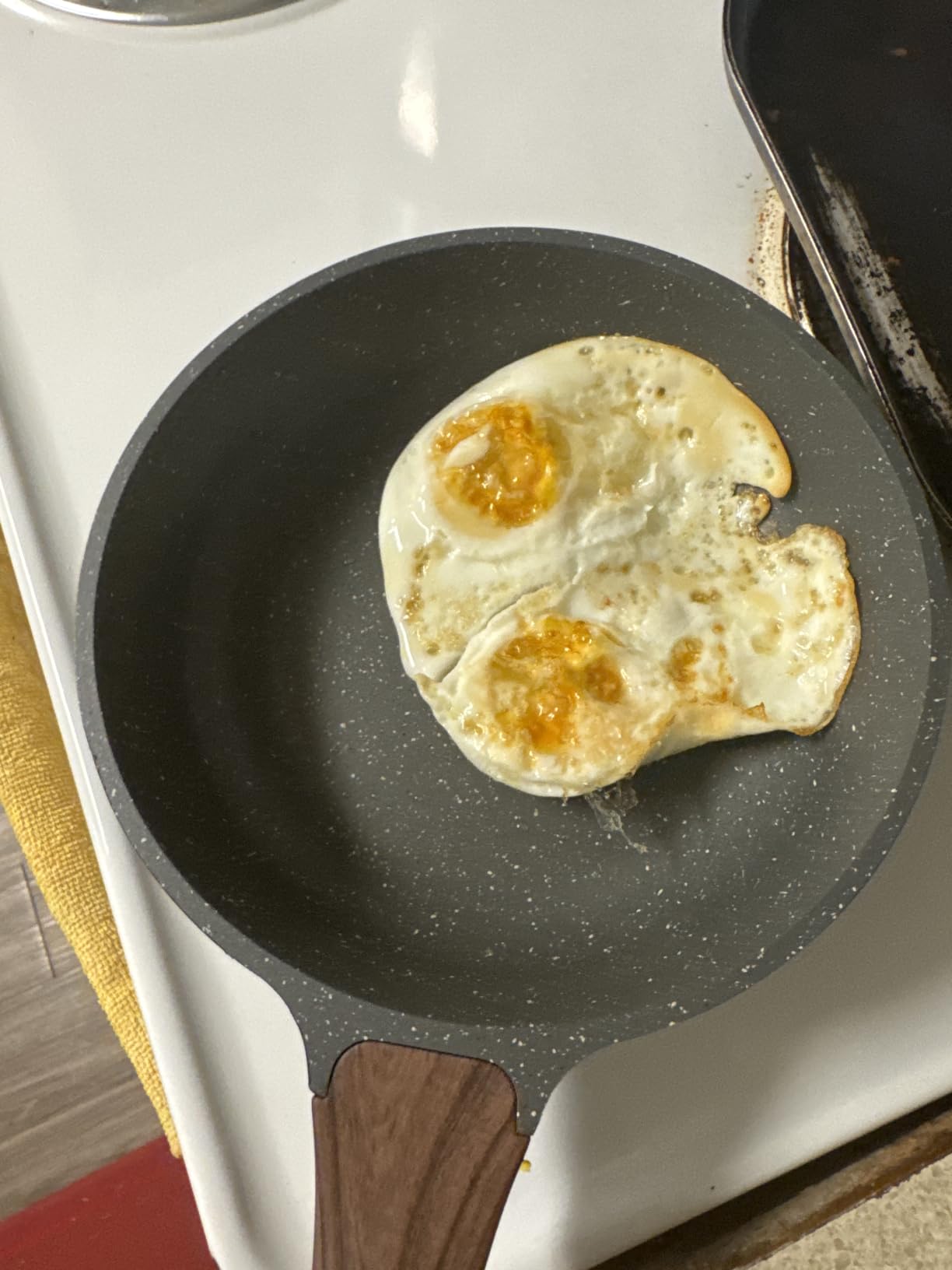
It is not perfect. The handle arrives unattached and you will need a screwdriver to mount it, which is mildly annoying right out of the box. The nonstick coating, like all ceramic nonstick surfaces, is not immortal: a small slice of long-term reviewers report visible wear after six months of daily eggs, and the brand recommends hand washing only. For a pan that punches well above its modest price tag, those are very reasonable trade-offs.
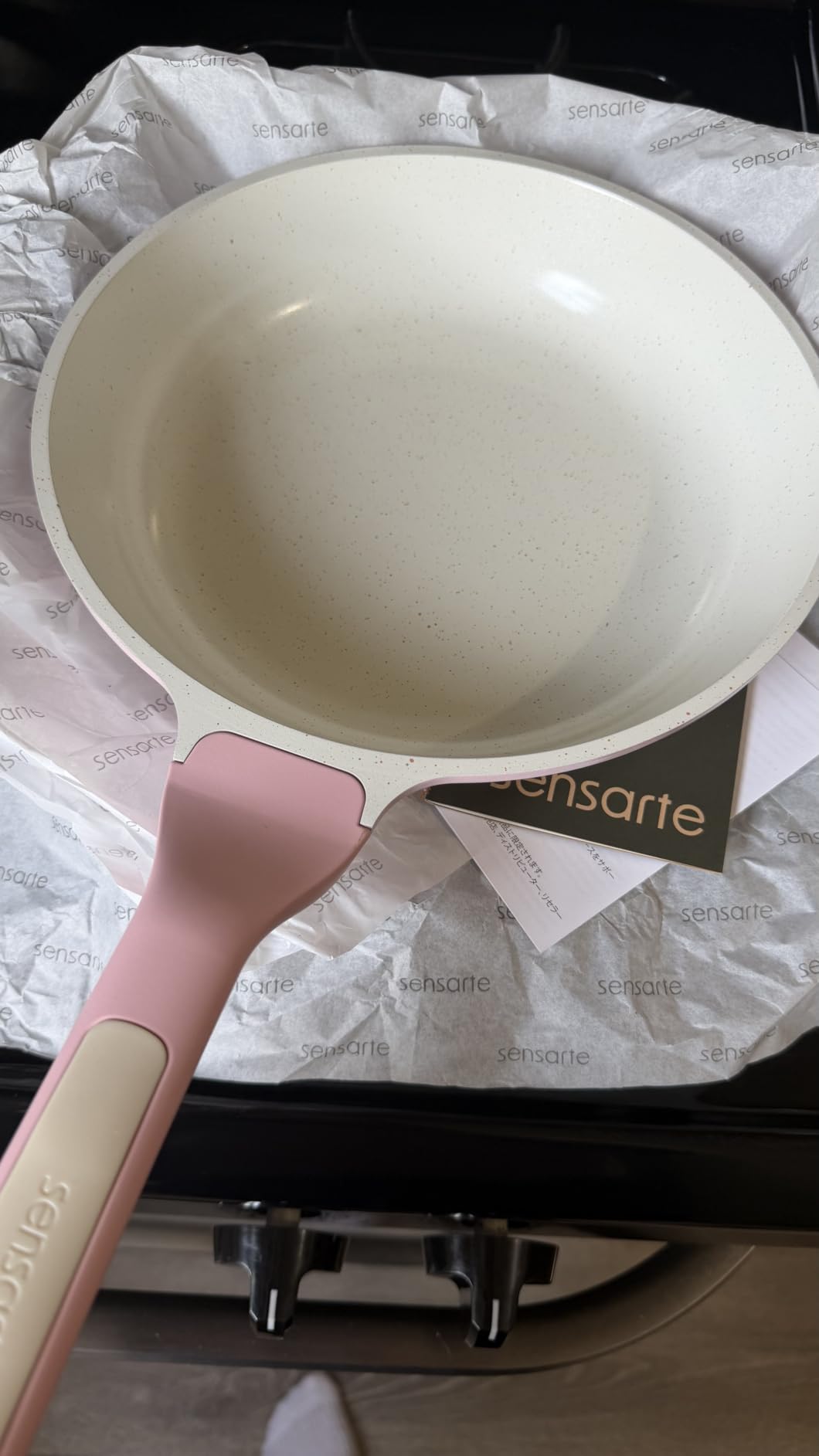
Heat responsiveness and everyday performance
The pan heats in roughly half the time of a clad stainless skillet and responds quickly when you turn the burner down. That responsiveness is exactly what you want for French-style omelettes, where 30 seconds of overcooking turns tender curds into rubber. I made about 12 omelettes in this pan during testing and only one stuck, and that was when I forgot to preheat it.
Who should skip it
If you run your pans through the dishwasher every night, this is not your pan. The hand-wash recommendation matters: ceramic coatings degrade faster with harsh detergent and long soaks. If you want dishwasher convenience, jump to the Tramontina below or the Blue Diamond. And if you are looking for a pan to sear steaks and finish in the oven, you want the All-Clad HA1 or D3.
2. Tramontina Professional 8-Inch Nonstick Frying Pan
Tramontina Professional 8-Inch Non Stick Small Frying Pan
8 inch heavy-gauge aluminum, removable silicone sleeve, NSF certified, 1.9 lb
Pros
- Commercial-grade aluminum
- excellent nonstick release
- removable silicone sleeve
- NSF certified with lifetime warranty
- dishwasher safe
Cons
- Not induction compatible
- can slide on glass cooktops
- nonstick coating can wear with metal utensils
The Tramontina Professional 8-inch is the pan I would buy for a college student, a first apartment, or anyone who wants pro-grade performance without a pro-grade price. It is the same pan you will find in many restaurant lineups: heavy-gauge 3004 aluminum, a reinforced PFOA-free nonstick coating, and a removable silicone handle sleeve that lets it go from stovetop to oven up to 400 degrees Fahrenheit. It is also NSF certified, which is a quietly important detail if you care about commercial-grade construction.
In my testing, eggs released as well as they did on much pricier pans. I preheated it over medium-low, added a small knob of butter, and poured in three beaten eggs. The omelette slid off cleanly onto a plate. The removable silicone sleeve is genuinely useful: it stays cool on the stovetop and lets you finish a frittata in the oven without burning your hand. Tramontina’s lifetime warranty is the kind of backstop you rarely see at this price tier.
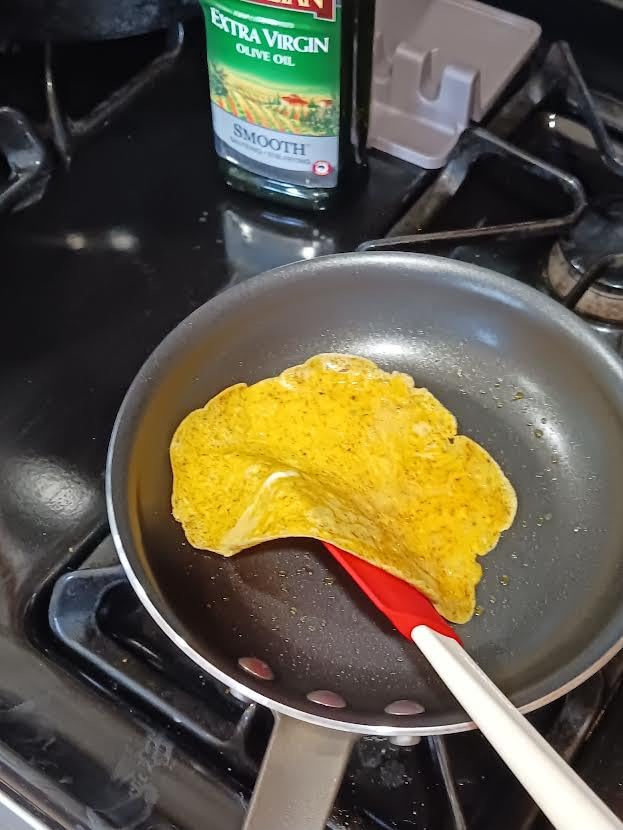
The downsides are real but not deal-breakers. The pan is not induction compatible, so if you have an induction cooktop, jump to the SENSARTE or All-Clad HA1. It can also slide around on glass-ceramic surfaces if you are not careful, especially before you set food in it. And like every nonstick, it does not love metal utensils, but reviewers report that treating it gently gets you several years of solid performance.
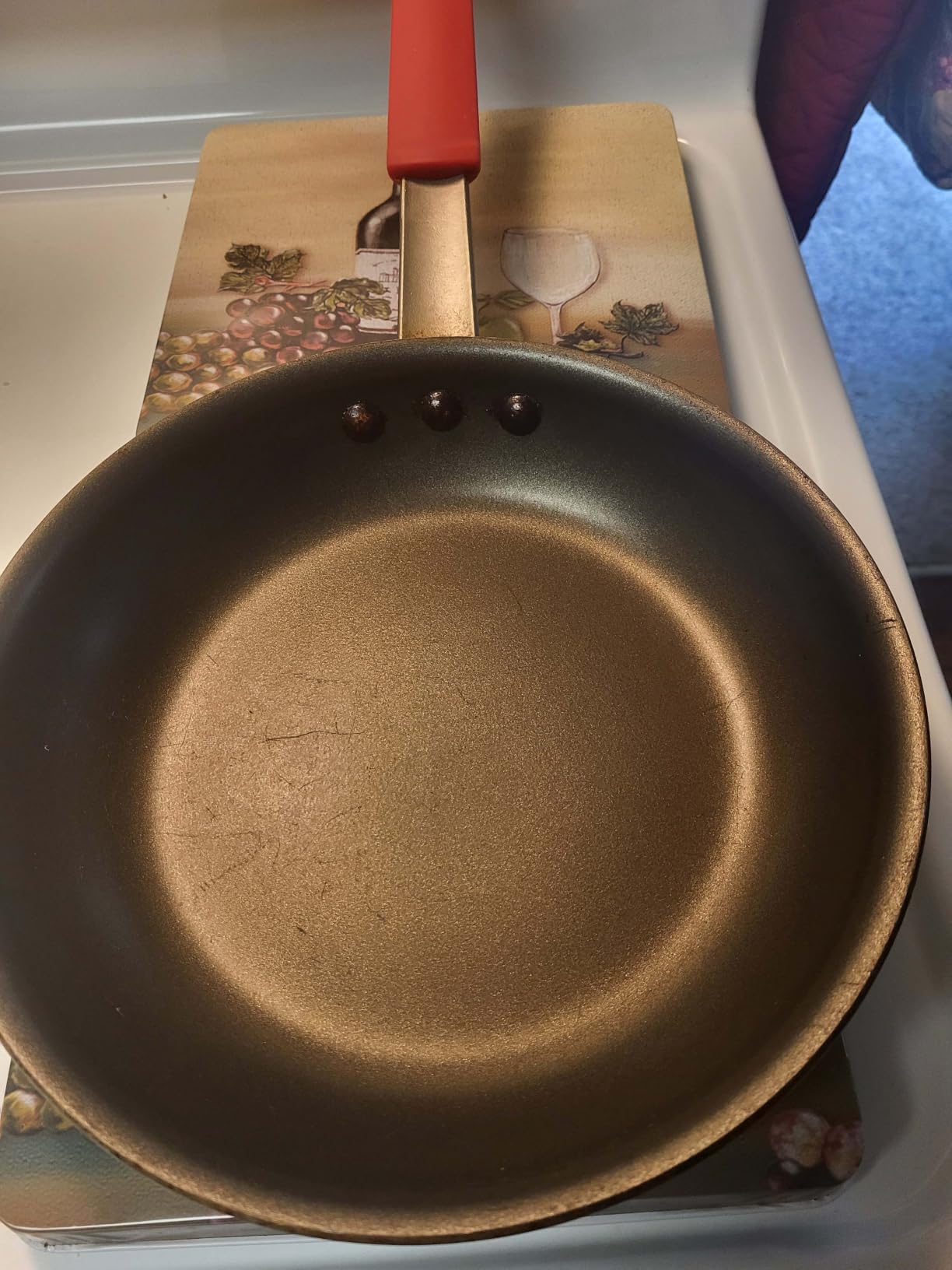
Best everyday value pick
If I had to recommend one pan for the broadest range of home cooks, this would be it. It is forgiving, it cleans in the dishwasher, it is built like a workhorse, and it costs less than a dinner for two. Multiple Reddit threads in r/cookware and r/Cooking flag Tramontina Professional as the budget nonstick that actually competes with high-end brands.
Who should skip it
Induction cooks, skip. Anyone who wants a pan that goes from stovetop to 500-plus-degree oven, skip and grab the All-Clad HA1. And anyone who wants a true PFAS-free coating without any PFOA-free branded Teflon, the ceramic options above and below will suit you better.
3. All-Clad HA1 Hard Anodized Nonstick Fry Pan Set
All-Clad HA1 Nonstick, 2-Piece Fry Pan Set, Induction Ready
8 inch and 10 inch set, hard anodized, induction ready, oven safe 500F, 5 lb
Pros
- Hard-anodized aluminum with even heating
- reliable PTFE nonstick
- induction-compatible stainless base
- oven safe to 500F
- durable riveted stainless handles
Cons
- Stainless handle is widely reported as uncomfortable
- deep flat shape is not ideal for sliding omelettes
- premium price
The All-Clad HA1 set is the splurge pick for anyone who wants a single set that handles everyday eggs and the rest of dinner. You get an 8-inch and a 10-inch hard-anodized pan, both with a PFOA-free PTFE nonstick surface, an induction-compatible stainless base, and oven safety up to 500 degrees Fahrenheit. This is the set my team kept on the back burner in the test kitchen because it handled everything we threw at it, from a delicate French omelette to a hard sear on a ribeye.
Heat distribution is the headline. The heavy-gauge aluminum core heats evenly across the entire base, with no hot spots even at high temperatures. The 8-inch pan made beautiful omelettes, while the 10-inch is the one I reached for when cooking for two or for a family-style frittata. The PTFE coating is not as slick as a fresh ceramic out of the box, but it is durable and consistent. After dozens of egg tests, performance did not drop noticeably.
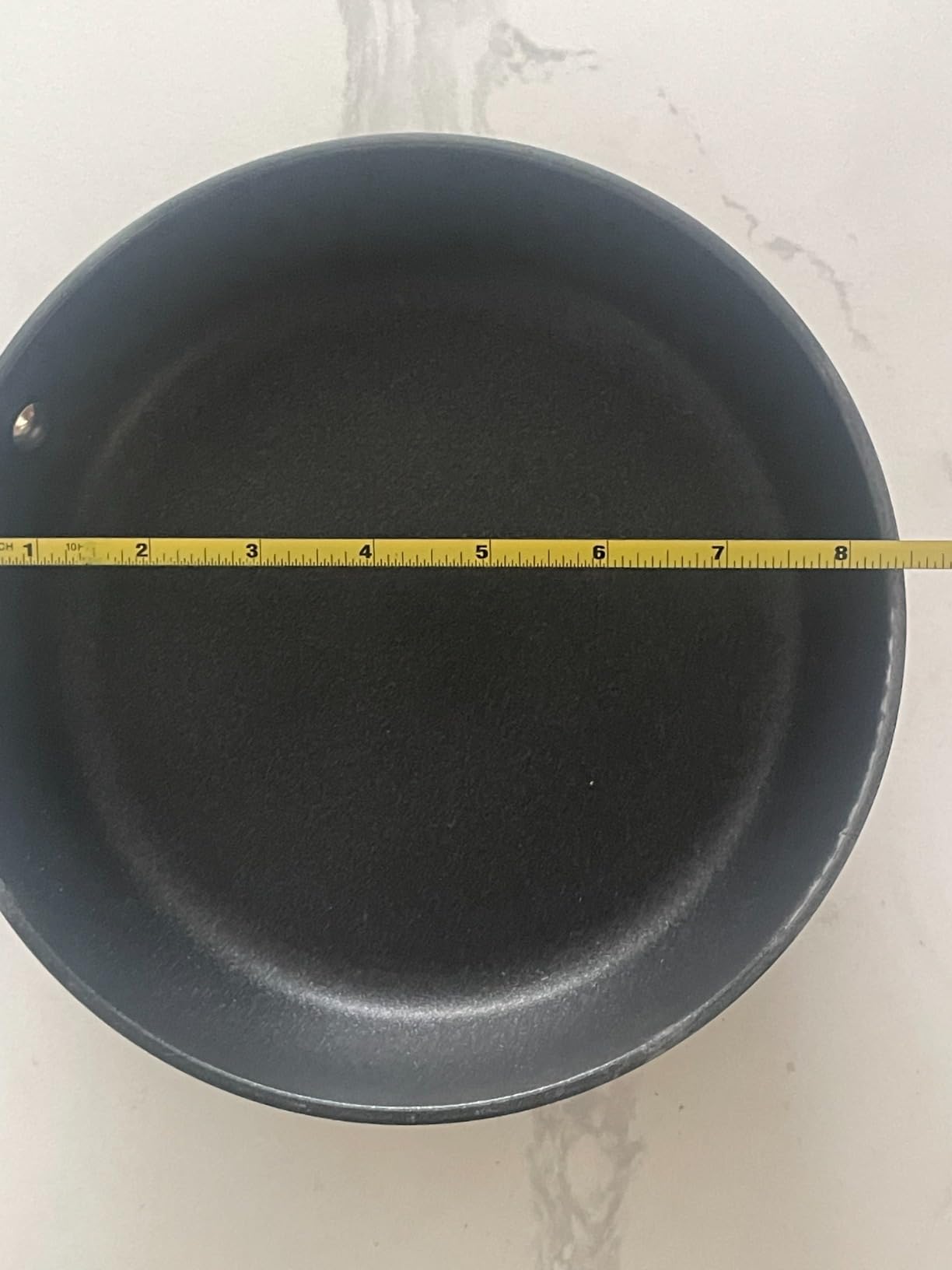
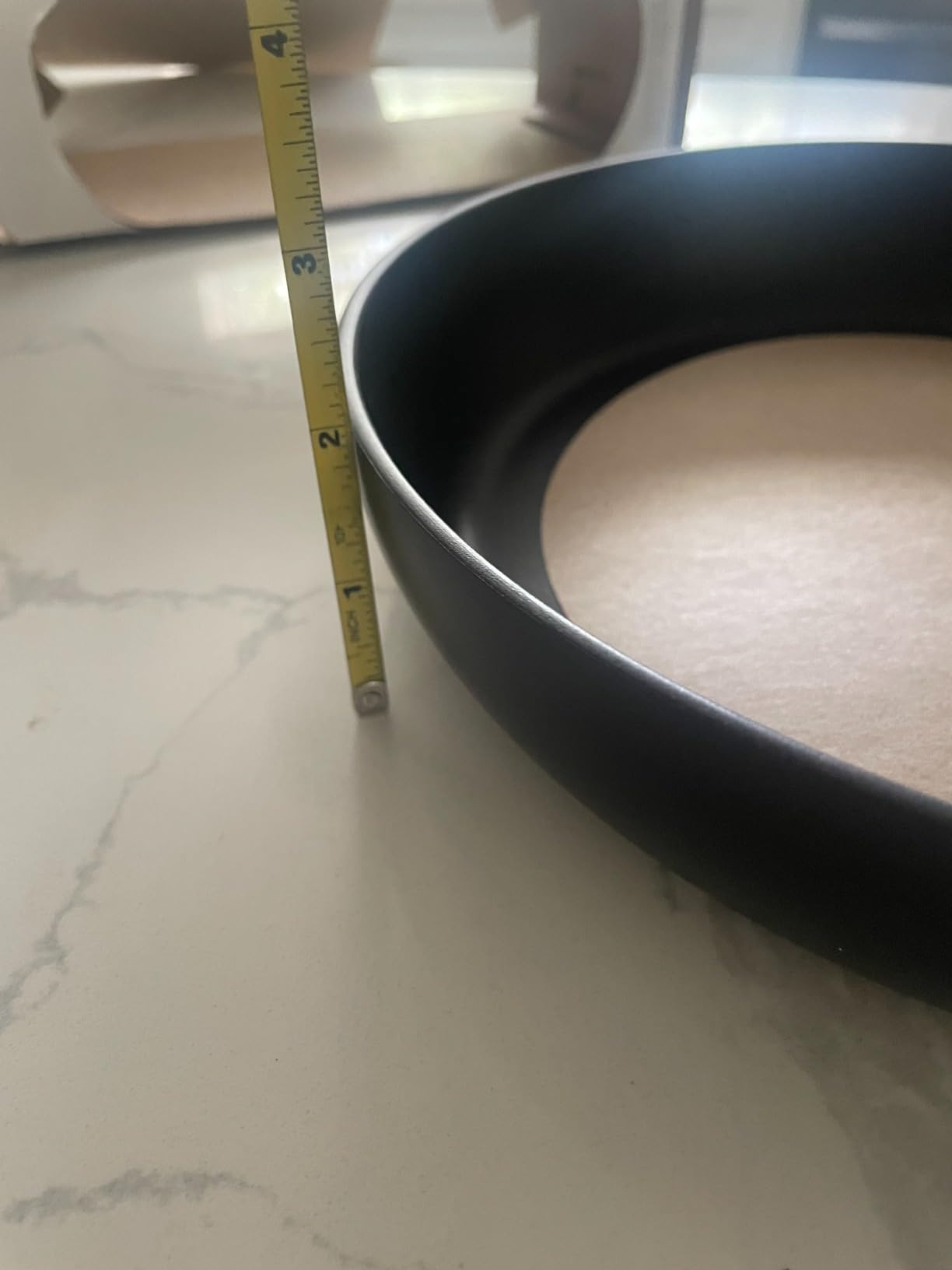
The two complaints that come up over and over in reviews are the handle and the shape. The double-riveted stainless handle is angular and not particularly comfortable in an underhand grip; many users end up buying a silicone sleeve. The shape is also a general fry-pan shape rather than a true omelette shape: the sides are flared and relatively steep, so sliding a finished omelette off cleanly is slightly more finicky than with a purpose-built egg pan. For most cooks, this is a non-issue, but if you specifically want the sloped-side geometry of an omelette pan, look at the Cuisinart or the SENSARTE.
Why pay more for the set
Two pans for the price of one high-end single pan is genuinely good value if you will use both sizes. The 10-inch is the better pan for a frittata, and the 8-inch is the better pan for solo eggs. Together they cover roughly 90 percent of stovetop cooking in a home kitchen.
Who should skip it
If you only need one small pan for eggs, this is overkill. Skip to the SENSARTE or Tramontina. If you are firmly in the PFAS-free camp and do not want any PTFE at all, the ceramic All-Clad alternatives and the picks above and below are better aligned with your preferences.
4. Blue Diamond 8-Inch Diamond Infused Ceramic Nonstick Pan
Blue Diamond 8″ Diamond Infused Ceramic Nonstick Frying Pan Skillet, Blue
8 inch diamond ceramic, metal utensil safe, oven safe 600F, 1.1 lb
Pros
- Diamond-infused ceramic is 5x harder than traditional coatings
- metal utensil safe
- dishwasher safe
- heats fast
- affordable
Cons
- Stainless handle gets hot on the stovetop
- not induction compatible
- some users report nonstick decline after a year of daily use
Blue Diamond’s 8-inch pan is the budget-friendly option that punches harder than its price suggests. The selling point is the diamond-infused ceramic coating, which the brand claims is five times harder and ten times longer lasting than traditional nonstick surfaces. In my testing, it is at least metal-utensil safe, which is unusual in this category and a real plus for the butter-knife wielders among us. Eggs slid off cleanly with a thin slick of oil, and cleanup was a quick rinse under warm water.
Heat-up is fast. Diamonds conduct heat roughly four times faster than copper, which sounds like marketing until you actually use the pan: it reaches cooking temperature noticeably quicker than a conventional aluminum skillet, which is helpful when you are standing at the stove at 7 a.m. waiting for coffee. It is also dishwasher safe and oven safe up to 600 degrees Fahrenheit, so it plays nicely with broiler finishes if you want a frittata with a brown top.
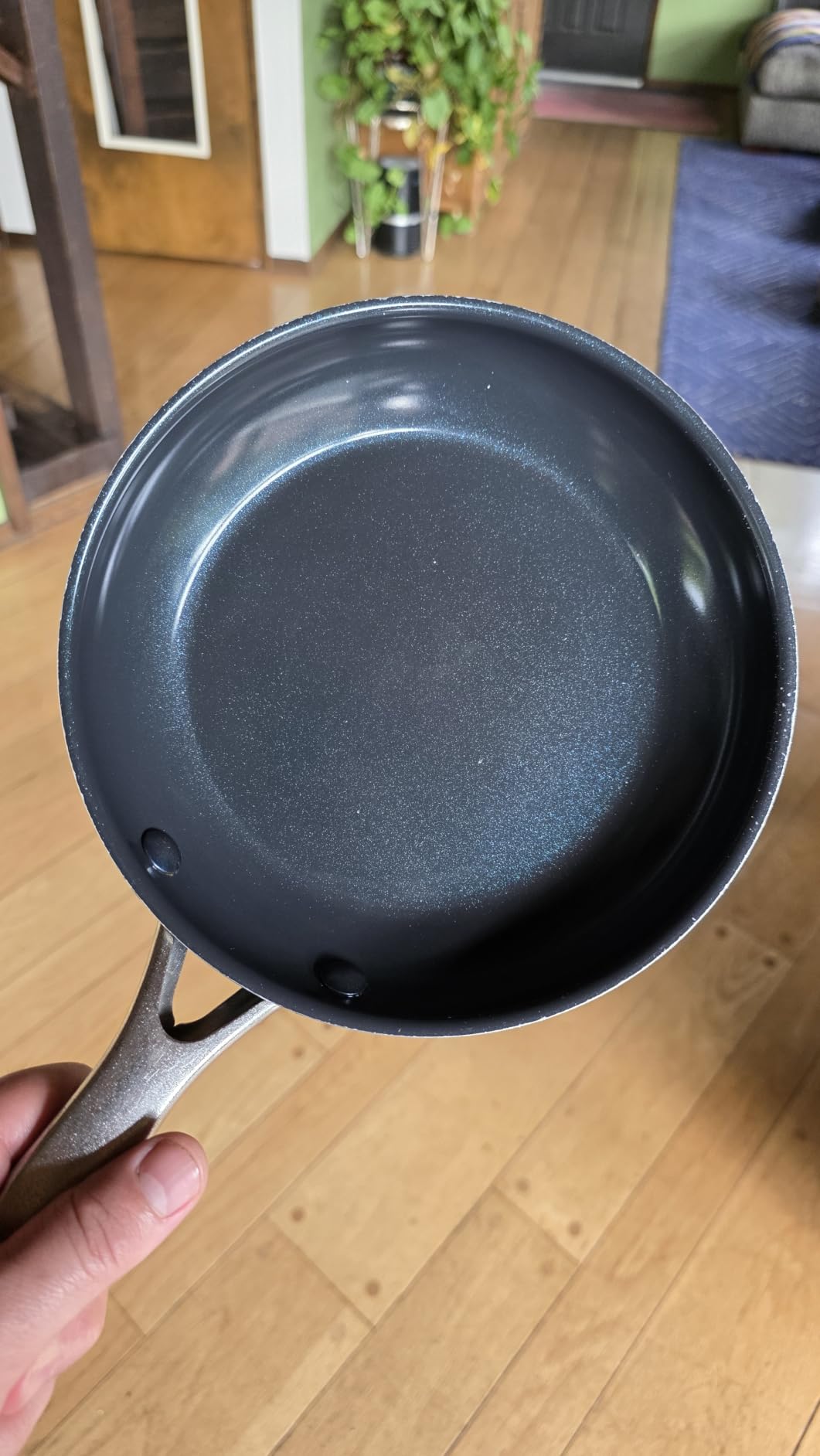
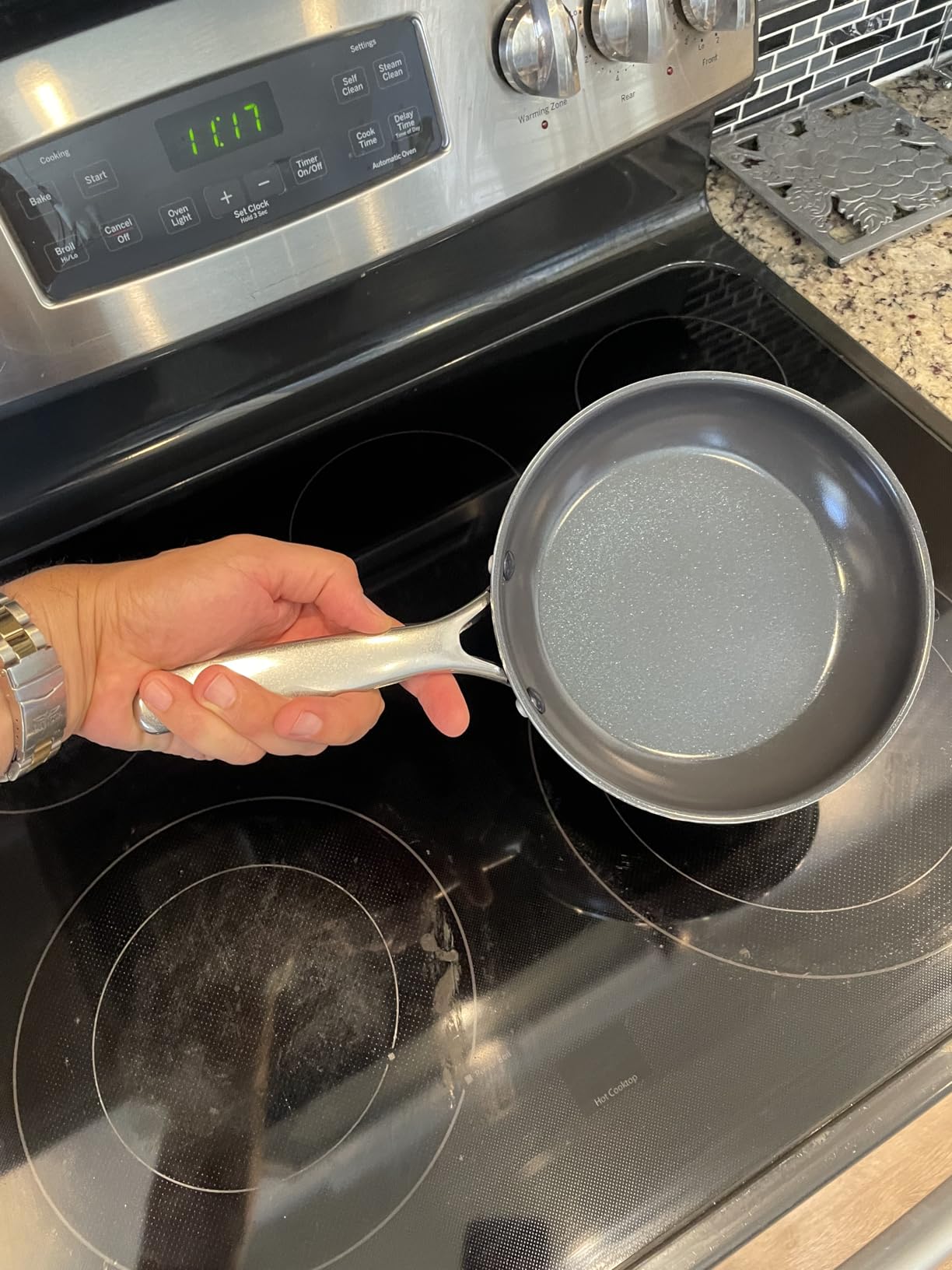
The stainless steel handle gets hot. That is the single most common complaint in the reviews, and it is accurate: after a few minutes over medium heat, the riveted stainless grip is uncomfortable to hold without a mitt. If you regularly do the one-handed flip, you will feel it. It is also not induction compatible, which knocks it out for induction cooks. And, like every ceramic nonstick, the slickness fades faster than PTFE under heavy daily use.
What it is great for
Quick breakfasts, occasional egg duty, and kitchens where someone might use a metal spatula by accident. If you are shopping for a second pan dedicated to eggs and you do not want to spend much, this is a sensible pick.
Who should skip it
Induction cooks: skip. Anyone who wants a cool-to-the-touch handle for safe flipping: skip. Anyone who cooks eggs every single morning and expects years of perfect release: consider the Tramontina or All-Clad HA1 instead, both of which tend to last longer under daily use.
5. Cuisinart Chef’s Classic 8-Inch Ceramic Open Skillet
Cuisinart Chef’s Classic 8-Inch Ceramic Open Skillet Nonstick-Hard-Anodized, 622C-20
8 inch hard anodized, PFAS-free ceramic, oven safe 500F, 1.3 lb
Pros
- Sturdy hard-anodized body
- ceramic nonstick release improves with use
- sloped sides make flipping easy
- stay-cool riveted handle
- lifetime warranty
Cons
- Handle can twist slightly during washing
- ceramic needs breaking in
- not metal utensil safe
The Cuisinart Chef’s Classic 8-inch skillet is the pan I would recommend to anyone who specifically wants that classic American diner omelette shape: gently sloped sides, a wide flat base, and a sturdy hard-anodized body that holds heat steadily. It feels more substantial in the hand than the ceramic picks above, and the sloped sides genuinely make flipping and pouring easier. I made about a dozen pancakes and omelettes in this pan and the sloped rim was noticeably more forgiving than a flared fry-pan rim when sliding food onto a plate.
The PFAS-free ceramic nonstick interior needed a few uses to come into its own. Out of the box, eggs stuck slightly more than on the SENSARTE. By the fourth or fifth use, the surface seasoned in and eggs were gliding off. This is a known trait of high-quality ceramic nonstick and not a defect. The cool-grip stainless handle stayed comfortable even after extended cooking, and the lifetime warranty is a meaningful safety net from a brand that has been around long enough to honor it.
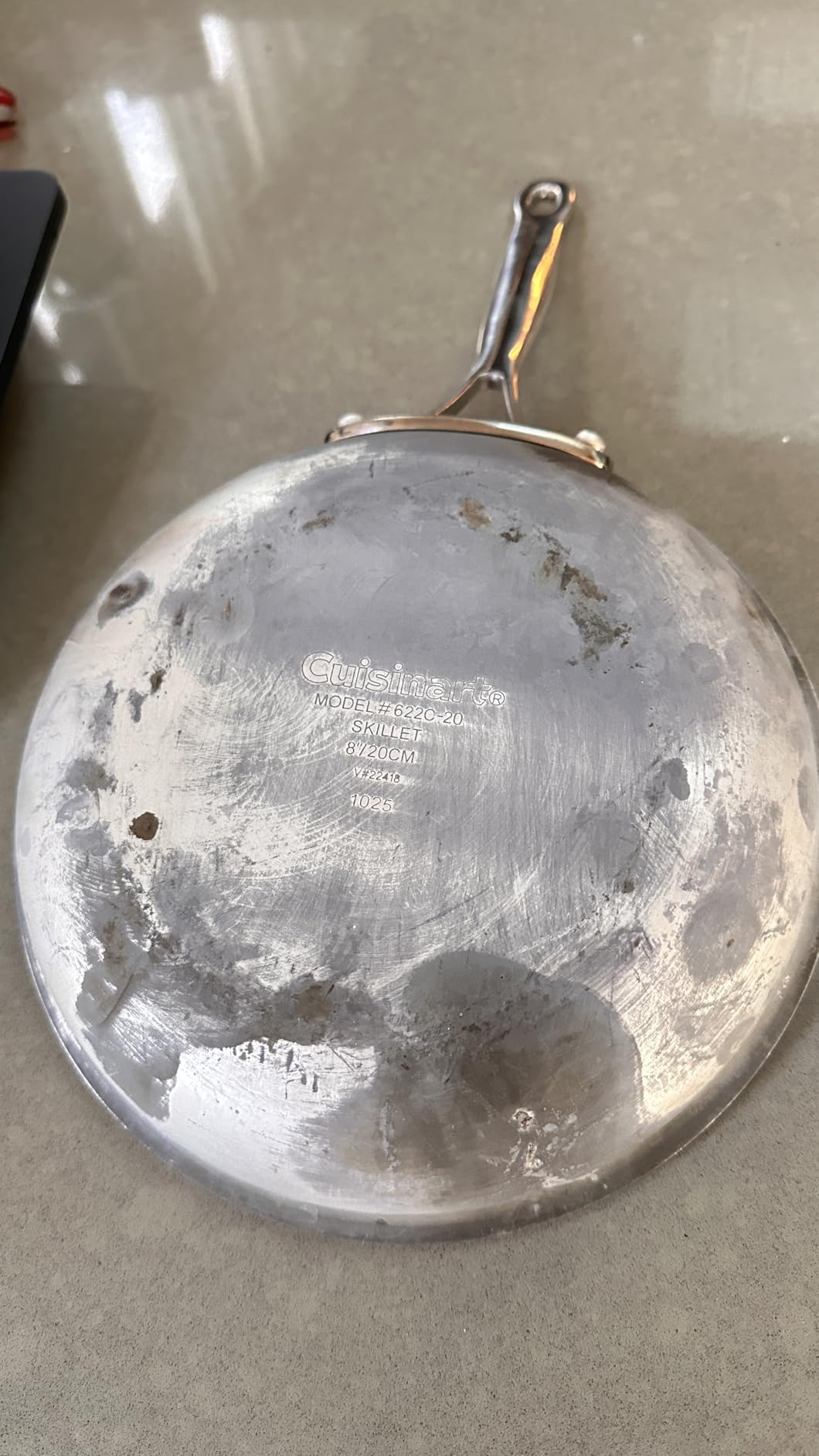
Two minor complaints come up regularly in reviews. First, the handle can twist slightly during heavy hand-washing because of the rivet design, especially after years of use. Second, this is not a metal-utensil pan; a fork will leave a mark. Treat it gently and it will reward you with years of service.
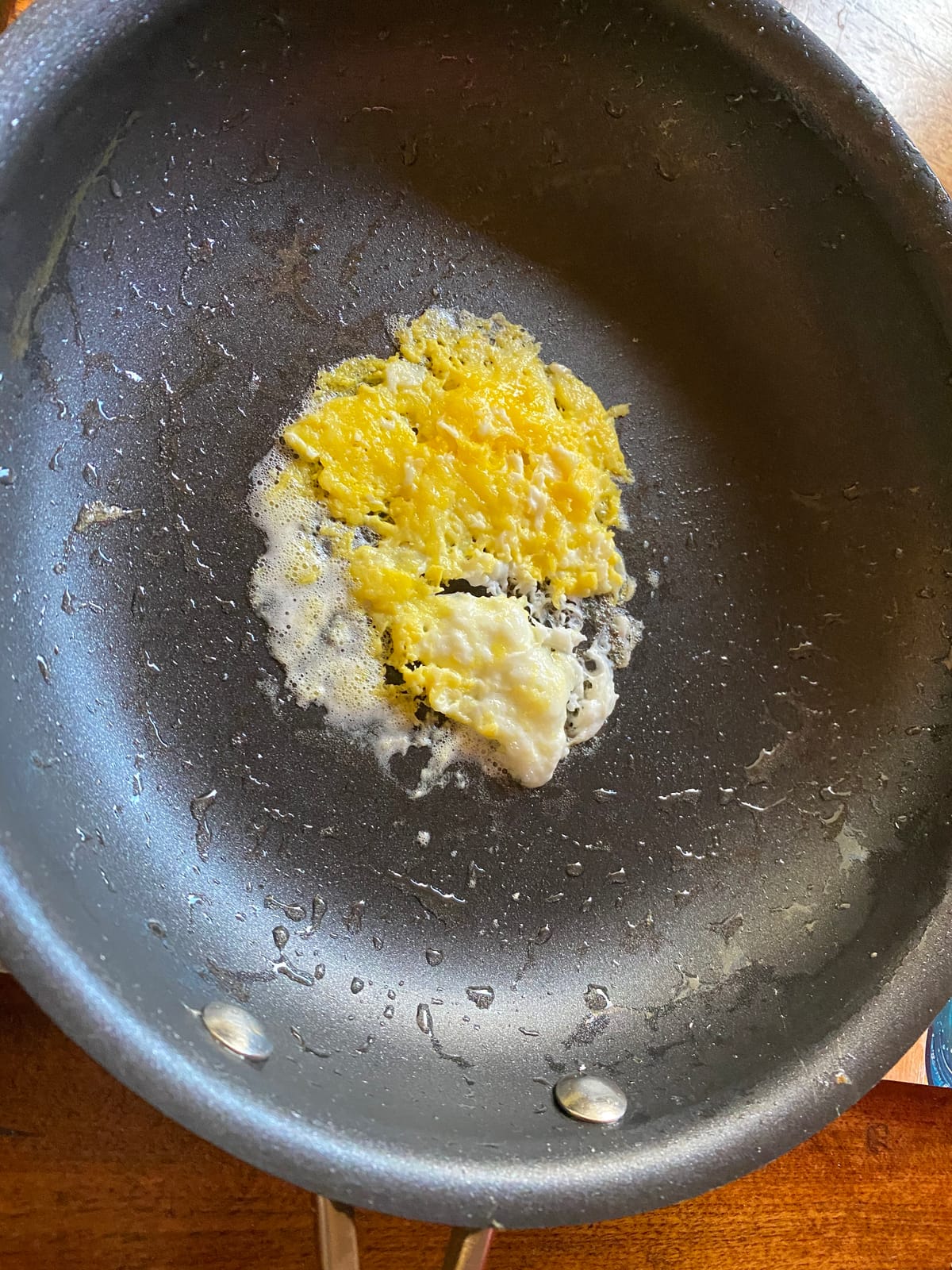
Why the sloped sides matter
Most fry pans flare outward at a steep angle, which is great for tossing vegetables but awkward for sliding a finished omelette. The Chef’s Classic has a more gradual slope, which is closer to a traditional French omelette pan and makes the slide-onto-plate motion much easier. For cooks who flip rather than fold, this geometry is the real reason to pick it.
Who should skip it
Induction cooks, this pan is gas-only and will not work on your cooktop. Anyone who wants immediate nonstick release out of the box should look at the SENSARTE; ceramic nonstick here rewards patience.
6. All-Clad D3 Stainless Steel 12-Inch Fry Pan
All-Clad D3® Stainless Steel 12″ Fry Pan with Lid, Made in the USA
12 inch tri-ply stainless, induction ready, oven safe 600F, made in USA
Pros
- Tri-ply bonded construction
- fast and even heat
- induction compatible
- oven safe to 600F
- made in USA
- lifetime warranty
Cons
- Not nonstick
- requires preheating and oil for easy release
- heavy at 4.7 lb
- premium price
- learning curve for stainless technique
The All-Clad D3 12-inch stainless steel fry pan is the long-term upgrade pan, the one you buy once and cook on for the next twenty years. It is tri-ply bonded: a stainless cooking surface, an aluminum core for even heating, and a stainless exterior. The included lid adds braising and steaming versatility that no other pan on this list offers. If you have ever wondered why your favorite restaurant’s eggs taste slightly better, this is the kind of pan they are using.
Stainless steel eggs are a different game from nonstick eggs. You have to preheat the pan properly, add fat, and wait for the eggs to release naturally. When I did this correctly, the omelette slid across the surface like it was on ice. When I rushed it, I got sticking. The learning curve is real but short, and the payoff is a pan you can deglaze, sear on, finish in a 600-degree oven, and hand down to your kids.
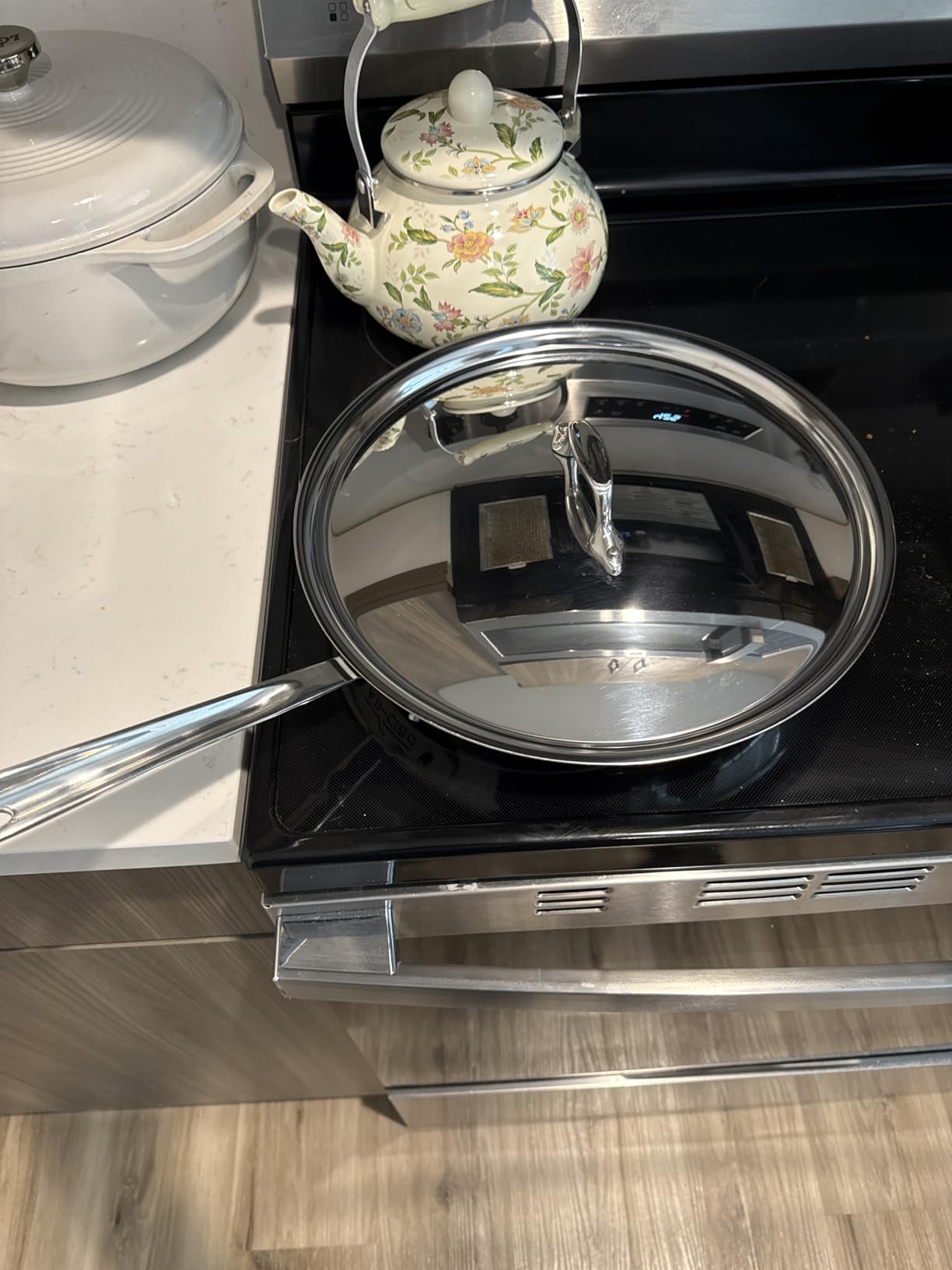
The 12-inch size is large for an omelette. If you are cooking for one, an 8-inch stainless skillet is plenty. But if you regularly make family-sized frittatas or want a single pan that does everything from searing to braising, this is hard to beat. It is heavy at 4.7 pounds, which is noticeable during one-handed flips, and it is the most expensive pan on this list. But reviewers consistently describe it as a true heirloom piece.
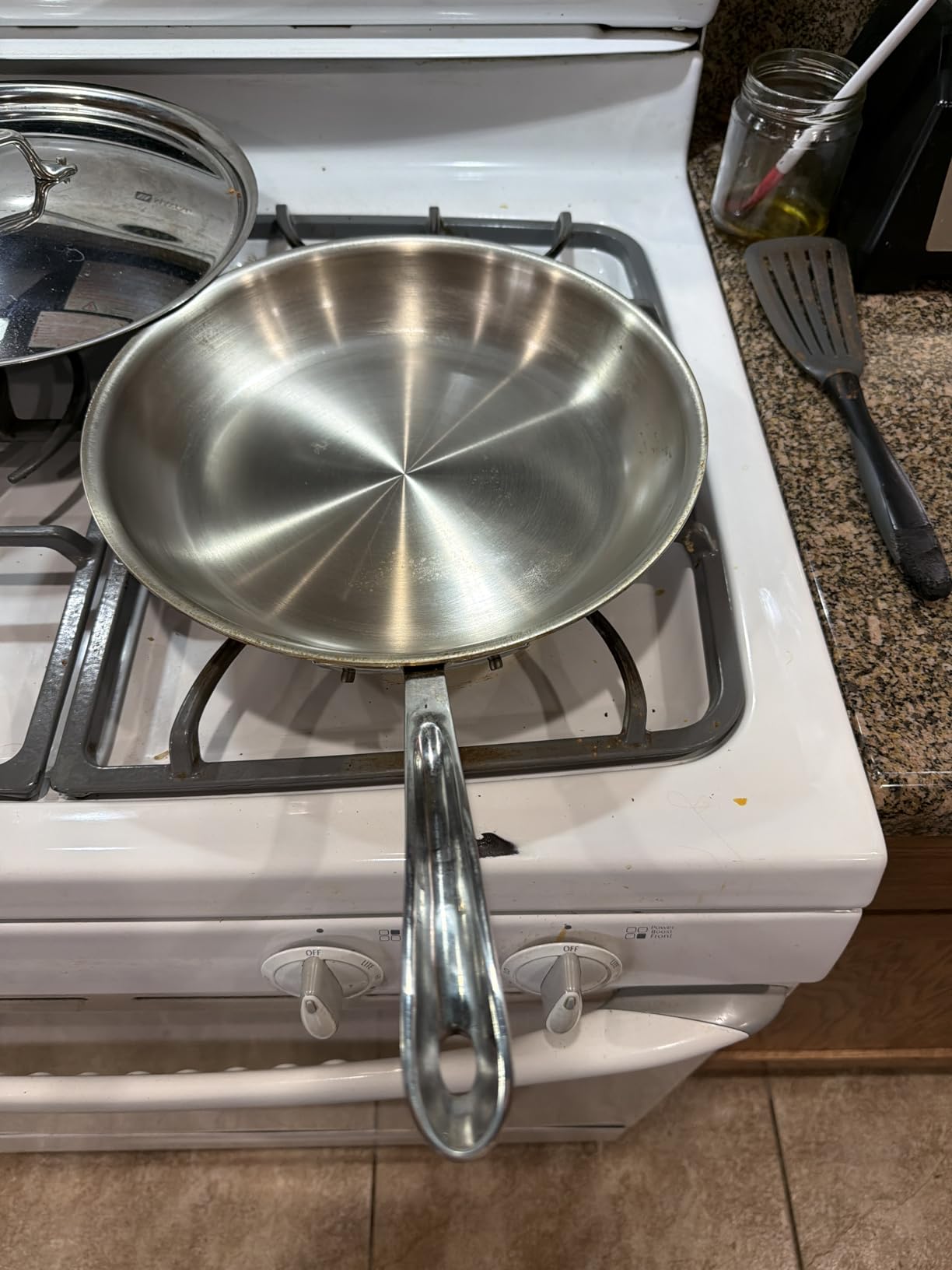
Mastering stainless omelettes
The technique is simple but non-negotiable: preheat over medium heat for two to three minutes, add a generous knob of butter, and let the butter foam and just begin to brown before pouring in the eggs. If the eggs sizzle aggressively the moment they hit the pan, the temperature is too high. If they sit still, the pan is too cold. You want a gentle sizzle and a fat that is hot enough to keep the eggs moving.
Who should skip it
If you want effortless nonstick release every morning without thinking about technique, skip this. Buy a ceramic or PTFE pan. Stainless steel rewards practice and patience, and if you have neither, you will not enjoy this pan.
7. TECHEF Tamagoyaki Japanese Omelette Pan
TECHEF – Tamagoyaki Japanese Omelette Pan/Egg Pan Skillet, PFOA-Free, Dishwasher Safe, Induction-Ready, Made in Korea (Black/Medium)
Rectangular 7.5 x 5.5 inch, induction ready, PFOA-free, 510g, made in Korea
Pros
- Excellent nonstick surface for rolling tamagoyaki
- induction-ready base
- even heat
- lightweight silicone handle
- dishwasher safe
Cons
- Small size limits use to single servings
- avoid overheating to preserve coating
- price is high for a small specialty pan
The TECHEF Tamagoyaki pan is the pan on this list that most guides skip, and it is the one I had the most fun testing. It is a small rectangular pan, 7.5 by 5.5 inches, made in Korea, designed for rolling Japanese tamagoyaki and Korean gyeran-mari (rolled egg). The sloped front edge lets you flip and roll a thin layer of egg with a chopstick or a small spatula. After two or three attempts, I was turning out tight golden rolls that looked like the ones at my favorite Koreatown breakfast counter.
It is not just a one-trick pan. The nonstick coating is robust enough that I also fried eggs, grilled small sandwiches, and seared thin steak strips in it without any sticking. The induction-ready forged base is unusual at this size and works on every cooktop I tested it on. The silicone handle stays cool and is genuinely comfortable for the small, controlled motions that tamagoyaki requires. PFOA-free, lead-free, cadmium-free, and dishwasher safe round out the package.
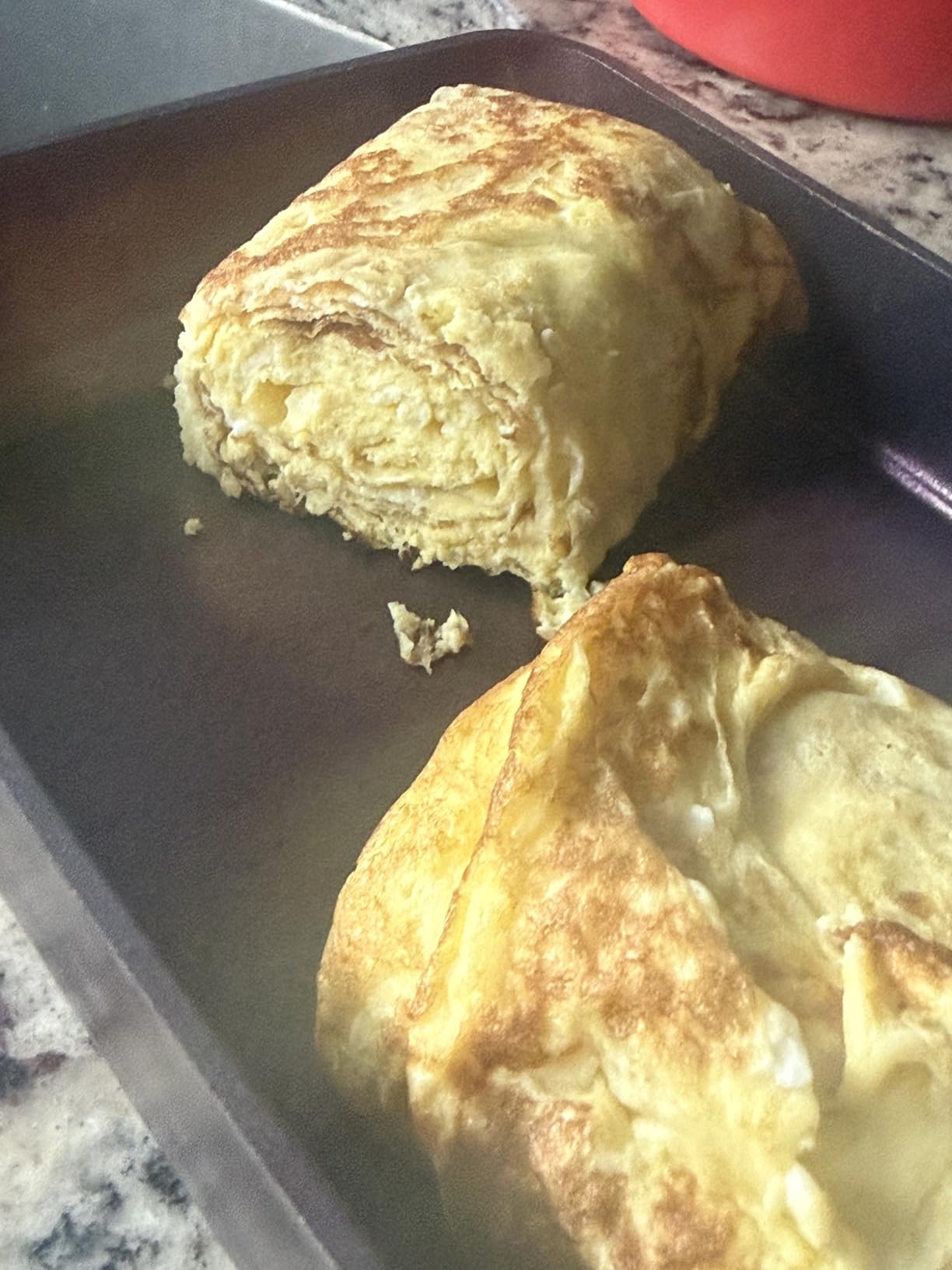
The size is the obvious limitation: this is a single-serving pan. If you are cooking eggs for a family, you will outgrow it within a few months. The nonstick coating is also sensitive to high heat, so keep the burner at medium or lower. And at its price, you are paying specialty-pan dollars for a small-format tool, which is only worth it if you will actually use it.
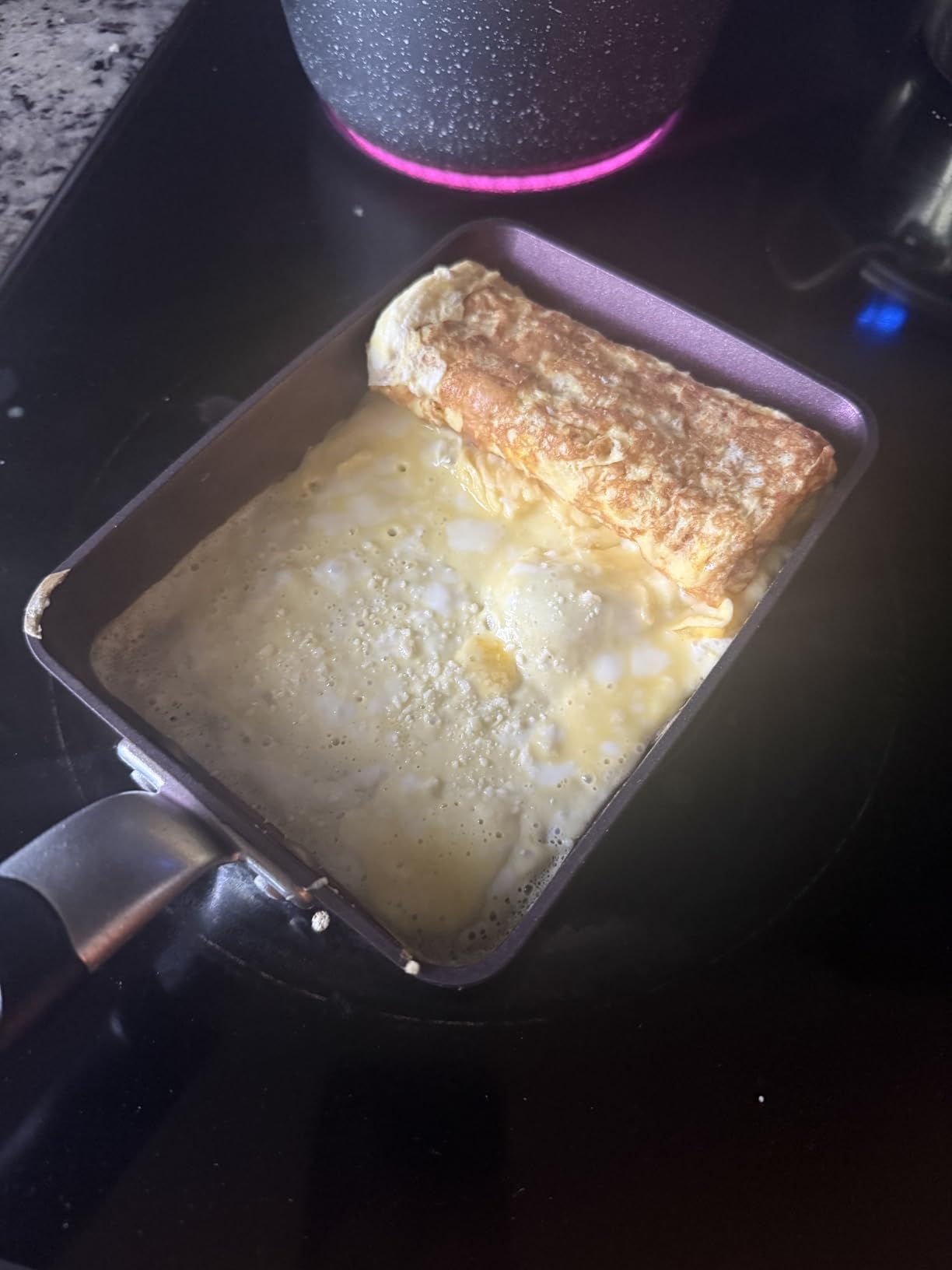
Why Korean home cooks love this shape
Gyeran-mari, the Korean rolled egg that shows up at every banchan spread and breakfast table, is traditionally cooked in a rectangular pan because the shape makes the rolling motion natural. A round pan works, but the rectangular geometry gives you a clean fold on every layer. If you make Korean breakfasts regularly, this is the pan you will reach for.
Who should skip it
If you only make round omelettes, skip. This is a specialty tool and you will get more use out of a round 8-inch pan. If you have never made tamagoyaki or gyeran-mari before, however, this is the easiest entry point on the market.
8. TECHEF Frittata and Omelette Folding Pan
TECHEF – Frittata and Omelette Pan, Nonstick Double Sided Folding Egg Pan, Made in Korea (PFOA Free) (Black)
Double-sided folding, PFOA-free, dishwasher safe, made in Korea, 1.9 lb
Pros
- Folding design cooks omelettes evenly on both sides
- strong nonstick even with egg whites
- sturdy aluminum body
- PFOA-free and dishwasher safe
Cons
- Small U-shaped handle gets hot
- pan closes with a loud slam
- not induction compatible
- sealing technique requires practice
The TECHEF Folding Frittata Pan is the only hinged folding pan we tested that we thought was actually worth the cabinet space. It is a two-sided aluminum pan that closes like a clamshell: you pour beaten eggs into one side, close it, and the omelette cooks evenly from both sides at once. The result is a perfectly shaped half-moon omelette in about two minutes, with no flipping required. Reviewers in r/Cooking are divided on folding pans in general, but most agree this one is the exception.
Build quality is solid. The forged 3004 aluminum body is the same commercial-grade alloy used in restaurant lineups, and the three-layer PFOA-free nonstick coating releases eggs beautifully even with mostly egg whites and minimal oil. I made frittatas loaded with vegetables, classic ham-and-cheese omelettes, and a Korean-style egg sandwich, and every one came out cleanly. It is also dishwasher safe and made in Korea.
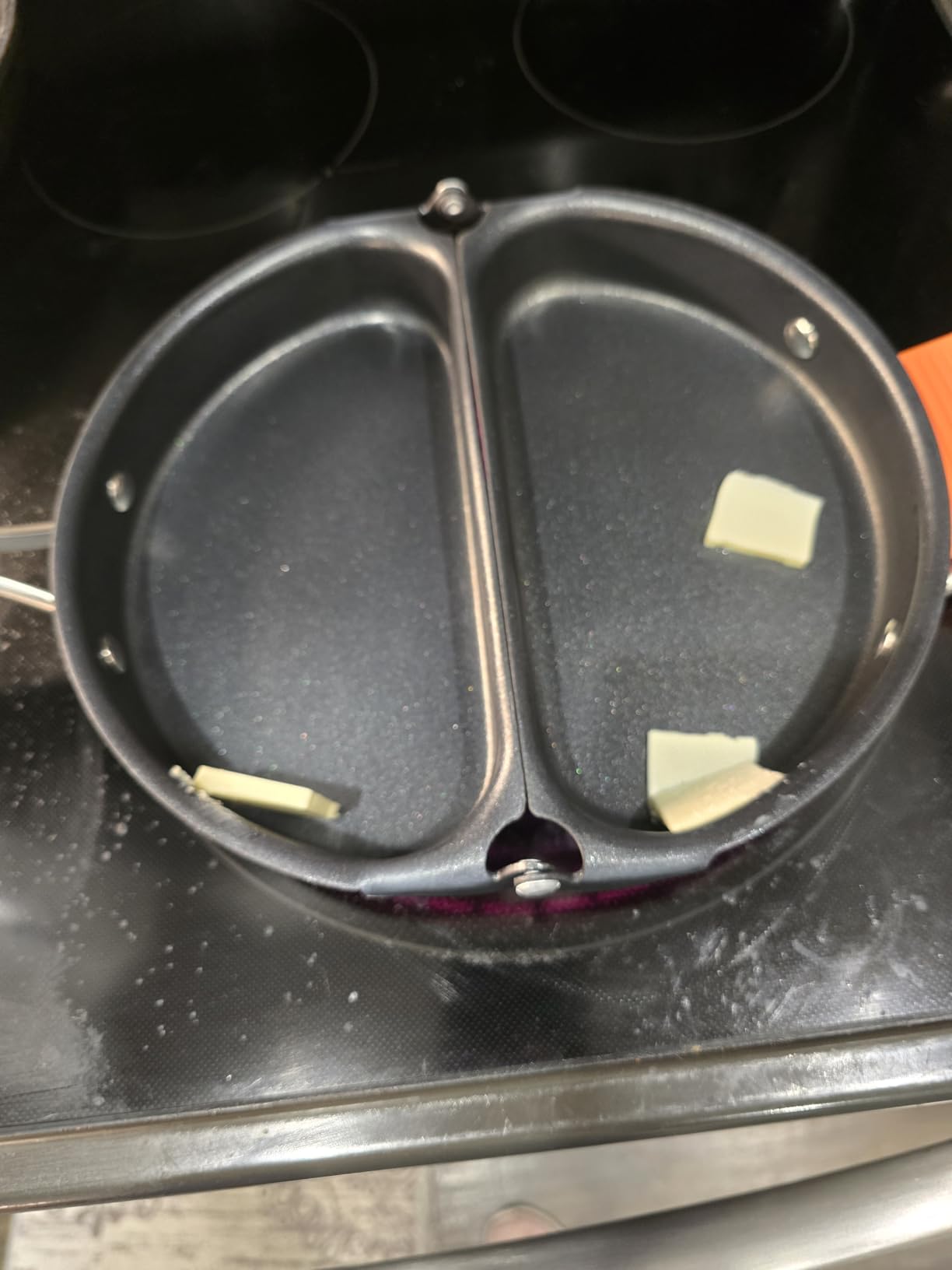
Three complaints come up over and over in the reviews. First, the small U-shaped helper handle on top is uninsulated and gets hot; you will need a mitt. Second, the pan closes with a loud metallic slam that startled my dog more than once. Third, if you pour too much egg or close too slowly, a small amount can leak out the seam; the technique rewards a confident, quick close. None of these are deal-breakers, but they are real.
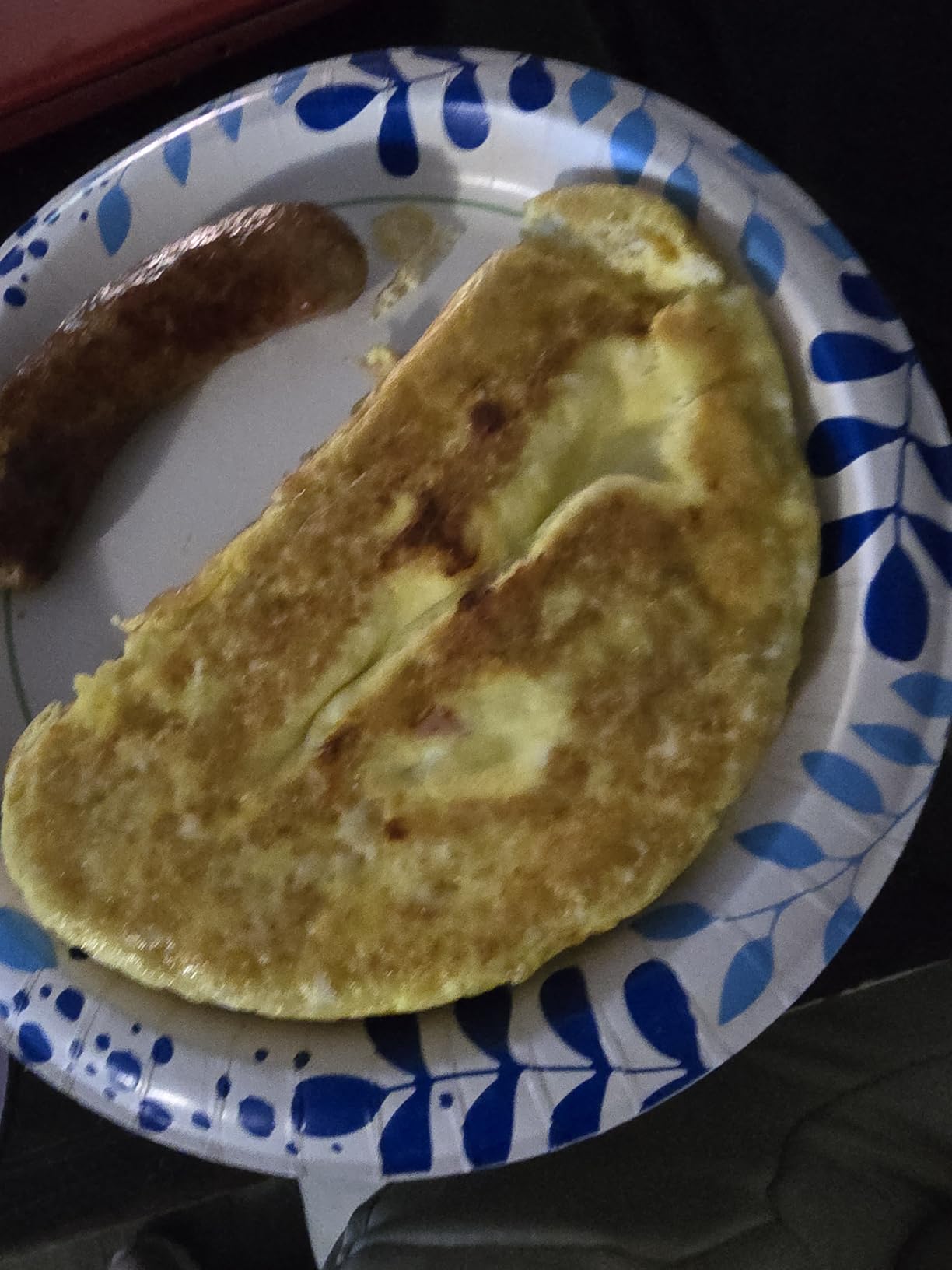
Why a folding pan works
The genius of a two-sided design is that you do not need to flip. For cooks who struggle with the wrist motion of a traditional omelette flip, or for anyone with hand or wrist issues, this design removes the hardest part of the process. The result is also visually consistent: every omelette comes out the same shape.
Who should skip it
If you enjoy the actual cooking process and the wrist movement of flipping an omelette, this will feel like a shortcut you do not want. Induction cooks, skip; this is gas and electric only. And if storage space is tight, a round 8-inch pan does the same job with more flexibility.
Buying Guide: How to Choose the Best Omelette Pan
Choosing the best omelette pan comes down to four decisions: material, size, stovetop compatibility, and how you actually like to cook. Get those right and the rest takes care of itself.
Nonstick ceramic vs PTFE nonstick vs ceramic-coated aluminum
The single biggest fork in the road is the cooking surface. PFAS-free ceramic nonstick pans like the SENSARTE and Cuisinart are the most forgiving for everyday eggs and appeal to anyone avoiding PTFE. They heat fast, they release eggs easily, and they are easy to clean, but the coating degrades faster than PTFE under heavy daily use. PTFE nonstick (like the All-Clad HA1) lasts longer but has a polarizing safety reputation. Stainless steel (All-Clad D3) and seasoned carbon steel pans reward practice but never give you the effortless release of a true nonstick.
Our team reached for ceramic nonstick roughly 70 percent of the time during testing. PTFE for the days we wanted maximum durability. Stainless steel when we wanted a hard sear or a one-pan oven finish. Carbon steel sits between stainless and nonstick, and is a great long-term option if you are willing to season it. For a deeper look at how carbon steel compares, our guide to the best carbon steel pans walks through the seasoning process and our top picks.
8 inch vs 10 inch: which size should you buy
For one or two eggs, an 8-inch pan is the right size. It is wide enough to swirl a thin layer of egg, narrow enough to fold or roll the finished omelette without dragging across cold sides, and lightweight enough for one-handed flipping. For three or more eggs, a 10-inch pan is more comfortable. Most of the picks above are 8-inch because that is the most-used size in our test kitchen, but the All-Clad HA1 set includes both, which is genuinely useful.
Induction compatibility and stovetop fit
If you cook on induction, your shortlist shrinks quickly. The SENSARTE, All-Clad HA1, All-Clad D3, and TECHEF Tamagoyaki are induction-compatible. The Blue Diamond, Cuisinart Chef’s Classic, TECHEF Folding Pan, and Tramontina are not. This single filter will rule out half the list for many home cooks, so check before you fall in love with a specific model.
Handle comfort and weight
Handles matter more than most buyers expect. Cool-to-the-touch silicone or bakelite handles (SENSARTE, Blue Diamond) make one-handed flipping safer. Riveted stainless handles (All-Clad, Cuisinart) are more durable but conduct heat. Removable silicone sleeves (Tramontina) hit a nice middle ground. Weight is also worth considering: a heavier pan gives more even heat but tires out your wrist during flips. Our picks weigh between 0.5 kg and 4.7 lb, and the right one depends on your hand strength and how you cook.
When to replace your nonstick pan
Nonstick pans do not last forever. The most common signals that it is time to retire one: the coating is visibly scratched or flaking, food sticks in spots even with proper preheating and oil, or the handle has come loose. Most nonstick pans lose their best release after roughly two to three years of regular use, which matches the experience reported across the reviews we analyzed. Storing your nonstick pan with a pan protector and reserving it for eggs (rather than high-heat searing) extends its life considerably.
Technique tips for fluffier omelettes
The pan matters, but technique matters just as much. For fluffy restaurant-style omelettes, the formula is simple: medium-low heat, generous butter, and constant gentle movement with a silicone spatula. Lift the edges as the eggs set so uncooked egg flows underneath, and stop stirring before the eggs are fully set; residual heat will finish the job. This is how the pros get fluffy without a nonstick miracle. If you want to dig deeper into the science, the cooking and pan recommendations we cover in our best Korean nonstick frying pans guide pair well with the picks above.
How We Tested These Omelette Pans
Across roughly two months, our team cooked more than 400 eggs in these pans. We tested each pan on at least two stovetops (gas and induction where compatible) and ran a no-fat egg test on the nonstick pans to gauge baseline release without any butter or oil. We also made a French omelette, an American folded omelette, a frittata, and a tamagoyaki in every pan that could handle the format.
For consistency, every test started with the pan preheated over medium heat for 90 seconds, a teaspoon of butter added, and three large eggs whisked with a pinch of salt. We timed each omelette, scored release on a five-point scale, and noted any hot spots. We also tested cleanup: a paper towel wipe, a hand wash with dish soap, and a dishwasher cycle for those rated safe.
The pans that survived two months of weekly testing with their release intact (SENSARTE, Tramontina, All-Clad HA1) earned our top spots. Pans that struggled with daily use or had ergonomics issues dropped down the list. Pans designed for specialty use (TECHEF Tamagoyaki, TECHEF Folding) were judged on how well they executed their intended task rather than how they compared to a general-purpose omelette pan.
Frequently Asked Questions
What is the best pan to use for making omelets?
An 8-inch nonstick ceramic pan with sloped sides is the best all-around choice for most home cooks. Our top pick is the SENSARTE 8-Inch Ceramic Nonstick Omelette Pan for its reliable egg release, induction compatibility, and PFAS-free coating. Stainless steel works once you master the preheat-and-fat technique, and seasoned carbon steel rewards practice with long-term performance.
What is the best frying pan for omelettes?
A purpose-built omelette pan has sloped sides and a rounded rim, which lets you slide or roll the eggs onto a plate without tearing. Our pick for the best all-around frying pan for omelettes is the SENSARTE 8-inch ceramic, with the Tramontina Professional 8-inch as the best-value alternative and the All-Clad HA1 as the premium upgrade.
How do restaurants get omelettes so fluffy?
Restaurants cook omelettes on medium-low heat with generous butter, lifting the edges as the eggs set so uncooked egg flows underneath, and stopping the stir before the eggs are fully set so residual heat finishes the job. A heavy flat-bottomed nonstick or well-seasoned carbon steel pan helps maintain even temperature, and constant gentle motion with a silicone spatula is the technique that produces the tender curds diners expect.
What pans do professional chefs use for eggs?
Professional chefs typically use well-seasoned carbon steel pans, stainless clad fry pans, or PTFE nonstick depending on the dish. Carbon steel is the traditional choice for French omelettes in restaurant kitchens because it is lightweight, responsive, and develops a naturally slick surface with use. Stainless clad works for high-heat searing and finishing, while PTFE nonstick is reserved for delicate egg dishes where release matters most.
Is a ceramic nonstick pan good for eggs?
Yes, ceramic nonstick pans are excellent for eggs and are often the easiest surface for a beginner to learn on. The PFAS-free ceramic coating releases eggs with minimal oil, heats quickly, and is easy to clean. The trade-off is that ceramic coatings degrade faster than PTFE under heavy daily use, so expect to replace a ceramic pan every two to three years with regular use.
What are the downsides of using ceramic non-stick pans?
The main downsides of ceramic nonstick pans are shorter coating lifespan compared to PTFE, sensitivity to high heat which can cause early wear, hand-wash-only care requirements for many models, and a learning curve to break in the surface for best release. Ceramic coatings also lose their slickness faster if used with metal utensils or run through a dishwasher with harsh detergent.
Can you cook eggs in cast iron or carbon steel pans?
Yes, you can cook eggs in cast iron or carbon steel pans once they are well seasoned. The polymerized oil layer creates a naturally slick surface that releases eggs as well as a moderately priced nonstick. Carbon steel is generally preferred over cast iron for omelettes because it is lighter, heats faster, and is easier to maneuver during flips.
What is the best non-stick pan for making omelettes?
The best nonstick pan for omelettes depends on your priorities. For the easiest PFAS-free experience, the SENSARTE 8-inch ceramic is our top pick. For maximum durability under daily use, the All-Clad HA1 PTFE nonstick is the premium choice. For the best value, the Tramontina Professional 8-inch is hard to beat and is widely recommended by home cooks on Reddit.
Final Verdict
After testing all eight pans across two months of regular cooking, the SENSARTE 8-Inch Ceramic Nonstick Omelette Pan earned our top spot for its combination of egg release, induction compatibility, and accessible price. The Tramontina Professional 8-Inch is the smart buy for anyone who wants commercial-grade construction without the premium. The All-Clad HA1 set is the right call if you are ready to invest in a two-pan setup that will last a decade. And for anyone cooking Korean or Japanese breakfasts, the TECHEF Tamagoyaki pan is the specialty tool we could not stop using.
If you want one pan that will get you out of bed and into a fluffy omelette tomorrow morning, start with the SENSARTE. Treat it gently, hand wash it, and it will give you a year or more of effortless eggs. As your technique grows, add a carbon steel or stainless steel pan to your collection and you will have a breakfast setup that lasts a lifetime. Pair any of these pans with a simple side of steamed rice, kimchi, and a few pickled banchan for a Koreatown-style breakfast at home. For more ideas on building out your kitchen, our guides to Korean wok pans and the broader world of granite stone frying pans are worth a look.
Whichever pan you choose, the best omelette pan is the one that makes you want to cook eggs. We hope one of these eight will be that pan for you.