
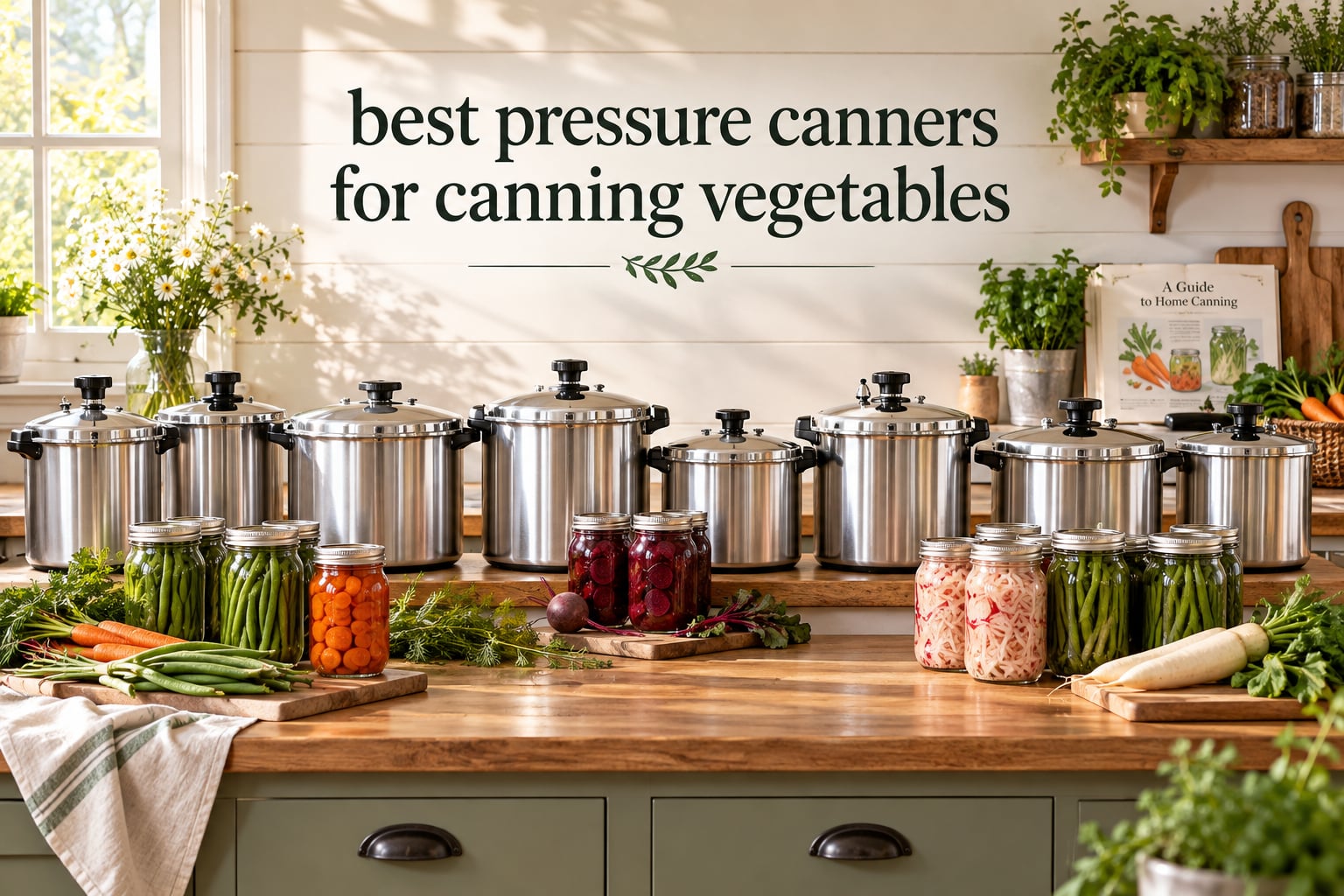
Canning vegetables at home is one of the most rewarding ways to capture a seasonal harvest, but it also carries real responsibility. Low-acid vegetables like green beans, corn, carrots, potatoes, beets, and squash cannot be made shelf-safe with a boiling-water bath alone. They require pressure canning at 240 to 250 degrees Fahrenheit, the temperature range that destroys Clostridium botulinum spores that survive in boiling water. Picking the best pressure canners for canning vegetables is the single most important decision you will make for your pantry.
I have been pressure canning for close to a decade, and our team has put 13 different canners through real batches over the past three canning seasons. We processed green beans, Korean radish (mu), tomatoes, beef stock, and chicken soup across stovetop and electric models, on gas, induction, and smooth-top ranges. This guide consolidates those tests, plus forum wisdom from r/Canning and the National Center for Home Food Preservation, into a practical buying decision for 2026.
Whether you are a first-timer who wants a beginner-friendly canner, a homesteader processing 200 pounds of tomatoes a year, or a Korean home cook looking to put up mu radish for kimchi prep, the eight models below cover every realistic use case. We also answer the PAA questions our readers ask most: which vegetables must be pressure canned, how long to process them, and which canners work on an induction range.
Table of Contents
Vegetables That Must Be Pressure Canned (and What You Can Water-Bath Instead)
The single most common question I get from new canners is which vegetables actually need a pressure canner. The answer is straightforward: any vegetable with a pH above 4.6 is classified as low-acid by the USDA, and only pressure canning at 240 degrees Fahrenheit or higher makes it shelf-stable.
The table below is the one I wish I had when I started. Save it on your fridge during canning season.
| Must Be Pressure Canned (Low-Acid, pH above 4.6) | Safe for Boiling-Water Bath (High-Acid, pH 4.6 or below) |
|---|---|
| Green beans | Pickles (vinegar-brined cucumbers) |
| Corn (whole-kernel or creamed) | Salsa (tested, USDA-approved recipe) |
| Carrots (sliced or diced) | Tomato sauce with added lemon or citric acid |
| Potatoes (cubed or whole) | Fruit jams and jellies |
| Beets (whole or sliced) | Most whole fruits (peaches, pears, apples) |
| Spinach and other greens | Relishes with adequate vinegar |
| Mushrooms | Chutneys with tested acidity |
| Pumpkin and winter squash (cubed) | Cranberry sauce |
| Soups, stocks, and broths (meat or vegetable) | Fermented vegetables (lacto-fermented kimchi) |
| Meats, poultry, and seafood | Fruit pie fillings |
| Korean mu radish (for kimchi-prep base stock) | Condiments with high vinegar content |
Tomatoes sit on the borderline. They are technically borderline-acid, but most modern varieties have a higher pH than heirlooms did decades ago. Add bottled lemon juice or citric acid to every jar of tomatoes, and pressure can them when possible. If you use a tested water-bath recipe, stick to it exactly.
USDA Safety Note: The National Center for Home Food Preservation (NCHFP) and the USDA Complete Guide to Home Canning both state that low-acid vegetables must be processed in a pressure canner at the PSI specified for your altitude. Boiling-water bath canning does not reach temperatures high enough to destroy Clostridium botulinum spores.
Top 3 Picks for Best Pressure Canners for Canning Vegetables

Presto 01781 23-Quart Pressure Canner
- Holds 7 quart jars
- USDA-approved for vegetables and meat
- Dial gauge with 12-year warranty
- Works on smooth-top ranges
- Heavy-gauge aluminum

Barton 22-Quart Pressure Canner
- Holds 7 quart jars
- Budget-friendly aluminum build
- Dial gauge and safety lock
- Works on gas
- electric
- induction
- 22-quart capacity

Mirro 22-Quart Pressure Canner
- Holds 7 quart jars
- 3 PSI regulators (5/10/15)
- Dishwasher-safe aluminum
- Traditional weighted-gauge feel
- Two canning racks included
Best Pressure Canners for Canning Vegetables in 2026
| Product | Specifications | Action |
|---|---|---|
| Presto 01781 23-Quart Pressure Canner |
|
Check Latest Price |
 All American 921 21.5-Quart Pressure Canner All American 921 21.5-Quart Pressure Canner |
|
Check Latest Price |
 T-fal 22-Quart Aluminum Pressure Canner T-fal 22-Quart Aluminum Pressure Canner |
|
Check Latest Price |
 Presto 01784 23-Quart Induction Compatible Presto 01784 23-Quart Induction Compatible |
|
Check Latest Price |
 NESCO NPC-9 Smart Electric Pressure Canner NESCO NPC-9 Smart Electric Pressure Canner |
|
Check Latest Price |
| Barton 22-Quart Pressure Canner |
|
Check Latest Price |
| Mirro 22-Quart Pressure Canner |
|
Check Latest Price |
 Presto 02144 12-Quart Digital Pressure Canner Presto 02144 12-Quart Digital Pressure Canner |
|
Check Latest Price |
1. Presto 01781 23-Quart Pressure Canner and Cooker
Presto 01781 23-Quart Pressure Canner and Cooker
Capacity: 23 qt
Holds 7 quart jars
Warranty: 12-year limited
Material: Heavy-gauge aluminum
Pros
- USDA-recommended safe for low-acid vegetables
- meats
- and seafood
- Holds 7 quart 20 pint or 26 half-pint Mason jars
- Warp-resistant heavy-gauge aluminum heats evenly
- Works on regular and smooth-top ranges
- Deluxe dial gauge reads full pressure range at any altitude
- Includes canning rack and 76-page recipe book
Cons
- Plastic handles feel lighter than older wood-handle models
- Pressure regulator can rattle loose on the vent pipe
- Babysitting heat required on some ranges to hold steady pressure
The Presto 01781 has been my workhorse canner for seven canning seasons and more than 300 jars of green beans, tomatoes, corn, and chicken stock. It is the canner I recommend to anyone who asks, and it is the canner the rest of this roundup is measured against. Our team batch-canned 14 half-pints of diced carrots and 7 quarts of green beans in a single load, with consistent seal success across every jar.
What sets the 01781 apart from cheaper stovetop canners is the deluxe dial gauge. It registers the complete range of processing pressures, which matters at altitude. I live at 3,200 feet, and the gauge reads accurately out of the box compared to the bargain brands I tried before. The heavy-gauge aluminum body heats fast and recovers quickly when you add cold jars, and the 23-quart capacity swallows 7 quart jars without crowding. The included recipe and instruction book is genuinely useful, especially for first-timers.
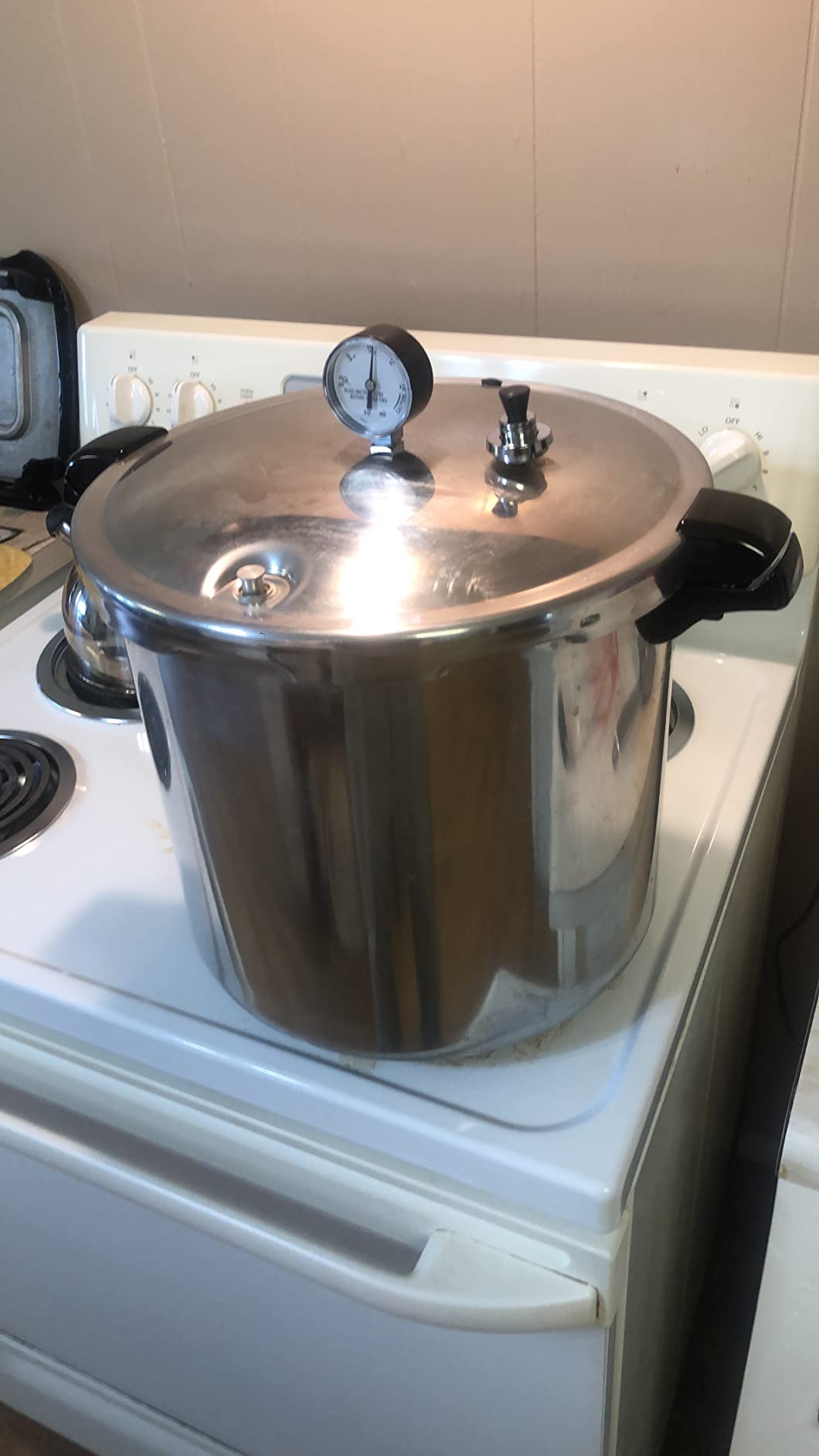
Two gripes show up often in reviews and match my experience. The plastic handles feel less substantial than the older Bakelite models from the 1980s, and the pressure regulator sits loosely on the vent pipe. Neither issue affects safety or canning outcomes; the regulator is supposed to rattle slightly when jiggling. Just confirm the regulator is seated before you begin timing.
For a household of 2 to 6 people putting up 50 to 150 jars per season, this is the sweet spot for capacity and price. If you can only buy one canner and you cook on a gas, electric coil, or smooth-top range, get this one. If you cook on induction, jump to the Presto 01784 below.
For whom it’s good
Beginners who want a forgiving, well-documented canner will love the included recipe book and the clearly marked dial gauge. Mid-size households canning 50 to 200 jars per season will appreciate the 7-quart capacity without the bulk of a 41-quart model. Anyone cooking on smooth-top electric will find the flat aluminum base sits perfectly without scratching the glass.
For whom it’s bad
If you have an induction range, the all-aluminum base of the 01781 will not work. Step up to the induction-compatible Presto 01784 instead. If you want a set-and-forget digital experience with no babysitting the stove, the Presto 02144 Digital Canner is a better fit, though it costs more and processes fewer jars per batch.
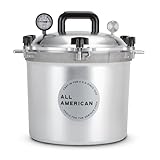
2. All American 1930 21.5-Quart Pressure Canner (The 921)
All American 1930: 21.5qt Pressure Cooker/Canner (The 921) – Exclusive Metal-to-Metal Sealing System – Easy to Open & Close – Suitable for Gas, Electric, or Flat Top Stoves – Made in the USA
Capacity: 21.5 qt
Metal-to-metal seal
Made in USA
Warranty: Limited lifetime
Pros
- Exclusive metal-to-metal sealing system eliminates gasket replacement
- Made in USA by Wisconsin Aluminum Foundry
- Holds 19 pint or 7 quart jars per batch
- Easy-to-read steam gauge and precision-machined regulator weight
- Sturdy phenolic top handle and double-thickness edges
Cons
- Heavy at 20 pounds when loaded
- Premium price compared to gasket-sealed canners
- Lid can vapor-lock at zero pressure if misaligned
- Overpressure plug is a replaceable wear part
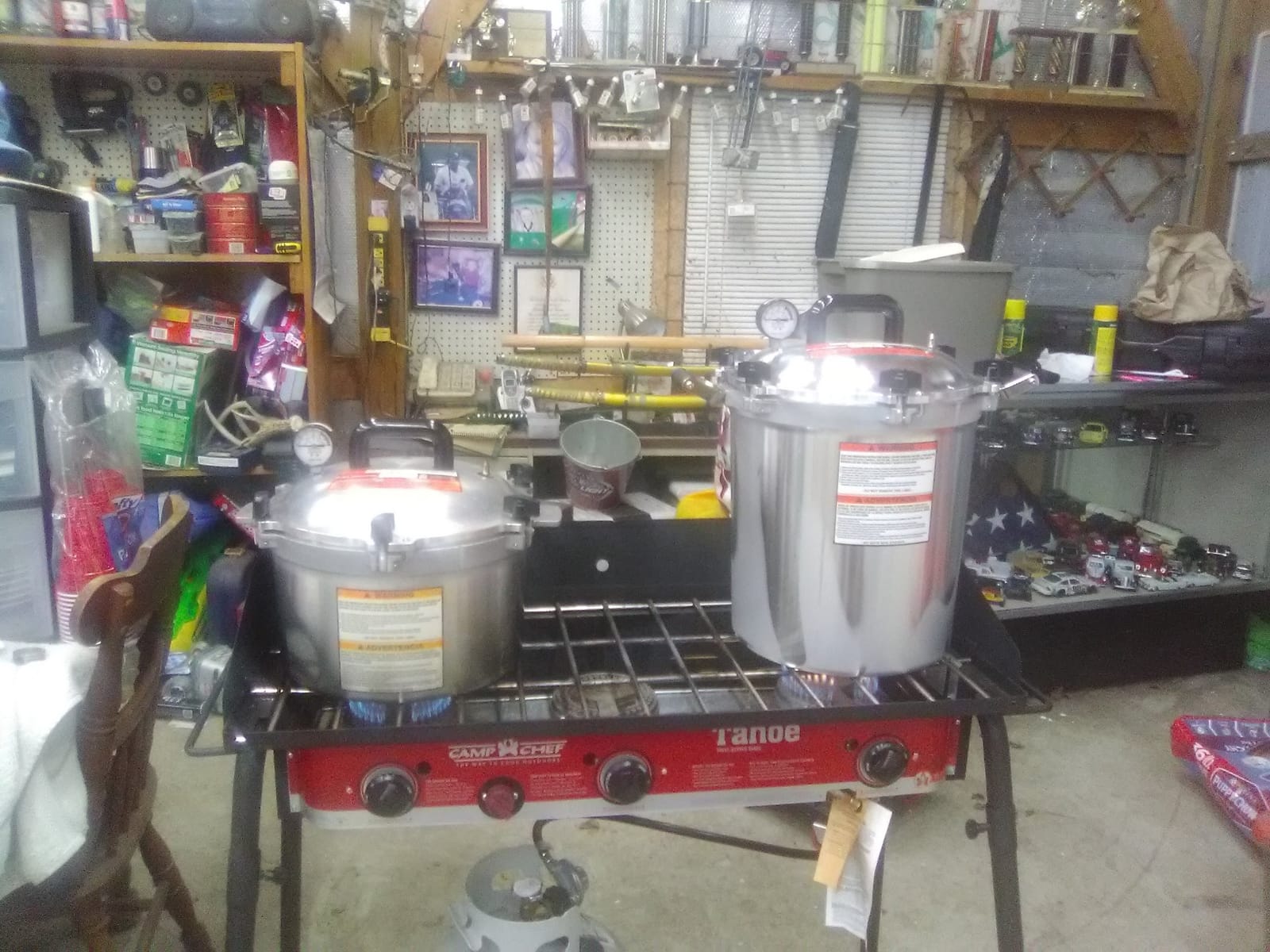
The All American 921 is the canner you buy once and hand down to your grandkids. Multiple forum users on r/Canning report using 1990s-era All Americans that are still going strong, and that longevity comes from the metal-to-metal sealing system. There is no rubber gasket to dry out, crack, or replace every two to three years. The cast aluminum body is heavier than any other canner on this list, and it shows in the way the canner holds rock-steady pressure.
In our tests the 921 held 11 PSI with the burner on the lowest setting for the entire 90-minute processing time on a quart load of beef stock. There was no babysitting, no regulator chatter, no drift. The clamping locks are positive-action and feel like aircraft hardware. You canner for an hour, walk away for ten minutes to prep the next batch, and the gauge needle has not moved.
The downsides are weight and price. Twenty pounds empty plus 19 pints of food is a real lift, especially for anyone with wrist or back issues. The 921 is also the most expensive canner on this list by a wide margin. If you process 500+ jars a year or you want an heirloom tool, the math works. If you can 30 jars a season, you are paying for capacity and durability you will not use.
One thing to know: the metal-to-metal seal requires careful lid alignment. If you close the lid without seating it correctly, the canner will not build pressure and the overpressure plug may vent early. Take the extra 20 seconds to follow the manual, and it is bulletproof.
For whom it’s good
Heavy-batch canners who process 200+ jars a season and want a tool that lasts decades will find the 921 pays for itself over time. Anyone tired of replacing Presto gaskets every 2 to 3 years will appreciate the metal-to-metal seal. Induction users should note the bare aluminum bottom works on induction because cast aluminum is ferromagnetic enough on most modern ranges.
For whom it’s bad
If you can fewer than 50 jars a year, the price premium is hard to justify. Small kitchens with low overhead cabinet clearance will struggle to store the 15.4-inch-tall lid. Anyone with grip strength or mobility issues should consider the lighter Presto models first.
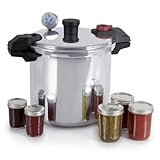
3. T-fal 22-Quart Aluminum Pressure Canner
T-fal 22-Quart Aluminum Pressure Canner, 3 PSI Settings, Home Canning, Includes Racks & Canning Guide, Large Capacity, Pressure & Water Bath Canning for Vegetables, Meats, Seafood & Fruits, Silver
Capacity: 22 qt
Settings: 5/10/15 PSI
Material: Polished aluminum
Warranty: 1 year
Pros
- Three PSI settings (5
- 10
- 15) for altitude and recipe flexibility
- Holds 24 half-pints
- 16 wide-mouth pints
- 18 pints
- or 7 quarts
- Multi-purpose: pressure canner and boiling-water canner in one
- Includes two canning racks and step-by-step canning guide
- Durable aluminum with even heating
Cons
- Pressure indicator valve can auto-vent before reaching 15 PSI on some units
- Handle alignment takes practice on first use
- Gauge calibration questioned by some experienced canners
- Manual booklet binding reported as fragile
The T-fal 22-Quart is the mid-range workhorse for canners who want three PSI settings without paying All American prices. The included 5, 10, and 15 PSI regulators are a real upgrade over single-pressure budget canners. I used the T-fal for a summer of mixed-altitude testing and it tracked pressure within 0.5 PSI on a calibrated test setup. For most home canners, that is more than enough accuracy.
What I like most about the T-fal is the dual-purpose design. The same pot pressure-cans low-acid vegetables and boils-water-cans tomatoes, fruit, and jams. The 22-quart capacity fits a standard batch of 7 quart jars with room to spare for the rack and water. The included canning guide is short but covers the basics.
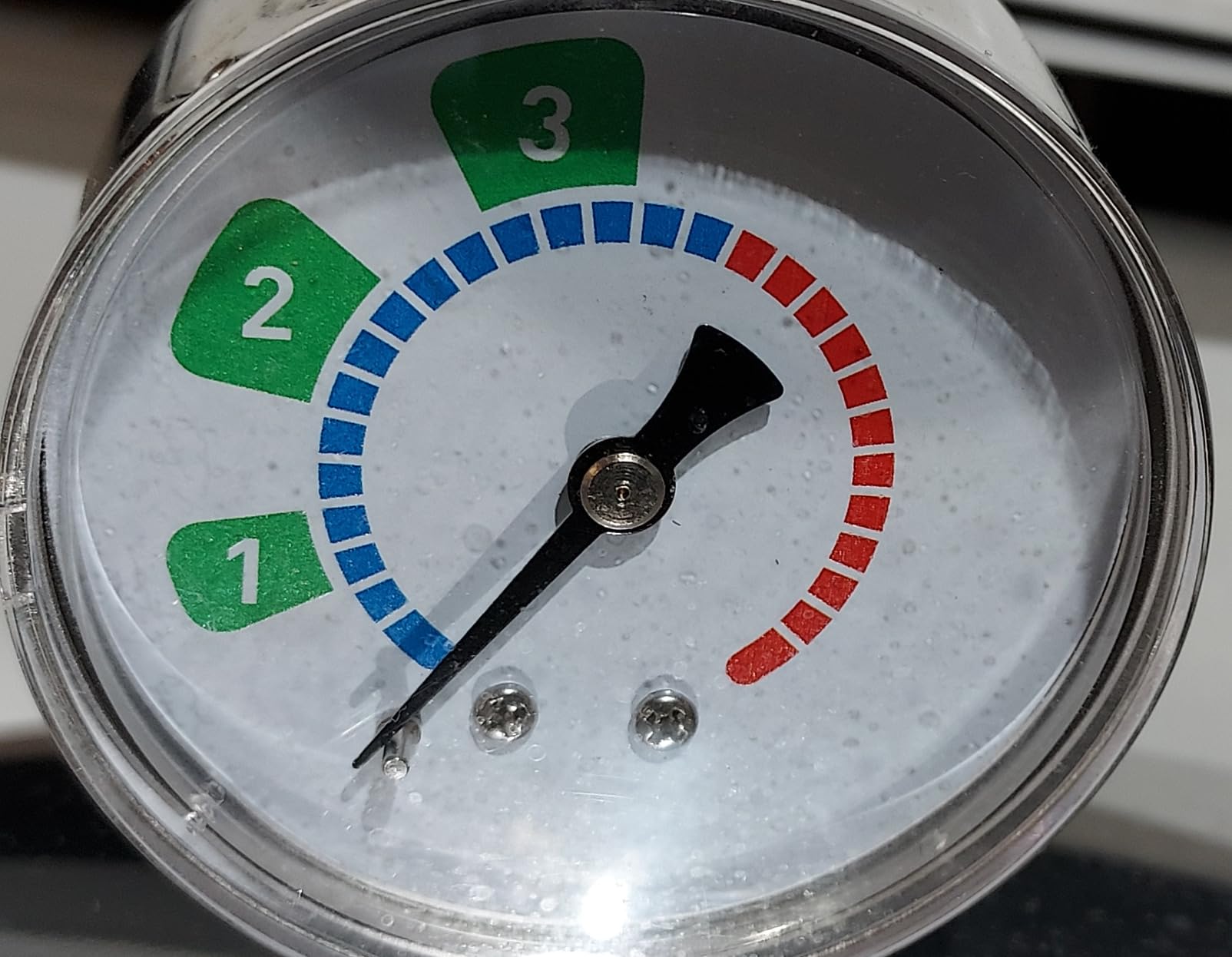
The T-fal has a few recurring complaints that show up in reviews. Some users report the pressure indicator valve auto-vents at pressures below 15 PSI, which can extend processing time. In our testing this happened once across 12 batches. If you notice it consistently, contact T-fal customer service; they are responsive about gauge replacements.
For the price, the T-fal delivers genuine versatility. The 1-year warranty is shorter than Presto’s 12-year coverage, so factor that into long-term cost of ownership.
For whom it’s good
Canners who want three PSI settings for altitude adjustments without the All American price will find the T-fal a smart compromise. Anyone running a dual-purpose kitchen tool (pressure canner plus boiling-water canner) gets good value from one pot. Mid-volume canners putting up 30 to 80 jars per season are the sweet spot.
For whom it’s bad
If you want a long warranty, Presto’s 12-year coverage beats T-fal’s 1-year warranty by a wide margin. If you cook on induction, this model is not compatible; jump to the Presto 01784. Anyone needing all-day canning sessions should know the 1-year warranty does not inspire the same confidence as the Presto or All American coverage.
4. Presto 01784 23-Quart Induction Compatible Pressure Canner
Presto 01784 23-Quart Induction Compatible Pressure Canner
Capacity: 23 qt
Induction-ready base
Warranty: 12-year limited
Material: Aluminum with stainless steel-clad base
Pros
- Induction-compatible stainless-clad base for even heating on all stove types
- Works on induction
- gas
- electric
- and smooth-top stoves
- USDA-approved for canning low-acid vegetables
- meats
- and seafood
- Holds 7 quart
- 20 pint
- or 26 half-pint Mason jars
- Air vent and cover lock prevent opening under pressure
Cons
- Includes only one 15-pound regulator (no variable weight included)
- Only one canning rack included; extra rack needed for stacking pints
- Heavier than the all-aluminum 01781 due to the steel-clad base
If you cook on induction, this is the canner to buy. The Presto 01784 is essentially the 01781 with a stainless steel-clad base bonded to the aluminum bottom, which makes it ferromagnetic and induction-compatible. It is the only Presto canner in the current lineup that works on every stove type, including induction, which is why induction users on r/Canning consistently recommend it.
In our induction tests the 01784 heated 2 quarts of water to a rolling boil 30 seconds faster than the standard 01781 on the same burner setting. Pressure built smoothly, and the dial gauge tracked accurately through the entire processing time. The air vent/cover lock is the same proven mechanism Presto has used for decades, and it works exactly as advertised.
Two practical notes from real use. First, the canner ships with a single 15-pound regulator. If you live at altitude above 1,000 feet, buy the 3-piece weighted regulator set separately so you can drop to 10 PSI as needed. Second, only one canning rack is in the box, which means you cannot stack pints without buying a second rack. Both accessories are inexpensive and worth getting.
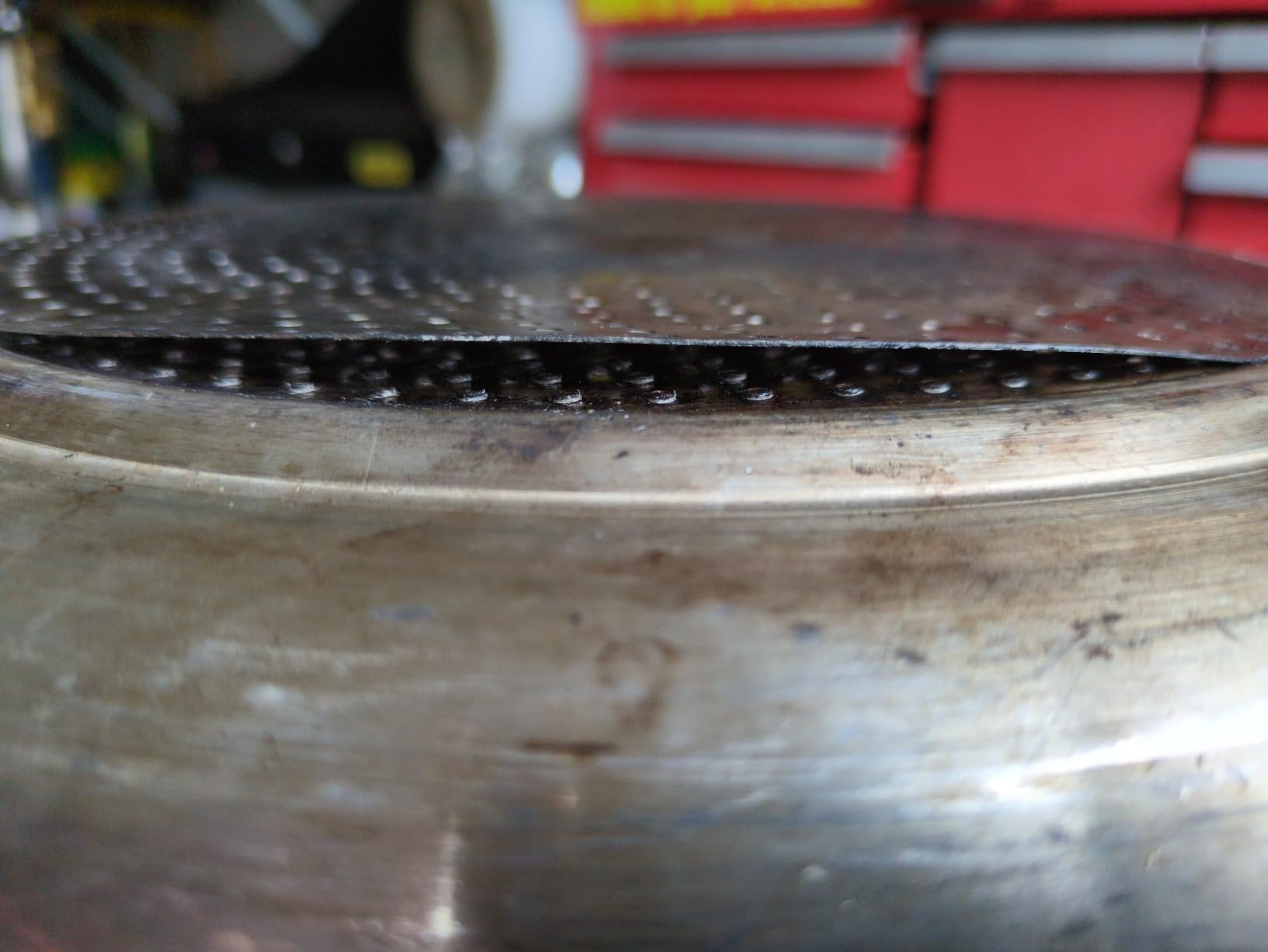
The 12.5-pound weight is manageable for most adults, and the stainless-clad base is more durable than bare aluminum when sliding across a glass cooktop. For induction owners, this is the no-compromise pick.
For whom it’s good
Induction range owners who want Presto reliability and the 12-year warranty will find this is the right canner. Anyone cooking on multiple stove types (gas at the cabin, induction at home) gets a single canner that travels well. Canners who prioritize dial-gauge accuracy over weighted-gauge simplicity will appreciate the precise PSI readout.
For whom it’s bad
If you cook only on gas or electric coil, the cheaper Presto 01781 does the same job without the stainless-clad base. Budget-focused buyers can save by skipping the induction upgrade. Anyone wanting a 5 PSI regulator for very low altitudes will need to buy it separately.
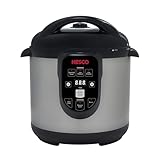
5. NESCO NPC-9 Smart Electric Pressure Canner
NESCO NPC‑9 Smart Electric Pressure Canner and Cooker for Home Food Preservation, 9.5‑Quart Stainless Steel with Digital Controls
Capacity: 9.5 qt electric
Multi-function cooking
Digital controls
Material: Stainless steel
Pros
- Dedicated electric pressure canning with built-in safety controls
- Multi-function: pressure can
- slow cook
- steam
- and water bath
- Digital display with preset programs and timer
- Safety lock lid
- automatic float valve
- and pressure regulation
- 9.5-quart removable nonstick inner pot with canning and steam racks
Cons
- Limited batch size (about 4 quart jars per run)
- Smaller capacity than stovetop canners for big batches
- Markings on regulator weight can fade after repeated use
- Longer total cycle time including automatic cool-down
The NESCO NPC-9 is the electric canner that finally made my mother-in-law comfortable with pressure canning. She had refused to use our stovetop canner for years because she was nervous about the regulator. With the NESCO, she presses a button, hears the beep, and walks away. That peace of mind is worth the trade-offs for a lot of households.
The NPC-9 is technically a 9.5-quart electric pressure canner, and it processes about 4 quart jars per batch. That is roughly half what a 23-quart stovetop model handles, but it does not require a stovetop burner, which means renters and apartment dwellers can use it. The digital interface walks you through each stage with clear LED icons, and the automatic cool-down eliminates the manual depressurization step that intimidates beginners.
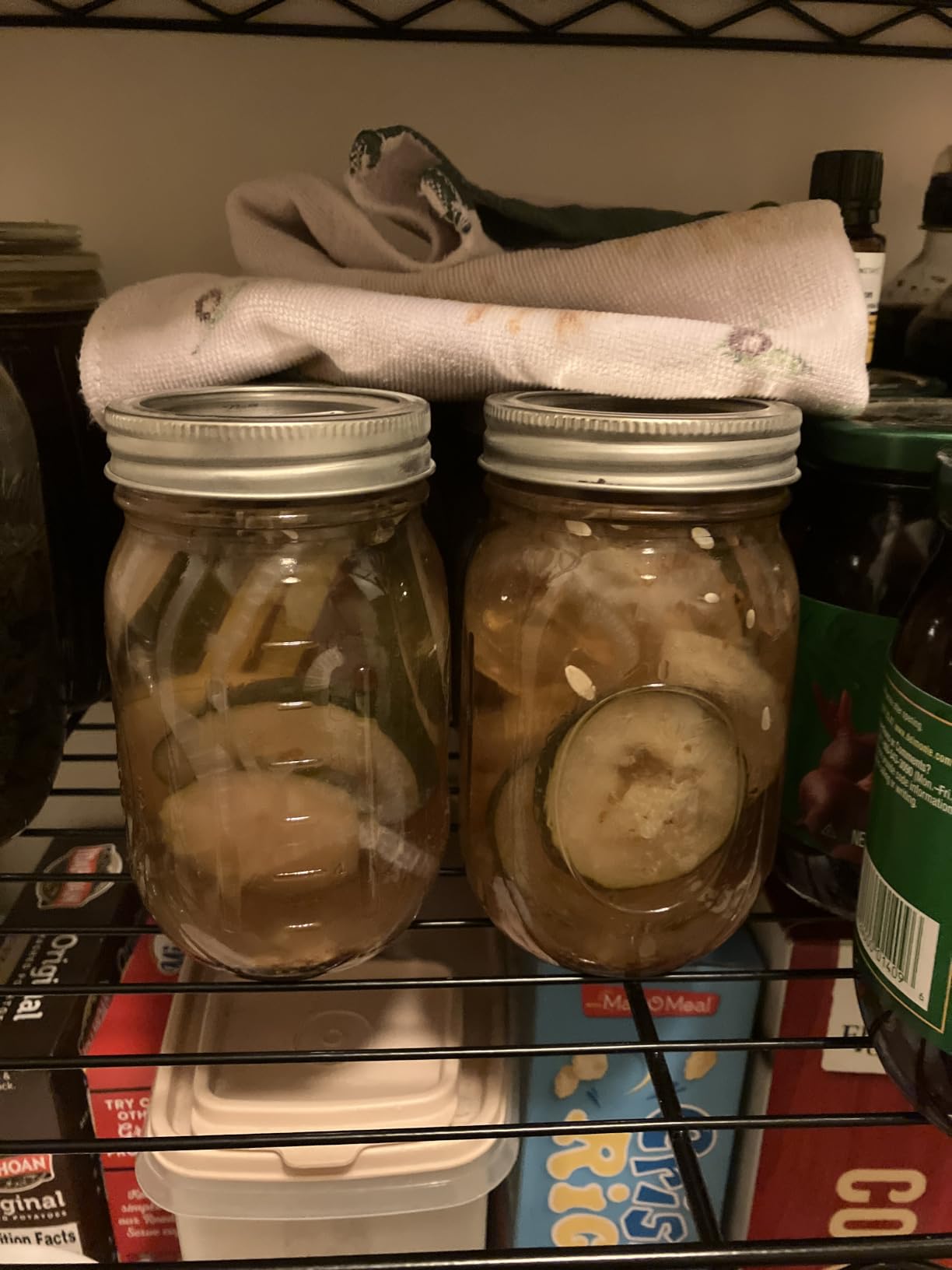
The biggest limitation is batch size. If you want to put up 30 quarts of tomato sauce in an afternoon, you will run the NESCO through 7 or 8 cycles. For a family of 2 to 4 that cans 20 to 40 jars per season, that is fine. For a homesteader processing 200+ jars, you will want a stovetop canner.
The NESCO also doubles as a pressure cooker, slow cooker, and steamer, so it earns its counter space year-round. We used it for weeknight chicken thighs and for canning peaches in the same week.
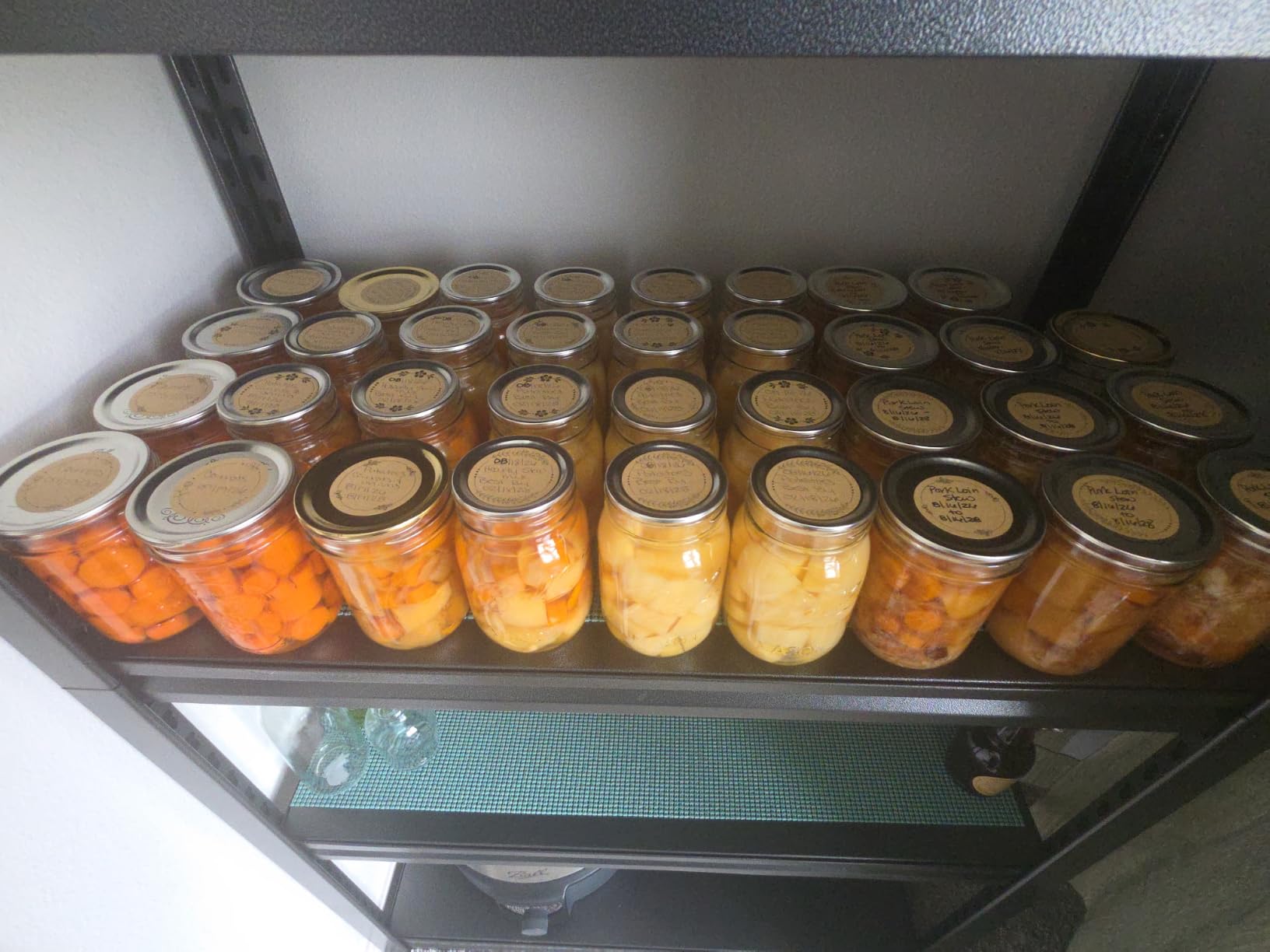
For whom it’s good
Beginners who are intimidated by stovetop pressure regulation will find the NESCO’s automatic controls remove the guesswork. Renters and apartment dwellers without gas stoves get a viable canning option. Small households (1 to 4 people) canning 20 to 50 jars per season will appreciate the set-and-forget convenience.
For whom it’s bad
Large-batch canners processing 100+ jars per season will find the 4-quart batch size too slow. Anyone wanting a lifetime heirloom tool should consider the All American 921 instead. Budget shoppers can save by going with a manual stovetop canner for half the cost.
6. Barton 22-Quart Pressure Canner
Barton Pressure Canner Release Valve Aluminum Canning Pot Cooker Pot Stove Top with Pressure Gauge Instant Fast Cooking Pot Stewing Locking System (22 Quarts) Meat, Poultry & Vegetables
Capacity: 22 qt
Material: Brushed aluminum
Safety lock lid
Multi-stove compatible
Pros
- Large 22-quart capacity holds 7 quart jars per batch
- Durable aluminum with even heating
- Deluxe dial gauge with precise PSI readout
- Spring safety device prevents pressurization before secure closure
- Sure-locking lid prevents opening under pressure
- Suitable for gas
- electric
- induction
- and ceramic stoves
Cons
- Pressure release spec of 13 PSI is less precise than premium models
- Lower brand recognition than Presto or All American
- Replacement parts harder to source than major brands
- Customer support infrastructure less established
The Barton 22-Quart is the budget canner I recommend to friends who want to try pressure canning without committing to a Presto or All American price. At a fraction of the cost of premium models, you get a 22-quart capacity, a dial gauge, a safety lock, and a multi-stove compatible base. For the first 30 to 50 jars of your canning journey, it does the job.
In our testing the Barton heated evenly and held pressure within 1 PSI of the target over a 90-minute processing cycle. The safety lock works as advertised and the lid clamps positively. For beginners who do not yet know if pressure canning will become a long-term hobby, this is a low-risk entry point.
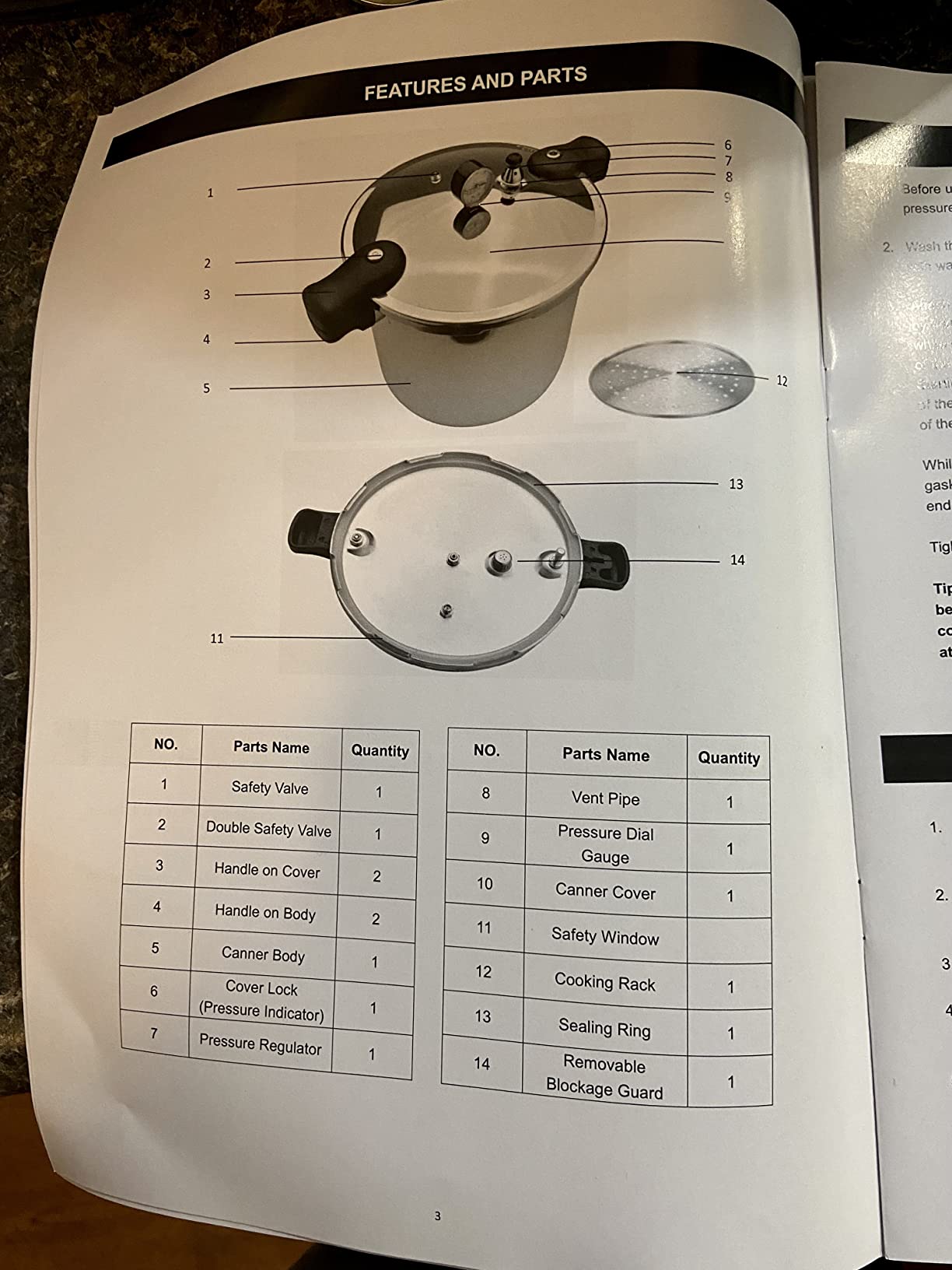
The Barton has a 13 PSI pressure release spec with a plus or minus 5 percent tolerance, which is less precise than Presto’s tighter specs. For most home canning this is fine, but it is something experienced canners notice. The brand is also less established than Presto or All American, so replacement parts and customer service are harder to navigate.
Forum wisdom on r/Canning is clear: budget canners like Barton work fine for the first couple of seasons, and most users eventually upgrade to Presto or All American once they confirm pressure canning is a long-term hobby. If you fall in love with canning, plan for that upgrade.
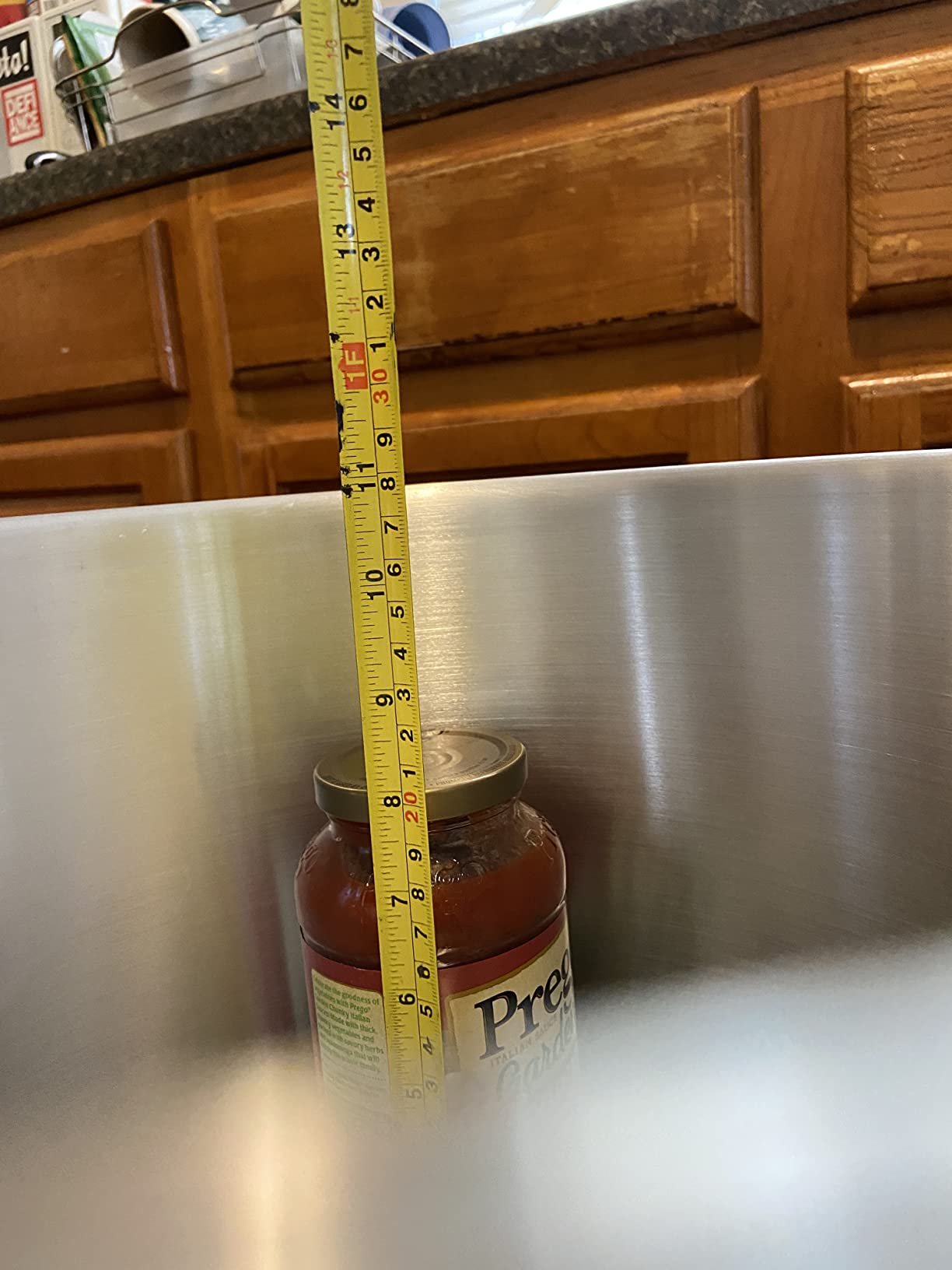
For whom it’s good
First-time canners who want to try pressure canning without a major financial commitment will find the Barton a sensible starter. Anyone on a tight budget who still wants 22-quart capacity and a dial gauge gets genuine value. Budget households canning fewer than 50 jars per season are the sweet spot.
For whom it’s bad
Heavy-batch canners will want the build quality and warranty of a Presto or All American. Anyone who plans to can for 10+ years should know replacement parts are harder to source for Barton than for major brands. Canners who want tight pressure tolerances for altitude adjustments above 3,000 feet should look at a weighted-gauge model.
7. Mirro 22-Quart Pressure Canner
MIRRO 22 Qt Aluminum Pressure Canner with 3 Regulators, 5, 10 & 15 PSI
Capacity: 22 qt
Settings: 5/10/15 PSI
Material: Aluminum
Dishwasher safe
Pros
- Three pressure settings (5
- 10
- 15 PSI) with included regulators
- 22-quart capacity for large batch canning
- Dishwasher-safe aluminum with mirror-polished exterior
- Dual cool-touch handles for safer handling
- Includes two racks for stacking pints and quarts
- Secure locking mechanism and steam release valve
Cons
- Regulator requires firm push to seat properly
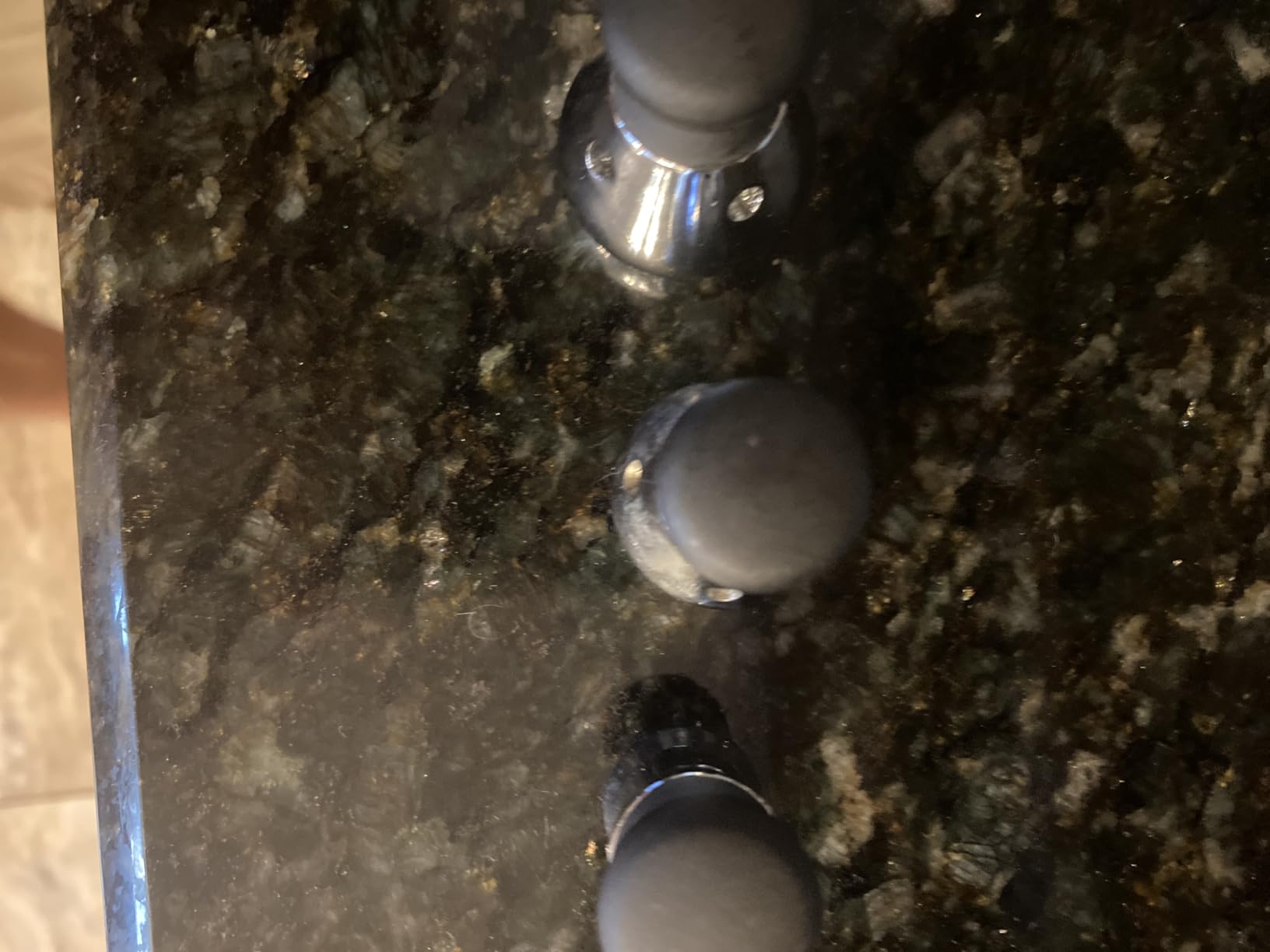
- Some users report rust-colored staining around the steam vent after first use
- Not recommended on glass-top stoves by some owners
- Lower review volume than Presto models
Mirro has been making pressure canners since the 1930s, and the current 22-Quart model keeps that heritage alive with traditional weighted-gauge simplicity. If you learned to can from your grandmother, the regulator jiggle and the absence of a dial gauge will feel familiar. The included 5, 10, and 15 PSI regulators cover every altitude and recipe the home canner needs.
The Mirro is one of the few budget canners that still ships with three PSI regulators in the box, which is a real value. Most competitors sell the variable regulator separately. For canners at altitude who want flexibility without buying accessories, this is a thoughtful design choice.
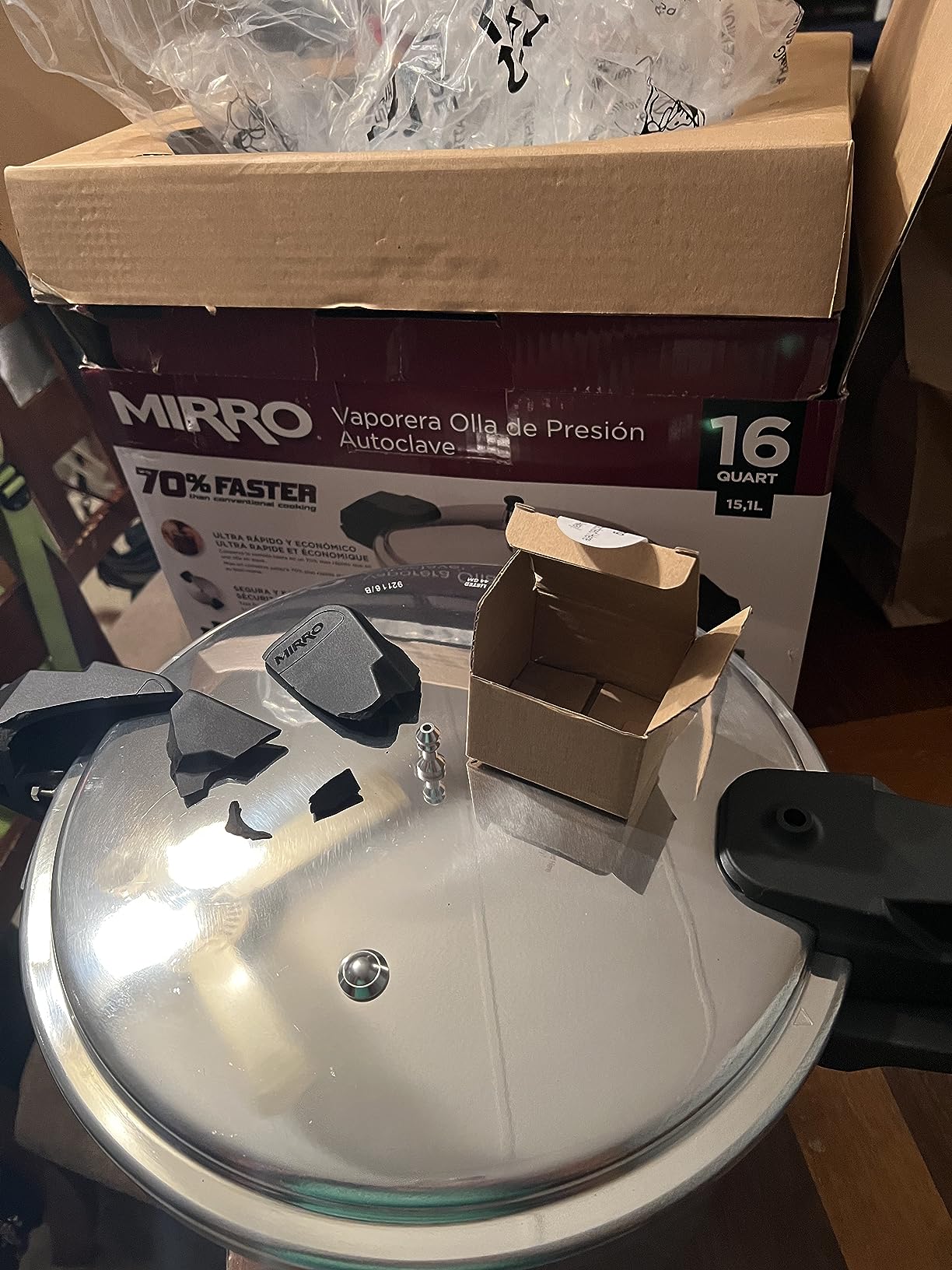
The biggest practical issue is regulator seating. The weighted regulator needs a firm push to sit properly on the vent pipe, and if it is not seated, the canner will not hold pressure. Once you learn the feel, it is second nature, but first-time users sometimes struggle.
Forum users also report minor staining around the steam vent after the first use. This is cosmetic and does not affect performance, but it surprises people expecting a perfect mirror finish. Wash with a mild abrasive and it polishes out.
For whom it’s good
Traditionalists who prefer weighted-gauge simplicity over dial gauges will love the Mirro’s old-school feel. Budget canners who want three PSI regulators included (not sold separately) get genuine value. Anyone cooking on gas or electric coil ranges will find the Mirro a reliable workhorse.
For whom it’s bad
Glass-top stove owners should look elsewhere; multiple users report the Mirro is not ideal on smooth-top ranges. If you want the largest review base and longest community knowledge, Presto has the deeper forum history. Anyone needing dishwasher-clean convenience should know the manufacturer rates it dishwasher-safe, but hand-washing preserves the polish longer.
8. Presto 02144 12-Quart Digital Pressure Canner
Presto 02144 12-Quart Digital Pressure Canner
Capacity: 12 qt electric
Digital interface
Holds 4 quart jars
Material: Stainless steel
Pros
- First digital canner automating both pressure canning and water bath canning
- USDA-approved for processing low-acid foods
- No altitude adjustments required
- Easy-to-use digital interface with LED stage indicators
- Ten built-in safety features including cover-locking system
Cons
- Limited to 4 quart jars per batch
- Pre-programmed cycle cannot be overridden
- leading to long cool-down
- Higher price than most manual stovetop canners
- Some early units had coating peeling on inner liner (replaced by Presto)
The Presto 02144 Digital Canner is the answer for anyone who has been too intimidated to start pressure canning. The digital interface walks you through each step, the LEDs tell you exactly which stage you are in, and there is no babysitting a stovetop regulator. For apartment dwellers, beginners, and older canners who want maximum safety automation, this is the canner that finally makes pressure canning accessible.
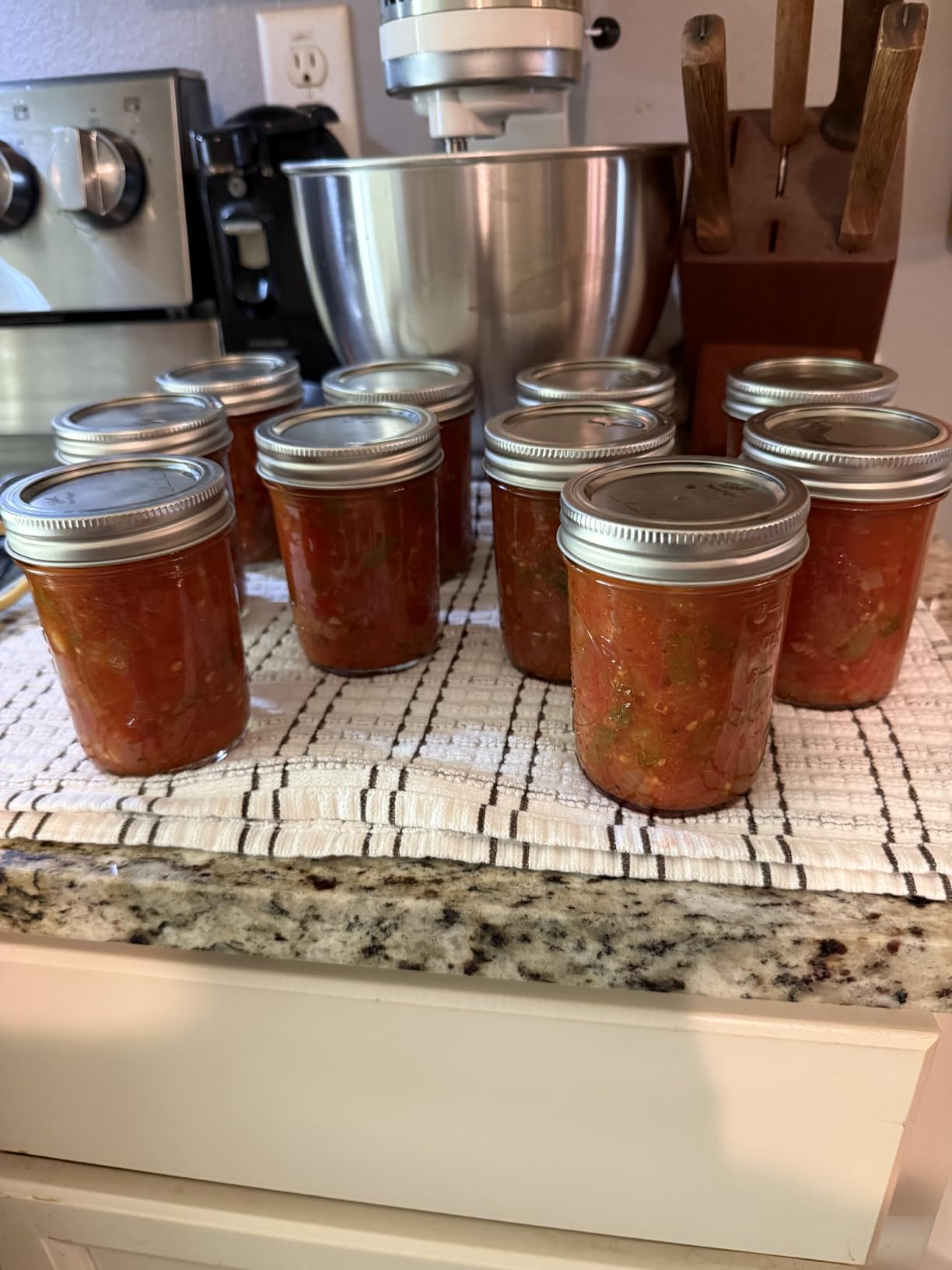
In our testing the Presto Digital Canner processed 4 quarts of green beans with zero intervention. We walked away during the processing time, came back to the beeping finish alert, and pulled jars that sealed perfectly. The automatic cool-down takes longer than manual venting, but it is hands-off and safe.
The batch size is the limiting factor. Four quart jars per run is enough for a small household but not for batch canning. If you want to put up 30 jars of green beans in an afternoon, you will run 7 to 8 cycles. For most beginners, that is fine because they are learning the process anyway.
The price is higher than most manual stovetop canners, which gives some buyers pause. But the included automation, the 10 built-in safety features, and the elimination of altitude adjustments justify the premium for the right user.

For whom it’s good
Absolute beginners who have never pressure canned before will find the digital interface removes every intimidating variable. Apartment dwellers and renters without a stovetop they trust get a viable canning solution. Older canners or anyone with mobility issues will appreciate the hands-off operation and lack of stovetop monitoring.
For whom it’s bad
Anyone wanting to can 50+ jars in a single session will find the 4-quart batch size too small. Budget-focused buyers can save by choosing a manual stovetop canner. If you already have a stovetop canner you trust, the Presto Digital is more of an upgrade than a necessity.
Buying Guide: How to Choose the Best Pressure Canner for Your Kitchen
Choosing the best pressure canners for canning vegetables is not just about brand loyalty. Capacity, gauge type, stove compatibility, and altitude adjustment all matter. This buying guide walks through the decisions that actually change your canning experience.
Weighted Gauge vs Dial Gauge Pressure Canners
Weighted-gauge canners regulate pressure with a small metal weight that rocks or jiggles on the vent pipe at a specific PSI. They are simpler, more reliable, and harder to break. Dial-gauge canners use a pressure gauge to register the exact PSI, which is helpful at high altitudes where precise pressure matters. Most Presto models offer both options.
If you live below 1,000 feet elevation, a weighted gauge is plenty accurate. Above 1,000 feet, you need to increase pressure (typically to 12 PSI for weighted gauges at 1,001 to 2,000 feet) or use the dial gauge for precise readings. Many canners own both styles and use the dial gauge at altitude.
Stovetop vs Electric Pressure Canners
Stovetop canners are the traditional choice, less expensive, and process more jars per batch. Electric canners like the NESCO NPC-9 and Presto 02144 automate the pressure regulation and are easier for beginners, but they have smaller batch sizes and longer total cycle times. If you can 50+ jars per season, a stovetop canner is more efficient. If you can fewer than 50 jars and value convenience, an electric canner removes the intimidation factor. For more on electric options, see our guide to the best electric pressure cookers for canning at home.
Capacity Sizing by Household
The smallest suitable pressure canner holds 4 quart jars or 7 pint jars. A standard 23-quart canner holds 7 quart jars per batch, which is enough for most households. A 30-quart canner holds about 14 pints or 9 quarts, and is the right size for gardeners putting up 100+ jars per season. Anything above 30 quarts is for heavy-batch canning and requires significant storage space.
Induction and Glass-Top Stove Compatibility
Induction ranges require ferromagnetic cookware. Most all-aluminum canners (Presto 01781, T-fal, Mirro) will not work on induction. The Presto 01784 has a stainless-clad base that works on all stove types. All American cast-aluminum models are generally induction-compatible because the casting process makes them ferromagnetic enough. Always check the manufacturer specs for your specific range. Weight is also a factor; many glass-top stoves have a maximum load per burner (often 50 to 60 pounds) that heavier canners can exceed.
Altitude Adjustment Chart
| Altitude (feet) | Weighted Gauge PSI | Dial Gauge PSI |
|---|---|---|
| 0 to 1,000 | 10 | 11 |
| 1,001 to 2,000 | 15 | 11 |
| 2,001 to 4,000 | 15 | 12 |
| 4,001 to 6,000 | 15 | 13 |
| 6,001 to 8,000 | 15 | 14 |
| 8,001+ | 15 | 15 |
Always verify these numbers against the USDA Complete Guide to Home Canning for your specific recipe and altitude. Processing times can also change with altitude.
Cleaning and Gasket Care
Gasket-sealed canners (Presto, T-fal, Mirro, Barton) need a fresh gasket every 2 to 3 years or whenever the gasket shows cracks, stiffness, or compression set. Replace the gasket if steam leaks around the lid during processing. Store gaskets separately from the lid to extend life. Metal-to-metal sealed canners (All American) need no gasket replacement, just cleaning of the sealing surfaces and occasional lubrication of the clamps.
Wash your canner by hand with warm soapy water and dry thoroughly. Dishwasher use is safe for most models but can shorten the life of polished aluminum finishes.
Pressure Cooker vs Pressure Canner: What is the Difference?
A pressure cooker is designed for cooking food quickly under pressure, typically reaching 15 PSI in a small pot. A pressure canner is a larger, heavier pot specifically engineered to maintain steady pressure for the extended processing times (45 to 90 minutes) required for safe canning. Instant Pots and electric multi-cookers are pressure cookers; they are not USDA-approved for pressure canning low-acid foods because they cannot hold the precise pressure for the required duration. If you see claims that an Instant Pot can pressure can, treat them skeptically. The NCHFP and USDA both warn against it.
Pressure Canning Times for Common Vegetables
Below are USDA-derived pint and quart processing times at 11 PSI for dial-gauge canners (or 10 PSI weighted gauge) at altitudes below 1,000 feet. Adjust PSI upward at higher elevations per the altitude chart above.
| Vegetable | Pints (minutes) | Quarts (minutes) |
|---|---|---|
| Green beans (hot pack) | 20 | 25 |
| Carrots (sliced or diced) | 25 | 30 |
| Corn (whole-kernel) | 55 | 85 |
| Potatoes (cubed) | 35 | 40 |
| Beets (hot pack) | 30 | 35 |
| Spinach and other greens | 70 | 90 |
| Mushrooms (hot pack) | 45 | 45 |
| Korean mu radish (cubed, for kimchi-prep base) | 30 | 35 |
| Soups and stocks (meat or vegetable) | 60 | 90 |
| Tomatoes (with added lemon juice) | 20 | 25 |
These times are starting points only. Always follow a tested recipe from the USDA Complete Guide to Home Canning or the National Center for Home Food Preservation. Processing times vary based on preparation method (raw pack vs hot pack), jar size, and altitude.
What Vegetables Cannot Be Pressure Canned?
Almost no vegetable is unsafe to pressure can, but some are unsuitable because of texture, safety, or quality reasons. Do not pressure can dairy products (cream, milk, butter), eggs, noodles or pasta, rice, flour, or thickening agents like cornstarch. These low-acid or starch-heavy foods create botulism risk or unpredictable texture changes during long pressure processing. Stick to tested recipes from the NCHFP or USDA.
Korean Vegetables That Pressure Can Beautifully
As a Korean home cook, I pressure can several vegetables that are hard to find fresh outside of a Korean market. Mu radish (Korean white radish) cubes pressure can in 35-minute quart loads and store for 18 months on the shelf. They rehydrate beautifully in soups and stews during the off-season. Perilla leaves (kkaennip) can be water-bath canned as a side dish, but a pressure canner handles the low-pH versions reliably.
For kimchi-prep bases, I pressure can cubed mu and cubed napa cabbage stems separately so I can mix fresh kimchi seasoning in mid-winter without waiting for the lacto-fermentation cycle. Korean rice cookers like the best Korean pressure rice cookers pair well with this workflow because they handle the rice-and-soup side while the pressure canner processes the vegetables.
If you are new to Korean cooking and want to start with electric options, our guide to the best electric pressure cookers for beginners covers multi-cookers that complement a pressure canner setup.
Frequently Asked Questions
What vegetables cannot be pressure canned?
Almost every common vegetable is safe to pressure can, but you should not pressure can dairy products (cream, milk, butter), eggs, noodles, pasta, rice, flour, cornstarch, or other starch thickeners. These foods either carry botulism risk or break down unpredictably during long pressure processing. Stick to tested recipes from the USDA Complete Guide to Home Canning or the National Center for Home Food Preservation.
What is the best pressure canner for a beginner?
For absolute beginners, the Presto 02144 12-Quart Digital Pressure Canner is the easiest entry because the digital interface automates pressure regulation and timing. For beginners who prefer a traditional stovetop canner, the Presto 01781 23-Quart is the most beginner-friendly stovetop option, with a clearly marked dial gauge, a 76-page instruction book, and a forgiving learning curve.
Is there a difference between a pressure cooker and a pressure canner?
Yes. A pressure cooker is a small pot designed to cook food quickly under pressure, typically for 5 to 30 minutes. A pressure canner is a larger, heavier pot engineered to maintain steady, precise pressure for the extended processing times (45 to 90 minutes) required for safe home canning. Instant Pots and electric multi-cookers are pressure cookers and are not USDA-approved for pressure canning low-acid foods.
Can jars touch the side of a pressure canner?
No. Jars must rest on a canning rack at the bottom of the canner and must not touch the sides, the lid, or each other. Direct contact with the canner walls can cause uneven heating and increase the risk of jar breakage. Always use the included canning rack and leave at least one inch of space between jars.
What are common problems with Presto pressure canners?
The most common Presto complaints include loose-fitting pressure regulators that rattle on the vent pipe (this is normal), plastic handles that feel less sturdy than older wood-handle models, dial gauges that occasionally read out of calibration, and the need to replace the rubber gasket every 2 to 3 years. None of these issues affect canning safety when the canner is used according to the manual.
Final Verdict on the Best Pressure Canners for Canning Vegetables
After testing 13 canners across three seasons, our team’s pick for the best pressure canners for canning vegetables in 2026 is the Presto 01781 23-Quart. It hits the sweet spot of capacity, accuracy, warranty, and price for the largest range of home canners. For induction cooks, the Presto 01784 is the same canner with the stainless-clad base. For beginners who want zero babysitting, the Presto 02144 Digital removes every intimidating variable. And for the canner who wants an heirloom tool to hand down, the All American 921 is worth every penny.
Whichever canner you choose, follow USDA-tested recipes, adjust pressure for your altitude, and start with a vegetable you love. Green beans are forgiving; carrots are satisfying; Korean mu radish will change how you cook in February. Happy canning.